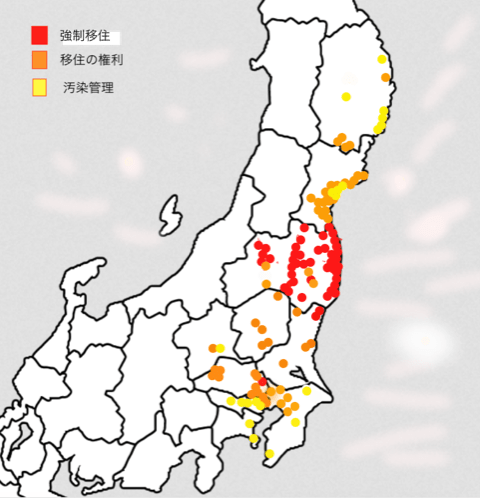
The plight of the internally displaced people (IDPs) of Japan has largely gone unrecognised by most media sources. IDP`s though, have been recognised in the last UN Plenary session concerning Japan, here is a link for that;
In this video (part 1 of a series) Junko, a mother and ex decommissioning worker describes the health situation in answer to a question put to her by Rachel Clark (Japanese translator) on behalf of the team at nuclear-news.net and Nuclear Hotseat.
Junko describes the health effects on her children and workers cleaning up the soil in contaminated areas. This is the first part of a series of testimonies. Please share widely. This video and copy is creative commons with normal attrib.
NOTE ; During the early months of the disaster a health survey was conducted by a Japanese nurse who had worked in the Chernobyl contaminated regions of Ukraine and Belarus. No other survey of its type was done by the Japanese authorities. Here is the video from a Japanese TV station that compiled the statistics and the discusssion that followed (In Japanese but with English subtitles). This video helps confirm the claims of the testimony from the 2Sept 2018 video above.
Former employees of the nuclear power plant operator TEPCO repeatedly struggling to recognize their illnesses as a consequence of their labor input – but sometimes the recognition comes too late, as a case from Fukushima shows today.
Meanwhile, Japan is currently busy with Typhoon Jebi, and after moving north, Fukushima News on the storm is expected soon. The first news is already in the Spreadnews Japan ticker on 4 September 2018.
Our current topics at a glance:
For the first time lung cancer recognized by ex-nuclear workers as a result Fukushima prefecture prepares for typhoon Jebi
For the first time lung cancer recognized by ex-nuclear workers as a result
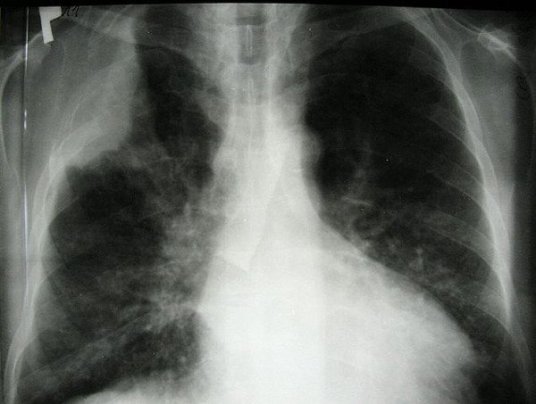
As announced by the Japanese Ministry of Health, Labor and Social Affairs (MHLW) on Tuesday, lung cancer was first recognized as a result of labor input during the disaster at the Fukushima Daiichi nuclear power plant.
The man in his mid-50s was employed at various nuclear power plants since June 1980. After the start of the Fukushima crisis in March 2011, he was commissioned with radiation measurements, but also dealt with the planning and the first measurement in decontamination work.
As the MHLW announced, the former power plant worker has since died. It is the first case in which lung cancer is recognized as a “catastrophic death”.
So far, only three cases of leukemia and one case of thyroid cancer have been recognized by former nuclear workers as a causal consequence of their work on the Fukushima Daiichi nuclear power plant. Prefecture media reported this late recognition of the lung cancer case. Fukushima prefecture prepares for typhoon Jebi
After Typhoon Jebi landed in West Japan and shut down Kansai International Airport for at least two days, and caused power cuts in Osaka and claimed eight lives, the country’s northeast is also preparing for the storm.
In Fukushima prefecture, the biggest winds are expected from Wednesday morning. Due to the severity of the typhoon, it is assumed that the precipitation numbers will be even higher than is otherwise the case with a typhoon.
There is also a risk of landslides, as well as the risk of rivers overflowing and flooding of low-lying areas in coastal areas. Farmers prepare for the storm winds by securing their fields with windbreakers.
The weather authority demands that the house should not leave the house as much as possible and that information about possible weather warnings and evacuation orders should be tracked. Shelters are already prepared.
A total of five flights have already been canceled at Fukushima Airport. The flight cancellations affected 231 passengers.
Meanwhile, local electricity company TEPCO, the operator of the Fukushima Daiichi nuclear power plant, issued the usual standard warning of overhead power cables and called for these sightings to be reported.
BUT THE HEALTH EFFECTS HAVE BEEN REPORTED BEFORE!!
Shocking health effects in Fukushima nuclear workers found under the official radiation dose limits
Posted on
“….The First male Daichi nuclear site worker had an official total dose of 50mSv.
“I suffered damages to kidneys, heart, etc. — all important organs in my body.”
The second male Daichi nuclear site worker had an official total dose of 56mSv. He said
“I went to such a severe accident site and worked at the risk of my life, but all I’ve got was this cruel reality and treatment!”
I suffered thyroid damage, and had all my stomach removed.
AOMORI – Construction in Aomori Prefecture of the world’s first commercial reactor to operate solely on plutonium-uranium mixed oxide fuel will be pushed back for the third time due to prolonged safety checks, the utility building the reactor said Tuesday.
Electric Power Development Co. had been planning to begin construction of major facilities at the Oma nuclear power plant in the prefecture during the latter half of this year, but told the Oma Municipal Assembly on Tuesday it has decided to delay the work by about two years. The delay means the new target for the reactor to begin operations is fiscal now 2026.
The move clouds the course of Japan’s policy for the nuclear fuel cycle, in which the reactor was supposed to play a key role. Mixed oxide (MOX) fuel is produced by extracting plutonium from spent nuclear fuel and mixing it with uranium. Tokyo is also under international pressure to slash its stockpile of plutonium, which has the potential to be used to produce nuclear weapons.
“We would like Electric Power Development to put top priority on safety and respond appropriately to the Nuclear Regulation Authority’s screening,” industry minister Hiroshige Seko said at a news conference.
The company, also known as J-Power, initially sought to start operations at the nuclear plant, to be located in the Aomori town of Oma with an output of 1.38 million kilowatts, in fiscal 2021, but put it back by one year in 2015 and then postponed it to fiscal 2024 in 2016.
Construction of the reactor began in 2008 after gaining state approval, but was stalled following the nuclear meltdowns at the Fukushima No. 1 power plant triggered by the 2011 earthquake and tsunami disaster.
About 40 percent of the construction has been completed, but work so far has centered on setting up office buildings and conducting road repairs.
J-Power applied for safety checks in December 2014, but NRA examinations have focused on assumptions about tsunami and earthquake risk at the overall complex and not at its nuclear facilities. An official at the company told the Oma Municipal Assembly that it may take two more years for the reactor to pass the screening.
J-Power said it hopes to start construction of the reactor and other facilities in the latter half of 2020 and complete it by the second half of 2025.
“It’s very regrettable that the project will be postponed once again. I hope (J-Power) will strive to swiftly pass the screening and help revitalize the regional economy,” Oma Mayor Mitsuharu Kanazawa said at the assembly meeting after hearing from the company official.
The Oma plant has also faced lawsuits seeking suspension of the project.
Residents in Hakodate, Hokkaido, which is some 23 kilometers northwest of Oma across the Tsugaru Strait, filed a lawsuit against the company and the central government with the Hakodate District Court in July 2010, claiming they are concerned about the large amount of highly toxic plutonium that will be used as reactor fuel.
The city of Hakodate also filed suit against the two parties with the Tokyo District Court in April 2014, saying it fears the impact of an accident at a so-called full-MOX reactor will be far more devastating than that of the Fukushima disaster, which led to the long-term evacuation of many local residents.
An update on my earlier videos on the shattered Halden nuclear reactor. Thanks for all those that shared the videos, social media at its best!
Plus Brexits effect on the UK and French delays on the MTR replacement for the Halden MTR. There are serious problems with MTR`s (Materials testing reactor)
There are about 10 other MTR`s in Europe and they are between 40 and over 60 years old! How are these reactors cost effective ?
Well done everyone who shared the info on the earlier videos I did challenging the status quo of the Halden Reactor and a big thank you to Bellona, CRIIRAD and the many groups and individuals in Norway and worldwide who highlighted the many inadequacies of the nasty Halden reactor (RIP). now only about ten more dangerously old MTR reactors to go!!
I did a quick video outlining some issues including schools being used as propaganda outlets for corporations, Euratom etc. Shaun
“This is incredibly deadly material. It’s like having Fukushima sitting in your backyard ready to go off,” a lawmaker asserted of the nuclear waste site.
Ireland became the first country in the world to divest from fossil fuels!
We heard over and over again from TDs yesterday, just how important your actions were to keep this issue on their agendas. Well done!
We have been on this journey together for 3 years, and we won! We wanted Ireland to recognise that the use of fossil fuels must be phased out. We wanted them to stop investing money against our interests, against our environment and against the livelihoods of families and communities Trócaire works with around the world.
Climate change is one of the main drivers of poverty and hunger in developing countries. Yesterday, Ireland took a very important step to turn around its shameful record on climate action. Only last month a report ranked Ireland second last within the EU, for its persistently poor performance on climate action.
TDs mentioned the ‘seismic shift’ which has taken place in the Dáil since this Divestment journey started. Yesterday was a ‘seminal moment’ that sees Ireland taking the lead on the world stage in its decision to move away from fossil fuels.
We wanted Ireland to make this historic decision to divest and for the decision to be the launch pad for greater ambition on climate action, and from what we heard from across the political spectrum yesterday, we achieved that goal!
The Bill must now go through the remaining stages in the Seanad, which we expect will happen fast, as the Bill has the support of all political parties.
Thank you, thank you, thank you! Thank you for staying with us on this journey, for all your actions, for raising your voice and for being part of making history!
Fred Pearce is an English journalist based in London. He is a science writer, reporting on the environment, popular science, and development issues from 64 countries over the past 20 years, and specializes in global environmental issues, including water and climate change. His latest book is FALLOUT: Disasters, Lies and the Nuclear Age.
Numnutz of the Week (for Outstanding Nuclear Boneheadedness):
NO! Put away the cell phone and get back in the car! Selfies in the Fukushima radiation zone are never a good idea!
COMMENT TO THE NRC! David Lochbaum, Director, Nuclear Safety Project, Union of Concerned Scientists, requests comments – open until July 23 – on preventing nuclear plant owners from conducting unreviewed and unapproved fuel experiments on-site at your local neighborhood nuclear reactor. Of course the NRC makes it harder than it should be to comment:
Tokyo electric power is responsible for the nuclear power accident and can’t afford to support Japan Nuclear power costs ❗
“Tokai ( 1 minutes )” (1 minutes 40 seconds) Video
[NHK] a shareholder of Tokyo Electric Power Co Ltd. has given the intention to support the cost of safety measures in Japan’s nuclear power plant, for the re-operation of tokai second nuclear power plant. I have appealed to the court for a provisional disposition.
In Ibaraki Prefecture, tokai THE second nuclear power plant is in fact, on the 4th of this month, to be reviewed by the Government, and Tokyo Electric Power Co Ltd. Will Support 1,740 billion yen for safety measures. It shows the intention.
As for this, 3 shareholders of Tokyo electric power were not able to expect to recover from the management of Japan’s original [phone], and tepco was a connected to the nuclear power accident and could not afford to support Japan. I appealed to Tokyo District Court for the president and Vice President of Tokyo electric power to give up their support.
Hiroyuki Kawai, who served as an agent of a shareholder who had filed a meeting, was damaged by the tokai second nuclear power plant, and the central part of the capital area and the center of the country were damaged. I have criticized the support of Tokyo electric power, and it is an act of throwing money away. ‘
People who evacuated from Fukushima Prefecture have not only been exposed to radiation, but to prejudice and misunderstanding regarding compensation that they may or may not have received. The truth about Fukushima nuclear disaster compensation March 2017
“One who deceives will always find those who allow themselves to be deceived,” Niccolo Machiavelli wrote.
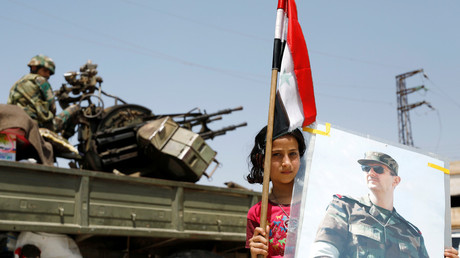
The famed Renaissance-era philosopher’s sage words describe to a tee the allegation that Syrian forces attacked the city of Douma, 10km northeast of Damascus, with nerve gas on April 7, 2018.
Even more seriously, not to mention condemnatory, is the way this lie – fashioned by Salafi-jihadist extremists, who at the time were struggling to hang on in a part of the country they’d been occupying for the best part of seven years in the face of a determined campaign by the Syrian Arab Army with Russian support to liberate it – was allowed to take the West on a collision course with Russia, when the Trump administration, supported by France’s Emmanuel Macron and Britain’s Theresa May, decided to launch a missile strike against Syria on the back of it.
Not since the Cuban Missile Crisis of 1962 has the world come so close to WWIII as it did then. And it was only down to astute leadership in Moscow, the willingness of the Russian government to accept a temporary loss of face in refusing to respond to what was an act of naked aggression by Washington and its allies, that disaster was averted.
The findings of the OPCW’s interim report, produced on the back of its on-site investigation into allegations that a nerve gas attack took place in Douma on April 7, make grim reading for the army of morally bereft Western ideologues and their apologists who’ve made a career out of defending the indefensible. Or at least, that is, they should make grim reading.
To wit:
“The results show that no organophosphorous nerve agents or their degradation products [emphasis added] were detected in the environmental samples or in the plasma samples taken from alleged casualties.”
When Churchill opined, as only a dyed-in-the-wool imperialist such as he was could, that, “In wartime, truth is so precious that she should always be attended by a bodyguard of lies,” he penetrated the fog of obfuscation and propaganda that has always been employed to confuse the public mind over the unending wars of conquest and domination unleashed by the West in the course of its blood-soaked history.
When it comes to Syria, those lies have been legion, framed in such a way as to make that which is unreal appear real and that which is real appear unreal. We have thus been invited over the years of this brutal conflict to believe that bands of Western backed religious sectarian fanatics – intent on the mass slaughter, enslavement, and extirpation of a non-sectarian secular society – are actually Jefferson democrats in disguise, fighting oppression in the name of liberty. We have been asked to accept that those fighting and dying to prevent Syria entering the abyss are evil while those fighting to push Syria into the abyss are virtuous.
It is interesting to ponder at this juncture how for neocons and assorted other regime-change Western extremists the world is reduced to a giant chessboard upon which non-Western nations, governments and peoples are no more than pieces to be moved around, removed and replaced at their whim. It suggests a Manichean worldview that has been lifted from those old B Western Hollywood movies – a cultural fare which has supplanted reality in the minds of people intoxicated with a sense of their own exceptionalism.
This exceptionalism has wrought, over the decades in which Western hegemony has held sway, more chaos, mayhem, carnage, and dislocation than any number of natural disasters.
It is why, just as the conflict in Vietnam was more than the sum of its parts in terms of its wider significance and importance, so it is with the conflict that’s been raging in Syria in our time. This conflict is not and has never been primarily a civil war, or even a regional war. It has been and remains primarily an anti-imperialist struggle with the outcome assuming world-historical importance as a consequence. And, to be sure, this outcome is reflected in the vast ocean of propaganda, lies, untruths, and distortion that has been unleashed in support of regime change and military intervention.
Never mind the former Yugoslavia, never mind Iraq, and never mind Libya; the ease with which this propaganda machine rolls on from one country and society, destroyed under its tracks, to the next is redolent of a beast whose appetite for domination is completely insatiable.
Thus in Syria, this beast is being slayed not only in the interests of a Syrian people whose suffering and sacrifice has been inordinate – supported by Russia, Iran, and Hezbollah in an example of internationalism which in the last analysis is the only antidote to Western hegemony capable of breaking its asphyxiating grip militarily, economically, culturally, and geopolitically. It is also being slayed in the interests of a world suffering under the dead weight of a Pax Americana which for far too long has gone unchallenged.
Douma will forever stand as a milestone in the moral degeneracy of those handsomely remunerated champions of regime change who colonize the opinion columns of mainstream newspapers, the vast network of neoconservative think tanks made up of privately educated cranks and crackpots whose dishonesty is only exceeded by their mendacity, and those who occupy the corridors of power in Western capitals.
They are the very people Shakespeare had in mind when he wrote, “Hell is empty and all the devils are here.”
John Wight has written for a variety of newspapers and websites, including the Independent, Morning Star, Huffington Post, Counterpunch, London Progressive Journal, and Foreign Policy Journal.
A new, shocking report by researchers at Carnegie Mellon University’s Department of Engineering and Public Policy (EPP), Harvard University, and the University of California San Diego School of Global Policy and Strategy discovered that the U.S. nuclear power industry could be on the verge of a collapse — a reality that many have yet to realize.
Published in Proceedings of the National Academy of Science (PNAS), “US nuclear power: The vanishing low-carbon wedge” examined 99 nuclear power reactors in 30 states, operated by 30 different power companies. As of 2017, there are two new reactors under construction, but 34 reactors have been permanently shut down as many plants reach the end of their lifespan.
“We’re asleep at the wheel on a very dangerous highway,” said Ahmed Abdulla, co-author and fellow at the School of Global Policy and Strategy at UC San Diego. “We really need to open our eyes and study the situation.”
For more than three decades, approximately 20 percent of U.S. power generation has come from light water nuclear reactors (LWRs). These plants are now aging, and the cost to service or upgrade them along with fierce competition from Trump’s economic order to prop up failing coal and heavily indebted shale oil/gas companies make nuclear power less competitive in today’s power markets.
In return, the American shale boom could trigger a significant number of US nuclear power plant closures in the years ahead, the researchers warned. The country is now at a critical crossroad that it must abandon nuclear power altogether or embrace the next generation of miniature, more cost-effective reactors.
The researchers noted that small modular reactors might play a significant role in US energy markets in the next few decades. This new design would effectively swap out the current aging, LWRs that the Atomic Energy Commission allowed to rapidly expand across the country in the 1960s and after. The researchers described several scenarios where new nuclear power plants could be used to back up wind and solar, produce heat for industrial processes, or serve military bases.
Given the current market structure and policy dynamics, the researchers were not convinced that nuclear power would be competitive in the future power market.
While efforts continue to advance batteries for storing electricity from solar and wind, utilities have made an impressive push into natural gas. As of 2018, fossil fuel now produces nearly 32 percent of US power.
Given the impending collapse of the nuclear industry, the researchers questioned whether renewable energy would be enough to offset losses from retiring nuclear power plants.
“The reality is you cannot actually replace 20 percent of the need with wind and solar, unless you want to wallpaper every square inch of many states,” said Christian Back, vice-president of nuclear technologies and materials at General Atomics. “It’s not efficient enough.”
Back said with the right political support, nuclear reactors operating today could be retrofitted to increase safety and lifespan, while smaller, more cost-effective ones could be strategically placed on the grid.
“This is a situation like Nasa when you’re putting someone on the moon where the government needs to recognize the long-term benefit and investment that’s required and help support that,” Back added. “This is where political will matters.”
Researchers also suggested that many civilians overlook nuclear energy and do not realize the urgency of the situation.
In the article’s conclusion, the researchers warn, “It should be a source of profound concern for all who care about climate change that, for entirely predictable and resolvable reasons, the United States appears set to virtually lose nuclear power, and thus a wedge of reliable and low-carbon energy, over the next few decades.”
On July 3, the Cabinet of the Japanese government approved the country’s 5th Strategic Energy Plan after receiving the final draft the Ministry of Economy, Trade and Industry (METI). The plan is significant as it sets forth the government’s approach to energy policy for the future and is considered one of the key documents indicating the government’s direction with respect to national energy supply and energy markets. It is closely watched by the corporate and civil sectors alike both home and abroad.
The Japanese government is required by law to reevaluate and issue a strategic energy plan at least every three years and, while it is not a binding legal instrument, it has become a de facto policy tool that has been followed by the various government agencies and departments in each of its iterations. It also serves as a market signaler and seeks to provide long-term certainty to energy market participants and allay any fears of a sudden policy shift.
Future Energy Mix
A key element of the strategic energy plan is the government’s future energy mix predictions, with the current benchmark date being 2030. In the plan, METI maintained the same energy source ratio for 2030 as it had outlined in the previous strategic energy plan in 2013 and in its long-term energy supply and demand outlook issued in 2015. The desired energy ratios set forth a balanced approach to the full range of power generation options, including both renewables (22 to 24 percent) and nuclear (20 to 22 percent).
Note: The percentages provided in the Plan for Renewable Energy and Nuclear Energy were 20-22 percent and 22-24 percent, respectively. For the purposes of this chart, the higher of the range of percentages has been used.
While the ratios have remained the same, what is new is that renewable energy sources were designated as a “main source of power generation” for the first time. Some see this as a major shift in government policy that recognizes that in the future renewable energy has a role to play as a baseload power source and not only as auxiliary power. As it currently stands, renewable energy in Japan accounted for 15 percent of the energy mix in 2017, up from 10.7 percent in 2010. Renewable energy proponents are encouraged by the upward trend in market penetration but also consider that Japan could do more to extend the 20-22 percent target for 2030, especially as the renewable energy target is significantly lower than similar targets set by other G7 countries.
The Future Challenge of Nuclear and Coal Power
The plan makes it abundantly clear that the Japanese government still sees nuclear power as playing a significant role in the energy market as well as being an important method of meeting its environmental commitments. However the resumption and expansion of the nuclear power industry in Japan remains controversial.
Following energy demand predictions, to reach the proposed level of nuclear generation in the overall energy mix, it becomes clear that new nuclear reactors will need to be constructed in addition to all of Japan’s existing nuclear reactors being restarted and having their operational life extended.
The stigma of nuclear power runs deep and strong as reconstruction efforts from 2011 are still underway and fearful local communities have successfully campaigned to block the restarting or construction of new reactors. Cases have been filed with respect to most nuclear power plants, with residents and citizen groups seeking injunctions from the courts to block any decision to restart the reactors. Multiple suits are underway across the country with appeals being heard on a regular basis but no conclusive position has yet been determined. In addition to grassroots movements, prefectural governors have openly come out in opposition to the national government’s plans to restart the reactors in a bid to gain public favor as local election season begins.
Clearly, this level of opposition puts the government’s proposed energy mix in jeopardy as questions are raised over whether the government will be able to implement the measures necessary to reach the proposed percentages.
In such a climate of uncertainty over the future of the nuclear industry, utility operators too are skeptical. In the wake of the Fukushima disaster, nuclear reactors were shut down and utility companies turned to large-scale thermal coal power plants to make up the shortfall. As a result, as the share of nuclear power fell from 28.6 percent in 2010 to nil in 2014, thermal coal power rose from 25 percent to 31 percent over the same timeframe. In the last two years to date, eight new power plants have come online and 36 new projects are scheduled to come online in the next decade, which will increase total coal power generation capacity by approximately 40 percent. The upward trend in coal generation is at direct odds with the Plan’s forecast of coal generation falling from its current share of approximately 30 percent to only 26 percent of total energy generation.
This too is out of step with other major economies around the world such as the U.K., which plans to shutter all coal-fired power plants by 2025, and France, a former nuclear power heavyweight, which plans to cease coal power generation by 2021.
With that in mind, similar to the nuclear industry, the feasibility of increased coal generation is being questioned. International and domestic pressure is mounting for a more balanced approach to be adopted. Environmental groups, using the Paris Agreement as justification for their opposition, and local citizen groups have been mobilizing against the construction of new coal power plants. Local citizen groups in Chiba and Hyogo Prefectures have recently successfully forced utility operators to completely abandon construction plans for several new large scale power plants. Three of Japan’s mega-banks, Mizuho, Mitsubishi-UFJ Bank, and Sumitomo Mitsui Banking Corporation, also released over the past two months new lending policies that will significantly restrict the amount of finance that they will make available for new and existing coal generation projects.
While the Strategic Energy Plan is designed to give energy market participants policy certainty, the latest iteration has thrown up more questions than answers. The feeling is that the pro-nuclear and pro-coal position of the ruling government is out of step with what is practically achievable given the changing community and business landscape. Maintaining the status quo of the 2014 and 2015 predictions is intended to give a sense of continuity but, given concerns over changes in context and evolving situations that may pose significant problems to the achievement of those targets, doing so may have instead only contributed to an already unpredictable outlook.
Peter Bungate is an Australian corporate lawyer working in Japan since 2014, specializing in energy markets and policy both domestic and international.
ALBUQUERQUE, N.M. — A state legislator says he isn’t getting any answers out of the administration of Gov. Susana Martinez to questions on a proposed interim storage site for spent nuclear fuel in southeast New Mexico.
Sen. Jeff Steinborn, D-Las Cruces, chairman of the Legislature’s Committee on Radioactive and Hazardous Materials, sent nearly 60 questions to the heads of several state departments in April.
ALBUQUERQUE, N.M. — A state legislator says he isn’t getting any answers out of the administration of Gov. Susana Martinez to questions on a proposed interim storage site for spent nuclear fuel in southeast New Mexico.
Sen. Jeff Steinborn, D-Las Cruces, chairman of the Legislature’s Committee on Radioactive and Hazardous Materials, sent nearly 60 questions to the heads of several state departments in April.
Only one responded.
“It raises the obvious conclusion that this governor and her administration have done no analysis on this project,” Steinborn said. “The citizens of the state deserve to have answers on our state’s ability to handle this facility.”
The senator wrote in a July 9 letter to the governor that the New Mexico Environment Department did respond to his questions, “but without providing substantive information on the issues raised.”
The Environment Department provided that letter to the Journal.
In it, department Secretary Butch Tongate wrote NMED would review the Environmental Impact Statement currently in progress at the Nuclear Regulatory Commission “and provide comments to the NRC as necessary.”
“The Senator’s questions should be directed to the NRC — the agency overseeing the process,” said NMED spokeswoman Katy Diffendorfer in an email.
Nuclear power station, Sergei Kirienko in foreign countries are financed by russiansociety “peaceful atom” victoriously marching across the planet, capturing investment in new areas. And to payfor it to have ordinary Russians. What do experts think about this? How soon will “explode”?…
Expensive toys Sergei Kiriyenko
Author – Nadezhda Popova
The Russian “peaceful atom” victoriously marching across the planet, capturing investment in new areas. In addition to the European countries – Hungary, Finland, Bulgaria, Atomstroyexport comfortably in the Islamic Republic of Iran has announced the construction of the second unit of the Bushehr NPP. The Turks look forward to the start of construction of NPPs of Russian design “Akkuyu”. New units Atomstroyexport is building in a big way in India at the Kudankulam nuclear power plant, the correspondent The Moscow Post.
Already filled Playground for the new rooppur NPP in Bangladesh. A few days ago, a powerful signed an agreement with China on the construction of four new power units. All the construction is going at the expense of Russia and Russians. Your coins yet only offers Tehran . Beijing promises that the new NPP will be entirely paid by the Chinese side.
What are the billions spent on the construction of overseas nuclear power plants? Rosatom gives loans to the countriesin which it sells its nuclear projects. In total, Turkey, Egypt, Bangladesh, and Finland has already received more than $ 100 billion at 3% per annum. This money, incidentally, are withdrawn from the budget of the Russian Federation. And when is the deadline on the loan, which Moscow provided Minsk on the construction of NPP “Ostrowiec” in Belarus? 50 years later, in 2068! When it is alive it will not Sergei Kiriyenko, neither Dmitry Medvedev nor Alexander Lukashenko.
Note, that in Russia continue to operate the old dangerous nuclear reactors of the Chernobyl type. Today, 11 such reactors are working at the Leningrad, Kursk and Smolensk NPPs. But those old work horse nobody thinks to stop, although out of them for a long time spilling sand, or rather graphite. Why new nuclear power plants are being built EN masse for cordon? Yes, even at the expense of poor Russians?
The risks are monstrous
-Agreement on the construction of Turkey’s first nuclear power station was signed by Moscow and Ankara in 2010, reminds the doctor of technical Sciences, in the recent past-the Deputy Director on science Institute of nuclear engineering, Professor Igor Ostretsov. – The contract involves construction of four power units of 1,200 megawatts. But why the credit for the nuclear project with a payback period of 30 years is issued for such a long period of just under 3% per annum.
Former Deputy Minister for atomic energy, doctor of technical Sciences, Professor Bulat Nigmatulin also can not conceal his indignation:
– Russian export projects for nuclear power plants promoted by those loans that we give to our foreign partners. And give in unfavorable conditions, with high risks of non-repayment of funds. What countries issued these loans? Not too economically developed, the problem on the state of the economy. In India we are stuck in political and environmental reasons, which worsened after the events at Fukushima in Japan. Of special note is the Turkish project of “Akkuyu”. This project requires a very close attention!
The Trump-Putin summit is an opportunity to stop this dangerous drift. Reaffirming that a nuclear war cannot be won and must never be fought, the United States and Russia could agree to specific steps at Helsinki to reduce nuclear risks.
First, begin discussions on how to increase decision time for leaders to reduce the risk of a false warning of a nuclear attack or a nuclear accident or miscalculation. Right now, both the US and Russian presidents may have only a few minutes to assess whether warning of a possible nuclear attack is real, and to decide whether to use nuclear weapons in response. Both the United States and Russia—and Europe—would be much safer if we could agree on steps to increase decision time to a few hours or a few days. A clear directive by the two presidents to their military leaders to work to develop options to achieve this goal would be a powerful signal to the American people, to the Russian people and to the world.
Second, begin discussions on reducing and managing cyber nuclear risks. The threat of a cyber intrusion to nuclear facilities, strategic warning systems, and nuclear command and control increases the probability of accidents, miscalculations, or blunders. Possible cyber-attacks leading to the theft of nuclear materials, nuclear sabotage, or false warning of a missile attack are the most frightening and potentially consequential aspect of the cyber threat. Developing clear “rules of the road” to reduce cyber nuclear risks is imperative.
Third, work jointly to restart bilateral crisis management dialogue, including among uniformed military leaders in charge of nuclear forces, and multilateral crisis management dialogue throughout the Euro-Atlantic region, to reduce military risks. Continuing curtailment of military-to-military and crisis management dialogue increases the risk of the ultimate “lose-lose” scenario: a military conflict. We must work together, including our militaries, to increase transparency and trust.
Fourth, work jointly to preserve and extend existing agreements and treaties, including the Intermediate-Range Nuclear Forces (INF) Treaty and New START Treaty. These two agreements are crucial to sustaining transparency and predictability. In the absence of these agreements, there will be no regulations on nuclear forces, exacerbating today’s already high risks.










 nuclear-news