Since the nuclear disaster of 2011 in Japan, Professor Hayano’s comments on Twitter have been spotlighted as a source of information from specialists. His presentations addressed to middle and high school students have been highly appraised both in Japan and overseas, and we plan to have him speak to a similar audience at the World Convention.
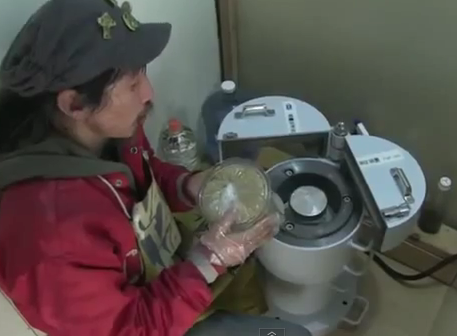
www.nikkei.com/…/DGXNASDG10048_Q3A410C1CR8000/ Professor Hayano of Tokyo University has been in charge of measuring the amount of internal exposure to ionizing radiation for residents of Fukushima Ibaragi prefecture, using Wholebody counter at Hirata central hospital in Hirata village, Fukushima prefecture. He measured 33,000 residents between October, 2011 and November, 2012. He announced that he had only found cesium137 in 1% of the residents since last March. He had measured 10,000 children under 15 years old since last May, but he didn’t detect any C137 in all of them. He concluded that the reasons for decreasing no. of the residents who have been exposed to cesum137 is well established measuring food system and the residents being much more careful not to eat radioactively contaminated food.
Detectable level is 300Bq/kg for each C134 and C137 at Hirata Hospital which I think it’s set up high. Normally it is between 250-300Bq/kg for each C134 and C137.
I think 250-300Bq/kg is the best Wholebody counter can measure. Longer measurement can detect more cesium in the body if the background radiation is low. Normally the atmospheric dose is high in Fukushima prefecture.
Therefore, I recommend a urine test which is about 10 times more accurate than wholebody counter. *Prof. Hayano and his team surveyed and published the report as follows:
1billion Yen insurance at risk!
https://www.jstage.jst.go.jp/article/pjab/89/4/89_PJA8904B-01/_article […] Extensive whole-body-counter surveys carried out at the Hirata Central Hospital between October, 2011 and November, 2012, however show that the internal exposure levels of residents are much lower than estimated.
In particular, the first sampling-bias-free assessment of the internal exposure of children in the town of Miharu, Fukushima, shows that the 137Cs body burdens of all children were below the detection limit of 300 Bq/body in the fall of 2012.
These results are not conclusive for the prefecture as a whole, but are consistent with results obtained from other municipalities in the prefecture, and with prefectural data.
1billion Yen insurance at risk!
(Editor’s note)
Miharu-machi can’t be used as an example area because it was one of a few areas in Fukushima prefecture where Iodine tablets were distributed soon after the accident. Therefore naturally they should have been less affected by the fallout of the disaster comparing to residents in the other areas.
——————————– (Reference)
Fukushima thyroid testing & medical litigation misdiagnosed every time –
[Feckin Insurance companies.. underwriters etc .. part of the financial bankster escape party and connected with NSA FBI MI6 etc etc IMO Arclight2011part2]
Even though extensive studies have been done to date to record the effects of Mayak’s radioactive wastes on the levels of contamination of the area’s river and lake systems, the bulk of these studies, as the expedition members noted, were performed in relative proximity to the contamination source – on the rivers Techa and Karabolka.
But the plant’s radioactive discharges travel a much longer way, passing through the river system Techa-Iset-Tobol-Irtysh-Ob and ending up, eventually, in the Arctic Ocean. At the same time, there is hardly any monitoring data on the Iset-Tobol-Irtysh-Ob part of that route.
ST. PETERSBURG – A comprehensive report summing up the results of a recent radiation and environmental survey in the territory surrounding Russia’s infamous nuclear reprocessing plant Mayak in Chelyabinsk Region reveals serious gaps in the area’s radiation monitoring of past years – blank spots that must be filled for a full picture of radioactive contamination in an area that has been dubbed the world’s dirtiest radioactive “hot spot.”
Last spring, an eleven-strong environmental survey expedition traveled to the area around Mayak, the USSR’s first enterprise for industrial production of weapons-grade fissile materials, uranium-235 and plutonium-239, and the birthplace of the Soviet atomic bomb. The group, comprising environmental activists and experts in natural science and technology history, nuclear industry, and radiation control, surveyed the floodplains of the Techa-Iset and Sinara-Karabolka-Iset river systems and the territories of the villages of Muslyumovo, Novomuslyumovo, Russkaya Techa, and other settlements that have been exposed to radioactive contamination as a result of Mayak’s operations and following the so-called Kyshtym disaster of 1957.
A report (in Russian) has now been published, detailing the results of the expedition and concluding with a set of recommendations on ways to mitigate the harmful effects of the consequences of Mayak’s activities on public health and the area’s environment.
The document – entitled “Report on the results of radiation monitoring of rivers and lakes in the area of impact of Production Association Mayak” – compares the latest data with that obtained in previous years, showing a picture of how levels of radioactive contamination have been changing over the years in the areas surrounding Mayak.
The eleven members of the expedition included experts from the S.I. Vavilov Institute for the History of Science and Technology of the Russian Academy of Sciences, the radiation control laboratory of the state enterprise Center for Industrial Safety of the Fuel and Energy Complex, and a St. Petersburg-based testing laboratory. These were responsible for measuring and analyzing the levels of radioactive contamination of some of the Techa floodplains.
An expert with Environmental Rights Center (ERC) Bellona, Bellona’s St. Petersburg branch, and a representative of Greenpeace Russia took part in the expedition as independent observers. ERC Bellona was represented by the nuclear projects expert Alexei Shchukin.
Altogether during the expedition, 1089 measurements were made of the dose equivalent of external gamma radiation, and 815 measurements of the beta particle emission rate. Experts also took 122 river and lake silt, water, and soil samples.
The radioecological survey covered the riverside lands of the villages of Novogorny, Muslyumovo and Novomuslyumovo, Krasnoisetskoye, Tatar Karabolka, Ust-Karabolka, and Argayash; lands belonging to the state forest fund; condemned lands; rivers (Techa, Zyuzelka, Sinara, Karabolka, Iset, Tobol, Irtysh, and Ob) and their floodplains; and lakes Ulagach and Argayash, and a number of lakes located in the impact zone of Mayak.
Hirahiko Ishimori of Tsubonuma town (53 miles or about 75 Kilometers from Fukushima Daichi)
Published on 5 July 2013
Jamie Williams (New York Times) shows us what lengths, the beleaguered population effected by the Daichi nuclear disasters, have had to gone to so as to adapt to the new invisible menace that is surrounding them.
We are shown that the radioactive caesium levels are increasing in foods and how they are trying to get around this problem.
This is a task that many private individuals have taken upon themselves to protect themselves and their children.
Whatever the scientists say, Mr Fujimoto insists he won’t be persuaded by government reassurances that it is safe to return to Fukushima. “There is so much information not getting out at the moment. It will be too late for my children when it is eventually released.”
Like most fathers, Yoji Fujimoto frets about the health of his young children. In addition to normal parental concerns about the food they eat, the air they breathe and the environment they will inherit, however, he must add one more: the radioactive fallout from a nuclear disaster.
Three days after meltdown began at the Fukushima Daiichi nuclear plant on 11 March 2011, Mr Fujimoto moved his two daughters, then aged four and three, to safety hundreds of kilometres away. Last December, the eldest of the two was diagnosed with adenoidal cysts, the prelude to a type of cancer that often strikes the salivary glands. “I was told by the doctor that it’s very rare,” he says.
Although Mr Fujimoto and his family were in Chiba Prefecture, over 60 miles (100km) from the plant and in the opposite direction from the worst of the fallout, he believes his daughter inhaled enough radiation to cause her illness. “I’m convinced this is because of the Fukushima accident.”
The United Nations said last week it did not expect to see elevated rates of cancer from Fukushima, but recommended continued monitoring. The report by the UN Scientific Committee on the Effects of Atomic Radiation said prompt evacuation meant the dose inhaled by most people was low. Tokyo Electric Power Co, operator of the Daiichi plant, estimates the final tally for escaped radiation at 900,000 terabecquerels, about one-fifth the amount released by the Chernobyl accident in 1986. Most was vented in the first three weeks.
The precise impact of this radiation is bitterly contested, but at least one finding from Chernobyl seems consistent – elevated rates of thyroid cancer in children. The Chernobyl Forum, a 2003-05 UN-led study, cited close to 5,000 cases of thyroid cancers among those exposed under the age of 18 in the most affected areas, probably from drinking contaminated milk. Many scientists believe it takes four to five years for the cancers to develop.
Gerald Celente’s 4th of July message to launch 2nd American Revolution from Colonial Kingston NY. This is the most powerful Gerald Celente Video ever. He talks about what is facing our nation and some of the biggest solutions that you can use in your life.
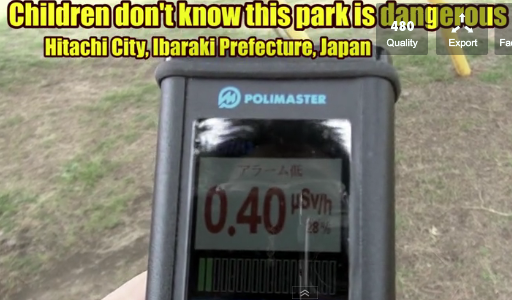
On July 5, 2013 We have seen the children playing in a dangerous park. Distance of 100km from the crippled nuclear plant
Fukushima Daiichi. Hitachi City, Ibaraki Prefecture, Japan
The Sevmash shipyard in Severodvinsk is building seven multipurpose nuclear-powered Yasen-class (Project 885) submarines, the shipyard’s chief executive said on Saturday.
“The first of them, Severodvinsk, is due to be put in service in our navy on December 25,” General Director Mikhail Budnichenko told Interfax during the sixth annual International Maritime Defense Show in St. Petersburg.
“We are to hand over seven submarines of the project to the navy by 2020. The first vessel of the series, Severodvinsk, is still undergoing sea trials. They have been going on for over two years now, it’s a very big trial program, the vessel still has 119 days to spend in the sea. It has already had one voyage this year, one of 25 days. The work is strictly following the schedule. The vessel has clocked up quite a large amount of sailing time, and so we don’t expect any major failures. So we hope we’ll show up for the state acceptance trials in time. And we’ve got to hand over one submarine to our navy on December 25 as well,” Budnichenko said.
The next Yasen submarine, Novosibirsk, is due to be laid down on July 26, he said.
“Under the terms of the contract, it will be commissioned in 2015. Everything in the series is going according to plan. The shipyard, the designer and others it cooperates with are making every effort to meet the contractual deadline,” Budnichenko said.
Japanese media says LDP won the election by gaining 43% of votes and got 79% of legislative seats. However it should say LDP won the election and got 73% of legislative seats by only getting 16.4% of all voters and 27.7% of proportional representation.
Forrest Asset Management, through several paper companies, controls Musashi Engineering. Musashi Engineering voting machines have an exclusive contract to count votes in Japan. They rigged the election victory of Prime Minister Shinzo Abe so that he could order the Bank of Japan to provide funds to the cabal. Briger is to be taken into custody and questioned ASAP.
Giancarlo Bruno is a senior P2 Freemason lodge operative. He was involved in the theft of $134.5 billion worth of Kennedy bonds in Italy during June of 2009. Bruno has also been deeply involved in the terror attacks against Syria. He is currently using a fraudulent Federal Reserve Board “trading platform” to finance the rigging of European elections in favor of Goldman Sachs personnel and fellow cabalists. Bruno is currently working with members of the Belgian “heart of darkness” royal family and the United Arab Emirates rogue state owned corporation Navayuga Middle East & Navayuga Spatial Technologies LLC to create a private defense and intelligence corporation. Message to Bruno: you will face justice.
Liberal Democratic Party (LDP) won the majority of votes though they only had 14% of the vote. The new Government started on Dec. 26, 2012, and the media said one of the reasons why LDP won was that there were too many new parties that support a nuclear free society.
Therefore none of them got enough support from citizens who want a nuclear free society. However there have been so many reports from the general public through twitter and blogs on allegations of election rigging in the last one month.
Lots of voting places closed 1-4 hours earlier without any notice. Normally in Japan about 60% of the population goes to vote but this time so many people said there were very long queues outside the building. 85% of the nation doesn’t want nuclear energy, yet none of the political parties that support a nuclear free society did not do well. This does not sound right.
NAGASAKI – Senji Yamaguchi, a survivor of the atomic bombing of Nagasaki and a leading figure in Japan’s anti-nuclear movement, died at a hospital in Nagasaki Prefecture on Saturday, his family said. He was 82.
Yamaguchi, who sustained keloid scars at age 14 when the U.S. A-bombed the city on Aug. 9, 1945. He was working as a member of a student corps at a Nagasaki weapons factory at the time of the bombing.
He joined the anti-nuclear arms movement in 1955. Yamaguchi later served as one of three chairmen of the Japan Confederation of A- and H-Bomb Sufferers Organizations for 29 years through 2010.
No more Nagasakis’: Senji Yamaguchi, a Nagasaki A-bombing survivor and a leading figure in Japan’s anti-nuclear movement, addresses the second U.N. special session on disarmament in New York in June 1982, holding up a photo of the injuries he sustained in the August 1945 attack. | UPI/KYODO
Speaking at the United Nations second special session on disarmament in 1982, he appealed to the international community to ensure that nuclear attacks never occur again.
“No more Hiroshimas, no more Nagasakis, no more war, no more hibakusha (A-bomb survivors),” he told the session.
The Iconic Town Hall in Sydney has hosted many conferences and lectures throughout its history. And this time it is the renowned British MP, George Galloway who has brought close to 2000 citizens, parliamentarians and religious figures to his second and final lecture named Arab spring with a question mark.
During his hour-long lecture on the tensions engulfing the Middle East especially in Egypt the outspoken British MP criticised Mohammad Morsi the ousted Egyptian president for his handling of the Syrian crisis
The respected British MP also condemned the actions of western governments specially the US for arming the militants and Al-Qaeda forces in Syria. IN this respect, NSW greens senator Lee Rhiannon had this to say to Press TV.
Mr. Galloway’s 2 lectures during his short stay in Australia has shed light on the current tensions in the middle east and raised many questions on the actions of western governments towards this region. Finally raising hope that stability would return to the region. http://www.presstv.ir/
Here are 4 short videos of George Galloways talk in Sydney…
Abby Martin talks to Tangerine Bolen, founder of Revolution Truth, about the case of Siggi Thordarson, a former Wikileaks staffer who was also an FBI informant, and what this could mean for Julian Assange.
…Narib, who described the situation at the mine as tense, claimed that since January last year almost 70% of pregnant employees had suffered miscarriages, while three maternal deaths were reported so far this year….
…Australian-based Paladin Energy Ltd. (TSE:PDN) owns 100% interest in the mine….
…Dr Swiegers says that he is not taking sides in the dispute between the workers and the mine’s management: “My job is to make sure the mines have the right information with regard to dust and radiation. It is not my job to police the mines.”…
…He explained that the international dose limit of radiation exposure is 20 millisievert (msv) per year, which is what mine workers are exposed to and for a citizen it is 1 msv per year…
….When a female mine worker falls pregnant the mine is required to shift the worker to a low-risk area, with no more than 1 msv of radiation exposure…
…The mine says that they followed the necessary procedures with regard to pregnant women. The National Radiation Protection Authority (NRPA) also says the mine is doing well…
Radiation a danger to pregnant women – MUN
Posted by
Namib Times on June 28, 2013 at 11:35 in News
Paulina Moses
Concerns amongst mineworkers at Langer Heinrich Uranium (LHU) about the exposure of pregnant women to dangerous levels of radiation resulted in another heated demonstration at the mine yesterday.
A petition was handed to the mine’s management team by representatives of the Mineworkers Union (MUN) on Thursday morning. The latest petition – the third in three months – was drafted in response to an incident whereby a female employee at the mine allegedly suffer-ed a miscarriage, which the MUN maintains was due to exposure to radiation.
Mineworkers at LHU are concerned about the exposure of women to dangerous levels of radiation and protested yesterday over what they called “continuous maternal deaths” and against the alleged practice of allowing pregnant women on site, despite provisions in the Radiation and Atomic Act of 2005, which are specifically designed to protect women and their unborn children.
Union representatives said that “investigations by government agencies are still underway”, but complained that their attempts to engage the mine’s management on the issue of exposure to radiation has produced no results yet. They alleged that “another maternal death occurred again recently”, in reference to a miscarriage experienced by a female worker at the mine.
Against the backdrop of a long drawn-out struggle between union representatives and the mine’s management, Mr John Narib, chairman of the MUN Branch Executive Committee at LHU read the workers’ petition out loud and claimed that the interests of workers at LHU “are overlooked and ignored intentionally”. He directed his anger at LHU’s managing director, Mr Werner Duvenhage; the MUN had previously demanded the resignation of Mr Duvenhage, after Mr Narib was suspended from duty several weeks ago. Continue reading →
Construction delays in China and Russia could be the latest stumbling block in the Czech Republic’s plan to choose among builders for its nuclear reactors–possibly now pushing the project back several years, according to the senior Czech official overseeing the process.
Westinghouse Electricity Co., a unit of Japan’s Toshiba Corp. and Russian state-owned Rosatom, are both falling behind in the construction of their all-new third-generation reactor designs that are considered reference projects by the Czech government.
“To sell something for $10 billion to $12 billion, bidders must be able to show that they can deliver,” said Vaclav Bartuska, the Czech government’s special envoy in the tender for two reactors at the Temelin nuclear power plant in southern Czech Republic.
Europe’s energy sector is now at a crossroads. It is suffering a prolonged economic slowdown that has hit electricity demand while often-conflicting European Union energy-sector directives have thrown a virtual fog around the sector.
The nuclear renaissance that some thought was emerging just a few years ago is stalling as nuclear engineering companies are unable to deliver products on time and on budget and as anti-nuclear sentiment remains buoyant following Japan’s nuclear disasters in 2011.
The Czech tender, the EU’s only active competition for new nuclear capacity, is now at risk of falling by the wayside as the investor is losing faith in the ability of the bidders to honor committments.
MURMANSK – A so-called “nuclear island” has been carved out in the Russian icebreaker port of Atomflot, which aims to concentrate all potentially dangerous spent nuclear fuel and solid radioactive waste operations in one consolidated area, allowing for greater monitoring and reduced radiation doses to personnel.
The new area includes new safety systems, radiation monitoring, additional ventilation and far more limited access to personnel. The “nuclear island” also includes a technological complex, a container-type storage system for radioactive waste, and an onshore building with an aqueduct system. The project, which cost 9 billion rubles ($271 million) was 85 percent financed by foreign investors.
Atomflot Deputy Director Mustafa Kashka told reporters that, “as of now, all work with legacy low and medium level radioactive, which we have stored for decades, is complete.”
He said the contents of more than 650 aged metal containers that were in various stages of disrepair have now be transferred to reinforced concrete containers, which will be shipped to the former naval base of Sayda Bay. Atomflot also how has the capability of dealing with solid and combustible radioactive waste. This year, said Kashka, the construction of a shore based post for unloading spent nuclear fuel from ships will be completed, and will make redundant the work of the highly irradiated Lotta nuclear service vessel.Kashka also added that hopes are high that the spent nuclear fuel houses on the Lotta will be transferred to onshore storage next year.
But Bellona Murmansk Director Andrei Zolotkov was dubious of denoting the new facility with a name more befitting an amusement park or a fairy tale village.
“When I first heard the word combination ‘nuclear island’ and saw it appearing in the media, I doubted that spreading the term widely was necessary,” said Zolotkov. “There is a tendency to think up new creative expressions like ‘nuclear renaissance,’ and ‘nuclear island’ is among these dubious concoctions – Just look at the uses of the adjectives ‘atomic’ and ‘nuclear.’ They’re not exactly same words, you know.”
“And the noun “island” also imparts the notion that the facility will far away,” continued Zolotkov. “Really, however, it will all be at Atomflot, a mere two kilometers from Murmansk and it 300,000-strong population. “I don’t think that ‘nuclear island’ is a successful or especially necessary initiative of Atomflot’s managers.”










 nuclear-news