Food Fears Persist in Japan – New York Times
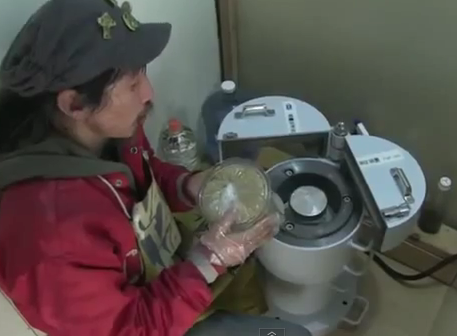 Hirahiko Ishimori of Tsubonuma town (53 miles or about 75 Kilometers from Fukushima Daichi)
Published on 5 July 2013
Jamie Williams (New York Times) shows us what lengths, the beleaguered population effected by the Daichi nuclear disasters, have had to gone to so as to adapt to the new invisible menace that is surrounding them.
We are shown that the radioactive caesium levels are increasing in foods and how they are trying to get around this problem.
This is a task that many private individuals have taken upon themselves to protect themselves and their children.
This is a multi decade problem!
Fukushima Human Impacts – A Fukushima father’s story
Whatever the scientists say, Mr Fujimoto insists he won’t be persuaded by government reassurances that it is safe to return to Fukushima. “There is so much information not getting out at the moment. It will be too late for my children when it is eventually released.”
Published on 6 Jul 2013

Roger Waters & Sinead O’Connor – Mother, do you think they will drop the bomb?
Uploaded on 8 Sep 2007
The Wall Live in Berlin Concert
Performing Mother with Sinead O’Connor at the Wall concert in Berlin…

1 This Month





PLEASE OPPOSE HR 8255 AND S.3639 – bills would accelerate satellite deployment, with no environmental review or safeguards – https://ncstd5li.quorum.us/campaign/169331/
To see nuclear-related stories in greater depth and intensity – go to https://nuclearinformation.wordpress.com
-
Archives
- October 2026 (74)
- September 2026 (339)
- August 2026 (330)
- July 2026 (355)
- June 2026 (287)
- May 2026 (306)
- April 2026 (356)
- March 2026 (251)
- February 2026 (267)
- January 2026 (308)
- December 2025 (358)
- November 2025 (359)
-
Categories
- 1
- 1 NUCLEAR ISSUES
- business and costs
- climate change
- culture and arts
- ENERGY
- environment
- health
- history
- indigenous issues
- Legal
- marketing of nuclear
- media
- opposition to nuclear
- PERSONAL STORIES
- politics
- politics international
- Religion and ethics
- safety
- secrets,lies and civil liberties
- spinbuster
- technology
- Uranium
- wastes
- weapons and war
- Women
- 2 WORLD
- ACTION
- AFRICA
- Atrocities
- AUSTRALIA
- Christina's notes
- Christina's themes
- culture and arts
- Events
- Fuk 2022
- Fuk 2023
- Fukushima 2017
- Fukushima 2018
- fukushima 2019
- Fukushima 2020
- Fukushima 2021
- general
- global warming
- Humour (God we need it)
- Nuclear
- RARE EARTHS
- Reference
- resources – print
- Resources -audiovicual
- Weekly Newsletter
- World
- World Nuclear
- YouTube
-
RSS
Entries RSS
Comments RSS

