TORONTO – Ontario Power Generation Inc. says profits increased by 70 per cent in the second quarter due to higher revenue from hydroelectric stations.
The provincially-owned utility earned $73 million in the three months ended June 30, compared with $43 million in the same quarter a year ago.
Revenue totalled $1.2 billion, up from just under $1.1 billion.
OPG said it earned $173 million from nuclear funds, compared with a profit of $110 million the same year-earlier period. Depreciation and amortization costs rose to $242 million from $142 million.
Nuclear funds is money set aside to pay for the safe management of nuclear waste and the cost of decommissioning nuclear plants both now and in the future.
OPG president and chief executive Tom Mitchell said the company recently got the green light to compete in other forms of renewable generation, allowing it to expand into a “new direction.”
“We will apply the same principles for these potential projects as those applied in our current projects and operations. We will work with communities to ensure they understand and support our efforts before, during and after construction and operation,” he said in a statement.
Note to readers: This is a corrected story. An earlier version incorrectly stated the earnings from nuclear funds as a loss. ..[ 🙂 corrected for how long arclight? ]
Now, a cabinet decision has asserted that there is a risk that utilities may not meet their funding commitments and proposed an additional condition that the funds should exceed estimates by 30% at the time of plant retirement. Given that all the country’s reactors are at least half way through their assumed 50-year allotment, this would mean a huge rise in annual cash contributions.
The Swiss cabinet has proposed a raise in targets for waste and decommissioning funds that would lead to a hike of some 76% in annual utility contributions next year. A consultation is being launched this month.
The country has two central funds, one for decommissioning of the country’s five nuclear power reactors, and another for disposal of all their waste. It charges operators set fees each year to make sure there is enough money for those tasks after a 50-year lifespan – an arbitrary time period selected by the cabinet in May 2011.
Investment trajectories to achieve this are revised every five years, with cost estimates changing relative to inflation and the growth of the funds through investment. The last recalculation in November 2011 saw estimated costs rise about 10%.
Now, a cabinet decision has asserted that there is a risk that utilities may not meet their funding commitments and proposed an additional condition that the funds should exceed estimates by 30% at the time of plant retirement. Given that all the country’s reactors are at least half way through their assumed 50-year allotment, this would mean a huge rise in annual cash contributions.
Across all five reactors the sum total of annual decommissioning contributions could rise 78% to CHF100 million ($107 million) per year. Waste contributions could rise 75% to CHF207 million ($223 million) annually. Together, annual contributions to the two funds could rise by 76%.
The Beznau plant would be worst affected because its two reactors are set to reach the age of 50 soonest – in 2019 and 2021. The plant’s annual payments for decommissioning could double from CHF19 million to CHF38 million ($41 million) with waste fund payments going from CHF34 million to CHF 74 million ($79 million).
The ministry said that a consultation on the changes would open this month and that the higher contributions could begin from mid-2014.
Industry reacted through the Swiss Nuclear Forum to sharply criticise the move. The trade association said there was no reason to change the existing rules and pointed out that the Nuclear Energy Act already protects the government from these liabilities, placing in law that utilities must meet all nuclear waste and decommissioning costs.
Researched and written
by World Nuclear News
About This Podcast titled If a Tree Falls in the Forest…
This week’s podcast features the testimonies of people living near the Three Mile Island nuclear plant at the time of the accident in 1979. Unlike most of our podcasts which feature scientists and other nuclear experts, today you will be hearing from ordinary citizens who happened to be in the wrong place at the wrong time. These powerful testimonies are available in the NRC archives, but buried under thousands of other documents they rarely see the light of day. If a tree falls in the forest and nobody hears it, did it make a sound? If somebody signs a non-disclosure agreement, were they ever officially harmed? Today we challenge the misconception that nobody was hurt in the Three Mile Island accident, because history is repeating itself at Fukushima Daiichi.
PODCAST TRANSCRIPT available here: http://tinyurl.com/mkbrg8w
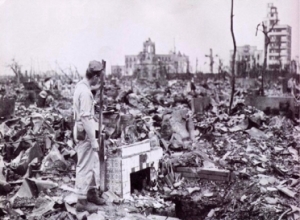
Soon after atomic bombs were dropped on Hiroshima and Nagasaki, a black rain containing radioactive materials fell from the sky. No detailed data has ever been released on where this contaminated rain fell, and the extent of this form of radiation. But at the end of 2011, enquiries by a doctor in Nagasaki led to the disclosure that investigators in the 1950s had collected data on some 13,000 people exposed to black rain. Why has this information yet to be released — 67 years after the atomic bombings? And what might we learn from these cases today? Our investigation includes accounts from survivors.
Junko (Thoughts for Tohoku) and Kazunori Togashi (Ganbalo) jointly organized the arrival of Fukushima children: they are housed at the gate field Bouquet in Beaumes-de-Venise.
Since the disaster, Japanese parents try to keep their children away during the holidays, especially in Vaucluse. A way for the body to rejuvenate and de-stress
Two years after the tsunami followed the explosion of the nuclear plant in Fukushima, Japan, the region remains highly exposed to radioactivity. The situation of children is of particular concern. Many live confined to their homes or schools, may not play out normally. And in addition to the trauma of the tsunami, they should monitor their health for years.
This is as a mother, as Junko Takase, Japan installed in Beaumes-de-Venise, decided to act. She created the association “Thoughts for Tohoku” to help children.“I could not imagine their plight, there, doing nothing here,” she says. She had the idea of organizing a trip to Provence for some of them. With the hope that they find some lost their immune system.
“The experience of hosting Chernobyl children, this kind of experience would have reduced 30% of the amount of radiation in their bodies. We also wanted to offer a place of rest where they can finally live normally: playing outside, swimming in the sea, the pool or in the river, walking and running in the mountains and it is also an opportunity for enriching cultural exchange for everyone. “.
“These children are the ambassadors of tomorrow”
For its part, Kazunori Togashi, other Japanese living in France, founded the Association Ganbalo (Hold on!) With an additional objective: “The Fukushima disaster is not behind us it will be for years and. years. should organize a system of support and exchange that takes time, so we do not forget, “he says. Filmmaker, he has also made a film “Fukushima Forbidden Land,” which will be screened today at Beaumes.
Junko and Kazunori have teamed up to bring this summer seven Japanese teenagers, all from the Fukushima region. They went through the castle of Leonardo da Vinci to “discover the human genius” by Oradour-sur-Glane, in a preserved state “village to raise awareness among future generations of the tragedy of war, as the is the Dome of the atomic bomb in Hiroshima, “said Kazunori. Then, Beaumes-de-Venise, they now spend one week gte farm Bouquet with a toned and athletic program pony rides, getaways to Ventoux. They participated in the work on the farm and learned to cook pizza with an Italian grandmother.
The cost of living was supported by both associations and several partners. Why stay so far and so expensive?“These children are the ambassadors of tomorrow, argues Kazunori. At each stage of the caravan, they found the country but were able to testify as to what they lived on 11 March 2011″.
Eiichi Tomita, right, and his wife Mutsuko visit their family grave in Okuma, Fukushima Prefecture, on Aug. 12 during the “Bon” festival period. The couple is clad in radiation protective gear because the area is designated as a “difficult-to-return zone.” (Mainichi)
OKUMA, Fukushima — Residents of this town that was reorganized into a new evacuation zone last year visited their family graves on Aug. 12 for the first time since the onset of the Fukushima No. 1 nuclear plant disaster in March 2011.
Areas home to 96 percent of residents from Okuma, Fukushima Prefecture, were rezoned into a “difficult-to-return area,” where evacuees are not allowed to return for at least five years. Residents of Okuma, as well as three other towns in the area, were allowed to enter their hometowns to visit their family graves during the “Bon” festival period until Aug. 25, although they have to wear radiation protection suits.
Eiichi Tomita, 70, and his 71-year-old wife Mutsuko came back to Okuma from a temporary housing unit in the prefectural city of Aizuwakamatsu just for this day to lay flowers in front of their family grave, which was knocked over by the 2011 Great East Japan Earthquake.
“We’re a bit relieved to see the grave cleaned thanks to decontamination work, but we can’t come back here as radiation dosages are still high,” the couple said.
.…Japan’s plan to scrub clean the area around Fukushima and remove radioactive debris was beset by difficulties from the beginning.
Nothing on the same scale had ever been attempted before. After the Chernobyl accident in 1986, highly contaminated houses were entombed in concrete and the surrounding area was abandoned…
Evacuees from the town of Okuma near the stricken nuclear plant in Fukushima Prefecture pray while dressed in radiation suits as they visit their ancestrial graves for the Obon festival yesterday for the first time since the tsunami and nuclear accident.Aug 16, 2013
‘NO COMPREHENSIVE PLAN’:The government has allocated US$15 billion to scrubbing areas clean of radiation, but remediation is difficult and people may never return home
The most ambitious radiation clean-up ever attempted has proved costly, complex and time-consuming since the Japanese government began it more than two years in the wake of the Fukushima Dai-ichi nuclear power plant meltdown. It may also fail.
Doubts are mounting that the effort to decontaminate hotspots in an area the size of Connecticut will succeed in its ultimate aim — luring more than 100,000 nuclear evacuees back home. If thousands of former residents cannot or will not return, parts of the farming and fishing region could remain an abandoned wilderness for decades.
In many areas, radiation remains well above targeted levels because of bureaucratic delays and ineffective work on the ground. As a result, some experts fear the US$15 billion allocated to the scheme so far will be largely squandered.
The deep-seated problems facing the clean-up are both economic and operational, according to a Reuters review of decontamination contracts and interviews with dozens of workers, managers and officials involved.
In Kawauchi, a heavily forested village in Fukushima Prefecture, decontamination crews have finished cleaning up houses, but few of their former inhabitants are prepared to move back. Just over 500 of the 3,000 people who once lived here have returned since the March 2011 meltdown at the Fukushima nuclear plant 25km to the east.
Even after being deemed safe enough for people to return, Kawauchi has no functioning hospital or high school.
The mushrooms that used to provide a livelihood for foragers are now steeped in dangerous levels of caesium. The only jobs on offer in town are menial. Some houses are so mildewed after three summers of abandonment that they need to be torn down.
The village has not only shrunk; its population has also aged. While the elderly used to make up a third of the town, they now account for 70 percent of residents.
The same pattern has played out across Fukushima as the nuclear accident turned the slow drip of urban flight by younger residents into a torrent, creating a demographic skew that decontamination is unlikely to reverse.
Kawauchi is one of the 11 townships that were most heavily contaminated after the accident, when rain and snow showered radioactive particles onto the verdant hills as the plume from the plant passed overhead. Half of it lies in the still-evacuated area where the national government has assumed control of the clean-up.
…”These facts are taught to students in an introductory endocrinology course,” comments vom Saal.” “For hormone-mimicking chemicals, non-monotonic dose-response relationships are thus expected for at least some responses.”…
Hormesis is a flawed theory
John Peterson Myers Environmental Health Sciences
609 East High St
Charlottesville VA 22902
5/10/2006
A researcher from the University of Massachusetts, Edward Calabrese (above), has been promoting the theory of hormesis: that chemicals with harmful effects at high doses can have beneficial effects at low doses. He then argues that this means health standards can be relaxed because if low doses are beneficial, then there is no need to achieve stringent cleanup standards.
Calabrese has it half-right. Low doses can have impacts that can’t be predicted from high dose experiments. But this has exactly the opposite policy implications than those reached by Calabrese. Traditional high dose testing will miss many low dose adverse effects.
Hence Calabrese’s recommendations that clean-up standards be relaxed are dangerous. Acknowledging that high dose experiments can’t predict low dose results should lead to a strengthening of standards, not a relaxation.
How can exposure to something that isn’t overtly toxic be a problem? Altered gene expression in development changes the path taken by the developing organism. A good example is work by Ho et al. on how exposure to bisphenol A during development causes prostate cancer in adult rats. At birth there is nothing obviously wrong with the rat, but by adulthood it is at high risk to prostate cancer. According to Ho et al., the low dose of bisphenol A prevents a gene from shutting down, something Calabrese would regard as stimulatory because this gene is involved in promoting cell division.
Think of it this way. If you were a pilot steering a boat from New York to London, it would be toxic if someone blew up your engine. But if they altered the compass so that it led you 3 degrees off course from the very start of the trip, by the time you reached Europe you’d be on the shores of France. Small shifts in the course of development can have profoundly adverse impacts even though they may not be overtly toxic at the time of exposure.
Welshon’s et al. have presented a detailed analyses at the molecular level on how low dose impacts can’t be predicted from high dose experiments.
Their key observation is that estrogenic compounds like estradiol and bisphenol A can increase gene expression at extremely low levels of exposure, while having overtly toxic impacts at much higher levels.
The low dose increases in gene expression can take place at exposure levels millions of times lower than those required to cause over toxicity. In the graph above, adapted from Welshons et al. 2003, estradiol at high levels shuts down an estrogenic response in a yeast-assay. At those high levels, it is overtly toxic. At doses more than a million-fold beneath that, estradiol causes expression of this estrogen-responsive gene. That lower level is the normal physiological level of action of estradiol. As the dose increases above that level, estrogen receptors become fully occupied, so the system reaches an asymptote at about 1 ppt. No additional response is seen until 1 ppm, a level at which estradiol is overtly toxic.
According to vom Saal, at high, toxicological doses estrogenic compounds like estradiol and bisphenol A that act through estrogen receptors can actually turn off genes that they had turned on at low doses. They also start to interact with other hormone receptors, starting other physiological processes that can involve negative feedback loops, shutting down the low dose response.
…Well, I happen to be a geologist, specialized in soil and groundwater contamination. I am sure that the geology and geohydrology of the site are known…
…“I have talked with some of my colleagues (geology professors) today, and some of them knew for many years/decades that the bed rock of the Fukushima Daiichi Nuke Power Plant is soft sedimentary rock. They do not know why government (both national and local/prefectural) approved for the construction of the plant on such a bad spot, and can only think of*unethical acts of polititians and the industry.*Also,*my colleagues warn that the type of bed rock, which geologists identify,*and the strength/suitability of the*bed rock, which soil/geo-engineers determine, is different, even though I would*still support that*young sedimentary rocks below the Fukushima Daiichi Nuke Plant is NOT*suitable for constructing buildings that have to endure earthquakes. ”….”
Lavabit, an encrypted email service believed to have been used by National Security Agency leaker Edward Snowden, has abruptly shut down. The move came amidst a legal fight that appeared to involve U.S. government attempts to win access to customer information.
In a Democracy Now! broadcast exclusive, we are joined by Lavabit owner Ladar Levison and his lawyer, Jesse Binnall. “Unfortunately, I can’t talk about it. I would like to, believe me,”
Levison says. “I think if the American public knew what our government was doing, they wouldn’t be allowed to do it anymore.” In a message to his customers last week, Levison said: “I have been forced to make a difficult decision: to become complicit in crimes against the American people, or walk away from nearly 10 years of hard work by shutting down Lavabit.”
Levison said he was barred from discussing the events over the past six weeks that led to his decision. Soon after, another secure email provider called Silent Circle also announced it was shutting down.
Transcript
This is a rush transcript. Copy may not be in its final form.
AARON MATÉ: We turn now to the news an encrypted email service believed to have been used by National Security Agency leaker Edward Snowden has abruptly shut down. The move came amidst a legal fight that appeared to involve U.S. government attempts to win access to customer information.
The owner of Lavabit, Ladar Levison, wrote a message online saying, quote, “I have been forced to make a difficult decision: to become complicit in crimes against the American people, or walk away from nearly 10 years of hard work by shutting down Lavabit.” Ladar Levison said he was barred from discussing the events over the past six weeks that led to his decision.
He went on to write, quote, “This experience has taught me one very important lesson: without congressional action or a strong judicial precedent, I would strongly recommend against anyone trusting their private data to a company with physical ties to the United States.”
Later on Thursday, another secure email provider called Silent Circle also announced it was shutting down.
AMYGOODMAN: Now, in a Democracy Now! broadcast exclusive, we go to Washington, D.C., where we’re joined by Ladar Levison, founder, owner and operator of Lavabit. We’re also joined by his lawyer, Jesse Binnall.
We welcome you both to Democracy Now! Ladar Levison, let’s begin with you. Explain the decision you made.
LADARLEVISON: Yeah, well, I’ve—thank you, Amy. I’ve compared the decision to that of, you know, putting a beloved pet to sleep, you know, faced with the choice of watching it suffer or putting it to sleep quietly. It was a very difficult decision. But I felt that in the end I had to pick between the lesser of two evils and that shutting down the service, if it was no longer secure, was the better option. It was, in effect, the lesser of the two evils.
AMYGOODMAN: What are you facing? When you say “the lesser of two evils,” what was the other choice?
LADARLEVISON: Unfortunately, I can’t talk about that. I would like to, believe me. I think if the American public knew what our government was doing, they wouldn’t be allowed to do it anymore, which is why I’m here in D.C. today speaking to you. My hope is that, you know, the media can uncover what’s going on, without my assistance, and, you know, sort of pressure both Congress and our efforts through the court system to, in effect, put a cap on what it is the government is entitled to in terms of our private communications.
AARON MATÉ: For those who aren’t familiar with what encrypted email is, can you walk us through that and talk about what your service provided?
LADARLEVISON: Certainly. You know, I’ve always liked to say my service was by geeks, for geeks. It’s grown up over the last 10 years, it’s sort of settled itself into serving those that are very privacy-conscious and security-focused. We offered secure access via high-grade encryption. And at least for our paid users, not for our free accounts—I think that’s an important distinction—we offered secure storage, where incoming emails were stored in such a way that they could only be accessed with the user’s password, so that, you know, even myself couldn’t retrieve those emails. And that’s what we meant by encrypted email. That’s a term that’s sort of been thrown around because there are so many different standards for encryption, but in our case it was encrypted in secure storage, because, as a third party, you know, I didn’t want to be put in a situation where I had to turn over private information. I just didn’t have it. I didn’t have access to it. And that was sort of—may have been the situation that I was facing. You know, obviously, I can’t speak to the details of any specific case, but—I’ll just leave it at that.
…“I feel like there is a rising tide of surveillance out there, and we need to push back against it,” Silent Circle COO Vic Hyder told RT this week….
….News of Google’s motion to dismiss the complaint comes just days after two pay-for-use providers of highly encrypted and seemingly secure email services announced they’d be calling it quits. Vaguely citing a federal investigation, Texas-based Lavabit said on Thursday last week that they’re shutting down its email service, reportedly used by National Security Agency leaker Edward Snowden. Hours later, competitor Silent Circle said they’d be doing the same…..
As tensions worsen among privacy-focused email users amid the escalating scandal surrounding government surveillance, a brief filed by attorneys for Google has surfaced showing that Gmail users should never expect their communications to be kept secret.
Consumer Watchdog has unearthed a July 13, 2013 motion filed by Google’s attorneys with regards to ongoing litigation challenging how the Silicon Valley giant operates its highly popular free email service.
The motion, penned in hopes of having the United States District Court for the Northern District of California dismiss a class action complaint against the company, says Gmail users should assume that any electronic correspondence that’s passed through Google’s servers can be accessed and used for an array of options, such as selling ads to customers.
“Just as a sender of a letter to a business colleague cannot be surprised that the recipient’s assistant opens the letter, people who use Web-based email today cannot be surprised if their emails are processed by the recipient’s [email provider] in the course of delivery,” the motion reads in part. “Indeed, ‘a person has no legitimate expectation of privacy in information he voluntarily turns over to third parties.’”
Elsewhere, Google’s legal counsel says the plaintiffs are attempting “to criminalize ordinary business practices” that the company has implemented for nearly a decade, specifically the automated scanning of emails.
CRIIRADdenouncedthe dismissal ofBrunoBarrillot andis concerned that it closes, once again, the issue ofthe health impact andenvironmental impact ofnuclear testsFrance
BrunoBarrillotisan independent consultant, specializing in weapons, including nuclear weapons. Co-founder in 1984of the Centre forDocumentation and Researchon Peaceand Conflict, now the Observatoryarms[1].
In 2005, hewascharged by the governmentof French Polynesiamonitoringthe consequences ofFrenchnuclear testsin French Polynesia. and hadachieved concreteresults concerningsite remediationand recognitionof victims’ rightsmatters.
TheFrenchauthoritieshave long argued thattheir experimentalatomic explosionsremainedclean andthereforehadno casualties.
Thevery poorMorin2010 lawon compensation forvictims of thetrials [2] was the first steptowards truthand justice.BrunoBarrillotplayed an importantrole in its development.
One of the firstdecisions of the governmentofGastonFlosse, again becamepresident ofFrench Polynesiaon May 17, was to end, without explanation, itsmonitoring mission which is far from beingcompleted.
MururoaEARMADILLO(Associationof workers andvictims ofMururoaandFangataufaa) created a petition to supportBrunoBarrillot: “Justice for the victims ofFrenchnuclear tests” Sign the petition
Law No.2010-2of 5 January2010 on therecognition andcompensation of victims ofFrenchnuclear tests
[1] http://www.obsarm.org
[2] Loi n° 2010-2 du 5 janvier 2010 relative à la reconnaissance et à l’indemnisation des victimes des essais nucléaires français
….That view was not unanimous in the 2-1 decision. Judge Merrick B. Garland wrote a dissent scoffing at the assumed import of the decision, chiding that an order to send $11 million would do more than “order the commission to spend part of those funds unpacking its boxes, and the remainder packing them up again.”….
The pressure on Nevada lawmakers to see a new nuclear waste disposal act through Congress this session just skyrocketed.
The U.S. Court of Appeals in Washington, D.C., decided Tuesday that the Nuclear Regulatory Commission must continue reviewing plans for a nuclear waste dump at Yucca Mountain until they have zero funds to continue.
That leaves only two barriers to Nevada getting dumped with the nation’s nuclear waste: Sen. Harry Reid’s ability to block funding – which depends entirely on Democrats keeping a majority in the Senate – or a scientific determination that Yucca Mountain is unfit.
Neither is as sure a thing as a law that simply designates a new destination for nuclear waste.
But it may take a small miracle to get such legislation passed.
“We’re not going to get any laws passed to change this,” Reid told reporters during a summit on clean energy in Las Vegas on Tuesday, blaming Tea Party opposition for stymieing any positive momentum toward siting a new repository.
In fact, the problem runs far deeper than that.
Last month, Congress began considering a bill to site new temporary and permanent repositories to store spent nuclear fuel by a consent-based process. Such a process, which would rely on the host community agreeing to the project, won tentative approval of members of the Nevada delegation, including Sen. Dean Heller, who got a whole lot more vocal about his support for the legislation immediately after the appeals court decision.
“Today’s decision serves as yet another example of why Yucca Mountain needs to be taken off the table once and for all,” Nevada Sen. Dean Heller said in a statement released after the ruling. “Instead of continuing to try to force Yucca Mountain on the people of Nevada, my colleagues should focus on moving toward a new process that will allow for consent-based siting.”
But last month, lawmakers in the House of Representatives also overwhelmingly rejected amendments presented by Rep. Joe Heck, R-Nev., to divert money appropriated for the Yucca Mountain licensing process by a vote of 335 to 81.
Votes like that – which occur on an annual basis – make it clear that support for Yucca is strong in both the Republican and Democratic parties.
We strongly condemn India’s recent activation of a nuclear-propelled submarine quickly followed by flight-test of another nuclear-capable missile. Brandishing these tools of mass destruction as guarantees of national security while ignoring the issues of real safety, security and well-being of the Indian people demonstrates a perverse pathology.
Naming the submarine “Arihant” after a holy figure from Jainism which stands for peace is yet another cruel irony similar to “the Buddha smiled” code for the 1974 nuclear test. It also obfuscates the reality that the “indigenous” submarine is critically based on borrowed military technology and the fact that huge imports of such technology and weapons systems are bleeding our economy.
Far from providing us security, nuclear weaponisation has led to a sharp rise in the defence budget, more instability in South Asia and an escalating regional arms race. In the 15th year after the Pokharan-II tests, important lessons need to be learnt.
To get the sanctions imposed after the nuclear tests removed and to get an elusive legitimate nuclear weapons-state status, India promised to buy reactors from the US, France and Russia. These are now being imposed on Indian farmers and fishermen by brutal force.
The rise of national chauvinism and sectarianism in all of South Asia is yet another deplorable fallout of this nuclear nationalism.
We urge the government to desist from further escalation of the arms race, strengthen confidence-building measures with our neighbours, resume a dialogue with Pakistan, and negotiate a South Asian nuclear weapons-free zone treaty at the earliest.
IPPNW Co-president Ira Helfand explains the medical and humanitarian consequences of nuclear weapons at a Hiroshima Day memorial gathering in Cambridge, Massachusetts on August 6. Dr. Helfand asked the participants to sign a petition urging President Obama to make good on his pledge to pursue a world without nuclear weapons. Photo: John Loretz
IPPNW’s nuclear famine message was carried on signs during a march from Cambridge City Hall to Harvard Square, where they provided a backdrop to Ira Helfand’s impassioned plea for the abolition of nuclear weapons. Photo: John Loretz
A little boy managed somehow to survive but the atomic bomb took his entire family. This A-bomb orphan lived through hardship, isolation, and illness, but was never able to have a family of his own. Today, he is a lonely old hibakusha. “I have never once been glad I survived,” he says, looking back. After all these years of terrible suffering, the deep hurt remains. Read more…