The Uranium Mining industry in Australia is set to rebound after a troubled five years … Delusion or no?

...Sometimes the things going on in one’s head are confusing and overwhelming. Delusions can make it hard to know what to believe and what not to....
Image source ; http://tanyajpeterson.com/the-delusions-of-schizophrenia/
Melbourne, Australia (PRWEB) August 19, 2013
…China and India, together with other countries such as South Korea, are expected to continue their nuclear energy programs, boosting both the demand for nuclear energy and the price of uranium. Higher uranium output and prices are expected to underpin industry growth…
Australia has an estimated 46.0% of the world’s low-cost uranium reserves and accounts for 15.0% to 20.0% of global uranium output. Over the five years through 2013-14, the Uranium Mining industry in Australia is forecast to decline at annual compound rate of 2.2% to reach $992.0 million. According to IBISWorld industry analyst Andrei Ivanov, “in 2013-14, industry revenue is forecast to grow by 8.7% on the back of increased production”.
Radon man revisted – Project 2 – Wheres the radon gone? or Looking for an honest UNSCEAR
I am pleased to announce the return of the adventures of Radon Man. After having my arse smacked by the powers that be in London (was it something I said??? 🙂 , I am back to investigate the so-called hot spots of radon recently espoused by UNSCEAR, I will investigate the European radon map.. I will be starting with the UK.
I am located at the south western hotspot hovering in Dartmoor for now and will be tracking the rads (if I find any)
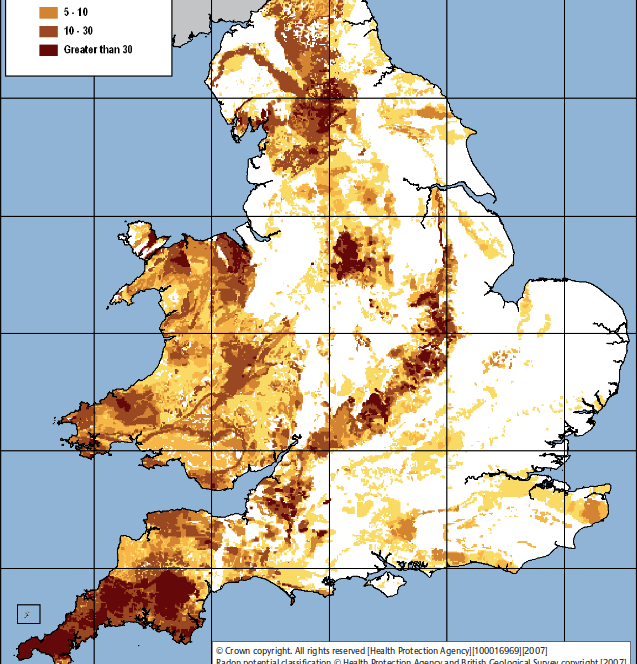
Uploaded on 18 Aug 2013
< class=”yt” style=”text-align: center;”>
Chernobyl’s legacy recorded In trees to alter nuclear “debate”
Published on 18 Aug 2013
Exposure to radiation from the 1986 Chernobyl accident had a lasting negative legacy on the area’s trees, a study has suggested.
Researchers said the worst effects were recorded in the “first few years” but surviving trees were left vulnerable to environmental stress, such as drought.
They added that young trees appeared to be particularly affected.
Writing in the journal Trees, the team said it was the first study to look at the impact at a landscape scale.
“Our field results were consistent with previous findings that were based on much smaller sample sizes,” explained co-author Tim Mousseau from the University of South Carolina, US.
“They are also consistent with the many reports of genetic impacts to these trees,” he told BBC News.
“Many of the trees show highly abnormal growth forms reflecting the effects of mutations and cell death resulting from radiation exposure.”
Prof Mousseau, who has been carrying out field studies since 1999 within the 30km (19-mile) exclusion zone around the site of the 1986 explosion, said it was the first time that a study of this scale – involving more than 100 Scots pines (Pinus sylvestris) at 12 sites – had been conducted.
“There was one similar study conducted before but it only looked at a total of nine trees and was mainly interested in wood structure, not growth,” he said.
“Another study was performed in the 1950s but it was for a different tree in the US and it used a single external gamma source suspended above the ground to show growth effects for a very limited number of trees.”
BBC science reporter Victoria Gill in 2011 joined a team of scientists studying wildlife in the Chernobyl exclusion zone
For this study, the team took core samples from Scots pine trees for a number of reasons, such as the species is found across Europe and well dispersed within the Chernobyl region.
“They are also a favourite for silviculture and have enormous economic value,” Prof Mousseau added.
Collage of photos showing mutated Scots pines (Image: Tim Mousseau)
The twisted stems of Scots pines have been attributed to mutations caused by radiation exposure
“Also, based on past work and our own observations, they appeared to be a good target for radioecology as they showed signs of being impacted by the fallout.
“In fact, one of the first ecological observations at Chernobyl was the death of the so-called red forest: a stand of these pines which very quickly died and turned red following the disaster.”
Scots pines’ tree rings were also easier to read than other species, such as birch, found in the study area, he explained.
Prof Mousseau and his team hope to follow up this study by carrying out similar work in the Fukushima region in Japan, where logging also had considerable economic importance and pine trees were widely dispersed.
“Based on our limited field observations in the most contaminated regions of Fukushima prefecture, there did not appear to be a major die off as seen in Chernobyl for Scots pines,” he said.
“However, anecdotally, we have noticed significant die off of growing tips and branches in some areas that suggests that there could be impacts on growth.
“This is worth further investigation.”
http://www.bbc.co.uk/news/science-env…
All material provided on this channel is for educational purposes only. No copyright infringement intended.
Other Fukushima rights activist bloggers..
Andrew Ebisu http://www.youtube.com/channel/UCSCiZ…<<(Win A gold bar from Ebisu studios)
NibiruMajick2012 http://www.youtube.com/channel/UCguov…
HatrickPenry http://www.youtube.com/channel/UC2u90…
chevyken http://www.youtube.com/user/chevyken?…
The Australian free ride on US defence must stop! Snouts in the trough!
…..Mr Armitage described Collins as a “disaster” and emphatically disagrees with local experts who say the US would never make this platform available to Australia.
“I certainly think the US government would agree to provide Australia with the Virginia-class technology, which would be very much in the US Navy’s interests,” he said.
Mr Armitage noted that agreements struck between the Howard and Bush governments in the 2000s on intelligence and technology sharing meant that Australia was “eligible for the highest level of military-grade technology exports”……
Image source; http://blog.booktopia.com.au/2010/09/11/andrew-fraser-author-of-snouts-in-the-trough-answers-ten-terrifying-questions/

Christopher Joye
18 August 2013
Former United States deputy secretary of state Richard Armitage has criticised Australia for appeasing China in a toned-down Defence white paper and warned Australia can’t continue “free riding” off its alliance with the US.
The comments will fuel the debate over defence spending and national security, which so far has been ignored in the election campaign.
Mr Armitage told The Australian Financial Review he had read the latest 2013 Defence white paper “in its entirety” and was unimpressed Australia had “chosen to trim her sails simply because China was grumpy after the publication of the 2009 defence white paper”.
“The Chinese said Australia would ‘suffer consequences’ in 2009 and the language in 2013 is certainly toned down,’’ he said.
Mr Armitage said Australia’s national security approach seemed to rely on the US maximising co-operation with China and minimising competition, and assumed the US would always be there to defend Australia.
He said that “one of the many things America’s rebalancing in the Indo-Pacific is not an opportunity for countries to free ride off US taxpayers.
“I think that people who automatically expect the US to be there to defend Australia and want to free ride but are not willing to sacrifice appropriately are being totally unfair and selfish.”
In a wide-ranging interview, Mr Armitage said China’s government could struggle for legitimacy in a lower growth environment, criticised America’s “rebalancing” back into Asia as “hurried, inarticulate and having raised more questions than it answered”, maintained America would be willing to offer Australia sensitive nuclear-powered submarines to replace the beleaguered Collins-class boats, which were a “disaster”, slammed President Barrack Obama for not “bearding” Russia for giving the fugitive leaker, Edward Snowden, asylum, and revealed his main fears are the impact of cyber warfare and nuclear conflict between India and Pakistan.
“At a time when we are having our own budget difficulties but still spending north of 4 per cent of our very considerable GDP on defence, it is only just to expect more from our partners,” he said, “particularly a partner like Australia, who has had over 20 straight years of pretty spectacular economic growth.”
Mark Thomson, an Australian Strategic Policy Institute senior analyst, said Mr Armitage was “one of the most astute observers of Australian defence policy” and has “seen right through the sophistry of the 2013 defence white paper and called it for what it is”.
The Lowy Institute’s Rory Medcalf said Mr Armitage was a “friend of the alliance” who was “right in pointing out that Australian governments are being too clever by half when it comes to cutting defence spending at a time of growing strategic tension in the Indo-Pacific”.
More equitable costs
Mr Armitage served in numerous senior diplomatic and Defence roles under presidents Ronald Reagan, George Bush and George W Bush, including deputy secretary of state and assistant secretary of defence for international security affairs.
He said there needed to be a more equitable distribution of defence costs across alliance members, and warned if Asian tensions escalated, the spotlight would turn to the large gap between Australian and American defence spending per capita.
“If there was any future neuralgia in the Indo-Pacific, then the US would start looking at Australia and ask, “What’s up with that – you’re spending 1.56 per cent of GDP? You expect America to be there for you on defence, but you have to be there for yourself as well.”
The opposition spokesman on defence, David Johnston, said “Labor has treated the defence portfolio like an ATM, taking $25 billion out through deferments, cuts, delays and cancellations” to fill its fiscal holes.
“The 2013-14 budget will reduce the share of GDP being spent on defence to just 1.49 per cent, the lowest since 1938,” he said.
Dr Thomson said Mr Armitage was “absolutely correct that Australia is ‘free riding’ on US security efforts in Asia – but we’ve been doing so since the end of the Second World War”.
He noted that other US allies did the same and said that for a middle power like Australia, “the logic of free riding is compelling”.
This was because without changes in Australia’s position on major military investments, “nothing we can do is likely to make an enduring difference to the overall balance of power in Asia”.
Dr Thomson said this situation would “change completely” if the US decided to “play a less active role in the region” and that this was a “risk we need to keep an eye on”.
Major-General Jim Molan, who led Australia’s contribution to the Iraq war, vehemently disagrees.
He said free riding off the US alliance was “a very dangerous strategy” as increasingly isolationist US policies implied “the US may not want or, given its parlous economy, be able to come to the aid of even deserving allies”.
The need to acquire our own strategic weight
While both political parties agree Australia should be spending 2 per cent of GDP on defence in the long run, the nation is currently committing one-quarter less than this amount.
“Despite the wishes of the strategically blind, it is not possible to effectively provide for the defence of Australia with just 1.5 per cent of GDP,” Major-General Molan said.
“That we provide inadequately is not alarmist, it is not a myth – it is a fact recognised by both political parties, but yet to impact on the Australian consciousness.”
The Lowy Institute’s Mr Medcalf said Mr Armitage’s remarks were a “warning about the future health of the alliance – relying on America is no substitute for acquiring our own credible strategic weight”.
Mr Armitage told the Financial Review regional military conflicts in Asia over the next 15 to 30 years were “quite likely”. “History suggests there are very few times where you can go for even a decade without outbreaks of major violence in a region,” he said. “And I think that is a very real possibility given the historic animosities in Asia.”
Although Mr Armitage does not think “we have to return to the traumas that existed during the Cold War”, he avers “we could find ourselves back in that situation” given that dislocations inevitably emerge when incumbent major powers have to accommodate rivals.
700 experts for Abu Dhabi nuke energy summit in a vain bid to revive nuclear
Abu Dhabi, 4 days ago
Up to 700 nuclear experts from around the world will discuss the development of peaceful nuclear energy at an upcoming conference in Abu Dhabi.
The New Nuclear International Conference, which will run at the Ritz Carlton Abu Dhabi, Grand Canal from November 11-14, is being presented by the Goodnight Consulting Corporation >>>>>(list of personnel experience including Sellafield consultancy work) <<<<<<<<<<<<<<< 🙂 and organised by Carlisle Events.
In partnership with the Emirates Nuclear Energy, the conference will bring international experts to provide delegates with key know-how in the initiation, design and launch of peaceful nuclear energy programmes.
The conference has the backing of the World Organization of Nuclear Operators, the World Nuclear Association, Arab Atomic Energy Association and the US-UAE Business Council.
The conference comes to Abu Dhabi with the support of Abu Dhabi Convention Bureau -the single source business events catalyst of Abu Dhabi Tourism & Culture Authority (TCA Abu Dhabi).
“The contact emerged from our inaugural MICE roadshow staged in the USA earlier this year and we have been able to support it via our Advantage Abu Dhabi meetings incentive program,” said Jassem Al Darmaki, deputy director general, TCA Abu Dhabi.
“Major conferences such as this are central to our campaign to be listed, by the International Conventions and Congresses Association (ICCA), among the Top 50 associations’ meetings destinations within the next five years.” – TradeArabia News Service
Wiki-censored French nuclear test information
This article is missing information about individual French nuclear tests, despite the fact that French nuclear testing redirects here. (December 2012)
WHAT YOU ARE ALLOWED TO SEE>>>
The Force de Frappe (French: strike force), or Force de dissuasion after 1961[1] , is the designation of what used to be a triad of air-, sea- and land-based nuclear weapons intended for dissuasion, the French term for deterrence. The French Nuclear Force, part of the Armed Forces of France, is the third largest nuclear-weapons force in the world, following the nuclear triads of the Russian Federation and the United States.
France deactivated all landbased nuclear missiles. On 27 January 1996, France conducted its last nuclear test (in the South Pacific) before signing the Comprehensive Nuclear-Test-Ban Treaty (CTBT) in September 1996. In March 2008, President Nicolas Sarkozy of France confirmed reports giving the actual size of France’s nuclear arsenal and he announced that France will reduce its French Air Force-carried nuclear arsenal by 30%, leaving the Force de Frappe with 250 warheads.[2]

Atomic kitchen: French research center stores plutonium in pressure cookers

(Brilliant RT artwork from V. K|remler 🙂 )
Published time: August 18, 2013
A French nuclear research center has been using ordinary pressure cookers to store and transport plutonium and other “sensitive materials” for 50 years, it has been revealed. The news leaked as the center posted a public tender for 4,000 pressure cookers.
“We are seeking 4,000 stainless steel pressure cookers with a volume of approximately 17 liters,” the tender read, in an announcement more akin to a restaurant chain looking to upgrade its casseroles than a nuclear facility.
The center insists that pressure cookers have been safely holding atomic material for the last five decades, pointing to their secure fastenings that ensure contents don’t escape – even if dropped from a considerable height.
Conveniently, pressure cookers are also cheaper than specialized containers.
“The pressure cooker… provides the best value for money,” Bugaut François, the head of the research center in Valduc, told ‘France Info’ radio. “This is perfectly normal, we’ve done this for decades.”
And the practice is even more widespread, it seems.
A representative of French household goods manufacturer SEB claims to have sold thousands of pressure cookers to the country’s nuclear industry.
Bugaut says the pressure cookers are actually well designed to carry substances such as plutonium.
“They’re conditioned to avoid radiation and retain dust,” Bugaut said. “Simply, we need a metal container, light and easy to carry.” He also revealed that his center used hermetic pressure cookers for such purposes practically since the center was founded over 50 years ago.
The research official insisted that pressure cookers were not “stuffed” with nuclear materials to the hilt, because storage technology implies that small packages of radioactive materials are interlaid with substances blocking radiation, such as lead. The director also insisted that cookers with radioactive materials inside would not leave the Valduc plant.
The Valduc nuclear center in the Burgundy town of Is-sur-Tille belongs to France’s state-funded Atomic Energy Commission. Valduc is known as France’s primary center for military nuclear research. All French nuclear warheads are produced, maintained and dismantled there.
Founded in 1958, Valduc today employs about 1,000 CEA employees and 300 contractors.
With plutonium density of 19.84 cc, a 17-liter pressure cooker can held over 330 kilograms of radioactive metal. It is hard to imagine that anyone would pour liquid plutonium into a pressure cooker, but such a cooker filled with nuclear waste would be quite heavy, making transportation problematical.
http://rt.com/news/pressure-cooker-plutonium-france-628/
Guessing game as Pakistan’s powerful army chief prepares to retire
Story Dated: Sunday, August 18, 2013
Gulfmanorama
Islamabad: In a nation long plagued by military coups, the question of who will replace Pakistan’s all-powerful army chief has taken on new urgency this year as the country tries to shake off the legacy of decades of military dictatorship.

General Ashfaq Kayani, arguably the most powerful man in the nuclear-armed country, is expected to step down after six years in November – presenting Pakistan’s new premier with the toughest of choices yet since coming to power in May.
The army has ruled Pakistan for more than half of its history since independence in 1947. But even during periods of civilian rule, the army has set security and foreign policy.
Prime Minister Nawaz Sharif says he wants to disentangle the military from politics and he has taken over the foreign affairs and defence portfolios in an apparent show of determination to wrest those responsibilities from the army.
But the military is unlikely to relinquish its hold at such a sensitive time. As Western forces prepare to withdraw from Afghanistan by the end of next year, Pakistan is striving to prevent old rival India from increasing its influence there.
Illustrating the difficulties Sharif might face in setting foreign policy, his bid to improve ties with India has been undermined by violence between Indian and Pakistani forces in the disputed Kashmir region. While the two armies trade fire and blame, Pakistan’s civilian government can only look on.
Crews struggle to restore former nuke lab site in Calif.
Deadline to remove toxic mess is 2017, which some say is too ambitious
Even if the bulk of contaminated soil is scooped up and hauled away, the groundwater problem persists. The state estimates it would take many decades to complete that part of the cleanup.
For residents like Huff, who was diagnosed with leukemia in 2009, the cleanup has dragged so long that she hopes there’s no more dramas
“To be honest, sometimes I try not to think about it,” she said. “It’s just depressing.”
August 17. 2013 11:54PM
ALICIA CHANG AP Science Writer
SIMI VALLEY, Calif. — The sun was barely up at a former Cold War rocket test site when crews in hard hats, neon vests and steel-toe boots collected jars of dirt as part of a massive effort to clean up from a partial nuclear meltdown a half century ago.

Parties that inherited the toxic mess face a 2017 deadline to restore the sprawling hilltop complex on the outskirts of Los Angeles to its condition before chemical and radioactive wastes leached into the soil and groundwater.
For residents living downhill from the Santa Susana Field Laboratory, it would seem like a conclusion to a protracted fight. But many remain dissatisfied that a large portion of the land won’t be cleaned to the highest standards.
“I don’t care how long it takes, I just want it cleaned,” said 62-year-old Holly Huff, whose family moved into the area a month before the 1959 nuclear accident.
The road to decontamination has been long and costly, as winding as the two-lane path to the lab entrance 30 miles northwest of downtown LA. Decades in the works, the cleanup has been complicated by the web of owners and responsible parties at the nearly 2,900-acre site.
Environmentalists and homeowners three years ago cheered when the U.S. Energy Department and NASA agreed to clean their parcels to background levels — the most stringent standard — essentially returning the land to its natural state.
Japan looks to Nagasaki atom bomb maker for lessons on Fukushima cleanup
Published time: August 17, 2013
RT

Four reactor building of the crippled TEPCO Fukushima Dai-ichi nuclear power plant in Okuma, Fukushima prefecture (AFP Photo)
Tokyo Electric Power Co., the operator dealing with the containment of radioactive waste at Fukushima nuclear power plant, has sought the expertise of the same US company that produced plutonium for the atom bomb dropped on Nagasaki in World War II.
Follow RT’s LIVE UPDATES on the Fukushima leak emergency
Hanford Engineer Works produced the 20 pounds of plutonium used for the atomic bomb “Fat Man” which was unleashed on the Japanese city of Nagasaki on August 9, 1945. The company has had decades of experience treating millions of gallons of radioactive waste, The Japan Daily Press reported.
In the two years following the March 2011 earthquake and tsunami which led to several meltdowns at the Fukushima Daichii nuclear power plant, Tokyo Nuclear Power Co. (TEPCO) has struggled to deal with the waste water produced by the decommissioning of the molten-down reactors.
Now, TEPCO has dispatched its engineers to Hanford – located in the US state of Washington – to try to learn from the company’s operations. The business oversees a 586 square mile nuclear waste facility located 200 miles southeast of Seattle.
At Hanford’s site, engineers are working to decommission nine nuclear reactors that were in operation from 1944 to 1987, carrying out weapons production. Its laboratories and plutonium facilities were integral to the Manhattan Project, which produced the first atomic bomb for the US.
“The United States has vast experience in nuclear technology with their military activity, including decontaminating soil and managing river contamination,” said Masumi Ishikawa, general manager of TEPCO’s radioactive waste management, to The Japanese Daily Press. “There’s a lot we can learn from them.”
Hanford has indeed had to deal with a sizeable amount of nuclear waste, as the Washington site generated 56 million gallons – enough to fill an American football field.
TEPCO is now working on a deal with both Hanford and the Department of Energy to assist in the decommissioning process at Fukushima, which Japan’s Prime Minister Shinzo Abe admitted last week was beyond TEPCO’s ability to deal with alone.
“We identified seven areas of US expertise that can be tapped,” said Ishikawa. “That includes decommissioning, nuclear waste disposal, removal of melted fuel, and restoration of surrounding areas.”
Japan’s venturing abroad for help in dealing with the Fukushima nuclear disaster seems to underscore the increasingly dire situation at the site. Earlier in August, the country’s nuclear watchdog – the Nuclear Regulation Authority (NRA) – called the radioactive water leakage at the site an “emergency.” Continue reading
Radioactive politics: A court rightly tells Obama to move on Yucca
August 18, 2013 12:12 am
Pittsburgh Post-Gazette
The Obama administration talks a good game on global warming and the use of nuclear energy, which has the advantage of not producing greenhouse gases. But when it comes to providing the nuclear industry with a site for storing nuclear waste, the administration’s policy is to do nothing — and never mind what the law says.
Last Tuesday, a federal court served notice that doing nothing on the Yucca Mountain repository site in Nevada has to stop. In a 2-1 decision, the U.S. Court of Appeals for the District of Columbia Circuit ordered the Nuclear Regulatory Commission to make up its mind on the licensing application for developing Yucca Mountain. The commission, the court said, “continued to violate the law” by not deciding.
Yucca Mountain was settled on years ago as the sole candidate for a nuclear repository site and the Bush administration submitted the licensing application in June 2008. Under the terms of the Nuclear Waste Policy Act, the Nuclear Regulatory Commission had three years to make up its mind.
The merits of the site need to be officially weighed, but radioactive politics has become a much greater problem than the technical arguments.
Saving the world at Plutonium Mountain
…Such hidden repositories might be found elsewhere, wherever nations have tested nuclear weapons or carried out other research on fissile materials such as plutonium. Will all that scientific collaboration and goodwill be readily available? It is true, as the plaque at Degelen Mountain attests, that the world is safer thanks to this operation. But it is also true that the scars left by nuclear weapons testing during the Cold War will last for millennia….

Published: AUGUST 16, 11:47 AM ET
David E. Hoffman is a contributing editor at The Washington Post. Eben Harrell is an associate at the Project on Managing the Atom in the Belfer Center at Harvard University’s Kennedy School, which is publishing a detailed account of the Semipalatinsk operation. This report was supported by a grant from the Pulitzer Center on Crisis Reporting.
IN KURCHATOV CITY, Kazakhstan
Last October, at the foot of a rocky hillside near here, at a spot known as Degelen Mountain, several dozen Kazakh, Russian and American nuclear scientists and engineers gathered for a ceremony. After a few speeches, they unveiled a three-sided stone monument, etched in English, Russian and Kazakh, which declared:
“1996-2012. The world has become safer.”
The modest ribbon-cutting marked the conclusion of one of the largest and most complex nuclear security operations since the Cold War. The secret mission was to secure plutonium — enough to build a dozen or more nuclear weapons — that Soviet authorities had buried at the testing site years before and forgotten, leaving it vulnerable to terrorists and rogue states.
The effort spanned 17 years, cost $150 million and involved a complex mix of intelligence, science, engineering, politics and sleuthing. This account is based on documents and interviews with Kazakh, Russian and U.S. participants, and reveals the scope of the operation for the first time. The effort was almost entirely conceived and implemented by scientists and government officials operating without formal agreements among the nations involved. Many of these scientists were veterans of Cold War nuclear-testing programs, but they overcame their mistrust and joined forces to clean up and secure the Semipalatinsk testing site, a dangerous legacy of the nuclear arms race.
They succeeded, but what they accomplished here may have to be done all over again if the walls of secrecy ever come down and reveal security vulnerabilities in other states that have developed the atomic bomb, including North Korea, Pakistan, China, India and Israel, or in countries that may develop weapons in the future, such as Iran.
During the Cold War, the Soviet Union carried out more than 450 nuclear explosive tests at the Semipalatinsk site, which sprawls over a portion of the Kazakh plains slightly larger than Connecticut. Most of the tests involved atomic explosions, while others were carried out to improve weapons safety, in part by examining the impact of conventional explosives on plutonium metal. A network of tunnels built under Degelen Mountain became the epicenter of these tests.
After the Soviet Union collapsed in 1991, the Russians gradually abandoned the site. Economic conditions in the main city near the testing grounds grew desperate, and residents began to search the tunnels for metal to sell. They used mining equipment to steal copper from the electrical wiring and to scavenge rails that once carried nuclear devices far underground for explosive testing.
In the 1990s, the United States, through an agency in the Pentagon dealing with nuclear security, funded a program to close off the entrances to the tunnels at Semipalatinsk so they could never again be used for nuclear tests. The tunnels were sealed at the portals but not explored to any depth. Plutonium from the earlier safety tests lay deep inside.
Anti-Kudankulam activists to raise protest to next level
….Though the Indian government accused PMANE of getting foreign funds and even raided some NGOs, the allegations were not proved. On its part, PMANE threw open its books of accounts for public scrutiny…..

looks like a plane is going to ram the nuclear power plant… safe ???? Image source : http://www.thehindu.com/news/cities/Madurai/4-children-arrested-near-idinthakarai-face-sedition-charges/article3898050.ece
CHENNAI: Even as the first unit at the Kudankulam Nuclear Power Project (KNPP) is progressing to generate 500 MW of electricity, the People’s Movement Against Nuclear Energy (PMANE) feels that the villagers in the neighbouring areas have not lost their steam.
“It is true that the plant has started the fission process. But that does not mean the people have accepted the power plant or that support for the protest has gone down. If only the administration does not hinder free flow of vehicles then you will see the large number of people gathering here as it used to be during the initial days of the protest,” PMANEco-ordinator S. P. Udayakumar told IANS on the phone from Idinthakarai in the vicinity of the nuclear power plant from where the protest is being directed.
Even Indian and foreign accredited journalists were not allowed to enter Idinthakarai village in Tirunelveli district, around 650 km from here. Recently two journalists from Delhi – one Indian and one foreign – from a German radio station were denied permission to meet PMANE members.
Udayakumar said people are protesting against the setting up of a nuclear power plant in a non-violent way for the past two years but cases have been registered against them for sedition in a country that got its freedom by similar protests against the colonial British rulers.
“More than 325 cases, including around 20 cases of sedition and waging war against the country have been registered against the protestors. The morale of the people is still high and we are getting support from unexpected quarters,” he added.
The irony is that people who are demanding bifurcation of the state are left untouched, he said.
India’s atomic power plant operator, Nuclear Power Corporation of India Ltd (NPCIL), is setting up two 1,000 MW Russian reactors at Kudankulam. After several years of delay, the first 1,000 MW reactor at KNPP and India’s 21st reactor began its nuclear fission process at 11.05pm on July 13.
After a brief shutdown, the Atomic Energy Regulatory Board (AERB) on Wednesday permitted NPCIL to operate the first unit at 50 percent capacity.
“We have already started our work. We are hopeful of connecting the plant to the grid generating 500 MW this month,” RS Sundar, site director at KNPP, told IANS over phone.
Not many, even in Tamil Nadu, would have heard about the small fishing village named Idinthakarai, literally meaning damaged coast, till the villagers there started their protest against the KNPP.
Russia to help in Sindhurakshak fire probe
“India has technological, scientific and financial capabilities to acquire and operate nuclear submarines. Diesel submarines are needed for countries like Russia that have shallow inland seas, or have political constraints, like Japan.”

August 17, 2013
Dmitry Rogozin, Deputy Prime Minister in charge of the defence industry, said Russia would help India strengthen its defense potential dented by the loss of the INS Sindhurakshak.
Mr Rogozin offered Russian help in investigating the fatal explosion on the submarine INS Sindhurakshak and vowed to expand defense cooperation between the two countries.
“Whatever the outcome [of the Sindhurakshak blast probe], India remains our leading partner, not just only in the off-the-shelf purchases of weapon platforms,” said Mr. Rogozin.
“India is our premier partner for the long haul in co-development of military hardware. We will help India build up its capabilities in this sphere,” Mr. Rogozin told reporters on a visit to Russia’s major nuclear submarine base in Vilyuchinsk, Kamchatka Peninsula, in the Far East, on Friday.
Experts see three ways as to how Russia could help India enhance its submarine fleet strength — which has now been reduced to 13 vessels. Russian shipbuilders have offered to carry out life-extension repairs for the nine Kilo-class submarines in the IN inventory, which have a service life of 25 years with one mid-term repair.
“We think it would be advisable to undertake a second mid-term repair that will add another five to seven or even 10 years to the submarines’ scheduled service life,” Andrei Dyachkov, the then Director General of Sevmash shipyard, told The Hindu earlier this year.
Russia also plans to field its latest Amur-1650 submarines in the IN tender for six new diesel-electric submarines which is due to be floated shortly.
Lithuania criticises Belarus nuclear plant discussions
The presentation of the Astravyets nuclear plant project planned in Belarus on Saturday cannot be considered a public discussion by international standards, says the Lithuanian Foreign Ministry.
Brave Belarus soldiers holding burning stuff to prove their machismo! (wait till they get some nuclear materials 😦 )
Image source ; http://www.time.com/time/photogallery/0,29307,1901840,00.html

Gitana Grigaityte, director of the ministry’s Economic Security Policy Department, says Belarus has not yet answered key questions sent by Lithuania in connection to the power plant, although the United Nations (UN) Convention on Environmental Impact Assessment in a Transboundary Context (Espoo) requires answers by the start of public debates.
Grigaityte said Lithuania finds unacceptable the fact that the event is held in the Belarusian territory, which makes it impossible for Lithuanian society to attend.
“In Lithuania’s opinion, Belarus has not answered key questions from Lithuania,” she said.
According to Grigaityte, Minsk has not provided a proper explanation of the choice of the Astravyets construction site, situated merely 50km from the Lithuanian capital Vilnius.
Lithuania has not received answers in connection to Belarus’ failure to carry out seismologic tests, although severe earthquakes were registered in the territory in late 1800s and early 1900s, said the diplomat.
Lithuania is also expecting answers about cooling of the nuclear reactor , as under Belarusian design, the reactor should be cooled with water from the River Neris although the site is above river level and 10km away from the river, thus increasing the probability of malfunction of the cooling system.
“We believe that jumping to the next phase of the Espoo Convention and organising public hearings is a hasty and unilateral action on the Belarusian side,” said the head of the department.
Grigaityte recalled that the Espoo Convention Implementation Committee concluded in Geneva in April that “Belarus has violated the Espoo Convention, Lithuania’s demands are grounded and Belarus must respond to the Lithuanian inquiries.”
“The event is organised on Belarusian territory, although Belarus has announced it is intended for Lithuanian society. We believe it restricts the participation of Lithuanian society, and raises questions about the compliance of the event to the Espoo Convention,” Grigaityte further commented.
Earlier this week, the Belarusian Embassy in Vilnius published invitations in the Lithuanian media, inviting Lithuanian citizens to a discussion about the environmental impacts of the power plant.
According to the ads, travel to the event will be free. Lithuanian media was also invited to the event.
Saturday’s event sparked diplomatic clashes last month.
Shortly after the event was announced, the Belarusian ambassador was summoned to the Foreign Ministry in Vilnius and told that “such a decision runs counter to the provisions of the Espoo Convention, restricts the participation of Lithuanian citizens in the events of this kind and does not add constructiveness to the Lithuanian-Belarusian dialogue on the issue of the safety of Astravyets nuclear power plant.“
In response, Minsk shortly summoned Lithuanian Ambassador Evaldas Ignatavicius and “expressed concern” over what Minsk said was “non-constructive attitude” towards the Belarusian proposal to hold discussions on the environmental impact assessment.
Belarus maintains it operates in line with the convention, accusing Lithuania of breaching the spirit of good neighbourhood by ignoring the Belarusian proposals.
The nuclear power plant in Astravyets will be built by Russian company Rosatom.
Belarus plans to have the utility operational in 2020.
-
Archives
- October 2026 (91)
- September 2026 (339)
- August 2026 (330)
- July 2026 (355)
- June 2026 (287)
- May 2026 (306)
- April 2026 (356)
- March 2026 (251)
- February 2026 (267)
- January 2026 (308)
- December 2025 (358)
- November 2025 (359)
-
Categories
- 1
- 1 NUCLEAR ISSUES
- business and costs
- climate change
- culture and arts
- ENERGY
- environment
- health
- history
- indigenous issues
- Legal
- marketing of nuclear
- media
- opposition to nuclear
- PERSONAL STORIES
- politics
- politics international
- Religion and ethics
- safety
- secrets,lies and civil liberties
- spinbuster
- technology
- Uranium
- wastes
- weapons and war
- Women
- 2 WORLD
- ACTION
- AFRICA
- Atrocities
- AUSTRALIA
- Christina's notes
- Christina's themes
- culture and arts
- Events
- Fuk 2022
- Fuk 2023
- Fukushima 2017
- Fukushima 2018
- fukushima 2019
- Fukushima 2020
- Fukushima 2021
- general
- global warming
- Humour (God we need it)
- Nuclear
- RARE EARTHS
- Reference
- resources – print
- Resources -audiovicual
- Weekly Newsletter
- World
- World Nuclear
- YouTube
-
RSS
Entries RSS
Comments RSS

