Ottawa River Institute Brief to Parliamentary study on Canada’s Nuclear Future
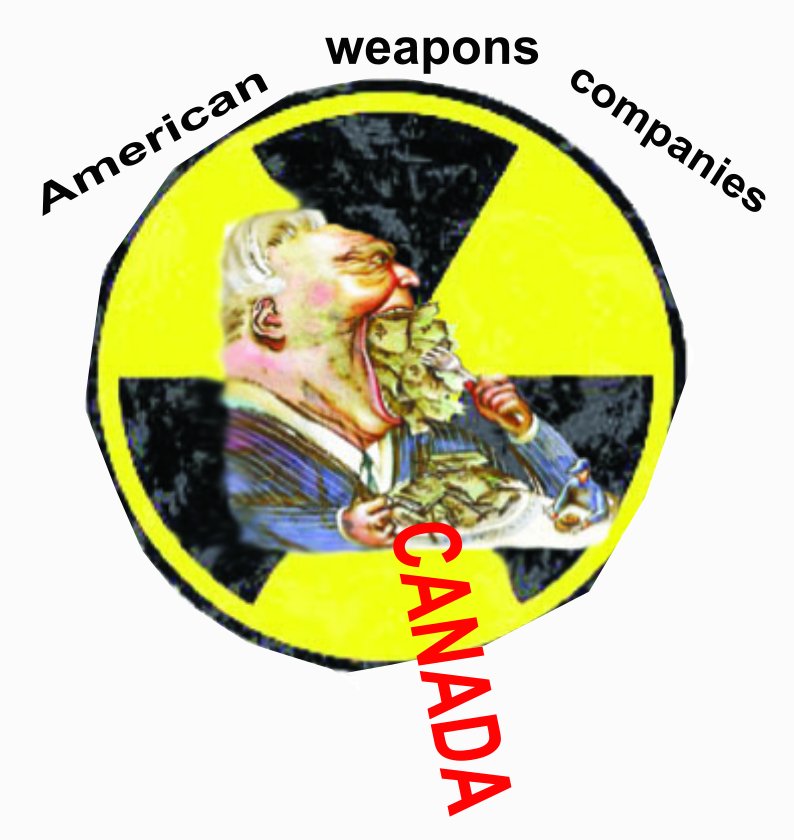
Three U.S. companies (Amentum, Battelle, and BWXT) operate the federal government’s Chalk River Laboratories on a contract with a potential duration of twenty years (to December 2045).
They are a major part of “Canada’s Nuclear Future.” All have large investments in the U.S. nuclear weapons sector.
Canada’s Nuclear Future – A brief for the House of Commons Standing Committee on Natural Resources
Ottawa River Institute, November 9, 2026
Our group thanks the House of Commons Standing Committee on Natural Resources (RNNR)
for undertaking a study on “Canada’s Nuclear Future.” We note that this study is closely tied to
the government’s recent Nuclear Energy Strategy for Canada.
To understand “Canada’s Nuclear Future,” one must also look to the past. The Nuclear Energy
Strategy for Canada recalls that on 17 August 1942, Minister C.D. Howe authorized Canada’s
entry into the nuclear age by saying, ”Okay, let’s go.” This made Canada a partner in the
Manhattan Project to produce nuclear weapons.
Our group submitted a brief and appeared as a witness for the previous RNNR study,
“Management of Canadian Nuclear Laboratories by U.S. Companies.” As a witness we said:
The government-owned, contractor-operated, or GOCO, model for managing AECL’s
nuclear assets and asset retirement obligations creates major risks—ballooning tax
expenditures, an ever-growing nuclear liability, poor waste disposal projects and public
health risks. These risks increase when AECL’s responsibilities are contracted to U.S.
corporations with little Canadian experience.
Three U.S. companies (Amentum, Battelle, and BWXT) operate the federal government’s Chalk
River Laboratories on a contract with a potential duration of twenty years (to December 2045).
They are a major part of “Canada’s Nuclear Future.” All have large investments in the U.S.
nuclear weapons sector. At Chalk River they are able to do research and training on tritium and
plutonium, the key ingredients in modern nuclear weapons. The “Advanced Nuclear Materials
Research Centre” under construction at Chalk River will enhance their capacity in this regard.
While Canada has not opted to become a nuclear weapons state, consideration must be given
to whether our nuclear future—including federally-funded research—will continue to involve
close ties to the U.S. nuclear weapons industry.
The RNNR study of “Canada’s Nuclear Future” should examine the nuclear substances that
this future will entail—uranium, tritium, plutonium, and others.
The Nuclear Energy Strategy for Canada “recognizes the value of nuclear technology beyond
electricity: research and development, medical isotopes, tritium management, and Canada’s
emerging role in the fusion fuel cycle.” Our group acknowledges, in the words of the Strategy,
that the operation of nuclear reactors produces radioisotopes with “significant health value.”
The Committee should address not only health benefits, but also the health impacts of the
radioactive substances associated with the nuclear fuel chain. The words “radiation” and
“radioactivity” appear nowhere in the Strategy. This is short-sighted. Ionizing radiation emitted
by operating reactors and by radioactive waste can damage living tissue, cause radiation
sickness, and lead to cancer and cardiovascular disease.
Current inhabitants of this planet are fortunate that levels of ionizing radiation are much lower
than those that prevailed at the time of Earth’s formation, 4.6 billion years ago. Davis (2022)
discusses nineteen “primordial” radionuclides that existed in the solar system (including Earth) at that time. With half-lives ranging up to a hundred million years, these radionuclides had all
decayed essentially to zero prior to Canada’s entry into the nuclear age in 1942.
Nuclear technology is now restoring these formerly extinct (“primordial”) radionuclides. Among
those in nuclear waste are beryllium-10, chlorine-36, calcium-41, manganese-53, zirconium-93,
technetium-99, palladium-107, tin-126, iodine-129, cesium-135, hafnium-182, and curium-247.
Nuclear reactors unavoidably produce these substances, together with the ionizing radiation
from each of them. Elevated levels of man-made radiation will persist thousands of generations
into the future, posing long-term challenges for radioactive waste management.
For example, Iodine-129 (I-129) is a major “fission product”—a substance that builds up in
reactor fuel rods through the splitting of uranium. Being water-soluble and mobile, I-129 is a
primary contributor to the risks of placement of high-level nuclear fuel waste in a deep
geological repository.
Also problematic are the “activation products” from nuclear reactors. When uranium splits it
emits two or three neutrons, on average. Some trigger the splitting of additional uranium
atoms, but most are not retained inside the fuel rods. Instead, they escape into the surrounding
moderator and coolant water, forming radioactive hydrogen (tritium) and carbon-14. Other
neutrons penetrate and “activate” the reactor’s metal and concrete structural components.
Exposure to neutrons turns non-radioactive chlorine and and calcium in reactor concrete into
chlorine-36 and calcium-41. These radionuclides—also formerly extinct— pose a biological
hazard for several million years. Problematic man-made radionuclides in irradiated metal
reactor components—dangerous for tens of thousands to millions of years—include
carbon-14, nickel-59, molybdenum-93, and niobium-94 (Evans et al. 1984).
Zirconium-93 (Zr-93) is a particular problem for CANDU heavy water reactors. With a half-life of
1.6 million years, Zr-93 is another “primordial” radionuclide that was extinct before the nuclear
age began. In light water reactors, Zr-93 is mainly a fission product created in fuel rods by
splitting uranium. CANDU reactors have this same issue, but they generate a significant
second source of Zr-93 through neutron activation of zirconium-based metal components.
Zr-93 poses risks to nuclear workers during CANDU reactor decommissioning activities such
as cutting, grinding, or shearing of radioactive zirconium tubes. These activities generate
airborne dust and particulates. Zr-93 also creates long-term risks of elevated radiation
exposures to the public unless the irradiated reactor components are properly managed and
kept isolated from the biosphere. At present, Canada has no long-term management facilities
for activated reactor components and other “intermediate-level” wastes.
A Library of Parliament background paper (Deschênes-Philion and Leduc 2020) observes:
As a producer and user of nuclear energy, Canada is bound by the international
conventions to which it is a party and that aim to regulate the nuclear sector. For
instance, the Joint Convention on the Safety of Spent Fuel Management and on the
Safety of Radioactive Waste Management is a legally binding international instrument on
radioactive waste.
The second objective of the Joint Convention, to which Canada is bound, is
to ensure that during all stages of spent fuel and radioactive waste management there
are effective defenses against potential hazards so that individuals, society and the
environment are protected from harmful effects of ionizing radiation, now and in.the future, in such a way that the needs and aspirations of the present generation are met without compromising the ability of future generations to meet their needs
and aspirations.” [emphases added]
However, Canada’s Policy for Radioactive Waste Management and Decommissioning, adopted
in 2023, makes no mention of ionizing radiation. It makes an explicit and ethically problematic
trade-off between health and socio-economic considerations:
The Government of Canada’s vision for radioactive waste management and
decommissioning is as follows:
- The generation of radioactive waste is minimized to the extent reasonably
achievable, and waste management is optimized, taking into account health,
safety, security, environmental and socio-economic considerations;
Another problematic element of Canada’s Policy for Radioactive Waste Management and
Decommissioning is that the government’s vision includes that:
- The management of radioactive waste, including its storage and disposal, must
ensure that both human health and the environment will be protected, now and in
the future, to reduce the burden on future generations; [emphasis added]
- This leaves it unclear as to the degree to which the current generation should reduce the
radioactive waste burden on future generations. Would a minor reduction suffice?
In reality, rather than being eliminated, or even reduced, this burden is growing.
Annex 1 of Natural Resources Canada’s Inventory of Radioactive Waste in Canada contains
data on quantities of radioactive waste as of December 2019 (the most recent year for which
inventory data have been reported by NRCan), and waste projections for the year 2100. The
inventory of high-level waste fuel bundles in Canada was projected to grow from 3.1 million to
5.6 million, intermediate-level waste from 15.7 thousand to 32.3 thousand cubic metres, and
low-level waste waste from 450 thousand to 1298 thousand cubic metres.
The NRCan website says that “the next Inventory Report will be developed in 2024, covering
the period from January 1, 2020, to December 31, 2023.” However, an updated Inventory
Report has not yet been released.
The 2019 report stated that “all existing nuclear generating stations are expected to be fully
decommissioned” by 2100. It will be interesting to see, if and when a new report is issued,
whether it includes this statement. It will also be interesting to see whether NRCan factors in
the proposed new Bruce C, Wesleyville, and Peace River reactor developments; and the
previously unscheduled Pickering reactor refurbishment; in its waste projections.
The World Nuclear Industry Status Report says the average age of active nuclear power
reactors worldwide is 32.9 years. None have operated for 60 years. The disparity between the
short operating life of a reactor, and the need to manage reactor wastes for centuries to
millennia, would appear to constitute a considerable burden on future generations.
Equally concerning is the steadily growing burden of uranium mining waste and the radiation
that it emits. Reactor fuel is made up of two primordial radionuclides, uranium-235 and
uranium-238. Because of their very long half-lives they have not yet gone extinct. However,
uranium-235 is now at only 1.1% of its original abundance, and uranium-238 is at 49%.
The decay of these uranium isotopes has contributed to the decline in the level of background
radiation to which humans are exposed, compared to Earth’s earlier inhabitants. This decline is
now being reversed not only by reactor operations, but also through the extraction of below-
ground uranium ore and the abandonment of uranium mining waste at or near the surface.
A U.S. EPA website, Radioactive Waste From Uranium Mining and Milling, says:
.Regardless of how uranium is extracted from rock, the processes leave behind
radioactive waste. These processes separate uranium from its decay products which
are also radioactive and actually contain most (80-90%) of the radioactivity in the rock
(ore).
The 2019 NRCan waste inventory reported that uranium mining had generated 218 million
tonnes of mine tailings, and 167 million tonnes of waste rock (which tends to be less
radioactive than tailings). Even after certain shorter-lived uranium decay products in the tailings
have disappeared, the longer-lived radioactive “progeny” of uranium-238—such as
thorium-230 with a half-life of 77,000 years—will remain. Uranium mine tailings retain over 70%
of their initial radioactivity for more than a hundred thousand years.
Wastes from the earlier decades of uranium mining in Canada were abandoned on the ground
surface. Even if management practices have improved somewhat since then, the accumulation
of uranium mining waste is another burden placed on future generations, particularly
Indigenous peoples living in communities near the mines.
As the world’s second largest uranium producer, Canada should set a high standard for
environmental practices associated with mining activities. Unfortunately, the recent approval by
Canada’s nuclear regulator of an in-situ acid leach mining project in Saskatchewan is moving
things in the wrong direction.
Increases in radioactive waste generation and background radiation levels, along with the
health and economic costs of dealing with them, are already locked in as part of “Canada’s
Nuclear Future.” The degree to which these costs continue to escalate should be a matter of
societal choice, informed by discussion among our elected federal representatives.
References
Davis, A.M., 2022. Short-lived nuclides in the early Solar System: abundances, origins, and
applications. Annual Review of Nuclear and Particle Science, 72, pp.339-363.
Evans, J.C., Lepel, E.L., Sanders, R.W., Wilkerson, C.L., Silker, W., Thomas, C.W., Abel, K.H.
and Robertson, D.R., 1984. Long-lived activation products in reactor materials (No. NUREG/
CR–3474). Pacific Northwest Lab., Richland, WA (USA).
Deschênes-Philion, Xavier and Leduc, Sophie, 2020. Nuclear energy and radioactive waste
management in Canada – Background Paper. Library of Parliament Publication No. 2019-41-E,
23 pages.
rnment-owned, contractor-operated, or GOCO, model for managing AECL’s
nuclear a
No comments yet.
1 This Month



Read the Public Inquiry Report, the Commissioners’ report, Surrendering Australia: The AUKUS Deception is available to download for free at aukuspublicinquiry.com. Or just watch the replay of the National Press Club Luncheon.

19 November – Webinar – The Reality of Reprocessing
Time: 11:00 AM Pacific Time (US & Canada) / 2:00 PM Eastern / 7:00 PM UK / 8:00 PM CET
Register for the Zoom Event Here


Shut down the radiation-damaged Heysham nuclear reactors now
To see nuclear-related stories in greater depth and intensity – go to https://nuclearinformation.wordpress.com

Say No to NASA’s Reckless Nuclear Reactor on the Moon
Say No to NASA’s Reckless Nuclear Reactor on the Moon
-
Archives
- November 2026 (128)
- October 2026 (302)
- September 2026 (339)
- August 2026 (330)
- July 2026 (355)
- June 2026 (287)
- May 2026 (306)
- April 2026 (356)
- March 2026 (251)
- February 2026 (267)
- January 2026 (308)
- December 2025 (358)
-
Categories
- 1
- 1 NUCLEAR ISSUES
- business and costs
- climate change
- culture and arts
- ENERGY
- environment
- health
- history
- indigenous issues
- Legal
- marketing of nuclear
- media
- opposition to nuclear
- PERSONAL STORIES
- politics
- politics international
- Religion and ethics
- safety
- secrets,lies and civil liberties
- spinbuster
- technology
- Uranium
- wastes
- weapons and war
- Women
- 2 WORLD
- ACTION
- AFRICA
- Atrocities
- AUSTRALIA
- Christina's notes
- Christina's themes
- culture and arts
- Events
- Fuk 2022
- Fuk 2023
- Fukushima 2017
- Fukushima 2018
- fukushima 2019
- Fukushima 2020
- Fukushima 2021
- general
- global warming
- Humour (God we need it)
- Nuclear
- RARE EARTHS
- Reference
- resources – print
- Resources -audiovicual
- Weekly Newsletter
- World
- World Nuclear
- YouTube
-
RSS
Entries RSS
Comments RSS


Leave a Reply