Darlington small modular reactor faces delay and cost overruns, prompting OPG assessment.

the first nuclear unit wouldn’t “be completed within the previously disclosed estimated cost of $7.7-billion.”
The project is being watched globally because it’s the first small modular reactor to begin construction in a Group of Seven country.
Canada’s would be the first, and such projects are notorious for suffering setbacks.
Matthew McClearn, November 11, 2026, https://www.theglobeandmail.com/business/article-darlington-small-modular-reactor-ontario-power-generation/.
The first nuclear power plant to begin construction in Canada since the 1980s has suffered cost overruns and delays, leading Ontario Power Generation to undertake a comprehensive assessment, the Crown corporation said.
The first of four small modular reactors planned for construction at the Darlington Nuclear Generating Station is “no longer expected to achieve the forecast in-service date of October 2030,” Torys LLP lawyer Charles Keizer, who represents the utility, wrote in a Tuesday letter to the Ontario Energy Board.
In its quarterly financial statements, also released Tuesday, OPG reported that the first nuclear unit wouldn’t “be completed within the previously disclosed estimated cost of $7.7-billion.”
The extent of the overruns were not disclosed. The utility said its assessment would determine those details and is expected to be completed by mid-2027.
The Darlington New Nuclear Project, with a total budget of $20.9-billion, involves building four BWRX-300 reactors and accompanying infrastructure adjacent to the existing generating station in Clarington, Ont. The project is being watched globally because it’s the first small modular reactor to begin construction in a Group of Seven country.
“We have identified risks that will impact Unit 1’s schedule and budget,” Nicolle Butcher, OPG’s president and chief executive officer, wrote in a statement.
“As we continue construction, we are working to fully assess those impacts, and establish mitigation measures and a cost and schedule outlook that we can stand behind.”
OPG reported that the overruns reflected the “ongoing engineering” work of its partner, GE Vernova Hitachi Nuclear Energy, which is responsible for designing the BWRX-300 reactor and other aspects of the facility.
In a statement, GE Vernova Hitachi spokesperson Jonathan Allen pointed to other factors outside his company’s control.
“While engineering and design maturity are important considerations, as OPG’s update recognizes, there are multiple interconnected contributions across engineering, procurement and construction, as well as evolving market conditions, including inflation and geopolitical risks.”
Each BWRX-300 would have a generation capacity of 300 megawatts, enough to power a city of roughly 300,000 people. In addition to GE Vernova Hitachi, OPG’s partners include construction company Aecon Group Inc., and architect-engineer AtkinsRéalis Group Inc.
The pace of nuclear development has been slow in G7 countries for decades. Other BWRX-300s are also planned for construction in the United States, the United Kingdom and, outside of the G7, in Poland, among other countries. But Canada’s would be the first, and such projects are notorious for suffering setbacks.
Construction of the first BWRX-300 officially began in late April when the foundation of the reactor building was installed. OPG spokesperson Neal Kelly said work on the buildings that will house the reactor and turbines has started, along with infrastructure that would support all four units. The reactor’s pressure vessel is being assembled at a plant owned by BWX Technologies Inc. in Cambridge, Ont.
It’s a signature project for the government of Premier Doug Ford, which supported the BWRX-300’s selection in 2021, expanded the project in 2023 to four units and authorized construction in 2025. Ontario’s Independent Electricity System Operator, which operates the province’s power grid, included the four reactors in its plans for satisfying the expected demand for power over the next quarter-century.
Ontario Energy Minister Stephen Lecce wrote in a Tuesday statement that the project had “delivered massive industrial wins for our manufacturing base,” including $362.7-million in contracts.
“We expect GE Vernova Hitachi and project partners to deliver on their commitments and maintain rigorous project oversight to ensure maximum value for the Canadian supply chain,” he added.
“Ontario has asked OPG to use this additional time to assess how it can boost domestic contracts and work to drive even more jobs and manufacturing to the country.”
Jack Gibbons, chair of the Ontario Clean Air Alliance and a vocal opponent of nuclear power, called on the government to cancel the project.
“History is repeating itself,” he said.
“Every nuclear project in Ontario’s history has been late and over budget. It doesn’t make sense to build new, high-cost, slow-to-deploy nuclear reactors when wind and solar projects can be built in two years or less at one-third the cost.”
The Uninsured Sky
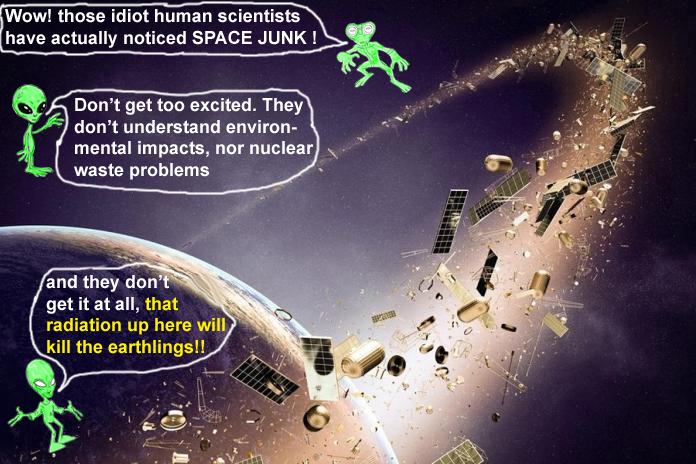
there is no reported comprehensive insurance coverage for potential harm to humans, flora, and fauna from the constellation’s operations, debris generation, atmospheric re-entry effects, or catastrophic failure.
[In Ukraine] a privately controlled commercial network has become indispensable to a major conventional war, conferring decisive influence over battlefield outcomes on an unelected executive.
Starlink’s Rapid Rise, Military Power, Elections, and Public Risks
Joe Sandri, Nov. 10, 2026, https://www.realcleardefense.com/military-technology/articles/the-uninsured-sky-2026-11-10#google_vignette
From the first satellite launch in 1957 (Sputnik) until around 2020, only about 10,000 satellites had been launched by all of humanity. As of late October 2026, catalogs record approximately 27,288 payloads launched into orbit by all of humanity since 1957, with more than two-thirds of that total occurring after January 1, 2020.
By 2030, SpaceX is expected to have launched tens of thousands more—potentially on the order of 30,000 or higher—given current cadence, Starship deployment of larger V3 satellites, authorized shells, and regulatory filings that include proposals for up to 100,000 Gen3 satellites (plus separate direct-to-device constellations). Overall, total satellites launched by all of humanity by 2030 are projected in a wide range, commonly from roughly 40,000 to more than 70,000 depending on the scenario, driven primarily by mega-constellations from SpaceX, Amazon, and Chinese operators. Yet there is no reported comprehensive insurance coverage for potential harm to humans, flora, and fauna from the constellation’s operations, debris generation, atmospheric re-entry effects, or catastrophic failure. In other words, residual impacts from potential pollution or system-wide failures may be borne by the public at large under existing international liability frameworks.
This unprecedented scale has delivered connectivity benefits, but it has also concentrated dual-use power. Nowhere is that clearer than in Ukraine. Starlink and its military counterpart, Starshield, have become the backbone of Ukrainian frontline communications, drone guidance, and air-defense coordination. In mid-October 2026, speed and usage restrictions temporarily disrupted fast-moving drone operations, with conflicting accounts of whether the decision originated inside the White House, the Pentagon, or SpaceX. Elon Musk has stated that disabling the system would cause the Ukrainian front to collapse immediately, while noting that Starshield operational decisions rest with the U.S. government. The episode illustrates how a privately controlled commercial network has become indispensable to a major conventional war, conferring decisive influence over battlefield outcomes on an unelected executive. Similar dependency concerns apply to Taiwan and other potential flashpoints.
The same infrastructure raises questions for elections and democratic processes. Claims that Starlink was used to tabulate or alter U.S. votes in 2024 were repeatedly debunked by election officials and security agencies—voting systems are air-gapped and results are paper-audited. Starlink has, however, been contracted for connectivity in remote areas during Brazil’s 2026 elections to transmit encrypted data from polling sites. Private control over such links, combined with the owner’s political activities, invites legitimate scrutiny about dependency even when technical safeguards prevent direct interference with ballots.
Recent spectrum moves amplify both opportunity and risk. The FCC has approved SpaceX acquisitions of AWS-3 (Advanced Wireless Services-3) spectrum licenses—covering portions of the 1695–1710 MHz unpaired uplink band and related paired frequencies—along with other holdings from EchoStar and Tristar, to support direct-to-device “Starlink Mobile” service. The company is also reportedly in talks to access some 80,000 U.S. cell sites to build a hybrid terrestrial-satellite network. Amid these expansions, HHS and the FCC continue to receive public comments and face calls to re-examine radiofrequency interference (RFI) and potential health effects from denser RF environments. Notably, the FCC was compelled by court order in August 2026 to explain why it had not complied with the D.C. Circuit’s 2021 remand ruling in Environmental Health Trust v. FCC, which required a reasoned explanation regarding non-cancer health effects, impacts on children, long-term exposure, device testing, and environmental effects of its old 1996 RF exposure limits.
Scott Millwood’s “The Urgent Need for Regulation of Satellite Mega-constellations in Outer Space” argues precisely for stronger national and coordinated international governance, impact assessments, and proportionality principles to address the externalities of this rapid expansion.
SpaceX’s technical achievements are real, and self-insurance of its own assets is a business choice. The externalities—orbital congestion, debris risks, spectrum crowding, and concentrated control over military and civic connectivity—are not fully internalized. Policymakers should require clearer liability frameworks, independent environmental and health assessments tied to spectrum grants, and greater transparency around dual-use controls so that the public is not left holding the residual risk of an uninsured sky.
Joe Sandri is General Counsel for EHTrust.org
Ottawa River Institute Brief to Parliamentary study on Canada’s Nuclear Future

Three U.S. companies (Amentum, Battelle, and BWXT) operate the federal government’s Chalk River Laboratories on a contract with a potential duration of twenty years (to December 2045).
They are a major part of “Canada’s Nuclear Future.” All have large investments in the U.S. nuclear weapons sector.
Canada’s Nuclear Future – A brief for the House of Commons Standing Committee on Natural Resources
Ottawa River Institute, November 9, 2026
Our group thanks the House of Commons Standing Committee on Natural Resources (RNNR)
for undertaking a study on “Canada’s Nuclear Future.” We note that this study is closely tied to
the government’s recent Nuclear Energy Strategy for Canada.
To understand “Canada’s Nuclear Future,” one must also look to the past. The Nuclear Energy
Strategy for Canada recalls that on 17 August 1942, Minister C.D. Howe authorized Canada’s
entry into the nuclear age by saying, ”Okay, let’s go.” This made Canada a partner in the
Manhattan Project to produce nuclear weapons.
Our group submitted a brief and appeared as a witness for the previous RNNR study,
“Management of Canadian Nuclear Laboratories by U.S. Companies.” As a witness we said:
The government-owned, contractor-operated, or GOCO, model for managing AECL’s
nuclear assets and asset retirement obligations creates major risks—ballooning tax
expenditures, an ever-growing nuclear liability, poor waste disposal projects and public
health risks. These risks increase when AECL’s responsibilities are contracted to U.S.
corporations with little Canadian experience.
Three U.S. companies (Amentum, Battelle, and BWXT) operate the federal government’s Chalk
River Laboratories on a contract with a potential duration of twenty years (to December 2045).
They are a major part of “Canada’s Nuclear Future.” All have large investments in the U.S.
nuclear weapons sector. At Chalk River they are able to do research and training on tritium and
plutonium, the key ingredients in modern nuclear weapons. The “Advanced Nuclear Materials
Research Centre” under construction at Chalk River will enhance their capacity in this regard.
While Canada has not opted to become a nuclear weapons state, consideration must be given
to whether our nuclear future—including federally-funded research—will continue to involve
close ties to the U.S. nuclear weapons industry.
The RNNR study of “Canada’s Nuclear Future” should examine the nuclear substances that
this future will entail—uranium, tritium, plutonium, and others.
The Nuclear Energy Strategy for Canada “recognizes the value of nuclear technology beyond
electricity: research and development, medical isotopes, tritium management, and Canada’s
emerging role in the fusion fuel cycle.” Our group acknowledges, in the words of the Strategy,
that the operation of nuclear reactors produces radioisotopes with “significant health value.”
The Committee should address not only health benefits, but also the health impacts of the
radioactive substances associated with the nuclear fuel chain. The words “radiation” and
“radioactivity” appear nowhere in the Strategy. This is short-sighted. Ionizing radiation emitted
by operating reactors and by radioactive waste can damage living tissue, cause radiation
sickness, and lead to cancer and cardiovascular disease.
Current inhabitants of this planet are fortunate that levels of ionizing radiation are much lower
than those that prevailed at the time of Earth’s formation, 4.6 billion years ago. Davis (2022)
discusses nineteen “primordial” radionuclides that existed in the solar system (including Earth) at that time. With half-lives ranging up to a hundred million years, these radionuclides had all
decayed essentially to zero prior to Canada’s entry into the nuclear age in 1942.
Nuclear technology is now restoring these formerly extinct (“primordial”) radionuclides. Among
those in nuclear waste are beryllium-10, chlorine-36, calcium-41, manganese-53, zirconium-93,
technetium-99, palladium-107, tin-126, iodine-129, cesium-135, hafnium-182, and curium-247.
Nuclear reactors unavoidably produce these substances, together with the ionizing radiation
from each of them. Elevated levels of man-made radiation will persist thousands of generations
into the future, posing long-term challenges for radioactive waste management.
For example, Iodine-129 (I-129) is a major “fission product”—a substance that builds up in
reactor fuel rods through the splitting of uranium. Being water-soluble and mobile, I-129 is a
primary contributor to the risks of placement of high-level nuclear fuel waste in a deep
geological repository.
Also problematic are the “activation products” from nuclear reactors. When uranium splits it
emits two or three neutrons, on average. Some trigger the splitting of additional uranium
atoms, but most are not retained inside the fuel rods. Instead, they escape into the surrounding
moderator and coolant water, forming radioactive hydrogen (tritium) and carbon-14. Other
neutrons penetrate and “activate” the reactor’s metal and concrete structural components.
Exposure to neutrons turns non-radioactive chlorine and and calcium in reactor concrete into
chlorine-36 and calcium-41. These radionuclides—also formerly extinct— pose a biological
hazard for several million years. Problematic man-made radionuclides in irradiated metal
reactor components—dangerous for tens of thousands to millions of years—include
carbon-14, nickel-59, molybdenum-93, and niobium-94 (Evans et al. 1984).
Zirconium-93 (Zr-93) is a particular problem for CANDU heavy water reactors. With a half-life of
1.6 million years, Zr-93 is another “primordial” radionuclide that was extinct before the nuclear
age began. In light water reactors, Zr-93 is mainly a fission product created in fuel rods by
splitting uranium. CANDU reactors have this same issue, but they generate a significant
second source of Zr-93 through neutron activation of zirconium-based metal components.
Zr-93 poses risks to nuclear workers during CANDU reactor decommissioning activities such
as cutting, grinding, or shearing of radioactive zirconium tubes. These activities generate
airborne dust and particulates. Zr-93 also creates long-term risks of elevated radiation
exposures to the public unless the irradiated reactor components are properly managed and
kept isolated from the biosphere. At present, Canada has no long-term management facilities
for activated reactor components and other “intermediate-level” wastes.
A Library of Parliament background paper (Deschênes-Philion and Leduc 2020) observes:
As a producer and user of nuclear energy, Canada is bound by the international
conventions to which it is a party and that aim to regulate the nuclear sector. For
instance, the Joint Convention on the Safety of Spent Fuel Management and on the
Safety of Radioactive Waste Management is a legally binding international instrument on
radioactive waste.
The second objective of the Joint Convention, to which Canada is bound, is
to ensure that during all stages of spent fuel and radioactive waste management there
are effective defenses against potential hazards so that individuals, society and the
environment are protected from harmful effects of ionizing radiation, now and in.the future, in such a way that the needs and aspirations of the present generation are met without compromising the ability of future generations to meet their needs
and aspirations.” [emphases added]
However, Canada’s Policy for Radioactive Waste Management and Decommissioning, adopted
in 2023, makes no mention of ionizing radiation. It makes an explicit and ethically problematic
trade-off between health and socio-economic considerations:
The Government of Canada’s vision for radioactive waste management and
decommissioning is as follows:
- The generation of radioactive waste is minimized to the extent reasonably
achievable, and waste management is optimized, taking into account health,
safety, security, environmental and socio-economic considerations;
Another problematic element of Canada’s Policy for Radioactive Waste Management and
Decommissioning is that the government’s vision includes that:
- The management of radioactive waste, including its storage and disposal, must
ensure that both human health and the environment will be protected, now and in
the future, to reduce the burden on future generations; [emphasis added]
- This leaves it unclear as to the degree to which the current generation should reduce the
radioactive waste burden on future generations. Would a minor reduction suffice?
In reality, rather than being eliminated, or even reduced, this burden is growing.
Annex 1 of Natural Resources Canada’s Inventory of Radioactive Waste in Canada contains
data on quantities of radioactive waste as of December 2019 (the most recent year for which
inventory data have been reported by NRCan), and waste projections for the year 2100. The
inventory of high-level waste fuel bundles in Canada was projected to grow from 3.1 million to
5.6 million, intermediate-level waste from 15.7 thousand to 32.3 thousand cubic metres, and
low-level waste waste from 450 thousand to 1298 thousand cubic metres.
The NRCan website says that “the next Inventory Report will be developed in 2024, covering
the period from January 1, 2020, to December 31, 2023.” However, an updated Inventory
Report has not yet been released.
The 2019 report stated that “all existing nuclear generating stations are expected to be fully
decommissioned” by 2100. It will be interesting to see, if and when a new report is issued,
whether it includes this statement. It will also be interesting to see whether NRCan factors in
the proposed new Bruce C, Wesleyville, and Peace River reactor developments; and the
previously unscheduled Pickering reactor refurbishment; in its waste projections.
The World Nuclear Industry Status Report says the average age of active nuclear power
reactors worldwide is 32.9 years. None have operated for 60 years. The disparity between the
short operating life of a reactor, and the need to manage reactor wastes for centuries to
millennia, would appear to constitute a considerable burden on future generations.
Equally concerning is the steadily growing burden of uranium mining waste and the radiation
that it emits. Reactor fuel is made up of two primordial radionuclides, uranium-235 and
uranium-238. Because of their very long half-lives they have not yet gone extinct. However,
uranium-235 is now at only 1.1% of its original abundance, and uranium-238 is at 49%.
The decay of these uranium isotopes has contributed to the decline in the level of background
radiation to which humans are exposed, compared to Earth’s earlier inhabitants. This decline is
now being reversed not only by reactor operations, but also through the extraction of below-
ground uranium ore and the abandonment of uranium mining waste at or near the surface.
A U.S. EPA website, Radioactive Waste From Uranium Mining and Milling, says:
.Regardless of how uranium is extracted from rock, the processes leave behind
radioactive waste. These processes separate uranium from its decay products which
are also radioactive and actually contain most (80-90%) of the radioactivity in the rock
(ore).
The 2019 NRCan waste inventory reported that uranium mining had generated 218 million
tonnes of mine tailings, and 167 million tonnes of waste rock (which tends to be less
radioactive than tailings). Even after certain shorter-lived uranium decay products in the tailings
have disappeared, the longer-lived radioactive “progeny” of uranium-238—such as
thorium-230 with a half-life of 77,000 years—will remain. Uranium mine tailings retain over 70%
of their initial radioactivity for more than a hundred thousand years.
Wastes from the earlier decades of uranium mining in Canada were abandoned on the ground
surface. Even if management practices have improved somewhat since then, the accumulation
of uranium mining waste is another burden placed on future generations, particularly
Indigenous peoples living in communities near the mines.
As the world’s second largest uranium producer, Canada should set a high standard for
environmental practices associated with mining activities. Unfortunately, the recent approval by
Canada’s nuclear regulator of an in-situ acid leach mining project in Saskatchewan is moving
things in the wrong direction.
Increases in radioactive waste generation and background radiation levels, along with the
health and economic costs of dealing with them, are already locked in as part of “Canada’s
Nuclear Future.” The degree to which these costs continue to escalate should be a matter of
societal choice, informed by discussion among our elected federal representatives.
References
Davis, A.M., 2022. Short-lived nuclides in the early Solar System: abundances, origins, and
applications. Annual Review of Nuclear and Particle Science, 72, pp.339-363.
Evans, J.C., Lepel, E.L., Sanders, R.W., Wilkerson, C.L., Silker, W., Thomas, C.W., Abel, K.H.
and Robertson, D.R., 1984. Long-lived activation products in reactor materials (No. NUREG/
CR–3474). Pacific Northwest Lab., Richland, WA (USA).
Deschênes-Philion, Xavier and Leduc, Sophie, 2020. Nuclear energy and radioactive waste
management in Canada – Background Paper. Library of Parliament Publication No. 2019-41-E,
23 pages.
rnment-owned, contractor-operated, or GOCO, model for managing AECL’s
nuclear a
Europe’s Historic Crossroads: Militarization & Social Crisis
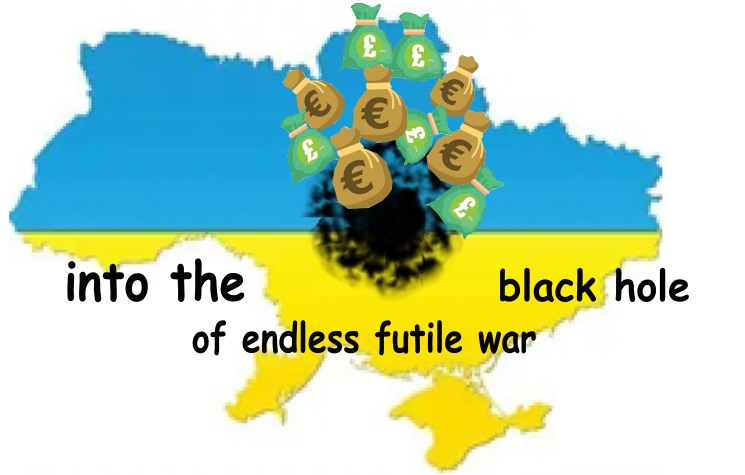
when, and at what point, do people irrevocably lose confidence that the state and its political elites are still acting in their interests?
The pressing question concerns society’s priorities: how much should be spent on armaments, and how much on the welfare state, healthcare, education, housing and infrastructure?
European political elites apparently find it easier to reach agreement on increasing military budgets than on resolving the everyday social problems facing their populations. European security, however, is not simply a question of military strength.
In this crisis of confidence, Uroš Lipušcek says Europeans can either seek autonomy and peace with Russia or follow the current E.U. course of increasing authoritarianism and geopolitical insignificance.
November 9, 2026, By Uroš Li0
Europe today finds itself at a historical crossroads reminiscent of 1848 and the period between 1933 and 1939. The European revolutions of 1848, also known as the Springtime of Nations, and the events leading up to 1939 share several important historical processes with the present day.
Both periods were characterised by a crisis of political representation, social divisions, economic uncertainty, growing dissatisfaction among the middle and lower classes, militarisation and questions about the legitimacy of existing political institutions.
Of course, the historical circumstances are not identical. In 1848, European nations revolted primarily against absolute monarchies, the remnants of feudalism and political subordination.
During the period preceding the Second World War, Europe faced racist, fascist and Nazi ideologies seeking to establish domination over Europe and subsequently the world.
Today’s European protests are taking place within formally democratic states, where the sources of discontent are linked to economic inequality, the cost of living, migration, distrust of political elites, the consequences of the war in Ukraine, the future of European integration and rivalry between major powers over the redistribution of geopolitical spheres of influence.
Underlying these developments is the determination of leading American elites to preserve their global supremacy, even where the interests of American hegemony increasingly conflict with the long-term economic and security interests of European countries.
In October, protests that began in France spread to Italy, Germany, Belgium, the Netherlands, Spain, Portugal, Albania — and now Germany. A wave of discontent is also becoming increasingly visible in what is known as the New Europe, comprising the former socialist countries.
In Serbia, student protests lasting almost two years led to the end of the 14-year rule of President Aleksandar Vucic, while Poland has experienced a serious constitutional crisis in recent days.
Old & New Europe
The unrest in both Old and New Europe has some common roots, although there are also significant differences. Major social transformations often do not begin with grand political programmes, but with unexpected incidents that expose the gap between a country’s official image and the everyday reality of its citizens.
Examples include rats roaming poorly maintained French primary schools; the kicking of a hungry horse in the royal stables in Paris, which, according to some historical accounts, triggered a wave of discontent that eventually contributed to the French bourgeois revolution of 1789; rotten meat aboard the Russian battleship Potemkin in 1905, which sparked the first Russian Revolution; the self-immolation of a fruit seller in Tunisia in 2010; an eviction this September that sparked the widespread housing protests in Spain; current poor food in a student canteen in Pristina in 1981, which became the catalyst for a general uprising among the population of Kosovo; and the deaths of 16 people in Novi Sad in 2024 following the collapse of a railway station canopy, an event that ultimately led to a change of government in Serbia.
These very different incidents confirm that seemingly isolated events can trigger major social transformations. They all raise the same fundamental question: They all raise the same fundamental question: when, and at what point, do people irrevocably lose confidence that the state and its political elites are still acting in their interests?
The Crisis of the European Political Model
The unrest, protests and growing social discontent that have shaken Western Europe in recent years are not merely the consequences of individual political decisions, economic difficulties or dissatisfaction with incumbent governments.
They reflect a much deeper phenomenon: the gradual exhaustion of the post-war European social model, growing contradictions between the interests of political and economic elites and the expectations of the population, and, above all, a loss of confidence in the institutions of liberal, parliamentary democracy.
France, Germany, Belgium, the Netherlands and other Western European countries are experiencing various forms of discontent………………………………………………………………………………………..
Economic Insecurity & the Erosion of Social Protection
One of the fundamental causes of discontent is the gradual deterioration in the living standards of a significant proportion of Europe’s population………………………………………………………………………………………………
The Militarization of Europe & the Question of Priorities
Another significant negative factor is the changing hierarchy of Europe’s political and economic priorities. The war in Ukraine has had a profound impact on European security policy, energy flows, economic relations with Russia and public finances more generally. European countries are increasing military expenditure while cutting social spending amid resultant budgetary constraints, high public debt and growing pressure to restore and increase social services.
The pressing question concerns society’s priorities: how much should be spent on armaments, and how much on the welfare state, healthcare, education, housing and infrastructure?……………………………………………………….
European political elites apparently find it easier to reach agreement on increasing military budgets than on resolving the everyday social problems facing their populations. European security, however, is not simply a question of military strength. It is also a question of social stability, economic sustainability and citizens’ confidence in the future.
The Crisis of Political Representation & Democratic Legitimacy
……………………. A large part of the population feels that key decisions are being made beyond democratic scrutiny……………………………………………………………………………………………………………………………………………………………………………………………………………………………………………………………………… https://consortiumnews.com/2026/11/09/europes-historic-crossroads-militarization-social-crisis/
Turkey, AtkinsRealis sign deal for study on possible nuclear plant

Reuters 13 Nov 26, https://www.theglobeandmail.com/business/article-turkey-atkinsrealis-sign-deal-for-study-on-possible-nuclear-plant/
AtkinsRealis ATRL-T said on Thursday it had signed an agreement with Turkish state-owned nuclear energy company TUNAS to conduct a feasibility study for a potential expansion of Turkey’s nuclear power program.
The company said in a statement that it would carry out a comprehensive study to be completed by the end of 2027 for a potential multiunit nuclear project, as well as front-end engineering and design (FEED) work.
Turkey is looking to expand its nuclear program beyond the 4.8-gigawatt Akkuyu plant under construction by Russia’s Rosatom in the Mediterranean province of Mersin, with sites in the Black Sea province of Sinop and the northwestern Thrace region identified as potential locations for new plants.
The Akkuyu project – Turkey’s first nuclear power plant – has faced repeated delays, with Rosatom now expecting the first reactor to achieve its first self-sustaining nuclear chain reaction before the end of this year.
Joe St. Julian, president of nuclear at AtkinsRealis, told Reuters that the parties were currently discussing a six-unit plan for a 4.5-gigawatt plant in Turkey, adding that they planned to complete the engineering design study by 2028, with that leading to a final investment decision.
There was also agreement on a road map for financing the project, St. Julian said.
The agreement was signed by AtkinsRealis subsidiary Candu Energy on the sidelines of the COP31 climate summit in the southern Turkish province of Antalya.
Ankara has said it was in talks with Canada, South Korea, Russia, Japan and China on a potential plant. It has signed memorandums of understanding with Canada and South Korea on nuclear co-operation, with financing and costs being a key factor.
Last week, unveiling the country’s national energy plan, Energy Minister Alparslan Bayraktar said Ankara aims to raise nuclear capacity to 10 GW by 2040 and expects nuclear power to meet 11 per cent of electricity demand by then. He has also described 2027 as a decision year for plans in Sinop or Thrace.
American [sic] Declaration Of “Freedom” In Space

NASA is offering $164,000 as starting salary for astronauts to work on the moon. If you skim the educational requirements you’ll see that a decade or more of expensive university programs is required of applicants. In the U.S. that means either wealthy parents or graduating with at least six figures worth of student debt.
More hubristic warmongering from the White House
Lisa Savage, Nov 10, 2026, https://went2thebridge.substack.com/p/american-sic-declaration-of-freedom?utm_source=post-email-title&publication_id=1580975&post_id=224138841&utm_campaign=email-post-title&isFreemail=true&r=c9zhh&triedRedirect=true&utm_medium=email
The federal government of the U.S. published a document that should send chills down every spine. It announces their intention to dominate space but with more friendly-sounding words. “The American Declaration of Freedom in Space” — who came up with that title, Natalie Harp? I’ve long argued that America is a continent not a country. But a failing empire grasping at straws wants to expand its scope into outer space to establish “freedom” there.
What could go wrong?
I found these parts of the declaration to be especially untrue, even delusional:
we are reinvigorating human spaceflight, unleashing a competitive and thriving commercial space industry, and ensuring American space superiority for all eternity..
hasten the day when an American becomes the first human to set foot on the red dunes of Mars..
strengthen our national security for centuries to come.. (This is what this statement is really about, imo.)
The nation that leads in space will shape the future of humanity — and that nation will be the United States of America.
I don’t think we are “ahead” of the Chinese on space tech. Probably not the Russians either. Both are cultures that put a high value on education and meritocracy. The U.S. education system is class-based and has been deliberately weakened for decades; it simply does not produce enough math, physics, or engineering graduates able to dominate[sic] space next year, never mind “for all eternity.”
Exhibit A is this NYT above the fold headline I spotted in a Brooklyn deli. (I did not buy it as I’m unwilling to support corporate propaganda outlets claiming to be journalism.) “Crossing an Ocean, So She Can Continue Studying the Sky” is about an astrophysicist who has relocated to Europe to continue her research..
The current regime catered to its MAGA base by slashing funding for research at universities in the U.S. Now the regime wants to lead in space to “shape the future of humanity” — without scientists?
Flashy advertising campaigns in airports do not get you anywhere.
NASA is offering $164,000 as starting salary for astronauts to work on the moon. If you skim the educational requirements you’ll see that a decade or more of expensive university programs is required of applicants. In the U.S. that means either wealthy parents or graduating with at least six figures worth of student debt.
The U.S. had long addressed this by welcoming university students from other countries who can afford tuition or are brilliant enough for scholarships. But MAGA ruined that, too.
The U.S. empire will go down in history as agents responsible for genocide of the Palestinian people, not as masters of space. The same people who gave you the Gaza “Board of Peace” can issue all the declarations they want — it won’t change facts on the ground. Or in the sky.
Romania’s Cernavodă nuclear plant shuts down both reactors again
Just as Romania’s nuclear power company Nuclearelectrica (BVB: SNN) resumed production at Unit 1 of the Cernavodă nuclear power plant (NPP) and was preparing to do the same at Unit 2, it had to shut down both reactors on the evening of November 9.
iulian ernst · Journalist, 10 November 2026
An incident at the plant’s conventional block forced the shutdown of Unit 1, which was already generating electricity, while a sudden drop in the Danube level put preparations for restarting Unit 2 on hold.
In principle, an incident at the plant’s conventional block should not require a lengthy intervention, and such incidents have been reported repeatedly in the past. Nuclearelectrica has not confirmed whether the Danube level would allow Unit 1 to restart quickly, although this should be possible according to previous projections……………………………………….(Subscribers only) https://www.romania-insider.com/business/romanias-cernavoda-nuclear-plant-shuts-down-both-reactors
NASA is building a car-sized, nuclear-powered drone to fly on Saturn’s moon Titan
NASA is building a car-sized, nuclear-powered drone to fly on Saturn’s moon Titan, because air about four times as dense as Earth’s and a seventh of the gravity make flying there easier than flying here
By Make Tech Easier Editorial, Nov 9, 2026.., https://maketecheasier.com/nasa-dragonfly-nuclear-drone-titan/?utm_source=newsletter&utm_medium=email&utm_campaign=spacedaily&utm_content=item-1&utm_term=20261109-digest&sh_kit=0f6fc64351aa0f507a32052c547ad5a38186abc230f4aaa8fea6ad34965495e0
uch of what limits a drone on Earth comes down to the cost of hovering. Its motors have to hold the aircraft up against a full 1 g of gravity, using air that gives the rotors relatively little to push against, and that drains the battery quickly.23
Titan, Saturn’s largest moon, changes both sides of that equation. Near its surface, the air is about four times as dense as Earth’s and gravity is about a seventh as strong. NASA is building a drone to fly there.
The mission is called Dragonfly. It is a car-sized, nuclear-powered rotorcraft designed to carry a science laboratory from site to site across another world for years, with nobody holding the controls.
Why flying on Titan is easier than flying on Earth
A rotor makes lift by shoving air downward. The denser the air, the more mass each spin of the blades can push, so the less work the motors have to do. Meanwhile, the lower the gravity, the less lift you need in the first place.
Titan stacks both advantages. According to The Planetary Society, the atmosphere near Titan’s surface is about four times as dense as Earth’s, and its gravity is about one seventh of ours, a little weaker than the Moon’s.2
Put those together and hovering becomes far cheaper. Aerospace America reported that hovering a rotorcraft of a given mass on Titan takes only about 2.5% of the power it would need on Earth. That is roughly a fortieth. It is why Ken Hibbard, the mission systems engineer at Johns Hopkins APL, told the magazine that Titan is “such an ideal place to fly.”
The physics is so favourable that a person could, in principle, strap on a pair of wings and flap their way into the air there. Don’t try it, though. The surface sits at about 179°C below zero.
What Dragonfly actually is
Forget the image of a hobby drone scaled up. Dragonfly is an octocopter: four arms, each carrying a pair of stacked rotors, eight in total. According to NASA’s current specifications, it weighs about 875 kg and measures 3.85 metres long and 3.85 metres wide, with rotors 1.35 metres in diameter.
Eight rotors is not overkill. It is redundancy. As Hibbard put it, “With the octocopter, we can lose one rotor and still fly.” When the nearest repair shop is more than a billion kilometres away, that matters.
The flights themselves are short. Felipe Ruiz, Dragonfly’s lead rotor engineer at Johns Hopkins APL, told Planetary Radio that the longest are on the order of 30 minutes. What matters is where they take the lander. NASA says Dragonfly will visit 20 to 30 sites over a primary mission of more than three years, eventually reaching about 115 km from its initial landing site.
Why it needs a nuclear battery
Solar panels are out. Titan sits so far from the Sun that sunlight there is only about 1% as strong as on Earth, and a thick orange haze blocks much of what is left.
So Dragonfly carries a Multi-Mission Radioisotope Thermoelectric Generator, or MMRTG, the same type of power source used on the Curiosity and Perseverance rovers. It turns heat from decaying plutonium into a small, steady trickle of electricity. Roughly 110 watts at the design stage, according to Aerospace America.
That is far too little to spin eight rotors directly, so Dragonfly works more like your phone than you might expect. The generator slowly charges a large lithium-ion battery while the craft sits on the ground, then the battery does the heavy lifting during flight. The waste heat, around 2,000 watts of it, gets piped inside the lander to keep the electronics from freezing.
The charging schedule is set by Titan’s slow rotation. A full Titan day lasts about 16 Earth days, and NASA expects Dragonfly to make one flight every one to two of them, with plenty of time to recharge and send data home in between.
A drone with nobody at the controls
Here is the part that would make any drone pilot nervous. A radio signal takes more than an hour to travel one way between Earth and Titan. By the time an operator saw a live feed and reacted, the drone would already have landed, or crashed.
So Dragonfly flies itself. Maps from the Cassini mission are too coarse for navigating near the surface, so Dragonfly will track its movement using onboard cameras and motion sensors, saving images as visual breadcrumbs it can recognise again. Lidar will measure the terrain below and help identify safe landing sites. The team tested the navigation system on a half-scale octocopter flown over the Imperial Sand Dunes in California, which stood in for Titan’s own dune fields.12
The approach builds on NASA’s Ingenuity helicopter, which proved powered flight was possible on Mars. Ingenuity weighed 1.8 kg, made 72 flights, and had to fight air with about 1% of Earth’s density. Dragonfly gets to work with the opposite problem: plenty of air, very little weight to carry.
Where it is going and when
Dragonfly is scheduled to launch in July 2028 on a SpaceX Falcon Heavy and reach Titan in 2034, after a cruise of about six years, according to Johns Hopkins APL. NASA has put the mission’s total cost at $3.35 billion.
It will first touch down in the Shangri-La dune field near Titan’s equator, then work its way toward Selk, an impact crater where liquid water may once have mixed with Titan’s rich organic chemistry. Scientists want to know how far that chemistry got toward the building blocks of life, and Dragonfly will sample the ground with drills feeding an onboard mass spectrometer to find out.
In June 2026, NASA reported that segments of its heat shield had come through testing at around 2,500°C at Sandia National Laboratories, conditions meant to simulate the plunge into Titan’s atmosphere.
Then on 23 October 2026, NASA reported the most comprehensive real-time simulation yet of Dragonfly’s first flight. It ran on flight-like computer testbeds at Johns Hopkins APL, combining the flight software and flight-like avionics with simulated data from the navigation cameras, motion sensors and lidar. In the simulation, the rotorcraft separated from its backshell, flew over simulated dunes, found a safe landing site, circled back and descended. It was a testbed run rather than a flight of the actual vehicle, and the team plans to repeat it on the real flight system next.
The takeaway for anyone who flies drones
The limits you hit most often with a consumer drone, short flight times and limited range, come down to how much power it costs to stay in the air. Titan sharply reduces the power needed to hover, but Dragonfly still needs energy for flight, instruments, communications, and temperature control. The other hard parts lie elsewhere: cold that freezes motor lubricant, a signal delay that rules out piloting, and a power source that has to last years.
Dragonfly’s advantage is mobility: it can carry the same laboratory between sites that a rover would struggle to reach.
Tenders opened for nuclear fusion programme
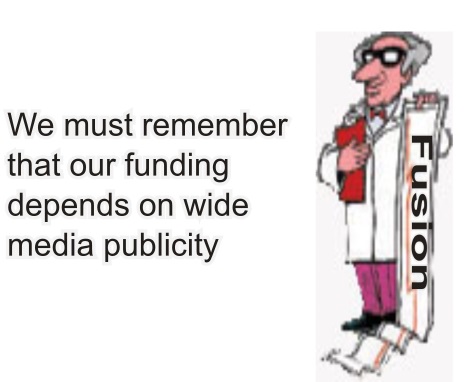
UK Fusion Energy, the government agency aiming to build the UK’s first
energy-producing fusion reactor, has announced it is seeking tenders for
the reactor’s construction. Nuclear fusion, the process that powers the
sun, promises limitless clean power.
Despite decades of research, no-one
has yet built a reactor that generates more power than it consumes. The
STEP Fusion programme aims to change that. The new £138m tender is made up
of five lots. Lot 1 will cover the development of a Breeder Blanket System.
Lot 2 asks for a Fuel Cycle System Partner, to support and then lead on the
delivery of key fuelling and fuel cycle sub-systems, working with all other
partners to ensure the delivery of a coherent and safe integrated fuel
cycle design. Lot 3 seeks a Test Operations Partner, to lead operations of
UK Fusion Energy test facilities and associated test activities. Lot 4
seeks a Control System Partner, and Lot 5 seeks asks for a Systems
Engineering and Whole Plant Integration Partner to provide critical
capabilities, including providing capability to support the definition,
coordination, and integration of the fusion plant systems to ensure a
functional, safe and efficient single operational facility outcome.
Construction Index 12th Nov 2026,
https://www.theconstructionindex.co.uk/news/view/tenders-opened-for-nuclear-fusion-programme
1 This Month



Read the Public Inquiry Report, the Commissioners’ report, Surrendering Australia: The AUKUS Deception is available to download for free at aukuspublicinquiry.com. Or just watch the replay of the National Press Club Luncheon.

19 November – Webinar – The Reality of Reprocessing
Time: 11:00 AM Pacific Time (US & Canada) / 2:00 PM Eastern / 7:00 PM UK / 8:00 PM CET
Register for the Zoom Event Here


Shut down the radiation-damaged Heysham nuclear reactors now
To see nuclear-related stories in greater depth and intensity – go to https://nuclearinformation.wordpress.com

Say No to NASA’s Reckless Nuclear Reactor on the Moon
Say No to NASA’s Reckless Nuclear Reactor on the Moon
-
Archives
- November 2026 (128)
- October 2026 (302)
- September 2026 (339)
- August 2026 (330)
- July 2026 (355)
- June 2026 (287)
- May 2026 (306)
- April 2026 (356)
- March 2026 (251)
- February 2026 (267)
- January 2026 (308)
- December 2025 (358)
-
Categories
- 1
- 1 NUCLEAR ISSUES
- business and costs
- climate change
- culture and arts
- ENERGY
- environment
- health
- history
- indigenous issues
- Legal
- marketing of nuclear
- media
- opposition to nuclear
- PERSONAL STORIES
- politics
- politics international
- Religion and ethics
- safety
- secrets,lies and civil liberties
- spinbuster
- technology
- Uranium
- wastes
- weapons and war
- Women
- 2 WORLD
- ACTION
- AFRICA
- Atrocities
- AUSTRALIA
- Christina's notes
- Christina's themes
- culture and arts
- Events
- Fuk 2022
- Fuk 2023
- Fukushima 2017
- Fukushima 2018
- fukushima 2019
- Fukushima 2020
- Fukushima 2021
- general
- global warming
- Humour (God we need it)
- Nuclear
- RARE EARTHS
- Reference
- resources – print
- Resources -audiovicual
- Weekly Newsletter
- World
- World Nuclear
- YouTube
-
RSS
Entries RSS
Comments RSS