Europe’s Historic Crossroads: Militarization & Social Crisis
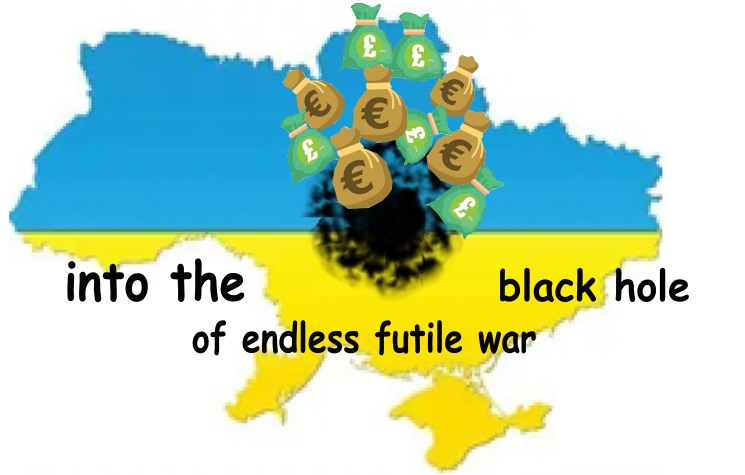
when, and at what point, do people irrevocably lose confidence that the state and its political elites are still acting in their interests?
The pressing question concerns society’s priorities: how much should be spent on armaments, and how much on the welfare state, healthcare, education, housing and infrastructure?
European political elites apparently find it easier to reach agreement on increasing military budgets than on resolving the everyday social problems facing their populations. European security, however, is not simply a question of military strength.
In this crisis of confidence, Uroš Lipušcek says Europeans can either seek autonomy and peace with Russia or follow the current E.U. course of increasing authoritarianism and geopolitical insignificance.
November 9, 2026, By Uroš Li0
Europe today finds itself at a historical crossroads reminiscent of 1848 and the period between 1933 and 1939. The European revolutions of 1848, also known as the Springtime of Nations, and the events leading up to 1939 share several important historical processes with the present day.
Both periods were characterised by a crisis of political representation, social divisions, economic uncertainty, growing dissatisfaction among the middle and lower classes, militarisation and questions about the legitimacy of existing political institutions.
Of course, the historical circumstances are not identical. In 1848, European nations revolted primarily against absolute monarchies, the remnants of feudalism and political subordination.
During the period preceding the Second World War, Europe faced racist, fascist and Nazi ideologies seeking to establish domination over Europe and subsequently the world.
Today’s European protests are taking place within formally democratic states, where the sources of discontent are linked to economic inequality, the cost of living, migration, distrust of political elites, the consequences of the war in Ukraine, the future of European integration and rivalry between major powers over the redistribution of geopolitical spheres of influence.
Underlying these developments is the determination of leading American elites to preserve their global supremacy, even where the interests of American hegemony increasingly conflict with the long-term economic and security interests of European countries.
In October, protests that began in France spread to Italy, Germany, Belgium, the Netherlands, Spain, Portugal, Albania — and now Germany. A wave of discontent is also becoming increasingly visible in what is known as the New Europe, comprising the former socialist countries.
In Serbia, student protests lasting almost two years led to the end of the 14-year rule of President Aleksandar Vucic, while Poland has experienced a serious constitutional crisis in recent days.
Old & New Europe
The unrest in both Old and New Europe has some common roots, although there are also significant differences. Major social transformations often do not begin with grand political programmes, but with unexpected incidents that expose the gap between a country’s official image and the everyday reality of its citizens.
Examples include rats roaming poorly maintained French primary schools; the kicking of a hungry horse in the royal stables in Paris, which, according to some historical accounts, triggered a wave of discontent that eventually contributed to the French bourgeois revolution of 1789; rotten meat aboard the Russian battleship Potemkin in 1905, which sparked the first Russian Revolution; the self-immolation of a fruit seller in Tunisia in 2010; an eviction this September that sparked the widespread housing protests in Spain; current poor food in a student canteen in Pristina in 1981, which became the catalyst for a general uprising among the population of Kosovo; and the deaths of 16 people in Novi Sad in 2024 following the collapse of a railway station canopy, an event that ultimately led to a change of government in Serbia.
These very different incidents confirm that seemingly isolated events can trigger major social transformations. They all raise the same fundamental question: They all raise the same fundamental question: when, and at what point, do people irrevocably lose confidence that the state and its political elites are still acting in their interests?
The Crisis of the European Political Model
The unrest, protests and growing social discontent that have shaken Western Europe in recent years are not merely the consequences of individual political decisions, economic difficulties or dissatisfaction with incumbent governments.
They reflect a much deeper phenomenon: the gradual exhaustion of the post-war European social model, growing contradictions between the interests of political and economic elites and the expectations of the population, and, above all, a loss of confidence in the institutions of liberal, parliamentary democracy.
France, Germany, Belgium, the Netherlands and other Western European countries are experiencing various forms of discontent………………………………………………………………………………………..
Economic Insecurity & the Erosion of Social Protection
One of the fundamental causes of discontent is the gradual deterioration in the living standards of a significant proportion of Europe’s population………………………………………………………………………………………………
The Militarization of Europe & the Question of Priorities
Another significant negative factor is the changing hierarchy of Europe’s political and economic priorities. The war in Ukraine has had a profound impact on European security policy, energy flows, economic relations with Russia and public finances more generally. European countries are increasing military expenditure while cutting social spending amid resultant budgetary constraints, high public debt and growing pressure to restore and increase social services.
The pressing question concerns society’s priorities: how much should be spent on armaments, and how much on the welfare state, healthcare, education, housing and infrastructure?……………………………………………………….
European political elites apparently find it easier to reach agreement on increasing military budgets than on resolving the everyday social problems facing their populations. European security, however, is not simply a question of military strength. It is also a question of social stability, economic sustainability and citizens’ confidence in the future.
The Crisis of Political Representation & Democratic Legitimacy
……………………. A large part of the population feels that key decisions are being made beyond democratic scrutiny……………………………………………………………………………………………………………………………………………………………………………………………………………………………………………………………………… https://consortiumnews.com/2026/11/09/europes-historic-crossroads-militarization-social-crisis/
No comments yet.
1 This Month



Read the Public Inquiry Report, the Commissioners’ report, Surrendering Australia: The AUKUS Deception is available to download for free at aukuspublicinquiry.com. Or just watch the replay of the National Press Club Luncheon.

19 November – Webinar – The Reality of Reprocessing
Time: 11:00 AM Pacific Time (US & Canada) / 2:00 PM Eastern / 7:00 PM UK / 8:00 PM CET
Register for the Zoom Event Here


Shut down the radiation-damaged Heysham nuclear reactors now
To see nuclear-related stories in greater depth and intensity – go to https://nuclearinformation.wordpress.com

Say No to NASA’s Reckless Nuclear Reactor on the Moon
Say No to NASA’s Reckless Nuclear Reactor on the Moon
-
Archives
- November 2026 (128)
- October 2026 (302)
- September 2026 (339)
- August 2026 (330)
- July 2026 (355)
- June 2026 (287)
- May 2026 (306)
- April 2026 (356)
- March 2026 (251)
- February 2026 (267)
- January 2026 (308)
- December 2025 (358)
-
Categories
- 1
- 1 NUCLEAR ISSUES
- business and costs
- climate change
- culture and arts
- ENERGY
- environment
- health
- history
- indigenous issues
- Legal
- marketing of nuclear
- media
- opposition to nuclear
- PERSONAL STORIES
- politics
- politics international
- Religion and ethics
- safety
- secrets,lies and civil liberties
- spinbuster
- technology
- Uranium
- wastes
- weapons and war
- Women
- 2 WORLD
- ACTION
- AFRICA
- Atrocities
- AUSTRALIA
- Christina's notes
- Christina's themes
- culture and arts
- Events
- Fuk 2022
- Fuk 2023
- Fukushima 2017
- Fukushima 2018
- fukushima 2019
- Fukushima 2020
- Fukushima 2021
- general
- global warming
- Humour (God we need it)
- Nuclear
- RARE EARTHS
- Reference
- resources – print
- Resources -audiovicual
- Weekly Newsletter
- World
- World Nuclear
- YouTube
-
RSS
Entries RSS
Comments RSS



Leave a Reply