AUKUS: “The worst, riskiest, most costly decision ever”
4 Nov 2026 Burning Archive. Weekly Audio Essays
“We concluded that AUKUS is the worst, riskiest and most costly defence decision ever made by an Australian government.” – Public Inquiry into AUKUS (4 November 2026) Initiated and then backed up by two Australian Prime Ministers,
AUKUS is a world-class dumb and dumber decision. Jeff Rich takes you through the Report of the Public Inquiry into AUKUS, “Surrendering Australia – The AUKUS Deception.” Chaired by Peter Garrett and including a former Australian Chief of Defence Forces this report is a wake-up call to all Australians and the the world – change your relationship with the USA, or you will be taken for a ride in a dud nuclear sub. The AUKUS Public Inquiry Commissioners were: Karina Lester, Carmen Lawrence, Peter Garrett, Leanne Minshull, Chris Barrie.
Former defence chief urges rethink of Australia’s relationship with China

Rob Harris November 4, 2026, https://www.smh.com.au/politics/federal/too-risky-too-costly-aukus-should-be-scrapped-finds-peter-garrett-led-inquiry-20261104-p61bbt.html
Australia must rethink its relationship with China rather than blindly follow the United States into a disastrous military confrontation, former defence force chief Chris Barrie has warned as part of a review demanding the federal government overhaul its signature security strategy.
The retired admiral delivered the warning at the National Press Club in Canberra on Wednesday as he joined former Labor minister Peter Garrett to launch a scathing report calling for the immediate cancellation of the $368 billion AUKUS nuclear submarine pact, arguing it threatens Australian sovereignty and risks dragging the nation into a war with China.
The inquiry calls for the nuclear submarine program to be scrapped, a royal commission into AUKUS, the suspension of US submarine operations near Perth and a fundamental overhaul of Australia’s defence strategy and relationships with Washington and Beijing.
“Whatever way you want to look at the future in this region, by 2050, China will be the world’s largest power, the world’s greatest power,” Barrie said. “I don’t see any evidence of global aspirations and global dominance aspirations that we’ve seen out of the United States. And that’s why I worry about the contest between the United States and China.”
Barrie, who led the Australian Defence Force from 1998 to 2002, said Australia needed to better its relationship with Beijing and invest far more heavily in diplomacy rather than allowing its strategic priorities to be dictated by Washington.
Barrie, who recalled travelling through China with the head of the People’s Liberation Army during his time as defence chief, said Australia needed a more sophisticated understanding of Beijing’s strategic ambitions.
The retired admiral said Australia’s tendency to lecture Beijing publicly had damaged relations, and warned against viewing China’s rise solely through the prism of American strategic competition.
“I think we need to recalibrate the way we deal with China,” he said, suggesting Australia’s embassy in Beijing should become its second-largest diplomatic mission, if not the largest.
His intervention came as a union and community-backed public inquiry accused successive Coalition and Labor governments of committing generations of taxpayers to an extraordinarily expensive defence program without adequately examining its costs, feasibility or consequences for Australia’s independence.
The report, Surrendering Australia: The AUKUS Deception, concluded the submarine acquisition program was unlikely to deliver on its promises and could leave the Australian Navy without an effective submarine fleet. It labelled the program the “worst, riskiest and most costly” defence decision made by an Australian government.
The inquiry’s findings challenge the bipartisan consensus behind AUKUS, which the Albanese government maintains is essential to Australia’s long-term defence capability and deterrence in the Indo-Pacific.
Garrett, the Midnight Oil frontman, lashed the absence of meaningful debate within his own party over AUKUS, saying the evidence presented to commissioners had reinforced his original concerns about the deal.
“My major objection to AUKUS in the first instance was that there was no debate,” Garrett said.
“Where was the vigorous debate in the caucus? Where was the vigorous debate in the cabinet? We don’t have any sense that there’s been a debate.”
Garrett said the enormous cost, the failure to account for the safe storage of radioactive waste and the terms of the agreement had convinced him the program was fundamentally flawed.
“Your conclusion after looking at it and hearing from expert advice is that it is a complete absolute crock.”
The report, which backs longstanding criticisms from former prime ministers Paul Keating and Malcolm Turnbull, calls for a comprehensive national security strategy and accuses both major parties of surrendering critical defence decisions to foreign powers.
Among the 17 recommendations, the inquiry recommended urgently developing a cheaper alternative to replace the ageing Collins-class fleet, while reviewing the separate AUKUS agreement on advanced defence technologies. It also calls for an Australian National Audit Office investigation into its costs.
Work on the AUKUS submarine construction facilities at Adelaide’s Osborne naval precinct should halt, while Australian submariners should stop being seconded to American vessels, the report argues.
The report also warns that the US and Britain could walk away from the agreement without delivering the promised submarines while retaining billions of dollars for their shipbuilding industries.
It also questions whether the delivery timetable is achievable and warns that attempting to operate three different classes of submarines could place intolerable pressure on Defence personnel and resources. Australia is scheduled to receive its first US-built Virginia-class nuclear submarine in 2032, with a subsequent boat arriving every four years until the sovereign fleet is operational. The first Australian-built SSN-AUKUS vessel is slated to enter service in 2042.
The public inquiry, convened by the Australian Peace and Security Forum, received more than 1000 written submissions and heard evidence over 10 days across eight cities, with its organisers raising $220,000 to fund the exercise.
A government spokesperson brushed off the inquiry, noting AUKUS had already faced extensive parliamentary scrutiny and remained vital in tackling the nation’s toughest strategic challenges since World War II.
Defending the project’s multi-billion-dollar cost, the spokesperson said the partnership was designed to bolster the Australian Defence Force’s strike power.
“We need to support the development of an ADF with a much greater capacity to project so we can defend Australia and contribute to regional security and stability,” they said.
111111The government also said the pact would create roughly 20,000 direct jobs across industry, defence, and the public sector over the next three decades.
‘Deeply Alarming’: Hours Before Midterm Elections, Trump Bombs Iran’s Qeshm Island
“There is still a chance to prevent another catastrophe, but that window may be closing. We cannot afford to let this war escalate further.”
Jake Johnson, Nov 03, 2026, https://www.commondreams.org/news/trump-bombs-iran-before-midterms
The Trump administration launched a new bombing attack on Iranian territory Monday night, striking Qeshm Island in the Strait of Hormuz on the eve of the US midterms amid mounting fears of a massive post-election assault.
The Wall Street Journal was first to report the strikes, which a US official characterized as a “defensive measure” in response to Iran’s use of surface-to-air missiles against American forces that have been waging an illegal war of aggression against Iran since February. The Journal noted that “in one instance on Monday, Iran’s Islamic Revolutionary Guard Corps fired a surface-to-air missile at a US jet fighter, which fired back in self-defense.”
The US military did not publicly announce the attack on Qeshm Island, which came hours before American voters were set to head to the polls to decide whether President Donald Trump’s party should remain in control of Congress. The Journal reported that the Trump administration has “purposefully” been keeping its recent campaign of smaller-scale strikes on Iran quiet “so as not to signal any intention of resuming major combat operations.”
Kazem Gharibabadi, Iran’s deputy foreign minister, said Tuesday that “Iran is prepared for any scenario” and stressed that the country “retains its right to legitimate self-defense until the military aggression has been brought to a complete and permanent end.”
Last month, Trump vowed—falsely, given Monday’s strikes—that the US would “not be attacking Iran at any time prior” to the midterms and that the two sides were engaged in “productive discussions.”
Vice President JD Vance asserted Monday that he and Trump “both feel really good about the prospect of potentially coming to a negotiated settlement” to end the massively unpopular and destructive war with Iran.
Jamal Abdi, president of the National Iranian American Council, said late Monday that “after eight months of an illegal war, there was finally some hope that a diplomatic agreement might be within reach and this war could end through negotiations rather than spiral into the violent scenarios being threatened after the midterm elections.”
“But these deeply alarming revelations suggest we may be heading in precisely the opposite direction,” Abdi said of the Qeshm Island strikes and other recent attacks on Iran. “Every day that Congress fails to intervene is another day this administration is allowed to wage an unauthorized war, conceal its military operations, and gamble with millions of lives. Congress must immediately demand answers, oppose further military action, and use its power to cut off funding for this unauthorized war. Americans must raise their voices and demand that their representatives act now. There is still a chance to prevent another catastrophe, but that window may be closing. We cannot afford to let this war escalate further.”
The latest US strikes came days after Sen. Chris Murphy (D-Conn.) warned that the Trump administration was considering an “insane” plan to resume major attacks on Iran following Tuesday’s midterm elections.
If the plan is carried out, Murphy said, “it will lead to devastating escalation and the likely destruction of our commitment to the rule of law.”
Murphy, whose remarks were based on information he and other lawmakers received during a classified briefing, did not specifically warn that Trump is considering the use of nuclear weapons against Iran. But concerns about such a grave escalation grew over the weekend after far-right commentator Tucker Carlson—who has vocally criticized the president’s decision to wage war against Iran—claimed that the Trump administration “may be within days of launching a nuclear strike on Iran.”
“Whether these allegations reflect serious military planning or reckless posturing, the very possibility of a US nuclear attack on Iran is an unconscionable horror,” NIAC said in response.
‘UKRAINE’S DEFENCE IS OUR DEFENCE’ – NO, IT REALLY ISN’T
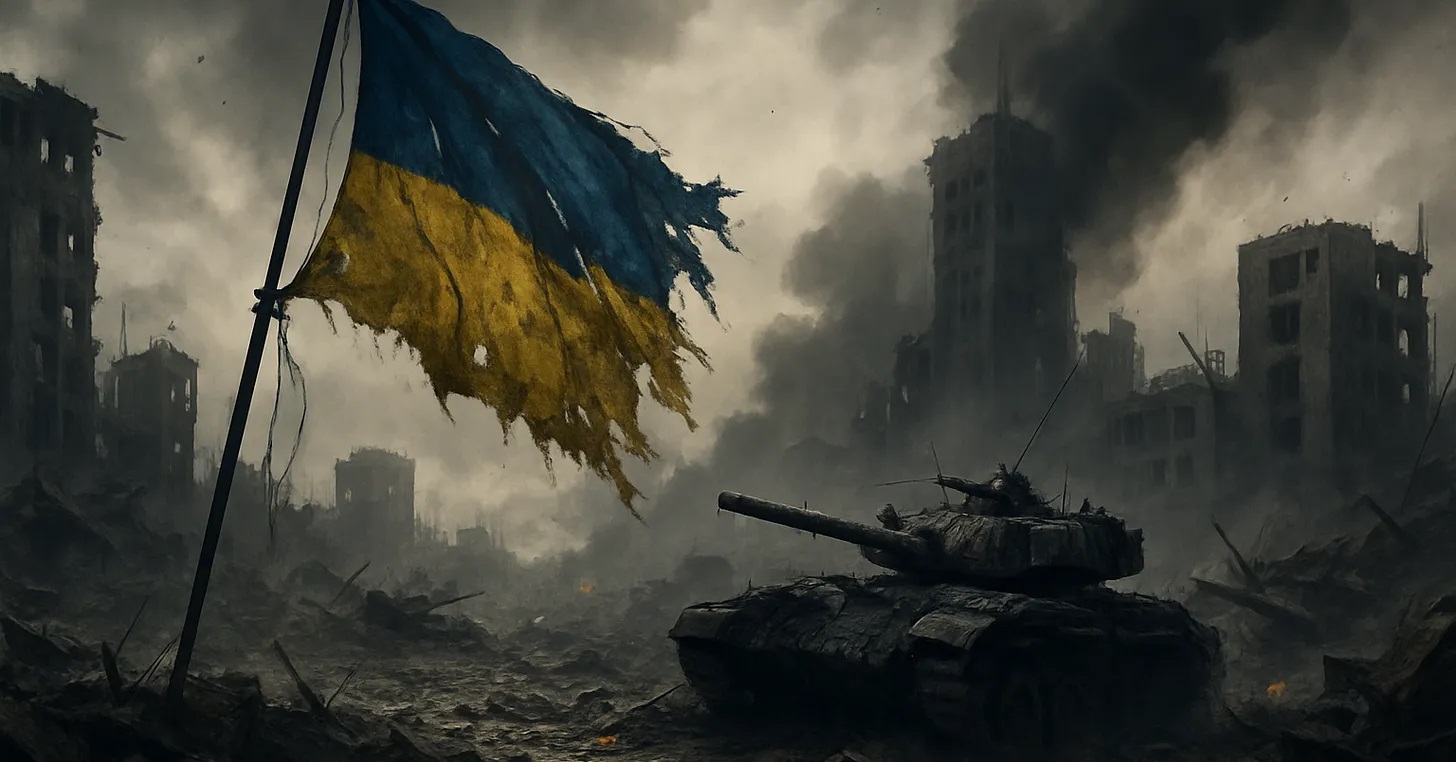
What is their evidence for saying that Russia threatens all democracies? Well, they don’t actually offer any, they simply take it is read, as a self-evident truth. But it isn’t..
any decision on an escalatory response would be ours.
Nato and/or the West, whichever you prefer, is supplying Ukrainians – geographically peripheral Europeans – with the wherewithal to fight and die for the cause of democracy in “our” Europe. This seems even to me, as a hard-bitten foreign policy realist, distasteful cynicism. How is that desirable. How is that morally right?
a devastated Ukraine will be at once a creature and a protectorate of the Europeans – at vast expense to European exchequers.
A contribution to the national and international debate we were promised, but haven’t had
Mary Dejevsky, Mary’s Substack, Oct 26, 202622
Mary’s Substack, Oct 26, 20262
If there is one line that riles me more than most in a war that has been replete with seductive soundbites, it is that “Ukraine’s defence is our defence”. Beloved by European and British politicians, this assertion rarely draws any public challenge, and my own dissent has so far been limited to a feeble ‘No it isn’t’ on social media. Recently, though, a trio of security luminaries has set out to explain why they think Ukraine’s defence is indeed our defence or, as put less pithily in their title, why they believe that “in helping Ukraine we are protecting ourselves”.
The three are Dr Greg Mills and Dr Karin von Hippel, both fellows at the London think-tank, the Royal United Services Institute, and Raimundo Robredo, described as a guest contributor. You can find their contribution – https://www.rusi.org/explore-our-research/publications/commentary/helping-ukraine-we-protect-ourselves – on the RUSI website, where, in common with all outside contributions, it carries a disclaimer to the effect that its publication here does not imply RUSI’s endorsement.
Mills et al, as I will refer to them from now on, couch their argument as a two-part answer to what they concede is a fair question being asked by Western governments and people alike: why should they keep sending billions of dollars to Ukraine; .what’s in it for us? They also invite a debate. So here is my opportunity.
Mills et al make their case in two parts. In the first, they argue that Russia poses a threat “to all democracies” and “not just to its immediate neighbours”. Hence everyone should pile in to support Ukraine and pre-empt this threat. In the second, they argue that what is also in it for us is the example that Ukraine has set, both in the military advancements it has pioneered and the strength of Ukrainians’ resilience, but also in the way they have stood up for moral values. This moral resistance cannot be allowed to fail, or we are all doomed.
Let’s look at the first argument more closely. What is their evidence for saying that Russia threatens all democracies? Well, they don’t actually offer any, they simply take it is read, as a self-evident truth. But it isn’t.
If they had tried to support it, I submit that their arguments might have included first, that Russia invaded democratic Georgia in 2008 (it didn’t; as found by an EU commissioned investigation, led by the Swiss diplomat, Heidi Tagliavini, which said Russia had responded to actions by the mercurial Georgian leader, Mikheil Saakashvili. And, second, that Russia’s 2014 annexation of Crimea and its 2022 invasion of Ukraine originated in the fear that the example of a thriving democracy next door might foment unrest in Russia. I don’t buy that argument either.
Russia lived peacefully alongside independent Ukraine through the 2004-5 Orange revolution and pursued normal relations with Ukraine after the election of a fiercely pro-Western President, Viktor Yushchenko. The difference between the Orange Revolution and Russia’s interventions in 2014 (the annexation of Crimea) and 2022 was not democracy, but Ukraine’s decision to abandon its constitutional neutrality and aim for membership of Nato. Insecurity, not democracy, was the trigger.
Then how about the specific charge that Russia threatens “all democracies”, not just its immediate neighbours…………………………………………………………………………………………………………………………………………………………………….
any decision on an escalatory response would be ours. And we could choose to stop baiting Russia, cease our own low-level, sub-kinetic, attacks, and keep out of – or withdraw from – what began in 2014 as a Ukrainian civil war, grew into a limited bilateral Ukraine-Russia conflict when Russia intervened in 2014 on behalf of the anti-Kyiv rebels, and threatened a wider war only when the US and Europeans weighed in on Ukraine’s side with ever more money, intelligence and powerful weapons.
It is not as though such an outcome was not envisaged. In 2014, then US President Barack Obama declined to supply lethal military aid to Ukraine for fear of just such an escalation. He understood that Ukraine was a “core national interest” for Russia, but not for the US, which should not go down a path that could lead to a US-Russia war.
The irony now is that, despite Ukraine not being a member of Nato, and despite its Nato aspirations having been placed on the back-burner at the 2008 Bucharest summit, thanks to the opposition of several allies, Ukraine is now the only country, ever, to be benefiting from military protection equivalent to Nato’s famed Article 5. This is a position, what is more, that Nato has meandered into without any of the consultation stipulated in the actual Article 5.
…………………………………………………………………………………….. What is happening is that, by giving Ukraine de facto Nato protection, we have not only assumed responsibility for Ukraine’s defence, but jeopardised our own by importing Ukraine’s insecurity. By supporting Ukraine militarily, we have eliminated what had been a buffer zone, and replaced it with a zone of potentially long-term instability on our eastern flank.
………………………………………In defending Ukraine, we are not protecting ourselves, far from it. We are exposing ourselves to a Russia threat that we have helped to bring into being by challenging what Obama understood was a core Russian interest.
If the first part of the case presented by Mills et al for Ukraine’s defence being our defence can at very least be contested, their second part, to me, makes even less sense, except in a world that does not, and has never, existed. Defending Ukraine is to defend ourselves because – to cut a long explanation short – Ukraine presents a superior form of warriors and war and one that we need to learn from.
At the practical level, Ukraine’s defence, they argue, is our defence, because we will benefit from the strides it has made in developing military equipment and tactics. These include its nimble approach to innovation, as well as its drones and all that.
Well, maybe. But, as a few sceptics are already noting – e.g. https://mwi.westpoint.edu/the-menace-of-misunderstanding-learning-the-wrong-lessons-from-ukraines-drone-saturated-battlefields/ – the applicability for Europeans of this Ukrainian model can be exaggerated. As in the past, our generals risk being seduced into fighting the last war. You might add that if European defence needs anything, it is less nimble entrepreneurialism than more cohesion and consolidation. Nor should it be neglected how quickly and effectively Russia has caught up both in drone technology and in satellite communications. Maybe the example we need to learn from is Russia’s?
………………………………………………………………………………………………………. Is it, to start close to home, really in the UK’s national interest to be spending so much on defending Ukraine? However much this and previous governments have tried to muddy the waters of spending on Ukraine, it cannot but eat into the resources that we might need to defend ourselves, or our actual allies, or even sustain living standards at home?
………….. the UK and the Europeans together simply do not possess either the moral or material clout that would be needed to recover Ukraine’s lost territory from Russia. In that respect, Ukraine’s defence cannot be our defence, because it is beyond our means, with or without taking account of the national interest.
Given this reality, our obligation should be to work with Ukraine to secure the best terms it can possibly get to end the war.
…………………………. Nato and/or the West, whichever you prefer, is supplying Ukrainians – geographically peripheral Europeans – with the wherewithal to fight and die for the cause of democracy in “our” Europe. This seems even to me, as a hard-bitten foreign policy realist, distasteful cynicism. How is that desirable. How is that morally right?
…………………………………………………………. a devastated Ukraine will be at once a creature and a protectorate of the Europeans – at vast expense to European exchequers.
……………………not a good return on all that we have invested in Ukraine’s defence so far, and seem intent on continuing “for as long as it takes”. https://marydejevsky.substack.com/p/ukraines-defence-is-our-defence-no2222222222222
Inquiry urges Australian gov’t to terminate AUKUS pact.

Source: Xinhua, Editor: huaxia, 2026-11-04, https://english.news.cn/20261104/e47195ed31584f15a2214df618abf5c9/c.html
CANBERRA, Nov. 4 (Xinhua) — An independent inquiry has called for the Australian government to immediately terminate the AUKUS treaty, describing the pact as the riskiest defense decision in national history.
Former government minister Peter Garrett and former Australian Defense Force chief Chris Barrie, two of the five commissioners conducting the public inquiry into AUKUS, presented the final report at the National Press Club of Australia in Canberra on Wednesday, concluding that the landmark security pact does not serve Australia well and should be scrapped.
After receiving more than 1,000 submissions and conducting 10 days of public hearings around the country, the final report said that the inquiry did not uncover any “convincing foundations” for AUKUS.
“We concluded that AUKUS is the worst, riskiest and most costly defense decision ever made by an Australian government,” the report said.
“AUKUS jeopardizes our sovereignty, further entangles us with U.S. war planning and actually endangers our security.”
The report made 16 recommendations, including that Australia immediately terminate pillar one of the AUKUS deal, under which Australia would acquire eight nuclear-powered submarines in the 2030s and 2040s, due to current delivery schedules “most likely” being unachievable.
Additionally, it said that plans for a U.S. naval base near Perth in Western Australia should be suspended until “critical questions” regarding nuclear security and health and environmental safety for the local population are fully examined.
The independent inquiry was established after successive federal governments ruled out holding a major public review of the pact.
Prime Minister Anthony Albanese told reporters on Tuesday after meeting with British counterpart Andy Burnham in the Caribbean that work on AUKUS is progressing very well.■
Caitlin Johnstone – Western News Media Propagandists Describe US Bombing Iran As “Defensive”
Caitlin Johnstone, 3 Nov 26, https://www.caitlinjohnst.one/p/western-news-media-propagandists?utm_source=post-email-title&publication_id=82124&post_id=223315184&utm_campaign=email-post-title&isFreemail=true&r=1ise1&triedRedirect=true&utm_medium=email
The propagandists of the American press have been uncritically describing recent US airstrikes on Iran as “defensive” despite the US being the clear aggressor in this ongoing conflict, and despite the United States existing on the other side of the planet from Iran.
CBS News was the most egregious offender with its headline, “U.S. launches defensive strikes at Iranian targets near Strait of Hormuz.”
The title frames it as an objective fact that the attack was defensive in nature, without quotation marks around the word “defensive” and without even bothering to uncritically cite US officials as the source of this claim.
As a reminder, CBS News was recently acquired by David Ellison, son of Larry Ellison, who is one of the wealthiest people on the planet with a net worth of some $160 billion and who is also the largest single donor to the Israeli military. The Ellisons have responded to Israel’s genocide-induced PR crisis by frenetically buying up control over major platforms like CBS, CNN, HBO Max, Warner Bros and TikTok in order to drum up support for US-Israeli military agendas.
CBS News was the most egregious offender with its headline, “U.S. launches defensive strikes at Iranian targets near Strait of Hormuz.”
The title frames it as an objective fact that the attack was defensive in nature, without quotation marks around the word “defensive” and without even bothering to uncritically cite US officials as the source of this claim.
Other mass media outlets weren’t much better, uncritically regurgitating assertions from the US government which present the attacks as “defensive”.
The Associated Press headline on the story reads, “US has conducted defensive strikes on Iranian targets in the Strait of Hormuz, US official says.”
From The Washington Post, “U.S. forces launch new ‘defensive’ strikes in Iran on eve of election.”
From CNN, “US military conducts strikes on Iran’s Qeshm Island in defensive operation, officials say.”
From Fox News, “US launches ‘defensive’ strikes on Iranian island as Tehran talks hang in balance.”
From Reuters, “US carries out ‘defensive’ strikes on Iran’s Qeshm Island, officials say.”
From ABC News, “US carries out defensive airstrikes on Iran’s Qeshm Island: Officials.”
From Politico, “US has conducted defensive strikes on Iranian targets in the Strait of Hormuz, US official says.”
The first paragraph of the Newsweek write-up on the story reads, “The U.S. carried out defensive strikes against Iranian targets in the Strait of Hormuz, a U.S. official told the Associated Press (AP) on Monday.”
With Rumors of Nuclear War, the New Congress must end the Iran conflict to avoid a U.S. Catastrophe
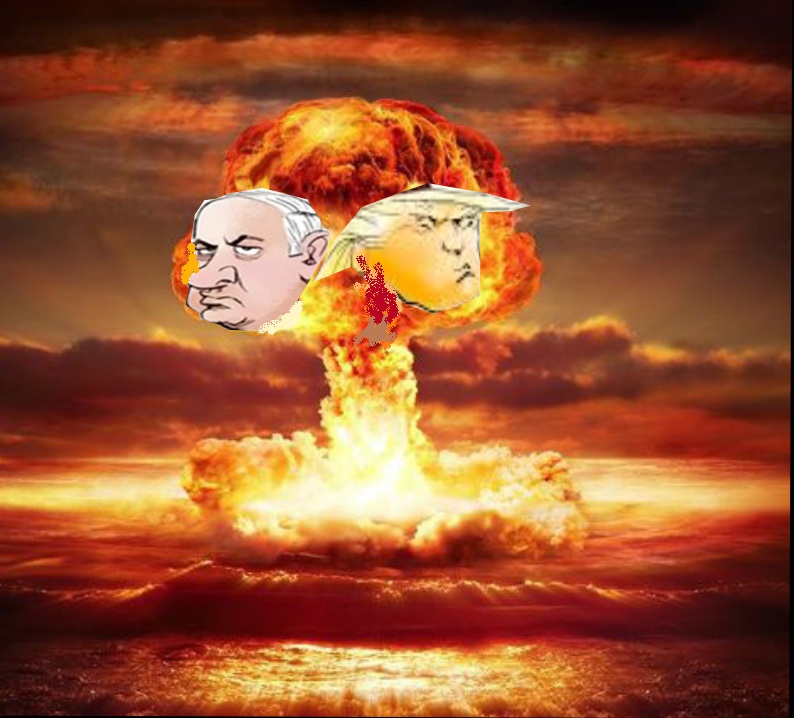
Juan Cole 11/03/2026, https://www.juancole.com/2026/11/congress-conflict-catastrophe.html
Ann Arbor (Informed Comment) – However the midterms turn out, the 120th Congress must cut off money to Trump for his ongoing Iran War. As an unresolved geopolitical issue, it threatens the future of the United States like no other issue.
In mid-September, Senate Republicans voted to allow Trump to continue his war on Iran, after several GOP House members had joined the Democrats in invoking the War Powers Act.
If Michiganders want a reason to vote against Mike Rogers for Senate, they just have to consider that Rogers would give Trump anything he wanted on the Iran War front. Rogers called the Iran War a “win-win-win” for the US. So much winning. He has flip-flopped now that high gasoline and diesel prices, caused by Trump’s attack on Iran, have made the GOP about as welcome in the voting booth as a skunk at an office party. He says he wants to see the war “wound down.” But would he vote to deny Trump the money to continue to prosecute the war? I wouldn’t bet the farm on it.
Since February 28, when Israel’s Benjamin Netanyahu and Donald Trump murdered dozens of high Iranian officials from the air, including the clerical leader Ali Khamenei, and initiated 13,000 strikes against Iranian targets with no provocation, the world has been on a knife edge.
We only avoided a global recession because China deeply cut its petroleum imports, from 11.5 million barrels a day to under 9 million barrels a day, releasing instead massive amounts of oil from both private and government strategic petroleum reserves. The US and Europe also released petroleum from reserves. These maintained enough oil on the market to keep prices of Brent crude around an average of $96 a barrel, which is a drag on the economy but not an existential crisis. The price averaged $69 a barrel in 2025, though, so the Iran War has had an inflationary impact that many ordinary families in the US and around the world are feeling.
But the war isn’t over. On Monday, the US military staged several strikes on Iran’s Qeshm island. Iran continues to report that tankers in the Persian Gulf have struck mines as they attempted to transit the Strait of Hormuz, though many observers believe the ships are more likely to have been hit by drones than to have struck mines. There may not be any Iranian mines remaining.
Then the prominent conservative commentator Tucker Carlson warned that outgoing Israeli Prime Minister Benjamin Netanyahu has been urging Trump to drop nuclear bombs on Iran. One doesn’t know what to make of this allegation, which Netanyahu’s office has denied. On the one hand, Carlson is well connected in Washington among people close to Trump, since he used to be in that camp himself. On the other hand, pundits make their living on the internet by seeking clicks and eyeballs, which sometimes drives them to sensationalism.
But this kind of report is as serious as a heart attack. And, let’s face it. Is there really any doubt that Netanyahu is capable of trying to get the US to nuke Iran? No, no there is not. And is there really any doubt that Trump is stupid enough to fall for this attempt to manipulate him? No, no there is not. So what Carlson is saying has to be taken seriously. Very seriously.
Chris Hedges: Israel Cannot Be Allowed to Erase Gaza’s Stories
SCHEERPOST, November 3, 2026, Joshua Scheer
Genocide seeks to destroy not only a people but the memory of their lives. Speaking on his Requiem for Gaza book tour, Hedges describes how he and illustrator Joe Sacco interviewed 29 Palestinian families who had escaped to Egypt, documenting the destruction through the people forced to endure it. He recounts testimony about doctors and journalists being targeted and argues that the assault extends beyond killing and demolished buildings to the destruction of a people’s history, culture and memory.
A child’s exam paper. A wedding album pulled from the rubble. A teddy bear left behind when a family flees its home. These are the fragments of Palestinian life Chris Hedges brings before his audience—evidence of people whose hopes, routines and relationships disappear behind the bloodless language of military briefings. In this talk, the distance between that language and the lives it conceals becomes unbearable.
Then he reads the story of a family briefly returning home during a ceasefire. Children carefully put away their toys, as though good behavior might allow them to stay. A mother confronts the birthday-party list still on her kitchen whiteboard and mourns a sister killed with her husband and their four children. Elsewhere, relatives search the rubble for bodies, buy fuel to keep an excavator running and bury their loved ones in curtains because there are no shrouds.
These lives demand more than the ritual expressions of concern that allow governments to acknowledge suffering while evading responsibility. Drawing on decades of war reporting, Hedges insists on the obligation to preserve the evidence and the names: so the dead cannot be reduced to disputed statistics, and those responsible cannot later claim that nobody knew.
The transcript of Chris Hedges’ remarks appears below ON ORIGINAL – https://scheerpost.com/2026/11/03/chris-hedges-israel-cannot-be-allowed-to-erase-gazas-stories/
Hackers send fake nuclear threat alert to Ukraine emergency app

Unknown hackers have targeted Ukraine’s nationwide emergency alert mobile
app, sending residents in Kyiv a warning that they were at risk of an
imminent nuclear strike. The app reported a high possibility of nuclear
radiation late on Sunday. It also wrongly warned of a chemical threat to
the Ukrainian capital and street-to-street fighting. The messages were
written in English with spelling mistakes, as well as in Ukrainian.
Guardian 2nd Nov 2026, ttps://www.theguardian.com/world/2026/nov/02/hackers-fake-nuclear-chemical-threat-alert-kyiv-ukraine-emergency-app
UK Urged to Keep Two Astute-Class Nuclear-Powered Attack Submarines on Continuous Patrol.
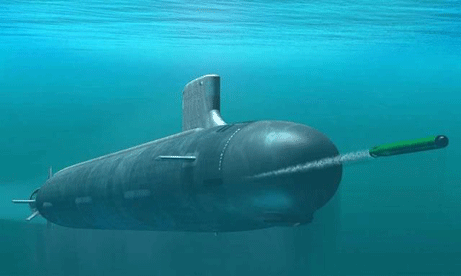
Britain could strengthen its North
Atlantic defences by keeping two Astute-class nuclear-powered attack
submarines continuously operational, according to a proposal published by
the 878 Institute in October 2026. The plan would maintain one submarine on
patrol in strategic waters, including the Greenland-Iceland-UK (GIUK) Gap
and North Sea, while a second would help protect Britain’s nuclear
deterrent submarines, strengthening the Royal Navy’s ability to counter
Russian underwater threats, safeguard critical maritime routes, and
reinforce NATO’s security across the North Atlantic.
Army Recognition 2nd Nov 2026,
https://www.armyrecognition.com/news/navy-news/2026/uk-urged-to-keep-two-astute-class-nuclear-powered-attack-submarines-on-continuous-patrol-amid-russian-threats
1 This Month



19 November – Webinar – The Reality of Reprocessing
Time: 11:00 AM Pacific Time (US & Canada) / 2:00 PM Eastern / 7:00 PM UK / 8:00 PM CET
Register for the Zoom Event Here



Shut down the radiation-damaged Heysham nuclear reactors now
To see nuclear-related stories in greater depth and intensity – go to https://nuclearinformation.wordpress.com

Say No to NASA’s Reckless Nuclear Reactor on the Moon
Say No to NASA’s Reckless Nuclear Reactor on the Moon
-
Archives
- November 2026 (64)
- October 2026 (302)
- September 2026 (339)
- August 2026 (330)
- July 2026 (355)
- June 2026 (287)
- May 2026 (306)
- April 2026 (356)
- March 2026 (251)
- February 2026 (267)
- January 2026 (308)
- December 2025 (358)
-
Categories
- 1
- 1 NUCLEAR ISSUES
- business and costs
- climate change
- culture and arts
- ENERGY
- environment
- health
- history
- indigenous issues
- Legal
- marketing of nuclear
- media
- opposition to nuclear
- PERSONAL STORIES
- politics
- politics international
- Religion and ethics
- safety
- secrets,lies and civil liberties
- spinbuster
- technology
- Uranium
- wastes
- weapons and war
- Women
- 2 WORLD
- ACTION
- AFRICA
- Atrocities
- AUSTRALIA
- Christina's notes
- Christina's themes
- culture and arts
- Events
- Fuk 2022
- Fuk 2023
- Fukushima 2017
- Fukushima 2018
- fukushima 2019
- Fukushima 2020
- Fukushima 2021
- general
- global warming
- Humour (God we need it)
- Nuclear
- RARE EARTHS
- Reference
- resources – print
- Resources -audiovicual
- Weekly Newsletter
- World
- World Nuclear
- YouTube
-
RSS
Entries RSS
Comments RSS

