Meta Wants To Build A $50 Billion Data Center In Louisiana
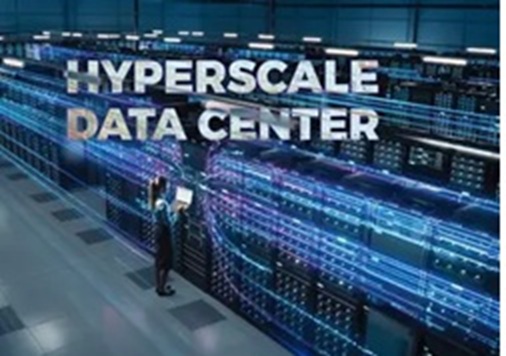
A small, rural community in Louisiana is confronting what it means to become the home of Big Tech’s next industrial megaproject.
Kieran Spencer, Breakthrough News, September 11 2026
Meta wants to build one of the largest data centers in the world in rural Louisiana.
The facility, known as Hyperion, is being built to train and operate the artificial intelligence systems behind Meta’s products. What began as a $10 billion proposal has since ballooned into a more than $50 billion development spanning nearly 10 million square feet and roughly 3,650 acres. At full scale, Hyperion is expected to require 5 gigawatts of computing capacity, making it the largest data center in Meta’s global fleet and one of the largest ever built. According to Meta, the project is expected to employ around 7,500 workers during peak construction and support 1,000 permanent jobs once operational.
For residents of Richland Parish, the arrival of Meta has brought both desperately needed jobs and profound uncertainty about what the project will mean for the community. The enormous facility is being constructed on former farmland and will require an equally immense network of infrastructure to support it. In nearby Rayville, many residents view Meta as an economic lifeline after decades of limited employment opportunities, with local families securing jobs that pay far more than the parish’s median income. But the influx of highly paid, out-of-town workers has also driven up rent and the cost of living as landlords and businesses increasingly orient themselves toward Meta employees. Landlords routinely raise the rent of low-income housing in order to price out local tenants in favor of contractors, forcing residents to move out of the area to afford housing…………………………………………………………………………………………………………………………………………………………………..
Meta’s empty promises of economic growth
The public’s skepticism is warranted. Data centers routinely generate thousands of temporary construction jobs while creating only a fraction as many permanent positions once construction ends. Meta’s projects in Texas and Oklahoma, for example, are expected to leave only around 100 operational jobs each after thousands of construction workers leave. QTS similarly estimates that a data center campus in York County, North Carolina will produce roughly 1,000 construction jobs but only about 100 permanent onsite positions. Even Hyperion’s original proposal called for roughly 5,000 construction workers but only 500 permanent operational employees. None of these figures guarantee that the permanent positions will go to Richland Parish residents. Meta has offered assurances about local hiring, but there is no binding commitment requiring the company to employ local workers.
Meta also claims the data center will bring tens of millions of dollars in tax revenue to Richland Parish, an argument it bolsters by pointing to the 2,000% increase in sales-tax totals since construction began – $50,000 of which has funded bonuses for some local schoolteachers. But that windfall is largely a product of the construction boom itself, not a sustainable source of revenue generated by the completed data center. The teacher bonuses are distributed through Richland Parish’s longstanding one-cent sales-tax program, which provides annual “13th checks” to eligible school employees. As those construction workers spend money in the parish, that pool has temporarily grown; once construction ends, so will much of the revenue feeding it. The result is a temporary infusion of money that can obscure the longer-term fiscal consequences of the project. When the construction boom ends, Richland Parish will be left with the costs of a massive industrial project, and fewer public resources to pay for them.
Cementing Louisiana’s dependence on fossil fuels amid environmental devastation
The environmental impact of the Meta data center could also be deadly for residents of Richland Parish and Louisiana as a whole. The Hyperion AI data center is expected to consume roughly half of the state’s electrical capacity – approximately seven times the energy consumed by the entire city of New Orleans – placing enormous new demands on Entergy’s already overburdened power grid. Louisiana residents know what a fragile electrical system can mean in a disaster. After Hurricane Katrina, Entergy’s restoration efforts took 42 days to complete across its service territory. In 2021, Hurricane Ida left nearly 950,000 customers without power after an Entergy tower fell into the Mississippi River, a disaster that required 15 days of restoration work just to bring more than 90% of affected customers back online.
Rather than address these vulnerabilities, Entergy’s proposed solution to Hyperion’s unprecedented energy demands is to build an entirely new fossil-fuel energy infrastructure around the data center. The company plans to construct ten natural-gas power plants, including seven new facilities capable of generating roughly 5.2 gigawatts of electricity, alongside new transmission lines and a massive 500-kilovolt substation. Meta, Entergy, and the Louisiana state government are working to present these projects as investments that will strengthen Louisiana’s electrical grid and improve reliability for ordinary customers.
Louisiana is being asked to construct an enormous new fossil-fuel-based energy system so that a single private corporation can consume an unprecedented share of its electricity. More generation may increase capacity, but it does not eliminate the physical vulnerabilities that have repeatedly left Louisiana residents without power after hurricanes. Instead, the state is doubling down on a centralized, fossil-fuel-dependent grid whose infrastructure will remain vulnerable to the same storms that have already decimated Louisiana’s communities.
Entergy’s catastrophic deal with Meta has arrived as Louisiana is already on the front lines of an environmental crisis. The state has lost more than 2,000 square miles of coastal land since 1932 and continues to lose more than 16 square miles each year. The state has experienced 31 billion-dollar weather and climate disasters since 2018, leaving communities to repeatedly rebuild from hurricanes, flooding, and extreme weather. Meanwhile, along the Mississippi River between Baton Rouge and New Orleans, the area known as “Cancer Alley” contains a dense concentration of petrochemical and chemical facilities, exposing surrounding communities to significant air pollution and toxic emissions which have resulted in a cancer rate fifty times higher than the national average.
People of Louisiana reject corporate profiteering…………………………………………………………………..
The resistance emerging across Louisiana is more than a battle over a single data center. It is a decisive stand for the right of Louisianians to determine their own future, rather than surrender it to corporate interests. This is a battle for the future of working people everywhere, and the people have vowed to keep fighting https://breakthroughnews.org/2026/09/11/meta-wants-to-build-a-50-billion-data-center-in-louisiana/
No comments yet.
1 This Month





PLEASE OPPOSE HR 8255 AND S.3639 – bills would accelerate satellite deployment, with no environmental review or safeguards – https://ncstd5li.quorum.us/campaign/169331/
To see nuclear-related stories in greater depth and intensity – go to https://nuclearinformation.wordpress.com
-
Archives
- October 2026 (74)
- September 2026 (339)
- August 2026 (330)
- July 2026 (355)
- June 2026 (287)
- May 2026 (306)
- April 2026 (356)
- March 2026 (251)
- February 2026 (267)
- January 2026 (308)
- December 2025 (358)
- November 2025 (359)
-
Categories
- 1
- 1 NUCLEAR ISSUES
- business and costs
- climate change
- culture and arts
- ENERGY
- environment
- health
- history
- indigenous issues
- Legal
- marketing of nuclear
- media
- opposition to nuclear
- PERSONAL STORIES
- politics
- politics international
- Religion and ethics
- safety
- secrets,lies and civil liberties
- spinbuster
- technology
- Uranium
- wastes
- weapons and war
- Women
- 2 WORLD
- ACTION
- AFRICA
- Atrocities
- AUSTRALIA
- Christina's notes
- Christina's themes
- culture and arts
- Events
- Fuk 2022
- Fuk 2023
- Fukushima 2017
- Fukushima 2018
- fukushima 2019
- Fukushima 2020
- Fukushima 2021
- general
- global warming
- Humour (God we need it)
- Nuclear
- RARE EARTHS
- Reference
- resources – print
- Resources -audiovicual
- Weekly Newsletter
- World
- World Nuclear
- YouTube
-
RSS
Entries RSS
Comments RSS


Leave a comment