G7 should declare ‘no first use’ of nuclear weapons: ex-Hiroshima mayor
Mar. 5 Japan Today, LONDON
The Group of Seven industrialized nations should declare a nuclear weapon “no first use” policy during a summit in May in Hiroshima, the former mayor of the atomic-bombed Japanese city said in a speech on Saturday in London.
Japan, as host of the summit, can lead efforts to pressure Russian President Vladimir Putin to not use nuclear weapons in his war on Ukraine, but G7 members should “aim higher,” said Tadatoshi Akiba during a ceremony where he received a peace award from a British Islamic group.
“The G7 Hiroshima declaration should be the starting point for the universal ‘no first use’ of nuclear weapons,” the 80-year-old added.
Japanese Prime Minister Fumio Kishida, a lawmaker representing a constituency in Hiroshima, has vowed to pitch his vision of a world without nuclear weapons at the summit, which will be joined by leaders from other G7 members — Britain, Canada, France, Germany, Italy and the United States, plus the European Union.
However, Japan remains in a policy dilemma when it calls for the abolition of nuclear weapons while at the same time relying on U.S. weapons for protection.
Akiba, who served as Hiroshima mayor for 12 years through 2011, slammed as “a fantasy” the belief that “the possession of and threat of use of nuclear weapons guarantee that no nuclear powers will use such weapons.”
Holding up a graphic photo of a young victim in Nagasaki, the second Japanese city to suffer a U.S. atomic bombing in 1945, Akiba said the boy was “thrown into a living hell.”……………………………………. more https://japantoday.com/category/politics/g-7-should-vow-no-first-use-of-nukes-at-hiroshima-summit-ex-mayor
Scholz vows to ‘permanently’ increase Germany’s military output: CNN
By Al Mayadeen English , Source: CNN, 5 Mar 23
This comes a day after the Chancellor met with US President Joe Biden and discussed Germany’s contribution to aiding Ukraine and how to respond to its current military needs.
Despite talks of de-industrialization in Germany’s economy and the excruciating energy crisis which has swept Europe, German Chancellor Olaf Scholz told CNN on Sunday that Germany plans to boost its military build-up ‘permanently’ to meet Ukraine’s demands, including the production of tanks and air defense systems.
“The build-up of defense production in Germany will be permanent,” he told CNN host Fareed Zakaria, noting that Berlin requires an uninterrupted supply of basic hardware that is in service with the German armed forces, as well as maintenance capabilities and ammunition supply.
This comes a day after the Chancellor met with US President Joe Biden and discussed Germany’s contribution to aiding Ukraine and how to respond to its current military needs.
There were no talks of the possible US’ role in sabotaging the Nord Stream II pipeline during their meeting. …………. https://english.almayadeen.net/news/politics/scholz-vows-to-permanently-increase-germanys-military-output
Belgian nuclear regulator tells govt not to extend oldest reactors
By America Hernandez and Charlotte Campenhout, BRUSSELS, March 6 (Reuters) – Belgium’s nuclear regulator has advised the government against a life extension of the country’s three oldest reactors, despite the risk of a gap in electricity supply over the next two winters.
Instead, it proposed adjusting the life extension plans of two newer reactors so that safety upgrades are staggered, keeping the power on during the coming crunch period.
The proposal was in a written opinion submitted to the government by the regulator and seen by Reuters on Monday. The document has not been made public yet but the regulator, FANC, confirmed its authenticity to Reuters………………………………. https://www.reuters.com/business/energy/belgian-nuclear-regulator-tells-govt-not-extend-oldest-reactors-2023-03-06/—
EU rewrites climate diplomacy deal to resolve nuclear sticking point

By Kate Abnett, BRUSSELS, March 6 (Reuters) – European Union countries intend to push for a global phasing out of fossil fuels among their climate diplomacy priorities this year, which the bloc hopes to approve this week after rewriting a contentious section on nuclear energy………………………………………………………………
Diplomats from EU countries will attempt to finalise the text on Wednesday, which ministers must then approve formally.
DELAYS
The approval has been delayed, however, by disputes over the role of nuclear energy in the green transition.
Specifically, countries could not agree on whether EU diplomacy should promote low-carbon hydrogen – meaning hydrogen produced from nuclear electricity – or focus on hydrogen produced from renewable energy.
The issue has split EU member nations. France and other countries want more EU policies to promote the low-carbon energy source while Germany and Spain warn that this could hamper efforts to drive massive expansion in renewable energy.
The latest draft did not specify which type of hydrogen the EU would promote……………
The nuclear issues have already disrupted negotiations on EU renewable energy targets and some diplomats fear it could delay other laws needed to meet climate goals. https://www.reuters.com/business/environment/eu-rewrites-climate-diplomacy-deal-resolve-nuclear-sticking-point-2023-03-06/
Fukushima Anniversary Vigil Outside UK’s Nuclear Fuel Manufacturing Plant Near Preston — RADIATION FREE LAKELAND

Image: Surround Springfields 2019 Fukushima Anniversary Vigil Outside UK’s Nuclear Fuel Manufacturing Plant Near Preston 12th Anniversary Campaigners plan to mark the 12th anniversary of the Fukushima disaster outside the Springfields Nuclear Fuel Manufacturing Plant, Station Road, Lea Town, Preston, PR4 0XJ, starting at 1pm on Saturday 11th March 2023. Vigil Japanese Against Nuclear UK […]
Fukushima Anniversary Vigil Outside UK’s Nuclear Fuel Manufacturing Plant Near Preston — RADIATION FREE LAKELAND
Preparing for war with Russia: Texas air base has trained over 8,000 NATO pilots — Anti-bellum
Defense NewsMarch 6, 2023 Preparing for Russia: Inside NATO fighter pilot training in Texas SHEPPARD AIR FORCE BASE, Texas – More than 5,000 miles from NATO’s eastern flank, a new generation of allied fighter pilots is coming of age in North Texas. After decades of peace at home, American and European airmen here face a […]
Preparing for war with Russia: Texas air base has trained over 8,000 NATO pilots — Anti-bellum
Traditional owners fight to stop South Australian nuclear waste dump
Peth Now, Tim Dornin, AAP, March 6, 2023
Issues with the decision-making process and questions over consultation have been raised by traditional owners in their court bid to block the federal government’s plans for a nuclear waste dump on South Australia’s Eyre Peninsula.
The case for a judicial review brought by the Barngarla people opened on Monday, with the Federal Court in Adelaide told of how the decision to locate the dump at Napandee, near Kimba, played out.
After beginning the process to select the site through its administrative powers, the then coalition government changed tack and decided to legislate, partly to avoid delays through legal challenges.
However, when the legislation failed in the Senate, the government restarted the administrative process.
Counsel for the Barngarla told Justice Natalie Charlesworth that raised questions over whether former resources minister Keith Pitt, who ultimately named the Napandee location and who strongly supported the legislative approach, could properly carry out his administrative role.
“That, of itself, would excite a reasonable apprehension that the minister might be unable or unwilling to approach the matter with an open mind,” he said.
“Because, effectively, the decision had already been made.”
The court was also told that the Barngarla disagreed with the former government’s view that the dump had wide community support in Kimba and would also argue the decision on the dump was unreasonable given the lack of proper consultation with the Indigenous owners.
Given minister Pitt’s correspondence with the Barngarla people and his other statements, the impression that might arise was that consultation would largely amount to “matters around the edges”.
“In terms of identifying culture and the like in the implementation of the site, which had already been selected and to which the minister was committed,” counsel said.
With the case listed for several days, the federal government is expected to argue that much of the material to be relied on by the applicants is subject to parliamentary privilege.
Before Monday’s hearing began, members of the Barngarla community and their supporters gathered outside the court, vowing to continue the fight no matter the result of the court proceedings.
“If it goes against the government, they are going to appeal it. If it goes against us, we are going to appeal it,” Elder Harold Dare said.
“We are going to appeal it as long and as hard as we can.
“It’s not just about the Barngarla, it’s about all of Australia and ultimately the world.
“We’re fighting for the protection of a sacred Aboriginal women’s site. It’s about the respect we are showing to our women’s sites.”
“We’re fighting for the protection of a sacred Aboriginal women’s site. It’s about the respect we are showing to our women’s sites.”
The Barngarla launched their action in 2021 after being denied the right to participate in a community ballot to gauge local support for the Napandee site because many did not live in the Kimba council area.
The community ballot returned about 61 per cent in favour of the dump.
But when the Barngala conducted their own ballot among their community members, 83 voted no and none voted yes……. more https://www.perthnow.com.au/news/crime/traditional-owners-fight-to-stop-sa-nuclear-waste-dump-c-9947910
Many Fukushima mayors reluctant to take stand on nuke energy shift
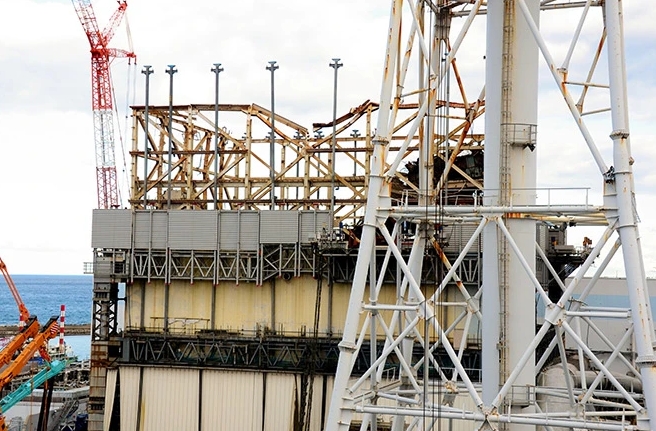
The crippled No. 1 reactor at the Fukushima No. 1 nuclear power plant
March 4, 2023
Several mayors of the three prefectures hardest hit by the 2011 Great East Japan Earthquake and tsunami showed a reluctance to voice an opinion about the government’s return to a reliance on nuclear power.
The recent Asahi Shimbun poll showed the sensitivity of the issue particularly in areas that still have not completely recovered from the twin disasters.
In December, the government made a dramatic shift in nuclear energy policy that would allow for construction of new reactors and the extension of the operating life of those already built.
The Asahi Shimbun polled mayors of 37 municipalities along the Pacific coast in Iwate, Miyagi and Fukushima prefectures along with five others in Fukushima where evacuation orders were issued following the triple meltdown at the Fukushima No. 1 nuclear power plant.
In addition, mayors of three municipalities lying within a 30-kilometer radius of the Onagawa plant in Miyagi Prefecture were also asked their views.
Of the 45 mayors, 19 were somewhat or totally opposed to a reversion to nuclear energy, while 14 were somewhat or totally in favor.
But the mayors of six municipalities that either host the Fukushima No. 1 plant or are in close proximity to the plant did not take a clear stand on any of the questions in the survey.
When the mayors were contacted individually, many said with so many residents still living as evacuees away from their municipalities, expressing a clear opinion on nuclear energy would only further divide those with differing views.
One mayor had in the past voiced clear stands on the central government’s reconstruction policy, but that led to letters sent to the municipal government criticizing those comments.
“I always feel internal turmoil about whether criticism directed at me and the municipal government will also not be turned on the evacuees” who live in various parts of Japan, the mayor said.
Another mayor said, “I do not want residents to feel troubled by my comments about the central government’s nuclear energy policy.”
With part of the municipality still designated a “difficult-to-return zone” and the population and infrastructure nowhere close to the levels before the disasters, the mayor said, “Now is the time to put every effort into reconstruction.”
The mayor said taking a clear stand on nuclear energy issues might create division among local residents.
Toshiyuki Kanai, a professor of local public administration at the University of Tokyo, said it was understandable why the mayors were reluctant to take a clear stand because municipalities had to seek the cooperation of the central government for their reconstruction efforts.
“It is important that effects on local governments in such policy areas as reconstruction do not arise because of their opposition to nuclear energy policy,” Kanai said.
Eight Fukushima mayors did say they were either somewhat or totally opposed to returning to a reliance on nuclear energy.
The only Fukushima mayor who was somewhat in favor of nuclear energy was Ikuo Yamamoto of Tomioka.
But in response to questions from The Asahi Shimbun, Yamamoto recalled the difficulties he faced with discussions about a final storage site for low-level radioactive waste from the Fukushima nuclear accident.
“In my heart, I am opposed,” he said.
But Yamamoto added that in general terms he understood that nuclear energy was effective in preventing global warming and was also instrumental at a time when fuel prices for thermal power generation were surging.
The mayors were also asked if they thought the Kishida administration had done an adequate job of explaining to the public why a move back toward nuclear energy was needed.
Thirty-one mayors said they felt either somewhat or totally negative about the government’s efforts. Even nine mayors who favored reverting back to nuclear energy felt the Kishida administration had done a poor job of explaining the reason for doing so.
(This article was written by Wataru Netsu, Shoko Rikimaru, Keitaro Fukuchi and Takemichi Nishibori.)
Japan to Delay Ocean Dumping of Contaminated Waste Water from Fukushima
To delay but not to give up. One step backward to jump two steps forward at a later time…. Typical Japanese government shrewd tactics!

by John Laforge March 3, 2023
Japan’s Chief Cabinet Secretary Hirokazu Matsuno announced in January that his government would delay its plan to pump over 1.37 million tons of watery radioactive waste into the Pacific Ocean from the devastated six-reactor complex at Fukushima-Daiichi. With the country facing harsh international pressure to cancel the dumping, Matsuno acknowledged “the need to gain public support,” for the plan, the Associated Press reported January 12. The wicked water is now being collected in large tanks that were hastily built near the wrecked reactors.
Fierce criticism of the deliberate pollution scheme has come from China, South Korea, other Pacific Rim countries, scientists, environmental groups, UN human rights experts, and the Pacific Islands Forum (PIF), an alliance of 17 Pacific island nations. Japan’s Prime Minister Fumio Kishida also indicated that the government wants a postponement of the dumping operation — designed by the Tokyo Electric Power Company (Tepco) — until it is “verifiably safe to do so,” Thomas Heaton reported February 16 for Civil Beat.
The PIF, independent states where according to Reuters up to half of the world’s tuna is sourced, was crucial in forcing Japan’s apparent retreat. The PIF warned that contaminating the Pacific could harm the fishing that its economies depend on. Mary Yamaguchi reported on January 12 for the AP: “Some scientists say the impact of long-term, low-dose exposure to tritium and other radionuclides on the environment and humans is still unknown and the release plan should be delayed. They say tritium affects humans more when it is consumed in fish.” A scientific expert panel assembled by the PIF urged a reconsideration of the dumping “because it was not supported by data and more information was needed,” Ken Buesseler, with the Woods Hole Oceanographic Institution, said in January.
Japan announced in April 2021 that it would allow Tepco to pump the nearly 1.4 million tons of liquid radioactive waste into the public commons of the Pacific Ocean beginning in spring 2023. Tepco says it intends to dilute the material and pump it into the sea for the next 30 to 40 years using an underground tunnel now under construction. Media attention has focused on the tritium (radioactive hydrogen) in the wastewater which cannot be removed by Tepco’s (failed) filtering system and has generally ignored mention of the long-lived carbon-14 in the water, which likewise cannot be removed.
Often unreported about the plan is the failure of Tepco’s wastewater filer system, dubbed the “Advanced Liquid Processing System,” which has not removed the dozens of long-lived radioactive substances — including ruthenium, cobalt-60, strontium-90, cesium-137, and even plutonium – that the company said it would filter.
The water becomes radioactively contaminated (150 tons more every day) after being poured over hundreds of tons of melted, ferociously radioactive uranium — and in reactor #3 plutonium — fuel, the hot wreckage amassed deep inside the foundations of the three destroyed nuclear reactors, units 1, 2 and 3. All three suffered catastrophic meltdowns following the Great Tohoku Earthquake and tsunami of March 11, 2011. Some of the contaminated waste is groundwater that reaches the melted fuel after pouring through cracks in the reactors’ foundations caused by the earthquake. Dr. Buesseler Science magazine in 2020, “Many other isotopes are in those tanks still, and over 70 percent [of 1.37 million tons] would have to be cleaned up further before they might consider even releasing….”
Moreover, reactor 3 which was packed with “mixed oxide” fuel made of combined uranium and plutonium, suffered a huge hydrogen explosion at 11 a.m. on March 14, and Tepco announced that on March 21 and 22, in soil collected on the Fukushima site, plutonium was detected. Hydrogen explosions also caused severe damage to reactors 1 and 2, and to the waste fuel pool of reactor 4. (Three additional hydrogen explosions caused severe damage: to reactor 1 on March 11, and to reactor 2 and to the waste fuel pool of reactor 4 on March 15.)
In April 2021, Cindy Folkers, a radiation and health hazards specialist at Beyond Nuclear in Maryland, told Brett Wilkins of Common Dreams, “TEPCO data show that even twice-through filtration leaves the water 13.7 times more concentrated with hazardous tritium — radioactive hydrogen — than Japan’s allowable standard for ocean dumping, and about one million times higher than the concentration of natural tritium in Earth’s surface waters.”
Secretary Matsuno said in his January statement that the delayed dumping plan “includes enhanced efforts to ensure safety.” This vague reassurance comes from the same authorities that caused the triple meltdown and consequently the worst radioactive contamination of the Pacific Ocean in history; it follows two years of iron-clad declarations from Tepco and government regulators that contaminating the ocean will be safe. The plan to add more radioactive poisons to the Pacific in order to save money has also been approved by the U.S. government and the UN International Atomic Energy Agency.
John LaForge is a Co-director of Nukewatch, a peace and environmental justice group in Wisconsin, and edits its newsletter.
The Fukushima controversy.

A well written article. Dr Imran Khalid raises all the important points. Definitely a must read!
Dr Imran Khalid March 04, 2023
The world is watching Japan with bated breath as the country contemplates a controversial move to dump nuclear wastewater from its Fukushima Daiichi nuclear power plant into the Pacific Ocean. This decision has generated intense opposition from neighbouring countries, including China and the 17-member Pacific Islands Forum – turning what was once an “internal” issue into a global concern. The potential hazards posed by radioactive water to marine ecology and marine biology in the Pacific Ocean have now become a matter of global concern. Earlier this year, Japan announced plans to discharge over 1.3 million metric tons of contaminated water into the Pacific Ocean. This decision was met with serious concerns from stakeholders due to the potential for irretrievable damage to marine life. The nuclear waste is a product of the meltdown of the Daiichi nuclear reactors in March 2011. The disaster was caused by a massive earthquake, which triggered a tsunami that inundated the reactors. The resulting nuclear waste was being stored in around 1,000 tanks, which have been reaching their storage capacity limit. The decision to discharge this contaminated water into the ocean is a cause for concern for several reasons. Firstly, it has the potential to cause irreparable damage to the marine ecology and marine biology in the Pacific Ocean. The risk of contamination spreading beyond the Pacific Ocean also means that this issue is not just a local or regional one. It has the potential to impact global ecosystems and biodiversity. Radioactive contamination can have long-term effects on marine life, which could impact entire ecosystems. This could have knock-on effects that would be felt for years to come. Secondly, this decision sets a dangerous precedent that could lead to similar actions being taken in other parts of the world. Thirdly, there are concerns that the decision to discharge the contaminated water into the ocean has been taken unilaterally, without proper consultation with stakeholders. This raises questions about transparency and accountability, and it could undermine efforts to promote responsible environmental management practices. Safe and effective alternatives for disposing of water contaminated by nuclear material from the Fukushima nuclear power plant exist, including evaporation or underground storage. However, the Japanese government has chosen to discharge the water into the ocean, which is the “least expensive” but speedy solution. This decision suggests that Tokyo’s primary focus is not on preventing or minimising harm to human health and the environment.
Moreover, it is essential that there is proper consultation with stakeholders about the best way to manage this situation. This includes engaging with local communities and inhabitant groups in the Pacific Islands, who may have unique perspectives on the potential impacts of this decision. This issue highlights the importance of responsible environmental management practices and the need for greater transparency and accountability in decision-making processes. The decision to discharge contaminated water into the ocean has caused outrage among the international community. Ironically, Japan announced its plans to discharge the contaminated water into the ocean while the IAEA task force was about to visit Japan for a review. This decision has raised concerns about Japan’s transparency and accountability in addressing the issue. Proper consultation and engagement would ensure that all stakeholders are heard and that the most responsible and sustainable solution is chosen. This issue highlights the importance of responsible environmental management practices and the need for greater transparency and accountability in decision-making processes.
The lack of independent verification of data and evidence provided by Japan also raises concerns for the Pacific islands and international organisations regarding the dumping of nuclear wastewater into the ocean. Japan’s disregard for an opposition is a significant concern, as the lack of criticism from the US and the West emboldens Japan to ignore the concerns of its people and the international community. The delegation of the Pacific Island Forum (PIF) Secretariat recently met with Japanese officials to discuss Tokyo’s plan to release contaminated wastewater from the Fukushima nuclear power station. While Japan’s Ministry of Foreign Affairs assures that the water has been treated to meet regulatory standards, Pacific Island countries are deeply concerned about the potential consequences of this release. The Pacific Islanders’ connection to the ocean is fundamental to their way of life. It has molded the cultural and historical essence of their communities, and there exists an indissoluble bond between the ocean. As a result, they feel a strong sense of guardianship over the Pacific Ocean and are rightfully alarmed by Japan’s plan to release contaminated water into it. The same is the case with China and South Korea who have been continuously pursuing this issue and putting all kinds of diplomatic pressure on Tokyo to desist from such a controversial step.
The potential long-term impacts on the marine environment and human health must be considered. Therefore, Japan must get the disposal of the Fukushima wastewater right. Pacific Islanders do not want the dumping of nuclear wastewater into the ocean to become the norm. Japan must take its reservations seriously, given that even its own fishing industry is deeply concerned about the current release plan.
https://www.nation.com.pk/04-Mar-2023/the-fukushima-controversy
Scientists: Fukushima’s nuclear wastewater capable of producing cancers after release
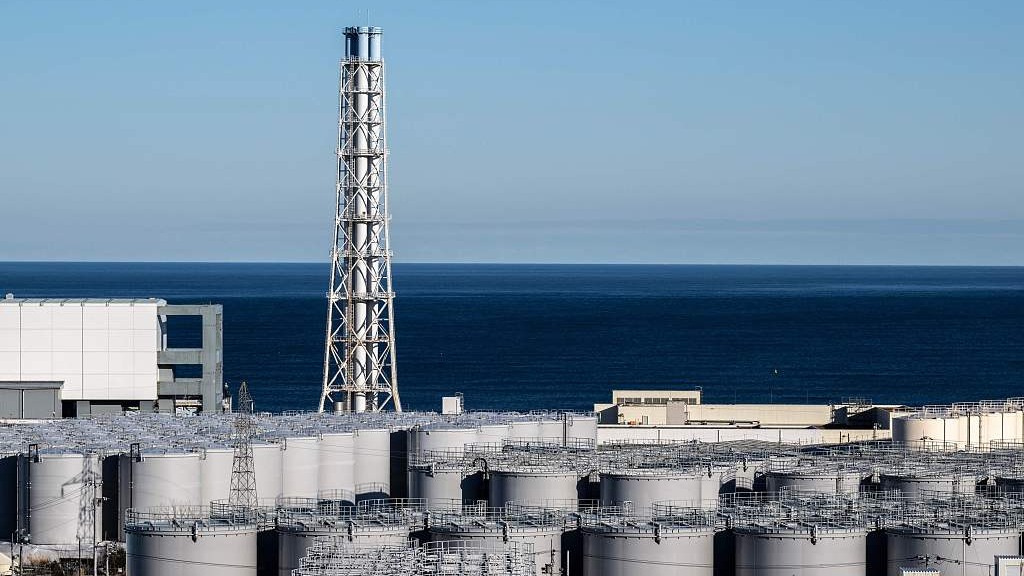
A general view shows storage tanks for contaminated water at the Tokyo Electric Power Company’s (TEPCO) Fukushima Daiichi nuclear power plant, in Okuma of Fukushima prefecture, January 20, 2023.
March 3, 2023
Treated nuclear wastewater from Japan’s damaged Fukushima power plant, which, if released into the Pacific Ocean as planned, will ultimately reach the High Seas, is “capable of producing cancers,” New Zealand scientists said on Friday.
Japan has planned to release treated nuclear wastewater from the damaged Fukushima Daiichi nuclear power plant into the Pacific Ocean.
Jamie Quinton, head of the School of Natural Sciences, Massey University, said that in this original unprocessed wastewater, radioactive isotopes of concern were iodine-131 and caesium-137, and that they being used in nuclear medicine radiotherapy means that they have sufficient energy to cause cell death and mutation.
“In other words, they are capable of producing cancers,” Quinton said.
International law expert Duncan Currie addressed that Advanced Liquid Processing System (ALPS) treatment, at best, does not remove tritium, and there is next to no scientific information of the effects of tritium on the marine environment, including on different species.
Currie noted that the planned target in treating Fukushima nuclear wastewater is to remove other radioactive isotopes to “regulatory,” rather than detectable, levels.
Tests of ALPS treatment systems have not been encouraging, Currie said.
“There were several other radioactive products in the unprocessed water that is hazardous to live species and ecosystems. As organisms consume other organisms, more of these radioactive products accumulate in their bodies, which can, in turn, end up in humans. So these radioactive elements must be kept out of natural ecosystems as much as possible, especially the ocean,” Quinton said.
David Krofcheck, senior lecturer in Physics at the University of Auckland, agreed by saying the danger of indiscriminately releasing nuclear fission products into the ocean is that the products can find their way into the food chain.
“Once in the food chain, the long-lived nuclear fission heavy nuclei like cesium-137, strontium-90, and iodine-131 tend to concentrate in human muscle, bones, and thyroid, respectively. Cancers can be the result,” Krofcheck said.
New Zealand should be concerned over nuclear wastewater effects on the Pacific, Currie said, citing modeling that shows the movement of radioactive water to the North Pacific, including, for instance, through uptake in highly migratory fish and marine mammals.
Currently, an independent panel of global experts on nuclear issues is supporting Pacific Islands Forum nations in their consultations with Japan over its plans to discharge treated nuclear wastewater into the Pacific Ocean.
Quinton noted that if the release of wastewater into the ocean is to proceed, “getting the process correct and within regulations is of particular importance to Japan’s aquaculture-based industries.”
He said that it is in Japan’s economic interest to ensure that waterways remain below internationally acceptable levels for background radiation so that food safety is assured and their capacity for international trade remains unaffected.
Ministry to delay trial on reusing Fukushima soil in Kanto areas

Residents in Tokyo’s Shinjuku Ward on Dec. 21 protest the Environment Ministry’s plan to reuse soil from Fukushima Prefecture at a site in Shinjuku Gyoen National Garden.
March 2, 2023
Local opposition has forced the Environment Ministry to delay the start of a trial on reusing soil that had been contaminated with radioactive fallout from the 2011 Fukushima nuclear disaster, sources said.
The ministry wanted to begin the trial within this fiscal year, which ends at the end of this month.
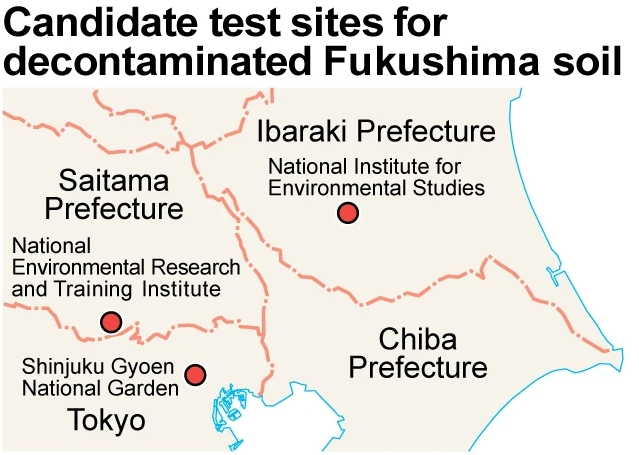
Under the plan, soil collected in Fukushima Prefecture during decontamination work following the triple meltdown at the Fukushima No. 1 nuclear power plant would be distributed to three sites in the Kanto region.
The government’s policy is to reuse the soil if its radioactivity level clears the safety threshold of 8,000 becquerels per kilogram to reduce the mountains of soil that will undergo final disposal.
As of the end of January, around 13.41 million cubic meters of soil had been transported to interim storage facilities in the towns of Okuma and Futaba in Fukushima Prefecture after decontamination work.
A law dictates that the soil must undergo final disposal outside Fukushima Prefecture by 2045.
Sites for the final disposal have not been decided.
The ministry decided to conduct the trial of reusing such soil on the premises of ministry-related facilities in Tokyo, Saitama Prefecture and Ibaraki Prefecture.
However, local residents expressed strong opposition to the plan at the ministry’s explanatory meetings in Tokyo’s Shinjuku Ward and Saitama Prefecture’s Tokorozawa in December.
In Tokorozawa, a neighborhood association consisting of residents living near the site of the trial adopted a resolution to oppose the plan.
The Tokorozawa mayor has also shown reluctance to accept the plan.
Asked if the ministry would go ahead with the trial despite the local opposition, an official at the ministry’s environmental restoration and resources circulation bureau said: “We will continue explaining the project by, for example, answering questions from local residents.
“We don’t plan to go through a process to gain an agreement with local residents about the project, so the ministry will make the final decision.”
Sources said the ministry has already decided to postpone the trial. It will continue holding explanatory meetings for residents in the three areas.
Fukushima plant head: Too early to predict decommissioning

In this photo provided by the Tokyo Electric Power Company Holdings (TEPCO), Akira Ono, President of Fukushima Daiichi Decontamination and Decommissioning Engineering Company, speaks during an online interview with the Associated Press in Tokyo, on March 1, 2023. The head of Japan’s tsunami-wrecked Fukushima Daiichi nuclear power plant says details of the damages inside reactors are only beginning to unravel 12 years after the meltdowns, making it difficult to foresee what the place looks like even 30 years from now.
By MARI YAMAGUCHIMarch 3, 2023
In this photo provided by the Tokyo Electric Power Company Holdings (TEPCO), Akira Ono, President of Fukushima Daiichi Decontamination and Decommissioning Engineering Company, speaks during an online interview with the Associated Press in Tokyo, on March 1, 2023. The head of Japan’s tsunami-wrecked Fukushima Daiichi nuclear power plant says details of the damages inside reactors are only beginning to unravel 12 years after the meltdowns, making it difficult to foresee what the place looks like even 30 years from now. (TEPCO via AP)
TOKYO (AP) — The head of Japan’s wrecked Fukushima nuclear plant says details of the damage inside its reactors are only beginning to be known 12 years after it was hit by a massive earthquake and tsunami, making it difficult to foresee when or how its decommissioning will be completed.
The most pressing immediate task is to safely start releasing large amounts of treated but still radioactive water from the plant into the sea, Akira Ono said in an interview with The Associated Press.
The March 2011 earthquake and tsunami damaged cooling systems at the Fukushima Daiichi plant, causing three reactors to melt and release large amounts of radiation. The operator, Tokyo Electric Power Company Holdings Inc., has been able to stabilize the plant to the point where the company can better plan a decommissioning strategy, expected to be lengthy and exceedingly challenging.
“Going forward, we have to face unconceivably difficult work such as retrieving the melted debris” from inside the reactors, said Ono, who heads the plant and is president of Fukushima Daiichi Decontamination & Decommissioning Engineering Co.
Earlier this year, a remote-controlled underwater vehicle successfully collected a tiny sample from inside one of the three melted reactors — only a spoonful of about 880 tons of highly radioactive melted fuel and other debris that must be safely removed and stored.
The status of the debris in the primary containment chambers of the Unit 1, 2 and 3 reactors remains largely unknown, Ono said.
Removal of melted debris is set to start in Unit 2 sometime after September this year following a nearly two-year delay. The removal of spent fuel in the Unit 1 reactor’s cooling pool is set to begin in 2027 after a 10-year delay because of the need to dismantle parts of the building damaged by hydrogen explosions.
The plant should be ready for workers to finally concentrate on removing the melted debris from the reactors after all spent fuel is taken out of the cooling pools by 2031, Ono said.
The government is maintaining its original goal of completing the plant’s decommissioning by 2051. But some experts say removing all of the melted fuel debris by then is impossible and suggest a Chernobyl-style entombment of the plant, an option that could help reduce health risks while the plant’s radioactivity gradually decreases.
“I still consider this goal as a major guidepost,” Ono said. “We can’t say what will happen in 30 years. We can’t say, but roughly imagining the next 30 years, I believe that it is necessary to carefully and precisely build up the current plan in order to safely, steadily and quickly proceed with the decommissioning.”
Before that, however, the biggest issue is the disposal of large amounts of treated but still radioactive water from the plant, he said.
Water used to cool the three damaged reactors has leaked into the basements of the reactor buildings and has been collected and stored in about 1,000 tanks that cover much of the plant’s grounds.
The government and TEPCO say the tanks must be removed so facilities can be built for the plant’s decommissioning. The tanks are expected to reach their capacity of 1.37 million tons later this year.
Most of the radioactivity can be removed from the water during treatment, but tritium cannot be separated, and low levels of some other radionuclides also remain. The government and TEPCO say they will ensure the water’s radioactivity is far below legal limits and will dilute it with large amounts of seawater before its planned discharge into the ocean.
Local fishing communities have fiercely objected to the plan, saying their already damaged business will suffer more because of the negative image caused by the water release. Neighboring countries, including China and South Korea, and Pacific Island nations have also raised safety concerns.
TEPCO plans to finish construction of the facilities needed for the water discharge in the spring and then receive safety approval from nuclear regulators. A final inspection and report by an International Atomic Energy Agency mission are expected before the release begins.
The operator still needs to work on an “easy to understand” explanation and scientific evidence to help people understand the release, Ono said.
“The decommissioning of Fukushima Daiichi itself is based on the understanding and trust of everyone in society,” he said.
CNIC Statement: We Protest the Cabinet Decision on the Nuclear Power Promotion Bundle Bill
by Citizens’ Nuclear Information Center · February 28, 2023

Today the Kishida Cabinet made a cabinet decision to proceed with a bundle of bills (the GX Decarbonization Power Supply Bill), including legislation to extend the operational periods of nuclear power plants and to promote the use of nuclear power. We firmly protest this decision, which totally disregards the lessons of Fukushima.
What “careful explanation”?
The Government has repeatedly stated that it will make “careful explanations” to address the public’s concerns regarding the utilization of nuclear power plants since the GX policies were announced. However, this bill seeks to amend the Atomic Energy Basic Law, the Electricity Utilities Industry Law, the Nuclear Reactor Regulation Law, the Reprocessing Law and the Renewable Energy Special Measures Law all at once. How can so many revisions with so many points of contention possibly be “carefully explained”? Even at the stage of deliberations leading up to the drafting of the bill, discussions were hasty to say the least. Why must nuclear policy be changed immediately? The situation in Ukraine and resource prices are cited as reasons, but these have nothing to do with extending the operational period or building new nuclear power stations, let alone restarting them. We can only assume that the government are trying to take advantage of the crisis to promote their nuclear policy.
Safety in the back seat
There are a number of problems with each of the bills. For example, the revision bill for the Atomic Energy Basic Act states that “safety first “ should be the approach for the use of nuclear energy and that the value of nuclear energy use, such as its contribution to stable supply and green transformation, will be clarified. We disagree that nuclear power is useful for stable supply and decarbonisation, but before that, there is a serious problem. The proposed revisions transfer the regulation of the operation period of nuclear power plants from the Reactor Regulation Act to the Electricity Business Act, and also changes the operation period from 40 years in principle, allowing a maximum of 20 years extension on a one-time basis of the operation period, which is supposed to adjust for shutdown periods.
While assuring “safety first”, the government is trying to transfer the operation period regulation, a safety regulation introduced based on the lessons learnt from the Fukushima Daiichi nuclear accident, from the Nuclear Reactor Regulation Law, which is under the jurisdiction of the regulatory authority (the Nuclear Regulation Authority-NRA), to the Electricity Utilities Industry Law, which is under the jurisdiction of the utilizing authority (the Ministry of Economy, Trade and Industry-METI). This in itself can only be described as a setback for nuclear safety regulation. Furthermore, METI’s Nuclear Energy Subcommittee’s summary also contemplates allowing further extensions in the future. Such discussions would not be possible if utilization did not take precedence over regulation.
The proposed revision to the Nuclear Reactor Regulation Law will also legislate on the assessment of ageing nuclear power plants, which was previously a rule of the NRA. The Government and the NRA state that this will lead to stricter regulations, but that the substance of these stricter regulations will be discussed in the future. This in itself is a clear indication of the government’s attitude that nuclear power must be promoted according to their timetable and compared to this, nuclear safety is of secondary importance.
The NRA explains that the degradation status of a reactor can be assessed at any point in time. However, there are no nuclear power plants in the world that have been in operation for more than 60 years to begin with, and the older a reactor gets, the more its operating history will differ from the deterioration state of the reactor due to the characteristics of the materials. Even if an inspection is carried out, it is only an inspection at that point in time and cannot be said to prove safety in the future. In fact, on 30 January this year, Takahama Unit 4 automatically shut down due to a problem, but on 25 November last year, Kansai Electric Power Company had just announced that it had carried out an equipment integrity assessment (number of devices covered: approximately 4,200 devices/units) based on the assumption of a 20-year extension and ‘confirmed that there were no problems’.
Blurring the lines between operators and regulators
A major lesson of the Fukushima Daiichi nuclear disaster was that the operators of nuclear power plants must be separated from those who regulate them. Twelve years after the accident, this separation is now in great danger. We believe that the right option is to move away from nuclear power, but strict regulation is a minimum requirement for both the operation and the decommissioning of nuclear power plants. However, the regulations which are supposed to be enforced by the NRA, are limited by the framework of promoting the use of nuclear energy. In recent times, very few suspension orders have been issued and no reactor licenses have ever been revoked. Remedies are also sought through “guidance and suggestions” from the reviewing authority. With such a form of regulation and the integration of regulation and promotion, is there any hope for strict regulation? Although it is said that deterioration can be assessed at any point in time, there are no clear boundaries in the deterioration of nuclear power plants. We can only make engineering decisions under great uncertainty. Under these conditions, can the regulations be trusted to always side with the safer option?
In the current nuclear policy changes, regulation and promotion have been shown to be one and the same. Several members of the NRA have expressed their discomfort that the discussions had to conform to a fixed schedule.
Before discussing the issue of extension of the operating period, it is the state of nuclear regulation that must be questioned. If the Fukushima Daiichi nuclear accident is the starting point for nuclear policy, the GX Decarbonisation Power Supply Bill must be scrapped, and we must consider how to ensure that nuclear regulation and promotion are kept totally separate, and how strict regulation can be achieved. Without this, we can never put an end to the “safety myth” and it will be impossible to realize the most basic condition for the use of nuclear power.
Source: https://cnic.jp/english/?p=6521
“I started prioritizing treatment over my dreams for the future”: Public testimony of a young woman diagnosed with thyroid cancer after Fukushima disaster

by Citizens’ Nuclear Information Center · March 2, 2023
On January 27, 2022, a group of six young men and women from Fukushima Prefecture filed a class action lawsuit against Tokyo Electric Power Company (TEPCO), claiming that the thyroid cancer they had developed was linked to their exposure to radioactive contamination from the Fukushima nuclear disaster of 2011. The plaintiffs, who were aged 6 to 16 at the time of the disaster, are among the growing number of young people from Fukushima Prefecture who have been diagnosed with thyroid cancer or suspected thyroid cancer. According to the legal counsel, this rate of diagnosis—293 cases as of April 2022—is many tens of times higher than would be expected; pediatric thyroid cancer is very rare. Despite this, the Japanese government and TEPCO continue to deny the possibility of a causal connection between radiation exposure from the nuclear accident and rising cancer rates, instead claiming that an excess of cases has only been detected due to large-scale screening with advanced technology. For more detail and background on the 311 Children’s Thyroid Cancer Trial, read lead attorney Ido Kenichi’s statement here.
The first oral arguments were heard on March 26, 2022, at the Tokyo District Court. The following is the public testimony of one plaintiff, a young woman in her 20s, who was diagnosed with thyroid cancer when she was in high school. She describes the sobering trajectory of her life after diagnosis, from traumatic surgery and treatment to interrupted dreams of college graduation and employment. A recording of her testimony (in Japanese) can be heard on the website of Our Planet TV here.
Translated by Elicia Cousins
“It was my middle school graduation ceremony that day. “This is it, isn’t it!” My friends and I sat around chatting and taking lots of pictures with our digital cameras. I think it was snowing a bit at that time.
When the earthquake hit, I was video chatting with another friend about the graduation ceremony. At first, we casually noted that an earthquake was happening, but then the shaking suddenly got stronger and a ballpoint pen fell onto my head from somewhere. “Oh no!” (Yabai!) I heard someone say, and the call dropped.
My house is going to get crushed, I thought. The shaking continued for what felt like a hellishly long time.
I became aware of the nuclear accident when the actual explosion happened. I heard a rumor that radiation would turn the sky pink, but because that didn’t happen, I didn’t develop a sense of crisis.
March 16 was the day that that high school entrance exam results were posted. The trains were stopped because of the earthquake, so I heard the results at my middle school instead. I walked to school, and after seeing the results, I stood outside talking to my friend for a long time before walking back home again. I had no idea that radiation levels were very high that day.
My thyroid cancer was detected through the prefectural health survey.
I still have a very clear memory of the moment I found out. That day, I was wearing new clothes and sandals. My mom drove me to the examination.
There were several doctors involved in the examination process. Did the exam take a long time? Or was it quick? Now I’m not so sure. I can’t be certain, but I think that the moment the doctor took the ultrasound scan of my neck, their face clouded a bit. The examination was extensive.
People who had been called up after me were already finished with their exams. “You’re the only one who took longer,” my mom said. “Maybe you have cancer,” she joked as we left the venue. In that moment, I never suspected that I’d need a more detailed follow-up examination.
There were a lot of people at the hospital where I got my next examination. This time, I started to feel a bit uneasy. I got a blood test and another ultrasound. Something was wrong after all. Even I had realized that much. It was then decided that I’d need to do a fine needle aspiration cytology test. At that point, I was pretty sure that I had thyroid cancer.
In my case, the cluster of cells that needed to be sampled had hardened, so it was difficult to extract the sample. The terror of having a long needle going into my neck only grew, as did the feeling of just wanting to get it all over with. It finally worked after the third try.
Ten days later, the examination results came out. The results from that cytology test. Once again, there were a lot of people at the hospital. I found out that I had thyroid cancer.
But the doctor didn’t actually say that I had thyroid cancer, and instead told me in a roundabout way by explaining that I’d need surgery. I’ll never forget the shock of being told, “If you don’t get surgery, you’ll only live until age 23.”
The night before the surgery, I couldn’t sleep at all. I was filled with worry, and even though I felt like crying, there were no tears. But I thought, if this is what it will take to heal… so I went ahead with the surgery.
Things were way worse after the surgery.
When I came to, I felt fatigued and feverish. The anesthesia didn’t work well for me, I often threw up in the middle of the night, and I felt sick and nauseous. To this day, I can clearly remember how excruciating that experience was. I sometimes have nightmares about the surgery, hospitalization, and treatment.
After the surgery, my voice was gone, and I could hardly speak for three months.
I ended up enrolling at a university in a neighboring prefecture rather than my top choice school in Tokyo, partly because my family was worried about my illness. But I couldn’t even go to that school for very long, because my thyroid cancer came back.
The recurrence was detected at the very first health checkup I had after enrolling in college, and I had no choice but to quit. I hadn’t healed after all. And the cancer has even metastasized to my lungs. The feelings were unbearable. I didn’t heal. I didn’t know where to channel my emotions. This time, I really might not be able to live much longer, I thought.
Since I now knew how difficult surgery was, I became depressed thinking about having to go through it all over again. The second surgery ended up taking longer than expected, and because the cancer had metastasized to my lymph nodes quite a bit, the cut on my neck got bigger.
Once again, the anesthesia didn’t sit well with me and I threw up in the middle of the night. Having to suction phlegm out of my chest was particularly painful. After the second surgery I lost all sensation around my clavicle, and it still feels strange whenever I touch that area.
I’ve had people say some shockingly heartless things about my surgical scars. Like when someone asked if they were the result of a suicide attempt. People have said things that never would have crossed my mind. These surgical scars will never go away. Now I always pick clothing that will cover them up.
After the surgery, I had to get isotope treatment for the lesions caused by the lung metastasis. This is a treatment where you take concentrated radioactive iodine pills in order to expose the cancer cells to radiation.
I did outpatient treatment for the first and second round. For this treatment, since you’re ingesting radioactive iodine, you end up becoming an exposure risk to the people around you. After I got my dosage at the hospital I’d go home and isolate myself, but I was worried about exposing my family to radiation. I drank the iodine twice, but the cancer didn’t go away.
For the third round I needed to take a larger amount of iodine, so I had to stay at the hospital. My room at the hospital was at the end of a long, white hallway and through several doors. There were yellow and red signs pasted everywhere, warning of radiation. It was a hazardous area despite being inside a hospital. As for the room itself, you can only bring in previously approved items. That’s because anything you bring in becomes contaminated.
Nurses don’t come into that hospital room. The doctor just comes in once a day to do an examination. I felt bad that the doctor had to come in knowing that they’d be exposed to radiation. I didn’t want anyone to have to sacrifice themselves because of me.
Two or three doctors came into my room with the medicine. The medicine was in a cylindrical plastic case.
Drinking the medicine was a race with time. One doctor took the white capsule out with tweezers, placed it in a paper cup, and handed it to me.
They then immediately left the room, closing the lead door behind them and then instructing me through the speakerphone to drink the medicine. I quickly gulped down the medicine with some water.
After I swallowed, they checked the inside of my mouth through the door. They then held a radiation-monitoring device over my stomach to confirm that the capsule got there, and then I was instructed to lay down on the bed. The doctor then told me over the speakerphone to change the orientation of my body every 15 minutes.
As for food, I was first shown a meal on the TV screen in order to make sure that I could eat all of it without leaving anything on my plate. They didn’t want to give me any more than I could eat, so as to minimize the amount of contaminated waste.
That night, a wave of nausea suddenly came over me. I felt so sick. The feeling wouldn’t go away so I panicked and pressed the button to call the nurse, but the nurse didn’t come. I thought I’d better not throw up on the bed, so I rushed to the bathroom.
When I later told the nurse that I’d thrown up, they just prescribed some anti-nausea medicine. By then it was already past 2am, and I couldn’t sleep very well.
The next day onward, I completely lost my appetite, and I usually had them bring me just medicine and not meals. I threw up once or twice on the second day too.
Until then, I’d almost never thrown up in my life. I ended up bursting a blood vessel in my eye because of the strain of throwing up, and my eye became bright red. Through the door, the nurse checked my condition, and prescribed some eye drops.
I felt sick for the rest of the time I spent in that room. I was just waiting for the time to pass.
In that room, there was a square radiation monitoring device attached to the wall near the ceiling. It looked like an air conditioner. On the bottom right of the device was a display window that would show the radiation measurement. When I stepped closer to it, the number would shoot up, and when I stepped away the number would go down again.
I spent three days like this, and finally it became time to leave. I had to throw away everything I’d been wearing, like my pajamas, into a garbage can made of lead. I changed into the clothes I’d stored in a locker, opened the lead door, and walked with the nurse down the long hallway and through multiple doors.
After this treatment, one of the side effects I had to deal with was that I couldn’t produce saliva normally. It became difficult to swallow food with a low water content, and my sense of taste changed.
That hospitalization experience was the harshest yet. I don’t want to have to go through it again.
I went through such a painful experience, and yet the treatment didn’t work that well. It didn’t do what it was supposed to, and I ended up feeling like it was all a waste. Before, I was motivated to get treatment with the assumption that it would cure me. Now, I just think, I hope this treatment at least slows down the progression of my illness.
After becoming ill, I’ve started prioritizing cancer treatment over my dreams for the future. Because of treatment, I’ve given up on everything—college, the studies I’d been focusing on in order to pursue the career I wanted, and even going to concerts I’d been so excited for.
Of course, I didn’t actually want to give up on college. I wanted to graduate. I wanted to graduate and start working in a field I’m good at. I wanted to do the job hunt process (shukatsu) as a new graduate. I wanted to be carefree and chat with my friends, asking each other, “how was shukatsu?” I wanted to experience college life. These are all dreams that didn’t come true, and it’s hard to let them go.
The friends I went to middle and high school with have already graduated college, started working, and are leading stable new lives. I can’t help but look at them with envy. It’s hard, because I don’t want to feel this sort of resentment toward them.
It’s painful to see medical students at the hospital who are about the same age as me. I end up thinking, I should be a college student too.
Every time I go to the hospital, I think, I hope the tumor marker value hasn’t gone up. But lately, the value is higher every time, and I get crushed—what did I do wrong? Why is the number higher?
My overall health has been declining, and I struggle with sore shoulders, lower back pain, fatigue, and hands and feet that quickly go numb. I’m not sure if it’s because of the excessive amount of medicine I have to take, but I sometimes get heart palpitations or feel like I’m suffocating. The area of my neck where I got surgery also cramps very easily, and when that happens, I have to just endure the pain until it subsides.
I feel bad whenever I think about how much I’ve burdened my family and how much I’ve made them worry because of my illness. I don’t want to cause them any more pain.
I want to return to my old body. But as much as I pray for that, I will never get it back. Through this trial, I hope that thyroid cancer patients are able to get proper compensation.”
Source: https://cnic.jp/english/?p=6524
-
Archives
- February 2026 (228)
- January 2026 (308)
- December 2025 (358)
- November 2025 (359)
- October 2025 (376)
- September 2025 (258)
- August 2025 (319)
- July 2025 (230)
- June 2025 (348)
- May 2025 (261)
- April 2025 (305)
- March 2025 (319)
-
Categories
- 1
- 1 NUCLEAR ISSUES
- business and costs
- climate change
- culture and arts
- ENERGY
- environment
- health
- history
- indigenous issues
- Legal
- marketing of nuclear
- media
- opposition to nuclear
- PERSONAL STORIES
- politics
- politics international
- Religion and ethics
- safety
- secrets,lies and civil liberties
- spinbuster
- technology
- Uranium
- wastes
- weapons and war
- Women
- 2 WORLD
- ACTION
- AFRICA
- Atrocities
- AUSTRALIA
- Christina's notes
- Christina's themes
- culture and arts
- Events
- Fuk 2022
- Fuk 2023
- Fukushima 2017
- Fukushima 2018
- fukushima 2019
- Fukushima 2020
- Fukushima 2021
- general
- global warming
- Humour (God we need it)
- Nuclear
- RARE EARTHS
- Reference
- resources – print
- Resources -audiovicual
- Weekly Newsletter
- World
- World Nuclear
- YouTube
-
RSS
Entries RSS
Comments RSS
 nuclear-news