Germany Says US Must Lead Way On Tanks For Ukraine, As Republican Party Also Piles On Pressure
https://www.zerohedge.com/geopolitical/germany-says-us-must-lead-way-tanks-ukraine-gop-also-piles-pressureBY TYLER DURDEN, THURSDAY, JAN 19, 2023 –
Germany just upped the pressure on the Biden administration regarding growing calls to send Ukraine M1 Abrams tanks, which the White House has thus far resisted, fearing further escalation with Russia.
It comes as Germany just appointed a new defense minister, Boris Pistorius, after scandal-plagued Christine Lambrecht resigned the day prior, after also long being accused of representing weakness on arming Ukraine. The Scholz government said it will be up for the new defense minister to mull the question of tanks for Ukraine, as Kiev’s pleas grow louder.
“Germany won’t allow allies to ship German-made tanks to Ukraine to help its defense against Russia nor send its own systems unless the U.S. agrees to send American-made battle tanks, senior German officials said on Wednesday,” according to fresh Wall Street Journal reporting.
The timing of the WSJ’s German tank story is interesting, also given the same day top Republican committee chairs in Congress are ramping up the pressure on Biden, demanding that the US approve what are widely seen as ‘weapons needed to win’ against Russia.
Leopard 2 tanks, ATACMS, and other long-range precision munitions should be approved without delay,” House Foreign Affairs Committee Chairman Michael McCaul and House Armed Services Committee Chairman Mike Rogers said in a statement reported by Bloomberg. The pair of lawmakers at the same time criticized the “current indecision and self-deterrence” which they say will only prolong the conflict.
But Germany’s Scholz has consistently expressed a desire to avoid potential direct military escalation with Russia at all costs. Approving tanks would likely plunge Germany deeper in right alongside the US as things continue sliding toward direct confrontation.
Meanwhile, sabotage from Scholz?…
“Great British Nuclear “- it’s high time that they came clean on what this will cost.

Bowen is right to think Britain’s nuclear plans will require “substantial” taxpayer support.
It’s high time the government spelt out how much financial fuel it’s willing to burn.
Maybe Great British Nuclear will prove as successful as Great British
Railways: another government invention still stuck in the sidings while the
strike-bound network grinds to a halt.

But at least Simon Bowen is after an
improvement on that. Who he? The industry adviser picked by ministers to
make their nuclear nirvana a reality. He’s setting up GBN, the “flagship
body” to corral the construction of up to 24 gigawatts of new capacity by
2050: a shopping list, he says, that will involve at least three more
mega-nukes on top of Hinkley Point C, plus a litter of small modular
reactors.
As he told MPs on the science committee, the new body will be the
“glue within the industry to drive the nuclear programme”. Always
assuming it gets set up, of course — because you can already sense
Bowen’s frustration with the government.
In a post-Ukraine war push for
energy security, it was Boris Johnson who declared that Britain should
“go nuclear and go large”, not that he spelt out the eye-popping costs
to the taxpayer. But Bowen’s report into how the new body should work,
complete with 25 recommendations, has since been passed from Liz Truss to
Rishi Sunak and deemed top secret.
To boot, from the latest PM he sees no
“overarching strategy” on what’s needed for energy security: the
“quantum of nuclear” or other technologies. That’s crucial because
“the investment required in nuclear is substantial”, he says, with the
same stuff underpinning successful international projects: “A substantial
amount of government leadership and fiscal support, not just in terms of
financing but who bears the risk.”
No private financier can see how
Sizewell gets built without the government injecting £5 billion-plus equity
and insulating investors from most construction risk. Build three big nukes
and you treble that problem before taking on small modular reactors — an
untried technology to which Rolls-Royce’s new boss, Tufan Erginbilgic,
seems disinclined to bring blue-sky finance. Add it up and Bowen is right
to think Britain’s nuclear plans will require “substantial” taxpayer
support. It’s high time the government spelt out how much financial fuel
it’s willing to burn.
Times 19th Jan 2023
https://www.thetimes.co.uk/article/great-british-nuclear-puts-treasury-on-alert-jjt987rlr
U.S. approves design for NuScale small modular nuclear reactor, but significant problems remain.

By Timothy Gardner WASHINGTON, Jan 20 (Reuters) – The U.S. nuclear power regulator has certified the design for the NuScale Power Corp’s (SMR.N) small modular reactor, the first such approval in the country for the next generation technology.
The Nuclear Regulatory Commission’s approval, published in the Federal Register late on Thursday, clears a hurdle for NuScale. The company plans to build a demonstration small modular reactor (SMR) power plant at the Idaho National Laboratory. NuScale says the six-reactor, 462 megawatt Carbon Free Power Project will be fully running in 2030.
There are significant questions about rising costs of the demonstration plant, expected to provide electricity to the Utah Associated Municipal Power Systems (UAMPS). NuScale said this month the target price for power from the plant is $89 per megawatt hour, up 53% from the previous estimate of $58 per MWh.
Backers of next generation reactors including President Joe Biden’s administration and many Republican lawmakers, say they are crucial in curbing climate change. NuScale says they will be safer than today’s far larger conventional reactors, but the reactors, like conventional nuclear plants, are expected to produce highly toxic waste, for which no permanent fix has been developed.
The U.S. Department of Energy has provided more than $600 million since 2014 to support the design, licensing and siting of NuScale’s power plant and other small modular reactors. NuScale and other companies that succeed in building next generation reactors could receive for the first time lucrative production tax credits contained in last year’s Inflation Reduction Act signed by Biden……………..
NuScale also hopes to build SMRs in Romania, Kazakhstan and Poland, despite concerns from nuclear safety experts who say Russia’s invasion of Ukraine and occupation of the Zaporizhzhia plant should make the industry think seriously about developing plants in the region. https://www.reuters.com/business/energy/us-approves-design-nuscale-small-modular-nuclear-reactor-2023-01-20/
Call to end practice of transporting nuclear warheads through Cumbria
A CAMPAIGN group have called for an immediate end to the practice of
transporting nuclear warheads by lorry along motorways and roads in Cumbria
and elsewhere. Their renewed call comes in response to news that the
Ministry of Defence has admitted that 40 safety incidents involving convoys
transporting nuclear warheads were logged during 2019, 2020 and 2021,
following a freedom of information request.
Carlisle News & Star 18th Jan 2023
https://www.newsandstar.co.uk/news/23256357.call-end-practice-transporting-nuclear-warheads-cumbria/
Many years for removal and disposal of radioactive waste from historic subterranean vaults at Berkeley nuclear power station.
Work is underway to remove intermediate level radioactive waste (ILW) from
historic subterranean vaults at Berkeley nuclear power station. The removal
and transfer of this ILW into newly designed concrete boxes before moving
it into an interim on-site storage facility is a milestone step in the
decommissioning of the site.
This is part of Magnox’s strategy for dealing
with legacy waste in a consistent and cost-effective manner across its
different sites. The first concrete box of radioactive waste has now been
filled and safely stored at the Gloucestershire site, pending long-term
disposal in a future Geological Disposal Facility (GDF).
It is expected to take between four and five years to remove the full inventory of waste from
the vaults at Berkeley. ONR has maintained regulatory oversight throughout
the planning phase and will continue to do as the retrieval phases
progress.
ONR 17th January 2023
European Council calls for rallying Africa, Latin America, C. Asia for rules-based int’l order, “victory for Ukraine” — Anti-bellum
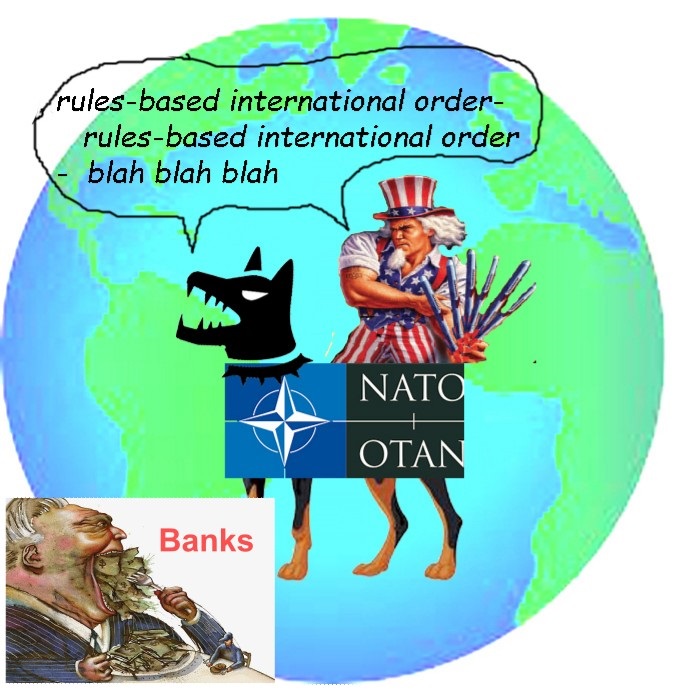
Interfax-UkraineJanuary 20, 2023 European Council President notes importance of involving Latin American, African and Central Asian countries in implementation of Zelensky’s Peace Formula President of the European Council Charles Michel has said that the countries of the whole world should be involved in the implementation of the Peace Formula proposed by President of Ukraine Volodymyr […]
European Council calls for rallying Africa, Latin America, C. Asia for rules-based int’l order, “victory for Ukraine” — Anti-bellum
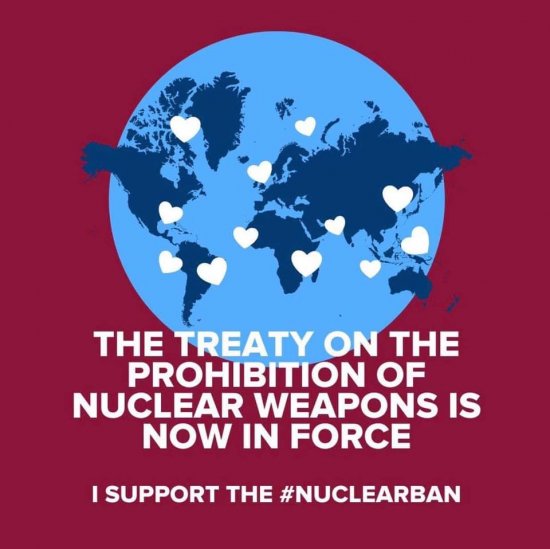
The Treaty on the Prohibition of Nuclear Weapons is a good step towards a nuclear-free world
https://www.canberratimes.com.au/story/8054916/nuclear-danger-is-strong-but-landmark-agreement-offers-hope/ By Marianne Hanson, Margaret Beavis, January 21 2023
January 22 marks the two-year anniversary of the entry into force of the United Nations Treaty on the Prohibition of Nuclear Weapons (TPNW), a landmark agreement that made nuclear weapons illegal on the basis of international humanitarian law.
Yet the potential for nuclear war remains as great as ever.
Fears that the unthinkable might happen were raised most clearly last year when President Vladimir Putin implied that Russia would consider using ‘all forces and means’ necessary in its fight against Ukraine.
It reminded us of the Cuban missile crisis 60 years earlier, once again bringing to the fore the prospect that nuclear war was in fact quite thinkable.
Thankfully, no nuclear weapons have been used in this war, but we cannot be complacent. Deterrence cannot be relied on forever. If Russia (or the United States) were to use even one small “tactical” nuclear weapon, a greater conflagration could easily follow.
It is not only Putin who has threatened to use nuclear weapons; nor is it the case that nuclear dangers vanished after the Cuban crisis or even after the end of the Cold War.
The leaders of every one of the nine states which possess these weapons of mass destruction – Russia, the US, France, China, Britain, India, Pakistan, Israel and North Korea – regularly signal that they would indeed use these weapons.
Their nuclear doctrines, the ongoing modernisation of their nuclear arsenals, their war-fighting practices and nuclear targeting all threaten the use of weapons which have the potential to kill millions and devastate the planet.
The end of the Cold War did nothing to reduce these dangers. While there was a period when goodwill between the major powers prevailed, and the US and Russia embarked on a program of reduction via the Strategic Arms Reduction Treaties, in truth a window of opportunity was lost when the nuclear-armed states refused to move seriously to eliminate their nuclear arsenals completely.
At the time, Australia was at the forefront of calls for the total elimination of nuclear weapons; the Labor government’s Canberra Commission in 1996 put forward a sober and considered assessment of the utility of nuclear weapons.
Nineteen commissioners from around the world, including several military leaders from the US, Britain and elsewhere, concluded that nuclear arsenals had very little military utility, that their existence continued to threaten the world – via deliberate or accidental use – and that as long as any one state possessed nuclear weapons, other states would want them too.
As predicted, three more states have acquired these WMDs since the Cold War ended.
The Canberra Commission set out a comprehensive program to encourage the phased, balanced, mutual, and verified elimination of nuclear weapons. It did not call for unilateral disarmament, nor did it insist that this should happen overnight. But it did warn that dangers would increase if the world did not act to eliminate these most destructive of all weapons.
Several other organisations and think tanks around the world added to the Canberra Commission’s message in subsequent decades and the nuclear states made clear promises to disarm. But they have stalled in the process of disarmament and are, instead, making their existing arsenals even more destructive than they were before.
Thoroughly fed-up with this intransigence, more than 120 states at the United Nations in 2017 voted to adopt a treaty outlawing nuclear weapons. The TPNW entered into force two years ago, and now has 92 state signatures.
Formed in Melbourne, the International Campaign for the Abolition of Nuclear weapons (ICAN) was awarded the Nobel peace prize for its work in raising awareness of nuclear dangers and its contribution towards the new treaty. This was the first and only time that an Australian-born group has been awarded the Nobel peace prize.
ICAN’s work was premised on the history of banning other weapons considered to be inhumane, unjust, and uncivilised. Landmines have been banned and are hardly used at all today, a far cry from a few decades ago. Chemical and biological weapons have been banned, and any state that attempts to use them is immediately stigmatised and reprimanded.
In the same way, the TPNW is designed to stigmatise, delegitimise, and in time lead to the elimination of nuclear weapons. ICAN, the 92 governments which have signed, and people around the world who support nuclear disarmament understand that a legal instrument banning nuclear weapons is a necessary step in the move to a nuclear weapons-free world.
It might surprise readers to know that several prominent politicians and military leaders also support this goal; Henry Kissinger and William Perry from the US are notable advocates of disarmament; so too were Ronald Reagan and Mikhail Gorbachev. Here in Australia, Labor promised at its 2018 and 2021 National Conferences that it will sign the TPNW when in government.
More than 100 federal parliamentarians have called on Canberra to fulfil this promise, as have hundreds more from around Australia, including in local government.
The call to eliminate nuclear weapons also finds strong support at the grassroots level in Australia; doctors and other health practitioners, environmental groups, trade unions, faith-based leaders, lawyers and others are calling on the government to sign the TPNW.
This is because banning and abolishing nuclear weapons is seen as a public health and humanitarian imperative. Our planet is worth preserving and human life should be valued. The Australian Red Cross as well as prominent Rotarians around the world are calling for the elimination of nuclear weapons, in the same way that they are working to eliminate polio and malaria.
On this second anniversary of the Treaty on the Prohibition of Nuclear Weapons’ entry into force, Australia must again take up the message of the Canberra Commissioners. Indeed, while Australia’s high-risk nuclear propelled submarine proposal clearly creates global proliferation concerns, by signing the TPNW Australia can demonstrate its non-proliferation commitments.
A nuclear-free world requires visionary and bold leadership. It is a global public good. Signing the TPNW, and playing an active role internationally for balanced, phased and verified disarmament will be an excellent start.
- Associate Professor Marianne Hanson and Dr Margaret Beavis are co-chairs of the International Campaign to Abolish Nuclear Weapons (Nobel peace prize 2017) Australia.
‘Absurd that we listen to those causing the climate crisis’ in Davos, says Greta Thunberg
Four years after taking the World Economic Forum by storm, Greta Thunberg
returned to Davos on Thursday to blast the United Arab Emirates for
appointing the head of its state-owned oil company to chair the Cop28
climate talks later this year. Thunberg said it was “completely
ridiculous” that Sultan Ahmed al-Jaber, chief executive of the Abu Dhabi
National Oil Company (ADNOC), will preside over the next round of global
climate talks in Dubai in November. She told an event on the sidelines of
the WEF’s annual meeting in Davos that lobbyists have been influencing
these conferences “since, basically, forever”. “This just puts a very
clear face to it,” she added. “It’s completely ridiculous.”
Guardian 19th Jan 2023
https://www.theguardian.com/business/2023/jan/19/greta-thunberg-uae-cop28-davos-climate
Pacific islands urge Japan to delay release of Fukushima waste over contamination fears
January 18, 2023
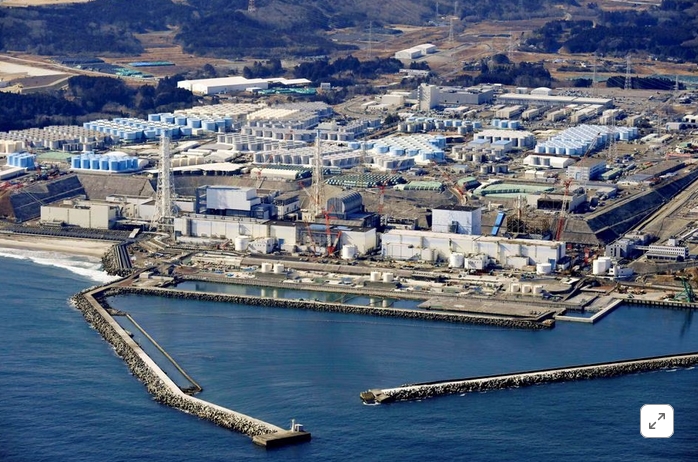
SYDNEY, Jan 18 (Reuters) – Pacific island nations are urging Japan to delay the release of water from the destroyed Fukushima nuclear power plant over fears fisheries will be contaminated, the Pacific Island Forum (PIF) said on Wednesday.
The Japanese government said last week that water from the destroyed Fukushima nuclear power plant could be released into the sea “around this spring or summer,” raising concerns from island nations still grappling with the legacy of nuclear testing decades ago.
Japan had approved the future release of more than 1 million tonnes of water from the site into the ocean after treatment in April 2021.
The PIF, a regional bloc of 17 island nations, argues the release of the water could have a major impact on fishing grounds that island economies rely on, and where up to half of the world’s tuna is sourced.
“Our region is steadfast that there be no discharge until all parties verify it is safe,” PIF Secretary General Henry Puna said on Wednesday at a livestreamed public meeting in Suva, Fiji.
“We must prevent action that will lead or mislead us towards another major nuclear contamination disaster at the hands of others,” he added, saying Pacific islanders continued to endure the long-term impacts of the nuclear testing legacy on a daily basis.
The United States conducted nuclear testing in the Pacific islands in the 1940s and 1950s and the Marshall Islands continues to campaign for more compensation from Washington over lasting health and environmental effects.
France conducted atomic testing between 1966 and 1996 at Mururoa Atoll in French Polynesia in the southern Pacific Ocean.
Ken Buesseler, a scientist with the Woods Hole Oceanographic Institution, told the forum on Wednesday that a PIF scientific expert panel was urging Japan to reconsider the waste release because it was not supported by data and more information was needed.
Radioactivity moves across the ocean with currents and tides and risks contaminating fish, he said.
A spokesperson for the U.S. State Department said Japan had examined several options to address “a unique and challenging situation.” “Japan has weighed the options and effects, has been transparent about its decision, and appears to have adopted an approach in accordance with globally accepted nuclear safety standards,” the spokesperson said.
“We look forward to the Government of Japan’s continued coordination with the IAEA as it monitors the effectiveness of this approach,” the official added, referring to the International Atomic Energy Agency.
Japan’s foreign ministry has previously said that regulators deemed it safe to release the water, which would be filtered to remove most isotopes but would still contain traces of tritium, an isotope of hydrogen hard to separate from water.
Fukushima: court upholds acquittals of three Tepco executives over disaster
High court in Japan agreed defendants could not have predicted the massive tsunami that crippled the power plant and triggered a nuclear meltdown
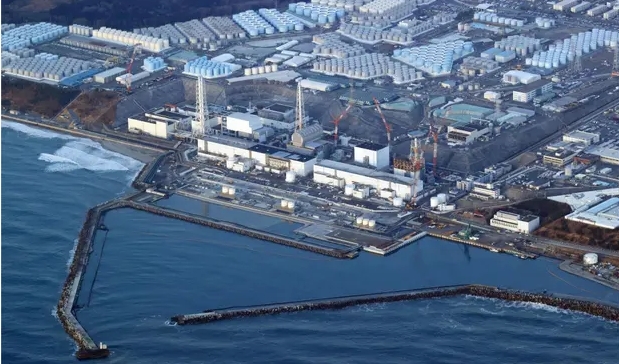
The Fukushima Daiichi nuclear power plant in Okuma. Three Tepco executives have had their acquittals on negligence charges upheld by a court in Japan.
January 18, 2023
Three former executives from the company that operates the wrecked Fukushima Daiichi nuclear plant have had their not-guilty verdicts upheld by a court in Japan, dealing a blow to campaigners demanding the firm take legal responsibility for the disaster in March 2011.
The Tokyo high court on Wednesday cleared Tsunehisa Katsumata, the former chairman of Tokyo Electric Power (Tepco), along with former vice-presidents Ichiro Takekuro and Sakae Muto, of professional negligence resulting in death.
The court said the defendants could not have predicted the massive tsunami that crippled the power plant and triggered the world’s worst nuclear accident since Chornobyl in 1986.
The three men were indicted in 2016 for allegedly failing to take measures to defend the plant against tsunamis, resulting in the deaths of 44 people, including elderly patients at a hospital, who had to be evacuated after the disaster.
The Fukushima Daiichi plant, on Japan’s north-eastern coast, was hit by a massive tsunami caused by a 9.0-magnitude earthquake, the strongest in Japan’s recorded history.
More than 18,000 people died in the tsunami, but no one was recorded as having been directly killed by the nuclear meltdowns, which caused massive radiation leaks and forced the evacuation of more than 150,000 people living nearby – some of whom have only recently been given permission to return to their homes.
Wednesday’s ruling affirmed a similar verdict delivered by the Tokyo district court in September 2019.
The trial focused on whether the former executives should have foreseen the massive tsunami and taken extra precautions, such as constructing a bigger seawall, to prevent a catastrophe.
A government evaluation of earthquake risks published in 2002 estimated that tsunami waves of up to 15.7 metres (51ft) in height could strike Fukushima Daiichi. The findings were passed on to Tepco in 2008 – three years before the disaster when a 14-metre wave struck, the Kyodo news agency said.
Tepco has argued it was powerless to take precautions against a tsunami of the size that struck the plant almost 12 years ago, and that it had done everything possible to protect it.
The original district court ruling, however, cast doubt on the credibility of the government’s evaluation, saying the defendants “could not have logically predicted tsunami waves over 10 metres in height”, Kyodo reported.
Although they have twice been acquitted in the only criminal case against Tepco executives arising from the disaster, a separate verdict in July in a civil case against the same three men and Tepco’s former president, Masataka Shimizu, ordered them to pay ¥13.32tn (£80bn at the time) for failing to prevent the disaster.
In contrast to Wednesday’s decision, the court said the government’s assessment had been reliable enough to oblige Tepco to take preventive measures.
While that ruling – the first to find Tepco executives liable for damage resulting from the disaster – carries symbolic significance, lawyers have said the defendants do not have the means to pay the sum, believed to be the largest ever awarded in a civil lawsuit in Japan.
Media reports said they would be expected to pay as much as their assets allowed.
Where the judgement of the Tokyo High Court went wrong

Credits to Yuichi Kaido
January 18, 2023
If you read this, you can understand that yesterday’s decision by the Tokyo High Court considers nuclear power safety measures inadequate and prepare for the next brutal accident.
At the beginning of the attorney general’s statement published yesterday, we said: Regarding the long-term evaluation of the projection, the verdict said, “as a country, it is debated and placed weight that cannot be overlooked,” but in this view, it denied the necessity for tsunami measures based on the research findings to base this, and the reliability based on the “real possibility” of stopping nuclear power plants from running.
Seeking “realistic possibilities” about scientific opinion based on accident measures is clearly a mistake, given the current state of geology. I believe such a judgement exonerates not taking necessary accident measures and dangerous logic to prepare for the next nuclear accident. “
I think the conclusion is clear which of these two decisions will withstand the criticism of history by Judge Hosoda, who refused the local inspection, flipped the empty arguments on the desk and wrote an empty verdict, will stand up to the criticism of history.
*******************
The degree of credibility required by knowledge
Since operators who install (and operate nuclear power plants have a duty above all to prevent brutal accidents, the safety of nuclear power plants is impaired by the expected tsunami (predictable tsunami) based on the latest scientific and technical findings, the safety of the nuclear power plant plants is impaired, and if brutal accidents occur, they are obliged to take necessary measures to prevent this, and the director recognizes the risk, or can take action. As explained in No. 2 (The defendants’ duty of good governance as the director of Tokyo Electric Power).
Conversely, at nuclear power plant, the risk of accidents occurring in case of an event that exceeds the expected is greatly different between earthquakes and tsunami, and if you use only a dry site concept like the Fukushima Daiichi Nuclear Power Plant as a measure against tsunami, it is absolutely safe as long as the tsunami does not exceed the expected height, but if it exceeds the expected height, there will be a cliff edge incident that causes sudden damage to the core and reaches the core, due to a severe accident caused by loss of all power. Therefore, if our predictions are credible for scientifically predicted tsunami, it will be extremely important to avoid the presumed tsunami measures.
Therefore, considering whether a certain degree of credibility is required in order to have scientific opinion on predictions of tsunami, which is required for the director of the company that sets up and runs nuclear power plants to avoid measures
(1) If safety measures are taken as a prerequisite for tsunami in the world, and the company that operates and operates nuclear power plants, and safety is the first priority, while in reality, resources are limited, etc., etc., and if safety measures are a priority, as a prelude to all the predictions of tsunami of all the contents that exist in the world, (there is a risk of lack of resources (without resources and resources) that should be allocated for the truly necessary measures, or there is a surplus.
There is a risk of incalculable risk of bodily safety. It is therefore believed that in nuclear engineering, zero risk is not required, and safety measures should be taken that do not create undue risks ( 生155).
On the other hand, scientific findings, often earthquakes and tsunami. Opinions on natural phenomena are constantly advancing and developing that natural phenomena, such as earthquakes and tsunami, are essentially a matter of the galaxy, and since it is principle impossible to make complete predictions. Since it is impossible to experiment on them, we can only learn from past events, but there is a limit that there is little data from the past. Therefore, with regard to findings widely considered established, i.e. not the latest scientific findings, not necessarily all researchers agree, the latest scientific opinion, where clarification and understanding are currently progressing, there will essentially be researchers who disagree. Therefore, for example, if you ask for excessive reliability of scientific findings in the pretext of tsunami, such as the absence of disagreement among researchers, or the attached data is complete, the tsunami that is waiting to happen will not be sufficient, and the safety of nuclear power plants will not be shaken (severe accidents caused by the loss of all power).
Therefore, when considering these collectively, in order to have scientific findings on tsunami predictions that are required by the directors of companies that establish and operate nuclear power plants to avoid measures, the findings expressed in the papers of certain researchers and so on are not enough, for example, in public institutions and councils that consider tsunami forecasts, serious scrutiny has been made among researchers and experts who have a considerable amount of research practice in that field, You have to understand that there is and enough. And in the case of such findings, it can be said that unless there are specific circumstances such as collected despite being scientifically and strictly unreasonable, the director of the company that installs and operates the nuclear power plant can be obliged to follow the tsunami measures based on that findings.
(2)a In this regard, the defendants and Tokyo Electric Power Corporation are required to quote the opinion of Professor Imamura ( 、156) regarding the scientific findings of the predictions of tsunami, where the CEO of the company that operates and operates nuclear power plants are required to take measures, and to be able to justify the need for measures, using a scientific basis, specifically, the tsunami, or at least the scientific consensus has been obtained that it is always tsunami, in which there is a scientific consensus that it is always a tsunami or at least a scientific basis. Insisting on needing and etc.
の However, if interpreted as the above assertion, many researchers and experts with relevant practice recognize that it is reasonable to assume that there is a chance of large-scale tsunami earthquake occurring in a certain area, when the location of wave sources cannot be calculated on a specific basis and the interval of occurrence over a certain period of time, the director of the company operating nuclear power plant is a measure to prevent severe accidents from tsunami (Opinion of Prof. Imamura According to this thinking, if an unexpected tsunami occurs at a nuclear power plant, the Cliff Edge event is likely to cause extremely severe damage due to loss of total power. If the prediction is credible, it would be necessary to avoid tsunami measures, but not to take measures except certain things, i.e. the severity of total power loss due to a tsunami, if the prediction is reliable. It is clear that it is unreasonable, given the importance of ensuring the high safety of nuclear power plants, which is hidden in standards related to the standard of safety etc.
考 Also, views like the above claim require that, in addition to the credibility of scientific findings, the information for nuclear companies to take easy measures is clear, but since there are some uncertainties in the findings, it is possible to take measures with the appropriate room taken into account on the safety side (this opinion indicates that it is dangerous, but it is unreasonable that measures cannot be mandatory if it is not indicated what extent to take. ), overstating the convenience of measures by nuclear power operators rather than ensuring safety is not acceptable.
According to the construction industry (I have to say that the allegations made by the defendants and Tokyo Electric Power Corporation are difficult to accept.
Tokyo court upholds not guilty verdict for ex-Tepco execs over Fukushima disaster
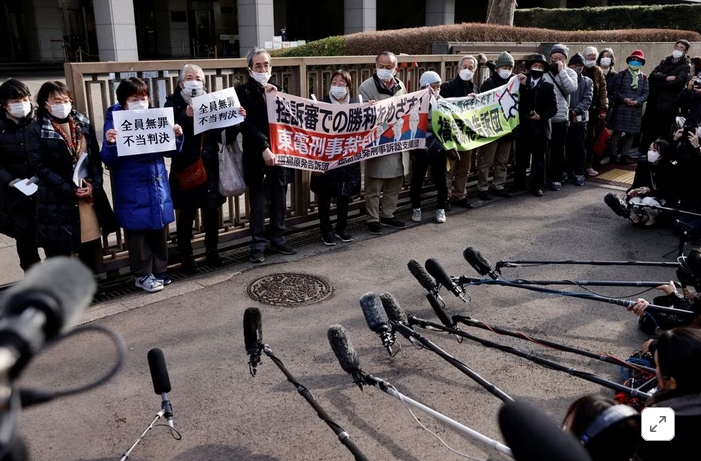
Support group members of plaintiffs show off banners reading “All innocent. Wrongful judgment” after the The Tokyo High Court upheld a not guilty verdict for former Tokyo Electric Power Company (TEPCO) executives of negligence over the 2011 Fukushima nuclear power station disaster, in front of the court in Tokyo, Japan, January 18, 2023
TOKYO, Jan 18 (Reuters) – The Tokyo High Court on Wednesday upheld a not guilty criminal verdict by a lower court that cleared former Tokyo Electric Power Company (Tepco) (9501.T) executives of negligence over the 2011 Fukushima nuclear power station disaster.
Former Tepco Chairman Tsunehisa Katsumata, 82, and one-time executives Sakae Muto, 72, and Ichiro Takekuro, 77, were all found not guilty by the Tokyo District Court in 2019, in the only criminal case to arise out of the world’s worst nuclear crisis since the Chernobyl disaster in 1986.
The ruling on Wednesday to uphold the not guilty verdict sits at odds with a separate civil case brought to the Tokyo court by Tepco shareholders, which found four former executives responsible for the 2011 nuclear disaster.
Judges ordered the former executives to pay 13 trillion yen ($99.14 billion) in damages in the civil lawsuit. The court judged that the executives could have prevented the disaster if they had exercised due care. Criminal lawsuits in Japan are broadly interpreted to have a higher standard of proof than civil cases.
“I’m really surprised. Most other lawsuits have found that Tepco is guilty, so I can’t understand why the criminal court is the odd one out,” said Masako Sawai, who is part of a civil group accusing the former executives of negligence.
The trial, which started in June 2017, was conducted by state-appointed lawyers after prosecutors decided not to bring charges against the Tepco executives.
“We are aware that there is an ongoing lawsuit over the criminal responsibility of three former executives regarding the nuclear disaster, but we will refrain from commenting on the case,” a spokesperson for Tepco said.
The Fukushima Dai-ichi nuclear station, located about 220 kilometres (130 miles) northeast of Tokyo, was rocked by a magnitude 9.0 earthquake and subsequent tsunami in March 2011, sparking three reactor meltdowns and prompting Japan to shut down its entire fleet of nuclear reactors.
Soil separation and soil storage in Fukushima

Credits to Arkadiusz Podniesinsk
January 10, 12023
Today I visited the temporary waste dump adjacent to the power plant. I’ve been here several times, but this is the first time I’m with someone who can explain everything.
So, the temporary waste dump is a large area of 1600 hectares where contaminated soil from decontamination of areas from the whole prefecture goes. Before the disaster, most of these areas were cultivated fields, but there was also a fish processing plant, a school, a kindergarten and other public utilities. After the disaster, the entire area was bought by the government for the purpose of a landfill.

Currently, several plants have been built here that deal with sorting contaminated soil, ie. by separating wood, leaves, metals and other pollution (except radioactive contamination). The fire material is then burned and the ash is stored in special concrete containers. On the other hand, large, 15 meters high hills are dumped from the cleared soil, although when the grass grows they look more like small hills. Several layers of insulation are laid at the bottom of each mound and an irrigation system is being built that collects the flowing contaminated water to the treatment plant. Every mound has such an installation. At the end, I have attached a photo so that you can better understand the process described.
According to the name, the land will be stored here temporarily (up to 30 years) until a place for final storage is found. Research is currently underway on how to effectively reduce the amount of contaminated soil (volume reduction, recycling, new technologies) to minimize the amount of soil that will go to final landfill.
The whole thing is really impressive and above all works. It seems that the Japanese are seriously taking the issue of decontamination, although I personally don’t think that after 30 years such gigantic amounts of land should be transferred elsewhere again. Or at least I won’t see that anymore .
https://www.facebook.com/arek.podniesinski

High Court’s TEPCO Fukushima Ruling Could Be Bellwether for Other Cases

From left: Tsunehisa Katsumata, Ichiro Takekuro and Sakae Muto
January 16, 2023
Could the meltdown at the Fukushima No. 1 nuclear power plant have been prevented? The Tokyo High Court is looking into a criminal case and will soon rule on whether the unprecedented accident could have been prevented by expecting such a massive tsunami. Civil court rulings on the same issue have been split, so all eyes are on the high court to see how it will rule.
The Tokyo High Court will on Wednesday hand down its ruling on whether three former executives of what was then Tokyo Electric Power Co. are responsible for the accident in 2011. The three had been acquitted by the Tokyo District Court of charges of professional negligence resulting in death.
The lower court’s ruling in September 2019 acquitted former TEPCO Chairman Tsunehisa Katsumata and former Executive Vice Presidents Ichiro Takekuro and Sakae Muto, who were in charge of the nuclear power plant.
During closing arguments of the appeal at the Tokyo High Court on June 6, 2022, court-appointed lawyers for the prosecution criticized the lower court decision.
“Denying that the defendants had responsibility is unjust,” one said, demanding the district court ruling be overturned.
The three defendants were handed mandatory indictment on charges related to causing the nuclear accident by failing to take measures even though they could expect such a huge tsunami, resulting in the deaths of 44 people who were evacuated from Futaba Hospital in Okuma, Fukushima Prefecture.
The two main points of contention in the trial of the three men are whether the massive tsunami could have been expected and whether the accident could have been prevented by taking measures.
In the district court, the judges ruled that “the only way to prevent the accident was to stop the operation of the plant.”
As for expectations of a natural disaster, the government had released in 2002 a long-term assessment that presents the possibility of a massive earthquake and tsunami hitting off places such as Fukushima Prefecture. The district court ruled that such an assessment was unreliable and deemed that the defendants could not be held criminally liable because they “could not expect a massive tsunami in concrete terms and were under no legal obligation to stop the operation of the plant.”
The district court limited the possible measures to prevent the accident to the “shutdown of the plant,” a measure that is not readily practiced.
During the appeal, the appointed lawyers for the prosecution emphasized that a shutdown of a plant is the last resort, and the accident could have been prevented through basic measures such as building higher seawalls and making the plant facilities watertight. The defense reiterated that there were no errors in the judgment of the lower court.
Split decisions
The appeal began in November 2021 and concluded after three hearings at the Tokyo High Court. The appointed lawyers requested the examination of witnesses, including former Japan Meteorological Agency officials who participated in the compilation of the assessment, as well as an on-site inspection by judges. But these requests were turned down.
During a civil trial at the Tokyo High Court in February 2021, however, the ruling adopted the long-term assessment as “reliable” evidence.
At the Supreme Court, an appeal of this civil suit was heard and ruled upon in June 2022. The top court did not clearly express the reliability of the assessment nor the predictability of a massive tsunami, but ruled that the central government, the defendant, was not responsible for the accident.
“The size of the tsunami was larger than expected, and the accident could not have been prevented,” the Supreme Court said.
Shortly after this trial, however, the Tokyo District Court in July recognized the reliability of the assessment in a shareholder derivative lawsuit filed by shareholders of Tokyo Electric Power Company Holdings. The court, in saying that “the tsunami was predictable and the accident could have been prevented,” ordered the abovenamed former TEPCO executives and former TEPCO President Masataka Shimizu to pay about ¥13 trillion in compensation. This case adopted almost the same evidence as the current criminal trial, but the conclusion was the opposite of the one reached by the same court in the criminal trial.
Chuo University Assistant Prof. Satoshi Tanii, who specializes in the theory of criminal negligence, said that the hurdle for finding liability in a criminal trial where an individual faces punishment can be higher than that for a civil trial.
“In addition to the reliability of the long-term assessment, whether the measures to prevent accidents are limited to a shutdown or include more practical moves such as watertight measures will become one of the points that will determine the guilt or innocence of the defendants,” he said.
Source: https://japannews.yomiuri.co.jp/society/crime-courts/20230116-84274/
1 This Month
23 April – WEBINAR – Why new nuclear reactors are the wrong tools for decarbonization Thursday, April 23 • 1 AM – 2 AM AEST
World Nuclear Power. Reactors 1951-2026, 75 Years of Nuclear Power.
Interactive Map– https://dv.worldnuclearreport.org/
Chernobyl: The Lost Tapes – A good documentary on Chernobyl on SBS available On Demand for the next 3 weeks– https://www.sbs.com.au/ondemand/tv-program/chernobyl-the-lost-tapes/2352741955560

of the week–London Campaign for Nuclear Disarmament


Tell the Ukrainian Government to Drop Prosecution of Peace Activist Yurii Sheliazhenko
To see nuclear-related stories in greater depth and intensity – go to https://nuclearinformation.wordpress.com
-
Archives
- April 2026 (231)
- March 2026 (251)
- February 2026 (268)
- January 2026 (308)
- December 2025 (358)
- November 2025 (359)
- October 2025 (376)
- September 2025 (257)
- August 2025 (319)
- July 2025 (230)
- June 2025 (348)
- May 2025 (261)
-
Categories
- 1
- 1 NUCLEAR ISSUES
- business and costs
- climate change
- culture and arts
- ENERGY
- environment
- health
- history
- indigenous issues
- Legal
- marketing of nuclear
- media
- opposition to nuclear
- PERSONAL STORIES
- politics
- politics international
- Religion and ethics
- safety
- secrets,lies and civil liberties
- spinbuster
- technology
- Uranium
- wastes
- weapons and war
- Women
- 2 WORLD
- ACTION
- AFRICA
- Atrocities
- AUSTRALIA
- Christina's notes
- Christina's themes
- culture and arts
- Events
- Fuk 2022
- Fuk 2023
- Fukushima 2017
- Fukushima 2018
- fukushima 2019
- Fukushima 2020
- Fukushima 2021
- general
- global warming
- Humour (God we need it)
- Nuclear
- RARE EARTHS
- Reference
- resources – print
- Resources -audiovicual
- Weekly Newsletter
- World
- World Nuclear
- YouTube
-
RSS
Entries RSS
Comments RSS
 nuclear-news