Tokyo enacts ordinance mandating solar power for homes, first in Japan, starting in spring of 2025
December 15, 2022
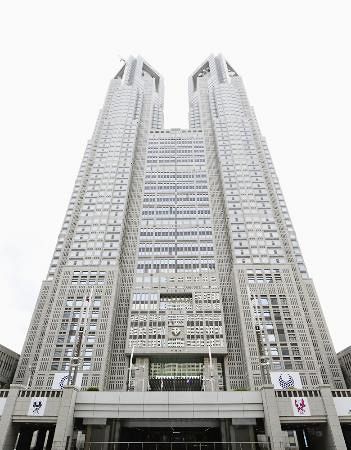
On December 15, the final day of the regular session of the Tokyo Metropolitan Assembly, a revised ordinance related to the nation’s first mandatory installation of solar panels on newly constructed single-family homes was passed and enacted with a majority of votes in favor. The aim is to reduce greenhouse gas emissions in the residential sector. The new system will begin in April 2025, after a preparatory period to support businesses and inform residents.
According to the Tokyo Metropolitan Government, major housing manufacturers will be obligated to install panels on buildings with a total floor area of less than 2,000 square meters, including residences. Purchasers will be required to reduce the environmental impact of their homes as an obligation to make an effort.
The TMG estimates that if 4-kilowatt panels are installed, the initial cost of 980,000 yen can be recovered in 10 years through the income from electricity sales, and only 6 years if the TMG subsidy is used.
https://www.tokyo-np.co.jp/article/220091
Fukushima: Japan prepares to discharge water from the plant into the sea

13/12/2022
11 years after the Fukushima disaster, Japan is working hard to overcome challenges posed by its water. Since the Tohoku tsunami of 11 March 2011, Japan has been decommissioning and decontaminating the nuclear power plant, which is expected to take 30 to 40 years.
Now, the plant must urgently empty its water tanks.
Euronews spoke to Kimoto Takahiro, the Deputy Site Superintendent at D&D Communication Center, Fukushima Daiichi D&D., Co., Tokyo Electric Power Company (TEPCO) to ask where the water comes from.
“The water that accumulates every day was used to cool the molten fuel”, Kimoto explained. “And there is also water from underground springs or rain that accumulates.”
This water is treated in ALPS, a unit specially designed for Fukushima. It removes almost all the radioactive substances.
The treated water is then stored in a thousand tanks, but they have reached their maximum capacity. Next year, Japan will release the treated water into the sea.
However, a small amount of radioactive substance, called tritium, still remains, as it’s inseparable from the water.
90,000 samples of treated water are analysed in a laboratory each year in preparation for dilution in the sea. After a second treatment in ALPS, the water will be discharged into the sea through a tunnel, which is one kilometre long and built at a depth of 16 metres. The tunnel is set to be completed next spring.

The tunnel, which is one kilometre long and 16 metres deep, is set to be completed next spring
Just before it reaches the Pacific, the water will be diluted one last time in large seawater pools.
In order to find out whether marine life will be affected by the radioactivity, the nuclear power plant is rearing fish in separate pools.
“There are basins of natural seawater on one side, and basins of treated water mixed with seawater on the other”, Kimoto Takahiro told Euronews.
“We are going to discharge water at a much lower level than the drinking water standard set by the WHO”, he added.
But the fishermen of Fukushima are worried about the reputation of their products. In the port of Onahama, 60 kilometres from the power station, their work has already suffered from apprehension among consumers. From 25,000 tonnes per year before 2011, only 5,000 tonnes of fish are now caught, according to the president of the fishermen’s association.
“As a fisherman in Fukushima, I am against the release of radioactive materials into our workplace. What worries us is the negative reputation this creates”, said Nozaki Tetsu, Chairman of the Fukushima Prefectural Federation of Fisheries Cooperative Associations.
However, Nozaki recognised that “in terms of the explanations we’ve had from the government over the last 10 years, they have not been false, so we appreciate their efforts. And therefore, if we can also presume their scientific explanations haven’t been false, we will make an effort to continue fishing while at the same time fostering better consumer understanding, and, by doing this, I think we can limit most of the reputational damage.”
After the daily catch, one fish of each species is analysed in this laboratory in the port. Everything is monitored.
Of the 63 species tested while Euronews was present, not a single one had any trace of radioactivity. That means they are all for sale.
In one year, only once has a fish exceeded the authorised stage. This stage is strictly set at 50 bequerel in Fukushima, whereas the international standard allows 1000 bequerel. The monitoring will continue after the discharge of water.
The authorities repeat that the dose of tritium released will not be dangerous:
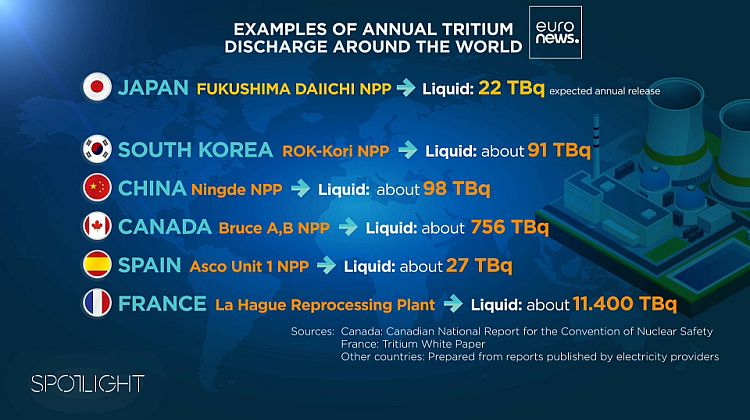
Just 22 terabecquerel will be released each year, which accounts for far less than most power plants in the world.
22 terabecquerel will be released each year — which accounts for far less than most power plants in the world. The waste reprocessing site of La Hague in France releases more than 11,000 terabecquerel annually.
Opponents say tritium from a nuclear accident is more dangerous. But one French scientist who has visited the Fukushima site 30 times insists that that is not true.
“Tritium is a radioactive element that is only slightly dangerous”, explained Jean-Christophe Gariel, the Deputy Director of the Institute of Radiological Protection and Nuclear Safety. “There are no different types of tritium. The characteristics of the tritium that will be released at Fukushima are similar to the characteristics of those released by nuclear power plants around the world”.
The Japanese government is pleased that Great Britain lifted import restrictions on products from the region last June, showing a sign of renewed confidence, after years of effort by Japan.
Tanabe Yuki, the Director for International Issues at the Nuclear Accident Response Office at the Ministry of Economy, Trade and Industry told Euronews that, “so far, we have organised about 700 meetings with stakeholders, including the fishery industry. We have developed concrete projects to combat the bad reputation.”
Indeed, Japan has taken all the necessary precautions on the sensitive issue regarding the discharge of treated water and has asked the International Atomic Energy Agency to supervise the operations.
In May 2022, the Director General of the International Atomic Energy Agency Rafael Grossi visited Fukushima.
The IAEA chief said in a statement that, “the request for IAEA reviews demonstrates Japan’s commitment and will help send a message of transparency and confidence to the people in Japan and beyond”, emphasising the “remarkable progress on decommissioning at Fukushima Daiichi since my last visit two years ago.”
The UN agency has set up a special task force. Last November, Gustavo Caruso, Director of Safety and Security Coordination. Department of Nuclear Safety and Security, and the head of this mission, returned to Fukushima.
“The task force held its third mission to Japan and it was this time composed of experts from Argentina, China, Canada, France, the Republic of Korea, Marshall Islands, the Russian Federation, the United Kingdom, the United States of America, and Vietnam”, he announced.
The objective of the mission was to ensure the safety of the discharge. The UN agency examines the regulatory aspects and carries out analyses in independent laboratories.
“The evaluation report and the conclusions will be released in approximately three months, and the IAEA task force will also carry out another mission in Japan in January before the water discharge begins. The IAEA will issue a comprehensive report containing all the collective findings until now, and our conclusions about this process. All the standards that we apply are representing a high level of safety”, Gustavo Caruso confirmed.
The first discharge should take place next year.
Japan is doing everything possible to make this operation a success and to protect the inhabitants and the environment. It’s the latest step in the reconstruction of a region that believes in its future.
Tim Deere-Jones on the Fukushima Daiichi Radioactive Water Discharge into the Ocean

December 13 2022
The archive video of the zoom conference on 5 November 2022 given by Tim Deere-Jones on the issues of discharging Fukushima Daiichi radioactive water into the ocean, and of seabed dredging — a comparison between Fukushima Daiichi and Hinkley Point, is now available.
With English/Japanese interpretation.
Radioactive materials released in large quantities on the days following the beginning of the TEPCO Fukushima Daiichi Nuclear Power Station accident flew over the Pacific Ocean on the prevailing westerly winds, falling and depositing on the ocean floor.
Radioactive fallout on land also flowed into the sea washed by rain and carried by rivers. Uncontrolled inflow of contaminated water from the Fukushima Daiichi Nuclear Power Plant site into the ocean has also increased the contamination of the seabed.
Such radioactive materials from the accident can be transferred from sea to land by the wind and contaminate the environment, including pastures and crops.
Tim Deere-Jones points out the risks of the wide rediffusion of the contamination mainly towards the south, situated downstream of the ocean current, by the release of the treated radio-contaminated water. This discharge of radioactive water is planned for over a period of 10 years. Further contamination can also be caused by the construction work of the discharge facilities.
Approximate timing of the video
0:06-17:03 Video viewing: Message against the discharge of contaminated water into the sea by Tim Deere-Jones (video created by Yosomono Net).
It can be viewed here separately:
16:58-1:36:50 Talk by Tim Deere-Jones
1:37:34 – 1:42:21 Questions and Answers
Controversy grows over proposed use of Tohoku funds to cover defense spending

Dec 13, 2022
The government and the ruling parties are frantically hunting for financial resources to cover the planned increase in defense spending, with one proposal being to use the special tax designed to finance reconstruction costs for areas affected by the March 2011 Great East Japan Earthquake.
The special income tax for reconstruction adds a 2.1% levy to individual income tax through 2037, generating about ¥400 billion ($2.9 billion) in revenue for the government each year. The plan is to use a total of ¥200 billion from the tax revenue for defense spending.
Policymakers are also considering extending the 2037 deadline for the tax by another 20 years to make sure there are enough funds.
But critics are already voicing opposition: Why use the reconstruction tax for defense spending?
“This is a tax hike for reconstruction purposes,” said Japanese Communist Party Secretary-General Akira Koike during a news conference Monday. “It’s a complete misappropriation of the tax.”
Prime Minister Fumio Kishida aims to spend a total of ¥43 trillion between fiscal 2023, which begins in April, and fiscal 2027. The government plans to secure funding by cutting other areas of spending and utilizing some surplus money and nontax revenue, but it is expected to fall short by ¥1 trillion from fiscal 2027.
The focus is on how to cover the gap, and the plan under consideration is to:
- Increase corporate taxes (bringing in about ¥700 billion to ¥800 billion).
- Increase the tobacco tax (raising about ¥200 billion).
- Increase the special income tax for reconstruction (yielding about ¥200 billion).
The possibility of funding the construction of Self-Defense Forces facilities using the government’s construction bonds has also been floated, but this would mark a shift from not using those bonds for military purposes.
The financial law stipulates that construction bonds are used to cover the cost of long-lasting roads and bridges that would also benefit future generations. The government has excluded SDF facilities, saying they may be attacked by enemies and would not last long.
In 1966, then-Finance Minister Takeo Fukuda said in parliament that the government would not issue construction bonds for military facilities because they are “like expendables.”
The defense budget for fiscal 2023, the first year of the five-year period in which it will be doubled, will likely increase to ¥6.5 trillion from ¥5.2 trillion for fiscal 2022, Liberal Democratic Party Secretary-General Toshimitsu Motegi said Monday. The government plans to raise it to ¥9 trillion in fiscal 2027.
Complicating matters, the discussions appear to be causing a rift between Kishida and the largest LDP faction, which used to be headed by former Prime Minister Shinzo Abe.
Abe had long argued that government bonds should be used to stimulate the economy, and LDP executives and Cabinet ministers who are opposed to a tax hike — LDP policy chief Koichi Hagiuda, industry minister Yasutoshi Nishimura and economic security minister Sanae Takaichi — are either in the faction or were close to the former prime minister.
Kishida, meanwhile, comes from the Kochikai faction, which has traditionally placed greater importance on fiscal sustainability and wants to avoid issuing government bonds for defense spending.
“Defense capability, which will be drastically strengthened over the next five years, will need to be maintained and strengthened even further. … To do that, it is imperative to secure stable funding sources,” Kishida said during a news conference Saturday.
“We must not rely on government bonds, considering our responsibility toward future generations.”
Miyagi fisheries industry fears impact of treated radioactive water release
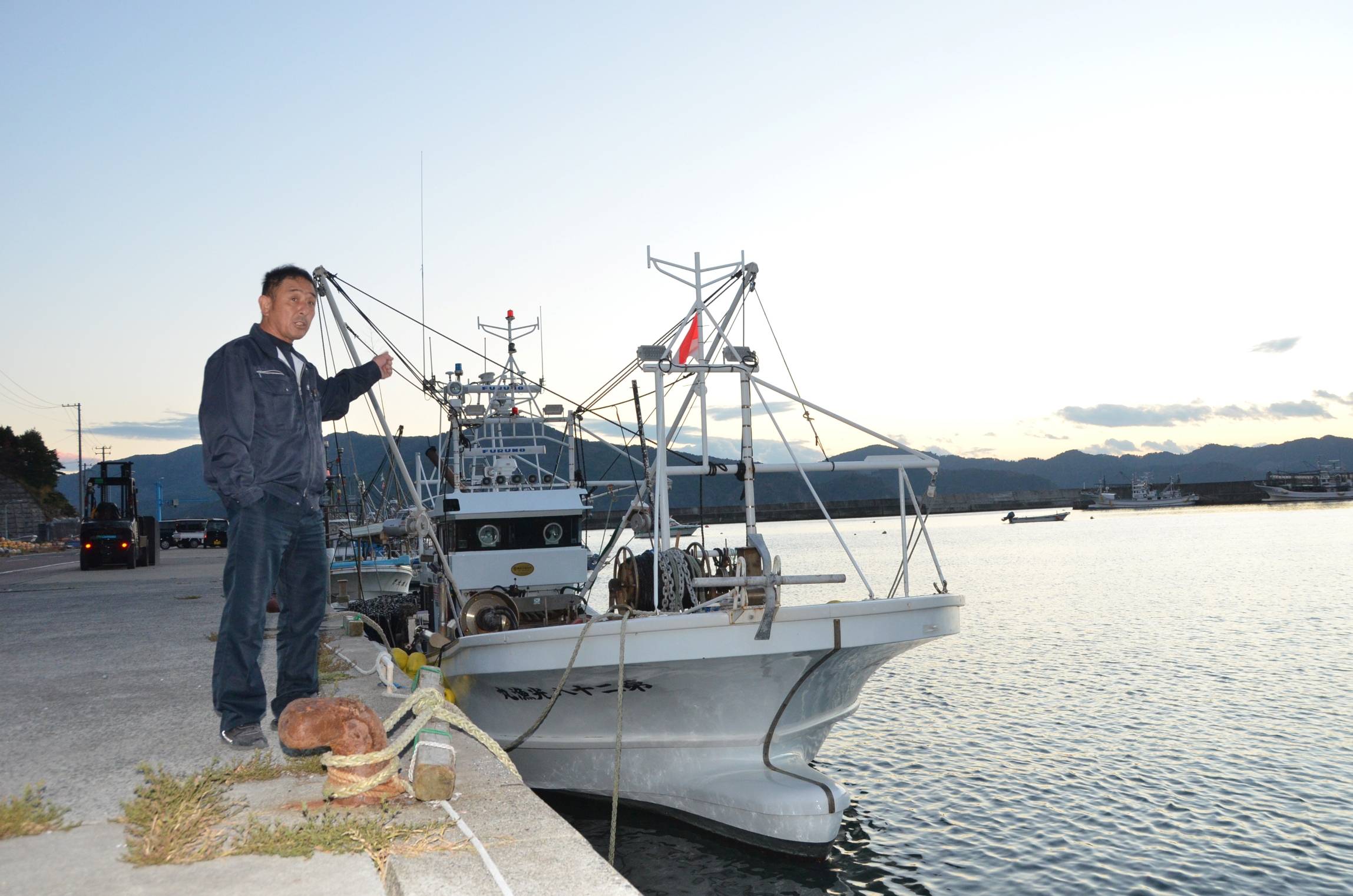
Yoshihiro Watanabe, a breeder of sea squirts, in the Yoriisohama district of Ishinomaki, Miyagi Prefecture
Dec 12, 2022
Yoshihiro Watanabe, 61, is a breeder of sea squirts, the leading product for the aquaculture industry in Miyagi Prefecture.
Looking toward the sea in the Yoriisohama coastal district in the city of Ishinomaki, Watanabe expressed concerns over a plan to release treated radioactive water from the Fukushima No. 1 nuclear power plant. The water, which contains hard-to-remove tritium, is expected to be discharged to the ocean from the nuclear plant, located some 120 kilometers away in neighboring Fukushima Prefecture, as early as next spring.
“We are already on the verge of going out of business,” Watanabe said. “It will be a matter of life and death if the treated water is released into the ocean in such a situation and domestic consumption drops.”
About six weeks earlier, officials from the central government visited Miyagi Prefecture to explain how the issue of treated water is being handled. But a sea squirt producers’ group under the Miyagi Fisheries Cooperative, which Watanabe belongs to, refused to meet them amid feelings of distrust toward the government, which decided on the water release without the consent of the local fisheries industry.
Preparations are moving forward after Fukushima Prefecture and the towns hosting the nuclear plant in August approved a plan by Tokyo Electric Power Company Holdings (Tepco), the plant’s operator, to start building a facility for releasing the water.
“Is this how the water discharge starts?” Watanabe said.
Prior to the 2011 Great East Japan Earthquake and the Fukushima nuclear plant meltdowns, Miyagi Prefecture had been the nation’s No. 2 fisheries producer in terms of volume.
Annual production of sea squirts, also known as sea pineapples, in the prefecture totaled 12,000 tons, of which 7,000 tons were exported to South Korea.
However, South Korea banned imports of the product following the nuclear accident and the sales channel remains suspended to this day.
Sea squirt breeders have been forced to reduce the overall production in the prefecture to prevent oversupply, and the situation is affecting the income of those working in the fisheries industry.
According to the Miyagi Fisheries Cooperative, sea squirts are particularly popular in South Korea and almost all of the sea squirts exported from the prefecture had been shipped there.
The cooperative has sought new buyers in such countries as the United States, but it has not been able to make up for the drastic drop in overseas sales.
In some cases, large amounts of sea squirts had to be disposed of.
The nuclear disaster is having an impact even on shipments to countries and regions that no longer ban imports of Japanese products.
Miyagi Prefecture began exporting marine products to Hong Kong in 2016, but the shipments were suspended after a year. The Miyagi Food Export Promotion Council was told by distributors in Hong Kong that the products were not accepted by consumers there because they came from Miyagi Prefecture and many were left unsold.
Watanabe said that his production and sales of sea squirts dropped to less than half of the level before the nuclear disaster due to South Korea’s import ban.
The number of sea squirt growers in Yoriisohama declined to 60% of the level before the incident.
Watanabe says he can’t trust the words of the government and Tepco, despite assurances that they will do everything they can to deal with harmful rumors. He doesn’t think they’ve succeeded at tamping down rumors about the food products in the wake of the nuclear meltdowns and have yet to show effective measures for gaining understanding at home and abroad about the water release plan.
Some members of the Miyagi Fisheries Cooperative say they feel Miyagi Prefecture has been made light of, because compared with Fukushima Prefecture — which hosts the nuclear plant — there are fewer opportunities for ministers and government officials to visit.
“If treated water is released now, the local industry will be completely destroyed,” Watanabe said. “The government and Tepco should indicate to people in Miyagi engaging in the fisheries business ways to prevent harmful rumors.”
Haruhiko Terasawa, head of the fisheries cooperative, is also unhappy with the plans.
“The reality is much harsher than what the government and Tepco think,” he said. “We want them to take thorough measures so that people in the fisheries business won’t suffer losses through no fault whatsoever of their own.”
The fisheries cooperative plans to urge the government to send out correct information overseas as well as step up diplomatic negotiations and measures to deal with distribution issues.
Terasawa says he can never forget something that happened eight years ago. When a cooperative member carried flounders into a market, a distributor kicked them, saying, “We don’t need stuff like that.”
“It was humiliating,” Terasawa said. “We are worried that something like that might happen again with the release of treated water.”
This section features topics and issues covered by the Fukushima Minpo, the prefecture’s largest newspaper. The original article was published Nov. 17.
https://www.japantimes.co.jp/news/2022/12/12/national/miyagi-nuclear-plant-water/
Nuclear news for the end of December

Some bits of good news – COP15: Biodiversity experts share 6 reasons why our environment is not yet doomed. Your Good News round-up: swear words can make you more resistant to pain, and more…Coronavirus.Coronavirus Disease (COVID-19): Weekly Epidemiological Update.
Climate. Computer modelling predicts climate change causing cascading animal ‘co-extinctions‘. Climate change can be beaten – why some scientists are hopeful.
Nuclear. This week, it’s all about fusion ( process in which 2 nuclei merge to one nucleus releasing energy, as against fission, in which the nucleus of an atom splits into 2 nuclei). Literally hundreds of articles extolling an experiment in which, at enormous expense, a tiny amount of “net” energy was produced for a fraction of a second. Still a few articles that pour cold water on all this euphoria.
It’s that time of year when in mainly- Christian countries everyone goes a bit silly, madly exchanging gifts and socialising. Serious stuff sort of stops for a bit, which is rather nice, really, (though the nuclear lobby never stops)
Anyway, may we all enjoy the good aspects, have a care for the many who are suffering, and look forward to renewed efforts for decency and care in the New Year
********************************
CHRISTINA’s SHORT THOUGHTS. The media – dishonest – or just sloppy and incompetent ?– nuclear fusion coverage as a case in point. Toad’s new fad– nuclear fusion.
ECONOMICS. Paul Dorfman: Nuclear power is just a slow and expensive distraction. Nuclear blow for EDF, the Flamanville EPR delayed again by six months. Costs of France’s Flamanville nuclear reactor blow out to over $14 billion as project delayed again.
EDUCATION. Military Groomers Are Increasingly Infiltrating US High Schools.
ENERGY. France wants to cut its electricity exports to UK as its aging nuclear reactors are limited, with maintenance issues. Opinion is split on UK government plan for new nuclear and hydrogen projects. Point Lepreau nuclear plant taken offline after power loss.
MEDIA. A new book investigates the toxic legacy of Hanford, the Washington state facility that produced plutonium for nuclear weapons. ‘We are all downwinders’: New film discusses Nevada’s nuclear fallout. Media enthuses over “sexy”high tech nuclear energy, but ignores the really effective one – energy saving.
NUCLEAR TECHNOLOGY. It’s all about fusion. Exaggerated fusion breakthrough is for military purposes. Fusion. Really? Fusion “breakthrough” is largely irrelevant to the climate crisis . Clean energy or weapons ? What the ‘breakthrough’ in nuclear fusion really means. The energy from the nuclear fusion experiment was a tiny fraction of the energy put into the experiment. Very significant barriers to further progress on nuclear fusion . Fusion breakthrough thrills physicists, but won’t power your home soon. Researchers claim a breakthrough in nuclear fusion, but that does not mean fusion as an energy force any time soon. Nuclear fusion – if it eventually works – will require many hundreds of millions of dollars. ‘Bottling the Sun’: is this a new dawn for the fusion industry? (actually – no!).
Mini nuclear reactor firms battle it out in UK for approval and government support . Bill Gates-backed nuclear demonstration project in Wyoming delayed because Russia was the only fuel source.
POLITICS. Can France rely on its nuclear fleet for a low-carbon 2050? New Delay, Cost Overrun For France’s Next-gen Nuclear Plant. UK government ‘s announcement was NOT yet a funding decision for Sizewell C nuclear, just an exclusion of China from the project .
POLITICS INTERNATIONAL and DIPLOMACY. A Tale of Two Nuclear Plants Reveals Europe’s Energy Divide. Hungary’s risky bet on Russia’s nuclear power. For the Western leaders, Minsk Agreements were designed to buy time for Ukrainians to get ready for conflict with Russia. German states oppose construction of Poland’s first nuclear power plant. US prolongs Russia-Ukraine conflict for three aims, aggravates nuclear war risk: experts at GT annual forum.
PUBLIC OPINION. Twice as many people support onshore wind compared to nuclear poweraccording to UK Government survey.
SAFETY. Safety of Zaporizhzhia nuclear plant hangs in the balance. Russia building giant dome over Europe’s largest nuclear plant’s spent fuel stores, to shield them from Ukrainian attacks. Russia installs shield over Zaporizhzhia nuclear storage site. Ukraine Crisis Highlights Security Needs Of Civilian Nuclear Power. Ineos: Ine-Not a safe location for any nuclear reactor, say Scottish Nuclear Free Local Authorities. Japanese Power Plants Less Than 40 Years Old Are Experiencing Problems.
Incident. US Nuclear Bomber Erupts In Flames After Emergency Landing; US Air Force Confirms Mishap With B-2 Spirit.
SECRETS and LIES. The SECOND U.S. suburban husband indicted for smuggling nuclear weapon tech to Russia . Coal Mine Boss Should be Sacked from Position as Government’s Nuclear Dump Advisor
SPACE. EXPLORATION, WEAPONS. For Heaven’s Sake – Examining the UK’s Militarisation of Space.
SPINBUSTER. “FUSION NET GAIN” is manufactured ignorance. What’s all the fuss about fusion? – a breakthrough, and if so, for whom? It’s All About the Bomb.: civilian nuclear power is merely a cover for producing more nuclear weapons.
WASTES. Dismantling Sellafield: the epic task of shutting down a nuclear site. Alliance of Pacific organisations condemn Japan’s decision to discharge nuclear wastewater into the Pacific Ocean. At the Waste Isolation Pilot Plant new areas begin to be filled with radioactive debris.
WAR and CONFLICT. INTERVIEW: Ukraine has lost the war, it just isn’t over yet, says Col. https://www.youtube.com/watch?v=XdshHJW3PMU Kiev’s Worst Attack Against Donetsk In Eight Years Is A Desperate Attempt To Save Face. The folly of the proxy war in Ukraine and how the military-industrial-complex has become the enemy from within. https://www.youtube.com/watch?v=b079rbpYIzUU.S. troops deployed near Russian border.
WEAPONS and WEAPONS SALES. US to send Patriot air defence system to Ukraine: CNN Weapons delivered to Ukraine ‘beginning to filter’ to Africa: Nigeria. UN committee adopts Russian draft resolution on prevention of arms race in space. Remilitarized Japan doubles war spending to meet NATO standards, confront Russia, China . -All about buying weapons. Dumb Ways to Buy: Defence “shambles” unveiled – former submariner and senator Rex Patrick. Nuclear fusion ambitions in Australia from a coalition of technology companies – a dodgy dream? Australia’s defence industry and Minister Richard Marles dazzled by (useless) B-21 Raider Stealth Bomber. The War Memorial plays along with Lockheed Martin.
WOMEN. Mothering a Movement: Notes from India’s Longest Anti-Nuclear Struggle.
It’s All About the Bomb. Civilian nuclear power is merely a cover for producing more nuclear weapons.

Presenting civilian nuclear power as the answer to climate change, as clean and safe electrical generation, or as energy “too cheap to meter” is simply a sales pitch. What is actually delivered by a robust nuclear energy fleet is the capacity for nuclear weapons and a nuclear Navy.

It does not matter if nuclear power can really solve climate change, it just has to be seen as an essential part of the solution to attract bright, young talent into what is made to appear as the cutting edge of technology and climate solutions, even though the civilian nuclear power industry worldwide has been in decline since 2002.
Why civilian nuclear power is merely a cover for producing more nuclear weapons. BY ALFRED MEYER , NOVEMBER 25, 2022
“……………………………………………………………………. the United States wanted to be recognized as the leader of the “free world” in the postwar years. In the early 1950s, the military needed to recast nuclear enterprise activities to appear to be peaceful, beneficial parts of our modern life, very distant from the wartime horrors.
…………….In a now famous speech on December 8, 1953, titled “Atoms for Peace,” Eisenhower proposed to the U.N. General Assembly an international program of sharing “peaceful” nuclear materials and know-how for untold bounty, to encourage development of nuclear programs around the world.
……… one should also recognize that the IAEA’s bluntly stated mission is to promote nuclear technology. The first leaders of the IAEA were from the United States, to ensure that U.S. interests were protected.
Nuclear enterprise infrastructure is an outgrowth of World War II. These new endeavors drew international interest in creating the huge nuclear marketplace now in existence. Atoms for Peace—a plan to share nonmilitary nuclear technology with other countries to “win hearts and minds”—placed nuclear materials and reactors in more than forty countries, including Iran. This generated ongoing business for many American nuclear enterprise companies while supporting and expanding the U.S. military’s nuclear infrastructure and capacity in the United States.
Having nuclear activities under the auspices of the United Nations conferred upon them the legitimacy and respect of that international body………………………………….
The generally favorable response to Atoms for Peace was a trifecta for the nuclear enterprise. U.S. nuclear activities were repackaged as the “peaceful” atom and given the patina of social acceptance through United Nations oversight. Eisenhower was lauded as a good leader for sharing the atom with the world, and the U.S. nuclear infrastructure got new business and growth, which supported more U.S. nuclear weapons and nuclear Navy programs.
Atoms for Peace also served geopolitical ends. For instance, one reason the United States provided Iran with a research reactor in 1967 was to saddle that country with significant financial obligations, including paying for ongoing parts, services, and technical support from American companies.
The Atomic Energy Commission was created in 1946 to promote and regulate the development of this new industry. With the commission led by Wall Street banker Lewis Strauss for five critical years, it is not surprising that the scales heavily favored promotion over regulation. Encouraging private investment in these risky reactor projects was assisted by minimizing regulatory safety and operational demands upon the private operators.
But why was it so important for the U.S. government to develop and subsidize civilian nuclear power? Because it allowed the military, in essence, to spin off its nuclear reactor activities to private financing and corporate operations. Like Atoms for Peace, this repackaging of a military activity as a civilian one succeeded in making the endeavor socially acceptable and somewhat self-funding—although government subsidies are still perennially needed to carry on, and taxpayers are still covering the liability insurance costs of the private corporations.
Most importantly, as detailed in a 2017 report by former U.S. Energy Secretary Ernest Moniz, civilian nuclear power is an “essential enabler” of our national security. The Atlantic Council calculates the value of this contribution to national security to be $42.4 billion a year. Businesses contributing to the nuclear Navy’s supply chain are in forty-four U.S. states.
……………. Being the biggest nuclear enterprise on earth encourages the circular, self-sustaining dynamic of the nuclear arms race. The United States is busy modernizing its nuclear weapons infrastructure to be “strong enough” to negotiate the elimination of nuclear weapons. This is presented as official doctrine in the nonproliferation world. In reality, the United States is actually driving the growing international nuclear arms race.
…………… Presenting civilian nuclear power as the answer to climate change, as clean and safe electrical generation, or as energy “too cheap to meter” is simply a sales pitch. What is actually delivered by a robust nuclear energy fleet is the capacity for nuclear weapons and a nuclear Navy.
Over the decades, there have been numerous expert critiques of nuclear power, authoritatively debunking these misleading and false promises, yet these critiques seem to have no effect on the trajectory of the nuclear enterprise. I suggest that these sales pitches are diversionary techniques aimed at sapping our energy.
It does not matter if nuclear power can really solve climate change, it just has to be seen as an essential part of the solution to attract bright, young talent into what is made to appear as the cutting edge of technology and climate solutions, even though the civilian nuclear power industry worldwide has been in decline since 2002.
To protect ourselves from the dangers of the nuclear enterprise, we need to stop the nuclear weapons and nuclear power reactor programs—a tall order, for sure. But if we seek success in our efforts, we are well advised to understand the forces we are engaging with. It is all about nuclear weapons.
The folly of the proxy war in Ukraine and how the military-industrial-complex has become the enemy from within
The Chris Hedges Report 18 Dec 22
There was once a wing of the Democratic Party that stood up to the war industry. J. William Fulbright. George McGovern. Mike Gravel. William Proxmire. But that was decades ago. The new Democrats, especially with the presidency of Bill Clinton, became shills not only for corporate America but the arms industry. No weapons system is too costly. No war, no matter how disastrous, goes unfunded.
The massive military budget, with $858 billion in military spending allocated for Fiscal Year 2023, an increase of $45 billion over the Biden administration’s budget request, and nearly $80 billion over the amount appropriated by Congress for the current fiscal year, keeps growing.
When 30 members of the party’s progressive caucus recently issued a call for Joe Biden to negotiate with Vladimir Putin they were forced by the party leadership and a war mongering media to back down and rescind their letter. What happened to the Democratic Party? Why has it become impossible to question war and the massive expenditures on arms? Why is such questioning political suicide? Why can’t a Democrat ask, especially at a time of economic hardship and huge deficits, how much we are going to divert to the war in Ukraine which has already consumed some $ 60 billion – as much as we spend on the State Department and AID — with no end in sight? Joining me to discuss the extinction of anti-war Democrats in Dennis Kucinich, a former presidential candidate, who served eight terms in the House of Representatives before the Democratic Party gerrymandered his district to ensure his defeat.
TRANSCRIPT

…………Dennis Kucinich:……………………. what’s happened with the Democratic Party, I think as soon as the Democratic Party made a determination, could have been 35, 40 years ago, that they were going to take corporate contributions, that wiped out any distinction between the two parties. Because in Washington, he or she who pays the piper plays the tune, and that’s what’s happened.
So, there isn’t that much of a difference in terms of the two parties when it comes to war except, notably, partisan reasons or not, there were over 50 Republicans who voted against the last tranche of money that went to fuel the war in Ukraine. And I felt that was notable, and of course, the potential speaker of the house should the Republicans win will be Kevin McCarthy, who has made it a point to say that he’s going to look at that funding.
…. Right now, the arms industry is making money hand over fist with the expansion of war. That’s how they make their money.
…….. And so, with respect to the Democratic caucus, this event, a retraction of the letter by a significant caucus within the Democratic Party, is a new benchmark of a slavish obeisance to the status quo within the party, which then supports war. And a majority of Republicans at this point are supporting war. So you have Congress supporting a war, and this is the way it’s been.
…… when the Pentagon budget comes up, there is a parade of various businesses, small and large, who will make appointments with the congressperson or staff and lay out how many jobs are in the district and how important it is to a district business to have this budget passed……….
……… I went to as a member of the government oversight committee in which an inspector general testified there are over $1 trillion worth of accounts in the Pentagon that couldn’t be reconciled. That they had over 1100 different accounting systems, deliberately, I suppose, constructed so as to make obfuscation rule the day.
So, from that moment on, I just said, wait a minute. They’re not keeping track of how this money’s spent. Why in the world should I vote for this budget? So from that point on, right through to the conclusion of a 16-year service in the United States Congress, I didn’t vote for a single budget of the Pentagon or any of the supplemental appropriations to keep wars going because I knew it was a racket
………….. the truth is the members of Congress are always under enormous pressure locally from their constituents, from contractors within their constituency, from the mediated environment, and the party. And so, it’s a rare individual, and I’m not doing this to elevate myself, but it’s a rare individual who will go against that, because you risk, at times, you may risk your political career.
…………………………………….. The truth of the matter is that we’re in a heavily militarized society driven by greed, lust for profit, and wars are being created just to keep fueling that. It moves right into this idea, this old idea of a manifest destiny. And then you leap into the 21st century where there are still people who believe, as in the Project for the New American Century, that it has to be that America must rule the world, that it is our destiny. I mean, that is such old thinking, but that’s where we are.
…..I see the world as one. I think that human unity is the truth that surrounds all of us. And when we start separating ourselves, and we engage in this polarized thinking, polarized thinking is a precursor of war………. I’ve gone away from the orthodoxy which is now part of politics that says, well, keep that war going for whatever reason. We’re going to beat the Russians. We’re going to beat the Chinese. What? We’re beating ourselves.
………. NATO has become now a kind of sock puppet for Western powers, notably my own dear country the United States.
….from 2014 how the US engineered a coup and knocked out the Ukrainian government and put in one that would serve the US interest, which was to nullify the power of the constituency in Eastern Ukraine, which was Russian-speaking.
And they wanted to basically, by any means necessary, keep that out of influencing the policies of the region, which they did. I mean, 14,000, by some estimates, Russian-speaking Ukrainians were killed from 2014 until 2021. Most Americans have no idea about that.
But anyhow, once the US, once the intelligence started to say, hey, we can knock Russia out like that, okay? We’ll crush Russia economically. These sanctions are going to put Russia away. And the EU bought into it. What’s the result? Well, the war goes on. But in the meantime, the sanctions have created a dramatic increase in the cost of energy. Plus they blew up the pipeline. That’s another increase in the cost of energy.
…… This is going to cause a lot of problems with the EU. And NATO is there as a cat’s paw for war……… they’re paying an economic price right now for the misjudgment of the European officials who were coaxed into it by the US.
….. And this ends up being a nightmare. Not only for Europe though, but we’re getting visited with it somewhat here.
……………………. suddenly Ukraine becomes a bloodbath of a chess board where these innocent people are just being used as pawns in a game of nations.
Chris Hedges: Let’s talk about the press, because you spoke about going back to your constituents as an anti-war candidate and feeling blowback. But isn’t that because, essentially, we have a press that has locked out anti-war critics?
Dennis Kucinich…………………………………. And so, I’ve seen this dynamic before. And the media, we have a heavily mediated society, even more so today than 20 years ago. And we also know that the government can have legions of people working computers, sending out messages that praise those who are for the war and attack those who aren’t. We’re living in a hall of mirrors here when it comes to trying to find out what is really going on……………. , I’m also concerned that things could spin out of control, even now with respect to Russia, with respect to China, North Korea. And what a tragedy…………
Chris Hedges: I want to ask about these pimps of war, these shills for war…… now they’re beating the drums, of course, for endless war with Ukraine. It doesn’t matter how mistaken they were in the past, they are perpetuated, their think tanks are perpetuated. They never lose their purchase on the cable talk shows. You’ve dealt with these people. I know some of them, Abrams and others. They are truly human mediocrities. And I would include the generals like Petraeus and others.
Dennis Kucinich: …………. Well, if there ever was a country that was in need of a process of truth and reconciliation, it’s America.
………….. What Gore Vidal calls the United States of Amnesia just takes place, where people forget the mistakes. Not mistakes, the misdeeds of the past. And unless we have some measure of accountability we’re always going to be wearing the stain of war waged against innocent people around the globe.
……………………………… We should also be clear, we’ve lost almost all these wars going back to Vietnam, including Afghanistan and Iraq.
That was Dennis Kucinich, former presidential candidate, served eight terms in the House of Representatives before the Democratic Party pushed him out. I want to thank the Real News Network and its production team: Cameron Granadino, Adam Coley, and Kayla Rivara. You can find me at chrishedges.substack.com. https://chrishedges.substack.com/p/the-chris-hedges-report-show-with-346
Russia building giant dome over Europe’s largest nuclear plant’s spent fuel stores, to shield them from Ukrainian attacks
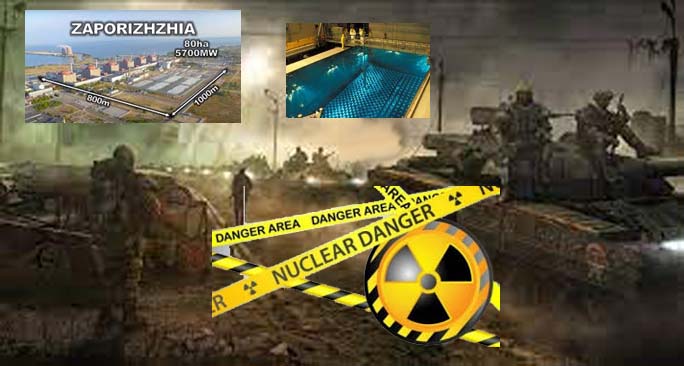
The structure will shield stores of spent radioactive fuel from Ukrainian attacks.
https://www.rt.com/russia/568415-zaporozhye-nuclear-dome-ukrain 18 Dec 22
Russia is constructing a protective dome over spent radioactive fuel stores at the Zaporozhye nuclear power plant as Ukrainian forces continue to target the facility, senior regional official Vladimir Rogov has said.
He took to Telegram on Saturday to post a short video of the work that’s taking place. It showed technicians setting up shields over the tanks that hold spent nuclear fuel.
The dome is designed to protect the storage facilities from shrapnel and improvised explosive devices carried by drones, the official explained, adding that it would be reinforced further at a later period.
Russia’s nuclear energy corporation Rosatom had earlier warned that damage to the spent-fuel containers risks a release of radioactive material into the atmosphere, with unpredictable consequences.
The construction of the dome comes amid continued attacks on the Zaporozhye nuclear power plant and the nearby town of Energodar, which Moscow blames on Kiev. Russia has repeatedly said that such strikes could result in a nuclear disaster that would eclipse the 1986 Chernobyl incident and affect many countries in Europe.
Ukraine initially claimed that the Russian military had been hitting the plant itself as part of “false-flag” operations to make Kiev look bad. However, Ukrainian general staff eventually admitted to striking the area around the nuclear facility.
The Zaporozhye nuclear power plant, which is the largest on the continent, has been under Russian control since February 28. All of the reactors at the facility are currently shut down due to the security situation.
Zaporozhye Region, together with three other former Ukrainian territories – Kherson Region and the People’s Republic of Donetsk and Lugnask – joined Russia in autumn after holding referendums.
Exaggerated fusion breakthrough is for military purposes.
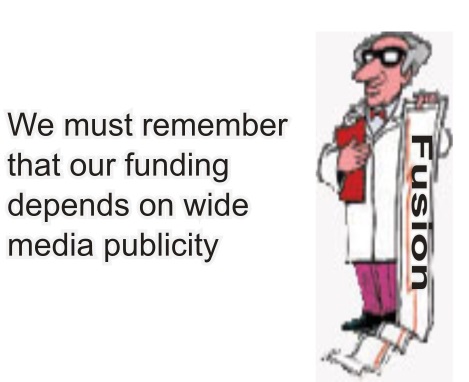
The claims for a breakthrough in fusion power are not only exaggerated but in reality concerned principally with military objectives.
By Ian Fairlie and David Toke, https://100percentrenewableuk.org/exaggerated-fusion-breakthrough-is-for-military-purposes 18 Dec 22
This test, carried out by the National Ignition Facility at US Government’s Lawrence Livermore National Laboratory (LLNL), was mainly to facilitate the testing of nuclear weapons. This fact was missed in almost all the hyperbole surrounding the test.
The claims for a breakthrough in fusion power are not only exaggerated but in reality concerned principally with military objectives.
This test, carried out by the National Ignition Facility at US Government’s Lawrence Livermore National Laboratory (LLNL), was mainly to facilitate the testing of nuclear weapons. This fact was missed in almost all the hyperbole surrounding the test.
Although it is correct that nuclear fusion was achieved, albeit for a trillionth of a second, it was not a first. Ignition has been achieved before in other countries including the UK using a different technology (magnetic confinement) for a few seconds. And the claim that more energy was produced than consumed in the process is specious, as the various reports put out by LLNL compared heat output with electricity input which is like comparing apples and oranges. A true comparison would have taken into account the vast amount of energy consumed to produce the electricity to drive the lasers. And the actual amount of excess heat energy produced (about 20 kettles of boiling water) was paltry.
As Tom Hartsfield, who has been following the progress of the tests by the National Ignition Facility (NIF), put it:
‘the input energy to the laser system is somewhere between 384 and 400 MJ. Consuming 400 MJ and producing 3.15 MJ is a net energy loss greater than 99%. For every single unit of fusion energy it produces, NIF burns at minimum 130 units of energy…….In terms of electrical power, 3.15 MJ would not quite power one 40-watt refrigerator light bulb for a day.’
As Amory Lovins has commented, even if fusion power was free, it would still be uncompetitive with other energy sources. That is because there would be very big capital costs involved, including paying for 19th century steam generator technology to use the fusion power to boil water to drive steam powered electricity generators.
In fact the main purpose of the NIF has not been about advancing civil fusion research, but in advancing the US nuclear weapons programme. A paper in the top science journal Nature published in 2021 discussed an earlier breakthrough, but the main breakthrough described was about nuclear weapons:
‘Housed at Lawrence Livermore National Laboratory in California, the US$3.5-billion facility wasn’t designed to serve as a power-plant prototype, however, but rather to probe fusion reactions at the heart of thermonuclear weapons. After the United States banned underground nuclear testing at the end of the cold war in 1992, the energy department proposed the NIF as part of a larger science-based Stockpile Stewardship Program, designed to verify the reliability of the country’s nuclear weapons without detonating any of them……..With this month’s laser-fusion breakthrough, scientists are cautiously optimistic that the NIF might live up to its promise, helping physicists to better understand the initiation of nuclear fusion — and thus the detonation of nuclear weapons. “That’s really the scientific question for us at the moment,” says Mark Herrmann, Livermore’s deputy director for fundamental weapons physics. “Where can we go? How much further can we go?”
Looking on the bright side, could we say this was a technological breakthrough for mankind? Not really. It is better to examine what its real impact will be for our energy futures – and the answer is precious little. This one test cost around $1.5 billion according to the New York Times, and involved 192 of the world’s largest and most expensive lasers. The disparity in scale and the mismatch with what we really need (inexpensive, practical sources of heat and electricity) are massive.
Another useful yardstick would be how much it would contribute to dealing with climate change. Again nothing. Fusion is not mentioned once as a climate mitigation option in the last IPCC report.
Watchdog estimates civilian death toll from Ukrainian attacks on Donbass
https://www.rt.com/news/568395-us-troops-deployed-estonia/ 14 Dec 22, More than 4,500 people have been killed since mid-February, with supplies of NATO weapons resulting in a surge of deaths, observers claim.
Weapons supplied to Ukraine by NATO countries have allowed Kiev’s military to significantly ramp-up attacks on civilian targets in Donbass, a local watchdog has said.
The group claims that over 4,500 civilians have been killed and 4,000 injured since Ukrainian forces escalated shelling in mid-February.
Military terror has escalated beyond all limits after NATO members started supplying weapons to Ukraine,” the Joint Center for Control and Coordination (JCCC), a monitoring group that tracks attacks on the Lugansk and Donetsk People’s Republics, said on Wednesday.
“We have recorded a four-fold increase in the number of victims among the civilian population,” Natalya Shutkina, a representative from the Donetsk People’s Republic at the JCCC, said as quoted by TASS.
The JCCC held a press conference on Wednesday during which it showed fragments of Western shells and rockets collected after Ukrainian strikes in Donbass and explained the toll these attacks had taken.
Since February 17, 4,527 civilians have been killed, including 154 children, Shutkina stated. Another 4,317 civilians, including 274 children, have been injured, she said, adding that Ukrainian attacks have damaged over 12,000 homes, 128 medical facilities, and 67 sites required for providing basic utilities, such as water and heating.
The record-keeping begins in mid-February when the Donbass republics reported a significant escalation of strikes by Kiev in the lead-up to Russia having recognized the DPR and LPR as sovereign states and pledged to defend them. The two regions have since been incorporated into Russia following referendums in September.
Shutkina pointed out that the weapon systems provided by the US and its allies are supposed to be more accurate than the Soviet-era artillery guns and rocket launchers that Ukraine possessed previously. This leads the JCCC to believe that the Ukrainian attacks on civilian facilities have been intentional rather than being part of indiscriminate strikes, she stressed.
READ MORE: Children injured in Ukrainian shelling of Donetsk – authorities
Darya Morozova, the human rights ombudsman for the DPR, urged international organizations to acknowledge Kiev’s actions, arguing that “if the world community didn’t encourage the Ukrainian leadership with its inaction, the war in Donbass would have stopped a long time ago.” She called on Kiev’s sponsors to stop sending heavy weapons to Ukraine.
Weapons delivered to Ukraine ‘beginning to filter’ to Africa: Nigeria
https://english.almayadeen.net/news/politics/weapons-delivered-to-ukraine-beginning-to-filter-to-africa: By Al Mayadeen English , Source: Agencies, 3 Dec 22
Nigerian President Muhammadu Buhari urges heads of states from neighboring states participating in the Lake Chad Basin Commission to confront the issue of Western arms smuggling from Ukraine.
Weapons supplied to Ukraine from Western countries are “starting to flow” into the Lake Chad basin region, Nigerian President Muhammadu Buhari warned this week.
Addressing the heads of states from neighboring states participating in the Lake Chad Basin Commission on Tuesday in the Nigerian capital of Abuja, the president said, “Regrettably, the situation in the Sahel and the raging war in Ukraine serve as major sources of weapons and fighters that bolster the ranks of the terrorists in the region.”
Buhari then urged his counterparts to increase security cooperation in order to confront the issue of arms smuggling.
The Nigerian president agreed to step up military coordination in their countries’ war against Boko Haram and ISIS terrorists, who are now apparently receiving weapons from Ukraine, alongside the leaders of Benin, Chad, Niger, and the Central African Republic.
Last month, Finnish police said that some of the “huge quantities” of weapons being shipped to Ukraine had made their way to Finland, where “three of the world’s largest motorcycle gangs” now operate, including Bandidos MC, which “has a branch in every major city in Ukraine.”
In August, an American news outlet unmasked that a shockingly large amount of weaponry heading for Ukraine was untraceable. “Like 30% of it reaches its final destination,” said a tweet that was later deleted after a swarm of online trolls attacked it.
Russian Defense Minister Sergei Shoigu had previously said the arms supplied by the West to Ukraine were ending up on the black market and spreading across West Asia.
Similarly, Russian Foreign Minister Sergey Lavrov had pointed out that Stingers and Javelin missiles, supplied by the West to Kiev, were already being sold at a discount on the black market and have surfaced in Albania and Kosovo, which Russia has warned for so long.
Ukraine has received billions and billions of dollars in donated arms from the United States and its allies such as the United Kingdom and other NATO states in the past few months.
US prolongs Russia-Ukraine conflict for three aims, aggravates nuclear war risk: experts at GT annual forum
Global Times, By Hu Yuwei Dec 17, 2022
A prolonged and expanded Russia-Ukraine conflict will have a far-reaching impact and damage the future of the globe, and increase the risk of a runaway control and nuclear crisis, Chinese foreign affairs experts and scholars warned at the 2023 Global Times Annual Conference on Saturday.
“The conflict between Russia and Ukraine is a typical ‘proxy war.’ The prolonged conflict in Ukraine is inevitable, and its troubles and shocks will further spill over to other parts of the world,” Zhu Feng, a professor of international relations at Nanjing University, said, addressing the 2023 Global Times Annual Conference, held both online and off-line.
The US and the EU have not made substantial efforts to ease Russia-Ukraine conflict, and have even moved in the opposite direction by providing weapons and ammunition. The key to solving the crisis lies in the hands of the US and EU, Zhou Li, former vice minister of the International Department of the Communist Party of China Central Committee, noted at the conference.
There are three major uncertainties in the future development of the Russia-Ukraine conflict – direct military confrontation between Russia and NATO members, nuclear contamination in Ukraine, and Russia being forced to use nuclear weapons, Zhu said.
“It is fair to say that the prolonged conflict between Russia and Ukraine is the most important strategic challenge and the most serious uncertainty facing the world today,” Zhu stressed.
Both sides of the Ukraine conflict are locked in a stalemated battle of attrition, which could set the stage for a new round of escalation, the Associated Press reported recently.
Scholars have analyzed the future direction of the Russia-Ukraine conflict and underlined that currently the willingness of the parties to negotiate is far from sufficient.
For Ukraine, it is still in a military stage of counter offensive; for Russia, it hopes to adjust and regain its battlefield advantage; as for the US, it continues military support to Ukraine through advanced military equipment, so all parties are more willing to continue their military moves, according to Wu Xinbo, dean of the Institute of International Studies at Fudan University.
Wu Dahui, deputy dean of the Russian Institute of Tsinghua University, also believes that there is no overlap between the negotiating goals of Russia and Ukraine.
The US has three goals in the Ukraine conflict: to comprehensively weaken Russia, to stabilize the regime in Ukraine, and to push Europe to follow US policies, Wu Xinbo said.
He believes that it will be hard to find a clear solution to the Russia-Ukraine conflict any time soon. But 2024 could be a critical timing for resolving the conflict, given that both US and Russia will have presidential elections in 2024.
Having been drawn into the protracted and intense Russia-Ukraine conflict, and having to deal with inflation and skyrocketing energy costs, more people in the EU have realized how they have been caught in a US trap. Top European officials are furious with the Biden administration and have accused the US of profiting from the Ukraine crisis by selling gas at high prices and selling arms, Politico reported in early December…………….. more https://www.globaltimes.cn/page/202212/1282059.shtml
Costs of France’s Flamanville nuclear reactor blow out to over $14 billion as project delayed again.
Nuclear: the Flamanville EPR is another six months late and 500 million
euros in additional costs, EDF announced. The new delay is due to the
necessary revision of treatment procedures for some 150 “complex”
welds, within the main secondary circuit of the reactor, explained to the
press the director of the Flamanville 3 project,
The delay is now twelve years. EDF announced, Friday, December 16, six months of additional delay
for the commissioning of its EPR nuclear reactor in Flamanville (Manche),
which must now start by mid-2024 instead of the end of 2023. These six
additional months result in a new additional cost of 500 million euros,
increasing the total cost of the project, under construction since 2007,
from 12.7 to 13.2 billion euros.
Le Monde 16th Dec 2022
Electricite de France SA said Friday that the schedule for the Flamanville
3 nuclear reactor project in northern France has been further delayed and
that its estimated cost has increased. The French state-controlled utility
said nuclear fuel loading is now scheduled for the first quarter of 2024
from the second trimester of 2023.
The estimated cost of completion has
risen to 13.2 billion euros ($14.04 billion) from EUR12.7 billion. The
revised scheduled is mainly due to additional studies needed to establish a
new process for the stress-relieving heat treatment of some welds that have
been upgraded in the last two years, EDF said.
Market Watch 16th Dec 2022
At the Waste Isolation Pilot Plant new areas begin to be filled with radioactive debris
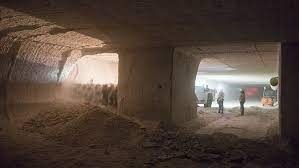
Underground nuclear waste repository begins filling new disposal area .
https://www.coloradopolitics.com/news/underground-nuclear-waste-repository-begins-filling-new-disposal-area-out-west-roundup/article_04bf2cf2-75ef-11ed-915f-47e7ffa97af3.html OUT WEST ROUNDUP, The Associated Press, ALBUQUERQUE — Workers at the nation’s only underground nuclear waste repository have started using a newly mined disposal area at the underground facility in southern New Mexico.
Officials at the Waste Isolation Pilot Plant made the announcement late last month, saying the first containers of waste to be entombed in the new area came from Oak Ridge National Laboratory in Tennessee — one of the many labs and government sites across the country that package up waste and ship it to WIPP.
Known as Panel 8, the new area consists of seven separate rooms for placing special boxes and barrels packed with lab coats, rubber gloves, tools and debris contaminated with plutonium and other radioactive elements.
Each room measures 33 feet wide, 16 feet high and runs the length of a football field minus the end zones.
Carved out of an ancient salt formation about half a mile deep, the subterranean landfill located outside of Carlsbad received its first shipment in 1999. The idea is that the shifting salt will eventually entomb the radioactive waste left from decades of bomb-making and nuclear weapons research.
In 2014, a fire and separate radiation release forced a nearly three-year closure of the repository and a costly overhaul of the policies and procedures that govern WIPP and the nation’s multibillion-dollar cleanup program for Cold War-era waste.
1 This Month
26 April – Chernobyl: Inside the Meltdown airs on National Geographic on Sunday 26th April from 4pm


29 April – Nuclear Expert Webinar #1 – Radiation Impacts on Families with Mary Olson and Cindy Folkers
- 12:15 PM MT – 1:45 PM MT
- Location: Virtual – REGISTER TODAY

4 May -West Suburban Peace Coalition to discuss Iran war at May Educational Forum
Monday, May 4, 7:00 – 8:00 PM Central Standard Time
Title: : How Trump’s Narrative Tries to Shape the Reality of the War on Iran.
Contact Walt Zlotow, zlotow@hotmail.com 630 442 3045 for further information
14 May – online event From Bombs to Data Centres: the Face of Nuclear Colonialism

Pine Ridge Uranium is the real threat, not Tehran- Tell Burgum: Stop the Extraction.
Chernobyl: The Lost Tapes – A good documentary on Chernobyl on SBS available On Demand for the next 3 weeks– https://www.sbs.com.au/ondemand/tv-program/chernobyl-the-lost-tapes/2352741955560
To see nuclear-related stories in greater depth and intensity – go to https://nuclearinformation.wordpress.com
-
Archives
- April 2026 (317)
- March 2026 (251)
- February 2026 (268)
- January 2026 (308)
- December 2025 (358)
- November 2025 (359)
- October 2025 (376)
- September 2025 (257)
- August 2025 (319)
- July 2025 (230)
- June 2025 (348)
- May 2025 (261)
-
Categories
- 1
- 1 NUCLEAR ISSUES
- business and costs
- climate change
- culture and arts
- ENERGY
- environment
- health
- history
- indigenous issues
- Legal
- marketing of nuclear
- media
- opposition to nuclear
- PERSONAL STORIES
- politics
- politics international
- Religion and ethics
- safety
- secrets,lies and civil liberties
- spinbuster
- technology
- Uranium
- wastes
- weapons and war
- Women
- 2 WORLD
- ACTION
- AFRICA
- Atrocities
- AUSTRALIA
- Christina's notes
- Christina's themes
- culture and arts
- Events
- Fuk 2022
- Fuk 2023
- Fukushima 2017
- Fukushima 2018
- fukushima 2019
- Fukushima 2020
- Fukushima 2021
- general
- global warming
- Humour (God we need it)
- Nuclear
- RARE EARTHS
- Reference
- resources – print
- Resources -audiovicual
- Weekly Newsletter
- World
- World Nuclear
- YouTube
-
RSS
Entries RSS
Comments RSS
 nuclear-news