Respite for Japan as radioactive Fukushima water accumulation slows
Aug 12, 2022
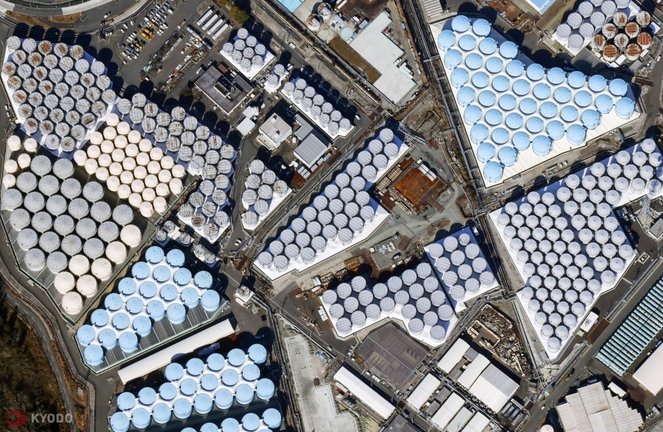
Tanks containing treated water at the crippled Fukushima nuclear power plant are likely to reach capacity around the fall of 2023, later than the initially predicted spring of next year, as the pace of the accumulation of radioactive water slowed in fiscal 2021.
The slowdown, based on an estimate by operator Tokyo Electric Power Company Holdings Inc., gives some breathing space to Prime Minister Fumio Kishida’s government if any roadblocks are thrown up in the plan to discharge the treated water into the sea starting around spring next year.
China and South Korea as well as local fishing communities that fear reputational damage to their products remain concerned and have expressed opposition to the plan.
About 1.30 million tons of treated water has accumulated at the Fukushima Daiichi plant following the 2011 nuclear disaster, and it is inching closer to the capacity of 1.37 million tons.
The water became contaminated after being pumped in to cool melted reactor fuel at the plant and has been accumulating at the complex, also mixing with rainwater and groundwater.
According to the plan, the water — treated through an advanced liquid processing system, or ALPS, that removes radionuclides except for tritium — will be released 1-kilometer off the Pacific coast of the plant through an underwater pipe.
The International Atomic Energy Agency has been conducting safety reviews of the discharge plan and Director General Rafael Grossi says the U.N. nuclear watchdog will support Japan before, during and after the release of the water, based on science.
An IAEA task force, established last year, is made up of independent and highly regarded experts with diverse technical backgrounds from various countries including China and South Korea.
Japan’s new industry minister Yasutoshi Nishimura says the government and TEPCO will go ahead with the discharge plan around the spring of 2023 and stresses the two parties will strengthen communication with local residents and fishermen, as well as neighboring countries, to win their understanding.
Beijing and Seoul are among the 12 countries and regions that still have restrictions on food imports from Japan imposed in the wake of the massive earthquake and tsunami triggered nuclear meltdowns at the Fukushima plant in March 2011.
“We will improve our communication methods so we can convey information backed by scientific evidence to people both at home and abroad more effectively,” Nishimura said after taking up the current post in a Cabinet reshuffle Wednesday.
Kishida instructed Nishimura to focus on the planned discharge of ALPS-treated water that will be diluted with seawater to one-40th of the maximum concentration of tritium permitted under Japanese regulations, according to the chief of the Ministry of Economy, Trade and Industry.
The level is lower than the World Health Organization’s recommended maximum tritium limit for drinking water.
TEPCO will cap the total amount of tritium to be released into the sea as well.
Meanwhile, the Kishida government has decided to set up a 30 billion yen ($227 million) fund to support the fisheries industry and said it will buy seafood if demand dries up due to harmful rumors.
Fishing along the coast of Fukushima Prefecture, known for high-quality seafood, has been recovering from the reputational damage caused by the nuclear accident but the catch volume in 2021 was only about 5,000 tons, or about 20 percent of 2010 levels.
Construction of discharge facilities at the Fukushima plant started in August, while work to slow the infiltration of rain and groundwater was also conducted.
TEPCO said it was able to reduce the pace of accumulation of contaminated water by fixing the roof of a reactor building and cementing soil slopes around the facilities, among other measures, to prevent rainwater penetration.
The volume of radioactive water decreased some 20 tons a day from a year earlier to about 130 tons per day in fiscal 2021, according to the ministry.
The projected timeline to reach the tank capacity has been calculated based on the assumption that about 140 tons of contaminated water will be generated per day, according to METI.
However, storage tanks could still reach their capacity around the summer of next year if heavy precipitation or some unexpected events occur, the ministry said.
As part of preparations for the planned discharge, the Environment Ministry has started measuring tritium concentration at 30 locations on the surface of the sea and seabed around the Fukushima plant, four times a year.
Similarly, the Nuclear Regulation Authority has increased the number of locations it monitors tritium levels by eight to 20. The Fisheries Agency has started measuring tritium concentration in marine products caught along the Pacific coast stretching from Hokkaido to Chiba Prefecture.
Given that it is expected to take several decades to complete the release of treated water, NRA and METI officials urged TEPCO to further curb the generation of contaminated water at the plant.
“We want TEPCO to step up efforts so as to lower the volume of the daily generation of contaminated water to about 100 tons or lower by the end of 2025,” a METI official said.
More Cases of Stomach Cancer in Fukushima Prefecture.
Stomach cancer, which has been confirmed in Fukushima Prefecture for eight consecutive years, was also found to be more common among A-bomb survivors in Hiroshima and Nagasaki
August 10, 2022
Stomach Cancer Incidence Rate Rises among Women in Fukushima Prefecture

On May 27, 2019 national cancer registry data was released on the government statistics website e-Stat.
Following up on my article that appeared on this website on August 26, 2011 (“Stomach Cancer in Fukushima Prefecture”: Confirmation of the 7th consecutive year of “high incidence of stomach cancer” — Should the Fukushima Daiichi Nuclear Power Plant accident no longer be regarded as a “major pollution incident”? (–) (https://level7online.jp/?p=4608), we compared the “National Incidence Rate of Stomach Cancer by Age Group” with the same rate in Fukushima Prefecture, based on the published data for 19 years.
Table 1 shows the results. Various age groups for both men and women exceeded the national average. In particular, in 2007, there were many age groups among women that exceeded the national average. Some of the age groups are double the national average (40-44 years).

On the other hand, only three age groups (0-4, 20-24, and 25-29) were below the national average. Therefore, it is necessary to pay attention to the “increase in the incidence rate of stomach cancer among women in Fukushima Prefecture” over the past few years.
Next, we conducted a comparison with the actual number of cases of gastric cancer in Fukushima Prefecture, assuming that the same rate of gastric cancer is occurring in Fukushima Prefecture as in the rest of Japan. This is a method to calculate the “standardized incidence ratio” (SIR) using epidemiological methods. The national average is set at 100, and if it is higher than the national average, it means above the national average, and if it is lower than the national average, it means below the national average.
The following is the result of the calculation of SIR for the period from 2008 to 2007 for stomach cancer in Fukushima Prefecture.
Stomach cancer] Number of cases in Fukushima Prefecture SIR
Male: 1279 88.3 in 2008
Male in 2009: 1366 94.1
10-year male: 1500 101.1
11-year male: 1391 92.2
12-year male: 1672 110.6
13-year male, 1659 110.9
14-year male, 1711 119.3
15-year male, 1654 116.6
16-year male, 1758 116.3
17-year man 1737 120.0
18years male, 1685 120.0
19-year man 1743 126.9
2008 female 602 86.6
2009 female 640 94.2
10-year female 700 100.9
11year female 736 100.9
12-year woman 774 109.2
13-year girl 767 109.9
14-year girl 729 109.0
15-year girl 769 120.3
16-year girl 957 139.4
17-year girl 778 119.6
18-year girl 744 118.4
19-year female: 817 131.8
The National Cancer Center considers a prefecture to have a “high cancer incidence rate” when the SIR exceeds 110. The SIR for stomach cancer in Fukushima Prefecture has been higher than the national average for both men and women since 2000, and the latest data for 2007 shows that the SIR for men was 12.6.9 and for women 131.8. The latest data from 2007 shows an abnormally high SIR of 12.6.9 for men and 131.8 for women.
We then tried to find the “95% confidence interval” for this SIR. This is one of the validation tasks in epidemiology, where the upper limit (or more precisely, the “upper limit of the estimate”) and the lower limit (or the “lower limit of the estimate”) of each SIR are calculated, and if the lower limit is 10 If the lower limit exceeds 0, it means that the increase is not merely increasing, but is a “statistically significant multiple occurrence” that cannot be considered as a coincidence in terms of probability.
The results are shown in [Table 2]. In Fukushima Prefecture, the incidence of stomach cancer in both men and women has been “significantly high” for eight consecutive years since 2000, and SIR has also been on the rise, showing no sign that the incidence of stomach cancer is slowing down. As is clear from the number of cases in Table 2, while the number of stomach cancer cases nationwide has continued to decline in recent years, the number of cases in Fukushima Prefecture, on the contrary, has increased.

Incidentally, the Centers for Disease Control and Prevention (CDC) in the U.S. published a report on the minimum incubation period for cancer, Minimum The CDC (Centers for Disease Control and Prevention) has published a report on the minimum latency of cancer, Minimum Latency & Types or Categories of Cancer (hereinafter referred to as the “CDC Report”). The CDC report on the “Minimum Latency & Types or Categories of Cancer” (hereinafter referred to as “CDC Report”) lists, in order from shortest to longest, the following
Leukemia, malignant lymphoma: 0.4 years (146 days)
Childhood cancer (including pediatric thyroid cancer): 1 year
Adult thyroid cancer: 2.5 years
All solid cancers including lung cancer: 4 years
Mesothelioma] 11 years
and so on [Table 3]. According to this CDC report, the shortest latency period for stomach cancer is “4 years.

In other words, 12,642 Fukushima Prefecture residents who have contracted stomach cancer since 2015, four years after the occurrence of the TEPCO Fukushima Daiichi nuclear power plant accident, include 12,642 people from the same nuclear power plant. It is possible that some of the 12,642 Fukushima residents who have developed stomach cancer since 2015, four years after the accident at TEPCO’s Fukushima Daiichi nuclear power plant, developed the disease as a result of exposure to toxic substances released by the accident.
Prior to the Fukushima Daiichi nuclear accident, until 2010, stomach cancer SIRs among Fukushima residents were equal to or lower than the national average. The “excess” of the SIRs was the “excess” of the national average. It is eagerly awaited that the correlation and causal relationship between the accident and carcinogenesis will be verified from the viewpoint that the “excess” number of stomach cancer patients may include victims of the nuclear power plant accident.
Both the number of thyroid cancer cases and the incidence rate of thyroid cancer in males have increased.
Next, we will examine thyroid cancer, which is a concern because of its high incidence among young people, and the CDC report indicates that the minimum incubation period is 2.5 years for adults and 1 year for children. 1 year for children.
The incidence rates of thyroid cancer by age group and the number of cases by age group calculated from these rates are shown in Tables 4 and 5. In 2019, eight years after the Fukushima Daiichi Nuclear Power Plant accident, thyroid cancer was still confirmed in young people.


Among females, 2 were confirmed in the 10-14 age group, 8 in the 15-19 age group, 5 in the 20-24 age group, and 6 in the 25-29 age group. The total for all age groups was 199, meaning that patients who were under the age of 20 at the time of the accident in 2011 accounted for about 8% of the total at the lowest estimate and about 11% at the highest estimate [Table 5].
On the other hand, 4 males were identified in the 10-14 age group, 6 in the 15-19 age group, 1 in the 20-24 age group, and 2 in the 25-29 age group. The total number of patients in all age groups is 76, which means that patients who were under the age of 20 at the time of the accident in 2011 accounted for about 14% of the total at the lowest estimate and about 17% at the highest estimate [Table 5].
The SIR and its “95% confidence interval” for thyroid cancer are shown in Table 6. In both cases, the minimum incubation period for thyroid cancer, 2.5 years, had elapsed since the accident at the Fukushima Daiichi Nuclear Power Plant in 2011.

In the latest 19-year period, the number of cases and incidence rate of thyroid cancer in Fukushima Prefecture increased for males. Both the number of cases and incidence rate decreased for females.
Significant “high incidence” continues for gall bladder and bile duct cancer.
No trend of increased incidence was observed for malignant lymphoma and leukemia ([Table 7] and Table 8]).


The most recent 2019 data also showed a continued abnormality in gall bladder and bile duct cancer, which is classified as a “solid cancer” according to the CDC report, with a minimum latency period of “4 years” (Table 8). The minimum latency period is 4 years.
Significant incidence” of gall bladder and bile duct cancer was observed in men in 2010 and in women in 2009, before the nuclear accident. After 2016, when the minimum incubation period of “4 years” has passed, “significantly high incidence” was confirmed in both men and women. The incidence was “high” for four consecutive years for males and six consecutive years for females ([Table 9]).

Prostate cancer, which was found to be “significantly more frequent” for three consecutive years from 2004 to 2006, had its “more frequent” status eliminated in the latest 2019 data. Nevertheless, the SIR remains above the national average, so continued attention should be paid to this issue ([Table 10]).

Finally, regarding ovarian cancer. The minimum incubation period is “4 years” (Table 11). Although “significantly more cases” were observed in 2013 and 2014 before the minimum incubation period, the SIR has been below the national average since then. However, the latest data for 2019 shows that SIR exceeded the national average for the first time in five years, and the number of cases in the prefecture continues to increase slightly, so it is important to pay attention to the data.

Stomach cancer was also on the rise among A-bomb survivors in Hiroshima and Nagasaki
Toshihide Tsuda, a professor at the Graduate School of Okayama University who specializes in epidemiology and causal inference, took a look at these data. Professor Tsuda said.
The situation is more severe than we had expected, and it has exceeded our projections by quite a bit. Not only thyroid cancer, which has already shown a clear increase, but also other cancers that are now on the rise are cancers that are also noticeably on the rise in the data on A-bomb survivors in Hiroshima and Nagasaki. I feel that it is necessary to make appropriate preparations, quickly formulate countermeasures and enhanced risk communication, and discuss how to respond to the situation. I suspect that the actual radiation exposure was considerably higher than what has been publicized.”
The Ministry of the Environment’s “Uniform Basic Data on Radiation Health Effects, etc.” (FY 2008 edition) states
The Ministry of the Environment’s “Uniform Basic Data on Radiation Health Effects” (FY 2008 edition) states, “In adults, the organs most likely to develop cancer due to radiation exposure are the bone marrow, colon, breast, lung, and stomach.
(Figure below). In other words, an increase in stomach cancer has been observed among A-bomb survivors.

To be sure, we also examined breast cancer and lung cancer, which are considered to be more common among A-bomb survivors, and found no “significant increase” in the Fukushima Prefecture data through 2007. However, a slight upward trend was observed for breast cancer in males, a rare cancer, since 2004 (5 cases in 2002, 7 cases in 2003, 10 cases in 2004, 11 cases in 2005, 10 cases in 2006, and 7 cases in 2007). The number of cases of breast cancer in the United States is also reported.
The number of people who have been living in the area since the last year (October 2021) is still very high.
Kenichi Hasegawa (68 years old), a former dairy farmer in Iitate Village, who passed away from thyroid cancer last October (2021), revealed in February 2008 that “a number of people in the village have contracted stomach cancer and died one after another,” and said the following.
People in their late fifties and sixties, younger than me, are dying. Most of them have cancer. This was not the case in Iitate Village before the nuclear accident.
They died at the same age as us, so it is even more memorable. And it is not long after the cancer is found that it gets worse and worse and they pass away.
If you get cancer when you are 80 or 90 years old, you may think that it can’t be helped and that you have fulfilled your destiny, but that is not the case if you are in your 60s,” he said.
Mr. Hasegawa himself had less than a year from the time he found out he had cancer to the time of his death.
In November 2002, Mr. Hasegawa and about 2,800 other Iitate villagers filed a claim for compensation from TEPCO for health concerns caused by high initial radiation exposure due to the delay in evacuation. In November 2002, they filed an application for alternative dispute resolution (ADR) with the Center for the Resolution of Nuclear Damage Disputes. The “fears” of that time are now beginning to become a reality.
Some scientists and journalists, by the way, have been reporting on the UN Scientific Committee on the Effects of Atomic Radiation (UNSCEAR) without any check of the data from the National Cancer Registry. (UNSCEAR).
“It is unlikely that there are any future health effects directly attributable to radiation exposure.
There are those who stubbornly try to deny the occurrence of cancer due to the nuclear accident, waving the UNSCEAR report as if it were a “banner”. However, the UNSCEAR report is not based on actual measurements due to the fact that Fukushima and other prefectures prevented the survey of radiation doses immediately after the accident. The UNSCEAR report, however, is not a fact in itself.
If you call yourself a scientist or a journalist and really want to deny the occurrence of cancer due to the nuclear accident, you should verify it with your own hands using the National Cancer Registry data, which is the “facts themselves,” instead of relying only on the estimated reports made by others. The national cancer registry data is also data for this purpose.
Source in Japanese: Level 7 News
Japan extremely selfish to insist on discharging nuclear wastewater into sea

August 8, 2022
TOKYO, Aug. 10 (Xinhua) — Japan’s Tokyo Electric Power Company Holdings Inc. (TEPCO) has recently started construction of facilities that will discharge radioactive wastewater from the crippled Fukushima Daiichi nuclear power plant into the sea, taking another step in its plan to release nuclear-contaminated water.
The Japanese government’s drive to push through a long-term plan to release wastewater into the Pacific Ocean starting in the spring of 2023, despite domestic and international opposition, is extremely selfish, analysts say.
SELFISHNESS
Struck by a magnitude-9.0 earthquake and ensuing tsunami that hit Japan’s northeast on March 11, 2011, the No. 1-3 reactors at the Fukushima Daiichi nuclear plant suffered core meltdowns, resulting in a level-7 nuclear accident, the highest on the International Nuclear and Radiological Event Scale.
The plant has been generating a massive amount of radiation-tainted water since the accident happened as it needs water to cool the reactors. With groundwater and rainwater also flowing in, about 1.3 million tons of contaminated water are now stored at the nuclear plant and are still increasing at a rate of 140 tons a day.
TEPCO claimed that the water storage tank’s current storage capacity of 1.37 million tons will run out this autumn and the plant has no more space for new water storage tanks to be constructed, so it has to release the contaminated water into the sea after filtering, purifying and diluting it.
In response to TEPCO’s claims, Japanese environmental groups pointed out that much of the land near the plant has been left idle due to nuclear leakage and could be used to construct additional water storage tanks.
However, the Japanese government and TEPCO rejected the idea, citing the need for a large amount of time for communication and coordination as well as a lot more work.
Environmentalists say it is not that the option is infeasible, it is because the Japanese government and TEPCO do not want to do it, as they put their own interests first.
A panel of experts organized by Japan’s Ministry of Economy, Trade and Industry had proposed five options when considering how to deal with the contaminated water.
Among them, the Japanese government said the options of discharging the water into the sea and vapor release were two “most practical solutions” and it finally chose the former one, which “takes the shortest time and costs the least,” passing on the risk to the whole world.
BROKEN CREDIT
Contaminated water generated at TEPCO’s Fukushima Daiichi nuclear power plant contains tritium, cesium, strontium and other radioactive materials. The Japanese government and TEPCO said they would use the Advanced Liquid Processing System (ALPS), a multi-nuclide removal equipment, to reduce the concentrations of 62 types of radioactive substances, with the exception of tritium, which is hard to remove by purification and will remain in the treated water.
TEPCO believes that tritium normally remains in the wastewater at ordinary nuclear power stations, therefore it is safe to discharge tritium-contaminated water.
Experts say TEPCO is trying to confuse the concept of the wastewater that meets international standards during normal operation of nuclear power plants with that of the complex nuclear-contaminated water produced after the core meltdowns at the wrecked Fukushima power plant.
The actual results of ALPS are not as ideal as TEPCO claims. Japanese media have found that in addition to tritium, there are a variety of radioactive substances in the Fukushima nuclear wastewater that exceed the standard. TEPCO has also admitted that about 70 percent of the water treated by ALPS contains radionuclides other than tritium at the concentration which exceeds legally required standards and requires filtration again.
Also the reliability of ALPS itself is questionable. According to a report by Japan’s Asahi Shimbun in September 2021, 24 of the 25 filters used by ALPS to absorb radioactive substances were damaged, and the damage occurred two years ago, but TEPCO did not deal with it in time.
The Korean Federation for Environmental Movements, a South Korean civic environmental organization, said that TEPCO claimed to have the ability to reduce the concentration of 62 radioactive substances excluding tritium before the discharge of the contaminated water, but this is by no means the truth. The organization warned that it is hard to clean the sea water once it is polluted.
From the cover-up of the meltdown at the beginning of the Fukushima disaster to the bowing and apologizing for underreporting for more than a decade, TEPCO has left so many stains on its credibility that its nuclear credit has long since gone busted.
OPPOSITION FROM ALL SIDES
The willful push by the Japanese government and TEPCO to release wastewater into the sea has triggered strong opposition from both within Japan and its neighboring countries. Last Wednesday, a local civic group organized a protest outside the government house of Fukushima Prefecture to show their opposition to the plan.
After TEPCO announced last Thursday the start of the construction of facilities for releasing radioactive wastewater into the sea, a Japanese environmental organization issued a statement on the same day, pointing out that the Japanese government and TEPCO had made written commitments on the matter saying “without the understanding of relevant personnel, no actions will be taken.” However, the government still decided in April last year to release the nuclear-contaminated water into the sea without seeking advice from relevant parties to make it a fait accompli.
On July 22, the Nuclear Regulation Authority of Japan officially endorsed TEPCO’s nuclear-contaminated water discharge plan.
Responding to this, Masanobu Sakamoto, president of the National Fisheries Cooperative Federation of Japan, said the plan has not gained the understanding of the public and the fishery industry and that the federation’s firm opposition to the discharge had not changed at all.
Greenpeace Seoul Office said that the danger of discharging nuclear-contaminated water into the sea is obvious. The Japanese government’s decision to discharge the contaminated water into the sea when there are alternatives such as long-term storage violates the precautionary principle recognized by the international community.
https://english.news.cn/20220810/97096f0719604e19879e398798bd0b59/c.html
Japan’s unilateral decision of dumping nuclear-contaminated water into ocean not responsible: Chinese ambassador for disarmament affairs

Aug 09, 2022
Japan’s dumping of Fukushima nuclear-contaminated water into the ocean will have influence on the ocean environment, security of food and people’s health, and Japan made such unilateral decision without having full negotiation with neighboring countries or international organizations, which is irresponsible and immoral, Li Song, Chinese ambassador for disarmament affairs, said Monday at the Tenth Review Conference of the Parties to the Treaty on the Non-Proliferation of Nuclear Weapons, expressing strong concerns over the related issues.
Japan’s unilateral decision to dump Fukushima nuclear-contaminated water into the ocean is made purely out of concerns for its own economic cost, and it has neither resorted to all possible ways to handle it, nor had full negotiations with neighboring countries. Such selfish move is to transfer the risk to the international community. People in Japan, China, South Korea, Russia and Pacific island countries all expressed their concerns, Li said.
Japanese regulators have approved the plan of dumping Fukushima’s nuclear-contaminated water into the sea, which has caused safety concerns in the international community and neighboring countries.
Li pointed out that the international community has paid great attention on issues of the legitimacy of Japan’s plan of dumping the water, the credibility over the data, efficiency of the decontamination equipment, and the influence on the environment.
The International Atomic Energy Agency has not reached a final conclusion on the assessment on Japan’s plan, but has given Japan many improvement suggestions. But regrettably, Japan has purposely neglected it and kept pushing its plans. Such moves are not what a responsible country should take, Li said.
Dumping Fukushima’s nuclear-contaminated water into the ocean is not Japan’s own business and Japan should respond to the global concerns and go back to the track of communicating with parties of shared concerns. And it should stop forcibly pushing the dumping plan, Li said.
Japan should make sure handling the water in an open, transparent, scientific and safe manner, and take alternative plans and accept supervision of the International Atomic Energy Agency, said Li, noting that this is the touchstone to test whether Japan can effectively fulfill its responsibility.
Legal Battles Continue over TEPCO and Fukushima Nuclear Disaster Cause.
PRESS CONFERENCE: Yuichi Kaido and Hiroyuki Kawai, Co-chairs of the National Association of Lawyers for a Nuclear Power Free Japan Yui Kimura, Secretary-General, TEPCO Shareholder Derivative Suit (The speech and Q & A will be in Japanese with English interpretation.) 11:00–12:00 Monday, August 8, 2022
Construction begins at Fukushima plant for water release

August 4, 2022
TOKYO (AP) — The construction of facilities needed for a planned release of treated radioactive wastewater into the sea next year from the damaged Fukushima nuclear power plant began Thursday despite opposition from the local fishing community.
Plant workers started construction of a pipeline to transport the wastewater from hillside storage tanks to a coastal facility before its planned release next year, according to the plant operator, Tokyo Electric Power Company Holdings.
The digging of an undersea tunnel was also to begin later Thursday.
Construction at the Fukushima Daiichi plant follows the Nuclear Regulation Authority’s formal approval last month of a detailed wastewater discharge plan that TEPCO submitted in December.
The government announced last year a decision to release the wastewater as a necessary step for the plant’s ongoing decommissioning.
A massive earthquake and tsunami in 2011 destroyed the Fukushima Daiichi plant’s cooling systems, causing triple meltdowns and the release of large amounts of radiation. Water that was used to cool the three damaged and highly radioactive reactor cores has since leaked into basements of the reactor buildings but was collected and stored in tanks.
TEPCO and government officials say the water will be further treated to levels far below releasable standards and that the environmental and health impacts will be negligible. Of more than 60 isotopes selected for treatment, all but one — tritium — will be reduced to meet safety standards, they say.
Local fishing communities and neighboring countries have raised concerns about potential health hazards from the radioactive wastewater and the reputation damage to local produce, and oppose the release.
Scientists say the impact of long-term, low-dose exposure to not only tritium but also other isotopes on the environment and humans are still unknown and that a release is premature.
The contaminated water is being stored in about 1,000 tanks that require much space in the plant complex. Officials say they must be removed so that facilities can be built for its decommissioning. The tanks are expected to reach their capacity of 1.37 million tons in autumn of 2023.
TEPCO said it plans to transport treated and releasable water through a pipeline from the tanks to a coastal pool, where it will be diluted with seawater and then sent through an undersea tunnel with an outlet about 1 kilometer (0.6 miles) away to minimize the impact on local fishing and the environment.
TEPCO and the government have obtained approval from the heads of the plant’s host towns, Futaba and Okuma, for the construction, but local residents and the fishing community remain opposed and could still delay the process. The current plan calls for a gradual release of treated water to begin next spring in a process that will take decades.
TEPCO said Wednesday that weather and sea conditions could delay a completion of the facility until summer 2023.
Japan has sought help from the International Atomic Energy Agency to ensure the water release meets international safety standards and reassure local fishing and other communities and neighboring countries, including China and South Korea, that have opposed the plan.
IAEA experts who visited the plant earlier this year said Japan was taking appropriate steps for the planned discharge.
https://mainichi.jp/english/articles/20220804/p2g/00m/0na/016000c
Facility construction begins for Japan’s Fukushima nuclear wastewater release amid opposition

TOKYO, Aug. 5 (Xinhua) — The construction of facilities to release radioactive wastewater into the sea from the crippled Fukushima Daiichi nuclear power plant in northeastern Japan began Thursday despite opposition from the local community and neighboring countries.
Plant workers started construction of a pipeline to transport the wastewater from hillside storage tanks to a coastal facility before its planned release next year, according to the plant’s operator, Tokyo Electric Power Company Holdings Inc. (TEPCO).
On Tuesday, TEPCO has gained approval from Fukushima Governor Masao Uchibori and the mayors of Okuma and Futaba, which host the crisis-hit power plant, to start the construction, but serious concerns remain.
Local residents and the fishing community concerned about the impact on their fish catches and livelihoods and remain opposed to the plan, which calls for a gradual release of tons of treated water into the Pacific Ocean to begin next spring.

China has expressed its firm opposition to the plan as China’s Foreign Ministry Spokesperson Wang Wenbin said previously that it is extremely irresponsible for Japan to ignore the concerns and strong opposition from all parties.
“If Japan insists on putting its own interests above the public interest of the international community and insists on taking the dangerous step, it will surely pay the price for its irresponsible behavior and leave a stain in history,” Wang said.
The South Korean government has stated that it would take “best responsive measures internally and externally” under the principle that people’s health and security are of utmost importance.
A massive tsunami, triggered by an earthquake of 9.0 magnitude off Japan’s northeastern coast, struck TEPCO’s Fukushima Daiichi power plant in March 2011. TEPCO said that it is running out of storage tanks to hold water used to cool the melted-down cores.
The Japanese government decided in April 2021 that the contaminated water had to be released into the sea as the facility is fast running out of space to set up more storage tanks, which already number in the hundreds.
https://english.news.cn/20220805/e5c88eb3134f4786b3070af31f364b48/c.html
THE INTERNATIONAL URANIUM FILM FESTIVAL FOR THE FIRST TIME IN NORWAY.

24TH-25TH AUGUST 2022, CINEMATEKET BERGEN(LINK IS EXTERNAL)
“You won’t leave the way you came!”
A two-day event showcasing must watch films for anyone interested in learning more about the reality of nuclear warfare.
Wednesday 24th August 2022
18:00 – Television Event
19:30 – Discussion and drinks
20:30 – Doctor Strangelove
Thursday 25th August 2022
18:00 – Atomic Cover-up & Anointed
19:00 – Discussion, drinks and Q & A with Paul Griego(link is external)
20:00 – The Day after
The Uranium Film Festival in Bergen is hosted in collaboration with
the International Campaign to Abolish Nuclear Weapons in Norway (ICAN Norway)(link is external)
and Norwegian Physicians against Nuclear weapons (IPPNW Norway)(link is external).
Tickets cost: 90 kr
FESTIVAL PROGRAM & FILMS
Wednesday 24th of August………………………………………………………………………….
Contact
International Uranium Film Festival
Rua Monte Alegre 356 / 301
Rio de Janeiro/RJ
CEP 20.240-194
info@uraniumfilmfestival.org(link sends e-mail)
Ukraine Plant Under Fire Showcases ‘Dangerous’ Nature of Nuclear Power, Experts Say
“Having reactors in a war zone is a nightmare waiting to become a grim reality,” said one critic.

https://www.commondreams.org/news/2022/08/08/ukraine-plant-under-fire-showcases-dangerous-nature-nuclear-power-experts-say KENNY STANCIL, August 8, 2022 Critics of atomic energy on Monday described the shelling of the Zaporizhzhia power station in southeastern Ukraine as “a warning that nuclear power plants are a liability, not an asset, especially under extreme conditions of war or climate change.”
While Kyiv and Moscow continue to trade blame for recent strikes on the largest nuclear power plant in Europe, advocates at Beyond Nuclear emphasized that regardless of who is at fault, damage to the six-reactor site could have deadly consequences “far beyond the war zone.”
“If even just one of the six operational reactors there suffered catastrophic damage and released its radioactive inventory we are talking about a humanitarian disaster that would dwarf Chernobyl,” Linda Pentz Gunter, international specialist at Beyond Nuclear, said in a statement.
Radioactive contamination from that 1986 nuclear accident in what is now Ukraine rendered an area of more than 1,000 square miles uninhabitable and caused the illnesses and deaths of potentially hundreds of thousands of people.
According to Beyond Nuclear, reactors at Zaporizhzhia “contain far more radioactivity, both in the working reactors and in the irradiated fuel pools, than was present at the relatively new Chernobyl Unit 4 when it exploded.”
“This situation brings home all too alarmingly just how dangerous nuclear power is as an energy source,” said Gunter. “We would not be having this conversation if we were dealing with solar panels or wind turbines.”
“The potential to cause a catastrophic accident even on a good day should have been enough to end the use of this technology,” she added. “Having reactors in a war zone is a nightmare waiting to become a grim reality.”
Beyond Nuclear is not alone in sounding the alarm about the dire consequences that could materialize following damage to Zaporizhzhia or any other nuclear power plants now at risk in Ukraine.
Last week, Shaun Burnie, senior nuclear specialist with Greenpeace, told Democracy Now! that “nuclear plants are extremely vulnerable to external attack in the context of a war zone.” He added, “You’re looking at potential massive releases of radioactivity, potentially even greater than Chernobyl.”
Buildings housing nuclear reactors are not designed to withstand missile attacks nor extreme weather events. In March 2011, a massive earthquake and tsunami led to a loss of power in three reactor buildings at Fukushima Daiichi in Japan, with calamitous results. As the fossil fuel-driven climate crisis supercharges storms, nuclear infrastructure is increasingly vulnerable to damage of that sort.
This is not the first time that nuclear engineers at Zaporizhzhia have found themselves under military assault. Russian shelling of the facility in early March sparked a fire.
None of the reactor buildings or fuel storage sites were affected then. “But after more than five months of fighting,” Beyond Nuclear explained Monday, “the site has become more perilous, given its proximity to the eastern regions that are at the heart of contention between the two countries.”
“The risk of fire is one of the most serious hazards at nuclear power plants on a routine basis,” said Paul Gunter, reactor oversight specialist at Beyond Nuclear. “A fire at Zaporizhzhia could spread to the irradiated fuel storage pools located outside primary containment and lead to explosions and meltdowns.”
“If the fuel pools are damaged and cooling water boils away, exposing the highly radioactive rods to air, we could see hydrogen explosions and the spread of radioactivity far worse than occurred at Fukushima,” he continued.
Winds would distribute radioactive gases across Europe and, depending on the scale of the disaster, beyond, potentially reaching as far away as the United States. A Greenpeace analysis published earlier this year warned that severe damage to Zaporizhzhia could render large swaths of Europe “uninhabitable for decades.”
Radioactive fallout from the facility could subject tens of millions of people to chronic or fatal health problems, with the effects of exposure lasting for years on end.
Thirty-six years after Ukraine’s first nuclear disaster, “people still living in Chernobyl-contaminated areas are showing increases in cardiovascular disorders, issues with sight and respiration, and significantly increased rates of birth defects and deformities,” said Cindy Folkers, radiation and health hazards specialist at Beyond Nuclear.
“Given the far greater amounts of radiation that could be released in the event of a major disaster at Zaporizhzhia, we would expect to see greater numbers of people seriously harmed and for far longer than the health impacts caused by Chornobyl,” Folkers said.
The real death count for Hiroshima and Nagasaki was at least 210,000 – and more later.
The real death count for Hiroshima and nagasaki was 210,000 It was not 15,000 for Hiroshima and 74,000 for Nagasaki. That does not reflect birth defects, or other health effects we now know, are part of nuclear bomb fallout
The Atomic Bombings of Hiroshima and Nagasaki: A Summary of the Human Consequences, 1945-2018, and Lessons for Homo sapiens to End the Nuclear Weapon Age
Masao Tomonaga Pages 491-517 | Received 01 Sep 2019, Accepted 02 Oct 2019, Accepted author version posted online: 13 Nov 2019, Published online: 02 Dec 2019
ABSTRACT
Seventy-four years have passed since the atomic bombings of Hiroshima and Nagasaki. Approximately 210,000 victims died, and another 210,000 people survived. The damage to their health has continued, consisting of three phases of late effects: the appearance of leukemia, the first malignant disease, in 1949; an intermediate phase entailing the development of many types of cancer; and a final phase of lifelong cancers for hibakusha who experienced the bombing as a child, as well as a second wave of leukemia for elderly hibakusha and psychological damage such as depression and post-traumatic stress disorder. Thus, the human consequences of the atomic bombings have not ceased; many people are still dying of radiation-induced malignant diseases. Therefore, it is too early to finalize the total death toll. Hibakusha have faced a never-ending struggle to regenerate their lives and families under the fear of disease. As the only group of Homo sapiens experiencing real nuclear attacks, hibakusha have continued to engage in a lifelong movement to eliminate nuclear weapons. Political leaders, especially of nuclear-weapon states, must learn the wisdom of the hibakusha to save Homo sapiens from possible global extinction by nuclear war.
Introduction
The first nuclear weapon was detonated in New Mexico on 16 July 1945. That test explosion was soon followed by the wartime use of two atomic bombs on Hiroshima and Nagasaki on August 6 and 9, respectively. This opened the nuclear weapon age in the history of humanity. In the long history of wars and weapons, Homo sapiens had finally gained an ultimate weapon of mass destruction capable of obliterating itself……………………………….
Immediate Death and Early Lethal Consequences of the Bombings
Death-rate
Under the two gigantic mushroom clouds, approximately 280,000 citizens in Hiroshima and 240,000 in Nagasaki were suddenly thrown into chaos and agony. A total of approximately 140,000 in Hiroshima (Hiroshima 1971) and 73,000 in Nagasaki (Nagasaki, 1977) died instantaneously or within five months due to the combined effects of three components of physical energy generated by nuclear fissions: blast wind (pressure), radiant heat, and ionizing radiation. A total of more than 210,000 remaining victims, 140,000 in Hiroshima and 74,000 in Nagasaki, survived the first five months of death and agony and became hibakusha (Figure 1 on original).
A curve of death rates calculated in the aftermath by the surviving medical staff and students of Nagasaki Medical College showed almost 100% in residents living within a 500-meter radius of ground zero; 90% within 1,000 meters; 50% within1,500 meters; and 10% within 2,000 meters, making a clear concentric figure (Figure 2) (Shirabe 2006). Later the death-rate curve of Hiroshima was compared with Nagasaki’s, revealing that two curves were very similar, as if two scientific experiments were conducted. Among areas within 1,000 meters, the Nagasaki Medical School Hospital was exceptional – The death rate in the facility was as low as 43%. This is obviously because of the shielding effect of the thickest concrete walls of the hospital buildings.
Figure 2. [on original] Death rates by distance from ground zero in the first three months in areas of Nagasaki city.
The residents of both cities were mostly noncombatant civilians, including many women and children. Military combatants were only a minority. There were fewer adult males than females, and most of the males worked at military arsenals. Many young men went to war in the later stages of World War II. Young students were employed by military arsenals located close to ground zero; that increased the number of victims.
Citizens were suddenly thrown into firestorms at home, factories, and schools; on open roads or on ground; in automobiles and trams; and in city offices, hospitals, pharmacies, fire stations, and almost all city structures.
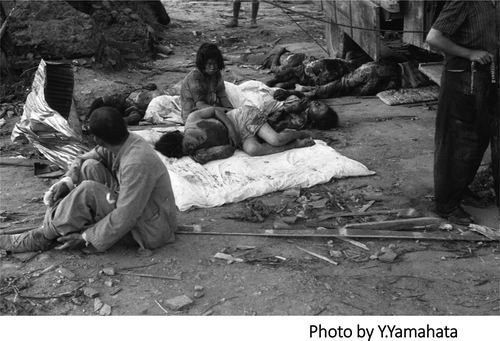
Many survivors spent the night on the road or the ground (Figure 3). Subsequently, many severely injured victims were forced to remain where they survived the first strike without being provided any meaningful medical treatment. Most of them died there.
Figure 3. The second morning after Nagasaki bombing.
……………………………….. In areas within 1 kilometer of ground zero, human bodies without any shielding, namely in open air on the roads and ground, were instantaneously squeezed by the blast wind (pressure) against walls, causing multiple fractures of skeletons and ruptures of the abdominal cavity causing escape of colons. Many people in open roads and grounds were carbonized by the direct effect of heat rays within 1.0 km from ground zero (Figure 7, Photo A). Many residential areas full of Japanese houses were crushed by the wind and burned out in which many victims were also burned to white bones (Figure 7, Photo B). The skin of people on open roads or grounds within 0.5–1.5 km were deeply flash-burned due to heavy heat rays. The skins were soon peeled off because of necrosis in the deep skin layer (For an example of a boy whose back was entirely burned, see Figure 8). With large areas of skin peeling off, people suffered severe pain and bleeding.
Figure 7. Body effects by heat rays and fire burn (1).
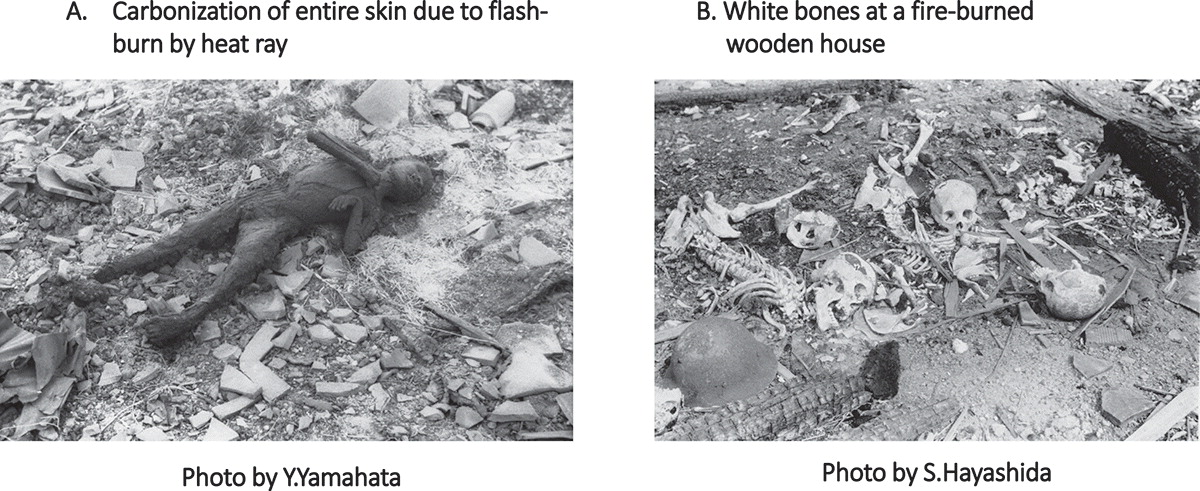
Figure 7. Body effects by heat rays and fire burn (1).

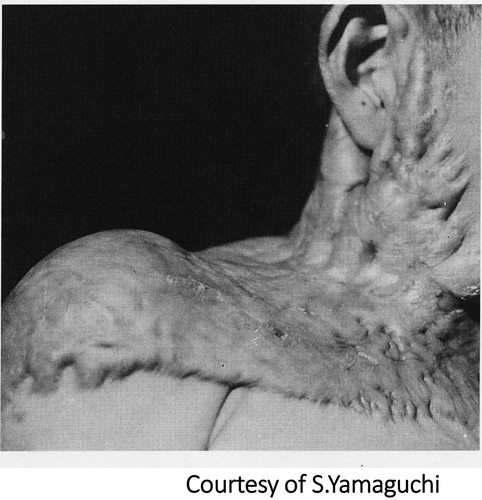
In three months after the bombing, these deep skin flash burns began to heal. However, with tissue being regenerated, keloid was quite often formed as shown in Figure 9. It was charcterized by marked thickening of the wounds, sometimes resembling cancerous proliferation of the skin.
Figure 9. Keloid formation after a severe flash burn by heat rays.
Thus many residential areas full of Japanese wooden houses were crushed and burned. The firestorms that continued over to next day finally flattened city areas within a 4 km radius. According to the saddest memory of some survivors, the blast wind tore off the heads of babies who were being carried on their mothers’ backs in the traditional Japanese way. Most of the mothers also died soon.
At the same time, the victims were irradiated by 100 grays (Gy)1 or more of combined gamma and neutron rays generated by nuclear fissions (Figure 6). Thus it could be possible to say that they were killed in three ways at once.
The people within 1 km of ground zero who finally survived were mostly those who were working inside a concrete building with thick walls or in a basement. Some other survivors were inside private air-raid shelters or military arsenals set in large shelters. Heat rays were effectively blocked by the walls, and radiation and blast were partially shielded before victims were exposed, thus allowing them to survive. But there were only a few hundred of these people. Many of those who survived at various proximal points were severely injured by debris and pieces of glass from damaged houses, heated and irradiated simultaneously. Many of them died within the first three months.
Struggle for Survival
Medical rescue teams perished and hospitals were all destroyed on the first day of the bombing. It therefore was impossible to find any meaningful medical aid. The situation was much severer in Hiroshima where over 90% of medical staffs, doctors, nurses, and pharmacists were dead. The Nagasaki Medical College Hospital, the largest and strongest concrete buildings in Nagasaki City, located 600 meters from ground zero, did provide fairly good shielding effects; the death rate was a relatively as low as 43%. Subsequently 900 lives in total – approximately half of the total number of professors, doctors, nurses and medical students were lost in the entire college facility including the hospital. Most of those who survived were severely injured by the blast wind and heat ray. The hospital had completely ceased to function. Within a few days, medical staffs and medical students who had survived opened first-aid stations around the margin of flattened areas.
n the late afternoon on the first day, several rescue trucks arrived carrying medical teams consisting of military doctors and nurses from Omura Navy Hospital, located 45 km north of Nagasaki City. They brought back approximately 700 severely injured victims, most of them severely burned, to the hospital and started treatment for burns and injuries consisting of bone fractures, cuts from pieces of glass, and embedding of debris and pieces of glass fragments deep in the skin. This number was very small compared to the total number of victims who suffered severe injuries, estimated to be approximately 30,000 in Nagasaki. A few hundred victims out of 700 were able to survive, thanks to intensive care at Omura Navy Hospital. They were indeed lucky people.
Several small rescue teams started their clinical activities within a few days. Some surgical operations were performed for those who had severe fractures due to the blast wind. There was no good treatment for severe skin burn, especially those cases with wide areas of skin burn. There were no stocks of drugs such as antibiotics and frozen blood plasma. Only oil and ointment were used. Even drip infusions of water and electrolytes such as salts and glucose (sugar) were not available in such small ambulatory facilities.
As a result of this lack of care, many survivors who were alive on the first and second days began to die due to severe bleeding from injuries such as severe fractures, dislocations, abdominal ruptures, thoracic punctures, and scalp and brain damage and also from dehydration and lack of adequate food supplies.
Initial Difficulty in Recognizing Radiation Effects
In the early days after the atomic bombings, many doctors had difficulty in identifying the symptoms of radiation-related ailments. There was no information about the nature of this new type of bomb. They did not even know that the bombs were nuclear and that radiation was dangerous to human beings. …………………………………………………………………………………….
Late Effects of Atomic Bombings: 1948–2018
About 270,000 victims of Hiroshima and Nagasaki finally recovered their health. They had to start their new daily life with a serious shortage of food and other necessities. After spending three years of recovery with relatively good health, hibakusha encountered the first malignant disease: leukemia. It is classified as the earliest occurring malignant disease due to atomic-bomb radiation because it was clearly distinguished from the disorders caused by ARS. Therefore, leukemia was the first malignant disease derived from cells injured by initial radiation exposure; the cells then transformed to malignant leukemia cells. This earliest delayed, or “late”, effect was followed by many kinds of cancer of various organs. Thus, the late effect spans an extremely long period.
First Malignant Disease Observed as the Earliest Late Effect of Atomic Bombings
Leukemias
In 1949, doctors in Hiroshima and Nagasaki began to recognize a gradual increase in the number of hibakusha patients, including children, suffering from leukemia. The excess annual rate of leukemia continued to rise until 1955 and then continued at an elevated level for more than 10 years (Figure 12) (Gunz and Henderson 1974). Acute and chronic types of leukemia both were observed.
These leukemias were later analyzed in detail when the first dosimetry system (DS65) became available. A clear radiation-dose dependency was revealed as a curve that elevated exponentially (called quadratic) from 100 millisieverts (mSv) at around 2.0 km from ground zero to more than 4 Gy at around 1.0 km (Figure 13 on original). Dose is thus inversely proportional to the square of the distance. Total leukemia incidence was four to five times higher than the control group of Nagasaki citizens not exposed to the bombing (Preston et al. 1996).
……………………………. People who were children under the age of 10 at the time of the bombings are now in their seventies. Some of them suffer from MDS. The increase in MDS among childhood survivors indicates that the massive irradiation of the whole body injured blood cells in bone marrow, and that these cells have survived more than 70 years in the bodies of hibakusha, and finally resulted in leukemia-inducing gene abnormality. MDS patients occasionally develop acute leukemia 3–5 years after the first diagnosis, and mostly die. Therefore, it can be said that atomic bomb is still killing some hibakusha even after more than a half century……………………..
Intermediate to Life-long Delayed Effects of Exposure to Atomic-bomb Radiation
Cancers
Around 1960, the incidence of solid cancers began to rise gradually. The elevated cancer incidence lasted for a long time (Ozasa 2016). It peaked around the year 2000 and remained at that level until now. The types of cancer that appeared include lung, breast, thyroid, stomach, colon, liver, skin, and bladder. ……………………………………….
In-utero Radiation Exposure
Microcephaly
In both Hiroshima and Nagasaki, many pregnant women were exposed to various doses of radiation. Miscarriages and malformation of newborn babies were frequently observed, but there were no good statistics showing radiation-dose effect. Some mothers who were in the early prenatal period at the time of the bombing sometimes bore babies who had a small head. The babies later became mentally disabled. There were 62 such babies recorded among 1,470 (Otake and Schull 1998). The larger the dose to the mother’s uterus was, the higher the incidence of microcephalic babies, suggesting high-dose radiation interrupted brain development. This is the most obvious phenomenon observed among fetuses exposed to radiation in utero.
Cancers
In-utero exposed babies were later found to have an increased risk of cancer development during their early adulthood. The follow-up study is now ongoing (Izumi et al. 2003)……………………………………………………………..
Summary of Hibakusha Life, 1945–2018
Can Homo Sapiens Gain the Ethical Wisdom to End the Nuclear Weapon Age and Survive?
The consequences of the atomic bombings linger on. First generation hibakusha population will cease to exist probably around 2045. If genetic transmission of radiation-related diseases to the second generation of hibakusha would be proved in the future, atomic bombs will continue to affect those descendants forever. The year 2045 will mark the 100th annniversary of the Hiroshima and Nagasaki nuclear bombings and of the nuclear weapon age. If we human beings fail to eradicate nuclear weapons before the first century ends, what should we do? This is the question that all hibakusha have posed in their 70-year struggle for survival all the time after bombings.
Summary of Hibakusha Life, 1945–2018
Can Homo Sapiens Gain the Ethical Wisdom to End the Nuclear Weapon Age and Survive?
The consequences of the atomic bombings linger on. First generation hibakusha population will cease to exist probably around 2045. If genetic transmission of radiation-related diseases to the second generation of hibakusha would be proved in the future, atomic bombs will continue to affect those descendants forever. The year 2045 will mark the 100th annniversary of the Hiroshima and Nagasaki nuclear bombings and of the nuclear weapon age. If we human beings fail to eradicate nuclear weapons before the first century ends, what should we do? This is the question that all hibakusha have posed in their 70-year struggle for survival all the time after bombings…………………………………………………………………………..more https://www.tandfonline.com/doi/full/10.1080/25751654.2019.1681226
TODAY. Russia and Ukraine blame each other. Whom to believe?
My natural inclination is to not believe either of them. They’re both putting out propaganda, sure to include many lies.
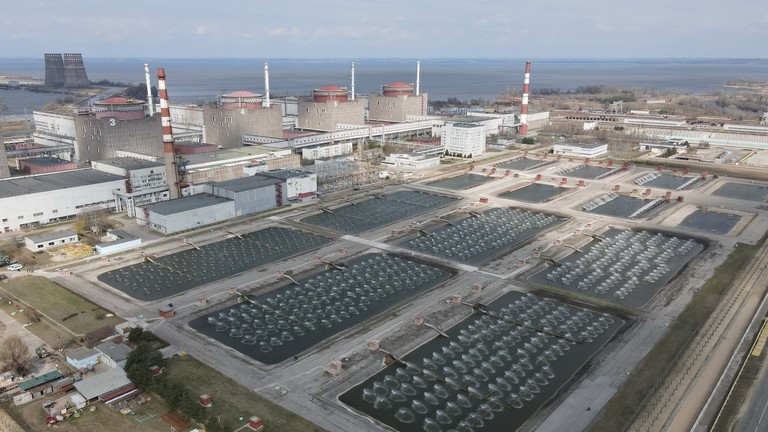
The big issue right now is the danger around the Zaporizhzhia (or Zaporozhye) nuclear power station – the largest in Europe, which is being shelled by artillery. The Ukrainians say that Russia is doing this. The Russians say that it’s the Ukrainianians.
Of course, we being good Anglophone news absorbers, we are obliged to believe that the Russians are shelling Zaporizhzhia , a place where they are now in control. We have to believe that it is always the Russians’ fault, otherwise we are pretty much traitorous, (and our publications like this one, will be censored and erased from Google Search)
The picture above shows the Zaporizhzhia NPP and its huge collection of nuclear wastes. No wonder that Mr Grossi, head of IAEA security is tearing his hair out in anxiety over this perilous situation.
Now I, (treacherously) think that it is the Ukrainians who are shelling the nuclear station. They do have a motive, as they are desperate to get it back under Ukrainian control. But why would the Russians want to attack the place, where they’re already in control? “In order to discredit Ukraine” – say Zelensky and co. Gimme a break. The Rusians may be awful etc etc, but they;re not stupid.
Electricite de France (EDF) nuclear corporation is headed for bankruptcy – that’s why France’s government is nationalising it.
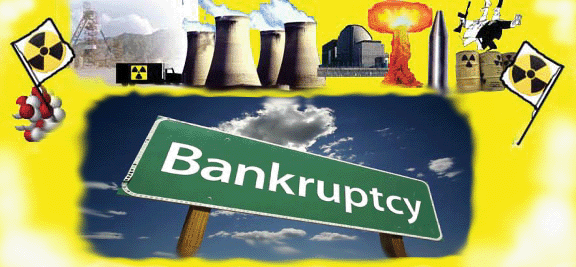
Is EDF running out of money? The French government is to spend £20
billion buying back the final 16% of Electricité de France (EDF) shares
still privately owned, bringing the company back under public ownership.
Why are they renationalising this company? The answer is simple. It is to
avoid EDF going bankrupt. Right now, over half (29 out of 56) of EDF’s
French nuclear reactors are currently offline. The company is already
hugely indebted and faces a massive bill of up to 100 billion euros (£85
billion) to keep its ageing nuclear fleet going.
And EDF’s flagship EPR reactor is over-cost and over-time everywhere it is being attempted to be
built. Aside from its debts, EDF has faced issues with ageing reactors,
after experts warned President Macron of significant corrosion safety
problems in EDF nuclear power plants in France as cracks were detected in
the cooling systems of some nuclear reactors.
Meanwhile there is delay after delay in bringing online every one of the EDF flagship nuclear
reactors, in Finland, in France, even here in Somerset. In desperation to
help fund its latest lossmaker at Sizewell, Suffolk, EDF is reaching out to
fellow utility giant Centrica for help. Could this be the same Centrica,
which in 2016 abandoned plans to invest in EDF’s Hinkley C partly because
of ‘the lengthening time frame for a return on the capital invested in a
project of this scale’?
Electrical Review 9th Aug 2022
Elon Musk’s SpaceX now leaving junk in Australia’s backyard
Independent Australia, By Darren Crawford | 10 August 2022 After a SpaceX capsule crashed onto an Australian farm, we’re left wondering if Elon Musk will clean up his own mess, writes Darren Crawford.
ACCORDING TO the ABC, the Australian Space Agency (ASA) has confirmed that debris found in a sheep paddock in the Snowy Mountains region of New South Wales, Australia, belongs to Elon Musk’s SpaceX Dragon capsule, which was launched in November 2020.
Local authorities were alerted after nearby residents heard a loud bang earlier this year on 9 July. It is now thought the bang was the noise of the capsule re-entering the Earth’s atmosphere. New South Wales Police and the ASA visited one of the sites on Saturday 31 July and confirmed that two of the pieces are from a SpaceX mission.
According to the ABC, the ASA is continuing to engage with its counterparts in the U.S. as well as other parts of the Commonwealth and local authorities.
An ASA spokesperson said:
“The agency is operating under the Australian Government Space Re-entry Debris Plan which outlines roles and responsibilities for key Australian government agencies and committees in supporting the response to space re-entry debris.”
So who is responsible for the clean-up?
According to the ABC report, the space debris will remain in place for now. However, the pieces could eventually be returned to U.S. soil.
Australian National University’s Institute of Space deputy director Dr Cassandra Steer said there was an obligation under international space law to repatriate any debris to the country from where it originated.
Dr Steer went on to confirm that “Any space object, or part thereof, has to be repatriated” and should be sent back to the U.S. However, SpaceX has only confirmed that the debris is theirs and is yet to commit to the costs associated with returning it to the U.S.
Dr Steer added:
“We have clarity in terms of lines of responsibilities. The U.S. is liable for any damage that is caused by this space debris… and Australia could go to the U.S. and seek some form of compensation if there are any costs involved in cleaning it up.”
Elon Musk and SpaceX have a poor environmental record
As reported earlier this year, Elon Musk and fellow billionaires Richard Branson and Jeff Bezos are currently participating in a dick-swinging rocket contest to see who can get to Mars first. Suffering from massive rocket envy, these three men are speeding up the climate change process by increasing the amount of carbon dioxide and other gases in the Earth’s atmosphere with every launch.
The Guardian reports that one rocket launch alone can release up to 300 tons of carbon dioxide into the Earth’s upper atmosphere and it can stay there for years. This is in comparison to a standard long-haul flight which produces three tons of carbon dioxide per passenger/per flight, into the lower atmosphere.
These impacts do not include what happens on the ground during a launch, including the heat and noise pollution in the immediate area, or the impacts on local wildlife.
There appear to be few controls put in place to protect the planet and its inhabitants from falling space junk by Elon Musk and SpaceX. In March 2021, a SpaceX rocket blew up on launch and debris was scattered throughout the protected area. According to a local non-profit environmental group, it took three months to clean up the mess.
According to the report, launch site ditches on SpaceX land and public property in the U.S. have dumped runoff water directly into the tidal flats threatening local fish breeding grounds, and public beaches and roads have been closed for longer than the agreed times.
Finally, at an earlier launch in 2018, a jettisoned SpaceX booster rocket missed its target drone ship a few hundred kilometres out to sea and destroyed itself on impact slamming into the ocean at 500 km/hour.
So, will Elon Musk and SpaceX clean up their mess down under?
This is the great unknown, as Elon Musk’s environmental record in relation to his SpaceX program is extremely poor.
It is also clear, as can be seen by his recently abandoned Twitter purchase, that Elon Musk doesn’t care who he burns, or how hard he burns them, to get his own way.
It is apparent that Elon Musk sees the increasing amount of pollution produced by his SpaceX endeavours as little more than collateral damage and less of a threat to our civilisation. Similarly, he doesn’t care whose backyard he trashes (as long as it’s not his, obviously).
Instead of turning his immense intelligence (and wealth) to solving our current problems, Elon Musk (and his billionaire space mates) seek to exacerbate these problems by polluting the planet further.
It will be interesting to see whether he does the right thing by the Australian Government and its people and pays for the clean-up of his mess.
Update, 10 August 2022:
The ABC is reporting that SpaceX has confirmed that the space debris spread throughout an Australian sheep paddock is indeed remnants of their Dragon Capsule and is sending a team down under to investigate………………………….
What was not stated was whether any ASA or government agencies were aware of or engaged in any of SpaceX’s planning. Space Law Lecturer at UNSW Canberra, Duncan Blake, wondered if they had coordinated with Australian agencies prior to their risk assessment — “If they didn’t, then that seems somewhat arrogant to make a decision that affects Australia without consulting Australians,” he said.
There has been no mention of the cost of removal or the debris, or as to whether Elon Musk and SpaceX will be more honest and open in the future and advise all Australians about the potential damage falling SpaceX junk may cause in their country.
https://independentaustralia.net/environment/environment-display/elon-musks-spacex-now-leaving-junk-in-our-own-backyard,16650
Ukraine and its Western backers should be held accountable for the ‘suicidal’ attack on Europe’s largest nuclear powerplant

The US secretary of state hoped to make Russia look like a ‘nuclear terrorist’. Instead, he implicated himself
Even as UN Secretary-General António Guterres addressed survivors of the World War Two US atomic bomb attack on Hiroshima, halfway around the world, the armed forces of Ukraine seemed hellbent on unleashing a modern-day nuclear holocaust on Europe by firing artillery rockets at the Zaporozhye power plant.
This week’s assault, which damaged safety equipment and disrupted power to the facility, the continent’s largest, was characterized by Guterres as “suicidal.”
Kiev was quick to blame Russia for the attacks, accusing Moscow of conducting “nuclear terrorism,” and calling for the international community to send in a delegation of “international peacekeepers” to “completely demilitarize the territory.”
The Zaporozhye nuclear facility has been under the physical control of Russia since its forces occupied the site back in March. Since then, the plant has been operated by Ukrainian technicians working under the supervision of Russian atomic energy experts. The facility contains six nuclear reactors which, before the start of the military operation, generated approximately one-fifth of Ukraine’s electricity. Three of these reactors ceased operation after the Russians took control the site, and another one was forced to shut down after the facility was shelled on August 5. The two remaining reactors were likewise compelled to reduce their output to half as a safety precaution.
Ukraine’s ambassador to the International Atomic Energy Agency (IAEA), Yevhenii Tsymbaliuk, declared that Russian forces were attempting to cause electricity blackouts in southern Ukraine by shelling the plant. The Ukrainian state nuclear agency, Energoatom, has accused the Russian military of placing explosives throughout the Zaporozhye nuclear plant, which would be detonated in the event of a Ukrainian counterattack which threatened to capture the facility. The Ukrainian military has also accused Russia of placing military equipment, including ammunition, in buildings located near the nuclear reactors.
The only problem with the Ukrainian narrative is that, simply put, none of it is true. The August 5 attack on the Zaporozhye nuclear facility was carried out by artillery rockets whose impact characteristics point clearly to having originated from Ukrainian controlled territory. Moreover, Russian air defense and counter-battery radars situated in the vicinity of the plant would have detected the ballistic trajectory of the incoming rockets, providing unimpeachable evidence of the origin of the attack. So, too, would have US and NATO intelligence collection platforms operating over and around Ukraine. And, given the propaganda victory that could be achieved by releasing such evidence, one can rest assured that the US would very much take full advantage of any scenario which would reproduce the release of U-2 imagery during the Cuban missile crisis, or the release of the audio tapes of the Soviet fighter pilot downing KAL 007…………………………….
The Ukrainian attack on the Zaporozhye nuclear facility was, in typical Orwellian fashion, forecasted by the United States four days before it took place. During an August 1 news conference at the United Nations, US Secretary of State Antony Blinken accused Russia of using the nuclear facility as a base from which it conducted artillery strikes against Ukraine. Blinken declared that the act of firing artillery rockets from proximity to the nuclear power plant was “the height of irresponsibility,” implying that these rockets could land on the power plant itself. Blinken also added that the Russians were using the nuclear facility as a “nuclear shield” which prevented any Ukrainian attack out of fear of striking the nuclear reactors.
Blinken’s brazen parroting of Ukrainian government talking points was made more absurd by the absolute dearth of evidence to back up his powerful pronouncements. Normally, when someone of the stature of the Secretary of State speaks in such a public manner about issues of this importance, there is some intelligence information that is released – for instance, overhead imagery showing Russian troop locations near the Zaporozhye nuclear plant – to sustain the allegation. No such data was provided, however, because Blinken had ceased functioning as the head of the American diplomatic service, and instead was functioning as little more than a Ukrainian propagandist.
For its part, Russia has made it clear that there were no Russian forces located in the vicinity of the Zaporozhye nuclear facility save for a small contingent of troops for security purposes (it is, after all, an active nuclear power plant.) Again, while Russia can clearly provide overhead imagery of its force disposition in the vicinity of the plant, operational security precludes it from doing so. It is, after all, the job of the accuser to provide the evidence of a crime, not the accused.
Blinken’s August 1 statement served as the initiation of a public relations campaign which culminated in the Ukrainian artillery attack on the Zaporozhye nuclear facility. The goal of this campaign appears to be twofold – first, to put Russia in a bad light, and second, to allow Ukraine to accomplish that which it could not achieve through military force – the eviction of Russian troops from Zaporozhye. The calls for international intervention emanating from the West point to a concerted effort in promoting a pro-Ukrainian narrative even when all parties know the underlying facts sustaining this narrative are not true. To counteract that, Russia has extended its own invitation to IAEA monitors to visit the powerplant and summoned a UN Security Council meeting to discuss the situation.
This is far more serious than simply another information warfare campaign gone bad. While the Zaporozhye nuclear facility is constructed to standards which would be able to survive a direct hit from an artillery rocket, the disruption of power and/or damage to safety equipment could lead to the kind of runaway event that preceded the Chernobyl nuclear disaster. The Russian Defense Ministry noted that the Ukrainian attack on the power plant had caused a power surge which triggered an emergency shutdown. The head of the Ukrainian company operating the plant further noted that all but one power line connecting it to Ukraine’s energy system had been destroyed, declaring that any power blackout could be “very unsafe for such a nuclear facility.”
Secretary-General Guterres rightly called the attack on the Zaporozhye nuclear facility “suicidal.” However, the “nuclear terrorists” involved in this atrocity do not hail from Moscow, but rather Washington and Kiev. When the dust from Russia’s military operation finally settles, and those responsible for perpetrating crimes such as the attack on the Zaporozhye nuclear facility can be held accountable, Tony Blinken’s name should, if there were any justice in this world, be at the top of this list.
https://www.rt.com/russia/560561-ukraine-nuclear-powerplant-attack/
Russia summons session of UN Security Council over nuclear emergency
https://www.rt.com/russia/560576-zaporozhye-nuclear-plant-un/ 10 Aug 22, Moscow has accused Kiev of striking the Zaporozhye nuclear power plant, risking a repeat of the Chernobyl disaster
Russia has summoned an emergency session of the UN Security Council to discuss the situation at Ukraine’s Zaporozhye nuclear power plant, which has been the subject of regular shelling attacks. Moscow wants the chief of the UN nuclear watchdog, the International Atomic Energy Agency (IAEA), to brief the council on the situation.
The move, which was reported by Russian media on Tuesday, was confirmed by the deputy head of Russia’s mission to the UN, Dmitry Polyansky, who said the public needed to learn about “Ukrainian provocations.” The meeting is expected to take place on Thursday.
Russia has summoned an emergency session of the UN Security Council to discuss the situation at Ukraine’s Zaporozhye nuclear power plant, which has been the subject of regular shelling attacks. Moscow wants the chief of the UN nuclear watchdog, the International Atomic Energy Agency (IAEA), to brief the council on the situation.
The move, which was reported by Russian media on Tuesday, was confirmed by the deputy head of Russia’s mission to the UN, Dmitry Polyansky, who said the public needed to learn about “Ukrainian provocations.” The meeting is expected to take place on Thursday.
The IAEA has not had access to the site since before the Russian-Ukrainian conflict escalated in late February and relies on reports from Ukraine to assess the situation on the ground. The Zaporozhye plant is manned by Ukrainian nuclear workers despite being under Russian control.
On Saturday, Director General Rafael Mariano Grossi expressed the IAEA’s concern over the artillery strikes, stating that they underlined “the very real risk of a nuclear disaster that could threaten public health and the environment in Ukraine and beyond.”
“I condemn any violent acts carried out at or near the Zaporozhye nuclear power plant or against its staff,” he stressed.
Grossi is expected to lead an inspection of the facility for an independent assessment of the situation and verification that non-proliferation safeguards remain in place.
The Zaporozhye plant is the largest in Europe and stores tens of tons of enriched uranium and plutonium in its reactor cores and spent fuel storage, according to the IAEA. The watchdog chief earlier said he was alarmed that the security of the radioactive materials may be compromised amid Russian-Ukrainian hostilities.
Both Kiev and Moscow stated that they were eager for the proposed inspection to take place. However, it has yet to materialize due to security concerns. The Russian foreign ministry said on Tuesday that the delay played into Kiev’s hands by allowing it to continue its provocative attacks.
Moscow called on UN Secretary General Antonio Guterres to leverage his authority to speed up the IAEA visit. The UN Department of Safety and Security is acting irresponsibly by stalling the visit, foreign ministry spokesperson Maria Zakharova alleged in an interview on Wednesday.
Guterres last week said that “any attack to a nuclear plant is a suicidal thing.”
Russian diplomats and military officials stated that attacks on Zaporozhye power plant could result in a disaster worse than the Chernobyl reactor meltdown and steam explosion in 1986.
-
Archives
- February 2026 (228)
- January 2026 (308)
- December 2025 (358)
- November 2025 (359)
- October 2025 (376)
- September 2025 (258)
- August 2025 (319)
- July 2025 (230)
- June 2025 (348)
- May 2025 (261)
- April 2025 (305)
- March 2025 (319)
-
Categories
- 1
- 1 NUCLEAR ISSUES
- business and costs
- climate change
- culture and arts
- ENERGY
- environment
- health
- history
- indigenous issues
- Legal
- marketing of nuclear
- media
- opposition to nuclear
- PERSONAL STORIES
- politics
- politics international
- Religion and ethics
- safety
- secrets,lies and civil liberties
- spinbuster
- technology
- Uranium
- wastes
- weapons and war
- Women
- 2 WORLD
- ACTION
- AFRICA
- Atrocities
- AUSTRALIA
- Christina's notes
- Christina's themes
- culture and arts
- Events
- Fuk 2022
- Fuk 2023
- Fukushima 2017
- Fukushima 2018
- fukushima 2019
- Fukushima 2020
- Fukushima 2021
- general
- global warming
- Humour (God we need it)
- Nuclear
- RARE EARTHS
- Reference
- resources – print
- Resources -audiovicual
- Weekly Newsletter
- World
- World Nuclear
- YouTube
-
RSS
Entries RSS
Comments RSS
 nuclear-news