Japan’s Nuclear Power Plants in 2022
June 29, 2022
As of June 2022, 10 nuclear reactors at six power stations have been given the go-ahead to restart in Japan but only 4 reactors are currently in operation. Despite local governments agreeing to restart the reactors, some have not yet become operational due to the time required to implement safety measures and complete other construction work.
Prior to the Great East Japan Earthquake of 2011, 54 nuclear reactors were in operation in Japan, supplying approximately 30% of the country’s electric power. However, the disaster at the Fukushima Daiichi Nuclear Power Plant was a drastic blow to nuclear power’s reputation, leading to increased distrust and unease toward the energy source.
As of June 2022, only 10 reactors have been restarted with local approval at the following six power stations: Ōi, Takahama, and Mihama (Kansai Electric Power Company), Genkai and Sendai (Kyūshū Electric Power Company), and Ikata (Shikoku Electric Power Company). These plants based in western Japan all use pressurized water reactors, which are different from the boiling water reactors at the Fukushima Daiichi Nuclear Power Plant.
Boiling water reactors at the Onagawa (Tōhoku Electric Power Company), Kashiwazaki-Kariwa (Tokyo Electric Power Company), Tōkai Daini (Japan Atomic Power Company), and Shimane (Chūgoku Electric Power Company) nuclear power stations have all been approved under the new regulatory standards, but none have received the green light to restart.
In total, 21 nuclear reactors have been decommissioned since the 2011 Great East Japan Earthquake.

Nuclear Power Plants: Major Developments Since the Great East Japan Earthquake


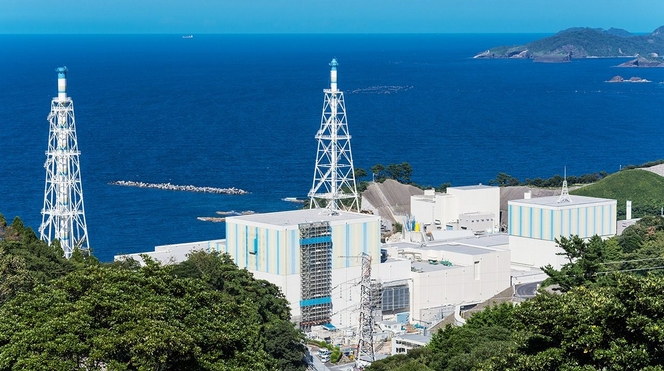
(Translated from Japanese. Banner photo: Shimane Nuclear Power Plant, operated by Chūgoku Electric Power Company. © Pixta.)
Britain to lift import restriction on food products from Fukushima
Politics prevailing over health risk

June 28, 2022
MUNICH (Kyodo) — Britain on Wednesday will lift import restrictions on some Japanese food products imposed in the wake of the 2011 Fukushima nuclear disaster, Prime Minister Boris Johnson said Tuesday during his meeting with Japanese Prime Minister Fumio Kishida.
“I’m delighted that tomorrow, finally, we are able to have Fukushima-origin products all over the shops in the U.K.,” Johnson said at the outset of the meeting.
Kishida expressed his appreciation for the British decision, coming after his visit to Britain in May when the leaders discussed the issue. The British government had promised to remove the restrictions by the end of June.
Kishida and Johnson met on the fringes of a Group of Seven leaders’ summit in southern Germany.
https://mainichi.jp/english/articles/20220628/p2g/00m/0na/062000c
UK to lift import restrictions on food from Fukushima
Remaining curbs on food imports imposed after 2011 nuclear disaster to be scrapped

June 29, 2022
Food from Fukushima will be freely available in the UK from Wednesday, weeks after Boris Johnson snacked on popcorn from the Japanese prefecture hit by a triple nuclear meltdown in March 2011.
Britain restricted Fukushima imports after the disaster, the world’s worst nuclear accident since Chernobyl, but has gradually lifted them, even as other countries limit or ban produce from the region.
Johnson confirmed that the remaining restrictions would end on Wednesday in a meeting the previous day with the Japanese prime minister, Fumio Kishida, on the fringes of the G7 summit in Germany.
Johnson told Kishida that UK-Japan relations were going from “strength to strength”.
“Two great island democracies, united in our values, determined to stand up together against autocracies and the dangers of drifting backwards in the world, but also wanting to do more together on technology, on security, on trade, and of course I’m delighted that tomorrow – finally – we are able to have Fukushima-origin products all over the shops in the UK,” he said.
The supermarket chains Tesco and Waitrose have said they have no immediate plans to sell Fukushima produce. Instead, many of the items will be available at Japanese restaurants and specialist Japanese stores in England, Scotland and Wales.
The restrictions will remain in place in Northern Ireland, which is subject to European Union rules on food and drink from Fukushima and other prefectures affected by the accident 11 years ago.
The scrapping of the restrictions was made possible after the UK Food Standards Agency dropped a limit of 100 becquerels – a measure of radioactivity – per kilogram contained in Japanese food.
“Our risk assessment shows that removing the 100 becquerels per kilogram (Bq/kg) maximum level of radiocaesium for food imported from Japan to the UK would result in a negligible increase in dose and any associated risk to UK consumers,” the FSA said in a report late last year.
The Fukushima prefectural government says that, post-disaster, its food safety standards are among the most stringent in the world. The government-set upper limit for radioactive caesium in ordinary foodstuffs, such as meat and vegetables, is 100 becquerels per kilogram, compared with 1,250Bq/kg in the EU and 1,200Bq/kg in the US.
The lifting of restrictions will affect 23 food products, such as mushrooms, which previously needed to carry proof that they had been tested for radioactive material, according to Nikkei Asia.
The Japanese government said it “welcomes the fact that the UK government reached this decision based on scientific evidence, as it will support the reconstruction of the affected areas”.
It added that it would “continue to work towards the early lifting of the remaining import restrictions in the EU and other countries and regions”. China, Russia, South Korea, Indonesia, Taiwan and several other countries still impose import restrictions.
Johnson first sampled Fukushima produce in 2017 when, as foreign secretary, he swigged a can of peach juice given to him by his Japanese counterpart, Taro Kono, declaring it “Yum”.
Disaster-hit Tohoku residents unimpressed by ‘recovery Olympics,’ survey shows

June 28, 2022
The Tokyo Olympics, promoted as a way to improve the plight of areas devastated by the March 2011 Great East Japan Earthquake and tsunami, left residents of northeastern Japan largely unimpressed, a survey buried in a government report revealed Tuesday.
The survey was included as part of a government report on the Tokyo Olympics and Paralympics. It went over the entire endeavor, from the bid stage to its realization during a pandemic with virtually no fans, and all but ignored the controversy surrounding the design and cost of the national stadium.
The survey by Japan’s Reconstruction Agency in November asked if people were “grateful for the reconstruction support, or believed the Olympics sent a message to the world that reconstruction is taking place.”
Only 29.8% of the 4,000 people in the survey answered that question by saying either “I really think so” or “I think so.” A total of 38.8% answered “I don’t think it did much” or “I don’t think so.”
Asked their opinion about the best thing from the Olympics, 20.7% said, “events held in the disaster-hit region,” while 11.1% answered, “the torch relay.” The answer “nothing in particular” was selected by 39.6%.
The survey asked 1,000 residents each from Iwate, Miyagi and Fukushima prefectures and from Tokyo. The results were not published in the main body of the report but in the attached reference materials.
The main report focused on positives: how Fukushima-produced hydrogen was used in the torch relay, and how the athletes village served food from the disaster-hit region.
The Olympics, the government report proclaimed, “showed the world how recovery is being accomplished and how we are tackling the issues that promote reconstruction.”
Regarding the Olympics’ centerpiece, the National Stadium, the report was remarkably vague. The original stadium design bid, by the late Zaha Hadid, was the most prominent price tag in a huge bill that would need to be paid to host the Olympics.
To remedy that, organizers re-opened the bidding, delaying its construction for a year, and preventing it from hosting 2019 Rugby World Cup matches.
The report’s only comment on what was just one of the organizers’ first stumbling blocks was, “The related cost became larger than originally planned.”
https://www.japantimes.co.jp/news/2022/06/28/national/tokyo-olympics-tohoku-unimpressed/
Japan OKs return to nuclear plant host town for 1st time in 11 yrs

June 28, 2022
The government decided Tuesday to lift an evacuation order on part of a town hosting a crippled nuclear power plant in Fukushima Prefecture, allowing residents to return home for good this week for the first time since the March 2011 earthquake, tsunami and nuclear disaster.
Restrictions in a zone specified as a reconstruction and revitalization base in Okuma will be lifted at 9 a.m. Thursday, the first such case for a municipality hosting Tokyo Electric Power Company Holdings Inc.’s Fukushima Daiichi plant in northeastern Japan.
“Ending restrictions on an area, which used to be downtown (Okuma) before the disaster, will be a significant first step in reconstruction,” Economy, Trade and Industry Minister Koichi Hagiuda said.
“We will create an environment where residents can return home without worries,” Hagiuda said at a press conference.
Restrictions in the specified reconstruction and revitalization base zone of the town of Futaba, which also hosts the Fukushima Daiichi plant, are also expected to end soon.
Okuma will be the second municipality in Fukushima Prefecture, after the village of Katsurao, to see people coming back to an area once designated as difficult to return to due to high levels of radiation.
Restrictions in part of the village were lifted on June 12.
With decontamination work reducing radiation levels and infrastructure being prepared in Okuma, restrictions will end in the 8.6-square-kilometer area that was once the center of the town.
Residents have been able to stay overnight in the area since December in preparation for their full-scale return.
A total of 5,888 people in 2,233 households, accounting for about 60 percent of the town population, were registered as residents of the area as of Monday, according to the Okuma town government.
Three other municipalities where residents are still not allowed to return — Tomioka, Namie and Iitate — are expected to see restrictions lifted around next spring.
Govt. to lift evacuation order for part of Fukushima’s Okuma Town

June 28, 2022
The Japanese government has officially decided to lift its evacuation order in part of Fukushima Prefecture’s Okuma Town.
About 60 percent of Okuma Town was designated as a “difficult-to-return” zone after the 2011 accident at the Fukushima Daiichi nuclear power plant. The plant is located in the town.
The evacuation order will be lifted in about 20 percent of Okuma Town’s “difficult-to-return” zone on Thursday. The decision was made on Tuesday.
The government decontaminated the area after it was designated as a special zone for reconstruction and revitalization.
The area will be the second “difficult-to-return” zone that residents can go back to.
The government made a similar decision for part of Katsurao Village earlier this month. Katsurao Village is located near the Fukushima Daiichi plant.
New Chairman of All Fishermen’s Federation “firmly opposed” to discharge of treated water The person who agreed to an interview at METI was… a retired counselor, not a minister

June 27, 2022
Masanobu Sakamoto, chairman of the National Federation of Fishermen’s Associations (ZENYOREN), visited the Ministry of Economy, Trade and Industry (METI) on June 27 for the first time since becoming chairman, and handed a special resolution to Akira Matsunaga, counselor at METI, stating “firm opposition” to the ocean discharge of water contaminated from the Fukushima Daiichi Nuclear Power Plant (Okuma-cho and Futaba-cho, Fukushima Prefecture), which is mainly radioactive tritium, after purification and treatment.
Sakamoto is the chairman of the Chiba Prefectural Fisheries Federation, and was recently appointed chairman of the All Fisheries Federation at its general meeting on March 23. Meanwhile, Mr. Matsunaga, who responded to the letter, is a former director general of the Japan Patent Office who was involved in post-nuclear power plant reconstruction at the Cabinet Office and the Agency for Natural Resources and Energy, but retired at the end of March this year to become a part-time counselor.
According to METI, the meeting with Minister Koichi Hagiuda did not take place because he could not adjust his schedule in time. Immediately after the interview, the ministry monitor showing Hagiuda’s schedule was marked “meeting.
Sakamoto said at the meeting, “Regardless of the replacement of the chairman, we will remain opposed to the proposal,” and called for the creation of a fund for the continuation of the fishing industry, such as support for fuel costs for fishing boats, in addition to the fund for reputational damage measures and other measures budgeted by the government.
Mr. Matsunaga said, “The entire ministry will work together to present effective and concrete measures.
After the meeting, Mr. Sakamoto responded to media interviews, saying, “Eleven years ago, when the accident occurred in Chiba Prefecture, I myself suffered from severe reputational damage. Based on my own experience, I cannot condone (the release of radioactive materials into the ocean). As for not being able to meet with Mr. Hagiuda, he said, “Naturally, I would like to meet with the minister as soon as possible and convey my thoughts directly to him. (Kenta Onozawa)
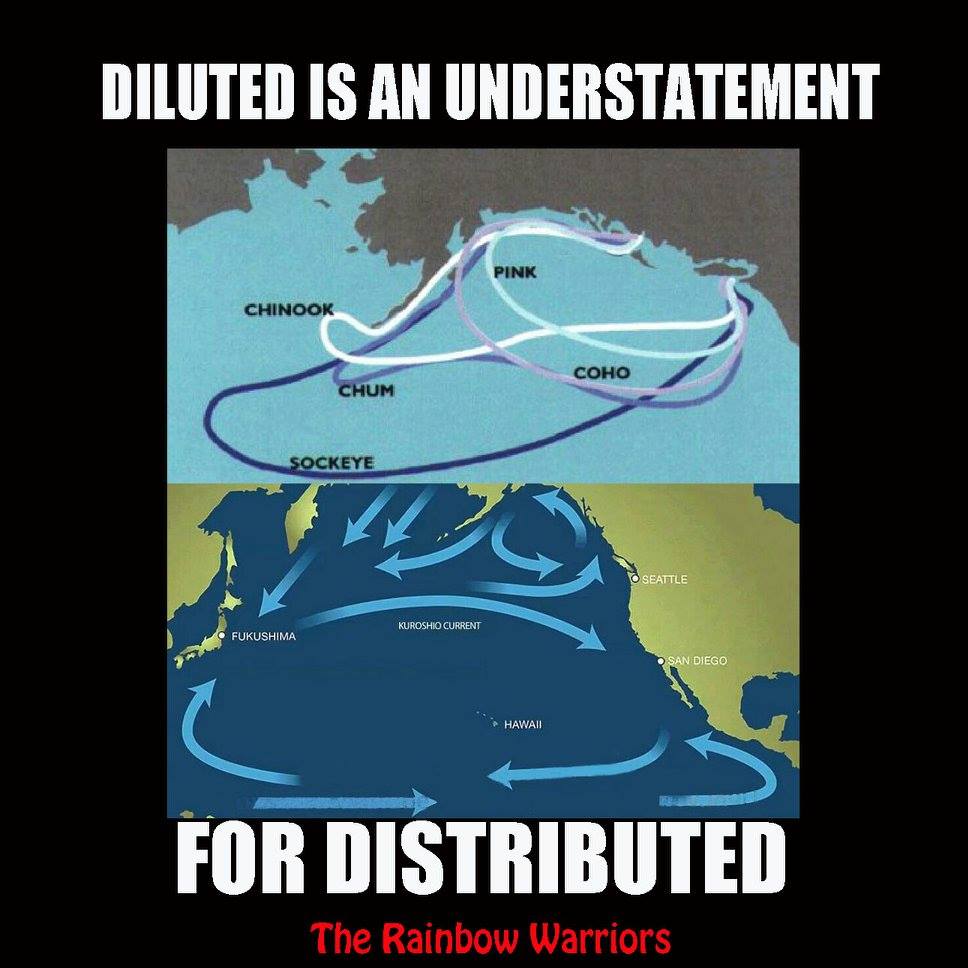
Contaminated water generated when cooling water injected into reactors No. 1 through No. 3 at the Fukushima Daiichi Nuclear Power Plant comes into contact with nuclear fuel debris that melted down in the accident and mixes with groundwater and rainwater that has flowed into the buildings. Tritium, a radioactive substance that cannot be removed, remains in concentrations exceeding the national discharge standard. In April 2021, the government decided to discharge the treated water into the ocean by the spring of 2011. TEPCO is proceeding with a plan to use a large amount of seawater to dilute the tritium concentration to less than 1/40th of the discharge standard and discharge the water into the sea.
https://www.tokyo-np.co.jp/article/186025?fbclid=IwAR3Fw9AOVsfvzCZumK6LhzD__csp1hPC0YdUNksj9lPYN5AxPgj6152zM5E
All fishermen’s federation “opposition to discharge will remain unchanged” Special resolution on treated water from nuclear power plant
June 23, 2022
The National Federation of Fishermen’s Associations (ZENYOREN) held an ordinary general meeting in Tokyo on June 23, and unanimously adopted a special resolution stating that it remains “firmly opposed” to the ocean discharge of treated water from TEPCO’s Fukushima Daiichi Nuclear Power Plant. This is the third resolution opposing the ocean discharge.
The resolution pointed out that the government’s April response to a request from the Federation of Fishermen’s Associations at the time of the decision to discharge nuclear fuel into the ocean lacked specific measures to explain the situation to fishermen and the public, or to deal with harmful rumors. He stressed, “We demand that the government provide careful and sincere explanations and effective concrete measures to gain the understanding of the public.
Vice President Masanobu Sakamoto, who was elected as the new president at the general meeting, stated at the press conference that “ocean discharge is a matter of life and death for fishermen.
https://www.chunichi.co.jp/article/494903?fbclid=IwAR2rM7hA8hi4Q9oWxOs8_F6o576aTCeoQh2k-2RelZEJSzi3pTXpqlfzst0
TODAY. NATO-USA militarily encircling Russia, China. – the world?

Uncannily like the buildup to World War 1, European nations are enthusiastically arming themselves and amassing troops, like the new permanent U.S. bases for Poland. And, of course, the big winners, the only winners, are the weapons corporations. The goal is to encircle Russia.
NATO leads the pack, becoming more bloated and belligerent as it draws in Finland and Sweden. The G7 now becomes NATO’s lackey.
We feared the impulsive and blustering President Trump. But President Biden is being just as tactlessly war-mongering – only a little more polite in manner. Australia got rid of its ignorant and bullying Prime Minister Morrison. But his replacement, PM Albanese, is effectively joining in with USA’s militarism, just more politely in manner.
But now the goal is to militarily encircle not only Russia, but China, too . Forget just the ”North Atlantic” – now it’s the Pacific too, and South Pacific. And NATO ls now creating this new enemy – joint Russia-China.
As with WW1 – the only winners are the weapons corporations, happily amassing $billions, including for nuclear weapons – the boys getting lots of those shiny new toys – and just the hope that they don’t actually use them
NATO has completed its post-Cold War transformation from Europe’s guard dog into America’s attack dog

The guard dog had, it seems, been re-trained as an attack dog.
https://www.rt.com/russia/558168-nato-defensive-alliance-global-cop/ Scott Ritter 1 July 22, From an ostensible defensive alliance, NATO has grown into an aggressor designed to promote ‘rules’ dictated by the US,
The North Atlantic Treaty Organization, or NATO, has just wrapped up its annual summit in Madrid, Spain. The one-time trans-Atlantic defensive alliance has, over the past three decades, transformed itself from the guardian of Western Europe into global cop, seeking to project militarily a so-called values- and rules-based posture.
NATO’s first Secretary General, Lord Ismay, famously noted that the mission of the bloc was “to keep the Russians out, the Germans down, and the Americans in.” In short, NATO served as a wall against the physical expansion of the Soviet Union from the perch it had established in eastern Europe at the end of the Second World War. Likewise, the creation of NATO prevented a treaty from being concluded between Germany and the Soviet Union that would enable the reunification of Germany. And lastly, the existence of NATO mandated that the US retain a significant full-time military presence in Europe, helping break America’s traditional tendency toward isolationism.
At the Madrid Summit, NATO radically redefined its mission to reflect a new mantra which could be encapsulated as “keep the Russians down, the Americans in, and the Chinese out.” It is an aggressive–even hostile–posture, premised on sustaining Western (i.e., American) supremacy.
This mission is to be accomplished through the defense and promulgation of a so-called “rules-based international order” which exists only in the minds of its creators, which in this case is the United States and its allies in Europe. It also represents a radical break from past practice which sought to keep NATO defined by the four corners of its trans-Atlantic birthright by seeking to expand its security umbrella into the Pacific.
The guard dog had, it seems, been re-trained as an attack dog.
When an organization undergoes such a radical transformation in terms of its core mission and purpose, logic dictates that there exists a reason (or reasons) sufficient to justify the consequences attached to the action. There appear to be three such reasons. First and foremost is the fact that Russia refuses to accept NATO demands that it exist as a junior “partner” whose sovereignty must be subordinated to the collective will of post-Cold War Europe. Russia’s President, Vladimir Putin, has made it clear that Russia considers itself to be a great power, and fully expects to be treated as such–especially when it comes to issues pertaining to the so-called “near abroad”–those former Soviet republics, such as Ukraine and Georgia, whose continued ties with Moscow are existential in nature.
NATO, on the other hand, while calling Russia a “partner,” was never serious about extending a viable hand of friendship, instead undertaking a thirty-year program of expansion which violated verbal promises made to Soviet leaders, leaving Russia weakened and not to be taken seriously by the self-proclaimed “victors” of the Cold War. When Russia pushed back, a process marked by Putin’s iconic speech to the 2007 Munich Security Conference, NATO undertook a more aggressive stance, promising Georgia and Ukraine eventual membership in the Alliance and, in 2014, supporting a violent coup against a government in Ukraine that kicked-off a series of events which culminated in the ongoing military operation being conducted by Russia in Ukraine.
Speaking at this week’s NATO Summit, the Secretary General of the organization, Jen Stoltenberg, ended all pretense that the bloc was an innocent bystander in the events leading up to Russia’s military intervention in Ukraine, noting with pride that NATO had been preparing to fight Russia since 2014–that is, since the US-led coup. Indeed, NATO has, since 2015, been training the Ukrainian military to NATO standards.
Not to bolster the self-defense of Ukraine, but rather for the purpose of fighting ethnic Russians in the Donbass. NATO, it seems, was never interested in a peaceful resolution to the crisis, which flared up when Ukrainian nationalists began brutalizing the region’s Moscow-leaning majority.
Two NATO members, France and Germany, helped perpetuate a fraudulent peace process, the Minsk Accords, which former Ukrainian President Petro Poroshenko recently admitted was nothing more than a sham perpetrated for the purpose of buying time so that NATO could train and equip the Ukrainian military for the purpose of forcibly seizing control of both Donbass and Crimea.
All the 2007 Munich Summit really did was strip away any pretense that NATO was serious about peacefully coexisting with a powerful, sovereign Russian nation. A truly defensive alliance would have readily embraced such an outcome. NATO, it is now clear, is anything but.
NATO has been exposed as little more than a component of American global power projection, providing supplementary military and political backing for an American empire defined by the “rules-based international order” premised on sustained US military and economic supremacy. Keeping America on top, however, is proving to be a bridge too far, largely because the American empire itself is crumbling at its foundations, struggling economically to sustain the so-called “American Dream” and politically to keep alive the flawed promise of American democracy which underpins the very image the US seeks to promote abroad. The extent that the US can function with a modicum of credibility in the international arena today is determined purely by the level of “buy in” by the rest of the world to the golden idol that is the “rules-based international order.”
While the US has been able to strong-arm both NATO and its economic doppelganger, the G7, into actively promoting the “Rules based international order,” Russia and China have come together to create an alternative world view.
That is international law, premised on the concepts enshrined in the United Nations Charter.
The G7 declared that the BRICS economic forum, comprised of nations who are more aligned with a “law-based” world order, and not a US-dominated “rules-based” one, represents the greatest threat to its relevance on the world stage. NATO, likewise, has declared that the Russian and Chinese challenge to the “rules-based international order” represents a major threat to NATO’s core values, prompting an expansion of NATO’s reach into the Pacific as a counter.
In short, NATO (together with the G7 group) is declaring war against the principles of international law that are encapsulated in the United Nations Charter. At its Madrid Summit, NATO has made it clear that it’s ready to shed blood to defend a legacy whose legitimacy exists only among the collective imaginations of its members. And not all of them, either.
The goal of the rest of the world now needs to be to seek to minimize the damage done by this beast and find a way to dispose of it before it can do any more harm to the global community.
Scott Ritter is a former US Marine Corps intelligence officer and author of ‘Disarmament in the Time of Perestroika: Arms Control and the End of the Soviet Union.’ He served in the Soviet Union as an inspector implementing the INF Treaty, in General Schwarzkopf’s staff during the Gulf War, and from 1991-1998 as a UN weapons inspector.
Military social media campaigns promote the war in Ukraine, and attack any ”wrongthink” that dares criticise role of USA and NATO
Ukraine Is The Most Aggressively Trolled War Of All Time: Notes From The Edge Of The Narrative Matrix, Caitlin Johnstone, Caitlin’s Newsletter, 1 July 22,
There’s a lot going on in America and the people are very stressed out and frightened, but don’t worry, there’s nothing the US government won’t do to make sure more High Mobility Artillery Rocket systems get to Ukraine.
Rest assured Americans: no matter how dark things may seem right now, no matter how insecure and uncertain you may feel, you can sleep soundly knowing your government is moving mountains around the clock to make sure the Ukraine war becomes a strategic quagmire for Moscow.
The Ukraine war is the single most aggressively trolled issue I’ve ever witnessed. As soon as it started, Twitter was full of brand new accounts swarming anyone who uttered wrongthink about Ukraine, and now there are entire extremely coordinated troll factions working to scare people away from criticizing empire narratives about this war. It’s plainly very inorganic, so it’s good to recall what we know about the trolling operations of western militaries.
[Ed. note – several examples given here]
So the western empire is responding to a war that was caused by NATO expansion by greatly expanding NATO, at the same time we learn that the Biden administration doesn’t even believe Ukraine has any chance of winning that war. This is going great, guys. Good job everyone.
Sure the worst case scenario of all this brinkmanship with Russia is nuclear war, but on the other hand the best case scenario is securing planetary domination for an empire that has spent the 21st century killing people by the millions in wars of aggression for power and profit. Totally worth the risk!
When you realize the US really only has one political party, you cease seeing one good party protecting people from a bad party and start seeing one giant party threatening to take away people’s civil rights if they don’t obey and submit. You suddenly understand that saying one party is a “lesser evil” is like saying a boxer should want to get hit by his opponent’s left hand because his right cross hurts more. It’s two arms on the same boxer, and they’re both working together to knock you out…………….. https://caitlinjohnstone.substack.com/p/ukraine-is-the-most-aggressively?utm_source=substack&utm_medium=email
The IAEA Needs Access to Ukraine’s Nuclear Power Plant. Biden Can Help

https://thedispatch.com/p/the-iaea-needs-access-to-ukraines
Since Russia seized the plant in March, the safety and security of the plant have been in jeopardy. Anthony Ruggiero and Andrea Stricker, 30 June 22,
“Untenable.” That’s how Rafael Grossi, director general of the International Atomic Energy Agency (IAEA), last week described the situation at Ukraine’s Zaporizhzhia nuclear power plant (ZNPP), which Russia seized in March. He said that every day “the independent work and assessments of Ukraine’s regulator are undermined,” the “risk of an accident or a security breach increases.” Grossi asserted he wants to send an IAEA mission to the ZNPP, which is Europe’s largest nuclear power plant. In a twist, however, Ukraine’s atomic energy regulators, presumably at the direction of Kyiv, have rejected Grossi’s request.
Ukraine believes an IAEA visit to the ZNPP would legitimize Russia’s control of the complex. Grossi has rejected that characterization, emphasizing that “it is absolutely incorrect. When I go there, I will be going there under the same agreement that Ukraine passed with the IAEA, not the Russian Federation.” President Joe Biden urgently needs to convince Ukrainian President Volodymyr Zelensky to let the IAEA in to ensure the ZNPP is safe and secure.
The ZNPP, located in east Ukraine, is a facility with six light water reactors, and it produced up to one-fifth of Ukraine’s electricity production before the war. To gain control of it, Russia shelled the area with missiles, sparking a widely reported fire. The missile attack spurred fears that Moscow could further damage the facility and cause a nuclear radiological incident that could harm Ukrainian civilians and neighboring countries.
Ukrainian authorities brought the fire under control, but Russia installed officials from its atomic energy agency, Rosatom, to oversee day-to-day work of Ukrainian personnel. The State Nuclear Regulatory Inspectorate of Ukraine warned in a statement that life at Zaporizhzhia has become intolerable under Moscow’s direction: Russia’s military and representatives of Russia’s Rosatom and its subsidiary Rosenergoatom “constantly terrorize and directly threaten the lives of the plant personnel.”
The Wall Street Journal reported this month that Russian military officers have been interrogating ZNPP employees to assess their loyalties to Moscow and reprimanding “workers who speak in Ukrainian rather than Russian and screening their cellphones for evidence of allegiance to Kyiv.” The Russians have also abducted, tortured, or shot workers. Russian officials at the plant have told workers that they intend to connect the ZNPP to Russia’s electricity grid, which would be costly and take years to accomplish, reinforcing Kyiv’s concerns that Moscow is preparing for long-term control of the facility.
Russia has not publicly opposed an IAEA visit. Grossi claimed in a June 6 statement to the IAEA Board of Governors that Ukraine had requested an IAEA mission to the plant and that the agency was ready to go. The day after Grossi’s statement, however, Ukraine’s atomic agency, Energoatom, wrote in a Telegram post that it had not invited the IAEA to visit. “We consider this message from the head of the IAEA as another attempt to get to the (power plant) by any means in order to legitimise the presence of occupiers there and essentially condone their actions,” the post stated.
In March, Grossi said that seven pillars of nuclear plant safety and security were at risk at the ZNPP. Those pillars include: maintenance of physical integrity; functional safety and security systems and equipment; freedom of operating staff to fulfill their safety and security duties and without undue pressure; a secure off-site power supply from the grid for all nuclear sites; uninterrupted logistical supply chains and transportation to and from the site; effective on-site and off-site radiation monitoring systems backed by emergency preparedness and response measures; and reliable communication with regulators and others. In his June 6 statement to the IAEA board, Grossi declared that five of seven pillars had been compromised. “This is why IAEA safety and security experts must go,” he said.
Moreover, the ZNPP stopped transmitting safeguards information to the IAEA on May 30, meaning the agency could not ascertain whether there had been theft or loss of nuclear material. “The Ukrainian regulator has informed us they have lost control of the nuclear material,” Grossi told the board.
President Biden is in a difficult spot: He is focused on fortifying Zelenskyy’s fighting forces against Russia, but Putin’s control of the ZNPP could lead to a safeguards or safety crisis in Ukraine. Biden should urge Ukraine to approve an IAEA visit. He should also insist that Russia stop its intimidation and violence against ZNPP workers and return the plant to Ukraine.
Small modular nukes fall short on climate promises, new study suggests.

SMRs are inherently less efficient, hence the “higher volumes and greater complexity” of the waste, says the study. SMRs leak more neutrons, which impairs the self-sustaining nuclear reaction.
GreenBiz, By Clifford Maynes, 1 July 22, Small modular reactors (SMRs), seen by the beleaguered nuclear industry as a shining hope for a global revival, may have hit a serious snag. A new study finds that mini-nuclear power stations produce higher volumes of radioactive waste per unit of generation than larger-scale traditional ones.
The United States, the United Kingdom and Canada are among the countries investing in SMRs on the hope of a cheaper, faster way to build out nuclear capacity. In Canada, the federal government is leading and funding a “Team Canada” approach involving several provinces, industry players, and others, envisioning SMRs as “a source of safe, clean, affordable energy, opening opportunities for a resilient, low-carbon future and capturing benefits for Canada and Canadians.”
In Ontario, the Ford government selected GE Hitachi to build an SMR at the Darlington nuclear plant site, with a projected in-service date of 2028.
Now, however, the first independent assessment of radioactive waste from SMRs has modeled the waste from three SMR designs, Toshiba, NuScale and Terrestrial Energy. The conclusion: “SMRs could increase the volume of short-lived low and intermediate level wastes… by up to 35 times compared to a large conventional reactor,” New Scientist reports.

“For the long-lived equivalent waste, SMRs would produce up to 30 times more,” the story adds. For spent nuclear fuel, up to five times more.
Stanford University’s Lindsay Krall, who led the research, said information from the industry is “promotional,” echoing past criticisms that SMRs are still “PowerPoint reactors” with no detailed engineering to back up the concept. “SMR performed worse on nearly all of our metrics compared to standard commercial reactors,” Krall said.
SMRs are inherently less efficient, hence the “higher volumes and greater complexity” of the waste, says the study. SMRs leak more neutrons, which impairs the self-sustaining nuclear reaction.
“The study concludes that, overall, small modular designs are inferior to conventional reactors with respect to radioactive waste generation, management requirements, and disposal options,” Stanford News reports.
“The research team estimated that after 10,000 years, the radiotoxicity of plutonium in spent fuels discharged from the three study modules would be at least 50 percent higher than the plutonium in conventional spent fuel per unit energy extracted.”
……………………………………. Proponents hope SMRs will have “small is beautiful” appeal and focus on their potential to reduce greenhouse gas emissions. But critics say they sidestep public concerns about accidents, wastes, cost and other impacts, noting that SMRs aren’t small: the Darlington reactor will be rated at 300 megawatts, about a third the size of the existing Candu reactors on the site, and more than half the size of the units at the nearby Pickering station.
SMRs are also new and unproven, critics warn. They say there is no reason to think SMR construction will be exempt from the massive cost overruns and completion delays that typically plague reactor construction, and megaprojects in general. And there is no real-world experience to date to demonstrate that SMRs can be built on time and on budget.
The biggest concern is that SMRs will soak up investment dollars and grid capacity that should go to proven, successful renewables such as solar and wind, which can be rapidly deployed and have falling rather than escalating costs. Because of the time lag, nuclear is not expected to make a large contribution to meeting the immediate, global goal of reducing global greenhouse gas emissions by 45 percent by 2030. The Intergovernmental Panel on Climate Change noted in its sixth assessment that small-scale, distributed energy sources such as wind and solar had exceeded expectations, while large, centralized technologies such as nuclear had fallen short.
“It takes too long to site and build nuclear reactors, especially compared to solar and wind installations,” said MIT researcher Kate Brown. https://www.greenbiz.com/article/small-modular-nukes-fall-short-climate-promises-new-study-suggests
Lost in space: Astronauts struggle to regain bone density
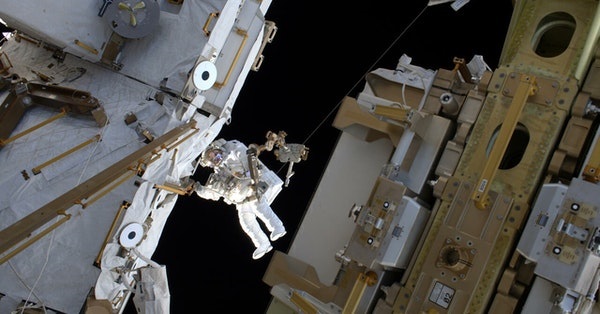
France 24 30/06/2022 Paris (AFP) – Astronauts lose decades’ worth of bone mass in space that many do not recover even after a year back on Earth, researchers said Thursday, warning that it could be a “big concern” for future missions to Mars.
Previous research has shown astronauts lose between one to two percent of bone density for every month spent in space, as the lack of gravity takes the pressure off their legs when it comes to standing and walking.
To find out how astronauts recover once their feet are back on the ground, a new study scanned the wrists and ankles of 17 astronauts before, during and after a stay on the International Space Station.
The bone density lost by astronauts was equivalent to how much they would shed in several decades if they were back on Earth, said study co-author Steven Boyd of Canada’s University of Calgary and director of the McCaig Institute for Bone and Joint Health.
The researchers found that the shinbone density of nine of the astronauts had not fully recovered after a year on Earth — and were still lacking around a decade’s worth of bone mass.
The astronauts who went on the longest missions, which ranged from four to seven months on the ISS, were the slowest to recover.
“The longer you spend in space, the more bone you lose,” Boyd told AFP.
Boyd said it is a “big concern” for planned for future missions to Mars, which could see astronauts spend years in space……………………..
Guillemette Gauquelin-Koch, the head of medicine research at France’s CNES space agency, said that the weightlessness experienced in space is “most drastic physical inactivity there is”.
“Even with two hours of sport a day, it is like you are bedridden for the other 22 hours,” said the doctor, who was not part of the study.
“It will not be easy for the crew to set foot on Martian soil when they arrive — it’s very disabling.”…………………………………. https://www.france24.com/en/live-news/20220630-lost-in-space-astronauts-struggle-to-regain-bone-density—
Is Nuclear Power Just Too Dangerous?

The New Republic , 1 July 22,
A survey of the world’s worst nuclear disasters highlights the catastrophic consequences of technical hubris.
On February 24, 2022, Russian troops began occupying Ukrainian territory in the Chernobyl exclusion zone. The meltdown at the Chernobyl nuclear plant 26 years earlier remains the worst nuclear disaster the world has yet experienced. …………….Soon enough it became clear that Russian forces were not actively targeting Chernobyl’s facilities, including the sarcophagus that protects the damaged reactor core. Rather, they had chosen the sparsely populated area as the fastest route from Belarus to Kyiv.
……………The International Atomic Energy Agency, the United Nation’s nuclear watchdog, issued assurances that there was no cause for alarm. But nuclear watchers could be forgiven for their panic. The spotty news emerging from Chernobyl this spring uneasily echoed the trajectory of several of the world’s major nuclear disasters, including Japan’s Fukushima and Three Mile Island in the United States.
……………………None of this had yet transpired when Serhii Plokhy, a professor of history and director of the Ukrainian Institute at Harvard, began writing Atoms and Ashes: A Global History of Nuclear Disasters. Nuclear power has, in fact, been gaining popular support, despite its dangers. In recent years, some climate activists have aligned with the nuclear power industry to argue that nuclear power offers the only off-ramp from the urgent and existential threat of climate change. The World Nuclear Association, an industry lobbying group, wants to raise the share of electrical energy produced by nuclear plants from 10 to 25 percent by 2050.
While Plokhy acknowledges the threat of climate change, his study of the history of nuclear accidents has convinced him that the risks are simply too high. His account, which draws on contemporary reports of six radiological disasters as well as government investigations conducted after the fact, argues persuasively that nuclear reactors remain inherently unsafe. Nuclear engineers add new safety features after each disaster, only to be astonished by the devilish and statistically unlikely path of the next one. Citing research based on acknowledged nuclear incidents that predicts “one core meltdown accident every 37,000 reactor years,” Plohky forecasts that we will likely see another large-scale accident before 2036. We may be lucky to make it that long.
America’s first hydrogen bomb test did not go according to plan………………………………………………..
Similar scenarios unfolded in each of the cases Plokhy discusses in the book. …………………………. a storage tank for radioactive waste at the Maiak plutonium production facility had exploded, in September 1957…………………. In the critical hours leading up to a reactor fire at the U.K.’s Windscale facility, one month later, operators struggled to understand the pile’s strange behavior during a maintenance operation that had been postponed several months in the name of plutonium production. ……………….. in March 1979. Plant managers at Chernobyl made the disastrous decision to press pause halfway through a test of the backup generators to satisfy demands made by the regional administrator of the electrical grid. At Fukushima, plant designers located the backup generators below sea level for a facility nestled against the sea in a country vulnerable to earthquakes and tsunamis
The technical details in these stories matter immensely, and Plokhy excels at breaking them down. …………… The bad news is that the authorities in charge of building nuclear power plants do not always incorporate these safety features into their designs. …………… https://newrepublic.com/article/166949/nuclear-power-just-dangerous-atoms-ashes-serhii-plokhy.
1 This Month
26 April – Chernobyl: Inside the Meltdown airs on National Geographic on Sunday 26th April from 4pm


29 April – Nuclear Expert Webinar #1 – Radiation Impacts on Families with Mary Olson and Cindy Folkers
- 12:15 PM MT – 1:45 PM MT
- Location: Virtual – REGISTER TODAY

4 May -West Suburban Peace Coalition to discuss Iran war at May Educational Forum
Monday, May 4, 7:00 – 8:00 PM Central Standard Time
Title: : How Trump’s Narrative Tries to Shape the Reality of the War on Iran.
Contact Walt Zlotow, zlotow@hotmail.com 630 442 3045 for further information
14 May – online event From Bombs to Data Centres: the Face of Nuclear Colonialism

Pine Ridge Uranium is the real threat, not Tehran- Tell Burgum: Stop the Extraction.
Chernobyl: The Lost Tapes – A good documentary on Chernobyl on SBS available On Demand for the next 3 weeks– https://www.sbs.com.au/ondemand/tv-program/chernobyl-the-lost-tapes/2352741955560
To see nuclear-related stories in greater depth and intensity – go to https://nuclearinformation.wordpress.com
-
Archives
- April 2026 (338)
- March 2026 (251)
- February 2026 (268)
- January 2026 (308)
- December 2025 (358)
- November 2025 (359)
- October 2025 (376)
- September 2025 (257)
- August 2025 (319)
- July 2025 (230)
- June 2025 (348)
- May 2025 (261)
-
Categories
- 1
- 1 NUCLEAR ISSUES
- business and costs
- climate change
- culture and arts
- ENERGY
- environment
- health
- history
- indigenous issues
- Legal
- marketing of nuclear
- media
- opposition to nuclear
- PERSONAL STORIES
- politics
- politics international
- Religion and ethics
- safety
- secrets,lies and civil liberties
- spinbuster
- technology
- Uranium
- wastes
- weapons and war
- Women
- 2 WORLD
- ACTION
- AFRICA
- Atrocities
- AUSTRALIA
- Christina's notes
- Christina's themes
- culture and arts
- Events
- Fuk 2022
- Fuk 2023
- Fukushima 2017
- Fukushima 2018
- fukushima 2019
- Fukushima 2020
- Fukushima 2021
- general
- global warming
- Humour (God we need it)
- Nuclear
- RARE EARTHS
- Reference
- resources – print
- Resources -audiovicual
- Weekly Newsletter
- World
- World Nuclear
- YouTube
-
RSS
Entries RSS
Comments RSS
 nuclear-news