The US supreme court has declared war on the Earth’s future
The US supreme court has declared war on the Earth’s future
Kate Aronoff
In a major environmental case, the court has made clear that it would rather represent the interests of corporations and the super-rich than the needs and desires of the vast majority of Americans – or people on Earth
In France, drought, and multiple problems in nuclear power plants add energy crisis to the climate crisis.
In the midst of the war in Ukraine, the energy crisis is taking precedence
over the environmental crisis. On Thursday, the government called on the
French to reduce their consumption by 10% in 2 years. On Sunday, EDF, Total
and Engie even deemed it necessary to make efforts “immediately”. Their
fear: a real risk of cuts this winter. when the drought and the multiplication of problems in nuclear power plants add crisis to crisis.
Indeed, it is not only Russian oil and gas that will be missing from the
European energy mix in the future. Declining flow in rivers is a problem
for hydropower plants.
And even worse, the state of the French nuclear
fleet raises many concerns. Called to satisfy 40% of electricity
consumption in France, it has suffered from the health crisis to the point
that production fell by 8.7% in 2020 compared to 2019, falling to a level
that had not been observed since the late 1990s.
All this has delayed maintenance operations. And now we suddenly discover corrosion where we did
not expect it on 12 reactors, which were automatically shut down. It is
therefore half of the 56 French reactors which are out of service for a
certain time. A hard blow impossible to compensate for immediately with the
major projects intended in the long term to increase the share of renewable
energies in our energy mix.
La Depeche 27th June 2022
So, what should be done about nuclear waste?
Where will the nuclear waste go?” https://www.nationofchange.org/2022/06/30/where-will-the-nuclear-waste-go/
By Karl Grossman. June 30, 2022“Where will the state’s nuclear waste go?” was the headline of a story bannered last month across the front page of Connecticut’s largest newspaper, the Hartford Courant.
What, indeed, is to be done about the nuclear waste that has been produced at the two Millstone nuclear power plants which have been operating in Connecticut? (They are now the only nuclear power plants running in New England.)
And what is to be done about the nuclear waste at other nuclear power plants?
Decades ago, one scheme was to put it on rockets to be sent to the sun. But the very big problem, it was realized, is that one-in-100 rockets undergo major malfunctions on launch, mostly by blowing up.
As Forbes magazine has pointed out, because of the “possibility of launch failure” if “your payload is radioactive or hazardous and you have an explosion on launch…all of that waste will be uncontrollably distributed across Earth.”
So, scratch that idea.
Then there has been the plan to construct a “repository” for nuclear waste at Yucca Mountain, Nevada, 100 miles northwest of Las Vegas. It was designated the nation’s “permanent nuclear repository” in 1987 and $15 billion was spent preparing it.
The very big problem concerning Yucca Mountain as a nuclear waste dump: it’sin “an active earthquake zone, with 33 faults on site.”
So, that idea was scratched.
Now, Finland has built a nuclear waste site for its four nuclear power plants. “Finland wants to bury nuclear waste for 100,000 years,” was the title of an CNBC’s piece about it and how it uses “a labyrinth of underground tunnels.”
The very big problem: nuclear waste needs to be isolated from life for way more than 100,000 years. The U.S. Court of Appeals for the District of Columbia Circuit in 2004 ordered the EPA to rewrite its Yucca Mountain regulations to acknowledge a million years of hazard, notes Kevin Kamps, radioactive waste specialist for the organization Beyond Nuclear.
Some nuclear waste stays radioactive for millions of years, Kamps points out: “Iodine-129 that is produced in reactors has a 15.7 million-year half-life.”
After a half-life, a radioactive material is half as radioactive as when it was produced. For determining a “hazardous lifetime,” a half-life is multiplied by 20.
Thus Iodine-129 remains radioactive for 314 million years.
“The design of the storage facility” for nuclear waste in Finland “has taken into account the potential impact of earthquakes and even future ice ages,” related CNBC. But not for anything close to millions of years.
So, what should be done about nuclear waste?
First, says Kamps, “we should stop making it.” He calls for the closure of every one of the 92 nuclear power plants now in the United States, the building of no more and a push for safe, clean, green energy sources led by solar and wind energy. Nuclear power plants in the U.S. have since 1957 generated nearly 100,000 tons of deadly nuclear waste, he says. Second, the “best option is hardened onsite storage.”
Currently, most nuclear waste, he says, is at reactor sites in pools of water which must be kept circulating. If there is a “loss of water” accident, the nuclear waste in the pools can go “up in flames.”
Kamps and Beyond Nuclear, with other environmental and safe-energy groups, is now challenging—along with the state governments of Texas and New Mexico—the present U.S. government plan involving “so-called interim” nuclear waste sites in Texas and New Mexico.
They would be amid largely Latino communities, and on top of the Ogallala Aquifer, the largest aquifer in the U.S. It extends north to South Dakota, encompassing eight states, and is a main source of water for drinking and irrigation.
Also, the U.S. Department of Energy has, he says, “restarted its federal consolidated interim storage facility scheme, last attempted in the late 1980s and early 1990s. A whole new crop of nuclear waste dump fights can be expected, especially ones targeting Native American reservations to agree to host the most deadly poison our society has ever generated.”
Meanwhile, in New Jersey, Oyster Creek, among the oldest nuclear power plants in the U.S.—it began operation in 1969—is in the midst of being demolished after its closure in 2018. There’s been a “a series of worrisome accidents” in the tearing down process reported The Washington Post last month. And then there is the decommissioned Oyster Creek plant’s nuclear waste.
Oyster Creek was manufactured by General Electric and was a Mark I nuclear power plant—the same model of those that blew up at the Fukushima nuclear plant site in Japan.
Nuclear Free Local Authorities join in Seminar ‘Sizewell C: More Questions than Answers’
As decision day nears on the Sizewell-C development, the Chair and
Secretary of Nuclear Free Local Authorities will be joining local
campaigners opposed to the new build plan at a special conference in
Saxmundham on Saturday 2 July.
Councillor David Blackburn and Richard
Outram are amongst a line-up of speakers who will talk on a range of topics
related to the proposed Sizewell-C and Bradwell nuclear power plant
developments.
The public conference titled ‘Sizewell C: More Questions
than Answers’ is being hosted by local campaign group, Together Against
Sizewell C, at Saxmundham Market Hall, High St, Saxmundham, IP17 1AF from
10am until 1.30pm on Saturday 2nd July. The decision by the Secretary of
State Kwasi Kwarteng to award a Development Consent Order for Sizewell-C is
expected on 8 July, but it is anticipated to be a formality as the Minister
and his Government have already made repeated statements in favour of the
project and have pledged to take a 20% stake in the plant.
Sizewell-C has been in the news recently with media reports that the government’s French
backers, EDF, are threatening to pull out if Ministers do not make a
cast-iron commitment to take their stake by 21 July; that trades unions are
lobbying Minsters for the same commitment citing a threat to jobs; and
because of a spat between Lord Deben, Chair of Parliament’s Climate Change
Committee, and EDF over his challenge to their competence in building new
nuclear power plants and the suitability of the Sizewell-C site.
The prospects for Bradwell in Essex are even more uncertain as Chinese
involvement in British nuclear projects has now been vetoed by the
Government, with a former Conservative Party leader pointedly describing
them as ‘not a trusted vendor’.
NFLA 27th June 2022
Corrosion problem shutters half of France’s nuclear reactors
Just when France, and the rest of Europe, needed the country’s 56 nuclear
reactors to be pumping out electricity at maximum power to counter the
shortfall of energy supplies caused by the war in Ukraine, half of them
have had to shut down.
An unexpected corrosion problem on pipes vital to
the safety of one reactor discovered in January has led to a series of
inspections that have so far closed 12 reactors for further investigation
or repair.
The fault seems common to a whole series of France’s reactors.
The shutdowns affect four of the largest N4 reactors of 1,500 megawatts,
five 1,300-MW, reactors of similar design, and three 900-MW units. This, on
top of a series of outages at 18 other reactors for repairs, updating, or
regular safety checks, has left France with the lowest nuclear output in
decades.
Energy Mix 29th June 2022
International groups mobilise to demand that the European Parliament end plan to greenwash nuclear power.

It is time to retake the streets. In July, the European Parliament will
vote on a new taxonomy for gas and nuclear and a coalition of grassroot
groups and NGOs from across the world will show up and demand MEPs stop
this unbelievable act of greenwashing. Join the mobilisations to
Strasbourg, where the European Parliament will vote on the new taxonomy, in
the week of the 4th of July.
Not My Taxonomy 13th June 2022
UK govt scratching for money for new nuclear, hires Barclays to search for investors.

UK ministers tap Barclays to secure investment for new nuclear plant. https://www.ft.com/content/4adac154-2a6d-4f13-95b1-a1b8592aa1fe
Search for 60% of facility’s financing comes as government aims to boost domestic energy supply Nathalie Thomas in Edinburgh and Jim Pickard in London .
UK ministers have hired Barclays to lead a search for investors willing to back a large new nuclear power plant at Sizewell on England’s east coast as part of a push to secure more domestic energy sources, according to four people familiar with the appointment. The government is keen to forge ahead with a 3.2 gigawatt plant, capable of generating electricity for 6mn homes, at Sizewell in Suffolk as part of Prime Minister Boris Johnson’s aim to build eight nuclear reactors by 2030.
Ministers have drawn up plans with Sizewell’s promoter, French state-backed EDF Energy, for a new company to replace the current joint venture that has been working on the Suffolk plant. Both the government and EDF would each take a 20 per cent stake in the new company. Bankers at Barclays have been tasked with finding investors to cover the remaining 60 per cent, according to people familiar with the plans.
The revised structure would force out the Chinese state-backed nuclear company CGN from Sizewell C. CGN owns 20 per cent of the current joint venture, with EDF holding the remaining 80 per cent. But UK ministers want to avoid further Chinese involvement in British nuclear facilities, given a deterioration in diplomatic relations between London and Beijing in recent years. CGN is already funding a third of the cost of the Hinkley Point C plant that is under construction in Somerset and upon which Sizewell C is based.
But nuclear industry experts say the government will have to tread carefully as CGN’s expertise will remain crucial to delivering Hinkley Point C. The company’s Taishan nuclear power plant in southern China was the first in the world to operate using a Franco-German European Pressurised Reactor technology that is being installed at Hinkley, and more than 100 Chinese engineers have been at work on the Somerset facility. Hinkley Point C is already running years behind schedule and billions over budget. EDF said in May that the plant’s estimated construction budget had ballooned by a further £3bn to between £25bn and £26bn, compared with an estimate of £18bn when it received the go-ahead in 2016. The first reactor is not expected to start generating electricity until June 2027.
The impossibility of humans colonising space
Ukraine Is The Most Aggressively Trolled War Of All Time: Notes From The Edge Of The Narrative Matrix, Caitlin’s Newsletter, Caitlin Johnstone 30n June 22
”……………………………………………………………………………..One thing we learned from Covid is that being stuck inside sucks. Space colonization would be like being in permanent lockdown with no windows, no Uber Eats, no birdsong or rain on the roof and no chance of ever going home. Even if it somehow became possible, it’s a dumb idea and I hate it.
And there’s no reason to believe it will ever become possible. Science is nowhere near finished learning about all the countless ways the human organism is inseparably intertwined with Earth. The belief that we can solve our problems with space colonization is unscientific. We’re just going to have to change how we function as a species.

The biggest obstacle remains the fact that science has no idea how to sustain human life in a way that is separate from earth’s ecosystem. We don’t even have any evidence that it’s possible. We’re no closer to being able to do it than we were a thousand years ago; today’s space stations are not independent of Earth’s ecosystem in even the tiniest way. They’re still 100 percent dependent on terrestrial supplies, which is an unsustainable model if you’re talking about actual colonization.
The idea of space colonization appeals to the capitalist mentality because it means we can keep expanding our population and keep expanding the economy and keep harvesting and consuming resources in the way we have been. But there’s literally zero scientific evidence that it’s feasible.
A future of space colonization is a fairy tale we tell ourselves so that we won’t have to change. So we can keep up our egocentric way of functioning without adapting and transcending our self-destructive patterns. We’re like a slacker who refuses to get off their parents’ couch and get their shit together who babbles made-up nonsense about NFT get-rich-quick schemes when asked about their plans for the future.
Collective extinction is easier to imagine than collective ego death. https://caitlinjohnstone.substack.com/p/ukraine-is-the-most-aggressively?utm_source=substack&utm_medium=email
UN Ocean Conference ends with call for greater ambition and global commitment to address dire state of Ocean
Following a week of discussions and events in Lisbon, Portugal, the UN Ocean Conference concluded on Friday, with governments and heads of state agreeing on a new political declaration to Save Our Ocean.
Mr Albanese goes to Madrid: Australia on the alliance path to Global Nato

Albanese’s trip to the leaders’ summit of a US-dominated alliance centred on the other side of the world will prepare the way for deeper Australian integration into a broadened Nato.
Above all, in one respect Mr Albanese’s rush to Madrid is not so different from his predecessor’s cajoling of Washington and London to help out a mate with the anachronistic PR nonsense of AUKUS and the gift horse of a ‘privileged’ offer to allow Australia to buy massively expensive American or conceivably British nuclear-powered submarines.

https://johnmenadue.com/mr-albanese-goes-to-madrid-australia-on-the-alliance-path-to-global-nato/ By Richard TanterJun 30, 2022, While most eyes rest on the remains of Scott Morrison’s failed attempt at a khaki election through last September’s announcement of a backward-looking AUKUS alliance, prime minister Anthony Albanese’s trip to Madrid for the North Atlantic Treaty Organisation summit points to a much more significant shift in Australia’s alliance with the United States – ‘a global alliance of democracies’, aka Global NATO.
Scott Morrison’s AUKUS centring on agreement with the US and UK to provide Australia with submarine nuclear propulsion evoked derision about its back to the 1950s strategic vision and despair about what promises to be the worst and most consequential of Australia’s numerous recent politically-driven defence procurement choices.
The submarines debacle apart, AUKUS for the most part remains a matter of two or three lines of unpromising promises in media releases, largely dealing with matters already the subject of bilateral agreements or dimly-seen possible futures like quantum computing for defence purposes.
The most recent, if somewhat limp, nudge to keep the Albanese government on the nuclear submarine track came at the National Press Club when the Lowy Institute’s Michael Fullilove mocked an informed questioner concerned about the deal’s implications for the tattered nuclear Non-Proliferation Treaty. This widely-held worry – if first Australia, then serious nuclear weapon-wannabes Brazil and South Korea – was in fact unimportant Fullilove replied, since experts such as former Foreign Minister Gareth Evans have assured us are under control.
At the same time the US has just added its confidence booster to this process with a bill before Congress for an Australia-U.S. Submarine Officer Pipeline Act that would allow two RAN submariners a year to attend a seven-week nuclear reactor training, take the US Navy’s Submarine Officer Basic Course, and then deploy aboard a US nuclear-powered submarine.
This only leaves the imponderables of deciding the strategic rationale of the mission to which the submarines are to be solution, the actual technical requirements that would be entailed by that mission, the design of the submarine, the choice of country and lead contractors for the build, the development of a full-scale naval nuclear-engineering safety and maintenance regime, and a brief discussion of the lifetime costs likely to be more than a couple of multiples of the $100 billion estimate for the French submarines.
What could possibly go wrong?
And that’s before any discussion of opportunity costs – even for alternative contenders for defence spending, let alone meeting non-military requirements for a secure Australia – of the lifetime costs of a commitment to nuclear submarines that are likely to move towards the half trillion dollar mark.
But Albanese’s trip to the leaders’ summit of a US-dominated alliance centred on the other side of the world will prepare the way for deeper Australian integration into a broadened Nato.
For over a decade US and Nato officials and Australian defence advisors have been calling for ‘a global alliance of democracies’. The Australian prime minister, together with the leaders of Nato’s other ‘Asia-Pacific partners’ from Japan, New Zealand and South Korea, will participate in the launch of the first formal iteration of Global Nato with Nato’s Strategic Concept 2022.
Two decades of high tempo deployment of Australian military under Nato auspices in the disastrous wars in Afghanistan and the Middle East have conditioned the Australian Defence Force to close operational coordination and interoperability with US-led Nato ground, air, and naval forces.
Defence planners have gradually integrated Nato into high-level Australian strategic planning, first as an ‘Asian partner’ Nato along with Japan, South Korea and New Zealand, and recently as an ‘Enhanced Strategic Partner’.
Nato’s centrality to the hyper-multinational International Security Assistance Force in Afghanistan provided the first and possibly most important Australian escalator into Nato.
While replete with consequences as lethal for the people of Afghanistan as they were dysfunctional for all of the alliance militaries involved, ISAF, together with the parallel US-orchestrated Combined Maritime Forces in the western Indian Ocean from 2002, provided deep operational experience and ‘learnings’ for a Nato-centred US-led coalition on a scale approaching a multilateral ‘global’ presence.
Nato’s Strategic Concept 2022 is to be formalised at the Madrid Summit, representing a maturation of US post-Cold War planning for a major step towards an integrated global defence alliance after seventy years of US-dominated Nato in Europe and the limitations of bilateral hub-and-spokes alliances in Asia.
Most importantly, apart from integrating its Asian partners more closely, the new Strategic Concept is to prepare Nato ‘against all threats, from all directions’.
Full membership of Nato for any of these Asian partners will be a long way off, not least because the governing institutions of a now 30 member country nuclear alliance will need adjustment, even assuming there is no uncomfortable internal opposition as Turkey has mounted against the admission of Sweden.
For the present, Australia, Japan and Korea – and possibly New Zealand – will be drawn into Nato’s seemingly endless rounds of political, diplomatic, military and civil society consultations (though the last is in practice a most attenuated and selective grouping of actual national and international civil society).
US-led military interoperability drives will be coupled with injunctions for closer political and strategic planning coordination between Canberra and Brussels (aka Washington).
But there can be little doubt of the ultimate goal for Washington in the construction of ‘an alliance of democracies’ with global reach.
The follies of AUKUS distract attention from the scale of the quiet achievement of the United States in rescuing Nato from post-Cold War obsolescence, latterly assisted greatly by the Russian war against Ukraine.
Drawing the line from Kyiv to Taipei, ‘we know’, the Prime Minister said, ‘that there is an alliance that has been reached as well between Russia and China. There are implications for our region, given the strategic competition that is in our region, which is why this Nato summit comes at such a critical time’.
As Mr Albanese rightly put it Russia’s ‘brutal invasion is against the rule of law’, and carries implications for ‘all of those who cherish democracy, who cherish the rule of law, and who cherish the rights of nations to be sovereign’.
Yet Australia needs to tread carefully.
The warm glow of rhetorical solidarity with Ukraine facing World War 2-scale Russian attack tends to veil the fact that multiple US-auspiced Nato interventions in the Middle East, North Africa and Afghanistan have led, via great destruction, to evident defeat or specious ‘mission accomplished’.
Moreover the list of Nato members and partners does not provide an unsullied list of countries honoured for their respect for democracy, rule of law, or sovereignty.
Mr Albanese might like to chat about the rule of law with Victor Orbán from Hungary or Recep Tayyip Erdoğan from Turkey, or indeed with Boris Johnson – or mull over the battered state of American democracy with Joe Biden.
Perhaps a stopover by his RAAF plane in Diego Garcia might prompt some thoughts about British respect for the rule of law – in certain respects, such as the forced dispossession of the indigenous Chagos Islanders to make way for a giant US military base often used by Australia, more egregious than China’s violations of international law somewhat further east.
Above all, in one respect Mr Albanese’s rush to Madrid is not so different from his predecessor’s cajoling of Washington and London to help out a mate with the anachronistic PR nonsense of AUKUS and the gift horse of a ‘privileged’ offer to allow Australia to buy massively expensive American or conceivably British nuclear-powered submarines.
By all means, let us make common cause with governments we find congenial – when our interests do in fact genuinely align. Defence coordination and cooperation with democratic states in our principal areas of strategic interest is a must for Australia. The problem is that Europe is not such an area, and neither was the Middle East, Afghanistan, nor Nato’s latest fronts in North Africa and the Sahel.
Thinking about an alliance of democracies is not inherently foolish. The problem comes when the form of periodic elections is confused with the substance of democracy. It may seem carping to point to the Orbans and Erdoğans of Nato, but with Marine Le Pen possibly just one more election away from the Elysée, the authoritarian threat in Europe is palpably real.
Remarking on a British prime minister’s announced willingness to trash international agreements for political gain at the risk of re-starting a war in Northern Ireland may seem unoriginal, it is scarcely beside the point with talk of new alliances built on rule of law.
Most seriously of all, we should be talking about the risk of a precipitous decline, or even collapse, of democracy in the United States extremely seriously. Appalling as it is, the Supreme Court decision abolishing US women’s rights to control their bodies is but the latest blow to the unexamined claim for the United States to still be called a global model of democracy.
The view in Canberra seems to be that the US alliance has survived the threat of Trump, so it’s back to business as usual, and onward to ever closer union – with the path leading now through Brussels. Yet the dangers to Australia from unconsidered reliance on a country with both systemic dysfunction and deep anti-democratic impulses at its heart should not be ignored.
The common element between the swooning Australian interest in Global Nato and the Morrison fiasco with AUKUS and the manifold problems of its submarine element is that in both cases a considered assessment of whether Australian national interests align with those of the United States – in this case in the guise of Nato – is absent.
The new Australian foreign minister has started a commendable reset of Australian regional relations in an effort to recover, at least as a start, from the wreckage of a decade of coalition policy.
In a series of important statements on foreign policy in recent years Penny Wong eloquently has made the case for understanding that a proper consideration of our national interest cannot be separated from the long and sometimes difficult process of working out who we are.
Interests very largely flow from identity, especially when it comes to reading a map of threats and opportunities. Why then would the first foreign policy ventures of a new prime minister be tied to an alliance with the other side of the world – for Australia, the old world?
California may rescue its last nuclear power plant — and give PG&E $millions to do it

CalMatters, BY NADIA LOPEZ JUNE 30, 2022,
The California Legislature has just taken the first step toward possibly extending the life of the Diablo Canyon nuclear power plant, the state’s last nuclear facility, past its scheduled closure.
The energy trailer bill negotiated by Gov. Gavin Newsom’s administration and approved by lawmakers late Wednesday allocates a reserve fund of up to $75 million to the state Department of Water Resources to prolong the operation of aging power plants scheduled to close. Diablo Canyon, on the coast near San Luis Obispo, has been preparing to shut down for more than five years.The California Legislature has just taken the first step toward possibly extending the life of the Diablo Canyon nuclear power plant, the state’s last nuclear facility, past its scheduled closure.
The energy trailer bill negotiated by Gov. Gavin Newsom’s administration and approved by lawmakers late Wednesday allocates a reserve fund of up to $75 million to the state Department of Water Resources to prolong the operation of aging power plants scheduled to close. Diablo Canyon, on the coast near San Luis Obispo, has been preparing to shut down for more than five years.
The funding is part of a contentious bill that aims to address a couple of Newsom’s most pressing concerns — maintaining the reliability of the state’s increasingly strained power grid, and avoiding the politically damaging prospect of brown-outs or blackouts.
Should the Newsom administration choose to extend the life of the nuclear plant, the funding would allow that — although the actual cost to keep the 37-year-old facility owned by Pacific Gas and Electric is not known. Newsom’s office and the Department of Water Resources did not immediately respond to multiple requests for comment. Asked for an estimate, PG&E spokesperson Lynsey Paulo did not provide one.
Even if only a contingency fund, the optics of sending millions of state and federal dollars to the state’s largest utility — which has a recent record of responsibility for deadly wildfires and state “bailouts” — are politically problematic
…………………….. While it’s true that the energy bill doesn’t itself authorize the extension of the plant’s life, it does provide the money should state leaders decide to do so. Such a move would require “subsequent legislation and review and approval by state, local and federal regulatory entities,” said Lindsay Buckley, a spokesperson for the California Energy Commission.
………. “The governor requested this language, not as a decision to move ahead with continuing operation of Diablo Canyon, but to protect the option to do that if a future decision is made,” said state Sen. John Laird, a Democrat from San Luis Obispo.
He also said the public should have a chance to weigh in before a final decision is made on the plant’s fate.
“The shuttering of Diablo Canyon has been years in the making, with hundreds of millions of dollars already committed for decommissioning,” Laird said. “Along with the residents of the Central Coast, I’m eager to see what the governor and federal officials have in mind.”…………….
Regardless of the future decision about the lifespan of the nuclear plant, nothing can happen without federal and state funding.
The Biden Administration created a $6 billion Civil Nuclear Credit Program to rescue financially struggling nuclear power plants, and Newsom has said he would consider applying for federal funding to keep Diablo Canyon open past its scheduled 2025 closure……………………………..
changing the federal rules to accommodate PG&E is a bad idea to longtime critics of nuclear power in California. To keep the plant operating, PG&E would have to seismically retrofit the plant and make heavy investments in cooling system and maintenance upgrades — costs that would outweigh the benefits, the anti-nuclear nonprofit San Luis Obispo Mothers for Peace wrote in a letter sent to the Energy Department on Monday.
Linda Seeley, a San Luis Obispo resident and longtime member of the group, said extending Diablo Canyon will cause a “myriad of problems.”
………………… , opponents cite safety threats and problems storing radioactive waste. And the prospect of keeping it open involves numerous technical, financial and logistical challenges. PG&E would need to reapply for licensing with the federal Nuclear Regulatory Commission, which issues the licenses to keep the plant operating, and would need to receive state and federal approval to do so. It would also have to address aging infrastructure problems at the site. ………………… https://calmatters.org/environment/2022/06/california-nuclear-power-pge-diablo-canyon/
Russia open to nuclear weapon talks
Blue Mountains Gazette, 1 July 22, Russian President Vladimir Putin says Moscow is open to a dialogue on strategic stability and nuclear non-proliferation.
Despite Russia’s invasion of Ukraine, both Moscow and Washington have stressed the importance of maintaining communication on the issue of nuclear arms.
The two countries are by far the world’s largest nuclear powers with an estimated 11,000 nuclear warheads between them.
“Russia is open to dialogue on ensuring strategic stability, preserving non-proliferation regimes for weapons of mass destruction and improving the situation in the field of arms control,” Putin said in remarks to a legal forum in his home city of St. Petersburg on Thursday.
He said the efforts would require “painstaking joint work” and would go towards preventing a repeat of “what is happening today in the Donbas”…………….. https://www.bluemountainsgazette.com.au/story/7802591/russia-open-to-nuclear-weapon-talks/?cs=5461
Marc Jacobson: No miracle tech needed: How to switch to renewables now andlower costs doing it.
| Marc Jacobson: No miracle tech needed: How to switch to renewables now and lower costs doing it. The world is experiencing unprecedented fuel price increases, energy blackmail between countries, up to 7 million air pollution deaths per year worldwide and one climate-related disaster after another. Critics contend that a switch to renewable energy to solve these problems will create unstable electricity grids and drive prices up further. However, a new study from my research group at Stanford University concludes that these problems can be solved in each of the 145 countries we examined — without blackouts and at low cost using almost all existing technologies. The study concludes that we do not need miracle technologies to solve these problems. By electrifying all energy sectors; producing electricity from clean, renewable sources; creating heat, cold, and hydrogen from such electricity; storing electricity, heat, cold and the hydrogen; expanding transmission; and shifting the time of some electricity use, we can create safe, cheap and reliable energy everywhere. The biggest reason for the cost reduction is that a clean, renewable energy system uses much less energy than does a combustion-based energy system. In fact, worldwide the energy that people actually use goes down by over 56 percent with an all-electric system powered by clean, renewable sources. The reduction is for five reasons: the efficiency of electric vehicles over combustion vehicles, the efficiency of electric heat pumps for air and water heating over combustion heaters, the efficiency of electrified industry, eliminating energy needed to obtain fossil fuels, as well as some efficiency improvements beyond what is expected. The Hill 28th June 2022 https://thehill.com/opinion/energy-environment/3539703-no-miracle-tech-needed-how-to-switch-to-renewables-now-and-lower-costs-doing-it/ |
‘Effort and patience’ required to restore Iran nuclear agreement
UN News. Despite diplomatic engagements, restoring the so-called Iran nuclear agreement continues to be hindered by political and technical differences, the UN political and peacebuilding chief told the Security Council on Thursday.
In the landmark accord, formally known as the Joint Comprehensive Plan of Action (JCPOA) – reached in 2015 between Iran, the United States, China, France, Russia, and the United Kingdom – Iran agreed to dismantle much of its nuclear programme and open its facilities to international inspections in exchange for sanctions relief.
In 2018, then-President Trump withdrew the US from the agreement and reinstated the sanctions.
“Achieving the landmark JCPOA took determined diplomacy. Restoring it will require additional effort and patience,” said UN political affairs chief, Rosemary DiCarlo.
Although the landmark Joint Commission to restore the Plan resumed in November 2021, she acknowledged that despite their determination to resolve the issues, the US and other participants are yet to return to “full and effective implementation of the Plan, and [Security Council] resolution 2231”.
Appealing to both
Together with the Secretary-General, she urged Iran and the US to “quickly mobilize” in “spirit and commitment” to resume cooperation under the JCPOA.
They welcomed the reinstatement by the US in February of waivers on nuclear non-proliferation projects and appealed to the country to lift its sanctions, as outlined in the Plan, and extend oil trade waivers.
Together they also called on on Iran to reverse the steps it has taken that are inconsistent with its nuclear-related commitments under the Plan.
Monitoring enrichment
While the International Atomic Energy Agency (IAEA) has been unable to verify the stockpile of enriched uranium in Iran, it estimates that there is currently more than 15 times the allowable amount under the JCPOA, including uranium enriched to 20 and 60 per cent, which Ms. DiCarlo called “extremely worrying”.
Moreover, on 8 and 20 June, IAEA reported that Iran had started to install additional advanced centrifuges at the Fuel Enrichment Plant at Natanz and began feeding uranium into advanced centrifuges at the Fuel Enrichment Plant at Fordow.
In his latest report, IAEA Director General Rafael Grossi, informed the Council that the UN agency’s ability to verify and confirm the peaceful nature of Iran’s nuclear activities are key to the JCPOA’s full and effective implementation.
Iran’s decision to remove site cameras and place them and the data they collected under Agency seals, “could have detrimental implications”…………………………………….. https://news.un.org/en/story/2022/06/1121762....
Pakistan Reaffirms Pledge To Nuclear Non-Proliferation Goals
Eurasia Review , By Sher Bano
1540 Support Unit of Office for Disarmament Affairs (UNODA) hosted a side event entitled “Regional Approaches to Supporting UNSCR 1540 (2004)” on 1st June, 2022. UNSCR 1540 came in 2004 as a response to the threats of WMDs, non-proliferation and terrorism that emerged in 21st century. ……………………….
Pakistan conveyed its consistent view during the general debate that the international instruments and standards that are designed to address the threats to international security and peace posed by WMDs must be developed through multilateral and inclusive negotiations. Pakistan being a responsible nuclear state and member of the Security Council has being fulfilling its obligations under the resolution 1540 in order to strengthen the global framework for the non-proliferation of biological, nuclear and radiological weapons to the non-state actors. …………………….
Pakistan also seeks a non-discriminatory global regime on non-proliferation that is principle-based, inclusive and underpinned by the cardinal principle of equal and undiminished security for all states. Genuine progress on disarmament necessitates a conducive regional and global security environment as well as the resolution of long-standing disputes and conflicts. https://www.eurasiareview.com/01072022-pakistan-reaffirms-pledge-to-nuclear-non-proliferation-goals-oped/
 | |||
|
| |||
|
1 This Month
26 April – Chernobyl: Inside the Meltdown airs on National Geographic on Sunday 26th April from 4pm

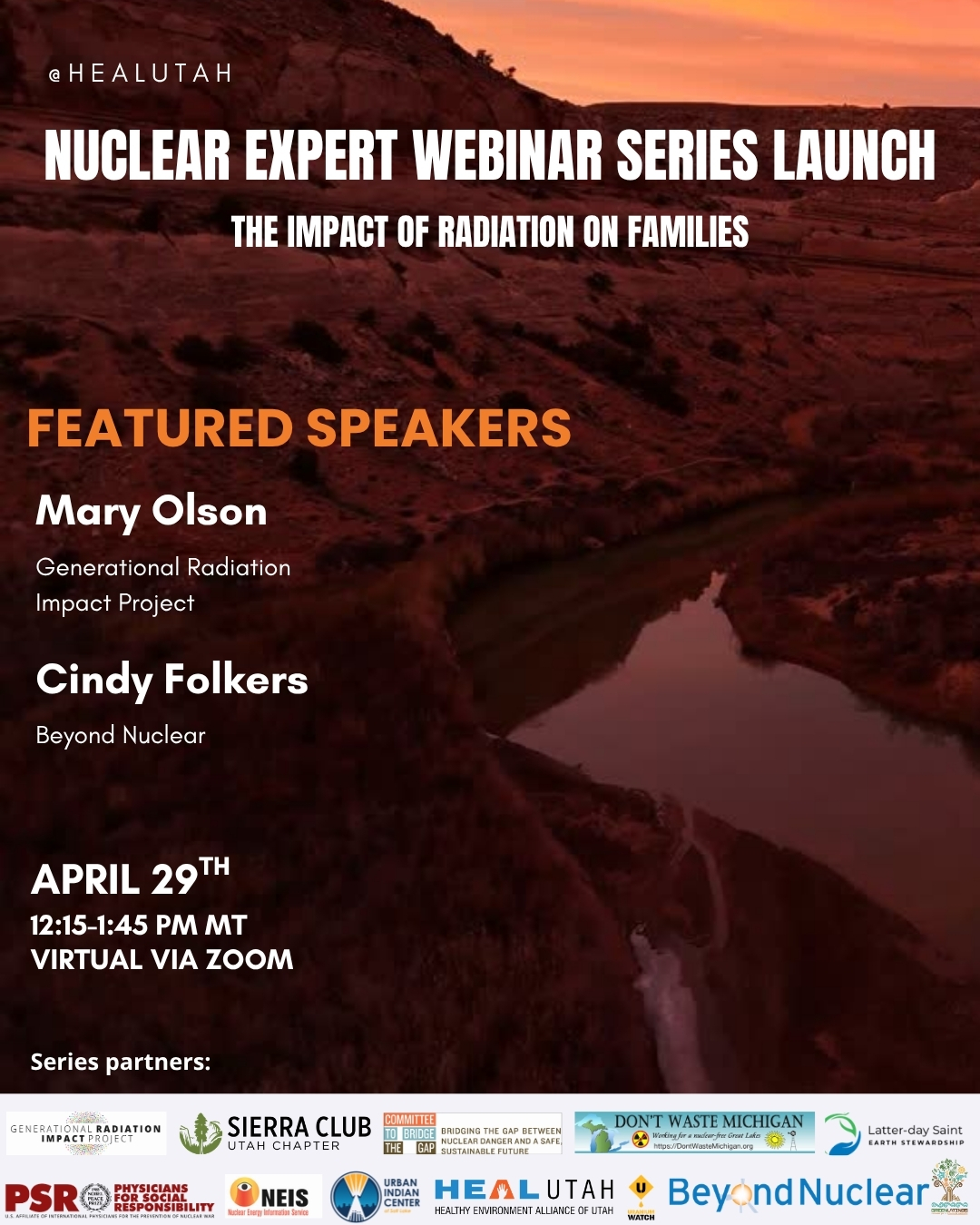
29 April – Nuclear Expert Webinar #1 – Radiation Impacts on Families with Mary Olson and Cindy Folkers
- 12:15 PM MT – 1:45 PM MT
- Location: Virtual – REGISTER TODAY

4 May -West Suburban Peace Coalition to discuss Iran war at May Educational Forum
Monday, May 4, 7:00 – 8:00 PM Central Standard Time
Title: : How Trump’s Narrative Tries to Shape the Reality of the War on Iran.
Contact Walt Zlotow, zlotow@hotmail.com 630 442 3045 for further information
14 May – online event From Bombs to Data Centres: the Face of Nuclear Colonialism
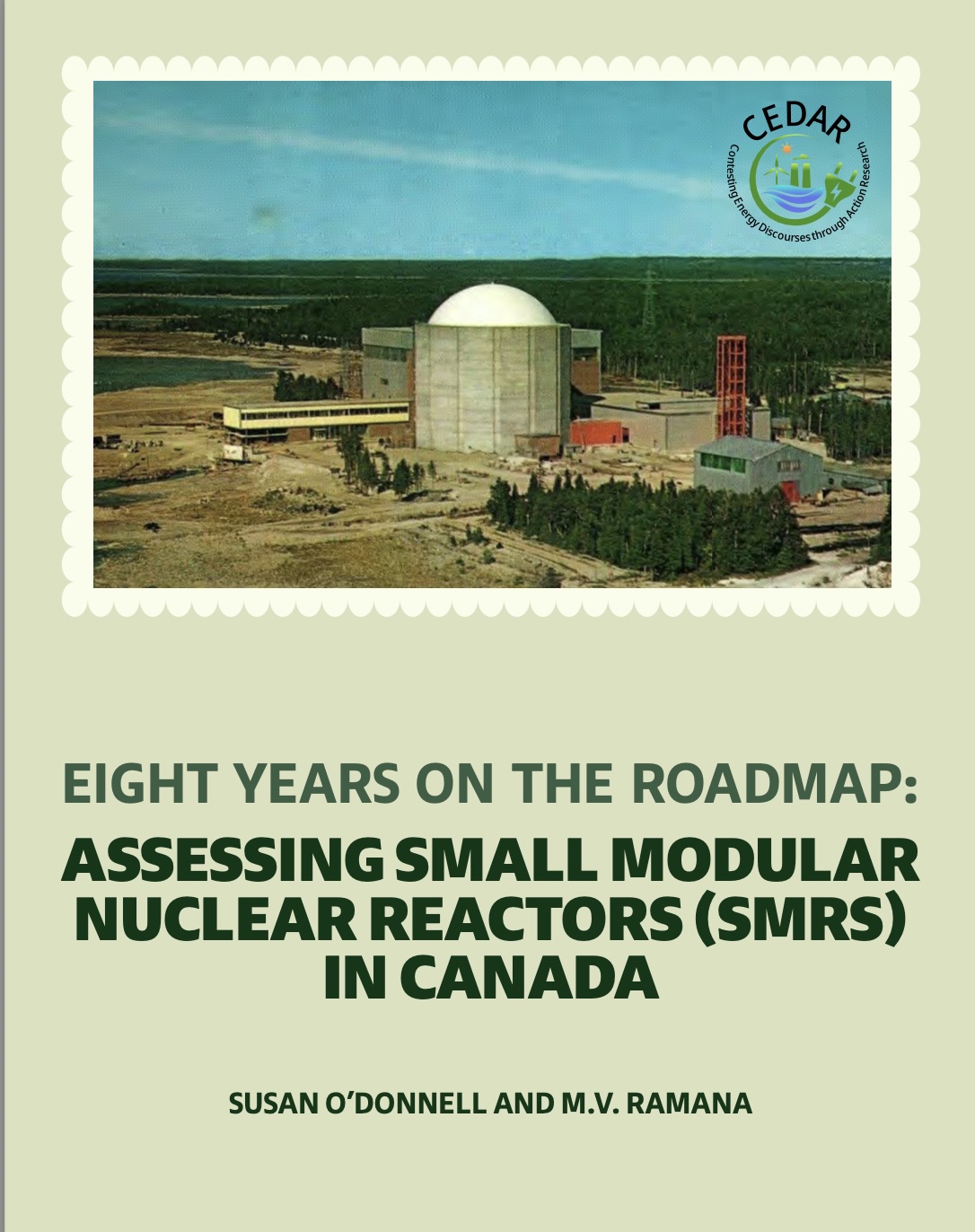

Pine Ridge Uranium is the real threat, not Tehran- Tell Burgum: Stop the Extraction.
Chernobyl: The Lost Tapes – A good documentary on Chernobyl on SBS available On Demand for the next 3 weeks– https://www.sbs.com.au/ondemand/tv-program/chernobyl-the-lost-tapes/2352741955560
To see nuclear-related stories in greater depth and intensity – go to https://nuclearinformation.wordpress.com
-
Archives
- April 2026 (338)
- March 2026 (251)
- February 2026 (268)
- January 2026 (308)
- December 2025 (358)
- November 2025 (359)
- October 2025 (376)
- September 2025 (257)
- August 2025 (319)
- July 2025 (230)
- June 2025 (348)
- May 2025 (261)
-
Categories
- 1
- 1 NUCLEAR ISSUES
- business and costs
- climate change
- culture and arts
- ENERGY
- environment
- health
- history
- indigenous issues
- Legal
- marketing of nuclear
- media
- opposition to nuclear
- PERSONAL STORIES
- politics
- politics international
- Religion and ethics
- safety
- secrets,lies and civil liberties
- spinbuster
- technology
- Uranium
- wastes
- weapons and war
- Women
- 2 WORLD
- ACTION
- AFRICA
- Atrocities
- AUSTRALIA
- Christina's notes
- Christina's themes
- culture and arts
- Events
- Fuk 2022
- Fuk 2023
- Fukushima 2017
- Fukushima 2018
- fukushima 2019
- Fukushima 2020
- Fukushima 2021
- general
- global warming
- Humour (God we need it)
- Nuclear
- RARE EARTHS
- Reference
- resources – print
- Resources -audiovicual
- Weekly Newsletter
- World
- World Nuclear
- YouTube
-
RSS
Entries RSS
Comments RSS
 nuclear-news