Supreme Court Ruling Rejects National Government Responsibility for Fukushima Evacuees
by Citizens’ Nuclear Information Center · Published July 4, 2022
By Fukutake Kimiko (Head attorney for the Chiba Prefecture nuclear power plant victims lawsuit)
On June 17, 2022, the Supreme Court of Japan put an end to the four lawsuits filed by the evacuees of the Fukushima nuclear disaster in Fukushima, Gunma, Chiba, and Ehime prefectures. The sole point of dispute in these lawsuits was whether the Japanese government, which did not exert regulatory authority on the utility company, Tokyo Electric Power Company Holdings (TEPCO), for the implementation of measures against tsunamis, is liable to compensate for damages according to Paragraph 1, Article 1 of the Law Concerning State Liability for Compensation. The top court absolved the government.
The Fukushima nuclear disaster occurred when external power supply to the station was lost due to the earthquake, activating the emergency power supply system, which was then crippled by the tsunami that flooded the station above ground level. The loss of emergency power made reactor core cooling impossible, causing core meltdown and the discharge of huge volumes of radioactive substances. The plaintiffs claimed that, firstly, the loss of emergency power supply and consequent disaster had been foreseeable because it was possible to tell that tsunamis would flood the station above ground level, at which the reactor building and turbine building were situated, since the height and impact of tsunamis were calculated based on the Long-term Assessment released in 2002 by the governmental Headquarters for Earthquake Research Promotion. The second claim was that the disaster might have been prevented if the main buildings and main equipment rooms had been provided with measures to make them watertight, in addition to seawalls.
On the other hand, the government claimed that, firstly, the Long-term Assessment was not knowledge that could have been accepted as a just set of opinions sufficiently accurate and reliable to be incorporated into nuclear regulation, and that, secondly, even if tsunami countermeasures had been taken in response to the calculations based on the Long-term Assessment, tsunamis were calculated to arrive from the south, prompting a seawall to be built to the south of the station, such that the seawall would have had no effect against the tsunami experienced in this lawsuit, because the size and directions of the actual tsunami waves were completely different.
Supreme Court shies away from delivering a clear judgment about foreseeability
Concerning the tsunami calculations, the Supreme Court stated: “The fault model of the Meiji Sanriku Earthquake was applied to the areas closer to the Japan trench, such as the areas off the coast of Fukushima Prefecture. Many numerical calculations performed with the conditions of this fault model varied within the ranges that were deemed reasonable, using the design tsunami height evaluation methods available from tsunami evaluation technology. The highest possible tsunamis on the east face and southeast face of the station were calculated. The calculations included sufficient safety margins to meet the worst-case scenario foreseeable at that time. Thus, the calculations were reasonable.”
The Supreme Court did not examine the Long-term Assessment closely nor take it affirmatively; it stated that the calculations based on the Long-term Assessment were reasonable. However, the court did not clearly put aside the Long-term Assessment. The court statement can be understood to mean that the Assessment was reliable.
However, to determine foreseeability, it is not sufficient to consider only natural phenomena, namely, from what directions and at what heights tsunamis would arrive. What also needs to be considered is whether it was possible to foresee that, when a tsunami arrived above ground level, seawater could enter the buildings and rooms where critical facilities were placed through openings such as doors, pipe penetrations and air intakes, possibly submerging and crippling the emergency power supply. Sato Kazuo, former chairman of the Nuclear Safety Commission wrote in Logic of Nuclear Safety [in Japanese]: “Danger indicates the possibility of generating circumstances where human life, health, or assets may be significantly damaged.”
The Supreme Court wrote: “If the Minister of Economy, Trade and Industry had exerted regulatory authority, a seawall or similar construction designed to prevent the flooding of the station would have been installed to protect against tsunamis of the scale similar to those calculated in the Long-term Assessment.” It sounds as if the Supreme Court recognized the foreseeability of only natural phenomena.
Supreme Court adopts the seawall as the sole point of contention
The Supreme Court further stated, “Prior to the accident examined in this lawsuit, the basic countermeasure for the protection of nuclear facilities from tsunamis in this country was to build seawalls or the like to prevent seawater from entering the premises of the nuclear facilities in which safety equipment or the like are situated, to prepare against premise flooding due to tsunamis… Such an idea that installing seawalls or the like is not sufficient was not dominant, and in no other respects was the above-mentioned measure taken as insufficient as a tsunami countermeasure to protect nuclear facilities under the knowledge available before the accident examined in this lawsuit. Therefore, it is impossible to reasonably determine that the implementation of other measures was probable or that such other measures should have been taken in addition to the seawalls or the like designed to prevent the flooding of the premises examined in this lawsuit in the case of tsunamis of a scale similar to that of the accident, even if the Minister of Economy, Trade and Industry had exerted the above-mentioned regulatory authority before the accident.”
At the same time, however, a flooding accident had already been experienced at the Blayais Nuclear Power Plant in France. In response to the accident, watertight defense efforts were being made for critical equipment rooms in addition to the construction of seawalls. At Tokai Daini Nuclear Power Plant (Ibaraki Prefecture) and Hamaoka Nuclear Power Station (Shizuoka Prefecture), watertight defense efforts were already made for part of the buildings and critical equipment rooms. The safety philosophy of multiple protection, which demands multi-layer safety measures, was widely accepted around the world. A single measure is no longer regarded satisfactory for critical equipment such as the emergency power supply; multi-layer, diverse, and independent safety measures are demanded. The Supreme Court judgment is a sign of acceptance of the poor operation of the regulatory organization in Japan.
Supreme Court excessively emphasizes that the actual tsunami and earthquake were greater than the tsunami calculations
The Supreme Court stated, “The scale of earthquake predicted in the Long-term Assessment was around 8.2 in tsunami magnitude, and the flooding depth around the main buildings was estimated to be about 2.6 meters or less. The calculated tsunamis were higher than the station ground level on the southeast face, while on the east face, the calculated tsunamis did not exceed the ground level; namely, even if a tsunami of the same scale as calculated had arrived at the station examined in this lawsuit, it was not foreseen that seawater might enter the site from the east face.” The court examined in detail the tsunami experienced in this lawsuit, stating, “The epicentral area ranged about 450 kilometers north and south, and about 200 kilometers east and west. The maximum slippage was 50 meters or more. The magnitude of the earthquake experienced in this lawsuit was 9.0, and the tsunami magnitude was 9.1; the earthquake was the largest in Japan’s seismic monitoring history. With the arrival of the tsunami experienced in this lawsuit, volumes of seawater entered the station premises not only from the southeast face but also from the east face. The flooding depth near the main buildings due to the tsunami was a maximum of about 5.5 meters.” This finding is not wrong. However, it is not relevant to discuss the cause of the disaster based only on the scale of the earthquake (whether the tsunami magnitude was 8.2 or 9.1), the direction of tsunami arrival (whether from southeast or from east), or flooding depth (whether about 2.6 meters or less, or a maximum of about 5.5 meters). The real issue is whether tsunamis might arrive above the station ground level, whether seawater might enter the main buildings, whether emergency power supply might be flooded and crippled, and whether the danger of reactor core meltdown might be possible or probable. Because the tsunami calculations obtained based on the Long-term Assessment indicated that such a danger was possible, the danger did exist if the actual tsunami were as great as or greater than the calculations. As the dissenting opinion by Judge Miura points out, “In this lawsuit, the bottom line must not be overlooked while too much attention is paid to the scales and details of the earthquake or tsunami experienced in this lawsuit.”
Supreme Court judges that seawall installation is the only measure, taking account of tsunami calculations only
The Supreme Court wrote: “A seawall or the like designed to protect the station examined in this lawsuit from tsunamis of the same scale as the tsunami calculations would be highly likely to serve mainly to prevent the entry of seawater from the southeast face of the station; even taking into account the possibility that seawalls would be designed to include a given degree of margin, it would not have served to prevent the ingress of a great amount of seawater into the station at the arrival of the tsunami.” The court also stated: “It is highly likely that such a large amount of seawater would have entered the main buildings, flooded and crippled emergency power supply, caused the nuclear reactor facilities to black out, and generated an accident of the same scale of the disaster experienced in this lawsuit.” In conclusion, the Supreme Court denied the causal link between the lack of exertion of regulatory authority and the occurrence of the disaster, stating. “Under the factual conditions presented in this case, a factual relation cannot be found to exist between the lack of exertion of the abovementioned regulatory authority by the Minister of Economy, Trade and Industry and the occurrence of the accident examined in this lawsuit or similar accident.” The court judged that the government is not liable to compensate for damages according to Paragraph 1, Article 1 of the Law Concerning State Liability for Compensation.
Dissenting opinion by Judge Miura acutely reveals the truth
The Supreme Court Petty Bench consists of five judges, but Otani Naoto, Chief Justice of the Supreme Court, does not participate in the examination of individual cases. The four judges who conducted this case were Kanno Hiroyuki (former judge), Miura Mamoru (former prosecutor), Kusano Koichi (former attorney), and Okamura Kazumi (former prosecutor, attorney, and government official).
Besides the fact-finding section, the majority opinion (by judges Kanno, Kusano and Okamura) consists of only six pages, denying the liability of the government. On the other hand, the dissenting opinion (by judge Miura) is 29 pages long, and clearly states that the government is liable: “The government and the utility company, TEPCO, are held liable for damages to the plaintiffs, and it is reasonable to understand that the two are under non-authentic joint obligations (meaning that both parties are liable, but that releasing one party from liability does not automatically release the other party from the same liability).” The dissenting opinion is summarized below:
- In the Technical Standards based on the Electricity Business Act, “the cases where nuclear reactor facilities and the like may be damaged by tsunamis,” are cases where, in consideration of the severest foreseeable tsunami conditions, the safety functions of nuclear reactor facilities and the like may be crippled by tsunamis, which should be assessed appropriately by means of numerical calculations and other relevant means, based on the latest scientific and expert knowledge, and in consideration of the uncertainty of various factors from a conservative (safer) point of view, to encompass tsunamis that may occur, however rarely, during the service period of the facilities.
- The Long-term Assessment was conducted to evaluate the occurrence of future earthquake activity in the area ranging from the offshore area of the Sanriku Coast (extending from Aomori to Miyagi Prefectures in northern Japan) to the offshore area of the Boso Peninsula (in Chiba Prefecture in the south), as part of a comprehensive evaluation of earthquakes, to promote the improvement of earthquake disaster prevention measures. The basic reliability of the Assessment can be secured in that the Assessment was conducted by appropriate methods using previously established scientific and expert knowledge. The Assessment is reasonable for use as the basis of the determination of technological standards.
- At that time, in Japan and in other countries, watertight defense measures were known to be implemented in nuclear reactor facilities. Technological knowledge for the prevention of flooding for doors, openings, penetrations and the like is available. It can be considered that, if watertight defense measures or other relevant measures were taken, it might have effectively protected the emergency power supply examined in this lawsuit against the tsunami.
Let’s overturn the Supreme Court majority opinion
The majority opinion of the Supreme Court bailed out the delinquent national government, ignoring the fact that regulatory administration can be effective only when the government exerts regulatory authority at the right time and in the right situations. We might say that the judicial system has managed to come down to a very low level here.
The majority opinion of the Supreme Court includes incorrect factual findings, judgment failures and contradictions. The second lawsuit of the Chiba plaintiff group is pending at the Tokyo Hight Court. We intend to make the best efforts possible to present further assertions and proofs needed to turn the dissenting opinion of the Supreme Court decision into a majority opinion. We thank you for your continued support.
Decadal trends in 137Cs concentrations in the bark and wood of trees contaminated by the Fukushima nuclear accident.
Abstract
Understanding the actual situation of radiocesium (137Cs) contamination of trees caused by the Fukushima nuclear accident is essential for predicting the future contamination of wood. Particularly important is determining whether the 137Cs dynamics within forests and trees have reached apparent steady state. We conducted a monitoring survey of four major tree species (Japanese cedar, Japanese cypress, konara oak, and Japanese red pine) at multiple sites. Using a dynamic linear model, we analyzed the temporal trends in 137Cs activity concentrations in the bark (whole), outer bark, inner bark, wood (whole), sapwood, and heartwood during the 2011–2020 period. The activity concentrations were decay-corrected to September 1, 2020, to exclude the decrease due to the radioactive decay. The 137Cs concentrations in the whole and outer bark samples showed an exponential decrease in most plots but a flat trend in one plot, where 137Cs root uptake is considered to be high. The 137Cs concentration ratio (CR) of inner bark/sapwood showed a flat trend but the CR of heartwood/sapwood increased in many plots, indicating that the 137Cs dynamics reached apparent steady state within one year in the biologically active parts (inner bark and sapwood) and after several to more than 10 years in the inactive part (heartwood). The 137Cs concentration in the whole wood showed an increasing trend in six plots. In four of these plots, the increasing trend shifted to a flat or decreasing trend. Overall, the results show that the 137Cs dynamics within forests and trees have reached apparent steady state in many plots, although the amount of 137Cs root uptake in some plots is possibly still increasing 10 years after the accident. Clarifying the mechanisms and key factors determining the amount of 137Cs root uptake will be crucial for predicting wood contamination.
Introduction
After the Fukushima Dai-ichi Nuclear Power Plant (FDNPP) accident in March of 2011, a wide area of forests in eastern Japan was contaminated with radionuclides. In particular, radiocesium (137Cs) has the potential to threaten the forestry and wood production in the contaminated area for many decades because it was released in large amounts (10 PBq)1 and has a relatively long half-life (30 years). Radiocesium levels for some wood uses are strictly regulated in Japan (e.g., 40 Bq kg−1 for firewood2 and 50 Bq kg−1 for mushroom bed logs3), meaning that multipurpose uses of wood from even moderately contaminated areas are restricted. Although a guidance level of radiocesium in construction wood has not been declared in Japan, the permissible levels in some European countries (370–740 Bq kg−1)4,5,6 suggest that logging should be precautionary within several tens of kilometers from the FDNPP, where the 137Cs activity concentration in wood potentially exceeds 1,000 Bq kg−1 [refs. 7,8]. To determine whether logging should proceed, the long-term variation in wood 137Cs concentration must be predicted as accurately as possible. Many simulation models successfully reproduce the temporal variations in the early phase after the FDNPP accident, but produce large uncertainties in long-term predictions9. To understand the 137Cs dynamics in forests and trees and hence refine the prediction models, it is essential to provide and analyze the observational data of 137Cs activity concentrations in tree stem parts.
Accident-derived 137Cs causes two types of tree contamination: direct contamination by 137Cs fallout shortly after the accident, and indirect contamination caused by surface uptake from directly contaminated foliage/bark10,11 and root uptake from contaminated soil12. The 137Cs concentration in bark that pre-exists the accident was affected by both 137Cs drop/wash off from bark surfaces and 137Cs uptake because the bark consists of a directly contaminated outer bark (rhytidome) and an indirectly contaminated inner bark (phloem). Given that the 137Cs content was 10 times higher in the outer bark than in the inner bark in 201213 and the 137Cs concentration in the whole bark decreased during the 2011–2016 period at many study sites8, the temporal variation in the whole bark 137Cs concentration during the early post-accident phase must be mainly contributed by drop/wash off of 137Cs on the outer bark surface.
In contrast, stem wood (xylem) covered by bark was contaminated only indirectly. Although 137Cs distribution in sapwood (outer part of stem wood; containing living cells) and heartwood (inner part of stem wood; containing no living cells) is non-uniform and species-specific8,13,14,15, the 137Cs concentration in whole wood depends on the amount of 137Cs uptake. Because the dissolvable 137Cs on the foliar/bark surface decreased significantly within 201116, the main route of 137Cs uptake since 2012 is likely root uptake rather than surface uptake. A monitoring survey during 2011–2016 showed that the temporal trend in the whole wood 137Cs concentration can be increasing, decreasing, or flat8, suggesting that 137Cs root uptake widely differs among sites and species.
Meanwhile, many simulation models have predicted an initial increase in the whole wood 137Cs concentration after the accident, followed by a gradual decline9. The initial increase is attributable to the increase in soil 137Cs inventory, and the following decline is mainly attributed to radioactive decay, dilution by wood biomass increment, and immobilization in the soil. Therefore, the trend shift from increasing to decreasing is a good indicator that shows the 137Cs dynamics within the forest have reached apparent steady state, which is characterized by slower changes in 137Cs concentration, bioavailability, and partitioning in the forest12,17,18. However, the timing of the trend shift predicted by the models have large uncertainty, varying from several years to a few decades from the accident9. Moreover, the trend shift has not been confirmed by observational data after the FDNPP accident. Although our monitoring survey cannot easily identify the key driving factors of the temporal trends, it can directly discern the trend shift from increasing to decreasing, and the timeframe of the increasing trend. The confirmation of the trend shift will accelerate the understanding of key factors of 137Cs root uptake, because important parameters such as transfer factor and CR are originally defined for a steady state condition18.
The present study aims to clarify the temporal trends of 137Cs concentrations in bark and wood of four major tree species (Japanese cedar, Japanese cypress, konara oak, and Japanese red pine) at multiple sites during the 10 years following the FDNPP accident. Detecting a trend shift from increasing to decreasing in the wood 137Cs concentration was especially important to infer whether the 137Cs dynamics within the forest have reached apparent steady state. We update Ohashi et al.8, who analyzed the monotonous increasing or decreasing trends during 2011–2016, with observational data of 2017–2020 and a more flexible time-series analysis using a dynamic linear model (DLM). The DLM is suitable for analyzing data including observational errors and autocorrelation, and has the advantage of being applicable to time-series data with missing years. For a more detailed understanding of bark contamination and the 137Cs dynamics in tree stems, we also newly provide data on the 137Cs concentrations in the outer and inner barks. The temporal trends in the 137Cs CRs of outer bark/inner bark, heartwood/sapwood, and inner bark/sapwood were analyzed to confirm whether the 137Cs dynamics within the trees have reached apparent steady state.
Materials and methods
Monitoring sites and species
The monitoring survey was conducted at five sites in Fukushima Prefecture (sites 1–4 and A1) and at one site in Ibaraki Prefecture (site 5), Japan (Fig. 1). Sites 1, 2, and A1 are located in Kawauchi Village, site 3 in Otama Village, site 4 in Tadami Town, and site 5 in Ishioka City. Monitoring at sites 1–5 was started in 2011 or 2012, and site A1 was additionally monitored since 2017. The tree species, age, mean diameter at breast height, initial deposition density of 137Cs, and sampling year of each sample at each site are listed in Table 1. The dominant tree species in the contaminated area, namely, Japanese cedar (Cryptomeria japonica [L.f.] D.Don), Japanese cypress (Chamaecyparis obtusa [Siebold et Zucc.] Endl.), konara oak (Quercus serrata Murray), and Japanese red pine (Pinus densiflora Siebold et Zucc.) were selected for monitoring. Japanese chestnut (Castanea crenata Siebold et Zucc.) was supplementally added in 2017. The cedar, cypress, and pine are evergreen coniferous species, and the oak and chestnut are deciduous broad-leaved species. Sites 1 and 3 each have three plots, and each plot contains a different monitoring species. Site A1 has one plot containing two different monitoring species, and the remaining sites each have one plot with one monitoring species, giving ten plots in total.


Sample collection and preparation
Bulk sampling of bark and wood disks was conducted by felling three trees per year at all sites during 2011–20168,25 and at sites 3–5 and A1 during 2017–2020. Partial sampling from six trees per year was conducted at sites 1 and 2 during 2017–2020 (from seven trees at site 2 in 2017) to sustain the monitoring trees. All the samples were obtained from the stems around breast height. During the partial sampling, bark pieces sized approximately 3 cm × 3 cm (axial length × tangential length) were collected from four directions of the tree stem using a chisel, and 12-mm-diameter wood cores were collected from two directions of the tree stem using an automatic increment borer (Smartborer, Seiwa Works, Tsukuba, Japan) equipped with a borer bit (10–101-1046, Haglöf Sweden, Långsele, Sweden). Such partial sampling increases the observational errors in the bark and wood 137Cs concentrations in individual trees26. To mitigate this error and maintain an accurate mean value of the 137Cs concentration, we increased the number of sampled trees from three to six. The sampling was conducted mainly in July–September of each year; the exceptions were site-5 samples in 2011 and 2012, which were collected irregularly during January–February of the following year. The collected bark pieces were separated into outer and inner barks, and the wood disks and cores were split into sapwood and heartwood. The outer and inner bark samples during 2012–2016 were obtained by partial sampling of barks sized approximately 10 cm × 10 cm from 2–3 directions on 2–3 trees per year.
The bulk samples of bark, sapwood, and heartwood were air-dried and then chipped into flakes using a cutting mill with a 6-mm mesh sieve (UPC-140, HORAI, Higashiosaka, Japan). The pieces of the outer and inner bark were chipped into approximately 5 mm × 5 mm pieces using pruning shears, and the cores of the sapwood and heartwood were chipped into semicircles of thickness 1–2 mm. Each sample was packed into a container for radioactivity measurements and its mass was measured after oven-drying at 75 °C for at least 48 h. Multiplying this mass by the conversion factor (0.98 for bark and 0.99 for wood)8 yielded the dry mass at 105 °C.
Radioactivity measurements
The radioactivity of 137Cs in the samples was determined by γ-ray spectrometry with a high-purity Ge semiconductor detector (GEM20, GEM40, or GWL-120, ORTEC, Oak Ridge, TN). For measurements, the bulk and partial samples were placed into Marinelli containers (2.0 L or 0.7 L) and cylindrical containers (100 mL or 5 mL), respectively. The peak efficiencies of the Marinelli containers, the 100-mL container, and the 5-mL container were calibrated using standard sources of MX033MR, MX033U8PP (Japan Radioisotope Association, Tokyo, Japan), and EG-ML (Eckert & Ziegler Isotope Products, Valencia, CA), respectively. For the measurement of the 5-mL container, a well-type Ge detector (GWL-120) was used under the empirical assumption that the difference in γ-ray self-absorption between the standard source and the samples is negligible27. The measurement was continued until the counting error became less than 5% (higher counting errors were allowed for small or weakly radioactive samples). The activity concentration of 137Cs in the bark (whole) collected by partial sampling was calculated as the mass-weighted mean of the concentrations in the outer and inner barks; meanwhile, the concentration in the wood (whole) was calculated as the cross-sectional-area-weighted mean of sapwood and heartwood concentrations. The activity concentrations were decay-corrected to September 1, 2020, to exclude the decrease due to the radioactive decay.
Discussion
Causes of temporal trends in bark 137Cs concentration
The 137Cs concentration in the whole bark decreased in many plots, clearly because the outer bark 137Cs concentration decreased. However, the whole bark 137Cs concentration showed a relatively small decrease or even a flat trend in some plots (site-2 cedar and site-1 cypress and oak). In the site-1 cypress plot, where the whole bark 137Cs concentration decreased relatively slowly, the inner bark 137Cs concentration notably increased. Similarly, although we lack early phase monitoring data in the site-2 cedar and site-1 oak plots, the inner bark 137Cs concentration in both plots is considered to have increased prior to monitoring because the sapwood 137Cs concentration increased in both plots and the CR of inner bark/sapwood was constant in all other plots. Therefore, the low-rate decrease or flat trend in the whole bark 137Cs concentration in some plots was probably caused by an increase in the inner bark 137Cs concentration, itself likely caused by high 137Cs root uptake (as discussed later).
The 137Cs concentration in the outer bark decreased in all four plots monitored since 2012 (site-1 and site-3 cedar, site-1 cypress, and site-3 pine), confirming the 137Cs drop/wash off from the bark surface. The constant (exponential) decrease in three of these plots indicates that the 137Cs drop/wash off was still continuing in 2020 but with smaller effect on the outer bark 137Cs concentration. In contrast, the decrease in the site-1 cypress plot seemed to slow down since around 2017. Furthermore, Kato et al.32 reported no decrease in 137Cs concentration in the outer bark of Japanese cedar during the 2012–2016 period. Such cases cannot be fitted by a simple decrease of the outer bark 137Cs concentration. As a longer-term perspective, in the outer bark of Norway spruces (Picea abies) affected by the Chernobyl nuclear accident, the biological half-life of 137Cs concentration was extended in areas with higher precipitation, suggesting that high root uptake of 137Cs hinders the decreasing trend33. The present study showed that 70–80% or more of the 137Cs deposited on the bark surface (outer bark) was removed by drop/wash off after 10 years from the accident and that the 137Cs CR of outer bark/inner bark became constant in some plots. These facts suggest that the longer-term variations in outer bark 137Cs concentration will be more influenced by 137Cs root uptake, although it is uncertain whether root uptake caused the slowing down of the decrease rate seen in the site-1 cypress plot. Further studies are needed to understand the 137Cs concentration in newly formed outer bark and to determine the 137Cs CR of outer bark/inner bark at steady state.
Causes of temporal trends in wood 137Cs concentration
The temporal trends of the 137Cs concentration in the whole wood basically corresponded to those in the sapwood. The exceptions were the site-3 and site-4 cedar plots, where the sapwood 137Cs concentration did not increase but the whole wood 137Cs concentration was raised by the notable increase in the heartwood 137Cs concentration. This behavior can be attributed to a species-specific characteristic of Japanese cedar, which facilitates Cs transfer from sapwood to heartwood8,15,34. The present study newly found that the increase in the 137Cs CR of heartwood/sapwood in the cedar plots became smaller or shifted to a flat trend around 2015–2016, indicating that 137Cs transfer between the sapwood and heartwood has reached apparent steady state at many sites 10 years after the accident. Therefore, after 2020, the whole wood 137Cs concentration in cedar is unlikely to increase without a concomitant increase in the sapwood 137Cs concentration.
The increasing trends in the 137Cs concentrations in whole wood and sapwood (site-2 cedar, site-1 cypress, and site-1 and site-3 oak plots) are seemingly caused by the yearly increase in 137Cs root uptake; however, the wood 137Cs concentration can also increase when the 137Cs root uptake is constant or even slightly decreases each year. This behavior can be shown in a simple simulation of the temporal variation in the wood 137Cs content (the amount of 137Cs in stem wood of a tree). If the 137Cs dynamics within a tree have reached steady state and the proportion of 137Cs allocated to stem wood become apparently constant, the wood 137Cs content in a given year can be considered to be determined by the amount of 137Cs root uptake and the amount of 137Cs emission via litterfall. The flat 137Cs CR trend of inner bark/sapwood during 2012–2020 (see Fig. 5) indicates that the 137Cs dynamics, at least those between the inner bark and sapwood, reached apparent steady state within 2011. Here we assume that (1) the annual amount of 137Cs root uptake is constant, (2) the proportion of 137Cs allocated to stem wood is apparently constant, and as assumed in many forest Cs dynamics models17,35,36,37, (3) a certain proportion of 137Cs in the stem wood is lost via litterfall each year. Under these conditions, the simulated amount of 137Cs emission balanced the amount of 137Cs root uptake after sufficient time, and the wood 137Cs content approached an asymptotic value calculated as [root uptake amount × allocation proportion × (1/emission proportion − 1)]. Note that the asymptotic value increases with increasing root uptake amount and decreasing emission proportion and does not depend on the amount of 137Cs foliar/bark surface uptake in the early post-accident phase. Nevertheless, the amount of 137Cs surface uptake in the early phase critically determines the trend of the wood 137Cs content. More specifically, the trend in the early phase will be increasing (decreasing) if the surface uptake is smaller (larger) than the asymptotic value. Finally, the temporal variation of the 137Cs concentration in wood is thought to be the sum of the dilution effect of the increasing wood biomass and the above-simulated variation in the wood 137Cs content. Therefore, in the early post-accident phase, the wood 137Cs concentration will increase when the wood 137Cs content increases at a higher rate than the wood biomass. As the wood 137Cs content approaches its asymptotic value (i.e., steady state), its increase rate slows and the dilution effect proportionally increases. Then, the wood 137Cs concentration shifts from an increasing trend to a decreasing trend. The trends of the 137Cs concentrations in whole wood and sapwood in the site-3 oak plot follow this basic temporal trend, which is similarly predicted by many simulation models9.
In other plots with the increasing trend (site-2 cedar and site-1 cypress and oak), the increase in the 137Cs concentrations in whole wood and sapwood became smaller or shifted to a flat trend around six years after the accident; however, it did not shift to a decreasing trend. This lack of any clear shift to a decreasing trend, which was similarly seen at sites with hydromorphic soils after the Chernobyl nuclear accident38,39, cannot be well explained by the above simulation. A core assumption of the simulation that the yearly amount of 137Cs root uptake is constant is probably violated in these plots, leading to underestimations of the root uptake amount. Although the inventory of exchangeable 137Cs in the organic soil layer has decreased yearly since the accident, that in the mineral soil layer at 0–5 cm depth has remained constant40. In addition, the downward migration of 137Cs has increased the 137Cs inventory in the mineral soil layer below 5-cm depth41,42. If the steady state 137Cs inventory of the root uptake source can be regarded as sufficient for trees, any increase in the 137Cs root uptake is likely explained by expansion of the root distribution and the increase in transpiration (water uptake) with tree growth. When the wood 137Cs content increases at a similar rate to the wood biomass, the increasing trend will not obviously shift to a decreasing trend. Therefore, assuming the 137Cs allocation and emission proportions in the mature trees do not change considerably with time, the amount of 137Cs root uptake is considered to be increasing yearly in these four plots.
In the remaining plots with the decreasing or flat trend (site-1 cedar, site-4 cedar without outliers, site-5 cypress, and site-3 pine), according to the above simulation, the amount of initial 137Cs surface uptake was larger than or similar to the asymptotic value, i.e. the amount of 137Cs root uptake is relatively small and/or the proportion of 137Cs emission via litterfall is relatively high. However, the amount of 137Cs root uptake in the plots with the flat trend is possibly increasing because the flat trend has not shifted to a decreasing trend. In these plots, although it is difficult to confirm apparent steady state of the soil–tree 137Cs cycling because of the lack of an initial increasing trend, the recent flat trends in the 137Cs CRs of heartwood/sapwood and inner bark/sapwood indicate that the 137Cs dynamics, at least within the trees, have reached apparent steady state.
Various factors were found to increase the 137Cs root uptake after the Chernobyl nuclear accident; for example, high soil water content, high soil organic and low clay content (i.e., low radiocesium interception potential [RIP]), low soil exchangeable K concentration, and high soil exchangeable NH4 concentration12,43. After the FDNPP accident, the 137Cs transfer from soil to Japanese cypress and konara oak was found to be negatively correlated with the soil exchangeable K concentration44,45 and the 137Cs mobility is reportedly high in soils with low RIP46. However, neither the soil exchangeable K and Cs concentrations nor the RIP have explained the different 137Cs aggregated transfer factors (defined as [137Cs activity concentration in a specified component/137Cs activity inventory in the soil]) of Japanese cedars at sites 1–446,47. Because the 137Cs dynamics within the forest and trees in many plots reached apparent steady state at 10 years after the FDNPP accident, the 137Cs aggregated transfer factor is now considered to be an informative indicator of the 137Cs root uptake. Therefore, a comprehensive analysis of the 137Cs aggregated transfer factor and the soil properties at more sites than in the present study will be important to understand key factors determining the amount of 137Cs root uptake by each tree species at each site.
Validity and limitation of the trend analyses
Although the application of the smooth local linear trend model failed in plots monitored for less than five years, it was deemed suitable for analyzing the decadal trend because it removes annual noises, which are probably caused by relatively large observational errors (including individual variability)26. Moreover, the algorithm that determines the trend and its shift between 2 and 4 delimiting years was apparently reasonable, because the detected trends well matched our intuition. However, when judging a trend, the algorithm simply assesses whether the true state values significantly differ between the delimiting years. Therefore, it cannot detect changes in the increase/decrease rate (i.e., whether an increasing/decreasing trend is approaching a flat trend). For example, the whole bark 137Cs concentration in the site-1 cypress plot was determined to decrease throughout the monitoring period. In fact, the decrease rate slowed around 2014 and the decreases were slight between 2014 and 2020 (see Fig. 2). Similarly, the sapwood 137Cs concentration in the site-1 cypress and oak plots was determined to increase throughout the monitoring period, but the increase rate has clearly slowed since around 2017. To more sensitively detect the shift from an increasing/decreasing trend to a flat trend, other algorithms are required. Nevertheless, this algorithm is acceptable for the chief aim of the present study; that is, to detect a trend shift from increasing to decreasing.
Conclusions
In many plots monitored at Fukushima and Ibaraki Prefectures, the 137Cs concentrations in the whole and outer bark decreased at almost the same yearly rate for 10 years after the FDNPP accident, indicating that the direct contamination of the outer bark was mostly but not completely removed during this period. Moreover, the 137Cs concentration in the whole bark decreased at relatively low rates or was stable in plots where the 137Cs root uptake was considered to be high. This fact suggests that indirect contamination through continuous root uptake can reach the same magnitude as direct contamination by the accident.
In all of our analyzed plots, the 137Cs CR of inner bark/sapwood has not changed since 2012, indicating that 137Cs transfer among the biologically active parts of the tree stem had already reached apparent steady state in 2011. In contrast, the 137Cs CR of heartwood/sapwood in six out of nine plots increased after the accident. In four of these plots, the 137Cs CR of heartwood/sapwood plateaued after 3–6 years; in the other two plots, the plateau was not reached even after 10 years. Therefore, saturation of 137Cs in heartwood (an inactive part of the tree stem) requires several years to more than one decade.
The 137Cs concentration in the whole wood showed an increasing trend in six out of nine plots. In four of these plots, the increasing trend shifted to a flat or decreasing trend, indicating that the 137Cs dynamics in many forests reached apparent steady state at 10 years after the accident. However, the lack of the clear shift to a decreasing trend indicates that the 137Cs root uptake is probably still increasing in some plots. Continuous monitoring surveys and further studies clarifying the complex mechanisms of 137Cs root uptake in forests are needed in order to refine the simulation models and improve their prediction accuracy.
Fukushima nuclear plant compensation burden was secretly reduced
2022/07/04
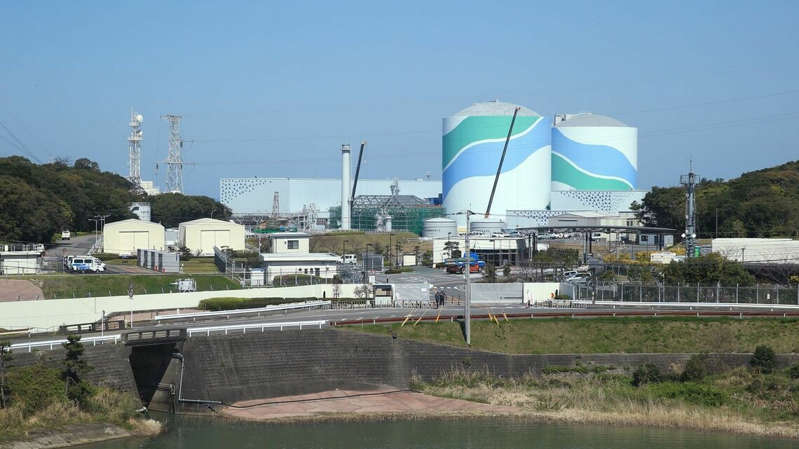
An investigation by a non-profit organization has revealed that a portion of the cost of compensation for damages caused by the Fukushima nuclear power plant accident, which is borne by the major electric power companies, has been secretly reduced without proper explanation.
Photo: CALI’s release on March 31 regarding the determination of the general burden. This alone does not reveal the actual situation.
The amount of reduction amounts to 29.3 billion yen for one year in FY2021. Hajime Matsukubo, executive director of the NPO Nuclear Information and Documentation Office, who discovered this fact, criticizes the way it was done, saying, “There is no proper explanation to the public, the electricity users, and the way it was done is opaque.
Reducing the burden on electric power companies by approximately 20%.
Under the Act on Compensation for Nuclear Damage and Decommissioning of Nuclear Power Plants, the nine major electric power companies, including Tokyo Electric Power Company Holdings, Japan Atomic Power Company, and Japan Nuclear Fuel Limited, have been bearing a total of 11 companies’ costs called the general burden to cover the cost of compensation for victims of the nuclear accident.
A portion of this amount was paid in FY2011 and FY2012, and the full amount in FY2013 and thereafter was paid to the Japan Atomic Energy Agency (hereafter referred to as “JNES”). In FY2020, an additional 30.5 billion yen was added as an additional burden, referred to as the “past portion” (see below).
When Makoto Yamazaki, a member of the House of Representatives of the Constitutional Democratic Party of Japan, submitted a written question based on Matsukubo’s point of view, the government responded that the actual reduction in the general burden for FY2021 is 29.3 billion yen. The actual burden for the same fiscal year was 133.7 billion yen.
According to Matsukubo, the burden for the nine companies, excluding Chubu Electric Power and Japan Atomic Power Company, was reduced by about 20% from the FY2020 level. Chubu Electric’s burden was increased by 2.8%, and the reduction for Japan Atomic Power Company was about 14%. The company had the special circumstance that it had been decommissioning nuclear power plants even before the accident.
Regarding the reduction, a CALC official explained, “With the major electric power companies in a difficult business situation, the companies requested a reduction in the existing level of the general burden, which had been determined based on profit levels prior to the Fukushima nuclear accident.

The total amount of general contributions for FY2021, which CALI announced on March 31 after receiving approval from the Minister of Economy, Trade and Industry, was 194.7 billion yen, up 1.5 billion yen from the previous fiscal year. The aforementioned person in charge said, “The total amount of the general burden itself has not changed significantly compared to FY2020, and the burden on electricity users as a whole will remain the same. The total amount of the general burden itself has not changed significantly compared to FY2020, and the burden on electricity users as a whole has not changed.
However, there is a trick to this explanation.
There are two types of general contributions: one is the contribution related to compensation for the Fukushima nuclear power plant accident. The other is a past general burden created in 2015 when it was discovered that the cost of compensation was much higher than initially expected, and the increased amount was added to the transmission charges (charges for the use of transmission and distribution lines) in order to recover it. The new fee is to be collected from the second half of FY2020, as it should have been collected from 1966, when Japan’s first commercial nuclear power plant went into operation, to 2011, when the Fukushima nuclear power plant accident occurred, but had not been collected.
The amount of the past due amount was approximately 61 billion yen in FY2021, when a full year’s worth of fees was collected. 30.5 billion yen in FY2021 was a year-on-year increase of the past due amount, which overshadowed the former amount of reduced fees (29.3 billion yen).
METI and CALI should provide a proper explanation.
A significant portion of the conventional general burden is included in the cost of electricity rates and passed on to users. If the general burden has been reduced, shouldn’t it be used as a source of funds to reduce electricity rates?
Another problem is that the Ministry of Economy, Trade and Industry, which is in charge of approving electricity rates, has not provided proper explanations. When important utility rates are revised, the Consumer Affairs Agency and the Consumer Commission have a system to check the revision. However, the Consumer Affairs Agency says, “There have been no specific consultations and we have not received any information about the reduction of the general burden fee,” since it is not related to the revision of electricity rates.
On the other hand, one member of the Consumer Affairs Committee said, “This is the first time I have heard about this and I am surprised. The way it is done is opaque,” he told Toyo Keizai.
In addition to the complicated structure and method of determining electricity rates, costs related to nuclear power plants have been added to rates in the form of a roof over the head, with new fees collected retroactively after accidents have occurred. Moreover, “the method of determining the general burden is a black box” (Matsukubo).
Currently, the price of natural gas and other fossil fuels is soaring, causing electricity prices to rise, and households are finding it tougher to make ends meet. The fact that behind the scenes the electric power companies were secretly allowed to reduce their burden may cause suspicion toward the electric power administration. The Ministry of Economy, Trade and Industry (METI) and the Japan Atomic Energy Agency (JAEA) should reveal the actual situation of the reduction.
Where to in 2045? Contaminated Soil from the Nuclear Power Plant Accident: The Present Location of Interim Storage Facilities, Fukushima.
July 3, 2022
Contaminated removed soil and other materials generated by decontamination following the accident at TEPCO’s Fukushima Daiichi Nuclear Power Plant are temporarily stored at an interim storage facility adjacent to the plant. Decontamination outside of the difficult-to-return zones has been largely completed, and decontamination is also progressing in the specified restoration and rehabilitation base areas (restoration bases) within the difficult-to-return zones where evacuation orders are expected to be lifted this spring or later. However, there is no concrete plan for the decontamination of areas outside of the restoration centers that are difficult to return to, and there has been no progress in discussions regarding the removal of contaminated soil outside of Fukushima Prefecture. Eleven years after the accident, the problem of radioactive waste remains unresolved. (The problem of radioactive waste remains unresolved even 11 years after the accident.)
◆Total amount of contaminated waste is not foreseeable
According to the Ministry of the Environment, the amount of contaminated soil generated by decontamination in areas other than the difficult-to-return zones is estimated to be 14 million cubic meters, an enormous amount equivalent to 11 times the size of the Tokyo Dome. The soil is scheduled to be delivered to an interim storage facility by March 2010. In the remaining difficult-to-return zones in the seven municipalities of Fukushima Prefecture, six municipalities (excluding Minamisoma City) have been designated as “specific restoration base areas (restoration bases)” where decontamination work will be carried out ahead of other areas. It is estimated that 1.6 to 2 million cubic meters of contaminated soil will be generated in the decontamination of the reconstruction bases.
In addition, the government decided in August 2009 to lift the evacuation order for difficult-to-return zones outside of the restoration centers by decontaminating homes and other structures on request of those who wish to return. The Ministry of the Environment said, “We will proceed with the acquisition of land and the construction of storage facilities while keeping a close eye on the amount of soil that can be brought in. We do not know the maximum amount that can be brought in.

◆Unclear whether the waste will be transported out of Fukushima Prefecture
As the name implies, storage at interim storage facilities is considered “temporary” for final disposal. The government has promised to remove the contaminated soil to a final disposal site outside of Fukushima Prefecture in 2045, 30 years after the storage began in 2015. However, it is not known whether there are municipalities that will accept the waste contaminated by the nuclear accident, and the candidate site has not yet been decided.
In addition, three-quarters of the total amount of contaminated soil in storage currently contains less than 8,000 becquerels of radioactive cesium per kilogram of soil, which is the same level as that of the soil that is normally incinerated or landfilled. The government plans to reuse contaminated soil with less than 8,000 becquerels per kilogram in public works projects such as road construction. However, the use of contaminated soil is strongly opposed by local residents, and efforts to put this into practical use have run into difficulties. The Ministry of the Environment states that it will “continue its efforts to develop technologies and gain the understanding of related parties.

Interim storage facilities are located around the Fukushima Daiichi Nuclear Power Plant and cover an area of 1,600 hectares. Of the privately owned land, which accounts for about 80% of the total area, 93% has been acquired by the government. The delivery of contaminated soil generated outside of the difficult-to-return zone is expected to be completed by the end of FY2022.

ROBERT PRICE: Kern isn’t any more welcoming of nuclear power than it was a half-century ago
Bakersfield.com, By ROBERT PRICE For The Californian, 9 July 22 Ask most any Californian to describe nuclear energy and you’ll hear adjectives like “unreliable,” “dangerous” and “volatile……….
Nuclear (and even more unlikely, natural gas) could one day receive the same energy designation as wind farms and solar fields.
……………………… Although the EU’s tentative embrace of nuclear energy might turn some heads in the U.S., however, it’s not going to change minds in Kern County.
……………………….. Kern County was one of the first places in the U.S. to unite disparate political factions and rise up against the proliferation of nuclear power.
…………………………….. Opposition to the project coalesced into an unlikely alliance of farmers, doctors and environmentalists, the likes of which the power utilities had never before seen. Could conservatives and liberals get along? In Kern County, at the height of the 1976-78 battle against the DWP, they did.
……………………… It was the first time anywhere in America that citizens had voted down a nuclear power plant. Opposition to nuclear power had moved, as Wellock noted, from the movement’s typical base — “elements of the left wing of the Democratic Party” — to “traditionally pro-nuclear blue-collar constituencies.”
………………… If and when nuclear power ever does make a comeback in California, however, Kern County will not be the place for it. Nuclear plants need water and plenty of it, and Kern County has even less of it than it did in the mid-’70s, when opponents were citing water shortages among their list of concerns……. https://www.bakersfield.com/columnists/robert-price/robert-price-kern-isn-t-any-more-welcoming-of-nuclear-power-than-it-was-a/article_f5b32c48-ffd5-11ec-a605-172bf1ccbf72.html
Alaska burning
America’s great northern expanse is burning. Alaska, the US’s largest
state, is experiencing an extreme fire season with wildfires scorching over
2.3million acres since January – an area roughly two and a half times the
size of Rhode Island. That’s far more land burned than the state normally
sees in a year, and fire season is far from over.
Independent 8th July 2022
https://www.independent.co.uk/climate-change/news/alaska-wildfire-climate-danger-b2118449.html
Fears environment bills could be sidelined in Tory leadership race
Greg Clark is now being given the task of deciding on the proposed
Whitehaven coalmine in Cumbria but has not worked in the department for
years. On Thursday the government also announced it was postponing for a
second time a decision on whether to approve the £20bn Sizewell C nuclear
power plant in Suffolk. The treasury, with its new chancellor, Nadhim
Zahawi, is to decide whether to go ahead with a windfall tax on oil and gas
companies. A decision on this is due next week, and while it is a popular
measure with voters it is unknown whether Zahawi will press ahead with it,
and whether he will remove the loophole that would provide tax relief for
new oil and gas. There could also be a wait of some time for a government
response to the fracking review. The British Geological Survey has given
its report on the safety and feasibility of fracking to the Department for
Business, Energy and Industrial Strategy (BEIS), but the results will not
be seen until the government responds to it, with BEIS sources saying they
do not know when that will be. BEIS will also have to deal with the cost of
living and energy crises, with insulation measures and direct support for
the poorest households the most urgent priority. The energy security bill
is also coming, with an opportunity to overhaul the energy market so the
low cost of renewable electricity feeds through to consumers. Greenpeace
UK’s policy director, Doug Parr, said: “No matter how dire things may
seem in Westminster right now, when it comes to the climate crisis things
risk getting much worse without immediate action. However, delays to
decisions on whether or not to backtrack on coal and build a new mine, or
waste untold time and money on a new nuclear power station that will only
distract from genuine energy solutions, could be taken as positive, if they
were set to be given the green light as rumours suggest. “This
parliamentary reset must deliver a new prime minister that will take bolder
action on climate and nature. They must invest in real solutions like
cheap, clean, homegrown renewables and fixing the vast number of cold,
damp, energy-wasting homes. If not, we may lose even more time and find
ourselves in a far worse position than we already are.”
Guardian 9th July 2022
Fresh planning delay for Sizewell C
The government has again shelved the decision on whether to grant planning
permission for EDF’s project to build a new nuclear power plant at
Sizewell. A verdict has been promised before Parliament rises for the
summer recess on 20 July. Despite this latest delay, a consortium led by
Sizewell C has also been awarded £3 million by the government to develop
plans for a Direct Air Capture greenhouse gas removal project as part of
the wider development.
Utility Week 8th July 2022
https://utilityweek.co.uk/fresh-planning-delay-for-sizewell-c/
Why Australia’s Labor government refuses to defend Julian Assange

WSWS Oscar Grenfell@Oscar_Grenfell, 6 July 22, When the Labor Party scraped into office following the May 21 federal election, some supporters of Julian Assange voiced hopes that the new government would defend the WikiLeaks publisher because he is an Australian journalist and citizen undergoing persecution abroad.
The crudest and most thoughtless expression of these hopes came in the form of an update to a petition demanding that the Australian government act to free Assange. Over the course of almost three years, the petition has been signed by more than 730,000 people, and has served as an important focal point for the latent, mass support that exists for Assange.
But on July 4, the petition’s founder declared that it was no longer necessary to issue any demands on the Australian government. The sole evidence provided was that Labor Prime Minister Anthony Albanese had purportedly signed the petition, and that some members of the government have hinted that it may engage in “quiet diplomacy” on behalf of Assange. “Now that we confirm that the Prime Minister of Australia is one of us and together with all of our collective 731,000 Signatories to this petition we will together move forward with direct representations to the responsible Public Officers in both the USA and Britain,” the update declared.
It was necessary to “understand that the Australian Government does have a right to negotiate the matter of freedom of Julian Assange in the best way they see to secure his freedom… We do not intend to work against any action being taken in different ways by any individual Signatory”—i.e., Albanese.
“[W]e will move forward in a peaceful, harmonious and inclusive manner,” the update declared, that is with regards to the Labor government.
To be blunt, such statements are exercises in wilful delusion. Since forming government, Labor has not issued anything that even could be described as weasel-words in support of Assange. Its attitude towards the WikiLeaks publisher is barely concealed hostility.
The greatest mistake defenders of Assange could make would be to allow a right-wing pro-war Labor government to lead them around by the nose. Such a course would serve to demobilise the mass backing that Assange has among workers and young people, and create the political conditions required for Labor to bury his plight and ensure that extradition from Britain to the US proceeds without hindrance.
The petition update promoted the latest comments on Assange by a member of the government. In an Australian Broadcasting Corporation “Law Report” radio program on June 28, Labor’s Attorney-General Mark Dreyfus again stated that the Assange case had “gone on for too long.” It was this comment that was highlighted on the petition.
But what, of substance, did Dreyfus actually say?
Introducing the subject of Assange, midway through the interview, the host noted warnings that the attempted US prosecution of Assange would set a dangerous precedent of US law being imposed globally.
Assange, an Australian citizen, is facing prosecution in the US, for documents he published while in Europe, exposing American war crimes in Iraq and Afghanistan. Citing Assange legal advisor Greg Barns, the interviewer asked if Dreyfus was troubled by this attempt to extend the reach of American legislation to an Australian citizen with no legal connection to the US?
The attorney-general brushed the question aside. “The United States has long legislated in an extra-territorial way and I think that all other countries have understood that for a long time,” he said. In other words, the US government can do what it likes.
Dreyfus continued: “It is not open to the Australian government to directly interfere with either the jailing of Mr Assange in the United Kingdom or the extradition request that has been made by the United States.”
As with all other Labor ministers, Dreyfus presented Assange’s imprisonment and threatened extradition as a bona fide, lawful procedure. But Assange’s detention, in a maximum-security British prison, without conviction, has been denounced by outgoing United Nations Rapporteur Nils Melzer as state torture.
The US extradition effort is akin to a pseudo-legal lynching. Assange is to be imprisoned, for 175 years, under the draconian Espionage Act, for publishing true information revealing the illegal actions of the American government. Such an operation recalls dissidents being hurled into a dungeon cell, with the key thrown away, during medieval times.
Credible allegations are now on the public record, moreover, that the Trump administration and the CIA discussed kidnapping or assassinating Assange in 2017, before filing an indictment and an extradition request.
Dreyfus again made reference to the possibility of diplomatic representations on Assange’s behalf.
In a highly revealing exchange, the interviewer noted: “The government has said it would like to see this matter brought to an end, but hasn’t exactly said how it would prefer it to come to an end.” Would the government seek to have the charges against Assange dropped in the United States? she asked. “I am not going to canvas what will be the resolution of this case,” Dreyfus replied.
In other words, the attorney-general’s vague statements are worthless. Why would anyone believe that a government minister, who will not even state publicly that the charges against Assange should be dropped, would be fighting for his freedom behind closed doors?
Dreyfus’ vague references to “representations” are like a bone to a hungry dog, meant to placate Assange’s supporters, as is the cloak and dagger operation of Albanese possibly signing the petition.
The real position of Labor has been spelled out by two of its most prominent leaders, Foreign Minister Penny Wong and Defence Minister Richard Marles.
Marles stated last month: “This is a matter for the United Kingdom. Like any Australian citizen facing legal proceedings abroad, he will be provided consular assistance.”
The position is identical to that of the previous Liberal-National Coalition government. Consular support means monitoring the extradition case and the decline of Assange’s health. It is the antithesis of a diplomatic and political intervention to free Assange.
For his part, Albanese has sought to dodge the issue of Assange for the past six weeks. He refuses to mention the WikiLeaks founder’s name, even when directly questioned about the topic. The only passionate comments he has made on the case were in an angry denunciation of Twitter users calling on the Labor government to take action.
It is hardly a mystery why Labor refuses to defend Assange.
The primary focus of the new government has been a foreign policy blitz, orchestrated in the closest of collaboration with the Biden administration, which is seeking Assange’s extradition.
Wong and Albanese have been on one foreign visit after another, seeking to shore-up US dominance in the Indo-Pacific, and to further American imperialism’s confrontation with China, which threatens nuclear war.
The highpoint came last week, when Albanese attended the NATO summit in Madrid. There, he gave full support to a new NATO doctrine, which labels Russia and China as threats and calls on member states to prepare “for high-intensity, multi-domain warfighting against nuclear-armed peer-competitors.”
The persecution of Assange is retribution for his exposure of past war crimes. But it is also a preparation for new, and even greater crimes, associated with these US-led plans for what is nothing short of a global war. The aim is to intimidate the mass anti-war sentiment that exists among workers and young people, and to establish a precedent for further frame-ups and victimisations. The Labor government is fully committed to Washington’s war measures, so it is hostile to Assange. ………………………… https://www.wsws.org/en/articles/2022/07/07/isae-j07.html?fbclid=IwAR0KI1GXMtRjNi5gMnnDCcCiFsGuXMVqQKQcD1XNx2edJay1aEwTdLlSzmI
TODAY. Space colonisation is a completely unscientific plan – in fact, just a gimmick to market the nuclear industry.

Today, I read some exciting stuff on Busines Insider – NASA has a plan for mini nuclear reactors on the moon which could one day power a lunar colony on Mars.
Wow! How wonderful! And what a great use for tax-payers money – in this time of pandemic, climate extremes, poverty and injustices – NOT!
As Caitlin Johnstone pointed out – “ Space colonization would be like being in permanent lockdown with no windows, no Uber Eats, no birdsong or rain on the roof and no chance of ever going home.
Science is nowhere near finished learning about all the countless ways the human organism is inseparably intertwined with Earth. The belief that we can solve our problems with space colonization is unscientific. “
It’s understandable that the nuclear technocrats would latch on to space travel etc, as the way to market their silly little ”small” nuclear reactors – which are being shown to be unaffordable and useless here on Earth.
The billionaire technocrats are helped along by the media – with all the entertaining fictional presentations of space travel, aimed at kids, and at adults with juvenile tastes.
It is all marketed with the careful exclusion or downgrading of radiation and other health hazards. The integral connection with nuclear weapons development is not mentioned, in all this joyous propaganda.
German MPs demand release of Julian Assange

Dozens of members of the German federal parliament, the Bundestag, have issued a statement demanding the release of Wikileaks founder Julian Assange, DW, 8 July 22,
More than 70 members of the German parliament from four political parties have called on US President Joe Biden and the British government to stop the impending deportation of Wikileaks founder Julian Assange from the UK to the US to face espionage charges.
“Journalists must not be persecuted or punished for their work anywhere in the world,” the Bundestag deputies wrote in an open letter. “In the interest of press freedom as well as for humanitarian reasons in view of his poor state of health, Julian Assange must be released without delay.”
Assange has been imprisoned in the UK since April 2019, when the government of Ecuador, which had hosted him in its London embassy for seven years, withdrew his political asylum.
A subsequent legal process and court trial ended on June 17, when British Home Secretary Priti Patel granted the US’s extradition request. Assange’s lawyers are currently appealing the minister’s decision.
“A free press is one of the fundamental components of each and every democracy,” the Bundestag members wrote. “We are very concerned about the deterrent effect that Assange’s extradition and conviction could have on press freedom and investigative journalism around the world.”……………..
Christian Mihr, head of the German branch of Reporters Without Borders, said he hoped the German government would take the parliamentarians’ message on board. “I hope the government recognizes it … when elected representatives send such a strong signal, and that they take it seriously and position themselves clearly to Joe Biden,” he told DW……………………..
In 2019, the UN special rapporteur on torture, Nils Melzer, visited Assange in Belmarsh prison in London and concluded that his treatment by the UK, US, and Ecuadoran governments amounted to psychological torture.
DW has reached out to the German Foreign Ministry for a reaction. So far, the German government has held the position that it has no reason to doubt the integrity of the British extradition process.
A petition opposing the “psychological torture” of Assange has been approved by the Bundestag’s petitions committee, the Left Party parliamentary group announced in Berlin on Wednesday. Left-wing politicians see the committee’s vote as a demand that the German government take action to secure Assange’s release.
Green MP Corinna Rueffer welcomed the German lawmakers’ action on Twitter as an act to strengthen press freedom. https://www.dw.com/en/german-mps-demand-release-of-julian-assange/a-62398140?fbclid=IwAR1IPR7JHWnWfz90wM2pQKnt3RavVFCUAH8eV8f-yUl6sXZmjl4qTgfc91Q
NO TO NATO IN MADRID

The statement states that “NATO propaganda paints a false picture of NATO representing the so-called democratic countries versus an authoritarian world to legitimize its militaristic course. In reality, NATO is stepping up its confrontation with rival and emerging superpowers in pursuit of geopolitical hegemony, control over transport routes, markets and natural resources. Although NATO’s strategic concept claims to be working toward disarmament and arms control, it is doing just the opposite.”
- By Ann Wright, Popular Resistance., July 6, 2022
NATO’S Summit In Madrid And Lessons Of War At The City’s Museums.
I was one of hundreds who attended the NO to NATO peace summit June 26-27, 2022 and one of tens of thousands who marched for NO to NATO in Madrid, Spain a few days before the leaders of the 30 NATO countries arrived in the city for their latest NATO Summit to map out NATO’s future military actions.
Two conferences, the Peace Summit and the Counter-Summit, provided opportunities for Spaniards and international delegations to hear the impact of ever-increasing military budgets on NATO countries that give weaponry and personnel to the war mongering capabilities of NATO at the expense of health, education, housing and other true human security needs.
In Europe, the disastrous decision by the Russian Federation to invade Ukraine and the tragic loss of life and destruction of large parts of the industrial base of the country and in the Dombass region is seen as a situation precipitated by a US sponsored coup in Ukraine in 2014. Not to defend or justify the Russian attack on Ukraine, however, NATO, the US and the European Union’s endless rhetoric of Ukraine joining their organizations is acknowledged as is the often-cited Russian Federation’s “redlines” of its national security. The continuing large-scale US and NATO military war maneuvers, creation of US/NATO bases and deployment of missiles on the border with Russia are identified as provocative, aggressive actions by the US and NATO. Ever more powerful weapons are being injected into the Ukrainian battlefields by NATO countries which could inadvertently, or purposefully, quickly escalate to the disastrous use of nuclear weapons.
In the peace summits, we heard from people directly affected by NATO’s military action. The Finnish delegation is strongly opposed to Finland joining NATO and spoke of the relentless media campaign by the government of Finland that has influenced traditional No to NATO Finns to acquiese to the government’s decision to join NATO. We also heard by zoom from speakers from Ukraine and Russia who both want peace for their countries not wars and who urged their governments to begin negotiations to end the horrific war.
The summits had a wide-range of panel and workshop topics:………………………………
The Madrid Peace Summit ended with a final declaration………………….
”………………………..NATO’s new security concept called NATO 360º radius, calls for military intervention by NATO anywhere, anytime, all around the planet. The Russian Federation and the People’s Republic of China are singled out as military adversaries and, for the first time, the Global South appears within the scope of the Alliance’s intervention capabilities,
NATO 360 is prepared to intervene outside the imperative mandates of the UN Charter, as it did in Yugoslavia, Afghanistan, Iraq and Libya. This violation of international law, as we have also seen in Russia’s invasion of Ukraine, has sped up the pace at which the world becomes insecure and militarized.
This southward focus shift will bring about an extension in the capabilities of US military bases deployed in the Mediterranean; in the case of Spain, the bases in Rota and Morón.
NATO 360º strategy is a threat to peace, an obstacle to progress towards shared demilitarized security.………………..”
NO TO NATO international coalition statement
The NO to NATO international coalition issued a strong and extensive statement on July 4, 2022 contesting NATO’s Madrid summit strategy and its continuing aggressive actions. The coalition expressed “outrage” at the decision of NATO’s heads of government to further increase confrontation, militarization and globalization instead of opting for dialogue, disarmament and peaceful co-existence.
The statement states that “NATO propaganda paints a false picture of NATO representing the so-called democratic countries versus an authoritarian world to legitimize its militaristic course. In reality, NATO is stepping up its confrontation with rival and emerging superpowers in pursuit of geopolitical hegemony, control over transport routes, markets and natural resources. Although NATO’s strategic concept claims to be working toward disarmament and arms control, it is doing just the opposite.”
The coalition statement reminds that NATO member states combined “account for two-thirds of the global arms trade that destabilizes entire regions and that warring countries like Saudi Arabia are among NATO’s best customers. NATO maintains privileged relationships with gross human rights violators like Colombia and apartheid state Israel… The military alliance is abusing the Russia-Ukraine war to dramatically increase the armament of its member states by many tens of billions and by expanding it’s Rapid Reaction Force on a massive scale…Under the leadership of the US, NATO applies a military strategy aimed at weakening Russia rather than bringing a swift end to the war. This is a dangerous policy that can only contribute to increase the suffering in Ukraine and can bring the war into dangerous levels of (nuclear) escalation.”………………………………………………………………………………………………….. more https://popularresistance.org/no-to-nato-in-madrid/
Ann Wright served 29 years in the U.S. Army and Army Reserves and retired as a Colonel. She was also a U.S. diplomat and served in U.S. embassies in Nicaragua, Grenada, Somalia, Uzbekistan, Kyrgyzstan, Micronesia, Afghanistan and Mongolia. She resigned in 2003 in opposition to the U.S. war on Iraq. She is the co-author of “Dissent: Voices of Conscience.”
America’s $1.4 Trillion So-Called “National Security” Budget Makes Us Less Safe—Not More
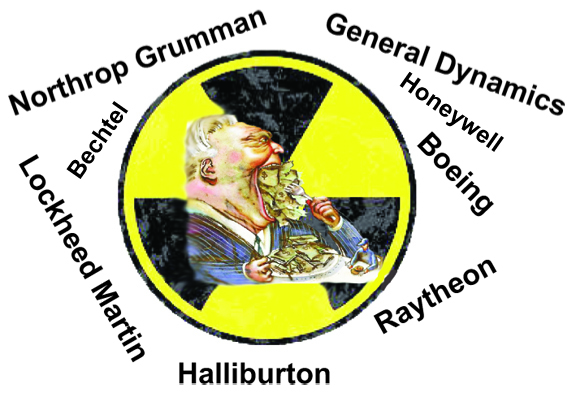
America and the world would be far safer places if this outrageous spending was drastically cut and those funds redirected to “moral” investments in people, society, and planetary health—not war and weapons.
Common Dreams WILLIAM HARTUNG, July 7, 2022 by TomDispatch
This March, when the Biden administration presented a staggering $813 billion proposal for “national defense,” it was hard to imagine a budget that could go significantly higher or be more generous to the denizens of the military-industrial complex. After all, that request represented far more than peak spending in the Korean or Vietnam War years, and well over $100 billion more than at the height of the Cold War.
It was, in fact, an astonishing figure by any measure — more than two-and-a-half times what China spends; more, in fact, than (and hold your hats for this one!) the national security budgets of the next nine countries, including China and Russia, combined. And yet the weapons industry and hawks in Congress are now demanding that even more be spent.

In recent National Defense Authorization Act proposals, which always set a marker for what Congress is willing to fork over to the Pentagon, the Senate and House Armed Services Committees both voted to increase the 2023 budget yet again — by $45 billion in the case of the Senate and $37 billion for the House. The final figure won’t be determined until later this year, but Congress is likely to add tens of billions of dollars more than even the Biden administration wanted to what will most likely be a record for the Pentagon’s already bloated budget.
This lust for yet more weapons spending is especially misguided at a time when a never-ending pandemic, growing heat waves and other depredations of climate change, and racial and economic injustice are devastating the lives of millions of Americans. Make no mistake about it: the greatest risks to our safety and our future are non-military in nature, with the exception, of course, of the threat of nuclear war, which could increase if the current budget goes through as planned.
But as TomDispatch readers know, the Pentagon is just one element in an ever more costly American national security state. Adding other military, intelligence, and internal-security expenditures to the Pentagon’s budget brings the total upcoming “national security” budget to a mind-boggling $1.4 trillion. And note that, in June 2021, the last time my colleague Mandy Smithberger and I added up such costs to the taxpayer, that figure was almost $1.3 trillion, so the trend is obvious.
To understand how these vast sums are spent year after year, let’s take a quick tour of America’s national security budget, top to bottom.
The Pentagon’s proposed “base” budget, which includes all of its routine expenses from personnel to weapons to the costs of operating and maintaining a 1.3 million member military force, came in at $773 billion for 2023, more than $30 billion above that of 2022. Such an increase alone is three times the discretionary budget of the Centers for Disease Control and Prevention and more than three times the total allocation for the Environmental Protection Agency.
In all, the Pentagon consumes nearly half of the discretionary budget of the whole federal government, a figure that’s come down slightly in recent years thanks to the Biden administration’s increased investment in civilian activities. That still means, however, that almost anything the government wants to do other than preparing for or waging war involves a scramble for funding, while the Department of Defense gets virtually unlimited financial support.

And keep in mind that the proposed Biden increase in Pentagon spending comes despite the ending of 20 years of U.S. military involvement in Afghanistan, a move that should have meant significant reductions in the department’s budget. Perhaps you won’t be surprised to learn, however, that, in the wake of the Afghan disaster, the military establishment and hawks in Congress quickly shifted gears to touting — and exaggerating — challenges posed by China, Russia, and inflation as reasons for absorbing the potential savings from the Afghan War and pressing the Pentagon budget ever higher.
It’s worth looking at what America stands to receive for its $773 billion — or about $2,000 per taxpayer, according to an analysis by the National Priorities Project at the Institute for Policy Studies. More than half of that amount goes to giant weapons contractors like Raytheon and Lockheed Martin, along with thousands of smaller arms-making firms.
The most concerning part of the new budget proposal, however, may be the administration’s support for a three-decades long, $1.7-trillion plan to build a new generation of nuclear-armed missiles (as well, of course, as new warheads to go with them), bombers, and submarines. As the organization Global Zero has pointed out, the United States could dissuade any country from launching an atomic attack against it with far fewer weapons than are contained in its current nuclear arsenal. There’s simply no need for a costly — and risky — nuclear weapons “modernization” plan. Sadly, it’s guaranteed to help fuel a continuing global nuclear arms race, while entrenching nuclear weapons as a mainstay of national security policy for decades to come. (Wouldn’t those decades be so much better spent working to eliminate nuclear weapons altogether?)
The riskiest weapon in that nuclear plan is a new land-based, intercontinental ballistic missile (ICBM). As former Secretary of Defense William Perry once explained, ICBMs are among “the most dangerous weapons in the world” because a president warned of a nuclear attack would have only a matter of minutes to decide whether to launch them, increasing the risk of an accidental nuclear war based on a false alarm. Not only is a new ICBM unnecessary, but the existing ones should be retired as well, as a way of reducing the potential for a world-ending nuclear conflagration……………………..
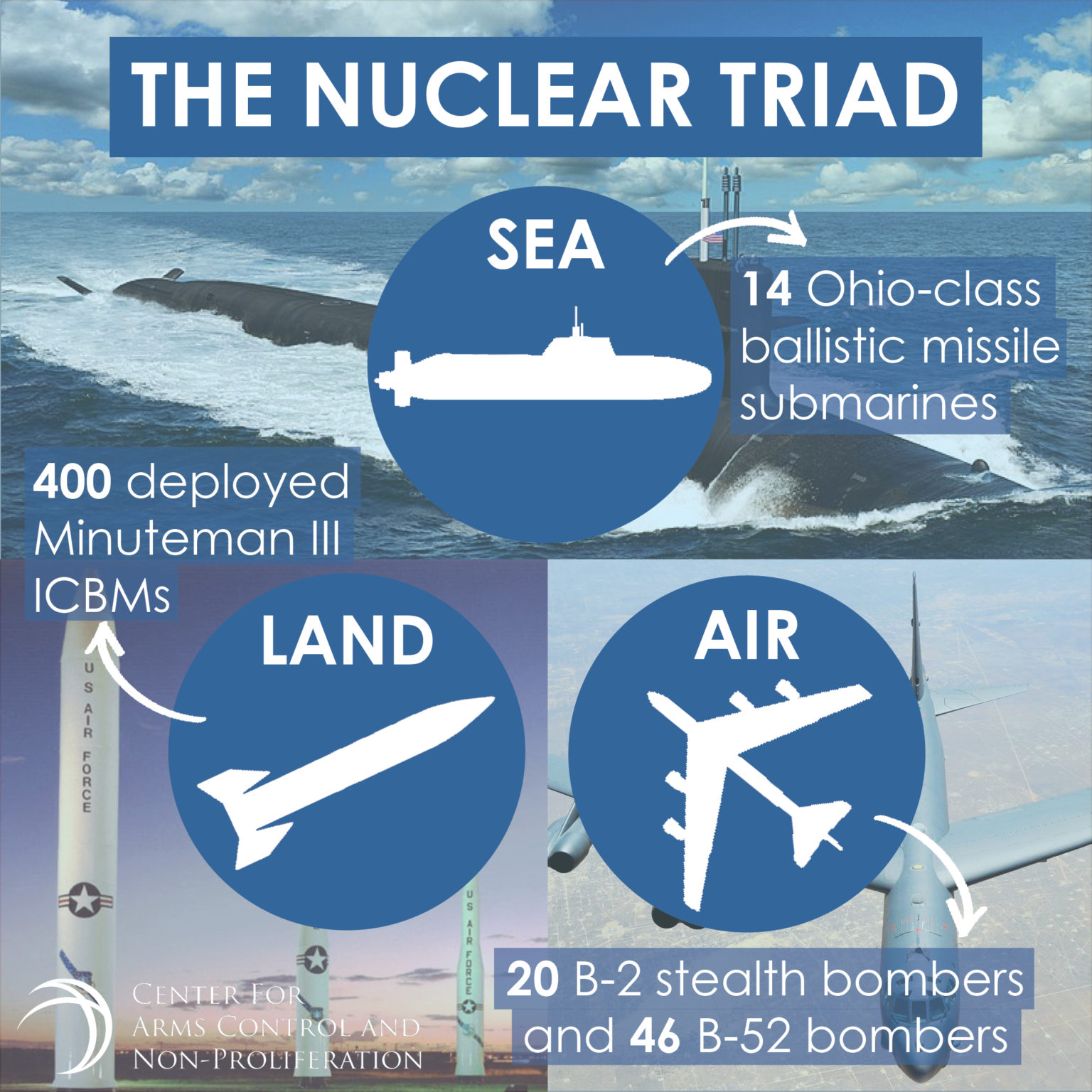
The Nuclear Budget
The average taxpayer no doubt assumes that a government agency called the Department of Energy (DOE) would be primarily concerned with developing new sources of energy, including ones that would reduce America’s dependence on fossil fuels to help rein in the ravages of climate change. Unfortunately, that assumption couldn’t be less true.
Instead of spending the bulk of its time and money on energy research and development, more than 40% of the Department of Energy’s budget for 2023 is slated to support the National Nuclear Security Administration (NNSA), which manages the country’s nuclear weapons program, principally by maintaining and developing nuclear warheads. Work on other military activities like reactors for nuclear submarines pushes the defense share of the DOE budget even higher. The NNSA spreads its work across the country, with major locations in California, Missouri, Nevada, New Mexico, South Carolina, Tennessee, and Texas. Its proposed 2023 budget for nuclear-weapons activities is $16.5 billion, part of a budget for defense-related projects of $29.8 billion……………………………
Our Misguided Security Budget
Spending $1.4 trillion to address a narrowly defined concept of national security should be considered budgetary malpractice on a scale so grand as to be almost unimaginable — especially at a time when the greatest risks to the safety of Americans and the rest of the world are not military in nature. After all, the Covid pandemic has already taken the lives of more than one million Americans, while the fires, floods, and heat waves caused by climate change have impacted tens of millions more.
Yet the administration’s proposed allocation of $45 billion to address climate change in the 2023 budget would be less than 6% of the Pentagon’s proposed budget of $773 billion……………………………….. https://www.commondreams.org/views/2022/07/07/americas-14-trillion-so-called-national-security-budget-makes-us-less-safe-not-more
Ukraine Reform Conference – name changed to Ukraine Recovery Conference – to hide the reality of Ukraine’s endemic corruption.

Ukraine’s endemic corruption problems are suddenly forgotten as hungry Western investors smell ‘reconstruction’ profits,
The flagship “Ukraine Reform Conference” is suddenly rebranded to suit current needs. Rt. rachelmarsden.com 6 July 22,
Rachel Marsden is a columnist, political strategist, and host of independently produced talk-shows in French and English.
The annual Ukraine Reform Conference has, since 2017, brought together Western officials and their local ‘civil society’ foot soldiers to discuss ways that Ukraine can reduce its rampant corruption. But this year, before getting underway this week in Lugano, Switzerland, it underwent a name change to the Ukraine Recovery Conference.
Perhaps drawing attention to the existence of the country’s endemic corruption isn’t convenient for those looking to avoid heavy criminal penalties set up to explicitly prevent investment that fuels corruption?
Simply changing the marketing of the conference does nothing to alter the reality. If anything, it’s counterproductive for Ukraine itself and serves to enable and perpetuate serious systemic problems that prevent the country from progressing.
“The authorities are delaying the fulfillment of many important anti-corruption promises,” according to Andrey Borovik, executive director of the Ukraine office of Transparency International, an organization funded by Western governments and multinationals. As for Ukrainian President Volodymyr Zelensky, “corruption just doesn’t seem to worry Mr. Zelensky much – at least when those implicated are close to him,” claimed Kyiv Independent (another Western funded outfit) editor Olga Rudenko in a guest piece for the New York Times in February, right before the Russian military operation started.
Not exactly the kind of guy you’d want overseeing massive investment projects, one would think.
These days, tackling corruption is taking a rhetorical backseat to the Western push to frame Ukraine as just your typical European country. “For the last two years, we have been discussing large European values, mostly a theoretical debate,” Slovenian Prime Minister Janez Jansa has said. “Then, suddenly, we realised that those fundamental European values actually exist. And that they are threatened. And that Europeans are defending them. With their lives. In Ukraine.”
Despite acknowledging that Ukraine would have to enact “a number of important reforms,” EU Commission President Ursula von der Leyen said that “Ukraine has clearly shown commitment to live up to European values and standards. And embarked, before the war, on its way towards the EU.” In reality, the only thing that has actually changed is that Western officials saw an opening to exploit current public sympathy, if not ignorance, to gain acceptance for an idea that normally would be a much tougher sell to the average EU citizen. That is, the notion that Ukraine would be a net benefit to the bloc rather than an Achilles heel rife with problems that has no business being included in a zone that allows for free movement of people and goods among member states.
…………….. the head of Interpol, Jurgen Stock, has warned EU nations in particular that “the wide availability of weapons during the current conflict will lead to the proliferation of illicit weapons in the post-conflict phase.”
Neglecting to place Ukraine’s corruption problem uncompromisingly front and center in order to better peddle the premature public narrative of the need for investment under the guise of ‘reconstruction’ represents a threat to the EU – and one that Western officials are only too happy to facilitate, apparently. One has to wonder why that is.
It’s hardly a secret that Western nations have historically leveraged foreign aid to gain economic and political footholds within other countries, either through state-backed programs, civil society funding, or corporate opportunities. But there’s also another catch. Current Western laws such as the Foreign Corrupt Practices Act (FCPA) in the US, the UK Bribery Act, or the Loi Sapin II in France all create an obligation for any entity or individual investing in foreign countries to ensure a corruption-free transaction. If Western investment in Ukrainian reconstruction ends up in the wrong hands, then board members, employees, and managers could all end up facing criminal charges with penalties of prison.
………………………. Western entities have an economic interest in portraying Ukraine as a safe place to invest. Otherwise, they’re easy pickings for the authorities of other foreign countries who might choose to use corrupt investment dealings in Ukraine as a means of taking a competitor off the playing field.
…………………… to get the green light, and to convince the average taxpayer to accept funding the risk, everyone has to make the venture sound benevolent – hence the Marshall Plan comparisons – and reduce any references to corruption to a minor detail. https://www.rt.com/russia/558414-anti-corruption-ukraine-reform-conference
—
Is nuclear sustainable? Read the label
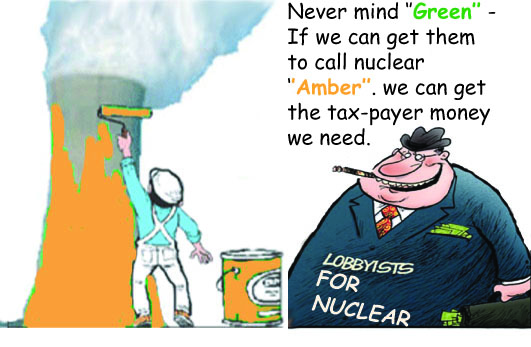
[Ed. For a while they tried calling nuclear ”amber”, but that didn’t work – they’ve settle for ”sort of green”]
By DEBRA KAHN , 07/08/2022, https://www.politico.com/newsletters/the-long-game/2022/07/08/is-nuclear-sustainable-read-the-label-00044684
SHADES OF GREEN — The European Union broadened its definition of sustainable energy this week to include things not everyone agrees on — and triggered a fight.
The vote to include natural gas and nuclear power in the list of activities the EU is trying to encourage private investors to support was billed as a “pragmatic approach.” It’s also backed by Ukrainian officials, who say it should help reduce reliance on Russian gas.
But it’s getting major pushback — from scientists, sustainable investor groups and the European Commission’s own finance advisers, who argue the rules will divert money from truly green projects to prop up legacy industries and allow emissions to rise further, as POLITICO’s America Hernandez reports.
Under the new rules, countries heavily reliant on coal and oil for electricity will be able to replace them with less-polluting gas-fired power through 2030 and advertise the switch as sustainable to investors, as long as the plants switch to a clean-burning fuel like hydrogen by 2035 and respect a 20-year cap on greenhouse gas emissions.
Existing nuclear plants, which produce CO2-free electricity, will also get to be called climate-friendly if operators draw up safety plans showing where their radioactive waste will be permanently stored by 2050 and switch to so-called accident-tolerant fuels by 2025.
Activist investor groups are warning that watering down the sustainable designation will backfire.
“Calling gas sustainable, even as a ‘transition’ fuel, will not convince climate-change conscious investors, and it will make the taxonomy lose its usefulness as a tool to orient capital flows towards sustainable economic activities,” said Thierry Philipponnat, chief economist at watchdog group Finance Watch.
The United Nations’ Principles for Responsible Investment, which represents more than 5,000 investors managing €167 trillion ($169 trillion right now — great time to go to Europe) in sustainable assets, warned that blindly trusting the EU’s green labels “could prompt fragmentation across the market and lead to potential greenwashing.”
NUCLEAR RENAISSANCE PT. II — U.S. environmentalists were similarly dismayed this week by Pacific Gas & Electric’s announcement that it will try to keep California’s remaining nuclear plant open past its planned retirement.
A PG&E spokesperson told the San Diego Union-Tribune that the utility plans to apply for an Energy Department grant aimed at helping keep nuclear plants open. Diablo Canyon accounts for almost 9 percent of the state’s electricity generation, and officials are worried about reliability this summer and in years to come.
The move follows support from Gov. Gavin Newsom and lawmakers in last week’s state budget to fund agency power purchases from Diablo Canyon and natural gas plants when supplies run low. It’s an about-face from 2016, when environmentalists and labor unions representing plant workers came to a state-approved agreement to shut down the plant starting in 2024.
(NB: Diablo would have stayed open had California decided to let nuclear count toward its green electricity requirements in 2015.)
“Instead of propping up outmoded nuclear plants, Newsom should instead be providing more resources and funding to deploy renewable energy infrastructure across California,” Sierra Club California director Brandon Dawson said in a statement.
Austria, Luxembourg and green groups have already said they’ll sue the European Commission over its new rules. California environmentalists may also try suing to enforce the closure agreement, the SDUT reports.
1 This Month
26 April – Chernobyl: Inside the Meltdown airs on National Geographic on Sunday 26th April from 4pm

29 April – Nuclear Expert Webinar #1 – Radiation Impacts on Families with Mary Olson and Cindy Folkers
- 12:15 PM MT – 1:45 PM MT
- Location: Virtual – REGISTER TODAY

4 May -West Suburban Peace Coalition to discuss Iran war at May Educational Forum
Monday, May 4, 7:00 – 8:00 PM Central Standard Time
Title: : How Trump’s Narrative Tries to Shape the Reality of the War on Iran.
Contact Walt Zlotow, zlotow@hotmail.com 630 442 3045 for further information
14 May – online event From Bombs to Data Centres: the Face of Nuclear Colonialism

Pine Ridge Uranium is the real threat, not Tehran- Tell Burgum: Stop the Extraction.
Chernobyl: The Lost Tapes – A good documentary on Chernobyl on SBS available On Demand for the next 3 weeks– https://www.sbs.com.au/ondemand/tv-program/chernobyl-the-lost-tapes/2352741955560
To see nuclear-related stories in greater depth and intensity – go to https://nuclearinformation.wordpress.com
-
Archives
- April 2026 (300)
- March 2026 (251)
- February 2026 (268)
- January 2026 (308)
- December 2025 (358)
- November 2025 (359)
- October 2025 (376)
- September 2025 (257)
- August 2025 (319)
- July 2025 (230)
- June 2025 (348)
- May 2025 (261)
-
Categories
- 1
- 1 NUCLEAR ISSUES
- business and costs
- climate change
- culture and arts
- ENERGY
- environment
- health
- history
- indigenous issues
- Legal
- marketing of nuclear
- media
- opposition to nuclear
- PERSONAL STORIES
- politics
- politics international
- Religion and ethics
- safety
- secrets,lies and civil liberties
- spinbuster
- technology
- Uranium
- wastes
- weapons and war
- Women
- 2 WORLD
- ACTION
- AFRICA
- Atrocities
- AUSTRALIA
- Christina's notes
- Christina's themes
- culture and arts
- Events
- Fuk 2022
- Fuk 2023
- Fukushima 2017
- Fukushima 2018
- fukushima 2019
- Fukushima 2020
- Fukushima 2021
- general
- global warming
- Humour (God we need it)
- Nuclear
- RARE EARTHS
- Reference
- resources – print
- Resources -audiovicual
- Weekly Newsletter
- World
- World Nuclear
- YouTube
-
RSS
Entries RSS
Comments RSS
 nuclear-news