I was a nuclear missile operator. There have been more near-misses than the world knows
 | |||
I was a nuclear missile operator. There have been more near-misses than the world knows https://www.theguardian.com/commentisfree/2022/mar/10/i-was-a-nuclear-missile-operator-there-have-been-more-near-misses-than-the-world-knows, Cole Smith
As a 22-year-old I controlled a warhead that could vaporize a metropolis. Since Russia invaded Ukraine, the public is waking up again to the existential dangers of nuclear weapons
rom 2012 to 2017, I worked as a US air force nuclear missile operator. I was 22 when I started. Each time I descended into the missile silo, I had to be ready to launch, at a moment’s notice, a nuclear weapon that could wipe a city the size of New York off the face of the earth.
On the massive blast door of the launch control center, someone had painted a mural of a Domino’s pizza logo with the macabre caption, “World-wide delivery in 30 minutes or less or your next one is free.”
Since Russia invaded Ukraine, I’ve heard more discussions of nuclear war than I did in the entire nine years that I wore an air force uniform. I’m glad that people are finally discussing the existential dangers of nuclear weapons. There have been more near-misses than the world knows.
Greg Devlin was an airman assigned to an intercontinental ballistic missile (ICBM) team in Arkansas in 1980. One night he responded to a leak in the missile’s fuel tank. A young airman working in an ICBM launch tube had accidentally dropped a socket from his toolkit; the socket fell down the silo, ricocheted, and pierced a hole in the stage-one fuel tank. The missile’s liquid fuel exploded. Devlin was thrown 60ft down an asphalt road and watched as a massive fireball rose overhead.
The ICBM had a nine-megaton warhead – the most powerful single nuclear weapon in American history – on top. When the missile exploded, the warhead was thrown into the woods, disappearing into the night.
“I was stunned and in pain but I knew the nuke hadn’t gone off,” Devlin told me, “because I remembered those stories from Hiroshima where people had been turned into little charcoal briquettes. I was alive. That’s how I knew the nuke didn’t detonate.” Although the nuclear warhead didn’t explode, the accident still claimed the life of one airman and injured 21 others, including Devlin.
When I was training as a nuclear missile operator, my instructor told me the story of what happened in Arkansas that night in 1980. It’s a famous story within the missile community. Stories like these were a way of impressing upon young officers the integrity required to be a good steward of these weapons and a warning of how quickly things can go wrong. That warning was very much on my mind as I began my first “alert” down in the claustrophobic underground missile silo that housed the launch control center.
But somewhere along my way to nearly 300 nuclear “alerts” – 24-hour shifts in command of a launch crew – I began to brush the story off as a scare tactic for rookies. Similarly, I think that after the end of the cold war, the general public allowed the threat of nuclear warfare to recede into the background. The threat simply didn’t feel real to new generations like it did to those who grew up huddling under their desks during nuclear attack drills in elementary school.
And the young crews who steward this nuclear arsenal today aren’t immune from the post-cold war malaise. In 2013, during my first year on crew, 11 ICBM officers were implicated in a drug scandal. The following year, 34 ICBM launch officers were implicated in a cheating scandal on their monthly proficiency exams.
Deborah Lee James, the secretary of the air force at the time, said, “This was a failure of integrity on the part of some of our airmen. It was not a failure of our nuclear mission.”
In this attempt to save face, Secretary James revealed a state of dissonance that every nuclear missile operator lives with. We are told, day in and day out, that our integrity is crucial to the deterrent value of nuclear weapons and helps make the world a safer place. But what man or woman of integrity could possibly launch a nuclear weapon?
As the war in Ukraine is reminding us, life with nuclear weapons is not safer or more peaceful. If you study nuclear warfare, you’ll learn about “megatons” and nuclear yields, stockpiles and budget expenditures. These numbers quantify the enormous danger of nuclear weapons but also, in rendering that danger abstract, obfuscate it.
Greg Devlin has a different set of numbers from his experience with missiles. “Since that explosion I’ve had 13 spine surgeries and two spinal stimulators. I lived the last decade of my life on morphine,” said Devlin.
Nuclear weapons turn the most important parts of life into nothing more than numbers – which is exactly the thought process needed for a society that believes that launching a nuclear missile is a viable solution to conflict. Because in the wake of a nuclear attack there will be no individuals, only numbers.
UK love-in between Tories and Labour, on wasting billions of pounds on new nuclear reactors

Leslie Riddoch: THEY can melt down, contaminate a country and threaten air
and water resources across a continent. They are vulnerable to earthquake,
tsunami and war. Their energy is more expensive per unit than almost any
other kind.
Yet, listening to the love-in during Prime Ministers Questions,
it’s clear that nuclear energy is back and Johnson and Starmer are hooked
on the power of the atom to tackle the escalating energy crisis. Boris
Johnson blamed Labour for cancelling nuclear plants. Starmer
counter-claimed that Tory plants had more starts than a dodgy apprentice
(in so many words) but then listed nuclear in his own preferred energy mix.
Johnson pounced on this, proclaiming there is “more joy in heaven over
one sinner that repents” … no he couldn’t quite remember the whole
quote either. But his point was clear. Nuclear is supported by both main
Westminster parties and fresh billions will be wasted in a bid to build new
plants.
Even though no British money has gone into building nuclear power
plants for decades. Even though Hinkley C nuclear power station is a decade
late, wildly over-budget and won’t come into service till 2027 – if the
British Government finds new investors to “ease out” Chinese
state-backed group CGN.
Even though Sizewell C, if it’s ever built,
won’t produce electricity until the 2030s. Even though the average
nuclear plant can take 18 years in planning and construction, against a
tenth of that time for renewables.
And even though the unthinkable has
happened again – Chernobyl is at risk of meltdown because of a power cut.
Despite all this, Westminster hails nuclear energy as the green salvation
of the world as it struggles to make up for decades without an energy
policy or a care for this country’s energy security.
It’s the same old story. Any threat to the status quo justifies more investment in the status
quo.
But does Scotland need new nuclear? No, we emphatically do not. The
Forth/Tay offshore wind project alone significantly exceeds Scotland’s
entire electricity demand and if some of that energy can be converted into
use for transport, it could satisfy nearly all of Scotland’s entire
energy needs. And supply England. Even when Scotland becomes independent,
we will continue to green England with renewable energy at the best price
they’ll get anywhere.
With tidal and wave energy, heat pumps, local
community grids and district heating for home energy also in the mix,
Scotland should be laughing all the way to the Green Bank. The German
Institute for Economic Research examined 674 nuclear power plants built
across the world since 1951 and found the average plant made a loss of
€4.8 billion. Naomi Oreskes is professor of the history of science at
Harvard University and wrote recently in Scientific American: “The most
recent US nuclear power reactors were started in 2013 and are still not
finished.
What about small modular reactors (SMRs)? Rolls Royce says
smaller reactors can be constructed more cheaply, built in a factory,
transported in modules and fitted together “like meccano”. Neither
Johnson nor Starmer championed plans – also announced yesterday – for a
new Severn Tidal Barrage. Local councils are working together to get
electricity from the second biggest tidal range in the world which, if
successfully harnessed, could generate 7% of the UK’s total energy needs.
And yet, this is the 15th attempt in the past 200 years. What’s the
problem? According to Councillor Huw Thomas, the leader of Cardiff City
Council: “The UK Government has so far not lent its support … due to a
perceived requirement for high levels of public investment and concerns
over the environmental impact … in the Severn Estuary.”
The National 10th March 2022
https://www.thenational.scot/politics/19981712.nuclear-energy-wont-work-scotland/
Court rejects bid to suspend nuclear reactors in Takahama
Court rejects bid to suspend nuclear reactors in Takahama https://www.asahi.com/ajw/articles/14569930
By HARUKA ONO/ Staff Writer, March 11, 2022 NAGOYA–The Nagoya District Court on March 10 dismissed a citizens’ request that the government order Kansai Electric Power Co. to halt two reactors at its Takahama nuclear power plant as a safety precaution.
Nine plaintiffs from Fukui, Aichi and three other prefectures filed a lawsuit against the government seeking to suspend the No. 3 and No. 4 reactors at the facility in Takahama, Fukui Prefecture.
They argued that the nuclear power plant’s disaster-prevention countermeasures for dealing with ash from volcanic eruptions are insufficient.
“(The government) did not deviate from its discretion for not having ordered the suspension,” said Presiding Judge Tomohiro Hioki.
After the 2011 triple meltdown at Tokyo Electric Power Co.’s Fukushima No. 1 nuclear power plant, the government’s regulatory authority introduced a new “backfit” provision.
That requires utilities to prepare countermeasures for issues that have emerged after new findings, such as the effects natural disasters can have on their existing nuclear power plants. It also allows the regulator to halt reactors if they do not meet its standards.
This marks the first judicial ruling over the backfit provision.
In June 2019, Japan’s Nuclear Regulation Authority issued backfit orders for seven reactors at three Kansai Electric nuclear power plants, including the No. 3 and No. 4 reactors in Takahama.
The regulator contended that Kansai Electric had not taken sufficient measures against volcanic ash in the event of an eruption at Mount Daisen in Tottori Prefecture.
But it did not order Kansai Electric to halt its reactors on the grounds that there is no imminent risk of eruption.
“Mount Daisen is not categorized as an active volcano, so the NRA’s decision not to order the suspension was not a deviation from or abuse of discretion,” the district court ruling said.
The regulator had decided on its response after it was briefed by Kansai Electric, and did not establish a deadline for completing the countermeasures. On both points, the court ruled that the regulator’s actions were legal.
But on the other hand, the court also accepted some of the arguments made by the plaintiffs.
The presiding judge said that in the current situation, with the anti-volcanic measures not yet completed, the plant “holds realistic possibilities of safety deficiencies” and also “has some risk of receiving significant damage.”
‘Limited’ Tactical Nuclear Weapons Would Be Catastrophic.
‘Limited’ Tactical Nuclear Weapons Would Be Catastrophic. Russia’s
invasion of Ukraine shows the limits of nuclear deterrence.
Scientific American 10th March 2022
https://www.scientificamerican.com/article/limited-tactical-nuclear-weapons-would-be-catastrophic/
The importance of continuous cooling of nuclear spent fuel
Despite reassurances by the International Atomic Energy Agency (IAEA) that
there is no imminent safety threat posed by the power isolation, it is
important to understand the potential impact going forward.
When nuclear
fuel is removed from the core of a reactor, it is redesignated as
“spent” nuclear fuel and often treated as a waste product for disposal.
But fuel will continue to dissipate heat due to radioactive decay, even
after being removed from the reactor core.
It is therefore of foremost
importance that the spent fuel material contained at the Chernobyl site is
adequately and continuously cooled to prevent a release of radioactivity.
At Chernobyl, as well as other sites, standard procedures to safely handle
such material involves placing the fuel into water-filled ponds, which
shield the near-field environment from radiation.
They also provide a
medium for heat transfer from the fuel to the water via continuous
circulation of fresh, cool water. If circulation is compromised, such as
the recent power shutdowns, the fuel will continue to emit heat. This can
make the surrounding coolant water evaporate – leaving nothing to soak up
the radiation from the fuel. It would therefore leak out to the
surroundings.
The Conversation 10th March 2022
Nuclear option is not the best for transition away from Russian fuels
Rae Street: What on earth does George Monbiot mean when he refers
to small modular reactors as “kinder nuclear technologies”? SMRs are
still vulnerable to accidents and attack (think of what happened in
Ukraine); they still produce more nuclear waste per unit of electricity
than conventional reactors; and there is still no safe, long-term solution
for radioactive waste. Additionally, these reactors will remain dependent
on uranium for fuel – when we know that uranium mining has caused
suffering and death to mainly indigenous people across the world.
Guardian 10th March 2022
Global medical and public health organizations call for immediate end to war in Ukraine and critical need to prevent nuclear escalation — IPPNW peace and health blog

Representing doctors, public health professionals and medical students worldwide, we call for an immediate cease fire and the withdrawal of all invading and occupying military forces and an urgent negotiated end to the current war in Ukraine. The alarmingly acute and growing danger of nuclear escalation must be reversed and nuclear war prevented by the […]
Global medical and public health organizations call for immediate end to war in Ukraine and critical need to prevent nuclear escalation — IPPNW peace and health blog
EU military aid to Ukraine to exceed $1 billion — Anti-bellum
Daily SabahMarch 11, 2022 EU to boost military support to Kyiv, mulling new sanctions European Union leaders said Friday they will continue applying pressure on Russia by drafting a new set of sanctions to punish Moscow for its invasion of Ukraine while stepping up military support for Kyiv. The EU’s top diplomat, Josep Borrell, said […]
EU military aid to Ukraine to exceed $1 billion — Anti-bellum
A message to all people in the world concerned about the fate of the people of Fukushima

Never in my life has a year seemed so severe as the one that followed, in 2021, the tenth anniversary of the Fukushima Dai-ichi nuclear accident: I had the constant sensation of being bitten by the icy cold of an ever-lasting winter. I must start by saying that last year I lost five very close friends one after the other. All of them lived in Fukushima and were in their fifties at the time of the accident. I can’t prove that their deaths are related to the nuclear accident, but I can’t help but thinking that they were. And many people around me share the same doubts.
Since last year, the Japanese government, the Fukushima Prefecture and the media have decided to more radically pursue their course. It’s no longer a question of dealing with the dramatic reality caused by the ongoing nuclear accident, but of preaching for the “reconstruction” of the Prefecture and acting only for its implementation. Despite the spread of Covid-19, the Tokyo Olympic Games was imposed in an incredibly authoritarian way. The Torch relay started from Fukushima, more precisely J-Village Stadium, a sports complex which was an important base for the workers in the aftermath of the nuclear accidents. In addition, in April 2021, the government endorsed a plan to discharge into the sea huge quantities of radioactive water accumulated at the Fukushima Dai-ichi plant site, despite the many voices in Japan itself, but also in other countries, which strongly protested this decision.
Yet, the most serious issue for me is the problems faced by the younger generation. The government, in order to replace the numerous evacuees who refuse to return to their commune of origin, allocated in 2021 a budget of 1.8 billion yen (13.9 million euros) to persuade newcomers to settle in the 12 municipalities formerly designated as mandatory evacuation zones after the accident. In concrete terms, a premium of 2 million yen (€ 15,500) will be granted to each household having recently moved into these 12 municipalities. In addition, at four kilometers from the crippled nuclear site, on the lawn of the Great East Japan Earthquake and Nuclear Disaster Memorial Museum, a local tourism company organizes various activities to attract high school and university students as well as young working adults: meals, stargazing nights, yoga classes etc. Finally, at an increasing pace, “discussion meetings” for young people are organized by the Ministry of the Environment and other organizations, on topics such as the release of radioactive water into the sea or the reuse of contaminated soil. All these appear to me as a staging to manipulate the minds of the young people. As for the “Supplementary reader on radiation”, distributed from 2011, after the accident, to all primary and junior high schools in Japan by the Ministry of Education, its latest version considerably reduces the paragraphs devoted to the dangers of radioactivity and the question of responsibilities of the nuclear accident. On the other hand, there are some pages in the appendix that praise the harmlessness of the radio-contaminated water accumulated at the Fukushima Dai-ichi Nuclear Power Plant.
On January 27 this year, six young people who were between 6 and 16 years old at the time of the accident, and who have been suffering from thyroid cancer, filed a lawsuit against TEPCO, the operator of Fukushima Dai-ichi. They demand that the causal link between the nuclear accident and the triggering of their thyroid cancer be investigated. Indeed, the Prefectural Oversight Committee for Fukushima Health Management Survey in charge of evaluating the prefectural health survey still refuses to recognize any cause-and-effect relationship between these two factors. The young plaintiffs hope that this causality, if recognized at the end of the trial, will lead to the establishment of a system of aid for all other post-accident thyroid cancer patients, who are experiencing the same suffering as they are. This would cast a small glimmer of hope on their future. The consequences of the accident are made less and less visible. At the same time, the “reconstruction” of Fukushima (repopulating the evacuation areas, creating high-tech industrial zones, managing experimental agricultural sites to grow edible crops, etc.) is pushed forward at all costs. In this context, it must have taken extraordinary courage for these young people to file such a lawsuit. I call on all adults to support them in every way possible.
As a Fukushima resident and victim of the nuclear accident, I was deeply shocked by the European Commission’s proposal earlier this year to include nuclear energy in the green taxonomy. Nuclear reactors, no matter how small they become or how peaceful their use is claimed to be, use the same technology developed to create the atomic bomb. And throughout all the stages, nuclear energy production leads to the exposure of workers and local residents to radioactivity. Privilege the conquest of great power without hesitating to sacrifice small people – this is, in my opinion, the state of mind that still governs the nuclear industry today. Moreover, humanity has not totally mastered safety and security in this domain, and is also unable to find a solution to the perennial problem of disposal of the toxic waste. Finally, it is clear that nuclear facilities do great harm to the environment. For all these reasons, we refuse to consider this energy as “green” or “clean”.
On a positive note, a growing number of countries are ratifying the Treaty on the Prohibition of Nuclear Weapons (TPNW). So the time has also come to say farewell to nuclear energy production.
Despite the troubled times we are going through, and all the difficulties we will still face in the future, let us continue to walk together step by step, supported by the solidarity of our fellow human beings who continue the struggle in the four corners of the world.
March 2022 in Fukushima
Ruiko Muto
Chair of the Complainants for the Criminal Prosecution of the Fukushima Nuclear Disaster
Member of Fukushima Women Against Nuclear Power
http://kokuso-fukusimagenpatu.blogspot.com/p/blog-page_5112.html
(Translated from Japanese by Nos Voisins Lointains 3.11)
311, 11 Years On – For a Peaceful, Nuclear-Free Society, with the People of the World

3.11.2022
Eleven years have passed since the Great East Japan Earthquake and the disaster at TEPCO’s Fukushima Daiichi Nuclear Power Plant.
Nuclear power plants that had been deemed “completely safe” by the government and power companies, exploded one after another. Radioactive materials that were supposedly confined behind “five-layered walls” leaked out into the sea and onto land, causing long-term radioactive contamination.
What must not be forgotten is that society as a whole took the mass production and consumption of electricity for granted, and had subconsciously accepted the propaganda of the government and power companies that justified the use of nuclear power plants. The fact that the electricity generated at the power plant in Fukushima was used, not in Fukushima but in the Tokyo Metropolitan Area, and that many workers were forced to suffer radiation exposure in order to operate the plant, were injustices that had not been recognized by many. This structural injustice continues to this day.
The nuclear disaster was not supposed to happen. Thus, there was no legal system for victim relief and no robust regulation of radioactive materials in the environment. In 2011, when the government set a standard for evacuation that was 20 times higher than the exposure limit applicable to the general public, many people struggled with the question of whether to evacuate, or to remain. Many were forced to evacuate without compensation or support.
The nuclear disaster is not over. At least 30,000 people are still living as evacuees. However, public assistance, including the provision of housing, has already been cut off, leaving behind some evacuees who cannot afford to pay rent.
Even though evacuation orders have been lifted one after another and support for evacuees has been discontinued, many people have not returned to their homes. Younger generations have not returned, and one- or two-person households of elderly people are living scattered in different areas.
Meanwhile, radioactive materials are being spread by human activities once again. The government has decided on a policy of reusing contaminated soil and radioactive waste generated by decontamination, rather than taking the path of safe storage. Furthermore, the dumping of large quantities of treated contaminated water into the ocean is also causing the spread of radioactive materials. Not only does this water contain tritium, but also strontium-90, iodine-129, and other radioactive materials. TEPCO has stated that it will conduct secondary treatment, but information on the amount and type of radioactive materials that will ultimately remain in the water has not been disclosed.
Under the guise of “preventing damaging rumors,” the government continues to spend vast amounts of national taxpayer money on propaganda to convince the public that radioactive materials are not dangerous. However, the spread of radioactive materials is substantial “damage.” The term “damaging rumor” obscures the responsibility of the actual perpetrators, the government and TEPCO, and makes those who point out the risks of exposure and contamination appear as though they also bear responsibility.
After the disaster, all nuclear power plants owned by TEPCO and Tohoku Electric Power Company were shut down, and a “nuclear power plant free” Eastern Japan has existed for the past 11 years. After the shutdown of Kansai Electric Power’s Oi reactors 3 and 4 in September 2013, nuclear power plants across the country were out of operation for close to two years, resulting in a nationwide nuclear power plant free period. Even after operations were restarted, nuclear power plants were shut down one after another due to delays in the construction of anti-terrorism facilities, court injunctions against operations, and other issues such as cracked pipes. The cost of construction and safety measures for nuclear power plants skyrocketed, and nuclear power plants were no longer a “stable” or “inexpensive” power source.
Russia’s military invasion of Ukraine has resulted in many casualties. One after another, Russian troops are attacking and taking control of nuclear power plants in Ukraine. Needless to say, war is the greatest form of environmental destruction and violation of human rights and totally unacceptable. In addition, attacks on nuclear power plants lead to the spread of radioactive materials, endangering the lives and health of many people for a long time. The risk of nuclear power plants becoming targets of attacks was indicated in the past, and unfortunately this nightmare has now become a reality.
We stand with the victims, and in solidarity with people around the world who wish for peace, and we have renewed our determination to move forward to realize a peaceful, nuclear-free world.
Radioactive waste from contaminated water treatment, cleanup postponed. What we saw at the storage site of the Fukushima Daiichi Nuclear Power Plant

March 11, 2022
The contaminated water containing high concentrations of radioactive materials that continues to be generated at TEPCO’s Fukushima Daiichi Nuclear Power Plant (Okuma and Futaba towns, Fukushima Prefecture) is creating contaminated waste in the process of treatment and storage. On April 2, this paper’s team entered the plant premises and visited the storage site. TEPCO and the government plan to discharge the contaminated water into the ocean in the spring of 2023, but the cleanup of the massive amount of radioactive waste has been postponed. (Kenta Onozawa)
◆Enriched liquid waste “To be honest, there is no concrete plan.
We honestly don’t have a concrete plan for how to dispose of the waste,” said a TEPCO spokesperson with a pained expression on his face in a corner of the vast tank area on the west side of Units 1 through 4. In front of us, a covered shed surrounded by concrete walls. A horizontal light blue tank could be seen through a gap in the wall. The dosimeter he had brought with him read around 0.5 microsieverts per hour in the tank area, but the reading jumped to 4 microsieverts per hour near the hut.
The contents of the tank, which emitted intense radiation through the 20-centimeter-thick concrete, were “concentrated liquid waste” generated immediately after the accident. It is the precipitate from the process of desalinating highly contaminated water, which contained salt from the tsunami, and reusing it to cool the nuclear reactors.
The muddy condition makes it difficult to treat, and the high radiation dose makes it inaccessible; when Fukushima Prefecture checked the site in January 2008, the maximum radiation dose inside the wall was 800 microsieverts per hour. This is the annual exposure limit for an average person after spending one hour and 20 minutes at the site.
There are 200 cubic meters of muddy liquid waste and 9,000 tons of supernatant water. The contaminated water treatment process has stabilized and will not increase any further. TEPCO plans to begin experimental treatment in FY2011, but has not even begun to verify the method.
◆Contaminated plastic in “untouchable” reservoirs
To the north of the shed, there is a clearing that rises up like a ring, where the underground reservoir that caused the contaminated water leak in 2001 is buried.
At the time, the storage of contaminated water was on a tightrope. TEPCO, under pressure, dug a hole where a tank could not be built directly under the power lines, covered it with a water shield sheet, and filled it with a total of 24,000 tons of contaminated water, which mainly contained radioactive strontium. However, the water leaked underground and could no longer be used.
Although the contaminated water has been drained out, the plastic materials that were placed in the pond as reinforcement remain heavily contaminated. Standing on the pond, the dosimeter quickly read 3 microsieverts per hour. The spokesperson said in a low voice, “I think we could have removed the contaminated water if we had filled it with purified water, but now that we have filled it with contaminated water, it’s hard to do anything about it.
◆Waste continues to accumulate
The treated water that is planned to be discharged into the ocean is water that has been purified by a multinuclide removal system (ALPS). The treatment process also generates muddy waste, which is stored in a polyethylene container (1.5 meters in diameter, 1.8 meters high, and about 1 centimeter thick) called an HIC.
In the storage area on the south side of the site, the top of the HIC was visible inside the concrete wall. Some of the HICs containing high-dose sludge have already exceeded their useful life, and the number of such HICs will reach 87 at the end of FY2010. There are fears that they may break due to deterioration, and they are under pressure to be transferred to new containers. However, it has taken time to set up measures to protect the workers from radiation exposure, and the replacement of the heavily contaminated containers only began on February 22.
Once the discharge of treated water into the ocean begins, the number of storage tanks, which number approximately 1,000, will gradually decrease. However, there is no plan to eliminate the generation of contaminated water, and the purification process will continue. In the meantime, waste from the treatment process will continue to accumulate, so it is unacceptable to postpone the consideration of a long-term management method.
https://www.tokyo-np.co.jp/article/164886?fbclid=IwAR3Gl8NO1JrwlhjZZdt3dSPjvmgjFUN22ctU96eQF0YstNai6HJsdmgHIWM
Japan’s nuclear power plants are “not designed for war” and if attacked by missiles, “radioactive materials will be scattered

March 9, 2022
At a meeting of the House of Representatives’ Committee on Economy, Trade, and Industry on March 9, Chairman Toyoshi Sarada of the Nuclear Regulatory Commission said, “There is concern that radioactive materials will be spread” in the event of a missile attack on a nuclear power plant in Japan. We do not believe that this can be avoided with the current facilities. This was in response to Makoto Yamazaki of the Democratic Party of Japan’s Constitutional Democratic Party of Japan, who asked a question in response to an attack on a nuclear power plant by Russian forces that invaded Ukraine.
The government has explained that it is taking counterterrorism measures for nuclear power plants in Japan, but has not clearly stated the danger of a military attack. Mr. Sarada explained to the METI Committee that “we do not envision an armed attack due to a conflict between two countries (in terms of safety) in our examinations,” he said. If a nuclear power plant is occupied, “the entire control of the plant will be seized. After that, any situation is inevitable.
Defense Vice Minister Makoto Oniki responded that improvements in missile technology have made it more difficult to intercept missiles and that “we will not rule out any options, including an enemy base attack capability, and will consider them in a realistic manner. Yamazaki insisted, “When we consider the risk of attacks from earthquakes, terrorism, and wars such as this one, we still have to close nuclear power plants. (Nobuko Ohno)
https://www.tokyo-np.co.jp/article/164656?rct=politics&fbclid=IwAR1bhmFl-fr7XINio8_gpNzEymxIFuu0QywGS9IoBTTaZLEPvI4edynhpaA
8 towns and villages near Fukushima nuclear power plant 1,514 earthquake-related deaths 70% relocated 3 times or more

March 6, 2022
In eight towns and villages in Futaba County, Fukushima Prefecture, where evacuation orders were issued after the March 2011 accident at TEPCO’s Fukushima No. 1 nuclear power plant and nearly all residents evacuated in and out of the prefecture, 1,514 people were certified as earthquake-related deaths, and at least 1,025 were found to have moved to new evacuation sites three or more times, according to a new report. Of the 1,514, 136 died after 2004, indicating that the prolonged evacuation has pushed the victims to the edge.
The Mainichi Shimbun requested local governments in Fukushima Prefecture to disclose documents submitted by the bereaved families over the certification of earthquake-related deaths. The documents include a written history leading up to the deaths, and we analyzed their contents. The number of people certified as earthquake-related deaths in the prefecture as a whole was 2,331, about 1.5 times the number of direct deaths (1,605).
A survey of 1,514 people certified as earthquake-related deaths in eight towns and villages in Futaba County (six towns: Namie, Futaba, Okuma, Tomioka, Naraha, and Hirono; two villages: Katsurao and Kawauchi) showed that at least 1,025 people had moved their evacuation sites three or more times before their death. Of these, 248 had moved three times, 267 four times, 211 five times, and 299 six or more times.
A total of 2,034 people, 1,514 in eight towns and villages in Futaba County and 520 in Minamisoma City, which was ordered to evacuate within a 20-kilometer radius of the Daiichi Nuclear Power Plant, were identified as having died as earthquake-related deaths, and 70% of them were in their 80s or older. Those with a history of illness accounted for 80% of the deaths, with pneumonia and heart disease being the most common causes of death. A number of people suffered from depression or worsening dementia as a result of the long-term evacuation.
According to the Reconstruction Agency, more than 90% of those who were certified as earthquake-related deaths in Iwate and Miyagi prefectures affected by the Great East Japan Earthquake died within one year of the disaster. In contrast, in the eight towns and villages in Futaba County and Minamisoma City, almost half of all deaths from related causes occurred after one year had passed.
Applications for earthquake-related deaths from bereaved families are still being filed. However, the passage of time has made it difficult to determine the causal relationship between the deaths, and the certification rate is declining. In Tomioka Town, where 454 people, the largest number in Futaba County, were certified, the rate dropped from 94% in FY12 (83 certified out of 88 applications) to 38% from FY19 to FY21 (17 certified out of 45 total). Rokka Teramachi, Shuji Ozaki
Earthquake-related deaths
Deaths are not directly caused by collapsed buildings or tsunamis resulting from earthquakes, but by worsening physical condition due to evacuation after the disaster. Based on the disaster condolence payment system, a review board consisting of doctors and lawyers receives applications from bereaved families, examines them, and certifies them by the local government. If certified, the bereaved family will receive up to 5 million yen. According to the Reconstruction Agency, as of the end of September 2021, 3,784 people in 10 prefectures had been certified for the Great East Japan Earthquake.
https://mainichi.jp/articles/20220306/k00/00m/040/122000c?fbclid=IwAR0BSmgj0bjLlJJH9MgGN_5wTJz4KpSeTaa4x5acUPqnRrB1WMIZXZgMQ7U
(11 Years after the Great East Japan Earthquake) Forest untouched by decontamination, creatures exposed to radiation continue to be affected at the cellular level

March 8, 2022
Eleven years have passed since the accident at TEPCO’s Fukushima Daiichi Nuclear Power Plant.
While decontamination has progressed mainly in residential areas and other areas where people live, vast areas of forests remain largely untouched.

What effect do radioactive materials remaining in the forests have on living creatures and how do they move through the food chain? Researchers are continuing their investigations. (Keitaro Fukuchi)

https://www.asahi.com/articles/DA3S15226522.html?iref=pc_photo_gallery_bottom
Fukushima Daiichi Nuclear Power Plant Accident: TEPCO’s Liability Confirmed in Three New Class Actions

March 8, 2022
In three class action lawsuits filed by residents of Fukushima Prefecture and others who claimed to have suffered emotional distress as a result of the accident at the Fukushima Daiichi Nuclear Power Plant, the judgments ordering TEPCO to pay compensation that exceeds the national standard have all become final. This means that TEPCO’s liability and the amount of compensation have been confirmed in six of the seven class action lawsuits that have been appealed to the Supreme Court.
The three class action lawsuits were filed by more than 300 residents of Odaka Ward in Minamisoma City, more than 200 residents of Futaba County, and about 50 residents of Fukushima City, who were not ordered to evacuate, demanding compensation from TEPCO for emotional distress caused by the accident.
The judgments of the second trial court all approved compensation that exceeded the government’s standard for compensation for nuclear accidents, and TEPCO and others appealed the judgments.
The Supreme Court’s Third Petty Bench, presided over by Justice Michiharu Hayashi, rejected the appeal on August 8, and the decision ordering compensation that exceeded the national standard became final. The total amount of compensation awarded was over 1.1 billion yen to approximately 580 people in the three lawsuits.
With this decision, TEPCO’s liability and the amount of compensation exceeding the national standard have been confirmed in six of the seven appeals filed by people who evacuated from their homes due to the nuclear accident.
Fukushima City and other areas not subject to evacuation orders: 300,000 yen uniform compensation

Kichitaro Nomura, attorney for the residents, said, “We consider this to be a very landmark decision, and we were honestly relieved when we received word of the final decision.
TEPCO “will respond in good faith in accordance with the outcome of the trial.”
TEPCO issued a comment, saying, “Once again, we sincerely apologize to the people of Fukushima Prefecture and the wider community for the inconvenience and concern caused by the accident. We will respond to the plaintiffs in accordance with the outcome of the Supreme Court case. We will continue to respond with sincerity to fulfill our responsibility to Fukushima.
https://www3.nhk.or.jp/news/html/20220308/k10013520711000.html?fbclid=IwAR1yVPiNTQnTc3_XpPQcIORsp-CynINdPkBsN5pt09roI-I6GMha_PakzaY
1 This Month
26 April – Chernobyl: Inside the Meltdown airs on National Geographic on Sunday 26th April from 4pm
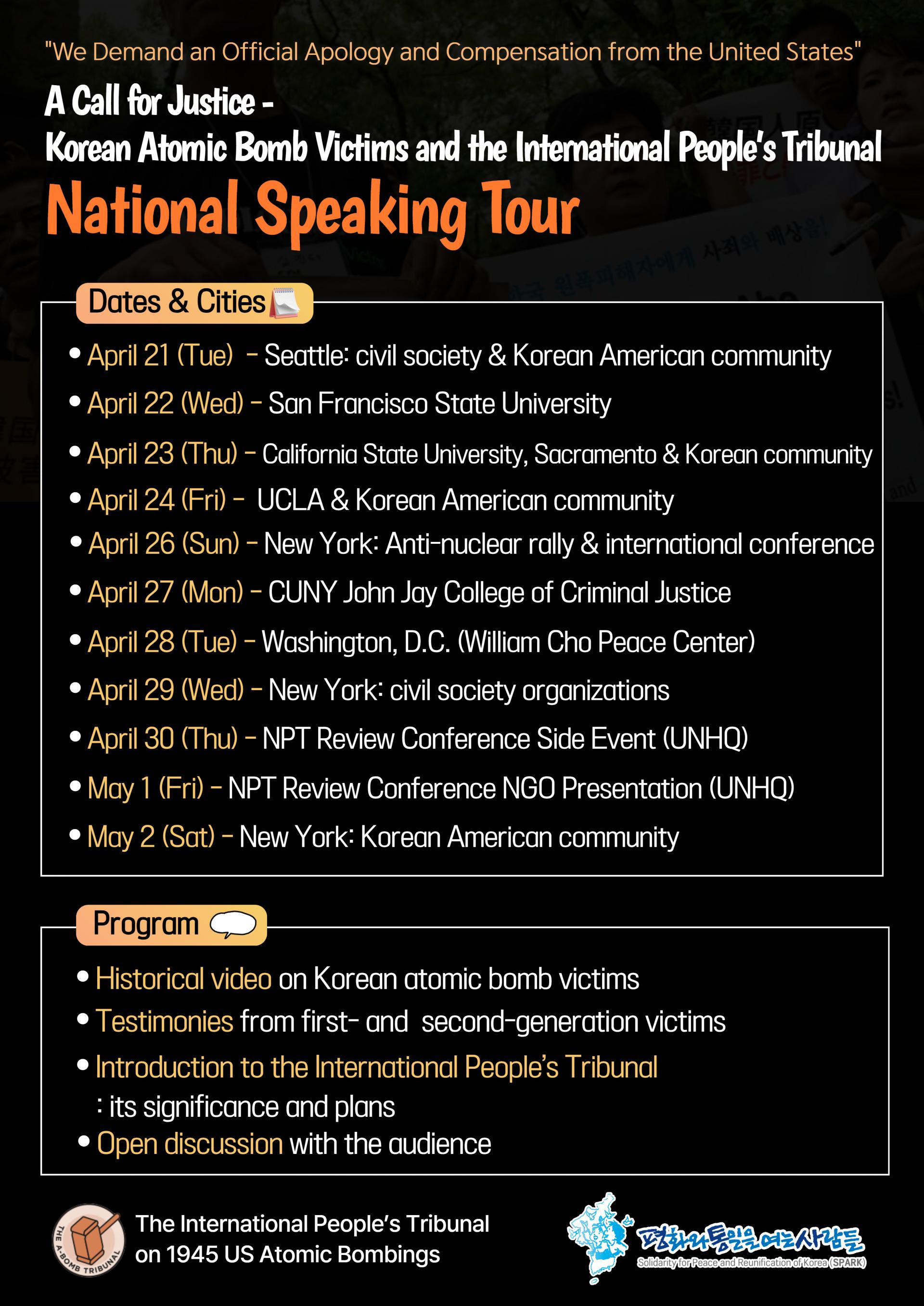
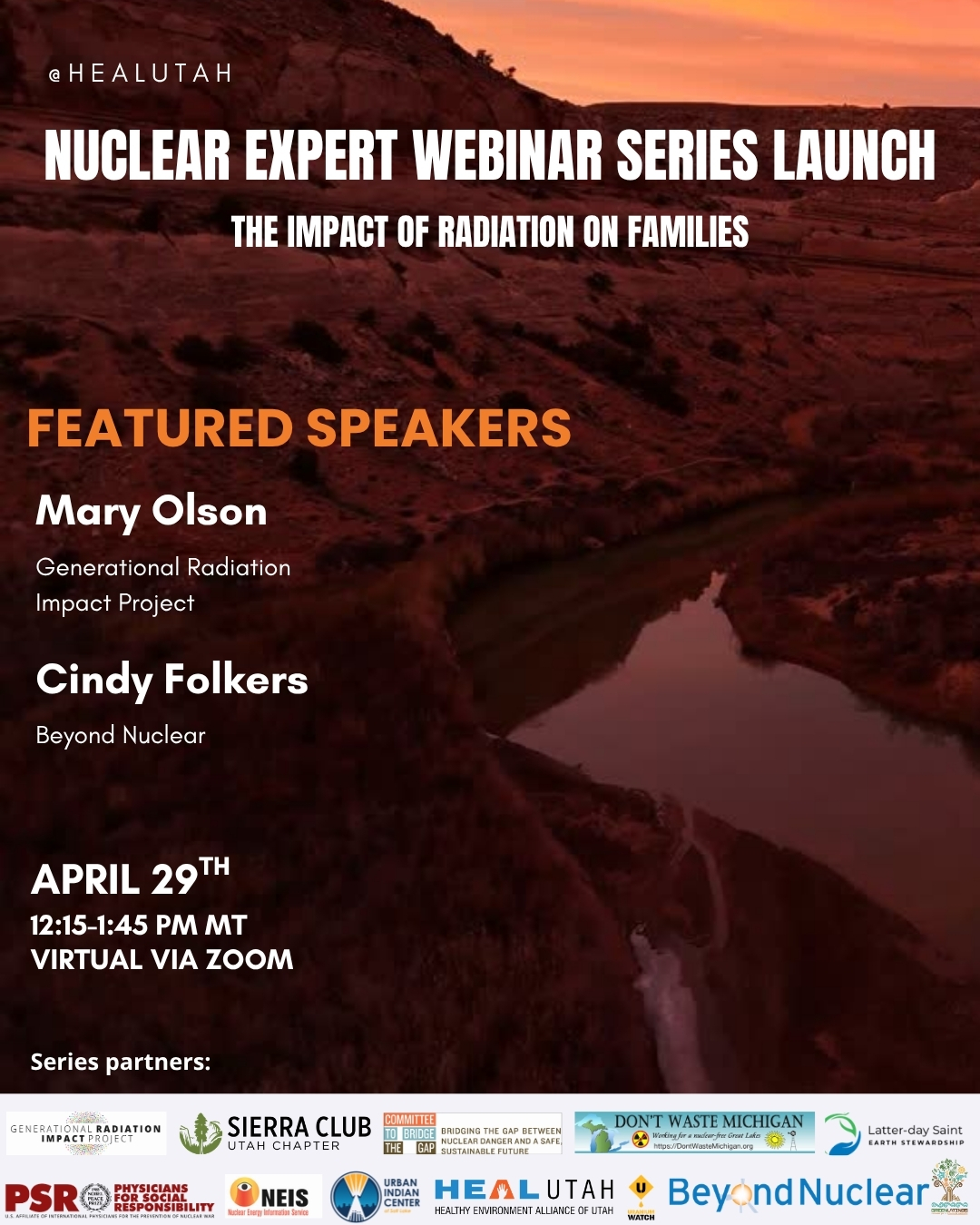
29 April – Nuclear Expert Webinar #1 – Radiation Impacts on Families with Mary Olson and Cindy Folkers
- 12:15 PM MT – 1:45 PM MT
- Location: Virtual – REGISTER TODAY

4 May -West Suburban Peace Coalition to discuss Iran war at May Educational Forum
Monday, May 4, 7:00 – 8:00 PM Central Standard Time
Title: : How Trump’s Narrative Tries to Shape the Reality of the War on Iran.
Contact Walt Zlotow, zlotow@hotmail.com 630 442 3045 for further information
14 May – online event From Bombs to Data Centres: the Face of Nuclear Colonialism

Pine Ridge Uranium is the real threat, not Tehran- Tell Burgum: Stop the Extraction.
Chernobyl: The Lost Tapes – A good documentary on Chernobyl on SBS available On Demand for the next 3 weeks– https://www.sbs.com.au/ondemand/tv-program/chernobyl-the-lost-tapes/2352741955560
To see nuclear-related stories in greater depth and intensity – go to https://nuclearinformation.wordpress.com
-
Archives
- April 2026 (327)
- March 2026 (251)
- February 2026 (268)
- January 2026 (308)
- December 2025 (358)
- November 2025 (359)
- October 2025 (376)
- September 2025 (257)
- August 2025 (319)
- July 2025 (230)
- June 2025 (348)
- May 2025 (261)
-
Categories
- 1
- 1 NUCLEAR ISSUES
- business and costs
- climate change
- culture and arts
- ENERGY
- environment
- health
- history
- indigenous issues
- Legal
- marketing of nuclear
- media
- opposition to nuclear
- PERSONAL STORIES
- politics
- politics international
- Religion and ethics
- safety
- secrets,lies and civil liberties
- spinbuster
- technology
- Uranium
- wastes
- weapons and war
- Women
- 2 WORLD
- ACTION
- AFRICA
- Atrocities
- AUSTRALIA
- Christina's notes
- Christina's themes
- culture and arts
- Events
- Fuk 2022
- Fuk 2023
- Fukushima 2017
- Fukushima 2018
- fukushima 2019
- Fukushima 2020
- Fukushima 2021
- general
- global warming
- Humour (God we need it)
- Nuclear
- RARE EARTHS
- Reference
- resources – print
- Resources -audiovicual
- Weekly Newsletter
- World
- World Nuclear
- YouTube
-
RSS
Entries RSS
Comments RSS
 nuclear-news