11 Years after the Nuclear Accident, Tomioka Town, Fukushima: A “Reconstruction Base” in a Place Where No One Can Live
February 7, 2022
On January 26, restrictions on entry were lifted in a part of the difficult-to-return area designated in Tomioka Town, Fukushima Prefecture, following the accident at TEPCO’s Fukushima Daiichi Nuclear Power Plant. The town and the government aim to lift the evacuation order for the reconstruction center in the spring of 2023.

The town and the government are aiming to lift the evacuation order in the spring of 2023. This spring, for the first time in 11 years since the nuclear accident, people will be able to walk under cherry blossoms in full bloom in Tomioka Town, Fukushima Prefecture, on January 26, 2022.
On January 26, I walked around the area with a dosimeter in hand to assess the situation of radioactive contamination. The air radiation levels shown in the photo were measured at a height of one meter from the ground. The government’s long-term target for decontamination is 0.23 microsieverts per hour. The average natural radiation level in Japan is estimated to be 0.05 microsieverts per hour.

Houses being dismantled by heavy machinery. The same kind of work was going on here and there in the reconstruction center (The figure is the hourly radiation level near the location where the photo was taken. The unit is microsieverts.)

(3) Along the rows of cherry blossom trees, there were many empty lots after the demolition of houses. (The figure is the radiation level per hour near the location where the photo was taken; the unit is microsievert.)

(4) The remains of a TEPCO employee dormitory. 4) The site of a TEPCO employee dormitory, where bags containing garbage from decontamination were lined up (The figure shows the hourly radiation level near the location where the photo was taken. Unit: microsievert)
The area that is now off-limits is about 390 hectares, mainly in the Yonomori district east of Yonomori Station on the Joban Line. The area used to be a residential area with a famous cherry blossom viewing spot, but now it has become nothing but vacant lots and is in a state of disrepair. Close to the station and surrounding a large park, there were many apartments as well as single-family houses, and there was also a dormitory for TEPCO employees.

There was also a dormitory for TEPCO employees. 5) A light passenger car with a flat tire was abandoned at the site of a former supermarket. (The figures are the hourly radiation levels near the location of the photo shoot, in microsieverts.)

(6) At the Night Forest Tsutsumi Park, the pond had dried up and weeds were growing thickly. Unit: microsievert)

(7) Bicycles and trash from decontamination were placed in front of a house with broken windows (The figure shows the hourly radiation level near the shooting location. Unit: microsievert)

(⑧) At a car dealership along Route 6, the glass was broken and the ceiling had fallen in (The figure shows the hourly radiation level near the location where the photo was taken. Unit: microsievert)
The number of registered residents as of January 1 was 2,729. The town will start a “preparatory lodging” program during the major holidays this spring, allowing residents to sleep in their homes in the reconstruction center. (Kenta Onozawa)


(9) At the temporary storage site for decontaminated garbage, the dismantling of the sandbags that covered the perimeter of the garbage to shield it from radiation was in progress. Unit: microsievert)

10) The boundary between the reconstruction center and the difficult-to-return area. The area at the back of the photo has not yet been decontaminated and there is no prospect of lifting the evacuation order (The figure shows the hourly radiation level near the location where the photo was taken. Unit: microsievert)
The area was designated by the government after the accident at TEPCO’s Fukushima Daiichi Nuclear Power Plant as a “difficult-to-return area” with high radiation levels, and is being developed so that residents can live there after priority decontamination.
https://www.tokyo-np.co.jp/article/158755?fbclid=IwAR24oLt_xTtnf9fAkfsVdDbNU132uvlGYswOXuiSTyXa4I01HNl38W4Qq5I
IAEA team to visit Fukushima next week to review water release plan

February 7, 2022
TOKYO (Kyodo) — A team of International Atomic Energy Agency experts will visit the crippled Fukushima Daiichi nuclear power plant next week to review Japan’s plan to discharge treated radioactive water into the sea, the government said Monday.
During their stay in the country from Feb. 14 to 18, the experts will evaluate the safety of releasing the treated water, with their visit to the Fukushima plant slated for Feb. 15, according to Japan’s foreign and industry ministries.
The planned release, slated to begin in the spring of 2023, has been opposed by China and South Korea, as well as local fishing communities.
The on-site assessment by the experts led by Gustavo Caruso, director and coordinator of the IAEA’s Department of Nuclear Safety and Security, was initially scheduled for mid-December but postponed due to the rapid spread of the highly contagious Omicron variant of the coronavirus.
The team will also exchange views with the Japanese government and Tokyo Electric Power Company Holdings Inc., the operator of the Fukushima plant, on cooperation in dealing with the treated water, the industry ministry said, adding the IAEA will hold an online press conference on Feb. 18.
Water pumped in to cool melted fuel at the plant, crippled by the 2011 massive earthquake and tsunami in northeast Japan, has been accumulating at the complex. It has mixed with rain and groundwater at the site, becoming contaminated.
The water is treated using an advanced liquid processing system. The process removes most radioactive material except for tritium, which is said to pose few health risks. Tokyo decided in April last year to release the treated water into the Pacific Ocean.
To improve the transparency of the water discharge project, Japan’s industry ministry and the IAEA have agreed that the international body will compile an interim safety evaluation report in 2022.
Proposed referendum ordinance to question the pros and cons of nuclear power plant restart: Mayor Kamisada submits opposing opinion

February 8, 2022
An extraordinary meeting of the city council of Matsue City was held today to discuss a draft referendum ordinance on the pros and cons of restarting the Unit 2 reactor of the Shimane Nuclear Power Plant.
A citizens’ group in Matsue City collected more than 11,000 signatures to request the enactment of a referendum ordinance on the pros and cons of restarting the Unit 2 reactor of the Shimane Nuclear Power Plant, and on the 31st of last month, they directly requested Mayor Kamisada to enact the ordinance.
On the 8th, an extraordinary meeting of the city council of Matsue City was held, and Mayor Kamisada submitted a draft ordinance with an opposing opinion, stating, “The most appropriate way to restart the nuclear power plant is not through a referendum, but through responsible discussions by the mayor and city council members, who have been entrusted by the citizens.
The extraordinary city council meeting of Matsue City will be held on March 9 to hear opinions from citizens’ groups, and on March 15, the last day of the meeting, the proposed ordinance will be voted on.
Yumiko Okazaki, co-chair of a citizens’ group that attended the council meeting, said, “I think that the lives and safety of citizens should be the top priority when restarting nuclear power plants. As the mayor of a municipality where a nuclear power plant is located, I would like him to make it a prerequisite to face the concerns and anxieties of the citizens.
https://www3.nhk.or.jp/lnews/matsue/20220208/4030011494.html?fbclid=IwAR2eyipGnCls3dHbqJJn0sPcRXz_rui4yXrb-bNo7Rn7p3nz6_vC6aaG8hI
Experts to visit Fukushima plant to check water release plan

By MARI YAMAGUCHI February 7, 2022
TOKYO (AP) — A team of experts from the International Atomic Energy Agency will visit Japan’s wrecked Fukushima nuclear power plant next week to review plans to begin releasing more than a million tons of treated radioactive water into the sea, a mission the government hopes will assure people of the plans’ safety.
The team of about 15 experts will meet with government and utility officials during their Feb. 14-18 mission, which includes a visit to the Fukushima Daiichi plant, industry ministry officials said Monday.
The government and Tokyo Electric Power Company Holdings announced plans last year to begin gradually releasing the still-contaminated water in spring 2023 after further treatment and dilution. The water is being stored in about 1,000 tanks at the plant which need to be removed to allow for the wrecked plant’s decades-long decommissioning. The tanks are expected to reach their capacity of 1.37 million tons later this year.
The plan has been fiercely opposed by fishermen, local residents and Japan’s neighbors, including China and South Korea.
Japan has sought IAEA’s assistance to ensure the release meets international safety standards and gain the understanding of other countries. The team is expected to include several IAEA officials and an expert from each of 11 countries including South Korea and China, officials said.
A massive earthquake and tsunami in 2011 destroyed the Fukushima plant’s cooling systems, triggering the meltdown of three reactors and the release of large amounts of radiation, and causing more than 160,000 people to evacuate. Water used to cool the highly radioactive reactor cores has since leaked extensively, mixing with groundwater seeping into reactor buildings.
Japanese officials say the only realistic option is to slowly release the contaminated water, diluted with sea water, into the ocean. The discharge is expected to take decades to finish.
Officials say all isotopes selected for treatment can be reduced to low levels except for tritium, which is inseparable from the water but is harmless in small amounts.
The IAEA mission was originally scheduled for December but was delayed due to the global surge of the omicron coronavirus variant. Japan’s industry ministry and the IAEA have agreed to compile an interim report on the water discharge plan in 2022.
Officials say it is now safe to live in most areas around the plant except for its immediate surroundings after extensive decontamination work. They blame “reputational damage,” or incorrect information about the impact of radiation, for delaying the recovery of Fukushima’s agricultural and fisheries industries.
Six people recently filed a lawsuit seeking compensation from TEPCO for thyroid cancers that they believe were caused by radiation from the accident. About 300 people who were children at the time have since developed the illness.
On Jan. 27, five former Japanese prime ministers issued a joint statement urging the European Commission to reverse its decision to include nuclear power as an “environmentally sustainable economic activity” under EU taxonomy, noting the Fukushima tragedy and thyroid cancer in many children there.
Government officials have repeatedly denied links between thyroid cancer in Fukushima and the accident and accused the former leaders of spreading “false information and wrongful discrimination and prejudice.”
Taiwan Lifts Ban on Fukushima Food in Push to Join Trade Bloc
Economic priorities put before people’s health priority by politicians!

February 8, 2022
(Bloomberg) — Taiwan lifted its ban on most food imports from areas around the Fukushima nuclear power plant which melted down in 2011, removing an irritant in the bilateral relationship and making it easier for Japan’s government to support Taiwan joining an Asia-Pacific trade deal.
The decade-old ban on most foods imported from Fukushima and four surrounding prefectures will be lifted from Feb. 18, Taiwan’s government said at a briefing Tuesday. Restrictions will remain on certain food items that carry a greater risk of nuclear radiation, such as mushrooms and the meat of wild animals, Cabinet spokesman Lo Ping-cheng said at a briefing in Taipei.
“The lifting of the Fukushima ban sends a clear message to the world that Taiwan is willing to follow international standards in order to participate in economic and trade cooperation,” Taiwan’s chief trade negotiator John Deng said at the briefing. “This will provide a great push for Taiwan’s efforts to join CPTPP as Singapore and other member countries have expressed their willingness to welcome governments that can accept high standards.”
The government vowed to implement scientific inspections which are more stringent than international standards in an effort to reassure the public the imports will be safe.
Japan’s Ministry of Foreign Affairs said in an emailed statement that the government welcomed the move as a first step, but would continue to press for removal of the remaining restrictions.
Domestic Opposition
Taiwan halted imports of food products from Fukushima and surrounding prefectures in 2011 over concerns of radiation contamination after the nuclear disaster triggered by the devastating earthquake and tsunami that year.
The food ban has become a domestic political issue in Taiwan. A majority of voters in a 2018 referendum agreed that it should be kept in place, a position supported by the opposition Kuomintang, which says the government is unable to provide unequivocal science-based guarantees about the safety of food imported from the area.
China, South Korea and Taiwan were the only governments that still ban some or all food imports from Fukushima and surrounding areas, according to Japan’s government.
The decision to lift the ban now could cost President Tsai valuable political capital before key regional elections scheduled for November. The move mirrors a previous decision by Tsai to remove restrictions on imports of pork containing trace amounts of the feed additive ractopamine.
That ban effectively blocked imports of pork from the U.S., which called it the biggest impediment to a bilateral free trade agreement. However after it was lifted, imports of pork from the U.S. fell 86% in 2021 compared to the previous year, according to data from Taiwan’s Council of Agriculture, as consumers shied away from it.
Push for International Integration
The lifting of the ban is seen as a key step in gaining Japan’s support for Taiwan to join the Comprehensive and Progressive Agreement for Trans-Pacific Partnership, a move which could help the island reduce its economic reliance on China. Complicating Taiwan’s bid to join is the fact that China has also applied for entry, leaving member nations with a tough decision between admitting one, both or neither.
Cabinet spokesman Lo was quick to play down hopes of immediate progress in Taiwan’s CPTPP bid however, warning that ending the ban does not necessarily guarantee Taiwan will be accepted into the bloc but rather it is a prerequisite condition for membership. He also said Taipei’s move was not intended to earn Japan’s backing for Taiwan’s entry bid.
Both Taiwan and China are members of the Asia-Pacific Economic Cooperation forum and the World Trade Organization, but Beijing has said that this isn’t a precedent that means that Taipei can also join the CPTPP. The government of the People’s Republic of China views Taiwan is part of its territory, a claim the authorities in Taipei reject. The government of President Tsai Ing-wen is looking to cultivate additional overseas markets to reduce the mainland’s economic leverage.
Those tensions mean a long and politicized application process is likely, with the members divided between nations like Japan, Australia and Canada pushing for Taiwan’s accession, and Southeast Asian countries keen to remain in China’s good graces, making them vulnerable to pressure from Beijing to thwart Taipei’s bid. In an interview with Bloomberg Television in November, Singapore’s Foreign Minister Vivian Balakrishnan said there are “political complications” surrounding Taiwan’s bid.
https://www.yahoo.com/now/taiwan-set-lift-ban-fukushima-140007509.html
In Ukraine, USA to finance American companies to sell nuclear technology there, and to other States

Where the Russians are coming, so is Westinghouse with its nuclear ambitions, ANYA LITVAK, Post Gazette, 7 Feb 22, Over the past few months, Joel Eaker, Westinghouse Electric Co.’s vice president for new nuclear power plant projects, has been shaking hands and posing for pictures all over Eastern Europe.
He was in Poland last month, where he plans to move in the spring. A week before that, he was in the Czech Republic to announce agreements signed with local companies in Cranberry-based Westinghouse’s bid to sell its AP1000 reactors in the region.
The nuclear renaissance never happened in the United States. But Mr. Eaker thinks Europe is headed in that direction.
The long game
The nuclear business is a long game with fits and starts.
For more than two decades, Westinghouse has been seemingly on the cusp of selling new nuclear reactors to various Eastern European countries ………….
All along, Westinghouse was pursuing a parallel strategy: making fuel that could be used in existing Russian-made reactors that are scattered across Europe.
…… Westinghouse could provide an alternate supply of fuel, which effectively delinks those countries from Russia.”
After some attempts loading the fuel in Russian-made reactors at Temelin in the Czech Republic, it was Ukraine that allowed Westinghouse to test and refine its fuel assemblies in Russian reactors.
Today, the U.S. company’s fuel is loaded into nearly half of Ukraine’s nuclear plants, and Westinghouse is trying to use those bona fides to sell fuel to existing Russian-style reactors in Finland, Czech Republic, Slovakia and Hungary, Tarik Choho, president of Westinghouse’s Europe, the Middle East and Africa division, told Ukraine’s news service in August.
Mr. Eaker said Westinghouse’s pursuit of that market was both earnest and strategic.
The company’s bread-and-butter business is supplying fuel to and servicing existing reactors. It’s what made Westinghouse, then in bankruptcy, attractive to the Canadian asset management firm Brookfield Business Partners, which has owned it since 2018.
It’s difficult to predict if this recent burst of nuclear promise in Eastern Europe will yield actual new reactor projects, Ms. Harrington said.
………… In 2014, when the continued existence of the U.S.’s Export-Import Bank became a topic of debate in Congress, Westinghouse’s then-CEO Danny Roderick said the first thing he was asked when pitching a new plant to clients in places like Central Europe is how much the U.S. government is willing to help financially.
………. Pierre Paul Oneid, the chief nuclear officer at Holtec International, a New Jersey-based company that specializes in decommissioning and nuclear fuel storage. Holtec, Mr. Oneid said, had been working for a decade to close a deal for a centralized storage facility for spent nuclear fuel in Ukraine, which would not be possible without financing from the U.S. government.
…….. While Mr. Oneid said the deal was in the “eleventh hour,” in fact it took three more years to finalize. U.S. Overseas Private Investment Corp. announced in 2017 that it was providing $250 million in political risk insurance to the Ukrainian utility. Bank of America/Merrill Lynch would then sell that $250 million commitment in the form of fixed-rate bond securities.
It was the first such deal of its type, but probably not the last.
Show me the money
If there’s another major piece, other than climate change, that’s opening doors for Westinghouse in Eastern Europe, it’s the prospect of the U.S. government’s expanded role in financing nuclear projects, Mr. Eaker said.
In 2019, then-President Donald Trump created the U.S. Nuclear Fuel Working Group………. Among its recommendations was for the U.S. Development Finance Corp., a newly-created vehicle to fund projects in low-income countries, to lift its ban on providing funds to nuclear projects.
The development agency listened and, in the summer of 2020, it unshackled itself from the ban, which was a holdover from its predecessor and modeled on the language of the World Bank. The DFC can even provide financing to projects in higher-income countries in Eastern Europe as part of its charge under the The European Energy Security and Diversification Act of 2019.
This means the U.S. government can now offer equity financing for nuclear projects abroad, a first. It can also give larger loans and loan guarantees than what is typically handled by the Export-Import Bank, and it can offer political risk insurance.
This is the next step in Westinghouse’s advances in Eastern Europe. Once it finishes doing a $10 million front end engineering and design study for AP1000 reactors in Poland — the U.S. government funded 70% of that work as part of an intergovernmental agreement — then it hopes to submit a formal bid along with a U.S. government financing proposal this fall.
In Ukraine, Westinghouse has already signed contracts with the electric utility to start ordering long-lead equipment and doing other preparations, but the contracts won’t be fully implemented until the U.S. comes with the financing package.
Anya Litvak: alitvak@post-gazette.com. https://www.post-gazette.com/business/powersource/2022/02/07/Russia-Ukraine-Westinghouse-Electric-nuclear-AP1000-reactors-climate-change-energy-eastern-europe/stories/202201300126
Hinkley nuclear mud

500 000 tonnes of Hinkley mud are now to be dumped at Portishead. Thisdumping was licensed by @The_MMO – the English Marine Management Organisation – on the basis of EDF’s skimped EIA that brushed over the key issues of *what* contaminants, and where they *go*.
@cianciaran 6th Feb 2022
India’s Nuclear Weapons Could Kill Millions Of People- a matter of pride?

What’s a few million dead. compared to national pride?
India’s Nuclear Weapons Could Kill Millions Of People, Caleb Larson, 7 Feb 22, India might be the nuclear weapons state many military analysts forget about. Nonetheless, New Delhi could start a nuclear war within just mere minutes: India’s indigenously developed technology—and a lot of Russian hardware and help—all keep Pakistan and China at bay.
No First Use. An NFU policy essentially constitutes a promise, backed by a survivable nuclear arsenal, to only use nuclear weapons in response to a nuclear attack,” explained a Carnegie publication. “The logic is simple and effective: you don’t nuke me, and I won’t nuke you. India and China both have declared no-first-use policies, whereas Pakistan and the United States, among others, do not rule out the first use of nuclear weapons in a conflict.”
Despite India’s formidable nuclear arsenal, India had since 2003 maintained it will not use said weapons of mass destruction first, but strictly in a retaliatory manner for deterrence.
However, 2019, India called their no first use policy into question when Indian Defense Minister Rajnath Singh said that “Till today, our nuclear policy is ‘no first use’. What happens in future depends on the circumstances.” This curious statement is perhaps an example of deliberate strategic ambiguity.
Triad
India maintains a nuclear triad—that is a three-pronged nuclear weapon delivery system that utilizes a diverse array of means for delivering nuclear payload on target. New Delhi has air-launched nuclear missiles, land-based nuclear missiles, and most recently submarine-launched missiles………………. https://www.19fortyfive.com/2022/02/indias-nuclear-weapons-could-kill-millions-of-people/
European dispute over the Taxonomy plan to class nuclear power as ”green”, qualifying it for billions of euros in subsidies.

EU Observer, 7. FEB, 07:22, Barely a month since France took over the rotating presidency of the Council of the European Union, and France and Germany are already in dispute over the highly-controversial EU proposal to grant nuclear energy and natural gas a green investment label under the EU taxonomy on sustainable finance rules.
The EU proposal was published on Wednesday (2 February) with only minor edits – despite the internal row it had sparked amongst several member states.
The initial proposal itself had been quietly distributed to EU members on New Year’s Eve – the day Germany closed half of its six nuclear power plants.
If the proposal now passes the EU’s legislative procedures without getting blocked by the commission or the parliament (both unlikely scenarios), it will likely channel billions of euros into the construction of new nuclear power plants across the bloc…………………….
During the past weeks France has taken a strong stance in support of nuclear energy with president Emmanuel Macron labelling it as the “sovereign solution”, while Germany has expressly rejected the integration of nuclear power into the green taxonomy…………….
After their success in September’s federal elections, German Greens secured their position as the second-largest party in the current coalition government – making them crucial for the future of the German coalition.
No compromise
And nuclear energy is one of the topics the Greens are not willing to compromise on.
The Greens, born out of the 1980s anti-nuclear protests, were quick to call out the EU over the new energy proposal with the German vice-chancellor and climate minister, Robert Habeck, accusing the EU of “greenwashing”.
Nuclear news this week- (too long: pick out bits)

Some bits of good news. Not much of it about. But I did find, in nuclear history, a story that can give some hope. From 2000 to 2012, 47 nations co-operated, in a clean-up, led by Kazakhstan, Russia and USA, of ”Plutonium Mountain” – showing that it is possible for countries to work together, to heal this wounded world. Small island communities – pioneers for sustainability and climate action. Renewable energy: The past decade has seen stunning change. Australia -the next 10 years will be breathtaking.
Coronavirus. In the USA case numbers are dropping. In other countries mounting numbers are breaking records
Climate change. Fixing the Climate: Hopes and Hazards.
UK court should slap down the US Justice Department in the Assange case.
Claims Over Broken Promises About NATO Simmer at the Heart of the Ukraine Crisis.
Can Space Tourism Co-exist with Space being turned into a War Zone?
The nuclear future and the dread factor. Time to start stopping the wars: No war in Ukraine, then no war anywhere. How giving AI bots control over nuclear weapons could spark World War III.
Electromagnetic radiation, said by telecom companies to be harmless, could be hurting wildlife..
UKRAINE. Stop the lies about Ukraine. Claims Over Broken Promises About NATO Simmer at the Heart of the Ukraine Crisis. Lake animals near Chernobyl have mutations.
FRANCE. The nuclear power dilemma: where to put the lethal waste. Cracks found in Civaux nuclear reactors, both 1 and 2. French nuclear capacity low in February, need for vigilance remains .
EUROPE.
The European Commission declares nuclear power to be green, but the devil is in the detail. Inclusion of nuclear and gas is ”attempted robbery”. European Taxonomy – more like Fakeonomy – now including coal and nuclear. Despite scientific objections, the European Commission sticks to its draft plan to include nuclear and gas in “taxonomy for sustainable finance”. Austria, Luxembourg to take green label for nuclear and gas to EU courts. ‘Nuclear is neither green nor sustainable” – Austria to sue European Commission if it approves nuclear power for financial incentives.
FINLAND. Electricity production at the new Olkiluoto 3 nuclear reactor in southwest Finland has been hit by yet further delays.
UK. Wastes A big pile of Plutonium – UK reprocessing ceases, leaving deadly waste and no plan. Community Partnership” alerted to surveillance and “intimidation” by Radioactive Waste Management . The Nuclear Free Local Authorities (NFLA) of the UK and Ireland call for truly green energy on old nuclear sites. Nuclear Free Local Authorities (NFLA) of the UK and Ireland call for clear commitment to employ LOCAL nuclear decommissioning workers. Nuclear Free Local Authorities (NFLA) demands deadly plutonium stockpile be placed ‘out of use’ BBC Inside Science Nuclear Waste Podcast Kicks Off With a Big Fat Lie – Fact Check!?
Predictions of technical problems for Hinkley nuclear design turn out to be well founded.Sizewell C nuclear project issues have been glossed over. Sizewell nuclear developers co-opting Suffolk New College. UK close to opening coal mine under Marine Conservation Zone just 5 miles from Sellafield nuclear facility!
USA.US created Ukraine mess, now it must repair Russia relationship. Even the right-wing Cato Institute wants USA to deal with Ukraine crisis by diplomacy, not weaponry.America’s military leaders reassure their staff ”We will win a nuclear war!” Raytheon and Lockheed Martin boast to investors that Ukraine-Russia crisis is a boon for their business
. Chomsky: US Approach to Ukraine and Russia Has “Left the Domain of Rational Discourse” . As Ukraine Crisis Raises Specter of Nuclear War
Veterans Call for Disarmament and Peace.
- Nuclear baloney in today’s media. US DOE announces clean-up progress at Savannah River Site.
- Terra Power chose Wyoming because it is an oligarch and dictator’s paradise.
- Nuclear weapons plutonium pits developmnt planned for Los Alamos National Laboratory, but there’s strong opposition on safety grounds.
- Nuclear power: CO2 fix or cost disaster?
- COVID-19 an obstacle for nuclear waste disposal at Waste Isolation Pilot Plant, officials say.
- Cornell University Library launches online Nuclear Freeze documents.
- Give Nuclear Exposure Victims a Break. Indigenous support for Tularosa Basin Downwinders Consortium. Shoshone Nation need radiation exposure compensation. In 2022, compensation funds for the nuclear-affected ”Downwinders” are due to expire.
- UK preparing for ‘exo-atmospheric nuclear attack’ as greatest threat in space war, government report warns.
- New Mexico’s Bill to stop the State becoming a ‘sacrifice zone’ for nuclear wastes. Bill To Ban Spent Nuclear Fuel Storage In New Mexico Passes House Committee. In New Mexico, two Bills to block the storage of high level nuclear waste. Decommissioning is just the beginning of the huge nuclear legacy problem. Bill to help build small nuclear reactors in Indiana passes Senate.
- Increased risk of flooding due to population increase and global heating ,
terans Call for Disarmament and Peace.
NORTH KOREA. North Korea, Perpetual Victim of the US Military-Industrial Complex. North Korea isn’t going to give up nuclear weapons, but that’s not a crisis.
RUSSIA. Russia calls for USA to remove its nuclear weapons from European countries.
JAPAN. Japan to renew subsidies for plutonium nuclear recycling . After the hibakusha: the future of Japan’s anti-nuclear movement.
Fukushima. Doubts grow on water-release schedule at Fukushima plant. Japan’s Bid to Dump Tons of Radioactive Water From Fukushima Into Sea Hits Snag. I couldn’t tell anyone for 10 years, Kishida says statement by five former prime ministers ‘inappropriate’:. Thyroid cancer caused by Fukushima nuclear accident. A Step Toward Fuel Debris Removal: Robotic Arm Arrives at TEPCO’s Fukushima Daiichi Nuclear Power Plant. Fukushima Daiichi Nuclear Power Plant “debris” storage method to be reconsidered – Chairman of the Regulatory Commission, Mr. Sarada. Homesick. Russia, China concerned over Japan’s plans to dump Fukushima radioactive water.
IRAN. Iran says nuclear talks have made ‘significant’ headway. US Grants Sanctions Relief To Iran,Inches Closer To Nuclear Deal Renewal. A nuclear end game as 2 stubborn nations dig in . Movie on assassination of nuclear scientist Dariush Rezainejad premieres at FajrCulture.
SOUTH AFRICA. Fight Over Africa’s Sole Atomic Plant Entangles Energy Minister Mantashe.
ISRAEL. Israel Simulated Attack On Iran’s Nuclear Facilities In Recent Drills.
RUSSIA. Russia, China call on nuclear powers to abandon Cold War mentality.
KAZAKHSTAN. Kazakhstan calls on CANWFZ states parties to join Treaty on Prohibition of Nuclear Weapons
AUSTRALIA. The coming Khaki election: will Labor join in the belligerence against China? Nuclear waste dumping. Channel 10’s ”The Project” had the guts to show Australia the Kimba nuclear waste dump story. https://www.youtube.com/watch?v=MGwsbGufXc0
Five successive prime ministers saying that “many children suffer from thyroid cancer”

February 4, 2022
Environment Minister Tsuyoshi Yamaguchi has complained about five successive prime ministers saying that “many children suffer from thyroid cancer.” However, pediatric thyroid cancer is a rare disease that only occurs in one million people, but after the Fukushima nuclear power plant accident, 266 people (10 years) have been diagnosed out of 38,000 people. Why don’t you say a lot of this?” (Attorney Takayuki Fujioka)
We received a letter of protest from Mr. Yamaguchi, Minister of the Environment, regarding the joint statement by five former prime ministers compiled and released by JAERI. In response to this, JAERI has released a rebuttal and questions. In this video, Hiroyuki Kawai, the secretary general of JAERI, talks about the issues involved. Click here for the full text of the rebuttal and questions
Entry restrictions eased in Tomioka despite high radiation
February 7, 2022
Via Takuya Saito
While entry restrictions were eased, residents were sent home with parents and children. There was a kid running around the house looking happy for the first time in a while, so I tried to measure the scale around it, but there was 8.5( μSv/h) pollution in the high area near the ground. Sad but yet again this is reality.
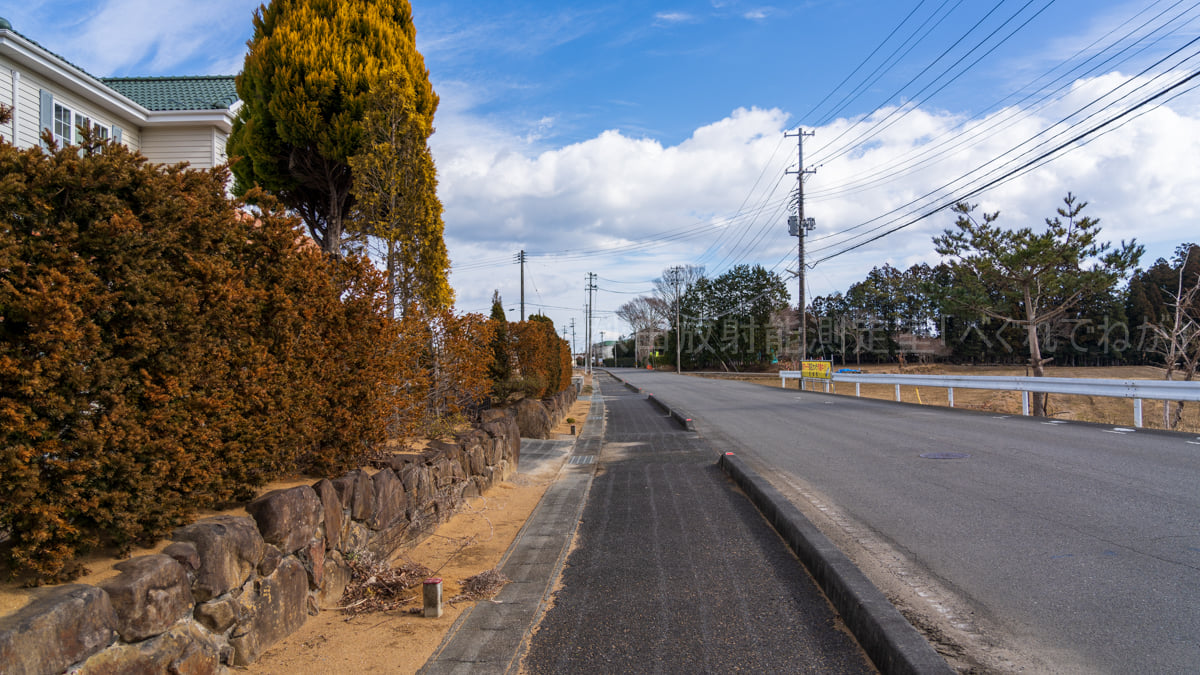


UK court should slap down the US Justice Department in the Assange case

UK court should slap down the US Justice Department in the Assange case https://thehill.com/opinion/judiciary/591776-uk-court-should-slap-down-the-us-justice-department-in-the-assange-case?fbclid=IwAR1FwC11pSY_hGdiCvIdBqIj6mttfTheEDtcNR3EUpQG38xWS3-ZRC6TLhw
BY JAMES C. GOODALE, 6 Feb 22, As the lead attorney for the New York Times in the “Pentagon Papers” case in 1971, I’ve been doing a slow burn ever since over the government’s behavior in that instance: lies, disregard of court rules, arrogance, destruction of documents. All of this was brought to mind earlier this week when a British court hinted in the Julian Assange case that the U.S. government has acted in the same way once again.
It asked Britain’s supreme court to determine the appropriateness of a late filing by the government that completely undercut a ruling that Assange could NOT be extradited to the U.S. This followed British trial court Judge Vanessa Baraitser, who was hearing Assange’s extradition case, ruling that Assange might commit suicide if held in a U.S. prison in solitary confinement under what is called Special Administrative Measures (SAMs) and, so, he could not be extradited.
As soon as she announced her decision, the U.S. government filed assurances that Assange would not be held in that kind of detention, although it reserved the right to revoke the assurance if circumstances changed.
The judge was unmoved by this assurance, but she was reversed on appeal. The U.K.’s supreme court has now asked to consider the timeliness of this filing.
I do not believe the U.S. government’s assurances are worth the paper on which they have been written. Its behavior in this case has been rampant. Most outrageously, the CIA discussed a plot to kidnap Assange from the Ecuadorian Embassy in London, where he was holed up, and to kill him. The CIA also tapped into conversations in the Ecuadorian Embassy, including those with Assange’s lawyers.
There is not much question whether all of this is true. There was testimony about it in open court, and Mike Pompeo, the CIA director at the time and later secretary of State during the Trump administration, has conceded that there is “some truth” in the foregoing.
I do not pretend to be particularly familiar with the extradition laws of the U.K. But common sense tells me that you deliver highly important documents about a case — such as government assurances — before the case begins, not after it has been decided. U.K. counsel representing the U.S. disagrees, saying he can deliver documents when he wants and if he loses the appeal, he will start the extradition proceedings all over again.
This is the very same arrogance that was on display in the Pentagon Papers case, in which then-U.S. Solicitor General Erwin Griswold said the usual rules of evidence did not apply. His view of the law manifested itself in his introduction of new evidence in the case anytime the government was so moved. The claims were always extravagant: Publication of the new evidence would be a disaster for the country’s national security, etc., etc. They never were. Indeed, most of them turned out to be previously published.
The other principal fallacious claim made by the government back then was that the Times had revealed that the United States had broken the Vietnamese code. This also proved to be so much hogwash.
The government also destroyed — or, in its words, “lost” — New York Times briefs in the case. It prevailed upon me to give them these briefs to protect national security and to be returned if the government indicted the Times. A later research request evoked the response “they were lost.”
We do not know if the U.K.’s supreme court will take the Assange case to determine the issue of the timing of the U.S. government’s filing. Let’s hope that it does and then decides the U.S. government should not get away with the latest example of its less than appropriate behavior in a national security case.
James C. Goodale is the former general counsel and vice chairman of the New York Times and the author of “Fighting for the Press: The Inside Story of the Pentagon Papers and Other Battles.”
The nuclear power dilemma: where to put the lethal waste?

The nuclear power dilemma: where to put the lethal waste
France is exploring new ways to dispose of radioactive materials but public opposition is as fierce as ever, Ft.com Anna Gross in Chooz and Sarah White in Bure 6 Feb 22,
Every morning, Benoit Gannaz places a small black device in his breast pocket to make sure his work is not killing him. Like every worker at the Chooz A nuclear power facility in northern France, he carries a detector that measures ionising radiation levels at all times. The reactor was turned off more than three decades ago and the most hazardous materials removed soon after, but nobody here is taking any chances — least of all the project manager overseeing the challenging and lengthy process of decommissioning Chooz A. Gannaz’s job is to ensure the remaining hazardous materials on site are removed and stored away safely now that the lifecycle of the reactor is at an end. ………….
…………….. as momentum grows for a new generation of nuclear power plants in Europe and elsewhere, there is little discussion of the huge costs and complexity of dismantling the plants at the end of their approximately 50-year lifespan. And nobody has yet given a satisfactory answer to the question of what to do with thousands of metric tonnes of high-level nuclear waste, some of which can remain radioactive, and thereby lethal, for up to 300,000 years.
A quarter-million metric tonnes of spent fuel rods are believed to be spread across 14 countries worldwide, mostly collected in cooling pools at closed-down nuclear plants, as engineers and waste specialists puzzle over how to dispose of them permanently. Many believe these are sitting ducks for terrorist organisations and that they could potentially cause catastrophic spills or fires. The cost of maintaining these sites can be extraordinary, and last for decades. Sellafield in the UK, for example, contains the largest stock of untreated nuclear waste on earth, including 140 tonnes of plutonium. Though the plant was shut down in 2003, it remains the biggest private employer in Cumbria. More than 10,000 people continue to undertake a colossally expensive clean-up that is expected to take more than 100 years and cost above £90bn.
“Nowhere in the world has anyone managed to create a place where we can bury extremely nasty nuclear waste forever,” says Denis Florin, partner at Lavoisier Conseil, an energy-focused management consultancy in Paris. “We cannot go on using nuclear without being adult about the waste, without accepting we need to find a permanent solution.” With the Chooz A reactor, France is attempting to do just that — and in the process create a prototype for how decommissioning could be done more efficiently. If it succeeds, it could help convince environmentalists that nuclear power has a part to play in creating a greener planet. But there is still a heavy dose of popular opposition to the best option there is on the table for the waste: burying it.
The legacy of a spent reactor The challenge with cleaning up Chooz A is not so much the site itself as the materials once contained within. The facility was shut in 1991, and within three years 99.9 per cent of the most highly radioactive materials had been evacuated to a specialist plant 620km away in La Hague, in the north-west of France. According to French law, the most highly radioactive elements of a plant, the fuel and the rods, should be removed as quickly as possible once the plant has been shut down — in stark contrast to policy in most other parts of the world, where the most hazardous products are handled last.
Decommissioning a reactor
Click on the numbers to see the process in sequence (Interactive graphic on original)
Some of these products have since been recycled. In a process pioneered by France, many of the uranium, plutonium and fission chemicals have been reprocessed into new fuel at the La Hague site, while waste chemicals that cannot be reused have been vitrified, or turned into glass, for short-term storage in shallow sites underground. Though EDF says the 23,000 tonnes of spent fuel it has reprocessed at La Hague are enough to power France’s nuclear fleet for 14 years, critics point to the fact that the fuel can only be reused once and the process itself creates yet more radioactive waste, without providing a long-term solution.
The dismantling of the rest of Chooz A began in 2007, after it received legal permission from the state, and is due to be completed by 2024, at a total cost of €500mn. But the most hazardous waste removed from the site will remain radioactive for centuries to come, and perhaps millennia. “Only a state or a religion will live as long as the waste, and maybe not even them,” says Florin. Countries have toyed with ejecting such waste into space or burying it deep under the seabed, but these ideas were eventually deemed either impossible or too dangerous. Only one long-term solution is broadly considered safe and feasible: deep geological repositories, where radioactive material can be stored several hundred metres below ground in formations of clay, rock salt and granite that have not moved for millions of years.
But no one has yet managed to do it. The US has come close; it pumped $15bn into a project to bury waste beneath Yucca Mountain in Nevada, but the initiative was eventually abandoned in the face of intense and sustained public backlash. Similar opposition from local communities has dogged attempts to find burial sites in Germany, the UK and Japan. Some countries have earmarked provisional sites to try again. After a decades-long planning and negotiation process with a remote island community, Finland will bury its radioactive waste in copper tubes in a tomb 1,400 feet below the granite bedrock in Olkiluoto island. The burial site is expected to begin operation in 2023.
France has identified its own site, just outside Bure, 300km east of Paris, in which radioactive waste might be entombed. Consisting of a research centre sitting above a web of tunnels and vaults almost 500 metres below ground, the Cigeo project has so far cost €2.5bn and involved 25 years of research.
The French government is due to decide this year whether to declare the site officially viable as a storage option, setting in motion another sequence of construction and authorisation stages that would lead to the first toxic samples being deposited between 2035 and 2040. The ambition is to seal all the tunnels irreversibly from 2150, with residues encased in blocks of cement or steel within the ultimate barrier — a subterranean layer of clay with the ideal properties to entrap any material that eventually seeps out. This seeping material should lose its radioactive qualities within the 100,000 years it would take them to permeate other strata,,,………………https://www.ft.com/content/246dad82-c107-4886-9be2-e3b3c4c4f315?segmentid=acee4131-99c2-09d3-a635-873e61754ec6
A big pile of Plutonium – UK reprocessing ceases, leaving deadly waste and no plan

in the end, reprocessing became a commercial venture rather than producing anything useful. Nine countries sent spent fuel to Sellafield to have plutonium and uranium extracted for reuse and paid a great deal of money to do so. In reality, very little of either metal has ever been used because mixed oxide fuels were too expensive, and fast breeder reactors could never be scaled up sufficiently to be economic.
UK reprocessing ceases, leaving deadly waste and no plan
A big pile of PU — Beyond Nuclear International https://beyondnuclearinternational.org/2022/02/06/a-big-pile-of-pu/120 tons of plutonium is legacy of Britain’s dirty decades of reprocessing, By Paul Brown, The Energy Mix
Seventy years after the United Kingdom first began extracting plutonium from spent uranium fuel to make nuclear weapons, the industry is finally calling a halt to reprocessing, leaving the country with 120 tons of the metal, the biggest stockpile in the world. However, the government has no idea what to do with it.
Having spent hundreds of billions of pounds producing plutonium in a series of plants at Sellafield in the Lake District, the UK policy is to store it indefinitely—or until it can come up with a better idea. There is also 90,000 tons of less dangerous depleted uranium in warehouses in the UK, also without an end use.
Plans to use plutonium in fast breeder reactors and then mixed with uranium as a fuel for existing fission reactors have long ago been abandoned as too expensive, unworkable, or sometimes both. Even burning plutonium as a fuel, while technically possible, is very costly.
The closing of the last reprocessing plant, as with all nuclear endeavours, does not mean the end of the industry, in fact it will take at least another century to dismantle the many buildings and clean up the waste. In the meantime, it is costing £3 billion a year to keep the site safe.
Perhaps one of the strangest aspects of this story to outside observers is that, apart from a minority of anti-nuclear campaigners, this plutonium factory in one of prettiest parts of England hardly ever gets discussed or mentioned by the UK’s two main political parties. Neither has ever objected to what seems on paper to be a colossal waste of money.
Continue reading1 This Month
26 April – Chernobyl: Inside the Meltdown airs on National Geographic on Sunday 26th April from 4pm
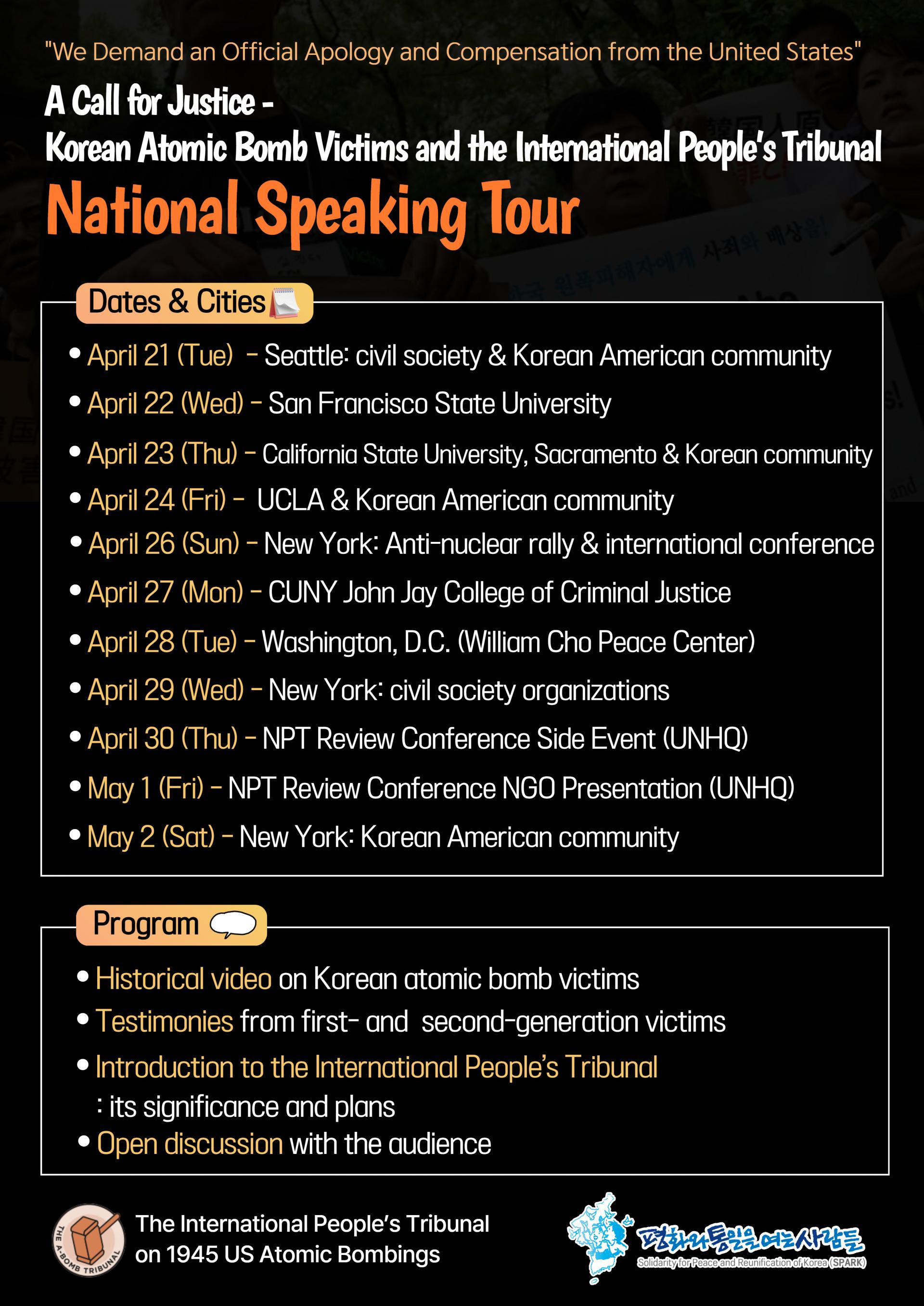
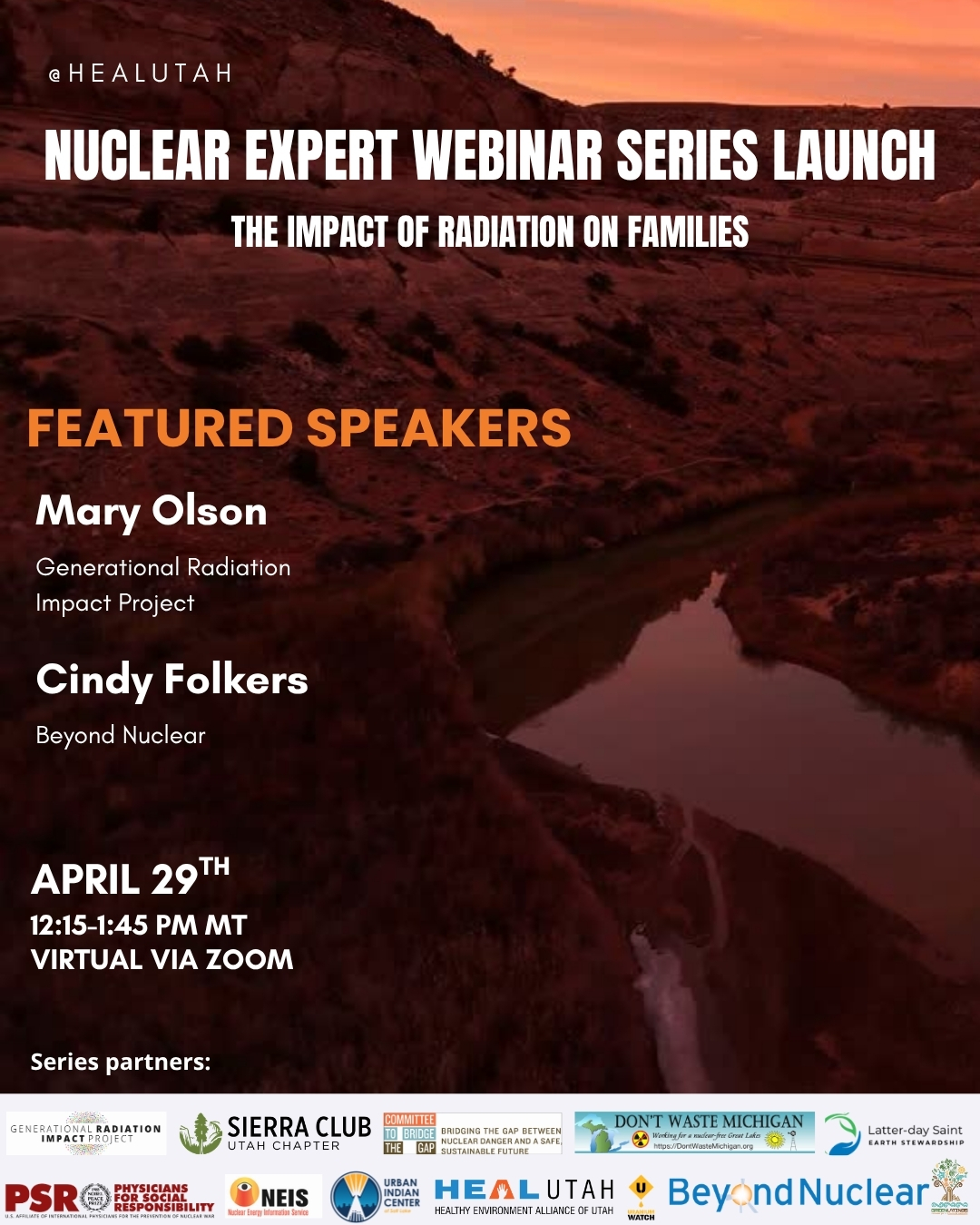
29 April – Nuclear Expert Webinar #1 – Radiation Impacts on Families with Mary Olson and Cindy Folkers
- 12:15 PM MT – 1:45 PM MT
- Location: Virtual – REGISTER TODAY

4 May -West Suburban Peace Coalition to discuss Iran war at May Educational Forum
Monday, May 4, 7:00 – 8:00 PM Central Standard Time
Title: : How Trump’s Narrative Tries to Shape the Reality of the War on Iran.
Contact Walt Zlotow, zlotow@hotmail.com 630 442 3045 for further information
14 May – online event From Bombs to Data Centres: the Face of Nuclear Colonialism
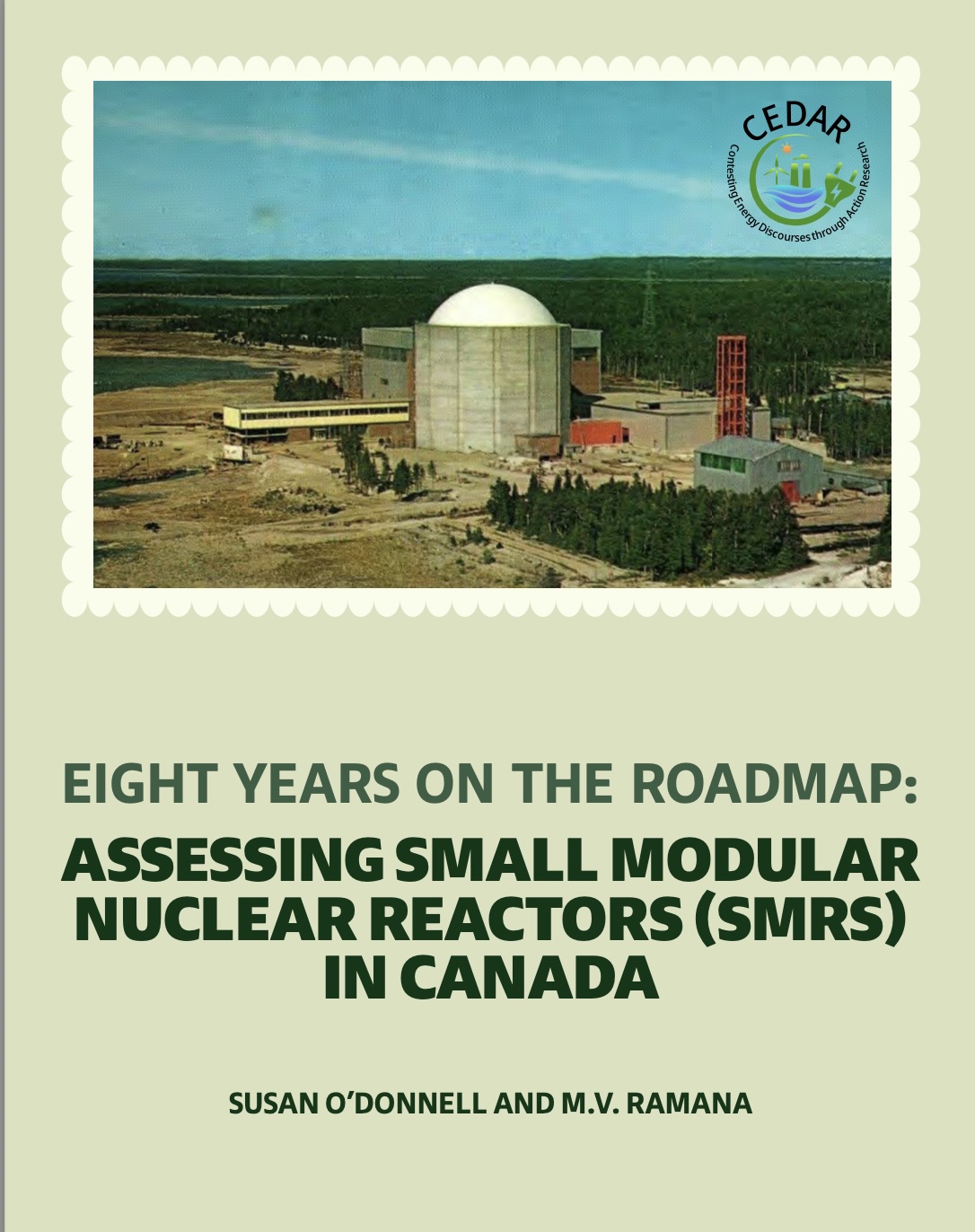

Pine Ridge Uranium is the real threat, not Tehran- Tell Burgum: Stop the Extraction.
Chernobyl: The Lost Tapes – A good documentary on Chernobyl on SBS available On Demand for the next 3 weeks– https://www.sbs.com.au/ondemand/tv-program/chernobyl-the-lost-tapes/2352741955560
To see nuclear-related stories in greater depth and intensity – go to https://nuclearinformation.wordpress.com
-
Archives
- April 2026 (288)
- March 2026 (251)
- February 2026 (268)
- January 2026 (308)
- December 2025 (358)
- November 2025 (359)
- October 2025 (376)
- September 2025 (257)
- August 2025 (319)
- July 2025 (230)
- June 2025 (348)
- May 2025 (261)
-
Categories
- 1
- 1 NUCLEAR ISSUES
- business and costs
- climate change
- culture and arts
- ENERGY
- environment
- health
- history
- indigenous issues
- Legal
- marketing of nuclear
- media
- opposition to nuclear
- PERSONAL STORIES
- politics
- politics international
- Religion and ethics
- safety
- secrets,lies and civil liberties
- spinbuster
- technology
- Uranium
- wastes
- weapons and war
- Women
- 2 WORLD
- ACTION
- AFRICA
- Atrocities
- AUSTRALIA
- Christina's notes
- Christina's themes
- culture and arts
- Events
- Fuk 2022
- Fuk 2023
- Fukushima 2017
- Fukushima 2018
- fukushima 2019
- Fukushima 2020
- Fukushima 2021
- general
- global warming
- Humour (God we need it)
- Nuclear
- RARE EARTHS
- Reference
- resources – print
- Resources -audiovicual
- Weekly Newsletter
- World
- World Nuclear
- YouTube
-
RSS
Entries RSS
Comments RSS
 nuclear-news