Fukushima nuclear decommissioning not really under control- persistent highly radioactive debris remains

|
FOCUS: Decades-long challenge to scrap Fukushima plant by 2051 in a bind. By Junko Horiuchi, KYODO NEWS – Mar 1, 2021 The decades-long challenge to scrap the Fukushima Daiichi nuclear plant, crippled by the massive earthquake and tsunami disaster that struck northeastern Japan in 2011, is becoming more complex as recent remote-controlled probes have highlighted just how damaged the reactors are.Tokyo Electric Power Company Holdings Inc., operator of the six-reactor nuclear complex, aims to scrap the plant between 2041 and 2051. But critics have cast doubts on the schedule, citing not only the extremely high radiation levels, but problems associated with delayed probes and underdeveloped robots and other technology needed to extract an estimated nearly 900 tons of melted fuel debris.
Decommissioning of the plant, scene of the world’s worst nuclear accident since the 1986 Chernobyl disaster, is crucial for Japan if it wants to stick to using nuclear power safely and show the world that the nuclear crisis is under control. “It is likely that the roadmap will not be completed as scheduled,” said Tetsuro Tsutsui, a member of the Citizens’ Commission on Nuclear Energy, a group comprising academics and nuclear experts. He added the “melted debris is mixed with fractured parts of buildings and concrete material and is highly radioactive, making it hard for robots to clear the debris.” The scrapping of the plant involves the daunting decision on how to dispose of the huge amount of radioactive waste left as a byproduct. This has been made worse as no municipality offered to become the final disposal site when the plant was operating………. “Nearly 10 years have passed following the Fukushima accident but with respect to the long decommissioning process, we are still hovering around the start line. We have a long journey ahead,” said Fukushima Gov. Masao Uchibori in a recent briefing. “The most difficult step is the safe and stable retrieval of the debris but we don’t know what state it is in,” he added. Despite the use of computer simulations and small-scale internal probes using remote cameras, data is scarce about the exact locations and other details of the melted fuel — crucial information to determine the retrieval methods and develop the appropriate technology and robots. Robotic probes at the Nos. 2 and 3 units have captured images of large amounts of material that appear to be melted fuel, but attempts so far have been unsuccessful at the No. 1 unit.
TEPCO opted to start the fuel removal at the No. 2 unit as it has the best grasp of the internal conditions there but no time frame has been set for the two other units In a setback for retrieval efforts, the company said in late December removing melted fuel from the No. 2 unit would be delayed from its initial starting period in 2021 by at least a year as the coronavirus pandemic has stalled the development in Britain of a robotic arm to be used for the extraction. That robotic arm, however, can only extract a few grams of melted fuel debris at a time. To completely remove the hundreds of tons of melted fuel from the reactor larger machinery is required, experts say. In another development that may affect the decommissioning process, a Nuclear Regulation Authority study group said in January a high concentration of radioactive cesium is likely to have accumulated in the lids of the containment vessels for the No. 2 and No. 3 reactors. The regulator’s findings in a new interim report draft on the Fukushima accident came as a shock because it was previously believed that most of the radioactive material remained at the bottom of the reactors in the form of melted nuclear fuel debris…….. TEPCO, whose biggest shareholder is the Japanese government, has not given an estimate of the costs for the debris removal, which would add to the 8 trillion yen ($75 billion) already forecast for the decommissioning process. The utility and the government have also been grappling with the buildup of radioactive water, which is generated in the process of cooling the meltdown reactors……… According to Yasuro Kawai, another member of the commission, the government’s decision to release treated water into the sea is in fact the government’s attempt to minimize the impact of the Fukushima crisis and say dismantling work is on track. “But the roadmap is nothing but pie in the sky,” he said. The commission says it is more logical to keep the debris inside the reactors than to retrieve it and suggests constructing a shield around the reactors and postpone taking out the melted fuel until 100 years or 200 years later when radioactive activity levels have decreased. |
|

Decade after Fukushima disaster, Greenpeace sees cleanup failure
Greenpeace has recommended that Japan suspend the current return policies, which it says “ignore science-based analysis, including potential lifetime exposure risks to the population” and abandon plans to lift evacuation orders in six municipalities

Mar 4, 2021
Ten years after the worst nuclear accident since Chernobyl, land Japan identified for cleanup from the triple reactor meltdown of the Fukushima No. 1 power plant remains contaminated, according to a report from Greenpeace.
On average, just 15% of land in the “Special Decontamination Area,” which is home to several municipalities, has been cleaned up, according to the environmental advocacy group’s analysis of government data. That’s despite the government’s claims that the area has largely been decontaminated, the group said.
In addition, Greenpeace said its own radiation surveys conducted over the last decade have consistently found readings above government target levels, including in areas that have been reopened to the public. The lifting of evacuation orders in places where radiation remains above safe levels potentially exposes people to an increased risk of cancer, the report said.
“The contamination remains and is widespread, and is still a very real threat to long term human health and the environment,” the report said.
Japan’s Ministry of Environment wasn’t immediately available for comment. Decontamination efforts have reduced radiation levels in residential areas by an average of 76%, according to the ministry’s website, which has compiled monitoring data through 2018. Fukushima Prefecture wasn’t immediately available for comment.
More than 160,000 people were evacuated from the area surrounding the Fukushima nuclear plant after a magnitude 9 earthquake, the biggest ever recorded to hit Japan, caused a massive tsunami that overwhelmed the plant. While the government has been steadily lifting evacuation orders on towns since 2014, roughly 36,000 people are still displaced.
Greenpeace recommended that Japan suspend the current return policy, which “ignore science-based analysis, including potential lifetime exposure risks to the population” and abandon plans to lift evacuation orders in six municipalities.
https://www.japantimes.co.jp/news/2021/03/04/national/fukushima-greenpeace-radiation-health-3-11/
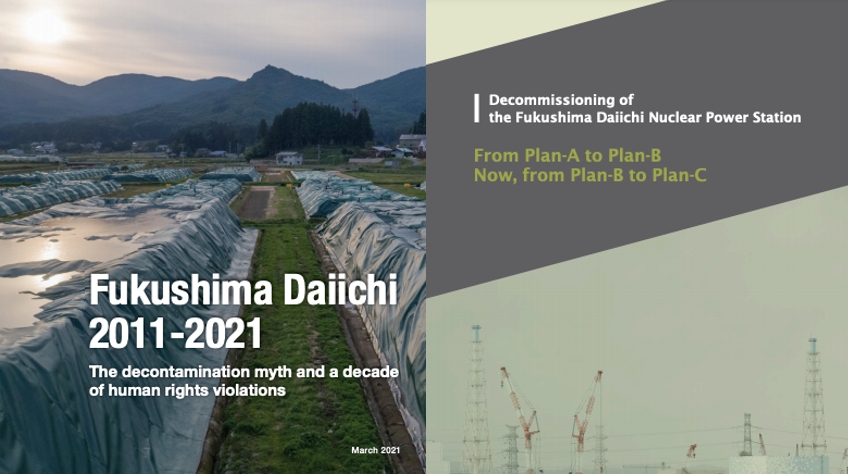
85% of Special Decontamination Area remained contaminated Fukushima Daiichi decommissioning road map unachievable – a new plan is inevitable
2021-03-04
Mar 4, 2021 (Greenpeace Japan) – Nearly a decade after the Fukushima Daiichi nuclear accident, Greenpeace released two reports today that highlighted the complex legacy of the 11 March 2011 earthquake and tsunami.
The first report Fukushima 2011-2020 detailed radiation levels in Iitate and Namie in Fukushima prefecture. Our original findings showed that decontamination efforts have been limited and that 85% of the Special Decontamination Area has undergone no decontamination.
The second report Decommissioning of the Fukushima Daiichi Nuclear Power Station From Plan-A to Plan-B Now, from Plan-B to Plan-C critiqued the current official decommission plan within 30-40 years of having no prospects of success and is delusional.
“Successive governments during the last ten years, and largely under prime minister Shinzo Abe, have attempted to perpetrate a myth about the nuclear disaster. They have sought to deceive the Japanese people by misrepresenting the effectiveness of the decontamination program and ignoring radiological risks,” said Shaun Burnie, Senior Nuclear Specialist at Greenpeace East Asia.
“At the same time, they continue to claim that the Fukushima Daiichi site can be returned to ‘greenfield’ status by mid-century. The decade of deception and delusion on the part of the government and TEPCO must end. A new decommissioning plan is inevitable so why waste any more time with the current fantasy?” Burnie added.
The first Greenpeace radiation expert team arrived in Fukushima prefecture on 26 March 2011, and have conducted 32 investigations into the radiological consequences of the disaster over the last decade, the most recent in November 2020. The key findings of the radiation report Fukushima 2011-2020 are:
- Greenpeace has consistently found that most of the 840 square kilometers Special Decontamination Area(SDA), where the government is responsible for decontamination, remains contaminated with radioactive cesium.
- Analysis of the government’s own data shows that in the SDA an overall average of only 15% has been decontaminated.
- No time frame for when the Japanese government’s long-term decontamination target level of 0.23 microsieverts per hour (μSv/h) will be achieved in many areas. Citizens will be subjected for decades of radiation exposure in excess of 1mSv/y recommended maximum.
- In the areas where evacuation orders were lifted in 2017, specifically, Namie and Iitate, radiation levels remain above safe limits, potentially exposing the population to increased cancer risk. Plans to continue to lift evacuation orders are unacceptable from a public health perspective.
- Up till 2018, tens of thousands of decontamination workers had been employed in decontamination in the SDA. As documented by Greenpeace[1], the workers, most of whom are poorly paid subcontractors, have been exposed to unjustified radiation risks for a limited and ineffective decontamination program.
The key findings of The Fukushima Daiichi Nuclear Power Station decommissioning report[2] are:
- There are no credible plans for retrieval of the hundreds of tons of nuclear fuel debris remaining inside and under the three Reactor Pressure vessels – it requires a fundamental review.
- Water used in reactor cooling and groundwater contamination, and therefore accumulating in tanks, will keep growing into the future unless a new approach is adopted.
- All nuclear contaminated material should remain on the site indefinitely. If the nuclear fuel debris is ever retrieved, it also should remain on site. Fukushima Daiichi is already and should remain a nuclear waste storage site for the long term.
- The current plan is unachievable in the timeframe of 30-40 years in the current road map and impossible to achieve in terms of returning the site to greenfield.
It is recommended that a fundamental rethink in approach and a new plan for the decommissioning of Fukushima Daiichi, including a delay in molten fuel removal for 50-100 years or longer is needed with the construction of secure containment buildings for the long term. The Primary Containment vessel, with reinforcement, should be used as an incomplete primary boundary and the reactor building as the secondary boundary for the medium-to-long term, while developing robotic technology that can perform tasks without high radiation risks to human workers.
Finally, to prevent the further increase of radioactive contaminated water, cooling of nuclear fuel debris should be switched from water to air cooling, and the Fukushima Daiichi site should be made into a ‘dry island’ isolated from groundwater with the construction of a deep moat.
ENDS
Links to full reports:
- Fukushima 2011-2020
- Decommissioning of the Fukushima Daiichi Nuclear Power Station From Plan-A to Plan-B Now, from Plan-B to Plan-C
- Greenpeace Briefing “Fukushima Daiichi Decommissioning Time for a new long term strategic plan”
Notes:
[2] Report commissioned by Greenpeace from a consulting nuclear engineer, formerly with General Electric including at the Fukushima Daiichi reactors, Mr. Satoshi Sato.
Fukushima chief: No need to extend decommissioning target
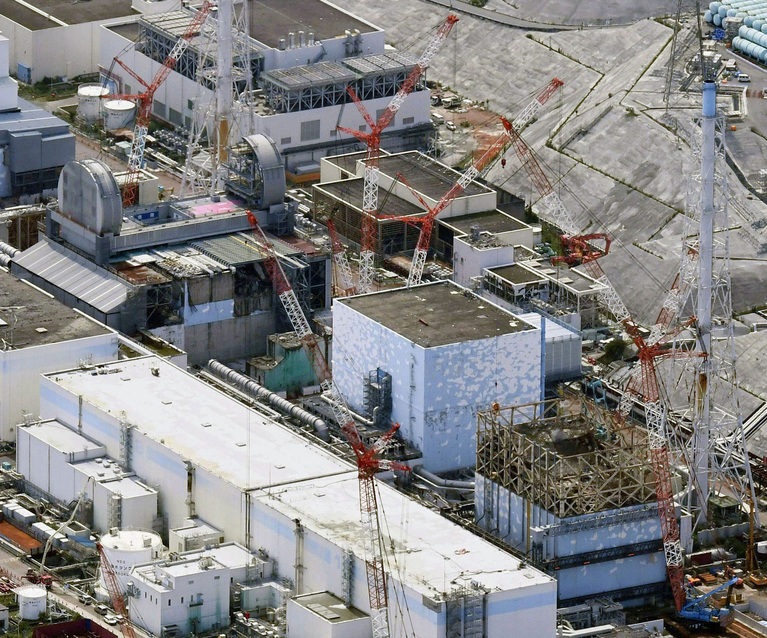
This Sept. 4, 2017, aerial file photo shows Fukushima Dai-ichi nuclear power plant reactors, from bottom at right, Unit 1, Unit 2 and Unit 3, in Okuma town, Fukushima prefecture, northeastern Japan. The head of the wrecked Fukushima nuclear plant said Tuesday, March 2, 2021 there’s no need to extend the current target to finish its decommissioning in 30-40 years despite uncertainties about melted fuel inside the plant’s three reactors.
March 3, 2021
TOKYO (AP) — The head of the wrecked Fukushima nuclear plant says there’s no need to extend the current target to finish its decommissioning in 30-40 years despite uncertainties about melted fuel inside the plant’s three reactors.
Ten years after meltdowns of three of its reactors following a massive March 2011 earthquake and tsunami that devastated northeastern Japan, the Fukushima Daiichi plant has stabilized but faces new challenges.
Nuclear regulators recently found fatal levels of contamination under the lids of two reactors, a test removal of melted fuel debris from one reactor has been delayed for a year, and a recent earthquake may have caused new damage to the reactors.
About 900 tons of melted fuel debris remain inside the plant’s three damaged reactors, and its safe removal is a daunting task that its operator, Tokyo Electric Power Co., or TEPCO, and the government say will take 30-40 years to finish. The removal of spent fuel units from cooling pools is already being delayed for up to five years.
But Akira Ono, who as head of the plant is also its chief decommissioning officer, said he doesn’t plan to change the current goal to finish decommissioning between 2041 and 2051.
“I don’t think we need to revise the target right now,” Ono said Tuesday in an online interview with The Associated Press. “We will stick to the 30-to-40-year finishing target, and will compile a timeline and technology and development plans accordingly.”
He said TEPCO plans to focus primarily on the coming decade and hopefully will release a new 10-year road map by the end of March.
The recently discovered fatal levels of cesium on the bottom of shield plugs atop the primary containment chamber at the No. 2 and 3 reactors will not affect near-term decommissioning work, but could complicate future plans, Ono said.
A lot about the melted fuel, which fell from the core to the bottom of the primary containment chambers in Units 1, 2 and 3, remains unknown, Ono said, adding that it’s too early to decide how the plant should look at the end of the cleanup.
“It is a difficult question,” he said. “If you ask 10 people, everyone has a different answer.” Local officials in Fukushima have said they expect the plant complex to be a flatland where people can walk freely.
Ono said the plant’s end state should be discussed by the government, local residents, experts and other concerned parties, and should be decided by a consensus.
Some experts are still skeptical that the removal of all of the melted fuel debris is possible and suggest a Chernobyl-style entombment of the plant. Ono, however, denied that option, saying a long-term abandonment could pose a bigger risk than a controlled cleanup and hinder the region’s recovery.
Ono said the removal of the melted fuel debris will hopefully progress on track during the 2030s. “The next 10 years for us is to prepare for that goal,” he said.
Massive radiation from the reactors caused about 160,000 people to evacuate from around the plant. Tens of thousands are still unable to return home.
https://www.seattletimes.com/business/fukushima-chief-no-need-to-extend-decommissioning-target/
Fukushima resident still can’t return home 10 years after nuclear disaster
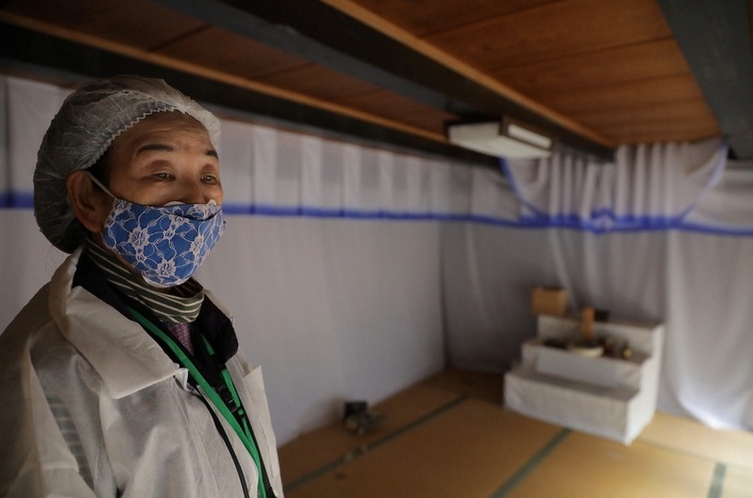
Yasuko Sasaki is seen at her house in the town of Namie, Fukushima Prefecture, on Feb. 1, 2021.
March 3, 2021
FUKUSHIMA — Yasuko Sasaki’s house lies just 30 kilometers away from the Fukushima Daiichi Nuclear Power Station, where a meltdown took place following the 2011 Great East Japan Earthquake and tsunami. On Feb. 1, Sasaki temporarily returned to clean up leaves that had fallen on the grave at the back of the property.
Once a month, the 66-year-old visits her house in the Tsushima district in the Fukushima Prefecture town of Namie from the prefectural village of Otama — 50 kilometers away — where she is currently evacuated to. It has been almost 10 years since she became unable to live at her own residence.
Due to high radiation levels, Tsushima was designated a “difficult to return” zone, where restrictions for entering are in place, and people are barred from living there. Homes without their owners living in them have been ransacked by wild animals. While Sasaki has been away, wild animals chewed up stuffed turtle and bird specimens kept at her house. She continues to clean her house so that she “can return at any time.”
In the grave are the bones of her husband Kenji, who died of illness at age 57 in February 2011, just before the disaster struck the area, her youngest son Shinji, who passed away at 21 due to cancer in August the same year, and her parents-in-law. Sasaki was born in Yokohama, south of Tokyo, and married her husband and moved to the Tsushima district when she was 33. The couple raised their two children in the house, using mountain stream water in everyday life and boiling the bath with firewood.
“The memories that I have of spending time together with my family are here and only here. I want to come home while I can move my body,” Sasaki explained. A calendar at her house still shows March 2011, when the earthquake and tsunami hit.
The Reconstruction Design Council in response to the Great East Japan Earthquake, an advisory panel to the prime minister, deemed that “recovery from the devastating disaster will not be completed until Fukushima soil recovers.” The government has set up Specified Reconstruction and Revitalization Bases within difficult-to-return zones and is carrying out decontamination work and developing infrastructure so that people can reside in the area once again. It aims to lift evacuation orders for the bases in between 2022 and 2023.
However, the areas designated as reconstruction bases are limited. In the Tsushima district, a 153-hectare space surrounding the town hall’s Tsushima branch is designated — just 1.6% of the whole district. Of the 532 households in the district at the time of the disaster, 80% including Sasaki’s house are not included in the reconstruction base area, and there are no prospects for these people to be able to return to their homes.
Sasaki said, “Everything’s still the same, even 10 years after the (nuclear) disaster. I wonder for how many more years I’ll have to continue cleaning (my house).”
https://mainichi.jp/english/articles/20210302/p2a/00m/0na/012000c
Women in government – the key to getting rid of nuclear power

Nuclear withdrawal was thanks to women, says former energy minister, https://www.swissinfo.ch/eng/nuclear-withdrawal-was-thanks-to-women–says-former-energy-minister/46423854 5 Mar 21, Having four women in Switzerland’s seven-person  government played a key role in the decision to phase out nuclear energy ten years ago, according to Doris Leuthard, who was energy minister at the time of the nuclear disaster in Fukushima on March 11, 2011.
The three other female cabinet ministers at the time were Micheline Calmy-Rey and Simonetta Sommaruga from the left-wing Social Democratic Party and Eveline Widmer-Schlumpf from the centre-right Conservative Democratic Party.Leuthard, from the centre-right Christian Democratic Party, admitted that she didn’t immediately realise the scale of the disaster at Fukushima.
“My first reaction was to say that that’s very far away from us, in Japan, in a country that deals seriously and professionally with events of this kind. I didn’t realise right away that it was a major disaster,” she told Le Temps.
In an interviewExternal link with Swiss newspaper Le Temps on Thursday, Leuthard said she would have had a hard time convincing men on the political right to abandon nuclear power.
“I think women are generally more sensitive to the environment and to the risks to which the population is exposed. When safety is at stake, they are willing to look at new solutions, even if it means paying a little more. They were more quickly convinced that we could opt for a new energy mix,” said Leuthard, who stepped down from the government at the end of 2018.
Only gradually did it become clear how serious the disaster was and that Switzerland had to act. On March 14 the government imposed a moratorium on nuclear projects.
“It was a decision that had to be taken quickly because, at the time, we intended to replace the three oldest [nuclear] plants with a modern, new-generation facility. We had to carry out a new risk analysis and see whether we could maintain the nuclear option in our energy policy. We informed the owners of the Swiss power plants, who had submitted applications to build this new-generation facility. It was a difficult moment, as our decision could cause them significant damage. […] I must admit that I didn’t sleep very well for two nights.”
In the end Switzerland did decide in 2011 to phase out nuclear power, which supplies about a third of the country’s electricity production.
In 2017 Swiss voters endorsed a new energy law that aims to promote renewable energy by banning new nuclear power plants and reducing energy consumption.
In December 2019 the 47-year-old Mühleberg nuclear power plant near Bern was permanently switched off – the first of five Swiss nuclear power reactors to be decommissioned. The event was considered so important that viewers could follow the progress live on Swiss television.
Japan undecided on timing, method of Fukushima water release

Storage tanks for treated contaminated water are seen at Fukushima Daiichi nuclear power plant in Okuma town, Fukushima prefecture.
March 3, 2021
Japanese authorities are undecided on how and when to discharge radioactive water from the devastated Fukushima nuclear plant into the sea or air, amid heightened environmental and public safety concerns from its neighboring countries, including South Korea.
“The exact timing on when the government will decide on the method and the period is yet to be decided,” said a Japanese government official Wednesday.
“We are still evaluating the situation. But it’s true that there are limits to the storage space of the tanks, and the government consider it as a task that cannot be delayed,” the official said, reiterating Tokyo’s stance to release the contaminated water, which has been filtered to reduce radioactivity.
The remarks came during a press briefing organized by the Japanese Embassy in South Korea, as next week marks the 10-year anniversary of the devastating earthquake and tsunami on March 11, 2011, that hit the Fukushima area and caused a meltdown of the three nuclear reactors. Attending the event was officials from the Agency for Natural Resources and Energy, Tokyo Electric Power, the state-run operator of the plant, and Japan’s Ministry of Foreign Affairs.
The liquid, which includes water used cool the power station, was contaminated after the nuclear disaster, and Tokyo has been pushing to release more than 1 million metric tons of treated water it has collected at the thousands of tanks at the site since 2011, as the storage capacity is set to run out by summer of 2022. But such a plan has sparked strong opposition and environmental worries among the public in both South Korea and Japan.
The water is being processed through the Advanced Liquid Processing System, or ALPS, to remove most of the dangerous radioactive materials, except for the traces of tritium, a radioactive substance which is still in the water — albeit at low level, according to Tokyo.
Last November, Japan was set to make a final decision on the water — either between disposing in the sea or vaporizing and releasing it into the air — as both were considered the most “realistic options,” but it has been delayed amid fierce backlash from local residents, the local fishery and agriculture industry and neighboring countries.
The authorities said that relevant decision will be made in consultation with local residents, industry personnel and neighboring countries through diplomatic channels. It also stressed it would carry out safety inspections of the release with the International Atomic Energy Agency, and provide transparent, scientific information to its neighbors as well.
If Japan decides to discharge the water, it will likely be dumped as early as summer of 2022 when the storage reaches full capacity.
But the official raised a possibility on the delay of the discharge, considering the filling up of the tank — which includes groundwater and rain that seeps into the plant — inside the storage has slowed down, due to relatively low precipitation in 2020.
“The period as to when the water will be completely filled will depend on the level of rain and typhoons this year,” the official said. “We will review the plan considering such situation.”
Farmers in Fukushima plant indigo to rebuild devastated town
March 2, 2021
MINAMISOMA, Japan — Because of radiation released by the Fukushima nuclear plant disaster a decade ago, farmers in nearby Minamisoma weren’t allowed to grow crops for two years.
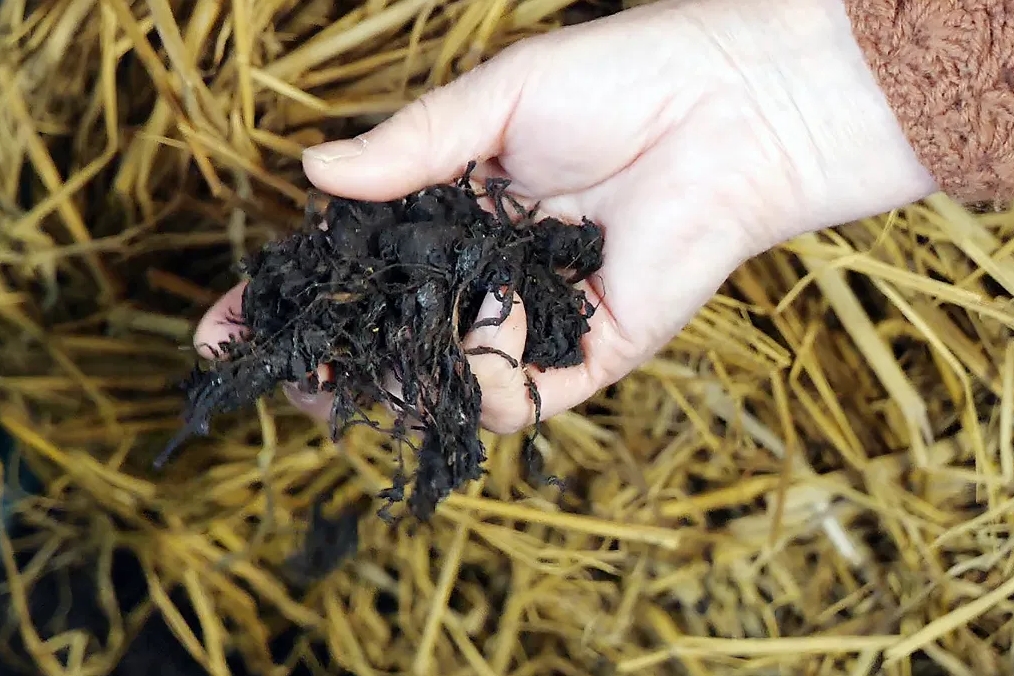
After the restriction was lifted, two farmers, Kiyoko Mori and Yoshiko Ogura, found an unusual way to rebuild their lives and help their destroyed community. They planted indigo and soon began dying fabric with dye produced from the plants.
“Dyeing lets us forget the bad things” for a while, Mori said. “It’s a process of healing for us.”
The massive earthquake and tsunami on March 11, 2011, caused three of the reactors at the nuclear plant to melt and wrecked more than just the farmers’ livelihoods. The homes of many people in Minamisoma, about 20 kilometers (12 miles) from the plant, were destroyed by the tsunami. The disaster killed 636 town residents, and tens of thousands of others left to start new lives.
Mori and Ogura believed that indigo dyeing could help people in the area recover.
Mori said they were concerned at first about consuming locally grown food, but felt safe raising indigo because it wouldn’t be eaten. They checked the radiation level of the indigo leaves and found no dangerous amount.
Ten years after the disaster, Mori and Ogura are still engaged in indigo dyeing but have different missions.
To Mori, it has become a tool for building a strong community in a devastated town and for fighting unfounded rumors that products from Fukushima are still contaminated. She favors the typical indigo dyeing process that requires some chemical additives.
But Ogura has chosen to follow a traditional technique that uses fermentation instead as a way to send a message against dangers of modern technology highlighted by nuclear power.
Mori formed a group called Japan Blue which holds workshops that have taught indigo dyeing to more than 100 people each year. She hopes the project will help rebuild the dwindling town’s sense of community.
Despite a new magnitude 7.3 earthquake that recently hit the area, the group did not cancel its annual exhibition at a community center that served as an evacuation center 10 years ago.
“Every member came to the exhibition, saying they can clean up the debris in their houses later,” Mori said.
Ogura, who is not a member of the group, feels that a natural process is important because the nuclear accident showed that relying on advanced technology for efficiency while ignoring its negative aspects can lead to bad consequences.
“I really suffered during the nuclear accident,” Ogura said. “We escaped frantically in the confusion. I felt I was doing something similar again” by using chemicals.
“We seek too much in the way of many varieties of beautiful colors created with the use of chemicals. We once thought our lives were enriched by it, but I started feeling that wasn’t the case,” she said. “I want people to know what the real natural color looks like.”
Organic indigo dyes take more time and closer attention. Ogura first ferments chopped indigo leaves with water for a month and then mixes the result with lye which is formed on the surface of a mixture of hot water and ashes. It has to be kept at about 20 degrees C (68 degrees F) and stirred three times a day.
Part of the beauty of the process, Ogura says, is that it’s hard to predict what color will be produced.
With the support of city officials, Ogura started making silk face masks dyed with organic indigo.
She used to run an organic restaurant where she served her own vegetables before the disaster, but now runs a guesthouse with her husband in which visitors can try organic indigo dyeing.
Just 700 meters (2,300 feet) from Ogura’s house, countless black bags filled with weakly contaminated debris and soil are piled along the roadside. They have been there since after the disaster, according to Ogura’s husband, Ryuichi. Other piles are scattered around the town.
“The government says it’s not harmful to leave them there. But if they really think it’s not harmful, they should take them to Tokyo and keep them near them,” he said.
The radiation waste stored in the town is scheduled to be moved to a medium-term storage facility by March next year, a town official said.
https://www.startribune.com/farmers-in-fukushima-plant-indigo-to-rebuild-devastated-town/600029579/
Radionuclides from the nuclear industry increase wildfires, and greatly increase their danger

Radionuclides in trace amounts, in the environment, increase wild fires, 30 fold by making them hotter, bigger and, much more profuse. Radionuclides Increase the width and breadth of wildfires, like the huge 90,000 acre wildfire at Idaho National laboratory, where the area is saturated with radionuclides.
govt extends nuclear reactor licenses, deregulates their supervision further. The government does not mandate-shutting the old dangerous nuke, monsters down . They are so expensive and dangerous, with no place safe to store, their extinction level-hoards of hi level nuclear wast
Death Maybe Your Santa Claus But, Pyrophoricity is The Burning Deliverance. https://www.opednews.com/articles/30-years-too-late-by-Terra-Lowe-Danger_Fukushima_Nuclear-210301-909.html–By Terra Lowe , 3 Mar 21,
STP failure Texas nuclear plant was just 3 minutes away from going completely off-line during blackout – Raw Story – .rawstory.com PSYCHOTIC IRRATIONALITY AND STUPIDITY What have the massive gulf coast hurricanes Harvey, Maria, and others, taught me? Harvey taught that catastrophes occur in America and that they are not well managed.
There was the monster cold-spell and failure of the grid in Texas, with temps in the teens in Feb. Almost freezing to death. Many almost dying again of starvation, like during the hurricanes. Almost dying of thirst and, bacteria infested water. Texas is the rightwing devil of the south. Texas is where the South Texas Project nuclear reactors, at Bay city, lost backup . So close to melting down again, like they were during Hurricane Harvey. This occurred in the time, during the blackouts in Texas . There was no water in half of Texas. Even hospitals in Austin. Texas is a total failure, with the pandemic still going.
I write this diatribe-invective, appealing to the sense and sanity, of the American people and people in the WORLD. No one is listening 30 years too late. Its all 30 years too late. The nukeape countries are: Pronuke energy. Pronuclear weapons. Generals are attached at the hip, to nuclear power. Attached to the Nuclear military industrial complexes and stock markets. There are minnions of them in all nuke countries. In Nuke countrys like the USA , France, Russia, Canada .
Australias wildfires, are starting to burn again. Like all the huge wildfires, they are from hydrocarbon residue in soils, drought, global climate change, pryophoric radionuclides like uranium waste, in the soil.
There are MEGA recurring Firestorms and wildfires, that occur in areas where nuclear catastrophes occured in the forests around Fukushima and pripyat and other heavily contaminated areas.. The phenomenon is from the inherent pyrophoricity of the multiple radionuclides, deposited there by the nuclear explosions and meltdowns or dumping for the past 5 to 10 years. Unusual biannual Forest wildfires have b een recurring around Chernobyl for 30 years. Radionuclide wildfires have been raging at Fukushima, Chernobyl, Santa Susana , INL
Santa Susana had two meltdowns in the 1960s. The Woolsey wildfires there, are some of the worst wildfires in history. The Idaho National Laboratory had 2 nuclear reactor meltdowns, in 50 years.
The 2018 INL wildfires, burned 90,000 acres in and around the 50 reactor, Idaho National Laboratory site, spreading deadly radionulide death over the United States in the air.
INL is a 30 square mile area, chocked full of Radionuclide waste. The pyrophoricity of all radionuclides, the Uranium, plutonium, cesium 137 cobalt 60 strontium 90 americium, thorium 90 . Radium and Uranium, from fracking, from nuclear , from uranium mining, from oil refining and burning hydrocarbons.
Areas around Mayak and Hanford have perennial wildfires .
Depleted uranium is used in bullets, mortars, bombs, rockets because of it’s inherent pyrophoricty.
Areas around Los Alamos, have had perennial-massive wild fires for years from the plutonium and americium byproducts of nuclear bomb manufacturing, residue there. Wildfires will happen this year at Los Alamos. It is primed for it from the drought in nothern New Mexico. Primed for it, from climate change, drought and radionuclide pyrophoric catalysis. Plutonium burns, when exposed to air, like the rocky flats, plutonium pit factory fires in arvada in the 60s, 70s, and, 80s in Denver.
Plutonium, depleted uranium, uranium, Amerecium dust contamination, from plutonium pit manufacture, at Los Alamoa catalyze wildfires, there. Wildfire areas have grown since older wildfire, AROUND LOS ALAMOS.
WILDFIRES ARE GROWING. Wildfires engulfed half of Australia, half of the USA, a third of the Amazon in the past 3 years. Continue reading
No recognition of administrative negligence after nuclear accident
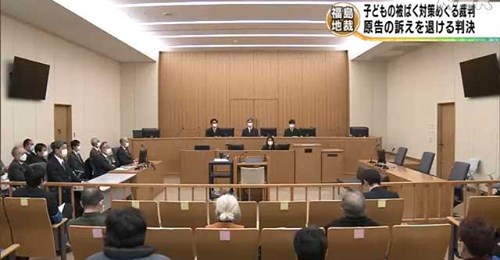
March 1, 2021
The Fukushima District Court has ruled against the plaintiffs in a lawsuit filed by parents and children who lived in the prefecture at the time of the accident at Tokyo Electric Power Company’s Fukushima No. 1 nuclear power plant, claiming that measures were not taken to avoid radiation exposure to their children.
One hundred and sixty parents and children who lived in the prefecture at the time of the nuclear accident were seeking 100,000 yen per person in damages from the government and the prefecture, claiming that they suffered mental anguish due to the lack of measures to avoid radiation exposure after the accident.
The plaintiffs, parents and children, claimed that they were exposed to unnecessary radiation and continue to suffer from health concerns, while the government and the prefecture countered that they were not exposed to unnecessary radiation.
In his ruling on March 1, Judge Toji Endo of the Fukushima District Court pointed out that the fact that the government did not immediately disclose the prediction of radioactive material diffusion calculated by the system called “SPEEDI” was “not unreasonable as it was in accordance with the operation method stipulated in the national guidelines at that time.
In addition, the court rejected the plaintiff’s claim that the government and the prefectural government did not immediately evacuate the children en masse, pointing out that “the indicators for evacuation in the disaster prevention guidelines at the time of the nuclear accident were standardized for children with high sensitivity to radiation and were reasonable in light of international standards.
This is the first time that a court has ruled on the government’s response to a nuclear accident, while most of the cases involving nuclear accidents hold the government responsible for the occurrence of the accident.
After the verdict was handed down, Sumio Konno, the representative of the plaintiffs’ group, said, “I am not convinced at all. What did the court examine? I thought it was an unfair judgment.
https://www3.nhk.or.jp/lnews/fukushima/20210301/6050013639.html?fbclid=IwAR2NhcNi11pOTolqGWmW0AWFc_kOBVS9oRQFCUjlMsjFmlargJGPncNYSwM
Decades-long challenge to scrap Fukushima plant by 2051 in a bind
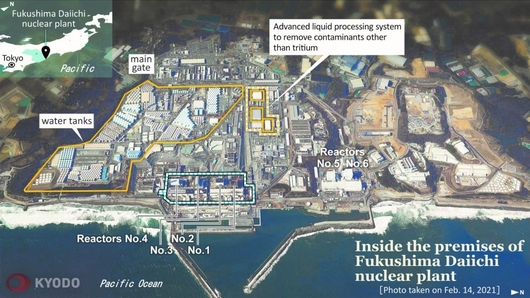
March 1, 2021
The decades-long challenge to scrap the Fukushima Daiichi nuclear plant, crippled by the massive earthquake and tsunami disaster that struck northeastern Japan in 2011, is becoming more complex as recent remote-controlled probes have highlighted just how damaged the reactors are.
Tokyo Electric Power Company Holdings Inc., operator of the six-reactor nuclear complex, aims to scrap the plant between 2041 and 2051. But critics have cast doubts on the schedule, citing not only the extremely high radiation levels, but problems associated with delayed probes and underdeveloped robots and other technology needed to extract an estimated nearly 900 tons of melted fuel debris.
Decommissioning of the plant, scene of the world’s worst nuclear accident since the 1986 Chernobyl disaster, is crucial for Japan if it wants to stick to using nuclear power safely and show the world that the nuclear crisis is under control.
“It is likely that the roadmap will not be completed as scheduled,” said Tetsuro Tsutsui, a member of the Citizens’ Commission on Nuclear Energy, a group comprising academics and nuclear experts.
He added the “melted debris is mixed with fractured parts of buildings and concrete material and is highly radioactive, making it hard for robots to clear the debris.”
The scrapping of the plant involves the daunting decision on how to dispose of the huge amount of radioactive waste left as a byproduct. This has been made worse as no municipality offered to become the final disposal site when the plant was operating.
Following a magnitude-9.0 earthquake and subsequent tsunami that hit the plant on March 11, 2011, Nos. 1 to 3 reactors at the Fukushima Daiichi plant suffered meltdowns, while hydrogen explosions damaged the buildings housing the Nos. 1, 3 and 4 reactors.
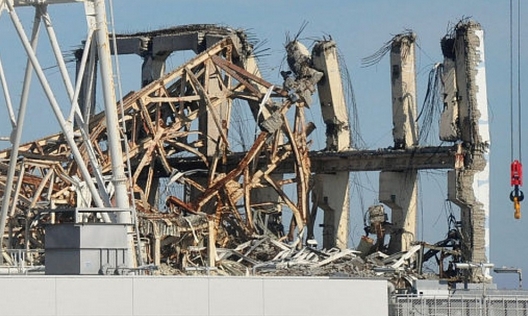
Photo taken on Nov. 12, 2011, shows the No. 3 reactor building at the Fukushima Daiichi nuclear power plant in Fukushima Prefecture, northeastern Japan, which was damaged by an explosion after the March 11 earthquake and tsunami.
Due to the instability of renewable energy, Japan projects atomic power will remain one of its major power sources, accounting for 20 to 22 percent of its total electricity generation in fiscal 2030. It may further push the emissions-free nuclear power as it aims to become carbon neutral in 2050.
Of the 33 reactors in Japan, excluding those set to be scrapped, just four are currently in operation, partly because they need to clear stricter safety regulations following the Fukushima accident.
Tsutsui, a former petrochemical complex engineer, points to how the risk of extracting debris has become “clearer” compared to when the roadmap was first compiled in December 2011. With that in mind, he urged the government to act responsibly and review the roadmap.
“Nearly 10 years have passed following the Fukushima accident but with respect to the long decommissioning process, we are still hovering around the start line. We have a long journey ahead,” said Fukushima Gov. Masao Uchibori in a recent briefing.
“The most difficult step is the safe and stable retrieval of the debris but we don’t know what state it is in,” he added.
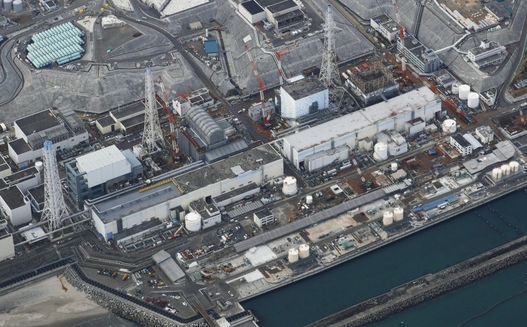
Fukushima Daiichi nuclear complex on Feb. 21, 2018. From right, No. 1, No. 2, No. 3 and No. 4 reactors.
Despite the use of computer simulations and small-scale internal probes using remote cameras, data is scarce about the exact locations and other details of the melted fuel — crucial information to determine the retrieval methods and develop the appropriate technology and robots.
Robotic probes at the Nos. 2 and 3 units have captured images of large amounts of material that appear to be melted fuel, but attempts so far have been unsuccessful at the No. 1 unit.
TEPCO opted to start the fuel removal at the No. 2 unit as it has the best grasp of the internal conditions there but no time frame has been set for the two other units.
In a setback for retrieval efforts, the company said in late December removing melted fuel from the No. 2 unit would be delayed from its initial starting period in 2021 by at least a year as the coronavirus pandemic has stalled the development in Britain of a robotic arm to be used for the extraction.
That robotic arm, however, can only extract a few grams of melted fuel debris at a time. To completely remove the hundreds of tons of melted fuel from the reactor larger machinery is required, experts say.
In another development that may affect the decommissioning process, a Nuclear Regulation Authority study group said in January a high concentration of radioactive cesium is likely to have accumulated in the lids of the containment vessels for the No. 2 and No. 3 reactors.
The regulator’s findings in a new interim report draft on the Fukushima accident came as a shock because it was previously believed that most of the radioactive material remained at the bottom of the reactors in the form of melted nuclear fuel debris.
While industry minister Hiroshi Kajiyama has acknowledged the “delays” and “difficulties in making predictions,” he insisted the overall decommissioning process is making “steady progress.” The government and TEPCO say they will stick to the current roadmap.
TEPCO, whose biggest shareholder is the Japanese government, has not given an estimate of the costs for the debris removal, which would add to the 8 trillion yen ($75 billion) already forecast for the decommissioning process.
The utility and the government have also been grappling with the buildup of radioactive water, which is generated in the process of cooling the meltdown reactors.
Part of the water is stored inside massive tanks set up inside the premises, having gone through a system that removes various radioactive materials except tritium, which is difficult to separate from water.
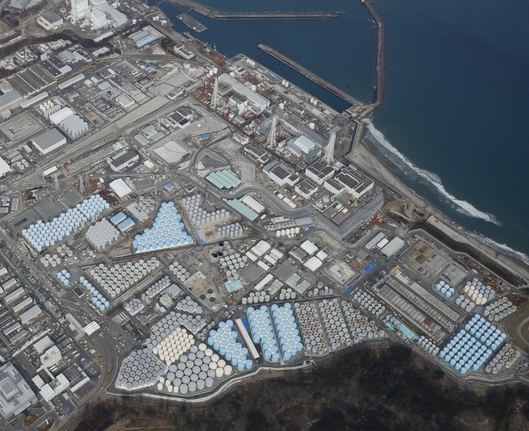
Tanks containing treated water including radioactive tritium are stored on the premises of the Fukushima Daiichi nuclear complex on Feb. 21, 2018.
The government is considering dumping the water into the Pacific after diluting it to a radiation level below the legal limit, saying the tanks are filling up. It says space is needed to store debris once it is extracted from the damaged reactors.
But discharging the water remains a sensitive issue especially for the local fishing industry struggling to revive its business following the accident. Neighbors South Korea and China as well as U.N. human rights experts have expressed caution about the discharge.
Releasing it into the ocean could lead to a continued ban on exports from this area or an introduction of new export restrictions, observers say.
According to Yasuro Kawai, another member of the commission, the government’s decision to release treated water into the sea is in fact the government’s attempt to minimize the impact of the Fukushima crisis and say dismantling work is on track.
“But the roadmap is nothing but pie in the sky,” he said.
The commission says it is more logical to keep the debris inside the reactors than to retrieve it and suggests constructing a shield around the reactors and postpone taking out the melted fuel until 100 years or 200 years later when radioactive activity levels have decreased.
Ominous news; Antarctic ice is melting at an accelerating rate
https://climatenewsnetwork.net/antarctic-warming-speed-up-alarms-researchers/
The American media sanitises the Biden administration’s killings in Syria
 Purging Inconvenient Facts in Coverage of Biden’s ‘First’ Air Attacks https://fair.org/home/purging-inconvenient-facts-in-coverage-of-bidens-first-air-attacks/ Purging Inconvenient Facts in Coverage of Biden’s ‘First’ Air Attacks https://fair.org/home/purging-inconvenient-facts-in-coverage-of-bidens-first-air-attacks/
GREGORY SHUPAK 5 Mar 21, When the Biden administration bombed Syria on February 25, the attack killed “at least 22,” most of them members of Iraqi militias, according to the Syrian Observatory for Human Rights, a London-based monitoring organization opposed to the Syrian government. The US said the bombing was retaliation for three rocket
 attacks on US bases in Iraq that it claims were carried out by groups allied with Iran (NBC, 2/25/21). In one of the attacks, rockets fired at Erbil airport killed a military contractor and an Iraqi civilian. attacks on US bases in Iraq that it claims were carried out by groups allied with Iran (NBC, 2/25/21). In one of the attacks, rockets fired at Erbil airport killed a military contractor and an Iraqi civilian.
The US does not say that its airstrike on Syria was aimed at the group that carried out the Erbil attack, which, as the New York Times (2/26/21) reported, was claimed by a previously unknown armed group calling itself the Guardians of the Blood. United States officials said it appeared to be affiliated with one or more of Iraq’s better-known militias, and Thursday’s strikes in Syria targeted facilities belonging to them. Furthermore, the site that the US bombed in Syria “was not specifically tied to the rocket attacks” (CNN, 2/25/21). A New York Times (2/25/21) report from Helene Cooper and Eric Schmitt ran with the headline, “US Airstrikes in Syria Target Iran-Backed Militias That Rocketed American Troops in Iraq.” However, the 11th paragraph of the article said that “little is known about” Guardians of the Blood, “including whether it is backed by Iran or related to the organizations that used the facilities the American airstrikes targeted on Thursday.” Manufactured amnesia CNN’s Barbara Starr, The less clear the US population is about the frequency and scale of murderous violence its government carries out, the easier it is for the US ruling class to go about its wars. Fortunately for the US state, corporate media help manufacture collective amnesia by expunging US aggression from the record. Liebermann and Nicole Gaouette (2/25/21) said the February 25 airstrikes “mark the US military’s first known action under President Joe Biden,” while their colleague Fareed Zakaria (GPS, 2/28/21) had a segment about them called “Biden’s First Military Action.” Christian Science Monitor (3/2/21) ran an editorial called “Biden’s First Use of Force Overseas.” Yet not even a month before Biden bombed Syria, the US carried out an airstrike in Iraq that it said killed ISIS commander Jabbar Salman Ali Farhan al-Issawi and nine other ISIS fighters (New York Times, 1/29/21). Furthermore, Airwars, a nonprofit monitoring group affiliated with the University of London, suspects the US of carrying out or helping to carry out four bombings in Somalia in the period between Biden’s inauguration and the attack on Syria, killing 2–4 people in one case and 6–12 on two other occasions. The US military stopped disclosing its airstrikes in Afghanistan last year, but it is unlikely that military operations in the US’s longest overseas war came to a halt when Biden took office. Purging inconvenient facts is another way of producing mass forgetfulness and confusion. Flying colors To praise Biden’s killings, corporate media pretended the US was fighting back against a bully. Max Boot of the Washington Post (2/26/21), writing that Biden “is passing his early tests with flying colors” and “is off to an excellent start,” claimed that “if Biden did nothing in response to the latest Iranian provocations, he would have risked sending a message of weakness that would have further emboldened Tehran.” In Boot’s opinion, “Biden ordered the right response: an airstrike on a Syrian base used by Iranian-backed militias.” He praised Biden for negotiating with Iran while simultaneously “engaging in a policy of active containment and deterrence to curb Iran’s destabilizing activities in the region,” which he characterized as “regional aggression.” (The Times‘ February 26 piece used similar language, writing that the prospect of a new nuclear deal with Iran is overshadowed by “the issue of Iran’s destabilizing activities across the Middle East.”)
Forget for a moment that no evidence has been provided that Iran was actually behind the relevant rocket attacks: Boot apparently doesn’t think he even has to say what “Iran’s destabilizing activities in the region” are, nor where its “regional aggression” takes place, let alone offer any proof for these claims. The US murdered an Iranian general who was revered in his country (FAIR.org, 1/21/20), invaded Iraq and causing the death of upward of 1 million people (Jacobin, 6/19/14), resupplied Israel with weaponry (Al Jazeera, 7/31/14) as it slaughtered more than 2,000 Palestinians in Gaza, played a central role in a war that has made Yemen home to the world’s worst humanitarian crisis (Middle East Eye, 11/17/17): For Boot, evidently, nothing on this nonexhaustive list of recent US crimes in the Middle East constitutes “regional aggression” or “destabilizing activities in the region” that need “active containment and deterrence.” Boot was hardly the only journalist who rationalized the American bombing by portraying the US as acting defensively. The Post‘s Jennifer Rubin (2/28/21) said Biden had “responded forcefully” to “Iranian proxy attacks,” and thereby sent an “important…signal to Iran that the new administration will not look the other way on Tehran’s regional conduct simply to encourage discussion about” Iran’s nuclear power program. Cooper and Schmitt (New York Times, 2/25/21) noted that the US dropped “seven 500-pound bombs” on Syria, and described this as Biden taking “a more measured response to the rocket fusillade in Erbil than Mr. Trump’s pitched campaign against Iran and past actions of its proxies in Iraq.” Set aside the absurdity of calling dropping nearly two tons of bombs “measured”; set aside the lack of evidence of Iranian responsibility for the deaths at Erbil; set aside that the US doesn’t claim that it bombed the parties that fired the rockets that killed the contractor and the Iraqi civilian in Erbil, and assume for the sake of argument that Iran is behind those acts. The pretense that the US defended itself by carrying out last week’s airstrikes also necessitates glossing over the fact that the country Washington actually bombed, Syria, is accused of neither sponsoring nor carrying out the rocket attacks on American bases in Iraq that should not be there in the first place. The articles I’ve examined all acknowledge that the US airstrikes hit Syria, but it’s remarkable how little attention they pay to the country, especially considering that the bombing was aimed at groups allied with the Syrian government in that country’s war, so the attack amounts to an intervention on behalf of anti-government forces there. Had the coverage paid more notice to how Biden’s bombing was carried out against a country that the US has helped to decimate (FAIR.org, 3/7/18; Electronic Intifada, 3/16/17), despite Syria not attacking or threatening to attack the US, the narrative that Biden was merely conducting a “response” to bad actors would have been that much more obviously threadbare. Securing consent for running a lethal, worldwide empire requires unremitting propaganda: Redacting the historical record and playing the victim are two useful strategies. |
|
Reuters gives a timeline of events: Fukushima 2011 – 2021
|
Events following Japan’s worst quake and nuclear incident https://www.reuters.com/article/us-japan-fukushima-anniversary-file-idUSKCN2AW034 By Reuters Staff Compiled by Karishma Singh. Editing by Gerry Doyle, 5 Mar 21,
On March 11, Japan marks a decade since a huge earthquake and tsunami left more than 22,000 people dead or missing and triggered the world’s worst nuclear accident since Chernobyl. Here is a brief timeline of events after the 9.0 magnitude quake, the biggest recorded in Japan’s history: March 11, 2011: A 9.0 magnitude quake hits off the coast of northeast Japan, triggering a tsunami that devastates towns and villages. The tsunami swamps backup power and cooling systems at Tokyo Electric Power Co’s (TEPCO) Fukushima Daiichi nuclear plant, eventually causing meltdowns at three of six reactors. Two months later, TEPCO confirms meltdowns occurred. Government declares a nuclear emergency and tells residents within a 3 km radius of the plant to evacuate. The evacuation zone is expanded in stages to a 20 km radius over the next two days. More than 160,000 people are eventually evacuated. March 12: TEPCO begins injecting seawater to cool the reactors’ fuel rods. People stock up on groceries and supplies in Tokyo, about 250 km away, amid radiation fears. Naoto Kan, prime minister at the time, says later he feared he might have to evacuate Tokyo. March 16: Emperor Akihito gives a rare televised address expressing deep worry about the crisis. March 22: Technicians working at the plant attach power cables to all six reactors and start a pump at one to cool overheating nuclear fuel rods. April 4: Engineers release over 10,000 tons of contaminated water – about 100 times more radioactive than legal limits – that had been used to cool overheated fuel rods after running out of storage capacity. May 20: TEPCO’s president, Masataka Shimizu, 66, resigns, taking responsibility for the nuclear crisis. Aug. 26: Kan confirms he will resign. Dec. 16: Japan declares damaged reactors are in a stable state of “cold shutdown”. July 1, 2012: Kansai Electric Power Co restarts the 1,180-megawatt No. 3 unit at its Ohi atomic plant, Japan’s first nuclear reactor to come back online since the Fukushima crisis, despite public concerns about nuclear safety. July 5, 2012: A commission appointed by parliament concludes Fukushima was a “profoundly man-made disaster” that could have been prevented, and mitigated by a more effective response. Dec. 26, 2012: Shinzo Abe elected prime minister after his Liberal Democratic Party wins general election, ousting the Democratic Party of Japan, in power at the time of the crisis. July 22, 2013: TEPCO admits that since the 2011 reactor breaches, radioactive water has continued to leak from the plant into groundwater, making it radioactive, with implications for drinking water and for the Pacific Ocean. Sept. 7, 2013: In a bid led by Abe, Tokyo is declared the host of the 2020 Summer Olympic Games, with a promise of showcasing a reconstructed Fukushima. Abe says the crippled plant is “under control”. April 1, 2014: People begin to return to the 20-km exclusion zone around Fukushima as decontamination of the area is completed. June 3, 2014: TEPCO begins work on an “ice wall” to slow the flow of ground water into the wrecked plant, but the buildup of contaminated water continues, slowing recovery efforts. Nov. 5, 2014: TEPCO removes 400 tonnes of spent uranium fuel from a damaged reactor building, the first of four sets of used rods to be removed in a cleanup expected to last decades. Feb. 7, 2018: TEPCO ordered to pay about 1.1 billion yen ($10 million) to 321 Fukushima residents for damages in a class action suit. Sept. 5, 2018: Japan acknowledges for the first time that radiation at the Fukushima plant killed a worker there, ruling that compensation should be paid to the family of the man in his 50s who died of lung cancer. Sept. 19, 2019: Former TEPCO chairman Tsunehisa Katsumata, and former executives Ichiro Takekuro and Sakae Muto cleared of criminal charges of professional negligence resulting in injury and death in the only criminal case to arise from the crisis. March 1, 2021: TEPCO said it had moved spent uranium fuel from a damaged reactor to a safer location – the second successful operation of its kind and the first to be carried out by remote control, because of the high radiation in the reactor building. |
|
Why the US wastes $billions on nuclear weapons it doesn’t need
 Why the US wastes billions on nuclear weapons it doesn’t need https://responsiblestatecraft.org/2021/01/06/why-the-us-wastes-billions-on-nuclear-weapons-it-doesnt-need/?__cf_chl_captcha_tk__=8e1f6ced7fb78c22d8ac3d4037ffcf46f77449be-1614929046-0-AZABHKV4aYtUa0Prc0Aghu6GdOuAqNKkLcImI5jaNYOawX3Kv1wTCS89zeyDWczWumlm-Idy9-J8PvA8khsD8YLXkgdQyN6C3WAdWw
None of this is true. As Randy Newman sang years ago, it’s money that matters. Contracts, not strategy, drive America’s nuclear force posture.
Strategy was never the sole determinant of America’s nuclear arsenal, but in the early decades of the Cold War, however flawed, it was arguably the major driver. No longer. It is now a thin veneer of justification for a collection of legacy systems and new programs promoted for financial and political profit. The entire process is guided by an army of lobbyists. “The defense sector employed 775 lobbyists and shelled out more than $126 million to influence Congress in 2018,” reports John Carl Baker from the Ploughshares Fund,
The path to a saner nuclear strategy, therefore, goes through the budget, not the other way around. Time spent debating alternative postures will be wasted if not joined by equal or greater efforts to shrink the budgets that fuel current and future weapons plans.
The evidence is everywhere. In the midst of a raging pandemic and economic collapse, Congress last month passed a $740.5 billion Pentagon budget that lavishes almost $70 billion on nuclear weapons and related programs, with little debate and few changes to Donald Trump’s request.
The Strategic Forces Subcommittee of the House Armed Services Committee, for example, held just three hearings last year and only called government witnesses. It then approved Trump’s budget in full. Major challenges to Trump’s policies and budgets were like pebbles thrown at a closed window: noticed but ignored.
It was similar in the Senate. The testimony of the head of the Strategic Command before the Senate Armed Services Committee provides an example of the vapid justification offered for the dozens of different weapon types and scores of options for thermonuclear war that Congress approved.
“Our deterrent underwrites every U.S. military operation around the world and is the foundation and backstop of our national defense,” Gen. Charles Richmond said, arguing that the United States needs to maintain “a credible [nuclear] deterrent” that “requires us to modernize and recapitalize our strategic forces to ensure our Nation has the capability to deter any actor, at any level.”
That was pretty much it for strategy. Thin gruel, but enough to get his budget approved — and keep a river of money flowing through Washington. The modest $88 billion “modernization” program that President Barack Obama authorized in 2010, as a bridge to the major nuclear reductions he wanted, has metastasized into a $2 trillion plan to replace every Cold War submarine, bomber, missile, and warhead with an entirely new generation of the deadliest weapons ever invented. Obama’s cuts died, but the contracts continued.
This plan will keep thousands of weapons deployed until near the end of this century — and, thus, lucrative deals for Lockheed Martin, Raytheon Technologies, Northrop Grumman, Boeing, and General Dynamics, the big five contractors that dominate military and nuclear policy.
They sell nuclear weapons like Kellogg’s sells cereal. It’s not a question of whether we need the product; they just need to convince us to buy it.
They do this in three ways. The first is a pitch that relies on product differentiation, a way to sell essentially the same goods in a variety of shapes, sizes, and packaging. You like shredded wheat? Then maybe you’d like it frosted, or bite-sized, or both. Thus, the familiar triad of bombers, land-based missiles, and submarines is now supplemented by cruise missiles launched from air and sea, a growing variety of ranges and yields, and a new campaign for nuclear hypersonic missiles and weapons in space.
The second is control of the market. These firms dominate in ways that Kellogg’s could only dream of doing. Corporations have thoroughly penetrated the military services generating the weapons requirements through decades of revolving doors and increasing dependence on contractors for core analysis, communication, and even administrative functions. The same is true of the civilian departments that purchase and oversee the weapons development and productions programs.
The Project On Government Oversight, for example, documented at least 380 high-ranking Department of Defense officials and military officers who went to work for weapons contractors. “The truth is,” says Senator Elizabeth Warren, “our existing laws are far too weak to effectively limit the undue influence of giant military contractors at the Department of Defense.”
The third is to do what Facebook and Amazon do so well: eliminate the competition. Contractors have basically absorbed or bought off institutional threats to their programs. In the late 1970s and early 1980s, when the American public and politicians engaged more fully in nuclear strategy, the contractors learned how to game the system. They backed groups and politicians who promoted bogus threats, like a “window of vulnerability” that would allow the Soviet Union to win a nuclear war with a devastating first strike. But the real genius was to place sub-contracts for their biggest, most controversial systems like the MX missile or the B-1 bomber in most or even all of the 435 congressional districts.
The jobs and revenues of these contracts and bases quickly dominated the decision-making processes in these states, They were supplemented by generous campaign contributions that — were they given to a judge and not a congressperson — would be grounds for recusal. Coupled with the fear establishment Democrats have for appearing “weak” on national security, this system of contracts, contributions, and campaigns has effectively gutted meaningful congressional oversight.
Contractors over the past few decades have also constrained the formerly independent analytical establishment. Just as the fossil fuel industry muted criticism of climate change and established alternative experts, when the Cold War ended and bipartisan movements to eliminate nuclear weapons arose, weapons firms flooded think tanks and universities with grants, compromising their independence.
Over just the past five years, at least $1 billion in U.S. government and defense contractor funding went to the top fifty think tanks in America. The key funders from the government, according to a report from the Center for International Policy, “were the Office of the Secretary of Defense, the Air Force, the Army, the Department of Homeland Security, and the State Department.” The defense contractors contributing the most were Northrop Grumman, Raytheon, Boeing, Lockheed Martin and Airbus.
It worked. Once sources for alternative military budgets and exposés, it is rare to find a major think tank report today that is critical of military spending or, even more rare, a specific weapons program. Institutes that benefit from this largess now churn out reports and events favorable to increased military budgets and “great power competition.” This last argument works perfectly for most centrist politicians and analysts. It has just the right amount of fear and nationalism to provide sound bites on television or the campaign trail.
This lavish funding has created a new generation of advocates for super-sizing the arsenal. While there are some brilliant analysts at the large institutes who are truly independent and do not take contractor funding, it is hard to name a significant nuclear weapons proponent who has not benefited directly or indirectly from corporate or government funding. Experts are not asked to disclose these personal or institutional conflicts of interest in their articles or quotes.
This should not be a cause for despair, but for recalibration.
It could start with a simple step every journalist could take: Disclose conflicts of interest in your sources. If an expert won’t disclose their funding, don’t quote them. In Washington, this is practically a death sentence.
It could come from the research institutes themselves: Reaffirm your independence. Decline donations from weapons firms and military departments. If that is too hard, disclose all such grants up front in your reports. We need the intellectual rigor of alternative analysis, but it must be truly independent — and complete the analysis by including the material factors shaping the current posture, not just the stated strategic justifications.
President Joe Biden could assert his power by cutting the nuclear budget and not rubber-stamping Trump’s weapons. “By acting swiftly to cancel or suspend these programs, and to cut the overall Pentagon budget accordingly, Biden will create considerable leverage for negotiations with Congress,” I wrote recently for The American Prospect. “He will arrive at a much better deal by starting at zero and negotiating up rather than by trimming the programs and negotiating down.”
Finally, the independent non-government groups that represent the last, truly independent organizations promoting a saner nuclear policy must recognize a simple fact of life: No alternative nuclear posture or clever op-ed will impact policy, no matter how brilliant. The only strategy that can succeed is to focus on the money. That means teaming up with those fighting to redefine what makes and keeps us safe, who advocate for increased funding to combat climate change, to battle the pandemic, to improve health care, and to address social inequities. They need the funds that are currently locked up in obsolete and dangerous weapons programs.
By linking up, by making cuts to the Pentagon budget part of the strategy of these groups (and by reimaging national security to include these issues), it may be possible to forge a broad united front that is more powerful than the contractors. It can identify alternative revenue streams for states and districts, shame Congress into restoring investigations and oversight, press journalists to disclose conflicts of interest of the experts they quote, convince experts that their work is not complete if it does not factor money into their analysis, and pressure the government to spend taxpayer money on programs that improve our lives, not threaten them.
And if this is too long a list to remember, just hum a little Randy Newman.
1 This Month
26 April – Chernobyl: Inside the Meltdown airs on National Geographic on Sunday 26th April from 4pm

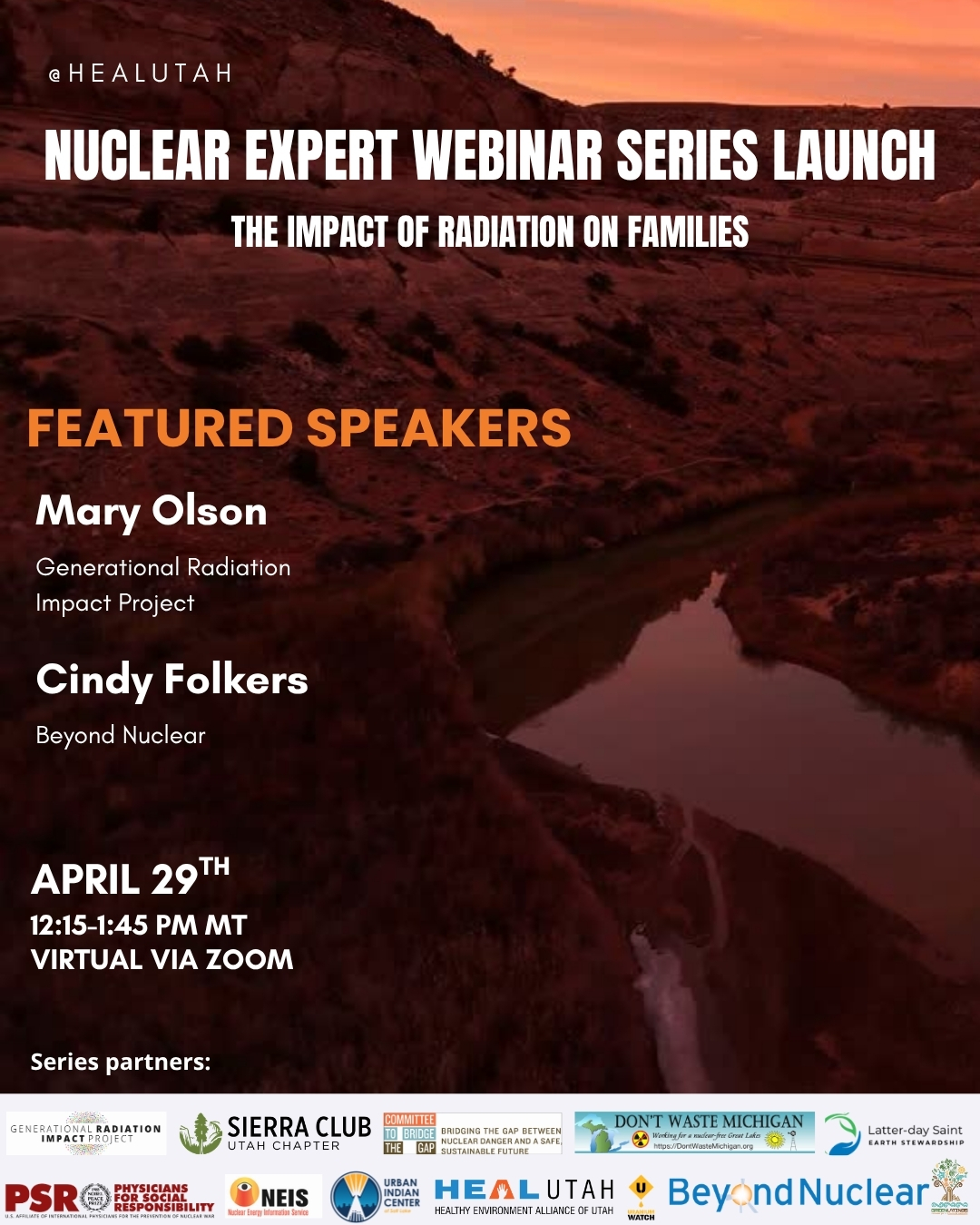
29 April – Nuclear Expert Webinar #1 – Radiation Impacts on Families with Mary Olson and Cindy Folkers
- 12:15 PM MT – 1:45 PM MT
- Location: Virtual – REGISTER TODAY

4 May -West Suburban Peace Coalition to discuss Iran war at May Educational Forum
Monday, May 4, 7:00 – 8:00 PM Central Standard Time
Title: : How Trump’s Narrative Tries to Shape the Reality of the War on Iran.
Contact Walt Zlotow, zlotow@hotmail.com 630 442 3045 for further information
14 May – online event From Bombs to Data Centres: the Face of Nuclear Colonialism

Pine Ridge Uranium is the real threat, not Tehran- Tell Burgum: Stop the Extraction.
Chernobyl: The Lost Tapes – A good documentary on Chernobyl on SBS available On Demand for the next 3 weeks– https://www.sbs.com.au/ondemand/tv-program/chernobyl-the-lost-tapes/2352741955560
To see nuclear-related stories in greater depth and intensity – go to https://nuclearinformation.wordpress.com
-
Archives
- April 2026 (327)
- March 2026 (251)
- February 2026 (268)
- January 2026 (308)
- December 2025 (358)
- November 2025 (359)
- October 2025 (376)
- September 2025 (257)
- August 2025 (319)
- July 2025 (230)
- June 2025 (348)
- May 2025 (261)
-
Categories
- 1
- 1 NUCLEAR ISSUES
- business and costs
- climate change
- culture and arts
- ENERGY
- environment
- health
- history
- indigenous issues
- Legal
- marketing of nuclear
- media
- opposition to nuclear
- PERSONAL STORIES
- politics
- politics international
- Religion and ethics
- safety
- secrets,lies and civil liberties
- spinbuster
- technology
- Uranium
- wastes
- weapons and war
- Women
- 2 WORLD
- ACTION
- AFRICA
- Atrocities
- AUSTRALIA
- Christina's notes
- Christina's themes
- culture and arts
- Events
- Fuk 2022
- Fuk 2023
- Fukushima 2017
- Fukushima 2018
- fukushima 2019
- Fukushima 2020
- Fukushima 2021
- general
- global warming
- Humour (God we need it)
- Nuclear
- RARE EARTHS
- Reference
- resources – print
- Resources -audiovicual
- Weekly Newsletter
- World
- World Nuclear
- YouTube
-
RSS
Entries RSS
Comments RSS
 nuclear-news