Nuclear corruption in Ohio: HB 6 was never about jobs and communities by keeping nuclear plants open
HB 6 was never about jobs and communities by keeping nuclear plants open. In fact, First Energy Solutions refused to show legislators there was a need for the bailout. Yet, their own numbers posted on the company’s website show subsidies were never needed and, with the subsidy secure, they paid shareholders $800 million! That’s not done by a company in dire straits. Electricity customers should never have been forced to pay for this – especially now when hospitals, households, small businesses, schools and communities are struggling. ...
|
Ohioans should take notice when they hear the word “subsidy” because it refers to your money. That’s why most Ohioans have opposed House Bill 6 – the bailout of power plants owned by First Energy Solutions (now Energy Harbor) that will be tacked onto your electricity bill – from the beginning. And you really have no choice because we all need electricity. HB 6 should have never happened. But because of greed, it was secretly conceived through alleged corruption via the Ohio legislature rather than what should have been settled through a private bankruptcy process. An intimidating monopoly and indicted politician stand accused of perverting the legislative process with some $60 million spent to shift the billion-dollar subsidy from shareholders to Ohioans. That’s why Vistra has vigorously fought against this tainted legislation from the start. First, when HB 6 was before lawmakers and the corruption not yet alleged, we were a member of Ohioans Against Nuke Bailouts. Then, after the legislature passed HB 6 and the governor signed it, we pressed on as a member of Ohioans Against Corporate Bailouts, advocating to let Ohioans vote, as allowed by the state constitution, on whether they’d like their money used to bailout select companies. With the corruption that fueled HB 6 now exposed in a criminal indictment, we continue to fight, demanding the immediate and complete repeal of HB 6 as members of the Coalition to Restore Public Trust. We now know, through the substantial and mounting evidence amassed in the FBI’s investigation, that the real winners of HB 6 were a politician and his cronies, charged with racketeering and bribery, and the Wall Street owners of First Energy and First Energy Solutions. The losers are Ohioans still on the hook today to pay more than a billion dollars – unless Ohio legislators act to immediately repeal HB 6 in its entirety. HB 6 was never about jobs and communities by keeping nuclear plants open. In fact, First Energy Solutions refused to show legislators there was a need for the bailout. Yet, their own numbers posted on the company’s website show subsidies were never needed and, with the subsidy secure, they paid shareholders $800 million! That’s not done by a company in dire straits. Electricity customers should never have been forced to pay for this – especially now when hospitals, households, small businesses, schools and communities are struggling. …….. https://www.cincinnati.com/story/opinion/2020/09/01/opinion-nuclear-bailout-corruption-kills-public-trust-and-competition/3455443001/ |
|

Iran Nuclear Deal Parties ‘United in Resolve’ to Preserve Agreement
 Iran Nuclear Deal Parties ‘United in Resolve’ to Preserve Agreement https://www.voanews.com/middle-east/voa-news-iran/iran-nuclear-deal-parties-united-resolve-preserve-agreement, By VOA News, September 02, 2020 A European Union official leading talks among Iran and a group of five world powers Tuesday said the participants are committed to keeping alive the 2015 nuclear deal that restricted Iran’s nuclear program in exchange for sanctions relief. Iran Nuclear Deal Parties ‘United in Resolve’ to Preserve Agreement https://www.voanews.com/middle-east/voa-news-iran/iran-nuclear-deal-parties-united-resolve-preserve-agreement, By VOA News, September 02, 2020 A European Union official leading talks among Iran and a group of five world powers Tuesday said the participants are committed to keeping alive the 2015 nuclear deal that restricted Iran’s nuclear program in exchange for sanctions relief.
Helga Schmid tweeted after the meeting in Vienna that “participants are united in resolve to preserve the #IranDeal and find a way to ensure full implementation of the agreement despite current challenges.” “All participants reaffirmed the importance of preserving the agreement recalling that it is a key element of the global nuclear non-proliferation architecture, as endorsed by United Nations Security Council Resolution 2231,” Schmid said in a later statement. The deal came under stress last year when Iran announced would take steps to walk away from its commitments, complaining it was not getting the promised economic relief after the United States imposed fresh sanctions. Those sanctions came after the Trump administration withdrew from the agreement in 2018, arguing it did too little to prevent Iran from developing nuclear weapons while giving the country too much in sanctions relief. Iran has denied it worked to build nuclear arms, and says it is able and prepared to reverse the actions it has taken to back away from the deal. Tehran has surpassed limits on the amount of enriched uranium it can hold at one time as well as the level to which it is allowed to enrich the material and has installed more advanced centrifuges. Representatives from Britain, China, France, Russia and Germany all took part in Tuesday’s talks, the latest in their efforts to salvage the agreement. Speaking with reporters after the meeting, Chinese representative Fu Cong called on Iran to return to full compliance with its requirements, but also said “the economic benefit that is due to Iran needs to be provided.” The U.N. Security Council resolution that enshrined the nuclear agreement includes mechanisms for participants to address non-compliance, and last month the United States sought to reinstate U.N. sanctions based on Iran’s violations of its requirements. The other signatories have rejected the U.S. move, something they reaffirmed at Tuesday’s talks. Schmid’s statement said that because the United States announced it was halting its participation in the nuclear deal and had not participated in any related activities since that time in May 2018, all of the remaining signatories agree it “therefore could not be considered as a participant state,” and thus “cannot initiate the process of reinstating U.N. sanctions.” The United States has argued that because it was an original member of the agreement, it retains the right to seek the snapback sanctions. The representatives at Tuesday’s talks also welcomed Iran’s decision last week to allow the U.N. atomic energy agency to inspect two sites where Iran is suspected of having stored or used undeclared nuclear material in the early 2000s. |
Petition against dumping ‘nuclear mud’ off Cardiff reaches 5k threshold for Senedd debate
|
Petition against dumping ‘nuclear mud’ off Cardiff reaches 5k threshold for Senedd debate https://nation.cymru/news/petition-against-dumping-nuclear-mud-off-cardiff-reaches-5k-threshold-for-senedd-debate/, 2nd September 2020 A petition to stop the dumping of what campaigners are calling ‘nuclear mud’ off the coast of Cardiff has reached its 5,000 signature target.The campaigners are calling for plans to dump mud from the construction of the new Hinkley Point C nuclear power station into the sea off Cardiff Bay to be halted.
Reaching the 5,000 target means the controversial topic will be up for a debate in the Welsh Parliament. Campaign group Geiger Bay are pressing for extensive testing of the sediment following what they say is evidence of plutonium contamination, a claim that Westminster’s Environment Agency (EA) denies. The petition, created by Cian Ciaran of the Super Furry Animals, demands “that a full Environmental Impact Assessment (EIA) is carried out before any further sediment from Hinkley Point nuclear power station can be dumped”. 780,000 tonnes of the sediment from set to be dumped just one mile from Wales’ capital city. Concerned’ Speaking this morning, Welsh National Party leader and Cardiff West Senedd candidate Neil McEvoy MS said, who has been a prominent voice in the campaign, said that “Wales is standing up for itself”. “How can we allow 780,000 tonnes of material dredged from outside a nuclear power station to be dumped in our waters without testing it properly?” he said. “The Labour Government and Natural Resources Wales have a lot to answer for. “The public are concerned about this issue. Environmentalists are outraged. Eminent scientists are on record saying they are seriously concerned. The only people who don’t seem to be bothered about this are the Labour politicians sitting in Cardiff Bay. “This is first and foremost about the safety of our people and of our marine environment. It is also about how Wales is treated as a nation.” |
|
Renewable energy can save the natural world – but if we’re not careful, it will also hurt it
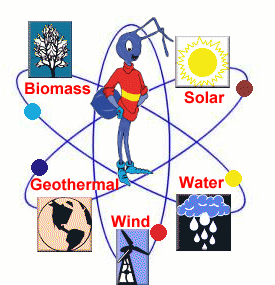 Renewable energy can save the natural world – but if we’re not careful, it will also hurt it https://theconversation.com/renewable-energy-can-save-the-natural-world-but-if-were-not-careful-it-will-also-hurt-it-145166
September 2, 2020 Laura Sonter, Lecturer in Environmental Management, The University of Queensland, James Watson, Professor, The University of Queensland, Richard K Valenta, Director – WH Bryan Mining and Geology Research Centre – The Sustainable Minerals Institute, The University of Queensland
A vast transition from fossil fuels to renewable energy is crucial to slowing climate change. But building solar panels, wind turbines and other renewable energy infrastructure requires mining for materials. If not done responsibly, this may damage species and ecosystems.
In our research, published today, we mapped the world’s potential mining areas and assessed how they overlap with biodiversity conservation sites.
We found renewable energy production will exacerbate the threat mining poses to biodiversity – the world’s variety of animals and plants. It’s fair to assume that in some places, the extraction of renewables minerals may cause more damage to nature than the climate change it averts.
Geoengineering to counter global heating? It’s a risky gamble
|
SHOULD WE BANK ON INNOVATION TO HOLD BACK GLOBAL HEATING? HISTORY SAYS IT’S A RISKY BET, Ensia
Andrew Urevig September 2, 2020 — From research scientists to political organizers, people around the planet are working to thwart a threat whose scale has become increasingly clear: Global heating is spurring a climate crisis of megafires, superstorms and record-setting heat waves that current policies are not enough to address.Many climate activists, driven in part by the youth movements of Gen Z, are joining major scientific bodies in calling for economic and social transformation, while other onlookers are hoping for “moonshot” technology to step in as climate “savior.” How did we end up here? Answers to that vary, but research published earlier this year in the journal Nature Climate Change puts at least some of the blame on a surprising villain: computer modeling–based on wishful thinking. In the paper, Duncan McLaren and Nils Markusson, social scientists with the UK-based Lancaster University’s Lancaster Environment Centre, note that speculative technologies promising big climate benefits down the line have been included again and again in computer models used to inform government policies. That relieves some of the political pressure to cut or sequester greenhouse gases here and now, helping to stall tangible reductions in the near term. But it also spurs scientists creating the next round of models to rely, however unintentionally, on even more hoped-for innovations to make established climate goals appear feasible. We need to “recognise and break this pattern to unleash more effective and just climate policy,” the researchers conclude. …………… In the paper, Duncan McLaren and Nils Markusson, social scientists with the UK-based Lancaster University’s Lancaster Environment Centre, note that speculative technologies promising big climate benefits down the line have been included again and again in computer models used to inform government policies. That relieves some of the political pressure to cut or sequester greenhouse gases here and now, helping to stall tangible reductions in the near term. But it also spurs scientists creating the next round of models to rely, however unintentionally, on even more hoped-for innovations to make established climate goals appear feasible. We need to “recognise and break this pattern to unleash more effective and just climate policy,” the researchers conclude. https://ensia.com/notable/climate-change-models-technology-innovation/ |
|
USA – new plutonium pit production – but no new environmental assessment !

 US officials: No new environmental study for nuclear lab, Spectrum, BY ASSOCIATED PRESS AP, SEP. 02, 2020, ALBUQUERQUE, N.M. (AP) — The National Nuclear Security Administration says it doesn’t need to do an additional environmental review for Los Alamos National Laboratory before it begins producing key components for the nation’s nuclear arsenal because it has enough information.
The National Nuclear Security Administration on Tuesday released its final supplemental analysis of a site-wide environmental impact statement done for the lab more than a decade ago. The agency concluded that no further analysis is required.
Critics have pushed for a new environmental impact statement, saying the previous 2008 analysis didn’t consider a number of effects related to increased production, such as the pressure it puts on infrastructure, roads and the housing market.
“The notion that comprehensive environmental analysis is not needed for this gigantic program is a staggering insult to New Mexicans and an affront to any notion of environmental law and science,” Greg Mello of the Los Alamos Study Group said in a statement.
Lab officials last year detailed plans for $13 billion worth of construction projects over the next decade at the northern New Mexico complex as it prepares for plutonium pit production. About $3 billion of that would be spent on improvements to existing plutonium facilities for the pit work, the Albuquerque Journal reported…….https://spectrumlocalnews.com/nys/buffalo/ap-online/2020/09/02/us-officials-no-new-environmental-study-for-nuclear-lab
Republicans And Democrats Clash Over How To Repeal Nuclear Bailout
|
Republicans And Democrats Clash Over How To Repeal Nuclear Bailout, WOSU By ANDY CHOW 2 Sept 20, •At the Statehouse on Tuesday, both the Ohio House and Senate addressed the potential repeal of the controversial nuclear power plant bailout. As Democrats call for a quick repeal, Republicans moved ahead with a different approach.
House Speaker Bob Cupp (R-Lima) says a special committee will hold hearings on HB6, the law that bails out nuclear power plants, subsidizes coal plants, rolls back renewable energy standards and eliminates efficiency mandates. Cupp says there’s a lot of unwinding the House must do to understand the impacts of a repeal….. Minority Leader Emilia Sykes says Democrats have asked for hearings on repeal bills that haven’t moved – so they’ll take other steps to, in her words, press the issue …. Supporters of HB6 say a repeal would allow the continuation of increased charges customers see for the renewable and energy efficiency standards. Opponents of HB6 say the energy efficiency standards creates a return on investment with savings that counter the initial cost……. Federal investigators charge that HB6 was at the center of a $60 million bribery scheme. A utility believed to be FirstEnergy and its subsidiary is accused of funneling the money into a dark money group controlled by former House Speaker and current Rep. Larry Householder (R-Glenford), in return for passing the bailout. Householder, who faces federal racketeering charges, says he plans on entering a plea of “not guilty.” https://radio.wosu.org/post/republicans-and-democrats-clash-over-how-repeal-nuclear-bailout#stream/0 |
|
Santee Cooper and Westinghouse Electric to sell of equipment at the failed $9 billion VC Summer nuclear site.
|
SANTEE COOPER, WESTINGHOUSE BURY NUCLEAR HATCHET Agree to sell millions of dollars in nuclear equipment, Lexington Chronicle , By Jerry Bellune, JerryBellune@yahoo.com, 2 Sept 20, Squabbling over millions of dollars in nuclear equipment may be temporarily over. This gives the taxpayer-owned utility full ownership of all non-nuclear equipment at the failed $9 billion nuclear site. Santee Cooper reportedly is in debt more than $8 billion, at least half of it from the nuclear failure. |
France’s President Macron joins the global nuclear lobby’s push to export nuclear reactors
 Macron talks nuclear energy and ways to control militias during Iraq visit, The National , Khaled Yacoub Oweis, Sep 2, 2020French PM is the most significant leader to visit Iraq since Prime Minister Mustafa Al Kadhimi came to power in May
During a visit to Baghdad on Wednesday, French President Emmanuel Macron discussed solving Iraq’s massive power shortages with nuclear energy ……. Mr Kadhimi told reporters in Baghdad that he discussed with Mr Macron “a future project” to use nuclear energy to produce electricity and solve decades-long power shortages……..
If realised, the project would place Iraq along with the UAE and Iran as the only Middle East countries with electricity produced by a nuclear reactor. ………. https://www.thenational.ae/world/mena/macron-talks-nuclear-energy-and-ways-to-control-militias-during-iraq-visit-1.1071729
North Korea’s nuclear activity still a ‘serious concern’: UN watchdog
Nuclear activities in North Korea remain a cause for “serious concern,” and the rogue totalitarian state continues to enrich uranium, which could be used in an atomic weapon, the UN’s watchdog said in a recent report.
The activities by the country are in “clear violation of relevant UN Security Council resolutions,” the International Atomic Energy Agency wrote in the report that was released Tuesday.
The report also notes that what was once the heart of the country’s nuclear program, the Yongbyon site, has likely been shut down since 2018 — and that no plutonium has been produced there in the past year.
Nuclear activities in North Korea remain a cause for “serious concern,” and the rogue totalitarian state continues to enrich uranium, which could be used in an atomic weapon, the UN’s watchdog said in a recent report.
The activities by the country are in “clear violation of relevant UN Security Council resolutions,” the International Atomic Energy Agency wrote in the report that was released Tuesday.
The report also notes that what was once the heart of the country’s nuclear program, the Yongbyon site, has likely been shut down since 2018 — and that no plutonium has been produced there in the past year.
Still, the information it’s able to get about the program is “declining” because the agency’s been locked out of the hermit nation.
“Knowledge of the DPRK’s nuclear program is limited and, as further nuclear activities take place in the country, this knowledge is declining,” the report states.
Nuclear waste project proposed near Carlsbad sees mixed response in final public hearing
|
Nuclear waste project proposed near Carlsbad sees mixed response in final public hearing, Adrian Hedden– Carlsbad Current-Argus, 3 Sept 20, In its final public comment hearing on an environmental analysis for a nuclear waste facility near Carlsbad and Hobbs, the federal Nuclear Regulatory Commission (NRC) heard arguments both for and against the project that would see high-level spent nuclear fuel rods stored temporarily in southeast New Mexico.Holtec International sought a permit to build and operate the site known as a consolidated interim storage facility (CISF) to remove nuclear waste from generator sites around the U.S., and temporarily store the refuse until a permanent repository was ready. The NRC’s recently released draft environmental impact statement (EIS) found the project, during construction and operation, would have minimal environmental impact. A safety analysis was forthcoming, which would study the project’s impact on human safety and require another period of public comments………… Opponents of the project, including New Mexico Gov. Michelle Lujan Grisham and members of her cabinet panned the proposal for environmental concerns and impacts on other industries in the state such as extraction and agriculture. Protesters during Wednesday’s meeting also questioned the NRC’s decision to hold public hearings online and via phone instead of in person amid the COVID-19 pandemic as “rushing” the project and reducing public participation. ……. Rose Gardner, a resident of Eunice near the proposed site and member of the Alliance for Environmental Strategies argued that the project was illegal under federal law and unfairly impacted Hispanic communities in rural New Mexico. “The National Waste Policy Act does not allow for this license to be issued and a privately-owned corporation to take the high-level waste from commercial reactors,” Gardner said. “The failure of the NRC to satisfy the public with these poorly run and moderated webinars is an example of government waste as usual.” New Mexico State Sen. Jeff Steinborn (D-36) argued the EIS was “deficient” in that it did not address the transportation plan that would bring the waste to the facility from “all sides of New Mexico,” he said. “Transportation should not be an afterthought,” Steinborn said. “This is a fatal flaw in this plan. New Mexicans continue time and again to pay the high cost of America’s nuclear legacy.” Steinborn also called on the NRC to postpone the licensing process until after the pandemic subsided and in-person public meetings could be held safely. “New Mexicans have not been proactively reached out to and engaged on this proposal,” he said. “This pandemic has created a digital divide in New Mexico.” New Mexico U.S. Sens. Martin Heinrich and Tom Udall agreed with the call on the NRC to postpone the licensing process amid the public health crisis in a letter sent last month to NRC leadership. “Ultimately, there is no compelling public interest reason to justify this rush to replace meetings with virtual webinars, and this decision gives the Commission the appearance of valuing the preferences of a for-profit company looking to store highly dangerous nuclear waste that of the public and their elected representatives,” the letter said.https://www.currentargus.com/story/news/local/2020/09/02/holtec-nuclear-waste-project-near-carlsbad-sees-mixed-public-response/5681636002/ |
|
Low Dose Ionizing Radiation Shown to Cause Cancer in Review of 26 Studies
These results contradict the claims of the Japanese authorities who keep repeating that there is no impact observed below a dose of 100 mSv.
The US National Cancer Institute has dedicated an entire volume of its scientific journal, Journal of the National Cancer Institute Monographs, to the impact of low doses of radiation on cancers. The articles are open access.

July 13, 2020
An international team of experts in the study of cancer risks associated with low-dose ionizing radiation published the monograph, “Epidemiological studies of low-dose ionizing radiation and cancer: Summary bias assessment and meta-analysis,” in the Journal of the National Cancer Institute on July 13, 2020.
It is well established that ionizing radiation causes cancer through direct DNA damage. The general public are exposed to low doses of ionizing radiation from medical exposures like computed tomography (CT) scans, naturally occurring radiation (emitted from bedrock with the earth’s crust and cosmic rays emitted by the sun), and occupational exposures to medical, aircrew and nuclear workers. A key question for low-dose exposures is how much of the damage can be repaired and whether other mechanisms, including inflammation, also play a role. This critical question has been long debated for radiation protection standards.
After combing data from 26 epidemiological studies the authors found clear evidence of excess cancer risk from low dose ionizing radiation: 17 of 22 studies showed risk for solid cancers and 17 of 20 studies showed risk for leukemia. The summary risk estimates were statistically significant and the magnitude of risk (per unit dose) was consistent with studies of populations exposed to higher doses.
A novel feature of the research effort was the investigators’ use of epidemiological and statistical techniques to identify and evaluate possible sources of bias in the observational data, for example confounding, errors in doses, and misclassification of outcomes. After a thorough and systematic review, they concluded that most did not suffer from major biases.
The authors concluded that although for the most part, absolute risk of cancer will be small, the data reinforce the radiation safety principle to ensure that doses are “as low as reasonably achievable” (ALARA).
Additional research is needed to explore risks for cardiovascular disease (CVD) at low doses. Because CVD is a very common disease, even small risks at low doses could have important implications for radiation protection and public health.
The 26 epidemiological studies were published between 2006 and 2017 and included a total of 91,000 solid cancers and 13,000 leukemias. Studies were eligible if the mean dose was <100 mGy. The study populations had environmental radiation exposure from accidents, like Chernobyl, and natural background radiation, medical radiation exposure like CT scans and occupational exposure including nuclear workers and medical radiation workers.
Reference:
“Epidemiological studies of low-dose ionizing radiation and cancer: Summary bias assessment and meta-analysisExit Disclaimer,” JNCI Monographs. Volume 2020. Issue 56. July 2020.
https://academic.oup.com/jncimono/issue/2020/56
https://dceg.cancer.gov/news-events/news/2020/low-dose-monograph
Evacuation orders for Fukushima radioactive areas to be lifted without decontamination
 A gate to the Nagadoro district of the village of Iitate, Fukushima Prefecture, is seen in this picture taken on Aug. 24, 2020. The district was designated as a “difficult-to-return” zone in the wake of the Fukushima nuclear disaster.
August 27, 2020
TOKYO — The Japanese government is set to allow the lifting of evacuation orders for highly radioactive areas near the disaster-stricken Fukushima Daiichi Nuclear Power Station without decontamination work on condition that residents will not resettle there.
The government on Aug. 26 disclosed the policy to the Nuclear Regulation Authority (NRA) for the so-called “difficult-to-return” zones where residents have remained evacuated since the onset of the Fukushima nuclear disaster in 2011 due to high radiation doses in those areas in northeastern Japan. The NRA gave its consent to the government policy, paving the way for residents to enter areas outside the specified disaster reconstruction and revitalization base zones.
The government has heretofore made it a condition for lifting the evacuation orders that: the radiation exposure doses will not exceed 20 millisieverts per year; infrastructure necessary for daily lives is developed and sufficient decontamination work is performed; and consultations are held with local bodies and residents. The government previously designated parts of the difficult-to-return zones as disaster recovery bases, which mainly lie in areas where local residents lived, and planned to lift the evacuation orders by 2023 after decontamination work and infrastructure development.
Meanwhile, upon receiving a request from the village of Iitate in Fukushima Prefecture, the government has also been examining under which situations the evacuation directives can be lifted in areas outside the disaster recovery base areas.
At a regular meeting on Aug. 26, the government explained its line of thinking that the evacuation orders can be lifted on conditions including: the annual radiation exposure doses are confirmed to be no more than 20 millisieverts; residents’ radiation exposure doses are controlled by using personal dosimeters; and information to curb radiation exposure is provided. The government then sought the NRA’s opinion on the matter.
In response, the nuclear watchdog body evaluated the government’s new policy and offered a view that “it is in essence the same” as the current conditions for lifting the nuclear evacuation orders.
Upon receiving the NRA’s stamp of approval, the government is set to hold a meeting of the Nuclear Emergency Response Headquarters and formally decide on the prerequisites for removing the evacuation orders in areas outside the disaster recovery bases. Following the decision, municipal governments will look into whether to lift their evacuation orders for their local areas.
In Iitate village, the Nagadoro district has been designated as a difficult-to-return zone, dividing the village into a disaster recovery base and an area not designated as such. The Iitate Municipal Government is planning to develop a disaster restoration park in parts of a roughly 9-square-kilometer area that had few residents and falls outside the disaster recovery base, and requested the central government to allow the village to lift the evacuation order for the area at the same time as for the disaster recovery base.
https://mainichi.jp/english/articles/20200827/p2a/00m/0na/005000c
Japan should leave radioactive water in current storage tanks
Hajime Matsukubo, general-secretary of the Citizens’ Nuclear Information Center, says an ocean dump doesn’t make sense
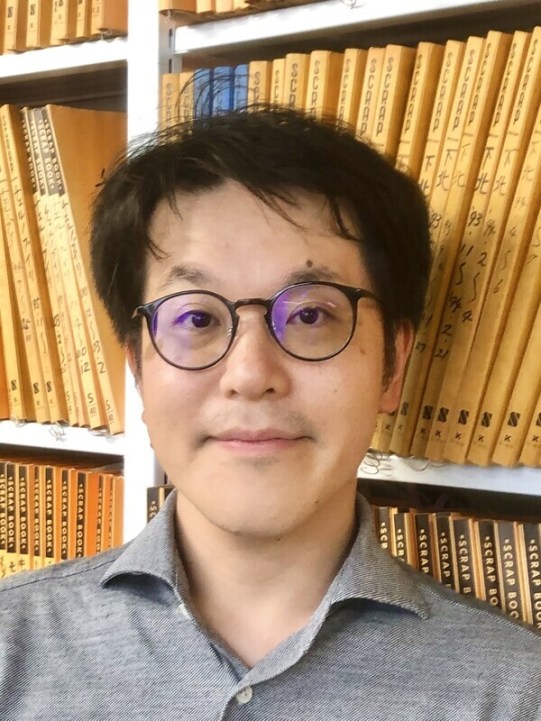 Hajime Matsukubo, general secretary of the Citizens’ Nuclear Information Center (CNIC)
Aug.17,2020
What’s the most practical and safest way to handle the radioactive water being stored at Fukushima? According to Hajime Matsukubo, general-secretary of the Citizens’ Nuclear Information Center (CNIC), the contaminated water should be left in the aboveground tanks where it’s currently being stored. In a recent email interview with the Hankyoreh, Matsukubo said it doesn’t make sense to release the water into the ocean just because the tanks are running low on space.
The CNIC is a Japanese NGO that was set up in 1975 under nuclear physicist Jinzaburo Takagi, a leading figure in the campaign against nuclear power in Japan. Matsukubo is an active researcher, lecturer, and publisher of materials related to the anti-nuclear movement. The interview is presented below.
Hankyoreh (Hani): When do you think the final decision will be made about dumping the contaminated water at Fukushima into the ocean?
Hajime Matsukubo: TEPCO [Tokyo Electric Power Company] says it will dilute the contaminated water before dumping it into the ocean, which means that a dilution facility would have to be built. Given the time required to get a building permit, I think the final decision will be made this summer or fall.
Japan wants an ocean dump because it’s the cheapest option
Hani: Why do you think the Japanese government is pushing so hard to dump the water into the ocean?
Matsukubo: Not only Japan but all countries that operate nuclear reactors end up with tritium as a byproduct, which they then release into the ocean or the atmosphere. I see this decision as an extension of that. Another factor is that releasing the water into the ocean is the cheapest option.
Hani: There seems to be considerable opposition to the plan in Japan as well.
Matsukubo: Many citizens are opposed to it. Pushback has been particularly strong from fishermen, who are likely to be harmed by the rumors [about the danger of the radioactive matter being released, which could cause people not to visit or eat food from Fukushima]. Lawmakers at city councils in Fukushima Prefecture have adopted a series of resolutions voicing concerns about releasing the contaminated water.
Hani: Do you think that negative public opinion in Japan is capable of changing government policy?
Matsukubo: Since the fishermen are direct stakeholders, I think their opposition will have a big impact. TEPCO has promised not to release the water without the consent of local communities in Fukushima. I think the key is opposing voices in Japan and increasing pressure from overseas.
Hani: Do South Korea or environmental groups in other countries have any way to sanction Japan for releasing contaminated water into the ocean?
Matsukubo: They could consider filing a lawsuit based on the UN Convention on the Law of the Sea. But a large amount of tritium is already being released from Korea’s nuclear plants, especially the Wolseong plant. It would be rather difficult to prove that contaminated water released from Fukushima Daiichi [No. 1] is having an impact.
There’s plenty of land that could be used for additional storage
Hani: What’s the most practical and safest way to deal with the contaminated water?
Matsukubo: The contaminated water at Fukushima should be left in the aboveground tanks where it’s currently being stored. [The government] says there’s no more room at Fukushima Daiichi, but there is. There’s a huge amount of land that could be used to store the radioactive wastewater. While the Ministry of Economy, Trade, and Industry says that land can’t be appropriated for other uses, the government [could and] should negotiate with the landowners. It’s absurd to dump radioactive water into the ocean because there’s not enough storage space in the tanks. Japanese NGOs are suggesting that the government continue storing the water in the aboveground tanks and seal them off with concrete. They’re warning the government that releasing the water into the ocean would create international problems.
S. Korea, Japan both need to reassess their reprocessing plans
Hani: Do you have a message for South Korea’s civic society?
Matsukubo: The Japanese government is pursuing a policy of creating a nuclear fuel cycle that would recycle plutonium and uranium from the spent nuclear fuel produced by reactors. This policy requires reprocessing plants that are currently under construction at Rokkasho, in Aomori Prefecture, which are supposed to begin operations in 2021. These plants will release a large amount of radioactive matter into the ocean and the atmosphere. In terms of tritium alone, the amount released will be 10 times worse than the contaminated water at Fukushima Daiichi. That’s a very serious problem, just as releasing the contaminated water would be.
In South Korea, the Korea Atomic Energy Research Institute is taking the lead in R&D projects related to reprocessing spent nuclear fuel. The problems with reprocessing plants don’t end here. Plutonium can be used as a raw material for making nuclear weapons. I think that South Korea and Japanese citizens need to join forces to shut down both countries’ reprocessing plans.
By Kim So-youn, staff reporter
http://english.hani.co.kr/arti/english_edition/e_international/958103.html
Japan pushes forward with plans to dump radioactive water into ocean, despite public opposition
Tokyo may dump contaminated water as early as September
 Storage tanks for water contaminated with radioactive matter from the Fukushima Daiichi Nuclear Power Plant.
Aug.17,2020
During the past three months, while the international community was focused on the COVID-19 pandemic, the Japanese government has held five public hearings as it moves forward with its decision to dump radioactive water from the Fukushima nuclear disaster into the ocean. After analyzing the transcripts and videos from the hearings, the Hankyoreh has concluded that the Japanese government will probably decide to dump the water as early as September or October, despite overwhelming public opposition to the plan, even in Japan. Since a study has found that the contaminated water could reach the eastern coast of South Korea within a year of being dumped, international groups focusing on the environment and experts in international law are calling for the South Korean government to take preemptive action in the area of international law.
Following an explosion during the 2011 Tohoku earthquake, the Fukushima Daiichi nuclear power plant was closed and is being decommissioned, a process that has taken nine years so far. But debate continues about how to deal with the growing volume of water contaminated with radioactivity, including the water used to cool the nuclear fuel and rainwater and groundwater that have seeped into the buildings. The contaminated water is currently being stored in tanks, but by the summer of 2022, the Japanese government says, the tanks will run out of space, necessitating the water’s release into the ocean.
The Japanese government, under Prime Minister Shinzo Abe, held video hearings about how to deal with the contaminated water on Apr. 6, Apr. 13, May 11, June 30, and July 17. These hearings were attended not only by representatives from the fishing, agriculture, and hospitality businesses and community leaders from Fukushima Prefecture but also the national tourist council and groups representing businesses and consumers. The government was represented by officials from 10 or so ministries, including the Ministry of Economy, Trade, and Industry, the Ministry of the Environment, and the Ministry of Foreign Affairs.
Radioactive matter detected in water even after decontamination
While reviewing the hearings, the Hankyoreh learned that radioactive matter has been detected even following decontamination efforts, that releasing the water would likely cement Fukushima’s stigma as an area tainted with radioactivity and have a serious impact on the fishing industry, and that there was widespread opposition to the idea among hearing attendees, who argued that the final decision shouldn’t be made until public opinion has been canvassed.
An August 2019 report by international environmental group Greenpeace about the contaminated water at Fukushima found that the water, once released, would flow through the East China Sea and be brought via the Kuroshio Current and the Tsushima Current to South Korea’s eastern shore within a year. Disregarding the concerns of the international community, the Japanese government released a draft of a plan this past March to dump the contaminated water at Fukushima into the ocean over the course of 30 years. Given the plan’s schedule, which involves the construction of a facility to dilute the contaminated water, its decision will likely be made by this October. Abe told the press in an interview in March that he wants to finalize a plan as quickly as possible.
The Japanese government intends to make its final decision after canvassing the opinions of Fukushima residents, related organizations, and ordinary citizens. But even in the Japanese public, there’s fierce opposition to dumping the contaminated water. The Hankyoreh’s analysis of the transcripts and videos from the five hearings show that most of the 37 participants were concerned about the plan to release the water.
“It’s human nature to avoid radioactive materials. It’s a serious problem that there’s still radioactivity even in the decontaminated water, which contradicts what TEPCO [Tokyo Electric Power Company] initially said,” said Hidenori Koito, the director of a trade association for the hospitality industry in Fukushima Prefecture.
80% of water contains radioactive matter beyond permissible levels
TEPCO claimed to have filtered out 62 kinds of radioactive material through the Advanced Liquid Processing System (ALPS) and all that’s left is tritium, which is technically difficult to remove from the contaminated water in the tanks. But a 2018 study found that 80% of the water processed using ALPS still contained more than the permitted level of radioactive matter that is deadly to the human body, including cesium, strontium, and iodine. While TEPCO has emphasized that it would decontaminate the water once more to ensure its safety prior to release, distrust has already surged.
Another criticism is that dumping the water would spoil the nine-year campaign by Fukushima residents to repair the area’s reputation. “If the contaminated water is released into the ocean, people will inevitably think there’s another radiation leak at Fukushima, given the nuclear accident that occurred there,” said Kimio Akimoto, president of a coalition of forestry associations in the prefecture.
Vehement opposition from fishermen
An even sterner stance was taken by fishermen, who depend upon the ocean for their livelihood. “It’s unacceptable for radioactive matter to be deliberately pumped into the ocean,” said Tetsu Nozaki, president of a coalition of fishery cooperatives in Fukushima Prefecture. The national coalition of fishery cooperatives voted on July 23 to “oppose” the planned release of contaminated water.
There are also concerns that the government is rushing the plan. “The Japanese public doesn’t know the details about the contaminated water yet. The final decision shouldn’t be made until people understand what it means to dump contaminated water into the ocean,” said Yuki Urago, secretary-general of a national coalition of consumers’ associations.
“Right now, the Japanese public is focused on COVID-19. It’s doubtful whether the issue of contaminated water at Fukushima can provoke a national debate in this situation,” said Yuko Endo, mayor of Kawauchi, a village in Fukushima Prefecture.
Japan took an unusually long opinion canvassing period
Before deciding on important policies, the Japanese government has a practice of canvassing opinions, a process known as the “public comment” period. The relevant ministry here, the Ministry of Economy, Trade, and Industry, began collecting comments on Apr. 6 and took the unusual step of extending that period three times, only wrapping it up at the end of last month. One reason the government may have extended the comment period is because of the overwhelming opposition to releasing the contaminated water into the ocean.
Last month, the UN Human Rights Council released a statement expressing “deep concerns” about “a report indicating that the Japanese government is accelerating its timeframe for releasing water contaminated with radioactivity at Fukushima.” South Korea, given its proximity to Japan and the ocean, has set up a government-wide task force under the Office of the Prime Minister to keep tabs on the Japanese government’s actions.
“We’re asking Japan to share adequate information while it’s processing the contaminated water at the Fukushima nuclear plant. We’re monitoring the situation from various angles to see what impact this will have on us,” explained an official from South Korea’s Ministry of Foreign Affairs.
By Kim So-youn, staff reporter
http://english.hani.co.kr/arti/english_edition/e_international/958099.html
1 This Month

of the week – Shut Down Drone Warfare!


Tell the Ukrainian Government to Drop Prosecution of Peace Activist Yurii Sheliazhenko

Petition to revoke the licensing of the Near Surface Nuclear Disposal Facility (NSDF) at Chalk River. https://www.ourcommons.ca/petitions/en/Petition/Details?Petition=e-7247
To see nuclear-related stories in greater depth and intensity – go to https://nuclearinformation.wordpress.com
-
Archives
- April 2026 (103)
- March 2026 (251)
- February 2026 (268)
- January 2026 (308)
- December 2025 (358)
- November 2025 (359)
- October 2025 (376)
- September 2025 (257)
- August 2025 (319)
- July 2025 (230)
- June 2025 (348)
- May 2025 (261)
-
Categories
- 1
- 1 NUCLEAR ISSUES
- business and costs
- climate change
- culture and arts
- ENERGY
- environment
- health
- history
- indigenous issues
- Legal
- marketing of nuclear
- media
- opposition to nuclear
- PERSONAL STORIES
- politics
- politics international
- Religion and ethics
- safety
- secrets,lies and civil liberties
- spinbuster
- technology
- Uranium
- wastes
- weapons and war
- Women
- 2 WORLD
- ACTION
- AFRICA
- Atrocities
- AUSTRALIA
- Christina's notes
- Christina's themes
- culture and arts
- Events
- Fuk 2022
- Fuk 2023
- Fukushima 2017
- Fukushima 2018
- fukushima 2019
- Fukushima 2020
- Fukushima 2021
- general
- global warming
- Humour (God we need it)
- Nuclear
- RARE EARTHS
- Reference
- resources – print
- Resources -audiovicual
- Weekly Newsletter
- World
- World Nuclear
- YouTube
-
RSS
Entries RSS
Comments RSS
 nuclear-news