Japan intend to release Fukushim Daiichi’s radioactive water into sea
We knew it all along that they always intended to finally dump it all into the sea, which is the cheapest expedient solution. Giving us repeatedly various B.S. reasons:
That they were running out of space on location to build new tanks to store the additional radioactive water, produced daily by their need to cool those undergoing meltdown reactors.
That it is just harmless tritiated water, that the radioactive water has been filtered by two filtering systems which have removed all the 64 types of radionuclides to the exception of only tritium.
Which is total B.S. as Tritium is not harmless despite them pretending it to be. Various scientific studies have proven the dangerosity of tritium on life, all forms of life. Plus as later Tepco itself has admitted that their two filtering systems were failing to remove completely the 64 types of radionuclides present in that accumulated radioactive water, it is not “tainted water”, nor “tritiated water”, nor “contaminated water” as their propaganda spin doctors name it, but real radioactive water still containing various harmful radioactive fission products.

Japan to release Fukushima’s contaminated water into sea: reports
Oct 16, 2020
TOKYO (Reuters) – Nearly a decade after the Fukushima nuclear disaster, Japan’s government has decided to release over one million tonnes of contaminated water into the sea, media reports said on Friday, with a formal announcement expected to be made later this month.
The decision is expected to rankle neighbouring countries like South Korea, which has already stepped up radiation tests of food from Japan, and further devastate the fishing industry in Fukushima that has battled against such a move for years.
The disposal of contaminated water at the Fukushima Daiichi plant has been a longstanding problem for Japan as it proceeds with an decades-long decommissioning project. Nearly 1.2 million tonnes of contaminated water are currently stored in huge tanks at the facility.
The plant, run by Tokyo Electric Power Company Holdings Inc (9501.T), suffered multiple nuclear meltdowns after a 2011 earthquake and tsunami.
On Friday, Japan’s industry minister Hiroshi Kajiyama said no decision had been made on the disposal of the water yet, but the government aims to make one quickly.
“To prevent any delays in the decommissioning process, we need to make a decision quickly,” he told a news conference.
He did not give any further details, including a time-frame.
The Asahi newspaper reported that any such release is expected to take at around two years to prepare, as the site’s irradiated water first needs to pass through a filtration process before it can be further diluted with seawater and finally released into the ocean.
In 2018, Tokyo Electric apologised after admitting its filtration systems had not removed all dangerous material from the water, collected from the cooling pipes used to keep fuel cores from melting when the plant was crippled.
It has said it plans to remove all radioactive particles from the water except tritium, an isotope of hydrogen that is hard to separate and is considered to be relatively harmless.
It is common practice for nuclear plants around the world to release water that contain traces of tritium into the ocean.
In April, a team sent by the International Atomic Energy Agency to review contaminated water issues at the Fukushima site said the options for water disposal outlined by an advisory committee in Japan – vapour release and discharges to the sea – were both technically feasible. The IAEA said both options were used by operating nuclear plants.
Last week, Japanese fish industry representatives urged the government to not allow the release of contaminated water from the Fukushima plant into the sea, saying it would undo years of work to restore their reputation.
South Korea has retained a ban on imports of seafood from the Fukushima region that was imposed after the nuclear disaster and summoned a senior Japanese embassy official last year to explain how Tokyo planned to deal with the Fukushima water problem.
During Tokyo’s bid to host the Olympic Games in 2013, then-prime minister Shinzo Abe told members of the International Olympic Committee that the Fukushima facility was “under control”.
The Games have been delayed to 2021 because of the pandemic and some events are due to be held as close as 60 km (35 miles) from the wrecked plant.
Japan reportedly decides to release treated Fukushima water into the sea
Japan will release more than a million tons of treated radioactive water from the stricken Fukushima nuclear plant into the sea in a decades-long operation, reports said Friday, despite strong opposition from environmentalists, local fishermen and farmers. The release of the water, which has been filtered to reduce radioactivity, is likely to start in 2022 at the earliest, said national dailies the Nikkei, the Yomiuri, and other local media.
The decision ends years of debate over how to dispose of the liquid that includes water used to cool the power station after it was hit by a massive tsunami in 2011.
A government panel said earlier this year that releasing the water into the sea or evaporating it were both “realistic options.”
“We can’t postpone a decision on the plan to deal with the… processed water, to prevent delays in the decommission work of the Fukushima Daiichi nuclear power plant,” Chief Cabinet Secretary Katsunobu Kato said Friday, without commenting directly on the plan or its timing.
There are around 1.23 million tons of waste water stored in tanks at the facility, according to plant operator TEPCO, which also declined to comment on the reports.
Environmental activists have expressed strong opposition to the proposals, and fishermen and farmers have voiced fear that consumers will shun seafood and produce from the region.
South Korea, which bans imports of seafood from the area, has also repeatedly voiced concern about the environmental impact.
A decision has been getting increasingly urgent as space to store the water — which also includes groundwater and rain that seeps daily into the plant — is running out.
Most of the radioactive isotopes have been removed by an extensive filtration process — but one remains, tritium. It can’t be removed with existing technology.
The expert panel advised in January that discarding the water into the sea was a viable option because the method is also used at working nuclear reactors.
Tritium is only harmful to humans in very large doses, experts say. The International Atomic Energy Agency argues that properly filtered water could be diluted with seawater and then safely released into the ocean.
The Yomiuri reported that the water would be diluted inside the facility before its release, with the whole process taking 30 years.
The treated water is currently kept in a thousand huge tanks at the Fukushima Daiichi site, where reactors went into meltdown nearly a decade ago after the earthquake-triggered tsunami.
Plant operator TEPCO is building more tanks, but all will be full by mid-2022.
Restart of Japan’s tsunami-hit Onagawa nuclear reactor to be OK’d
October 14, 2020
Sendai – A nuclear reactor in northeastern Japan damaged by the 2011 earthquake-tsunami disaster is all but certain to resume operations as the governor of the prefecture hosting the facility has decided to give consent, local officials said Wednesday.
For the No. 2 unit of the Onagawa nuclear plant in Miyagi Prefecture to restart, winning consent from local government leaders is the last remaining step needed after it cleared a national safety screening in February.

Tohoku Electric Power Co.’s Onagawa nuclear plant, as pictured in August 2020
Miyagi Gov. Yoshihiro Murai will formally announce his consent by the end of the year, according to the officials, who spoke on condition of anonymity.
By doing so, he would be the first governor of a disaster-hit prefecture to give the green light to the restart of a nuclear reactor.
The other heads of local governments whose consent is essential are the mayors of the city of Ishinomaki and the town of Onagawa where the plant operated by Tohoku Electric Power Co. straddles.
Of them, Ishinomaki Mayor Hiroshi Kameyama has already expressed his willingness to give the nod, and such a move is backed by the two municipalities’ assemblies.
After the quake triggered one of the world’s worst nuclear crises in neighboring Fukushima Prefecture and caused all of Japan’s 54 reactors to halt at one point, nine units at five plants in the country have restarted following regulatory and local approval.
Murai has come to believe residents will support his stance after the prefectural assembly adopted a plea seeking his consent at a panel meeting Tuesday and is set to approve it at a plenary session next week, the officials said.
“When the plenary session shows its stance, I will make a decision upon hearing the opinions of mayors of cities, towns and villages within the prefecture,” Murai said.
The 825,000-kilowatt reactor won the approval of the Nuclear Regulation Authority in February, becoming the second disaster-damaged reactor to pass stricter safety standards after the Fukushima nuclear disaster — the worst since the 1986 Chernobyl accident.
At the Onagawa complex, all three reactors — the same boiling water reactors as in Fukushima — shut down when a massive quake and a 13-meter tsunami hit northeastern Japan on March 11, 2011, flooding the underground floors of the No. 2 unit.
However, the plant’s emergency cooling system did not fail and there was no meltdown of the type that occurred at three of the six reactors at the Fukushima Daiichi plant of Tokyo Electric Power Company Holdings Inc.
Tohoku Electric Power Co. aims to restart the Onagawa No. 2 reactor in 2022 at the earliest, after completing anti-disaster work such as the construction of an 800-meter-long seawall at the plant. It has already decided to scrap the No. 1 unit.
Other boiling water reactors at TEPCO’s Kashiwazaki-Kariwa plant in Niigata Prefecture and the Tokai No. 2 plant of Japan Atomic Power Co. in Ibaraki Prefecture have also won the regulator’s approval to resume operations but have yet to obtain local consent.
Mansion without a toilet: Towns in Japan seek to house, store nuclear waste out of necessity

Oct 12, 2020
Two remote towns in northern Japan struggling with rapidly graying and shrinking populations signed up Friday to possibly host a high-level radioactive waste storage site as a means of economic survival.
Japanese utilities have about 16,000 tons of highly radioactive spent fuel rods stored in cooling pools or other interim sites, and there is no final repository for them in Japan — a situation called “a mansion without a toilet.”
Japan is in a dire situation following the virtual failure of an ambitious nuclear fuel recycling plan, in which plutonium extracted from spent fuel was to be used in still-unbuilt fast breeder reactors. The problem of accumulating nuclear waste came to the fore after the 2011 Fukushima nuclear power plant disaster. Finding a community willing to host a radioactive dump site is difficult, even with a raft of financial enticements.
On Friday, Haruo Kataoka, the mayor of Suttsu town on the northwestern coast of Hokkaido, applied in Tokyo for preliminary government research on whether its land would be suitable for highly radioactive waste storage for thousands of years.
Later Friday in Kamoenai just north of Kamoenai, village chief Masayuki Takahashi announced his decision to also apply for an initial feasibility study.
Suttsu, with a population of 2,900, and Kamoenai, with about 800 people, have received annual government subsidies as hosts of the Tomari nuclear power plant. But they are struggling financially because of a declining fishing industry and their aging and shrinking populations.
The preliminary research is the first of three steps in selecting a permanent disposal site, with the whole process estimated to take about two decades. Municipalities can receive up to 2 billion yen ($19 million) in government subsidies for two years by participating in the first stage. Moving on to the next stage would bring in more subsidies.
“I have tried to tackle the problems of declining population, low birth rates and social welfare, but hardly made progress,” Takahashi told reporters. “I hope that accepting research (into the waste storage) can help the village’s development.”
It is unknown whether either place will qualify as a disposal site. Opposition from people across Hokkaido could also hinder the process. A gasoline bomb was thrown into the Suttsu mayor’s home early Thursday, possibly by an opponent of the plan, causing slight damage.
Hokkaido Gov. Naomichi Suzuki and local fisheries groups are opposed to hosting such a facility.
One mayor in southwestern Japan expressed interest in 2007, but faced massive opposition and the plan was spiked.
High-level radioactive waste must be stored in thick concrete structures at least 300 meters (yards) underground so it won’t affect humans and the environment.
A 2017 land survey map released by the government indicated parts of Suttsu and Kamoenai could be suitable for a final repository.
So far, Finland and Sweden are the only countries that have selected final disposal sites
Agency: Fukushima plant workers should be heard

Oct. 11, 2020
A government agency overseeing the decommissioning of the crippled Fukushima Daiichi nuclear plant is urging the plant’s operator to take into account the views of workers in removing radioactive debris, set to start next year.
Each year, the Nuclear Damage Compensation and Decommissioning Facilitation Corporation compiles its technical policy for the plant’s decommissioning. This year’s plan was recently announced.
It refers to the removal of fuel debris from the plant’s No.2 reactor starting next year. It warns that the work will take place in conditions where there is little information about the interior environment and a high level of radiation.
The agency proposes that Tokyo Electric Power Company seriously take into account the views and concerns of on-site workers, such as the operators of machinery used to remove fuel debris.
It calls for the information obtained from workers to be reflected in the design of equipment used to scrap the reactor.
The agency’s proposals will be reflected in TEPCO’s mid- and long-term schedules for decommissioning the plant.
The attack on journalism – launched with the persecution of Julian Assange

Persecuting Assange Is a Real Blow to Reporting and Human Rights Advocacy’
CounterSpin interview with Chip Gibbons on Assange extradition Fair, 15 Oct 20,
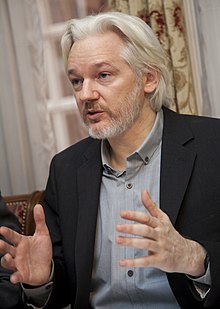 for the October 9, 2020, episode of CounterSpin. This is a lightly edited transcript.
Janine Jackson: If it were not for a tiny handful of journalists—ShadowProof’s Kevin Gosztola preeminent among them—Americans might be utterly unaware that a London magistrate, for the last month, has been considering nothing less than whether journalists have a right to publish information the US government doesn’t want them to. Not whether outlets can leak classified information, but whether they can publish that information on, as in the case US war crimes and torture and assorted malfeasance to do with, for instance, the war on Afghanistan, which just entered its 19th year, with zero US corporateUS war crimes and torture and assorted malfeasance to do with, for instance, the war on Afghanistan, which just entered its 19th year, with zero US corporate media interest.
Assange’s case, the unprecedented use of the Espionage Act to go after a journalist, has dire implications for all reporters. But this country’s elite press corps have evidently decided they can simply whistle past it, perhaps hoping that if and when the state comes after them, they’ll make a more sympathetic victim.
Joining us now to discuss the case is Chip Gibbons. He’s policy director at Defending Rights & Dissent. He joins us now by phone from Washington, DC………..
CG: Sure. So the US has indicted Julian Assange with 17 counts under the Espionage Act, as well as a count under the Computer Fraud and Abuse Act.
Assange is not a US person; he’s an Australian national. He was inside the Ecuadorian embassy for a number of years, as Ecuador had granted him asylum, and the UK had refused to basically recognize that and let him leave the country, so he was de facto imprisoned inside the embassy. And after the indictment the US issued, the new government of Ecuador—which is much less sympathetic to Assange than the previous Correa government—let the US come in the embassy and seize him.
And the US is seeking Assange’s extradition to the US from the UK. I guess it’s, probably, technically a hearing, but Kevin’s point was that it’s more like what we would think of as a trial, in that there’s different witnesses, there’s expert testimony, there’s different legal arguments at stake.
The defense, the witness portion of it, has closed; it ended last week. And there’s going to be closing arguments submitted in writing, and then the judge will render a decision, and that decision will be appealable by either side. So regardless of the outcome, we can expect appeals. So it does very closely mirror what we would think of more like a trial than a hearing in the US court context.
It’s important to really understand what’s at stake with Assange’s extradition. He is the first person ever indicted by the US government under the Espionage Act for publishing truthful information.
The US government has considered indicting journalists before: They considered indicting Seymour Hersh, a very famous investigative reporter. They considered indicting James Bamford, because he had the audacity to try to write a book on the National Security Agency. But they’ve never done that.
And Obama’s administration looked at the idea of indicting Assange and said, “No, this would violate the First Amendment, and it would open the door to all kinds of other bad things.” But the Trump administration clearly doesn’t have those qualms……..
It is very interesting to see how this plays out in a US court in the current environment. If whoever—Trump or Biden, whoever is president, when this finally comes to the US—actually pursues this, and they actually are allowing the persecution of journalists, that’s going to be a really dark, dark assault on free expression rights.
And it’s worth remembering—and Julian Assange is clearly very reviled in the corporate media and the political establishment right now—but the information he leaked came from Chelsea Manning, it dealt with US war crimes; and he worked with the New York Times, the Guardian, Der Spiegel, Le Monde, Al Jazeera, to publish this information. So if he can go to jail for publishing this, why can’t the New York Times? And is that a door anyone wants to open? There is a big press freedom angle here.
I also want to talk about the facts, though: What did Julian Assange publish, and why did it matter? ………..
Julian Assange is accused of publishing information about war crimes, about human rights abuses and about abuses of power, that have been tremendously important, not just for the public’s right to know, but also have made a real difference in advocacy around those issues. People were able to go and get justice for victims of rendition, or able to go and get court rulings in other countries about US drone strikes, because of this information being in the public domain. So attacking Assange, persecuting Assange, disappearing him into a supermax prison, this is a real blow to reporting and human rights advocacy. ………
JJ: Right. And, finally, the journalists who are holding their nose right now on covering it aren’t offering to give back the awards that they won based on reporting relying on WikiLeaks revelations. And James Risen had an op-ed in the New York Times a while back, in which he was talking about Glenn Greenwald, but also about Julian Assange, and he said that he thought that governments—he was talking about Bolsonaro in Brazil, as well as Donald Trump—that they’re trying out these anti-press measures and, he said, they “seem to have decided to experiment with such draconian anti- press tactics by trying them out first on aggressive and disagreeable figures.”………. https://fair.org/home/persecuting-assange-is-a-real-blow-to-reporting-and-human-rights-advocacy/
France has more nuclear waste than shown in official inventory, reports the nuclear regulator
|
There is more nuclear waste in France than what is currently in the official inventory. This is one of the conclusions of the Nuclear Safety Authority (ASN) in a report released on Thursday October 8 that went relatively unnoticed. They assert that a significant part of what was until now considered radioactive material intended to be reused to produce electricity actually corresponds to radioactive waste, which will have to be managed and stored. An orientation against the tide of the doctrine defended for years by the French nuclear industry. This report follows the public debate on the National Plan for the Management of Radioactive Materials and Waste (PNGMDR), the fifth edition of which is under preparation. Currently, the law provides that radioactive waste is an ultimate residue that can no longer be used, while radioactive material is potentially recyclable……. (subscribers only) https://www.lemonde.fr/planete/article/2020/10/15/le-volume-des-dechets-radioactifs-est-revu-a-la-hausse-par-l-autorite-de-surete-nucleaire_6056058_3244.html |
|
|

Australia – climate doomed if Trump wins this election
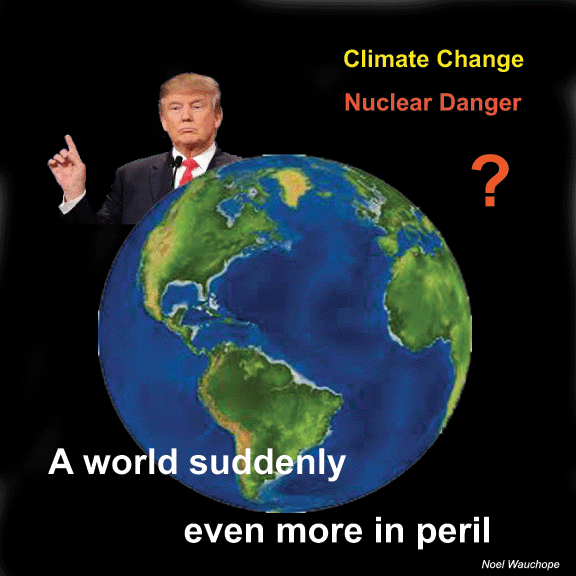 This is a cautionary tale for Australia. In both the US and Australia, conservative politicians
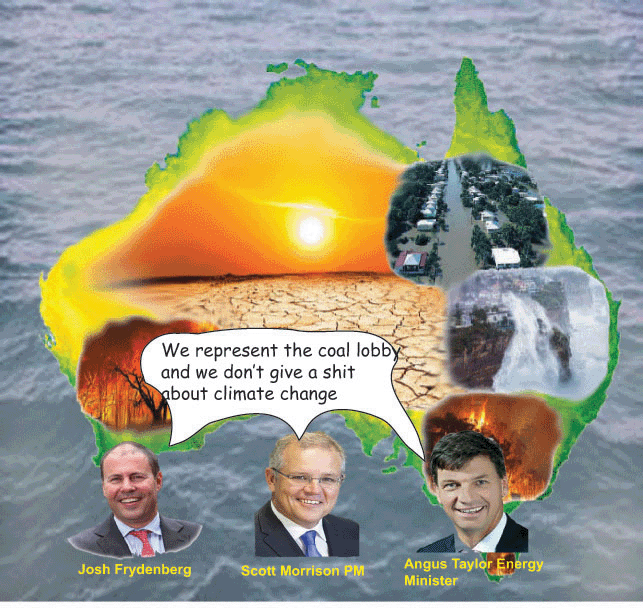 seem more eager to bail out dirty polluters than protect the public
For Australia’s sake, I hope Trump’s climate science denialism loses. https://www.theguardian.com/commentisfree/2020/oct/17/for-australias-sake-i-hope-trumps-climate-science-denialism-loses, Michael Mann US policy has emboldened Scott Morrison to be less ambitious on climate, just when so much is at stake.
Anyone in Australia who witnessed the Black Summer bushfires (as I did), and anyone in the US who experienced the thick smoke from our western wildfires (as I have), knows how much damage climate change is already doing. The stark reality is that worldwide efforts to avert ever-more catastrophic climate change impacts lie in the balance in the 2020 US election.
Donald Trump will go down in history bearing substantial responsibility for the deaths of over 200,000 Americans due to his rejection of the advice of public health experts and his refusal to endorse policies such as social distancing and mask-wearing that could have saved many thousands of lives. But his rejection of the science of climate change sets the stage for a far greater toll. Far more human lives will be lost from the impacts of climate change if we fail to act.
Whether or not Trump gets re-elected – and how other countries like Australia respond to the outcome of the US election – could determine the fate of our planet. Indeed, I’ve stated that a second Trump term might well be “game over for the climate” if it leads to the collapse of international efforts to act.
The damage caused by Trump’s climate denial is painfully visible within the US as we endure climate change-fuelled extreme weather events, including unprecedented wildfires in the west and unprecedented hurricanes in the east. But the damage can be felt around the world. Trump has proudly, and shamelessly, trumpeted his climate denialism on the global stage, joining with petrostates such as Russia, Saudi Arabia and Brazil in opposing international climate efforts.
Indeed, Trump’s actions have emboldened Australia to be less ambitious on climate too, prime minister Scott Morrison following Trump’s lead in promoting climate denial, coddling fossil fuel interests and blocking efforts to support a clean, renewable energy transition.
By pulling the US out of the Paris agreement (one of the first and only campaign promises he kept) Trump ceded America’s leadership on the defining challenge of our time. Thus far, other countries have fortunately filled the leadership void, at least temporarily. The EU and China, with its new net-zero pledge, have stepped up to the plate, recognising that they will benefit from the opportunities of a clean energy economy and better protect their citizens from dangerous climate change impacts.
But nobody stands to benefit more from climate action, or lose more if we fail to act, than Australia. Having spent a sabbatical leave down under earlier this year, aimed at collaborating with scientists in Australia to study the impact of climate change on extreme weather events, I instead witnessed those impacts first-hand. I saw the muted beauty of the Blue Mountains when shrouded in wildfire smoke. If Trump is re-elected, and we collectively continue down a path of insufficient climate action, it may not be long before those fires rage year-round, and the Blue Mountains are lost in a perpetual grey and dismal haze.
It’s the same with the vibrant sea life of the Great Barrier Reef, which I was fortunate enough to witness with my family during my time in Australia. The delicate ecosystems of the GBR are already on the ropes, with fossil fuels pushing up temperatures in the ocean to the point where bleachings occur with such frequency and ferocity that corals simply cannot recover. Research released this week found that the reef has lost half its coral, largely due to warming oceans caused by climate change. Add the impact of ocean acidification from increasing carbon emissions, and we could sadly, within a decade or two, be reading the GBR’s obituary for real.
It doesn’t have to be like that. For one thing, renewable energy costs are plummeting while the technology just keeps getting more efficient and better, so dirty energy no longer makes economic sense. For example, on one recent Sunday, all the electricity demand for the entire state of South Australia was met by solar power alone, and every state and territory in Australia has committed to go carbon neutral by 2050. Here in the US, we’ve seen a record number of cities and states stepping up on climate goals too, knowing clean energy is good for their communities’ health, resilience and prosperity.
Policymakers must accelerate the shift to clean energy that is already under way. As we’ve learned in the Trump-era, some fossil fuels are too far gone for even the most determined polluter-in-chief to save. Though another term would give Trump time to defend his environmental rollbacks in court and solidify his dirty energy policies, he has already failed to save coal from market forces, and another four years isn’t going to reverse the long-term decline of the industry.
This is a cautionary tale for Australia. In both the US and Australia, conservative politicians seem more eager to bail out dirty polluters than protect the public, denying politically inconvenient science in order to offer lavish payouts to help unprofitable fossil fuel companies.
If we are to avert catastrophic warming, we must do just the opposite, providing financial incentives for renewables and disincentives for fossil fuels. That will level the playing field, and accelerate the clean energy transition.
We must take the earliest exit possible off the fossil fuel highway. By trying to squeeze out the last drop of fossil fuel industry profits, the Morrison government could well be on its way to bleaching the life from Australia’s coral reefs and blighting the blue of its mountains.
There is some good news, however. Regardless of whom Americans vote for – and for the sake of the planet, I hope it’s Joe Biden and the Democrats – Australians can still work together for structural change at home. You can’t solve it alone, but we also can’t solve it without you. Australia has seen that the sun can power an entire state’s electricity for a day. Now it’s time to make that happen every day.
Australia must distance itself from the handful of bad petrostate actors who have sabotaged global climate action and rejoin the coalition of the willing, when it comes to the battle to save our planet.
• Michael E. Mann is distinguished professor of atmospheric science at Pennsylvania State University. He is author of the upcoming book The New Climate War: The Fight to Take Back Our Planet, due out in January (Public Affairs Books)
Japan’s government is appealing the landmark ruling about its responsibility for Fukushima nuclear accident
Landmark Court Ruling In Japan Holds Government Accountable For 2011 Nuclear Meltdown https://www.npr.org/2020/10/15/924150284/landmark-court-ruling-in-japan-holds-government-accountable-for-2011-nuclear-mel
 Heard on All Things Considered, ANTHONY KUHN, 15 Oct 20, Japan’s government is appealing a landmark court ruling that holds it responsible for failing to prevent the worst nuclear accident in the country’s history and orders it to pay damages to victims. Heard on All Things Considered, ANTHONY KUHN, 15 Oct 20, Japan’s government is appealing a landmark court ruling that holds it responsible for failing to prevent the worst nuclear accident in the country’s history and orders it to pay damages to victims.AILSA CHANG, HOST: The Japanese government and a nuclear power plant operator have appealed a landmark court ruling. The ruling holds them responsible for the country’s worst ever nuclear accident. The 2011 Fukushima meltdown was triggered by a huge earthquake and tsunami. But as NPR’s Anthony Kuhn reports from Seoul, plaintiffs are concerned that justice is being delayed once again. (CHEERING) ANTHONY KUHN, BYLINE: Cheering broke out outside the high court in the city of Sendai, about 60 miles north of the crippled Fukushima nuclear plant last month. To many people’s surprise, the court’s ruling held the central government and the Tokyo Electric Power Company – or TEPCO, which runs the plant – equally responsible for the accident. Plaintiffs argued that scientists had warned the government in 2002 that a major tsunami could hit the area. The court said in its scathing verdict that the government failed to take action. TAKASHI NAKAJIMA: (Speaking Japanese).KUHN: “The government, despite its position as regulator, just let TEPCO do as it pleased and let it put off safety measures. It was gross negligence, and it was an attitude unbefitting a regulatory agency.” That was Takashi Nakajima paraphrasing the court’s verdict. He’s a leader among the nearly 3,600 plaintiffs in the case. The Sendai court ordered the government and TEPCO to pay them $9.6 million in compensation, double what a lower court had ruled three years ago. Many people in Nakajima’s community near Fukushima fled their homes. He says he filed the lawsuit basically just to say, give me back my former life. NAKAJIMA: (Speaking Japanese). KUHN: “Imagine how you would feel,” he says, “if suddenly you get into a situation where you can never go back to your hometown because there’s a risk of radiation.” Nakajima runs a supermarket, but he says that fears about radiation in waters near Fukushima make it impossible to sell the local fish in which he used to take such pride. NAKAJIMA: (Speaking Japanese). KUHN: “The fishermen eat them because they’ve been eating them for a long time,” he says, “and they’re tasty. But their sons and daughters-in-law tell them that their grandchildren should not eat them. This is a situation which divides many families.” Judges in the Sendai verdict appear to have been especially sympathetic to such hardships. Eri Osaka, a law professor at Toyo University in Tokyo, explains. ERI OSAKA: (Through translator) The Sendai High Court judges actually visited the area at issue in the trial before the decision was made. It’s very unusual that judges truly understand what hardships the victims are experiencing. KUHN: Some plaintiffs in similar lawsuits have not been as fortunate as Nakajima and have lost. Professor Masafumi Yokemoto, a professor of environmental policy at Osaka City University, says the Sendai verdict could change that. MASAFUMI YOKEMOTO: (Speaking Japanese). KUHN: “This is the first time a decision recognizing the government’s full responsibility has been made at the high court level,” he says, “although it was partly recognized by a lower court. It’s very significant, and it’ll clearly influence future decisions.” That’s why many observers were not surprised when the government and TEPCO appealed the verdict on Tuesday. Plaintiff Takashi Nakajima hopes that the Sendai court ruling will eventually pave the way for the shutdown of all dangerous nuclear power plants in Japan. But whether or not the ruling stands will now be up to Japan’s Supreme Court to decide. Anthony Kuhn, NPR News, Seoul. |
|
Japan’s government planning to dump into the sea, the radioactive water from Fukushima No. 1 nuclear reactor
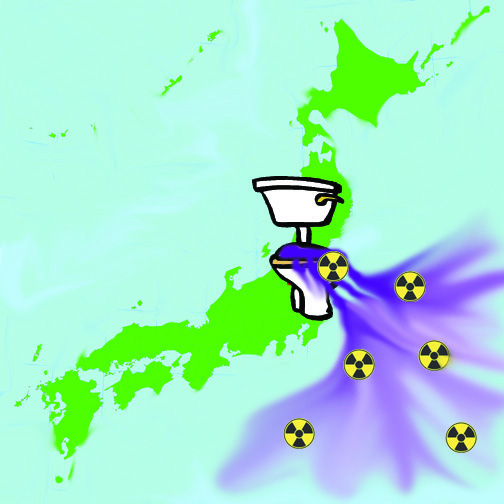 Fukushima No. 1 nuclear plant wastewater looks headed for ocean, THE ASAHI SHIMBUN, October 16, 2020 The government is moving toward the controversial disposal method for contaminated water at the crippled Fukushima No. 1 nuclear power plant of dumping it into the ocean.
Fishermen have fiercely opposed this disposal method at the plant, which experienced a triple meltdown in March 2011 following a magnitude-9.0 earthquake and tsunami, over fears of resulting negative publicity hurting their industry.
The central government is likely to hold a meeting of relevant Cabinet ministers before the end of October to make a formal decision on the dumping, sources said.
Before being dumped into the ocean, the stored water would be processed a second time and diluted with seawater to lower levels of radioactive materials below legally established standards.
It is expected to take about two years to prepare for the dumping process.
Water contaminated with radioactive materials continues to be produced at the Fukushima No. 1 plant at a daily rate of about 140 tons. Water used to cool melted spent nuclear fuel mixes in with groundwater that leaks into the reactor building.
Tokyo Electric Power Co., the operator of the plant, treats the contaminated water using equipment called advanced liquid processing systems, or ALPS, before storing the water in tanks on the plant grounds.
But about 1.2 million tons of processed water is being stored in tanks and TEPCO has estimated that tank capacity will be reached by the summer of 2022 even under the current plan to build more tanks.
Because about two years is needed to construct the necessary equipment to dispose of the contaminated water and to pass screening by the Nuclear Regulation Authority, a decision on disposal of the water was expected by this summer.
A subcommittee of experts set up by the economy ministry compiled a proposal in February that said the two realistic alternatives were to dump the water into the ocean or release it into the atmosphere. The panel added that dumping the water into the ocean was the method that could be implemented with certainty.
Since April, the government has conducted seven hearings involving local government officials, farming and fisheries organizations and business groups on the issue……… http://www.asahi.com/ajw/articles/13831640
On climate: instead of denial or despair, there’s determined resolve
 ATLANTIC PLANET Scylla and Charybdis, Beyond climate denial and despair, The Atlantic, LAWRENCE
  WESCHLER 16 Oct 20 ”……………………..There is only one truly serious political problem facing all of us today, and that is climate change. Judging whether or not the human prospect on our planet is worth saving is the fundamental question confronting Americans in particular these coming weeks. Everything else—the fate of the Affordable Care Act, especially in the context of a rampaging pandemic; whether identity politics ought to supersede class solidarity; whether immigration controls should be tightened or loosened; even what to do about that Supreme Court vacancy—comes afterward………..
But it is possible, and urgent, to imagine a third possibility in lieu of Denial and Despair, a path forging clean between them: the course of Determined Resolve.
It’s worth remembering, for example, that the entire Manhattan Project in its Los Alamos incarnation, from soup to nuts—from the erection of those barracks and the ingathering of those scientists through the dropping of the first atomic bomb in Hiroshima, as hideous as that outcome proved—took less than three years. And if the prospect of climate disaster indeed calls us to what William James once cast as “the moral equivalent of war,” what would it be like if a president (or, for the time being, just a candidate for the presidency) promised to exercise his considerable authority by bringing together the finest minds in the country (not just scientists but educators and social workers and writers and artists and thinkers and managers as well) to brainstorm better battery technologies; quantum improvements in solar, tidal, and wind technologies and disbursements; desalinization; carbon-capture technologies; meat replacements; massive reforestation; resilient coastline and floodplain projects; ….—all on a virtually wartime footing, worthy of the urgencies and streamlined exigencies involved?……..
And as for all those other campaign issues, almost all of them can be subsumed within the wider climate debate, or at least viewed in ways that render the climate component crucial. Black lives matter, to be sure, but that’s all the more reason to foreground environmental-justice initiatives. This current pandemic may well turn out to be just the first of many more occasioned by mankind’s relentless encroachment on nature. If you think tidal migrations are politically destabilizing now, just wait until the migrations necessitated by the rising seas caused by polar melts or the narrowing zones of habitability caused by droughts, their attendant firestorms, and the ensuing wars for arable land really begin to kick in. …….. https://www.theatlantic.com/science/archive/2020/10/lawrence-weschler-beyond-climate-denial-and-despair/616698/
Dangerous radiation levels from fracking
I have raised this concern in several letters to the Guardian over the past seven years. Indeed, seven years ago this month, Public Health England said in a review of potential risks that “there is … the potential for radon gas to be present in natural gas extracted from UK shale”.
Eight years ago, Dr Marvin Resnikoff, of Radioactive Waste Management Associates, estimated that radon levels from the Marcellus gas field in the eastern US were up to 70 times the average, and suggested that the radiation from some shale gas deposits was as much as 30 times as high as natural background levels.
Hence, there is undoubtedly a risk of radon gas being pumped into citizens’ homes as part of the shale gas stream. Unless the gas is stored for up to a month to allow the radon’s radioactivity to naturally reduce, this is potentially very dangerous.
Dr David Lowry
Senior international research fellow, Institute for Resource and Security Studies
Divisive nuclear waste programme in South Bruce, Ontario
|
Proposed 1,500-acre site mapped out for Canadian nuclear waste storage in South Bruce, Ont. Scott Miller CTV News London Videographer @ScottMillerCTV October 15, 2020 TEESWATER, ONT. — We now know exactly where a proposed underground facility to house Canada’s nuclear waste will be, if it comes to fruition.
The Nuclear Waste Management Organization (NWMO) has secured all of the 1,500 acres of farmland they will need to permanently store over five million used nuclear fuel bundles that once powered Canada’s nuclear plants……… Securing all the land they need, means the NWMO can start borehole drilling in the spring, to ensure the geology of the region can support the underground project that is being designed to house the radioactive waste, forever. Similar work is underway in Ignace, the other Northern Ontario community still in the running to host the controversial project. To address community concerns, the NWMO says they’re committing to a program to compensate landowners if property values fall because of the project, if it’s built in South Bruce…….. The project has divided the small, rural community of roughly 6,000 residents. ……… The NWMO plans to pick South Bruce or Ignace to house Canada’s high level nuclear waste by 2023. https://london.ctvnews.ca/proposed-1-500-acre-site-mapped-out-for-canadian-nuclear-waste-storage-in-south-bruce-ont-1.5146504 |
|
|
Bankrupt Mallinckrodt company faces large liabilities in radioactive trash cleanup
 Bankrupt Mallinckrodt may still be expected to help shoulder nuclear cleanup costs, St Louis Post
  Dispatch, Bryce Gray, 17 Oct 20
- ST. LOUIS — Two sets of nuclear waste complaints against Mallinckrodt have been thrown into question in a two-week span, while the company restructures in bankruptcy court.
Facing a wave of lawsuits and a $1.6 billion settlement stemming from its role in the national opioid crisis, the company with deep St. Louis roots filed for protection from creditors on Monday.
While industry analysts have focused on Mallinckrodt’s future as a drugmaker, the company also faces potential liabilities for work a predecessor company, St. Louis-based Mallinckrodt Chemical Works, performed decades ago, when it processed uranium for the U.S. government. Radioactive waste left over from Mallinckrodt’s uranium production is buried today in the West Lake Landfill Superfund site in Bridgeton and also along sections of Coldwater Creek, which runs from St. Ann to the Missouri River.
On Sept. 30, a two-year-old lawsuit aimed at getting Mallinckrodt to help shoulder the looming $205 million cleanup at West Lake was dismissed, but appears to be in mediation. Lawyers involved with the case warn that, despite the dismissal, the matters at hand remain unresolved and under discussion. ……
The dispute arose in 2018, when — after decades of inaction — a plan to soon excavate the bulk of West Lake’s radioactivity was finally announced. In the months that followed, Republic Services — the waste hauling company whose subsidiary, Bridgeton Landfill LLC, is the legal owner of the Superfund site — initiated a chain of legal actions against Mallinckrodt and other entities in an apparent strategy to spread out the nine-figure cost of the site’s long-awaited cleanup.
Allegations in the ensuing lawsuits focused on the histories of Mallinckrodt and other parties that Republic said belong at “the table,” regarding work at West Lake.
Mallinckrodt was the first to be roped into the litigation. During the development of the atomic bomb in World War II, the company “purified and provided all of the uranium oxide used by the Manhattan Project,” according to its website. Some of the radioactive waste from the company’s St. Louis operations eventually made it to West Lake Landfill, where it was illegally dumped in the 1970s…….….
West Lake’s cleanup is not the only matter involving radioactive waste that could affect Mallinckrodt.
For almost a decade, the company has confronted personal injury lawsuits alleging that residents of surrounding communities have faced cancers and other health issues caused by the legacy of radioactive contamination along Coldwater Creek, after waste from Mallinckrodt was stored and buried at an upstream site near the airport.
Some of the cases — which originated in 2012 — have already been settled, and lawyers said in a hearing Wednesday that settlements that were verbally approved would not likely be affected by Mallinckrodt’s bankruptcy case. Outstanding cases will likely be stayed while bankruptcy proceedings take place, though it’s not clear what may happen next.
Back at West Lake, cleanup costs are currently set to be divided among Republic and two other parties deemed liable at the site: the U.S. Department of Energy and Exelon, the Chicago energy company that formerly owned the uranium processor, Cotter Corp., through a subsidiary….. https://www.stltoday.com/business/local/bankrupt-mallinckrodt-may-still-be-expected-to-help-shoulder-nuclear-cleanup-costs/article_dc7643f9-fc32-53e4-9a98-d1bcafdcdcc8.html
‘Fracking’ with its environmental harms, now acceptable to U.S. Democrats, to help win the election?
 Press Worries About a Fracking Ban’s ‘Risk’ to Democrats—Not Fracking’s Threat to Planet, Fair,
“I will repeat, and the American people know, that Joe Biden will not ban fracking. That is a fact,” Harris said.
Harris emphasized that Biden “believes” in science; claimed that he “understands that the West Coast of our country is burning” and “sees what is happening on the Gulf states, which are being battered by storms”; and that he has “seen and talked with the farmers in Iowa, whose entire crops have been destroyed because of floods.”
One can —only wonder whether Biden or Harris truly “believe” in science when they pretend a fracking ban and a host of other strong climate measures are not urgent necessities required immediately. In 2018, the UN’s Intergovernmental Panel on Climate Change announced that carbon pollution needed to be cut by 45% by 2030 in order to keep the planet below the critical 1.5°C warming threshold to prevent irreversible planetary devastation (Guardian, 10/8/18). As time goes on, more reports inform us that pollution and the climate crisis are actually even worse than we thought (e.g., Vox, 8/12/20; New York Times, 10/23/19, 12/4/19).
Yet whenever there are discussions about enacting a national fracking ban, corporate media seem to prioritize the supposed short-term potential “risks” to Democrats’ electoral prospects, or potential economic downturns, over the long-term prospects for human civilization’s survival.
When there was discussion of Sen. Bernie Sanders and Rep. Alexandria Ocasio-Cortez’s bill for a nationwide fracking ban earlier this year, the New York Times’ “In Crucial Pennsylvania, Democrats Worry a Fracking Ban Could Sink Them” (1/27/20) cited a few state Democratic politicians claiming that any presidential candidate who supports a national fracking ban would risk losing Pennsylvania in the general election. The Times trivialized the issue by reducing it to a “political bet,” with the highest stakes being the mere loss of a Democratic presidency, as opposed to dooming humanity to climate apartheid (FAIR.org, 7/30/19) and ultimately losing human life as we know it
to natural disasters (FAIR.org, 6/11/19, 9/5/19, 1/3/20, 9/18/20). The Times’ Lisa Friedman and Shane Goldmacher wrote:
A pledge to ban all hydraulic fracturing, better known as fracking, could jeopardize any presidential candidate’s chances of winning this most critical of battleground states — and thus the presidency itself… In some ways, the fracking ban is indicative of the entire political bet undergirding the candidacies of Mr. Sanders and Ms. Warren that the 2020 campaign will not be won by appeals to the narrow interests of traditional swing voters but through the mass mobilization of an energized electorate.
NPR’s “Proposals to Ban Fracking Could Hurt Democrats in Key States” (2/11/20) likewise made dubious pronouncements on the opinions of swing-state voters the focal point of the story, as opposed to what actions are required to resolve the climate crisis:
Climate change is a top issue in the Democratic presidential primaries and some candidates have taken relatively aggressive policy stands, including vows to ban hydraulic fracturing. But some Democrats worry that could push moderate voters in key swing states to reelect President Trump next November… In a swing state like Pennsylvania, a major gas producer, fracking and energy are key issues. Even a small segment of voters swayed one way or another could change the election.
After the primaries, it’s clear that corporate media believe it’s their duty to function as Biden’s de facto campaign manager by explaining to voters what Biden’s position on a fracking ban actually is, as well as advising Biden to reject a fracking ban because, they claim, that would be an electoral disaster. Soon after the debate, Quartz (10/8/20) explained that Biden and Harris don’t support a fracking ban, because it “tempts political suicide in swing states like Pennsylvania and Ohio where fossil fuels still rule.” Why an electoral disaster ought to be prioritized over civilizational disaster is never explained. …….
Environmental activist Bill McKibben (New Yorker, 10/9/19) pointed out that US claims to have reduced carbon emissions during the past 20 years have mainly been accomplished by replacing coal-fired power plants with natural gas-fired power plants. While burning gas produces less carbon dioxide than coal, carbon dioxide isn’t the only greenhouse gas. The second most important contributor is methane, which can warm the planet more than 80 times as much as the same amount of carbon dioxide over a 20-year period.
“Fracking,” more formally known as “hydraulic fracturing,” is a method of extracting natural gas (as well as oil) from the ground with a horizontal drilling process that pumps water, sand and chemicals into the ground to fracture rocks that release fossil fuels. And in the process of fracking, lots of methane leaks out at every stage. The US strategy of reducing carbon emissions without reducing the total amount of greenhouse gases emitted is a form of literal gaslighting that encourages other countries to do the same.
The New York Times (11/8/19, 12/16/19) has published a series of excellent investigative reports that used infrared video gear and satellite measurements to capture the invisible methane emissions at “super emitter” fracking sites, where large-scale methane leaks are responsible for a disproportionately high share of methane emissions. The Times (6/21/18, 2/19/20) has also reported on findings showing that the US oil and gas industry is responsible for a much larger proportion of methane emissions than the US government previously thought, with oil and gas production in general being more responsible for soaring methane levels than natural sources, like the ocean bed and mud volcanoes. ……
FAIR (10/16/19) has pointed out how corporate media cheerleading of the “Shale Revolution” helped lead the US to become the world’s largest oil and gas producer during the Obama years; when they bemoaned the loss of fossil fuel emissions during the Covid pandemic (FAIR.org, 4/29/20), corporate journalists seemed more concerned with the profits of advertisers than with the survival of human civilization. Running excuses for presidential candidates in the pocket of the fossil fuel industry is only more evidence of the same.
Environmental and labor activists, economists and scientists have for years discussed the need for a full employment program based on green jobs to serve as a just transition for workers who would be displaced by a fracking ban; there is no reason for a fracking ban to be “political suicide” unless corporate journalists are determined to equate that with the death of the fossil fuel industry. https://fair.org/home/press-worries-about-a-fracking-bans-risk-to-democrats-not-frackings-threat-to-planet/
Nuclear waste – a danger for countless generations to come
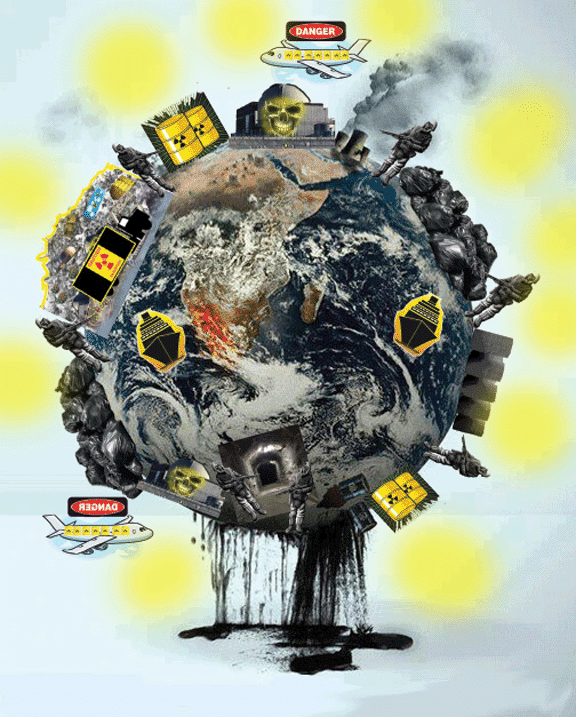 The World’s Growing Nuclear Waste Dilemma, Oil Price, By Haley Zaremba – Oct 15, 2020,
”……….Just last month, the World Nuclear Industry Status Report showed the shocking statistic that nuclear is now the most expensive form of power generation in the world, with the sole exception of gas peaking plants.
And then there’s the issue of nuclear waste, and it’s not a minor one. Around the world, radioactive waste is piling up, and managing it is a huge expense, not to mention a public health risk of massive proportions if not handled appropriately. Spent nuclear fuel is so hazardous because the waste, in particular uranium and plutonium, is highly radioactive with a half-life that will outlast all of us.
Recently, different nuclear-powered countries around the world have been pursuing “final disposal sites” for their nuclear waste. This process consists of converting this radioactive waste into a kind of glass via a process known as vitrification. This glass will then be stored inside of stainless steel vessels that will be kept in a pool to maintain a cool temperature until they are finally transferred to their final resting place deep underground, where they will remain undisturbed until their amount of radioactivity has decreased to a level that they can be handled safely–a period of time anywhere from 1,000 to 100,000 years. …….
controversy in Japan is directly related to that nation’s particular history to be sure, but it is part of a global problem. Nuclear waste is not just a hazard for ourselves, but for countless generations to come, and we cannot afford to be cavalier with its management. Finding a place for the spent nuclear fuel that has already been created by generations past and that yet to be produced cannot be rushed or thrust upon those who do not want it but have no power to refuse it. Final disposal sites are certainly a step forward but Japan shows us that they’re also, ultimately, a flawed solution. https://oilprice.com/Alternative-Energy/Nuclear-Power/The-Worlds-Growing-Nuclear-Waste-Dilemma.amp.html?fbclid=IwAR0JRIxFnP5MRLyuvJwNwXU8KV39E7ZHA9qeNzRbF-6dr3KQzysGQidJsU4
1 This Month

of the week – Shut Down Drone Warfare!


Tell the Ukrainian Government to Drop Prosecution of Peace Activist Yurii Sheliazhenko

Petition to revoke the licensing of the Near Surface Nuclear Disposal Facility (NSDF) at Chalk River. https://www.ourcommons.ca/petitions/en/Petition/Details?Petition=e-7247
To see nuclear-related stories in greater depth and intensity – go to https://nuclearinformation.wordpress.com
-
Archives
- April 2026 (34)
- March 2026 (251)
- February 2026 (268)
- January 2026 (308)
- December 2025 (358)
- November 2025 (359)
- October 2025 (376)
- September 2025 (257)
- August 2025 (319)
- July 2025 (230)
- June 2025 (348)
- May 2025 (261)
-
Categories
- 1
- 1 NUCLEAR ISSUES
- business and costs
- climate change
- culture and arts
- ENERGY
- environment
- health
- history
- indigenous issues
- Legal
- marketing of nuclear
- media
- opposition to nuclear
- PERSONAL STORIES
- politics
- politics international
- Religion and ethics
- safety
- secrets,lies and civil liberties
- spinbuster
- technology
- Uranium
- wastes
- weapons and war
- Women
- 2 WORLD
- ACTION
- AFRICA
- Atrocities
- AUSTRALIA
- Christina's notes
- Christina's themes
- culture and arts
- Events
- Fuk 2022
- Fuk 2023
- Fukushima 2017
- Fukushima 2018
- fukushima 2019
- Fukushima 2020
- Fukushima 2021
- general
- global warming
- Humour (God we need it)
- Nuclear
- RARE EARTHS
- Reference
- resources – print
- Resources -audiovicual
- Weekly Newsletter
- World
- World Nuclear
- YouTube
-
RSS
Entries RSS
Comments RSS
 nuclear-news