Thorium not likely to revive the nuclear energy industry
Could Thorium Revive The Nuclear Energy Industry? Oil Price, – Sep 27, 2020,………..It still remains to be seen whether the new thorium fuel will actually see the light of day.
The main sticking point to the promotion of thorium as a cleaner nuclear fuel is that it remains unproven on a commercial scale. Thorium MSRs (Molten Salt Reactors) have been in development since the 1960s by the United States, China, Russia, and France, yet nothing much ever came of them.
Nuclear radiologist Peter Karamoskos, of the International Campaign to Abolish Nuclear Weapons (ICAN) has advised the world not to hold its breath:
“Without exception, [thorium reactors] have never been commercially viable, nor do any of the intended new designs even remotely seem to be viable. Like all nuclear power production they rely on extensive taxpayer subsidies; the only difference is that with thorium and other breeder reactors these are of an order of magnitude greater, which is why no government has ever continued their funding.”
Nuclear power enthusiasts can only hope that ANEEL will not also fall victim to the thorium curse.
Solar energy is here with a vengeance – look at South Australia
 Forbes 17th Oct 2020, Anyone who follows developments in the energy sector will know that solar energy is no longer just the future but the present. According to thebInternational Energy Agency’s World Energy Outlook 2020, photovoltaic solar energy is already the cheapest source of electricity in history.
As a result, solar panels can now be fitted anywhere, covering water canals in India, on canopies over Germany’s autobahns, or on school roofs in the United States. When the economic variables of a technology change in this way, creating an oversized electricity generation grid based on solar and wind is the logical alternative, and whoever does not do so will be relegated to less efficient and, above all, dirtier energy sources.
https://www.forbes.com/sites/enriquedans/2020/10/17/what-is-happening-with-solarenergy/amp
/
South Africa the first sucker to get American experimental nuclear reactor + $billions in bribes?
 US firm ‘aims to build a nuclear power plant’ in South Africa, https://www.thesouthafrican.com/news/us-firm-aims-to-build-a-nuclear-power-plant-in-south-africa/What pandemic? An American investment group is looking to pump billions into South Africa, with one eye on a new nuclear power plant for Mzansi.by Tom Head 2020-10-18 US firm ‘aims to build a nuclear power plant’ in South Africa, https://www.thesouthafrican.com/news/us-firm-aims-to-build-a-nuclear-power-plant-in-south-africa/What pandemic? An American investment group is looking to pump billions into South Africa, with one eye on a new nuclear power plant for Mzansi.by Tom Head 2020-10-18
The future of South Africa’s energy supply could be shaped by a cash injection from the United States of America. The government, in their ongoing discussions with NEDLAC and foreign investors, has entertained the idea of letting an international development firm finance and build a new nuclear power plant in Mzansi.
AN AMERICAN NUCLEAR POWER PLANT IN SOUTH AFRICA?As Bloomberg has confirmed, The US International Development Finance Corp (DFC) has signed a letter of intent to support plans laid out by NuScale, an American technology group that are ready to kick on with this project. Amongst the billions of dollars they’ve pledged to South Africa, a ‘secure, reliable energy supply through the construction of new nuclear plants’ is their major priority. A CONTINENTAL FIRST FOR SOUTH AFRICA?
The DFC released a statement last week, confirming that they would be pioneering in their ambitious blueprint. Should a new nuclear plant get the green light, this would be the first IPP funded by the USA throughout the whole of Africa. The future of South Africa’s energy supply could be shaped by a cash injection from the United States of America. The government, in their ongoing discussions with NEDLAC and foreign investors, has entertained the idea of letting an international development firm finance and build a new nuclear power plant in Mzansi. further R4.5 billion would be spent on public transport development over the next 12 months. |
Cybersecurity concerns about India’s nuclear reactors
SCALING UP THE CYBERSECURITY OF NUCLEAR SYSTEMS IN INDIA, CYBERSECURITY LATEST NEWS Analytics Insight,by Astha Oriel October 18, 2020 India is amongst the top five countries facing cyber threats and targeted attacks.
The world is divided to possess nuclear power. Countries like the USA and Iran, are already waging war against each other for nuclear power. Moreover, having an advanced nuclear system is important for the national security. Hence, countries are spending billions of dollars for gaining momentum in their nuclear plans.
But as nuclear power is proving to be authoritative, the nuclear system is becoming prone for cyber attacks. Over the past twenty years, five deadly cyberattacks compromised the national security in five countries. Not only affecting the internal security of any country, but cyberattacks has proven perilous for the privacy of the citizens. As new technological innovations are permeating the industry, the incidence of security breaches, and possibility of cyberattacks has heightened. That’s why scaling up cybersecurity in nuclear institutes and models, become important.
A cybersecurity breach has several implications. Due to a cyber malware, the confidential documents associated with cyber security can be leaked. It can increase the vulnerabilities of nuclear systems. With a disrupted nuclear system, the adversaries can take advantage in corrupting the communication, and preventing the flow of information. Moreover, cyber attacks are a direct threat to the integrity of any nation.
Policies associated with Cybersecurity
In India, many measures are taken to improve cyber security in the nuclear system. For example, in 2013, the department of Electronics and Information Technology created National cyber security policy, to mitigate the incidences of cyber attack. The government has announced setting up of Defence Cyber Agency, for battling cyber warfare and cyber infiltration in India’s defense Network. The Country also has a National Technical Research Organization (NTRO) in collaboration with Cyber Intelligence and Cyber Counter Intelligence to prevent cyber attacks.
Cyber Attacks in India
Many incidences of cyber breaches have challenged the national security of India. According to a report by Symantec, India is amongst the top five countries facing cyber threats and targeted attacks.
In September 2019, the cyber attack at Kudankulam Nuclear Power Plant only exposed the dearth of cyber-security management in India. The attack was caused by DTRACK Virus, which was developed by a group of hackers from North Korea. It was a direct attack to the administrative framework of India, and was confirmed by ISRO. The confidentiality of large amount of data was threatened due to this attack. Moreover, it also highlighted the lack of coordination in the administrative framework of the country.
Snowden Leaks was another cyberattack, after which the need to scale up cybersecurity was recognized in the country. It is reported that in Snowden Leaks, the US National Security agency (NSA), was spying the Indian citizens. Though no concrete proof was presented, but it made the government to take the cognizance of this incident and drafted the 2013 policy, which became the pillar for public and private infrastructure……. https://www.analyticsinsight.net/scaling-cybersecurity-nuclear-systems-india/
French nuclear company EDF disdains the Suffolk community with its cavalier change of plans
 Stop Sizewell C (Instagram) 16th Oct 2020, This morning the East Anglian Daily Times published a story about EDF
wanting to change its Sizewell C proposals, and plans to hold a new 30-day
consultation. This has generated much confusion and outrage – but having
spoken to the Planning Inspectorate (PINS) we have a little more
information about what this means.
looks like a 30-day consultation could be held from 16 November until 15
December during which we would be expected to send feedback to EDF.
Authority, which would then decide whether to accept these revised
proposals for examination. Whether new Relevant Representations would have
to be made, or whether the Examining Authority would decide the examination
timetable based on the ones already sent, is not totally clear to us.
cavalier treatment of people. Since it is not credible that EDF has only
just come up with these changes since 30 September (when Councils and MPs
expressed such strong concerns), EDF should have told us before 30
September that changes were coming, paused the process in order to conduct
their consultations, and then restarted it, so that everyone could make
their Relevant Representations based on up to date information.
https://www.instagram.com/p/CGaTm8TJ6Fw/?igshid=101p11ihmpbc2
 |
ReplyForward
|
Sizewell nuclear project: EDF messes Suffolk communities about, with yet another public consultation, after 1200 responses already
C plans which have been submitted just days after more than 1,200
respondents gave their views on the project.
– and a 30-day public consultation is to take place next month.
materials for the massive project, with an increase in trains and
alterations to the proposed beach landing facility. It was only a few days
ago that the opportunity to comment on the project closed and the Planning
Inspectorate is still verifying each of the 1,287 submissions from people,
businesses, councils and agencies.
that people are likely now to be asked all over again to submit comments on
EDF’s revised proposals. Stop Sizewell C said it could not believe EDF
had only just realised after years of consultation that Suffolk people
didn’t want a road-led transport strategy for delivery of construction
materials that would put 1,000 HGVs on the roads.
https://www.eadt.co.uk/news/sizewell-c-changes-provoke-frustration-from-campaigners-1-6887930
France’s nuclear company EDF promises a new design pressurised water nuclear reactor (EPR)
|
EDF plans to announce new EPR nuclear reactor by mid-2021By Reuters Staff https://www.reuters.com/article/us-edf-nuclear-idUSKBN2701B8, PARIS (Reuters) 18 Oct 20, – EDF EDF.PA aims to unveil a new, cheaper-to-build version of its EPR nuclear reactor by mid-2021, the French power company said on Thursday. EDF has faced costly delays in the construction of some plants, including its Flamanville 3 nuclear project in France which is more than a decade behind schedule. The French state last year called on the company to improve its record. EDF, which is majority-owned by the government, said in a presentation that next generation EPR reactors would benefit from a reduction in necessary preparatory studies. The group said it was also planning on bringing in new oversight measures for its major projects, after a government audit last year highlighted planning deficiencies and poor coordination at some sites. EDF added in its presentation that it would introduce more of a results-driven relationship with suppliers. The government has put off a decision on whether or not to build new nuclear reactors until after the Flamanville 3 project is operating, which is now expected at the end of 2022. Other EDF projects include the planned Sizewell C nuclear plant in eastern England. EDF is already building Britain’s first new nuclear plant in more than two decades, Hinkley Point C, with backing from China’s CGN. Reporting by Benjamin Mallet, writing by Sarah White; editing by Jason Neely |
Washington State touted for ”new generation” nuclear power – (some time in the distant future)
 Feds: Washington nuclear operator to develop new plants, Lexington Herald Leader, BY NICHOLAS K. GERANIOS ASSOCIATED PRESS, OCTOBER 15, 2020SPOKANE, WASH. Feds: Washington nuclear operator to develop new plants, Lexington Herald Leader, BY NICHOLAS K. GERANIOS ASSOCIATED PRESS, OCTOBER 15, 2020SPOKANE, WASH.
The federal government has chosen the operator of a nuclear power plant near Richland to help develop the next generation of nuclear energy facilities, raising the possibility of a new reactor in central Washington state. The U.S. Department of Energy this week announced that Energy Northwest, which operates the only nuclear power plant in the Northwest, will be part of a team developing the next generation of nuclear energy plants. The announcement prompted Republican U.S. Rep. Dan Newhouse, who represents the area in Congress, to applaud the recipients of Advanced Reactor Demonstration Program funds. “The selection of these projects is an absolute game-changer for our state and makes it official: Tri-Cities, Washington is a global leader in nuclear energy innovation,” Newhouse said. However, a spokesman for Energy Northwest warned that the decision on where to build new commercial nuclear power plants is years away. `There are no plans currently to site anything,″ Jason Herbert said, while adding that land owned by Energy Northwest in the Tri-Cities area includes “potential sites″ for a new reactor. Energy Northwest operates the Columbia Generating Station, which was completed in 1984 and is the last remaining nuclear power plant in the Northwest. The Department of Energy this week announced that Energy Northwest would partner with X-energy and TerraPower-GE Hitachi in developing new reactor technology. The Advanced Reactor Demonstration Program is designed to help private industry demonstrate advanced nuclear reactors in the United States, using $230 million appropriated by Congress. If built in Washington, Energy Northwest would expect to own and operate the new nuclear plant, the company said. The Tri-Cities region, which includes Richland, has a long history in the nuclear industry, dating back to its selection by the Manhattan Project in World War II as a site to help develop the atomic bomb. https://www.kentucky.com/news/business/article246476415.html |
|
International Monetary Fund recommends a carbon price, for the economy as well as for the climate
climate change will actually help us deal with the recession. Acting on
climate change boosts growth in the short term and massively prevents
economic destruction later.
global temperatures will increase “well above the safe levels agreed to
in the Paris agreement, raising the risk of catastrophic damage for the
planet.” the IMF report is not all doom and gloom – it actually
proposes a way out – a carbon price.
need massive investment. Together they can prevent catastrophic climate
change while also getting us out of a recession. Win-win. And no political
party has any excuse not to act.
Carbon emissions are deeply embedded in our lifestyle – the challenge post-pandemic
 Observer 18th Oct 2020, The fall in global carbon emissions since the coronavirus outbreak may
appear to be one of the few silver linings from the pandemic, but even this
wafer-thin glimmer looks set to fade. The International Energy Agency (IEA)
estimated last week that carbon emissions from the energy industry had
fallen by up to 7% this year, but warned in the same breath that this
seemed unlikely to last.
As global economies emerge from lockdown,
factories will whir back to life, the world’s steel furnaces and power
plants will fire up once again, and passenger planes will return to the
air. The brief reprieve from rising emissions in 2020 could be followed by
the greatest surge in emissions growth on record.
Perhaps the most important lesson governments can learn from the current emissions lull is
how deeply embedded the sources of carbon dioxide are in the systems of our
everyday lives. That it has taken an unprecedented upending of society to
shave 7% from the world’s carbon footprint reveals the challenge ahead if
we hope to eliminate carbon entirely.
USA marketing NuScam small nuclear reactors to Africa
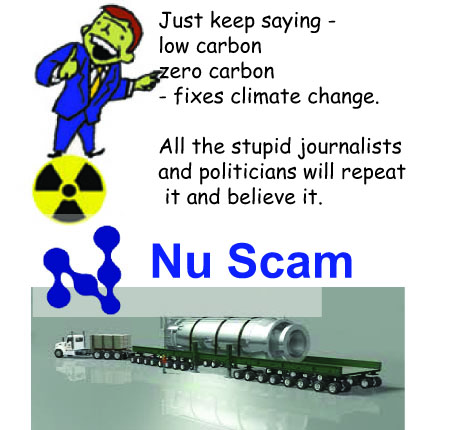 US to support new nuclear power project in South Africa https://businesstech.co.za/news/energy/441510/us-to-support-new-nuclear-power-project-in-south-africa/, Bloomberg17 October 2020 The United States International Development Finance Corp. pledged to support NuScale Power LLC, a US nuclear energy technology firm, to develop 2,500 megawatts of power in South Africa.
South Africa’s government drafted an economic recovery plan in conjunction with business and labour groups several months ago in a bargaining forum known as the National Economic Development and Labour Council, in the wake of the coronavirus pandemic.A version of the strategy that was discussed by the cabinet this week, and seen by Bloomberg, includes suggestions to secure reliable energy supply through the construction of new nuclear plants.
The draft envisages R23 billion ($1.4 billion) being allocated to galvanize private investment in infrastructure and R4.5 billion being spent on public transport over the next 12 months, but provides scant detail on where the money will come from.
The DFC, which ended its prohibition on supporting nuclear power in July, signed a letter of intent to support NuScale’s bid for South Africa’s independent power producer program, the development bank said in an emailed statement on Friday.
“If successful, NuScale would be the first US nuclear energy IPP on the continent and would help support energy resilience and security in one of Africa’s leading economies,” the DFC said.
Celebrating Sister Ardeth Platte — Beyond Nuclear International

Anti-nuclear nun spent 15 years in jail during her lifetime
Celebrating Sister Ardeth Platte — Beyond Nuclear International
S. Korea reiterates priority on citizens’ health in handling Fukushima water issue
Where are all the other countries governments protesting against the radioactive contamination by Japan of our Pacific ocean?
I can only hear South Korean government’s voice, where are all the others? Their absence of any protest is equivalent to consent!!!

October 16, 2020
South Korea’s foreign ministry reiterated its “foremost priority” to protect its citizens’ health and safety Friday in dealing with Japan’s potential discharge of contaminated water from its crippled Fukushima nuclear plant.
The ministry also said the government has been handling the issue under a vice-ministerial inter-agency dialogue platform, amid public safety concerns over Japanese media reports that Tokyo has decided to release it into the sea with an official announcement likely to come as early as this month.
“Our government has continued to stress that the Japanese side should share information transparently and maintain communication with the international community regarding the disposal of the Fukushima nuclear plant water,” the ministry said in a statement.
“With the foremost priority placed on the protection of our citizens’ health and safety, the government will continue to pay keen attention to Japan’s activities related to the disposal of the contaminated water and will seek to craft measures in cooperation with the international community,” it added.
The ministry also pointed out that it understands Tokyo has yet to finalize how it will dispose of the tritium-laced water.
Japan has been exploring various options, including evaporating the water and putting it deep underground. Observers said that discharging the treated water into the ocean might be the cheapest, and thus tempting, disposal method. (Yonhap)
Fukushima ‘blank spaces’ in limbo, left out of decontamination plan

A September 2009 photo shows the home of Takashi Asano in Okuma, Fukushima Prefecture. The house is now a wreck with a damaged roof and is accessible to wild animals.
Oct 16, 2020
It was back in the autumn of 2011. Wind blowing from the Pacific Ocean was cutting through the golden rice fields.
Takashi Asano, 67, who had evacuated from the town of Okuma in Fukushima Prefecture following the March 2011 Great East Japan Earthquake and subsequent Fukushima nuclear disaster, had returned temporarily to his home.
When Asano was gazing at the paddy fields behind his former home from afar, it looked like the field was full of rice ready to be harvested.
“Why would that be when I haven’t planted rice,” wondered Asano, who had evacuated to Aizuwakamatsu in the prefecture after the disaster.
When he went closer, he noticed the plants had yellow tips belonging to Canadian goldenrods, an invasive foreign plant. In his absence, the plants had already begun to take over the fields.
The area where his home is located had been designated a no-go zone. It was excluded from the area designated by the government where it plans to decontaminate and either rebuild it for future use or make it a storage facility for radioactive waste such as soil by the spring of 2023.
Therefore, local residents call the area the “blank-space district,” in reference to the uncolored space on the government map for reconstruction. With no decontamination projects in the pipeline, locals can’t make any plans for the future.
At Asano’s home, rain has seeped through damaged roof, and there are signs that wild boars have found their way inside. He returns once a year to pay respects at family graves but each time it is difficult to see what remains of his home.
“I don’t want to see it. When I leave, I tell myself not to look back,” he said.
Nearly 10 years have elapsed since Asano was forced to evacuate. Nothing seems to represent the passage of time more than the deteriorating fields and homes.
Before the disaster, Asano had been growing rice and vegetables while working at a chemical factory. He had his two-story home constructed in 1986, with a garage and a shed for farming tools.
Construction fees had been paid off and retirement was just around the corner. After he retired, Asano intended to continue as a contract worker, but plans of a comfortable retirement were shattered by the disaster in 2011.
Two years ago, he considered tearing his house down. When he contacted the municipal government, they referred him to a contractor for the work, only to be turned down.
“We can’t work on projects in the blank-space district,” the contractor said.
Demolition and decontamination efforts were underway in other parts of the town the government has designated areas for reconstruction. However, in the blank-space district contractors are turning down requests for demolition since the government’s plans are still unclear.
“The house is no longer livable,” Asano said. “Buildings are being torn down in other parts of the town, so I don’t understand why I can’t have mine torn down, too.”
The central government announced it would secure about ¥1.6 trillion for a five-year recovery plan from fiscal 2021. About ¥1.1 trillion of that will be allocated for Fukushima Prefecture, separately from which ¥100 billion will be funneled into efforts targeting no-go zones located outside of the designated recovery zones. But specific details on what to do with those places have yet to be mapped out.
Entry restrictions have been loosened in parts of the recovery zones in Okuma, allowing some residents to begin rebuilding their homes.
In those areas, residents have the right to decide whether to return or live elsewhere. But Asano and others living in the surrounding area don’t yet have the freedom to choose their future.
“The government hasn’t made it clear what it plans to do over the next 20 or 30 years,” Asano said. “People who want to return and people who have given up — everybody is stuck.”
The disjointed dismantling of restrictions within and near recovery zones continues to invite frustration.
https://www.japantimes.co.jp/news/2020/10/16/national/fukushima-blank-spaces-decontamination-limbo/
Japan to release 1m tonnes of contaminated Fukushima water into the sea – reports
Local media say release could begin in 2022 and would take decades to complete, but local fishermen say move will destroy their industry

Reactor buildings and storage tanks for contaminated water at the Tokyo Electric Power company’s Fukushima Daiichi nuclear power plant
October 16, 2020
Japan’s government has reportedly decided to release more than 1m tonnes of contaminated water from the Fukushima Daiichi nuclear power plant into the sea, setting it on a collision course with local fishermen who say the move will destroy their industry.
Media reports said work to release the water, which is being stored in more than 1,000 tanks, would begin in 2022 at the earliest and would take decades to complete.
An official decision could come by the end of the month, the Kyodo news agency said, ending years of debate over what to do with the water, with other options including evaporation or the construction of more storage tanks at other sites.
The government, however, has long indicated it prefers the option of releasing it into the nearby Pacific, despite opposition from local fishermen who say it will undo years of work rebuilding their industry’s reputation since the plant was wrecked by a huge tsunami in March 2011.
In response, the government has said it will promote Fukushima produce and address concerns among fishermen that consumers will shun their seafood once the water is released.
Environmental groups also oppose the move, while neighbouring South Korea, which still bans seafood imports from the region, has repeatedly voiced concern, claiming that discharging the water represented a ”grave threat” to the marine environment.
Pressure to decide the water’s fate has been building as storage space on the nuclear plant site runs out, with the plant’s operator, Tokyo Electric Power (Tepco), estimating all of the available tanks will be full by the summer of 2022.
As of last month, 1.23m tonnes of water, which becomes contaminated when it mixes with water used to prevent the three damaged reactor cores from melting, were being stored in 1,044 tanks, with the amount of waste water increasing by 170 tonnes a day.
Tepco’s Advanced Liquid Processing System removes highly radioactive substances from the water but the system is unable to filter out tritium, a radioactive isotope of hydrogen that nuclear power plants routinely dilute and dump along with water into the ocean.
A panel of experts advising the government said earlier this year that releasing the water was among the most “realistic options”.
Experts say tritium, a radioactive isotope of hydrogen, is only harmful to humans in very large doses, while the International Atomic Energy Agency says it is possible to dilute filtered waste water with seawater before it is released into the ocean.
The water at Fukushima Daiichi will be diluted inside the plant before it is released so that it is 40 times less concentrated, with the whole process taking 30 years, according to the Yomiuri Shimbun newspaper.
Hiroshi Kishi, president of a nationwide federation of fisheries cooperatives, voiced opposition to the move in a meeting with the chief cabinet secretary, Katsunobu Kato, this week.
Kato told reporters that a decision on the water “should be made quickly” to avoid further delays in decommissioning the plant – a costly, complex operation that is expected to take around 40 years.
1 This Month

of the week – Shut Down Drone Warfare!


Tell the Ukrainian Government to Drop Prosecution of Peace Activist Yurii Sheliazhenko

Petition to revoke the licensing of the Near Surface Nuclear Disposal Facility (NSDF) at Chalk River. https://www.ourcommons.ca/petitions/en/Petition/Details?Petition=e-7247
To see nuclear-related stories in greater depth and intensity – go to https://nuclearinformation.wordpress.com
-
Archives
- April 2026 (34)
- March 2026 (251)
- February 2026 (268)
- January 2026 (308)
- December 2025 (358)
- November 2025 (359)
- October 2025 (376)
- September 2025 (257)
- August 2025 (319)
- July 2025 (230)
- June 2025 (348)
- May 2025 (261)
-
Categories
- 1
- 1 NUCLEAR ISSUES
- business and costs
- climate change
- culture and arts
- ENERGY
- environment
- health
- history
- indigenous issues
- Legal
- marketing of nuclear
- media
- opposition to nuclear
- PERSONAL STORIES
- politics
- politics international
- Religion and ethics
- safety
- secrets,lies and civil liberties
- spinbuster
- technology
- Uranium
- wastes
- weapons and war
- Women
- 2 WORLD
- ACTION
- AFRICA
- Atrocities
- AUSTRALIA
- Christina's notes
- Christina's themes
- culture and arts
- Events
- Fuk 2022
- Fuk 2023
- Fukushima 2017
- Fukushima 2018
- fukushima 2019
- Fukushima 2020
- Fukushima 2021
- general
- global warming
- Humour (God we need it)
- Nuclear
- RARE EARTHS
- Reference
- resources – print
- Resources -audiovicual
- Weekly Newsletter
- World
- World Nuclear
- YouTube
-
RSS
Entries RSS
Comments RSS
 nuclear-news