Top EU diplomat to visit Tehran amid nuclear tensions
|
France 24, 2 Feb 2029, Top EU diplomat Josep Borrell was Monday due to visit Iran, said officials in Tehran and Brussels, on his first trip there since taking office, aiming to reduce rising tensions over the Islamic republic’s nuclear programme.
Borrel was set to meet President Hassan Rouhani, Foreign Minister Javad Zarif and parliamentary speaker Ali Larijani on the two-day trip, his office said in a statement. The 2015 nuclear deal between Tehran and a group of world powers has been crumbling since US President Donald Trump withdrew from it in 2018, and Washington has since stepped up sanctions and a campaign of “maximum pressure” against Iran. Borrell’s mission aims “to de-escalate tensions and seek opportunities for political solutions to the current crisis,” said the office of the EU’s high representative for foreign affairs and security policy. The visit will allow Borrell “to convey the EU’s strong commitment to preserve” the nuclear deal, known as the Joint Comprehensive Plan of Action, and to discuss cooperation between the EU and Iran, his office said……… https://www.france24.com/en/20200202-top-eu-diplomat-to-visit-tehran-amid-nuclear-tensions |
|
Ignoring Aboriginal opposition, Australian government chooses nuclear waste dump site
|
Federal Government chooses Kimba farm Napandee on the Eyre Peninsula for nuclear dump, ABC, 1 Feb 2020 The Federal Government has selected a farm on South Australia’s Eyre Peninsula as the site of a controversial nuclear waste dump. Key points:
Jeff Baldock’s Napandee property 20 kilometres west of Kimba will be used to permanently store low-level waste and temporarily store intermediate-level waste. The decision to use the 160-hectare area for what the Government calls a “disposal and storage facility” was made after four years of consultation. Nearly 62 per cent of people voted in favour of the site being used in November, while a site near Hawker in the Flinders Ranges was opposed by Aboriginal traditional owners and residents……. Dump to consolidate nuclear wasteLocal federal Liberal MP Rowan Ramsey said waste would come in from more than 100 sites around Australia, such as hospitals and universities, and the Lucas Heights nuclear reactor in Sydney. Processed medium-level nuclear fuel rods from Lucas Heights will be temporarily stored at Kimba while a permanent site is found for them, he said. Mr Ramsey, who tried to nominate his own property near Kimba for the dump but was barred as a federal MP, said there would be no fly-in, fly-out workers at the facility……. Aboriginal group opposed the voteThe Barngarla Determination Aboriginal Corporation launched legal action in 2018 against the District Council of Kimba, arguing it contravened the Racial Discrimination Act by excluding native title holders from a ballot due to be held that year. The Federal Court dismissed the claim last year because it said no contraventions of the Racial Discrimination Act had been established…….. The Howard government proposed a similar dump in South Australia in 1998 but withdrew its plans after losing a fight with the South Australian Labor government in the Federal Court. In 2007, a property called Mukaty Station in the Northern Territory was put forward to host the nuclear waste facility. The plan was abandoned in 2014, again because of legal action, this time by the area’s traditional owners. A group called No Radioactive Waste Facility for Kimba District held a rally against the decision in the town on Sunday.Friends of the Earth national nuclear campaigner Jim Green said the Federal Government promised the facility would not be approved unless it received at least 65 per cent of community support. “They’ve ignored the traditional owners, ignored South Australians. South Australia’s got legislation banning the imposition of nuclear waste dumps and that’s been ignored and it’s just disrespectful from start to finish,” he said. “South Australians have got greater ambitions for our state than to be someone else’s nuclear waste dump.”https://mobile.abc.net.au/news/2020-02-01/kimba-farm-eyre-peninsula-chosen-for-nuclear-dump/11920514 |
|
Raging wilfires threaten Canberra, Australia’s capital city
Times 2nd Feb 2020, An inferno was raging near the Australian capital, Canberra, yesterday as a heatwave combined with high winds to prolong the country’s devastating bushfire season. The tiny Australian Capital Territory (ACT), between Sydney and Melbourne, declared a state of emergency as the fire, covering 140 square miles, threatened Canberra’s southern suburbs.
The farce of Australian govt choosing Kimba as nuclear waste dump — Nuclear Australia

This farce must be stopped. One white farmer offers his land for substantial gain. Aboriginal traditional group were denied a voice in this decision. Bribes given to the local white community looked attractive, but would nowhere near compensate for the loss of the area’s clean green image for agriculture. Indeed, this dump would be a […]
via The farce of Australian govt choosing Kimba as nuclear waste dump — Nuclear Australia
NEW NUCLEAR: PROTECTING THE PLANET OR TURNING CLIMATE EMERGENCY INTO DOUBLE WHAMMY? —

NEW NUCLEAR: PROTECTING THE PLANET OR TURNING CLIMATE EMERGENCY INTO A DOUBLE WHAMMY? Across the world climate activists are uniting to protect the planet from continuing fossil fuel use. There is much talk of a “green industrial revolution” and a “Green New Deal.” This sounds good. Who doesn’t want a green industrial revolution and […]
via NEW NUCLEAR: PROTECTING THE PLANET OR TURNING CLIMATE EMERGENCY INTO DOUBLE WHAMMY? —
Past time to listen to Greta — Beyond Nuclear International

And to act on her climate warnings
via Past time to listen to Greta — Beyond Nuclear International
Girl erased, but not gone — Beyond Nuclear International

“Uganda’s Greta” struggles to be heard as well as seen
via Girl erased, but not gone — Beyond Nuclear International
Meet the scientists quitting academia for climate activism

Meet the scientists quitting academia for climate  activism, https://www.dw.com/en/meet-the-scientists-quitting-academia-for-climate-activism/a-51452337–12 Dec 2019, Emotional stress, burnout, and a sense of frustration at policy makers are driving some academics to take a different path in tackling climate change. DW spoke to three people to find out why they became activists.
Most people have the option to switch off from the terrifying media stories of how climate change is affecting the planet. This isn’t so easy for environmental scientists and academics who spend their days researching the consequences of climate change.
In a letter published in Science magazine in October this year, biologists Andy Radford, Stephen Simpson and Tim Gordon, said the loss of nature for people with a strong emotional attachment to it “triggered strong grief responses.”
They argued institutes needed to adapt strategies from “healthcare, disaster relief, law enforcement and military” for environmental scientists so they can manage their “emotional stress.”
After the letter a number of colleagues reached out to Radford, a professor at the University of Bristol, to express their comfort at the views being made public.
Caught between frustration at the disconnect between climate science and policy, and a hope inspired by burgeoning global climate protests in the last year, DW spoke to three people shunning academia in favor of activism.
Dr Wolfgang Knorr: ‘We know a lot less than we pretend to’
Dr Wolfgang Knorr, 53, researcher, physical geography and ecosystem science, and principal investigator (BECC), Lund University, Sweden
Knorr handed in his resignation in September 2019 after 27 years in environmental science. He believes his skills could be better applied as an activist, though he’s not yet sure what form this will take.
“My attraction to science has always been emotional. But in science, it’s all about keeping the emotions down, because they’re not wanted, basically. On the emotional level, I have this strong sense that there is a tremendous risk out there and we know a lot less than we pretend to.
In 2005, I joined the UK’s Natural Environment Research Council. On a daily basis, I would sit in meetings, debating new renewable energy schemes or whatever. On the train back, you read newspaper stories about climate change, but the next page will be economic news about expansion and GDP growth. At that time it became clear to me that there’s a dichotomy between the work and what’s going on in the rest of the world.
That gut feeling at that time continued until very recently — until the youth protests. There was a real step-change in public perception due to these protests. I would say, as a climate scientist, we’re following the lead of these protesters in a way, because it made me realize that I had a potential for being an advocate. I got a new perspective about what I could do with these skills.
I am hoping to find new uses for the skills that I used as a scientist, and make better use of them.”
Jess Spear: ‘I was really demoralized’
Jess Spear, 38, scientist, educator and socialist activist, RISE, Dublin
Spear left climate science in 2013 to work on a campaign in the US city of Seattle that elected its first socialist city councillor in a century. She moved to Dublin, Ireland, in 2017 and works for a new Irish left-wing group called Radical Internationalist Socialist Environmentalist (RISE).
“I worked at the US Geological Survey. It is much easier to be a scientist working as a civil servant than it is in academia. It wasn’t that stressful and was rewarding, but it wasn’t actually producing what I wanted in the world.
At the beginning of 2011 I was really demoralized about the state of the movement for climate action. There didn’t appear to be very many people concerned about it.
To see constant emission rises and failure of governments was like watching a train about to go off a cliff in slow motion. You know what’s going to happen. You feel powerless to do anything about it when you’re just one person.
In 2013 when I started to work in activism, I can remember standing in my kitchen, watching videos of Occupy Wall Street. It was like a light turning on. That was a life-changing moment for me because it opened up the possibilities for shifting away from finding solutions, to focusing on community activism.”
Mathieu Munsch: ‘What I’m doing now is much more meaningful’
Mathieu Munsch, 30, builder, educator and community activist, France
Munsch quit his PhD in climate change at Strathclyde University in Scotland after two and a half years in September 2018. He’s now constructing an eco-friendly house in rural France and has become involved in local politics.
One major impetus was what he saw as a conflict with his values as an academic concerned about the environment if he continued on a certain career path.
“Strathclyde has a big engineering department that does research on fracking. It receives funding from the oil industry. Professors within my departments, theirpension funds were invested in fossil fuels.
In the first year, I still had some faith that I was doing the right thing. But it became more and more obvious to me that I was never going to be able to have a successful career, access to a pension and all of that if for me to benefit from that, the current economic system would need to continue functioning, and therefore we would go into catastrophic climate change. It became a wake-up call that I needed to get out of that system.
I experienced some burnout, specifically when I was spending eight hours of my day on the computer reading documents about climate change. It was pretty emotionally heavy, even though I don’t think I was in the deep despair that I know some people experience.
Something that helped me cope was giving time to activist groups. But it’s only leaving and finding a completely different way to do things that helped me overcome the stress and burnout.
Since I left, I’ve had people contacting me over Twitter as well, specifically for the decision, and one of them said, ‘Oh, yeah, I did exactly the same thing two years ago. I feel like what I’m doing now is much more meaningful.”
These interviews have been edited and condensed for clarity and length
Could geoengineering strategies help tackle climate change?
 Could geoengineering strategies help tackle climate change? DW, 31 Jan 2020, A range of technologies — loosely defined as ‘geoengineering’ — are being explored as responses to climate change. Yet their effectiveness, and whether they should be implemented at all, is debated among scientists.Australia’s bushfires have brought the devastating consequences of a warming world into sharp relief. And with modelling pointing to temperature increases of between three and four degrees Celcius by 2100 in a business-as-usual scenario, predictions suggest such extreme events are set to become more frequentV.
What if we could reverse the warming that is fueling drought and causing flooding around the world?
That is exactly what organizations like the US-based non-profit Foundation for Climate Restoration (F4CR), are proposing. The group wants to restore carbon dioxide levels in the atmosphere to under 300 parts per million, as was the case in the pre-fossil fuel age. Today, the global average measures more than 400 parts per million.
“I’m very interested in leaving [behind] a world where our children can survive,” Pieter Fiekowsky, an MIT-trained physicist who founded F4CR in 2015, told DW. To him, “that clearly requires getting CO2 back to safe levels.”
According to the foundation, achieving that involves “climate restoration,” that is, making sure we’re collectively removing more greenhouse gases from the atmosphere than we produce. The foundation believes around a trillion tons of carbon dioxide needs to be extracted.
That would require large-scale implementation of nature-based or artificial technologies to suck vast quantities of greenhouse gases out of the atmosphere to cool the planet — strategies that fall under the loose definition of “geoengineering.” However, which technologies are best suited, and whether to implement them at all, is hotly debated among scientists.
Climate benefits
Rob Jackson, an earth systems scientist at Stanford University,believes that restoring the climate to what it once was is a better goal than merely stabilizing Earth’s temperatures.
“We need a new story, a new narrative around climate change,” says Jackson, who argues this should involve ambitions that go beyond merely limiting the damage of climate change. “[Climate restoration] will bring climate benefits. It will save lives by reducing air pollution. It will provide a host of other benefits.”
One solution proposed by F4CR in awhite paper last year entails restoring marine habitats that store carbon, such as underwater kelp forests. Another is a form of concrete that binds carbon as it’s made, which was used recently to build a new terminal at San Francisco airport……….
“I think these long-term goals [of climate restoration] take away focus from the really important challenge that we have today of bending the emissions curve downward,” says Joeri Rogelj, a climate scientist at Imperial College London.
There is also concern that geoengineering technologies could create a false sense of security that increased emissions could be removed. Rogelj says ecosystems unable to adapt to current warming are not likely to return even if temperatures decrease……..
A middle ground?
Bhowmik believes it should be possible to achieve a net decline in greenhouse gases without resorting to the most radical geoengineering approaches. The Exponential Roadmap report published in 2019, in which Bhowmik led the modelling work, lays out a strategy focused heavily on nature-based solutions.
To follow that roadmap, the world would need to halve global greenhouse gas emissions every decade from 2020 onwards, improve agricultural practices so farmland absorbs rather than emits carbon, restore large areas of forest and protect carbon-storing ecosystems like peatlands.
“If you follow that route, it would actually be possible by the end of this century to have a substantial reduction in the atmosphere greenhouse gas concentrations. And soon thereafter we will reach the level that was in the preindustrial period,” Bhowmik believes.
Climate restoration got a boost in September 2019 when F4CR joined scientists, venture capitalists and youth activists at a UN Forum aiming to spur investment for a range of nascent technologies to reverse global warming.
Even though there’s disagreement on what — if any — form climate restoration should take, most scientists do agree that it shouldn’t be a replacement for mitigating climate change or helping communities around the world cope with the impacts of rising temperatures.
That includes F4CR. “Climate restoration is a critical third pillar,” says Rick Parnell, CEO of the organization. “[It’s] a third leg of the stool, along with mitigation and adaptation.” https://www.dw.com/en/geoengineering-projects-climate-change/a-52117714
Indigenous tribe, Saugeen Ojibway Nation, has voted down plans for nuclear waste dump near Lake Huron
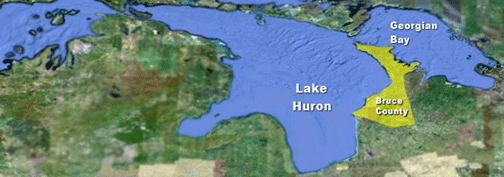
Hervé Courtois to C.A.N. Coalition Against Nukes, 1 Feb 2020, Members of  the Saugeen Ojibway Nation (SON) have voted down plans to bury Ontario’s low- and intermediate-level nuclear waste within 1.2 kilometres of Lake Huron….On Friday, 1,232 members of the First Nation band voted. The vote results saw 1,058 ‘no’ votes, with 170 ‘yes’ and 4 spoiled ballots…It means Canada’s first permanent nuclear waste facility will need to be built somewhere else in Ontario…OPG will now have to start searching for a new host community to house over 200,000 cubic metres of low- and intermediate- level nuclear waste…OPG says finding a new site may set the project back 20 to 30 years….https://www.facebook.com/groups/C.A.N.CoalitionAgainstNukes
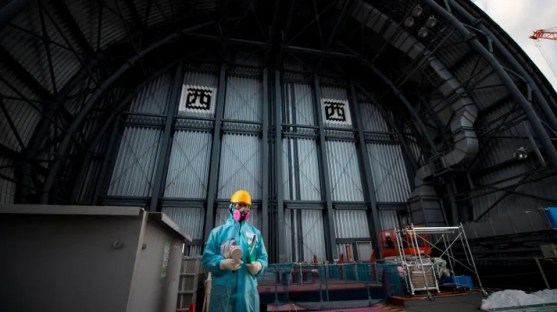
Japan’s METI recommends releasing Fukushima Daiichi radioactive water into sea

Tokyo 2020 at real risk as China coronavirus truths come to light

Coronavirus poses a risk to 2020 Olympics, Tokyo City Governor says

Japan’s effort to downplay any #radioactive problems to health and safety and forge ahead with the Olympics

Kepco to halt two nuclear reactors after missing counterterrorism deadline

1 This Month
26 April – Chernobyl: Inside the Meltdown airs on National Geographic on Sunday 26th April from 4pm

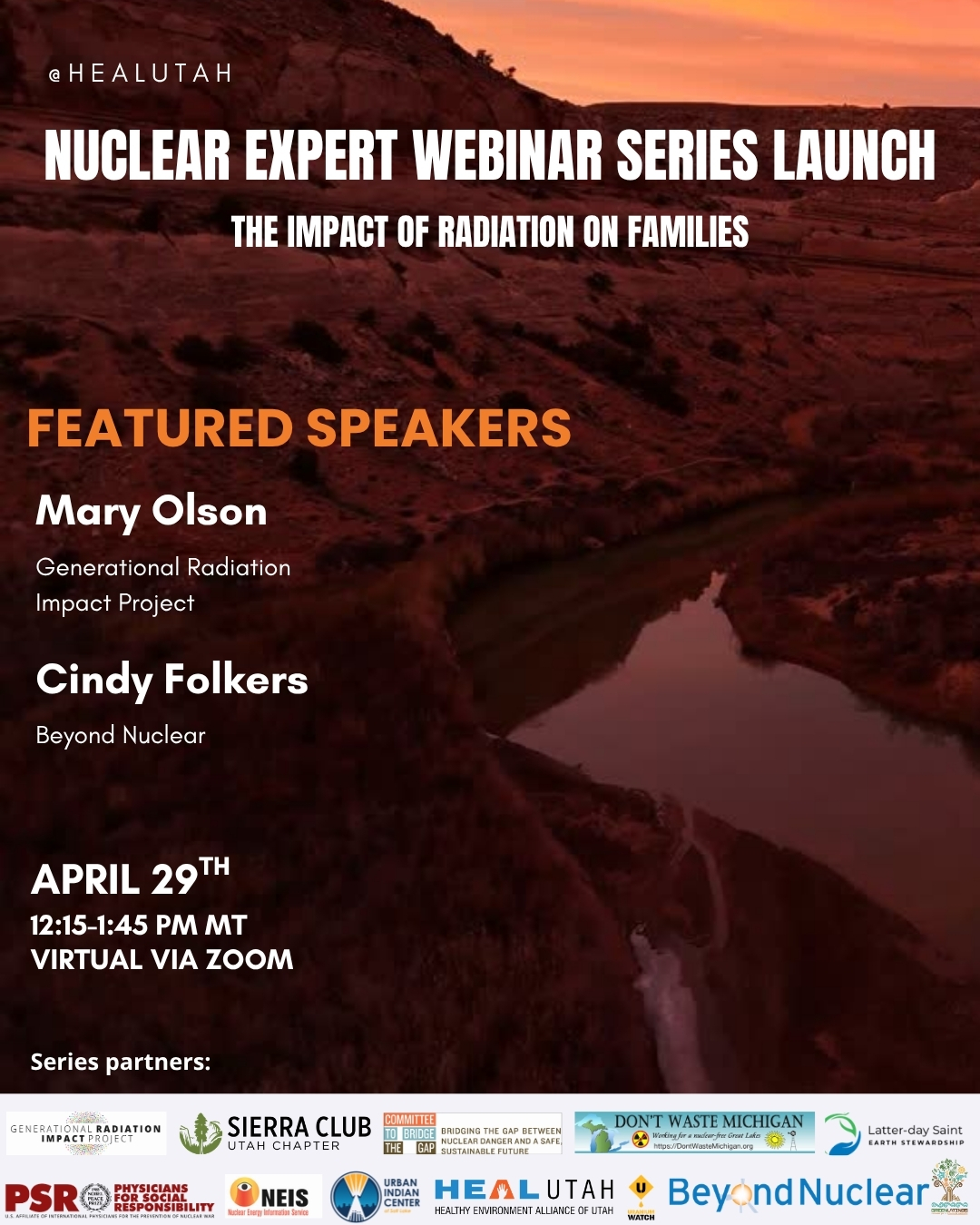
29 April – Nuclear Expert Webinar #1 – Radiation Impacts on Families with Mary Olson and Cindy Folkers
- 12:15 PM MT – 1:45 PM MT
- Location: Virtual – REGISTER TODAY

4 May -West Suburban Peace Coalition to discuss Iran war at May Educational Forum
Monday, May 4, 7:00 – 8:00 PM Central Standard Time
Title: : How Trump’s Narrative Tries to Shape the Reality of the War on Iran.
Contact Walt Zlotow, zlotow@hotmail.com 630 442 3045 for further information
14 May – online event From Bombs to Data Centres: the Face of Nuclear Colonialism

Pine Ridge Uranium is the real threat, not Tehran- Tell Burgum: Stop the Extraction.
Chernobyl: The Lost Tapes – A good documentary on Chernobyl on SBS available On Demand for the next 3 weeks– https://www.sbs.com.au/ondemand/tv-program/chernobyl-the-lost-tapes/2352741955560
To see nuclear-related stories in greater depth and intensity – go to https://nuclearinformation.wordpress.com
-
Archives
- April 2026 (300)
- March 2026 (251)
- February 2026 (268)
- January 2026 (308)
- December 2025 (358)
- November 2025 (359)
- October 2025 (376)
- September 2025 (257)
- August 2025 (319)
- July 2025 (230)
- June 2025 (348)
- May 2025 (261)
-
Categories
- 1
- 1 NUCLEAR ISSUES
- business and costs
- climate change
- culture and arts
- ENERGY
- environment
- health
- history
- indigenous issues
- Legal
- marketing of nuclear
- media
- opposition to nuclear
- PERSONAL STORIES
- politics
- politics international
- Religion and ethics
- safety
- secrets,lies and civil liberties
- spinbuster
- technology
- Uranium
- wastes
- weapons and war
- Women
- 2 WORLD
- ACTION
- AFRICA
- Atrocities
- AUSTRALIA
- Christina's notes
- Christina's themes
- culture and arts
- Events
- Fuk 2022
- Fuk 2023
- Fukushima 2017
- Fukushima 2018
- fukushima 2019
- Fukushima 2020
- Fukushima 2021
- general
- global warming
- Humour (God we need it)
- Nuclear
- RARE EARTHS
- Reference
- resources – print
- Resources -audiovicual
- Weekly Newsletter
- World
- World Nuclear
- YouTube
-
RSS
Entries RSS
Comments RSS
 nuclear-news