Could the Coronavirus Mean that the Tokyo 2020 Olympic Games are Cancelled?

Japan could decide on fate of radioactive waste water before the Olympics in July


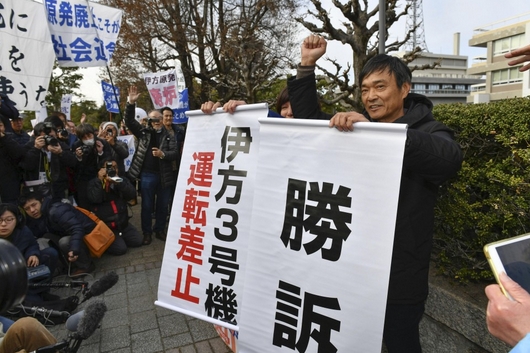
Shikoku Electric not to appeal injunction over Ikata nuclear plant
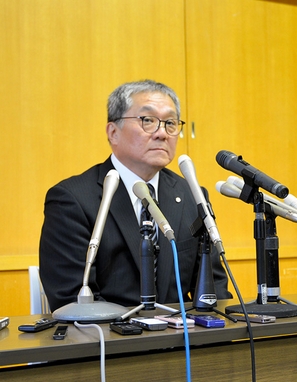
Mayor in Kyushu admits to ‘bribe’ from company in nuclear business
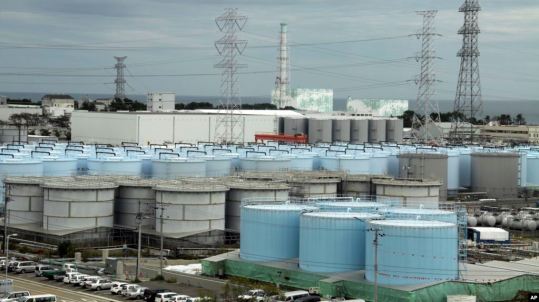
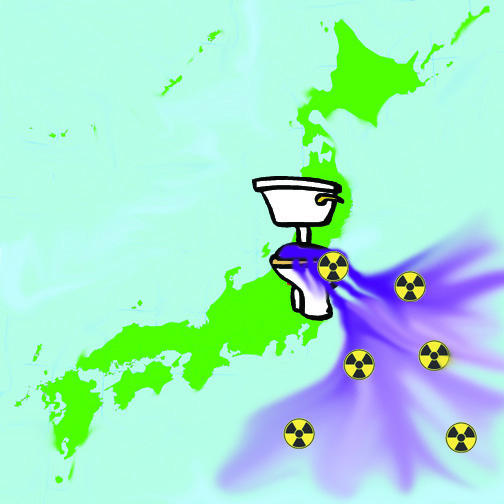
Japan to release over a million tonnes of radioactive water into sea from Fukushima power plant
|
Tokyo Electric has collected nearly 1.2 million tonnes of contaminated water from cooling pipes used to keep fuel cores from melting since the plant was devastated by the earthquake and tsunami which hit eastern Japan in 2011. The water, containing 62 radioactive elements, is stored in huge tanks on the site of the now disabled power plant, but Tokyo Electric has said it will run out of room to store the water by 2022. The water has been treated and Tokyo Electric said it is able to remove all radioactive particles from the water to levels not harmful to humans, except tritium, an isotope of hydrogen which is more difficult to separate from water. A panel of experts working for Japan’s economy and industry ministry concluded that letting the water run into the sea was the best option after looking at other proposals. The only other viable option considered was to let the water evaporate. In Friday’s proposal, the ministry said the controlled release to the sea is superior because its route is predictable and easier to sample and monitor. “Compared to evaporation, ocean release can be done more securely,” the committee said, pointing to common practice around the world where nuclear power stations operating under normal conditions routinely release water containing tritium into the sea. But the decision will alarm neighbouring countries and comes ahead of Japan’s hosting of the 2020 Olympic Games, with some events due to be held less than 60km away from the Fukushima site. Fishermen and residents also fear health effects from releasing the radioactive water as well as harm to the region’s image and farm industries. Neighbouring South Korea has retained a ban on imports of seafood from Japan’s Fukushima region imposed after the nuclear disaster and summoned a senior Japanese embassy official last year to explain how the Fukushima water would be dealt with, Reuters reported. South Korean athletes are planning to bring their own radiation detectors and food to the Games. Experts say there is no established method to fully separate tritium from water, but it is not a problem in small amounts. Government officials also say tritium is routinely released from existing nuclear power plants around the world. The report acknowledges the water releases would harm industries that still face reluctant consumers despite safety checks. It promised to reinforce monitoring of tritium levels and food safety checks to address safety concerns. |
|
|
UK government could save money, promote health, by energy efficiency programmess
 Edie 30th Jan 2020, By implementing stronger policies around walking, cycling, electric vehicles and energy efficiency in homes, the Government could save the NHS at least £3.7bn per year. That is according to a new report from think-tank Green Alliance. Drawing on research by CREDS, a body convening research from academics at 15 UK universities. Edie 30th Jan 2020, By implementing stronger policies around walking, cycling, electric vehicles and energy efficiency in homes, the Government could save the NHS at least £3.7bn per year. That is according to a new report from think-tank Green Alliance. Drawing on research by CREDS, a body convening research from academics at 15 UK universities.The report concludes that improved policies on active travel and electric mobility could save the NHS £2.5bn in costs annually, mainly through reduced rates of cardiovascular and lung problems, as well as diabetes. This saving could be realised if just 1.7% of car journeys made annually in England are replaced by walking or cycling.
Green Alliance claims this shift could also improve air
quality, quality of life and public satisfaction with local authorities and Government. |
Dangers of Artificial Intelligence with Nuclear Weapons

COMMENTARY “……… A new generation of AI-augmented offensive cyber capabilities will likely exacerbate the military escalation risks associated with emerging technology, especially inadvertent and accidental escalation. Examples include the increasing vulnerability of nuclear command, control, and communication (NC3) systems to cyber attacks. Further, the challenges posed by remote sensing technology, autonomous vehicles, conventional precision munitions, and hypersonic weapons to hitherto concealed and hardened nuclear assets. Taken together, this trend might further erode the survivability of states’ nuclear forces.
AI, and the state-of-the-art capabilities it empowers, is a natural manifestation — not the cause or origin — of an established trend in emerging technology. the increasing speed of war, the shortening of the decision-making timeframe, and the co-mingling of nuclear and conventional capabilities are leading states to adopt destabilizing launch postures.
The AI-Cyber Security Intersection
New Risks to the Security of Nuclear Systems
Pathways to Escalation
Advances in AI could also exacerbate this cyber security challenge by enabling improvements to cyber offense. Machine learning and AI, by automating advanced persistent threat (or “hunting for weaknesses”) operations, might dramatically reduce the extensive manpower resources and high levels of technical skill required to execute advanced persistent threat operations, especially against hardened nuclear targets.
Information Warfare Could Lead to Escalation……….
Conclusion
Rapid advances in military-use AI and autonomy could amplify the speed, power, and scale of future attacks in cyberspace via several interconnected mechanisms — the ubiquitous connectivity between physical and digital information ecosystems; the creation of vast treasure troves of data and intelligence harvested via machine learning; the formation of powerful force multipliers for increasingly sophisticated, anonymous, and possibly multi-domain cyber attacks.
AI systems could have both positive and negative implications for cyber and nuclear security. On balance, however, several factors make this development particularly troublesome. These include the increasing attacks vectors which threaten states’ NC3 systems, a new generation of destabilizing, AI-empowered cyber offensive capabilities (deepfakes, spoofing, and automated advanced persistent threat tools), the blurring of AI-cyber offense-defense, uncertainties and strategic ambiguity about AI-augmented cyber capabilities, and not least, a competitive and contested geo-strategic environment.
At the moment, AI’s impact on nuclear security remains largely theoretical. Now is the time, therefore, for positive intervention to mitigate (or at least manage) the potential destabilizing and escalatory risks posed by AI and help steer it toward bolstering strategic stability as the technology matures.
The interaction between AI and cyber technology and nuclear command and control raises more questions than answers. What can we learn from the cyber community to help us use AI to preempt the risks posed by AI-enabled cyber attacks? And how might governments, defense communities, academia, and the private sector work together toward this end?
James Johnson is a Postdoctoral Research Fellow at the James Martin Center for Nonproliferation Studies at the Middlebury Institute of International Studies (MIIS), Monterey. His latest book project is entitled, Artificial Intelligence & the Future of Warfare: USA, China, and Strategic Stability. Twitter:@James_SJohnson
Eleanor Krabill is a Master of Arts in Nonproliferation and Terrorism candidate at Middlebury Institute of International Studies (MIIS), Monterey. Twitter: @EleanorKrabill https://warontherocks.com/2020/01/ai-cyberspace-and-nuclear-weapons/
A really bad idea – The Navy’s New Mini-Nuclear Warheads
|
The Navy’s New Mini-Nuclear Warheads Are A Really Bad Idea, In other words, a new tactical nuclear weapon is supposed to convince Russia that the U.S. could respond in kind to Moscow’s use of tactical nukes. Delivering the warhead by sub-launched ICBM means Russian air defenses can’t stop it. Unfortunately, there are questionable assumptions behind this thinking. National Interest, by Michael Peck . 31 Jan 2020, Why Does America Need New Mini-Nuclear Warheads for Its Submarines? America’s strategic ballistic missile submarines are getting tactical nuclear weapons……..
The U.S. military doesn’t discuss the deployment of nuclear weapons as a matter of policy. But it’s no secret why the Trump administration wants them. To understand why requires an appreciation of the unwritten rules that have governed the U.S. vs. Soviet Union/Russia nuclear arms race since 1949. The U.S. government fears that Russia is embracing a new military doctrine that envisions selective use of tactical nuclear weapons, such as during a conflict in Eastern Europe and the Baltic States. ……….
a new tactical nuclear weapon is supposed to convince Russia that the U.S. could respond in kind to Moscow’s use of tactical nukes. Delivering the warhead by sub-launched ICBM means Russian air defenses can’t stop it.
Unfortunately, there are questionable assumptions behind this thinking. The Cold War witnessed similar fears of nuclear blackmail if one superpower or the other fell behind in the arms race. Yet no one has employed nuclear weapons – tactical or strategic – since 1945. Perhaps that’s because the leaders of the U.S., Russia and other nuclear-armed states have realized that the nuclear threshold is crossed, events could easily spiral into full-scale atomic war.
Then there is the whole idea of using ICBMs to deliver mini-nukes. Just as with Prompt Global Strike, a controversial idea to mount conventional warheads on ICBMs, the problem is that no one can be sure whether the nose cone of a strategic ballistic missile contains high-explosive or a hydrogen bomb. Michael Peck is a contributing writer for the National Interest. He can be found on Twitter, Facebook. or on his Web site. https://nationalinterest.org/blog/buzz/navys-new-mini-nuclear-warheads-are-really-bad-idea-118831 |
|
|
Qatar says UAE`s power plant activities are a threat to Gulf stability and the environment
|
UAE nuclear reactor ready; Qatar views it as a threat https://www.middleeastmonitor.com/20200130-uae-nuclear-reactor-ready-qatar-views-it-as-a-threat/ January 30, 2020, The United Arab Emirates Barakah nuclear power plant is ready to operate, the UAE’s state-run Emirates News Agency (WAM) reported on Tuesday.Nawah Energy Company, the operator of the power plant, is concluding the final requirements,” WAM said.
Barakah will be the UAE’s first nuclear plant and the world’s largest when completed, with four reactors and 5,600 megawatts (MW) of capacity, Reuters reported. Sultan bin Ahmad Sultan Al Jaber, a minister of state in the UAE government and also chief executive of Abu Dhabi National Oil Company (Adnoc), drew attention to the nuclear power plants that will start supplying the country’s electricity grid for the first time later this year, WAM reported two weeks ago. Underlining the myriad risks inherent in Barakah’s design, Qatar says UAE`s power plant activities are a threat to Gulf stability and the environment. Last year, in a letter to the International Atomic Energy Agency (IAEA), a Vienna based international organisation founded to promote the peaceful use of nuclear energy, Qatar urged them to create a framework for regional nuclear security, Al Jazeera reported. |
|
Young African climate activists
|
Africa at large is being affected by the negative impacts of climate change. There are many reason as to why this is happening, from deforestation to bad energy policies. A great example of the effects of this is the locust infestation in East Africa which will soon lead to food insecurity and the sad thing is that many Africans are unaware as to why this is happening, due to not being educated and properly prepared for the consequences. Ndoni Mcunu, climate scientist in South AfricaTo make international changes, I’d first say that international people need to understand part of the problem, what the people need so there needs to be bottom-up approach and not a top-down approach. First the understanding of what do the local people need in terms of climate change and tailor-making those solutions to African needs. So if you come with high technology into our continent, that’s not going to help if you don’t have the skill base. So first understand what is our skill base, what is our literacy base as Africans and then implement your solutions accordingly. Quiz: Climate Change in Africa How much do you know about the effects of climate change in Africa? Take our quiz to find out!
|
|
Opposition to Nuclear Waste Storage Plan Near Lake Huron
|
Canada Nuclear Waste Storage Plan Near Lake Huron Faces Vote, Bloomberg, Jan. 31, 2020,
U.S. lawmakers from the Great Lakes region are weighing in on the fate of two major Canadian nuclear waste facilities, which could hinge on a vote in a First Nation community in western Ontario on Friday. The 4,500-member Saugeen Ojibway Nation, based on Lake Huron’s Bruce Peninsula, is voting on whether to support construction of Ontario Power Generation Inc.’s C$2.4 billion ($1.8 billion) deep geological repository for low- and intermediate-level nuclear waste near the shore of Lake Huron. But several U.S. members of Congress oppose it, claiming it could endanger drinking water for millions. Ontario Power Generation pledged not to move ahead if the First Nation community votes against the repository. The Nuclear Waste Management Organization, which could build a much larger C$23 billion repository for more radioactive spent nuclear fuel in the same region, won’t proceed in the area if it doesn’t have a partnership with the nation. The vote on Friday doesn’t deal with its proposal directly. The two projects together represent the bulk of Canada’s long-term plan to store nuclear waste. Canada has 2.9 million bundles of highly radioactive used nuclear fuel, according to 2015 data, and around 100,000 cubic meters of low and intermediate nuclear waste, according to 2016 figures, the most recent available. U.S. Lawmakers Oppose Both SitesU.S. lawmakers from across Lake Huron in Michigan have long opposed both projects, and environmental groups say storing radioactive materials deep underground near large bodies of water isn’t safe. “Storing high-level nuclear waste could threaten the well-being of the Great Lakes for generations to come and undo progress made to preserve them,” Sen. Gary Peters (D-Mich.) said in a statement Thursday. “This makes no sense,” said Sen. Debbie Stabenow (D-Mich.). “Canada has as much at stake as we do in protecting our Great Lakes. There is no justification for a nuclear waste site so close to Lake Huron to even be under consideration.” At its closest point, the low- and intermediate-level nuclear waste could be stored underground within a mile of the lake’s shoreline. Peters and seven other senators from the Great Lakes region introduced a resolution in the Senate on Jan. 15 calling on Canada’s federal government to stop both projects and for the Trump administration to help find a solution. An identical resolution was introduced in the House of Representatives Jan. 17. The U.S. Environmental Protection Agency has shared concerns about the project’s potential impact on the U.S. and the Great Lakes, the agency said in a statement Thursday. Highly Radioactive Waste SiteThe Nuclear Waste Management Organization repository would be built to store 5.2 million bundles of used nuclear fuel Canada is projected to produce. It could be built in South Bruce, Ontario, or farther north in Ignace, the organization said Jan. 24. The waste is currently stored outside nuclear facilities across four provinces, with 90% of it in Ontario. “We’re working to identify a single, preferred location for a deep geological repository to be located in an area with informed and willing hosts,” spokesperson Bradley Hammond wrote in an email Wednesday. Landowners in South Bruce gave the organization the go-ahead to dig bore holes to test the area’s suitability this month. The joint private-federal agency wants to pick its site by 2023. The U.S. has long wrestled with its own plan to store nuclear waste. First Nation VoteThe vote by the Saugeen Ojibway Nation on the site for low- and intermediate-level nuclear waste is a monumental accomplishment for First Nations having a say over major decisions, the nation’s environment office said in a statement in December. “Never before has a First Nation secured this level of consent on a project of this magnitude,” the nation said. It declined to comment further. Ontario Power Generation has proposed a financial benefit for the nation, but details aren’t public. A Canadian federal review panel approved the Ontario Power Generation project in May 2015, but the then environment minister asked the company to get more information on impacts to the Saugeen Ojibway Nation’s cultural heritage and wait for the results of the community vote. After receiving the new information, the Impact Assessment Agency will write a draft report on the project’s community impacts, Alison Reilander, agency spokeswoman, wrote in an email Jan. 21. Underground StorageCanada’s existing low- and intermediate-level nuclear waste is currently stored at the surface of where the repository will be located, which is also home to the eight-reactor Bruce Power plant……… https://news.bloombergenvironment.com/environment-and-energy/canada-nuclear-waste-storage-plan-near-lake-huron-faces-vote |
|
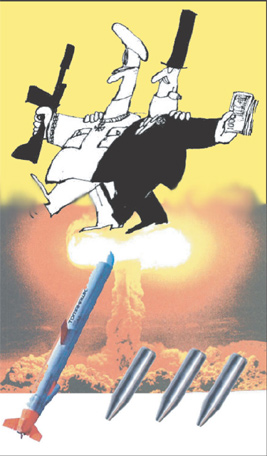
Nuclear weapons- the USA bomb making companies are doing great!
|
The Cost and Composition of America’s Nuclear Weapons Arsenal
Visual Capitalist January 29, 2020, By Nick Routley The American nuclear weapons arsenal is nowhere near its 1960s peak, but there are still thousands of warheads in the stockpile today.The U.S. nuclear program is comprised of a complex network of facilities and weaponry, and of course the actual warheads themselves. Let’s look at the location of warheads, how they’re deployed, and the costs associated with running and refurbishing an aging nuclear program. Let’s launch into the data. [ Excellent graphs] Nuclear Weapons Map……Deployment Data……America’s Nuclear Weapons BudgetThe Congressional Budget Office (CBO) is required to project the 10-year costs of nuclear forces every two years. Though much of the program is shrouded in secrecy, the budget below [on original] provides an overview of the costs of running America’s nuclear weapons arsenal……. Back in the Bomb BusinessGenerally, we think of nuclear weapons stockpiles as a sunsetting resource, slowly being dismantled; however, since the treaty that ended the arms race collapsed in mid-2019, the flood gates may be opening once again. New warheads are reportedly rolling off the production line, and in the beginning of this year, Lockheed Martin was tapped by the U.S. Navy to manufacture low yield submarine-based nuclear missiles…. https://www.visualcapitalist.com/cost-and-composition-of-americas-nuclear-weapons-arsenal/ |
|
Book review – “The Bomb”
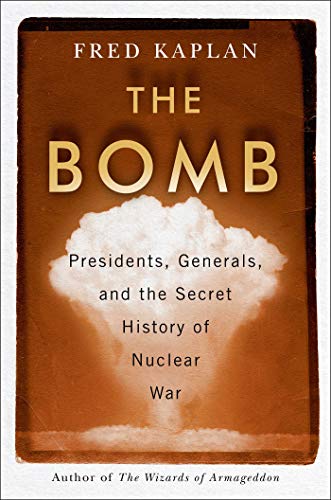 The Bomb’ Review: Down the Nuclear Rabbit Hole
Until 1989, no president had ever been privy to the military’s list of specific targets in the Soviet Union. WSJ, Paul Kennedy, Jan. 31, 2020, In the summer of 1945, as a mushroom cloud rose high above the Japanese city of Hiroshima, the very history of war and diplomacy, and the world of Great Power relations, changed irrevocably. Science had created a weapon of such indiscriminate destructiveness that it ought, now that its ferocity was clear, never to be used again. This became even more obvious to contemporary observers when the more powerful hydrogen bombs appeared on the scene only a few years later, and when the Soviet Union also quickly acquired similar weaponry.
|
Before that time, the saying went, the leaders of the Great Powers had to figure out only how to win wars; now their awful duty was to ensure that they avoided war among themselves so that this most powerful weapon in their armory would never be used. This was not just another big bomb, as Truman had called it before he, too, realized things were different. This was an existential device, and, ironically, possessing tens of thousands of these devices did not necessarily make you safer. If America had 30,000 warheads and the U.S.S.R. also had 30,000 warheads, who felt more secure? ……..
American presidents and their civilian and military advisers have repeatedly found themselves in a box—a “rabbit hole” is the word frequently used in Fred Kaplan’s new book—scrambling to get out, and failing to do so. A good number of members of the U.S. military, joined by some hawkish intellectuals, have indeed thought that nuclear weapons were “usable” and some presidents did at times threaten obliteration, but for most concerned the main effort has been to ensure that they were never, ever used.
And what an effort that was, as Mr. Kaplan reveals in “The Bomb: Presidents, Generals and the Secret History of Nuclear War.” ………. The stakes are enormous, it seems; no other form of conflict and warfare counts; really, no other form of history counts. Mesmerized by the dramatic detail, the reader might find it hard to disagree. ………. Successive presidents were introduced to their awesome nuclear responsibilities, blinked hard and strove to alter them, but they made little progress in overcoming the system. The improving world situation, and the early post-Soviet years especially, allowed limited pullbacks: The B-52 bomber force was no longer kept on constant alert, for instance. But it is instructive to read how highly intelligent presidents, with no great early interest in nuclear or even overall military matters, found themselves sucked into decisions whose outcomes then became part of their legacies—such as the success or failure, during the Obama administration, of the 2010 New Start treaty with the Russians……… with something of a shock, one arrives at the present, at the Age of Trump, analyzed by Mr. Kaplan in a 38-page chapter titled “Fire and Fury”—these were the words repeatedly used by our current president in 2017 when threatening North Korea with oblivion if it continued to threaten us. Mr. Kaplan claims to bring the reader into the inner sanctums of a presidency whose leader, instead of being impressed at the story of our nuclear warheads having been reduced from 32,000 to a mere 2,500, complains that he really wants the U.S. to have many more such weapons………. Absent some stunning transformation in the minds of men, the Great Powers will keep nuclear weapons in their armories as deterrents and strive to prevent their use—and, indeed, the very existence of nuclear weapons probably has deterred some statesmen now and then from rash and aggressive actions. The crazy logic of it all, Mr. Kaplan senses, will go on. Yet he ends up being a very frightened critic, not just because of the present commander-in-chief, but because he honestly wonders how many more wars we can dodge before a combination of “slow-wittedness and misfortune” tips things over. “The Bomb” is a work that should make thoughtful readers even more thoughtful. But it is not a book for the faint of heart. https://www.wsj.com/articles/the-bomb-review-down-the-nuclear-rabbit-hole-11580487715 |
|
|
Political instability adds to the danger of nuclear power for Bolivia
|
Bolivian unrest: what now for the country’s nuclear ambitions? Power Technology, By Heidi Vella 31 Jan 2020, Backed by Russia, Bolivia had set its sights on building new nuclear energy capacity to supply the country’s growing demand for electricity – but could recent political instability put these plans into doubt? We investigate the progress and potential of Bolivia’s atomic energy ambitions.
Russia had agreed to support a $300m nuclear research reactor near the Bolivian capital of La PaztHome to part of the Andean mountain range, as well as some of the highest above-sea-level cities in the world, the developing South American state of Bolivia is not an obvious candidate for new nuclear energy capacity. Yet, since 2013, the now ousted former-Bolivian President, Evo Morales, has been pursing plans to reduce the country’s heavy reliance on fossil fuels by investing in nuclear power…… Five years on however, Bolivia finds itself in political turmoil. Morales, who ran the country for 14 years and was the first ever indigenous president, has exiled himself to Mexico following weeks of violent protests and unrest amid accusations of electoral fraud at the end of 2019. As such, the country’s nuclear ambitions now appear firmly on hold.
Prior to Morales’ fall from power, his administration had kick-started the often-lengthy process of initiating nuclear power capabilities. It founded The Bolivarian Agency for Nuclear Energy and had started working with the IAEA to establish a development framework for nuclear. In 2018, it signed a Country Programme Framework with the IAEA leading up to 2023. Plans for uranium mining in the country had also been floated, but the government halted these and instead decided it could import nuclear fuel from France and Canada. Further agreements were penned with Rosatom for the building of the research centre, which, if it is ever finished, will be the highest in the world at 4000 metres above sea level. The centre is expected to encompass a pool-type reactor of between 100 and 200 kilowatts, a multi-purpose gamma irradiation unit, a cyclotron for nuclear pharmacy purposes, an engineering department, and several research laboratories. Challenges ahead Bolivia is one of only a handful of countries in South America that is either exploring capital intensive nuclear power or already has capacity. Argentina and Brazil both have nuclear reactors in action. However, the rising cost of current technology – several projects in Europe have run years over schedule and millions over budget – can make it difficult, but not impossible, for developing nations such as Bolivia to adopt atomic energy…….. Political instability Since the resignation of Morales in November, a conservative interim government has assumed power and elections are expected in May……….with accusations of vote rigging in the last election, there’s little assurance the upcoming polls will not result in more violence and political stability, both of which will likely keep away potential investors. Therefore, it remains very early days for nuclear energy development in Bolivia. In fact, the World Nuclear Association doesn’t expect much growth in the nuclear power sector to come from any developing nations, including Bolivia. Instead, the country is more likely to remain part of a long list of developing nations that has penned agreements with Russia, such as Indonesia, Vietnam and Sudan, but are yet to see them come fully into fruition, at least until it wrestles back democracy. https://www.power-technology.com/features/bolivian-unrest-what-now-for-the-countrys-nuclear-ambitions/ |
|
Historic vote on nuclear waste underway in Bruce County, Ontario
 Historic vote on nuclear waste underway in Bruce County, Ont.London CTV News, Scott MillerVideographer @ScottMillerCTV Contact, January 31, 2020 SOUTHAMPTON, ONT. — Plans to build Canada’s first permanent home to nuclear waste are being decided by a local First Nations band Friday. Historic vote on nuclear waste underway in Bruce County, Ont.London CTV News, Scott MillerVideographer @ScottMillerCTV Contact, January 31, 2020 SOUTHAMPTON, ONT. — Plans to build Canada’s first permanent home to nuclear waste are being decided by a local First Nations band Friday.Over 4,500 members of the Saugeen Ojibway Nation (SON) were eligible to vote on whether to approve the plan to bury Ontario’s low- and intermediate-level nuclear waste along the shores of Lake Huron. Ontario Power Generation (OPG) plans to bury 200,000 cubic metres of nuclear waste in a facility, 680 metres under the Bruce Power site, north of Kincardine, Ont. The Deep Geological Repository or DGR falls within the traditional territory of the SON, so OPG has committed to not moving forward without the band’s support. Whatever SON members decide, it will have far-reaching impacts. There are over 230 resolutions by various levels of government around the Great Lakes, including London, Sarnia and Toronto, opposing the plan. In Michigan, Congressman Dan Kildee has been leading the charge against the DGR. “Permanently storing nuclear waste less than a mile from Lake Huron just doesn’t make sense. Surely in the vast land mass that comprises Canada, there is a better place to permanently store nuclear waste than on the shores of the world’s largest supply of fresh water,” he says…….. https://london.ctvnews.ca/historic-vote-on-nuclear-waste-underway-in-bruce-county-ont-1.4792113 |
|
1 This Month
26 April – Chernobyl: Inside the Meltdown airs on National Geographic on Sunday 26th April from 4pm

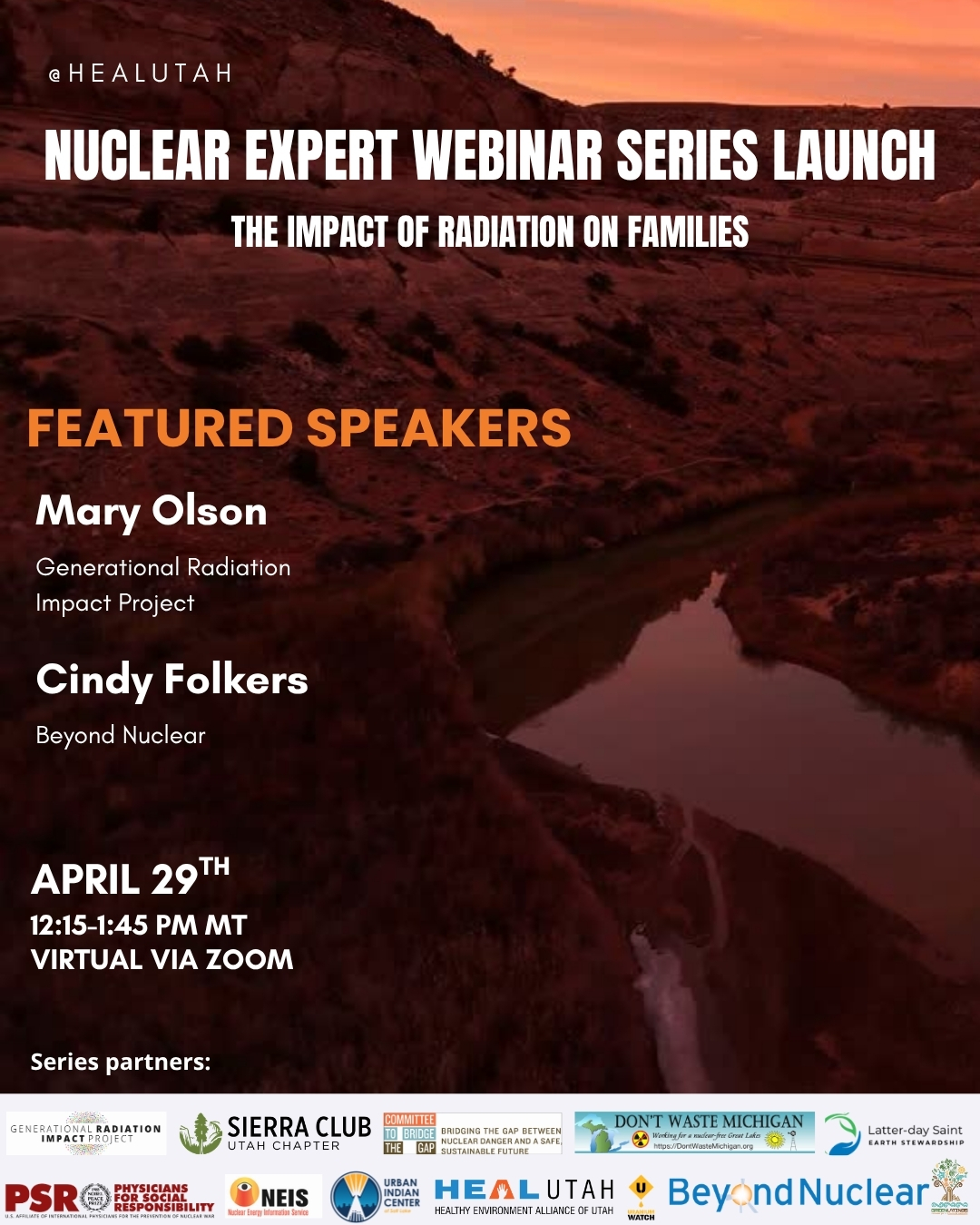
29 April – Nuclear Expert Webinar #1 – Radiation Impacts on Families with Mary Olson and Cindy Folkers
- 12:15 PM MT – 1:45 PM MT
- Location: Virtual – REGISTER TODAY

4 May -West Suburban Peace Coalition to discuss Iran war at May Educational Forum
Monday, May 4, 7:00 – 8:00 PM Central Standard Time
Title: : How Trump’s Narrative Tries to Shape the Reality of the War on Iran.
Contact Walt Zlotow, zlotow@hotmail.com 630 442 3045 for further information
14 May – online event From Bombs to Data Centres: the Face of Nuclear Colonialism

Pine Ridge Uranium is the real threat, not Tehran- Tell Burgum: Stop the Extraction.
Chernobyl: The Lost Tapes – A good documentary on Chernobyl on SBS available On Demand for the next 3 weeks– https://www.sbs.com.au/ondemand/tv-program/chernobyl-the-lost-tapes/2352741955560
To see nuclear-related stories in greater depth and intensity – go to https://nuclearinformation.wordpress.com
-
Archives
- April 2026 (300)
- March 2026 (251)
- February 2026 (268)
- January 2026 (308)
- December 2025 (358)
- November 2025 (359)
- October 2025 (376)
- September 2025 (257)
- August 2025 (319)
- July 2025 (230)
- June 2025 (348)
- May 2025 (261)
-
Categories
- 1
- 1 NUCLEAR ISSUES
- business and costs
- climate change
- culture and arts
- ENERGY
- environment
- health
- history
- indigenous issues
- Legal
- marketing of nuclear
- media
- opposition to nuclear
- PERSONAL STORIES
- politics
- politics international
- Religion and ethics
- safety
- secrets,lies and civil liberties
- spinbuster
- technology
- Uranium
- wastes
- weapons and war
- Women
- 2 WORLD
- ACTION
- AFRICA
- Atrocities
- AUSTRALIA
- Christina's notes
- Christina's themes
- culture and arts
- Events
- Fuk 2022
- Fuk 2023
- Fukushima 2017
- Fukushima 2018
- fukushima 2019
- Fukushima 2020
- Fukushima 2021
- general
- global warming
- Humour (God we need it)
- Nuclear
- RARE EARTHS
- Reference
- resources – print
- Resources -audiovicual
- Weekly Newsletter
- World
- World Nuclear
- YouTube
-
RSS
Entries RSS
Comments RSS
 nuclear-news