Companies Orano – formerly AREVA, and Holtec aim for private-public partnerships on USA’s nuclear wastes
 Plans Move Forward for Privately Funded Storage of Nuclear Waste, Power 09/05/2018 | Darrell Proctor The Trump administration has revived the discussion of using Yucca Mountain in Nevada as a repository for the nation’s nuclear waste. Nevada officials remain opposed to the idea of putting spent nuclear fuel in long-term storage at a site about 100 miles from Las Vegas.But while a bill to resurrect Yucca Mountain as a storage site moves through Congress, other groups have stepped forward with plans to site, build, and operate nuclear waste storage and disposal facilities in areas including Texas and New Mexico. Those plans have reignited the debate about what the U.S. should do with its nuclear waste, along with the discussion of whether the federal government or the individual states should take the lead in developing long-term storage plans.
The Nuclear Regulatory Commission (NRC) says at least 12 U.S. reactors are committed to closing over the next five years, joining the more than 20 reactors shuttered over the past 10 years across the country. That’s lot of spent nuclear fuel, in multiple locations, in need of safe storage, whether at an interim site or at a facility designed for long-term storage……….
Interim Storage Sites in Development
 Two members of Wednesday’s panel represented companies developing interim storage sites. Interim Storage Partners (ISP), a joint venture of Orano USA [Orano – formerly AREVA] and Waste Control Specialists (WCS), is pursuing a license for a consolidated interim storage facility (CISF) for used nuclear fuel at an existing WCS disposal site in Andrews County, Texas. Holtec International, which has been acquiring nuclear plants that have closed or are scheduled to close in order to carry out their decommissioning, is developing a CISF in southeastern New Mexico, in a remote area between Carlsbad and Hobbs……..
Joy Russell, vice president of corporate business development and chief communications officer for Holtec,  said her company formed a business unit—Comprehensive Decommissioning International—in a 2018 joint venture with SNC-Lavalin after SNC-Lavalin in 2017 acquired Atkins, a nuclear waste solutions company. Russell said the New Mexico site encompasses about 1,000 acres, with “about 500 acres being used to build the facility.” Russell said the site, known as HI-STORE CIS, would use the company’s HI-STORM UMAX technology, which stores loaded canisters of nuclear waste in a subterranean configuration.
Russell said her group has a public-private partnership with the Eddy Lee Energy Alliance, representing Eddy and Lee counties in New Mexico, for the project, which she said has support from both local and state officials.
“We’re doing educational outreach in New Mexico,” said Russell. “We do township meetings, where we testify before the mayor and town council. We meet one-on-one with candidates. We had to start with the basics. What people think of when they hear nuclear fuel, they think of the fuel you put in your car, and how that could leak into the ground. We have to educate people on what [nuclear] fuel is. We focus on safety, security, and technology.”
Russell agreed that public concerns centers on the transport of nuclear waste. “The number-one thing I hear, all the time, about consolidated interim storage is transportation.” Holtec also has its license application before the NRC for review; Russell said it expect the agency will complete its review in July 2020, putting the New Mexico site on a timeline to receive its first shipment of spent fuel in 2023.
Revisiting Yucca Mountain
Congress first chose Yucca Mountain as a storage site for nuclear waste in 1987. Years of research into the site followed; estimates are that $15 billion was spent on the project. Sproat noted his efforts on licensing for Yucca Mountain before his retirement from the DOE, with a license application submitted to the NRC in 2008. The Obama administration ended funding for the project and halted the licensing process in 2009.
Meanwhile, the Nuclear Waste Fund (NWF), which collected money from the states to finance waste storage projects, was ordered by a federal court in late 2013 to stop collecting that money until the federal government made provisions for collecting that waste………….. https://www.powermag.com/plans-move-forward-for-privately-funded-storage-of-nuclear-waste/?pagenum=1
Japan holds public hearings on what to do with growing amounts of radioactive water from the ruined Fukushima No. 1 nuclear power plant.
 EDITORIAL: All options need to be weighed for Fukushima plant tainted water http://www.asahi.com/ajw/articles/AJ201809060020.html September 6, 2018 The government has held public hearings on plans to deal with growing amounts of radioactive water from the ruined Fukushima No. 1 nuclear power plant.
The hearings, held in Tomioka and Koriyama in Fukushima Prefecture as well as in Tokyo, underscored the enormous difficulty government policymakers are having in grappling with the complicated policy challenge.
The crippled reactors at the plant are still generating huge amounts of water contaminated with radiation every day. Tons of groundwater percolating into the damaged reactor buildings as well as water being injected into the reactors to cool the melted fuel are constantly becoming contaminated.
Almost all the radioactive elements are removed from the water with a filtering system. But the system cannot catch tritium, a mildly radioactive isotope of hydrogen.
The tritium-contaminated water is stored on-site in hundreds of large tanks. As the number of tanks has reached 900, the remaining space for them is shrinking and expected to run out by around 2020, according to the government.
Clearly, time is growing short on deciding what to do about the problem.
A task force of the Ministry of Economy, Trade and Industry has considered five options, including release into the Pacific Ocean after dilution, injection into deep underground strata and release into the air after vaporization. The group has concluded that dumping the water into the ocean would be the quickest and least costly way to get rid of it.
This is seen as the best option within the government.
Tritium is a common radioactive element in the environment that is formed naturally by atmospheric processes. Nuclear power plants across the nation release tritium produced in their operations into the sea according to legal safety standards.
But these facts do not automatically mean that releasing the tritium-laced water into the sea off Fukushima is a good approach to the problem.
Local communities in areas affected by the 2011 nuclear disaster are making strenuous efforts to rebuild the local fishing and agricultural industries that have been battered by the radiation scare. There are still countries that ban imports of foodstuffs produced in Fukushima Prefecture.
Local fishermen and other community members have every reason to oppose the idea of releasing tritium into the ocean. They are naturally concerned that the discharge would produce new bad rumors that deliver an additional blow to the reputation and sales of Fukushima food products.
Unsurprisingly, most of the citizens who spoke at the hearings voiced their opposition to the idea.
Moreover, it was reported last month that high levels of radioactive strontium and iodine surpassing safety standards had been detected in the treated water.
The revelation has made local communities even more distrustful of what they have been told about operations to deal with the radioactive water.
It is obvious that the hearings at only three locations are not enough to sell any plan to cope with the sticky problem to skeptical local residents. The government needs to create more opportunities for communication with them.
In doing so, the government should show a flexible stance without adamantly making the case for the idea of releasing the water into the sea. Otherwise, there can be no constructive debate on the issue.
It can only hope to win the trust of the local communities if it gives serious consideration to other options as well.
During the hearings, many speakers suggested that the water should be kept in large tanks until the radioactivity level falls to a very low level.
The pros and cons of all possible options, including this proposal, should be weighed carefully through cool-headed debate before the decision is made.
Repeated discussions with fruitful exchanges of views among experts and citizens including local residents are crucial for ensuring that the final decision on the plan will win broad public support.
The government and Tokyo Electric Power Co., the operator of the Fukushima plant, should disclose sufficient information for such discussions and give thoughtful and scrupulous explanations about relevant issues and details.
The government, which has been promoting nuclear power generation as a national policy priority, has the responsibility of building a broad and solid consensus on this problem.
‘Spinning’O-Wind Turbine captures wind from any direction
O-Wind Turbine: James Dyson Award National UK Winner
The O-Wind Turbine captures wind from any direction and, unlike traditional turbines, could be effective in cities A ‘spinning’ turbine which can capture wind travelling in any direction and could transform how consumers generate electricity has won its two student designers a prestigious James Dyson award.
Nicolas Orellana, 36, and Yaseen Noorani, 24, both MSc students at Lancaster University, have created the O-Wind Turbine which – in a technological first – takes advantage of both horizontal and vertical winds without requiring steering.
Conventional wind turbines only capture wind travelling in one direction, and are notoriously inefficient in cities where wind trapped between buildings becomes unpredictable, making the turbines unusable…….
A ‘spinning’ turbine which can capture wind travelling in any direction and could transform how consumers generate electricity has won its two student designers a prestigious James Dyson award.
Nicolas Orellana, 36, and Yaseen Noorani, 24, both MSc students at Lancaster University, have created the O-Wind Turbine which – in a technological first – takes advantage of both horizontal and vertical winds without requiring steering.
Conventional wind turbines only capture wind travelling in one direction, and are notoriously inefficient in cities where wind trapped between buildings becomes unpredictable, making the turbines unusable…….
Wind power currently generates just 4% of the world’s electricity but it could produce up to 40 times the amount of electricity consumed, Noorani said.
The duo’s invention will now be entered into the international running for the final leg of the James Dyson award in November, which will give the overall worldwide winner a further £30,000 in prize money.
The award operates in 27 countries, and is open to university level students and recent graduates studying product design, industrial design and engineering. It recognises and rewards imaginative design solutions to global problems with the environment in mind. https://www.theguardian.com/environment/2018/sep/05/groundbreaking-spinning-wind-turbine-wins-uk-dyson-award
Mainstream media carefully avoids mentioning the typhoon danger to Japan’s nuclear power stations and waste dumps

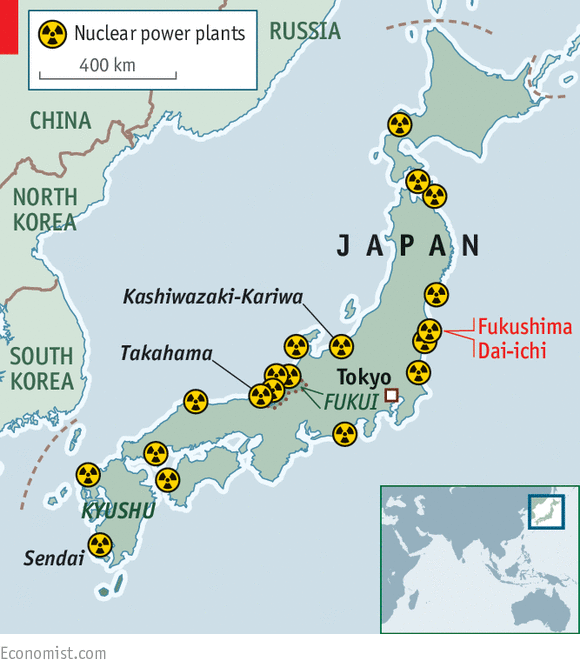
Typhoon Man-yi hits Japan raising fears about Fukushima nuclear plant http://www.abc.net.au/news/2013-09-16/typhoon-man-yi-hits-japan2c-raising-fukushima-fears/4960034
Japan hit by a powerful typhoon
Typhoon Jebi path update: Where is Japan typhoon NOW? Will it hit Tokyo? https://www.express.co.uk/news/world/1012314/Typhoon-jebi-path-update-typhoon-tokyo-category-3-Japan-warning-western-central-japan
TYPHOON Jebi will make landfall in southern Japan on Tuesday as damaging winds, flooding and mudslides are expected to hit the country. But where is the typhoon now and will it hit the capital Tokyo?
Typhoon Jebi smashed into Japan on Tuesday, barreling across the mainland at speed in a northeasterly track.
Japan issued evacuation advisories for more than 1 million people and cancelled hundreds of flights in the face of extremely strong winds and heavy rain hammered the country.
AccuWeather senior meteorologist Adam Douty said: “Damaging winds and coastal flooding may be the most significant impacts with this storm.
Where is Typhoon Jebi now?
Typhoon Jebi is currently located just north of Kyoto, traveling back out into the sea in a northeasterly direction.
The storm avoided a direct hit with capital Tokyo, but the city is still expected to bear the brunt of winds of more than 60mph.
Osaka and Kobe also took a hammering from the storm when they were struck earlier on Tuesday, after Jebi moved in from Honshu. The storm made landfall on Shikoku, the smallest main island, around noon.
Jebi then raked across the western part of the largest main island, Honshu, near the city of Kobe, several hours later, heading rapidly north.
Wind gusts of up to 208 km/h (129 mph) were recorded in one part of Shikoku, with forecasts for gusts as high as 216 km/h (135 mph).
Around 100 mm (3.9 inches) of rain drenched one part of the tourist city of Kyoto in an hour, with as much as 500 mm (20 inches) set to fall in some areas in the 24 hours to noon on Wednesday. The Meteorological Agency advised the public to be on the lookout for even more flooding and mudslides, as well as high tides.
Prime Minister Shinzo Abe told a meeting of the government and ruling parties: “We have seen typhoons and torrential rains.
“The government will do its utmost to prevent disaster.
Jebi – whose name means “swallow” in Korean – was briefly a super typhoon and is the latest harsh weather to hit Japan this summer.
Japan has been hit by extreme weather since the beginning of July and western parts of the country have been left devastated by flooding and landslides, leaving more than 220 people dead.
typhoon Jebi’s course has brought it close to parts of western Japan hit by rains and flooding but the storm was set to speed up after making landfall, minimising the amount of rain that will fall in one place.
The country has experienced record-breaking heat as well as floods and landslides.
Tropical storms pose danger to America’s nuclear power stations

 Tropical Storm Gordon Warning For US Gulf Coast: Reminder Of The Dangers Of Mixing Severe Weather With Nuclear Power; Another Tropical Storm In Atlantic , Mining Awareness, 4 Sept 18
 It’s that time again. Time for tropical storms and hurricanes, and time to remember the increased dangers of nuclear power stations (orange skulls on map) during severe weather, which can lead to power outages and power surges, as well as storm surges, flooding and more.
Nuclear reprocessing has little future in Japan, as utilities end funding
 Japanese utilities ended funding for nuclear fuel reprocessing in 2016, putting MOX program in doubt https://www.japantimes.co.jp/news/2018/09/03/national/japanese-utilities-ended-funding-nuclear-fuel-reprocessing-2016-putting-mox-plans-doubt/#.W48CsSQzbGg
4 Sept 18, Kyodo,, Utilities that operate nuclear power plants stopped funding the reprocessing of nuclear fuel in fiscal 2016, their financial reports showed Sunday, a step that may affect resource-scarce Japan’s nuclear fuel recycling policy.
The 10 utilities, including Tokyo Electric Power Company Holdings Inc. and Japan Atomic Power Co., apparently halted allocating reserve funds for reprocessing costs due to the huge expenses linked to building the reprocessing facilities, sources said.
The government, along with the power companies, has been pushing for the reuse of mixed-oxide, or MOX, fuel, which is created from plutonium and uranium extracted from spent fuel.
While Japan has not changed its policy on spent fuel reprocessing, the outlook for it has remained uncertain since the 2011 Fukushima disaster. At the same time, the government’s latest energy plan in July also stated for the first time that disposal of spent MOX fuel as waste can be considered.
If MOX fuel cannot be reprocessed, nuclear fuel can only be reused once. For the reprocessing of spent MOX fuel, the utilities had allocated about ¥230 billion in reserves as of March 2016.
Currently, only two reactors at Kansai Electric Power Co.’s Takahama power plant, one reactor at Shikoku Electric Power Co.’s Ikata plant and one reactor at Kyushu Electric Power Co.’s Genkai power plant use MOX fuel in so-called pluthermal power generation.
As Japan has decided to cut its stockpile of plutonium, the government and utilities aim to increase plants for pluthermal generation. But if spent MOX fuel is not reprocessed, it would be considered nuclear waste, raising concerns over how to deal with it.
Japan Nuclear Fuel Ltd. — in which power companies have invested — has been pursuing the construction of a spent nuclear fuel reprocessing plant in northeastern Japan as well as a MOX fuel fabrication plant, with the costs coming to about ¥16 trillion.
But a series of problems has resulted in their delay. When operational, the Rokkasho plant in Aomori Prefecture, key to Japan’s nuclear fuel cycle policy, can reprocess up to 800 tons of spent nuclear fuel per year, extracting about 8 tons of plutonium.
With this setback, if new MOX reprocessing plants are to be built, it would be hard to secure further funding.
#Fukushima #Nuclear testimony, #OHCHR #UNHRC #CRIN #Safecast September 2018 Part 1

Posted to nuclear-news.net
Posted by Shaun McGee aka Arclight2011
posted on 5th September 2018
The plight of the internally displaced people (IDPs) of Japan has largely gone unrecognised by most media sources. IDP`s though, have been recognised in the last UN Plenary session concerning Japan, here is a link for that;
In this video (part 1 of a series) Junko, a mother and ex decommissioning worker describes the health situation in answer to a question put to her by Rachel Clark (Japanese translator) on behalf of the team at nuclear-news.net and Nuclear Hotseat.
Junko describes the health effects on her children and workers cleaning up the soil in contaminated areas.
This is the first part of a series of testimonies. Please share widely. This video and copy is creative commons with normal attrib.
NOTE ; During the early months of the disaster a health survey was conducted by a Japanese nurse who had worked in the Chernobyl contaminated regions of Ukraine and Belarus. No other survey of its type was done by the Japanese authorities. Here is the video from a Japanese TV station that compiled the statistics and the discusssion that followed (In Japanese but with English subtitles). This video helps confirm the claims of the testimony from the 2Sept 2018 video above.
A health survey in Fukushima covered up by the Japanese Media?
Latest call for the rights of citizens to be protected here;
Call to UN Human Rights Council to promote protection for workers from exposure to toxic substances,
Call to UN Human Rights Council to promote protection for workers from exposure to toxic substances,
#Fukushima : First recognized lung #cancer in #nuclear worker, but what is being hidden? #Jebi #unhrc

Former employees of the nuclear power plant operator TEPCO repeatedly struggling to recognize their illnesses as a consequence of their labor input – but sometimes the recognition comes too late, as a case from Fukushima shows today.
Meanwhile, Japan is currently busy with Typhoon Jebi, and after moving north, Fukushima News on the storm is expected soon. The first news is already in the Spreadnews Japan ticker on 4 September 2018.
Our current topics at a glance:
For the first time lung cancer recognized by ex-nuclear workers as a result
Fukushima prefecture prepares for typhoon Jebi
For the first time lung cancer recognized by ex-nuclear workers as a result
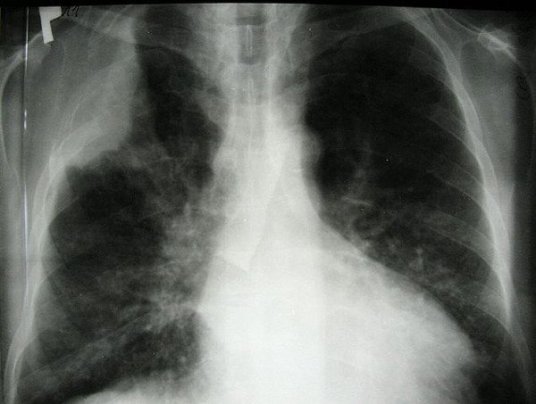
As announced by the Japanese Ministry of Health, Labor and Social Affairs (MHLW) on Tuesday, lung cancer was first recognized as a result of labor input during the disaster at the Fukushima Daiichi nuclear power plant.
The man in his mid-50s was employed at various nuclear power plants since June 1980. After the start of the Fukushima crisis in March 2011, he was commissioned with radiation measurements, but also dealt with the planning and the first measurement in decontamination work.
As the MHLW announced, the former power plant worker has since died. It is the first case in which lung cancer is recognized as a “catastrophic death”.
So far, only three cases of leukemia and one case of thyroid cancer have been recognized by former nuclear workers as a causal consequence of their work on the Fukushima Daiichi nuclear power plant. Prefecture media reported this late recognition of the lung cancer case.
Fukushima prefecture prepares for typhoon Jebi
After Typhoon Jebi landed in West Japan and shut down Kansai International Airport for at least two days, and caused power cuts in Osaka and claimed eight lives, the country’s northeast is also preparing for the storm.
In Fukushima prefecture, the biggest winds are expected from Wednesday morning. Due to the severity of the typhoon, it is assumed that the precipitation numbers will be even higher than is otherwise the case with a typhoon.
There is also a risk of landslides, as well as the risk of rivers overflowing and flooding of low-lying areas in coastal areas. Farmers prepare for the storm winds by securing their fields with windbreakers.
The weather authority demands that the house should not leave the house as much as possible and that information about possible weather warnings and evacuation orders should be tracked. Shelters are already prepared.
A total of five flights have already been canceled at Fukushima Airport. The flight cancellations affected 231 passengers.
Meanwhile, local electricity company TEPCO, the operator of the Fukushima Daiichi nuclear power plant, issued the usual standard warning of overhead power cables and called for these sightings to be reported.
About the preparations reported Prefekturmedien.
Translated from German, original source here;
http://www.spreadnews.de/fukushima-aktuell-erstmals-lungenkrebs-bei-akw-arbeiter-anerkannt/
BUT THE HEALTH EFFECTS HAVE BEEN REPORTED BEFORE!!
Shocking health effects in Fukushima nuclear workers found under the official radiation dose limits
“….The First male Daichi nuclear site worker had an official total dose of 50mSv.
“I suffered damages to kidneys, heart, etc. — all important organs in my body.”
The second male Daichi nuclear site worker had an official total dose of 56mSv. He said
“I went to such a severe accident site and worked at the risk of my life, but all I’ve got was this cruel reality and treatment!”
I suffered thyroid damage, and had all my stomach removed.
The third male Daichi nuclear site worker had an official total dose of just 19.2mSv.
He was diagnosed as having acute myelogenous leukemia.
My doctor said that “70% of the cells in your bone marrow were occupied by cancer. Without any treatment, you will die for sure.” …..” https://europeannewsweekly.wordpress.com/2016/03/18/shocking-health-effects-in-fukushima-nuclear-workers-found-under-the-official-radiation-dose-limits/
AND
Campaign to stop bad nuclear health practice in Fukushima concerning thyroid cancer epidemic
Safety checks delay construction of #MOX #nuclear fuel plant in #Aomori for the third time!

AOMORI – Construction in Aomori Prefecture of the world’s first commercial reactor to operate solely on plutonium-uranium mixed oxide fuel will be pushed back for the third time due to prolonged safety checks, the utility building the reactor said Tuesday.
Electric Power Development Co. had been planning to begin construction of major facilities at the Oma nuclear power plant in the prefecture during the latter half of this year, but told the Oma Municipal Assembly on Tuesday it has decided to delay the work by about two years. The delay means the new target for the reactor to begin operations is fiscal now 2026.
The move clouds the course of Japan’s policy for the nuclear fuel cycle, in which the reactor was supposed to play a key role. Mixed oxide (MOX) fuel is produced by extracting plutonium from spent nuclear fuel and mixing it with uranium. Tokyo is also under international pressure to slash its stockpile of plutonium, which has the potential to be used to produce nuclear weapons.
“We would like Electric Power Development to put top priority on safety and respond appropriately to the Nuclear Regulation Authority’s screening,” industry minister Hiroshige Seko said at a news conference.
The company, also known as J-Power, initially sought to start operations at the nuclear plant, to be located in the Aomori town of Oma with an output of 1.38 million kilowatts, in fiscal 2021, but put it back by one year in 2015 and then postponed it to fiscal 2024 in 2016.
Construction of the reactor began in 2008 after gaining state approval, but was stalled following the nuclear meltdowns at the Fukushima No. 1 power plant triggered by the 2011 earthquake and tsunami disaster.
About 40 percent of the construction has been completed, but work so far has centered on setting up office buildings and conducting road repairs.
J-Power applied for safety checks in December 2014, but NRA examinations have focused on assumptions about tsunami and earthquake risk at the overall complex and not at its nuclear facilities. An official at the company told the Oma Municipal Assembly that it may take two more years for the reactor to pass the screening.
J-Power said it hopes to start construction of the reactor and other facilities in the latter half of 2020 and complete it by the second half of 2025.
“It’s very regrettable that the project will be postponed once again. I hope (J-Power) will strive to swiftly pass the screening and help revitalize the regional economy,” Oma Mayor Mitsuharu Kanazawa said at the assembly meeting after hearing from the company official.
The Oma plant has also faced lawsuits seeking suspension of the project.
Residents in Hakodate, Hokkaido, which is some 23 kilometers northwest of Oma across the Tsugaru Strait, filed a lawsuit against the company and the central government with the Hakodate District Court in July 2010, claiming they are concerned about the large amount of highly toxic plutonium that will be used as reactor fuel.
The city of Hakodate also filed suit against the two parties with the Tokyo District Court in April 2014, saying it fears the impact of an accident at a so-called full-MOX reactor will be far more devastating than that of the Fukushima disaster, which led to the long-term evacuation of many local residents.
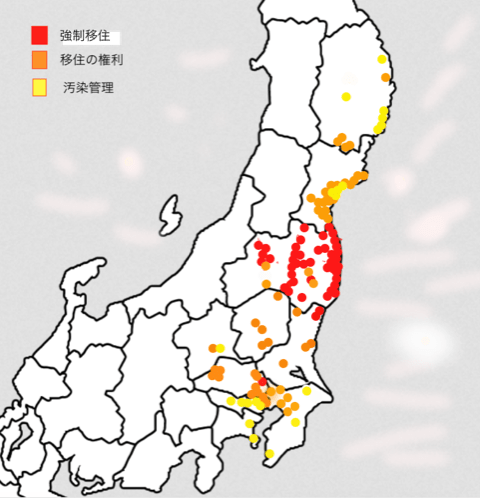
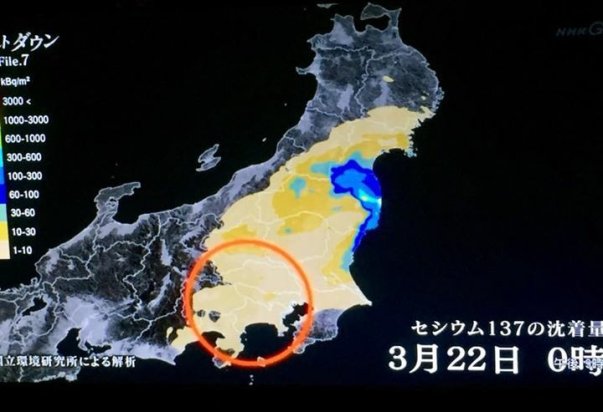
Letter to the International Olympic Committee #IOC from #Japan #Fukushima #UNHRC #IAEA #ICRP
Nuclear reactors shutting down faster than ones are being built
 Nuclear plant decommissioning outpacing new-build – report https://www.reuters.com/article/energy-nuclearpower/nuclear-plant-decommissioning-outpacing-new-build-report-idUSL8N1VM4EC
PARIS, Sept 4 (Reuters) – The decommissioning of nuclear reactors is far outpacing the construction of new plants, as the pace of Chinese reactor building has slowed and several developing countries have scrapped nuclear projects, an industry report showed.
In mid-2018, a total of 115 reactors were being decommissioned, about 70 percent of the world’s 173 reactors that have been permanently shut down, according to the annual World Nuclear Industry Status Report (WNISR).
Only 19 reactor units have been fully decommissioned – of which 13 are in the United States, five in Germany, and one in Japan – and just 10 have been returned to greenfield sites.
Many utilities prefer to let reactor cores cool off for decades on-site.
“Unscrewing a nuclear installation by workers who know how it was put together makes more sense than cutting it apart decades later by people who know nothing about it,” said Mycle Schneider, lead author of the report.
Decommissioning has become a major activity for many reactor builders and operators here, turning the costly process into a business opportunity.
By comparison, 15 countries are currently building nuclear power plants, two more than in mid-2017, as newcomer countries Bangladesh and Turkey started building their first units. Belarus and United Arab Emirates (UAE) have nuclear new-build projects that are well under way.
Nuclear new-build plans have been cancelled, including in Jordan, Malaysia and the United States, or postponed such as in Argentina, Indonesia and Kazakhstan, the WNISR report said.
Last week, South Africa scrapped a plan here to add nearly 10 gigawatt (GW) of nuclear power by 2030.
At the end of June, 50 reactors were being built worldwide — of which 16 are in China – with total capacity of 48.5 GW. Following the 2011 Fukushima disaster, the number of reactors under construction topped at 68 in 2013 but has trended downward since then.
A total of 413 reactors were in operation in 31 countries in mid-2018, ten more than a year ago and compared with a peak of 438 in 2002. The increase was due to the restart of several reactors that had suffered long-term outages.
The amount of electricity generated with nuclear energy worldwide rose one percent to 2,500 terawatt hours in 2017 and the share of nuclear power in power generation was 10.3 percent, virtually stable over the past five years. (Reporting by Geert De Clercq; Editing by Mark Potter)
| ReplyForward |
Climate change talks – in Bangkok – sinking below rising sea

With rising sea levels, Bangkok struggles to stay afloat https://www.afp.com/en/news/2265/rising-sea-levels-bangkok-struggles-stay-afloat-doc-18o4x91As Bangkok prepares to host climate-change talks, the sprawling city of more than 10 million is itself under siege from the environment, with dire forecasts warning it could be partially submerged in just over a decade.
A preparatory meeting begins Tuesday in Thailand’s capital for the next UN climate conference, a crunch summit in Poland at the end of 2018 to set rules on reducing greenhouse emissions and providing aid to vulnerable countries.
As temperatures rise, abnormal weather patterns — like more powerful cyclones, erratic rainfall, and intense droughts and floods — are predicted to worsen over time, adding pressure on governments tasked with bringing the 2015 Paris climate treaty to life.
Bangkok, built on once-marshy land about 1.5 metres (five feet) above sea level, is projected to be one of the world’s hardest hit urban areas, alongside fellow Southeast Asian behemoths Jakarta and Manila.
“Nearly 40 percent” of Bangkok will be inundated by as early as 2030 due to extreme rainfall and changes in weather patterns, according to a World Bank report.
Currently, the capital “is sinking one to two centimetres a year and there is a risk of massive flooding in the near future,” said Tara Buakamsri of Greenpeace.
Seas in the nearby Gulf of Thailand are rising by four millimetres a year, above the global average.
The city “is already largely under sea level”, said Buakamsri.
In 2011, when the monsoon season brought the worst floods in decades, a fifth of the city was under water. The business district was spared thanks to hastily constructed dikes.
But the rest of Thailand was not so fortunate and the death toll passed 500 by the end of the season.
Experts say unchecked urbanisation and eroding shorelines will leave Bangkok and its residents in a critical situation.
– ‘Venice of the East’ –
With the weight of skyscrapers contributing to the city’s gradual descent into water, Bangkok has become a victim of its own frenetic development.
Making things worse, the canals which used to traverse the city have now been replaced by intricate road networks, said Suppakorn Chinvanno, a climate expert at Chulalongkorn University in Bangkok.
“They had contributed to a natural drainage system,” he said, adding that the water pathways earned the city the nickname ‘Venice of the East’.
Shrimp farms and other aquacultural development — sometimes replacing mangrove forests that protected against storm surges — have also caused significant erosion to the coastline nearest the capital.
This means that Bangkok could be penned in by flooding from the sea in the south and monsoon floods from the north, said Chinvanno.
“Specialists anticipate more intense storms in this region in the years to come. Narong Raungsri, director of Bangkok’s Department of Drainage and Sewage, admitted that the city’s “weaknesses” stem from its small tunnels and the hyper-development of neighbourhoods.
“What used to act as water basins are now no more,” Raungsri said.
“Our system can only handle so much — we need to enlarge it.”
Today, the government is scrambling to mitigate the effects of climate change, constructing a municipal canal network of up to 2,600 kilometres with pumping stations and eight underground tunnels to evacuate water if disaster strikes.
Chulalongkorn University in 2017 also built in central Bangkok an 11-acre park specially designed to drain several million litres of rain and redirect it so surrounding neighbourhoods are not flooded.
But these ad-hoc fixes may not be enough.
“We need a clear policy of land management,” said Greenpeace’s Buakamsri, adding that the need for increased green spaces is outweighed by developers’ interests.
“The high price of land in Bangkok makes economic interests a priority.”
Nuclear power- detrimental to UK now, and to future generations
 Power technology 3rd Sept 2018 Nuclear power is high on the agenda for the UK Government, with a spate of projects planned in the coming years. But just how beneficial will it be to
the country?
Industry experts offer their views. Dr Ian Fairlie, member of
the Campaign for Nuclear Disarmament’s National Council “The reality is
that we don’t need new nuclear. As many studies indicate, renewables will
do the job. “The economics of nuclear are dire, with the cost of
renewables steadily falling whereas those of new nuclear are always rising.
Hinkley C would cost over £21bn if it were ever finished, while new
offshore wind turbines are already supplying electricity at less than half
the estimated cost of electricity of the mooted Hinkley C station if it
were ever built.
“Some nuclear proponents think that nuclear is the
answer to climate change. But nuclear lifecycle analyses prove the
contrary, as uranium mining and milling are highly carbon-intensive.
“Additionally, even after 50 years’ research, no government has found a
sure-fire way of keeping nuclear’s dangerous waste safe for hundreds of
thousands of years.
Finally, there is the incontrovertible evidence in over
40 studies of raised levels of childhood leukemia near nuclear reactors
worldwide. “We don’t need nuclear. It’s unsafe, uneconomic, and it
creates dangerous waste. Much better alternatives are already here. Nuclear
can hardly be said to be a benefit to the UK, more like a serious detriment
to us and to future generations.”
https://www.power-technology.com/features/67772/
Will UK’s House of Lords agree to force a geological nuclear dump on Cumbria
 Radiation Free Lakeland 2nd Sept 2018 , Will These Lords Leap to Cumbria’s Defence? Will They Shout About the
“Implementation” of Geological Dumping of Nuclear Wastes. On the 6th
September the House of Lords will be debating the Government’s cunning
plan to implement Geological Disposal of Nuclear Wastes. Radiation Free
Lakeland have sent a letter to all of the Cumbrian Lords to urge them to
tear up this policy which seeks to force a geological nuclear dump on
Cumbria and instead to scrap the whole “Implementation” plan. Our
letter is below [on original] and we urge all those who love Cumbria to write a similar
letter to any or all of the Cumbrian members of the House of Lords.
https://mariannewildart.wordpress.com/2018/09/02/will-these-lords-leap-to-cumbrias-defence-will-they-shout-about-the-implementation-of-geological-dumping-of-nuclear-wastes/
1 This Month
Chernobyl: The Lost Tapes – A good documentary on Chernobyl on SBS available On Demand for the next 3 weeks– https://www.sbs.com.au/ondemand/tv-program/chernobyl-the-lost-tapes/2352741955560

of the week–London Campaign for Nuclear Disarmament

Tell the Ukrainian Government to Drop Prosecution of Peace Activist Yurii Sheliazhenko
To see nuclear-related stories in greater depth and intensity – go to https://nuclearinformation.wordpress.com
-
Archives
- April 2026 (139)
- March 2026 (251)
- February 2026 (268)
- January 2026 (308)
- December 2025 (358)
- November 2025 (359)
- October 2025 (376)
- September 2025 (257)
- August 2025 (319)
- July 2025 (230)
- June 2025 (348)
- May 2025 (261)
-
Categories
- 1
- 1 NUCLEAR ISSUES
- business and costs
- climate change
- culture and arts
- ENERGY
- environment
- health
- history
- indigenous issues
- Legal
- marketing of nuclear
- media
- opposition to nuclear
- PERSONAL STORIES
- politics
- politics international
- Religion and ethics
- safety
- secrets,lies and civil liberties
- spinbuster
- technology
- Uranium
- wastes
- weapons and war
- Women
- 2 WORLD
- ACTION
- AFRICA
- Atrocities
- AUSTRALIA
- Christina's notes
- Christina's themes
- culture and arts
- Events
- Fuk 2022
- Fuk 2023
- Fukushima 2017
- Fukushima 2018
- fukushima 2019
- Fukushima 2020
- Fukushima 2021
- general
- global warming
- Humour (God we need it)
- Nuclear
- RARE EARTHS
- Reference
- resources – print
- Resources -audiovicual
- Weekly Newsletter
- World
- World Nuclear
- YouTube
-
RSS
Entries RSS
Comments RSS
 nuclear-news