New Brunswick should have second nuclear reactor: energy minister
The Canadian Press
July 9, 2018 07:19 AM
POINT LEPREAU, N.B. — New Brunswick’s energy minister says he’d like to see another nuclear reactor built in the Maritime province.
Canada and New Brunswick have an opportunity to become world leaders in the SMR technology and into bringing a clean, new and reliable source of ultra-low carbon power to the forefront of global climate change,” Doucet said Monday.
“The long-term vision is to build a commercial demonstration SMR plant at the Point Lepreau nuclear generating station,” Doucet said. “Construction of an SMR would be a major undertaking, which would see thousands of workers hired for construction.”
The company wants to build small, 100-megawatt reactors that it describes as inherently safe. A prototype operated for 30 years in the United States but the technology was never developed.
“We intend to demonstrate that the inherent safety features of our reactor enable a simple and cost effective design which will be competitive with all other forms of electricity generation,” said Don Wolf, chairman of Advanced Reactor Concepts.
Their ARC-100 reactor uses a technology that Wolf says doesn’t require the costly safety measures required by other nuclear reactors.
“The fuel is not an oxide of uranium, it’s a metal. The combination of the sodium as a coolant (rather than water) the metal fuel and the proprietary core design of the ARC reactor gives it inherent safety,” Wolf said.
Gaetan Thomas, president of Crown utility NB Power, said such reactors can be cost efficient.
“When you put all those factors together, it’s an ideal solution for the future,” Thomas said.
The New Brunswick government recently announced it will spend $10 million to create a nuclear research cluster.
New Brunswick’s 660-megawatt Candu-6 reactor at Point Lepreau is the only nuclear power plant in Atlantic Canada.
It underwent a $2.4 billion refurbishment between 2008 and 2012. The refurbishment was plagued by repeated delays and cost overruns.
Wolf said his company could start building ARC-100 reactors as early as 2030, and he said New Brunswick would be an ideal place to do it.
“I think you have an ideal situation here with respect to the trained workforce, the enthusiasm about nuclear power, and all the ingredients to have this be a world export hub,” he said. “There’s no reason why it shouldn’t be built here.”
Robert Blakely, a director with Canada’s Building Trades Unions, called Monday’s announcement significant.
He said while it doesn’t mean shovels in the ground in the near future, it provides hope for the years to come.
“This provides an opportunity to get young New Brunswickers into great trades, high-skilled, high-paying, rewarding careers,” Blakely said.
New UK nuclear safeguards regime to replace #EURATOM #BREXIT UK runs away from new European safety legislation!

New proposals on the detail of a new UK nuclear safeguards regime to replace the current regime provided by Euratom, have been set out in a consultation.
- government sets out the details of new nuclear safeguards regime
- nuclear safeguards legislation receives Royal Assent – UK on track to be able to meet international commitments once Euratom arrangements cease to apply in the UK
- progress provides certainty to the civil nuclear industry and international partners as the UK prepares for Euratom exit
New proposals on the detail of a new UK nuclear safeguards regime to replace the current regime provided by Euratom, have been set out in a consultation launched today (Monday 9 July 2018).
The consultation sets out nuclear safeguards regulations that would be made using the powers granted by the Nuclear Safeguards Act, which last month became one of the first pieces of EU Exit legislation to complete its passage through Parliament and receive Royal Assent.
Business and Industry Minister, Richard Harrington said:
The Nuclear Safeguards Act is one of the first pieces of legislation to go through Parliament in preparation for EU Exit and is yet another major milestone in our work to prepare the civil nuclear industry for Euratom exit, ensuring continuity from day 1.
We are setting out proposals for the detail of our own UK framework for safeguards, demonstrating our readiness for EU Exit.
The Nuclear Safeguards Act addresses the United Kingdom’s departure from the European Atomic Energy Community (Euratom), an international organisation that governs the peaceful use of nuclear energy within the EU. The passing of the Act and today’s consultation on a new safeguards regime provide a clear signal to the public, industry and international partners that the UK is on track to meet its international commitments from day one of exit.
Nuclear safeguards are important processes through which the UK demonstrates to the international community that civil nuclear material is not diverted into military or weapons programs.
Today’s announcement comes just weeks after the UK’s commitment to international safeguards and nuclear non-proliferation was reaffirmed in Vienna, with the signing of 2 new safeguards agreements with the International Atomic Energy Agency (IAEA).
These key agreements with the IAEA – of which the UK is a founding member – are another major milestone in Euratom exit preparations and provide the basis for civil nuclear trading arrangements. This step will be welcomed by the industry in the UK and trading partners around the world.
Further progress towards Euratom Exit has been set out in a Quarterly update to Parliament published on 28 June, which outlines several key achievements, including the Office for Nuclear Regulation’s good progress on preparations for implementing the UK’s safeguards regime and the confirmation that all Euratom specific text in the Withdrawal Agreement has now been agreed.
The UK signed a new Nuclear Cooperation Agreement (NCA) with the United States of America in May, which will allow the UK and US to continue their mutually beneficial civil nuclear cooperation when the current Euratomarrangements cease to apply to the UK.
This US-UK NCA is expected to be the first in a series of new international agreements ensuring uninterrupted cooperation and trade following the UK’s exit from Euratom.
Details on how to respond to the consultation and to register interest for the workshops, can be found on the consultation web page.
Source for article https://www.samajweekly.com/uk-nuclear-safeguards-on-track-for-eu-exit/
Trump CAN order a nuclear strike! Vipin Narang
The Kennedy questions in ‘62 about whether, and how, he could order a nuclear launch without consulting the Pentagon is particularly important. No official answers given but…POTUS can.
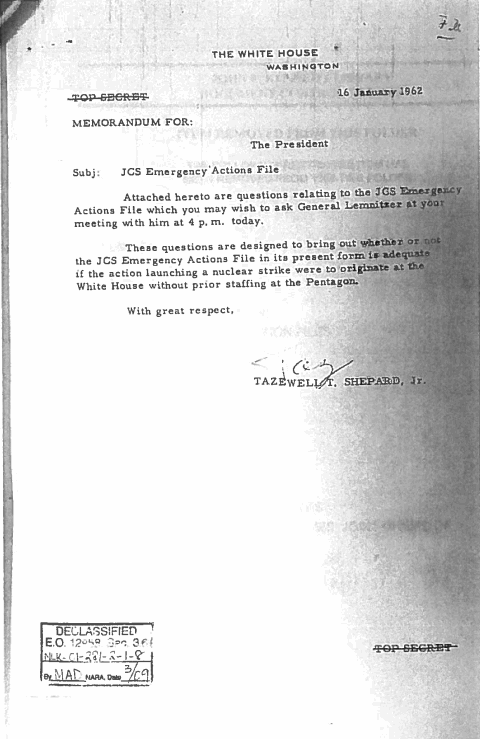
https://nsarchive2.gwu.edu//dc.html?doc=4564668-Document-03-Tazewell-Shepard-to-the-President
Management shift begins at US nuclear weapons lab – Los Alamos

LOS ALAMOS, N.M. (AP) — The U.S. government on Monday cleared the way for a new management team to begin taking over one of the nation’s top nuclear weapons laboratories as it looks to rebuild its reputation.
The National Nuclear Security Administration issued an official notice to proceed to Triad National Security LLC , marking the beginning of a transition at Los Alamos National Laboratory that will take about four months.
Made up of Ohio-based Battelle Memorial Institute, Texas A&M University and the University of California, the management team was announced as the winning bidder in June of a coveted $2.5 billion-a-year contract to manage the northern New Mexico lab.
The University of California has played a key management role at the lab since it was created as part of a top-secret effort during World War II to build the atomic bomb. The federal government opted to put the contract up for bid following missed goals and a string of safety lapses involving the handling of plutonium and radioactive waste.
The new contract also comes as the U.S. has tasked the lab with building at least 30 plutonium cores a year. The cores are used to trigger nuclear weapons, and the work is complex.
The University of California on Monday touted the scientific work done at the lab over the decades — from its role in the Human Genome Project to experiments in nuclear medicine and work on renewable energy and climate change.
http://uk.businessinsider.com/ap-management-shift-begins-at-us-nuclear-weapons-lab-2018-7
China’s CGN denies eyeing stake in UK nuclear stations
China Daily, July 10, 2018
China’s major nuclear power operator, China General Nuclear Power Corp, denied it is in an early stage to buy a big minority stake in Britain’s fleet of nuclear power stations.
The company hasn’t conducted related work yet, Huang Xiaofei, spokesperson for the company, told China Daily on Monday.
The comment came after reports saying CGN is considering an approach for a share of up to 49 percent in the eight power stations, which generate a fifth of the nation’s electricity.
The stake, worth up to £4 billion ($5.3 billion), is being sold by Centrica, the parent company of British Gas, and the French giant EDF, according to the Times.
http://www.china.org.cn/business/2018-07/10/content_55973144.htm
The Geiger Diaries: A Temples Tale Of Fukushima City

Sadamaru Okano and his wife at Seirinji temple.
Sadamaru Okano is a Zen priest at the Seirinji temple in the Fukushima region. He is one of the few individuals to have systematically collected radiation data in Fukushima that predates the Safecast data set. Here he speaks about his experiences in Fukushima around the time of the earthquake of 2011 and why he stays involved with Safecast seven years after the Daiichi nuclear meltdown.
You are one of the few people that had radiation data from the time predating the 2011 Tohoku earthquake. What led you to start collecting that data?
When I was young – or should I say younger – in the late 80s and early 90s, I travelled quite a bit, many times in connection with volunteering. It introduced me to many cultures and gave me many friends from all over the world. On a couple of the trips, I met volunteers from countries in Eastern Europe. Of course, I knew about Chernobyl, but in my mind, it was over. This was the way that most people thought and felt about it. However, I met volunteers from Belarus and Ukraine who told me that it was definitely not over. That was one of the things that made me start to study radioactive materials and later to start taking measurements in the area around the temple where I am a priest today.
The temple and your family have a long relation to this area, I believe. Can you tell me a bit about it and your memories of growing up here in Fukushima?
Our current temple, where we sit today, is over 150 years old. Before that, there was a similar temple on the grounds. My mother was born in Kawauchi village, and we have many relatives in other cities across the prefecture. I have cousins that used to live in Namie and Tomioka – most of them cannot go back there because of the exclusion zone. Today, they live in places like Tokyo, Kamakura, and Saitama.
Growing up in the post-war era, I loved going to my cousins and relatives who lived on the seaside. My sister and I would visit my uncle’s house for two weeks in the summer. The government was investing a lot of money in construction along the coast, and we were amazed to see that they had things like paved roads. At home, we still had jarimichi – gravel roads. Many elderly people in the coastal towns would stop us and give us okozukai – a kind of pocket money. Of course, my sister and I were very happy with this.
Growing up, I was very much of two minds about whether I should follow my father’s path and become a priest. My father, who became my teacher and master, gave me the freedom to choose. At a point during my college years, I realised that I wanted to follow on in the family tradition.
Our local community has around 350 houses, and I realised that if I became a priest, I would become a useful person for the people in that community. After college, I was trained by a senpai who, like a master, instructed me in the way to get in touch with people by my own heart – a way that is built on listening to them by myself in order to empathise with them. My function is not to be someone who is trying to save people, but someone who can listen, understand, and help bring clarity.
You were in the area on the day of the 2011 Tohoku earthquake. What were your experiences and your memories of those days?
I had been in Iitate village with my wife and three-year-old son. We were driving back home at the time. It may sound strange if you have never experienced it, but being inside a car makes an earthquake feel less severe. We knew that it was serious, though, so I pulled the car over to the side of the road. It was around that time that the first quake subsided. Then the second one struck. On the mountainside ahead of us, a kawamata, a form of stacked retaining wall, was shaken loose and slid down. Cracks, some up to 20-30 centimetres wide, appeared in the road surface. By the end, I found myself clinging to the steering wheel. The second quake was followed by a third, each seemingly as powerful as the one before it.
Luckily, none of us were injured, and we decided to keep going towards the temple and our house.
Driving back to our temple and house, I was convinced that I would find that they had been destroyed by the quakes. I was surprised and happy to see that it wasn’t the case. Other houses in the area, however, were quite damaged. A couple of houses had roofs hanging off. A couple others had collapsed walls.
I was worried and wondered if people were safe or not, so I started going around to the neighbours. Ten of the houses in the area were seriously damaged, but luckily nobody was injured.
Throughout the day, we had so many aftershocks. And then there was the tsunami. First, there was a tsunami warning, and I immediately thought about my relatives living on the coast. My cousins live on high ground, but they used to work at the seaside. I remember seeing the first images of the coastal areas, including near where my uncle’s family had lived when I was a child.
That day was so full of activity. It wasn’t until that night that I realised that my son hadn’t spoken a word since the first quake. At his age at the time, children are constantly talking. He was no different. But for the first few days after the quake, he didn’t say a word.
What was it like to be in the area in the days after the quake, as the situation around Daiichi became clearer?
I had been already gathering radiation data in my local area for some time before that. After the quake, I kept on taking measurements. I was very worried about the situation with the nuclear power plants, and while there was some doubt, I thought that there had very likely been a meltdown. I also remembered visits to my uncle when the power plant was under construction, and I knew that it was right on the coast. I was worried that it was too near the water and built on too low ground.
The situation kept evolving and while we were being told by the Government and TEPCO that things were fine, I was taking measurements around my temple that were 30 to 50 times above normal background. Of course, I was very worried.
At the same time, family and people from the nearby areas started to arrive at the temple. I think that at one point there were 85 people here. Many would not be able to return to their homes after Daiichi. Today, some people that were displaced by the tsunami live in what was supposed to be temporary housing on the hill below the temple.
One strange thing was that some refugees that came to us were unaware of the fact that there had been a tsunami. The quake and waves had knocked out the electricity supply and much of the information infrastructure, so they had no access to information. The first time they saw the tsunami was on TV and they were very shocked.
There was a lot of confusion about what was happening. The Government put out a warning that told people to ‘shelter in place’. It means to stay inside and close windows. At the same time, the evacuation zone around Daiichi kept being expanded. First, it was three kilometres, then five, seven, ten, 20 kilometres, and a 30km ‘shelter in place’ zone. One thing I remember from the time is that no one talked about whether food and water were safe to consume at that time.
Was it at that time you came into contact with Safecast?
No, that happened much later. My first contact with Safecast was actually based around a misunderstanding.
In July of 2013, Joe Moross and Kiki Tanaka were in the area to install a Pointcast, a fixed real-time radiation monitoring system. There was a misunderstanding with the person where the sensor was supposed to be installed, and there wasn’t the necessary internet. One of the local Safecast volunteers, Munakata-san, said that there was a Zen priest in Fukushima City who had been collecting radiation data for a long time. Why not come here to the temple and ask if they could put up the sensor?
When they arrived, my initial reaction was that this was just what I had been looking for.
For me, what I have done, and part of why I continue to work with Safecast, is the focus on open, communal data. We need to have different data sets in order to compare results and find a way to establish the facts. For me, I had no one to directly compare my own results with. Perhaps very few people outside of the local area knew that I was taking measurements. Since then, there has been a Safecast radiation monitor attached to the temple.
When you say that your reaction to meeting Safecast was that this was exactly what you had been looking for, what do you mean?
After the earthquake, I think that for most people in the Fukushima area it quickly became apparent that the information that was coming out of the Government and TEPCO was, to put it mildly, incorrect. The idea that everything was safe, which was what they started with saying, quickly turned into a myth. People lost their belief in the objectivity of data and information coming from those channels.
I serve a function for my community, and I speak to many of the members of my neighbourhood very regularly. The general feeling after the meltdown was that people were scared. We knew that the plant had exploded and radioactive materials were in the atmosphere. Some people decided to evacuate. Some decided to stay. However, no one really knew what the situation was really like.
Access to data and information that can be compared to other sources enables people to make their own decisions. You can present them to people and say ‘these are just numbers. I will not tell you what to think about them. You can choose if you think that it’s safe or not for your life – if it’s safe to play outside, go into the mountains, or fish in the rivers.’
As a religious person, I believe that this is our destiny. It’s our own opportunity to choose a better way to live. And in the end, this is a decision that we must make by ourselves.
As a gadget guy, I believe that we need to continue measuring on a daily basis. The data we generate that way can be used to society’s benefit.
As a parent, I will use this data, radiation measurements, and the idea about open access to data and information to educate my son so he will be able to decide his own destiny and help people in the community that he chooses to live in.
https://blog.safecast.org/2018/05/the-bgeigie-diaries-the-temple-tale-of-fukushima-city
Restarting Tokai No. 2 nuclear plant would be a huge mistake
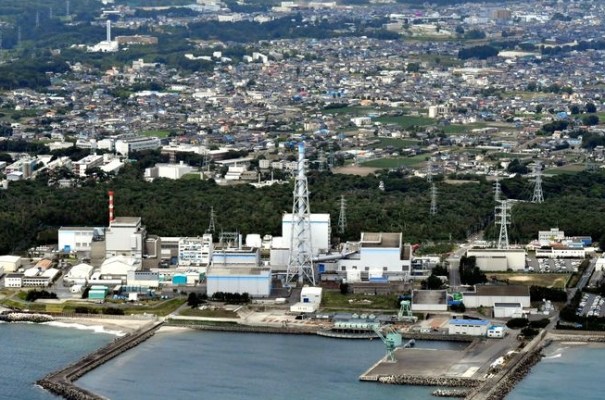
Oi nuclear Plant ‘Safe’ to Operate

Court overturns injunction, says Oi nuclear plant safe to operate

Fukushima to open shop in NYC to boost sake exports

Aging Nuclear Plant Tokai To Restart

Nuclear watchdog OKs restart of aging nuclear plant hit by tsunami

Nuclear watchdog OKs restart of aging tsunami-hit Tokai nuclear plant
Tourists in Fukushima Nuclear Disaster Zone to Stay Away!

English signs tell tourists to stay away from Fukushima plant
Tourists told to stop taking selfies in Fukushima nuclear disaster zone
Radiation still too high in reactor# 2 building


Nuclear power vanishing in America, irrelevant to climate action
 Nuclear power predicted to ‘virtually disappear’ in the US Power Technology 5th July 2018 By Scarlett Evans, Researchers from Carnegie Mellon University’s Department of Engineering and Public Policy have released a report detailing nuclear power’s dwindling significance in the US, stating that it is unlikely to make any noteworthy contributions to the country’s decarbonised energy system over the next few decades.
The report, published in Proceedings of the National Academy of Science, examined the potential contribution of large, light water nuclear reactors (LWRs) to the US energy system over the next three or four decades…… The researchers also examined whether advanced reactor designs and factory-manufactured smaller light water reactors (known as small modular reactors or SMRs) would play a significant role in US energy markets, being the only other option for the large-scale deployment of nuclear power. The study took several scenarios into account, such as using SMRs as wind or solar back-ups, to desalinate water, produce heat for industrial processes, or serve military bases.
https://www.power-technology.com/news/nuclear-power-predicted-virtually-disappear-us/
British residents will be locked into very high electricity costs, as govt takes a £16 billion stake in Wylfa nuclear station

 London Economic 4th July 2018 After weeks of discussions over the risks of investing in large-scale
energy projects, the British government proposed to become an equal
investment partner in the new Wylfa Newydd nuclear plant. Under a
tripartite financing structure, London is going to take a £16 billion
stake in the plant, signalling that it has learned its lessons from past
failures. Both in Wales and further east in Europe, a public stake plays a
critical role in facilitating large-scale, low carbon energy projects.
Any discussion of the planned Wylfa Newydd project is obliged to give a cursory
nod to Hinkley Point C, the first and only nuclear power station to be
built in the UK since 1995. When complete, Hinkley Point will produce the
most expensive electricity compared to all power stations bar none.
Globally.
The irony is that this is largely due not to the installation
costs (admittedly somewhat higher than competition) but to its financing
model. The House of Commons Committee of Public Accounts frets that with
“estimated costs to the consumer having risen five-fold” since the
project’s go-ahead, the deal struck on Hinkley Point locks Brits into
footing the bill for the government’s lack of nous when negotiating the
‘strike price’ for electricity produced at the facility.
https://www.thelondoneconomic.com/opinion/splitting-the-financial-atom-how-public-backing-produces-cheaper-nuclear-power/04/07/
Temperature rise could be double what has been predicted
 Guardian 6th July 2018 Temperature rises as a result of global warming could eventually be double
what has been projected by climate models, according to an international
team of researchers from 17 countries. Sea levels could also rise by six
metres or more even if the world does meet the 2 degree target of the Paris
accord.
The findings, published last week in Nature Geoscience, were based
on observations of evidence from three warm periods in the past 3.5m years
in which global temperatures were 0.5-2 degrees above the pre-industrial
temperatures of the 19th century.
The researchers say they increase theurgency with which countries need to address their emissions. The
scientists used a range of measurements to piece together the impacts of past climatic changes to examine how a warmer earth would appear once the climate has stabilised.
https://www.theguardian.com/environment/2018/jul/06/global-temperature-rises-could-be-double-those-predicted-by-climate-modelling
1 This Month
Chernobyl: The Lost Tapes – A good documentary on Chernobyl on SBS available On Demand for the next 3 weeks– https://www.sbs.com.au/ondemand/tv-program/chernobyl-the-lost-tapes/2352741955560

of the week–London Campaign for Nuclear Disarmament

Tell the Ukrainian Government to Drop Prosecution of Peace Activist Yurii Sheliazhenko
To see nuclear-related stories in greater depth and intensity – go to https://nuclearinformation.wordpress.com
-
Archives
- April 2026 (189)
- March 2026 (251)
- February 2026 (268)
- January 2026 (308)
- December 2025 (358)
- November 2025 (359)
- October 2025 (376)
- September 2025 (257)
- August 2025 (319)
- July 2025 (230)
- June 2025 (348)
- May 2025 (261)
-
Categories
- 1
- 1 NUCLEAR ISSUES
- business and costs
- climate change
- culture and arts
- ENERGY
- environment
- health
- history
- indigenous issues
- Legal
- marketing of nuclear
- media
- opposition to nuclear
- PERSONAL STORIES
- politics
- politics international
- Religion and ethics
- safety
- secrets,lies and civil liberties
- spinbuster
- technology
- Uranium
- wastes
- weapons and war
- Women
- 2 WORLD
- ACTION
- AFRICA
- Atrocities
- AUSTRALIA
- Christina's notes
- Christina's themes
- culture and arts
- Events
- Fuk 2022
- Fuk 2023
- Fukushima 2017
- Fukushima 2018
- fukushima 2019
- Fukushima 2020
- Fukushima 2021
- general
- global warming
- Humour (God we need it)
- Nuclear
- RARE EARTHS
- Reference
- resources – print
- Resources -audiovicual
- Weekly Newsletter
- World
- World Nuclear
- YouTube
-
RSS
Entries RSS
Comments RSS
 nuclear-news