Kenya’s nuclear quest: A case of extreme optimism? As the country moves towards the reality of nuclear energy by 2027, questions on expertise and safety concerns abound. Daily Nation, 2 Jan 17“………While the government brags that over 60 per cent of the country’s population has access to power, unreliable power supply and frequent power outages steal the thunder from this achievement, pushing the government into overdrive to boost power production.One of the strategies is to put up a nuclear energy plant by 2027, in a fervent push to lower the country’s energy deficit and electricity tariffs.
The project will cost a staggering Sh2 trillion begging the question of whether it will lower energy tariffs and still remain afloat.
Sceptics also argue that a sunshine-rich country such as Kenya should never think of going the risky route of nuclear energy……
While government officials strongly defend the nuclear project, questions abound about how a country whose major cities – Nairobi, Kisumu, and Mombasa – have failed to handle minor fire disasters and basic household waste will effectively deal with toxic wastes, which are the by-product of nuclear power generation.
In Nairobi for instance, where every individual generates about two kilogrammes of waste every day, garbage is littered all over, with roads becoming impassable when it rains. Moreover, some hospitals and clinics carelessly dispose their medical waste in landfills ran by cartels, yet the government insists it can handle nuclear waste.
One of the critics of nuclear power generation is North Horr Member of Parliament Chachu Gaya, who says that the government should explore safer sources of energy such as solar and wind energy, and only consider nuclear as an energy source of last resort……
Opponents are also worried about health hazards, safety and radioactive waste management, with questions about the country’s preparedness to deal with radioactive waste and accidental leaks which advanced economies like Japan have grappled with.
“Kenya only rides on optimism in its quest to generate nuclear power, but lacks human capital or infrastructure to roll out the technology,” says Oyath, adding that Kenya’s poor waste management strategies and pitiable response to disasters are considerable grounds to dismiss the project……..http://www.nation.co.ke/health/Ready-for-nuclear/3476990-4248378-l09oc2/index.html
No Inspections At Construction Sites Without Strong Proof Of Radioactive Readings: Mosti, Malaysian Digest, 02 January 2018 , KUALA LUMPUR:Inspections at construction sites will not be carried out until there is strong proof of elevated readings on radioactivity content in building materials……..
Nuclear and radiation experts yesterday had cautioned the public over potential hazards posed by naturally-occurring radioactive elements in construction materials.
Commonly found in materials naturally sourced from earth, uranium and thorium are Naturally Occurring Radioactive Materials (NORM) often found in bricks, cement blocks, granite, marble or glazed tiles used in the construction of homes.
The two elements (uranium and thorium) undergo a natural decaying process to form other harmful elements and emit several types of radiation, particularly alpha, beta or gamma rays.
Atomic Energy Licensing Board (AELB) director-general Hamrah Mohd Ali previously said a statement that excessive exposure to these rays could damage human tissue and cells, and cause health issues or death.
He said apart from the dangers of being exposed to lethal radiation, uranium and thorium also produced radon and thoron, which are also lethal gases……
While this number was much lower than the previous year, one incident was above the lowest level on the INES scale, for the first time since 2015.
The International Nuclear Events Scale (INES) has seven levels, Level 1 being the lowest.
In 2016 there were 15 nuclear incidents in Belgium, all on Level 1. While there were fewer incidents this year, one of these was on Level 2.
That incident took place in July, during the transport of poorly packaged radioactive material that had been sent on passenger flights from Cairo to Brussels via Zurich. Many passengers, including one Belgian, were potentially exposed to radiation above the prescribed limit, but without any significant consequences for their health.
One of the Level 1 incidents was at the Doel plant where a deterioration of the concrete was observed in October.
The company behind one of Britain’s biggest nuclear power projects has plunged to a £266 million loss citing ‘uncertainties’ over its future and the viability of crucial technology.
Japanese firm Toshiba said the huge loss incurred by one of its UK subsidiaries was due to writing off hundreds of millions of pounds of investment in the proposed Moorside plant, in west Cumbria.
It is the latest sign of financial strain at the Tokyo-based firm amid wider concerns over the spiralling costs and catastrophic delays that have beset the UK’s nuclear industry.
The plan: How the plant at Moorside was planned to look. Now the project has an uncertain future
Britons were last week supposed to be cooking their turkeys with power from EDF’s nuclear plant at Hinkley Point in Somerset, which is now not expected to be in use for another decade.
‘EDF will turn on its first nuclear plant in Britain before Christmas 2017,’ said Vincent de Rivaz in 2007, who stepped down as group chief executive in November. ‘It is the moment of the power crunch. Without it, the lights will go out.’
It was envisaged that new nuclear plants at Moorside, Hinkley Point and Wylfa in Anglesey would between them generate a fifth of the UK’s electricity.
This may still happen. But right now, nuclear firms are struggling with the expense, stringent regulatory hurdles and costly project delays – just as the cost of other forms of electricity fall.
Toshiba won the contract to build the nuclear power plant at Moorside, on land next to the Sellafield nuclear fuel reprocessing site.
But it was forced in March to place its US nuclear division Westinghouse into bankruptcy protection. Last month, it said it would sell Westinghouse for £4 billion. Troubled Toshiba is now in talks to sell its interests in the Moorside project to Kepco, majority-owned by the South Korean government.
Heat is on: We had been told that by 2017 we would be cooking the turkey with power from Hinkley (due to be ready in 2025)
Toshiba has two UK subsidiaries: Advance Energy UK, which incurred the £266 million loss; and NuGeneration, which is directly responsible for running Moorside.
With a cloud of uncertainty over the project, the Japanese firm has admitted in reports issued by its UK subsidiaries: ‘The directors do not know whether a sale of the shares of [NuGeneration] will be completed nor how any successful bidder will frame the deal.’
Kepco said it hoped to complete a deal to take over the running of the project early next year.
Uncertainties are understood to include the use of Westinghouse’s AP1000 reactor. Approval for use at Moorside was first sought from UK regulators in 2011. It was granted approval by the Office for Nuclear Regulation in March – just days after Westinghouse entered bankruptcy protection.
Should Kepco decide to ditch the design and use its own, the project would likely be delayed for years until a new design is approved. Some estimates say that could put any launch back from 2025 to the late 2020s at the very earliest. ‘The whole thing is a mess,’ said Martin Forwood of campaign group Core, which opposes the Moorside development.
‘Kepco would almost certainly push to use its own reactors so the big question is whether they would have to start afresh on consultation.
‘A lot of people around Moorside believe it will never take off.’
Forwood said the costs of other forms of renewable energy are falling and energy storage systems are being developed. ‘The longer these plans get delayed the less nuclear is needed,’ he added.
And, according to Forwood, the firms involved in the projects at Moorside and Wylfa ‘are not going to get anywhere near what the Government signed up for at Hinkley’.
The House of Commons Public Accounts Select Committee last month said there had been ‘grave strategic errors’ awarding French government-backed EDF the Hinkley Point contract.
It said ‘the economics of nuclear power in the UK have deteriorated’ and a ‘blinkered determination’ to agree the 35-year Hinkley deal, ‘regardless of changing circumstances’ had lumbered consumers with £30 billion payments over market rates for electricity.
“Normally, both the dose rate of radioactivity in the air and the density of soil contamination are needed to define the evacuation zones. Indeed, in TEPCO Fukushima Daiichi nuclear accident plant, the radiation protection of workers is organized according to the combination of the radiation dose, the surface contamination density and the concentration of radioactive substances in the air.”
We published the most recent map of soil contamination made by the “Environmental Radioactivity Measurement Project around Fukuichi (Fukushima Daiichi)”.
Nous publions la carte la plus récente de la contamination du sol faite par le “Projet de mesure de la radioactivité environnementale autour de Fukuichi (Fukushima Daiichi)”.
「ふくいち周辺環境放射線モニタリングプロジェクト」作成の最新の土壌汚染マップをアップいたします。
We have published several soil contamination maps of the “Environmental Radioactivity Measurement Project around Fukuichi” in this blog (see maps of Namie, Minamisoma). Normally, the government should take the measurements, but the government relies on measures of the dose rate of radioactivity in the air at the expense of radio-contamination measurements at the surface and in the air (in terms of volume radioactive substances). In response to the lack of this vital information for the radiation protection of the population, civil groups carry out soil measurements.
Nous avons publié plusieurs cartes de contamination du sol du “Projet de mesure de la radioactivité environnementale autour de Fukuichi” dans ce blog (voir les cartes de Namie, Minamisoma). Normalement, le gouvernement devrait effectuer les mesures, mais le gouvernement s’appuie sur les mesures du débit de dose de la radioactivité dans l’air au détriment des mesures de radio-contamination à la surface et dans l’air (en termes de volume de substances radioactives). Pour répondre à l’absence de cette information essentielle pour la radioprotection de la population, les groupes civils effectuent des mesures du sol.
Normally, both the dose rate of radioactivity in the air and the density of soil contamination are needed to define the evacuation zones. Indeed, in TEPCO Fukushima Daiichi nuclear accident plant, the radiation protection of workers is organized according to the combination of the radiation dose, the surface contamination density and the concentration of radioactive substances in the air. (See Control of radioactivity dose rate is not a satisfactory radiological protection measure.)
Normalement, le taux de débit de dose de la radioactivité dans l’air et la densité de contamination du sol sont nécessaires tous les deux pour définir les zones d’évacuation. En effet, dans TEPCO Fukushima Daiichi centrale nucléaire accidentée, la radioprotection des travailleurs est organisée en fonction de la combinaison de la dose de radiation, la densité de contamination de surface, et la concentration de substances radioactives dans l’air. (Voir Le contrôle du débit de dose de radioactivité n’est pas une mesure de radioprotection satisfaisante.)
Yet, for ordinary people, under the current Japanese government, only the rate of dose rate of radioactivity in the air is taken into account, neglecting the risk of internal exposure to radioactivity (note 1). Evacuation orders are lifted, and residents without a manual or occupational radiation protection training are encouraged to return, including infants and pregnant women, to be exposed to the highly radio-contaminated environment (see maps and instructions). read the article, No human rights in Namie to Fukushima?).
In this situation, what will be the use of soil contamination maps created by civil groups? How will local administrations deal with it? Will they benefit?
Pourtant, pour les gens ordinaires, sous l’actuel gouvernement japonais, seul le taux de débit de dose de la radioactivité dans l’air est pris en compte, en négligeant le risque d’exposition interne à la radioactivité (note 1). Les ordres d’évacuation sont levés, et les habitants sans manuel, ni formation professionnelle de radioprotection sont encouragés à retourner, y compris les bébés et les femmes enceintes, pour être exposés dans l’environnement très fortement radio-contaminé (voir les cartes et lire l’article, Pas de droits de l’homme dans Namie à Fukushima?).
Dans cette situation, quelle sera l’utilisation des cartes de contamination du sol créées par les groupes civils? Comment les administrations locales s’en occuperont-elles? Vont-ils en tirer profit?
This article examines the systems for designating and containing both the contamination from the March 2011 Fukushima nuclear power plant (NPP) accident and the fear of radiation. This discourse of containment appears in the cinematic images of two fiction films: Land of Hope (Kibō no kuni, 2012) and The Tranquil Everyday (Odayaka na nichijō, 2012). I look at the films’ portrayals of the female characters who struggle to confirm and assess radiological danger in so-called “safe” zones. When they voice their fears and challenge the illusion of safety, they themselves are contained and made invisible by the diagnoses of radiophobia, hysteria, and paralyzing fatalism.
In the aftermath of the nuclear meltdowns at the Fukushima Daiichi Nuclear Power Plant (NPP) in spring 2011, the Japanese government and plant owner Tokyo Electric Power Company (TEPCO) sought to contain the disaster and to allay the fears of citizens. These measures of containment took tangible, visible form as words, actions, images, and physical objects: the various designations for the evacuation areas, no entry signs, fences, barriers, protective gear, masks, and government assurances of “no immediate health risks” (tadachi ni eikyō wa nai).1 Yet the danger itself—radiation spewing from the plant—remained invisible. Hence these signifiers had to overcompensate for our inability to perceive the nuclear threat by attempting to mark the boundaries of the invisible. In doing so, they sought to grant a sense of security that turned out to be as false as the myth of safety surrounding Japan’s nuclear program itself.
This article examines these systems of nuclear signification, specifically this discourse of containment, as it appears in two works of post-disaster Japanese cinema: Sono Sion’s Land of Hope (Kibō no kuni, 2012) and Uchida Nobuteru’s The Tranquil Everyday (Odayaka na nichijō, 2012).2 The systems of nuclear signification are at work in both of these fiction films as characters attempt to assess the level of danger even though they are outside the official designated no-go zones. Land of Hope is set in an area designated as an evacuation zone where danger is identified, and by extension, safety ostensibly reassured. However, when the characters leave the disaster area, the boundaries become much harder to identify, with some markers disappearing altogether. Two of the characters in Land of Hope leave the disaster area, and The Tranquil Everyday takes place entirely outside of the affected zones. In these so-called “safe landscapes,” the majority of characters in the films unquestioningly accept the government assurances of safety. However, those few who do ask questions—primarily female characters—are left to make their own judgments about the dangers of radiation, which neither visibly mark the landscape nor are visibly marked by the signage and warnings of the disaster zone.
Uchida Nobuteru, the director of The Tranquil Everyday stated his desire to focus on women after seeing their fear and the reactions to them on the internet.3 His producer, Sugino Kiki, who also plays Saeko in the film, concurred saying: “after the disaster, the voices of women, who are deeply aware of the disaster’s impact on daily life, were hardly heard in society at all.4 Uchida’s film focuses almost exclusively on women, and Sono also emphasizes the plight of the daughter-in-law in Land of Hope. When the women in these films challenge this system of safety by voicing fear and doubt, they are marked, and the threat they represent is defused when they are inscribed within the language of nuclear containment. The women’s actions set them apart from their communities, and they are further distanced by another set of signifiers—radiophobia, hysteria, and paralyzing fatalism—medical and psychological discourses used to contain dissent and deny responsibility in the post-nuclear accident climates of Hanford, Chernobyl, and Fukushima.
Kristina Iwata-Weickgenannt argues in “Gendering ‘Fukushima’: Resistance, Self-Responsibility, and Female Hysteria in Sono Sion’s Land of Hope” that while the gender stereotypes in Sono’s film make “his anti-nuclear criticism more socially acceptable,” he reinforces the social limits on anti-nuclear protest that has been marked as female, and undercuts the credibility of his characters and his message about the need to rethink the nation’s support for nuclear power.5 Iwata-Weickgenannt is interested in how the gender bias in Land of Hope subverts the film’s ability to function as an anti-nuclear critique.6 In this article, I further Iwata-Weickgenannt’s arguments about the gendered response to the Fukushima disaster by considering how danger is marked both inside and outside the disaster zone, and how the public marking of radiation in non-disaster zones is itself a dangerous act that must be contained lest it compromise the shared public desire for a belief in safety. While the signifiers within the disaster zone work to make the nuclear threat visible, signifiers outside the zone render invisible anyone who questions this myth of safety.
Although there are male characters in these films, some of whom are also ostracized, the focus is on women and children. By limiting the subject in this way, these films dramatize the shift in Japanese society that turned the nuclear situation into a domestic drama.7 The government and TEPCO refused to take responsibility for this national problem, turning it into a dilemma for private individuals to solve through personal decisions about whether to evacuate, where to live, what to eat, etc. Hideaki Fujiki critiques this very logic of choice that was forced on residents in post-disaster Japan where the government has implemented “a decontamination program that nudges the residents to choose to remain in the 1-20mSv areas rather than leave.8 This privatization of risk shifts responsibility for the disaster away from the government to individual residents.9 In these two films, the private choices regarding the presence of radiological danger become problematic when they mark a shared public space that is assumed to be safe.
Before turning to a summary of the films, I comment on their place within the body of post-disaster cinema in Japan. The vast majority of films about 3/11 are documentary, including a large number of amateur works as well as those made by established filmmakers, such as Funahashi Atsushi, Kamanaka Hitomi, Fujiwara Toshi, Mori Tatsuya, and Ian Thomas Ash.10 Fictional 3/11 films have been criticized by filmmakers such as Funahashi for misrepresenting the truth of the situation, and have courted controversy for their use of panoramic footage from the disaster area that has been deemed disrespectful.11 A full exploration of both the reason for the small number of fictional 3/11 films and the above criticism is beyond the scope of this paper, but the answer may also be a question of economics and viewer expectations. As early as 2012 it was said that “novels dealing with the disaster do not sell, movies do not draw audiences, and TV shows have low ratings.” 12 Sono’s film was primarily funded with money from the UK, Taiwan, and Germany, and Uchida talked about the difficulty of finding funding in Japan.13 Do the economics of mainstream cinema preclude fiction films about the disaster, or are Japanese viewers uninterested in film as social critique, as Sono himself suggested?14 Additionally, documentary filmmakers have exercised a level of ethical restraint that has kept them from depicting problems in the disaster area due to the demand for respect for their subjects that the medium imposes.15 This ethical restraint in documentary cinema may hinder representations in fiction films as well.
I am interested in the fictional 3/11 film specifically because the limited representation of the disaster in non-documentary cinema has not been reproduced in other fiction-based media, such as literature and manga, which have flourished in the wake of the disaster. My focus with these films is on those characters who live outside the disaster zone, and perhaps it is the representation of less easily identifiable victims in so-called “non-disaster” areas, or the discord within post-disaster communities that presents a challenge for cinema. I argue, however, that these films successfully depict a post-nuclear disaster environment in which the characters struggle to assess danger in the face of challenges such as the invisibility of radiation, the unknowability of that danger, and the desire of their communities to believe in government assurances of safety. Below is a brief summary of the films.
Land of Hope starts with an earthquake that triggers an explosion at the local NPP. Mr. Ono, a cattle farmer, has part of his property cordoned off by the authorities who are setting up a 20km evacuation zone around the affected plant. Ono’s neighbors are evacuated to shelters, but some of his property lies just outside the perimeter. Ono orders his son Yoichi to leave the area and take his wife Izumi with him, since she is of childbearing age and should not stay in the irradiated environment. The film follows both Yoichi and Izumi as they struggle to relocate, and their former neighbors the Matsuzaki family, who are adjusting to life in the shelters. When Izumi finds out she is pregnant, she sees danger all around. Yoichi is harassed at work for the actions his wife takes to protect herself. Meanwhile, Mr. Ono is pressured by the authorities to leave his home, since he and his wife are the only residents left in the area. The film ends with Mr. Ono killing his cattle, himself, and his wife. Yoichi and Izumi escape to a seemingly safe area only to find out that it is irradiated as well. This final scene makes the title of the film deeply ironic.
The Tranquil Everyday also begins with an earthquake and nuclear accident as it follows the lives of two women. Yukako and her husband Tatsuya live next door to Saeko, the mother of a young girl, Kiyomi. The two women struggle to understand the deluge of information about the nuclear disaster and to keep their families safe. Saeko’s efforts to ensure her daughter’s safety at school are blocked by a group of mothers who ridicule her and deny her fears about radiation. Hounded by hate mail and crank phone calls, abandoned by her husband, and unable to keep her daughter safe, she is driven to an attempted double suicide when her daughter gets a nosebleed. Yukako smells the natural gas that Saeko left running in her apartment, courageously saves them, and then supports Saeko’s efforts to regain custody of her daughter. Yukako reconciles with her husband, who realizes her fears are real, and the story ends with him proposing they try again to have a baby. The final scene is of them packing up their apartment to move to an undisclosed location.
Depicting the nuclear environment
As visual media, these films signal the presence of an irradiated environment by means of visible markers: fences and cordoned zones, no entry signs, protective gear, masks, and numerical readings on beeping Geiger counters. In Land of Hope the nuclear environment is represented as a space that is physically blocked off and separated. The residents encounter innumerable “no entry” signs (tachiiri kinshi) and police blockades (image 1).
In one scene, the Ono family watches as the authorities construct a fence across their land, and a later scene shows the town bisected by these fences (image 2), a shot that references the real-world consequences for towns like Namie that were divided by the designation of no-go zones.16
At times the characters try to break through these barriers, sometimes successfully, like the Matsuzaki’s son who is trying to help his girlfriend return to the area of her parental home, or the Onos, who cross the barrier to care for their neighbor’s dog. In another scene, Mrs. Ono, who suffers from a form of dementia, wanders through the town while her husband frantically searches for her. Although these characters enter the zone with no protection against the radiation, there is also no explicitly voiced fear of it. The film seems to be asking: if the Ono’s have no need for protective gear in their home or on their land, why would they need it only feet away on the other side of the no-go zone? It is not only the Onos, but the town officials trying in vain to convince the Onos to evacuate, who are seen traveling around the area in regular clothing, not even wearing masks.
Although it is questionable how much protection masks can provide from radiological danger, the non-wearing of them in these scenes works as a performance of safety that is puzzling. Mr. Ono is deeply skeptical of the government’s assurances that life is safe on his side of the barrier, yet he does not take any measures to protect himself and his wife from the radiation. Although he does send his son and daughter-in-law away, Mr. Ono chooses to remain and die on his ancestral land. Cinematically these scenes of characters roaming the no-go zone without protection send mixed messages: is it dangerous or not? The only scenes in which characters in or near the no-go zone wear protective gear are those of the authorities who construct the fence across the Ono’s land and evacuate their neighbors (image 1). Besides this, the film does not indicate that the characters in or near the zone are in any danger of being irradiated, in effect treating these visible barriers, and by extension the evacuation zones they mark, as meaningless. Although the messaging in some of these scenes is unclear, ultimately the film shows how the construction of barriers and zones serves only as false reassurance, and does not provide any real protection from radiation that in reality cannot be contained.
The questioning of these barriers and their designated zones references real world criticism of the Japanese government’s evacuation orders. The Japanese government instituted a system of concentric circles as a means of demarcating areas for evacuating residents based on their distance from the plant, rather than use the knowledge from Chernobyl and US nuclear testing that showed the “uneven and patchy” nature of radiation fallout.17 The government decision to delay until March 23 (12 days after the disaster) the release of the SPEEDI (System for Prediction of Environmental Emergency Dose Information) data that would have taken into account wind and weather patterns is one example of the failure of the concentric circle model of evacuation to accurately reflect the dangers on the ground. Some residents fleeing the radiation unknowingly moved into zones of higher contamination, a situation that could have been avoided or ameliorated by the release of this data and by extending the unsafe zones accordingly.18 Additionally, the government decided to raise the annual exposure dosage that is considered safe, subjecting citizens to 20 times the normal risk for those within the designated zones. Those outside these official areas were not given support to evacuate, despite the fact that many were in areas of higher radiation according to SPEEDI data.19
In contrast to the situation in the evacuation zones, both fiction films emphasize the fear of radiation on the part of characters who reside in areas that are supposedly safe. These safe areas are unmarked because they are outside the official zones, and hence the danger is harder to identify. The spread of radiation beyond the visible markers/boundaries of the no-go zones is a source of anxiety for the characters in Land of Hope and The Tranquil Everyday. I focus on the women in these films who distrust reassurances that the radiation will not spread, and who question the government’s ability to protect them. In the face of an invisible threat, they rely on information found on the internet and on their own readings of radiation levels around them to confirm their fears. When these women take action to protect themselves, as described below, they create their own markers of safety and danger in an unmarked landscape, and are harassed and ostracized for doing so. When the women’s decisions about their private lives mark the shared, public space as unsafe, the community perceives them as a threat.
In Land of Hope, Izumi’s fears peak after talking to a young mother at the hospital who tells Izumi the doctors found cesium in her breastmilk even though she is not from the disaster area and has been very careful (image 3).
In one scene, Izumi imagines the world outside as filled with red gas—as the invisible dangers of radiation are made visible and given names like cesium (image 4).
She runs home, gets out her Geiger counter, and tapes her windows shut. Unclear of where the boundaries are, Izumi attempts to create her own “safe zone,” blocking out the dangers of the world around her by isolating herself; she seals off her apartment and wears protective gear, regardless of whether she is indoors or outside. The film includes scenes of her walking down the city streets and shopping in the supermarket dressed in full protective gear, as the residents stare in amazement and resentment (image 5).
Not only is Izumi’s response seen as extreme; her husband Yoichi is harassed by his coworkers who see Izumi’s actions as an insult to the town. When Izumi first tapes up their apartment she tells Yoichi that moving there was meaningless because they are still exposed to the dangers of radiation. When he counters that the government says it is OK, she yells that they are fighting an “invisible war.” Her comment functions as a self-conscious reference in the film to the very lack of visibility of nuclear threats.
The nuclear crisis plays out in Sono Sion’s campy, over-the-top style. But the naturalistic, albeit melodramatic, Tranquil Everyday portrays an even more extreme response to the radioactive environment. This film is set exclusively in areas that should be safe since they are outside of the official evacuation zones, but the dangers of contamination are seemingly ever present. In The Tranquil Everyday, Yukako and Saeko experience the disaster simultaneously, and the film cuts back and forth between the two to show their parallel experience. Both women watch their TVs in horror, research radiation on the computer, and try to convince their families to take safety measures by wearing a mask. The women live next door to each other, and Uchida sets their lives on a collision course.
Yukako, who is childless and works at home does not feel the social pressure on Saeko, who has to make choices about sending her daughter to school and allowing her to play outside, as she deals with the effects of state and institutional policies on perceptions of radiation and daily life. Saeko’s public choices to protect her daughter—making her wear a mask and bring her own lunch to school—are met with resistance and rejection by the community of other mothers at the school (image 6).
Saeko’s (and to some extent Yukako’s) predicament is reminiscent of the Chernobyl survivors Adriana Petryna describes who are trapped by large scale scientific studies in two “undesirable and potentially hazardous moral-conceptual states. . . The first is denial or amnesia (‘nothing happened here’). The second is a state of constant exposure to unpredictable unknowns.”20 Surrounded by mothers who seek to maintain their belief in the visible markers that indicate their safe remove from the radiation, Saeko is confronted by the narrative of “nothing happened here.”21 This narrative combines with the lack of official markers of danger to allow the mothers and school officials to maintain a status quo ignorant of the radiological dangers.22 Yet, armed with some knowledge from the internet and a Geiger counter, Saeko and Yukako know that they are in “a state of constant exposure to unpredictable unknowns.” In one scene, Yukako panics and runs into the school yard passing out masks and talking about the effects of radiation on children after the Chernobyl accident. She is taken away by the police—her protest criminalized and silenced. Saeko, powerless to change the world around her and hounded by community pressure to conform, takes extreme action when her daughter gets a nosebleed. The nosebleed is the only visible, physical effect of radiation seen in either film. It has been a controversial visible marker of radiation exposure in post-Fukushima Japan, as seen in the uproar over Kariya Tetsu’s inclusion of a nosebleed scene in the popular manga series Oishinbo.23 The scene comes after his protagonist visits the ailing NPP, and both locals and government officials criticized Kariya for spreading “harmful rumors” about radiation levels in the disaster area.24
In an act far more extreme than Izumi’s donning of protective gear, Saeko turns on the natural gas inside her apartment and tries to kill herself and her daughter. This attempted double suicide by an invisible gas—a poison produced by a utility company—works as a symbolic death by radiation. Saeko and her daughter both live, thanks to her neighbor Yukako’s intervention. But Saeko, a single parent, loses custody of her daughter, and it is hard to imagine that she will return to a normal life with Kiyomi. Life as she knew it is over. She pays a very high price for having publicly voiced her fears.
Gender and radiophobia
Both films turn into domestic dramas of women becoming unhinged by their fears of radiation, fears that other characters in the film do not share (at least openly), because the systems of nuclear signification indicate that no danger is present. Living outside the evacuation zones, the decision to protect oneself becomes entirely personal and beyond the scope of either government or TEPCO responsibility. Yet, because the resistance offered by Izumi, Saeko, and Yukako threatens the normative discourse of safety, they must be contained by another set of barriers, namely a series of diagnoses. In Land of Hope, Izumi’s ob-gyn tells Yoichi that she suffers from hōshanō kyōfushō (radiophobia) and that it could negatively impact her pregnancy. In The Tranquil Everyday, Saeko gets hate mail which labels her as a radiophobic, neurotic nuisance (hōshanō noirōzē meiwaku), not as someone with valuable information to share or whose voice in the public debate should be countenanced (image 7). When Yukako is taken away by the police, one of the mothers calls her “strange” (okashii), a comment on her non-normative, “disturbed” behavior.
Kristina Iwata-Weickgenannt makes the connection between Izumi’s diagnosis of “radiophobia” and the post-Fukushima bashing of “anti-nuclear activists as ‘hysterical.’”25 But these associations have a history that is not limited to the Fukushima accident. The term “radiophobia” was coined by Ukrainian health minister Anatolii Romanenko “to describe unwarranted fear and panic among populations” due to “chronic informational stress,” and the diagnosis was assigned to radiation victims after Chernobyl as a means to avoid taking “public responsibility” for the illnesses caused by the NPP disaster.26 Even before this syndrome was officially named, those living downwind of American nuclear testing, especially women, were told by Public Health Service officials “that their ‘neurosis’ about the fallout was the only thing that would give them cancer, particularly if they were female.” Manifestations of radiation sickness were attributed to such neuroses and labeled “housewife syndrome.”27
Saeko’s attempted double suicide can also be attributed to a “paralyzing fatalism.” Petryna references this term in relation to the WHO 2005 Chernobyl report that argued that “persistent myths and misconceptions about the threat of radiation have resulted in ‘paralyzing fatalism’” “among those living in affected areas.”28 Petryna objects to these “moral claims” about the survivors, and argues instead that they have been “overlooked by science.”29 However, in The Tranquil Everyday there is no such counter argument to defend Saeko’s actions. She is portrayed as a victim of this “paralyzing fatalism” that drives her to attempt a double suicide with her young daughter (image 8).
Sharon Stephens reminds us that this gender bias runs throughout the nuclear industry: the International Commission on Radiological Protection (ICRP) has never had a woman on their commission, and the public has been long portrayed in terms of the stereotypical feminine characteristics of irrational, uneducated, emotional, and at times hysterical behavior.30
Beyond this medicalization, Saeko is further contained or discounted by the social pressure that forces conformity, a dynamic that has been documented in the disaster area. Research by Slater, Morioka, and Danzuka reveals the ways that the “micro-politics” of the family can put pressure on Fukushima mothers, especially those in farming communities, to remain with their children in the contaminated areas as part of their duties to their husbands, mothers-in-law, and extended families.31 The fears of radiation expressed by these mothers are labeled “damaging rumors” (fūhyō higai), discrediting both the words of dissent and the speaker.32 The label of “rumor” is one means of blocking the “leakage of doubt and fear” in the contaminated area.33 Slater, Morioka, and Danzuka also discuss the ways that women who express their fears of radiation are pathologized as having an “unstable and unreasonable nervous personality type.”34 These women’s concerns were dismissed as “irrational fears” and they were labeled as “crazy” (atama ga okashikunatta).35 When Saeko has her confrontation with the mothers at the school, they accuse her of spreading “damaging rumors.” Just as the words and images of safety “contain” the radiation, these diagnoses and labels “contain” these women and defuse their threat.
The pressure on Saeko comes from the mothers at her daughter’s school, but even these mothers are shown as harboring their own fears about radiation. One of the mothers who works at the supermarket talks to Yukako about another mother (Saeko) who was bullied at the daycare, expressing her own uncertainty about what to do. Yukako tells her to wear a mask but to tell others it is for a cold, advice she takes later in the film. Noriko, the most outspoken of the mothers, is married to an employee of the electric company and seems distressed after a hushed cell phone conversation with her husband. Noriko silences others but may be unable to express her own anxiety and perhaps even dissent. The research of Slater et al. reveals this community silencing, and The Tranquil Everyday paints a muted, yet nuanced picture of women both applying pressure to conform and feeling that same pressure themselves.36
Although both films depict the societal pressures on women, neither portrays women finding supportive communities in which they can express their concerns about radiation. In The Tranquil Everyday, Saeko would seem to have found support in Yukako, but the film ends with Yukako and her husband packing up to move away. Sugino Kiki commented that the film is not about who is right or wrong, but about allowing the expression of a range of opinions, something she feels is lacking in Japan.37 In The Tranquil Everyday the women may have equal opportunity to voice their opinions, but they do not all suffer societal censure for having done so. Noriko’s group is not silenced or ostracized in the same way or to the same degree as Saeko, Yukako, or Izumi are. Some opinions are socially acceptable, while others are not. Documentary filmmaker Kamanaka Hitomi puts a different spin on the difficulties these women face in speaking out. She argues that Japanese women “are not trained to speak out” and “have not yet grown into their voices.”38 The silencing of women in these films is not a function of the gender of the filmmakers. As mentioned earlier, Sugino had a large role in the making of The Tranquil Everyday, and there are instances of women speaking out in films like Ian Thomas Ash’s A2-B-C. If anything, the films portray the various societal pressures that shut down women or limit the topics on which are allowed to speak.39 This runs parallel to the ways in which anti-nuclear protests in Japan are gendered female, but are also depoliticized due to the emphasis on so-called domestic concerns such as children’s safety.40
Conclusion
Uchida Nobuteru, director of The Tranquil Everyday, talked about how he saw his film as expressing the desire to return to an everyday normalcy that had been stolen by the Fukushima accident.41 However, both films show the impossibility of such a return. If areas like those in The Tranquil Everyday are unsafe, how can areas around the plant and in the disaster zone possibly be safe? The films depict an irradiated environment that is all around and is not contained by the visible barriers of evacuation zones and no-entry signs, questioning the government’s rhetoric of containment and the myth of safety surrounding nuclear power. Both argue for a wider circle of victimization and in doing so, cast doubt on the government’s decision to move residents back into the former no-go zones.
Additionally, these fiction films depict a social environment where “the indeterminacy and unknowability of radiation effects is the rule.” In this environment the female protagonists are confronted with the fabricated amnesia of “nothing happened here,” all the while fearing they are in a state of “constant exposure” to danger. None of the women have any viable options to protect themselves or their children (born or unborn). To use Petryna’s words, they are forced into a “moral calculus of risk.”42 As domestic dramas, these films depict the erasure of government culpability and the shifting of responsibility to individual citizens. Although The Tranquil Everyday nuances its scenes of public silencing, in failing to show any women who are anti-nuclear activists, members of support networks, or citizens whose contribution to public discourse is valued, both films depict, and do little to counter, existing stereotypes of women’s roles in post-Fukushima accident Japan. Women like Saeko remain isolated and silenced.
Acknowledgments: The author would like to thank University of Delaware and the Association of Japanese Literary Studies conference at Pennsylvania State University for the opportunity to present this research at an earlier stage. I also thank the reviewers for their insightful and helpful suggestions.
Notes
1
Japanese Chief Cabinet Secretary, Edano Yukio used this phrase on March 16 after explosions at reactors 1, 2, and 3 and a fire at number 4. He repeated this phrase on seven occasions. See Noriko Manabe, The Revolution Will Not Be Televised: Protest Music After Fukushima (New York: Oxford University Press, 2015), 49. Also see Manabe for a list of officials who said the conditions were safe post-meltdown. Manabe, 125. Edano’s “tadachi” (immediate) was nominated for buzzword of the year. Manabe, 139.
2
See the trailers here and here
3
Odayaka na nichijō:Uchida Nobuteru, accessed October 6, 2017.
4
“Intabyū: Odayaka na nichijō,” Eiga.com, December 20, 2012.
5
Kristina Iwata-Weickgenannt, “Gendering ‘Fukushima’: Resistance, Self-Responsibility, and Female Hysteria in Sono Sion’s Land of Hope,” in Fukushima and the Arts: Negotiating Nuclear Disaster, ed. Barbara Geilhorn and Kristina Iwata-Weickgenannt (London ; New York : New York: Routledge, 2017), 114.
6
Iwata-Weickgenannt, 120.
7
In Land of Hope, the patriarch Mr. Ono is a major exception to this gendered response, but he remains in an area that is clearly marked in relation to the contaminated zone. This article focuses primarily on the problems women encounter well outside of the no-go zones. See Iwata-Weickgenannt for more on the male characters in Land of Hope.
8
Fujiki notes that the standard for a ‘safe area’ in post-3/11 Japan is one affected by less than 20mSv of radiation, but the ICRP advises such a high level as acceptable only in “exceptional cases.” 1mSv is the normal standard. Hideaki Fujiki, “Problematizing Life: Documentary Films on the 3.11 Nuclear Catastrophe,” in Fukushima and the Arts: Negotiating Nuclear Disaster, ed. Barbara Geilhorn and Kristina Iwata-Weickgenannt (London ; New York: Routledge, 2017), 92.
9
Fujiki, 92. For more on the 3/11 disaster and privatization of risk, see Majia Holmer Nadesan, Fukushima and the Privatization of Risk (Houndmills, Basingstoke, Hampshire: Palgrave Macmillan, 2013).
10
See for example Funahashi’s Futaba kara tōku hanarete = Nuclear Nation (2012), Kamanaka’s Surviving Internal Exposure (Naibu hibaku o ikinuku, 2012) and Little Voices from Fukushima (Chisaki koe no kannon – sentaku suru hitobito, 2015), Fujiwara’s No Man’s Zone (Mujin chitai, 2012), Mori’s 311 (2013) and Ash’s A2-B-C (2013).
11
I am thankful to Ryan Cook for this information. Sono was criticized for using such footage. For more on Sono, see Iwata-Weickgenannt, “Gendering ‘Fukushima’: Resistance, Self-Responsibility, and Female Hysteria in Sono Sion’s Land of Hope,” 112.
12
Genkaiken and Iida Ichishi, “Joron hajime ni,” in Higashinihon daishinsaigo bungakuron, ed. Genkaiken (Tokyo: Nan’undō, 2017), 11.
13
Odayaka na nichijō:Uchida Nobuteru. For more on the distribution of these documentary films, see Fujiki, “Problematizing Life: Documentary Films on the 3.11 Nuclear Catastrophe.”
14
For more on Sono’s comments see Iwata-Weickgenannt, “Gendering ‘Fukushima’: Resistance, Self-Responsibility, and Female Hysteria in Sono Sion’s Land of Hope,” 110–12. She also suggests that the influence of the nuclear village has restricted the fictionalization of 3/11 in Japanese cinema.
15
Fujiki, “Problematizing Life: Documentary Films on the 3.11 Nuclear Catastrophe,” 106.
16
Namie was divided into three evacuation zones. “Fukushima’s Namie Sees No-Go Zone Designation Lifted,” The Japan Times Online, April 1, 2013.
17
Sarah Phillips, “Fukushima Is Not Chernobyl? Don’t Be so Sure,” Somatosphere: Science, Medicine, Anthropology (blog), March 11, 2013. Philips questions why the Japanese government did not apply the knowledge from Chernobyl and US nuclear testing about the “uneven and patchy” nature of radiation fallout in order to map the evacuation zones “according to the actual radiological data.” The concentric circle model is standard for nuclear evacuation zones.
18
The Japanese government released this data to the US military on March 14, nine days earlier. Phillips.
19
The Japanese government raised the acceptable level for annual individual radiation exposure from 1mSv pre-3/11 to 20mSv after the disaster. Phillips; Gabrielle Hecht, “Nuclear Janitors: Contract Workers at the Fukushima Reactors and Beyond,” The Asia-Pacific Journal 11, no. 1.2 (January 14, 2013); Vincenzo Capodici and Shaun Burnie, “Reassessing the 3.11 Disaster and the Future of Nuclear Power in Japan: An Interview with Former Prime Minister Kan Naoto,” trans. Richard Minear, The Asia-Pacific Journal 14, no. 18.1 (September 15, 2016); Adriana Petryna, Life Exposed : Biological Citizens after Chernobyl (Princeton University Press, 2002), xxiii.
20
Petryna, Life Exposed, xxvii.
21
Petryna, xix.
22
Yukako’s husband Tatsuya is also silenced by his boss who uses similar arguments to dismiss Tatsuya’s request for a job transfer to Kansai, saying the government has assured us the radiation will do no harm.
23
Lorie Brau, “Oishinbo’s Fukushima Elegy: Grasping for the Truth About Radioactivity in Food Manga,” in Fukushima and the Arts: Negotiating Nuclear Disaster, ed. Barbara Geilhorn and Kristina Iwata-Weickgenannt (London ; New York: Routledge, 2017), 177–98; Eiichiro Ochiai, “The Manga ‘Oishinbo’ Controversy: Radiation and Nose Bleeding in the Wake of 3.11,” The Asia-Pacific Journal 11, no. 25.4 (June 23, 2014).
24
Filmmaker Funahashi Atsushi spoke in Kariya’s defense. See Funahashi Atsushi, “’Oishinbo’ no hanaji mondai: teki o miayamatte wa ikenai,” Hafinton posuto, May 12, 2014.
25
Iwata-Weickgenannt, “Gendering ‘Fukushima’: Resistance, Self-Responsibility, and Female Hysteria in Sono Sion’s Land of Hope,” 122–23.
26
Petryna, Life Exposed, 160, 177. See Petryna’s quote from forensic psychiatrist Oleksandr Tolkach about the implementation of this new term and its use in solving “all emerging social problems” (177).
27
Carole Gallagher, American Ground Zero: The Secret Nuclear War (Cambridge, Mass: The MIT Press, 1993), xxx. I am grateful to Norma Field for this reference.
28
Petryna, Life Exposed, xv; For more on the application of this diagnosis to the Fukushima accident, see George Johnson, “When Radiation Isn’t the Real Risk,” New York Times, September 21, 2015, sec. Science. Johnson quotes a medical physicist who argues: “It was the fear of radiation that ended up killing people.”
29
Petryna, Life Exposed, xv.
30
Sharon Stephens, “Bounding Uncertainty: The Post-Chernobyl Culture of Radiation Protection Experts,” in Catastrophe & Culture : The Anthropology of Disaster, ed. Susannah M. Hoffman and Anthony Oliver-Smith (Santa Fe, NM: School of American Research Press, 2002), 110. The nuclear industry has a bias against women, but according to the Gender and Radiation Impact Project, “the harm to girls and women is, overall, roughly twice that of boys and men.” “Gender and Radiation Impact Project,” accessed December 12, 2017. I am grateful to Norma Field for this reference.
31
David H. Slater, Rika Morioka, and Haruka Danzuka, “MICRO-POLITICS OF RADIATION: Young Mothers Looking for a Voice in Post–3.11 Fukushima,” Critical Asian Studies 46, no. 3 (July 3, 2014): 494–95.
32
This is the same term that was used in the Oishinbo controversy.
33
Slater, Morioka, and Danzuka, “MICRO-POLITICS OF RADIATION,” 497–98.
34
Slater, Morioka, and Danzuka, 503.
35
Slater, Morioka, and Danzuka, 505.
36
As mentioned above, Yukako’s husband Tatsuya is also silenced.
37
“Intabyū: Odayaka na nichijō.”
38
Anastasia Smith, “KJ 81 Online Special: Filmmaker and Activist Kamanaka Hitomi,” Kyoto Journal (blog), accessed December 4, 2017. I am grateful to Norma Field for this reference.
39
Women activists were allowed to distribute pamphlets about the dangers of radiation as long as they did not include the words “nuclear energy.” For more see Slater, Morioka, and Danzuka, “MICRO-POLITICS OF RADIATION,” 502–3.
40
For more on the social limitations on female anti-nuclear protest in Japan see Iwata-Weickgenannt, “Gendering ‘Fukushima’: Resistance, Self-Responsibility, and Female Hysteria in Sono Sion’s Land of Hope,” 114–16.
The reason that science (and the trusting public) dont believe Fukushima did any harm is because the old school, which includes the ICRP linear dose model is outdated dogma, and can under-predict fallout danger by hundreds or even thousands of times.
If our best and brightest at Woods Hole and Scripps are going to change their belief, they need to come up to speed on the radiation science of the last 15 or 20 years.
The science of radiation effects is in fact almost entirely an extrapolation. You will not find studies on individual radionuclide effects at different doses, different forms, (like nano particle alloys), and different exposure routes.
Governments and agencies are responsible for manipulating and censoring data and on media who assists governments and industry in hiding information from the public eye.
Some background on Linear no-threshold debate
“Disproving what critics of the Linear No-Threshold (LNT) Risk Model have claimed and also disproving the theory of hormesis (that radiation doses are good for you), Ian Goddard has compiled solid research on the incidence of cancer in relationship to radioactive dose exposure. Goddard based his research on well established reports and peer reviewed data from the National Library of Medicine, and he shares this information in an easy to follow fashion in this video.
Although the LNT model is favored by the National Academy of Science, the LNT model has been disputed by zealots, who promote nuclear power, and who propose there is a threshold of 100 microsieverts or below of radiation dose at which that there is no risk of cancer when people are exposed to radioactivity at this level.
Some of these atomic proponents and LNT critics even promote the controversial theory of hormesis that claims low doses of radiation decreases the risk of cancer. In 2006, the Beir VII report titled, “Health Risks from Exposure to Low Levels of Ionizing Radiation” examined solid cancer data from atomic bomb survivors and found the incidence of cancer to best fit the LNT model. By taking a look at epidemiological studies of the past decade with dose point graphs within the disputed region of 0-100 microsieverts, Goddard concludes from his collective graph that these reports best fit the LNT model, and that this relationship between cancer to radiation dose most likely reflects the causal relationship.”
Historic data from CTBTO’s global inventory would be nice to make freely public to help the discussion. Go here to request data: https://www.ctbto.org/specials/vdec/ maybe some of you will qualify…
Ian Goddard is a very scientific fellow, but, [supposed] education & training in nuclear bio-physics squarely places him in camp with pro-nuclear crowd.
A good place to start is with Dr. Ernest Sternglass’ research.
Ernest J. Sternglass is Emeritus Professor of Radiological Physics in the Department of Radiology, University of Pittsburgh School of Medicine. While he was there he was director of the Radiological Physics and Engineering Laboratory. He has carried out extensive studies on the health effects of low-level radiation and is the author of “Secret Fallout, Low-Level Radiation from Hiroshima to Three Mile Island,” published by McGraw-Hill in 1981. https://ratical.org/radiation/inetSeries/ejs1192.html
We know–and have long known–that radiation, especially strontium-90, goes to the bone and irradiates the bone marrow where the white cells are always formed that are the policeman in the body. If you weaken the police force and the cancers rise and new viruses come in, there are no defenses against them.
The following is a transcript of a phone interview I conducted with Dr. Ernest J. Sternglass last November to discuss the ongoing story of suppressed information–known by the U.S. government since the late 1950s and early 1960s from studies conducted by U.S. government personnel–about the health effects of low-level ionizing radiation generated by nuclear bomb testing as well as the routine, legal releases in gaseous and liquid form, by nuclear reactors, both commerical power plants as well as military and research reactors.
. . . the atomic bomb project was always a secret project. It was born in the lie. The very first detonation at Alamogordo–it was announced that it was an ammunition dump that blew up. So it was a matter of public policy to deny and lie about the existence of the bomb, its manufacture, its health effects, and all the effects of fallout were classified secret until 1957 when Congress held hearings on the need to build bomb shelters. That’s the only time when they were forced to come clean and talk about how to protect yourself from fallout, whose existence they had denied. It was only by accident that some Japanese fisherman aboard the boat the Lucky Dragon were dusted by some explosions in the Marshall Islands in the late fifties and that caused a huge outcry all over the world.
Until then all this was secret. In fact they did studies on animals as early as 1942, `43, `44 that showed that very small amounts of radioactivity would lead to low birthweight and crippled new-born dogs and rats. They knew all this. In fact they were actually planning that if the bomb should fizzle or if the bomb could not be built in time, that they would use the radioactive wastes from their reactors that made all the enriched uranium and plutonium . . . and spread it over Germany to kill as many people as possible. . . .
That’s all in a book that describes the whole atomic age. It details a story about the plans to use the strontium-90 that was being manufactured in the plutonium reactors to poison the water supplies in Germany (and also later on I suppose in the islands in the Pacific). The book is by Richard Rhodes and is called, The Making of the Atomic Bomb. It’s a comprehensive history of the whole thing. . . . In it is the story in which Oppenheimer and Fermi discuss the possibility of using all of this radioactive strontium-90 to kill as many Germans as possible. And in fact they were themselves afraid that the Germans, who were also trying to build nuclear bombs, would send missiles filled with radioactivity over to Chicago. They literally believe that what was called radiological warfare was going to take place.
In other words warfare with these fission products which are of course the most powerful biological weapons that man ever invented. So instead of just being an ordinary explosive like TNT, this is really a biological weapon and it it turns out to be far more deadly, a hundred-million times more deadly than any micro-organisms that you could put into the atmosphere. Because any other toxins are not nearly as insidious as strontium-90 going to the bone like calcium and then irradiating the bone marrow with long-range beta rays that cause a weakening of the immune system and then people die of all kinds of conditions.
They die of every kind of cancer because when the body is unable to fight these cells then naturally any type of tumor multiplies much faster. That has now been seen in the September 3, 1992 issue of Nature. There is a story that completely confirms that we were lied to about the enormous increase in cancers that would take place after Chernobyl. It shows that in the Byelorussia area just 100, 200, 300 miles north of Chernobyl where the fallout came down, instead of two or four children dying of thyroid cancer per year it increased to a maximum of fifty-five within only a few years. And that’s only the beginning. We haven’t even seen all the other cancers and therefore we are headed for an enormous economic and health crisis in all of Eastern Europe and I’m sure now that the recent downturn in economic productivity both in East Germany and Poland and Russia and many European countries, was vastly aggravated by the enormously unanticipated effect of the Chernobyl fallout.
. . . Oyster Creek is near Atlantic City and New Jersey and it affected all the vegetables and the food that was delivered to New York City. Another serious accidental release occurred at the Indian Point Nuclear Plant (which we only discovered earlier this year) that actually took place in ’85-’86 according to the Brookhaven National Laboratory’s reports about the releases. Those releases in ’85 and ’86 combined were equal to what was released from Three Mile Island and yet nobody was told about it. All this occurred right next to the water reservoirs of New York City and Groton, right near where the large amounts of water are stored that are shipped into the metropolitan area.
We have unwittingly destroyed our own health, and if we continue to do this–and this is the real tragedy–future generations will become increasingly weakened, increasingly unable to fight off infections and all the new bugs that are mutating more rapidly (as Sakharov warned). And we are seeing the return of an enormous increase in deadly TB (tuberculosis), many venereal diseases and of course we see the AIDS epidemic ravaging the world because a generation of young people, who are now twenty-five to forty-five, were born during the height of all this bomb testing, when 40,000 nuclear bombs were detonated in the atmosphere.
You can’t do that and expect the world not to suffer the effects. And especially because we know–and have long known–that radiation, especially strontium-90, goes to the bone and irradiates the bone marrow where the white cells are always formed that are the policeman in the body. If you weaken the police force and the cancers rise and new viruses come in, there are no defenses against them. So many young people died at an enormously higher rate than ever before of diseases that were new. Often the bugs had mutated from relatively harmless varieties to much more deadly ones under the influence of all this fallout. So we see in our world today a rise in infectious diseases like a renewal of cholera epidemic, a renewal of the measles epidemic, a renewal of a huge rise in gonorrhea and syphilus and hepatitis and all the diseases that are related to chronic fatigue, believed to affect millions of young people. This is bound to affect our health and our productivity for decades to come and this is why we’re in such deep trouble.
NUCLEAR and radiation experts are cautioning the public over potential hazards posed by naturally-occurring radioactive elements in construction materials.
Commonly found in materials naturally sourced from earth, uranium and thorium are Naturally Occurring Radioactive Materials (NORM) often found in bricks, cement blocks, granite, marble or glazed tiles used in the construction of homes.
The two elements (uranium and thorium) undergo a natural decaying process to form other harmful elements and emit several types of radiation, particularly alpha, beta or gamma rays.
Atomic Energy Licensing Board (AELB) director-general Hamrah Mohd Ali, in an exclusive interview with the New Straits Times, cautioned that excessive exposure to these rays could damage human tissue and cells, and cause health issues or death.
The degree of health risks for those exposed to these types of radiation, he said, depended on the levels and duration of exposure.
He said the risk of excessive exposure could be reduced by minimising direct contact with NORM, including wallpaper, plastic or wooden flooring for protection and in the case of gamma, lead.
“Materials traced to natural materials like brick, mosaic, granite or cement blocks… even toilet bowls, contain radioactive materials… There is no way for us to run away from them.
“The levels of radiation vary depending on the origin of the materials.
“For example, mosaic from Kerala, India, may have higher radiation levels than those from the domestic market because the earth in Kerala has higher natural background radiation.
“Exposure to radiation can have long-term, short-term or acute effects…
“We must be careful with the long-term effects because it can slowly kill us even though we may not realise it.”
Hamrah said the types of radiation emitted from radionuclides would also determine the severity of the health effects on those exposed to it.
“Different rays affect us differently. For example, although alpha rays can be blocked using things like a piece of paper, it could cause a lot more damage on a surface, compared with beta, which has smaller particles.
“Since alpha’s particles are bigger, they will affect a wider area when it enters the human body, including through wounds, inhalation or contaminated food.
“For example, if you knead dough directly on top of a chipped granite table top, you will not notice particles containing NORM attaching to it.
“When you consume it, these radioactive materials will enter your body… some might exit through the excretion process, but the rest will continuously emit rays that will kill your cells.”
He said the International Atomic Energy Agency had set 10 microsievert as the “acceptable” yearly “dose limit” to radiation absorption.
The “legal effective dosage” limit or level of radiation reading among the public should be no more than one milisievert a year.
Hamrah, however, cautioned about possible “unknown” effects, even with the most minimal exposure.
“Although the ‘acceptable’ dose has been set at one milisievert per year, those working in the radioactive and nuclear industry are ‘allowed’ to be exposed to up to 20 milisievert per year… This is on top of the background reading.
“But, there is no study that can say for sure that if you receive below one milisievert, you will not be affected,” he said, adding that children would be more sensitive to radiation as their immune systems were not fully developed.
He said apart from the dangers of being exposed to lethal radiation, uranium and thorium also produced radon and thoron, which are also lethal gases.
Radon, a colourless and odourless radioactive gas, is known as the second leading cause of lung cancer in the United States, with an estimated 20,000 deaths a year.
Hamrah cautioned that having more sources containing radioactive materials in a confined area would increase the level of these naturally-produced radioactive gases.
“Uranium and thorium in consumer products will continue to decay, releasing radon and thoron that will accumulate in confined areas.
“Radon in the air will break down into tiny radioactive elements (radon progeny) that will be lodged in the lining of the lungs. It will then release radiation, which can lead to cancer.
“The production of radon and thoron is continuous… meaning, if your house contains more materials that emit radiation, the reading may be higher compared with houses made of wood or with wooden flooring or roofing.”
The US Environmental Protection Agency recommends that radon readings are brought to below four picocuries per litre (pCi/L), although there is no “safe levels” for radon and thoron.
Hamrah shared with NST readers how to manage the gases: make sure your homes are well ventilated. It helps to “dilute” them.
“It is important for homes to have good ventilation. Open the windows, turn on the fan, as this will help remove the gases,” he said, adding that radon would remain in a confined area for four days before it dissipated.
As these gases are continually produced, good air circulation will help channel them out of confined areas.
AELB, Hamrah said, did not monitor the NORM level in soil or imported construction materials.
“The public can lodge a report with the agency if they suspect that the level of radon in their house is high, and we can help them verify it.
“We don’t monitor construction materials, including those from other countries, because Malaysian homes are usually well-ventilated.
“Radon is a huge concern in countries with four seasons because when it is cold, people will shut doors and windows, leaving no room for the air to flow out.
As Kenya moves steadily towards its industrialisation dream (Vision 2030), the question of how to generate reliable power to meet the growing demand from households and industries continues to induce headaches, as local manufacturers cry foul over power tariffs that are higher than those in neighbouring countries.
The Kenya Association of Manufacturers says local manufacturers are charged Sh15 per kilowatt hour, while manufacturers in Ethiopia, Egypt and Uganda pay as low as Sh4.14, Sh6 and Sh12 per kilowatt hour respectively.
The prohibitive power charges, the investors say, makes locally-produced goods not only expensive, but uncompetitive in regional markets.
While the government brags that over 60 per cent of the country’s population has access to power, unreliable power supply and frequent power outages steal the thunder from this achievement, pushing the government into overdrive to boost power production.
One of the strategies is to put up a nuclear energy plant by 2027, in a fervent push to lower the country’s energy deficit and electricity tariffs.
The project will cost a staggering Sh2 trillion begging the question of whether it will lower energy tariffs and still remain afloat.
Sceptics also argue that a sunshine-rich country such as Kenya should never think of going the risky route of nuclear energy.
However, the Kenya Nuclear Electricity Board (KNEB) CEO Collins Juma says that nuclear energy is now a necessity rather than a choice, pointing out that for Kenya to achieve its Vision 2030 goals, it needs between 17,000 and 21,000 megawatts (MW).
“There will still be a deficit even if all domestic energy resources are fully exploited and therefore, nuclear energy has been identified as a stable, efficient and reliable source of electricity that will steer industrial development, stimulate economic growth, create jobs and above all, better the lives of Kenyans,” Juma says, adding that the country currently generates about 2,400 MW from all its available energy sources.
AMIDST ALL THE PROMISE…
He adds that Kenya’s first reactor will have a capacity of 1,000 megawatts (MW), which is equivalent to 42 per cent of the country’s current installed electricity capacity, adding that that KNEB plans to put up at least four other plants with a total output of 4,000 MW.
“The large modular reactors that Kenya will construct have an electric power output of between 700 and 1, 700 MW,” Juma says.
But amidst all the promise, lies environmental, health and safety concerns. When nuclear fuel is burnt, it generates energy but leaves behind highly radioactive waste which poses a big threat to health and the environment for thousands of years. Nuclear power is also non-renewable.
While government officials strongly defend the nuclear project, questions abound about how a country whose major cities – Nairobi, Kisumu, and Mombasa – have failed to handle minor fire disasters and basic household waste will effectively deal with toxic wastes, which are the by-product of nuclear power generation.
In Nairobi for instance, where every individual generates about two kilogrammes of waste every day, garbage is littered all over, with roads becoming impassable when it rains. Moreover, some hospitals and clinics carelessly dispose their medical waste in landfills ran by cartels, yet the government insists it can handle nuclear waste.
One of the critics of nuclear power generation is North Horr Member of Parliament Chachu Gaya, who says that the government should explore safer sources of energy such as solar and wind energy, and only consider nuclear as an energy source of last resort.
Also opposed to the idea of nuclear energy is Lamarck Oyath, the CEO of Lartech Africa, a company that provides consultancy on Private Public Partnerships, such as the ones the government is considering to make nuclear power generation a reality.
He observes that while nuclear energy is the most reliable and climate-resilient source of energy, it is wrought with high risks that Kenya is not well prepared to handle.
Opponents are also worried about health hazards, safety and radioactive waste management, with questions about the country’s preparedness to deal with radioactive waste and accidental leaks which advanced economies like Japan have grappled with.
“Kenya only rides on optimism in its quest to generate nuclear power, but lacks human capital or infrastructure to roll out the technology,” says Oyath, adding that Kenya’s poor waste management strategies and pitiable response to disasters are considerable grounds to dismiss the project.
However, David Maina, the director of the Institute of Nuclear Science and Technology at the University of Nairobi, allays fears about lack of capacity.
“Over the last five years Kenya has been aggressively involved and participated in almost all the available training opportunities on nuclear energy,” he says, insisting that the country is capable of adequately managing a nuclear power plant by 2030.”
In the nuclear energy fraternity an accident anywhere is considered an accident for all and therefore a lot of intellectual energy is used to study the incident and provide a solution to minimise likelihood of its recurrence,” he adds.
Edwin Chesire, KNEB senior technical officer, argues that the alternatives of solar, wind and biomass energy have a cap beyond which they cannot be exploited.
He explains that by 2030, geothermal energy will only be able to produce between 4,000 MW and 5,000 MW of energy; hydropower stations will generate between 2,000 MW and 3,000 MW; coal will generate 3,000 MW; while wind and solar will generate 1,000 MW, leaving the country with a deficit that will be boosted by imports from the East African power pool and the planned nuclear power plant.
“The government is currently undertaking massive energy projects, but demand will surpass the country’s energy resources.
“When all is said and done, we won’t have anything else to turn to apart from nuclear power,” says Chesire, adding that while we may not be ready for a nuclear power plant in 2018, a decade from now, we will be.
China has proposed talks with Japan on whether to ease or lift an import ban on food from 10 Japanese prefectures imposed after the 2011 Fukushima nuclear disaster, Japan-China diplomatic sources said.
The Chinese side offered to set up a working group to discuss the matter in response to a request by a Japanese lawmaker to relax import restrictions.
The development may be a sign that the governments of the two countries are looking for ways to mend bilateral ties as they mark in 2018 the 40th anniversary of the signing of the Treaty of Peace and Friendship between Japan and the People’s Republic of China.
Zhi Shuping, the head of China’s certification and quarantine administration, made the proposal Friday when he met in Beijing with Toshihiro Nikai, secretary-general of Japan’s ruling Liberal Democratic Party, the sources said.
Earlier, a delegation of Japan’s ruling coalition led by Nikai met President Xi Jinping and other senior Chinese officials.
While the two sides have not decided when to establish the working group, it shows a clear shift in Beijing’s stance on the issue, according to a Japan government source.
Over 50 countries and regions imposed import bans on some agricultural and fishery products from Japan after the Fukushima disaster. Nine countries and regions including China and South Korea still have import restrictions in place.
Even food shipped to China from prefectures not subject to the restriction is required to come with a certificate of origin. A radiation inspection is also required for some products from outside the 10 affected prefectures, which are mostly in eastern and northeastern regions.
Fukushima Prefecture, where agriculture was a key industry, is highly contaminated and food production has been severely impacted. China cannot afford to risk a repetition of the Fukushima disaster in the Northeast.
In order to put the North Korean nuclear genie back in its bottle, should China protect Pyongyang under its nuclear umbrella while forcing the regime to give up its nuclear program? For China’s state-run Global Times, columnist Zhu Zhangping offers some suggestions that may give Beijing a way out of its unquestioned backing of North Korea, and asserts that whatever benefit Beijing derives from keeping the Kim Jong-un regime in office, the danger of allowing him The Bomb is too great.
A top priority for China is to ensure the survival of the Kim regime and keep North Korea from collapsing. But should China continue to back North Korea no matter what it does? And even if North Korea’s nuclear development is targeted only at the United States, its nuclear programs bring huge risks to China – not the United States.
The third nuclear test in February was conducted just over 100 kilometers from China’s northeast border. Although Chinese authorities appeased the public by swearing that the mountains on the border would effectively prevent radiation spreading to China, the possibility that nuclear leakage could pollute underground water supplies cannot be ruled out.
Groundwater safety is not only a concern when it comes to Northeast China’s drinking water supply, but for food safety and even food security.
The Fukushima nuclear disaster in Japan is the latest lesson. Fukushima Prefecture, where agriculture was a key industry, is highly contaminated and food production has been severely impacted. China cannot afford to risk a repetition of the Fukushima disaster in the Northeast.
What China should do now is offer North Korea protection under its nuclear umbrella, just as the U.S. does for Japan and South Korea, while forcing it to accept China’s advice and abandon its nuclear program. China faces bigger risks than any other country in the event of a fourth nuclear test.
READ ON AT WORLDMEETS.US, your most trusted translator and aggregator of foreign news and views about our nation.
SEOUL–South Korean President Moon Jae-in said on Tuesday the improvement of inter-Korean relations
SEOUL–South Korean President Moon Jae-in said on Tuesday the improvement of inter-Korean relations was linked to resolving North Korea’s nuclear program, a day after the North offered talks with Seoul but was steadfast on its nuclear ambitions.
“The improvement of relations between North and South Korea cannot go separately with resolving North Korea’s nuclear program, so the foreign ministry should coordinate closely with allies and the international community regarding this,” Moon said in opening remarks at a cabinet meeting.
Moon’s comments contrasted with those of North Korean leader Kim Jong Un, who said on Monday that Seoul should stop asking foreign countries for help in improving ties between the two Koreas.
“This shows the Moon administration is looking at the situation from a very realistic, rational point of view,” said Jeong Yeung-tae, head of the Institute of North Korea Studies in Seoul. “It also shows resolving North Korea’s nuclear issue has a bigger priority (than improving inter-Korean relations).”
Moon’s comments came after a New Year’s Day speech by Kim who said he was “open to dialogue” with Seoul, and for North Korean athletes to possibly take part in the Winter Games, but steadfastly declared North Korea a nuclear power.
The South Korean president requested the ministries of unification and sports to swiftly create measures to help North Korea participate in the upcoming Pyeongchang Winter Olympics.
As for talks between the two Koreas, Defense Ministry spokeswoman Choi Hyun-soo said Seoul was awaiting a more detailed reply from Pyongyang to already-existing offers for dialogue made back in July last year by Seoul.
“We offered military talks in July and our offer still stands. We are waiting North Korea’s reply. We are willing to talk with North Korea on the peaceful resolution of the North’s nuclear program regardless of form, time and method,” said Choi in a regular briefing.
Kim’s offer of talks and sporting co-operation with South Korea follows a year dominated by fiery rhetoric and escalating tensions over Pyongyang’s nuclear weapons program.
North Korea tested its most powerful intercontinental ballistic missile (ICBM) in November, 2017, which it said was capable of delivering a warhead to anywhere in the United States.
On Monday, Kim said the North would mass produce nuclear warheads and ballistic missiles in 2018 for operational deployment, warning he had a “nuclear button” on his desk which he would use if his country was threatened.
PYONGYANG Democratic People’s Republic of Korea (Xinhua) Tensions on the Korean Peninsula have reached an unprecedented level in 2017 due to a nuclear test and multiple missile launches by the Democratic People’s Republic of Korea (DPRK) and constant U.S.-South Korea joint military drills. The crisis has also been worsened by the exchange of personal insults and confrontational rhetoric raising the specter of war between the United States and the DPRK.
Many describe the situation on the Korean Peninsula as the greatest threat to international peace and security and the international community remains concerned that any miscalculation or misunderstanding could lead to unexpected, even disastrous consequences.
The DPRK conducted several missile tests this year, including three involving intercontinental ballistic missiles (ICBM) and an alleged H-bomb test in disregard of the various UN resolutions banning it from such activities.
Its actions have drawn worldwide condemnation and prompted the UN Security Council to impose even tougher sanctions.
The DPRK justifies its nuclear and missile programs as a sovereign right of self-defense against the threat of the United States, and has vowed to continue strengthening its nuclear and missile capabilities.
Pyongyang also threatens to launch a missile attack on the U.S. pacific island of Guam, which serves as the base of strategic bombers frequently visiting South Korea.
It also claimed the “Hwasong-15” ICBM it tested on Nov. 29 is “capable of striking the whole mainland of the United States.”
While the DPRK is going further in its pursuit of nuclear capabilities, the United States and South Korea have upped the ante by holding frequent large-scale joint military drills in South Korea and waters near the peninsula.
With tens of thousands of troops in South Korea, the United States has sent three aircraft carrier groups, B-1B strategic bombers, stealth fighters, nuclear submarines and other strategic assets to the peninsula for war games.
It also carried out a number of ICBM tests simulating strikes against the DPRK.
The military maneuvers were accompanied by dangerous rhetoric by U.S. President Donald Trump, who threatened to “totally destroy” the DPRK if it continued to pose a threat to America.
Washington has so far refused to hold talks with Pyongyang, demanding that the latter halt its nuclear and missile programs first.
UN Secretary General Antonio Guterres said earlier this month that any military action on the Korean Peninsula would have “devastating and unpredictable consequences.”
His remarks were echoed by Swedish Foreign Minister Margot Wallstrom, who noted that the international community has to “exhaust every avenue for diplomacy and dialogue.”
UN Under Secretary General for Political Affairs Jeffrey Feltman visited the DPRK in December and said after the visit that it is important to “open or re-open technical channels of communication such as military-to-military hotline to reduce risk and signal intention to prevent misunderstanding and manage any crisis.”
Meanwhile, South Korea has also expressed willingness to seek a peaceful solution to the crisis, rejecting any military option. In a conciliatory gesture, it invited the DPRK to take part in the 2018 Winter Olympics in the South Korean city of Pyeongchang.
China, which shares a land border with the DPRK, has made it clear it wants a nuclear-free, peaceful Korean Peninsula, and has been strenuously working toward that end, including proposing a political solution based on a suspension-for-suspension proposal and a dual-track approach.
The suspension-for-suspension initiative calls for the DPRK to suspend its nuclear and missile activities and for the United States and South Korea to suspend their large-scale war games.
The dual-track approach involves parallel efforts to move forward both denuclearization and the establishment of a peace mechanism on the Korea Peninsula.
The Chinese proposal has won extensive support from the international community, which in recent months adamantly called for a peaceful solution to the Korean Peninsula nuclear issue.
AP – South Korea on Tuesday offered high-level talks with rival North Korea meant to find ways to cooperate on the Winter Olympics set to begin in the South next month.
The offer came a day after North Korean leader Kim Jong Un said in his New Year’s address that he’s willing to send a delegation to the Olympics, though he also repeated nuclear threats against the United States. Analysts say Kim may be trying to drive a wedge between Seoul and its ally Washington as a way to ease international isolation and sanctions against North Korea.
South Korean Unification Minster Cho Myoung-gyon says the South proposes the two Koreas meet Jan. 9 at the border village of Panmunjom to discuss Olympic cooperation and how to improve overall ties.
If the talks are realized, Cho said South Korea will first focus on Olympic cooperation but also try to discuss a restoration of strained ties between the Koreas.
In his closely watched address, Kim said that the United States should be aware that his country’s nuclear forces are now a reality, not a threat. He said he has a “nuclear button” on his office desk.
He called for improved ties and a relaxation of military tensions with South Korea, saying the Winter Olympics could showcase the status of the Korean nation.
The New Year’s address is an annual event in North Korea and is watched closely for indications of the direction and priorities Kim may adopt in the year ahead.
North Korea last year conducted its sixth and most powerful nuclear test and test-launched three intercontinental ballistic missiles as part of its push to possess a nuclear missile capable of reaching anywhere in the United States.
Members of a Russian environmental group say masked men attacked their leader in the southern Russian city of Krasnodar late Thursday.
Andrei Rudomakha, head of Environmental Watch of the North Caucasus, was hospitalized with multiple injuries including a fractured skull and broken nose.
Rudomakha and several other activists were returning from a trip to Russia’s Black Sea region, where they had documented the illegal construction of a luxury mansion.
Local authorities said they are investigating the incident.
Krasnodar “originated in 1793 as a military camp, then as a fortress built by the Cossacks to defend imperial borders and to assert Russian dominion over Circassia…” https://en.wikipedia.org/wiki/Krasnodar
“Unknown Assailants Brutally Beat Russian Environmentalist
December 29, 2017 6:33 AM, VOA News
Members of a Russian environmental group say masked men attacked their leader in the southern Russian city of Krasnodar late Thursday.
Andrei Rudomakha, head of Environmental Watch of the North Caucasus, was hospitalized with multiple injuries including a fractured skull and broken nose.
Rudomakha and several other activists were returning from a trip to Russia’s Black Sea region, where they had documented the illegal construction of a luxury mansion.
Local authorities said they are investigating the incident.
For more than 20 years, Environmental Watch has exposed illegal landfills, the destruction of landscapes and the contamination of waterways in Russia’s south – the Krasnodar, Stavropol, Rostov, Adygea…


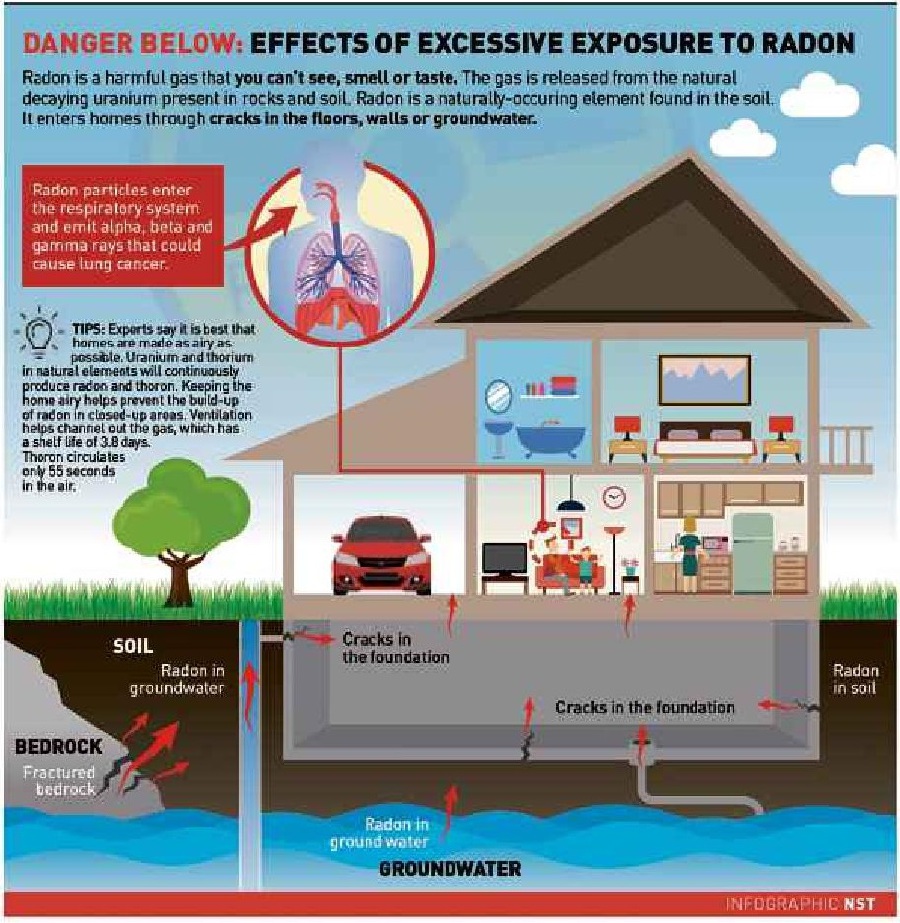






 nuclear-news