A Star Psychiatrist Swerves From Nuclear Armageddon To Climate Change,Robert Jay Lifton studied Nazi doctors and the threat of nuclear annihilation. But global warming changed everything. Huffington Post , Alexander C. KaufmanBusiness & Environment Reporter, HuffPost 27/11/2017 NEW YORK ― Robert Jay Lifton has spent his life trying to understand some of the most unfathomable milestones of the 20th century.
The famed psychiatrist and author started his career in the mid-1950s studying Chinese government-sponsored brainwashing, or “thought reform.” In the ’60s, he began interviewing survivors of the atomic bombs dropped on Japan, becoming obsessed with how the human mind copes with the possibility of nuclear annihilation. By the late ’70s, he turned his focus to the doctors responsible for the Nazi regime’s human experiments, men who occupy a uniquely revolting niche in popular culture.
At 91 years old, he has arrived at his most daunting subject yet: climate change. In his latest book, The Climate Swerve, Lifton examines humanity’s struggle to understand what’s happening, how to deal with it, and why powerful people and institutions sabotage attempts to avoid destruction of the planet.
“The climate threat is the most all-encompassing threat that we human beings face,” Lifton said in an interview last month. He walks hunched with a cane now, but sports a mop of long, wavy white hair. He peered through dark, thick-rimmed glasses out the window of a book-stacked office in his modest Upper West Side apartment, located just blocks from Trump Tower. “The nuclear threat is parallel to it in many ways … but the climate threat includes everything.”
In other parts of the world, little doubt exists over the similarities between nuclear weapons and climate change, which Lifton calls the “apocalyptic twins.” The Marshall Islands served as a U.S. testing site for atomic weapons throughout the 20th century. The Pacific archipelago nation bears the scars of that experience today, with entire islands vaporized in hydrogen bomb blasts and high rates of cancer linked to radioactive contamination. Now the country struggles with rapidly rising sea levels, which swallow large habitable areas, make storms more destructive, and salinate freshwater supplies necessary to farm breadfruit, a staple crop.
The phrase “climate swerve” gives name to the increasingly ubiquitous sense of awareness that global warming is happening, and humans have something to do with it……..
“I consider the climate serve a movement toward the recognition of climate danger and what I call species awareness ― awareness of ourselves as a single species in deep trouble,” Lifton said. “The swerve is toward that recognition, that consciousness.”………
I came upon the idea of malignant normality in studying Nazi doctors. If a Nazi doctor was assigned to Auschwitz, it was normal, it was expected of him that he would do the selections of Jews for the gas chamber. Take a leading role in the killing process in a reversal of healing.
With climate change and nuclear weapons, there is also a malignant normality. With nuclear weapons, it’s that the weapons should be stockpiled, maybe even used if necessary because that’s the way you carry through deterrence. Deterrence always carries a willingness to use them in certain conditions. So therefore we should be ready with our duck-and-cover drills to carry out a nuclear war, survive it, win it and carry on with life. These are absurdities that became part of nuclear normality…….
With climate, climate normality was in the everyday practice. We were born into climate normality. This is the world which we entered and in which we live now and which continues. If we allow it to continue as it is now, it will result in the end of human civilization within the present century. I came to the idea of malignant normality that has to be exposed for its malignancy. Intellectuals and professionals have a particular role, what I call witnessing professionals, bear witness to the malignancy, the danger, of what’s being put forward to us as normal and as the only way to behave. That’s happening more but we need a lot of additional expression of resistance on the part of intellectuals in protest and activism.
North Korean test caused 6.3 magnitude earthquake injuring up to 150 children Explosion triggered aftershocks in North Hamgyong Province within minutes State defectors South and North Development revealed the fatalities today Devastation hit farms, destroyed home and gave soldiers radiation sickness Regime accused of not warning locals of the imminent nuclear missile tests Pupils injured in the earthquake were in class as usual when it hit their school
By Sebastian Murphy-bates For Mailonline 27 November 2017 Dozens were killed when North Korean dictator Kim Jong-un’s most powerful nuclear missile test yet caused buildings to collapse.
Houses and a school near his nuclear base at Punggye-ri were brought down when his tests caused a 6.3 magnitude earthquake injuring up to 150 pupils in North Hamgyong Province.
This explosion triggered aftershocks within eight minutes, hitting structures in a nearby village.
The huge reactors—California’s last—sit on a bluff above the Pacific, west of San Luis Obispo, among a dozen earthquake faults. They operate just 45 miles from the San Andreas. That’s half the distance from the fault that destroyed four reactors in Fukushima, Japan, in 2011. Diablo’s wind-blown emissions could irradiate the Los Angeles megalopolis in less than six hours if an earthquake destroyed the plant.
The death toll could be in the millions, the property damage in the trillions of dollars. The owner of the plant, Pacific Gas & Electric (PG&E), would not be legally liable.
Last year, a deal to shut down Diablo’s two reactors in 2024 and 2025 was struck by the state, PG&E, surrounding communities and some environmental groups. Diablo’s federal licenses expire in those years, and PG&E agreed not to seek renewals. The power, it said, could be replaced with wind turbines and solar panels.
But the $1.7 billion in rate hikes stipulated in the deal still must be approved by California’s Public Utilities Commission (PUC). A proposed decision by administrative law Judge Peter Allen would limit them to less than $200 million.
The PUC must now factor Allen’s decision into how much it allows PG&E to charge. If it honors Allen’s opinion, the company must then decide whether it will continue to operate the reactors, which increasingly look like money losers.
The company’s standing is not exactly sterling. Massive fires that swept through Northern California in October killed at least 43 people, turning some 5,700 structures and whole forests, rural communities and parts of Santa Rosa into smoldering ash (the Trump administration has just omitted from its latest budget any federal aid to the region).
The San Jose Mercury News has speculated that PG&E may have been responsible for the conflagration by failing to maintain power lines that were blown over in a windstorm. Local fire departments were already complaining that trees and underbrush were being sparked by poles and wires PG&E had failed to maintain, though maintenance is required by law.
PG&E now faces a firestorm of lawsuits that could soar well into the billions. Criminal prosecution is also possible.
In 2010, a fire killed eight people and torched an upscale San Bruno neighborhood. The cause was badly maintained gas lines—for which PG&E had been cited repeatedly. Fines exceeded $1.4 billion, but criminal prosecution remains unresolved.
Other costly lapses have plagued PG&E through the years. Some involve Diablo itself, which opened in the mid-1980s amid America’s biggest “No Nukes” civil disobedience campaign, involving thousands of arrests.
Linda Seeley of San Luis Obispo’s Mothers for Peace says the company faces impossible hurdles in dealing with its thousands of tons of radioactive waste. In addition, she notes, “Many very expensive components in the two reactors must be replaced far before the proposed 2024-5 shutdown dates. Our concern is that PG&E may try to sneak through without paying to maintain the reactors even at basic safety levels.”
Michael Peck, a former Nuclear Regulatory Commission in-house inspector at Diablo, has warned that the reactors cannot survive a major earthquake and should close immediately. He has since been transferred to Chattanooga, Tenn.
“Diablo may no longer be profitable,” Seeley has said on my “California Solartopia” show on radio station KPFK. “The cost of wind and solar has dropped so fast it may not pay PG&E to run those plants anymore, even without doing the basic maintenance.”
Because much of Diablo’s aging workforce is retiring or looking elsewhere for job security, PG&E wants subsidies to retain skilled staff to run the place. Judge Allen specifically rejected much of the rate hike designed to meet that crisis.
California’s State Lands Commission is being sued by the World Business Academy, a Santa Barbara think tank, over key leases granted in the 1970s. The commission granted PG&E a waiver on conducting legally required environmental impact statements (gubernatorial candidate Gavin Newsom was among those who voted in favor). Should the business academy win its suit, or should the PUC honor Allen’s decision, and PG&E alter its timetable, those leases might be revisited. Without them, Diablo would almost certainly be forced to shut.
Challenges have also been raised over approval by the California Coastal Commission of Diablo’s cooling system.
Seeley and other activists have asked the public to pressure the PUC, state agencies and politicians like Newsom to shut Diablo sooner rather than later.
“Until they can specify the exact date and time the San Andreas and those other faults will go off,” Seeley said in a recent phone interview, “nobody should feel safe.”
Join Bernie the Polar Bear: Keep That Coal in the Hole Next to Sellafield! Bernie the Polar Bear will be joining us on thursday 7th Dec as we gather outside The Beacon, Museum, Whitehaven at 11am for a walk to Keep Cumbrian Coal in the Hole. West Cumbria Mining are also holding an open day […]
¶ “Wine and the Weather – How Will a Changing Climate Affect Santa Barbara’s Wine?” • Climate change can be very different for neighboring microclimates. With more warming, vineyards near the coast it may see more fog, while those farther inland may see warming weather that requires shading grape clusters. [Santa Barbara Independent]
Santa Barbara County (Courtesy Hilliard Bruce Vineyards)
¶ “Michael Howard: Low-carbon wind is set to power Brexit Britain. The work that Thatcher, Major and I undertook is paying off.” • John Major, and Michael Howard signed the UN climate change convention for Britain 25 years ago. Three years earlier, Margaret Thatcher was the first world leader to call for such a convention. [Conservative Home]
World:
¶ Europe’s race to quit coal has hit a speed bump as energy companies face local political resistance to the closure of power stations burning the polluting fuel. For…
New study quantifies climate change feedback loop Staff Report Scientists in the Netherlands say they’ve established “unequivocal, strong relations” between global warming and increasing methane emissions from lakes and wetlands. Their study focused on shallow lakes, ponds, rivers and wetlands. Those ecosystems are relevant in the context of climate change because bubbles filled with methane […]
The idea of the Olympics as a sporting event complemented by culture goes back to Pierre de Coubertin, the founder of the modern Games. The Olympic Charter also states that the Olympic Movement is composed of sport, culture and education. These elements were often blended, as in the prewar Games that included such events as poetry and painting. From 1912 to 1948, arts competitions were held in parallel with the sporting events, though growing discontent meant this curiously hybrid system was jettisoned in favour of separate arts and cultural festivals held alongside the sports. From Barcelona in 1992, the idea of a Cultural Olympiad took hold, whereby a series of arts and cultural events would be organized during the four-year Olympiad period to culminate with the Games, though this had already happened de facto at past Games.
Now the leading figures in the protest movement against the 2020 Tokyo Olympics have called for an anti-Cultural Olympiad. In the recently published Anti-Olympics Arts Council Statement of Purpose, activists point to the destruction of public housing and eviction of homeless people as part of the preparations for the Olympics in Tokyo. The statement ends with a call to action:
For residents of urban areas, and especially the poor, the Olympic/Paralympic Games are nothing but a huge catastrophe. We, the Anti-Olympic Arts Council, call for you to resist and protest against these mega events. We call on artists, performers, poets, and all that use the arts as their medium—oppose the Olympic Games.
It is often said that artists in Japan have avoided direct political engagement in past decades, preferring more oblique modes of socially engaged practice, though the post-Fukushima zeitgeist has certainly produced some prominent examples of overtly politicized art. The prospect of the Olympics and Cultural Olympiad in 2020, given the geopolitical situation in the region as well as such ongoing major socio-cultural questions as Fukushima, Constitutional change and Japan’s demographic time bomb, necessarily conjure up a dilemma for the arts. How will the arts respond? Will artists protest, ignore, borrow or participate?
The most notable and lasting case of an artistic response to the 1964 Tokyo Summer Olympics is surely Kon Ichikawa’s nearly three-hour documentary film Tokyo Olympiad (1965). Arguably, the Olympics “propaganda” film subverts the brief, focusing on many of the small moments and the ordinary people among the spectators. It starts with the rising sun and then a wrecking ball while the narration enumerates the iterations of the modern Games and their host cities. The Olympics have noble aspirations, as Ichikawa acknowledges from the opening epigraph, but the reality, at least initially, is demolition. It ultimately segues into a somewhat more predictable, yet staggeringly meticulous, hymn to the facilities created for the 1964 sporting events, the participating athletes and the competitions themselves, but the underlying social commentary is more subtle.
The 1964 Olympics were more conspicuously satirised by the art collective Hi-Red Center when its members set about cleaning the streets of Ginza in white lab coats, a stunt intended to mock the city’s attempts to spruce up its appearance ahead of the Games. Recent moves in Japan to expunge pornographic magazines from retail outlets is an indication of the “cleaning” likely to take place prior to 2020.
One of the early projects of Akira Takayama’s theater collective Port B examined both the famous 1964 Games but also Japan’s “phantom Olympics”, the 1940 Games that were canceled due to World War Two. Tokyo/Olympic (2007) was a tour several hours long around the city on a chartered Hato Bus that took in the sites of the 1964 Games, but finished rather unexpectedly at a rather desolate location in Tokyo Bay. Participants could look across the bay to see the artificial island of Yumenoshima (literally, “island of hope”), which was made from the city’s trash, and a projected venue for the abandoned 1940 Games. (See Peter Eckersall, “Memory and City: Port B and the Tokyo Olympics” in Performativity and Event in 1960s Japan: City, Body, Memory, Basingstoke: Palgrave Macmillan, 2013.) The bay area will play host to many of the venues for the 2020 Games at a time when the government, say its critics, is attempting to steer the nation back towards its prewar past.
The upcoming Olympics in Tokyo have already succeeded in coopting many artists for its pageantry. One of them is the singer Ringo Sheena, though she recently got flamed by liberals for her nationalist comments in a July interview with the Asahi Shimbun in which she declared that “the whole population is the organizing committee” for the Games. “In that sense, it’s very Japanese in its respect for harmony.” No individual opinions are anticipated.
More specifically, the direction and content of the actual 2020 Games’ cultural program is the source of much anxiety in the arts world in Japan, since so little is known. Certain commercially driven artists have been announced as part of the Cultural Olympiad, but firm details are still under wraps. So far what we have been shown has largely consisted of the “Tokyo Caravan” performances, overseen by Hideki Noda, beginning in 2015 and then continuing at Rio de Janeiro and Tokyo’s Roppongi Art Night in 2016. Ostensibly this would qualify the program as an “Olympiad”, even if the events are apparently mere previews without a genuine feeling of sequence or overall curation. Alongside the Roppongi Art Night performance, an event in autumn 2016 “fusing traditional arts and the latest technologies for which Japan is famous”, officially launched the Olympiad as an “ambitious programme of cultural activities”. The veracity of that boast remains to be seen.
It is certainly the case that various celebrities and artists will benefit financially from the Olympics and Cultural Olympic. One of the reasons that Expo ’70 in Osaka was also such an iconic event was the participation of major figures from the arts, though this was not without intense controversy at the time — so much so that an “anti-expo” was held. Now that there is an Anti-Olympics Art Council, perhaps we can expect such a counter-event, an Anti-Cultural Olympiad, in 2020.
To dump into the ocean a million tonnes of radioactive water should be considered by the international community a crime against humanity and an ecocide against the environment. Whatever they say, whatever they lied, it will never be totally decontaminated and it will never be safe, no matter how many shills on the mainstream media are paid by the nuclear lobby to spin fairy tales in order to brainwash the public about ‘safety’.
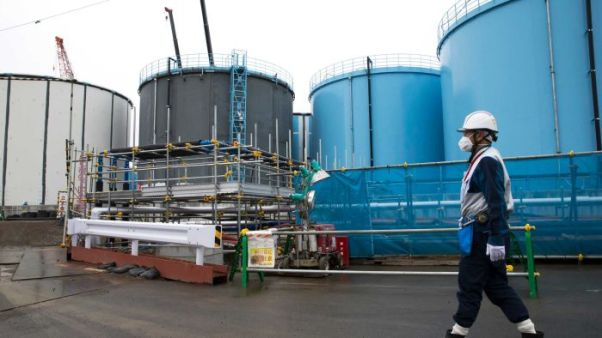
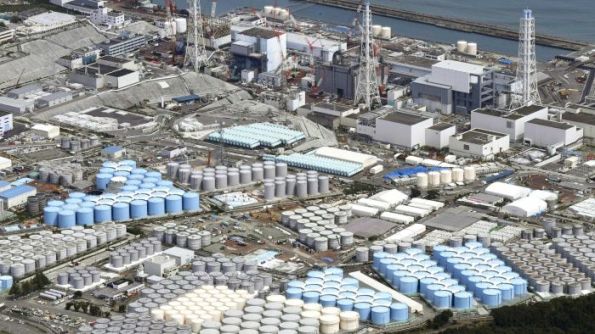
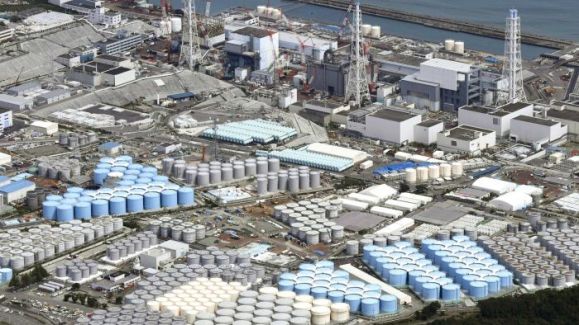
The water is being stored in hundreds of large and densely packed tanks at the plant.
Japan cannot agree on what to do with a million tonnes of radioactive water being stored at the destroyed Fukushima nuclear power plant — and there is a chance it could spill if another major earthquake or tsunami were to strike.
The water is being stored in about 900 large and densely packed tanks at the plant, which was overwhelmed by a devastating tsunami more than six years ago.
Making matters worse, the amount of contaminated water held at Fukushima is still growing by 150 tons a day.
The stalemate is rooted in a fundamental conflict between science and human nature.
Experts advising the government have urged a gradual release of the water to the nearby Pacific Ocean. Treatment has removed all the radioactive elements except tritium, which they say is safe in small amounts
Conversely, if the tanks break, their contents could slosh out in an uncontrolled way.
Local fishermen are balking — they say the water, no matter how clean, has a dirty image for consumers.
Fumio Haga, a drag-net fisherman from Iwaki, a city about 50 kilometres down the coast from the nuclear plant, said releasing the water would end the local industry’s fragile recovery.
“People would shun Fukushima fish again as soon as the water is released,” he said.
Experts want a gradual release, but if the tanks break the water would slosh out
A new chairman at TEPCO, the embattled utility that owns the plant, caused an uproar in the fishing community in April when he expressed support for moving ahead with the release of the water.
The company quickly backpedalled, and now says it has no plans for an immediate release and can keep storing water through 2020.
Despite tests, many shoppers avoid Fukushima fish
Today, only about half of the Fukushima region’s 1,000 fishermen go out, and just twice a week because of reduced demand.
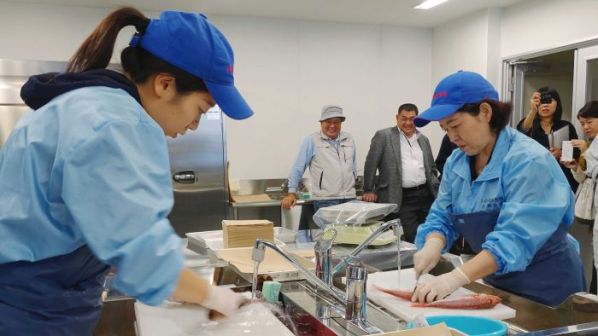
They participate in a fish testing program that sees lab technicians mince fish samples, pack them in a cup for inspection and record details such as who caught the fish and where.
The fish that make it to market meet what is believed to be the world’s most stringent requirements.
Only three kinds of fish passed the test when the experiment began in mid-2012, 15 months after the tsunami. Over time, that number has increased to about 100.
The fish that make it to market meet what is believed to be the world’s most stringent requirements, but that message is not reaching consumers.
Fewer Japanese shoppers shun fish and other foods from Fukushima than before, but one in five still do, according to a survey by Japan’s Consumer Agency.
Naoya Sekiya, a University of Tokyo expert on disaster information and social psychology, said the water from the nuclear plant should not be released until people were well-informed about the basic facts, and are psychologically ready.
“A release only based on scientific safety, without addressing the public’s concerns, cannot be tolerated in a democratic society,” he said.
“A release when people are unprepared would only make things worse.”
“Nothing will ever be the same again and no return to normal is possible.”
The homes of the evacuated areas have remained abandoned for several years after being damaged by the March 2011 earthquake. Many are no longer repairable and must be destroyed.
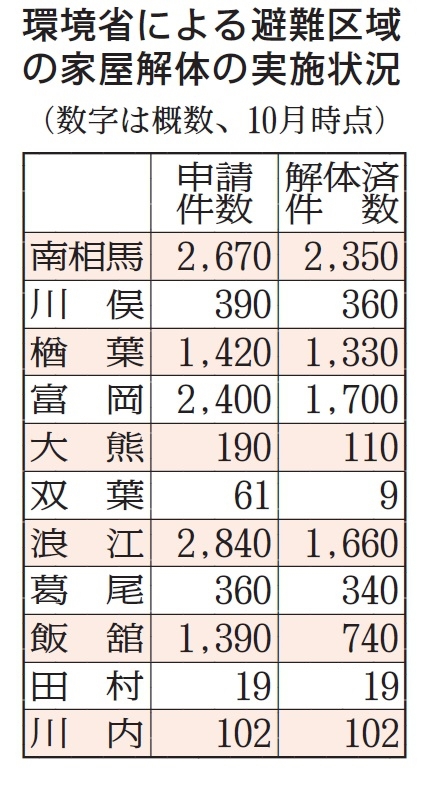
According to the latest data, in the 11 municipalities evacuated, there are 11,800 applications for demolition, not to count the most contaminated areas, modestly called difficult to return zones, 8,700 homes have already been demolished.
The Ministry of the Environment wanted to finish by March 2018, this may not be possible. They were 6,700 last April.
According to the Fukushima Minpo, new demands continue to arrive even after evacuation orders are lifted.
In Tomioka and Namié, where evacuation orders were lifted last April, more than 400 new demolition applications have been filed in each municipality since April 1, 2017, it’s more than the number of demolitions over the same period. The Ministry of the Environment is considering extending the deadline for filing applications.
This destruction of the living environment, landmarks and the past is one of the sad consequences of the nuclear disaster which caused prolonged evacuations. Nothing will ever be more like before and no return to normal is possible.
Demolition of decrepit homes progressing in Fukushima 6 years, 8 months after disaster
Dilapidated houses left in evacuated areas of Fukushima Prefecture following the 2011 nuclear accident at Tokyo Electric Power Co.’s Fukushima Daiichi plant are being torn down at a steady pace of late. Of some 11,800 homes subjected to demolition applications by October in 11 municipalities where evacuation zones were once set up, about 8,700, or 70%, have been scrapped. Difficult-to-return zones are not included in the demolition work. Applications have been increasing even after the start of fiscal 2017 in April in the towns of Namie and Tomioka where evacuation orders were lifted this spring. As of last year, the Environment Ministry had targeted work completion by the end of fiscal 2017 through next March. But attaining the goal remains uncertain at present.
■Accelerating demolition work
Of the residences for which demolition applications were in place, all 19 have been dismantled in Tamura city and all 102 in Kawauchi village. About 360 houses out of some 390 have been taken down in Kawamata town, about 1,330 out of some 1,420 in Naraha town and about 340 out of some 360 in Katsurao village, marking a progress rate of more than 90% each. In Minamisoma city, about 2,350 homes have been demolished, nearly 90% of some 2,670 requested.
As of last April, approximately 6,700 houses had been dismantled, about 60% of some 10,900 applied for. In half a year since then, roughly 2,000 residences were removed. The ministry spurred surveys, preparatory work and other undertakings necessary for demolition in an effort to establish a living environment for returning evacuees, focusing on areas where evacuation has been terminated.
■Demolition requests greater than expected in Namie, Tomioka
Of municipalities where evacuation orders were eliminated this spring, Tomioka saw demolition work completed on some 1,700 houses, about 70% of almost 2,400 targeted, Namie on roughly 1,660, approximately 60% of some 2,840, and Iitate village on about 740, only 50% of some 1,390. Notable are swelling demolition applications in Tomioka and Namie, where more than 400 requests have been submitted each since the start of fiscal 2017, far exceeding the pace at which demolition work was assumed to be undertaken for completion by the end of the fiscal year. According to the ministry, many evacuees live in places far away from their hometowns, requiring substantial time for them to confirm the current status of their houses before applying for demolition. Against this backdrop, it is set to wait and continue accepting further applications.
If the demolition of aging houses is prolonged, they pose the risk of collapsing, possibly causing adverse effects on the hygienic environment around them. “We have to undertake demolition work while securing safety amid progress in the permanent return of evacuees,” said an official of the ministry’s environment office in Fukushima, indicating difficulty to accelerate the work drastically. “But we want to complete the work as soon as possible.”
“To revitalize Fukushima Prefecture”, signing of a technological cooperation agreement with NEDO (organization for the development of new energies and industrial technologies), for tests of drones and robots ; construction of a huge site of 50 hectares straddling the municipalities of Minamisoma and Namie …
Koriyama, Fukushima Pref., Nov. 22 (Jiji Press)–The New Energy and Industrial Technology Development Organization on Wednesday concluded a cooperation pact with the Fukushima prefectural government on the development of technologies for demonstration tests for drones and robots.
The organization, better known as NEDO, aims to establish technologies to accurately measure the durability and safety of drones and robots, utilizing the Fukushima Robot Test Field, a planned large test site over 50 hectares that straddles the city of Minamisoma and the town of Namie in a coastal region in the northeastern Japan prefecture.
The Fukushima government is building the site as part of efforts to revitalize the coastal region, devastated by the March 2011 earthquake and tsunami and the subsequent nuclear accident at Tokyo Electric Power Company Holdings Inc.’s <9501> Fukushima No. 1 power plant. The test site will partly enter into service in fiscal 2018.
Various demonstration tests will be conducted there, such as one to check a robot’s capabilities to conduct underwater inspections of old dams using a 7-meter-deep pool.
NEDO plans to develop technology to check whether drones can fly stably in strong wind. For this, the central government-linked organization will use a wind tunnel facility to be set up in the site.
The impact of Fukushima Daiichi’s nuclear meltdown extends far and wide, as the hemispheric ecosystem gets hit by tons of radioactive water. Additionally, surreptitiousness surrounds untold death and illness, yet it remains one of the least understood and deceitfully reported episodes of journalism in modern history.
At the same time as Japan passed its totalitarian secrecy act in December 2013, it passed an obstructive Cancer Registration Law, which made it illegal to share medical data or information on radiation-related issues, denying public access to medical records, with violators subject to fines of two million Yen or 5-10 years in prison, a pretty stiff penalty for peeking into medical records, giving the appearance of somebody running scared.
Furthermore, and more egregiously yet, a confidentiality agreement to control medical information about radiation exposure was signed in January 2014 by IAEA, UNSCEAR, and Fukushima Prefecture and Fukushima Medical University. Thereafter, all info of illness from radiation is reported to a central repository run by Fukushima Medical Centre and IAEA. In turn, the Fukushima Centre for Environmental Creation was created in 2015 to communicate “accurate information on radiation to the public and dispel anxiety.” Ahem!
Well now, isn’t that convenient, a central depository controlled by the International Atomic Energy Agency –IAEA- to report on Fukushima Daiichi radiation exposure and medical illness. It’s not hard to figure that’s rotten to the core, sounding a lot like words lifted directly off the pages of George Orwell’s Nineteen Eighty-Four (1949).
Meanwhile, much, but not all, mainstream media reports about radiation-induced illnesses and deaths at Fukushima are feeble grossly incompetent journalism, as follows: “The latest update (in April) by the World Nuclear Association re the Fukushima disaster: There have been no deaths or cases of radiation sickness from the nuclear accident…” (Source: Michael W. Chapman, 5 Years Later, Deaths Caused by Radiation Leak at Fukushima -O-, CNS News, May 11, 2016).
According to The World Nuclear Association, as of October 2017: “There have been no deaths or cases of radiation sickness from the nuclear accident, but over 100,000 people were evacuated from their homes to ensure this. Government nervousness delays the return of many.”
Here’s one more statement of zero deaths at Fukushima, by Hannah Ritchie, published in Our World in Data, July 24, 2017: “In the case of Fukushima, although 40-50 people experienced physical injury or radiation burns at the nuclear facility, the number of direct deaths from the incident are quoted to be zero.”
And one more, an article in Forbes by Dr. James Conca, an expert on energy, nuclear and dirty bombs, “After Five Years, What Is The Cost Of Fukushima?” d/d March 10, 2016: “Strangely, the costs that never materialized were the most feared, those of radiation-induced cancer and death… No one received enough dose, even the 20,000 workers who have worked tirelessly to recover form this event.”
Au contraire, it is believed that official reports of Fukushima radiation-induced sicknesses and deaths are horribly underreported and/or intentionally manipulated to show few, if any, cases. Based upon numerous testimonials obtained by independent journalists and researchers in Japan and U.S, attorneys, there is considerable evidence of radiation-induced deaths and sicknesses.
Seemingly, somebody is dead wrong on the issue of radiation-induced deaths, whether it’s (1) official sources via mainstream news or (2) independent researchers/journalists/U.S. attorneys that claim to personally know of deaths. One of those two sources is dead wrong and seriously misleading the world, which, in and of itself, should be classified as a criminal act, like the Nazi Nuremberg trials (1945-49). In point of fact, if it can be proven that people are covering up and/or lying about Fukushima radiation-induced illness and death, they should be tried and imprisoned, similar to Nazi war criminals. The implications of widespread radiation are not a trifle.
When it comes to uncontrollable radiation, there’s an ecumenical obligation for full transparency as a basic right for all humanity, worldwide.
“It’s a real shame that the authorities hide the truth from the whole world, from the UN. We need to admit that actually many people are dying. We are not allowed to say that, but TEPCO employees also are dying. But they keep mum about it,” Katsutaka Idogawa, former mayor of Futaba (Fukushima Prefecture), Fukushima Disaster: Tokyo Hides Truth as Children Die, Become Ill from Radiation – Ex-Mayor, RT News, April 21, 2014.
Individual medical doctors in Japan have reported serious radiation-related problems, for example: “In April 2014, Dr Tsuda Toshihide, an epidemiologist at Okayama University, declared this a ‘thyroid cancer epidemic’ and predicted multiple illnesses from long-term internal radiation below 100 mSv/y and advocated for a program of outbreak (emergency or rapid) epidemiology in and outside Fukushima.” (Source: Adam Broinowski, PhD (author of 25 major academic publications and Post Doctoral Research Fellow, Australian National University): “Informal Labour, Local Citizens and the Tokyo Electric Fukushima Daiichi Nuclear Crisis: Responses to Neoliberal Disaster Management,” Australian National University, 2017.
“Similarly, a Tokyo-based physician, Dr Mita Shigeru, circulated a public statement notifying his colleagues of his intention to relocate his practice to Okayama due to overwhelming evidence of unusual symptoms in his patients (roughly 2,000). Given that soil in Tokyo post-Fukushima returned between 1,000 and 4,000 Bq/kg, as compared to an average of 500 Bq/kg (Cs 137 only) in Kiev soil, Mita pointed to a correlation between these symptoms and the significant radiation contamination in Tōhoku and metropolitan Tokyo.” (Broinowski)
“The ashes of half a dozen unidentified laborers ended up at a Buddhist temple in a town just north of the crippled Fukushima nuclear plant. Some of the dead men had no papers; others left no emergency contacts. Their names could not be confirmed and no family members had been tracked down to claim their remains. They were simply labeled “decontamination troops” — unknown soldiers in Japan’s massive cleanup campaign to make Fukushima livable again five years after radiation poisoned the fertile countryside,” (Source: Mari Yamaguchi, Fukushima ‘Decontamination Troops’ Often Exploited, Shunned, AP & ABC News, Minamisona, Japan, March 10, 2016).
Mako Oshidori, director of Free Press Corporation/Japan, investigated several unreported worker deaths, and interviewed a former nurse who quit TEPCO: “I would like to talk about my interview of a nurse who used to work at the Fukushima Daiichi Nuclear Power Plant (NPP) after the accident… He quit his job with TEPCO, and that’s when I interviewed him… As of now, there are multiple NPP workers that have died, but only the ones who died on the job are reported publicly. Some of them have died suddenly while off work, for instance, during the weekend or in their sleep, but none of their deaths are reported.” (Source: The Hidden Truth about Fukushima by Mako Oshidori, delivered at the International Conference, Effects of Nuclear Disasters on Natural Environment and Human Health held in Germany, 2014 co-organized by International Physicians for Prevention of Nuclear War).
“They are not included in the worker death count. For example, there are some workers who quit the job after a lot of radiation exposure… and end up dying a month later, but none of these deaths are either reported, or included in the death toll. This is the reality of the NPP workers,” Ibid.
Greenpeace has been conducting radiation readings throughout Fukushima ever since 311. Accordingly, Greenpeace/Japan Press Release -Tokyo, 21 February 2017: “The Japanese government will soon lift evacuation orders for 6,000 citizens of Iitate village in Fukushima Prefecture where radiation levels in nearby forests are comparable to the current levels within the Chernobyl 30km exclusion zone – an area that more than 30 years after the accident remains formally closed to habitation. Seventy-five percent (75%) of Iitate is contaminated forested mountains.”
Over time, high levels of radiation from the mountains leach onto cleaned up areas down below. In point of fact, based upon several Greenpeace analyses throughout Fukushima Prefecture, former inhabitants of several communities are returning to towns and villages where spot checks show unacceptable levels of radiation.
“Faced with the post-311 reality of government (and corporate) policy that protects economic and security interests over public health and well-being, the majority of the 2 million inhabitants of Fukushima Prefecture are either unconscious of or have been encouraged to accept living with radioactive contamination. People dry their clothes outside, drink local tap water and consume local food, swim in outdoor pools and the ocean, consume and sell their own produce or catches. Financial pressure after 311 as well as the persistent danger of social marginalisation has made it more difficult to take precautionary measures (i.e. permanent relocation, dual accommodation, importing food and water) and develop and share counter-narratives to the official message. Nevertheless, some continue to conceal their anxiety beneath a mask of superficial calm.” (Broinowski)
“As Fukushima city resident Shiina Chieko observed, the majority of people seem to have adopted denial as a way to excise the present danger from their consciousness. Her sister-in-law, for example, ignored her son’s ‘continuous nosebleeds’; while her mother had decided that the community must endure by pretending that things were no different from pre-311 conditions.” (Broinowski)
Radiation exposure shows up years later as one of several illnesses. This gives the nuclear industry an advantage of time lapses in its position statements about the safety of nuclear energy. After all when enough time lapses, who knows for sure the cause of death?
However, Chernobyl provides a perfect case study of radiation-caused deaths of workers with a direct link, “liquidators,” exposed to Chernobly radiation (1986), keeping in mind that radiation takes several years to show up as cancer and other severe ailments: “By 2001, of 800,000 healthy Russian and Ukrainian liquidators (with an average age of 33 years) sent to decontaminate, isolate and stabilise the reactor, 10 per cent had died and 30 per cent were disabled. By 2009, 120,000 liquidators had died, and an epidemic of chronic illness and genetic and perigenetic damage in nuclear workers’ descendants appeared (this is predicted to increase over subsequent generations). The full extent of the damage will not be understood until the fifth generation of descendants. By the mid-2000s, 985,000 additional deaths between 1986 and 2004 across Europe were estimated as a direct result from radiation exposure from Chernobyl.” (Broinowski)
Chernobyl likely foreshadows a dismal future for those exposed to Fukushima radiation whether residents, workers, or untold recipients throughout the extent of flowing seas, which is universal.
As Chernobyl clearly demonstrates: Over time, radiation cumulates in bodily organs. For an example of how radiation devastates human bodies generation by generation, consider: According to USA Today, Chernobyl’s Legacy: Kids With Bodies Ravaged by Disaster, April 17, 2016: “There are 2,397,863 people registered with Ukraine’s health ministry to receive ongoing Chernobyl-related health care. Of these, 453,391 are children — none born at the time of the accident. Their parents were children in 1986. These children have a range of illnesses: respiratory, digestive, musculoskeletal, eye diseases, blood diseases, cancer, congenital malformations, genetic abnormalities, trauma.”
As for Fukushima’s direct impact on Americans that helped at the time of the meltdowns, former Senator John Edwards is representing cancer-ridden sailors who interceded on a humanitarian basis aboard the USS Ronald Reagan. According to Edwards: “We have all these sailors. Sailors whose case is now five years old, who have died or are in the process of dying right now.” Edwards noted that some of his sailor clients have children born with birth defects. (Source: Bianca Bruno, Dying Navy Sailors Push for Trial on Fukushima Meltdown, Courthouse News.com, September 1, 2017).
Attorney Charles Bonner, representing US service members exposed to Fukushima fallout, Jul 21, 2015 (at 10:45 in on YouTube): We now have a 250+ young sailors with all kinds of illnesses, we’ve had three die. We had one of the sailors who came home and impregnated his wife. They gave birth to a little baby born with brain cancer and cancer down the spine, lived for two years, and just died in March of this year. (Source: https://www.youtube.com/watch?v=V0zGbG2dTvo&feature=youtu.be&t=645)
TEPCO’s attorney Gregory Stone claims his client accepts responsibility for the radiation released but maintains the amount sailors were exposed to was negligible. Stone: “People get sick at different times of their lives for different reasons.”
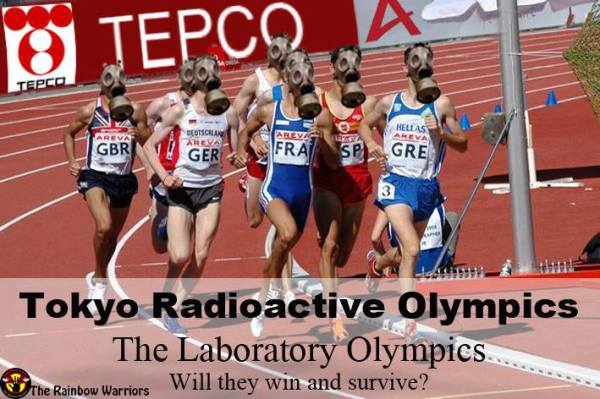
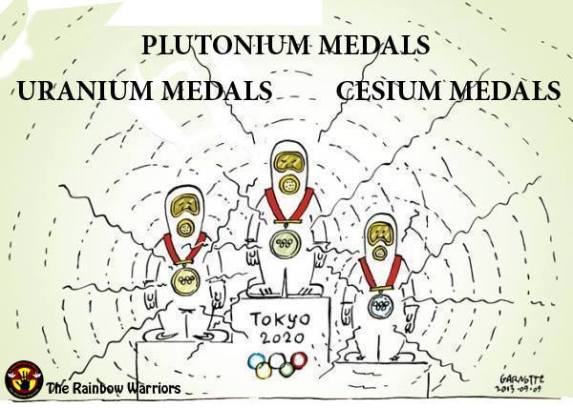
As people unceremoniously, more times than not anonymously, die from radiation exposure, the Abe administration keeps a tight lid on the reality and the potency of Fukushima Daiichi radiation. And, when faced with the prospect of not knowing what to do, bring on the Olympics! That’s pretty good cover for a messy situation, making it appear to hundreds of thousands of attendees, as well as to the world community “all is well.”
But, is it really?
Postscript: “These sailors are supposed to be very healthy. It’s not a normal situation. It is unbelievable that just in four or five years that these healthy sailors would become sick… I think that both the U.S. and Japanese government have something to hide.” Former Prime Minister Junichiro Koizumi of Japan 2001-06 quoted in New York Times 12/31/2016.
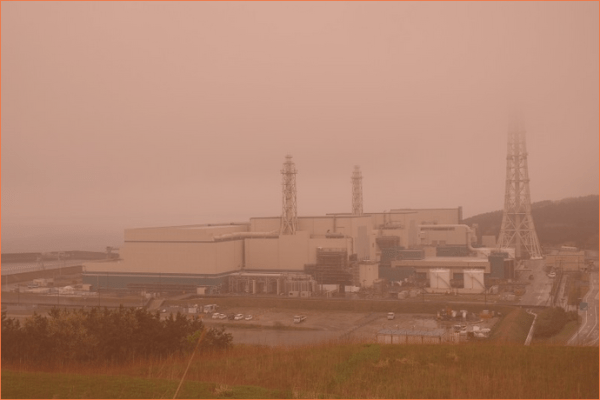
Reactor buildings at the Kashiwazaki-Kariwa nuclear plant are seen in this file photo taken in Kashiwazaki, Niigata Prefecture, on April 26, 2017.
Sixty holes violating the Building Standards Act were found recently in firewalls at the Kashiwazaki-Kariwa nuclear plant in Niigata Prefecture, in addition to two similar holes found in July this year, plant operator Tokyo Electric Power Co. (TEPCO) announced Nov. 22.
Of the 60 holes, 49 date back to the 1980s when the No. 1 reactor building was built, revealing administrative agencies’ lack of consideration for proper construction management.
Reactor buildings have several thousand holes in them for pipes. Of these holes, those going through firewalls are required to have any gaps filled in with mortar caulk or other nonflammable material. In July, TEPCO found two holes in a firewall in the No. 2 reactor building that had not been properly filled in. A subsequent inspection of the entire plant found that 60 holes had not been filled in — a building code violation — of which 41 were in radiation-control areas.
The power company will begin taking countermeasures, such as filling the holes in, as early as the beginning of the New Year. “At the time the reactor buildings were built, our awareness of the risks was insufficient,” TEPCO spokesperson Yoshimi Hitosugi said.
On September 23, 1Million Meditators reached 72,000 individuals with a shared vision to “Love Ourselves & the Planet”. This Saturday, November 25, 1Million Meditators is striving to reach 100,000 participants as part of this continued effort to promote engagement in the creation of a peaceful planet through collective intention: “Peace in our Hearts & Peace for our Planet.”
1Million Meditators welcomes anyone whose intention is to spread love and peace in the world, through any form of practice, including mindfulness, prayer or any other rite that promotes love, connectedness and peace, regardless of religious background or affiliation.
We’re getting in touch with you to ask you to show up in person or online and lend a few minutes of your time to create peace in your hearts and for the planet.
The meditation will last approximately 15 minutes. Participants around the world have contributed their voices to created a unique soundtrack, available to download for free.
To receive the soundtrack and a free “Thank You” gift please go to 1MillionMeditators.com and join the movement.
Help the movement grow by sharing 1Million Meditators with friends and family.
In peace,
Rick Wayman
Director of Programs & Operations
Nuclear Age Peace Foundation
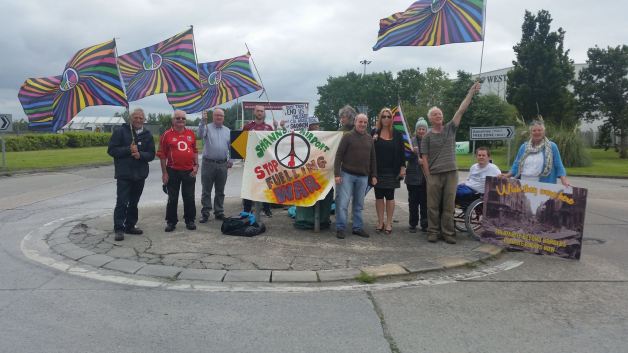
Four peace activists appeared in court today at Ennis Circuit court. Two travelled from Dublin, one from Waterforrd and one all the way from Limerick. Their legal team from the Pat Finucane Centre travelled from Belfast and Cork to represent two of the peace activists.
The decision not to use local legal representatives is based on experience of past peace activist trials. While in theory there should be clear separation and independence between the judiciary, the prosecution, and legal representatives for defendants, in practice these three are sometimes too closely associated.
Today was the twelfth time Colm Roddy and Dave Donnellan had to appear in court on the same alleged offence and the actual trial may still be almost a year away. For Dan Dowling and Edward Horgan it was the sixth day in court, They now have two more dates on 13 and 18 December with no trial date any time soon.
Today’s hearing was supposed to be for the peace activists’ legal teams to make a formal application to have the trials transferred from Co Clare to Dublin. The defendants believe they cannot get a fair trail in Co Clare due to possible conflicts of interest or bias of a Co Clare jury, as well as the perceived economic benefit to the Mid West region of having the US military using Shannon Airport.
At the hearing the prosecution said they had not had enough time to prepare a response to the defendants’ affidavit so they all had a wasted day in court. The matter of change of venue will be discussed again briefly in court on 18th December but will likely not be dealt with until 6th February at the earliest. It applies to all four defendants.
After the court appearance, one of the peace activists said: “While it was a wasted day in court, lets not complain too much. All four of us are still alive and well, we have done nothing wrong, and are before the courts only because we wish to put an end to Irish complicity with the killing of innocent people, especially children, in the Middle East. We are whistleblowers who are prepared to undertake the inconveniences that these court cases can impose on us.”
Last month the Clare Champion newspaper described Edward Horgan as “a self-confessed whistle-blower”. This might suggest that being a whistleblower is somehow to be frowned upon. It shouldn’t be; being a whistle-blower is a civic duty. More whistleblowers are needed to end Irish complicity in the killing of innocent people each day in the Middle East
 A Star Psychiatrist Swerves From Nuclear Armageddon To Climate Change, Robert Jay Lifton studied Nazi doctors and the threat of nuclear annihilation. But global warming changed everything. Huffington Post , NEW YORK ― Robert Jay Lifton has spent his life trying to understand some of the most unfathomable milestones of the 20th century.

 Santa Barbara County (Courtesy Hilliard Bruce Vineyards)




 The most interesting nuclear story is about the radioactive cloud across Europe. First described as a harmless wafting of radioactive isotopes “over recent weeks”, this news seemed to become a bit of a worry, first of all, to air travellers. Then the realisation that even if this airborne plume of radioactive ruthenium 106 is supposed to be harmless, it’s not harmless to those close to the source. Now the source is identified, after weeks of contradictory Russian reports, to be the Mayak Nuclear Production Facility, with Russia still claiming that it is harmless. The locals are not so sure.

 nuclear-news