At least 200 dead in North Korea nuclear tunnel collapse, report says

Image source; https://www.sciencenews.org/article/earthquakes-north-korea-nuclear-testing (12:00pm, July 25, 2017)
1st November 2017
At least 200 people have been killed at a nuclear test site in North Korea after a tunnel collapsed, according to an unverified Japanese media report.
The collapse is said to have happened during the construction of an underground facility at the Punggye-ri site in northeastern North Korea, the report says.
But there has been no official confirmation of the claims, apparently made by an unnamed North Korean “source”.
According to Japan’s TV Asahi, up to 100 people had been trapped in the tunnels and a further collapse happened during attempts to rescue them, raising the death toll to at least 200.
The collapse is believed to have happened on October 10, but South Korea’s Yonhap news agency, said it was still unclear when the disaster happened.
The network claimed the tunnel collapse the ground around the site was weakened by North Korea’s sixth nuclear test, which was carried out at the same site.
It comes a day after Seoul warned that one more North Korean nuclear detonation could destroy its mountain test site and trigger a radiation leak.
South Korea says any future nuclear test by Kim Jong-Un risks collapsing the location set aside for launching missiles.
Seoul detected several earthquakes near the hermit nation’s nuclear test site in the country’s northeast after its sixth and most powerful bomb explosion in September.
Experts say the quakes suggest the area is now too unstable to conduct more tests there.
South Korea’s weather agency chief Nam Jae-Cheol made the comments Monday during a parliament committee meeting.
Last month US experts issued a similar warning, stating a second nuclear test site in North Korea’s northwest could cave in but that it won’t be abandoned.
Five of Pyongyang’s recent tests have been carried out under Mt Mantap at the Punggye-ri military base, in North Korea’s northwest.
But now the base is said to be suffering from “Tired Mountain Syndrome” after three small earthquakes after the blasts. http://www.nzherald.co.nz/world/news/article.cfm?c_id=2&objectid=11939172
Fukushima-derived radiocesium fallout in Hawaiian soils

Highlights
- •
-
FDNPP-derived radiocesium was analyzed in soils along rainfall gradients in Hawai’i.
- •
-
FDNPP-derived Cs was found in amounts larger than suggested by atmospheric models.
- •
-
FDNPP-derived Cs was lower than historic fallout.
- •
-
Detection of 134Cs was limited to areas that received >200 mm rainfall.
- •
-
Areas with detectable 134Cs did not overlap with densely populated areas.
- Department of Geology & Geophysics, University of Hawai’i at Mānoa, 1680 East-West Road, POST 701, Honolulu, HI 96822, USA
- Received 18 August 2017, Revised 2 October 2017, Accepted 7 October 2017, Available online 31 October 2017
Abstract
Several reactors at the Fukushima Dai-ichi Nuclear Power Plant suffered damage on March 11, 2011, resulting in the release of radiocesium (134Cs and 137Cs), as well as other radionuclides, into the atmosphere. A week later, these isotopes were detected in aerosols over the state of Hawai’i and in milk samples analyzed on the island of Hawai’i. This study estimated the magnitude of cesium deposition in soil, collected in 2015–2016, resulting from atmospheric fallout. It also examined the patterns of cesium wet deposition with precipitation observed on O’ahu and the island of Hawai’i following the disaster. Fukushima-derived fallout was differentiated from historic nuclear weapons testing fallout by the presence of 134Cs and the assumption that the 134Cs to 137Cs ratio was 1:1. Detectable, Fukushima-derived 134Cs inventories ranged from 30 to 630 Bq m−2 and 137Cs inventories ranged from 20 to 2200 Bq m−2. Fukushima-derived cesium inventories in soils were related to precipitation gradients, particularly in areas where rainfall exceeded 200 mm between March 19 and April 4, 2011. This research confirmed and quantified the presence of Fukushima-derived fallout in the state of Hawai’i in amounts higher than predicted by models and observed in the United States mainland, however the activities detected were an order of magnitude lower than fallout associated with historic sources such as the nuclear weapons testing in the Pacific. In addition, this study showed that areas of highest cesium deposition do not overlap with densely populated or agriculturally used areas. http://www.sciencedirect.com/science/article/pii/S0265931X17306896
Fukushima radiation damages monkeys but not humans?
I’ve asked radiation specialists to take on this research, but they have never been willing to take this on because they say we don’t have any resources or time to spare because humans are much more important.

This year the evacuated residents of Japan’s Fukushima Prefecture began returning home, and as they resume their lives, the monkeys who have lived there all along have some cautions for them—in the form of medical records.
The Japanese macaques show effects associated with radiation exposure—especially youngsters born since the March 2011 meltdowns at the Fukushima-Daiichi Nuclear Power Plant, according to a wildlife veterinarian who has studied the population since 2008.
Dr. Shin-ichi Hayama detailed his findings Saturday in Chicago as part of the University of Chicago’s commemoration of the 75th Anniversary of the first man-made controlled nuclear reaction, which took place under the university’s football stadium in 1942 and birthed the technologies of nuclear power and nuclear weapons.
Hayama appeared alongside documentary filmmaker Masanori Iwasaki, who has featured Hayama’s work in a series of annual documentaries exploring the impact of fallout from the reactor meltdowns on wildlife. The fallout led the Japanese government to evacuate residents from a highly contaminated area surrounding the plant and extending to the northwest. The plume crossed the Pacific Ocean and left much diluted quantities of fallout across the United States, an event closely monitored on this page.
Since 2008, Hayama has studied the bodies of monkeys killed in Fukushima City’s effort to control the monkey population and protect agricultural crops (about 20,000 monkeys are “culled” annually in Japan). Because he was already studying the monkeys, he was ideally positioned to notice changes affected by radiation exposure.
“I’m not a radiation specialist,” Hayama said Saturday in Chicago, “but because I’ve been gathering data since 2008—remember, the disaster took place in 2011—it seems obvious to me that this is very important research. I’ve asked radiation specialists to take on this research, but they have never been willing to take this on because they say we don’t have any resources or time to spare because humans are much more important.
“So I had to conclude that there was no choice but for me to take this on, even though I’m not a specialist in radiation,” Hayama said, his remarks translated by University of Chicago Professor Norma Field. “If we don’t keep records, there will be no evidence and it will be as if nothing happened. That’s why I’m hoping to continue this research and create a record.”
Fukushima City is 50 miles northeast of the Fukushima-Daiichi Power Plant, so the radiation levels have been lower there than in the restricted areas, now reopening, that are closer to the plant. Hayama was unable to test monkeys in the most-contaminated areas, but even 50 miles from the plant, he has documented effects in monkeys that are associated with radiation. He compared his findings to monkeys in the same area before 2011 and to a control population of monkeys in Shimokita Peninsula, 500 miles to the north.
Hayama’s findings have been published in the peer-reviewed journal Scientific Reports, published by Nature. Among his findings:
Smaller Bodies — Japanese monkeys born in the path of fallout from the Fukushima meltdown weigh less for their height than monkeys born in the same area before the March, 2011 disaster, Hayama said.
“We can see that the monkeys born from mothers who were exposed are showing low body weight in relation to their height, so they are smaller,” he said.

Red circles represent the body weight and height (CRL=crown-to-rump length) of monkeys born post-Fukushima. Blue triangles represent monkeys born before.
Smaller Heads And Brains — The exposed monkeys have smaller bodies overall, and their heads and brains are smaller still.
“We know from the example of Hiroshima and Nagasaki that embryos and fetuses exposed in utero resulted in low birth weight and also in microcephaly, where the brain failed to develop adequately and head size was small, so we are trying to confirm whether this also is happening with the monkeys in Fukushima,” Hayama said.
And it appears that it is:

Blue triangles represent the head size of pre-disaster monkey fetuses relative to their height (CRL=crown-to-rump length). Red circles represent post-disaster monkey fetuses.
Anemia — The monkeys show a reduction in all blood components: red blood cells, white blood cells, hemoglobin, and the cells in bone marrow that produce blood components.
“There’s clearly a depression of blood components in the Fukushima monkeys,” said Hayama. “We can see that in these monkeys, that there is a correlation between white blood cell counts and the radio-cesium concentrations in their muscles. This actually is comparable to what’s been reported with children of Chernobyl.”

Monkeys with higher concentrations of radioactive cesium in their muscles, to the right on the graph, have lower white blood cell counts.
“We have taken these tests from 2012 through 2017, and the levels have not recovered. So we have to say this is not an acute phenomenon. It has become chronic, and we would have to consider radiation exposure as a possible cause,” Hayama said.
Hayama has appeared in several documentaries by Masanori Isawaki, who was 70 years old in 2011 and ready to retire from a thirty-year career making wildlife documentaries—he is best known for his portrait of “Mozu: The Snow Monkey“—when the Fukushima reactors melted down.
“Having turned 70 I thought, I’ve done enough, I can sit back. And then the nuclear disaster struck,” he said, his remarks also translated by Field. “I watched TV shows and read the newspaper for a year and kept asking myself, is there something left in me that I can do? A year later in 2012, with a cameraman and a sound engineer, the three of us just decided: In any case let’s just go to Fukushima, see what’s there.”
Since then he has made five films, one each year, documenting radiation impacts on wildlife, grouping them under the title “Fukushima: A Record of Living Things.” Two episodes were screened Saturday in Chicago, their first screenings in the United States.
At first Iwasaki documented white spots and deformed tails on the reduced number of barn swallows who survived after the disaster.
“It’s something we haven’t seen anywhere else but Chernobyl and Fukushima,” says the narrator of Iwasaki’s 2013 film, “so it’s clearly related to radiation. It probably doesn’t hurt the bird to have some white feathers, but it’s a marker of exposure to radiation.
“The barn swallows in Fukushima are responding in the same way as what we’ve seen in Chernobyl. The young birds are not surviving. They are not fledging very well.”
The white spots also turned up on black cows. Some types of marine snails vanished, then gradually returned. Fir trees stemmed differently, and the flower stalks of some dandelions grew thick and deformed. Dandelion stalks are a favorite food of Japanese monkeys, but the monkeys showed no obvious deformities, so Isawaki turned to Hayama to find out how radiation was affecting them.
Iwasaki’s 2017 film, just completed, is his first to investigate effects in the monkeys’ primate cousins, the humans: an unusually large number of children with thyroid cancer.
By Jeff McMahon, based in Chicago.
October 31 Energy News

Opinion:
¶ “Trump Admin. Desperate To Keep Coal Power Plant Alive With Taxpayer Dollars” • Trump supporters have repeated often, “government shouldn’t be picking winners and losers.” Now, the administration is trying to prop up the Navajo Generating Station in Arizona with taxpayer dollars, perfectly illustrating the depth of the lie. [CleanTechnica]
 Navajo Generating Station
¶ “Why More Flexible Operation Won’t Save US Nuclear Power Plants” • Flexible nuclear operation is happening in Europe. But for nuclear plants that depend purely on power sales, as is the case with US merchant plants, operating flexibly just reduces the total amount of energy sold, and thereby reduces the profits. [Greentech Media]
¶ “If we don’t talk about water, are we really talking about resiliency?” • Depending on the type of technology, generating just one megawatt-hour of electricity could use anywhere from 500 to 50,000 gallons of water. Solar…
View original post 780 more words
Big Thanks to Scisco Media for Publishing Article on the Cumbrian Coal Mine

There is almost universal silence on this coal mine plan from the national media apart from the occasionally parroted press release from the developers. So BIG THANKS to Scisco Media for publishing the following! The China Connection: First Deep Coal Mine in The UK for 30 Years Follow the Cumbrian Coal Mine money….all the way […] […]
via Big Thanks to Scisco Media for Publishing Article on the Cumbrian Coal Mine —
Whitefish Puerto Rico Contract Cancelled, Now How About Letting Renewable Industry Leaders Step in?

At this blog I often cover how climate change is worsening the global weather situation. How fossil fuel burning is the primary cause of climate change. How renewable energy adoption is the primary means for removing global carbon emissions. And how bad, on our present track, climate change outcomes could become.
What I often do not talk about in main posts (though we see quite a bit in the comments section) is how underlying factors such as political corruption and the ideologies supportiing that corruption can harm effective responses to climate change.
Witness Puerto Rico. A U.S. territory that has suffered a very severe blow from one of the worst hurricanes ever to make landfall in the…
View original post 1,026 more words
October 30 Energy News
Opinion:
¶ “A sustainable energy future is within our grasp … if we take action now” • The world is in a major energy transition, underpinned by renewable energy. A new study from the International Renewable Energy Agency finds that an energy transition in line with Paris Agreement is both technically feasible and economically attractive. [The National]
 Shams 1 power station (Christopher Pike | The National)
¶ “Productivity Commission pulls no punches on ‘appalling’ energy crisis, calls for carbon price” • The Productivity Commission report contains some blunt assessments on the nature of Australia’s energy problems and how to fix them. Dealing a blow to the Coalition, the primary recommendation is to adopt a carbon price. [ABC Online]
Science and Technology:
¶ With the tale the Three Little Pigs embedded in our psyches since childhood, we can’t help but think of a straw house as a flimsy thing…
View original post 697 more words
Okuma-Futaba Incineration & Storage Facility
Official storage of contaminated soil begins in Fukushima

Sprawling radioactive waste storage facility opens for business in Fukushima

Work to store tainted soil at Fukushima facility begins

TEPCO to scrap all 1,010 vehicles contaminated in nuclear disaster

Newspaper changes an “annoying” photo: Facts are disappearing from the media


USA’s nuclear-capable B-2 stealth bomber on mission in Pacific as Trump visits Asia
 U.S. sends nuclear-capable B-2 stealth bomber on mission in Pacific ahead of Trump visit to Asia, Japan Times, BY JESSE JOHNSON,STAFF WRITER, 29 Oct 17, The U.S. military sent a nuclear-capable B-2 stealth bomber from Whiteman Air Force Base in Missouri on a long-range mission to the Pacific area of operations over the weekend, it said Sunday, a day after Pentagon chief Jim Mattis highlighted rival North Korea’s “accelerating” atomic weapons program during a visit to South Korea.
The U.S. military’s Strategic Command said in a statement that the type of long-range mission conducted was to “familiarize aircrew with air bases and operations in different geographic combatant commands, enabling them to maintain a high state of readiness and proficiency.”
The flight path of the B-2 was unclear, and Strategic Command did not respond to a request for comment, but the last time one of the stealth bombers flew near the Koreas was during a rare show of force over the peninsula in 2013. Military experts say that any U.S. strike on North Korea would almost certainly involve the powerful bombers……..
The weekend flight of the B-2, which can carry conventional as well as nuclear bombs, comes just ahead of Trump’s Asia tour, which is scheduled to kick off with a visit to Japan between Nov. 5-7. That visit will include talks with Prime Minister Shinzo Abe that are expected to focus on the North Korean nuclear crisis……
On Saturday Mattis blasted North Korea for “outlaw” behavior and vowed that the U.S. would never accept a nuclear North.
“North Korea has accelerated the threat that it poses to its neighbors and the world through its illegal and unnecessary missile and nuclear weapons programs,” he said, adding that U.S.-South Korean military and diplomatic collaboration thus has taken on “a new urgency.”
“I cannot imagine a condition under which the United States would accept North Korea as a nuclear power,” Mattis said…….. https://www.japantimes.co.jp/news/2017/10/29/asia-pacific/u-s-sends-nuclear-capable-b-2-stealth-bomber-mission-pacific-ahead-trump-visit-asia/#.WfY2FI-CzGg
Evidence that Britain’s nuclear power industry subsidises nuclear weapons
channelling revenues ultimately funded by electricity consumers towards a joint civil-military national nuclear industry base
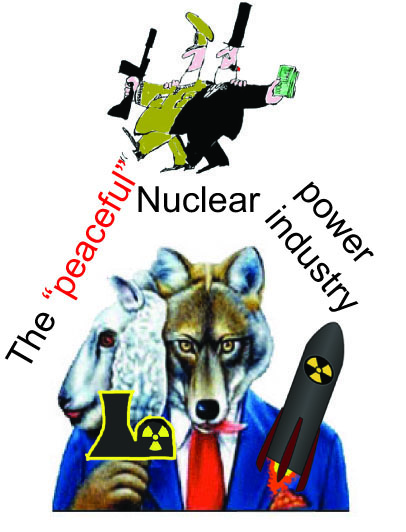
Evidence from Andy Stirling and Philip Johnstone: As the early part of the process of the BEIS Committee Brexit Inquiry has unfolded, the salience of this civil/military link is being further underscored in statements in which a number of relevant senior civil servants and ministers are confirming that the priority attached to UK military submarine capabilities is deeply entangled in strategic commitments to civil nuclear industry strategy 6 . Several possibly serious implications therefore arise in relation to the particular circumstances of Brexit.
 Parliament 27th Oct 2017 http://data.parliament.uk/writtenevidence/committeeevidence.svc/evidencedocument/business-energy-and-industrial-strategy-committee/leaving-the-eu-implications-for-the-nuclear-industry/written/71514.pdf
Written evidence from the University of Sussex, Science Policy Research Unit (BRN0015)
- We submit this evidence to the inquiry on Brexit and the Implications for UK Business.s. The content draws on a detailed submission by the same authors to the Public Accounts Committee (PAC), discussed at the PAC witness session on Monday 9 th October 2017, which informed illuminating exchanges with senior civil service witnesses to that Committee and was subsequently published by PAC 1 . A number of potentially important implications arise in relation to issues under discussion around Brexit.
2: This earlier evidence to PAC addressed the otherwise difficult-to-explain intensity of Government commitments to civil nuclear power in the face of growing recognition of the relative competitiveness of alternative UK low carbon energy investments. Multiple grounds were found for inferring that this persistent Government attachment is due, at least in part (and with no public discussion), to perceived needs to engineer a cross-subsidy from electricity consumers to help cover costs of a national nuclear industrial base that is deemed to be essential for maintaining UK military nuclear infrastructures 2 .
3: The issues that arise are central to the general remit of the BEIS Committee. For instance, this recent evidence to the PAC documents significant statements by the National Audit Office, which suggest that UK military nuclear infrastructures are being bolstered by revenue flows to UK industry strategy in other sectors 3 . Many statements in support of this interpretation are cited from defence policy discussions, acknowledging incentives to “mask” costs of military industrial strategy behind civil energy programmes 4 . As a result, it is evident that Government-negotiated, high-price, guaranteed long-term contracts for civil nuclear power, are channelling revenues ultimately funded by electricity consumers towards a joint civil-military national nuclear industry base, whose full costs probably could not otherwise feasibly be covered by defence budgets alone. Resulting implications for wider industry strategy and energy policy have received effectively zero Parliamentary or other policy scrutiny.
4: Much other evidence was presented in submission to PAC, concerning this evidently significant-buthidden influence on civil industry policy by military nuclear considerations 5 . As a result, it seems that undetermined but likely large cross-subsidies are being engineered from UK electricity consumers, in order to cover otherwise insupportable costs of military nuclear industry strategies. In the present evidence we outline key implications for the BEIS Committee inquiry on nuclear implications of Brexit
5: As the early part of the process of the BEIS Committee Brexit Inquiry has unfolded, the salience of this civil/military link is being further underscored in statements in which a number of relevant senior civil servants and ministers are confirming that the priority attached to UK military submarine capabilities is deeply entangled in strategic commitments to civil nuclear industry strategy 6 . Several possibly serious implications therefore arise in relation to the particular circumstances of Brexit.
6: First, there are well-documented general concerns that Brexit-related pressures on the UK industrial base are likely to have a particular impact on large infrastructure projects, specifically including new nuclear build. If these developments unfold, then pressures are likely to intensify around the interlinkages between UK civil and military nuclear infrastructures. With foregone opportunities for industry strategy in other sectors (like offshore wind), the these Brexit-related implications for UK industrial strategy are central issues for the BEIS Committee, which remain unexplored elsewhere 7 .
7: Second, there are concerns that the economic effects of Brexit may include current and possible continuing future depreciation of Sterling. If these effects transpire as variously predicted, then economic pressures will likely intensify to find ways to cross-subsidise growing military nuclear costs in some fashion that mitigates the impact on public spending. Brexit may thus exacerbate incentives to ‘mask’ otherwise-unbearable wider industrial costs of military nuclear submarine infrastructures behind strategic support for civil nuclear supply chains ultimately funded by electricity consumers 8 .
8: Third, there are prospects that demand for UK access to overseas specialist nuclear skills may be aggravated by Brexit-related constraints on labour movement. If this occurs, then competition can be expected to accentuate between recruitment needs for national civil and military nuclear industries. Since key military nuclear skills in particular must for obvious reasons be disproportionately UKbased, so Brexit may reinforce upward pressures on costs of military nuclear infrastructures and so help further increase the pressures for cross-subsidy documented in the earlier PAC evidence 9
9: Fourth, there is the likely effect of Brexit in reinforcing pressures towards Scottish independence. If this transpires, then strong opposition in Scotland to continued associations with the current UK nuclear weapons infrastructure, mean that Brexit will make it more probable that a move will be required of key military nuclear facilities away from Scotland. The result will be a very large Brexitrelated increase in military nuclear costs, further exacerbating pressures for cross-subsidies 10 . 10: We hope it is useful to draw these emerging issues to the attention of the BEIS Committee – both in relation to the above specific repercussions around Brexit and to their wider implications for UK energy strategies, industrial policy and more general qualities of national democratic accountability 11 . October 2017
Extensive references are given on the original document .
The lies and distortions of “nuclear environmentalist” Michael SHILLenberger
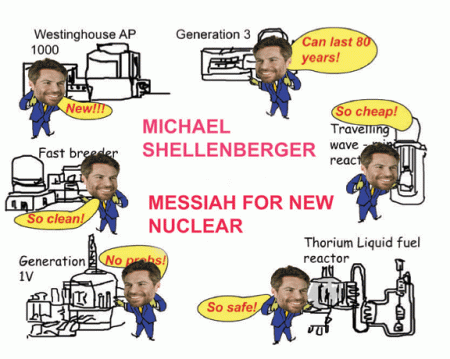
The nuclear power industry is having one of its worst ever years. Environmental Progress is warning about nuclear power’s “rapidly accelerating crisis” and other pro-nuclear lobbyists have noted that “the industry is on life support in the United States and other developed economies“.
Is there a future for ‘pro-nuclear environmentalism’? Jim Green, 30 Oct 2017, http://reneweconomy.com.au/is-there-a-future-for-pro-nuclear-environmentalism-94038/
Michael Shellenberger is visiting Australia this week. He has been a prominent environmentalist (of sorts) since he co- authored the 2004 essay, The Death of Environmentalism. These days, as the President of the California-based ‘Environmental Progress’ lobby group, he is stridently pro-nuclear, hostile towards renewable energy and hostile towards the environment movement.
Shellenberger is visiting to speak at the International Mining and Resources Conference in Melbourne. His visit was promoted by Graham Lloyd in The Australian in September. Shellenberger is “one of the world’s leading new-generation environmental thinkers” according to The Australian, and if the newspaper is any guide he is here to promote his message that wind and solar have failed, that they are doubling the cost of electricity, and that “all existing renewable technologies do is make the electricity system chaotic and provide greenwash for fossil fuels.”
Trawling through Environmental Progress literature, one of their recurring themes is the falsehood that “every time nuclear plants close they are replaced almost entirely by fossil fuels”. South Korea, for example, plans to reduce reliance on coal and nuclear under recently-elected President Moon Jae-in, and to boost reliance on gas and renewables. But Shellenberger and Environmental Progress ignore those plans and concoct their own scare-story in which coal and gas replace nuclear power, electricity prices soar, thousands die from increased air pollution, and greenhouse emissions increase.
Fake scientists and radiation quackery
Environmental Progress’ UK director John Lindberg is described as an “expert on radiation” on the lobby group’s website. In fact, he has no scientific qualifications. Likewise, a South Korean article falsely claims that Shellenberger is a scientist and that article is reposted, without correction, on the Environmental Progress website.
Shellenberger says that at a recent talk in Berlin: “Many Germans simply could not believe how few people died and will die from the Chernobyl accident (under 200) and that nobody died or will die from the meltdowns at Fukushima. How could it be that everything we were told is not only wrong, but often the opposite of the truth?”
There’s a simple reason that Germans didn’t believe Shellenberger’s claims about Chernobyl and Fukushima ‒ they are false. Shellenberger claims that “under 200” people have died and will die from the Chernobyl disaster, but in fact the lowest of the estimates of the Chernobyl cancer death toll is the World Health Organization’s estimate of “up to 9,000 excess cancer deaths” in the most contaminated parts of the former Soviet Union. And of course there are higher estimates for the death toll across Europe.
Shellenberger claims that the Fukushima meltdowns “killed precisely no one” and that “nobody died or will die from the meltdowns at Fukushima”. An Environmental Progress report has this to say about Fukushima: “[T]he science is unequivocal: nobody has gotten sick much less died from the radiation that escaped from three meltdowns followed by three hydrogen gas explosions. And there will be no increase in cancer rates.”
In support of those assertions, Environmental Progress cites a World Health Organization report that directly contradicts the lobby group’s claims. The WHO report concluded that for people in the most contaminated areas in Fukushima Prefecture, the estimated increased risk for all solid cancers will be around 4% in females exposed as infants; a 6% increased risk of breast cancer for females exposed as infants; a 7% increased risk of leukaemia for males exposed as infants; and for thyroid cancer among females exposed as infants, an increased risk of up to 70% (from a 0.75% lifetime risk up to 1.25%).
Applying a linear-no threshold (LNT) risk factor to the estimated collective radiation dose from Fukushima fallout gives an estimated long-term cancer death toll of around 5,000 people. Nuclear lobbyists are quick to point out that LNT may overestimate risks from low dose and low dose-rate exposure ‒ but LNT may also underestimate the risks according to expert bodies such as the US National Academy of Sciences’ Committee on the Biological Effects of Ionizing Radiation.
Attacking environment groups Continue reading
US will not accept a nuclear North Korea: Mattis
The Pentagon’s chief says the threat of nuclear missile attack by North Korea is accelerating. AP – SBS Wires, Reuters – SBS Wires, 29 Oct 17,
USA would negotiate with North Korea- but only on USA’s terms
 US refusal to accept N. Korea as nuclear power leaves little room for talks By KIM GAMEL | STARS AND STRIPES October 29, 2017 SEOUL, South Korea – Defense Secretary Jim Mattis insisted the United States will never accept North Korea as a nuclear power, warning the communist state will face a massive military response if it attacks.
But he also clung to diplomatic efforts aimed at resolving the standoff over the North’s nuclear weapons program.
The mixed messages reflect the lack of good options in dealing with the North, which conducted its sixth and most powerful nuclear test on Sept. 3 and has made rapid progress in developing a missile that could threaten the U.S. mainland.
U.S. policy has been aimed at forcing Pyongyang to abandon its nuclear ambitions. but North Korea has defiantly persisted with its efforts despite punishing economic sanctions and diplomatic pressure.
While both sides say that in principle they’re willing to return to dialogue, the standoff over the North’s nuclear ambitions leaves little room for negotiation……..https://www.stripes.com/news/us-refusal-to-accept-n-korea-as-nuclear-power-leaves-little-room-for-talks-1.495161
1 This Month
Chernobyl: The Lost Tapes – A good documentary on Chernobyl on SBS available On Demand for the next 3 weeks– https://www.sbs.com.au/ondemand/tv-program/chernobyl-the-lost-tapes/2352741955560

of the week–London Campaign for Nuclear Disarmament

Tell the Ukrainian Government to Drop Prosecution of Peace Activist Yurii Sheliazhenko
To see nuclear-related stories in greater depth and intensity – go to https://nuclearinformation.wordpress.com
-
Archives
- April 2026 (114)
- March 2026 (251)
- February 2026 (268)
- January 2026 (308)
- December 2025 (358)
- November 2025 (359)
- October 2025 (376)
- September 2025 (257)
- August 2025 (319)
- July 2025 (230)
- June 2025 (348)
- May 2025 (261)
-
Categories
- 1
- 1 NUCLEAR ISSUES
- business and costs
- climate change
- culture and arts
- ENERGY
- environment
- health
- history
- indigenous issues
- Legal
- marketing of nuclear
- media
- opposition to nuclear
- PERSONAL STORIES
- politics
- politics international
- Religion and ethics
- safety
- secrets,lies and civil liberties
- spinbuster
- technology
- Uranium
- wastes
- weapons and war
- Women
- 2 WORLD
- ACTION
- AFRICA
- Atrocities
- AUSTRALIA
- Christina's notes
- Christina's themes
- culture and arts
- Events
- Fuk 2022
- Fuk 2023
- Fukushima 2017
- Fukushima 2018
- fukushima 2019
- Fukushima 2020
- Fukushima 2021
- general
- global warming
- Humour (God we need it)
- Nuclear
- RARE EARTHS
- Reference
- resources – print
- Resources -audiovicual
- Weekly Newsletter
- World
- World Nuclear
- YouTube
-
RSS
Entries RSS
Comments RSS
 nuclear-news