UK PM May to Meet Israel’s Netanyahu for arms trading whilst the UK media ignores the plight of Mordechai Vanunu
Freedom For Vanunu Now.! No matter what the Israel court decided, Israel must end this case from 1986 to now (2017). How many more years do they need? Freedom Must come Now! All these articles saying I should not speak to foreigners are coming only from England, the Guardian and the Telegraph.They are cooperating with the Israeli propaganda,repeating this order,they should not repeat this and they should demand my freedom Mordechai Vanunu 5th February 2017
Posted by Shaun McGee (aka arclight2011 to nuclear-news.net
Mordechai Vanunu has been a prisoner of the state since the UK and Israel illegally planned his kidnapping many decades ago. Theresa May is more interested in doing a trade and security deal this week with the Israeli Prime Minister post Brexit.

As Julian Assange also languishes in the Ecuadorian Embassy, illegally held by the UK, we can see a theme developing where international and national justice are being swept aside in favour of hatred and bitterness. Will one of your children be the next persecuted target of corrupt and fascist Governments in a so called democratic country?
The war on Human Rights, whistleblowers, activists, journalists and dissidents must stop. The UK and Israeli media needs to highlight these injustices unless they want to end up in the same position as the USA media finds itself now in. Impotent and under threat.
And I did not speak out
Because I was not a Communist
Then they came for the Socialists
And I did not speak out
Because I was not a Socialist
Then they came for the trade unionists
And I did not speak out
Because I was not a trade unionist
Then they came for the Jews
And I did not speak out
Because I was not a Jew
Then they came for me
And there was no one left
To speak out for me –
Next-Generation Nuclear Power? Not Just Yet
Date: 04-02-2017
Source: Technology Review
The West is struggling to build out safer reactors, but China shows no such delays.
New kinds of safer, simpler nuclear reactors are having a hard time becoming a reality—at least in certain countries.
Bloomberg reports that the nuclear industry is currently struggling to build out power production facilities that are supposed to make use of new generation III+ pressurized water uranium fission reactors. While generation III reactors have been in use since 1996, the newer „plus“ versions are supposed to incorporate extra safety features and require less operator input.
Problem is, they’re proving rather tricky to actually build. Projects in France, Finland, and the U.S. are running behind schedule and over budget. And newly committed projects, such as the U.K.’s Hinkley Point, are shaping up to be eye-wateringly expensive.
What gives? According to Lake Barrett, a former official at the U.S. Nuclear Regulatory Commission who spoke to Bloomberg: “The cost overrun situation is driven by a near-perfect storm of societal risk aversion to nuclear causing ultra-restrictive regulatory requirements, construction complexity, and lack of nuclear construction experience by the industry.”
Meanwhile, China’s efforts to become the world’s largest nuclear power industry look well on track. As we’ve highlighted in the past, it’s busy building new conventional reactors, as well as investing in R&D to build more exotic kinds of next-generation hardware, such as thorium molten-salt reactors, high-temperature gas-cooled reactors, and sodium-cooled fast reactors.
Last summer, the U.S. Department of Energy announced $82 million in funding for advanced nuclear reactor research and development—not a lot of cash, to be sure, but a sign that R&D was being taken seriously. The arrival of a new president in the White House has raised the possibility of large cuts in research funding at the DOE, so the promise of future progress on new nukes in America is uncertain at best.
Fukushima – NRA’s radioactive soil concerns omitted from minutes of closed-door meeting
February 4, 2017 (Mainichi Japan)
Concerns raised by the Nuclear Regulation Authority (NRA) on how radioactive soil from the Fukushima nuclear disaster would be reused were omitted from the minutes of closed-door meetings on the issue, the Mainichi Shimbun has learned
It has already come to light that comments from the Ministry of the Environment that could be interpreted as attempting to manipulate the conclusions of the meetings were left out when the minutes were publicly released. The latest revelation means yet another important part of the minutes is missing.
The meetings were held by the Ministry of the Environment between January and May last year with various radiation experts in attendance. In June, the experts decided to manage and reuse contaminated soil with levels of radioactivity under 8,000 becquerels of cesium per kilogram in public construction projects.
Related legislation reads “When deciding on technical standards to prevent radiation-related health problems, the Radiation Council must be consulted.” The publicly released meeting minutes quote an Environment Ministry representative as saying, “We need to think about the consultations with the council. When we discussed the issue with the NRA, it placed importance on our management (of the reused soil).” The quote shows that the ministry had talked to the NRA, which has jurisdiction over the council, about consultations with the body.
However, a source has disclosed that even though the ministry representative mentioned specific concerns brought up by the NRA, saying, “The Nuclear Regulation Authority was most concerned about where the soil will be used, and whether it might be used in the yards of regular households,” this comment was omitted from the minutes.
Furthermore, in a rough draft of the minutes obtained by the Mainichi Shimbun, during the fourth round of Environment Ministry meetings in February last year, an official stated, “Afterwards we will ask all committee members to review the meeting minutes. After that, during next fiscal year, we are thinking of receiving your support in dealing with the Nuclear Regulation Authority.” However, these words were deleted from the publicly released minutes.
The ministry was unable to give a satisfactory explanation for the concerns raised by the NRA, and so there has been no consultation with the Radiation Council to set health standards. However, according to both the ministry and the NRA, they have discussed the issue of consultations with the committee and agree they are not yet necessary.
According to internal rules created by the authority in December 2013, the Radiation Council only needs to be consulted when setting standards by law or relevant regulations. The standards decided through the ministry meetings are only “basic ideas” before they are set by law or regulations.
The ministry plans to reuse contaminated soil on an experimental basis. An NRA representative commented, “Once the plans for the experiment are in place, we understand that they will discuss the issue with us again.”
Even the existence of the closed-door meetings was originally not announced, but after repeated requests for information disclosure, the ministry revealed the meeting minutes in August last year. While the release was called a “full release,” comments including ones that could be taken as attempting to manipulate the discussion toward a conclusion of using 8,000 becquerels per kilogram as an upper limit when reusing soil were deleted from the records. After this came to light, Environment Minister Koichi Yamamoto said the minutes were “meeting summaries that only included the points of what was said.”
http://mainichi.jp/english/articles/20170204/p2a/00m/0na/017000c
India to host international nuclear security meet next week after nuclear materials were found near Mumbai
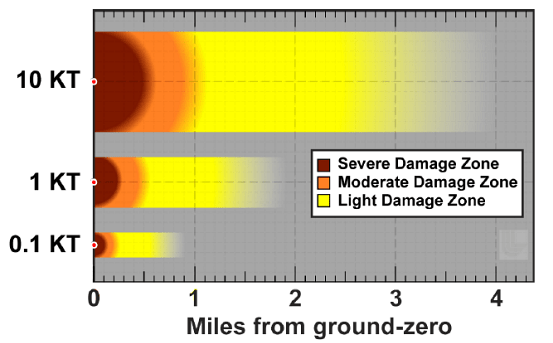
Feb 5, 2017,
New Delhi: Noting that possible use of weapons of mass destruction and related material by terrorists is no longer a theoretical concern, India will host a key meet on nuclear security here next week which will be attended by delegated from over 100 countries.
The Ministry of External Affairs (MEA) in coordination with the Department of Atomic Energy is hosting the Implementation and Assessment Group Meeting of the Global Initiative to Combat Nuclear Terrorism (GICNT) on February 8-10.
Approximately 150 delegates from various GICNT partner countries and international organisations will participate in this event, a statement by the MEA said.
It said the development was pursuant to the announcement made by Prime Minister Narendra Modi at the Nuclear Security Summit last year.
It said the event highlights India’s commitment to global nuclear non-proliferation and peaceful uses of nuclear energy and is part of its overall engagement with the international community on nuclear security issues.
“India hosting this meeting highlights the continued priority we attach to nuclear security and our efforts to further strengthen the institutional frameworks, capacity building and enhance international cooperation,” the statement said.
It noted that the possible use of weapons of mass destruction and related material by terrorists is no longer a theoretical concern.
“A breach of nuclear security may lead to unimaginable consequences. Such an event would have a global impact. It is imperative to strengthen international efforts to combat such threats. This meeting is therefore timely and important and would further enhance our vigil,” MEA said.
GICNT was launched in 2006 jointly by the Russian Federation and the United States. In the past 10 years, it has grown to include 86 partner nations and five official observer organisations and has held several multilateral activities in support of its Statement of Principles.
ISIS and nuclear Armageddon? – Exclusive to nuclear-news.net
“….So, what is so important on the Thane Uranium Black market story? Firstly, the details of the purity of the Uranium. The Indian Police had done some homework and had the purity and the cost of the Uranium and this was in the article i posted. But the costs was in RS Core and the conversion from that to US Dollars was not easy.
So I did the conversion and also checked the upper level of purity (which was “85 percent” pure) and compared that to the purity of US nuclear weapons grade Uranium 235 (which is 93 percent). Now it has to be said that the Indian article did not specify U235 or U238 but when judging purity of Uranium it is valued at the amount of U235 with the rest being the more common U238. So it was looking likely we were talking nuclear weapons grade uranium but with a slightly lower value than the US standard…..”
ISIS and nuclear Armageddon? – Exclusive to nuclear-news.net
A Special Team To Secure The Bengali Republic Day Parade From Nuclear And Chemical Threats
Sunday Matinee – On the Beach
Published on 4 Feb 2017
After a global nuclear war, survivors face the possibility that all remaining life on earth will be destroyed in just a matter of months. In the final days and hours, humankind’s greatest failures and virtues reveal themselves, both heroically and tragically.
The continuing relevance of “On the Beach”
“It frightened the hell out of me. I’m still frightened.”
3 August 2015 Book review
Beverly Gray
These words mark the reaction of a young Australian named Helen Caldicott to a story of the aftermath of mistaken nuclear war, in which those who never even took sides were faced with the slow advance of deadly nuclear radiation on their shores. On the Beach, first a best-selling novel and then a major Hollywood film, confronts the viewer with a number of questions: How would you behave if—in the aftermath of a nuclear apocalypse—you knew you only have a few weeks or months left to live? Would you carouse riotously, knowing the end is near? Deny that the entire thing is happening? Hope against all logic for a miraculous reprieve? Try to maintain a core of decency in the face of imminent death? Wish that you had done something long ago to prevent nuclear war in the first place?
The story’s effect on Caldicott, then a 19-year-old Melbourne medical student who’d just learned about genetics and radiation, was profound. She went on to become both a pediatrician and a feisty anti-nuclear activist, an inspiration to others in the non-proliferation community and in the nuclear humanitarian initiative. She is renowned for warning, “It could happen tonight by accident,” and with the onset of nuclear winter, “We’ll all freeze to death in the dark.”
But what about the book itself and the 1959 movie made from it? Recently, after watching a 2013 documentary called Fallout (produced by Rough Trade Pictures in association with Screen Australia and Film Victoria) that ponders these questions, I sat down with Karen Sharpe Kramer, widow of the producer-director of On the Beach. Stanley Kramer was well-known for releasing such “message” films as Judgment at Nuremberg, Inherit the Wind, and Ship of Fools. Of On the Beach he once wrote, “Its subject was as serious and compelling as any ever attempted in a motion picture—the very destruction of mankind and the entire planet.” Kramer died in 2001, but as the Iran nuclear agreement, renewed US-Russian nuclear tensions, and the 70th anniversary of the Hiroshima and Nagasaki bombings make headlines, his Eisenhower-era movie retains an unfortunate relevance.
A different time—or maybe not so different.
Recently Found Fukushima Daiichi’s Reactor 2 High Level of Radiation Does not Mean Radiation Increase

There is some dispute about the recent high level of radiation measured inside the Fukushima Daiichi reactor 2, thanks to the Japan Times unprecise english translation of the Kyodo News Japanese language article.
They have been able to measure these highest radiation levels only now because they couldn’t get as close to where they think the melted fuel may be with monitors before. Not the highest levels ever present at the site. That would have been around the time of the accident, or soon after. The radiation levels at the site do not appear to be rising, they are just now able to get deeper inside the reactor containment before the monitors fail, and so they get better readings.

The unprecise english translation of the Kyodo News Japanese language article published by the Japan Times opened the door to possible misconstruction of the real facts by other media, western media and websites relying on that Japan Times article. http://www.japantimes.co.jp/news/2017/02/03/national/fukushima-radiation-level-highest-since-march-11/#.WJY4ffLraM_
The Japan Times article’s title is ok: “Highest radiation reading since 3/11 detected at Fukushima No. 1 reactor”. Yes, it is the highest radiation reading found since 3/11 because since 3/11 Tepco had not been able to reach such deep place to measure the radiation there. So this recent reading is the highest found since 3/11.
The Japan Times article in itself does not mention directly any radiation increase or “spike. But their wording “has reached” in “The radiation level in the containment vessel of reactor 2 at the crippled Fukushima No. 1 power plant has reached a maximum of 530 sieverts per hour, the highest since the triple core meltdown in March 2011, Tokyo Electric Power Co. Holdings Inc. said” could be misconstrued as meaning that the high level recently found is resulting from an increase of radiation, when compared to the lower level previously found . Which is not the case. Their previous reading was lower because they had not been able to go that deep before to monitor radiation there.
The Japan Times article then misled some western media, such as the Guardian, Popular Mechanic and others to themselves publish misconstrued articles based on the Japan Times article as their source.
The Popular Mechanics article’s title was ok: “Highest Radiation Levels Since Meltdown Recorded at Fukushima” but their subtitle is entirely wrong and misleading: “Levels haven’t been this high since the actual meltdown in 2011.” That subtitle is wrong, the levels were maybe that high or even higher, but Tepco had not been able to reach there before to find out, to take such measure in that place, at that deep level. That subtitle is wrong, suggesting that there is an increase. Popular Mechanics misconstrued the article of Japan Times and drawed the wrong conclusion. http://www.popularmechanics.com/technology/infrastructure/a25034/radiation-spikes-fukushima-possible-breach/
The Guardian ‘s article title is in itself misleading: ” Fukushima nuclear reactor radiation at highest level since 2011 meltdown”. A title such as “Fukushima nuclear reactor radiation highest level to date found since 2011 meltdown” would have been better and more accurate. The added words “to date found” would clarify that it was maybe already there before but that it had not been found yet, because they had not been able to reach that place and that deep before to take such measure. In its text it fails to mention the real reason why the measure recently found is higher than the previous measure. This all results in the Guardian article saying that this highest recent measure compared to the lower previous one is due to an increase of radiation. This is absolutely wrong, a complete misconstruction of the real facts. https://www.theguardian.com/environment/2017/feb/03/fukushima-daiichi-radiation-levels-highest-since-2011-meltdown?CMP=share_btn_fb
And many other western media and websites went along and repeated the same blind misconstruction.
Thanks heavens there were two websites who noticed the error made by those mainstream media and many other websites. They stepped in trying to correct that misconstruction and to re-establish the true facts. The Simply Info Fukuleaks website and the Safecast website, thanks to both websites’ bloggers team for their vigilance and their efforts in keeping the facts straight.
No, Fukushima Daiichi Did Not See A Radiation Spike http://www.fukuleaks.org/web/?p=16094
No, radiation levels at Fukushima Daiichi are not rising http://blog.safecast.org/2017/02/no-radiation-levels-at-fukushima-daiichi-are-not-rising/
We can’t say that there has been an increase in radiation because we do not know that. To know that we would need to have a previous measure at the same deep at the same place to compare both measures. But such previous measure that deep at that place we do not have, so it is impossible to draw any conclusion at this stage, only that it is very high.
Now what we really need is a second probe at the same deep at the same place, to confirm the first probe readings, but also to compare the recent readings and the next readings so as to assess if the radiation levels there are stable or not, if there will be an increase of radiation between the two probes or not…Until such second probing takes place, at this stage no one can say anything about any occuring increase…

For more information: TEPCO Reports:
Pre-investigation results of the area inside the pedestal for the Unit 2 Primary Containment Vessel Investigation at Fukushima Daiichi Nuclear Power Station(examination results of digital images)
Images Inside Fukushima Daiichi Unit 2 Need Further Examination Including The Possibility Of Fuel Debris
TEPCO Photos:
http://photo.tepco.co.jp/en/index-e.html
http://photo.tepco.co.jp/en/date/2017/201702-e/170202-01e.html
http://photo.tepco.co.jp/en/date/2017/201701-e/170130-01e.html
Video here: NHK Video (in Japanese)
Nuclear waste dump saga continues in Canada
5 February 2017
Last February, the Canadian government asked Ontario Power Generation to study the feasibility of alternative locations for the nuclear waste dump it is proposing for the shoreline of Lake Huron.
Given the request, the average citizen might have expected OPG to pinpoint specific sites and compare them – environmentally and economically – to the deep geological repository for low and intermediate nuclear waste proposed for Kincardine, Ontario, Canada, about 110 miles up-lake from Port Huron.
The average citizen would be wrong.
In OPG’s response to the government, there was no pinpointing. Instead, OPG outlined – in the broadest fashion imaginable – two massive geological formations comprising about 75 percent of the entire province.
The firm chose the crystalline rock of the Canadian Shield, which is about a billion years old, and the sedimentary rock formations of southern Ontario, which are 354 million to 543 million years old. Both formations are at least 200 meters deep.
“The crystalline alternate location is in the Canadian Shield and extends through central and northern Ontario,” OPG said in its 90-page report on alternate locations.
It covers more than half of the entire province.
“The sedimentary alternate location extends through the western portion of southern Ontario,” said OPG.
It covers the entire southwestern tip of Ontario, everything west of imaginary line running southeast from Georgian Bay to the Western Basin of Lake Erie.
The critics
The failure of OPG to consider sites other than its own property on Lake Huron for the nuclear waste dump has long been criticized by opponents of the repository.
The company’s recent consideration of vast geological locations did go over any better.
“The proponent has confirmed that it won’t look at actual alternate locations,” Beverly Fernandez wrote in a letter to Catherine McKenna, minister of the Environment and Climate Change. Fernandez is the founder of Stop the Great Lakes Nuclear Dump. “It has provided merely a generic description of what two alternate geologic regions might be like with no actual site identification or testing done or considered. It didn’t want to start over again. As a result of this failure to conduct any meaningful alternate site studies, it is obviously impossible for anyone to objectively conclude on any basis that Kincardine should be the site for the burial of this nuclear waste.”
Kevin Kamps, a nuclear waste specialist with the Maryland-based Beyond Nuclear, agreed.
“As U.S. Rep. Dan Kildee, (D-Flint Township), has stated, ‘Surely in the vast land mass that comprises Canada, there must be a better place to permanently store nuclear waste than on the shores of Lake Huron,’” Kamps said in a Jan. 4 statement.
Canada has the second largest land mass of any country, after Russia, said Kamps.
“OPG has refused to name the specific sites it has so hurriedly studied as alternative dumpsites to the Great Lakes shore, despite Canadian Environment Minister Catherine McKenna’s explicit instructions in her request for additional information,” said Kamps. “For this reason alone, OPG must be given a failing grade and its coveted Great Lakes shore DUD (deep underground dump) rejected outright.”
More time for public comment
The general public now has an extra 16 days to comment on the 350 pages of additional information submitted by Ontario Power Generation to the Canadian Environmental Assessment Agency in support of its bid to excavate a 2,230-foot deep repository for nuclear waste.
The new deadline is March 6, the agency announced on Jan. 27.
The previous deadline, announced Jan. 18, was Feb. 17.
“The additional time was requested by the public to provide more time to comment on the information,” said the CEAA.
In addition to the section on alternate locations, the second part of OPG’s submission, its “Updated Analysis of Cumulative Environmental Effects,” is 76 pages long. The third part is the firm’s “Mitigation Measures Report” at 184 pages.
OPG’s submissions can be found online at ceaa-acee.gc.ca.
Trump gets letter
Thirteen U.S. Congressional representatives sent a letter to President Donald Trump on Feb. 1 asking him to press Ottawa to deny OPG the license to build the dump.
“The Great Lakes make up one-fifth of the world’s fresh surface water supply and are a source of drinking water for 40 million people,” read the letter in part. “This plan poses a danger to a crucial water source and a failure at the site would disrupt both Michigan and Canadian tourism and commerce.”
Eight of bipartisan signees were from Michigan: Republicans Paul Mitchell, who replaced Candice Miller, Jack Bergman, Mike Bishop, Bill Huizenga and Dan Trott, and Democrats Dan Kilbee, Debbie Dingell and Sander Levin.
Jim Bloch is a freelance writer.
China says willing to discuss “possibilities” with India on nuclear group
[BEIJING] China is willing to discuss”possibilities” with India on its bid to become a fully fledged member of the Nuclear Suppliers Group (NSG), a senior Chinese diplomat said on Monday, holding out an olive branch ahead of a summit in India.
India last month said it had held “substantive” talks with China on its attempt to join the NSG, a 48-member grouping of countries that trades in civil nuclear technology.
Indian Prime Minister Narendra Modi is campaigning to join the NSG to back a multi-billion-dollar drive to build nuclear power plants in partnership with Russia, the United States and France, and reduce India’s reliance on polluting fossil fuels.
Yet his bid to win accession to the group, founded in response to India’s first atomic weapons test in 1974, has failed to win over strategic rival China, which enjoys a de facto veto because it operates by consensus.
Speaking to reporters ahead of a visit to India this week by Chinese President Xi Jinping for a summit of the Brics group of emerging nations, Vice Foreign Minister Li Baodong said new NSG members needed to be agreed upon by all existing members.
“On the issue of joining the NSG, China and India have all along had very good communications, and (China) is willing to have further communications with the Indian side, to increase consensus,” he said.
“On this, China is willing to jointly explore all kinds of possibilities with India, but this must accord with the charter of the NSG, and certain rules need to be respected by all sides,” Mr Li said, without elaborating.
The nuclear Non-Proliferation Treaty (NPT) recognises the five permanent members of the United Nations Security Council – the United States, Russia, China, Britain and France – as nuclear weapons powers but not others.
India has ruled out signing the NPT but says its track record of non-proliferation should entitle it to join the Nuclear Suppliers Group.
India was granted an NSG waiver in 2008 that allows it to engage in nuclear commerce, but deprives it of a vote in the organisation’s decision making.
Backers of India’s NSG bid, who include the United States, hope a deal can be reached despite a setback at the group’s annual meeting in Seoul in June.
Mr Xi will also visit Bangladesh and Cambodia on his Asian trip.
The Brics group of emerging nations include Brazil, Russia, India, China and South Africa.
REUTERS
Saudis take new interest in renewable energy and its bye bye to nuclear programs

Kingdom is now ready to roll out robust plans to develop nascent solar and wind power capabilities that could have far-reaching effects.
http://www.thearabweekly.com/Economy/7767/Saudis-take-new-interest-in-renewable-energy
2017/02/05 by Jareer Elass
Washington – Plans to develop renewable energy sources in Saudi Arabia are gaining new life as part of Saudi Vision 2030, the massive economic revamping brainchild of Saudi Deputy Crown Prince Mohammed bin Salman bin Abdulaziz.
Fledgling efforts during former King Abdullah bin Abdulaziz Al Saud’s era began six years before he was installed in office. With King Fahd’s incapacitating illness, Crown Prince Abdullah’s role to introduce renewables, such as solar and wind power, were moving at a snail’s pace. They were effectively put on hold in the first two years of King Salman bin Abdulaziz Al Saud’s reign as the kingdom prioritised making fundamental changes to how the Saudi government works and shifting its oil-centric economy towards a more diversified one with an enhanced private sector.
The kingdom is now ready to roll out robust plans to develop nascent solar and wind power capabilities that could have far-reaching effects outside its borders.
In mid-January, Saudi Oil Minister Khalid al-Falih announced that the government was weeks away from introducing a renewable energy programme that would involve investment of $30 billion-$50 billion by 2023. Falih said the first round of bidding for projects under the programme would begin within weeks. The first tender is reportedly for 400 megawatts (MW) of wind capacity and 300MW of solar capacity, valued at $700 million.
Saudi Arabia’s domestic power demand is growing 8% each year and the kingdom burns as much crude oil products as it does natural gas to generate electricity. The Saudis are thus motivated to develop renewables and other energy sources so as to not lose potential export revenue from crude that is currently used to meet domestic consumption.
Unwilling to assume the full financial burden that these energy projects will require, the Saudi government wants to work with domestic and foreign firms that will take on much of the cost and risk.
When Saudi Vision 2030 was unveiled last April, it pointed to renewable energy as an essential component of the diversification away from an oil-dependent economy. The 5-year National Transformation Programme (NTP) announced in June established a target of 3.45 gigawatts (GW) — 4% of total power consumption — from renewable energy by 2023, though Saudi Aramco recently stated that the 3.45GW goal was being accelerated to 2020.
The kingdom generates less than 1% of its total energy from renewable energy. In May 2012, the King Abdullah City for Atomic and Renewable Energy announced its plan to install 41GW of solar power by 2032, which was considered far-fetched given that the kingdom was essentially starting from scratch. In January 2015, it pushed back that timeframe from 2032 to 2040. It is unclear whether that 41GW target for 2040 is still in play in the latest plans that have been announced.
King Salman’s government says the effects of cultivating Saudi solar and wind power can extend beyond the kingdom’s borders and benefit not only the government’s coffers but meet the electricity needs of other regions. Speaking January 20th at the World Economic Forum in Davos, Switzerland, Falih suggested that Saudi Arabia could become a “major exporter” of renewable energy, saying, “solar that is produced in Saudi Arabia can be exported all the way to Europe through a network”.
Speaking at an energy conference in Abu Dhabi a few days earlier, Falih pointed to Africa as a potential recipient of Saudi renewable energy, saying that the kingdom was developing ways to connect its renewable energy projects with Yemen, Egypt and Jordan. The Saudi government hopes not only to export power from its renewable energy sources but also supply other regions with solar panels and wind turbines.
The Saudi government, Falih said, is also planning to make “significant investment in nuclear energy”. He said the government was in the early stages of feasibility and design studies for the construction of two commercial nuclear reactors that together would produce 2.8GW. Although Saudi Arabia has in recent years signed a number of nuclear energy cooperation accords with other governments, agreements with France, South Korea and Russia go further by including feasibility studies for atomic power plants and fuel cycle work in the kingdom.
In 2011, King Abdullah City for Atomic and Renewable Energy announced its intention to build 16 nuclear power reactors by 2032 to produce up to 17.6GW of power. It estimated that the cost of constructing that number of nuclear plants would be $80 billion and Saudi Arabia’s recent financial constraints have dampened momentum on making that type of commitment.
King Salman’s government has not indicated whether it is sticking to the proposed schedule and nuclear power generation target. It is also unclear how much of a stake the Saudis would allow private domestic firms or foreign state companies in partial ownership of the nuclear power facilities.
The past week in nuclear and climate news
 How good it would be to be able to ignore Donald Trump! But he sees to it that this is pretty much impossible, in any current affairs media. On the nuclear scene, many worry a lot:
- about his choice of Steve Bannon on the National Security Council – “Unsupervised by people who know what they’re doing. Trump and Bannon could bring the world closer to a nuclear holocaust.“
- Pentagon urges Trump to expand nuclear weapons, ready for “limited” atomic war.
- Thanks to Trump’s comments on climate change and nuclear arms we are once again close to nuclear war.
- USA intelligence agencies to study whether the Russian and Chinese leadership could survive a nuclear attack
- Dangerous steps by Russia and Trump on nuclear arms control
Meanwhile the global nuclear industry is in financial crisis. And Fukushima nuclear reactor radiation at highest level since 2011 meltdown.
Trump is having his impact on climate change news and action, too.
Joint Statements on Climate Change from National Academies of Science Around the World.
Antarctic Sea Ice Likely to Hit New All-Time Record Lows Over Coming Days.
Delays, ballooning costs, stall Next-Generation Nuclear Reactors
UK.
- Decision to leave Euratom leaves Britain’s nuclear industry floundering. Britain’s nuclear safety at risk as they pull out of Euratom. Fake charity (nuclear lobby) The Weinberg Foundation is whining about Britain leaving Euratom.
- British government now being urged to guarantee Moorside nuclear funding. Blow to UK nuclear strategy as Toshiba considers pulling out of Cumbria plant. Europe’s biggest nuclear construction project now hangs in the balance.
JAPAN. Radiation in Fukushima reactor containment vessel at deadly level: TEPCO. Fukushima nuclear disaster: Worker sues Tepco over cancer. Niigata governor Ryuichi Yoneyama stands firm against restart of Kashiwazaki-Kariwa plant.
Hitachi to take a 70 billion yen hit after U.S nuclear project fails. Toshiba’s financial woes continue – about to be sued by trust banks. Toshiba to withdraw from nuclear plant construction, chairman to quit.
IRAN. Iran tested ballistic missile, but did not breach nuclear agreement
USA. US Defence Secretary Jim Mattis warns NKorea against nuclear attack . Fear of nuclear war leads Texans to build expensive bunkers. America’s EPA head announces pullout from a global pact to cut emissions. A Washington State judge uses doubt on climate change as legal cause to block a climate activist’s defense.
FRANCE. France’s next President to face costly propping up of the nuclear industry. China decides against taking stake in Areva .
INDIA. Toshiba to withdraw from Indian nuclear projects.
SOUTH AFRICA Only government-owned nuclear companies have responded to Eskom on nuclear marketing.
GREENLAND. Greenland – environment future threatened by mining for uranium and rare earths.
Toshiba’s just one corporation in a slew of nuclear financial crises
Not just Toshiba – the global nuclear industry is in crisis everywhere, Ecologist, Jim Green 3rd February 2017 Global nuclear power capacity grew slightly in 2016, writes Jim Green, but it was more a dead cat bounce than the promised ‘nuclear renaissance’. The collapse of Toshiba, the direct result of its failing nuclear ventures, is indicative of the crisis faced by nuclear contractors and utilities worldwide. Another sign of the industry’s poor outlook: no major commodity had a worse 2016 than uranium.
Recent revelations that nuclear giant Toshiba faces multi-billion dollar losses and write-downs and may rule itself out of future nuclear construction bids around the world have dominated the world’s financial press.
Toshiba was only just recovering from a 2015 accounting scandal in which it padded reported profits by about US$1.3bn over seven years.
The ripple-effects of Toshiba’s latest problems will be many and varied. Japan’s ambitions to develop a large nuclear export business are in tatters.
As recently as last year, Toshiba said it hoped to win 50 contracts to build new nuclear plants in India and China over the next decade. Also up in the air are reactor construction projects being planned in the UK, Turkey, and elsewhere.
Toshiba says it is “re-examining its relationship” with Westinghouse, its struggling US subsidiary. Delays and cost overruns on nuclear construction projects in the US will be expressed as write-downs that could be as high as US$7 billion.
As Toshiba, so the entire nuclear industry
Toshiba’s 2006 acquisition of Westinghouse has turned out to be a “pivotal moment in Toshiba’s decline” according to Bloomberg. Even pro-nuclear commentator Dan Yurman says the looming massive write-down has “doomed” the company’s US nuclear business.
He adds that it “also apparently ends the so-called nuclear renaissance in the US for full size reactors. During 2007-2010 there were more than two dozen applications expected for new reactors, but now only a few licenses have been completed and they do not have any links to near term plans to build the units.”
But it’s not just Toshiba. Other nuclear utilities around the world are also in deep trouble. Their problems were summarised in the July 2016 World Nuclear Industry Status Report:
“Many of the traditional nuclear and fossil fuel based utilities are struggling with a dramatic plunge in wholesale power prices, a shrinking client base, declining power consumption, high debt loads, increasing production costs at aging facilities, and stiff competition, especially from renewables.
- In Europe, energy giants EDF, Engie (France), E.ON, RWE (Germany) and Vattenfall (Sweden), as well as utilities TVO (Finland) and CEZ (Czech Republic), have all been downgraded by credit rating agencies over the past year. All of the utilities registered severe losses on the stock market.
- French utility AREVA has accumulated €10 billion (US$10.9 billion) in losses over the past five years. Share value 95% below 2007 peak value. Standard & Poor’s downgraded AREVA shares to BB+ (‘junk’) in November 2014 and again to BB- in March 2015. The company is to be broken up, with French-state-controlled utility EDF taking a majority stake in the reactor building and maintenance subsidiary AREVA NP will then be opened up to foreign investment. The rescue scheme has not been approved by the European Commission.
- The AREVA rescue scheme could turn out to be highly problematic for EDF as its risk profile expands. EDF struggles with US$41.5 billion debt, downgraded by S&P, shares lost over half of their value in less than a year and 87% compared to their peak value in 2007.
- RWE shares went down by 54% in 2015.
- In Asia, the share value of the largest Japanese utilities TEPCO and Kansai was wiped out in the aftermath of the Fukushima disaster and never recovered. Chinese utility CGN (EDF partner for Hinkley Point C), listed on the Hong Kong stock exchange since December 2014, has lost 60% of its share value since June 2015. The only exception to this trend is the Korean utility KEPCO that operates as a virtual monopoly in a regulated market.
- In the US, the largest nuclear operator Exelon has lost about 60% of its share value compared to its peak value in 2008………..”http://www.theecologist.org/News/news_analysis/2988607/not_just_toshiba_the_global_nuclear_industry_is_in_crisis_everywhere.html
British government now being urged to guarantee Moorside nuclear funding

 Government urged to guarantee Moorside nuclear funding,
  ITV.com, 3 Feb 17 The Government is being urged to step in and guarantee funding for a new nuclear power station after Japanese giant Toshiba said it was reviewing its investment in overseas nuclear projects.
The GMB union said ministers should take urgent action to secure the development at Moorside in Cumbria.
The future of the planned £10 billion power plant has been thrown into doubt after Toshiba said it was reviewing its overseas nuclear business.
Toshiba owns Westinghouse, the American-based nuclear developer whose AP1000 nuclear reactors are set to be used at Moorside……http://www.itv.com/news/border/2017-02-03/government-urged-to-guarantee-moorside-nuclear-funding/
France’s next President to face costly propping up of the nuclear industry
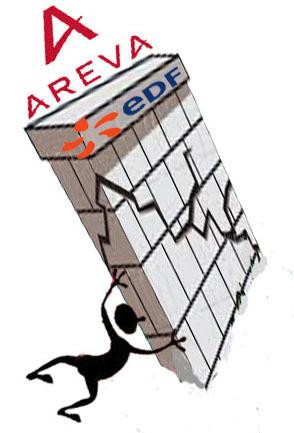 France’s Next President May Face $3 Billion Nuclear Hangover, Bloomberg by Francois De BeaupuyFebruary 4, 2017,
-
Not enough left in the kitty to bail out both EDF and Areva
-
Sale of assets from phone company to Renault may be considered
Whoever succeeds Francois Hollande as France’s president may find one of their first tasks in office will be selling off some of the nation’s prized assets to prop up the state’s nuclear industry.
That’s because the government is as much as 3 billion euros ($3.2 billion) short of the 7.5 billion euros it has said it needs this year to fix the financial problems of Areva SA and Electricite de France SA, said two government officials with direct knowledge of the matter. Hollande will try to find an answer before he leaves office in June, one of the people said. If he can’t, his successor must decide how to plug the gap, said the other person.
France is preparing to rescue its nuclear industry after EDF was weakened by falling European power prices and Areva lost billions on a long-delayed project in Finland. The president must either increase the national debt or weigh politically sensitive privatizations of holdings in anything from automakers such as Renault SA to the former phone monopoly — a tall order with the first round of presidential elections just three months away…….
While the government has enough in its privatization account for the 3 billion-euro stimulus it plans for EDF this quarter, it remains almost 3 billion euros short of the 4.5 billion euros it wants to help its near-bankrupt reactor maker, Areva, complete its restructuring and meet debt repayments this year, said the officials. Areva shareholders on Friday voted in favor of a 5 billion-euro state-backed bailout, which includes 500 million euros from Japanese investors………https://www.bloomberg.com/news/articles/2017-02-03/france-s-next-president-said-to-face-3-billion-nuclear-hangover
The danger of Steve Bannon and “America First”
 Robert Reich: Why Putting Steve Bannon on the National Security Council Is So Terrifying, In These Times, 30 Jan 17 The dangers of “America First.”
Bannon will join the NSC’s principals committee, the top inter-agency group advising the President on national security.
Meanwhile, the Director of National Intelligence and the Chairman of the Joint Chiefs of Staff will now attend meetings only when “issues pertaining to their responsibilities and expertise are to be discussed,” according to the presidential memorandum issued Saturday.
Political strategists have never before participated in National Security Council principals meetings because the NSC is supposed to give presidents nonpartisan, factual advice.
But forget facts. Forget analysis. This is the Trump administration.
And what does Bannon have to bring to the table?
In case you forgot, before joining Donald Trump’s inner circle Bannon headed Breitbart News, a far-right media outlet that has promoted conspiracy theories and is a platform for the alt-right movement, which espouses white nationalism.
This is truly scary.
Former National Security Adviser Susan Rice calls the move “stone cold crazy.” Former Defense Secretary Robert Gates, who also served under George W. Bush, says the demotions are a “big mistake.”
Republican Sen. John McCain, chairman of the Armed Services Committee, told CBS News, “I am worried about the National Security Council. … The appointment of Mr. Bannon is a radical departure from any National Security Council in history.” McCain added that the “one person who is indispensable would be the chairman of the Joint Chiefs of Staff, in my view.”
Here’s the big worry: Trump is unhinged and ignorant. Bannon is nuts and malicious. If not supervised by the Joint Chiefs of Staff, their decisions could endanger the world…….
Not incidentally, “America First” was the name of the pro-Nazi group led by Charles Lindbergh that bitterly fought FDR before U.S. entry into World War II to keep America neutral between Churchill’s Britain and Hitler’s Reich.
Trump’s and Bannon’s version of “America First” is no less dangerous. It is alienating America from the rest of the world, destroying our nation’s moral authority abroad, and risking everything we love about our country.
Unsupervised by people who know what they’re doing. Trump and Bannon could also bring the world closer to a nuclear holocaust. http://inthesetimes.com/article/19853/reich-trump-bannon-america-first-national-security-council
Blow to UK nuclear strategy as Toshiba considers pulling out of Cumbria plant
 Government urged to seek new investors to save Moorside project after concerns key partner will leave consortium, Guardian, Adam Vaughan, 3 Feb 17, Plans for a new nuclear power station in Cumbria are likely to be scrapped after a key backer pulled out, creating a major hole in the government’s nuclear strategy.
Two industry sources close to the process said Toshiba had privately decided to quit the consortium behind the planned Moorside plant, echoing sources who told Reuters and the Wall Street Journal that the Japanese company was withdrawing from new nuclear projects in the UK.
Toshiba said last month it was reviewing all its nuclear business abroad after suffering a multibillion-dollar writedown on its US business. It has promised to provide more details about its intentions when it publishes results on 14 February.
The French energy firm Engie, which is Toshiba’s partner in the NuGen consortium, has long been seen as wanting to get out of the project. Its chief executive said last year the future did not lie in nuclear power……..
“Any potential investor in that project is going to need to have very direct reassurance from the government; even if they are just starting an exploratory period, they are welcomed,” said Tim Yeo, the chairman of the pro-nuclear group New Nuclear Watch Europe.
The former Conservative MP said ministers should even consider taking a direct stake in the Moorside plant. Such an interventionist approach would have been anathema in recent years but appears more credible after recent leaks revealed the government was considering taking a stake in another new nuclear plant, at Wylfa in Wales……..
Moorside, near Sellafield, is a key part of the government’s hopes for a new fleet of power stations to fill the UK’s energy gap in the next decade as coal plants and ageing atomic plants close.
The only one to be approved so far is EDF’s £18bn Hinkley Point C plant in Somerset, which was made financially possible through subsidies to be levied on household bills. The government hopes new plants will be built at Wylffa, Sizewell, Bradwell and Oldbury…… https://www.theguardian.com/business/2017/feb/03/toshiba-exit-could-scrap-plans-for-new-nuclear-power-plant-in-cumbria
1 This Month

petition to oppose the rapid increase of space-military industry threatening Jeju Island and the region.
[Petition by April 19th (KST)] Stop the joint military-Hanwha Systems-Jeju Provincial Government Sea Launch!

Chernobyl: The Lost Tapes – A good documentary on Chernobyl on SBS available On Demand for the next 3 weeks– https://www.sbs.com.au/ondemand/tv-program/chernobyl-the-lost-tapes/2352741955560

of the week–London Campaign for Nuclear Disarmament


Tell the Ukrainian Government to Drop Prosecution of Peace Activist Yurii Sheliazhenko
To see nuclear-related stories in greater depth and intensity – go to https://nuclearinformation.wordpress.com
-
Archives
- April 2026 (194)
- March 2026 (251)
- February 2026 (268)
- January 2026 (308)
- December 2025 (358)
- November 2025 (359)
- October 2025 (376)
- September 2025 (257)
- August 2025 (319)
- July 2025 (230)
- June 2025 (348)
- May 2025 (261)
-
Categories
- 1
- 1 NUCLEAR ISSUES
- business and costs
- climate change
- culture and arts
- ENERGY
- environment
- health
- history
- indigenous issues
- Legal
- marketing of nuclear
- media
- opposition to nuclear
- PERSONAL STORIES
- politics
- politics international
- Religion and ethics
- safety
- secrets,lies and civil liberties
- spinbuster
- technology
- Uranium
- wastes
- weapons and war
- Women
- 2 WORLD
- ACTION
- AFRICA
- Atrocities
- AUSTRALIA
- Christina's notes
- Christina's themes
- culture and arts
- Events
- Fuk 2022
- Fuk 2023
- Fukushima 2017
- Fukushima 2018
- fukushima 2019
- Fukushima 2020
- Fukushima 2021
- general
- global warming
- Humour (God we need it)
- Nuclear
- RARE EARTHS
- Reference
- resources – print
- Resources -audiovicual
- Weekly Newsletter
- World
- World Nuclear
- YouTube
-
RSS
Entries RSS
Comments RSS
 nuclear-news