This documentary is in French and English with subtitles. It is really worth a view and shows how the French nuclear military had little regard for their servicemen and even less regard for the indigenous people who lived on the Islands
Image Candyce and Marius Paul on their tribal lands
Come on a journey to the land of the English River Nation, in Saskatchewan, Canada. Earth Matters speaks to Candyce Paul, member of the English River Nation, and spokesperson for the Committee for Future Generations. Topics include the dirty tactics of the nuclear industry worldwide and the wisdom of Dene ecology in these times of environmental crisis.
Experts raise concerns over waste stored in the open air at Europe’s largest nuclear power station, as the conflict increases Ukraine’s reliance on power from its ageing plants
Concerns have been raised by environmentalists and atomic power experts over the way waste is being stored at Europe’s largest nuclear power station, in crisis-ridden Ukraine.
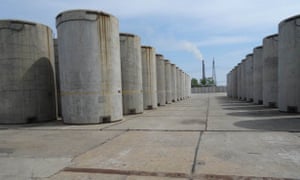
More than 3,000 spent nuclear fuel rods are kept inside metal casks within towering concrete containers in an open-air yard close to a perimeter fence at Zaporizhia, the Guardian discovered on a recent visit to the plant, which is 124 miles (200km) from the current front line.
“With a war around the corner, it is shocking that the spent fuel rod containers are standing under the open sky, with just a metal gate and some security guards waltzing up and down for protection,” said Patricia Lorenz, a Friends of the Earth nuclear spokeswoman who visited the plant on a fact-finding mission.
“I have never seen anything like it,” she added. “It is unheard of when, in Germany, interim storage operators have been ordered by the court to terror-proof their casks with roofs and reinforced walls.”
Industry experts said that ideally the waste store would have a secondary containment system such as a roof.
Ukraine’s conflict in Donbass is 124 miles away from the plant, but Gustav Gressel, a fellow at the European Council of Foreign Relations thinks the front line is too far away – for now – to be at risk from fighting.
However, locals still fear for the potential consequences if the conflict was to spread in the plant’s direction. Just three decades ago, an explosion at the Chernobyl nuclear power plant north of Kiev released a radioactive cloud that poisoned vast tracts of land.
“People are scared because the conflict zone is quite near,” Vasiliy Ivanovic, a former policeman turned environmental volunteer told the Guardian. “If Putin wants to connect Russia to the Crimea, the route goes through Mariupol. The Russian troops are already near there, and they have missiles that could hit the power plant.”
Any separatist offensive in the region could threaten the Zaporizhia plant because of Russian military tactics. Initial barrages against frontline positions are often followed with bombardments of possible lines of defence.
“The Russians use a large amount of multiple rocket-propelled systems that are not entirely precise, and they don’t really care where they land,” said Gressel.
The Zaporizhia plant might itself be used as a defensive position by fleeing Ukrainian soldiers he said, adding: “Of course, there could be a natural disaster if the fighting comes there.”
Plant security at Zaporizhia is now at a ‘high readiness’ level, while air force protection and training exercises have been stepped up. Officials say that if fighting reaches the plant, there are plans for the closure of access roads and deployment of soldiers.
But they say that no containment design could take the stresses of military conflict into account. “Given the current state of warfare, I cannot say what could be done to completely protect installations from attack, except to build them on Mars,” Sergiy Bozhko, the chairman of the State Nuclear Regulatory Inspectorate of Ukraine (SNRIU) told the Guardian.
“Ukraine’s plan is to withstand and win,” he added.
Spent fuel rod containers in the open air. Photograph: The Guardian
Zaporizhia’s storage unit was built to a US design specification that involved rigorous testing for the possibility of a terrorist attack.
The US Sandia Lab tests considered scenarios up to airliner impact, although the results remain classified, Neil Hyatt, a professor of radioactive waste management at Sheffield University, told the Guardian.
However, a dry storage container with a resilient roof and in-house ventilation would offer greater protection from missile bombardment, he said – so long as the structure was designed that way from the start. “You would need to prepare adequate foundations to accommodate the substantive structure required, so I doubt this could be retrofitted at Zaporoizhia with the casks in place,” Hyatt said. “You would need to build a [new] purpose structure and then move the casks to the structure.”
Antony Froggatt, a senior research fellow and European nuclear specialist at Chatham House agreed that a secondary containment system would offer greater protection from internal or external explosions.
“It is obvious that if you do not have an array of dry cast [interim] stores with secondary containment around it, then that will have a greater risk of release of radioactive material,” he said.
But installing these would “be a very expensive decision,” according to Nikolai Steinberg, a prominent Ukrainian nuclear expert and former energy vice-minister. “I think it is not necessary,” he said.
Sources at the European Bank of Reconstruction and Development (EBRD) told the Guardian that any funding request from Ukraine for such a structure would be seriously considered. The bank has already made €300m available for nuclear lifetime extension programmes in Ukraine, before the regulators have even signed off on them.
A pall was cast over security arrangements at Zaporizhia last May when the plant was the scene of an armed confrontation between security guards and paramilitaries from the ultra-nationalist ‘right sector’, which is allied with neo-Nazi groups. The gunmen reportedly wanted to ‘protect’ the plant from pro-Russian forces, but were stopped by guards at a checkpoint.
“We have several risky nuclear materials [at Zaporizhia],” said Sergei Shegin, the plant’s chief reactor specialist. “As well as the reactors, we have spent nuclear fuel and all possible measures should be taken. As technical specialists, we know about the weak links in the plant [security], and there are some. But I doubt that these should be disclosed.”
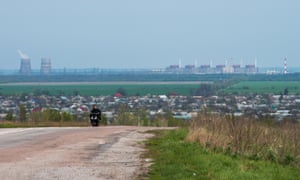
Zaporizhia plant and surrounding villages. Photograph: Igor Chekachkov for The Guardian
Around 770,000 people live in the city of Zaporizhia and safety issues have risen to the fore among local people. Most support the reactor for the jobs it provides, but environmental concerns have grown since a plant shutdown in December amid rumours of a radiation leak, which were denied by the company.
The share of Ukrainian electricity provided by nuclear rose by around 10% in the last year, as conflict in the Donbass region threw Russian gas supplies into doubt.
Coal supplies too had to be tortuously re-routed from Ukraine’s east through Russia, to keep up a pretence they are being sourced internationally and avoid the impression of buying energy direct from the separatist rebels who are fighting Ukrainian soldiers.
As a result, uranium fuel supplies are fast becoming a new east-west battlefield in the post-Soviet great energy game.
“Nuclear energy is the only possible option for us to replace the generated electricity that we lost [from coal and gas],” a government source told the Guardian. “After the start of open war with Russia, it was understood that all our other strategies in the energy sphere would become impossible.”
Some 60% of Ukraine’s electricity is now produced by 15 ageing reactors – concentrated in four giant plants. Nine of these will reach the end of their design lifetimes in the next five years, and three have already.
Graffiti in Energodar town close to the Zaporizhia plant. Photograph: Igor Chekachkov/Igor Chekachkov for The Guardian
Most of Ukraine’s nuclear fleet depends on Russia’s Rosatom to supply its enriched uranium fuel – and to whisk away the resulting radioactive waste for storage.
“Nuclear fuel is the only sphere in which cooperation remains friendly, constructive and successful because Ukraine is one of Russia’s biggest clients,” said Roman Rukomeda, a political analyst. “It is an issue of money.”
But as fear and loathing in the war-torn region grow, government sources say that in the long term, Ukraine aims to forge a three-way split in nuclear fuel supply contracts between US-company Westinghouse, European companies, such as Areva, and Rosatom. This creates its own safety issues.
One key Ukrainian reactor will be mothballed next month, until concerns about nuclear fuel provided by Westinghouse have been resolved.
The 1,000MW Chernobyl-era reactor in the South Ukraine plant was last week denied a lifetime extension until the state energy company, Energoatom, provides data to the SNRIU nuclear watchdog about Westinghouse fuel trials, operations and core reactor conditions afterwards.
The regulator listed several other safety limitations and deficiencies brought on by the plant’s ageing components, including 33 ‘deviations’ from current nuclear and radiation safety norms.
With war and an energy tilt to the West narrowing energy security options though, the shutdown is expected to be short-lived.
Security sources say that Rosatom may remain Kiev’s biggest single partner but it will definitely lose its monopoly in the years ahead, and Westinghouse’s share of uranium fuel supplies will grow.
But fears of Russian retaliation have dogged past plans to shift supply or disposal contracts to the West, and market diversification will be a slow process.
“There is always a threat that it can become a political issue and Russia could stop their contracts,” one source said. “The Americans are proposing that their company Westinghouse substitute for Rosatom, but warning us that it will take one or two years to produce the fuel, so we will need at least one year’s supply in storage.”
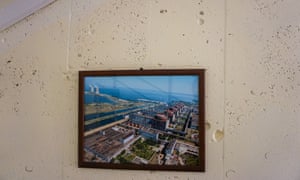
Picture of Zaporizhia power station in a hotel in Energodar. Photograph: Igor Chekachkov for The Guardian
The US has provided technology, training and hundreds of millions of dollars to help Ukraine’s push for fuel diversification, according to a US diplomatic cable from 2009, published by Wikileaks.
Westinghouse has also lobbied the Ukrainian government at ministerial level to commit to buying their fuel for at least five reactors. Plant managers say that it will be used in Zaporizhia by 2017.
But local people in the reactor’s shadow say they fear the consequences of a patched up Soviet-era plant cranking up to generate electricity into the 2020s.
“History teaches us that history doesn’t teach us anything,” Ivanovic said. “Another catastrophe could happen again.”
At first glance, a uranium sales deal between the country that fuelled Fukushima and the one that gave the world Chernobyl doesn’t sound like a good idea.
And all the subsequent glances confirm that it’s not.
There are serious and unresolved nuclear security, safety and governance concerns with the plan — putting more unstable nuclear material into a deeply politically unstable part of the world, that is experiencing active armed conflict, is force-feeding risk.
In a recent ABC report, the Ukrainian ambassador to Australia, Dr Mykola Kulinich, observed that the renewed violence in Ukraine could be a “precursor to something much worse”.
The assumptions about safety and safeguards underpinning the proposed sales plan have not been tested, while the Department of Foreign Affairs and Trade’s (DFAT) National Interest Analysis (NIA) was deeply deficient.
In relation to key safeguards and security concerns and the implications of the Russian conflict, the NIA noted that:
‘ … political tensions currently exist between Ukraine and Russia’.
This banal assessment completely fails to recognise or reflect the gravity of the situation.
Unlike DFAT, Dr Kulinich was clear:
‘There is a war in the middle of Europe right now…’
The ABC report concludes with an assessment of the current conflict that should be required reading for Australia’s atomic decision makers:
‘It is small, it is relatively contained. But it could spread by accident or design. And even far away Australia may not be immune to what could come next.’
In addition to the present conflict, historical experience would also suggest a cautionary approach.
Three decades ago, the Chernobyl nuclear disaster spread fallout over large swathes of eastern and western Europe and five million people still live in contaminated areas in Belarus, Ukraine and Russia.
Serious containment and waste management issues remain at Chernobyl with a massive new concrete shield the latest attempt to enclose the stricken reactor complex and reduce the chances of further radioactive releases.
Against this backdrop, there are deep concerns over those parts of the Ukrainian nuclear sector that are not yet infamous names — including very real security concerns about nuclear facilities being targeted in the current conflict with Russia.
The Zaporizhia nuclear facility is Europe’s largest and is only 200 kilometres from the conflict zone in eastern Ukraine. Some commentators have described nuclear plants in the region as pre-deployed nuclear targets and there have already been armed incursions during the recent conflict period.
This threat is more than a theoretical possibility. In September 2016, a report in The Times documented concerns about high level Russian plans to destabilise the Zaporizhia administrative region.
Earlier acts of apparent sabotage have already seen the dangerous practise of emergency power unloading at nuclear power plants in Ukraine — including the Zaporozhskaya and South Ukrainian reactors.
Australia has already suspended uranium sales to Russia and it makes scant political or security sense to now start selling uranium to Ukraine. Along with security concerns, there are serious and unresolved safety and governance issues with the proposed sales plan.
The Treaties Committee’s report found:
‘Australian nuclear material should never be placed in a situation where there is a risk that regulatory control of the material will be lost.’
Yet this could happen under the inadequate checks and balances that apply to exported Australian uranium.
The report clearly states the Australian Government must undertake a detailed and proper risk assessment and develop an effective contingency plan for the removal of “at risk” Australian nuclear material. There can be no justification for seeking to fast-track uranium sales based on this report.
Ukraine has 15 nuclear reactors — four are currently running beyond their design lifetime, while a further six will reach this in 2020. Two-thirds of Ukraine’s nuclear reactors will then be past their use-by date.
When quizzed on this by the Parliamentary Committee, a senior DFAT bureaucrat attempted to reassure committee members by saying:
“Yes, they [Ukrainian authorities] are seeking to upgrade them [Ukrainian nuclear reactors] to 21st century standard.”
Oh, that’s okay then.
The current deeply contested series of license renewals, and the related European Bank for Reconstruction and Development (EBRD) financing of a programme to upgrade safety features at Ukrainian nuclear facilities, has highlighted serious deficiencies in governance, operations and compliance with contemporary international standards.
On top of that, there is growing regional concern about the risks associated with the Poroshenko Administration’s focus on keeping the reactors running.
In rushing to extend operating licences, Ukraine is cutting process and safety corners and not complying with its obligations under the Espoo Convention — an international framework agreement around transboundary environmental impact assessment. In April 2013, the UN Espoo monitoring group found that licence renewals at the Rivne nuclear facility were not compliant with Espoo procedures.
In 2013, the Eastern Partnership, a leading East European civil society forum, declared the absence of environmental impact assessment for nuclear projects posed:
‘ … a severe threat to people both in Ukraine and in neighbouring states, including EU member states.’
Nearby nations, including the governments or Slovakia, Romania and Hungary, have formally and unsuccessfully called for Ukraine to provide further detail on its nuclear projects and to facilitate increased regional dialogue on this unresolved issue of concern.
These concerns have been amplified after a series of recent shutdowns, fires and safety concerns at Ukrainian nuclear facilities.
The Ukrainian Government’s response to continuing domestic and international disquiet over the operations of its nuclear sector was a 2015 decree preventing the national nuclear energy regulator from carrying out facility inspections on its own initiative.
This, coupled with increased pressure on industry whistleblowers and critics, has done nothing to address the real risks facing the nation’s ageing nuclear fleet.
None of these issues have been meaningfully identified, let alone addressed, in the treaty action or analysis to date.
Any plan to supply Australian uranium to such a fraught region deserves the highest level of scrutiny. Instead, we have tick-a-box paperwork, cut-and-paste assurances and a profound retreat from responsibility.
As usual, we are warned after the fact.
And of course, the IRSN will carefully avoid telling us who is responsible for this pollution.
Iodine-131, a radionuclide of artificial origin, was detected in January 2017 as traces in air at ground level in Europe. The first report refers to a detection carried out during the second week of January in the extreme north of Norway. Other detections of iodine-131 have been observed since in Finland, Poland, Czech Republic, Germany, France and Spain until the end of January.
Iodine-131 is a radionuclide with a short radioactive period (8.04 days). The detection of this short-lived radionuclide shows a relatively recent release.
The main company due to build UK’s ‘flagship’ nuclear power project at Moorside in Cumbria is on the ropes, writes Doug Parr, thanks to its multi-billion dollar nuclear losses on in the US. The obvious solution, (almost) all our politicians insist, is to ignore cheaper, faster, cleaner renewables, and make the taxpayer pick up the cost of yet another nuclear white elephant.
There simply is no case for a special case for nuclear. It can’t survive the market disciplines that other forms of generation have to achieve, there are better alternatives now available, and there’s no reason to subsidise it.
It would appear that the UK government’s nuclear power policy is taking another hit.
Toshiba’s financial state is so bad – as a result of the disastrous losses in its nuclear business in North America – that it was expected to announce today a $6.3 billion writedown.
In the event it decided to keep quiet for now, giving rise to speculation that the truth is even worse. After a disastrous few months for Toshiba’s investors, the company began the day with a further 9% fall, and the resignation of its chairman.
Toshiba was also expected announce today that it’s pulling out of the NuGen project, taking 60% of the funding for the three reactors planned for Moorside in Cumbria with it. That didn’t happen either – but it still looks very much on the cards.
Its official position is that it “remains committed” to the project. By way of clarification, Toshiba president Satoshi Tsunakawa told reporters in Tokyo his firm was still involved “with the condition that we don’t take responsibility over construction work”. Or, presumably, financing.
By way of further clarification, a the company indicated that it was looking to sell its stake, but not yet. A spokesman also explained to the BBC that Toshiba had never actually committed to building the plant in the first place.
What it will take: billions, or rather tens of billions, of our money
Right on cue, stories have appeared in the press saying that government is thinking about or even “under pressure“ to inject huge amounts of taxpayers cash into the project in order to get it built.
The same issue is emerging over at the proposed nuclear project at Wylfa on Anglesey. One of these reports notes that “proposals for public investment [are] being pushed primarily by industry rather than ministers.” Well, of course.
Now let’s get this straight: If the UK government takes stake in these projects, it would be expensive. A 25% share in both NuGen and Anglesey could cost over £7 billion – and that’s before taking into account the cost overruns synonymous with nuclear projects.
This would still leave over £20bn other investment to find, but is a substantial commitment of public money. So it is worth spending a few moments to consider why direct government funding of these nuclear stations is such an eccentric and ill-conceived idea.
So why are they risky? Well, one of key reasons Toshiba is in such deep financial trouble is that its reactor design, the AP1000, has never been completed and operated, and is actually more costly and difficult to build that it thought. Its four AP1000 reactors now under construction in the US are ruinously late and over-budget.
Which is very likely why the other private investor in the Moorside consortium, Engie, is also reportedly trying to pull out.
Meanwhile the Japanese company Hitachi are planning to build the proposed plant in Anglesey. In their favour four actual ABWR reactors have been built, in Japan. The downside? Their reliability has been poor.
The 2011 accident at Fukushima closed down all Japanese reactors, but according to IAEA the load factor – the proportion of time the reactors were generating power – for those ABWRs in the period between 2007-11 had been below 50%.
Neither proposed plant is crying out as a good bet for a private investor. So why would it be a better investment for a government? Or for British taxpayers?
‘Special nuclear’
It might be considered that government involvement would lower the interest rate and reduce the cost. Indeed it would. But if one sets aside the consideration that other detrimental things are being done to reduce government financial liabilities, what’s so special about nuclear?
Solar, offshore wind, tidal power and heat networks would help with decarbonisation, are all capital intensive, and would have costs reduced for billpayers if government got involved. They would also likely value this kind of support.
So the only reason for this marked departure from normal economics is because the UK government considers that nuclear has a “crucial role“ in decarbonisation of the power sector.
Because their own (unpublished and therefore unverifiable by informed external experts) “analysis tells us that decarbonisation of the power sector can be achieved most cheaply, securely and reliably if nuclear remains a core part of the UK’s energy system.”
This is an increasingly contentious statement.
Alternatives – quicker, cheaper, cleaner
Other cheaper forms of low carbon power have had their funding stopped because “as costs continue to fall it becomes easier for parts of the renewables industry to survive without subsidies. We’re taking action to protect consumers”.
This taking action to protect consumers does not extend to nuclear power, where the real costs have not come down in 50 years, and despite the hype there appears to be no prospect of them doing so.
Intermittency can be dealt with to a significant degree solved by combination of interconnection (see below), demand response and storage, the latter of which are coming down sharply in price.
It lowers bills because the UK is currently part of the single EU market in electricity, something it appears UK government may be keen to retain as part of Brexit negotiations. But if we’re part of a single market we’ll need to stick to the market rules, and direct state funding of new nuclear power stations is not obviously compatible with that.
So the proposal to directly fund expensive nuclear, in addition to the direct costs, would sacrifice membership of the single market which saves hard-working families at least tens of pounds per year.
There simply is no case for a special case for nuclear.
If it can’t survive the market disciplines that other forms of generation have to achieve, there are better alternatives now available, and there’s no reason to subsidise it.
Award-winning journalist Karl Grossman shares insights on the Indian Point Closure agreement, the hidden manipulation tactics of the Institute of Nuclear Power Operators, and gives us examples of how activists have successfully scuttled nuclear industry plans.
One picture is worth a thousand words… but a selfie with the nuclear football? Pictured: Trump cronie Richard DeAgazio (r in top photo) and the hapless aide-de-camp charged with carrying the nuclear launch codes (l in top photo – face obscured for security reasons). Lower picture shows hapless aide-de-camp carrying briefcase with the President’s nuclear launch codes into Trump’s Mar-A-Lago resort. Guess which one of those two guys undoubtedly lost his elevated position in the world? (HINT: It probably wasn’t the guy on the right.)
Difficult to be innovative on the subject of Fukushima. Would we have already said everything for the last six years that the catastrophe is going on?
Well, no, with the film of Linda Bendali, “From Paris to Fukushima, the secrets of a catastrophe”, the subject of the attitude of nuclear France in March 2011 had never been approached from this angle: while Japanese Prime Minister Naoto Kan faced with nuclear fire became anti-nuclear, the Fillon government launched the heavy artillery to counter any vehemence of debate on this subject in France.
For the french Minister of Industry, Eric Besson, it was an just incident.Nicolas Sarkozy invited himself to Japan while he was not expected, to promote nuclear in the midst of the atomic crisis.And France pretended to help Japan by sending unusable or outdated products.
That said, this report has awakened in me an old anger, never really extinct since 1986, and you will not escape the comments that inspires me this report.
Pierre Fetet
The lies of Tepco
At the beginning of the documentary, Tepco, champion of the lie and the unspoken is expressed by the voice of his spokesman Yuichi Okamura: “We never imagined that such an accident could happen. From the statistics, we calculated that the tsunami should not exceed 5 meters. Our forecasts were exceeded. “
He is then contradicted by the film director.I very much thank Linda Bendali for insisting that the report of the parliamentary inquiry commission on Fukushima gave as first conclusion that the Fukushima disaster was of human origin.Because few people understand the sequence of events and it is too often heard that “the Fukushima disaster was caused by the tsunami”.
Now, the real logical chain of events was this:
1) Irresponsibility: Tepco decides to build a nuclear power plant at sea level.
2) Stupidity: While seven tsunamis of 12 to 28 meters in height took place in Japan in the twentieth century, they decided to construct a protective dike of 5 m.
3) Corruption: Japan Nuclear Safety Organizations accept the construction project.
4) A natural event: a 15 m tsunami falls on the east coast of Honshu, and therefore on the Fukushima Daiichi power plant.
The IRSN is advertising its own self
The IRSN is always taken as an example and looks after its image. Normal, it is the official reference body.Yet I have already taken this institute several times in flagrante delicto of lie: Assurance that the evacuees would return within three months in 2011,http://fukushima.over-blog.fr/article-le-nouveau-pellerin-est-arrive-71748502.html
In the documentary, the narrator assures that “IRSN is the first organization in the world to announce that the molten core has escaped from its confinement”.Indeed, listening to Jacques Repussard we get the impression that his institute communicated on this subject in March 2011.
Yet the Japanese government had already received a report from the IAEA on June 7 recognizing the possibility of perforations in the tanks of reactors 1 to 3 …
No seriously. The first organization that announced the me of the three cores is Tepco, on 24 May 2011. And the IRSN announced it the next day.Previously, IRSN never wrote anything else, for reactors 1, 2 and 3, that “The injection of fresh water continues.The flow rate of the water injection is adjusted in order to ensure the cooling of the core, which remains partially depleted. “
That’s the story, that’s how it happened. IRSN never said that before anyone.The IRSN respected the omerta on the total meltdown of the three hearts like all the actors of the nuclear world and obediently waited for Tepco to announce the reality to acquiesce, no matter what Jacques Repussard is saying now six years later.
The Naoto Kan myth
The image of the then Prime Minister of Japan is to be nuanced. After seeing the documentary, it seems as though Naoto Kan acted as hero.It must also be admitted that he made several errors:
– Naoto Kan went to the Fukushima Daiichi plant in full crisis and greatly disturbed the ongoing management of the ongoing crisis. Director Masao Yoshida was asked to explain and explain what he was doing, wasting precious time on those who tried to solve problems one by one(It was just before the explosions of No. 2 and No. 4!).The documentary suggests that Masao Yoshida was going to leave the nuclear plant with all the workers, and that through Kan’s intervention they were forced to stay.It’s not true. Tepco may have intended to leave the ship, but the plant’s director denied any plan to abandon the site.
– The documentary shows Naoto Kan kneeling before Nicolas Sarkozy. Politeness or industrial pressures?It is not known why he did not dare to counter the French nuclear VRP.
– Naoto Kan will remain for all inhabitants of evacuated areas the one who decided to raise the standard from 1 to 20 mSv / year. On the one hand, he was ready to evacuate Tokyo, but on the other he made a whole region irradiated with a very high radiation rate.Something is bizarre in these contradictory attitudes.
The ghost of Chernobyl
Pierre Pellerin, even disappeared, is still doing damages … Between the two parts of the documentary, Frédéric Boisset, editor-in-chief of Brainworks Press, presents the story of Chernobyl in this way:“In 1986, the radioactive cloud spread throughout Europe.The authorities do not have the technical means to measure the fallout, to give instructions to the French.Can we eat fruit and vegetables? Should we caulk indoors?It was to avoid this type of failure that this institute was created [the IRSN]. “
But this is not an interview taken on the spot, it is a carefully prepared text before the recording. Frédéric Boisset therefore pretends without blushing that the SCPRI of 1986, the ancestor of the IRSN, did not have the means to alert the French of the dangers of radioactivity!What an enormity! In Germany, they had the means to prohibit the sale of spinach and salads, to confine the students inside but not in France.Frédéric Boisset refeeds us the story of the Chernobyl radioactive plume that stops at the border?It is unbelievable that still in 2017 a journalist perpetuates the disinformation lie that began in 1986.
However, the IRSN, worthy successor of SCPRI, made this statement on March 15, 2011, the day when the radioactive cloud of Fukushima arrived in Tokyo:“A slight increase in ambient radioactivity in Tokyo is noted by a few measures. This elevation is not significant in terms of radiological impact. “Pierre Pellerin would not have said better!At the same time, Olivier Isnard, an IRSN expert sent to Tokyo, advocated caulking the premises of the French embassy. Fortunately, Philippe Faure, the French ambassador to Japan, communicated to his expatriates at 10 am:“Stay in your houses, making sure to caulk them to the maximum, this effectively protects against the low-intensity radioactive elements that could pass through Tokyo. ” But at 8 pm, he changed his tone and resumed the official speech dictated by the IRSN:“The situation remains at this time quite safe in Tokyo.A very slight increase in radioactivity was recorded.It represents no danger for human health. “100 Bq / m3 would pose no health hazard for a radioactive cloud coming directly from a nuclear reactor?I am feeling not any more safe than in 1986 unfortunately.
The taboo of the steam explosion
One last deception.The IRSN has purposedly mistranslated the words of Masao Yoshida, director of the Fukushima Daiichi power station.Immediately after the explosion of Unit 3, the latter, distraught, called the headquarters to inform them of the situation.Tepco released this recording and the IRSN broadcasted it in a video in 2013.I do not know Japanese but I have Japanese friends who have assured me of the translation of his words.I give you both versions, that of my friends and that of the IRSN. The people knowing japanese will be able to check for themselves.
The documentary gives another version:“HQ, HQ, it’s terrible! This is very serious !“Yes, here HQ.” “It seems there was an explosion on reactor 3, which looks like a hydrogen explosion.”Who recommended this text to journalists? Even though Yoshida himself said “suijôki” (steam) and not “suiso” (hydrogen).The IRSN’s translation therefore censures the hypothesis put forward by the director of the nuclear plant: the steam explosion.This is normal, it is the official version of the Japanese government and the IRSN can not go against it.
The steam explosion is a taboo issue among nuclear communicators.Experts talk about it to each other, carry out studies about it, write theses about it, but never talk about it to the public because the subject of a nuclear power plant explosion is too anxiogenic.If we ever learned that a steam explosion had arrived in Fukushima, it would undermine the image of nuclear power worldwide.
In France, the political-industrial lobby has axed its communication on the control of hydrogen:All French power plants have hydrogen recombiners to avoid hydrogen explosions.But against an steam explosion, nothing can be done.When the containment vessel is full of water and the corium at 3000 ° C falls in it, it’s boom, whether in Japan or in France, whether it be a boiling water reactor or a pressurized water reactor.
Japan’s nuclear watchdog will ease quake-related and other regulations on storing spent fuel to push the use of dry casks and reduce the dangers stemming from power failures at nuclear power plants.
The Nuclear Regulation Authority decided on Jan. 25 that utilities should place spent nuclear fuel in the special air cooling containers instead of the common practice of submerging the fuel rods in pools of water.
Fuel stored in pools is cooled by circulating water with pumps, but the system can shut down if earthquakes and other disasters cut off the power supply. The water could then evaporate, leaving the spent fuel and radioactive substances exposed to air.
Electric power companies have shown a positive attitude toward the dry storage system because it would enable them to keep more spent fuel when the pools are filled close to capacity.
However, municipalities that host nuclear power plants have expressed strong concerns that the system will let utilities keep spent nuclear fuel at plant sites for prolonged periods.
NRA Chairman Shunichi Tanaka stressed the need for safety.
“It (dry cask storage) is much safer than storing fuel in pools,” he said.
The Great East Japan Earthquake and tsunami cut off power to Tokyo Electric Power Co.’s Fukushima No. 1 nuclear plant in March 2011. Three reactors melted down, and the cooling system would not work for more than 1,000 spent fuel assemblies in the pool in the No. 4 reactor building.
Fears arose that all water in the pool could evaporate. But emergency measures, including the pumping in of water, were taken to keep the fuel submerged.
Under the dry storage system, the fuel is sufficiently cooled in pools and placed in dedicated airtight cases. The special casks are then stored inside air-permeable facilities.
The NRA plans to promote use of casks that are currently used to transport spent nuclear fuel.
The containers have passed durability tests and can withstand falls from a height of 9 meters and high-temperature fires.
Dry storage containers are widely used in the United States and Europe.
But the use of dry casks has not spread in Japan because of the high hurdles that must be cleared. One requirement is that those containers must be stored in building that can withstand the strongest earthquake predicted in the area.
As a result, dry storage containers are used at only a few nuclear facilities in the country, such as Japan Atomic Power Co.’s Tokai No. 2 nuclear power plant in Ibaraki Prefecture.
According to the Federation of Electric Power Companies of Japan, a total of 15,000 tons of spent fuel is stored at 17 nuclear plants across Japan.
Seventy percent of their fuel pools and other storage facilities have been filled with spent fuel.
More than 5,000 rounds of depleted uranium (DU) ammunition were used in two attacks on Islamic State oil tankers in eastern Syria, the US military has confirmed. The US-led coalition previously pledged it would not use the controversial ordnance.
A spokesman for the US Central Command (CENTCOM) told Foreign Policy that 5,265 armor-piercing DU rounds were used in November 2015, during two air raids against Islamic State (IS, formerly ISIS/ISIL) oil tanker convoys in the Deir ez-Zor and Hasakah provinces in eastern Syria.
A-10 ground attack aircraft fired the projectiles from their 30mm rotating cannons, destroying about 350 tanker trucks, according to CENTCOM spokesman Major Josh Jacques.
In March 2015, spokesman for the US-led coalition John Moore had explicitly ruled out the use of the controversial ammunition, saying that “US and coalition aircraft have not been and will not be using depleted uranium munitions in Iraq or Syria during Operation Inherent Resolve.” The Pentagon explained that armor-piercing DU rounds were not necessary because IS did not have the tanks it was designed to penetrate.
Investigative reporter Samuel Oakford first brought up the use of DU ammunition by the coalition in October 2016, when a US Air Force congressional liaison told Representative Martha McSally (R-Arizona) that A-10s flying missions over Syria had fired 6,479 rounds of “combat mix” on two occasions. The officer explained that a fifth of the “combat mix” consisted of high-explosive incendiary (HEI) rounds, while the rest were DU armor-piercers.
The first attack took place on November 16, near Al-Bukamal in the Deir ez-Zor province, with four US planes destroying 46 vehicles. The strike took place entirely in Syrian territory. According to CENTCOM, 1,790 rounds of “combat mix” were used during the strike, including 1,490 rounds of DU.
The combination of Armored Piercing Incendiary (DU) rounds mixed with HEI rounds was used to ensure a higher probability of destruction of the truck fleet ISIS was using to transport its illicit oil,” Major Jacques told RT.
Depleted uranium is prized by the US military for exceptional toughness, which enables it to pierce heavy tank armor. However, airborne DU particles can contaminate nearby ground and water and pose a significant risk of toxicity, birth defects and cancer when inhaled or ingested by humans or animals.
The coalition’s promise not to use DU munitions in Iraq was made after an estimated one million rounds were used during the 1991 Gulf War and the 2003 invasion. Between Iraq and the Balkans, where they were also used in the 1990s, DU rounds have been blamed on a massive increase in cancer and birth defects.
These DU contaminated locations in #Syria pose a risk to civilian health and must be isolated and addressed as soon as conditions allow. https://t.co/I139b33bhg
DU is also the prime suspect in the medical condition dubbed the “Gulf War Syndrome” afflicting US veterans of the 1991 conflict and some peacekeepers deployed in the Balkans.
This french documentary does not go into much details. Still it shows the French government eagerness to minimize the Fukushima catastrophe in the eyes of the public, of the world, to push for the continuation of nuclear, so as to save its own nuclear industries from economic repercussions.
A documentary broadcasted last Sunday February 12, 2017 in the program “Cellule de Crisis” exposed how France worked since March 11, 2011 to “safeguard the interests of nuclear”.
The matter was heard and investigated. The Fukushima disaster, which took place almost six years ago, is a “man-made disaster” as Kiyoshi Kurokawa, the chairman of the parliamentary commission of inquiry, wrote in black and white.
Since March 11, 2011, reports, investigations, Japanese and international documentaries have not failed to describe the sequence of events, unpreparedness, serial errors and the panic that seized the political- Industrialist powers in the early days of the worst nuclear crisis since Chernobyl.
The merit of this documentary is not so much in this reminder of those March days which gave cold sweats to the whole planet and during which the worst was avoided just by little.
Even though it is still necessary to remember that the Japanese authorities envisaged the catastrophic scenario: a total loss of control of the Fukushima-daiichi power plant and a nuclear crisis that would have condemned much of Japan for decades and Authorities to evacuate more than 50 million people, as told in these columns Naoto Kan, Prime Minister at the time.
Journalist Linda Bendali, who signed the investigation in this documentary, had access to key witnesses on the Naoto Kan team, among the rescuers, soldiers and members of the Tokyo Electric Power Company (Tepco), which manages the plant.But if this documentary reveals secrets, it is especially on its French side that it brings a welcome light.
In constructing a narrative between Japan and France, it explains the “strategy of the French government to safeguard the interests of nuclear power”. And shows how Paris embarked on a “diplomatic and industrial battle crucial for France”.
“Risks of contamination in Europe”
Even though EDF, François Fillon – then Prime Minister – and his advisors, and Eric Besson, the then Minister of Industry, refused interview requests, the journalist was able to reconstruct the narrative on the French side.Informed by a Tepco source, the Institute of Radiation Protection and Nuclear Safety (IRSN) was among the first to be informed of the crisis.
In Paris, IRSN is mobilizing its crisis center with 40 engineers, translators to try to understand the situation at the plant and to face possible “risks of contamination throughout Europe”.
At Areva, eight engineers give the alarm by buckling their suitcases. “The Japanese have lost control of the plant,” they said, leaving Japan in a hurry. Panic seizes expatriates in Tokyo.
From March 12, the explosions caused by concentrated hydrogen in the Fukushima plant and the tinkering of the interventions are “very scary”, as Anne Lauvergeon, then president of Areva, said.
France, the country of nuclear with the EDF and Areva giants, is seing falling prices of its nuclear industries and of uranium on its stock exchanges. It must be countered. The Prime Minister and the Industry and Ecology Ministers, the IRSN, will enter the battle to “lower the pressure and the anguish”.
Press conference, language elements, audit of French reactors, etc. Paris maneuvered so that “nuclear power does not become a subject of debate” and that “the place of the atom is not called into question in Europe”. France opposes the “hallucinatory decision of Germany”, to disconnect its power stations, in the words of Frank Supplisson, cabinet director of Eric Besson, Minister of Industry, Energy and Economy at the time, and does not hesitate to threaten its European partners who do not seem to share its views, and pressured European diplomats.
Beautiful French fiasco
In Tokyo, the French ambassador, Philippe Faure, put online a statement recommending to French nationals to leave for a few days the Japanese capital.The Quai d’Orsay Foreign Affairs Ministry ordered him to withdraw the text.Then, with delay, Paris dispatches an plane of aid with “tons of useless material”, tells a member of the embassy.“In the country of Nissan and Toyota, what was sent was bulk, not dazzling,” recalls Philippe Faure.
The documentary also tells a fine fiasco when French technical aid was refused by Japan.
“Paris rented a very expensive Antonov to transport its robots able to intervene in a contaminated environment, but Tokyo wanted French experts to pilot them.“The engineers agreed to come to Tokyo,” says Linda Bendali, “but not at the foot of the reactors.” As a result, the Japanese declined the offer.
In this diplomatic-industrial offensive, the presidential Elysee palace was not left behind. The french president, Nicolas Sarkozy, went out of his way to be the first head of state to come to Japan.Twenty days after March 11, he arrived in Tokyo to remind the need to pursue nuclear power.
Naoto Kan finally agreed to host him despite an overloaded schedule.On that day, “I was convinced that we had to stop” using nuclear, says today the former Prime Minister who became one of the most ardent anti-nuclear militants of the archipelago.But facing Nicolas Sarkozy on March 31, 2011, he kept silent.
Cellule de crise. De Paris à Fukushima, les secrets d’une catastrophe. Dimanche 12 février à 22h40. France 2. Rediffusion, jeudi 16 février à 1h40
The Chinese Embassy in Japan on Sunday issued an alert to its nationals who have plans to travel in Japan, reminding them of the high-level radiation inside a damaged reactor of the Fukushima Daiichi nuclear plant.
Tokyo Electric Power Company (TEPCO), the facility’s operator, announced last week that the radiation levels detected inside the plant’s No. 2 reactor had reached 650 Sieverts per hour, even higher than the previous record of 530 Sieverts per hour in January.
Even with a 30 percent margin of error, the reading is described by many experts as “unimaginable.” It is much higher than the 73 Sieverts an hour, which was detected in 2012, one year after the nuclear plant’s collapse. Under such exposure, a person would only be able to survive a few minutes at most.
The TEPCO on Thursday sent a remotely controlled robot into the reactor, equipped with a camera that is designed to withstand up to 1,000 Sieverts of cumulative exposure. The robot was pulled out after it broke down only two hours into the probe.
The company is planning to send better robots to conduct more detailed probes. However, it insists that radiation has not leaked outside the reactor.
Last week, Chinese Foreign Ministry spokesman Lu Kang said China has issued safety alerts to its nationals over the high-level radiation. He added that China hopes that the Japanese government could clarify how they are going to thoroughly eliminate the impact caused by the nuclear accident.
Six years have now passed after three reactors at Fukushima’s nuclear power plant were damaged by a devastating 9.0-magnitude earthquake and a subsequent tsunami on March 11, 2011. After the accident, the local government ordered residents living within 30-kilometer radius around the Fukushima nuclear plant to evacuate.
Dr Helen Caldicott, explains recent robot photos taken of Fukushima’s Daiichi nuclear reactors: radiation levels have not peaked, but have continued to spill toxic waste into the Pacific Ocean — but it’s only now the damage has been photographed.
RECENT reporting of a huge radiation measurement at Unit 2 in the Fukushima Daichi reactor complex does not signify that there is a peak in radiation in the reactor building.
All that it indicates is that, for the first time, the Japanese have been able to measure the intense radiation given off by the molten fuel, as each previous attempt has led to failure because the radiation is so intense the robotic parts were functionally destroyed.
The radiation measurement was 530 sieverts, or 53,000 rems (Roentgen Equivalent for Man). The dose at which half an exposed population would die is 250 to 500 rems, so this is a massive measurement. It is quite likely had the robot been able to penetrate deeper into the inner cavern containing the molten corium, the measurement would have been much greater.
These facts illustrate why it will be almost impossible to “decommission” units 1, 2 and 3 as no human could ever be exposed to such extreme radiation. This fact means that Fukushima Daichi will remain a diabolical blot upon Japan and the world for the rest of time, sitting as it does on active earthquake zones.
What the photos taken by the robot did reveal was that some of the structural supports of Unit 2 have been damaged. It is also true that all four buildings were structurally damaged by the original earthquake some five years ago and by the subsequent hydrogen explosions so, should there be an earthquake greater than seven on the Richter scale, it is very possible that one or more of these structures could collapse, leading to a massive release of radiation as the building fell on the molten core beneath. But units 1, 2 and 3 also contain cooling pools with very radioactive fuel rods — numbering 392 in Unit 1, 615 in Unit 2, and 566 in Unit 3; if an earthquake were to breach a pool, the gamma rays would be so intense that the site would have to be permanently evacuated. The fuel from Unit 4 and its cooling pool has been removed.
But there is more to fear.
The reactor complex was built adjacent to a mountain range and millions of gallons of water emanate from the mountains daily beneath the reactor complex, causing some of the earth below the reactor buildings to partially liquefy. As the water flows beneath the damaged reactors, it immerses the three molten cores and becomes extremely radioactive as it continues its journey into the adjacent Pacific Ocean.
Every day since the accident began, 300 to 400 tons of water has poured into the Pacific where numerous isotopes – including cesium 137, 134, strontium 90, tritium, plutonium, americium and up to 100 more – enter the ocean and bio-concentrate by orders of magnitude at each step of the food chain — algae, crustaceans, little fish, big fish then us.
Fish swim thousands of miles and tuna, salmon and other species found on the American west coast now contain some of these radioactive elements, which are tasteless, odourless and invisible. Entering the human body by ingestion they concentrate in various organs, irradiating adjacent cells for many years. The cancer cycle is initiated by a single mutation in a single regulatory gene in a single cell and the incubation time for cancer is any time from 2 to 90 years. And no cancer defines its origin.
We could be catching radioactive fish in Australia or the fish that are imported could contain radioactive isotopes, but unless they are consistently tested we will never know.
As well as the mountain water reaching the Pacific Ocean, since the accident, TEPCO has daily pumped over 300 tons of sea water into the damaged reactors to keep them cool. It becomes intensely radioactive and is pumped out again and stored in over 1,200 huge storage tanks scattered over the Daichi site. These tanks could not withstand a large earthquake and could rupture releasing their contents into the ocean.
But even if that does not happen, TEPCO is rapidly running out of storage space and is trying to convince the local fishermen that it would be okay to empty the tanks into the sea. The Bremsstrahlung radiation like x-rays given off by these tanks is quite high – measuring 10 milirems – presenting a danger to the workers. There are over 4,000 workers on site each day, many recruited by the Yakuza (the Japanese Mafia) and include men who are homeless, drug addicts and those who are mentally unstable.
There’s another problem. Because the molten cores are continuously generating hydrogen, which is explosive, TEPCO has been pumping nitrogen into the reactors to dilute the hydrogen dangers.
As previously explained, these radioactive elements concentrate in the food chain. The Fukushima Prefecture has always been a food bowl for Japan and, although much of the rice, vegetables and fruit now grown here is radioactive, there is a big push to sell this food both in the Japanese market and overseas. Taiwan has banned the sale of Japanese food, but Australia and the U.S. have not.
Prime Minister Abe recently passed a law that any reporter who told the truth about the situation could be gaoled for ten years. In addition, doctors who tell their patients their disease could be radiation related will not be paid, so there is an immense cover-up in Japan as well as the global media.
The Prefectural Oversite Committee for Fukushima Health is only looking at thyroid cancer among the population and by June 2016, 172 people who were under the age of 18 at the time of the accident have developed, or have suspected, thyroid cancer; the normal incidence in this population is 1 to 2 per million.
However, other cancers and leukemia that are caused by radiation are not being routinely documented, nor are congenital malformations, which were, and are, still rife among the exposed Chernobyl population.
Bottom line, these reactors will never be cleaned up nor decommissioned because such a task is not humanly possible. Hence, they will continue to pour water into the Pacific for the rest of time and threaten Japan and the northern hemisphere with massive releases of radiation should there be another large earthquake.
The government-backed Riken research institute is set to launch experiments on converting radioactive substances contained in high-level nuclear waste generated at atomic power stations into precious metals starting fiscal 2018, it has been learned.
The method, which is dubbed “modern alchemy,” is said to be theoretically viable but hasn’t been put into practical use. If realized, the formula is expected to contribute to trimming nuclear waste and even making effective use of it.
The experiment will be part of the Cabinet Office’s program to promote innovative research and development, called “Impulsing Paradigm Change through Disruptive Technologies (ImPACT)” program. In the initial stage of the demonstration experiment, palladium-107, a radioactive material contained in nuclear waste and whose half-life is 6.5 million years, will be turned into nontoxic palladium-106, which is commonly used in dental therapy, jewelry goods and exhaust gas purification catalysts.
Using an accelerator at the Riken Nishina Center for Accelerator-Based Science in Wako, Saitama Prefecture, the scientists will attempt to convert palladium-107 into palladium-106 by irradiating the former with deuteron beams, in what is called the “nuclear transformation” process. The experiment is set to be the world’s first of its kind on nuclear transformation of palladium, according to Riken officials.
The researchers will compile the outcome of the experiment as early as the fall of 2018 after confirming the ratio of palladium successfully transformed and other results.
As nuclear waste is highly radioactive, the government is currently looking into methods to isolate such waste deep into the ground after sealing it in specially designed containers. If the nuclear transformation process proves viable, it could contribute to reducing nuclear waste and making efficient use of it.
It remains to be seen whether nuclear transformation will prove successful just as in theory and if the process can be turned into practical use at a low cost. In the past, a nuclear transformation experiment was carried out on minor actinides, or “heavy” nuclear waste, at the Joyo experimental fast reactor in Oarai, Ibaraki Prefecture, but the upcoming experiment will be the country’s first using fission products, or “light” nuclear waste.
ImPACT program manager Reiko Fujita said, “We are still at the basic research stage and are far from putting it into practical use. We will, however, move a step forward if we manage to obtain data through our experiment.”
Cleaner Robot Pulled From Fukushima Reactor Due to Immense Radiation
The camera on the bot was compromised by the high levels of radiation.
A remote-controlled cleaning robot sent into a damaged reactor at Japan’s Fukushima nuclear plant had to be removed Thursday before it completed its work because of camera problems most likely caused by high radiation levels.
It was the first time a robot has entered the chamber inside the Unit 2 reactor since a March 2011 earthquake and tsunami critically damaged the Fukushima Da-ichi nuclear plant.
Tokyo Electric Power Co. said it was trying to inspect and clean a passage before another robot does a fuller examination to assess damage to the structure and its fuel. The second robot, known as the “scorpion,” will also measure radiation and temperatures.
Thursday’s problem underscores the challenges in decommissioning the wrecked nuclear plant. Inadequate cleaning, high radiation and structural damage could limit subsequent probes, and may require more radiation-resistant cameras and other equipment, TEPCO spokesman Takahiro Kimoto said.
“We will further study (Thursday’s) outcome before deciding on the deployment of the scorpion,” he said.
TEPCO needs to know the melted fuel’s exact location and condition and other structural damage in each of the three wrecked reactors to figure out the best and safest ways to remove the fuel. It is part of the decommissioning work, which is expected to take decades.
During Thursday’s cleaning mission, the robot went only part way into a space under the core that TEPCO wants to inspect closely. It crawled down the passage while peeling debris with a scraper and using water spray to blow some debris away. The dark brown deposits grew thicker and harder to remove as the robot went further.
After about two hours, the two cameras on the robot suddenly developed a lot of noise and their images quickly darkened — a sign of a problem caused by high radiation. Operators of the robot pulled it out of the chamber before completely losing control of it.
The outcome means the second robot will encounter more obstacles and have less time than expected for examination on its mission, currently planned for later this month, though Thursday’s results may cause a delay.
Both of the robots are designed to withstand up to 1,000 Sieverts of radiation. The cleaner’s two-hour endurance roughly matches an estimated radiation of 650 Sieverts per hour based on noise analysis of the images transmitted by the robot-mounted cameras. That’s less than one-tenth of the radiation levels inside a running reactor, but still would kill a person almost instantly.
Kimoto said the noise-based radiation analysis of the Unit 2’s condition showed a spike in radioactivity along a connecting bridge used to slide control rods in and out, a sign of a nearby source of high radioactivity, while levels were much lower in areas underneath the core, the opposite of what would normally be the case. He said the results are puzzling and require further analysis.
TEPCO officials said that despite the dangerously high figures, radiation is not leaking outside of the reactor.
Images recently captured from inside the chamber showed damage and structures coated with molten material, possibly mixed with melted nuclear fuel, and part of a disc platform hanging below the core that had been melted through.
Extremely high radiation breaks down Fukushima clean-up robot at damaged nuclear reactor
A clean-up mission using a remotely operated robot at Japan’s crippled Fukushima nuclear plant has had to be aborted, as officials feared they could completely lose control of the probe affected by unexpectedly high levels of radiation.
The robot equipped with a high-pressure water pump and a camera designed to withstand up to 1,000 Sieverts of cumulative exposure had been pulled off the inactive Reactor 2 at the Fukushima Daiichi nuclear complex earlier this week, The Japan Times reported Friday, citing the plant operator, Tokyo Electric Power Company (TEPCO). The device reportedly broke down just two hour into the probe.
The failure led experts to rethink estimated levels of radiation inside the damaged reactor.
While last week TEPCO said it might stand at 530 Sieverts per hour – a dose that can almost instantly kill a human being, following the latest aborted mission a company official has said a reading of up to 600 Sieverts should be “basically correct.”
Even despite the considerable 30-percent margin of error for the revised estimate, the latest probe left no doubt that radiation levels are at record highs within the reactor. Even though it cannot be measured directly with a Geiger counter or dosimeter, the dose is calculated by its effect on the equipment.
Last month, a hole of no less than one square meter in size was discovered beneath the same reactor’s pressure vessel. The apparent opening in the metal grating is believed to have been caused by melted nuclear fuel, TEPCO then said.
The recent mission has demonstrated that the melted fuel is close to the studied area.
While extreme radiation levels have been registered within the reactor, officials insist that no leaks or increases outside have been detected.
The failure might force Japan to rethink the robot-based strategy it has adopted for locating melted fuel at Fukushima, according to The Japan Times.
The robot affected by radiation was supposed to wash off thick layers of dirt and other wreckage, clearing ways for another remotely controlled probe to enter the area, tasked with carrying out a more proper investigation to assess the state of the damaged nuclear reactor. Previously, even specially-made robots designed to probe the underwater depths beneath the power plant have crumbled and shut down affected by the radioactive substance inside the reactor.
The Fukushima Daiichi nuclear power plant suffered a blackout and subsequent failure of its cooling systems in March 2011, when it was hit by an earthquake and tsunami. Three of the plant’s six reactors were hit by meltdowns, making the Fukushima nuclear disaster the worst since the Chernobyl catastrophe in Ukraine in 1986. TEPCO is so far in the early stages of assessing the damage, with the decommissioning of the nuclear facility expected to take decades.










 nuclear-news