
A Chinese nuclear-powered submarine was reportedly docked at a port in Pakistan, raising concerns across the border in India that it could have been monitoring the movement of its warships more closely than ever, reported NDTV.
http://www.marinelink.com/news/pakistani-nuclear-spotted420446
By Aiswarya Lakshmi January 8, 2017
Showing an image on Google Earth of Chinese nuclear attack submarine docked in the harbour in Karachi in May last year, the report proved that Beijing might be scrutinizing Indian warships’ movements far more closely than earlier.
The image was of Chinese navy type 091 “Han” class fast-attack submarine, the first class of nuclear-powered submarines deployed by China.
The report said the Indian Navy has pointed out that “advance military assets” like submarines aren’t “appropriate” for taking on Somali pirates who terrorise the seas in “small skiffs”.
Unlike conventional submarines, nuclear-powered submarines have an unlimited range of operations since their nuclear reactors rarely require to be refuelled.
That means the submarines, which are armed with torpedoes and cruise missiles, can be deployed underwater for extended durations where they are difficult to track.
Speaking on the presence of the Chinese Navy’s ships and submarines in Pakistan in December last year, Navy Chief Admiral Sunil Lanba had said that India was keeping a close eye on them.
“We have capability and assets to take on any force which is deployed, and if and when this happens, we have plans in place to tackle it,” the Navy Chief had said.
January 9, 2017
Posted by arclight2011part2 |
Uncategorized |
Leave a comment

See video on link; http://www.waaytv.com/redstone_alabama/exclusive-stratcom-commander-talks-about-growing-up-in-huntsville-and/article_b39fe90c-d5c1-11e6-b2dd-3bbb082567ae.html
HUNTSVILLE, AL–In an exclusive interview, Huntsville native and Air Force General John Hyten, the commander of the United States Strategic Command spoke to Redstone Alabama’s Jeff Martin about growing up in the North Alabama city, what’s ahead for STRATCOM, and the future of nuclear weapons.
General Hyten graduated from Huntsville’s Grissom High School in 1977, and then went to Harvard, graduating in 1981 with a commission in the United States Air Force. He says that growing up in Huntsville inspired him to join the space program, and that the Air Force was a way to do it, adding that he “started that adventure in 1977, and I’m still going. So I think the Air Force got it’s money worth.”
Speaking in an office overlooking Redstone Arsenal’s Von Braun Complex, which is the home of the Missile Defense Agency and the Army Space and Missile Defense Command/Army Forces Strategic, General Hyten talked about that inspiration, saying “My dad came here with the Apollo program in 1965. And my dad got to work on the Saturn V and I got to see the F-1 engine test here. I got to go to the Cape and watch them build up the infrastructure for the Saturn V. I got to meet Wernher Von Braun when I was in fifth grade. Those things shape who you are and what you want to do.”
After graduating Harvard, General Hyten went on to numerous assignments, including working on anti-satellite technology at Redstone Arsenal. However, the majority of his career has been spent on leveraging space systems for military use.
“A lot of people don’t realize that they don’t get gas without the space systems that the Air Force provides. We don’t go anywhere in the world and conduct military operations without space”, he said.
Before taking over his current job at US Strategic Command, he was the commander of Air Force Space Command, based in Colorado. In November, he took over Strategic Command, which commands all of America’s strategic nuclear forces, cyber weapons, and space operations.
At that ceremony, Secretary of Defense Ash Carter described Hyten as someone who’s “helped shape thinking at our government’s highest levels about the threats we face in space”. He also told the crowd that Hyten “has developed a keen understanding of the current and future operational needs of our DoD space force and how to acquire the capabilities we need. His experience and expertise will be a tremendous asset to STRATCOM as we prepare and face future threats in all domains.”
US Strategic Command has a key mission. Descended from the Cold War-era Strategic Air Command, STRATCOM forces are deployed around the world, on nuclear submarines, flying heavy bombers and in missile silos across the American West.
“A lot of people are scared about nuclear weapons, I don’t think anybody likes nuclear weapons. But I know what a world looks like without nuclear weapons, because my father in law fought in World War II. And from 1939 to 1945, when we didn’t have a strategic deterrent, the world killed somewhere between sixty and eight million people in those six years. That’s about 30,000 people a day. Our job is to prevent that from ever happening again”, General Hyten said when asked about his command’s role and the importance of having nuclear weapons.
But in order to carry that mission out, General Hyten argues that modernization is needed.
“I still have to advocate for them, because if we don’t build them, because if we don’t build those, we’re in a significant problem. Not now, but about a decade from now, some really significant risks could start”, he said.
The risks he’s talking about could be severe. The newest ballistic missile submarine (SSBN) was commissioned in 1997, the newest land based intercontinental ballistic missiles (ICBMs) were built in the 1970s and the Air Force is still flying 1950s and 1960s era B-52 bombers.
Just last week, the Pentagon announced that work on the Columbia-class submarines, the replacement for the current Ohio-class ballistic missile submarines, had hit Milestone B, which means detailed design work could begin. That announcement confirmed that the projected construction start date of 2021 was on track. That news was big to General Hyten, but he cautioned that if the program gets delayed at all, the consequences could be severe.
“If the Ohio Class Replacement program gets delayed a year, every year that it gets delayed, I lose as the commander, or my successor, I’ll lose one submarine from the strategic force. Two years go by, two submarines drop out. At some point, you lose the sea element of that triad”, he said.
The “triad” he’s referring to is the strategic deterrent triad. It had three “legs”. Sea-based nuclear ballistic submarines provide one, nuclear-armed bombers provide a second, and nuclear-tipped ICBMs provide a third. Each is separate from each other.
Beyond the sea-launched leg of the triad, other modernization is in the pipeline. The Air Force is working on the B-21 Raider, designed to replace aging B-52s, the Long Range Stand Off Missile (LRSO), designed to replace current air-launched cruise missiles, and the Ground Based Strategic Deterrent (GBSD), which will replace the nation’s ICBMs. Boeing’s proposal for the GBSD is managed in Huntsville.
When asked about those programs, General Hyten seemed confidant about the programs, saying “We’re in a good place on the bomber right now. the work is under way. We need to have some decisions made on the long range, the next cruise missile, the long range missile, we need to have decisions made there. Hopefully those will be made this year. Its interesting though, as the STRATCOM commander, my job is to advocate for those capabilities. The services, the navy and the Air Force in these cases, are actually the people who have to build that. I’m the combatant commander that operates that. But I still have to advocate for them, because if we don’t build them, because if we don’t build those, we’re in a significant problem.”
Missile defense is also a hot topic now, especially with North Korea supposedly preparing to test their own ICBM. America’s missile defense forces are under the US Strategic Command, and the command elements are based on Redstone Arsenal. The operational units are based around the world, some of them in Alaska.
” If you ever look at a map and see how far north Fort Greely is in Alaska, and it’s somewhere between forty and fifty below zero there today. You think it’s cold here in Huntsville, when it’s cold and it may snow half an inch, well, they’re under a thick blanket of snow and its forty below zero. You have soldiers standing watch in case there is a launch against the United States, we have a defensive system, that will shoot it down. That’s their job to defend it all this time. and it’s not just the interceptors, we have a series of sensors, radars at the far end of the Aleutian islands in Alaska, radars in the Pacific, radars in Alaska proper, that are there to sense the capabilities. Then we have overhead space assets that are the bell-ringers, that see the event when it first happens. cue all of those capabilities and its all integrated together through an integrated command and control process to make sure that we’re not surprised, that we can defend the United States against those kind of adversaries that might want to do us harm with an ICBM. That cannot be allowed to happen”, he said.
But in order for modernization to happen, a federal budget is needed, not another continuing resolution, General Hyten argued, saying that CR’s are not efficient ways of spending taxpayer dollars. “It’s just not a good way to do business. somehow, some day, we have to get past that, and start having normal budgeting processes”, he said.
“I’d like to make sure that we spend the money taxpayers give us in the most efficient way possible. and right now with the way the budget is, we don’t do that”, he added.
January 9, 2017
Posted by arclight2011part2 |
Uncategorized |
Leave a comment
The U.S. is already secure, and doesn’t need to further expand its nuclear arsenal. Expanding the U.S. nuclear arsenal could rather excite a nuclear race which America might not win. Therefore, the Trump administration should see the nuclear danger for what it is, and work with other countries for nuclear disarmament.
Updated 2017-01-09 09:26:45 China Daily
U.S. president-elect Donald Trump twittered in late December that the United States “must greatly strengthen and expand its nuclear capability until such time as the world comes to its senses regarding nukes”. Later, he declared: “Let it be an arms race,” and asserted that the U.S. would win it. It seems he is committing a major mistake.
Like any other country, the U.S. deserves its legitimate national security. The U.S. first developed nuclear weapons through the Manhattan Project. And since the program was aimed at both keeping pace with the feared nuclear weapons development program of Nazi Germany and to counter imperialist Japan’s aggression, it gained legitimacy.
But the U.S. has often abused its nuclear policy. By flexing its nuclear muscles, the U.S. pushed the Soviet Union to expedite its nuclear weapons program in the late 1940s. By threatening China with a nuclear attack during the Korean War (1950-53), it forced Beijing to launch its own nuclear weapons program in the mid-1950s. And by waging an unjustified war in Iraq, the U.S. taught the Democratic People’s Republic of Korea the importance of possessing nuclear weapons.
Despite the several rounds of nuclear disarmament, the U.S. still deploys thousands of nuclear weapons and has more in its vaults. Russia has built a nuclear arsenal as powerful as the U.S.’, and China seems to have developed a cost-effective minimum deterrence to drive sense into potential rivals.
When Trump promised to strengthen the U.S.’ nuclear arsenal, in order to make other countries sensible, one wondered which countries Trump had in mind, and how much credit or damage his message would bring to the U.S. and the world. Did he mean to have a nuclear arms race with Russia, especially because Moscow is the only other power to have an equally massive, if not bigger, nuclear arsenal than the U.S.?
But U.S. President Barack Obama realistically “reset” Washington’s relations with Moscow in 2009 despite the Russia-Georgia conflict in 2008. And after Crimea’s inclusion into Russia in 2014, president-elect Trump seems interested in again “resetting” relations with Russia. This contradicts Trump’s own promise of “expanding nuclear weapons credibility”, and could lead to another Georgia- or Ukraine-like crisis.
Or, does Trump have an eye on China? Over 60 years ago China decided, despite its poverty, to go nuclear given the U.S. nuclear blackmail, and succeeded. Before China tested its nuclear weapons, the U.S. made a dozen nuclear threats against China, but after Beijing detonated its first nuclear device in 1964, the U.S. has not issued any open nuclear threats, vindicating the power of China’s own nuclear deterrence.
China has maintained a practical nuclear strategy of minimum deterrence, which has both boosted China’s national security and made it avoid an unnecessary nuclear arms race. At a time of resource scarcity, China’s approach was certainly a smart one.
But times have changed. The World Bank has said that, in terms of purchasing power parity, China became the largest economy two years ago. As long as China doesn’t perceive an increase in external threat, Beijing could live with its tradition. But if Trump forces other countries in a nuclear arms race, he could wake up to find that the U.S.’ relative nuclear credibility declining.
Rather than winning a nuclear weapons race, the U.S. national security could weaken vis-a-vis even the DPRK. Before the DPRK conducted its first nuclear test, the U.S. didn’t face any physical nuclear threat from Pyongyang. Now, given its rising capability to build long-range ballistic and sea-launched ballistic missiles, even the DPRK could deter the U.S. to certain extent, rather than merely the other way around. If Trump forces the DPRK into an arms race, the U.S. could find itself facing more risks.
The U.S. is already secure, and doesn’t need to further expand its nuclear arsenal. Expanding the U.S. nuclear arsenal could rather excite a nuclear race which America might not win. Therefore, the Trump administration should see the nuclear danger for what it is, and work with other countries for nuclear disarmament.
The author is a professor at, and associate dean of the Institute of International Studies, Fudan University.
January 9, 2017
Posted by arclight2011part2 |
Uncategorized |
Leave a comment
Abby Martin issued the following response to the Jan. 7 New York Times article falsely representing her work at RT America.
The long-awaited report by the Director of National Intelligence (DNI), allegedly proving Russian “interference” in the US election, includes a section solely dedicated to bashing RT, and specifically calls out my former show Breaking the Set, which ended two years ago, as a propaganda vector marking the beginning of the Kremlin attempt to subvert American democracy.
 Desperate to push this US intelligence narrative, The New York Times called the report “damning and surprisingly detailed,” while adding that it includes no actual evidence.
The very next day, on Jan. 7, the Times published another piece titled “Russia’s RT, The Network Implicated in U.S. Election Meddling.”
In the article, NYT journalist Russell Goldman used two blatantly false statements about my work at RT to support the argument that the network is simply a Putin-dictated propaganda outlet.
First, he stated “…two anchors who quit during live broadcasts say the network is a propaganda outlet.”
I did not quit during a live broadcast, nor did I say that the network is a propaganda outlet.
He goes on to say “…Abby Martin, who said before quitting, ‘What Russia did was wrong.’”
Any cursory research into the referenced quote—when I spoke out against Russia’s military entrance into Crimea and the network’s glorification of it—will find that not only did I not quit on air, but that I continued my show for an entire year afterward.
I was interviewed about my on-air statement on many major news stations, from BBC to CNN, where I defended my editorial freedom and also called-out the double standards and hypocrisies in their coverage.
RT issued an official statement in support of my freedom to state my opinion on the network. Over the course of the next year, I continued to voice my concerns and opinions about Russia, from MH-17 to the Ukraine crisis, unfiltered.
I quit the network on my own terms in February 2015 because I wanted to do more in-depth investigative reporting, not because I believed it to be a propaganda outlet.
The Times issued a correction after these false accounts were featured prominently on their website for over 19 hours. But their correction still misrepresents the facts to push their narrative.
The correction reads “this article misstated when the RT anchor Abby Martin left the network. She quit sometime after denouncing on air Russia’s war in Ukraine, not during the live broadcast.”
The error in their article was not simply about when I quit, but the reason and circumstances for leaving the network. The article still implies that I left over this political disagreement.
Additionally, they removed from the article the line “two anchors who quit during live broadcasts say the network is a propaganda outlet,” but they do not note that change in their correction addendum, as is standard.
The article now includes a modified sentence: “Abby Martin quit some time after denouncing Russia’s incursion on air. ‘What Russia did was wrong,’ Ms. Martin said.”
This new line twists the truth, omits the facts, and ironically contradicts their entire argument.
The glaring fact is that I spoke out about the actions of Putin, Russia and RT’s coverage of it on air, and not only was I not fired, but I still had the prime time opinion show on the network for another year.
That begs the question to the NY Times: if RT is simply a Kremlin mouthpiece, how was I allowed to do this and still be featured prominently on the network?
It appears that the Times is, once again, working to push a false perspective being promoted by US government officials and agencies. To paint RT in such a cartoonish, totalitarian fashion—and to promote the idea that it is subverting US democracy—is the dangerous state propaganda that we should be worrying about.
Abby Martin | @abbymartin
January 8, 2017
Posted by arclight2011part2 |
Uncategorized |
Leave a comment
Sun, 08/01/2017 – 19:11 by shannonwatch
http://www.shannonwatch.org/blog/over-730-us-military-flights-recorded-shannon-2016

US Navy C-40 photographed at Shannon Airport on Jan 8th (2017)
Analysis of Shannonwatch data shows that over 730 US military flights landed at Shannon in 2016. That’s more than 2 a day over the entire year. Of these, 413 were operated by the US Air Force, Navy or military, and the remainder were contracted troop carriers like Omni Air International.
Since August 2008 at total of at least 7,988 US military planes carrying armed troops or cargo have landed at the airport. This does not include suspect rendition planes and planes not identifying themselves as attached to the CIA or US military which have undountedly also landed there.
As the first peace vigil of the year took place today at Shannon, a US Navy C40 sat inside the airport, away from the terminal building. There was an Irish Defence Forces patrol stationed about 50 meters from it. The large force of Gardai (Irish Police) that stood blocking the entrance to the airport during the peace vigil were asked to inspect it (since it could well be carrying weapons illegally, or even war criminals), but a sergeant in charge said that would not be happening.
The full breakdown of US Air Force, Navy and military operated aircraft recorded at Shannon in 2016 is as follows:
|
C130 |
C17/C5 |
K* Refueling |
C9 |
Executive Jets |
Other (B737, B752 etc) |
Monthly total |
| January |
8 |
0 |
0 |
3 |
5 |
11 |
27 |
| February |
3 |
0 |
2 |
0 |
2 |
15 |
22 |
| March |
13 |
2 |
1 |
0 |
8 |
21 |
45 |
| April |
8 |
1 |
1 |
0 |
11 |
22 |
43 |
| May |
13 |
1 |
1 |
4 |
3 |
16 |
38 |
| June |
7 |
1 |
9 |
1 |
8 |
17 |
43 |
| July |
13 |
3 |
0 |
0 |
6 |
18 |
40 |
| August |
8 |
1 |
0 |
1 |
3 |
12 |
25 |
| September |
8 |
0 |
0 |
2 |
16 |
21 |
47 |
| October |
9 |
3 |
2 |
2 |
3 |
17 |
36 |
| November |
6 |
1 |
0 |
3 |
3 |
5 |
18 |
| December |
4 |
2 |
1 |
0 |
3 |
19 |
29 |
| TOTALS |
100 |
15 |
17 |
16 |
71 |
194 |
413 |
The monthly breakdown of troop carriers is as follows:
| MONTH |
COUNT |
| January |
22 |
| February |
30 |
| March |
28 |
| April |
39 |
| May |
31 |
| June |
22 |
| July |
32 |
| August |
18 |
| September |
17 |
| October |
45 |
| November |
15 |
| December |
20 |
|
|
If the first peace vigil of the year is anything to go by, the number of people who are prepared to express their opposition to this ongoing US military use of Shannon is growing. We had peace activists from Clifden, Galway city, Dublin and Waterford, as well as more local activists from Ennis, Limerick and Shannon. The Shannon Airport authority may have planned for 2017 to be another year of complicity in warmongering, death and suffering. But they may not have it all their way.
January 8, 2017
Posted by arclight2011part2 |
Uncategorized |
Leave a comment
VOA Monday 9th January, 2017

Though the young leader’s birthday is well-known throughout the country, it has yet to be celebrated with the kind of adulatory festivities that accompany the birthdays of his late grandfather and father. Pyongyang residents did what they do every second Sunday of the new year – joined in sports events.
Kim Jong Un, who is believed to be 33 or 34 and the world’s youngest head of state, assumed power after the death of his father, Kim Jong Il, in late 2011.
Big bash last May
With the official period of mourning his father’s death over and his own powerbase apparently solid, Kim presided over a once-in-a-generation party congress last May that was seen by many as something of a coronation and the beginning of the Kim Jong Un era.
But he has continued to keep a step or two behind his predecessors in the country’s intense cult of personality. Kim’s grandfather, “eternal president” Kim Il Sung, and Kim Jong Il statues and portraits are found in virtually every public space or home. Their pins are worn over the hearts of every adult man and woman.
Rumors were rife that a new pin featuring Kim Jong Un would be issued during the May party congress, but they proved to be unfounded. Calendars for this year don’t denote January 8 as anything other than a normal Sunday, and there was no mention of the birthday in Rodong Sinmun, the ruling party newspaper.
The only time Kim has been honored in public on his birthday was in 2014, when former NBA star Dennis Rodman sang “Happy Birthday” to him before an exhibition basketball game in Pyongyang.
North Korean officials say the low-key approach – and the very little information made public about his wife and family – reflects Kim’s humble nature and respect for his forbearers. Kim seemed to amplify that image in his annual New Year’s address, when he closed with remarks about his desire to be a better leader.
Lavish parties for father, grandfather
Even so, 2017 could turn out to be a bigger than normal year in North Korea for Kim-related events.
State media have suggested Kim Jong Il’s birthday in February and especially Kim Il Sung’s birthday in April will be celebrated in a more lavish than usual manner, though exactly what’s in store is not known. And Kim Jong Un has had something of a big New Year’s event – days after his address, tens of thousands of North Koreans rallied in Pyongyang in the customary show of support for their leader.
http://www.northkoreatimes.com/index.php/sid/250757669
Some future hope on peace and reconciliation here?
Diplomatic outreach from Trump. Xi and Putin could persuade North Korea to give up nuclear weapons expansion
And a little reported statement from North Korea here 2017;
“…PYONGYANG – Top leader of the Democratic People’s Republic of Korea (DPRK) Kim Jong Un said Sunday in a televised New Year address that the DPRK would continue to strengthen national defense including nuclear capabilities as long as nuclear threat from the United States exists.
“Unless the United States and its vassal forces stop nuclear threat and blackmail and unless they stop the war exercises which they stage right at our noses under the pretext of annual exercises, the DPRK would keep increasing the military capabilities for self-defense and preemptive striking capacity with nuclear force as a pivot,” he said.
Kim emphasized the need to foil challenges posed by anti-reunification forces at home and abroad who are against the national desire for reunification.
Kim also called for taking active measures to improve north-south relations and defuse military conflict and the danger of a war between the two Koreans, appealing to the whole nation that a wide avenue should be paved toward independent reunification through joint efforts.
“All the Koreans in the north and the south and abroad should solidarize and get united on the principle of subordinating everything to national reunification, the cause common to the nation and activate the reunification movement on a nationwide scale,” Kim added……”
Kim Jong Un – A cry for peace!
January 8, 2017
Posted by arclight2011part2 |
Uncategorized |
1 Comment
4 January 2017
“…But critics note that while France struggles to sell nuclear reactors abroad, Denmark’s Vestas (VWS.CO) and Germany’s Siemens (SIEGn.DE) are winning export deals for wind turbines.
Former environment minister Corinne Lepage blames an old boy’s network of graduates from France’s elite engineering schools for defending nuclear at any cost.
She opposes EDF extending the life of its oldest reactors, saying it should instead start decommissioning them. EDF could build this into a business in dismantling reactors while gradually switching to renewable energy, she told Reuters.
“We need a massive reconversion plan for EDF staff. These are engineers. If they can handle nuclear reactors, they can also handle wind turbines and solar panels,” she said…..”
To see how much of UK EDf bill payers revenue and French Tax Payer money will be used to bail out the French nuclear industry see this link;
http://www.reuters.com/article/us-areva-restructuring-france-idUSKBN14O1JW
January 8, 2017
Posted by arclight2011part2 |
Uncategorized |
Leave a comment
Since November 1 recent swarms of quakes > M4 offshore Fukushima prefecture in 2D map and 3D representations

Right off Tomioka, location of the Fukushima Dai-ichi Nuclear Power Plant triple meltdown disaster


http://ds.iris.edu/ieb/urls/gokey.php?key=faa0-779a-0986… Earthquake Browser – Near East Coast of Honshu
January 8, 2017
Posted by dunrenard |
Fukushima 2017 | Fukushima |
Leave a comment
Okuma, is one of the two evacuated towns, with Futaba, nearest to Fukushima Daiichi nuclear plant.

FUKUSHIMA — A prefectural town that has been entirely evacuated since the March 2011 Fukushima No. 1 nuclear plant meltdowns is aiming to have some areas reopened to residents in autumn this year, town officials have told the Mainichi Shimbun.
Okuma, Fukushima Prefecture, is currently covered by three classes of evacuation order. The town’s eastern region and much of the northern region are designated as “difficult to return zones,” while the southwestern and western regions are categorized as “restricted residency” and “evacuation order cancellation preparation” zones, respectively. Okuma officials are aiming to have the latter two designations rescinded, opening the way for residents to move back in. If successful, Okuma would be the first of the two municipalities hosting the plant (the other is the town of Futaba) to allow residents back.
Okuma is also planning to designate one small area as the town’s “recovery base,” and build a new municipal office in fiscal 2019.
According to Okuma officials, they intend to allow residents back into the evacuation zones to sleep in their homes as early as August. However, the program will not be implemented in the “difficult to return zone.”
Most of the area covered by the two other evacuation order types are mountain wilderness, with just 384 registered residents — 3.6 percent of Okuma’s population — in the districts of Ogawara and Nakayashiki. Decontamination work in both districts was completed in March 2014, and basic services including water and electricity have been restored. The Okuma Municipal Government is set to discuss the exact date when residents will be allowed back with central government officials and the town assembly.
Okuma is planning to build its new town hall, a seniors’ home, and public housing for some 3,000 residents and Fukushima nuclear plant decommissioning workers, among other facilities, in its some 40-hectare “recovery base” in the town’s Ogawara district. Municipal government staff began working weekdays at a contact office there in April 2016. Meanwhile, large solar power installations as well as dormitories for Tokyo Electric Power Co. employees have already been built around the planned “recovery base” area.
http://mainichi.jp/english/articles/20170107/p2a/00m/0na/008000c
January 7, 2017
Posted by dunrenard |
Fukushima 2017 | Evacuated Town, Fukushima, Okuma, Residents' Return Plan |
Leave a comment

A photo from the website of Takano Hospital shows its building in the town of Hirono, Fukushima Prefecture.
A 120-bed hospital in the town of Hirono, Fukushima Prefecture, which has been on the frontline of efforts to restore communities annihilated by the March 2011 quake, tsunami and nuclear calamity, has been thrown into crisis following the unexpected death last week of its aging and sole full-time doctor.

Dr. Hideo Takano, 81-year-old director of the privately run Takano Hospital, died from burns after a fire broke out at his home on the hospital grounds on the night of Dec. 30. The police are investigating the cause of the fire, but it is being treated as an accident.
Hirono Mayor Satoshi Endo told The Japan Times on Friday that the town is doing its best to keep the hospital and its 100 inpatients — about 50 bed-ridden elderly patients and 50 people in its psychiatric ward — alive.
The town plans to pay for the accommodation and transportation costs of volunteer doctors who will fill Takano’s shifts through the end of January. After that, the hospital’s fate is uncertain.
Set up in 1980 originally as a psychiatric hospital some 20 km south of the crippled Fukushima No. 1 nuclear power plant, the facility has played a central role in maintaining the welfare of residents not only in town, but across the Futaba region as the only hospital operating since the nuclear disaster.
The crisis prompted many of the town’s residents and even its government to evacuate. Hirono’s evacuation orders were lifted in September 2011 and residents have been slowly making their way back, but the town’s population — currently about 3,000 — remains less than 60 percent of pre-3/11 levels. The population is expected to climb back to 4,000 by April, Endo said.
In the more than five years since the disaster began, Takano Hospital didn’t close for a single day because the late director decided its frail inpatients could not be evacuated.
Because the other five hospitals in the region shut down, Takano Hospital is the only institution providing medical care not only to its residents, but also to 3,500 or so workers residing there for decontamination and decommissioning work related to the core meltdowns.
Mayor Endo stressed that the hospital needs to survive as it is part of the town’s basic infrastructure and will be necessary if residents are to return.
“The hospital has played a huge role in the community by ceaselessly providing care,” Endo said. “If it goes, these patients will have no other place to go.”
Takano, who was a psychiatrist, had been a “super-human” figure, tirelessly tending to the needs of patients despite his advanced age, said Akihiko Ozaki, a 31-year-old surgeon at Minamisoma Municipal General Hospital some 60 km north.
Ozaki is spearheading a drive to save Takano Hospital, and thanks to the efforts of him and others, the hospital has secured about 25 doctors from across the country to work as unpaid volunteers through the end of the month.
But the hospital still urgently needs a permanent full-time doctor to fill Takano’s shoes, Ozaki said.
“Technically speaking, a hospital operating without a director is illegal,” Ozaki said. “Patients will suffer, as a system based on various different doctors coming and going is incapable of providing continuous care. We need a new full-time doctor as soon as possible.”
But it will be no easy task to find a replacement, Ozaki said, adding that the hospital was barely afloat under Takano, who worked for little pay and had next to no time off.
Mio Takano, his daughter and head manager of the hospital, said the facility has struggled financially since 3/11. She said government officials have long spurned her calls for help on the grounds that taxpayer money cannot be used by a private hospital.
Takano said that the quake changed everything and that the hospital’s running costs have surged because it needs to hire more staffers to maintain the same quality of care.
Before the quake, many nurses could ask parents or in-laws to take care of their children, she explained. But the disaster forced many families to separate and workers with children can no longer rely on elderly family members, she said, noting that the hospital thus needs to hire more people to work night and weekend shifts.
“Such lifestyle changes have meant it is more costly to keep the same level of care,” she said.
Takano added that, nearly six years on, the nuclear disaster is far from over.
“This is not a problem of an aging doctor dying in an accident, throwing a hospital into crisis. Situations like ours could happen to any other hospitals in areas that host nuclear power plants.”
http://www.japantimes.co.jp/news/2017/01/06/national/death-full-time-doctor-fukushima-disaster-zone-hospital-throws-patients-futures-question/#.WG_Nglzia-c
January 7, 2017
Posted by dunrenard |
Fukushima 2017 | Fukushima, Hirono, Hospital |
Leave a comment

Tokyo Electric Power Co (9501.T) will select underwriters this month for its first bond sale since the 2011 Fukushima nuclear reactor disaster, people close to the deal told Thomson Reuters DealWatch.
The issue is expected to be worth at least $1 billion according to one of the people.
The deal is being closely watched by Japan’s corporate bond market, which Tepco dominated before the March 2011 earthquake and tsunami triggered the world’s worst nuclear accident since Chernobyl in 1986, bringing the company to its knees.
Tepco has been gauging demand for the landmark bond offering, as once-skeptical investors become more comfortable with the utility’s outlook after the government provided more details on decommissioning and compensation costs, sources said last week.
Tepco, which is looking to sell the bond by the end of March, will hold meetings next week with several brokerages, who will make pitches to the company for a mandate to sell the bonds, said the people close to the deal, who asked not to be identified because the discussions are private.
A Tepco spokesman on Friday said there was no change to the utility company’s previously announced plans to sell the bond by the end of March but that he was unaware of any plans to meet brokers next week.
The utility, once Asia’s largest, was essentially nationalized after Fukushima. It has struggled to contain radiation at the site and compensate victims of the accident while preparing to decommission the crippled power station.
The meeting will discuss investor demand, the likely size of the issue, the premium over government-bond yields Tepco will need to pay and the feasibility of selling the bond by Tepco’s target date, they said.
Tepco is considering a multi-tranche issue with maturities of three-, five- and 10-years, they said.
“At the very least, it will be worth 100 billion yen,” said one source. In the year leading up to the Fukushima disaster, Tepco sold 235 billion yen of bonds.
Sources have said Tepco will likely need to pay investors about 1 percentage point above the corresponding Japanese government bonds yields. This would be a rich premium considering other electric utilities pay about a third of that spread for their debt funding.
The government also owns 50.1 percent of the company following its bailout, seen by some investors as an implicit state guarantee on the company.
There are, however, some potential snags to Tepco’s plans to issue by the end of March. According to one person familiar with the government’s thinking, the government wants Tepco to delay the bond sale until after April, when legal changes allowing more financial support to the utility are enacted.
http://www.reuters.com/article/us-tepco-bonds-sale-idUSKBN14Q13G?feedType=RSS&feedName=innovationNews&utm_source=feedburner&utm_medium=feed&utm_campaign=Feed%3A+news%2Fdeals+(Reuters+Deals+News)
January 7, 2017
Posted by dunrenard |
Fukushima 2017 | Bond Sale, Tepco |
Leave a comment

Nine of Japan’s 47 prefectures are planning to provide financial and other support to voluntary evacuees from the Fukushima nuclear disaster as Fukushima Prefecture is set to terminate its free housing services to them at the end of March, the Mainichi Shimbun has learned.
Fukushima Prefecture’s move will affect more than 10,000 households that voluntarily evacuated within and outside Fukushima Prefecture in the wake of the Fukushima No. 1 Nuclear Power Plant meltdowns in March 2011. As many prefectures other than those nine prefectures are set to provide less generous assistance, voluntary evacuees will face a housing assistance gap depending on where they live or will live hereafter.
As of the end of October last year, there were 26,601 people in 10,524 households who were receiving Fukushima Prefecture’s free housing services after they voluntarily evacuated from the nuclear disaster, according to the Fukushima Prefectural Government. Of them, 13,844 people in 5,230 households were living outside Fukushima Prefecture.
Those voluntary evacuees have received full rent subsidies from Fukushima Prefecture for public and private housing units they live in under the Disaster Relief Act after fleeing from the city of Fukushima and other areas that lie outside the nuclear evacuation zone. While that has effectively been the only public assistance they receive, Fukushima Prefecture announced in June 2015 that it will terminate the service in March this year on the grounds that “decontamination work and infrastructure recovery have been set.”
In a nationwide survey conducted by the Mainichi Shimbun after October last year, Tottori, Hokkaido and four other prefectures said they will provide housing units for free to those voluntary evacuees, while three other prefectures said they will provide rent and other subsidies to them. Fukushima Prefecture was not covered in the survey.
Many of the other prefectures said they will provide assistance based no more than on the central government’s request that the conditions for accommodating voluntary evacuees into public housing be relaxed.
The Tottori Prefectural Government will provide prefecture-run housing units to voluntary evacuees for free and will also subsidize all of the rent for private rental housing. The measures will be applied to not only those who already live in Tottori but to also those who will move into the prefecture.
Yamagata Prefecture will provide housing for prefectural employees for free to low-income evacuees, while Hokkaido, Nara and Ehime prefectures will waiver the rent for evacuee households living in prefecture-run housing units. Kyoto Prefecture will exempt the rent for prefecture-run housing units up to six years after move-in, and will allow evacuees to continue living in such units after April this year until contract expiration. Niigata Prefecture will provide 10,000 yen a month to low-income evacuees living in private rental housing in order to prevent their children from having to change schools.
“Evacuees have been feeling anxiety about their housing. (As a local government plagued by aging and the declining population) we also expect them to live in our prefecture permanently,” the Tottori Prefectural Government stated in its response to the survey.
Most of the other prefectures will set up a priority quota for accommodating voluntary evacuees into public housing units, but they will face severe requirements, such as the need to move out after some time.
“The central government should consider responses in a unified manner,” noted the Iwate Prefecture Government in the survey.
http://mainichi.jp/english/articles/20170106/p2a/00m/0na/007000c
January 7, 2017
Posted by dunrenard |
Fukushima 2017 | Financial Support, Fukushima Evacuees, Housing assistance, Prefectures |
Leave a comment

This was to be the ultimate solution for controlling groundwater infiltration in the basement of damaged reactors where it mixes with highly contaminated cooling water. With a total cost of 34.5 billion yen (298 million dollars) paid by Japanese taxpayers, this unprecedented government project was to confirm the Prime Minister’s assertions to the Olympic Committee in 2013 that the situation ” Is under control “.
Begun in June 2016, soil freezing around the four damaged reactors was expected to limit groundwater infiltration and leakage of contaminated water. Since the areas with the strongest phreatic currents did not freeze, TEPCO had to pour concrete in certain areas. But the results have been slow and TEPCO was always demanding more time for the project to prove itself. According to the Asahi, the Nuclear Regulatory Authority, the NRA, seriously doubts the effectiveness of this technique, which it now considers as secondary. Media actions are not enough.
Indeed, according to the NRA, despite the low rainfall, the amount of water pumped in the basements of the reactors and in the contaminated groundwater around the wall does not drop enough. It therefore considers that the solution goes through pumping, not the wall. In response, TEPCO is committed to doubling its pumping capacity to 800 m3 per day in groundwater in the fall.
The NRA also authorized complete soil freeze upstream of the reactors, although it did not block downstream flows.
According to the soil temperature maps published by TEPCO beginning December (www.tepco.co.jp/en/nu/fukushima-np/handouts/2016/images/handouts_161208_01-e.pdf) or more recently (www.tepco.co.jp/en/nu/fukushima-np/handouts/2016/images/handouts_161222_02-e.pdf) some portions were still not frozen upstream. According to the latter document, TEPCO always injects chemicals into the soil where it does not freeze. It also gives the planning of future work. It will be necessary to wait until February 2017 to obtain the complete freezing upstream.
Soil freezing over such a distance for years is a very complex technology to implement. TEPCO reported a leak of the coolant discovered last December 19th without the cause being known. (www.tepco.co.jp/en/nu/fukushima-np/handouts/2016/images/handouts_161222_02-e.pdf)
As the company recalls, the primary purpose of these operations is to reduce groundwater infiltration in order to slow down the increase in the stock of contaminated water in tanks at the site.
According to the Asahi, before the soil was frozen, TEPCO pumped on average 300 m3 per day of contaminated water in the basements of the reactors in addition to the water injected for cooling. This became now 130 m3 per day, which is still more than the 70 m3 per day targeted.
The latest data published by TEPCO show an increase to 176 m3 per day at the end of December, to which must be added the too contaminated or salt groundwater to be treated directly and which is therefore mixed with the water in the basements. The latter is down to 58 m3 per day. The total reached 234 m3 / day. The impact of soil freezing is not obvious on this graph. (www.tepco.co.jp/en/nu/fukushima-np/handouts/2016/images/handouts_161226_01-e.pdf)
It should be noted that TEPCO injects a hundred cubic meters of water into each of the three accidented reactors daily to cool the fuel. And this water, very contaminated, leaks to the basements. TEPCO’s latest report shows a partially treated contaminated water stock of almost one million cubic meters, to which 60,000 m3 of reactors and 9,156 m3 of liquid waste are added. (www.tepco.co.jp/en/press/corp-com/release/betu16_e/images/161226e0201.pdf)
In addition, TEPCO has installed sensors at the port exit in front of the rugged power station to continuously measure the concentration of cesium and total beta in seawater.(http://www.tepco.co.jp/en/nu/fukushima-np/f1/seawater/index-e.html)
Translated from french by Dun Renard (Hervé Courtois)
http://fukushima.eu.org/le-gel-du-sol-autour-des-reacteurs-pas-aussi-efficace-que-prevu/
January 7, 2017
Posted by dunrenard |
Fukushima 2017 | Fukushima Daiichi, Ice wall |
1 Comment
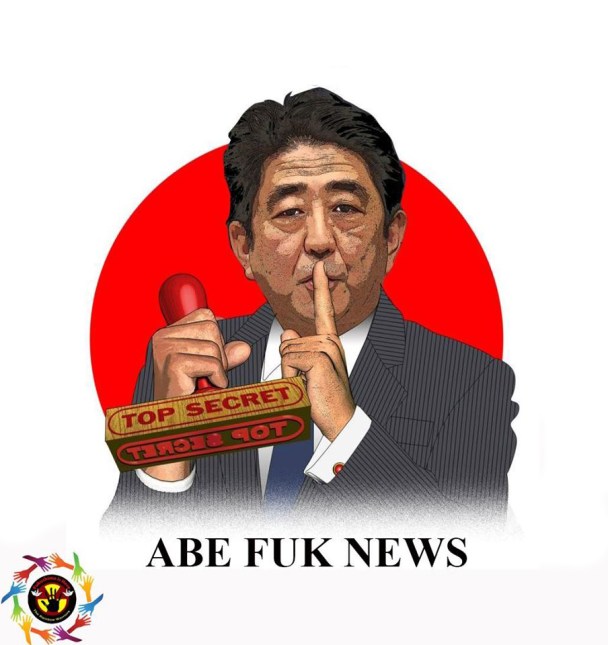
The commission of inquiry set up by the government after the nuclear disaster at the Fukusima dai-ichi plant has recorded some 770 testimonies. 240 have been made public since, with the agreement of the interviewees, including that of the former director of the plant, Masao Yoshida, now deceased.
TEPCO shareholders filed a lawsuit for the publication of the testimonies from 11 executives of TEPCO and 3 executives of NISA, which was the regulator at the time. They have just been dismissed.
Justice considered that if these documents were disclosed, it would be difficult to obtain the cooperation of the concerned persons in the future. The same applies to the secret portions of partially published testimonies.
January 7, 2017
Posted by dunrenard |
Fukushima 2017 | Censorship, Commission of Inquiry, Fukushima Daiichi, Nuclear Disaster, Testimonies |
1 Comment


 nuclear-news