Atomic Siamese twins: how the UK promoted the birth of nuclear proliferation.

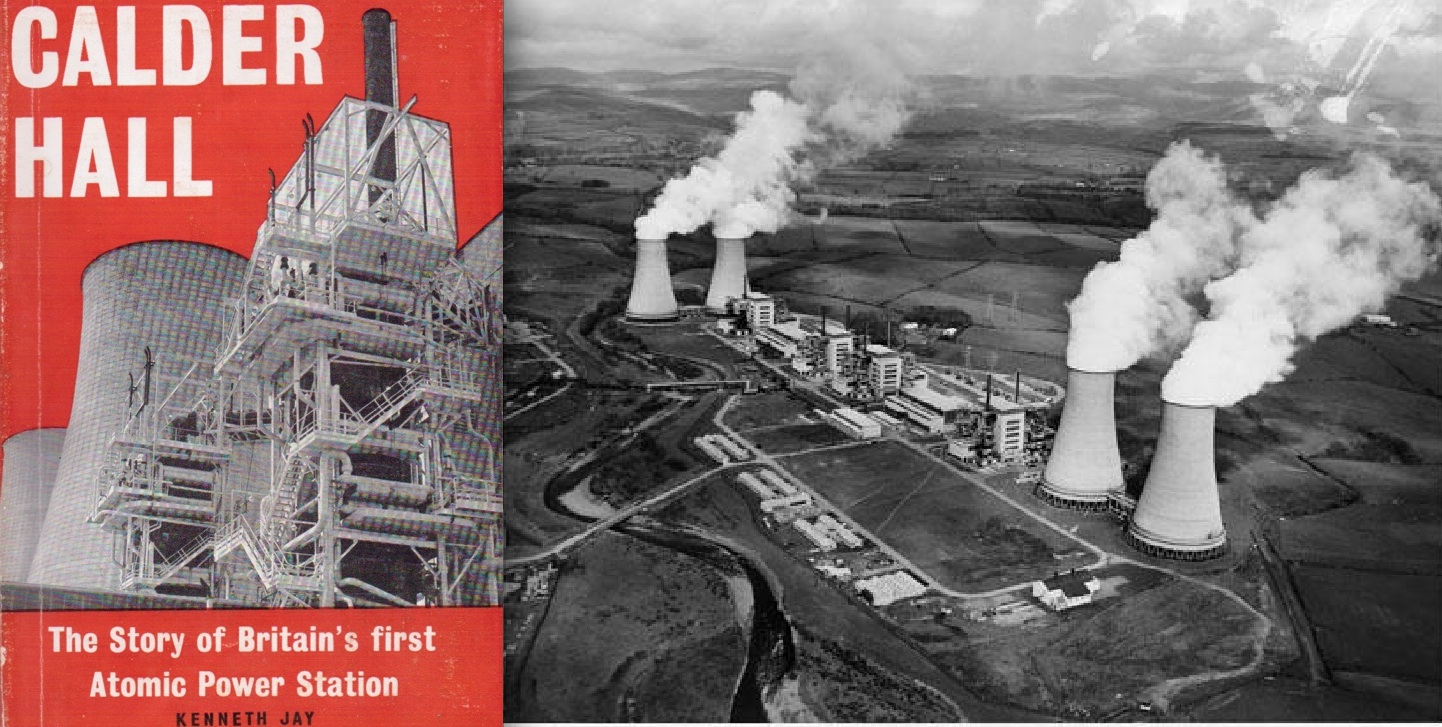 Calder Hall – Now Sellafield. See how the River Calder meanders to the Irish Sea – Now that river is a straightened “lets get the crapola away from us” radioactive sewer amid Sellafield’s nuclear sprawl. The Sellafield site discharges radioactive wastes into the River Calder- as well as dumping into the Irish Sea. The same fate awaits the River Ehen unless the plan for Moorside is stopped.
Atomic Siamese twins: how the UK promoted the birth of nuclear proliferation
This week will see the 60th anniversary of the opening of the Calder Hall nuclear production facility at Sellafield on 17 October 1956.
Indeed, the Beacon Museum in Whitehaven, a short distance along the coast from Sellafield in Cumbria is holding month long celebration exhibition of the Calder Hall plant.
Calder Hall was opened by the young Queen Elizabeth on 17 October 1956, but it was…
View original post 1,580 more words
October 17 Energy News

Science and Technology:
¶ The HY4, the world’s first four-seater hydrogen fuel cell
plane, took off for the first time at the Stuttgart airport in Germany. The plane was developed by researchers from the German Aerospace Center with help from Hydrogenics, Pipistrel, H2FLY, the University of Ulm and Stuttgart Airport. [Composites Manufacturing Magazine]
 HY4 hydrogen fuel cell aircraft
World:
¶ On October 30, Vancouver will have its second Great Climate Race, which is a 10-km run and 2.5-km walk through Stanley Park to raise funds for renewable energy and a cleaner future. Last week, the Great Climate Race announced that organizations can raise money directly for their projects through its website. [Straight.com]
¶ The first generator at the Norochcholai Coal-fired Power Plant ceased operations after an explosion on October 15, on a pipeline that carries water vapour. After the explosion, a fire had erupted in the…
View original post 729 more words
2019 Rugby World Cup in Japan
Before the 2020 Radioactive Olympics of Tokyo, the 2019 Radioactive Rugby World Cup in Japan!!!

World Rugby concluded its latest round of meetings with the Japan 2019 organizing committee in Tokyo Japan Friday, October 14, 2016 in connection with the preparation of the Rugby World Cup 2019.
The Executive Director of World Rugby, Brett Gosper, led a delegation to the quarterly meeting. Three years of the global tournament for the first time on Asian soil, Brett Gosper commented on key issues of the organization.
“We are satisfied with the way things are moving,” he said. “The budget, the planning for the stadiums … the preparations are on track and the foundations are solid. “
Bill Beaumont, president of World Rugby, who will visit Japan next week to take part of the World forum on sport and culture in Tokyo – along with IOC President Thomas Bach – is convinced that Japan 2019 will mobilize entire country.
“The Rugby World Cup will be an event for Japan as a whole,” he said. “Sport is about friendship and this tournament will be the proof with the teams, fans and the Japanese community will live the event together. Everyone is invited to participate in the biggest sporting event in the world in 2019. The host cities will benefit from significant economic benefits, but also sports and culture by hosting one of the world biggest sporting events. By working with the organizing committee, we are determined to make the most of the equipment for the benefit of all. “
Record profits were generated by the Rugby 2015 World Cup the order of £ 2.3 billion (€ 2.5 billion) to £ 1.1 billion (€ 1.2 billion) more to the UK economy through the 406,000 visitors who came and stayed on average 14 days. With 12 host cities, Japan can hope to break records.
The fan base is growing in Japan, especially because of the performance of the national team to the World Cup 2015 Rugby and Rugby 7 team at Rio Olympics Games that finished off the podium. Nearly 50% of fans believe that the Rugby World Cup in Japan will significantly raised the level of rugby in the country and 11 million say they are interested to take part. A total of 59 million Japanese watched the Rugby World Cup 2015.
Fukushima Rice Mixed With Other Rices

From June 1, 2016
In the “7-Eleven” minimarkets in Japan, Fukushima rice is mixed with the other rices, to lower the contamination measuring and to facilitate its selling .
Minimarkets are open 24 hours a day, 7 days a week.We do not know about the other minimarkets.
Written information of origins:
1, Seven-Eleven rice 2 kg (2014 production)
Iijima rice Co., Ltd. (Koriyama, Fukushima Prefecture)
Expiration date 27.5.17
2, blend
Fukushima Prefecture Koshihikari
Fukushima Prefecture shine
Seven-Eleven US 5 Kg
Iijima rice Co., Ltd. (Koriyama, Fukushima Prefecture)
Expiration date 26.12.17
3, blend
Fukushima Prefecture Koshihikari
Akita Prefecture Akitakomachi
http://iijima88.com/smarts/index/1/
Knowing that we decided to measure ourselves the rice.
Pre-treatment of the sample

We stopped for a while trhe electric furnace.

First it is lyophilized (freeze-dried).

By freezing the sample.

During 43hours.

Water removal at high level by lyophilization.
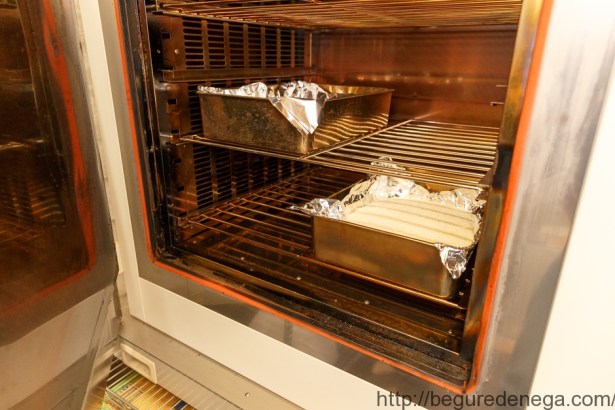
Then into the electric furnace.
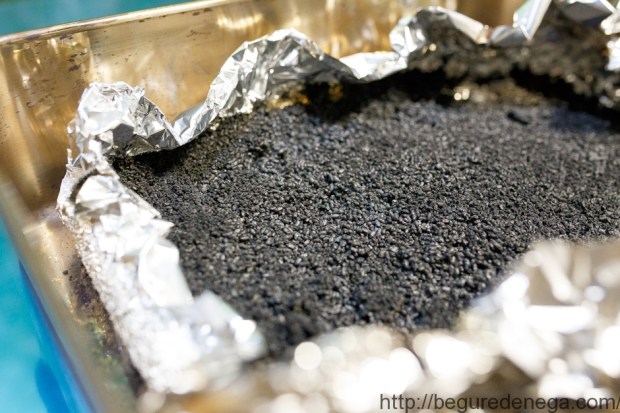
It is processed for 4 days at then 180-370 ℃.
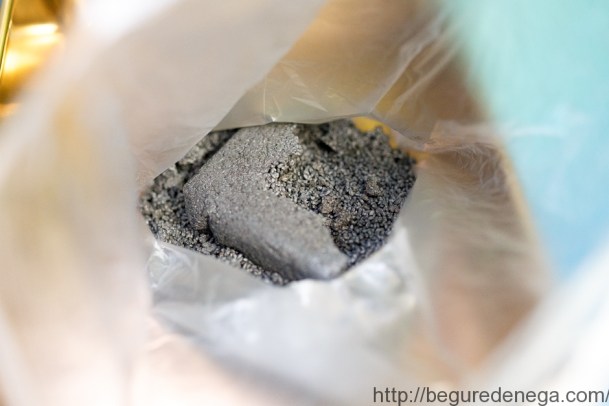
A 7kg sample was reduced to about 550g.
After this sample was crushed, we gave it to be measured with a germanium semiconductor detector at the University of Tokyo.
The results are … to be worried about.
Measurement results

Both types of radioactive cesium have been detected: 134Cs and 137Cs. Proving that convenience stores are selling the inexpensive rice from the disaster area.
Survey: 57% oppose rebooting nuclear reactors, 29% in favor
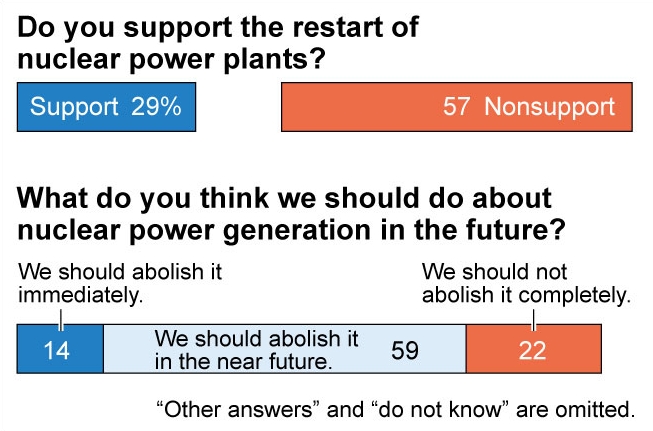
Fifty-seven percent of citizens nationwide are against restarting nuclear power plants, nearly double the 29 percent who want reactors brought back online, according to an Asahi Shimbun survey.
The results of the telephone survey conducted on Oct. 15 and 16 show that more than half of the public has remained opposed to the resumption of nuclear plant operations since an Asahi Shimbun survey in June 2013, when 58 percent expressed opposition.
In an Asahi survey in February this year, 54 percent of respondents disagreed with plans to fire up the reactors.
The support rate for the Cabinet of Prime Minister Shinzo Abe fell to 48 percent from 52 percent in the previous survey conducted in September. The nonsupport rate was 32 percent, up from 29 percent.
The Abe administration has been pushing for the resumption of nuclear plant operations. Currently, only two of Japan’s dozens of reactors are online under stricter safety standards set after the 2011 Fukushima nuclear disaster.
Around 45 percent of respondents who support Abe’s ruling Liberal Democratic Party oppose reactor restarts, eclipsing the 42 percent of LDP supporters who agree with the nuclear policy.
Among supporters of the main opposition Democratic Party, 78 percent are against rebooting nuclear reactors, according to the survey.
Fifty-nine percent of respondents who do not support any particular party want the reactors to remain idle, compared with 24 percent in favor of bringing nuclear plants back online.
The survey showed that younger people and males were more likely to support restarts of nuclear power plants.
Sixty percent of males 18 to 29 years old were in favor, compared with 30 percent in opposition, according to the survey.
The Asahi Shimbun conducted the latest survey through the Random Digit Dialing method, in which survey takers call both fixed and mobile telephone numbers randomly selected by computer. Parts of Fukushima Prefecture were excluded from the survey.
Among the 1,870 households contacted that had at least one eligible voter, 1,000 people, or 53 percent, gave valid responses.
Nuclear watchdog eyes standards for reactor shutdown in fear of giant volcanic eruption
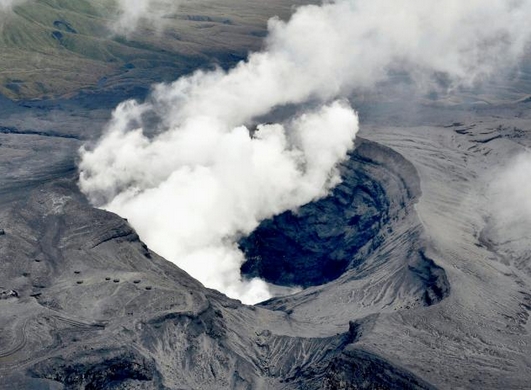
An aerial view shows the eruption of Mount Aso in Aso, Kumamoto prefecture, southwestern Japan, in this photo taken by Kyodo October 8, 2016.
The Nuclear Regulation Authority (NRA) held a meeting of a panel of outside experts on Oct. 17 to start considering the formulation of standards for ordering a nuclear power plant to shut down in preparation for a giant volcanic eruption.
Arguing that there is a high possibility of smaller volcanic eruptions occurring ahead of a giant eruption, the expert panel showed a proposal to prepare for a giant eruption after a smaller eruption occurs. But the panel did not show specific details of standards.
According to the NRA’s proposal, a giant eruption is believed to occur following small-, medium- or large-scale eruptions. With such a possibility in mind, the NRA said that the expert panel would consider how to respond in the event of small- and medium-sized eruptions occurring and extremely abnormal data being observed. The NRA listed crustal movement, seismic activity and temperatures and gasses of a volcano as data to be subject to monitoring.
Meanwhile, there was a spate of suggestions from experts at the meeting that it would be difficult to detect signs of a giant eruption. For example, Tetsuo Kobayashi, professor emeritus at Kagoshima University, said, “Even if there is a significant phenomenon, whether or not it will lead to a giant eruption will not be known until the last minute.”
The NRA is to examine data on past volcanic eruptions, but it will likely face difficulties in working out standards as there are very few cases of giant eruptions being observed in the world.
The NRA had given the green light for two reactors at Kyushu Electric Power Co.’s Sendai Nuclear Power Plant in Kagoshima Prefecture to restart, saying, “The possibility of a giant volcanic eruption occurring at the periphery of the nuclear plant is very low.” If the NRA deems there is a sign of a giant eruption, it will order a relevant power company to halt the operation of nuclear reactors and take nuclear fuel out from the reactors. But in order to take out nuclear fuel from reactors, several years have to be spent to cool down the atomic fuel first. And yet, nothing has been decided as to where such fuel should be sent.
http://mainichi.jp/english/articles/20161018/p2a/00m/0na/008000c
New Niigata governor puts up additional hurdle for TEPCO
The election Sunday of Ryuichi Yoneyama as the new governor of Niigata Prefecture may make the financial situation at Tokyo Electric Power Company Holdings Inc. even more unstable, as Yoneyama is cautious about restarting reactors at the company’s Kashiwazaki-Kariwa nuclear power plant.
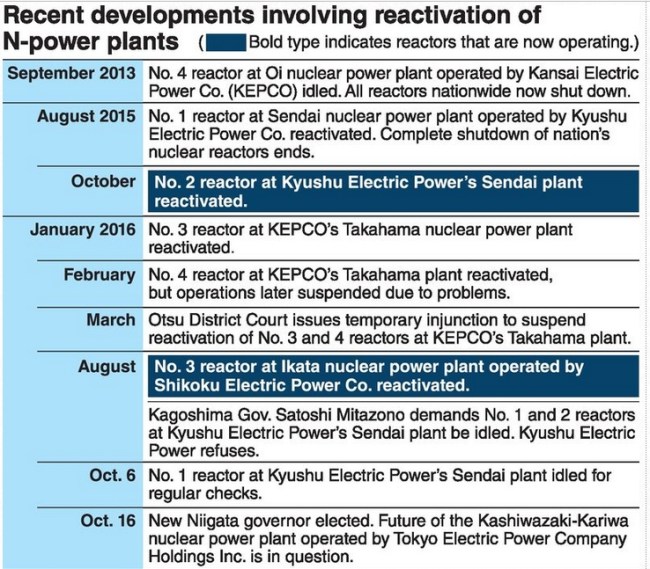
In the wake of the March 2011 accident at TEPCO’s Fukushima No. 1 nuclear plant, operations at all of the company’s 11 nuclear power reactors were suspended — excluding those at the Fukushima No. 1 plant, which are to be decommissioned.
The Kashiwazaki-Kariwa plant holds seven of the company’s reactors, all of which have been idle since March 2012.
TEPCO has applied for safety inspections to be carried out by the Nuclear Regulation Authority on two of the reactors at the plant.
TEPCO’s dependence on crude oil and liquefied natural gas has deepened because the company relies mainly on thermal power generation. As thermal power plants are affected by the import prices of the fuels, the situation is weighing on TEPCO’s financial situation.
If just one reactor at the Kashiwazaki-Kariwa plant can be reactivated, TEPCO’s annual profit is expected to rise by up to about ¥100 billion. The reactors can produce electric power at a lower cost than thermal power generation.
For now, TEPCO remains profitable, but this is largely because lower crude oil prices have lowered the company’s expenditures.
Though crude oil prices are currently low, prices are forecast to rise in mid- and long-term projections.
If the fuel costs of thermal power plants rise, electric power companies’ balance sheets will be adversely affected. This will make nuclear power plants increasingly important.
However, during the election campaign, Yoneyama said, “Unless examinations of the accident in Fukushima Prefecture are completed, it’s not possible to begin discussions about reactivation.”
The possibility he will tolerate swift reactivation of the reactors is very low, even if the Kashiwazaki-Kariwa plant passes the NRA’s safety inspections.
The total amount of compensation for those adversely affected by the accident at the Fukushima No. 1 nuclear power plant has surpassed ¥6 trillion, and the amount is likely to grow.
It is also assumed that work to decommission the reactors that caused the accident will cost trillions of yen. Thus TEPCO has asked for assistance from the government.
An expert panel of the Economy, Trade and Industry Ministry began discussions this month about TEPCO’s future direction, and how to share the financial burden of decommissioning nuclear reactors.
Reactivation of its nuclear reactors will be key to stabilizing TEPCO’s financial situation back on track, and enable the company to procure funds for compensation for damage and future decommissioning.
Anxiety will continue to mount over TEPCO’s financial situation the longer reactivation is delayed.
Electricity rates of major electric power companies in fiscal 2015 were about 20 percent higher on average for households, and about 30 percent higher on average for corporate users, compared to before the nuclear accident.
In TEPCO’s service area, the rates for households currently stand about 20 percent higher than before the nuclear accident.
An analyst estimated that if reactors Nos. 6 and 7 of the Kashiwazaki-Kariwa plant are reactivated, TEPCO will be able to lower the rates by 2 to 3 percent.
Gov’t, TEPCO should take Niigata gubernatorial election results seriously
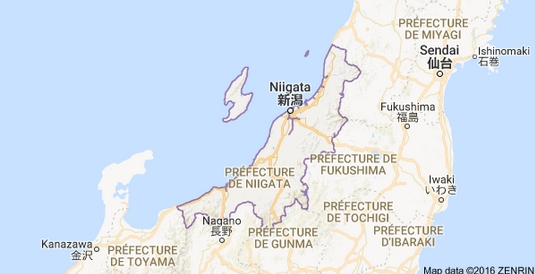
A candidate who is cautious about restarting idled nuclear power plants won the Oct. 16 Niigata gubernatorial election, defeating a rival backed by the ruling coalition. The government of Prime Minister Shinzo Abe and Tokyo Electric Power Co. (TEPCO) should take seriously the outcome of the election, in which the pros and cons of reactivating the utility’s atomic power station in the prefecture was a key point of contention.
Ryuichi Yoneyama, 49, supported by the opposition Japanese Communist Party, Liberal Party and Social Democratic Party, beat former Nagaoka Mayor Tamio Mori, 67, backed by the ruling Liberal Democratic Party (LDP) and its coalition partner Komeito.
Mori had been expected to score an easy victory as the approval rating of the Abe Cabinet has been high and both the ruling coalition parties enjoy support from the business community and related organizations. Therefore, the results highlight prefectural residents’ deep-rooted distrust in TEPCO, the operator of the tsunami-ravaged Fukushima No. 1 Nuclear Power Plant.
The governing bloc’s loss in the Niigata election follows its defeat in the July Kagoshima gubernatorial race, in which journalist Satoshi Mitazono, who called on Kyushu Electric Power Co. to stop operations at its Sendai Nuclear Power Plant in the prefecture during his campaigning, scored a victory.
The outcome of the Niigata race also apparently shows local residents’ displeasure toward Mori, who failed to clarify his stance toward whether the Kashiwazaki-Kariwa Nuclear Power Plant in the prefecture should be restarted, as well as their criticism of the Abe administration that is proactively trying to reactivate atomic power plants.
Close attention was focused on the latest election because incumbent Hirohiko Izumida abandoned seeking a fourth four-year term as governor.
The reason why Izumida gave up on running in the race remains unclear. However, Izumida has continued to demand TEPCO clarify the cause of the Fukushima nuclear crisis as a precondition for sitting at the negotiation table to discuss whether the Kashiwazaki-Kariwa plant should be reactivated. As such, TEPCO and the Abe government had expected that the retirement of Izumida would help facilitate the resumption of operations at nuclear plants.
As the election campaign went on, however, Yoneyama, who declared that he would take over Izumida’s policy line, garnered growing support from local voters. Alarmed by the situation, LDP heavyweights, including Secretary-General Toshihiro Nikai, delivered campaign speeches and urged the local business community and industry organizations to vote for Mori.
Numerous voters in Niigata, who saw the LDP’s desperate efforts to persuade local voters to vote for Mori, probably felt the old-fashioned culture of the LDP. During his campaigning, Mori emphasized his experience of serving as president of the Japan Association of City Mayors to demonstrate his close relations with the national government. However, he gave local voters the impression that he was hesitant to clarify his position on reactivation of atomic power plants.
Many challenges have been left unaddressed by Izumida, such as whether the evacuation plan for local residents in case of an accident at the Kashiwazaki-Kariwa plant is appropriate. Yoneyama must address these challenges as he pledged during his campaigning.
The manner in which the largest opposition Democratic Party (DP) approached the election was poor. The DP did not officially support Yoneyama although the party had initially planned to field him in the next House of Representatives election because the TEPCO union has strong influence within the Japanese Trade Union Confederation (Rengo), which is a major supporting organization for the party. However, DP leader Renho did an about-face and delivered campaign speeches for Yoneyama in the final phase of the campaign apparently after being convinced that he would win.
The DP cannot win support from voters unless the party discusses its nuclear power policy and clarifies its stance on the issue.
http://mainichi.jp/english/articles/20161017/p2a/00m/0na/009000c
USA edges closer towards nuclear war with Russia
 US citizens warned to prepare for NUCLEAR WAR over claims attack warning upgraded THE US could be edging ever closer to nuclear war with Russia after upgrading its attack defence readiness, it has been claimed. http://www.express.co.uk/news/world/721603/US-nuclear-attack-warning-upgraded-DEFCON-3-Vladimir-Putin-Russia-WW3 By VICKIIE OLIPHANT Oct 16, 2016 DEFCON is an alert system used by the US military to indicate the current threat of nuclear war.
But conspiracy theorists have warned the threat has secretly been upgraded two levels to DEFCON 3 – meaning the US could mobilise troops in as little as 15 minutes. The level was last upgraded to 3 in the aftermath of September 11, 2001 – with standby ordered for a potential rise to DEFCON 2.
Now website DEFCON warning system claim it has been upgraded again in a terrifying revelation.
While there are currently no imminent threats to the US, it claimed the situation is “fluid and can change rapidly.” However it also highlighted the dying relationship between the US and Russia, citing concerns of all-out warfare between the bitter rivals. A statement posted on its website read: “Tensions between Russia and the United States have reached levels beyond the cold war in the recent week.
“The situation between Russia and the United States is extremely fluid at the moment. In all likelihood as dynamic as at times during the Cuban Missile Crisis of 1962.
“At this time, the DEFCON Warning System feels that an increase to DEFCON 3 would be a prudent move.” Russian citizens have been encouraged to find bomb shelters and gas masks today, as state-sponsored infomercials on television gave out guidelines on how people should prepare for a nuclear attack.
President Vladimir Putin meanwhile has ordered the evacuation of 40 million people in a military drill.He also transferred nuclear-capable Iskander ballistic missiles to one of its strategic Baltic regions last week, in what officials claim was part of regular military manoeuvres.
However many world leaders fear the moves are being carried out in preparation for war. The conspiracy theory site warned citizens to prepare for any potential conflict, saying: “This is a very sensitive situation which has the potential to spiral out of control.
“It is recommended that all citizens learn the steps to be taken in the event of nuclear war.”
Theorists have even claimed a move to DEFCON 2 is being muted, based on Putin’s call for Russians to return home.
Though the threat of war seems to be rising, the DEFCON level indication reported by the website is only speculation. The US military do not share the actual DEFCON status with the public for obvious security reasons.
U.S. and South Korea Say North Korean Missile Exploded Soon After Liftoff
North Korean Missile Reportedly Explodes Soon After Liftoff North Korea failed in attempt to launch a midrange Musudan missile, U.S. and South Korea Say Associated Press WSJ, Oct. 16, 2016 WASHINGTON—South Korea and the U.S. said Sunday that the latest missile launch by North Korea ended in failure after the projectile reportedly exploded soon after liftoff.
The South Korean Joint Chiefs of Staff said in a statement that the military believed the North unsuccessfully attempted to fire a midrange Musudan missile. It said the failed launch occurred near an airport in North Pyongan province.
South Korea’s Yonhap News Agency said that the missile was believed to have exploded soon after liftoff. Yonhap cited no source for this information.
North Korea has claimed technical breakthroughs in its goal of developing a long-range nuclear missile capable of reaching the continental U.S. However, South Korean defense officials have said the North doesn’t yet have such a weapon.
The failed launch was the latest in a series of moves by North Korea apparently aimed at displaying a show of force. As recently as last month, it fired three ballistic missiles off its east coast, timed to get the attention of world leaders including President Barack Obamawho were visiting the region for a series of summits. The U.N. Security Council subsequently condemned those North Korean launches and threatened “further significant measures” if it refused to stop its nuclear and missile tests.
North Korea also conducted its fifth nuclear test last month and in all has launched more than 20 ballistic missiles this year, part of its program aimed at improving the delivery system for nuclear weapons. Earlier this year, North Korea successfully launched a Musudan missile in June after several failed attempts…….. http://www.wsj.com/articles/u-s-detects-failed-north-korean-missile-launch-1476572239
The American point of view on USA-Russia crisis over Syria
Throughout her campaign, Clinton has repeatedly called for a no-fly or “safe zone” for Syrian civilians, without providing a detailed explanation as to what that would entail. But her advisors have suggested that it could involve the United States shooting down Syrian aircraft, forcing Russia to choose between defending Assad or working with Washington. In discussing the no-fly-zone idea, Clinton has not acknowledged the presence of an advanced Russian S-400 air defense system in Syria, which potentially could be used against U.S. aircraft enforcing a no-fly zone
Putin Throws Out the Old Nuclear Rules, Rattling Washington, FP, Washington and Moscow used to keep arms control separate from other crises around the world. But that era is over and the next president will have to decide how to deal with it. BY , OCTOBER 16, 2016
Russian President Vladimir Putin’s nuclear saber-rattling and military brinksmanship have upended the rules that long governed relations between Moscow and Washington, presenting the United States with a dangerous dilemma.
The next U.S president will inherit an increasingly fraught relationship with Russia in which Washington’s attempts to deter Putin have mostly failed. Moscow’s decision this month to pull out of a landmark agreement on disposing tons of weapons-grade plutonium, coupled with reports last week that Russia deployed new nuclear-capable missiles to Kaliningrad on the Baltic Sea, underscore how Putin is flexing Russia’s power in new and often unpredictable ways.
“It very much feels like we are entering a very troubled and dangerous phase in this bilateral relationship,“ said Julianne Smith, a former senior Pentagon official who oversaw NATO policy and a former senior advisor to Vice President Joe Biden. “The next president will face some big strategic choices,” said Smith, who now advises Democratic presidential candidate Hillary Clinton on Europe and Russia.
In the Kremlin’s decree this month declaring Russia would no longer cooperate with the United States on a 2009 agreement to dispose of weapons-grade plutonium, Moscow said it would consider reviving the agreement only if the United States scaled back its military presence near Russia’s border, lifted all sanctions against Russia, and paid Moscow compensation for the economic losses caused by the sanctions.
When lawmakers last month asked the chairman of the Joint Chiefs of Staff, Gen. Joseph Dunford, about the possibility of the United States setting up a no-fly zone in Syria, he said it “would require us to go to war with Syria and Russia.”
Russia indicates readiness for World War 111- bomb shelters and gas masks
| Putin preps Russians for nuclear war; civilians advised to check bomb shelters and prepare gas masks. INQUSITR, John Thomas Didymus, 15 Oct 16 | |
|
President Vladimir Putin of Russia is sending a clear signal to the U.S. and its Western allies that he is ready for a military showdown with the West over the ongoing clash of geostrategic interests in Syria. Following the spiraling of tensions between Moscow and Washington to their highest since the Cold War, the Russian government has been issuing instructions to civilians through the state-controlled media about what to do in the event that war breaks out with the West and the “Motherland” comes under direct attack.
The Russian authorities have directed civilians to check and familiarize themselves with the nearest bomb shelters and to prepare their gas masks, according to ABC News. Officials have also issued detailed instructions on how to prepare for a nuclear attack and what to do in the event of an attack. The latest disquieting set of instructions to civilians and related actions in recent weeks by the Russian authorities ostensibly in preparation for war have grabbed the attention of global analysts who are scrutinizing them to decipher the underlying motives of the Kremlin. Most analysts believe that despite Moscow’s elaborate and dramatic posturing to the rest of the world that it is preparing for a major global conflict that could involve deployment and use of nuclear arms, Putin is not actually preparing to launch a war against the U.S. and its allies. He is only engaging in tactical responses to ongoing speculation that Washington is considering seriously a plan to launch airstrikes against Syrian government forces. The chain of events that led directly to the present situation was initiated after the U.S. suspended bilateral consultations with the Russians over Syria, with U.S. officials alleging that the Russians had failed to fulfill a commitment to curtail ongoing aerial and ground assaults on the eastern districts of Aleppo held by rebel forces. The U.S. authorities also formally accused the Russian government of waging cyber warfare against U.S. institutions, including the Democratic National Committee (DNC) and the Hillary Clinton campaign, the Inquisitr reported. U.S. intelligence officials later told NBC News that the CIA was preparing to launch a series of retaliatory cyber-attacks against the Russian government. The CIA sources said the attacks were being designed specifically to disable the capacity of the Russians to use cyber warfare to disrupt presidential voting in November. According to NBC News, the CIA sources said the agency “has already begun opening cyber doors, selecting targets and making other preparations for an operation.” “We are sending a message to Putin and that it will be at the time of our choosing, and under the circumstances that will have the greatest impact,” Vice President Joe Biden reportedly said. Tensions rose further following speculation that Washington was planning to launch aerial strikes against the forces of President Bashar Al-Assad in an attempt to stop ongoing assault against Aleppo and force the Syrian government to consider resuming negotiations. Russia reacted to the speculation, warning sternly that the U.S. should consider “the possible consequences” of launching airstrikes against government forces in Syria. The Russian defense ministry threatened that it would shoot down U.S. and coalition jets attempting to launch attacks against forces of Syria’s President Bashar Al-Assad. The Russians warned that they had deployed S-300 VM air defense systems in Syria that have the capability to shoot down U.S. fighter jets. They warned that any airstrikes against Syrian government forces would be construed as an attack against Russian forces on the ground. “Today, the Syrian army has effective S-200, BUK and other air defense systems, which have undergone technical renovation in the past year,” Major General Igor Konashenkov said. “I [also] remind US strategists that air cover for the Russian military bases in Tartus and Hmeymim includes S-400 and S-300 anti-aircraft missile systems, the range of which may come as a surprise to any unidentified flying objects.” The Russian government followed up the stern warnings by stepping up preparations for war and issuing instructions to civilians about how to prepare for a nuclear attack, including what to do in the event of direct attack against the “Fatherland.” “If that [nuclear attack] should one day happen, each of you must know where the nearest bomb shelter is,” the government instructed civilians in a broadcast by the state-controlled NTV. The broadcast also took Russians on a familiarization tour of nuclear bunkers in Moscow and advised civilians to have their gas masks ready. Earlier in the month the authorities had held a large-scale civil defense drill involving 40 million citizens. The authorities issued information about how government would operate in the event of a war and which government bodies would be in charge of different areas of public affairs. image: data:image/svg+xml;base64,PHN2ZyB4bWxucz0naHR0cDovL3d3dy53My5vcmcvMjAwMC9zdmcnIHZpZXdCb3g9JzAgMCA2NzAgNDQzJz48L3N2Zz4= Putin’s government has warned the U.S. that it will shoot down U.S. jets attempting to attack government forces in Syria [Image by Plavevski/Shutterstock] In the midst of the drills, the authorities deployed nuclear-capable Iskander missiles to Kaliningrad on the Baltic Sea, close to the Lithuanian and Polish borders. The move, which rattled the Polish authorities, brought major Western European cities, including Berlin, within reach of Russian nuclear strike. The Defense Minister of Poland Antoni Macierewicz said the Polish authorities were highly concerned about the development and were monitoring the situation. The Russians had earlier conducted a series of ICBM tests in the Sea of Okhotsk and the Barents Sea, RIA Novosti reported. The tensions escalated even further when Putin suddenly canceled a planned visit to France scheduled for October 19, following a row that flared after President Francois Hollande lashed out at Moscow over its role in Syria, the Inquisitr reported. The French government reportedly said it was considering requesting that prosecutors with the International Criminal Court investigate alleged war crimes by Russia and the Syrian government in rebel-held parts of Aleppo. There was widespread bemusement in Russia when news broke soon after the row with France that the Kremlin had issued a directive to state officials to bring home all relatives living abroad. The authorities warned that officials who failed to heed the warning could be overlooked for promotion, the Inquisitr reported. According to analysts, Moscow’s posturing to the rest of the world that it is preparing for war is designed to boost popular support for Putin at home as tensions rise and to signal to the West that Russia will stand its ground in Syria in the event of U.S. intervention. Kremlin strategists apparently believe that sending a strong message that Russia will not back down with regard to its perceived geopolitical interests will dissuade the U.S. and its allies from trying to stop Russian bombing in Syria. Other analysts believe that Russia’s apparent preparation for war, less than four weeks away from the U.S. presidential election, is not a coincidence. It streamlines with the Kremlin’s overall subtle message to Americans to vote for change by electing the Republican presidential candidate Donald Trump rather than the Democratic presidential candidate Hillary Clinton. The Kremlin intends to get the message across to American voters that “a vote for Clinton is a vote for war with Russia,” because Clinton is expected to continue and possibly even intensify the foreign policy drives of the Obama administration that Moscow is bitterly opposed to. http://www.inquisitr.com/3598031/putin-preps-russians-for-nuclear-war-civilians-advised-to-check-bomb-shelters-and-prepare-gas-masks/ |
|
Modi and Putin revive Cold War bond with lucrative agreements between two nations
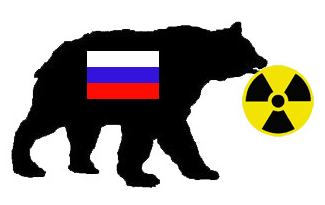
 India-Russia ties boosted by defence, energy deals, Straits Times, OCT 16, 2016, Modi and Putin revive Cold War bond with lucrative agreements between two nations BENAULIM (India) • Indian Prime Minister Narendra Modi and Russian President Vladimir Putin signed a raft of lucrative defence and energy pacts yesterday following talks aimed at reinvigorating ties between the former Cold War allies.
Mr Modi hailed Mr Putin as an “old friend” after their meeting in the Indian state of Goa, where leaders of Brazil, Russia, India, China and South Africa (Brics) were gathering for a summit.
“Your leadership has provided stability and substance to our strategic partnership,” Mr Modi said alongside Mr Putin at a beachside resort, after officials signed up to 20 agreements between the two nations……..
They also signed an initial agreement on India’s purchase of Russia’s state-of-the-art S400 missile defence system, capable of shooting down multiple incoming missiles, although there were no details on a timeframe for delivery. The system would strengthen India’s defences along its borders with China and Pakistan……..
The leaders also signed a framework agreement to supply more reactors to a nuclear plant in Kudankulam in southern India, which is attempting to reduce its reliance on highly polluting coal for power. Mr Putin said that Russia would be able to build a dozen nuclear reactors in India over the next 20 years to back Mr Modi’s growth strategy for Asia’s third-largest economy, which continues to suffer power shortages………
Mr Modi was expected to hold talks with China’s President Xi Jinping late yesterday, also in the hope of boosting investment and trade. Relations, however, have been frustrated by Beijing’s decision so far to block New Delhi’s entry to a nuclear trade group, among other issues. http://www.straitstimes.com/asia/south-asia/india-russia-ties-boosted-by-defence-energy-deals
The very real threat of Cyber-attacks Against Nuclear Plants
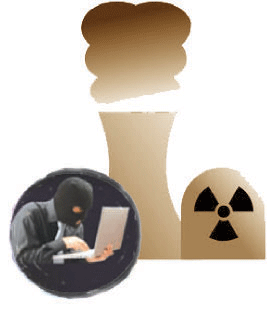 Cyber-attacks Against Nuclear Plants: A Disconcerting Threat INFOSEC Institute, Pierluigi Paganini OCTOBER 14, 2016 A cyber-attack against critical infrastructure could cause the paralysis of critical operations with serious consequences for a country and its population.
In a worst case scenario, a cyber-attack could affect processes that in case of fault could cause serious damages and consequent losses of human lives.
Let’s think for example to a refinery or a nuclear plant, in both cases; a cyber-attack represents a threat to the infrastructure, its processes, and people that work within.
Nuclear plants are critical components of any countries; critical functions depend on their operations, and an incident could have dramatic effects on the population.
Is a cyber-attack against a nuclear plant a possible event?
Unfortunately, the response is affirmative. Nuclear plants are composed of an impressive number of components such as SCADA/ICS, sensors and legacy systems that could be hit by a hacker.
The most popular case of a cyber-attack against a nuclear plant is Stuxnet, which was launched more than five years ago. Stuxnet is the malware developed by experts from the US and Israel with the intent of destroying the Iranian nuclear program. Nation state hackers hit the plant of Natanz in Iran in 2010 interfering with the nuclear program of the Government of Teheran.
The Stuxnet targeted a grid of 984 converters, the same industrial equipment that international inspectors found out of order when visited the Natanz enrichment facility in late 2009.
The cyber-attack against the Cascade Protection System infects Siemens S7-417 controllers with a matching configuration. The S7-417 is a top-of-the-line industrial controller for big automation tasks. In Natanz, it is used to control the valves and pressure sensors of up to six cascades (or 984 centrifuges) that share common feed, product, and tails stations” states “A Technical Analysis of What Stuxnet’s Creators Tried to Achieve” written by the expert Ralph Langner.
Stuxnet was designed with a number of features that allowed to evade detection; its source code was digitally signed, and the malware uses a man-in-the-middle attack to fool the operators into thinking everything is normal.
Stuxnet is the demonstration that it is possible to use a malicious code to destroy operations at a nuclear plant.
In the last years, security experts and authorities confirmed at least three cases of cyber-attacks against Nuclear plants.
Who are the threat actors that could hit a nuclear plant?
There are many actors, such as cyber criminals, hacktivists, nation-state actors, cyber terrorists and script kiddies, that are threatening critical infrastructure worldwide
Let’s see which are the principal incidents that affected nuclear plants in the last years.
The incidents
According to the Director of the International Atomic Energy Agency (IAEA), Yukiya Amano, a nuclear power plant in Germany suffered a “disruptive” cyber-attack two to three years ago……..
This isn’t the first time that we receive the news of cyber-attacks on nuclear plants. There are three publicly known attacks against nuclear plants:
- Monju NPP (Japan 2014)
- Korea Hydro and Nuclear Power plant (S.Korea 2014)
- Gundremmingen NPP (Germany 2016).
It is likely that Amano was referring the cyber-attack against the Gundremmingen nuclear plant that occurred earlier this year. Security experts, in that case, discovered the presence of the Conficker and Ramnit malware in the target systems……
2014 – Malware based attack hit Japanese Monju Nuclear Power Plant
On January, 2nd 2014 one of the eight computers in the control room at Monju Nuclear Power Plant in Tsuruga, Japan, was compromised by a cyber-attack. The local IT staff discovered that the system in the reactor control room had been accessed over 30 times in a few days. The experts observed the intrusion started after an employee updated a free video playback application running on one of the computers in the plant…….
Cyber-attacks against the organizations operating in the Energy industry were already observed in the past, in 2012 the Japan Atomic Energy Agency was targeted by a cyber-attack that compromised a computer at the JAEA headquarters at Tokaimura by infecting it with malware.
2014 – Nuclear plant in South Korea hacked
In December 2014, the South Koran government revealed that a nuclear plant in the country was hacked. …..
2016 – A malware infected systems at the Gundremmingen nuclear plant in Germany
In April 2016, the German BR24 News Agency reported the news of a computer virus that was discovered at the Gundremmingen nuclear power plant in Germany……..The experts involved in the investigation discovered the presence of the Conficker and W32.Ramnit malware in unit B of the Gundremmingen. Conficker is worm with the ability of rapidly spreading through networks, while W32.Ramnit is a data stealer.
The RWE also added that malware had been found on 18 removable data drives, mainly USB sticks, in office computers maintained separately from the plant’s operating systems………
Conclusions
Cyber-attacks against nuclear power plants and industrial control systems are probably at the top of a long list of potential  disasters that can be caused by hackers.
Stuxnet, which targeted nuclear power plants in Iran, is still the most widely publicized threat against such systems.
Security experts are aware of the possibility that hackers could cause serious problems to these critical infrastructures worldwide, for this reason, several governments already launched internal assessments of their infrastructure.
This summer, the European Parliament has passed the new network and information security (NIS) directive that establishes minimum requirements for cyber-security on critical infrastructure operators. http://resources.infosecinstitute.com/cyber-attacks-against-nuclear-plants-a-disconcerting-threat/
Pentagon detects a failed North Korean nuclear test launch
US Pentagon detects a failed North Korean nuclear test launch, news.com.au 16 Oct 16 THE US military has detected a failed North Korean test launch of an intermediate ballistic missile near the northwestern city of Kusong, the Pentagon says.
“We strongly condemn this and North Korea’s other recent missile tests,” said US Navy Commander Gary Ross, a Pentagon spokesman.
“We intend to raise our concerns at the UN to bolster international resolve in holding the DPRK accountable for these actions.” Ross said the US commitment to the defence of its allies in the region, including South Korea and Japan, was “iron-clad” in the face of such North Korean actions.
The missile to be launched by North Korea was a Musadan intermediate-range ballistic missile. In August, North Korea said it would turn the US and South Korea into a ‘heap of ash’ if provoked………
The failed nuclear test launch followed the fifth and biggest launch of its kind in September by one of world’s most secretive societies, governed by communist dictator Kim Jong-un.
There had been speculation that Jong-un could mark the 10 October anniversary of the founding of its Workers’ party with a sixth detonation. http://www.news.com.au/world/asia/us-pentagon-detects-a-failed-north-korean-nuclear-test-launch/news-story/849a066713be509ffd775b0cc0462aff
1 This Month

of the week – Shut Down Drone Warfare!


Tell the Ukrainian Government to Drop Prosecution of Peace Activist Yurii Sheliazhenko

Petition to revoke the licensing of the Near Surface Nuclear Disposal Facility (NSDF) at Chalk River. https://www.ourcommons.ca/petitions/en/Petition/Details?Petition=e-7247
To see nuclear-related stories in greater depth and intensity – go to https://nuclearinformation.wordpress.com
-
Archives
- April 2026 (114)
- March 2026 (251)
- February 2026 (268)
- January 2026 (308)
- December 2025 (358)
- November 2025 (359)
- October 2025 (376)
- September 2025 (257)
- August 2025 (319)
- July 2025 (230)
- June 2025 (348)
- May 2025 (261)
-
Categories
- 1
- 1 NUCLEAR ISSUES
- business and costs
- climate change
- culture and arts
- ENERGY
- environment
- health
- history
- indigenous issues
- Legal
- marketing of nuclear
- media
- opposition to nuclear
- PERSONAL STORIES
- politics
- politics international
- Religion and ethics
- safety
- secrets,lies and civil liberties
- spinbuster
- technology
- Uranium
- wastes
- weapons and war
- Women
- 2 WORLD
- ACTION
- AFRICA
- Atrocities
- AUSTRALIA
- Christina's notes
- Christina's themes
- culture and arts
- Events
- Fuk 2022
- Fuk 2023
- Fukushima 2017
- Fukushima 2018
- fukushima 2019
- Fukushima 2020
- Fukushima 2021
- general
- global warming
- Humour (God we need it)
- Nuclear
- RARE EARTHS
- Reference
- resources – print
- Resources -audiovicual
- Weekly Newsletter
- World
- World Nuclear
- YouTube
-
RSS
Entries RSS
Comments RSS
 nuclear-news