After 40 years to build – nuclear power plant never worked, now for sale at peppercorn price
 US Nuclear Plant up for Sale at Fraction of Cost, abc news, By JAY REEVES, ASSOCIATED PRESS HOLLYWOOD, Ala. — Sep 11, 2016 After spending more than 40 years and $5 billion on an unfinished nuclear power plant in northeastern Alabama, the nation’s largest federal utility is preparing to sell the property at a fraction of its cost.
The Tennessee Valley Authority has set a minimum bid of $36.4 million for its Bellefonte Nuclear Plant and the 1,600 surrounding acres of waterfront property on the Tennessee River. The buyer gets two unfinished nuclear reactors, transmission lines, office and warehouse buildings, eight miles of roads, a 1,000-space parking lot and more………
The sale is bittersweet for site manager Jim Chardos, who went to work at Bellefonte in 1994 expecting it to be finished as a nuclear power plant. All these years later, he commutes 90 minutes each way to work to oversee a plant that has never been stocked with radioactive fuel or used either of its reactors to generate a single watt of electricity.
Work began at Bellefonte in the mid-’70s on the backside of the nuclear energy boom in the United States, Chardos said. The utility initially planned to construct four reactors at the site, but demand for power in the region never met those early expectations and work halted in 1988. A series of starts and stops preceded TVA’s decision earlier this year to sell Bellefonte……….http://abcnews.go.com/US/wireStory/us-nuclear-plant-sale-fraction-cost-42010576
South Korea trying to get in on the frenzy of nuclear marketing to Britain
 Koreans near investment in new Cumbrian nuclear plant http://www.ft.com/cms/s/0/573d713e-7833-11e6-a0c6-39e2633162d5.html#axzz4Jz1Iolbo Financial Times, 12 Sept 16, Jim Pickard and Andrew Ward in London A South Korean energy group is closing in on a multibillion investment in a new nuclear power station near Sellafield in the latest sign of Asian interest in Britain’s energy industry.
The deal, if it goes ahead, would add momentum to Moorside at a time when the rival Hinkley Point nuclear power project in Somerset has been thrown into doubt by concerns about its high cost and the role of Chinese investors in the scheme.
Theresa May, prime minister, is expected to decide this month whether to go ahead with Hinkley, led by EDF of France with Chinese backing, after ordering a review of the £18bn project.
NuGen sees the uncertainty as a chance to leapfrog Hinkley in the race to build the first new nuclear reactor in the UK for more than two decades. However, it is still years behind EDF in securing financing and regulatory approval for its project.
For Kepco, an investment in Moorside would be a chance to gain a foothold in the UK as it builds its presence in the global nuclear industry.
The Cumbrian plant — designed to provide power for 6m homes — would be supplied with reactors by Westinghouse, the US subsidiary of Toshiba. But Kepco sees the UK as a potential future market for its own technology.
South Korea has set a goal to become the world’s third-largest exporter of nuclear reactors by 2030 and has already won a $20bn contract in Abu Dhabi. Tom Samson, chief executive of NuGen, is former chief operating officer of the Abu Dhabi company, Emirates Nuclear Energy Corporation, which struck that deal.
Kepco is not without controversy, having been rocked by a domestic safety scandal three years ago. The country’s atomic watchdog said safety certificates for thousands of components procured by Korean reactors over the previous nine years had been forged. An ally of Kepco said the scandal was behind it and the group was now seen as “a first division player” in nuclear power.
The group, 51 per cent owned by the South Korean government, first entered talks with NuGen three years ago, but no deal was reached. Four people with knowledge of the situation said talks had since resumed and made progress over a potential equity stake in NuGen as well as a possible role in construction.
NuGen declined to comment on Kepco but said it had a “universe of options for financing” and was talking to a variety of potential investors and contractors. Kepco could not be immediately reached for comment.
The UK government has put nuclear power at the heart of its energy policy, with a target for 14GW of generating capacity from new reactors by 2035. However, its refusal to inject public money has left ministers dependent on foreign investors to finance the programme.
As well as Hinkley and Moorside, Hitachi of Japan also has plans for reactors at Wylfa in Anglesey and Oldbury-on-Severn in Gloucestershire. EDF and its Chinese state-backed partner CGN are planning further reactors at Sizewell in Suffolk and Bradwell in Essex.
The latter project has been the focus of close scrutiny from Downing Street since Mrs May became prime minister because Bradwell would involve Chinese rather than French reactor technology.
New nuclear power stations are seen as crucial to UK energy security in the coming decades as dirty coal-fired power stations and old nuclear reactors are phased out. But critics say nuclear is too expensive and believe a mix of renewables and natural gas could keep the lights on at a lower cost while still reducing carbon emissions.
Iran building nuclear plant, estimated cost $10 billion – Russia helping
Iran Starts Construction On Second Nuclear Plant With Russian Help Radio Free Europe, September 10, 2016 Iran has begun building a second nuclear power plant with Russian help, Iranian and Russian media are reporting.
The project, known as Busherh-2, was officially launched on September 10 in the southern port city of Bushehr. The project will cost around $10 billion and produce 1,057 megawatts of electricity. The project is expected to be completed in 10 years.
It’s Iran’s first nuclear power project since the country reached a landmark nuclear deal with world powers in July 2015. It will be built by Rosatom, the Russian state nuclear power company.
Iran’s sole operational nuclear reactor — also built with Russian assistance in Bushehr — produces 1,000 megawatts. It went online in 2011, and the two countries have agreed to cooperate on future projects.
The Bushehr plant is not considered a proliferation risk because Russia supplies the fuel for the reactor and takes away spent fuel that could otherwise be used to make weapons-grade plutonium….http://www.rferl.org/content/iran-bushehr-2-nuclear-power-plant-russia/27978982.html
Serious safety problems at Finland’s Fennovoima nuclear project
Economic Affairs minister: Fennovoima nuclear project safety severely lacking http://yle.fi/uutiset/economic_affairs_minister_fennovoima_nuclear_project_safety_severely_lacking/9157634, 10 Sept 16
The Fennovoima nuclear power plant project has to develop its safety culture if it wants to secure a building permit, says Minister of Economic Affairs Olli Rehn. The Fennovoima nuclear power plant project faces severe problems in its safety culture, according to Minister of Economic Affairs Olli Rehn.
Rehn met with the top echelon of the Radiation and Nuclear Safety Authority (STUK) to talk about safety and other issues relating to the Fennovoima project. Rehn says that the project is seriously lacking in its attention to project management and subcontractor resourcing.
“Big changes have to be made this autumn if the project’s credibility is to be regained,” Rehn told Yle.
On Wednesday Yle reported that Fennovoima has not delivered the planning documents for the Russian-backed plant within the time frame agreed upon with STUK.
Rehn stressed that Fennovoima’s safety concerns have to be fully in hand before any building permit can be issued.
Rehn spoke with the STUK top brass on Friday about the booted chief of main Fennovoima owner Voimaosakeyhtiö SF. The company fired its manager after he had brought up safety concerns with STUK.
“I consider it very serious that problems of this magnitude have arisen in Fennovoima,” Rehn says. “It is now the company’s duty to solve them and reinstitute trust in the project.”
Geothermal power in use in Japan
After Fukushima, Japan turns to geothermal power for energy, By Michiyo Ishida, Japan Bureau Chief, Channel NewsAsia 11 Sep 2016 “…….. Japan’s largest geothermal plant – the Hatchobaru Geothermal Power Station – is located in Oita, southern Japan. Its total output is 110,000 kilowatts, and it powers about 37,000 households.
“Normally, you would utilise the steam straight from the source. But if there is energy left in the hot water, steam is drawn from there and it is used to generate energy. By doing that, we can increase power output by 20 per cent,” said the power station’s Vice-Director, Seiki Kawazoe.
The Kyushu Electric Power Company said this is an original technology known as the double flash system, which helps to raise energy efficiency.
The Hatchobaru plant generates the largest geothermal energy output in Japan, and it is able to do so as it is located in Oita, home to about 4,400 hot springs.
Geothermal energy can provide a stable supply of electric power. Kyushu Electric Power Company said it is still not ready to replace nuclear power altogether. The main constraints are the cost and the time to build the full infrastructure…….http://www.channelnewsasia.com/news/asiapacific/after-fukushima-japan-turns-to-geothermal-power-for-energy/3116858.html
Bulgaria has to quickly pay up for cancelled Belene nuclear project
Russia demands swift payment for canceled Bulgarian nuclear plant , Reuters, 10 Sept 16 Russian nuclear company Rosatom has asked Bulgaria to swiftly pay 620 million euros ($696 million) in compensation over the canceled Belene nuclear project, it said on Saturday.
An arbitration court ruled in June that Sofia must pay for the equipment produced by Rosatom for the project, which Bulgaria abandoned in 2012 due to financial constraints and concerns in Brussels and Washington over its energy dependence on Russia…….Bulgaria’s prime minister has said that the compensation, estimated by Sofia at about 560 million euros, will be paid in full and quickly, to avoid paying interest of 167,000 euros a day.
Bulgaria is considering selling the 2,000 megawatt nuclear project to private investors, keeping a small state stake in it, after its attempt to sell the equipment to Iran did not succeed.
(Reporting by Tsvetelia Tsolova; Editing by Alexander Smith) http://www.reuters.com/article/us-russia-bulgaria-idUSKCN11G0D7
Norway’s green energy from hydropower
 Beauty and power: how Norway is making green energy look good, Stuart Dredge, Guardian, 8 Sept 16
On the edge of a forest in northern Norway, an unusually handsome hydroelectric plant is generating a buzz Ovre Forsland is a big departure from the hulking power stations that traditionally served our energy needs. It looks more like an elegant, custom‑built home from TV show Grand Designs.
Located in the Helgeland district in northern Norway, it’s a small hydroelectric power station capable of supplying 1,600 homes with power.
Designed by Norwegian architecture firm Stein Hamre Arkitektkontor, it sits on a riverbed at the edge of a forest, with an exterior that aims to reflect the irregular shapes of the spruce trees forming its backdrop.
“It’s a small plant. The biggest stations in this region were built in the late 50s and 60s to serve industry, but in the last 15 years it has been much smaller projects,” says Torkil Nersund, production manager at the plant’s owner, energy company HelgelandsKraft.
“It’s the perfect place; the environment is fantastic. This region is known for its spectacular nature, so we thought the building should try to live up to the surroundings.”
The station benefits from a 157-metre drop in the Forsland river, and uses two Francis water turbines to turn the flow of water into electricity for the surrounding community. It produces about 30 gigawatt-hours (GWh) of power, with the flexibility of its storage system ensuring it can meet surges in demand.
“Øvre Forsland does not only serve hydropower to people in the region. Its purpose is also to bring attention to hydropower, the history around it and the benefits,” says Nersund.
“You can say that hydropower will play a main role in renewable society in the future, so we want more attention on the hydropower business.”………https://www.theguardian.com/environment/2016/sep/08/norwegian-power-station-ovre-helgeland-hydroelectric-renewable-energy
Brazil’s increase in fires in Amazon region – alarming news
The alarming number of fires in the Brazilian Amazon, Mongabay, 8 September 2016 / Commentary by Natália Girão Rodrigues de Mello
For three months, from September to December 2015, Manaus was engulfed in smoke, resembling Beijing. That was an unusual scene, and an undeniable sign that predatory exploration in the Brazilian Amazon has not yet been properly tackled.
- The sharp decrease in the annual rates of forest loss in the Brazilian Amazon is celebrated worldwide. The trend started in 2005 after a peak in deforestation the year before.
- However, the figures are not so bright when it comes to forest fires, and few people are talking about that.
- The number of fires in the Brazilian Amazon is alarming, and that was especially true in 2015, when a sharp increase in forest fires occurred………
- Natural factors alone fail to explain this recent increase, as similar climatic conditions in the past were not associated with the same amount of forest fires.
Forest fires and precipitation are strongly correlated in the Brazilian Amazon; in dry years, more forest fires occur. 2015 was a dry year, but not as dry as 2010 or 2005 were – years when the region faced anomalous droughts. Nevertheless, in 2015, forest fires increased 115.6 percent and 105.5 percent compared to 2005 and 2010, respectively. Hence it is safe to say that the peak observed last year was strongly associated with unregulated anthropogenic activities in the forest.
In the region, using fire in order to clear large areas is a common practice. The expansion of roads, settlements, croplands and cattle ranches has been leading fires to reach ever-wider areas of the forest.
The consequences associated with this issue are vast. They are felt locally, regionally and globally. Forest fires contribute to climate change due to the emission of three greenhouse gases: carbon dioxide, methane, and nitrous oxide. As the forest burns, health-damaging gases – carbon monoxide, non-methane hydrocarbons, methyl chloride, and methyl bromide – are also emitted, as well as volatile organic compounds (VOCs) and aerosols. VOCs interact with nitrous oxides to form ozone, a phytotoxic gas. Aerosols cause the suppression of cloud formation and the decrease of precipitation efficiency. Moreover, a positive feedback between fire-induced death of trees and increased solar penetration in the forest occurs, resulting in the intensification of successive fires…….https://news.mongabay.com/2016/09/the-alarming-number-of-fires-in-the-brazilian-amazon/?utm_content=buffer4318b&utm_medium=social&utm_source=twitter.com&utm_campaign=buffer
Plutonium pollution from nuclear bomb testing still affects remote islands
Even the Most Remote Islands Harbor Human Messes Biologists are trying to clean uninhabited U.S. Pacific Islands that are covered in nuclear waste, bird-eating mice and yellow crazy ants By Jesse Greenspan | Scientific American September 2016 Issue “…….For Plentovich and other researchers focused on remote U.S. Pacific islands—most of which have no permanent residents and are off-limits to the public—such adventures are par for the course. All their conservation projects share a common theme: undoing damage caused by careless humans….
September 11 Energy News

Opinion:
¶ “The balancing act: A tough task cut out for grid managers” • A massive deployment of renewable capacity implies a paradigm shift for thermal plants. This is something that could be testing for grid managers. India has a national target to add 141 GW of solar and wind energy by 2022, but this will change how the grid is run. [The Indian Express]
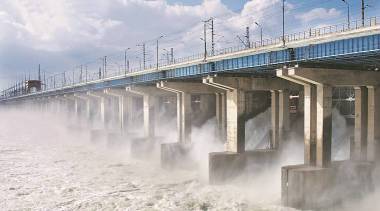 India has 42 GW of hydro capacity. It could have 52 GW in 2021.
¶ “Clinton and Trump polar opposites on global warming and energy” • Both Hillary Clinton and Donald Trump want the US to become a global energy superpower. The similarity in their energy policies ends there. Trump’s position is based on fossil fuels, while Clinton’s is based on renewable power. [San Francisco Chronicle]
World:
¶ Cuba is embracing renewable and affordable energy as a new solar panel park…
View original post 647 more words
Planet at the Crossroads

GR: The short-term focus of our news media reflects the short-term focus of news consumers. Reporters often omit critical elements of a story in order to meet the need for brevity. For instance, an NPR story yesterday gave a glowing report on an unexpected discovery of a great new oil reservoir in west Texas. At a time when most of our scientists are on the verge of losing hope for the survival of our civilization due to greenhouse gas production, it would seem that the danger implicit in a major Texas oil discovery should have been mentioned in the story. But no. The story below covers the brevity problem quite well.
From Animalista Untaimed: “The ecosystems that underpin our economies, well-being and survival are collapsing. Species are becoming extinct at unprecedented rates. Our climate is in crisis. And it’s all happening on our watch.”
“The Rio Olympics went out…
View original post 222 more words
September 10 Energy News
Science and Technology:
¶ The National Electrical Manufacturing Association laid out a strategic vision for microgrid development and use for the 21st century in ¨Powering Microgrids for the 21st Century Electrical System.¨ It says microgrids will make a transition from off-grid ¨island¨ systems to integral parts of broader-based power grid networks. [Microgrid Media]
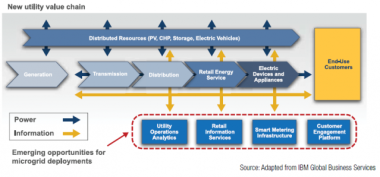 Please click on the image to enlarge it.
¶ A new report from the World Bank has concluded that air pollution is the fourth leading cause of premature deaths worldwide, costing the global economy about $225 billion in lost labor income in 2013. It says an estimated 5.5 million lives were lost in 2013 as a result of various diseases attributed to indoor and outdoor air pollution. [CleanTechnica]
World:
¶ Natural Energy Wyre, has announced the launch of the UK’s Tidal Hydro Energy Plant in Fleetwood, Lancashire. The mouth of the River Wyre…
View original post 757 more words
83 species now eligible for test fishing off coast of Fukushima
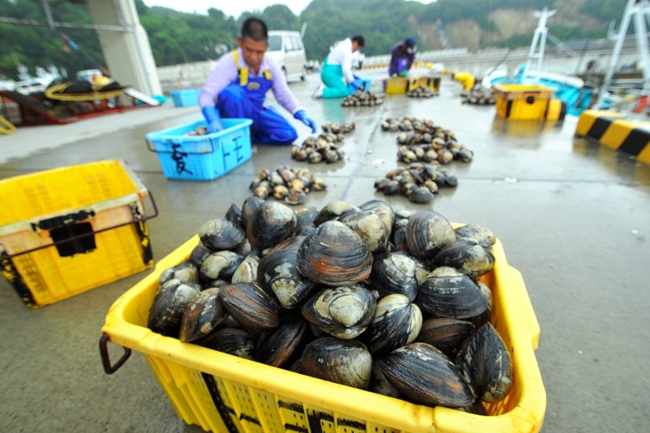
These surf clams, seen here in June at Hisanohama Port in Iwaki, Fukushima Prefecture, were caught during test fishing.
IWAKI, Fukushima Prefecture–Ten species were added to the list of catches eligible for test fishing off the coast of Fukushima Prefecture, but lingering concerns about radiation are keeping sales of such marine products low.
Still, the latest additions, which include the Japanese flounder, the white-spotted conger eel and the spotted halibut, have encouraged fishermen who have been struggling to rebuild their lives since the Fukushima nuclear disaster started in March 2011.
The Fukushima Prefectural Federation of Fisheries Cooperative Associations on Aug. 25 added the 10 species to bring the total number eligible for test fishing to 83. The additions were approved during a meeting in Iwaki of the prefectural council for the rebuilding of regional fisheries.
“I think the 83 fish species accounted for about 70 percent of our pre-disaster hauls,” said Tetsu Nozaki, president of the prefectural fisheries federation. “I am placing particularly high hopes for a great boost in the value of our catches from the resumed fishing of Japanese flounder.”
Test fishing for flounder started on Sept. 2.
The Soma-Futaba fisheries cooperative association, which is part of the prefectural federation, plans to resume catches of white-spotted conger eel in September. But the Iwaki city fisheries cooperative association has decided to wait until water temperatures are low enough to ensure freshness of the white-spotted conger eel.
Test fishing has expanded because the environment of the sea has significantly improved since the initial impact of the nuclear disaster. Radioactivity levels in fish caught there now stably remain within the safety limit for many species.
Despite extensive testing to ensure safety of Fukushima marine products, many dealers are still reluctant to buy the species.
Fish and shellfish from Fukushima Prefecture are being shipped to various parts of Japan, such as the Tohoku, Kanto, Chubu and Hokuriku regions. Prices of seafood items from Fukushima Prefecture are not much lower than those from other prefectures, according to Yoshiharu Nemoto, head of the fishing ground environment division with the Fukushima Prefectural Fisheries Experimental Station.
Yet few dealers are bidding for Fukushima marine products. If this trend continues with more Fukushima fish reaching the market, unsold leftovers from the prefecture could start to pile up and project a negative image, Nemoto said.
“It will become more necessary than ever to make publicity efforts, such as regularly releasing data concerning safety,” he said.
Test fishing began in June 2012, 15 months after the Great East Japan Earthquake and tsunami caused the triple meltdown at the Fukushima No. 1 nuclear power plant. Initially, only three species were covered: two kinds of octopuses and one type of shellfish.
While coverage has since expanded in stages, the latest addition of 10 species at one time is second only to the addition of 12 species, including brown sole and red sea bream, in August 2015.
Since April 2011, the Fukushima prefectural government has been monitoring the impact of radioactive fallout from the Fukushima No. 1 nuclear plant on fish and shellfish. The radiation tests, which cover about 200 samples every week, have so far been conducted on 38,000 samples of 184 species.
The concentration of radioactive cesium initially exceeded the central government’s safety limit of 100 becquerels per kilogram in most of the fish and shellfish surveyed. But the concentration has declined from year to year, and no sample has exceeded the safety limit since April 2015.
In more than 90 percent of the samples tested in July 2015 and later, radioactivity levels were below the detection limit.
Radioactivity levels in fish caught near the Fukushima No. 1 nuclear plant are also falling.
The central government’s Japan Fisheries Research and Education Agency (FRA) on Aug. 25 released data on radioactivity levels in Japanese flounder caught in July in waters around the crippled nuclear plant.
The FRA said its high-precision tests, with a lower limit of detection set at a mere 1 becquerel per kg, found radioactivity levels of less than 10 becquerels per kg in all 41 individual organisms tested. More than 90 percent of them measured less than 5 becquerels per kg.
Catches from test fishing have continued to grow: 122 tons in 2012, 406 tons in 2013, 742 tons in 2014 and 1,512 tons in 2015.
But last year’s catch was only 5.8 percent of the annual catch of 26,050 tons averaged over the decade preceding the 2011 disaster.
Fishermen are holding out high hopes for more fish species being eligible for catches.
Only 28% of Fukushima children returning to former schools
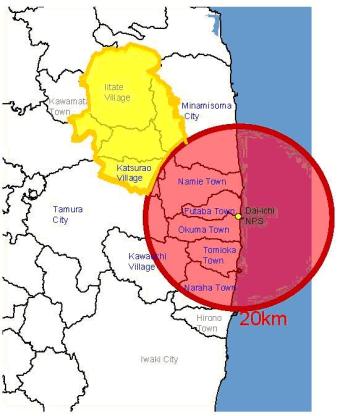
Only 28 percent of children are returning to their public elementary and junior high schools in five towns and villages in Fukushima Prefecture following the lifting of evacuation orders imposed after the 2011 nuclear disaster, the Mainichi Shimbun has learned. The majority of schoolboys and girls are opting to stay out of their hometowns due to anxiety over radiation exposure and resettlement at evacuation sites.
The trend raises concerns that the number of young people in these towns and villages will dwindle and the survival of the municipalities is at stake.
The five municipalities are the towns of Hirono and Naraha and the villages of Iitate, Kawauchi and Katsurao. They set up temporary elementary and junior high schools at evacuation sites after the March 2011 earthquake and tsunami disaster triggered the multiple core meltdowns at the Fukushima No. 1 Nuclear Power Plant. Hirono and Kawauchi reopened their public schools in 2012 and Naraha and Katsurao will follow suit in April 2017. Iitate plans to reopen its schools in April 2018, one year after the evacuation order is lifted.
Once these public schools have reopened, the temporary schools at evacuation sites are shut down, prompting children from the five affected municipalities to choose one of three options — return to their hometowns, commute to their former schools by school bus or other means, or attend schools at evacuation sites.
According to the Mainichi study, 55 percent of 259 pupils and students from Hirono and Kawauchi have returned to their former elementary and junior high schools because the evacuation orders were relatively short. But only 139 students or 15 percent of students from Naraha, Katsurao and Iitate responded to a survey in 2015-2016 that they would return to their original schools. Only three students, or 4 percent, of 74 students from Katsurao said they would return to their hometown schools.
As for students from Naraha, 17 percent of students replied that they would attend their hometown schools but half of them hoped to commute to their hometown schools from outside the town. If young evacuees in Iwaki, a major evacuation destination, try to commute by train and bus, a one-way trip takes one hour. An official of the Naraha board of education expressed concerns that these students are really serious about commuting to their hometowns. A Kawauchi village official says that the returns of child-rearing generations are the village’s lifeline. These municipalities operate school buses to encourage the evacuees to return to their hometowns as a stopgap measure rather than as a permanent solution.
Yusuke Yamashita, an associate professor of urban and rural sociology at Tokyo Metropolitan University, says, ”There are some parents who send their children to temporary schools before eventually returning to their hometowns. If these municipalities reopen their schools hastily, some families may abandon plans to return home (out of safety fears). It is important for the communities to offer as many options as possible by keeping temporary schools.”
http://mainichi.jp/english/articles/20160910/p2a/00m/0na/001000c
Science Subverted by Politics in Fukushima
The high rate of thyroid cancer occuring in Fukushima is not caused by radiation. Or so the government would like everyone to believe!
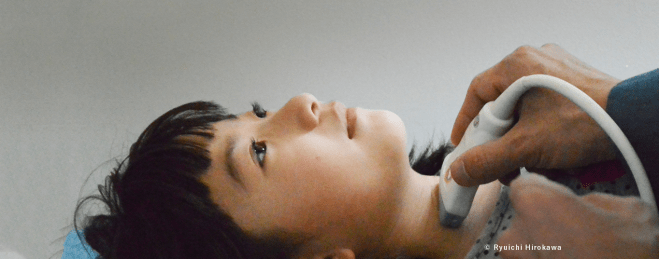
Study draws a blank on thyroid cancer and 2011 nuclear disaster
Researchers have found no correlation between radiation exposure and the incidence rate of thyroid cancer among 300,000 children living in Fukushima Prefecture at the time of the 2011 nuclear disaster.
But the team at Fukushima Medical University, which carried out the study, cautioned that the health of local children should continue to be monitored to be more definitive.
“At the present stage, we have found no evidence pointing to any relationship between doses of external radiation resulting from the nuclear accident and the thyroid cancer rate,” said Tetsuya Ohira, a professor of epidemiology at the university. “But we need to continue to look into the situation.”
The study involves 300,476 children in Fukushima Prefecture who were aged 18 or younger when the Fukushima No. 1 nuclear power plant went into a triple meltdown in March 2011 after the Great East Japan Earthquake and tsunami.
The children underwent the first round of health checks between October 2011 and June 2015.
Of the total, 112 were tentatively diagnosed as having thyroid cancer.
There are two types of radiation exposure: external exposure in which a person is exposed to radiation in the atmosphere, and internal exposure in which a person is exposed through the intake of contaminated food, water and air.
For the study, municipalities in the prefecture were classified into three groups based on the estimate for residents’ external exposure. That data was obtained during a prefecture-wide health survey carried out after the disaster occurred.
The first group is a zone where people with an accumulative dose of 5 millisieverts or more represented 1 percent or more of the population there. The second group is a zone where people with an accumulative dose of up to 1 millisievert account for 99.9 percent or more of the population. The third group is a zone that falls into neither of the other two groups.
The scientists looked at the incidence rate for thyroid cancer in each group and concluded there is almost no difference among the groups.
The number of subjects diagnosed with thyroid cancer was 48 per 100,000 people in the first group, 41 in the second group and 36 in the third group.
The finding was similar to a separate survey in which researchers looked into the possible association among 130,000 or so children whose radiation exposure had been estimated.
Hokuto Hoshi, head of a health survey panel set up at the prefectural government after the nuclear disaster, said he will closely follow the results of future studies to offer a more conclusive finding.
“The outcome of the recent study provides one indication in making any overall judgment,” said Hoshi, who also serves as vice chairman of the Fukushima Medical Association. “The study is substantial and we are going to pay attention to the findings of further studies.”
http://www.asahi.com/ajw/articles/AJ201609100031.html
1 This Month
Chernobyl: The Lost Tapes – A good documentary on Chernobyl on SBS available On Demand for the next 3 weeks– https://www.sbs.com.au/ondemand/tv-program/chernobyl-the-lost-tapes/2352741955560

of the week–London Campaign for Nuclear Disarmament

Tell the Ukrainian Government to Drop Prosecution of Peace Activist Yurii Sheliazhenko
To see nuclear-related stories in greater depth and intensity – go to https://nuclearinformation.wordpress.com
-
Archives
- April 2026 (139)
- March 2026 (251)
- February 2026 (268)
- January 2026 (308)
- December 2025 (358)
- November 2025 (359)
- October 2025 (376)
- September 2025 (257)
- August 2025 (319)
- July 2025 (230)
- June 2025 (348)
- May 2025 (261)
-
Categories
- 1
- 1 NUCLEAR ISSUES
- business and costs
- climate change
- culture and arts
- ENERGY
- environment
- health
- history
- indigenous issues
- Legal
- marketing of nuclear
- media
- opposition to nuclear
- PERSONAL STORIES
- politics
- politics international
- Religion and ethics
- safety
- secrets,lies and civil liberties
- spinbuster
- technology
- Uranium
- wastes
- weapons and war
- Women
- 2 WORLD
- ACTION
- AFRICA
- Atrocities
- AUSTRALIA
- Christina's notes
- Christina's themes
- culture and arts
- Events
- Fuk 2022
- Fuk 2023
- Fukushima 2017
- Fukushima 2018
- fukushima 2019
- Fukushima 2020
- Fukushima 2021
- general
- global warming
- Humour (God we need it)
- Nuclear
- RARE EARTHS
- Reference
- resources – print
- Resources -audiovicual
- Weekly Newsletter
- World
- World Nuclear
- YouTube
-
RSS
Entries RSS
Comments RSS
 nuclear-news