India, Day 5 of the Accident in Kakrapar: Leak Continues, Just Assurances on Radiation, No Transparency

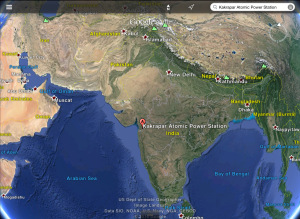
Even as, insanely, “Sites for 46 new reactors approved ‘in-principle’: Govt” of India, March 10, 2016 http://news.statetimes.in/sites-46-new-reactors-approved-principle-govt/
Dianuke.org reports:
“Day 5 of the Accident in Kakrapar: Leak Continues, Just Assurances on Radiation, No Transparency
MARCH 16, 2016
Kumar Sundaram
Day 5 of the ongoing nuclear accident in Kakrapar, Gujarat, India.
No update whether the leak has been fixed. No sharing of actual radiation measurements with the public so far.
Yesterday, the AERB issued a statement. It said the leak, which it earlier said is large, is continuing and the plant authorities continue to pour coolant. On radiation counts and condition of workers, again just reassurancesand not actual radiation readings from inside and around the plant.
When the Fukushima accident happened, sitting in Delhi i got live radiation counts from the operator’s website where counts from devices installed in all directions of the plant were updated…
View original post 1,269 more words
#NuclearCommissionSAust and the murky world of international finance

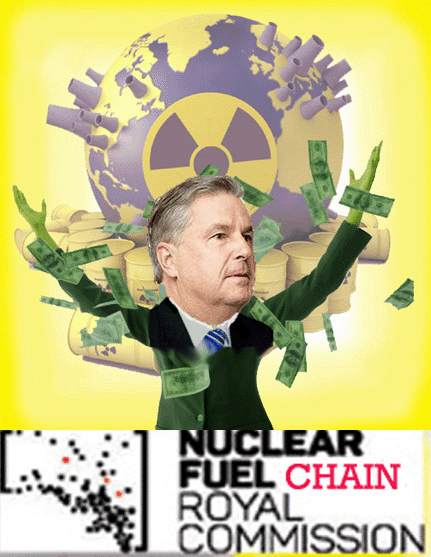
Response to the Tentative Findings of the SA Nuclear Fuel Cycle Royal Commission A Submission by Paul Langley Nuclear Exhaust 16 Mar 16 “…..The Law and the Profits.
Nuclear nations all have their own laws regarding nuclear matters. For instance the United States has many laws, including the Atomic Energy Act, as currently amended, associated laws and regulations. It has long been an issue that the US Act prevents full disclosure regarding “special nuclear material” – that is plutonium and uranium as used and produced in a reactor. This matter has long been a concern in the US democratic setting. For instance, see CARDOZO LAW REVIEW, VOL 26, NO 4, MARCH 2005, PP. 1401-8.
The HLNW repository is promoted by the Royal Commission as being South Australian, owned by the government and benefitting the people of SA. To what extent then, in the course of contract negotiations, will the…
View original post 105 more words
March 16 Energy News

Opinion:
¶ How Google Became to World’s Largest Corporate Purchaser of Renewable Energy • The Google approach to renewable energy is not unlike how many utilities purchase power. It often enters into power purchase agreements, and its projects range from California to Sweden. [Triple Pundit]
 Wind turbines. Image Credit: Flickr/naql
World:
¶ A report from the UK’s Offshore Wind Program Board outlined how investment in turbine technology has delivered significant cost benefits to the offshore wind industry. It says costs fell through 2015 and remain on track to fall to its target of £100/MWh by 2020. [CleanTechnica]
¶ Climate change efforts may be bearing fruit faster than expected. Energy-related carbon emissions stayed flat for the second consecutive year last year even though the global economy kept growing. Over 90% of new electricity generated last year was from renewables. [The Australian Financial Review]
 More than…
View original post 532 more words
Solar Initiative for Appalachia, American Indian Tribal Lands and Beyond
Bernie Sanders has a track record of pushing for nuclear safety and renewable energy. Everyone who loves life and the environment had better support him, even if not in agreement with his other policies. Remember Comley for President, too. It’s too late for Comley to get the Republican nomination but since, like Sanders, he’s really an independent, he might still be a VP for either Sanders or Trump, or even Hillary for that matter. Hillary’s plan is to promote solar, all while still wastefully throwing away taxpayer money on so-called new nuclear tech, which appears non-existent. All of the so-called new nuclear seems to be old, often dangerously failed, nuclear tech from 50 to 70 years ago – in short, lethal pork-barrel. The only safe nuclear power is the sun. Farrington Daniels, former director of the Manhattan project, came to that conclusion a long, long time ago – Sixty-nine years…
View original post 1,847 more words
#NuclearIsDirty

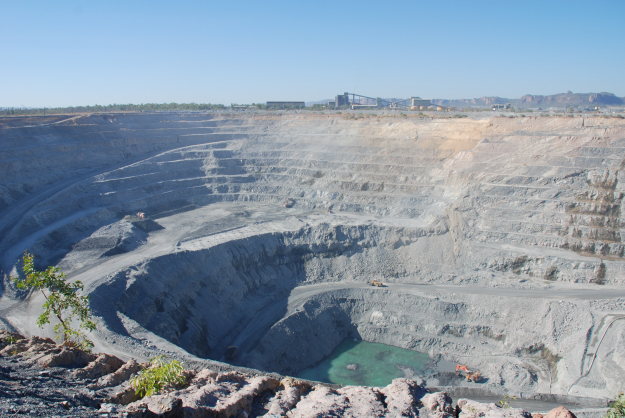 From the beginning of the nuclear fuel chain exemplified here by Australia’s Ranger uranium mine, to the end of the chain characterized by lethal radioactive waste with no scientifically-defensible storage method, nuclear energy is dirty energy.
NIRS is launching a new campaign today, called #NuclearIsDirty. Over the next twelve weeks, we will be rolling it out through a series of online events, publications, and social media forums. #NuclearIsDirty is a forum to inform the public of the real environmental impacts of nuclear power, from the mining of uranium and production of reactor fuel, all the way through to the long-term storage and management of radioactive waste.
The rollout series will follow the story of that nuclear fuel chain, combining technical information with testimony from real people whose communities are affected. As you know from our commentary and advocacy in the pages of GreenWorld, NIRS is committed to a nuclear-free…
View original post 898 more words
Climate: New study shows how warm ocean currents affect Antarctic ice shelves

Erosion from beneath could lead to more sea-level rise
 If floating Antarctic ice sheets disintegrate, land-based glaciers and ice sheets will flow much faster to the sea, speeding sea level rise. @bberwyn photo.
Staff Report
Oceans warming under a thickening blanket of greenhouse gases are licking at the edge of Antarctica and carving new channels in the bottom of ice shelves all around the frozen continent, researchers said this week in a new study led by scientists with the National Snow and Ice Data Center.
Those channels, characterized as “upside-down rivers” by the scientists, may make the ice shelves more prone to collapsing, which could speed up the flow of ice and the increase the rate of sea-level rise. Overall, some Antarctic ice sheets have thinned by about 18 percent and the rate of melting is accelerating, other research shows.
The findings, published in Nature Geoscience, are based on…
View original post 478 more words
Previous submissions to #NuclearCommissionSAust
The website of South Australia Nuclear Fuel Chain Royal Commission, is not all that user friendly – hard to find the previous submissions. However they are at
http://nuclearrc.sa.gov.au/submissions/?query=&cat=View+all&search=Submissions&max_page_items=50&sort_by=
 some of the best submissions are on http://www.antinuclear.net , even if not complete.
Here they are, not in any particular order:
SUBMISSIONS FOCUSING ON NUCLEAR WASTE IMPORTATION
Sisters of St Joseph make a powerful case against radioactive trash dumping
NGOPPON TOGETHER INC – Management, Storage and Disposal of Wastes. also on impact of unclear waste import on Tourism etc
Christine Anderson – nuclear waste no bonanza for South Australia
BHP not interested in nuclear waste import
Bill Fisher spells it out on nuclear waste
Plans for radioactive trash dumping on Aboriginal land ?
West Mallee Protection – an Aboriginal Perspective
Clean Bight Alliance Australia
MORE GENERAL SUBMISSIONS
Josephite SA Reconciliation Circle
View original post 127 more words
It’s not just cancer! Radiation, genomic instability and heritable genetic damage
Chris Busby – 17th March 2016
Cancer is just one of of the outcomes of the genetic damage inflicted by nuclear radiation, writes Chris Busby, and perhaps one of the least important. Of far greater long term significance is the broad-scale mutation of the human genome, and those of other species, and the resulting genomic instability that causes cascades of heritable mutations through the generations.
Those who fear the effects of radiation always focus on cancer. But the most frightening and serious consequences of radiation are genetic.
Cancer is just one small bleak reflection, a flash of cold light from a facet of the iceberg of genetic damage to life on Earth constructed from human folly, power-lust and stupidity.
Cancer is a genetic disease expressed at the cellular level. But genetic effects are transmitted across the generations.
It was Herman Joseph Muller, an American scientist, who discovered the most serious effects of ionizing radiation – hereditary defects in the descendants of exposed parents – in the 1920s. He exposed fruit flies – drosophila – to X-rays and found malformations and other disorders in the following generations.
He concluded from his investigations that low dose exposure, and therefore even natural background radiation, is mutagenic and there is no harmless dose range for heritable effects or for cancer induction. His work was honoured by the Nobel Prize for medicine in 1946.
In the 1950s Muller warned about the effects on the human genetic pool caused by the production low level radioactive contamination from atmospheric tests. I have his original 1950 report, which is a rare item now.
Muller, as a famous expert in radiation, was designated as a speaker at the Conference, ‘Atoms for Peace’ in Geneva in 1955 where the large scale use of nuclear energy (too cheap to meter) was announced by President Eisenhower. But when the organisers became aware that Muller had warned about the deterioration of the human gene pool by the contamination of the planet from the weapon test fallout, his invitation was cancelled.
The Wonderful Wizard of Oz
The protective legislation of western governments does, of course, concede that radiation has such genetic effects. The laws regulating exposure are based on the risk model of the International Commission on Radiological Protection, the ICRP.
The rules say that no one is allowed to receive more than 1mSv of dose in a year from man-made activities. The ICRP’s scientific model for heritable effects is based on mice; this is because ICRP states that there is no evidence that radiation causes any heritable effects in humans.
The dose required to double the risk of heritable damage according to the ICRP is more than 1000mSv. This reliance on mice has followed from the studies of the offspring of those who were present in Hiroshima and Nagasaki by the Japanese/ US Atomic Bomb Casualty Commission (ABCC).
These studies were begun in 1952 and assembled groups of people in the bombed cities to compare cancer rates and also birth outcomes in those exposed at different levels according to their distance from the position of the bomb detonation, the hypocentre. The entire citadel of radiation risk is built upon this ABCC rock.
But the rock was constructed with smoke and mirrors and everything about the epidemiology is false. There have been a number of criticisms of the A-Bomb Lifespan Studies of cancer: it was a survivor population, doses were external, residual contamination was ignored, it began seven years after the event, the original zero dose control group was abandoned as being “too healthy”, and many others.
But we are concerned here with the heritable effects, the birth defects, the congenital malformations, the miscarriages and stillbirths. The problem here is that for heritable damage effects to show up, there have to be births. As you increase the exposures to radiation, you quickly obtain sterility and there are no pregnancies. We found this in the nuclear test veterans.
Then at lower doses, damaged sperm results in damaged foetuses and miscarriages. When both mother and father are exposed, there are miscarriages and stillbirths before you see any birth defects. So the dose response relation is not linear. At the higher doses there are no effects. The effects all appear at the lowest doses.
Bad epidemiology is easily manipulated
As far as the ABCC studies are concerned, there is another serious (and I would say dishonest) error in the epidemiology. Those people discarded their control population in favour of using the low dose group as a control.
This is such bad epidemiology that it should leave any honest reviewer breathless. But there were no reviewers. Or at least no-one seemed to care. Perhaps they didn’t dig deeply enough. In passing, the same method is now being used to assess risk in the huge INWORKS nuclear worker studies and no-one has raised this point there either.
Anyway, the ABCC scientists in charge of the genetic studies found the same levels of adverse birth outcomes in their exposed and their control groups, and concluded that there was no effect from the radiation.
Based on this nonsense, ICRP writes in their latest 2007 risk model, ICRP103, Appendix B.2.01, that “Radiation induced heritable disease has not been demonstrated in human populations.”
But it has. If we move away from this USA controlled, nuclear military complex controlled A-Bomb study and look in the real world we find that Muller was right to be worried. The radioactive contamination of the planet has killed tens of millions of babies, caused a huge increase in infertility, and increased the genetic burden of the human race and life on earth.
And now the truth is out!
In January of this year Prof. Inge Schmitz-Feuerhake, of the University of Bremen, Dr Sebastian Pflugbeil of the German Society for Radioprotection and I published a Special Topic paper in the prestigious peer-review journal Environmental Health and Toxicology. The title is: ‘Genetic Radiation Risks – a neglected topic in the Low Dose debate‘.
In this paper we collected together all the evidence which has been published outside the single Japanese ABCC study in order to calculate the true genetic effects of radiation exposure. The outcome was sobering, but not unexpected.
Using evidence ranging from Chernobyl to the nuclear Test Veterans to the offspring of radiographers we showed clearly that a dose of 1mSv from internal contamination was able to cause a 50% increase in congenital malformations. This identifies an error in the ICRP model and in the current legislation of a factor of 1,000. And we write this down. The conclusion of the paper states:
“Genetically induced malformations, cancers, and numerous other health effects in the children of populations who were exposed to low doses of ionizing radiation have been unequivocally demonstrated in scientific investigations.
“Using data from Chernobyl effects we find a new Excess Relative Risk (ERR) for Congenital malformations of 0.5 per mSv at 1mSv falling to 0.1 per mSv at 10mSv exposure and thereafter remaining roughly constant. This is for mixed fission products as defined though external exposure to Cs-137.
“Results show that current radiation risk models fail to predict or explain the many observations and should be abandoned. Further research and analysis of previous data is suggested, but prior assumptions of linear dose response, assumptions that internal exposures can be modelled using external risk factors, that chronic and acute exposures give comparable risks and finally dependence on interpretations of the high dose ABCC studies are all seen to be unsafe procedures.”
Radiation causes genomic instability
Our paper is available on the web as a free download, so you can see what we wrote and follow up the 80 or so references we used to construct the case.
Most of the evidence is from effects reported in countries contaminated by the Chernobyl accident, not only in Belarus and Ukraine but in wider Europe where doses were less than 1mSv. Other evidence we referred to was from the offspring of the nuclear test veterans.
In a study I published in 2014 of the offspring of members of the British Nuclear Test Veterans Association (BNTVA) we saw a 9-fold excess of congenital disease in the children but also, and unexpectedly, an eight-fold excess in the grandchildren. This raises a new and frightening spectre not anticipated by Herman Muller.
In the last 15 years it has become clear that radiation causes genomic instability: experiments in the laboratory and animal studies show that radiation exposure throws some kind of genetic switch which causes a non-specific increase in general mutation rates.
Up until these genomic instability discoveries it was thought that genetic processes followed the laws of Gregor Mendel: there were specific dominant and recessive gene mutations that were passed down the generation and became diluted through a binomial process as offspring married away.
But radiation scientists and cancer researchers could not square the background mutation rate with the increased risks of cancer with age: the numbers didn’t fit. The discovery of the genomic instability process was the answer to the puzzle: it introduces enough random mutations to explain the observations.
It is this that supplies the horrifying explanation for the continuing high risk of birth defects in Fallujah and other areas where the exposures occurred ten to twenty years ago. Similar several generation effects have been seen in animals from Chernobyl.
Neonatal mortality in the nuclear bomb era
So where does that leave us? What can we do with this? What can we conclude? How can this change anything? Let’s start by looking at the effects of the biggest single injection of these radioactive contaminants, the atmospheric weapons tests of the period 1952 to 1963.
If these caused increases in birth defects and genetic damage we should see something in the data. We do. The results are chilling. If babies are damaged they die at or shortly before birth. This will show up in the vital statistics data of any country which collects and publishes it.
In Fig 1 (above right) I show a graph of the first day (neonatal) mortality rates in the USA from 1936 to 1985. You can see that as social conditions improved there was a fall in the rates between the beginning and end of the period, and we can obtain this by calculating what the background should have been using a statistical process called regression.
The expected backgound is shown as a thin blue line. Also superimposed is the concentration of Strontium-90 in milk (in red) and its concentration in the bones of dead infants (in blue). The graph shows first day neonatal mortality in the USA; it is taken from a paper by Canadian paediatrician Robin Whyte (woman) in the British Medical Journal in 1992. This paper shows the same effect in neonatal (1 month) mortality and stillbirths in the USA and also the United Kingdom. The doses from the Strontium-90 were less than 0.5mSv.
This is in line with what we found in our paper from Chernobyl and the other examples of human exposures. The issue was first raised by the late Prof Ernest Sternglass, one of the first of the radiation warrior-scientists and a friend of mine. The cover-ups and denials of these effects are part of the biggest public health scandal in human history.
It continues and has come to a venue near you: our study of Hinkley Point showed significant increased infant mortality downwind of the plant at Burnham on Sea as I wrote in The Ecologist.
It’s official – genetic damage in children is an indicator of harmful exposures to the father
As to what we can do with this new peer-reviewed evidence we can (and we shall) put it before the Nuclear Test Veterans case in the Pensions Appeals hearings in the Royal Courts of Justice which is tabled for three weeks from June 14th 2016 before a tribunal headed by high court judge Sir Nicholas Blake.
I represent two of the appellants in this hearing and will bring in the genetic damage in the children and grandchildren as evidence of genetic damage in the father.
We are calling Inge Schmitz-Feuerhake, the author of the genetic paper, as one expert witness; the judge has conceded that genetic damage in the children is an indicator of harmful exposures to the father. He has made a disclosure order to the University of Dundee to release the veteran questionnaires. They have.
Finally, I must share with you a window into the mind-set of the false scientists who work for the military and nuclear operation. As the fallout Strontium-90 built up in milk and in childrens’ bones and was being measured, they renamed the units of contamination, (picoCuries Sr-90 per gram of Calcium) ‘Sunshine Units’.
Can you imagine? I would ship them all to Nuremberg for that alone.
The paper: ‘Genetic Radiation Risks – a neglected topic in the Low Dose debate‘ is published in Environmental Health and Toxicology.
Contaminated Waste in Tomioka, Fukushima
Welcome to Tomioka, Fukushima.
Enjoy the beautiful scenery and have a pleasant sight-seeing!
Time to get serious about evacuations from nuclear disasters
For example the evacuation plan from Satsuma-Sendai in case of an nuclear accident at the Sendai nuclear plan is totally unrealistic, due to many reasons.
The most important one is that the roads and transports available in that area would quickly cause a bottleneck into which evacuating people would become trapped with no real possiblity of a fast evacuation out.

A man is checked for radiation doses during an evacuation drill in Kagoshima in December 2015 in preparation for an accident at the Sendai nuclear power plant in neighboring Satsuma-Sendai.
Nearly half of the radiation monitoring posts installed for issuing evacuation orders around the Sendai nuclear power plant in Kagoshima Prefecture have been found unable to perform the required function.
Twenty-two of the 48 monitoring posts around Kyushu Electric Power Co.’s Sendai plant can only measure airborne radiation levels up to 80 microsieverts per hour, far below the 500-microsievert threshold that triggers immediate evacuation orders, according to a survey by The Asahi Shimbun.
The survey also found that monitoring devices have not been installed at many of the designated locations around Kansai Electric Power Co.’s Takahama nuclear power plant, where two reactors were restarted in January and February.
The two reactors, however, are now out of service again in line with a recently issued court injunction.
These findings mean there are insufficiencies in the way to obtain crucial data for deciding on whether to evacuate local residents from areas around these nuclear plants during severe accidents.
Despite these serious safety lapses, reactors at the two plants were brought online. How seriously do the utilities, central and local governments take the safety of residents?
Nearby local governments that are in a position to monitor nuclear accidents by using these devices should ask the utilities to suspend reactor operations at least until useful radiation measuring instruments have been installed at all the posts.
Following the triple meltdown at the Fukushima No. 1 nuclear power plant, triggered by the Great East Japan Earthquake and tsunami in March 2011, the central government revised its guidelines on responding to nuclear disasters.
The revised guidelines mandate immediate evacuations of residents within 5 kilometers of a nuclear plant where a serious accident has taken place. Residents living between 5 km and 30 km from an accident-stricken plant will be required to stay indoors while the central government decides whether to order evacuations based on radiation levels detected by the monitoring posts.
Immediate evacuations will be ordered if radiation levels reach 500 microsieverts per hour. If radiation levels rise to and stay at 20 microsieverts per hour for an entire day, residents will be ordered to evacuate within a week. In both cases, the central government will issue the orders.
If the network of radiation monitoring posts fails to function properly, evacuation decisions for specific areas could be delayed or misguided.
With financial support from the central government, local governments concerned are required to install these monitoring posts. It is baffling why the local governments that host the two plants consented to the reactor restarts despite the insufficient monitoring installations.
The Nuclear Regulation Authority should not be allowed to shirk responsibility for the matter by claiming that dealing with issues related to the evacuations of residents is not part of its mandate.
The SPEEDI radioactive fallout-forecasting system failed to work properly during the Fukushima nuclear crisis. So the NRA decided to replace the SPEEDI system with networks of monitoring posts to measure radiation levels around nuclear plants for making evacuation decisions.
The NRA should be the one that checks if the posts will be workable in actual accidents.
Even the stricter nuclear safety standards cannot completely eliminate the risk of accidents. That makes it vital to make adequate preparations based on the assumption that nuclear disasters can occur.
The belated acceptance of this internationally common premise doesn’t amount to much if such a lax attitude is taken toward evacuations.
The principle that local governments should take the responsibility to protect local residents from various disasters is reasonable to a certain extent.
However, as far as nuclear disasters are concerned, this principle should not allow the central government to avoid playing a key role and shuffle off its responsibility.
The system needs changes so that the effectiveness of evacuation plans will be sufficiently checked by the central government and especially by the NRA, which has the necessary expertise.
Such reforms will prevent the restarts of reactors under such inadequate evacuation conditions by ensuring central government inspections in addition to safety checks by the local governments concerned.
In some disasters, individuals can make their own decisions concerning their safety. But a nuclear accident is not one of them.
Both the central and local governments should play far greater roles and assume far more important responsibilities in nuclear accidents than in other kinds of disasters.
Video version of Nuclear Hotseat 247
The PSR/IPPNW report released last week projecting at least 10,000 excess cancer cases in Japan because of the radioactivity releases from the ongoing Fukushima nuclear disaster. We’ll hear from:
Dr. Catherine Thomasson, Executive Director of Physicians for Social Responsibility; http://www.psr.org/
Dr. Alex Rosen of International Physicians for the Prevention of Nuclear War; http://ippnw.org/
Tim Mousseau, PhD, a Professor of Biological Sciences at the University of South Carolina and on-the-ground researcher into insect and animal mutations at Chernobyl and Fukushima http://tinyurl.com/gsyfbfn . Link to Nuclear Hotseat #243 featuring extended interview w/Tim Mousseau http://tinyurl.com/zymttnr or video format here: https://youtu.be/IalMgZ_kNdc
Bob Alvarez, who specializes in nuclear disarmament, environmental and energy policies for the Institute for Policy Studies. http://www.ips-dc.org/
10,000+ Excess Cancer Cases Post-Fukushima: PSR/IPPNW Report – Thomasson, Rosen, Mousseau, Alvarez in Nuclear Hotseat #247 http://tinyurl.com/gqz5lup
Arnie Gundersen’s Fairewinds Energy Education web site here: http://www.fairewinds.org/ Please consider donating at his web site.
Link to full PSR/IPPNW Report, “5 Years Living with Fukushima” – CLICK HERE. http://tinyurl.com/gsyfbfn
Numnutz of the Week:
Tone deaf, brain dead Japanese Minister for the 2020 Tokyo NOlympics announces continued support for siting team sports in Fukushima… AND MAKES THE ANNOUNCEMENT ON THE FIFTH ANNIVERSARY OF THE START OF THE NUCLEAR DISASTER THERE!
BONUS Links:
Reality of Fukushima is Unrecoverable: Interview with Fukushima farmer Kazuya Tarukawa http://tinyurl.com/h9ceruw
The Fukushima Nuclear Disaster is a Serious Crime: Interview with Koide Hiroaki http://tinyurl.com/gu2yrbm
The Mothers who Set Up a Radiation Lab http://tinyurl.com/hfjqhye
The IAEA Tries to Cover Up Another Nuclear Health Issue in Europe http://tinyurl.com/zzjcdzb
India’s Prime Minister Modi in the Grip of the Global Nuclear Salesmen http://tinyurl.com/z7hldmb
Profitable Element, Powerful Entity: Saskatchewan’s Uranium Industry and Dene Ecology http://tinyurl.com/z4644nz
UK Minister and Member of Parliament: “I Was Never Told the Truth by the Nuclear Industry” http://tinyurl.com/jqzh4be
The radioactive heaps at Paducah, USA
Voice of Paducah Plant Worker #1: And then later on, they took the Geiger counters out, and they told us, “That stuff won’t hurt you. It’s harmless. It won’t hurt you if you ate it, it wouldn’t hurt you.” I think they ought to be held accountable. And I’d like to see them be put on trial, and I hope they put them in prison, because a lot of my friends I know died from what they did.”
Bill Gates’ Nuclear Pipe Dream: Convert Depleted Uranium to Plutonium to Power Earth for Centuries, Truth Out Tuesday, 15 March 2016By Josh Cunnings and Emerson Urry, EnviroNews | Video Report Editor’s Note: The following news piece represents the second in a 15-part mini-series titled, Nuclear Power in Our World Today, featuring nuclear authority, engineer and whistleblower Arnie Gundersen. The EnviroNews USA special encompasses a wide span of topics, ranging from Manhattan-era madness to the continuously-unfolding crisis on the ground at Fukushima Daiichi in eastern Japan.
TRANSCRIPT:
Josh Cunnings (Narrator): Welcome to the EnviroNews USA news desk. I’m Josh Cunnings. Thank you for tuning in for the second episode in our 15-part mini-series, Nuclear Power in Our World Today.
Last time, in our kickoff episode, we focused on the widespread devastation wreaked by 15,000 abandoned uranium mines. These toxic and festering open sores are sprawled all across the entire western U.S. landscape, posing a direct threat to humans and all life.
In episode two, we pick up where we left off with the dirty frontend of the nuclear power industry — which becomes in turn, the nuclear bomb fuel industry. Following the 1940s and 50s uranium rush to make bombs, over 80 sites were contaminated so badly that they received a special “legacy” site designation on the EPA’s superfund list — a special commitment from the U.S. government to clean up those places because weapons of war were manufactured there. Amongst those legacy sites is the gaseous diffusion uranium processing facility at Paducah, Kentucky………..
Voice of 2000 Paducah Plant Documentary Narrator: Even up through the 1980s, Department of Energy investigators say that protection against radiation at the site was very inconsistent. Men walked through uranium dust on the floors, and brushed it off the tables where they ate. Respirators weren’t required. At one point the company stopped providing work coveralls.
Voice of Paducah Plant Worker #1: And when they took those [coveralls] away from us, well we’d have to bring work clothes from home, and we’d work in that stuff, and we would get it all over us, and then we’d bring it home and it’d be washed in the laundry. I told them I didn’t like bringing that stuff home to be washed in the laundry with my kids’ clothes and my wife’s clothes. And the public relations people said, “Well, if you were really concerned, you’d wash your clothes here at the washroom.”…………
Voice of 2000 Paducah Plant Documentary Narrator: No one knew until this document was released last year that plant officials were also tracking worker cancers and deaths, while denying there was any reason to worry.
Cunnings: Due to poor market conditions, the company running the site went belly-up [in 2014]. The city once labeled as our nation’s premier atomic boomtown, now left in the wasteland of its own nuclear demise.
The radioactive heaps at Paducah are mostly depleted uranium — a byproduct of uranium enrichment, and a substance that used to be considered unusable for nuclear fission, rendering it useless for both nuclear power generation and bomb making.
But science is always advancing, and one technology kingpin has an idea for Paducah — an idea that not everyone thinks is a good one………. http://www.truth-out.org/news/item/35229-bill-gates-nuclear-pipe-dream-convert-mountains-of-depleted-uranium-to-plutonium-to-power-earth-for-centuries
Political importance to world’s nuclear powers, of getting Hinkley project happening

“The governments of the UK, France, and China have invested huge amounts of political capital in seeing Hinkley Point C come to the point of construction,” he said.
“This political capital lies with the public, convincing them that nuclear is part of a low-carbon future; [with the] the financial institutions, convincing them that when the UK makes a decision it sticks to it and hence the UK is an investable proposition; and with international governments—when the UK makes an international agreement it is binding.”
The UK’s Next Nuclear Power Plant Could Collapse Before It’s Built Motherboard, BY NICOLE KOBIE 15 March 2016 The UK could face power outages and missing emissions targets if the nuclear plant isn’t built – but that doesn’t mean it should be
Nuclear power stations are always controversial, but the UK’s proposed Hinkley Point C is particularly so. It may well be the most expensive object ever built; it guarantees higher power bills; and it’s already taken down executives, despite construction yet to start.
Hinkley Point C is set to be the first new nuclear power station built in the UK since 1995, poised to hit the grid as older nuclear sites and coal are ditched. However, its high costs are now leaving the project—and the future of the UK’s power supply—in danger.
Set to be built in Somerset by energy company EDF, which is majority-owned by the French government, there’s a chance Hinkley Point C may collapse before it’s built, and it’s nothing to do with protesters or environmental complaints. The problem with Hinkley is money: its costs risen to £18 billion ($25 billion)—with some projecting the final cost to be £24 billion ($34 billion)—and EDF has yet to finalise funding. Though it is expected to sign off on the project soon, financial analysts stressed last week that EDF can’t afford to build it.
The delays may already cause shortages in the UK’s electricity supply as it’s currently planned, which would naturally worsen if the project fails to get off the ground. The plant is supposed to start operations in 2025, when several older nuclear sites are decommissioned and the deadline hits for shutting down coal plants. Tony Roulstone, a professor setting up the University of Cambridge’s new MPhil in nuclear energy, believes the project will take ten years to construct, and given work isn’t expected to start until 2018 or 2019, will miss its deadline. “This will put the UK in a difficult position because they were counting on electricity from Hinkley by 2025,” Roulstone said.
“As some have said, the UK does not have a plan B,” he added. “The AGRs [advanced gas-cooled reactors, which make up most of the UK power stations] will close down by 2030 and at that stage we would have just one nuclear power station, Sizewell B.”
Hinkley Point C is expected to provide 7 percent of the UK’s energy. At the moment, about a fifth of the UK’s power comes from the eight currently-operating nuclear plants, but seven of those are due to be decommissioned. That, alongside theplanned closure of coal plants, which make up 22 percent of our power today, led the Institution of Mechanical Engineers to claim in a report we could see a potential supply gap of 40 to 55 percent by 2025…………..
EDF is set to make a final decision on funding the project soon, ahead of a board meeting in April, after multiple delays. However, back in February the project’s director, Chris Bakken, stepped down to “pursue new professional opportunities,” and more recently the company’s finance director, Thomas Piquemal, departed, with rumours suggesting he believed the project would damage EDF’s finances too much.
The board-level turmoil might actually be a sign that EDF’s remaining executives plan to approve the project, according to Martin Freer, director of the Birmingham Centre of Nuclear Education and Research and a professor of physics at the University of Birmingham. “My take on the resignation of the chief of finance signals that the HPC [Hinkley Point C] decision is being pushed through against the judgement of financial caution,” Freer told me. “EDF are at a point in their history where they roll the dice and hope to be lucky.”
Roulstone noted that the new plant’s construction cost is the same as EDF’s capitalisation. “Only major sales of assets and/or funding by the French government can rescue EDF and hence Hinkley,” he said………
Freer suggested that there’s more than power supply and emissions targets at risk. “The governments of the UK, France, and China have invested huge amounts of political capital in seeing Hinkley Point C come to the point of construction,” he said. “This political capital lies with the public, convincing them that nuclear is part of a low-carbon future; [with the] the financial institutions, convincing them that when the UK makes a decision it sticks to it and hence the UK is an investable proposition; and with international governments—when the UK makes an international agreement it is binding.” http://motherboard.vice.com/en_uk/read/the-uks-next-nuclear-power-plant-could-collapse-before-its-built
The health toll of Fukushima nuclear disaster – especially workers and children
Nuclear Expert: Fukushima “like the worst nightmare becoming reality” — Released as much as 1,000 atomic bombs worth of radioactive material — “Everyone on earth has been exposed… an increase in cancer will be the result” »
“Shocking how many people died in Fukushima” — Cremated bodies of Fukushima radiation workers found near plant — “Such a high rate of cancer” being detected in Fukushima children (VIDEOS) http://enenews.com/shocking-many-people-died-fukushima-cremated-remains-fukushima-radiation-workers-found-plant-high-rate-cancer-being-detected-children-videos?utm_source=feedburner&utm_medium=email&utm_campaign=Feed%3A+ENENews+%28Energy+News%29
AP,Mar 10, 2016 (emphasis added): Fukushima ‘Decontamination Troops’ Often Exploited, Shunned — The ashes of half a dozen unidentified laborers ended up at a Buddhist temple in this town just north of the crippled Fukushima nuclear plant… They were simply labeled “decontamination troops” — unknown soldiers in Japan’s massive cleanup campaign to make Fukushima livable again five years after radiation poisoned the fertile countryside… One laborer… said he was instructed never to talk to reporters… Minutes after chatting with some workers in Minamisoma, Associated Press journalists received a call from a city official warning them not to talk to decontamination crews… [W]orkers have developeddiabetes, cerebral and respiratory problems… local hospital intern Toyoaki Sawano said in a medical magazine last month… Hideaki Kinoshita, a Buddhist monk who keeps the unidentified laborers’ ashes at his temple [said] “There is no end to this job… Five years from now, the workers will still be around. And more unclaimed ashes may end up here.”
Mainichi, Mar 7, 2016: Experts divided on causes of high thyroid cancer rates among Fukushima children — A total of 166 children in Fukushima Prefecture had been either diagnosed with thyroid cancer or with suspected cases of cancer… “Compared to the estimated prevalence rates based on the country’s statistics on cancer, which are shown in data including regional cancer registration, the level of thyroid cancer detection is several dozen times higher(in children of Fukushima Prefecture),” said the final draft for the interim report compiled by the prefectural government’s expert panel on Feb. 15… [T]wo teams both concluded that the number of cancer cases found in Fukushima children was “about 30 times” that of national levels [and] agree that the “30 times higher (than the national occurrence rates)” is unexplainable. At the moment, the most likely theories for such a high rate of cancer detection are the “overdiagnosis theory” held by [the team led by Shoichiro Tsugane, a member of the Fukushima government’s expert panel] and the “radiation effect theory” that [the team led by Okayama University professor Toshihide Tsuda] supports… Tsugane is not completely denying the effects of radiation in children’s cancer… [Tsuda] argues that radiation exposure is the main cause of the high prevalence of cancer in children [and] because the spread of cancer cells to lymph nodes and other tissues could be seen in 92 percent of patients, Tsuda believes thatoverdiagnosis makes up 8 percent of the patients at most…
RT, Mar 11, 2016: ‘Shocking how many people died in Fukushima‘ – documentary director… Authorities in Japan want locals to think “nothing happened,” documentary director Jeffrey Jousan told RT. “The government prints the number of people who died as a result of the 2011 disaster in the newspapers… the (death toll) amounts to 300-400 people in each prefecture, but in Fukushima it is over 8,000 people… It is shocking… to see [how] many people have died in Fukushima”… [I]t is still unclear how many people have succumbed to or suffer from radiation-caused cancer diseases directly linked to the crippled plant.
Watch Press Conferences: Prof. Tsuda | Dr. Angelika Claussen, physician
Nuclear Disaster by Design – Nuclear Safety inFLEXibility
For the NRC’s Fukushima fixes to reach their target destination, the NRC must determine why Pilgrim procured an inadequate FLEX air compressor, why River Bend thought it had 24 hours to handle a one-hour problem, and how dozens of flood protection problems remaining invisible during the NRC-mandated walkdowns at Arkansas Nuclear One.

 Nuclear Safety inFLEXibility http://allthingsnuclear.org/dlochbaum/nuclear-safety-inflexibility Dave Lochbaum, director, Nuclear Safety Project | March 15, 2016, Disaster by Design/Safety by Intent #23
Disaster by Design
Among the actions taken by the Nuclear Regulatory Commission (NRC) in response to the March 11, 2011, accident at Fukushima was to issue an order on March 12, 2012, to all U.S. nuclear plant owners requiring them to procure equipment and implement measures to enable their facilities to cope with an extended loss of normal and backup power supplies to emergency equipment.
The NRC required that owners develop a phased response capability (Fig. 1). The initial response is by permanently installed equipment. Recognizing that this equipment may become unavailable (as happened at Fukushima), the NRC required a followup response capability by portable equipment stored in places not likely to be affected by the accident. Recognizing that portable equipment provides an interim response, the NRC required a longer term response capability to be provided by the “nuclear cavalry” (equipment and staffing resources arriving from offsite locations). The Nuclear Energy Institute developed the Diverse and Flexible Coping Strategies (FLEX) Implementation Guide for use by plant owners in complying with the NRC’s order.
Safety Detour?
There can be a big difference between the course plotted and the road taken. For example, a family heading out by car from their home in Atlanta, Georgia for a relaxing vacation on Sanibel Island in Florida should become a little troubled upon seeing the Washington Monument through the windshield.
If the following examples are any indication, the road to the Fukushima fixes ordered by the NRC might have taken a detour or three. Continue reading
1 This Month

petition to oppose the rapid increase of space-military industry threatening Jeju Island and the region.
[Petition by April 19th (KST)] Stop the joint military-Hanwha Systems-Jeju Provincial Government Sea Launch!
Chernobyl: The Lost Tapes – A good documentary on Chernobyl on SBS available On Demand for the next 3 weeks– https://www.sbs.com.au/ondemand/tv-program/chernobyl-the-lost-tapes/2352741955560

of the week–London Campaign for Nuclear Disarmament


Tell the Ukrainian Government to Drop Prosecution of Peace Activist Yurii Sheliazhenko
To see nuclear-related stories in greater depth and intensity – go to https://nuclearinformation.wordpress.com
-
Archives
- April 2026 (194)
- March 2026 (251)
- February 2026 (268)
- January 2026 (308)
- December 2025 (358)
- November 2025 (359)
- October 2025 (376)
- September 2025 (257)
- August 2025 (319)
- July 2025 (230)
- June 2025 (348)
- May 2025 (261)
-
Categories
- 1
- 1 NUCLEAR ISSUES
- business and costs
- climate change
- culture and arts
- ENERGY
- environment
- health
- history
- indigenous issues
- Legal
- marketing of nuclear
- media
- opposition to nuclear
- PERSONAL STORIES
- politics
- politics international
- Religion and ethics
- safety
- secrets,lies and civil liberties
- spinbuster
- technology
- Uranium
- wastes
- weapons and war
- Women
- 2 WORLD
- ACTION
- AFRICA
- Atrocities
- AUSTRALIA
- Christina's notes
- Christina's themes
- culture and arts
- Events
- Fuk 2022
- Fuk 2023
- Fukushima 2017
- Fukushima 2018
- fukushima 2019
- Fukushima 2020
- Fukushima 2021
- general
- global warming
- Humour (God we need it)
- Nuclear
- RARE EARTHS
- Reference
- resources – print
- Resources -audiovicual
- Weekly Newsletter
- World
- World Nuclear
- YouTube
-
RSS
Entries RSS
Comments RSS
 nuclear-news