
 Japan’s nuclear energy policy remains in disarray after court ruling http://asia.nikkei.com/magazine/20160317-THE-LAST-MILE/Politics-Economy/Japan-s-nuclear-energy-policy-remains-in-disarray-after-court-ruling
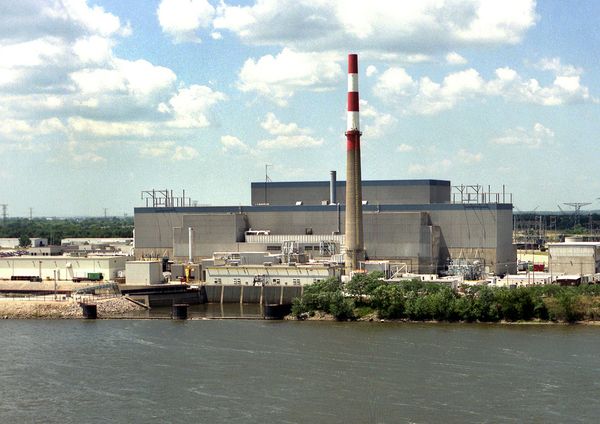
NAOKI ASANUMA, Nikkei staff writer, Tokyo 17 Mar 16, Five years after the devastating earthquake and tsunami that caused reactors to melt down at Tokyo Electric Power Co.’s Fukushima Daiichi power plant, Japan’s nuclear energy policy remains in disarray. On March 9, the Otsu District Court in Shiga Prefecture ordered Kansai Electric Power to halt the No. 3 and No. 4 reactors at its Takahama nuclear plant in Fukui Prefecture, after taking issue with the power company’s safety protocols regarding earthquakes and tsunamis. The order is the first of its kind suspending the operation of a reactor in service in Japan and has raised questions about who among the many stakeholders — utilities, the central government, local authorities, regulators, residents and courts — has the power to start or stop them.
The decision appeared to repudiate safety regulations born out of an exhaustive debate among experts, as well as inspections at the Takahama plant that lasted more than two years. Kansai Electric now assumes the strongest earthquake that could hit Takahama would produce a ground acceleration of 700 gal, or galileo units, up from its previous assessment of 550 gal. But that failed to satisfy the court, which held that investigations of active fault lines and other safety aspects were not thorough enough. The ruling also rejected the utility’s argument that it had taken tsunami risks under careful consideration.
Kansai Electric shut down the No. 3 reactor the day after the court order, leaving Japan with only two reactors in operation — the No. 1 and No. 2 units at Kyushu Electric Power’s Sendai plant, in Kagoshima Prefecture. The No. 4 reactor at Takahama was already shut down due to problems that occurred soon after it was reactivated in February.
Prior to the ruling, the restart of nuclear reactors had followed a formula of sorts: A power company receives the nod from the Nuclear Regulation Authority after examinations based on the regulator’s new safety standards. The central government then helps local governments of areas within a 30km radius of the plant prepare evacuation plans. After the local governments give their consent, the reactor is then fired up. The formula was upset, however, by 29 Shiga residents living outside the 30km radius, who asked the Otsu court for an injunction.
In handing down its ruling, the court said efforts by Kansai Electric and the Nuclear Regulation Authority to understand the causes of the Fukushima meltdown were insufficient.
“Japan has learned nothing from the Fukushima accident,” said Yotaro Hatamura, professor emeritus at the University of Tokyo, who served as chairman of a government-appointed committee to investigate the disaster. “The reactivation [of reactors] represents nothing but irresponsibility.”
While the Strategic Energy Plan worked out by the government in 2014 calls for reducing reliance on nuclear power “as much as possible,” it positions nuclear energy as an “important baseload power source.” But with lawsuits demanding the suspension of nuclear plants and petitions seeking provisional halts proliferating, a new question in the wake of the Otsu ruling is whether nuclear plants can serve that purpose, given that they may suddenly cease to operate.
The “best mix” of energy sources for 2030, projected by the government last year, puts the ratio of nuclear power at 20% to 22%. Former Economy, Trade and Industry Minister Yoichi Miyazawa said Japan “needs to operate some 35 reactors,” suggesting the difficulty of achieving the target. In a survey by The Nikkei, 60% of people said the reactivation of nuclear power plants should not be promoted.
At the Fukushima plant itself, officials cite progress with the cleanup work.
March 18, 2016
Posted by Christina Macpherson |
Japan, Legal |
Leave a comment
Pro-nuclear governments try to shield the nuclear operator from these risks, if possible. They protect the nuclear operator from lawsuits (reducing insurance costs). They guarantee debt (reducing interest
 costs). In the U.S. they tend to pass on unexpected (but prudently incurred) costs to the consumer.
That leads to our second point: these measures do not reduce risk, they just shift it. The risk never goes away. The government and consumer now bear part of it. But consumers do not take out nuclear risk policies with semi-annual payments. They do not see the cost so it doesn’t exist for them until the electricity bill goes up. In the same way, government can deny the costs of acting as an insurer of last resort because no line item appears in the budget to cover the costs until an accident happens (that’s the way a Congressional staffer explained it once at a meeting on the future of nuclear power).
 5 years after Fukushima: Nuclear power prospects dim http://www.usatoday.com/story/money/markets/2016/03/15/5-years-after-fukushima-nuclear-power-prospects-dim/81553524/ Leonard Hyman and William Tilles, Oilprice.com March 15, 2016 Five years after a devastating earthquake, tsunami and nuclear accident at Fukushima that killed thousands and displaced many more, the Japanese are still cleaning up, people still cannot return to their homes and, possibly the least important statistic, Tokyo Electric Power’s shares sell at one quarter of the pre-accident price.
Roughly five years ago, the British government and French utility EDF began a process to build another nuclear power plant at Hinkley Point, an investment still awaiting the approval of EDF’s board. As odd as it seems, the tragic disaster and botched business deal have a common thread (other than the fact that EDF shares sell at one-third of their 2011 price): the role of government in nuclear power. Continue reading →
March 18, 2016
Posted by Christina Macpherson |
politics, UK |
Leave a comment
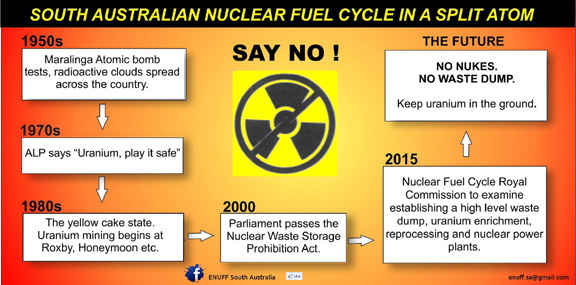
18 Mar 16 Traditional Owners and members of the Aboriginal-led Australian Nuclear Free Alliance (ANFA) have today reaffirmed their opposition to the suggestion that South Australia should host a high level international nuclear waste dump. This announcement comes as the submission period closes for comments on the tentative findings of South Australian Nuclear Fuel Cycle Royal Commission
A major recommendation of the Commission to date has been that South Australia could host an international waste storage and disposal facility. This suggestion is strongly rejected by Aboriginal people across the state because of the risks posed to country and culture. Several Aboriginal communities throughout South Australia live with the negative impacts of the nuclear industry through uranium mining and nuclear weapons testing and are committed to resisting any further nuclear proposals.
“We have long memories; we remember the atomic weapons tests at Maralinga and Emu Fields and the ongoing denial around the lost lives and health impacts for Aboriginal people. We don’t want any nuclear projects here in South Australia and we won’t become the world’s nuclear waste dump,” said Arabunna elder and Australian Nuclear Free Alliance president Kevin Buzzacott.
Enice Marsh, senior Adnyamathanha woman and Australian Nuclear Free Alliance member said:
“Any kind of radioactive waste dump would put our groundwater at risk. Groundwater is about survival; we don’t want to be faced with another huge risk like this.”
Sue Coleman-Haseldine is a Kokatha-Mula woman and co-chair of the Australian Nuclear Free Alliance. She has recently travelled to Vienna to share her family’s experience with the nuclear industry: “They’ve poisoned us once and there’s no way in the world they’re going to do it again.”
“This problem doesn’t stop at South Australia’s border, there is nowhere that should be designated an international waste dump,” Ms Coleman-Haseldine concluded.
March 18, 2016
Posted by Christina Macpherson |
AUSTRALIA, indigenous issues, wastes |
Leave a comment
http://news.yahoo.com/us-official-criticizes-e-asia-plans-nuclear-reprocessing-200240679.html By MATTHEW PENNINGTON, 18 Mar 16 WASHINGTON (AP) — A senior U.S. official has come out strongly against major powers in East Asia pursuing nuclear reprocessing that nonproliferation experts warn could lead to spiraling quantities of weapons-usable material in a tense region.
Assistant Secretary of State Thomas Countryman told a Senate Foreign Relations Committee hearing Thursday that the reprocessing of spent nuclear fuel “has little if any economic justification” and raises concerns about nuclear security and nonproliferation.
The committee’s chairman, Republican Sen. Bob Corker, accused the Obama administration of encouraging the production of plutonium, after it eased restrictions on civilian nuclear cooperation with China to allow the reprocessing of fuel from U.S.-designed reactors for nonmilitary purposes.
The U.S. has a similar arrangement with its close ally Japan. It has deferred a decision on giving similar consent to South Korea.
March 18, 2016
Posted by Christina Macpherson |
general |
Leave a comment
China’s Plans to Recycle Nuclear Fuel Raise Concerns U.S. energy secretary airs worries about proliferation risks ahead of nuclear-security summit WSJ, By BRIAN SPEGELE, 17 MAR 16, BEIJING—China’s plans to process spent nuclear fuel into plutonium that could be used in weapons is drawing concern from the U.S. that Beijing is heightening the risk of nuclear proliferation.
U.S. Energy Secretary Ernest Moniz, in Beijing for talks, said Thursday that China’s plans to build a nuclear-recycling facility present challenges to global efforts to control the spread of potentially dangerous materials……..
Mr. Moniz’s comments marked a rare public expression by the Obama administration of concern over China’s reprocessing plans. The differences, which the governments have discussed privately, are being aired ahead of a visit by President Xi Jinping to Washington this month for a summit with President Barack Obama and other world leaders on nuclear security.
The issue comes down to the different choices countries make over how to handle potentially dangerous waste created by commercial nuclear reactors. In the U.S., spent fuel is treated as sensitive material and is stored, and reprocessing is banned out of proliferation concerns.
Elsewhere, including in France and Japan, spent fuel is recycled to extract plutonium to be used in nuclear reactors. The U.S.’s concern is that the bigger the stockpiles of plutonium, the higher the risk that some of it could be refined for use in nuclear weapons or taken by terrorists……
U.S. concerns about nuclear reprocessing and proliferation are particularly acute in the Asia-Pacific region, “where the perception is there is less international cooperation, less transparency,” said Mark Hibbs, a nuclear expert at the Carnegie Endowment for International Peace………
larger Chinese stockpiles of isolated plutonium could prompt Japan, especially, to build up its caches.
Civilian plutonium stockpiles reached 271 metric tons by the end of 2014, up from around 150 metric tons in the 1990s, the International Panel on Fissile Materials, an independent group looking at nonproliferation policy, said in its latest annual report.
The official Xinhua News Agency reported in September that construction of China’s reprocessing facility may start in 2020 and take a decade to complete. The project is expected to have a processing capacity of 800 metric tons of spent fuel a year…..
Previously, the U.S. has questioned the economic viability of such projects, which are expensive to build and operate, as well as proliferation issues, Ernest Moniz said……
Mr. Hibbs from the Carnegie center said China’s decision to pursue reprocessing couldn’t be justified on economic or commercial grounds, given the billions of dollars needed to construct one large-scale facility. But China may be acting strategically, guaranteeing future fuel supply by recycling, he added.
Last June, state-owned China National Nuclear Corp. and France’sAreva SA agreed to speed up negotiations on building the facility. Areva didn’t respond to a request for comment on Mr. Moniz’s remarks and CNNC said its press officers weren’t available.
Write to Brian Spegele at brian.spegele@wsj.com http://www.wsj.com/articles/chinas-plans-to-recycle-nuclear-fuel-raise-concerns-1458228504
March 18, 2016
Posted by Christina Macpherson |
China, politics international, reprocessing, USA |
Leave a comment
Five Points On The Importance Of The Nuclear Security Summit , TPM, By5 PRIORITIES FOR GLOBAL NUCLEAR SECURITY, 17 MAR 16 On April 1, world leaders will gather in Washington, DC for the fourth and final Nuclear Security Summit, which concludes a pivotal process started by President Obama in 2010 to intensify global efforts to prevent nuclear terrorism. With the summits coming to a close along with Obama’s presidency, it could be a long time before the next international meeting of top leaders devoted solely to nuclear security.
Here are 5 reasons why the upcoming summit is so important.
Any unsecured nuclear material is a threat everywhereIn the wrong hands, even a little nuclear material could cause devastation anywhere on earth. A
simple nuclear bomb requires only 55 pounds of highly enriched uranium (HEU) or 18 pounds of plutonium—and roughly
3 million pounds of HEU and 1 million pounds of separated plutonium exist around the world. For plutonium, more is being made every year.
But bomb-grade materials aren’t the only danger. Any highly-radioactive material—the kind used in cancer treatment, energy exploration, and food safety around the world—could be spread by conventional explosives in a “dirty bomb,” causing widespread chaos. Alarmingly, due to often-weak security, these materials regularly go missing—and aren’t always recovered.
There aren’t any mandatory international standards for securing all nuclear materials
Under the current system, every country basically gets to make up its own rules for securing nuclear materials—and none of them have to tell anyone else what those rules are, or be held accountable for following them.
The nuclear security treaties that are in force are limited in scope and effectiveness. The Convention on the Physical Protection of Nuclear Material was written for a pre-9/11 world, and isn’t fully effective because a critical amendment to bring it up to date hasn’t yet been ratified by enough countries. And the International Convention for the Suppression of Acts of Nuclear Terrorism is about responding to terrorism—not preventing it.
The Nuclear Security Summits have been important but inadequate……….
Experts agree on what we need to do next……..We need to demand that our leaders act…….. http://talkingpointsmemo.com/fivepoints/five-points-importance-nuclear-security-summit
March 18, 2016
Posted by Christina Macpherson |
general |
Leave a comment
 Resignation of EDF finance chief shows new UK nuclear plant ‘a dead duck’ By Molly Scott Cato | EurActiv.com, 16 Mar 16, Five years on from the Fukushima, the human and environmental impacts of the disaster continue to grow in scale, writes UK Green MEP Molly Scott-Cato.
Molly Scott-Cato is an MEP for South-West England and Gibraltar, whose constiutency covers the Hinkley Point nuclear reactor.
This is a key reason why I am fighting so hard to prevent the new reactors at Hinkley point in Somerset from being built.
Nuclear-power is not commercial; it cannot survive without government subsidy and never has been able to during the 60 years of its existence. That in itself should be enough to close the question of whether we wish to build new nuclear power stations in Europe. But somehow the commercially unviable deal to build at Hinkley has slipped between the scrutiny of commercial and political interests, and between the political authorities at Westminster and in Brussels. It is extraordinary that such a shaky deal could have got so far and endured for so long as it was never going to survive in a commercial market.
For me one of the most shocking aspects of the deal was how little concern was raised by UK politicians. We are talking about a deal that involves two Chinese nuclear companies that are ultimately under the control of the Chinese Communist Party gaining access to our civilian nuclear industry. I am astonished that Conservative MPs are prepared to countenance such a risk to our national security. And this is to say nothing of the risk of suicide terrorism which we are left open to when nuclear stations are operational anywhere in the country.
Commercially the Hinkley deal has been a dead duck for some time. ………
The issue of most concern in this whole sorry saga is the total absence of genuine political scrutiny. Most UK MPs only seem to have woken up and taken any interest about a week before the deal was signed off last autumn. Cameron and Osborne have been operating as though in a legal vacuum. The British media has paid no attention to the rules of the single market and my continual efforts to interest them in the issue of state aid have failed……..https://www.euractiv.com/section/climate-environment/opinion/resignation-of-edf-finance-chief-shows-uk-new-nuclear-plant-a-dead-duck/
March 18, 2016
Posted by Christina Macpherson |
general |
Leave a comment
A high-level nuclear waste dump for South Australia: The big questions
Conservation Council South Australia 18 Mar 16
Once we make it, there is no going back. So, we are not just making the decision for ourselves, but for thousands of generations of future South Australians.
Is this the best we can do?
What message are we sending the world if we say: ‘the best that SA can do is take the worst that you’ve got’. Is our destiny to be the end point of a dirty chain – the last carriage at the end of the line?
Or should we be looking for economic opportunities that make our state cleaner, safer and deliver more jobs and opportunities for our children.
Surely if we have a choice, our collective vision for our state is not to be the dumping ground for some of the world’s most toxic substances. South Australia has a tremendous history of innovation and a great reputation for clean and green food, wine and tourism Surely we can do better.
If it is such a money-spinner and can be done safely, why aren’t other countries eager to do this?
Either it won’t be an economic bonanza, or the job of storing this waste is a hell of a lot harder than we’ve been told. Otherwise, why aren’t other countries putting up their hand to do this? Something just doesn’t add up.
Is there any rush?
No. This stuff isn’t going away, and no other country is rushing to take it. If it’s the right decision now, it will still be the right decision in 15 or 20 years’ time. By then, safer solutions may have emerged. By taking our time, we aren’t risking our economy – any income or jobs are years away, and so much is likely to change in the meantime.
Surely, we all have to agree to this?
Absolutely! This decision will affect every single South Australian. Our international reputation – our story of who we are – will change forever.
This must not be a decision made just by a handful of politicians on North Terrace. All South Australians have the right to be actively engaged. That takes time and care to get right.
In particular, the Traditional Owners of any likely dump site in the north of our state must be given the genuine opportunity, and the necessary time and space, to say yes or no.
So, what’s the solution to the world’s high level nuclear waste stockpiles?
A number of countries are working on high level waste storage facilities for their own waste (such as Finland), but they are still being built, so we don’t know yet if they will work. The US currently doesn’t have a solution. In the meantime, waste is being temporarily stored next to nuclear reactors in wet ponds, and temporary dry casks.
For years, there have been claims by the nuclear industry that a safe solution to radioactive waste is just around the corner.
Rather than import toxic waste into a part of the globe that doesn’t currently have any − in order to bury it in the ground and hope it stays safe for tens of thousand of years − shouldn’t there be a requirement placed on those that profit from nuclear power and nuclear weapons to invest in processing their waste into cleaner forms for permanent disposal first?
March 18, 2016
Posted by Christina Macpherson |
general |
Leave a comment
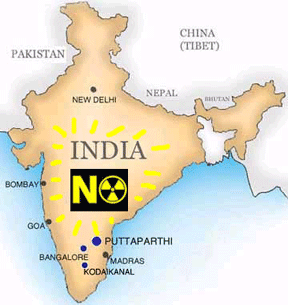
 Stop building nuclear plants: CPI-M http://www.oneindia.com/india/stop-building-nuclear-plants-cpi-m-2044121.html, March 17, 2016 New Delhi, : The leakage of heavy water in the Kakrapar Atomic Power Station (KAPS) in Gujarat must impel the government to stop building new nuclear projects in the country, the CPI-M has said. “The harmful policy of importing nuclear reactors and diluting the liability law to facilitate the foreign nuclear companies must (also) be reversed,” CPI-M journal People’s Democracy said in an editorial.
“There has to be a comprehensive safety audit of the nuclear plants in the country,” the editorial said. “There has to be an independent nuclear regulatory authority without which there can be no credible safety and risk assessment of the nuclear power plants,” it added. The Communist Party of India-Marxist said the leakage of heavy water in unit one of the KAPS-1 had again raised fears about the safety and reliability of the nuclear power plants in the country. “As per the sketchy reports emanating, there was a moderately large leakage of heavy water in Kakrapar on March 11.
“The power plant has been shut down and inspection is on by the scientists from the Atomic Energy Regulatory Board (AERB) to assess the nature and seriousness of the accident and to ensure that the safety of the plant is assured.” The editorial said even the newly constructed power plants were also affected by leaks, and cited the example of the Kudankulam plant in Tamil Nadu. “The problems plaguing the plant are being attributed to the supply of some sub-standard equipment by the Russian company. Thus the safety fears raised by the local people at the time of the construction of Kudankulam appear fully justified,” it said.
March 18, 2016
Posted by Christina Macpherson |
politics |
Leave a comment
 SA nuclear build plan requires a close study, IOL BUSINESS/OPINION/COLUMNISTS /17 March 2016By: Pierre Heistein Should South Africa build more nuclear power plants?…….. These are seven key areas that need to be assessed.
First, construction time. South Africa is in desperate need of extra electricity generation capacity and the proposed nuclear projects plan to add 9 600 megawatts to the grid. But how long will it take to get this online? On average, nuclear reactors take about 10 to 15 years to build, although nuclear construction worldwide is notorious for being behind schedule……
Second, construction cost. Due to the lack of transparency in the negotiation about South Africa’s proposed nuclear construction it is hard to put an exact number on what it might cost. Dr Kelvin Kemm – the new chairperson of the SA Nuclear Energy Corporation – says that the scientists estimate that total cost will be about R650 billion. Most other estimates place it at more than R1 trillion. To put that in perspective, the government’s revenue target for 2016/17 is R1.3trln. Is this the cheapest way that South Africa can meet its energy requirements?
It is not only the cost that needs to be considered but also the consequences of the cost. If the money needs to be borrowed, how long will it take to pay back and how will this additional debt affect our credit rating and ability to borrow for other projects? If the project is funded by external parties, what trade and political conditions will be attached to these deals?
Third, the cost of energy generation. This is nuclear’s saving grace – relative to other methods its production of electricity per unit is cheap once the plant is built. Will this still be the case in 15 to 20 years?
Fourth, waste and disposal consequences. Nobody has yet figured out a way to produce nuclear energy without producing radioactive waste. This waste needs to be stored for 200 to 1 000 years before humans and other life can safely be exposed to it.
Fifth, decommission costs. Nuclear reactors have a lifespan of 40 to 80 years and thereafter need to be removed and replaced……
Sixth, transparency and corruption. As the government has shown, the majority of negotiations necessary in mega-infrastructure projects can take place behind closed doors without public consultation.
Megaprojects also typically work with few suppliers and include fewer and more lucrative trade deals. Compare this to the more transparent and decentralised process behind the independent power producers procurement programme used for smaller energy projects and it is easy to see that megaprojects are more vulnerable to corruption and theft of investment funding.
Seventh, disaster risk. Even if measures could be put in place to eliminate the chance of human error, technological failure and the risk of terror attacks, there is no way that constructors can guarantee that reactors will be safe from natural disasters. While terror attacks and natural disasters may not feel familiar in South Africa’s current climate, the nuclear reactors will exist for almost a century of change.
If nuclear is our best option then we have to be consulted and convinced on all accounts because it is the South African people that will carry the consequences if it’s not. http://www.iol.co.za/business/opinion/columnists/sa-nuclear-build-plan-requires-a-close-study-1998735
March 18, 2016
Posted by Christina Macpherson |
general |
Leave a comment
STV News Kaye Nicolson, 17 Mar 16 Workers act after problem with valve in Reactor Two at Torness in East Lothian.A reactor has been shut down at the Torness nuclear power plant due to a problem with a valve.
March 18, 2016
Posted by Christina Macpherson |
general |
Leave a comment
The outcome of this Tepco’s investigating Tepco will be for sure just another “We are very sorry” accompanied by three deep bows down the road…

A third party investigative panel set up by Tokyo Electric Power Co. held its first meeting Thursday to examine how the utility reached its conclusion on meltdowns at its Fukushima plant in the 2011 nuclear crisis after the company admitted recently it could have made an judgment sooner than it did.

“Local people in Fukushima are still having a difficult time even five years after the accident,” Yasuhisa Tanaka, a lawyer and chairman of the panel, said ahead of the meeting. He is also former chief justice of the Sendai High Court.
“As it has been pointed out that Tokyo Electric didn’t provide enough information, we have to address various issues including how information should be provided.”
The three-member panel, including two other lawyers, was established after TEPCO said last month it failed to use its internal operation manual that contains criteria for judging core meltdowns after a massive earthquake and tsunami struck its Fukushima Daiichi nuclear plant on March 11, 2011.
TEPCO could have determined that nuclear core meltdowns occurred at the plant three days after the complex was crippled, based on the manual that defines meltdowns as damage to more than 5 percent of a reactor core.
But the utility initially just said reactors cores had been damaged and did not acknowledge the meltdowns until May 2011, even as analysis of the plant’s situation showed some reactors had damage to more than 5 percent of their reactor cores as of March 14 that year.
Early in the crisis, the company said there was no basis to determine reactor core meltdowns.
Later analysis found that the No. 3 unit had damage to 30 percent of its reactor core and that 55 percent of the No. 1 reactor’s core was damaged, both as of March 14, 2011.
TEPCO said in late February this year that it discovered the manual while investigating how it responded to the Fukushima disaster at the request of Niigata Prefecture. The power company aims to restart a nuclear power plant in the prefecture.
Earlier this month, TEPCO President Naomi Hirose offered an apology over the revelation that the company underestimated the severity of the accident at a meeting of the House of Councillors Budget Committee.
“There are various questions such as why (the company) wasn’t able to use the manual and why it took so long to discover it. We hope (the panel) will conduct strict investigations and we will take measures” based on the outcome, Hirose said Thursday prior to the meeting.
TEPCO will disclose the outcome of discussions at the panel as soon as they are concluded.
http://kyodonews.net/news/2016/03/17/53605
March 17, 2016
Posted by dunrenard |
Fukushima 2016 | Disaster, Fukushima Daiichi, Tepco Negligence |
Leave a comment
A vice foreign minister apologized after an exhibition in Ethiopia about the Fukushima nuclear disaster was scrapped following complaints from the Japanese Embassy that the content was “inappropriate.”
The exhibition, planned by volunteers of the Japan International Cooperation Agency (JICA), was supposed to be part of the Japan Festival held in the Ethiopian capital of Addis Ababa on Oct. 31, 2015.
The festival, jointly hosted by the Japanese Embassy, JICA and other entities to promote a better understanding of Japan, went off as scheduled in the east African nation. But the exhibition about the accident at the Fukushima No. 1 nuclear power plant was called off after the embassy warned that it might withdraw its participation in the event.
Vice Foreign Minister Seiji Kihara on March 16 apologized for having completely shut the door on the Fukushima exhibition.
“It is important to make known the actual situation in the disaster-hit areas, including Fukushima, so we should have continued our discussions with the aim of holding the exhibition,” Kihara said at a meeting of the Lower House Committee on Foreign Affairs.
JICA’s volunteers, including members of the Japan Overseas Cooperation Volunteers, conceived the idea for the Fukushima exhibition.
An official of the Japanese Embassy, however, criticized the content, telling the volunteers, “It is inappropriate at a time when the central government is working hard to dispel groundless rumors regarding the disaster.”
JICA also said it received an e-mail from the embassy that said, “If the exhibition is one that runs counter to the policies of the central government, such as by taking an ‘anti-nuclear’ stance, it would be difficult for us to jointly host the event.”
After the e-mail was received, JICA’s local office agreed to cancel the exhibition, JICA said.
http://ajw.asahi.com/article/behind_news/social_affairs/AJ201603170035
March 17, 2016
Posted by dunrenard |
Fukushima 2016 | Cover-up, Disaster, Fukushima continuing, Fukushima Daiichi, Groundless Rumors, Japanese Government |
Leave a comment
 GreenWorld
 Exelon again threatens to close its aging, uneconomic, Fukushima-clone Quad Cities reactors–a threat that would be better as a promise.
With the failure of last decade’s nuclear “renaissance” leading to dismal prospects for expansion, and rising operating costs–including modest and insufficient post-Fukushima improvements–making a large number of existing reactors uneconomic in the deregulated marketplace, the nuclear power industry over the past couple of years has focused on its sheer survival. This means bailouts in one form or another.
This isn’t a surprise to regular readers of GreenWorld, as we’ve chronicled the increasingly desperate efforts by utilities like Exelon and FirstEnergy to obtain taxpayer and/or ratepayer bailouts of aging, dangerous and uneconomic reactors like Quad Cities and Davis-Besse.
Typically, the utilities threaten to close reactors if they don’t get what they want, which could lead to job losses and drops in tax revenues. In reality, state legislators and regulators should look…
View original post 813 more words
March 17, 2016
Posted by Christina Macpherson |
Uncategorized |
Leave a comment
 geoharvey
Science and Technology:
¶ Nearly a quarter of all deaths around the world are caused by living and working in toxic and polluted environments, and the worst affected are children, the poor, and the elderly, according to a new report released by the World Health Organization (WHO). [CommonDreams]
 A child scavenges for coal scraps in a slum in Manila.
(Photo: Adam Cohn / flickr / cc.)
¶ NOAA’s Mauna Loa Observatory in Hawaii reported a spike in CO2 levels this week, 3.05 ppm, which was the largest year-to-year increase ever observed in the 56 years of recording and research done at the station. It was the fourth consecutive year that CO2 grew more than 2 ppm. [CleanTechnica]
World:
¶ Ontario’s Independent Electricity System Operator awarded around 140 MW of new solar energy project contracts at a weighted average price of CAN$0.1567/kWh (US$0.12/kWh). The solar energy allocation…
View original post 665 more words
March 17, 2016
Posted by Christina Macpherson |
Uncategorized |
Leave a comment









 nuclear-news