Thyroid Cancer Detection by Ultrasound Among Residents Ages 18 Years and Younger in Fukushima, Japan: 2011 to 2014
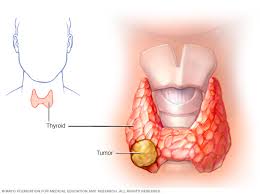
Background: After the Great East Japan Earthquake and Tsunami in March 2011, radioactive elements were released from the Fukushima Daiichi Nuclear Power Plant. Based on prior knowledge, concern emerged about whether an increased incidence of thyroid cancer among exposed residents would occur as a result.
Methods: After the release, Fukushima Prefecture performed ultrasound thyroid screening on all residents ages ≤18 years. The first round of screening included 298,577 examinees, and a second round began in April 2014. We analyzed the prefecture results from the first and second round up to December 31, 2014, in comparison with the Japanese annual incidence and the incidence within a reference area in Fukushima Prefecture.
Results: The highest incidence rate ratio, using a latency period of 4 years, was observed in the central middle district of the prefecture compared with the Japanese annual incidence (incidence rate ratio = 50; 95% confidence interval [CI] = 25, 90). The prevalence of thyroid cancer was 605 per million examinees (95% CI = 302, 1,082) and the prevalence odds ratio compared with the reference district in Fukushima Prefecture was 2.6 (95% CI = 0.99, 7.0). In the second screening round, even under the assumption that the rest of examinees were disease free, an incidence rate ratio of 12 has already been observed (95% CI = 5.1, 23).
Conclusions: An excess of thyroid cancer has been detected by ultrasound among children and adolescents in Fukushima Prefecture within 4 years of the release, and is unlikely to be explained by a screening surge.
New Study Points to Measurable and Significant Increase in Incidents of Thyroid Cancer

Doubt cast on prefecture after boy’s cancer diagnosis confirmed

A group supporting child cancer sufferers in Fukushima on Friday confirmed the diagnosis of a boy who at the time of the 2011 disaster was just four years old, contradicting the local government’s position that no child of that age has been diagnosed with thyroid cancer.
The boy was diagnosed with cancer and underwent surgery after taking part in a Fukushima prefectural government survey to gauge the impact of the disaster. Local authorities, however, claim at the time of the survey he had not yet been officially confirmed as suffering thyroid cancer.
The survey found that of the 385,000 people aged 18 or younger at the time of the disaster, a total of 184 youths aged between 5 and 18 have been diagnosed with or are suspected to have thyroid cancer.
Follow Up on Thyroid Cancer! Patient Group Voices Opposition to Scaling Down the Fukushima Prefectural Health Survey¹
By Aihara Hiroko, Translation by Miyamoto Yuki, Introduction by Eiichiro Ochiai
INTRODUCTION
More than five years have elapsed since the great earthquake and the accompanying huge tsunami (on 3.11 of 2011), and its subsequent disaster at the Fukushima Dai-ichi Nuclear Power Plant of the Tokyo Electric Power Co. Three nuclear reactors there underwent explosions and another, though without explosion, was highly damaged. A large amount of radioactive material has been and is still being released as a result of the accidents.
Aside from the very difficult issues of how to deal with the melted nuclear fuel rods and with the increasing amount of contaminated water, people all over Japan, particularly those in Fukushima prefecture, are concerned with the effects of radiation on human health from the released radioactive material.
One disease, childhood thyroid cancer, has been recognized even by the authorities including the International Atomic Energy Agency (IAEA) and International Commission of Radiation Protection (ICRP), as the result of radiation released by the 1986 Chernobyl disaster in today’s Ukraine. Hence Fukushima Prefecture initiated a health survey of Fukushima citizens, including evacuees, that included scanning for thyroid abnormalities of all children under age 18 at the time of the accidents. It turned out that a large number of children have contracted thyroid cancers over the last five years: 172 out of ca. 380,000 children by the end of 2015. The majority of them have undergone surgery, and many have been found to have metastasized. This number , and the annual rate per 1,000,000, ca 90, is unusually high, compared with the rate 1 to 3 per 1,000,000 under normal circumstances.
The Fukushima prefectural government and the organization charged with conducting the examination are trying to rationalize the results in many ways, without invoking the radiation impact of the reactor meltdowns. If this is indeed unrelated to the radiation from the damaged Fukushima Nuclear Power Plants, a similarly high rate of thyroid cancer should be found all over Japan. The survey should be expanded in order to see whether that is indeed the case. In fact, however, as Aihara Hiroko details, the authorities are interested in scaling down the survey in Fukushima itself. They argue, curiously, that the results are causing anxiety and therefore are an example of “reputational damage,” an interpretation that excludes the possibility of actual harm to health and agricultural produce and other commercial activity. Moreover, they throw out the distraction of the need to respect individual choice, that is, the right of families to refuse screening. It is difficult to understand their reasoning as anything other than an expression of their wish to leave ambiguous the cause of rising rates of thyroid cancer. Thyroid cancer seems to be increasing even among adults. Indeed, Aihara’s article introduces the case of an adult patient, a rare case in which an individual is willing to be identified by name, given the degree of social anxiety generated by the fear of discrimination in Japan.
Thyroid cancer is only one of many health problems observed in the atomic bomb victims and the people affected by the Chernobyl disaster. Indeed, there are indications that many diseases including leukemia and heart diseases are increasing after the Fukushima accident all over Japan (Ochiai, 2015). Radiation is basically incompatible with life, indeed, everything on this earth (Ochiai, 2013). This fact needs to be recognized by the human race. No activity that releases radioactive materials in large quantities, whether for military use or power generation, should be allowed.
Ochiai, 2013: “Hiroshima to Fukushima: Biohazards of Radiation” (Springer Verlag Heidelberg, 2013)
Ochiai, 2015: “The Human Consequences of the Fukushima Daiichi Nuclear Power Plant Accident”
Follow Up on Thyroid Cancer! Patient Group Voices Opposition to Scaling Down the Fukushima Prefectural Health Survey2
The total cost of the damage caused by the Fukushima Daiichi nuclear power plant accident is estimated at thirteen trillion yen. Yet, health damage is hard to see, and even when problems become evident, many of them are neglected. One of the most worrisome of these is thyroid cancer. Five years have passed since the accident of 2011, the threshold year when thyroid cancer began to increase after Chernobyl, according to experts such as Yamashita Shun’ichi, known as the “authority on the health risks of radiation exposure.” Here we try to grasp what is happening on the ground.
“Although getting a checkup was a financial strain and time consuming, I am trying to view the experience positively as my cancer was detected at an early stage. If treatment had been delayed, the probability of the cancer spreading was quite high.”
So says Watanabe Norio, a high school teacher in Fukushima Prefecture who had thyroid cancer surgery in 2015. It was in the summer of 2013, when he and his family had their thyroids checked at a private clinic, that a tumor was discovered. The initial diagnosis was that the tumor was benign but called for observation. After a year, the tumor had grown bigger. Watanabe went to a larger hospital where his tumor was diagnosed, this time, as cancerous, and one side of his thyroid gland was removed.
Once Watanabe was discharged from the hospital, several of his current and former students, who happened to learn about his surgery, came to ask him personally about group thyroid screening: what to expect, the nature of the examination and treatment, and his hospitalization experience. All of them suffered from thyroid problems after the Fukushima nuclear accident.

Self-portrait of Mr. Watanabe in the hospital. Photo by Watanabe Norio
Among them, one had been diagnosed with a primary thyroid cancer with an uncomplicated convalescence and favorable prognosis; another was diagnosed with papillary thyroid cancer. One had thyroid cancer surgery; another stopped going to school, unable to talk to anyone about the surgery. One was shocked by the scar on the neck left by the surgery, while another could not speak of the surgery even to extended family. People react to their illnesses differently: on the one hand, we know people who are leading “normal” lives after the surgery; on the other, there are those who, fearful of discrimination and prejudice, have no one to talk to.
Watanabe recalls that during his hospitalization, a nurse told him that there were a considerable number of people hospitalized for thyroid cancer surgery. Even as an adult, he found the hospital stay and cancer treatment difficult to deal with financially, physically and emotionally. It was an experience that inevitably affected his whole family. Every time Watanabe hears doctors talk optimistically about the “favorable prognosis of thyroid cancer relative to other cancers” in the context of the Prefectural Health Survey conducted by Fukushima Prefecture, he feels put off, as if they were making light of his illness.
What to Expect after the Dissolution of the Reconstruction Agency?
As part of the Prefectural Health Survey, Fukushima Prefecture has conducted checkups on the thyroid glands of children who were under eighteen years old at the time of the accident. Among the 370,000 examined, 172 minors have been diagnosed with thyroid cancer or suspected thyroid cancer. 131 have already had their thyroids removed.
The Fukushima Prefectural Oversight Committee of the Prefectural Health Survey (hereafter “Oversight Committee”) holds that it is “unlikely” that these cases are related to radiation exposure from the accident in 2011, but the residents’ anxiety continues to mount over the abnormally high rate of cancer in children. Doctor Yamashita Shun’ichi,3 the “authority on radiation exposure risk,” estimates the dormant period of thyroid cancer to be four to five years, based upon the Chernobyl nuclear accident (though some argue that an increase in thyroid cancer was observed two to three years after the accident), which suggests that there may be a precipitous rise in rates in the near future.
It is precisely at this moment that plans to reevaluate the thyroid examination program, including the possibility of scaling back, surfaced.4 The rationale is that the screening is “disadvantageous for the children of Fukushima.”
After the nuclear accident, Fukushima Prefecture embarked on the Prefectural Health Management Survey of May 2011 to study the impact of radiation on health and managing resident health. The task was consigned to Fukushima Medical University. It entails a “basic survey” in which all citizens of the prefecture (including mandatory and voluntary evacuees) are queried about their daily activities following the accident in order to estimate their level of external exposure; “thyroid examinations” targeting 370,000 children who were eighteen or younger at the time of the accident; an “internal exposure examination using whole body counters,” which measure the internal exposure dose; a “medical examination” providing a general checkup, including measuring leukocyte counts5 and a “survey on mental health and daily habits” of the residents of evacuation zones; and a “questionnaire for expectant and nursing mothers” who have maternity passbooks.6
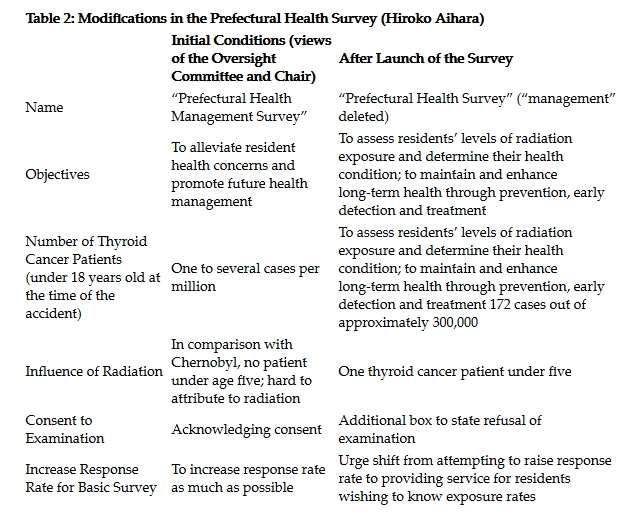
Since the establishment of the Survey, however, problems have emerged one after another. For example, in the fall of 2012, it turned out that the Oversight Committee held a “secret meeting,” inviting the members to conform to an interpretation of the Survey results that concludes that a newly discovered thyroid cancer case has no causal relation with the Fukushima nuclear accident. When this secret meeting was made public, Murata Fumio, then vice governor, apologized for it before the prefectural assembly.7 The Committee also received complaints about the term “management” in the title of the Survey, as it suggested that the Survey could lead to the “management/control” of citizens. The Oversight Committee subsequently removed “management” from the Survey name [in 2014, the Survey was renamed the Prefectural Health Survey].
The Prefectural Health Survey (hereafter “Survey”) is administered independently by Fukushima Prefecture. It is to be distinguished from the medical examinations and special health checkups mandated at businesses and schools. Under the supervision of the central government’s Reconstruction Agency, the Act on Special Measures for Fukushima Reconstruction and Revitalization8 stipulates the content of the Survey and provides budgetary assistance. An enormous sum of public funds and funds related to reconstruction poured into the reserves of the Prefectural Health Management Fund for these activities. As of the beginning of fiscal year 2015, the amount in this Fund was approximately 135 billion yen. However, 55.7 billion of that 135 billion has already been spent, and the current balance is estimated to be 76 billion. Although Fukushima Prefecture claims that the national government has pledged to continue to fund the Survey, the Reconstruction Agency itself is scheduled to be dissolved in 2020, and the Fund to be discontinued in 2040. While the prefecture promises “life-long examinations,” with funding and other issues unresolved, continuationof the practice is up in the air.
A New Form of “Reputational Damage” (Fūhyō higai)?
The discussion about “reevaluation/scaling down” began on July 3, 2016 when the Fukushima Pediatric Association (hereafter “Pediatric Association”) adopted a statement at its general assembly, which it submitted to Fukushima Prefecture in the form of a petition on August 25. The statement reads, “[regarding the result of the Prefectural Health Survey] at this stage, it is difficult to make a scientific and objective assessment of the multiple cases reported [of thyroid cancer]. Yet we observe health concerns and anxieties spreading among not only the youth targeted for this examination and their parents but among prefectural residents in general.” Here, the Survey reports are identified as the cause of resident anxiety.
“From the standpoint of alleviating such anxiety,” reads the statement, “current practice regarding thyroid examination as well as subsequent medical treatment and care should be reconsidered in part.” Additionally, the statement announces the launching of a new and independent review committee by the Pediatric Association.
On July 4, Fukushima Min’yū, a local newspaper, first reported the Pediatric Association’s statement under the following headline: “Calling for reconsideration of ‘thyroid examinations,’ Fukushima Pediatric Association to establish independent committee.” About a month later, on August 8, Min’yū ran another article, entitled “Discussion to reconsider thyroid examination; Oversight Committee may reduce scope,” introducing the views of Hoshi Hokuto, chair of the Oversight Committee, and Ōga Kazuhiro, president of the Pediatric Association.
In the article, both Hoshi and Ōga endorse the idea of restructuring the thyroid examinations, despite the fact that the risk of exposure following the nuclear accident remains high in Fukushima. Moreover, neither refers to the importance of early detection and prevention of cancer among children.
“There is little merit to early detection of a cancer that progresses slowly and has a favorable prognosis,” Ōga declares. “Conducting the screening is itself provoking anxiety.” He continues, “Reports of multiple cancer cases can lead to reputational damage, which might disadvantage not only the children but all residents of Fukushima.” It is his personal opinion that “The choice not to take the examination should be respected, and the current practice, in which examinations are conducted in semi-compulsory fashion at schools and kindergartens needs to be corrected. Instead, we should establish a system restricted to those who wish to be screened.”
Showing his respect for Ōga’s opinion, Hoshi states that, “At the very least, we cannot willfully charge ahead with the current form of examination.”
No Expansion in Scope or Substance
Let us now turn to the prefectural take on this issue—the very agent of the examinations.
Ide Takatoshi, director of the health and welfare division, received the petition from the Fukushima Pediatric Association, represented by Ōga, on August 25. In response to my query, Ide stated, “We would like to await the discussions that will take place at an Oversight Committee meeting and an international conference to be held in September in Fukushima.” The 24th Oversight Committee meeting was scheduled to take place on September 14, and Ide did not deny the possibility that the meeting might spark a discussion for scaling down the thyroid screenings (As for the result, please see note 3).
In fact, however, even before the Pediatric Association petition, the Prefecture had already taken steps to prepare for the possibility of decreasing the pool of examinees.
One of these can be seen in the change in the consent form distributed at the second round of full-scale examinations that began in fiscal year 2015. Whereas earlier forms simply had a “consent” box to be checked off, the new form had a new “do not consent” box.
This addition may suggest the desire of the prefecture to respect the will of individuals who do not wish to take the examination. Given, however, the clearly noninvasive technology of ultrasound examination of the thyroid, and the importance from the standpoint of preventive medicine of protecting children’s health through early detection and treatment, does this shift—which proactively identifies children who will not be examined and removes them from the process—not strike at the heart of the principle of “fairness and uniformity” underlying this taxpayer-supported project? This change gives rise to another question, as to whether the prefecture has fully explained the possible consequences of delayed cancer detection. Adding the choice to opt out, I worry, is a means for gathering concrete numbers of those who are not interested, which in turn, might be used to provide “a rationale for scaling down the examinations.”

On August 25: representatives of the Fukushima Pediatric Association submitting a petition to Fukushima Prefecture, asking for reevaluation/scaling-down of thyroid examinations.
With these questions in mind, I had an opportunity to ask Ōga and Hoshi about the motivation behind their statements. Both Ōga and Hoshi said “the newspapers exaggerated,” and denied a part of their statements as cited in the media. Ōga claims, “There was too much personal opinion in my interview article, which wasn’t great. What the Pediatric Association is asking for is not to cut back on the examination, but to revise a part of its procedure. The current thyroid screening practice turns up more and more latent cancer cases, which almost all medical doctors ‘believe have no association with radiation exposure.’” In response to my question on revision of the procedure, Ōga replied, “We will discuss the best procedure to be implemented in our review committee.” But he also made clear that “neither expansion of the examination nor enhancement of its content” would be on the table.
In contrast, Hoshi remained ambiguous: “The Pediatric Association’s petition is one of many opinions. We will continue to discuss the matter, including maintaining the current practice as an option.”
The Disadvantages of Screening?
“Excessive screening? Preposterous. I am quite concerned about the discussion of possible scaling down. I asked the prefectural staff what disadvantages could be expected, with respect to protecting residents and patients. They only said, ‘That’s what the experts say,’ and failed to provide any concrete explanations. They ought to be seriously thinking about what disadvantages there are to be eliminated, and what advantages are to be protected.”
Such is the strong protest expressed by lawyer Kawai Hiroyuki, founding member and co-organizer of the “3/11 Thyroid Cancer Family Association” (hereafter “Family Association”), at a press conference held at the prefectural hall press club after submitting a petition on behalf of the Family Association to Fukushima Prefecture on August 23.9

On August 23: lawyer Kawai Hiroyuki and co-organizers of the “3/11 Thyroid Cancer Family Association” holding a press conference pleading for expansion of the scope and substance of thyroid examinations.
Dentist Takemoto Yasushi, vice-representative of the Family Association, followed up with this appeal: “Some may think that it is the growing frequency of diagnosis that is causing anxiety, but discontinuing the examination would cause anxiety. True relief would come from enhancing the examination and follow-up treatment.”

Shadow of Mr. Watanabe.
Medical doctor and another Family Association facilitator, Ushiyama Motomi, added, “It was just at the five-year point after Chernobyl that cancer cases started increasing. There is so much that we don’t know yet. Given the fact that so many cancer patients were found after the second-round full-scale examination, scaling down the screenings will not benefit residents. Without providing sufficient and appropriate information to patients, it is problematic to leave individuals to decide on their own whether to take part in the examination.”
On September 1,124 groups—domestic and international—jointly submitted a petition to the prefecture. They demand that the prefecture maintain the current practice and further broaden the pool in order to gain an accurate grasp of the situation; to elucidate the causal relationship between cancer and radiation exposure; and to reexamine the appropriateness of the surgeries performed upon 131 patients.10
Watanabe, the high school teacher introduced at the beginning of this article who had his thyroid removed, reflects, “We Fukushima residents have fears about health problems cropping up in the future. Especially for the young generation, continued screening and examination are indispensable. Even adults should have regular checkups.”
For the second-round full-scale examination, there is no compensation for parents who miss work to accompany their children, and transportation is also out of pocket. The Family Association receives complaints about a system that fails to provide for accessible examination and treatment.
Continued vigilance is necessary to ensure that the prefecture not scale back the screening and examination program in response to pressures from one set of doctors and organizations while ignoring the voices of all residents as well as patients.

This article originally appeared in Shukan Kinyobi, no. 1103, Sept. 9, 2016.
It was Norma Field who suggested a contribution from Eiichiro Ochiai as a preface to this article. Without her generous help, recommendations and suggestions, this article would not be made available in English, and in fact, it would be more appropriate to name her as a co-translator. Having said that, however, should any mistakes and factual errors be found in this article, it would fall under the responsibility of myself.
Related Articles
Eiichiro Ochiai, The Human Consequences of the Fukushima Dai-ichi Nuclear Power Plant Accidents
Eiichiro Ochiai, The Manga “Oishinbo” Controversy: Radiation and Nose Bleeding in the Wake of 3.11
Nakasatomi Hiroshi, After Nuclear Disaster: The decision-making of Fukushima University authorities, the threat to democratic governance and countermovement actions
Kyle Cleveland, Mobilizing Nuclear Bias: The Fukushima Nuclear Crisis and the Politics of Uncertainty
David McNeill, Japanese Government Squelching Efforts to Measure Fukushima Meltdown
Yasuhito Abe, Safecast or the Production of Collective Intelligence on Radiation Risks after 3.11
Adam Broinowski, Fukushima: Life and the Transnationality of Radioactive Contamination
Paul Jobin, The Roadmap for Fukushima Daiichi and the Sacrifice of Japan’s Clean-up Workers
Anders Pape Møller and Timothy A. Mousseau, Uncomfortable Questions in the Wake of Nuclear Accidents at Fukushima and Chernobyl
Notes
The website of the Fukushima prefectural government translates Fukushima kenmin kenkō chōsa as the “Residents’ Health Survey,” but in this article, I will employ the term “Prefectural Health Survey”. See here. [All footnotes are by the translator].
The website of the Fukushima prefectural government translates Fukushima kenmin kenkō chōsa as the “Residents’ Health Survey,” but in this article, I will employ the term “Prefectural Health Survey”. See here.
Yamashita was a Nagasaki-born second-generation hibakusha. After working at the Nagasaki University School of Medicine, he visited Chernobyl in 1991 in order to conduct research on children suffering from thyroid cancer. Since then, he has visited Chernobyl over a hundred times. In light of his experience in Chernobyl, shortly following the meltdown of nuclear reactors in Fukushima in 2011, Yamashita was invited to serve as a radiation risk management adviser to Fukushima Prefecture. He is known for his claims, regarding radiation risk in Fukushima, that exposure to 100 mSv of radiation per year is safe and that radiation does not affect people who are “happy and laughing” but rather affects those who are “weak-spirited” and who “brood and fret.” See “Japan Admits 3 Nuclear Meltdowns, More Radiation Leaked into Sea; U.S. Nuclear Waste Poses Deadly Risks” Democracy Now! June 10, 2011. Transcript is available here.
The Fukushima prefectural assembly, in response to a petition opposing cutbacks in health screenings, agreed to maintain the program at its regular meeting on October 13, 2016. See “Fukushima Daiichi genpatsu jiko kōjōsen kensa kibo iji o Kenmin kenkō chōsa, kengikai ga seigan saitaku” (Fukushima Daiichi nuclear accident, thyroid examinations will remain at the same scale; Prefectural assembly adopts petition)
Leukocytosis occurs when white cells (the leukocyte count) are above the normal range in the blood. It is frequently a sign of an inflammatory response, most commonly the result of infection, but may also occur following certain parasitic infections or bone tumors. See here.
The “maternity passbook” is issued to a woman when she reports her pregnancy to the municipal government of her residence. The book provides health advice, and documents the prenatal development of a baby as well as post-delivery health of mother and child. It also allows the holder to receive free public health services. See the website of Fukushima Prefecture: “Health of prefectural residents”.
See “Fukushima kenkō chōsa: ‘himitsukai’ de kenkai suriawase” (Prefectural Health Survey: Producing an agreement by a secret meeting) here and here. The original article in Mainichi Shimbun on October 3, 2012 has been taken down from their website.
Article 26 of the act states: “Based on the Basic Guidelines for Reconstruction and Revitalization of Fukushima, Fukushima Prefecture may conduct Health Management Surveys (meaning surveys to estimate radiation exposure, conduct health checkups on thyroid cancer in children, and otherwise manage residents’ health care effectively; the same applies hereinafter), covering persons who had addresses in Fukushima as of March 11, 2011 and others equivalent thereto.” The document is available here.
The 3.11 Fund for Children with Thyroid Cancer was established on September 8, 2016, with the purpose of supporting thyroid cancer patients and their families. Donations are accepted at the organization website. The first round of applications for the fund began on December 1, 2016. See more information here.
Since this article was published, the number of thyroid cancer patients among those 18 years old and younger at the time of the accident has increased from 131 to 145. “18sai ika no kōjōsengan, kei 145nin ni Fukushima ken kensa” (The examinations show a rise of thyroid cancer patients among children to 145), December 27, 2016.
Source : http://apjjf.org/2017/02/Aihara.html
Tepco worker’s thyroid cancer is recognized as a work-related
Tepco worker’s thyroid cancer is recognized as a work-related
Japanese labor authorities have recognized the thyroid cancer of a man who worked at Tepco’s stricken Fukushima No. 1 nuclear plant as a work-related, it was learned Friday.
It is the first time that thyroid cancer has been recognized as a work-related illness caused by radiation from the plant after it was damaged in the March 2011 earthquake and tsunami.
This is the third case labor authorities have linked to radiation exposure for workers at the Fukushima plant. The two previous cases involved leukemia.
At a meeting Friday, a Health, Labor and Welfare Ministry panel of experts presented for the first time criteria for recognizing thyroid cancer as a work-related disease from radiation, including doses of 100 millisieverts or more and a period of five years or more between exposure to radiation and the development of cancer.
Based on the criteria, a labor standards office in Fukushima Prefecture concluded that the cancer of the employee, who is in his 40s, was caused by radiation from the plant.
The man joined Tokyo Electric Power Company Holdings Inc. in 1992 and worked at several nuclear power plants for over 20 years.
After checking reactor instruments and carrying out other duties at the Fukushima No. 1 plant from March 2011 to April 2012, he was diagnosed with thyroid cancer in April 2014. His cumulative radiation dose after the accident stood at 139.12 millisieverts.
According to the International Commission on Radiological Protection, lifetime cancer mortality rises by about 0.5 percent for those exposed to a dose of 100 millisieverts.
Thyroid cancer compensation for Fukushima plant worker
A man who developed thyroid gland cancer after working at the stricken Fukushima No. 1 nuclear plant has for the first time won the right to work-related compensation.
While the case ranks as the third time a worker at the Fukushima plant has been recognized as eligible for work-related compensation because of cancer caused by radiation exposure, it is the first instance involving thyroid gland cancer.
The Ministry of Health, Labor and Welfare announced its decision Dec. 16.
The man in his 40s, an employee of plant operator Tokyo Electric Power Co., worked at the Fukushima plant after the triple meltdown triggered by the 2011 Great East Japan Earthquake and tsunami. He was diagnosed with thyroid gland cancer in April 2014.
The man worked at various nuclear plants, including the Fukushima facility, between 1992 and 2012. He was mainly involved in operating and overseeing reactor operations.
After the March 2011 nuclear accident, the man was in the plant complex when hydrogen explosions rocked the No. 1 and No. 3 reactor buildings. His duties included confirming water and pressure meter levels as well as providing fuel to water pumps.
The amount of his accumulated whole body radiation exposure was 150 millisieverts, with about 140 millisieverts resulting from the period after the nuclear accident. Of that amount, about 40 millisieverts was through internal exposure caused by inhaling or other ways of absorbing radioactive materials.
Along with recognizing the first work-related compensation involving thyroid gland cancer, the labor ministry also released for the first time its overall position on dealing with compensation issues for workers who were at the Fukushima plant after the accident.
The ministry said it would recognize compensation for workers whose accumulated whole body dose exceeded 100 millisieverts and for whom at least five years have passed since the start of work involving radiation exposure and the diagnosis of cancer.
Ministry officials said the dose level was not a strict standard but one yardstick for recognizing compensation.
According to a study by TEPCO and a U.N. scientific committee looking into the effects of radiation, 174 people who worked at the plant had accumulated whole body doses exceeding 100 millisieverts as of this past March.
There is also an estimate that more than 2,000 workers have radiation doses exceeding 100 millisieverts just in their thyroid gland.
http://www.asahi.com/ajw/articles/AJ201612170027.html
First thyroid cancer case in Japan recognized as Fukushima-related & compensated by govt
A man who worked at the Fukushima nuclear power plant in Japan during the disastrous 2011 meltdown has had his thyroid cancer recognized as work-related. The case prompted the government to finally determine its position on post-disaster compensation.
The unnamed man, said to be in his 40s, worked at several nuclear power plants between 1992 and 2012 as an employee of Tokyo Electric Power Company Holdings Inc. He was present at the Fukushima Daiichi nuclear power plant during the March 11, 2011 meltdown. Three years after the disaster, he was diagnosed with thyroid gland cancer, which the Japanese Ministry of Health, Labor and Welfare confirmed on Friday as stemming from exposure to radiation.
The man’s body radiation exposure was totaled at 150 millisieverts, almost 140 of which were a result of the accident. Although this is not the first time that health authorities have linked cancer to radiation exposure for workers at the Fukushima plant, it is the first time a patient with thyroid cancer has won the right to work-related compensation.
There have been two cases previously, both of them involving leukemia.
The recent case prompted Japan’s health and labor ministry to release for the first time its overall position on dealing with compensation issues for workers who were at the Fukushima plant at the time and after the accident. Workers who had been exposed to over 100 millisieverts and developed cancer five years or more after exposure were entitled to compensation, the ministry ruled this week. The dose level was not a strict standard but rather a yardstick, the officials added.
As of March, 174 people who worked at the plant had been exposed to over 100 millisieverts worth of radiation, according to a joint study by the UN and the Tokyo Electric Power Company. There is also an estimate that more than 2,000 workers have radiation doses exceeding 100 millisieverts just in their thyroid gland, Japanese newspaper the Asahi Shimbun reported.
The 2011 accident at the Fukushima nuclear power plant was the worst of its kind since the infamous 1986 catastrophe in Chernobyl, Ukraine. After the Tohoku earthquake in eastern Japan and the subsequent tsunami, the cooling system of one of the reactors stopped working, causing a meltdown. Nearly half a million people were evacuated and a 20-kilometer exclusion zone was set up.
https://www.rt.com/news/370650-thyroid-cancer-fukushima-plant-radiation/#.WFZfzwMDsFM.facebook
Fukushima woman speaks out about her thyroid cancer
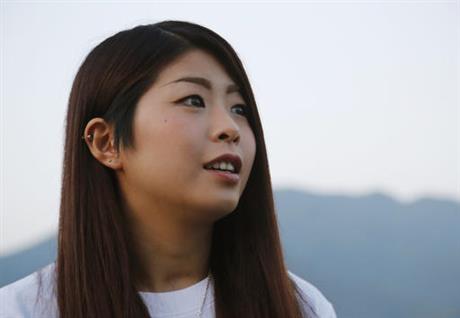
KORIYAMA, Fukushima Prefecture–She’s 21, has thyroid cancer, and wants people in her prefecture in northeastern Japan to get screened for it. That statement might not seem provocative, but her prefecture is Fukushima, and of the 173 young people with confirmed or suspected cases since the 2011 nuclear meltdowns there, she is the first to speak out.
That near-silence highlights the fear Fukushima thyroid-cancer patients have about being the “nail that sticks out,” and thus gets hammered.
The thyroid-cancer rate in the northern Japanese prefecture is many times higher than what is generally found, particularly among children, but the Japanese government says more cases are popping up because of rigorous screening, not the radiation that spewed from Fukushima No. 1 power plant.
To be seen as challenging that view carries consequences in this rigidly harmony-oriented society. Even just having cancer that might be related to radiation carries a stigma in the only country to be hit with atomic bombs.
“There aren’t many people like me who will openly speak out,” said the young woman, who requested anonymity because of fears about harassment. “That’s why I’m speaking out so others can feel the same. I can speak out because I’m the kind of person who believes things will be OK.”
She has a quick disarming smile and silky black hair. She wears flip-flops. She speaks passionately about her new job as a nursery school teacher. But she also has deep fears: Will she be able to get married? Will her children be healthy?
She suffers from the only disease that the medical community, including the United Nations Scientific Committee on the Effects of Atomic Radiation, has acknowledged is clearly related to the radioactive iodine that spewed into the surrounding areas after the only nuclear disaster worse than Fukushima’s, the 1986 explosion and fire at Chernobyl, Ukraine.
Though international reviews of Fukushima have predicted that cancer rates will not rise as a result of the meltdowns there, some researchers believe the prefecture’s high thyroid-cancer rate is related to the accident.
The government has ordered medical testing of the 380,000 people who were 18 years or under and in Fukushima prefecture at the time of the March 2011 tsunami and quake that sank three reactors into meltdowns. About 38 percent have yet to be screened, and the number is a whopping 75 percent for those who are now between the ages of 18 and 21.
The young woman said she came forward because she wants to help other patients, especially children, who may be afraid and confused. She doesn’t know whether her sickness was caused by the nuclear accident, but plans to get checked for other possible sicknesses, such as uterine cancer, just to be safe.
“I want everyone, all the children, to go to the hospital and get screened. They think it’s too much trouble, and there are no risks, and they don’t go,” the woman said in a recent interview in Fukushima. “My cancer was detected early, and I learned that was important.”
Thyroid cancer is among the most curable cancers, though some patients need medication for the rest of their lives, and all need regular checkups.
The young woman had one cancerous thyroid removed, and does not need medication except for painkillers. But she has become prone to hormonal imbalance and gets tired more easily. She used to be a star athlete, and snowboarding remains a hobby.
A barely discernible tiny scar is on her neck, like a pale kiss mark or scratch. She was hospitalized for nearly two weeks, but she was itching to get out. It really hurt then, but there is no pain now, she said with a smile.
“My ability to bounce right back is my trademark,” she said. “I’m always able to keep going.”
She was mainly worried about her parents, especially her mother, who cried when she found out her daughter had cancer. Her two older siblings also were screened but were fine.
Many Japanese have deep fears about genetic abnormalities caused by radiation. Many, especially older people, assume all cancers are fatal, and even the young woman did herself until her doctors explained her sickness to her.
The young woman said her former boyfriend’s family had expressed reservations about their relationship because of her sickness. She has a new boyfriend now, a member of Japan’s military, and he understands about her sickness, she said happily.
A support group for thyroid cancer patients was set up earlier this year. The group, which includes lawyers and medical doctors, has refused all media requests for interviews with the handful of families that have joined, saying that kind of attention may be dangerous.
When the group held a news conference in Tokyo in March, it connected by live video feed with two fathers with children with thyroid cancer, but their faces were not shown, to disguise their identities. They criticized the treatment their children received and said they’re not certain the government is right in saying the cancer and the nuclear meltdowns are unrelated.
Hiroyuki Kawai, a lawyer who also advises the group, believes patients should file Japan’s equivalent of a class-action lawsuit, demanding compensation, but he acknowledged more time will be needed for any legal action.
“The patients are divided. They need to unite, and they need to talk with each other,” he said in a recent interview.
The committee of doctors and other experts carrying out the screening of youngsters in Fukushima for thyroid cancer periodically update the numbers of cases found, and they have been steadily climbing.
In a news conference this week, they stuck to the view the cases weren’t related to radiation. Most disturbing was a cancer found in a child who was just 5 years old in 2011, the youngest case found so far. But the experts brushed it off, saying one wasn’t a significant number.
“It is hard to think there is any relationship,” with radiation, said Hokuto Hoshi, a medical doctor who heads the committee.
Shinsyuu Hida, a photographer from Fukushima and an adviser to the patients’ group, said fears are great not only about speaking out but also about cancer and radiation.
He said that when a little girl who lives in Fukushima once asked him if she would ever be able to get married, because of the stigma attached to radiation, he was lost for an answer and wept afterward.
“They feel alone. They can’t even tell their relatives,” Hida said of the patients. “They feel they can’t tell anyone. They felt they were not allowed to ask questions.”
The woman who spoke to AP also expressed her views on video for a film in the works by independent American filmmaker Ian Thomas Ash.
She counts herself lucky. About 18,000 people were killed in the tsunami, and many more lost their homes to the natural disaster and the subsequent nuclear accident, but her family’s home was unscathed.
When asked how she feels about nuclear power, she replied quietly that Japan doesn’t need nuclear plants. Without them, she added, maybe she would not have gotten sick.
Ash’s video interview: https://www.youtube.com/playlist?list=PLpmdZYCRIZfvTtTE1sbY3ynaGsfDYmNWn
FIVE YEARS AFTER: Fukushima thyroid cancer patients’ families join forces

The grandmother, left, and mother of a female high school student
who underwent thyroid surgery talk about their concerns
in Fukushima Prefecture on March 5
Families of young thyroid cancer patients from Fukushima Prefecture diagnosed after the 3/11 disaster have formed a support group that also aims to pressure doctors and authorities for better policies.
The 311 Thyroid Cancer Family Group hopes to share the concerns people have felt over the health of their loved ones in the five years since the onset of the nuclear crisis.
“We want the Fukushima prefectural government and doctors to demonstrate a better understanding of patients,” one member said.
The group was established by seven parents and relatives of five young people from the prefecture’s central Nakadori and eastern Hamadori areas who underwent thyroid surgery following the triple meltdown at the Fukushima No. 1 nuclear power plant.
Hiroyuki Kawai, a lawyer from the Daini Tokyo Bar Association, will lead the group as its representative. Others will help manage the association, including Motomi Ushiyama, a doctor who has served as a physician in Fukushima Prefecture and also conducted an investigation on residents of areas contaminated in the 1986 Chernobyl disaster.
“Our aim is to create a place where patients, who remain separated and are unable to even talk of their anxieties or doubts, can meet and talk to one another,” Kawai said. “By having the patients and their families unite and cry out as one, it makes it easier for us to make policy suggestions to the government.”
The group is considering filing lawsuits in the future against the central and prefectural governments, along with Tokyo Electric Power Co., the Fukushima plant’s operator, but at the moment, its main purpose is to provide direct help to the patients and their families.
The Fukushima prefectural government continues to examine the thyroid glands of residents who were 18 or under at the time of the 2011 nuclear disaster and those born following the event, which accounted for around 380,000 people. A total of 166 cases of thyroid cancer or suspected signs of the condition were found before the end of 2015.
However, the prefecture’s expert panel assessing the statistics deemed it was “unlikely the cases were caused by radiation.”
Unsurprisingly, members of the group viewed this official statement with unease and skepticism.
One high school student from Nakadori had her thyroid gland removed by a doctor at Fukushima Medical University Hospital last spring. But with the cancer cells having spread more than expected, she now has a large scar across her neck that she feels she must cover with a scarf even in summer.
Her mother, in her 40s, said: “My daughter became more prone to fatigue after the surgery. Falling asleep while playing her video games, which she loves to do, was something that never happened before.”
A nodule was found on the student’s thyroid about two years ago. At the hospital, her surgeon told her: “We will examine the tissue believed to be formed of cancer cells by sticking a needle in your neck. It’s very painful, so it’s up to you to decide. Make up your mind within a month.”
The student and mother talked it over and decided to opt for the test. But when they returned to the hospital to get the results, the mother was shocked, as the doctor just blurted out the results in front of the young patient, saying: “It was a malignant tumor.”
The doctor did, however, explain it was nothing to worry about and said: “It’s not a big deal. Thyroid cancers can be left as they are for six months or a year, and they still won’t be anything life-threatening.”
But when the student underwent surgery six months later, her mother was reprimanded by the same doctor who said: “The tumor was bigger than we had expected. Who in the world told you that you can leave it for six months?”
The doctor also warned her of the possibilities of recurrence.
After her daughter’s surgery, the mother joined an event organized by the hospital for thyroid cancer patients to meet one another. But it was nothing like what she had envisioned.
“We only heard one-sided stories, and it was not a forum that would answer any of the doubts I had,” she said. “It was completely useless.”
The father of a man who was a high school student in 2011 was disturbed by the attitude of the same doctor who also operated on his son’s thyroid.
The father said: “After the surgery, I repeatedly asked the doctor if the cancer had anything to do with the nuclear power plant, but he just flat-out rejected it saying, ‘There’s no correlation.’
Furthermore, the doctor told him: “Don’t say anything to the media even if they learn about your son’s surgery. You know there’s no necessity for you to answer them.”
“My son fears recurrence and metastasis every day,” the father said.
However, the doctor told The Asahi Shimbun through the institution’s public relations department that he had been misunderstood.
“We have been paying the utmost attention to establishing an environment where patients can talk about their worries and doubts, having mental health care specialists getting involved with them at an early stage of their treatments. Such efforts continue well into the post-surgery period,” he said in writing.
“The diagnosis of cancer is something we take extreme care when we are letting the patients know about it. But now having been confronted by interpretations that were not at all my intentions, I strongly realize the difficulty of conveying the message to patients. When we give the notice to patients who are minors, we consult their guardians and check with them before giving them the word.”
Meanwhile, the 311 Thyroid Cancer Family Group will be holding events to promote networking between patients’ families and where they can seek advice, encouraging more people to join the group.
The members said: “We first want to encourage the patients to meet each other, share information and demand improvement of their medical environments.”
http://ajw.asahi.com/article/0311disaster/fukushima/AJ201603240025
Experts divided on causes of high thyroid cancer rates among Fukushima children
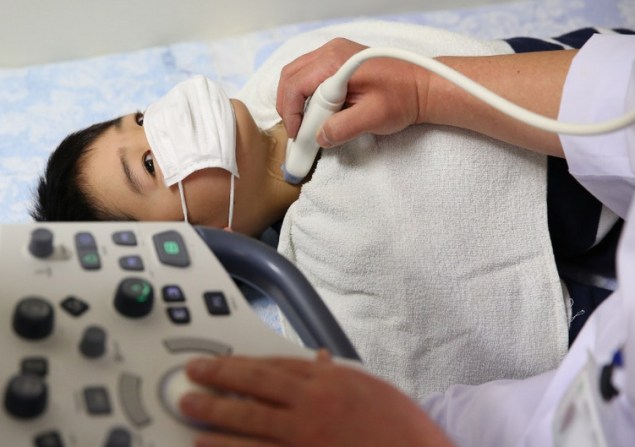
A child undergoes an ultrasound screening at Hirata Chuo Clinic in Hirata, Fukushima Prefecture, on Feb. 23, 2016. The local clinic conducts separate checkups from the prefectural government’s thyroid cancer examinations.
A total of 166 children in Fukushima Prefecture had been either diagnosed with thyroid cancer or with suspected cases of cancer by the end of 2015 through screening conducted by the Fukushima Prefectural Government, following the 2011 nuclear plant crisis.
- 【Related】Child thyroid cancer in Fukushima many times national average: report draft
- 【Related】Cases of thyroid cancer up among Fukushima kids in 2nd screening: prefectural panel
- 【Related】Fukushima Pref. to examine incidence of thyroid cancer in children
- 【Related】4 new thyroid cancer cases emerge in latest checks on Fukushima children
The figure is several dozen times higher than the estimated number of thyroid cancer patients based on national statistics, according to a panel of experts with the prefectural government. While the panel and the Environment Ministry say the effects of radiation in these cancer cases are unlikely, opinions are divided among experts about the causes of such a high occurrence rate of cancer in children.
“Compared to the estimated prevalence rates based on the country’s statistics on cancer, which are shown in data including regional cancer registration, the level of thyroid cancer detection is several dozen times higher (in children of Fukushima Prefecture),” said the final draft for the interim report compiled by the prefectural government’s expert panel on Feb. 15.
Most experts of epidemiology agree on the view that the number of thyroid cancer cases is high among over 300,000 targets in health checkups that started six months after the nuclear meltdowns.
A research team led by Shoichiro Tsugane, head of the Research Center for Cancer Prevention and Screening of the National Cancer Center and a member of the Fukushima government’s expert panel, published a research paper on the matter in January this year and another team headed by Okayama University professor Toshihide Tsuda also published their paper in October 2015. While their calculation methods differ, the two teams both concluded that the number of cancer cases found in Fukushima children was “about 30 times” that of national levels.
There has never been an attempt in Japan to check thyroid cancer among hundreds of thousands of children who are not self-aware about symptoms such as lumps. Because of this, some experts pointed out earlier that the screening detected cancer in advance in those who may develop the disease later, and as a result, the number of cancer patients spiked temporarily. While such a rapid increase in the number of patients by early detection has been reported in other types of cancer, the figure remains as high as “several times higher than national levels.” Tsugane and Tsuda both agree that the “30 times higher (than the national occurrence rates)” is unexplainable.
At the moment, the most likely theories for such a high rate of cancer detection are the “overdiagnosis theory” held by Tsugane’s team and the “radiation effect theory” that Tsuda’s team supports.
Overdiagnosis refers to the diagnosis of cancer by detecting hidden cancer cells that are not harmful even if left untreated.
The concept of cancer overdiagnosis has been argued for decades in areas including the lungs, chest and prostate, and its negative effects on cancer screening takers’ physical and psychological conditions have been pointed out as a problem. In 2004, the Ministry of Health, Labor and Welfare canceled examinations for neuroblastoma, a type of pediatric cancer, saying that the test would impose large disadvantages on screening subjects due to overdiagnosis.
In South Korea, thyroid cancer screening has been rigorously carried out from the late 1990s targeting adults, and as a result, the number of thyroid cancer patients spiked 15 times. In the meantime, thyroid cancer death rates have not changed, which has been interpreted in a way that non-harmful cancer was detected in the screening process.
While the Fukushima screening mostly targets children, Tsugane argues that it’s rational to judge that the reason behind such a high prevalence is overdiagnosis as seen in South Korea’s studies, on the grounds that the maximum amount of radiation exposure in the thyroids of children in Fukushima Prefecture is estimated to be several dozen millisieverts, which is not enough to cause an increase of 30 times in the number of patients. He also argues that it appears that no phenomenon has been reported where the number of patients becomes higher in areas with high radiation levels. The prefectural government shares his opinion on the matter.
At the same time, Tsugane is not completely denying the effects of radiation in children’s cancer, saying, “It would not be strange if a small portion of cancer cases was caused by radiation exposure, but we do not know the precise percentage.”
Tsuda, on the other hand, took the difference in the timing of screening among children into account and argues that radiation exposure is the main cause of the high prevalence of cancer in children, saying that the occurrence rate is 4.6 times higher in Futaba County near the crippled nuclear plant compared to the city of Sukagawa and other areas that are farther from the power plant.
He does not deny the possibility of overdiagnosis, but because the spread of cancer cells to lymph nodes and other tissues could be seen in 92 percent of patients, Tsuda believes that overdiagnosis makes up 8 percent of the patients at most.
In addition, Tsuda pointed to three research papers on the 1986 Chernobyl nuclear disaster that argue that thyroid cancer was not found in a total of 47,000 children who were born after the disaster and had not been exposed to radiation, and rejects the existence of overdiagnosis in children.
Tsuda also pointed out that non-harmful cancer should have been detected in the first round of screenings, drawing attention to the fact that 51 new patients were found in the second round that began in 2014.
In regard to the results of the second round of screening, Osaka University public health professor Tomotaka Sobue, who supports the overdiagnosis theory, confesses that while it is unlikely that the cancer was caused by radiation exposure, “overdiagnosis alone cannot explain the phenomenon for now.”
Cancer screenings of the same scale in other areas might help determine the main cause of the high prevalence in Fukushima children. Tsugane argues, however, that while screening is necessary in Fukushima Prefecture to confirm the effects of radiation, the same kind of screening should not be carried out in other prefectures as it will only increase the number of overdiagnosis cases.
Tsuda, on the other hand, pushes for screening in other prefectures, saying that the whole picture of thyroid cancer patients should be revealed so that the causal relationship is not blurred. In addition, he calls for the cancer registration and establishing certificates for “hibakusha” (those exposed to radiation) to confirm radiation-induced cancer patients.
Both Tsugane and Tsuda based their research on the first round of screening conducted between 2011 and 2015. About 300,000 children were screened, and thyroid cancer was detected in 113 subjects, including suspected cancer cases at the time of analysis.
Tsugane’s team estimated that if all 360,000 children targeted in the cancer screening had gone through the checkups, approximately 160 patients would have been found. The team also estimated that about 5.2 children out of 360,000 children in the same age group as the Fukushima screening subjects had thyroid cancer based on calculations on a national average of thyroid cancer patients. As a result, the team reached a result of “about 30 times higher” by comparing 5.2 and 160 drawn from the estimate on Fukushima children.
Tsuda, meanwhile, focused his attention on the national average of the thyroid cancer occurrence rate in the same age group as the targets in the screening in Fukushima Prefecture, which was around three in every 1 million children per year. A total of 113 cancer patients out of 300,000 screening takers have been found in Fukushima Prefecture, which can be converted into about 90 patients in 1 million children per year over a four-year period. With those figures, Tsuda’s team concluded occurrence rates of about “30 times higher.”
The prefectural government’s expert panel drafted the interim report based on Tsugane’s calculation method.
http://mainichi.jp/english/articles/20160307/p2a/00m/0na/022000c
Fukushima Survey – A mere facade
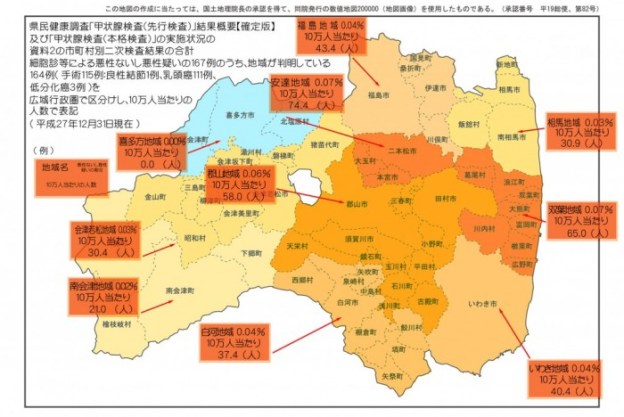
2月15日に第22回福島県「県民健康調査」検討委員会(以下、検討委員会)が開催されました。この検討委員会で最も注目を浴びるのは甲状腺 検診結果です。「先行検査」での「悪性ないし悪性疑い」となった人数はさらに増加しました。前回と同じく口頭の説明だけでしたので、本格検査の二巡目も含 めた人数を表にまとめてみました。
On February 15th, the Fukushima Prefecture held its 22sd “Citizens Health Survey” Review Committee. Most of this session, the thyroid screening results was brought into focus. The number of cases with children being diagnosed with a “malignant or on suspicion of being malignant” from the “prior inspection” further increased. Since it was only announced verbally like the previous announcement, I made a table to summarize the results, including the full-scale testing of the second round.

表の結果を見れば明らかなように「悪性疑い」と診断された場合は、ほとんど「悪性」とみて間違いありません。しかし、検討委員会の見解は「放射能の影響は 考えづらい」と今までの見解を踏襲したものです。
It is clear from that table that the cases listed in “suspected malignant tumor” end up being very similar to the “malignant tumor” cases. Despite of this and following its earlier statement, the Review Committee is continuing to deny any possible impact from radioactivity and finds it “hardly considerable. ”
このことをみると、結論ありきで、この見解を変える気はないのかもしれません。
It is as if the Committee was not willing to change its view regardless of any survey’s results.
さらに、この流れに拍車をかけるかもしれないと思われるのは、今回の検討委員会に甲状腺外科の専門医である清水一雄委員が欠席したことです。このよ うな 専門家が誰一人出席しない中で、今回の検討委員会は開催されたわけです。また、前回、星北斗座長の「放射能の影響は考えづらい」という見解に対して質問を した春日文子委員も欠席しました。そして、すでに福島県立医大からは、甲状腺専門医である鈴木眞一医師に代わり内科医の大津留晶医師となっています。
What made this particular review even less valid this time around was that Dr. Kazuo Shimizu, who is the only specialist of thyroid surgery among the members, was absent from the Committee. This review was held in such circumstances without any thyroid specialists. Also, Ms. Fumiko Kasuga, who previously questioned the statement that the “the impact of radioactivity is hardly considerable,” to chairman Hokuto, was also absent from the Committee. In addition, replacing thyroid specialist Dr. Shinichi Suzuki, member from the Fukushima Medical University has changed to physician Dr. Akira Otsuru.
検討委員会としながらも、専門家不在の中で何が検討されようとしているのでしょうか? 第22回検討委員会は検討委員会が形骸化していることを示唆するような会でした。
What will the Committee do without any specialist? The 22nd Review Committee suggests that the review committee is a mere facade.
by Hiromi ABE あべひろみ
translated by Chiharu MUKUDAI for Evacuate Fukushima 福島の子供を守れ
Source Source ー参考ー http://fukushima-30year-project.org/?p=3685
http://www.evacuate-fukushima.com/2016/03/fukushima-survey-a-mere-facade/
“New case of thyroid cancer diagnosed in Fukushima; brings number to 104

FUKUSHIMA–An investigation into health problems triggered by the 2011 nuclear disaster here turned up a new case of thyroid cancer in a young person who lived near the stricken plant.
The latest diagnosis brings to 104 the number of people out of the 385,000 or so Fukushima Prefecture residents who were 18 years old or younger at the time of the accident that are confirmed to have thyroid cancer, prefectural authorities said Aug. 31.
However, the prefectural government committee investigating the issue of health problems said that “as of now, it is unlikely for the thyroid cancers found in Fukushima Prefecture to have been caused by the nuclear power plant accident.”
The latest check was conducted between April and the end of June.
Source: Asahi Shimbun
http://ajw.asahi.com/article/0311disaster/fukushima/AJ201509010056
3 Thyroid Cancer Cases Diagnosed in Kitaibaraki City, Ibaraki Prefecture — Immediately South of Fukushima Prefecture
Kitaibaraki City, Ibaraki Prefecture, is located in the northeastern part of the prefecture, immediately south of Iwaki City, Fukushima Prefecture, and about 70 km south and slightly west of the Fukushima Daiichi nuclear power plant.
On August 25, 2015, Kitaibaraki City released the results of the thyroid ultrasound examination. Below is the English translation of the results and the related newspaper article.
August 25, 2015
Division of Cooperative Community Development
Office of Health Support
【Regarding the Results of Thyroid Ultrasound Examination Project in Kitaibaraki City】
Kitaibaraki City implemented “Thyroid Ultrasound Examination Project: during the two-year period in Fiscal Year (FY) 2013-2014. (Project expenses: 37,173,000 yen)
Subjects were cityい residents age 0 to 18 at the time of the Fukushima Daiichi nuclear power plant accident. The examination was conducted in those age 0 to 4 in FY 2013 and other ages in FY 2014.
Regarding the examination results, the Kitaibaraki City Thyroid Ultrasound Examination Project Evaluation Council, consisting of experts and physicians, reported as follows:
- As screening examination, some would require a detailed examination or be diagnosed with cancer at a fix rate just as expected in a routine health check-up.
- The detailed examination result from FY 2014 revealed 3 cases of thyroid cancer.
- Radiation is unlikely to be the cause of these thyroid cancer cases.
FY 2013-2014 Thyroid Ultrasound Examination Results

※All participants or their guardians received explanations regarding radiation effects, purpose and method of the examination, and diagnostic category at orientation sessions ahead of time.
Those who were assessed to require a detailed examination (B & C diagnostic category) received explanation about the detailed examination during individual home visits.
Second-round screening is planned. The time of screening will be considered based on the opinions of physicians and experts.
Note: Diagnostic criteria employed by Kitaibaraki City are the same as in Fukushima Prefecture according to Oshidori Mako’s inquiry with Kitaibaraki City Hall.
- A1: no nodules or cysts found
- A2: nodules ≦ 5.0 mm or cysts ≦ 20.0 mm
- B: nodules ≧ 5.1 mm or cysts ≧ 20.1 mm
- C: requiring immediate secondary examination
***************************************************************************************************************
The Asahi Shimbun article dated August 26, 2015
Ibaraki Prefecture: Three Thyroid Cancer Cases in Kitaibaraki City from Last Fiscal Year Examination of Those Age 18 or Younger
Kitaibaraki City has been independently investigating the effect of radioactive substances due to the Tokyo Electric Fukushima Daiichi nuclear power plant accident on children. On August 25, Kitaibaraki City released the results of the thyroid ultrasound examination conducted in FY 2014 on children age 18 or younger (note: at the time of the accident; at exposure). There were 3 cases of thyroid cancer, but it was judged unlikely to be due to the nuclear power plant accident.
After the nuclear power plant accident, the central government conducted thyroid examination in Fukushima Prefecture, but not in adjacent Kitaibaraki City. Due to requests from parents, the city conducted the examination independently. 1184 children who were age 4 or younger at the time of the accident underwent the examination in FY 2013, and none were diagnosed with thyroid cancer.
Examination subjects in FY 2014 was a total of 6,151 children 18 or younger (including children age 4 or younger who did not undergo the examination in FY 2013). Of these, 3,953 wanted to be examined. The results showed 1,746 with no findings, 1,773 to be followed with observation, 72 to require detailed examinations, and 2 to require detailed examinations immediately. 3 were diagnosed with thyroid cancer by the Thyroid Ultrasound Examination Project Assessment Council. However, the cancer was determined unlikely to be due to radiation exposure owing to the Fukushima nuclear power plant accident, considering the supposed exposure dose and the length of time since the accident.

According to tweets by a freelance journalist Ryuichi Kino who contacted the Office of Health Support, Division of Cooperative Community Development, Department of Citizen Welfare at Kitaibaraki City Hall, 3 cancer cases were diagnosed from 74 (72 in category B and 2 in category C) who had detailed examinations, but apparently 2 cases who were in diagnostic category C were not automatically diagnosed with cancer. (It is unclear if this means the 2 “C” cases were eventually diagnosed with cancer after the detailed examination, or they were not diagnosed with cancer). All 3 have been operated on and apparently doing well. The city has no intention of releasing ages and sexes of the three patients, as such information might identify the individuals. Names of the Kitaibaraki City Thyroid Ultrasound Examination Project Evaluation Council members will not be released at the request of some of the members. The Council consists of 6 members — 1 thyroid specialist, 3 physicians including surgeon(s) and general practictioner(s), and 2 city officials. According to the Ibaraki Shimbun article, president of Kitaibaraki City Hospital, Dr. Yoshifumi Uekusa, stated, “Symptoms began to appear 5 years after the Chernobyl accident, and the exposure dose is less in Japan, so it is unlikely to be due to radiation effects.” Apparently, Dr. Uekusa is a member of the Council.
Oshidori Mako contacted Kitaibaraki City Hall and reported that the Thyroid Ultrasound Examination Project Assessment Council (which concluded, “Radiation is unlikely to be the cause of these thyroid cancer cases”) included no experts in radiation protection or dose estimation. Oshidori Mako also noted that the radioactive plume blew in the south towards Iwaki City but the lack of precipitation prevented radionuclides from depositing on the ground as it did in Iitate Village. (This means the overall radioactivity of soil may not be high, but residents still might have been exposed to the radioactive plume when it passed through the area). The early exposure dose assessment, based on the soil deposition, has been inadequate for a place such as Iwaki City.
As a matter of fact, paragraph C43 of UNSCEAR 2013 discusses the so-called “south trace” having much higher ratios of Te-129m and I-131 to Cs-137. This suggests a significant amount of radioactive iodine isotopes might have fallen in the “south trace” which includes Iwaki City. As Kitaibaraki City is immediately south of Iwaki City, and the air movement does not stop at the border between the two cities, it is possible for Kitaibaraki City to have received a similar amount of the radioactive plume as Iwaki City.
Source: Fukushima Voice version 2
http://fukushimavoice-eng2.blogspot.fr/2015/08/3-thyroid-cancer-cases-diagnosed-in.html
1 This Month
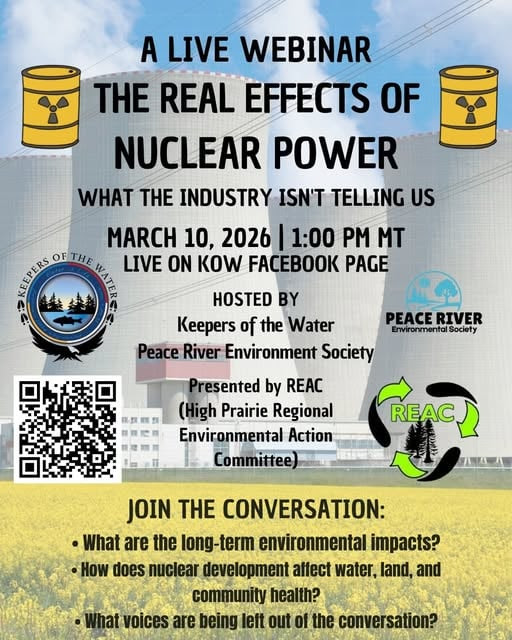
10 March A LIVE WEBINAR THE REAL EFFECTS OF NUCLEAR POWER
What the Industry Isn’t Telling Us
1:00 PM Mountain, 2 pm Central, 3 pm Eastern. Live on the Keepers of the Water Facebook page


18 March Webinar @ 1 PM EST: An Assessment of SMR Projects: The Case of Canada
register for the zoom:
https://us02web.zoom.us/webinar/register/WN_o8BIIOUvQ2ONJR1nta65DQ#/registration


of the week – STOP SMALL MODULAR REACTORS IN CANADA
To see nuclear-related stories in greater depth and intensity – go to https://nuclearinformation.wordpress.com
-
Archives
- March 2026 (109)
- February 2026 (268)
- January 2026 (308)
- December 2025 (358)
- November 2025 (359)
- October 2025 (376)
- September 2025 (258)
- August 2025 (319)
- July 2025 (230)
- June 2025 (348)
- May 2025 (261)
- April 2025 (305)
-
Categories
- 1
- 1 NUCLEAR ISSUES
- business and costs
- climate change
- culture and arts
- ENERGY
- environment
- health
- history
- indigenous issues
- Legal
- marketing of nuclear
- media
- opposition to nuclear
- PERSONAL STORIES
- politics
- politics international
- Religion and ethics
- safety
- secrets,lies and civil liberties
- spinbuster
- technology
- Uranium
- wastes
- weapons and war
- Women
- 2 WORLD
- ACTION
- AFRICA
- Atrocities
- AUSTRALIA
- Christina's notes
- Christina's themes
- culture and arts
- Events
- Fuk 2022
- Fuk 2023
- Fukushima 2017
- Fukushima 2018
- fukushima 2019
- Fukushima 2020
- Fukushima 2021
- general
- global warming
- Humour (God we need it)
- Nuclear
- RARE EARTHS
- Reference
- resources – print
- Resources -audiovicual
- Weekly Newsletter
- World
- World Nuclear
- YouTube
-
RSS
Entries RSS
Comments RSS
 nuclear-news