Businesses worry about reputational damage from Fukushima water discharge

Sep 26, 2022
The plan to discharge treated water from the Fukushima No. 1 nuclear power plant into the ocean has been met with a wave of opposition, not only from residents of Fukushima Prefecture, but also those living in neighboring Ibaraki Prefecture.
Businesses in Ibaraki are calling for a fostering of public understanding and providing consumers with a sense of security to prevent harmful rumors from spreading.
At the Otsu fishing port in Kitaibaraki, which borders the southern part of Iwaki, Fukushima Prefecture, containers of freshly caught baby sardines are brought into processing plants one after another. The silver-colored fish shine under the late August sunlight and its lingering summer heat.
“We want to offer a taste of fresh, in-season fish,” said fisherman Seiji Suzuki, 31, who was busy landing his catches.
While keeping himself busy in a bustle of the port, Suzuki cannot shake off his anxiety about the future, as the Fukushima No. 1 plant, located about 70 kilometers away, plans to discharge processed water containing radioactive tritium into the ocean as early as next spring.
“The ocean (off the coast of Fukushima and Ibaraki prefectures) is connected. If the water is released, the image of seafood from Ibaraki Prefecture will be tarnished, and sales will be hit again,” Suzuki lamented.
According to the Otsu Fisheries Cooperative, seafood from Ibaraki Prefecture, like that from Fukushima Prefecture, is distributed throughout Japan as “Joban-mono,” referring to the seafood culled from the waters off the coast of both prefectures.
Major species from Ibaraki Prefecture include baby sardine, flounder, and anglerfish. “It’s almost the same as those in Fukushima,” a member of the fisheries cooperative said.
Ibaraki Prefecture’s fisheries output declined by about 30% after the Fukushima meltdown disaster, according to the fisheries ministry. Since 2012, the output has gradually recovered, and in recent years it has exceeded the pre-accident level due to an increase in fish catches.
However, radiation sampling inspections for almost all edible fish species are still being conducted. According to Ibaraki Prefecture, there has not been a discussion about abolishing the inspections. “Many consumers are concerned about the safety of seafood. This is even more so since there are plans to discharge treated water into the ocean,” a prefectural official said.
According to a survey conducted by the Ibaraki Shimbun newspaper of voters in the prefecture at the time of Upper House election this summer, 44.3% of respondents were opposed to the water discharge, more than the 35.5% who were supportive. The remaining 20.2% said that they were not sure or gave no answer. By age and gender, young respondents and women were particularly cautious about the water discharge.
Yoshinori Sakamoto, director of the Otsu Fisheries Cooperative, stresses there is no border between waters off Fukushima and Ibaraki prefectures. “If treated water is released into the ocean, Ibaraki seafood will suffer reputational damages as well,” he said.
The government may disseminate information about the scientific safety of the products, but unless the information is widely shared by consumers and a sense of security is fostered, consumers will be reluctant to buy the products, which will lead to price falls, he said.
Looking back on the many years of suffering from harmful rumors following the Fukushima nuclear accident, Sakamoto said, “We have finally come this far. It is a matter of life and death, and I am opposed to the water release under the current situation, where providing consumers with a sense of security is not guaranteed.”
A third nightmare
This is not the first time Ibaraki Prefecture has faced reputational damage from nuclear incidents. The September 1999 criticality accident at JCO, a nuclear fuel processing company in Tokai, Ibaraki Prefecture, caused extensive damages to residents and businesses in the region.
In the accident at the Tokai Plant of JCO, three workers were heavily exposed to radiation after a nuclear fission chain reaction occurred by accident, and two of them subsequently died. More than 600 residents of the surrounding area were also exposed to radiation, and more than 300,000 residents were forced to evacuate or stay indoors.
According to a report by Ibaraki Prefecture, a wide range of industries were affected, including agriculture, livestock, fisheries, commerce and tourism, with damages totaling more than ¥15 billion.
Businesses affected by the JCO criticality accident and the Fukushima No. 1 meltdown disaster are deeply concerned about a “third nightmare” from the planned discharge of treated water from the Fukushima plant.

Chizuko Suda, 57, who runs a seafood restaurant near the Nakaminato fishing port in Hitachinaka, Ibaraki Prefecture, is one of those who experienced the reputational damage caused by the 1999 incident.
Suda’s restaurant is located about 15 km south of the JCO plant. She remembers that the number of customers dropped to less than half of what it was before the accident, although she does not know the amount of damage because she was not the owner at the time. “It took three years for things to get back to normal,” she recalls.
Twelve years after the JCO accident, the Fukushima No. 1 accident struck. Almost every day, tourists asked if it was safe to visit the area around her restaurant and if the seafood was safe. Each time, she told them that tests for radioactive materials had confirmed that the area was safe to visit. Even so, sales dropped to 20% to 30% of what they were before the accident. Once again, she felt the pain of harmful rumors.
After going through such experiences twice, Suda wonders if there is any way to prevent it from happening again with the release of treated water into the ocean. The key is to foster public understanding, she says. “If it is scientifically safe, that fact should be released nationwide. This would be an opportunity for the public to think about the water discharge issue as their own.”
She has relatives in the coastal areas of Fukushima Prefecture, and she feels that it is “unacceptable to force only the people in Fukushima to bear the burden.”
Meanwhile, the fishing industry is not the only businesses concerned about the impact of water discharge.
Hiroyuki Onizawa, 60, a dried sweet potato processor in Hitachinaka who was affected by both accidents, also urges the government to take a cautious approach. “It would be better not to discharge,” he says, stressing that the image of Ibaraki Prefecture could be worsened.
Yoshihisa Takeshi, 46, who runs an inn in Kitaibaraki that offers Joban-mono anglerfish as its specialty, feels the need to dispose of treated water. “We have no choice but to discharge it,” he said.
On the other hand, he called on the government to provide support for a wide range of businesses in addition to taking measures against harmful rumors. The discharge “will definitely have a negative effect,” he said.
https://www.japantimes.co.jp/news/2022/09/26/national/ibaraki-fukushima-water/
At U.N., Micronesia denounces Japan plan to release Fukushima water into Pacific

September 23, 2022
UNITED NATIONS, Sept 22 (Reuters) – The president of the Pacific island state of Micronesia denounced at the United Nations on Thursday Japan’s decision to discharge what he called nuclear-contaminated water from the Fukushima Daiichi Nuclear Power Station into the Pacific Ocean.
In an address to the U.N. General Assembly in New York, David Panuelo said Micronesia had the “gravest concern” about Japan’s decision to release the so-called Advanced Liquid Processing System (ALPS) water into the ocean.
“We cannot close our eyes to the unimaginable threats of nuclear contamination, marine pollution, and eventual destruction of the Blue Pacific Continent,” he said.
“The impacts of this decision are both transboundary and intergenerational in nature. As Micronesia’s head of state, I cannot allow for the destruction of our Ocean resources that support the livelihood of our people.”
Japan said in July that its nuclear regulators had approved a plan to release into the Pacific ocean water used to cool reactors in the aftermath of the March 2011 Fukushima disaster.
The water has been stored in huge tanks in the plant, and amounted to more than 1.3 million tonnes by July.
Japan’s Foreign Ministry said at that time that regulators deemed it safe to release the water, which will still contain traces of the radioactive isotope tritium after treatment.
Asked about Panuelo’s statement, Yukiko Okano, the ministry’s deputy press secretary, said in reference to Fukushima that Japan would try its best “to gain understanding from the international community about the safety of our activities there.”
The plant operator, Tokyo Power Electric Company (Tepco), plans to filter the contaminated water to remove harmful isotopes apart from tritium, which is hard to remove. Then it will be diluted and released to free up plant space to allow the decommissioning of Fukushima to continue.
The plan has encountered stiff resistance from regional fishing unions which fear its impact on their livelihoods. Japan’s neighbors China, South Korea, and Taiwan have also voiced concern.
Panuelo also highlighted the threat posed by climate change, to which Pacific island states are particularly vulnerable. He called on geopolitical rivals the United States and China to consider it “a non-political and non-competitive issue for cooperation.”
“For the briefest period of time, it seemed as if the Americans, with whom Micronesia shares an Enduring Partnership, and the Chinese, with whom Micronesia shares a Great Friendship, were starting to work together on this issue, despite increases in tension in other areas,” he said. “Now, they are no longer speaking to each other on this important issue.”
China announced in August it was halting bilateral cooperation with the United States in areas including defense, narcotics, transnational crime and climate change in protest against a visit to Taiwan by U.S. House Speaker Nancy Pelosi.
Panuelo’s remarks coincided with a meeting U.S. Secretary of State Antony Blinken hosted of the Partners in the Blue Pacific countries, which include Japan with the aim of better coordinating assistance to the region in the face of competition from China.
40,000 signatures submitted to TEPCO and METI opposing release of treated water from nuclear power plants

September 21, 2022
On September 21, representatives of consumers’ cooperatives in Iwate, Miyagi, and Fukushima prefectures and Miyagi fishery cooperatives submitted about 40,000 signatures opposing the discharge of treated water from TEPCO’s Fukushima Daiichi Nuclear Power Plant into the ocean. On March 21, representatives of consumer cooperatives in Miyagi and Fukushima prefectures and Miyagi fishermen’s cooperatives submitted approximately 40,000 signatures to TEPCO and the Ministry of Economy, Trade and Industry opposing the discharge of treated water from TEPCO’s Fukushima Daiichi Nuclear Power Plant into the ocean. They demand that instead of discharging the water into the ocean, it be treated in a different way that can be understood by the concerned parties and the public.
According to a person in charge of the co-op, they have been collecting signatures online and in writing since June 2021, and together with those already submitted, they have collected about 21,000 signatures nationwide. The total number of signatures, including those already submitted, amounted to about 21,000 nationwide.
Katsuhito Fuyuki, president of the Miyagi Co-op, explained the reason for his opposition at the TEPCO headquarters: “We are concerned about the negative impact on the resumption of full-scale fishing operations in Fukushima, the fishing industry in Miyagi, and the local economy.
https://www.tokyo-np.co.jp/article/203849?rct=national&fbclid=IwAR1NBf2UdsSbO5dnwol-1MV3Tk76UJu9gvzuyAlN18k6OfTustPAO72RPd8
The sea is not Japan’s dustbin, nor the Pacific Ocean its sewer: Chinese FM

Sep 19, 2022
Chinese Foreign Ministry on Monday once again called on Japan to stop its dubious and irresponsible plan of dumping Fukushima nuclear-contaminated water into the sea, as the radioactive substance in the nuclear-contaminated water, although it had already been treated through a filtration system, was once tested to be two times higher than the discharge standard.
According to Kyodo News, the Tokyo Electric Power Company (TEPCO), which is in charge of construction of the facility to be used for releasing the nuclear-contaminated water, said on Thursday that the company found the level of radioactive substance Strontium 90 as high as three times of Japan’s national standard, even though the samples on July 28 had been treated through a filtration system called ALPS (Advanced Liquid Processing System).
The report came after the repeated claim of both the Japanese government and TEPCO that nuclear-contaminated water is “safe” to be dumped into the ocean because it would go through the multi-nuclide removal system ALPS and radioactive substances such as Strontium 90 and Carbon 14 that cause genetic mutation in the ecosystem can be reduced to a “safe” level.
“I’ve noticed related media report and this proves the exact rationality of international community’s concern over the reliability of Japan’s data, the efficacy of the treatment system, and the uncertainty of environmental impact,” said Chinese Foreign Ministry spokesperson Mao Ning on Monday’s regular press conference.
The sea is not Japan’s dustbin, nor the Pacific Ocean its sewer, Mao emphasized, saying the Japanese government is extremely irresponsible for forcing through its disposal plan and the construction of underwater pipeline to dump the nuclear-contaminated water from Fukushima nuclear power plant into the ocean given doubts in the plan and unsettled international concerns.
Mao once again urges Japan to deal with the nuclear-contaminated water in a scientific, open, transparent and safe manner on the basis of negotiations with neighboring countries and international institutions.
Despite concerns and opposition from within and neighboring countries including South Korea and China, TEPCO started construction of facility on August 4 for dumping the nuclear-contaminated water after Japan’s nuclear regulator approved its discharge plan in late July.
[Interview] Japanese anti-nuclear activist says fishers’ consent is crucial for Fukushima water release

September 20, 2022
What exactly is going on off the coast of Japan’s Fukushima Daiichi Nuclear Power Plant?
Hideyuki Ban, co-director of the Citizens’ Nuclear Information Center in Japan, says the Fukushima tunnel for offshore dumping of the water is unlikely to be up to scratch
On Aug. 4, the Japanese government and the Tokyo Electric Power Company (TEPCO) began construction on the underwater tunnel that will be used to release treated water from the Fukushima nuclear power plant into the ocean.
Their plan is to use the Advanced Liquid Processing System (ALPS) to reduce the amount of radioactive material in the contaminated water, after which the treated water would be released into the ocean. Currently, they are at the soil preparation stage. Concerns are being raised not only in neighboring countries but also within Japan itself, pointing out that the ALPS’s ability to remove radioactive material is still unclear, and that the release of the contaminated water is being pushed ahead even though the amount of water to be released has yet to be decided.
On Sept. 6, TEPCO even opened the construction site for the underwater tunnel, 80 meters of which was already complete, to the public, suggesting that it has no intention of backing down from its plan to release the contaminated water during the first half of next year.
During his interview with the Hankyoreh, Hideyuki Ban, co-director of the Citizens’ Nuclear Information Center in Japan, commented that TEPCO and the Japanese government made a written promise not to release the contaminated water without the consent of interested parties, adding that he doubted they would be able to earn the consent of fishers and environmental groups. Even technologically speaking, Ban said it was unlikely that the construction would pass the necessary safety tests upon completion.
An internationally acclaimed anti-nuclear activist, Ban has been serving as the co-director of CNIC, a private Japanese think tank working toward “a society that doesn’t rely on nuclear power” through research and studies into Japan’s nuclear policy, for the past 24 years. The interview took place on Sept. 13 over email.
■ One month into the construction of the tunnel
Hankyoreh (Hani): It’s been a month since construction for the underwater tunnel began. What stage is it currently in?
Hideyuki Ban: Excavation work for the underwater tunnel began on Aug. 4. At the same time, construction related to the stirrer inside the storage tank containing the contaminated water, the transfer pump for the treated water, and the embankment for seawater intake commenced as well. TEPCO has said it would provide “timely updates” regarding the progress of the construction, but its website doesn’t offer much information as to how it’s going. Two local governments that have jurisdiction over the nuclear power plant as well as Fukushima Prefecture consented to the construction ahead of time. The next day, civic groups protested in front of the Fukushima Prefecture office building. Civic groups are still continuing their movement against the release of the contaminated water. Plus, fishers’ groups are also firmly expressing their opposition.
Hani: The plan is to release the contaminated water into the ocean in June next year — do you think that’s likely?
Ban: For the contaminated water to be released into the ocean, consent from fishers’ groups comes above all else. TEPCO and the government promised in writing not to release the contaminated water without the consent of fishers’ groups. However, fishers’ groups are proposing special resolutions opposing the release of the contaminated water into the sea at their general meetings this year. I doubt [TEPCO and the Japanese government] will be able to earn their consent. The same goes from the technological perspective. For the contaminated water to be discharged next June, not only do various constructions currently in progress need to be completed as scheduled, but other hurdles should be jumped over, such as a safety test that would come afterward. I believe the technology is not enough to pass such tests. There are other practical issues. Problems on the site, such as the increasing number of COVID-19 patients among workers at the Fukushima Daiichi plant, will probably delay the construction as well.
■ Beneath the water’s surface The construction site TEPCO revealed to the Japanese media on Sept. 6 indicated that the construction is progressing quickly. According to Japanese public broadcaster NHK’s footage, the steel-framed concrete tunnel round in shape is big enough for people and equipment to pass through. Inside, a dozen or so green drainpipes stretch to the distance. The tunnel has gotten roughly 80 meters closer to the ocean since construction began. TEPCO is extending the underwater tunnel, which starts from the drainage system for nuclear reactors No. 5 and No. 6 at the Fukushima Daiichi plant, by 16 meters each day. The tunnel’s outlet will be created 1 kilometer (0.62 miles) from land. TEPCO previously stated that its goal was to complete construction of the facilities “by spring next year,” but said that completion could take place in summer, depending on weather conditions.
Hani: There were many controversies related to the underwater tunnel even before its construction began, such as when International Atomic Energy Agency (IAEA) Director General Rafael Grossi took the side of TEPCO in April, saying he was satisfied with the progress Japan made during its preparation process.
Ban: The IAEA’s report says that “the government or the regulatory body are required to provide information to, and engage in consultation with, parties affected by its decisions and, as appropriate, the public and other interested parties.” The report defines “interested parties” as “individuals or organizations representing members of the public; industry; government agencies or departments whose responsibilities cover public health, nuclear energy and the environment; scientific bodies; the news media; environmental groups; and groups in the population with particular habits that might be affected significantly by the discharges, such as local producers and indigenous peoples living in the vicinity of the facility or activity under consideration.” It’s hard to understand why the IAEA determined progress had been made without properly evaluating the current situation, which hardly indicates “consultations” have been sufficiently carried out.
Hani: But the Japanese government is saying the IAEA task force’s criticism enabled it to reinforce the contents of its implementation plan and radiological impact assessment, which it is citing as the reason the plan to release the contaminated water should be pushed ahead.
Ban: TEPCO’s November 2021 report on the radiation effects of the release of ALPS-treated water into the ocean on humans and the environment indicates that the effects of tritium, which Japanese regulations acknowledge as having negative effects on the human body, were not reflected. It’s hard to say the contents have been dutifully reinforced. The report doesn’t even mention the total amount of radioactive material that would be released, which is a figure civil society has been demanding. It’s a big problem that how much of each nuclide would be released wasn’t revealed, as that information would precede any kind of agreement or discussions that would take place between the government [and interested parties] ahead of the release of the contaminated water. The IAEA should also demand that TEPCO and the Japanese government announce the total amount [of radioactive materials] it expects to release.
■ Action needed now
Hani: How unsafe do you think it is to release the contaminated water into the ocean?
Ban: The contaminated water currently contains 64 different radioactive nuclides, including tritium, which can enter the human body and cause internal exposures. The government and TEPCO plan to use the ALPS over and over until the amount of radioactive material in the contaminated water has been reduced to a level fit for release to the ocean. However, the contaminated water will be released for over 30 years. Additionally, risk assessments presume the contaminated water will evenly spread across the ocean and become diluted, but in reality, it will accumulate in specific regions underwater or in seafood. This will ultimately lead to the radiation of people who eat seafood.
Hani: The release of the contaminated water has moved from the “preparation stage” to the “implementation stage,” in a sense.
Ban: Yes. Concerns about radiation caused by radioactive material and the voices of those worried about negative effects on the tourism industry, as well as the fishing, forestry and agriculture industries, are growing louder and louder.
Hani: What are some things people can do right now?
Ban: People should be vocal so that the plan to release the contaminated water into the ocean can be stopped immediately. The Japanese government and TEPCO say nuclear power plants around the world regularly emit tritium. While such everyday tritium emissions will ultimately lead to radioactive contamination, the bigger problem is that the world has never seen a case in which 64 nuclides including tritium were released into nature simultaneously, as the release of the contaminated water from Fukushima will. The water will keep on being discharged for the next 30 years while the total amount of radioactive material being released remains a mystery. Pollution of the marine environment caused by radioactive material emitted by the water should not be overlooked. By Hong Seock-jae, staff reporter
As Japan builds nuclear dumping facilities, Pacific groups say ‘stop’

September 1, 2022
Pacific civil society groups are calling on Japan to halt its plans to dump radioactive nuclear wastewater into the Pacific Ocean.
Earlier this month the Japanese government started building facilities needed for the discharge of treated, but still radioactive, wastewater from the defunct Fukushima nuclear power plant.
In a joint statement, civil society groups, non-governmental organisations and activists described the Fumio Kishida Government’s plans as a fundamental breach of Pacific peoples’ right to a clean, healthy and sustainable environment.
Joey Tau from the pan-Pacific movement Youngsolwara Pacific said this breaches Pacific peoples’ rights to live in a clean environment.
Tau told Pacific Waves the Pacific Ocean is already endangered and Japan’s plan will have devastating impacts.
“We have a nuclear testing legacy in the Pacific. That continues to impact our people, our islands and our way of life, and it impacts the health of our people.
“Having this plan by Japan poses greater risks to the ocean which is already in a declining state.
“The health of our ocean has declined due to human endured stresses and having this could aggravate the current state of our region.
“And also, there are possible threats on the lives of our people as we clearly understand in this part of the world, the ocean is dear to us, it sustains us,” Tau said.
Tau said both the opposition in Vanuatu and the president of the Federated States of Micronesia have expressed serious concerns at Japan’s plans, and the Pacific Islands Secretariat this year has appointed an international expert panel to advise the Forum Secretary-General and national leaders.
The Northern Marianas’ House of Representatives has also condemned Japan’s plan to dump the nuclear waste.
Tau said the plans should not proceed without the Pacific people being able to voice their concerns and being better advised.
More data needed before ocean release of Fukushima water
The full extent of the nuclear isotopes in the damaged plant’s tanks requires more study

by Ken Buesseler, Ferenc Dalnoki-Veress, Antony M. Hooker, Arjun Makhijani and Robert H. Richmond
August 26, 2022
The Nuclear Regulatory Authority last month announced its approval for the discharge of more than 1 million tons of contaminated water from the crippled Fukushima No. 1 nuclear power plant directly into the ocean.
Japan’s nuclear regulator has stated that this can be done safely and the International Atomic Energy Agency has supported this position. We would argue that there is insufficient information to assess potential impacts on environmental and human health and issuing a permit at this time would be premature at best.
Tokyo Electric Power Company Holdings Inc., the plant’s operator, is taking this step as part of the decommissioning and cleanup process of the plant. Every day, more than 150 tons of water accumulates at the site due to groundwater leakage into buildings and the systems used to cool the damaged reactors. The water is currently stored in more than 1,000 tanks at the site and what to do with their ever-increasing number has been a topic of concern for many years.
The justification for ocean discharge focuses largely on the assumed levels of radioactivity from tritium, a radioactive form of hydrogen that cannot be easily removed by an advanced liquid processing system, which is used for treating the contaminated water. To reduce tritium to levels that will be 1/40th of the regulatory standards, dilution of the tank water with seawater has been proposed prior to release. However, tritium is only part of the story, and a full assessment of all of the water contaminants stored in tanks at the site has yet to be made and verified by independent parties.
Our specific concerns include the adequacy, accuracy and reliability of the available data. A key measure of safety is a risk factor that combines the activities of more than 60 radioactive contaminants — the so-called sum of ratios approach. However, only a small subset of these radioactive contaminants — seven to 10 of them, including tritium — have been regularly measured. The assumption is that this subset alone will reflect the possible risks and the other contaminants are at constant levels. We disagree with this approach, as the data show wide variability in the contaminant concentrations between tanks, as well as differences in their relative amounts.
For example, some tanks low in tritium are high in strontium-90 and vice versa. Thus, the assumption that concentrations of the other radionuclides are constant is not correct and a full assessment of all 62 radioisotopes is needed to evaluate the true risk factors.
Moreover, only roughly a quarter of the more than 1,000 tanks at the site have been analyzed. This combined with the large variability among tanks, means that final dilution rates for tritium and the cleanup necessary for all contaminants are not well known. By Tepco’s own estimates, almost 70% of the tanks will need additional cleanup but that estimate is uncertain until all of the tanks are assessed.
The bottom line is that it is impossible to engineer and assess the impact of any release plan without first knowing what is in the tanks. The actual cost and duration of the project, as well as the amount of dilution needed, all depend upon the accuracy and thoroughness of the data. For example, the amount of seawater needed, and hence the time to release, will depend directly upon dilution factors.
Tepco stated in its radiological impact assessment that to meet its requirements, dilution will be needed by a factor “greater than 100.” In fact, the dilution rate we calculate is 250 on average and more than 1,000 times for many of the tanks where analyses are available. Scaling to those higher averages and extremes would increase capacity needs, costs and overall duration of the releases. In addition, comparisons against other possible disposal options — such as vapor release, using enhanced tritium removal technologies, geological burial or the storage option we suggest below — cannot be made without a better assessment of the current tank contents.
Even for tritium, its high levels are not adequately addressed, as it is assumed to be present only in inorganic form as tritiated water. However, there are also organically bound forms of tritium (OBT) that undergo a higher degree of binding to organic material. OBT has been found in the environment at other nuclear sites and is known to be more likely stored in marine sediments or bioaccumulated in marine biota. As such, predictions of the fate of tritium in the ocean need to include OBT as well as the more predictable inorganic form in tritiated water. Tepco has yet to do this.
The focus on tritium also neglects the fact that the nontritium radionuclides are generally of greater health concern as evidenced by their much higher dose coefficient — a measure of the dose, or potential human health impacts associated with a given radioactive element, relative to its measured concentration, or radioactivity level. These more dangerous radioactive contaminants have higher affinities for local accumulation after release in seafloor sediments and marine biota. The old (and incorrect) belief that the “solution to pollution is dilution” fails when identifying exposure pathways that include these other bioaccumulation pathways.
Although statements have been made that all radioactivity levels will meet regulatory requirements and be consistent with accepted practices, the responsible parties have not yet adequately demonstrated that they can bring levels below regulatory thresholds. Rebuilding trust would take cleanup of all of the tanks and then independently verifying that nontritium contaminants have been adequately removed, something the operator has not been able to do over the past 11 years. Post-discharge monitoring will not prevent problems from occurring, but simply identify them when they do occur.
As announced, the release of contaminated material from the Fukushima No. 1 nuclear power plant would take at least 40 years, and decades longer if you include the anticipated accumulation of new water during the process. This would impact not only the interests and reputation of the Japanese fishing community, among others, but also the people and countries of the entire Pacific region. This needs to be considered as a transboundary and transgenerational issue.
Our oceans provide about half of the oxygen we breathe and store almost one-third of the carbon dioxide we emit. They provide food, jobs, energy, global connectivity, cultural connections, exquisite beauty and biodiversity. Thus, any plan for the deliberate release of potentially harmful materials needs to be carefully evaluated and weighed against these important ocean values. This is especially true when contaminated material is being released that would be widely distributed and accumulated by marine organisms.
The Fukushima nuclear power plant disaster is not the first such incident, nor will it be the last. The challenge presented by this present situation is also an opportunity to improve responses and chart a better way forward than to dump the problem into the sea. Moreover, even accepted practices and guidelines require much more thorough preoperational analysis and preparation than is in evidence so far.
We conclude that the present plan does not provide the assurance of safety needed for people’s health or for sound stewardship of the ocean. We have reached this conclusion as members of an expert panel engaged by the Pacific Island Forum, a regional organization comprising 18 countries. However, we have penned this commentary in our individual capacities and our views may or may not be shared by the forum secretariat or its members.
The recent decision to support the release by the Nuclear Regulation Authority is surprising and concerning. In addition, the International Atomic Energy Agency should withhold its support for the release without these issues being resolved. Once the discharge commences, the opportunity to examine total costs and weigh the ocean discharge option against other alternatives will have been lost.
It has been stated that there is an urgency to release this contaminated water because the plant operator is running out of space on site. We disagree on this point as well, as once the tanks are cleaned up as promised, storage in earthquake-safe tanks within and around the Fukushima facility is an attractive alternative. Given tritium’s 12.3-year half-life for radioactive decay, in 40 to 60 years, more than 90% of the tritium will have disappeared and risks significantly reduced.
This is the moment for scientific rigor. An absence of evidence of harm is not evidence that harm will not occur, it simply demonstrates critical gaps in essential knowledge. Having studied the scientific and ecological aspects of the matter, we have concluded that the decision to release the contaminated water should be indefinitely postponed and other options for the tank water revisited until we have more complete data to evaluate the economic, environmental and human health costs of ocean release.
Ken Buesseler is a senior scientist at the Woods Hole Oceanographic Institution and director of the Center for Marine and Environmental Radioactivity. Ferenc Dalnoki-Veress is scientist-in-residence at the Middlebury Institute of International Studies at Monterey. Antony M. Hooker is director of the Center for Radiation Research, Education and Innovation at the University of Adelaide. Arjun Makhijani is president of the Institute for Energy and Environmental Research. Robert H. Richmond is director of the Kewalo Marine Laboratory at the University of Hawaii at Manoa.
S. Korean researchers find ways to decontaminate radioactive water from Japan’s Fukushima nuclear plant

August 23, 2022
Plans by Japan to release wastewater from the devastated Fukushima nuclear power plant into the Pacific Ocean are fueling renewed interest in efforts to effectively eliminate radioactive elements.
Well researchers here appear to be have made some remarkable advances to that end.
Shin Ye-eun has details.
“In a few months, we may see coasts like where I’m at right now contaminated with nuclear waste.
That’s because Japan’s Nuclear Regulation Authority has given the green light to release radioactive water from the Fukushima Daiichi nuclear power plant starting next spring.
Though the Japanese government said it would dilute the water so tritium levels fall below what’s considered dangerous, neighboring countries like South Korea and China have expressed concerns.
That’s why a group of researchers here in the country has decided to take action.
They’ve found a way to get rid of harmful, radioactive elements like iodine from the sea.
Let’s go find out how.”
The Korea Atomic Energy Research Institute took the initiative in 2019.
In just three years, they have accomplished what other researchers around the world couldn’t.
They found a way to selectively remove radioactive iodine from water.
What did the trick was coating magnetic iron nanoparticles with platinum.
Because platinum sticks well to iodine, it can suck the radioactive particles out.
Being able to selectively remove radioactive elements is set to be a game changer.
“We’ve now found a way to easily and efficiently save the earth. Unlike other adsorbents out there, ours can be used up to 1-hundred times. Because we’re able to selectively get rid of radioactive iodine, the cleaned-up water can still be of use.”
The latest development can also be used at hospitals, to clean up radioactive waste from anticancer drugs.
It can also selectively extract natural iodine, which is used to make medicine.
The team leader said more developments are on the way.
“Right now, we’re only able to decontaminate 20 liters of water at once. We hope we can expand the maximum capacity before this development gets commercialized. We’re also working on extracting other radioactive elements like caesium.”
“Once this technology is commercialized, South Korea will be one of the first countries in the world to suck out millions of tons worth of iodine from the sea.
http://www.arirang.com/News/News_View.asp?sys_lang=Eng&nseq=306120
Respite for Japan as radioactive water accumulation slows in Fukushima
Isn’t it a strange coincidence that at the time Tepco is forcing down our throat its plan to dump its “tainted” water into our sea it is now announcing that it has managed to reduce its “tainted” water accumulation, they really think that we are that stupid to not see through their lies, that after 12 years of repeated lies!!!
August 20, 2022
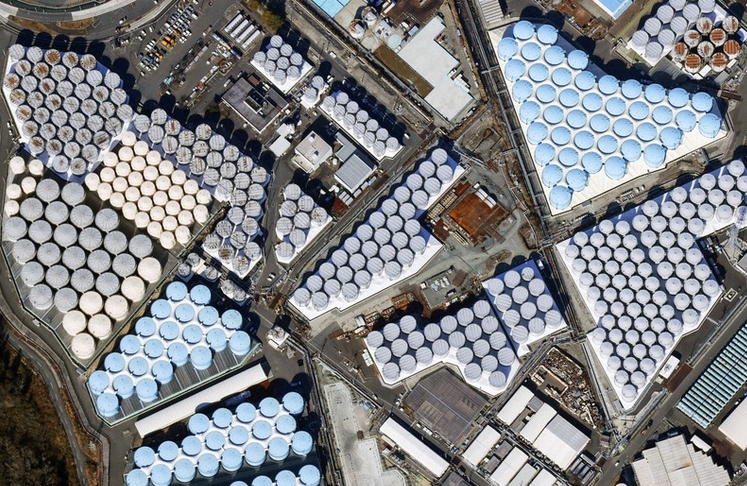
TOKYO (Kyodo) — Tanks containing treated water at the crippled Fukushima nuclear power plant are likely to reach capacity around the fall of 2023, later than the initially predicted spring of next year, as the pace of the accumulation of radioactive water slowed in fiscal 2021.
The slowdown, based on an estimate by operator Tokyo Electric Power Company Holdings Inc., gives some breathing space to Prime Minister Fumio Kishida’s government if any roadblocks are thrown up in the plan to discharge the treated water into the sea starting around spring next year.
China and South Korea as well as local fishing communities that fear reputational damage to their products remain concerned and have expressed opposition to the plan.
About 1.30 million tons of treated water has accumulated at the Fukushima Daiichi plant following the 2011 nuclear disaster, and it is inching closer to the capacity of 1.37 million tons.
The water became contaminated after being pumped in to cool melted reactor fuel at the plant and has been accumulating at the complex, also mixing with rainwater and groundwater.
According to the plan, the water — treated through an advanced liquid processing system, or ALPS, that removes radionuclides except for tritium — will be released 1-kilometer off the Pacific coast of the plant through an underwater pipe.
The International Atomic Energy Agency has been conducting safety reviews of the discharge plan and Director General Rafael Grossi says the U.N. nuclear watchdog will support Japan before, during and after the release of the water, based on science.
An IAEA task force, established last year, is made up of independent and highly regarded experts with diverse technical backgrounds from various countries including China and South Korea.
Japan’s new industry minister Yasutoshi Nishimura says the government and TEPCO will go ahead with the discharge plan around the spring of 2023 and stresses the two parties will strengthen communication with local residents and fishermen, as well as neighboring countries, to win their understanding.
Beijing and Seoul are among the 12 countries and regions that still have restrictions on food imports from Japan imposed in the wake of the massive earthquake and tsunami triggered nuclear meltdowns at the Fukushima plant in March 2011.
“We will improve our communication methods so we can convey information backed by scientific evidence to people both at home and abroad more effectively,” Nishimura said after taking up the current post in a Cabinet reshuffle Wednesday.
Kishida instructed Nishimura to focus on the planned discharge of ALPS-treated water that will be diluted with seawater to one-40th of the maximum concentration of tritium permitted under Japanese regulations, according to the chief of the Ministry of Economy, Trade and Industry.
The level is lower than the World Health Organization’s recommended maximum tritium limit for drinking water.
TEPCO will cap the total amount of tritium to be released into the sea as well.
Meanwhile, the Kishida government has decided to set up a 30 billion yen ($227 million) fund to support the fisheries industry and said it will buy seafood if demand dries up due to harmful rumors.
Fishing along the coast of Fukushima Prefecture, known for high-quality seafood, has been recovering from the reputational damage caused by the nuclear accident but the catch volume in 2021 was only about 5,000 tons, or about 20 percent of 2010 levels.
Construction of discharge facilities at the Fukushima plant started in August, while work to slow the infiltration of rain and groundwater was also conducted.
TEPCO said it was able to reduce the pace of accumulation of contaminated water by fixing the roof of a reactor building and cementing soil slopes around the facilities, among other measures, to prevent rainwater penetration.
The volume of radioactive water decreased some 20 tons a day from a year earlier to about 130 tons per day in fiscal 2021, according to the ministry.
The projected timeline to reach the tank capacity has been calculated based on the assumption that about 140 tons of contaminated water will be generated per day, according to METI.
However, storage tanks could still reach their capacity around the summer of next year if heavy precipitation or some unexpected events occur, the ministry said.
As part of preparations for the planned discharge, the Environment Ministry has started measuring tritium concentration at 30 locations on the surface of the sea and seabed around the Fukushima plant, four times a year.
Similarly, the Nuclear Regulation Authority has increased the number of locations it monitors tritium levels by eight to 20. The Fisheries Agency has started measuring tritium concentration in marine products caught along the Pacific coast stretching from Hokkaido to Chiba Prefecture.
Given that it is expected to take several decades to complete the release of treated water, NRA and METI officials urged TEPCO to further curb the generation of contaminated water at the plant.
“We want TEPCO to step up efforts so as to lower the volume of the daily generation of contaminated water to about 100 tons or lower by the end of 2025,” a METI official said.
https://mainichi.jp/english/articles/20220819/p2g/00m/0na/039000c
Japan’s industry minister visits crippled Fukushima plant amid controversial plan to dump radioactive wastewater into sea

August 18, 2022
TOKYO, Aug. 18 (Xinhua) — Japan’s industry minister visited the crippled Fukushima nuclear power plant Thursday to see the extent of the damage caused by the March 2011 tsunami-triggered nuclear disaster, and assess the complications still facing the plant and its decommissioning efforts.
During his visit, Yasutoshi Nishimura, who received his new ministerial portfolio in a cabinet reshuffle last week, was also scheduled to hold talks with officials from Tokyo Electric Power Company Holdings Inc. (TEPCO), the operator of the plant, and meet with local government officials.
His visit was made amid a myriad of challenges facing the plant including from a controversial plan for radioactive wastewater to be discharged into the Pacific Ocean.
The mayors of two towns hosting the Fukushima Daiichi nuclear power plant have urged the central government to take steps to protect the reputation of the region’s marine products under the plan to dump radioactive water from the plant into the sea.
Fukushima Governor Masao Uchibori believes the contentious plan has not earned enough understanding from the Japanese people and residents of the prefecture, as there are still various opinions including concerns over renewed reputational damage.
Okuma Mayor Jun Yoshida, meanwhile, has voiced concerns that the already maligned region will once again have its reputation damaged, and also urged the central government to take steps to prevent damage to the northeast region’s reputation.
Under the plan, the water, which contains hard-to-remove radioactive tritium as a result of being used to cool down melted nuclear fuel at the stricken plant, will be discharged through an underwater tunnel one kilometer off the Pacific coast into the ocean after being treated.
The plant had its key cooling functions knocked out after being battered by a massive earthquake-triggered tsunami over a decade ago, resulting in the worst nuclear crisis since Chernobyl in 1986.
The tainted water being stored in tanks at the plant is expected to reach capacity next year and the lengthy process of then dumping the radioactive water into the ocean is projected by TEPCO to take several decades, beginning next spring.
Japan’s fisheries industry, for instance, has maintained its ardent opposition to the plan, as it will almost certainly cause further damage to the industry’s reputation in the region.
A number of countries and regions continue to impose restrictions on Japanese agricultural and fishery products as a result of the initial Fukushima crisis amid continued concerns about the safety of the produce.
Japan’s controversial plan to dump radioactive wastewater into the Pacific ocean has raised concerns from the international community, including from Japan’s neighbors, over its impacts on the global marine environment and the public health of Pacific-rim countries. The Japanese side has been asked to earnestly fulfill its due international obligations, dispose of the nuclear-contaminated water in a science-based, open, transparent and safe manner, and stop pushing through the plan to discharge the water into ocean.
https://english.news.cn/20220818/c1a7c11078c6427ebdd74f3bceec40c7/c.html
Japan’s industry minister inspects crippled Fukushima nuclear plant
Another euphemism, “concerns”, not concerns just plain opposition. Damn hypocrites!

Aug 18, 2022 Japan’s industry minister Yasutoshi Nishimura inspected the crippled Fukushima nuclear power plant Thursday, his first visit since assuming the position last week, to assess the progress of decommissioning and the ongoing challenges stemming from the March 2011 nuclear disaster. Nishimura met with officials of Tokyo Electric Power Company Holdings Inc., operator of the Fukushima Daiichi plant, and chiefs of local governments and the prefectural assembly, as his ministry faces multiple challenges such as a plan to discharge treated water containing trace amounts of tritium into the sea.
“I will give my best in gaining understanding on safety (of the discharge plan) and preventing reputational damage” to local businesses, Nishimura said at a meeting with Fukushima Gov. Masao Uchibori, which was partly open to the press.
Nishimura was named as chief of the Ministry of Economy, Trade and Industry in the Aug. 10 Cabinet reshuffle.
Earlier in the month, local government chiefs from the prefecture called on the central government to take measures to prevent reputational damage to local businesses selling marine products, a key concern among the fisheries industry which opposes the discharge expected to begin next spring.
The request was made by the mayors of Okuma and Futaba, the two towns hosting the Fukushima plant, and the Fukushima governor during a meeting in Tokyo with Nishimura’s predecessor Koichi Hagiuda, now chairman of the ruling Liberal Democratic Party’s Policy Research Council.
The local government heads have also urged the central government to create an environment where marine products are traded at fair prices so that residents, particularly young people, can operate competitive businesses.
According to the discharge plan, the water — treated through a processing system that removes radionuclides except for tritium — will be released 1-kilometer off the Pacific coast of the plant through an underwater pipe.
While construction of discharge facilities is under way following approval of the plan by the Nuclear Regulation Authority, neighboring China continues to oppose the release of the treated water.
South Korea has also expressed concerns over the plan.
Japan’s plan for radioactive water defies international law
August 21, 2022
By Duncan E. J. Currie and Shaun Burnie

Millions of tons of highly contaminated water from Fukushima Daiichi being discharged into the Pacific Ocean not only poses a threat to humans and the environment, but also raises questions on how the decision by the Japanese government relates to international law.
What we conclude is that the decision by the Japanese government to treat and then release radioactive water at Fukushima into the ocean would pose a direct threat to the marine environment, including that of the jurisdictional waters of the Korean peninsula. As such, Japan would be in breach of its obligations as defined under international environmental law, including the United Nations Convention on the Law of the Sea (UNCLOS).
Consequently, the Korean government has the legal right to oppose the discharging of radioactive water from the Fukushima Daiichi nuclear plant.
The discharge of radioactive materials into the marine environment from the nuclear plant will inevitably increase marine species’ exposure to radioactivity, with the exact level of exposure depending on multiple variables. The concentrations in biota are of direct relevance to those who may consume them, including marine species, and ultimately, humans.
The one million tons of highly contaminated water stored in nearly 1000 tanks at the Fukushima Daiichi nuclear plant currently contain concentrations of radioactive tritium much higher than is permitted by Japanese regulation for discharge into the ocean. One principle concern is that the high relative biological effectiveness (RBE) of tritium’s beta radiation, its ability to bind with cell constituents to form organically-bound tritium (OBT) and its short-range beta particle, mean that it can damage DNA.

The water also contains other radionuclides in addition to tritium, including the very hazardous Strontium-90. Strontium-90 poses a major health risk as it is absorbed by the body in a similar manner to calcium, where it increases the risk of developing leukemia.
A further major problem is that the processing technology used at Fukushima Daiichi ― specifically the Advanced Liquid Processing System (ALPS) ― failed to operate effectively, and therefore around 800,000 tons of the water contains even higher amounts of radioactive material, including Sr-90. There are an estimated 30,000 Megabecquerels of Strontium90 in the storage tanks.
To give some perspective on this amount of strontium-90 ― it is what an average Pressurized Water Reactor would discharge in its liquid waste if it were to operate for 120,000 years. This is more than half the number of years humans have inhabited the earth. Even more threatening is that these discharges are only a small fraction of the radioactive inventory of what remains at the destroyed nuclear site. Most Strontium-90 still remains in the molten cores at the site ― an amount 17.3 million times more than would be released under the Japanese government’s plans for the contaminated water. And there are many other radionuclides present in the contaminated water with even longer half-lives ― the time is takes for one-half of the radioactive material to decay ― including iodine-129, which has a half-life of 13 million years.
For South Korea, the impacts of this radiation exposure are of great importance to its fishing communities, the wider population and the government. The toxic cocktail of radionuclides from Fukushima Daiichi will rapidly disperse through the strong coastal currents along Japan’s Pacific coast, and enter the East Sea via the East China Sea, including the waters of the Korean peninsula. We know this as a result of sea water sampling following the March 2011 nuclear disaster.
In addition to the requirements under the U.N. International Maritime Organization (IMO), Japan is required to comply with international law that prohibits significant trans-boundary environmental harm, both to the territory of other States and to areas beyond national jurisdiction. Before any discharge into the Pacific Ocean, Japan is required to conduct an Environment Impact Assessment under Article 206 of UNCLOS. International radio-protection principles require that a decision to increase radioactivity in the environment must be justified, and if there is a viable alternative ― in this case long-term storage ― it cannot be justified.
There never was a rationale for further, deliberate radioactive pollution of the marine environment from Fukushima Daiichi. In the interests of protection of that environment as well as public safety, and to ensure compliance with its international legal obligations, the only acceptable way forward for the Japanese government is to terminate its discharge plans. There is a clear alternative to discharging over one million tons of highly contaminated water into the environment, which is to securely store the water in robust tanks for the long term (hundreds of years). In parallel, the best available technology should be applied for further processing to remove all radionuclides.
Authors
Duncan Currie is a practicing international and environmental lawyer. He has practiced international law and environmental law for nearly thirty years, and over that time has advised NGOs, corporations and governments on a wide range of environmental issues including the law of the sea, nuclear and waste issues.
Shaun Burnie is a senior nuclear specialist with Greenpeace Germany, with much of his time based in Japan. He has worked on nuclear issues in Asia, the former Soviet Union, Europe, North and South America and the Middle East for 35 years. He worked against the operation of the TEPCO Fukushima Daiichi reactors since 1997.
EDITORIAL: TEPCO must be candid on plan to discharge “tainted” water into ocean
Tainted, what an euphemism!

August 17, 2022
Radiation-contaminated water is still being produced in the Fukushima No. 1 nuclear power plant operated by Tokyo Electric Power Co.
Progress is being made on the government’s plan to release treated water into the ocean, and local governments have approved the construction of pertinent facilities.
However, local opposition to the project remains fierce, particularly from the fisheries industry.
The central government and TEPCO must spare no effort to thoroughly explain the project to the parties concerned, as well as to the rest of the nation and the world.
At the crippled plant, groundwater is continuing to mix into cooling water for melted nuclear fuel, raising the volume of radiation-contaminated water by about 130 tons a day.
The contaminated water is treated to remove most of its radioactive content and is kept in storage tanks.
But with the existing tanks now nearly full, the government decided in spring last year to dilute the stored water with seawater and discharge it into the sea, fearing that building more storage tanks could affect post-disaster recovery work.
TEPCO is currently proceeding with preparations for the offshore discharge about 1 kilometer from the plant.
The Nuclear Regulation Authority approved the plan last month, saying it saw no safety issues.
NRA Chairman Toyoshi Fuketa told a news conference, “While I recognize opposition to the plan, the offshore discharge (of treated water) cannot be avoided if we are to proceed with the decommissioning of reactors.”
Residual tritium in the treated water is released into the sea by active nuclear power stations in and outside Japan.
The government’s plan is to dilute the tritium content to less than one-40th of the national standard, and keep the annual release volume below the pre-accident level.
The International Atomic Energy Agency noted in its report in April to the effect that the radiological impact on the public was expected to be very low and significantly below the level set by the Japanese regulatory body.
The Fukushima prefectural government and the municipal governments of Okuma and Futaba–which co-host the Fukushima No. 1 plant–approved the construction of discharge facilities in early August.
Two days later, TEPCO advanced the project to the phase of actual construction of an undersea tunnel through which the treated water will be released into the ocean.
But the local fisheries industry and other opponents of the project are not yielding an inch. They claim that even though the radiation level is below the required safety standard, anything that is being discharged from the crippled plant cannot be considered completely safe and can cause damage due to rumors or misinformation.
In fact, when the NRA solicited opinions from the public, all sorts of questions and negative comments were sent in.
In 2015, the government and TEPCO promised the fishing industry that “no treated water will ever be discharged without the understanding of the parties concerned.” This is the kind of promise they must not be allowed to renege on.
TEPCO says that it fully understands the “importance of explaining everything thoroughly” and will provide information on its official website. Of course, the company must be completely open and be willing to answer questions.
But its trustworthiness is suspect, as the utility proceeded with its tunnel construction project as soon as it was approved by the local governments.
If TEPCO genuinely wants the understanding of the parties concerned, it must listen directly to people’s questions and opposing views and strive to keep up the conversation.
As if causing an unprecedented nuclear disaster at Fukushima wasn’t bad enough, the damage compensations that TEPCO made to victims were hardly generous, and the company even kept up wrongful practices at its other nuclear power stations.
Unless TEPCO makes every imaginable effort, we doubt it will ever be able to build a relationship of trust with local communities.
It is time for the utility’s president and top executives to consider holding candid, face-to-face meetings with fisheries industry representatives and local residents.
Japan Govt./TEPCO Say Solution to Pollution is Dilution, as Plan to Dump Fukushima Wastewater to Pacific Moves Ahead

August 15, 2022
Fukushima Prefecture, Japan — Japan’s Nuclear Regulation Authority has formally endorsed a controversial plan by TEPCO (Tokyo Electric Power Company) — the operator of the Fukushima Daiichi nuclear power plant — to start dumping more than a million tons of radioactive wastewater from the plant into the Pacific Ocean within the next two years. The plant was crippled in 2011 by an earthquake and tsunami that caused a disastrous triple meltdown. TEPCO claims it’s now running out of room to continue storing the wastewater onsite, but expert critics of the plan say that’s not really true.
The unprecedented disposal plan is expected to last for decades, with the wastewater to be pumped through a half mile long undersea tunnel that has yet to be constructed. The International Atomic Energy Agency (IAEA) signed off on the scheme last year, with IAEA Director General Rafael Mariano Grossi declaring that ocean disposal would be “both technically feasible and in line with international practice.” Yet, Grossi also admitted “the large amount of water at the Fukushima plant makes it a unique and complex case.”
This leaves opponents of the plan with no other regulatory recourse. Those opposed include Greenpeace Japan, human rights experts from the United Nations (UN), the government of China (which has deemed the strategy “extremely irresponsible”), as well as labor unions in the Japanese fishing industry.
Japanese fishermen fear that seafood will be contaminated by tritium in the wastewater — a radioactive isotope that cannot be removed through filtering. Japanese regulators have claimed the tritium will be diluted below 1/40th of the allowable level for discharge in Japan and to 1/7th of the World Health Organization’s (WHO) ceiling for drinking water.
The Japanese government has put forth a relief plan to assist the fishing industry, saying last year that it will create a fund to buy and store freezable seafood from fishermen whose sales drop due to reputational damage from the discharges from Fukushima. The details on the plan remain murky though, as does the wastewater’s potential damage to the food chain.

55 countries and regions including the United States imposed restrictions on the import of Japanese seafood in the wake of the Fukushima meltdowns, but only five of them still have import bans in place (China, South Korea, Taiwan, Hong Kong and Macau.)
EnviroNews reached out to the IAEA but the agency did not respond to a query about their endorsement of the controversial plan, while the U.S. Nuclear Regulatory Commission (NRC) predictably deflected toward the IAEA.
“The United States is confident the Government of Japan, in collaboration with the International Atomic Energy Agency, has weighed all available options and has taken all appropriate international guidelines into consideration in its decision-making process. We understand the IAEA will continue to work closely with the Government of Japan to ensure the adopted approach is in accordance with globally accepted nuclear safety standards,” U.S. NRC Public Affairs Officer Scott Burnell told EnviroNews by email.
Greenpeace has another view, condemning the dumping plan and insisting TEPCO’s claim about running out of storage space at Fukushima simply isn’t true.
In the wake of the IAEA’s endorsement of the scheme last year, Greenpeace Japan’s Climate/Energy Campaigner Kazue Suzuki said this:
“The Japanese government has once again failed the people of Fukushima. The government has taken the wholly unjustified decision to deliberately contaminate the Pacific Ocean with radioactive wastes. It has discounted the radiation risks and turned its back on the clear evidence that sufficient storage capacity is available on the nuclear site as well as in surrounding districts. Rather than using the best available technology to minimize radiation hazards by storing and processing the water over the long term, they have opted for the cheapest option, dumping the water into the Pacific Ocean.”
Several human rights experts from the United Nations’ Human Rights Council have also expressed concern and regret at Japan’s dumping strategy with the three Special Rapporteurs saying this in a statement last year:
“Japan has noted that the levels of tritium are very low and do not pose a threat to human health. However, scientists warn that the tritium in the water organically binds to other molecules, moving up the food chain affecting plants and fish and humans. They say the radioactive hazards of tritium have been underestimated and could pose risks to humans and the environment for over 100 years.”
Nuclear engineer and Fairewinds Energy Education board member Arnie Gundersen has visited the Fukushima site four times over the past decade and concurs with the Greenpeace assessment. In an interview with EnviroNews, he pointed out how the land next to the nuclear plant could be utilized for further storage of the contaminated water.
“There’s vast amounts of pasture land, immediately adjacent, that [are] highly contaminated… so they’re not going to use it for anything,” Gundersen told EnviroNews. “So, they could build more tanks, but it’s cheaper for them to dump it than to build more tanks.”
Gundersen also takes issue with TEPCO’s claim that the proposed dumping scheme will only involve a release of tritium, noting that there are still other radioactive isotopes of concern.
“They’re trying to portray this as a tritium release, but in fact there are other isotopes in the water in addition to tritium. There’s strontium and cesium and things like that,” Gundersen said. “The isotope of concern for me is Strontium 90, which is classified as an HDT – which stands for hard to detect.”
Gundersen noted that strontium is “a bone-seeker” that causes leukemia and is difficult to detect because it emits a beta particle that is similar to other elements emitted at the same frequency. As to the tritium, he noted that it’s naturally occurring in very low quantities so that measurements won’t find an appreciable increase 100 to 200 miles away from where TEPCO is planning the discharge. The dump-zone itself however, is another story.
“200 miles of ocean is an awful lot to contaminate because you’re too cheap to build more tanks,” Gundersen asserted. He pointed out that tritium has a 12-year half-life, meaning that the contamination level would decrease by 50 percent in 12 years, 75 percent in 24 years, and would be considered decayed by 120 years.
Gundersen says the IAEA’s claim that TEPCO’s dumping plan is in line with international practice is another blatant falsehood.
“It’s not in line with international practice. You’re talking about dumping a thousand tanks of thousands of tons [of contaminated wastewater] per tank into the ocean. Nobody’s doing that, it’s never been done,” Gundersen rebuffed, adding that the IAEA is more concerned about protecting the image of the nuclear power industry than they are about protecting the oceans and the food chain.
- bureau EnviroNews World News
- by Greg Schwartz
- on August 15, 2022
- Leave a comment

(EnviroNews World News) — Fukushima Prefecture, Japan — Japan’s Nuclear Regulation Authority has formally endorsed a controversial plan by TEPCO (Tokyo Electric Power Company) — the operator of the Fukushima Daiichi nuclear power plant — to start dumping more than a million tons of radioactive wastewater from the plant into the Pacific Ocean within the next two years. The plant was crippled in 2011 by an earthquake and tsunami that caused a disastrous triple meltdown. TEPCO claims it’s now running out of room to continue storing the wastewater onsite, but expert critics of the plan say that’s not really true.
The unprecedented disposal plan is expected to last for decades, with the wastewater to be pumped through a half mile long undersea tunnel that has yet to be constructed. The International Atomic Energy Agency (IAEA) signed off on the scheme last year, with IAEA Director General Rafael Mariano Grossi declaring that ocean disposal would be “both technically feasible and in line with international practice.” Yet, Grossi also admitted “the large amount of water at the Fukushima plant makes it a unique and complex case.”
This leaves opponents of the plan with no other regulatory recourse. Those opposed include Greenpeace Japan, human rights experts from the United Nations (UN), the government of China (which has deemed the strategy “extremely irresponsible”), as well as labor unions in the Japanese fishing industry.
Japanese fishermen fear that seafood will be contaminated by tritium in the wastewater — a radioactive isotope that cannot be removed through filtering. Japanese regulators have claimed the tritium will be diluted below 1/40th of the allowable level for discharge in Japan and to 1/7th of the World Health Organization’s (WHO) ceiling for drinking water.
The Japanese government has put forth a relief plan to assist the fishing industry, saying last year that it will create a fund to buy and store freezable seafood from fishermen whose sales drop due to reputational damage from the discharges from Fukushima. The details on the plan remain murky though, as does the wastewater’s potential damage to the food chain.
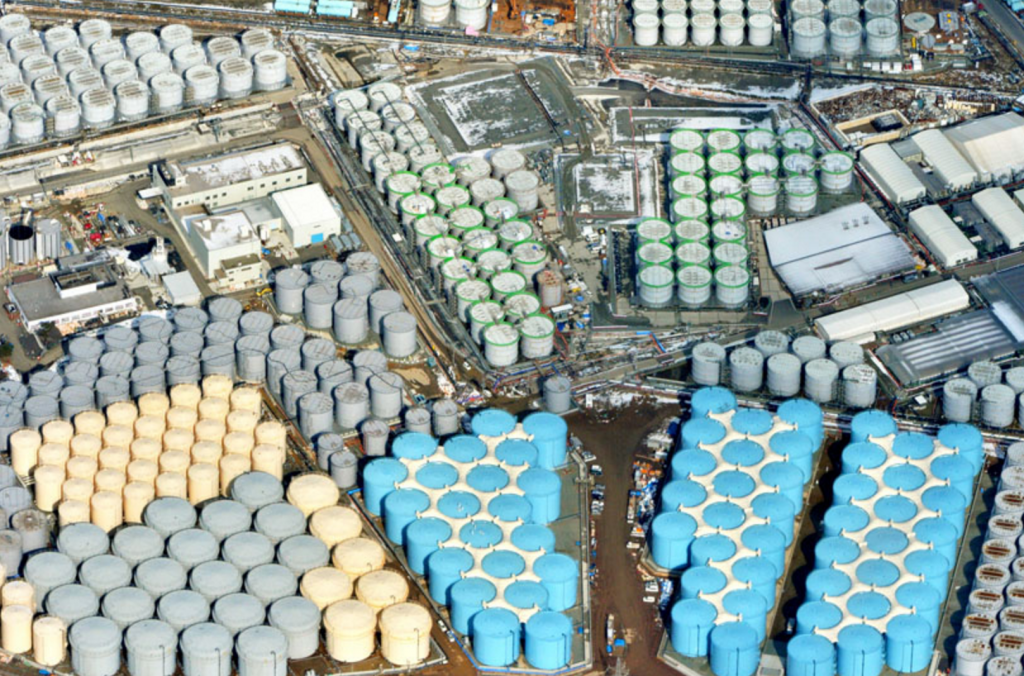
55 countries and regions including the United States imposed restrictions on the import of Japanese seafood in the wake of the Fukushima meltdowns, but only five of them still have import bans in place (China, South Korea, Taiwan, Hong Kong and Macau.)
EnviroNews reached out to the IAEA but the agency did not respond to a query about their endorsement of the controversial plan, while the U.S. Nuclear Regulatory Commission (NRC) predictably deflected toward the IAEA.
“The United States is confident the Government of Japan, in collaboration with the International Atomic Energy Agency, has weighed all available options and has taken all appropriate international guidelines into consideration in its decision-making process. We understand the IAEA will continue to work closely with the Government of Japan to ensure the adopted approach is in accordance with globally accepted nuclear safety standards,” U.S. NRC Public Affairs Officer Scott Burnell told EnviroNews by email.
Greenpeace has another view, condemning the dumping plan and insisting TEPCO’s claim about running out of storage space at Fukushima simply isn’t true.
In the wake of the IAEA’s endorsement of the scheme last year, Greenpeace Japan’s Climate/Energy Campaigner Kazue Suzuki said this:
The Japanese government has once again failed the people of Fukushima. The government has taken the wholly unjustified decision to deliberately contaminate the Pacific Ocean with radioactive wastes. It has discounted the radiation risks and turned its back on the clear evidence that sufficient storage capacity is available on the nuclear site as well as in surrounding districts. Rather than using the best available technology to minimize radiation hazards by storing and processing the water over the long term, they have opted for the cheapest option, dumping the water into the Pacific Ocean.
Several human rights experts from the United Nations’ Human Rights Council have also expressed concern and regret at Japan’s dumping strategy with the three Special Rapporteurs saying this in a statement last year:
Japan has noted that the levels of tritium are very low and do not pose a threat to human health. However, scientists warn that the tritium in the water organically binds to other molecules, moving up the food chain affecting plants and fish and humans. They say the radioactive hazards of tritium have been underestimated and could pose risks to humans and the environment for over 100 years.
Nuclear engineer and Fairewinds Energy Education board member Arnie Gundersen has visited the Fukushima site four times over the past decade and concurs with the Greenpeace assessment. In an interview with EnviroNews, he pointed out how the land next to the nuclear plant could be utilized for further storage of the contaminated water.
“There’s vast amounts of pasture land, immediately adjacent, that [are] highly contaminated… so they’re not going to use it for anything,” Gundersen told EnviroNews. “So, they could build more tanks, but it’s cheaper for them to dump it than to build more tanks.”
Gundersen also takes issue with TEPCO’s claim that the proposed dumping scheme will only involve a release of tritium, noting that there are still other radioactive isotopes of concern.
“They’re trying to portray this as a tritium release, but in fact there are other isotopes in the water in addition to tritium. There’s strontium and cesium and things like that,” Gundersen said. “The isotope of concern for me is Strontium 90, which is classified as an HDT – which stands for hard to detect.”
Gundersen noted that strontium is “a bone-seeker” that causes leukemia and is difficult to detect because it emits a beta particle that is similar to other elements emitted at the same frequency. As to the tritium, he noted that it’s naturally occurring in very low quantities so that measurements won’t find an appreciable increase 100 to 200 miles away from where TEPCO is planning the discharge. The dump-zone itself however, is another story.
“200 miles of ocean is an awful lot to contaminate because you’re too cheap to build more tanks,” Gundersen asserted. He pointed out that tritium has a 12-year half-life, meaning that the contamination level would decrease by 50 percent in 12 years, 75 percent in 24 years, and would be considered decayed by 120 years.
Gundersen says the IAEA’s claim that TEPCO’s dumping plan is in line with international practice is another blatant falsehood.
“It’s not in line with international practice. You’re talking about dumping a thousand tanks of thousands of tons [of contaminated wastewater] per tank into the ocean. Nobody’s doing that, it’s never been done,” Gundersen rebuffed, adding that the IAEA is more concerned about protecting the image of the nuclear power industry than they are about protecting the oceans and the food chain.
“The IAEA is a handmaiden to the nuclear industry. Article II of the IAEA charter is to promote nuclear power, so you’re not getting an objective analysis,” Gundersen laments.
Robert H. Richmond, a research professor and Director of the Kewalo Marine Laboratory at the University of Hawaii, voiced similar concerns earlier this summer in an article for CodeBlue:
Claims of safety are not scientifically supported by the available information. The world’s oceans are shared among all people, providing over 50 per cent of the oxygen we breathe, and a diversity of resources of economic, ecological and cultural value for present and future generations. Within the Pacific Islands in particular, the ocean is viewed as connecting, rather than separating, widely distributed populations. Releasing radioactive contaminated water into the Pacific is an irreversible action with transboundary and transgenerational implications. As such, it should not be unilaterally undertaken by any country.
Richmond went on to call for a more prudent approach adhering to precautionary principles. “The rush to dilute and dump is ill-advised and such actions should be postponed until further due diligence can be performed,” he said. “Sound science, and a much more careful consideration of the alternatives, and respect for the health and well-being of the peoples of the Pacific region, all demand it,” Richmond concluded.
Japanese Government is extremely self-serving in promoting the release of treated water from the Fukushima Daiichi Nuclear Power Plant into the sea,” says Chinese media

China calls Japan “self-serving” for discharging treated water
August 14, 2022
The Chinese media is increasingly protesting against the discharge into the ocean of treated water containing radioactive materials from TEPCO’s Fukushima No. 1 nuclear power plant. They accuse the Japanese government of “selfishness” and “self-serving” in its plans to discharge contaminated nuclear water into the Pacific Ocean starting next spring, without regard to domestic and international opposition.
The China Network reported, “TEPCO has recently officially started construction of facilities to discharge nuclear contaminated water from the Fukushima Daiichi Nuclear Power Plant into the ocean. This marks another step forward in Japan’s plan to discharge contaminated water into the ocean. The Japanese government, together with TEPCO, has been pushing for the oceanic discharge of contaminated water, a move that has been met with fierce opposition in Japan and neighboring countries,” the report said.
Masanobu Sakamoto, chairman of the National Federation of Fishermen’s Cooperative Associations, said, “The discharge of nuclear-contaminated water into the ocean has not been understood by the people of Japan and fishermen, and our position of firm opposition remains unchanged. The Seoul office of Greenpeace, an environmental group, also stated, “The dangers of discharging nuclear contaminated water into the ocean are extremely grave, and despite the existence of alternative plans such as long-term storage of nuclear contaminated water, the Japanese government has decided to discharge nuclear contaminated water into the ocean. This is in violation of the principle of prior precautionary measures and other measures that are unanimously accepted by the international community.
The China Times, the official newspaper of the Communist Party of China (CPC), published an article written by Liu Jiu, associate professor at the Faculty of Humanities of Harbin Engineering University. He warned that “once Japan causes radioactive contamination by unilaterally disposing of contaminated water at the Fukushima No. 1 nuclear power plant, it will bear various serious consequences for violating international law and international rules.
The disposal of contaminated water is not merely a matter of Japan’s internal affairs, but must also be regulated and bound by international law, and Japan must comply with its obligations under relevant international law,” Liu said. Japan is a signatory to the UN Convention on the Law of the Sea, the Convention on the Early Notification of Nuclear Accidents, the Convention on Nuclear Safety, and the Convention on the Safety of Radioactive Waste. Under Article 192 of the UN Convention on the Law of the Sea, each country has an obligation to protect and preserve the marine environment,” he continued.
Japan should promptly seek the opinions of the International Atomic Energy Agency (IAEA) and other international organizations and interested countries on the discharge of contaminated water from nuclear power plants into the ocean based on transparent data and truthful information, and together discuss methods and technologies for the disposal of contaminated water and come up with reasonable and legal measures,” he emphasized. If Japan stubbornly ignores its obligations under international law, does not respond to the concerns of the international community, and acts arbitrarily, it will invite endless criticism, claims of responsibility, lawsuits, and compensation claims from neighboring countries, Pacific island nations, and the entire world,” he asserted. The China Network reported, “TEPCO has recently officially started construction of facilities to discharge nuclear contaminated water from the Fukushima Daiichi Nuclear Power Plant into the ocean. This marks another step forward in Japan’s plan to discharge contaminated water into the ocean. The Japanese government, together with TEPCO, has been pushing for the oceanic discharge of contaminated water, a move that has been met with fierce opposition in Japan and neighboring countries,” the report said.
1 This Month

of the week – Shut Down Drone Warfare!


Tell the Ukrainian Government to Drop Prosecution of Peace Activist Yurii Sheliazhenko

Petition to revoke the licensing of the Near Surface Nuclear Disposal Facility (NSDF) at Chalk River. https://www.ourcommons.ca/petitions/en/Petition/Details?Petition=e-7247
To see nuclear-related stories in greater depth and intensity – go to https://nuclearinformation.wordpress.com
-
Archives
- April 2026 (19)
- March 2026 (251)
- February 2026 (268)
- January 2026 (308)
- December 2025 (358)
- November 2025 (359)
- October 2025 (376)
- September 2025 (257)
- August 2025 (319)
- July 2025 (230)
- June 2025 (348)
- May 2025 (261)
-
Categories
- 1
- 1 NUCLEAR ISSUES
- business and costs
- climate change
- culture and arts
- ENERGY
- environment
- health
- history
- indigenous issues
- Legal
- marketing of nuclear
- media
- opposition to nuclear
- PERSONAL STORIES
- politics
- politics international
- Religion and ethics
- safety
- secrets,lies and civil liberties
- spinbuster
- technology
- Uranium
- wastes
- weapons and war
- Women
- 2 WORLD
- ACTION
- AFRICA
- Atrocities
- AUSTRALIA
- Christina's notes
- Christina's themes
- culture and arts
- Events
- Fuk 2022
- Fuk 2023
- Fukushima 2017
- Fukushima 2018
- fukushima 2019
- Fukushima 2020
- Fukushima 2021
- general
- global warming
- Humour (God we need it)
- Nuclear
- RARE EARTHS
- Reference
- resources – print
- Resources -audiovicual
- Weekly Newsletter
- World
- World Nuclear
- YouTube
-
RSS
Entries RSS
Comments RSS
 nuclear-news