Tokyo Olympics and Paralympics: New dates confirmed for 2021
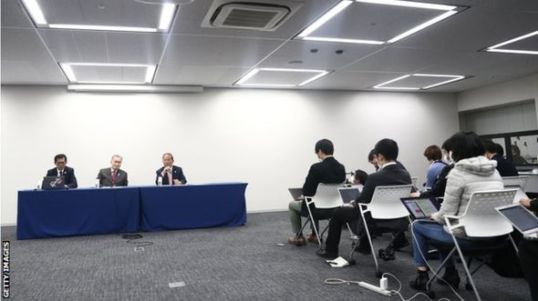 Tokyo 2020 president Yoshiro Mori (centre, at table) made the announcement at a news conference on Monday
30 March 2020
The Tokyo Olympic Games will start on 23 July, 2021 and run to 8 August after being postponed for a year because of the coronavirus pandemic.
The International Olympic Committee’s (IOC) executive board met on Monday to make the decision.
The Olympics will still be called Tokyo 2020 despite taking place in 2021.
The Paralympic Games, originally due to start on 24 August, 2020, will now take place between 24 August and 5 September, 2021.
IOC president Thomas Bach said: “I am confident that, working together with the Tokyo 2020 Organising Committee, the Tokyo Metropolitan Government, the Japanese Government and all our stakeholders, we can master this unprecedented challenge.
“Humankind currently finds itself in a dark tunnel. These Olympic Games Tokyo 2020 can be a light at the end of this tunnel.”
International Paralympic Committee president Andrew Parsons added: “When the Paralympic Games do take place in Tokyo next year, they will be an extra-special display of humanity uniting as one, a global celebration of human resilience and a sensational showcase of sport.
“With the Tokyo 2020 Paralympic Games 512 days away, the priority for all those involved in the Paralympic movement must be to focus on staying safe with their friends and family during this unprecedented and difficult time.”
If that is moved back exactly a year it would clash with the Commonwealth Games in Birmingham which is set to take place between 27 July and 7 August.
“We support the new 2021 dates for the Tokyo 2020 Olympic Games. This gives our athletes the time they need to get back into training and competition,” World Athletics said in a statement.
“Everyone needs to be flexible and compromise and to that end we are now working with the organisers of the World Athletics Championships in Oregon on new dates in 2022.
“We are also in discussions with the Commonwealth Games Federation (CGF) and the European Championships.”
Chief executive of the CGC David Grevemberg said his organisation is “fully committed to hosting a successful Commonwealth Games in Birmingham, England, during 2022”.
He added: “Over the coming days, we will continue to work collaboratively with our international federation partners to ensure the XXII Commonwealth Games maintains its position and stature on the global sporting calendar.”
Olympic organisers hope the delay will allow sufficient time to finish the qualification process which will follow the same mitigation measures planned for 2020.
It has previously been confirmed that all athletes already qualified and quota places already assigned will remain unchanged.
Purchased tickets would be valid for rescheduled events or a refund could be requested when the new dates were set, organisers previously confirmed.
On 24 March, Japan’s Prime Minister Abe Shinzo said the Games would be held in their “complete form” and no later than summer 2021.
Tokyo 2020 organising committee president Yoshiro Mori said he had proposed the 23 July to 8 August timeframe to the IOC, and that Bach had agreed, following consultations with the international sports federations.
“A certain amount of time is required for the selection and qualification of athletes and for their training and preparation, and the consensus was that staging the rescheduled Games during the summer vacation in Japan would be preferable,” Mori said.
“In terms of transport, arranging volunteers and the provision of tickets for those in Japan and overseas, as well as allowing for the Covid-19 situation, we think that it would be better to reschedule the Games to one year later than planned, in the summer of 2021.”
It is the first time in the Olympic Games’ 124-year modern history that they have been delayed, though they were cancelled altogether in 1916 because of World War One and again in 1940 and 1944 for World War Two. Cold War boycotts affected the summer Games in Moscow and Los Angeles in 1980 and 1984 respectively.
BPA “praises speed” of decision
The British Paralympic Association (BPA) has “praised the speed” with which the Tokyo 2020 Games have been rescheduled and hopes it will give athletes the “certainty they need to refocus on achieving their goals”.
Mike Sharrock, chief executive of the BPA, said: “”We recognise many challenges still lie ahead in the battle with the global Covid-19 pandemic and athletes will not be able to return to their training schedules for some time yet.
“The clear priority now is stemming this public health crisis and ensuring people follow the Government advice to stay safe and well.”
Sharrock added he believes Tokyo 2020 “has the potential to be the biggest and best Paralympics in history”.
Study: Cesium levels in fish in Fukushima lakes, rivers differ
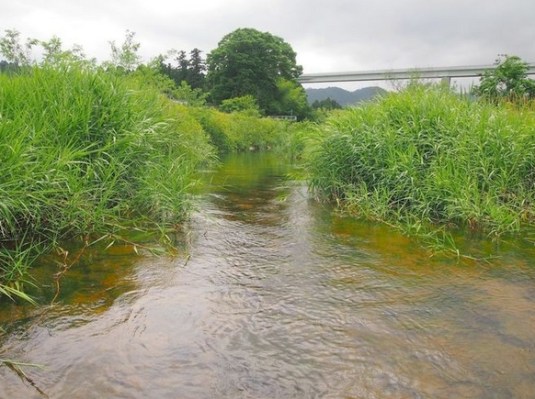 The Otagawa river, which runs through Minami-Soma, Fukushima Prefecture, and elsewhere, was surveyed for cesium levels in fish following the accident at the Fukushima No. 1 nuclear power plant. (Provided by the National Institute for Environmental Studies)
March 27, 2020
A team of scientists discovered that radioactive cesium released from the crippled Fukushima No. 1 nuclear power plant accumulates in freshwater fish differently in lakes and rivers.
How easily cesium is taken into bodies is determined by what the fish consume in lakes, although factors associated with water quality–such as the ratio of mud particles–are more important for those inhabiting rivers, according to the researchers.
The findings are expected to help predict the cesium concentration in aquatic creatures more accurately even when all of them are not examined individually, the researchers from the National Institute for Environmental Studies said.
“The discovery could be used for estimating how the cesium level has lessened in each fish species,” said Yumiko Ishii, a senior researcher at the institution’s Fukushima Branch.
Higher radioactive cesium levels are reported in freshwater fish than those in the ocean in regions contaminated by the nuclear accident that started to unfold at the Tokyo Electric Power Co. plant in March 2011 following the Great East Japan Earthquake and tsunami.
While cesium remains mainly in the flesh, how the substance is ingested differs greatly depending on the species, habitat and other elements.
Sweetfish, char, landlocked salmon, carp and other species are still banned from shipping in certain areas, even nine years after the nuclear accident.
The research team studied how cesium accumulated in different species in areas of Fukushima Prefecture, targeting 30 kinds of fish in lakes Hayamako, Inawashiroko and Akimotoko as well as the Udagawa, Manogawa, Niidagawa, Otagawa and Abukumagawa rivers two to four years after the accident.
The results revealed that cesium levels could change in lakes if the fish consume differing foods. Higher readings were measured for landlocked salmon, char and other creatures preying on small fish, likely because cesium becomes concentrated in their bodies by eating tiny creatures.
On the other hand, the kinds of food they consume do not affect the cesium concentration in fish species living in rivers.
The findings showed cesium accumulates more easily when the water contains a smaller amount of tiny mud particles and carcasses of living creatures. The higher the ratio of those particles, the lower the cesium level becomes.
The researchers said the reason is apparently that cesium in water is absorbed into those particles, making it difficult for cesium to remain in the fish bodies as the substance is discharged in the particles through feces.
Meanwhile, higher cesium levels were detected for larger species both in lakes and rivers.
The discovery has been published in the international magazine Journal of Environmental Radioactivity at: (https://www.sciencedirect.com/science/article/pii/S0265931X1830715X).
Tokyo 2020 Olympics postponed to 2021 due to coronavirus
Those 2020 Tokyo Olympics should never take place, if not a gigantic PR operation by PM Abe and its government in their efforts to whitewash and normalize the ongoing Fukushima disaster in the eyes of the whole world…
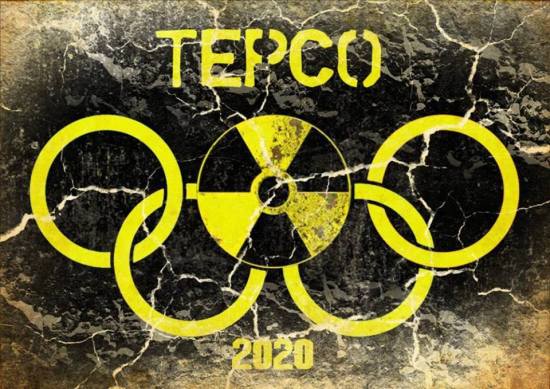 Bye-bye Tokyo 2020 radioactive-coronovirus Olympics
Report: Tokyo 2020 Olympics postponed to 2021 due to coronavirus
International Olympic Committee member Dick Pound tells USA Today “the Games are not going to start on July 24.”
March 23, 202
Huge numbers of sporting events have been canceled or postponed due to the coronavirus pandemic. And now it looks like the granddaddy of global sporting events, the Tokyo Olympic Games, set for this summer, will join them. On Monday, International Olympic Committee member Dick Pound told USA Today the 2020 Tokyo Olympic Games will be postponed, likely to 2021.
“On the basis of the information the IOC has, postponement has been decided,” Pound told USA Today. “The parameters going forward have not been determined, but the Games are not going to start on July 24, that much I know.” Details are yet to be worked out, the newspaper reported.
When asked if Pound was speaking officially for the IOC, the organization replied only that, “It is the right of every IOC member to interpret the decision of the IOC EB which was announced yesterday.” The decision referred to is the IOC announcement that it will study different scenarios regarding the future of the 2020 Games. That statement goes on to say the group will finalize discussions within four weeks, and that cancelation is “not on the agenda.”
While the Olympics have been canceled in the past, for World War I and World War II, they have never been postponed to a different year.
Also on Monday, Reuters reported that Japan Olympic Committee President Yasuhiro Yamashita said he was considering postponement, reflecting the most recent comments from Japanese Prime Minister Shinzo Abe. US President Donald Trump tweeted that he will back whatever decision Abe makes: “We will be guided by the wishes of Prime Minister Abe of Japan.”
Even if the event were to take place as scheduled, Canadian and Australian athletes wouldn’t compete. On March 22, the Canadian Olympic Committee and Canadian Paralympic Committee announced that their teams won’t head to Tokyo and urged that competition be postponed for one year. The Australian Olympic Committee’s executive board also unanimously agreed not to send a team and encouraged athletes to instead prepare for a summer 2021 event.
And on March 20, USA Swimming, the national governing body for competitive swimming, sent a letter to the US Olympic and Paralympic Committee urging the group to postpone the Summer Games to 2021.
The virus came close to the Olympics on March 19, when it was announced that Tokyo 2020 Olympics chief Yoshiro Mori, 82, attended a March 10 meeting with Kozo Tashima, the deputy head of the Japanese Olympic Committee who later tested positive for coronavirus. Mori has no symptoms and hasn’t been tested. The men were seated about 10 meters (about 32 feet) apart.
The Olympics are huge, both in numbers of people involved, and in billions of dollars spent. More than 11,000 athletes from 206 nations are hoping to compete in 339 events. Many thousands more are planning to work in some part of the games, from food and souvenir vendors to hotel clerks to trainers and coaches. NBC had been set to broadcast the games in the US, even offering a dedicated streaming Olympics package for those who want to watch as much as possible, with no ads. And as evidenced by the fact that tickets sold out last July, thousands more were planning to watch the events, whether traveling from across town or across the planet.
The 1916 Summer Games were canceled due to World War I. The 1940 and 1944 Games, both winter and summer, were canceled due to World War II. (Japan was the country affected back then, too — the 1940 Games were set for Tokyo and Sapporo.) Other games have been affected by boycotts. By contrast, in 2016, the Olympics in Rio de Janeiro, Brazil, played out as scheduled despite scientists’ warnings about the Zika virus.
The next Olympics after Tokyo are the 2022 Beijing Winter Games, followed by the 2024 Paris Summer Games, and then the 2026 Winter Games in Milan and Cortina, Italy.
PM Abe says Tokyo Olympics cannot be held under current circumstances
March 23, 202
Japanese Prime Minister Shinzo Abe said Monday this summer’s Tokyo Olympics cannot be held under current circumstances due to the new coronavirus pandemic, suggesting for the first time that the games may have to be postponed.
“If I’m asked whether we can hold the Olympics at this point in time, I would have to say that the world is not in such a condition,” Abe told a parliamentary session, adding he hopes to hold talks with International Olympic Committee President Thomas Bach over the issue.
“It’s important that not only our country but also all the other participating countries can take part in the games fully prepared,” Abe said.
The premier’s comments came a day after the IOC said it will study alternative plans for the Tokyo Olympics, scheduled to open on July 24, amid the global outbreak, and make an assessment within the next four weeks.
The Japanese government will soon tell the IOC it will accept a postponement if the organization decides on it as a precaution against the coronavirus, a source familiar with the plan said.
Tokyo Olympic organizing committee President Yoshiro Mori said he supports the IOC’s decision to review existing plans, adding representatives from Japan and the IOC will hold discussions to examine possible scenarios closely.
“Japan is in a critical state, and the situations in the United States and Europe have been abnormal,” Mori said. “We are not so foolish as to say we will do it under our first (plan).”
Abe, who has previously said he aims to hold the major sporting event in its “complete form,” told the parliamentary session, “If it is difficult to hold the games in such a way, we have to decide to postpone it, giving top priority to (the health of the) athletes.”
“Although the IOC will make the final decision (on the matter), we are of the same view that cancellation is not an option,” Abe said while vowing to work closely with the IOC and the Tokyo metropolitan government.
The IOC on Sunday officially admitted the possibility of pushing back the quadrennial event, saying it will examine various scenarios, adding that it will finalize discussions “within the next four weeks.”
“These scenarios relate to modifying existing operational plans for the games to go ahead on 24 July 2020, and also for changes to the start date of the games,” the IOC said in a statement.
Speaking at a press conference, organizing committee CEO Toshiro Muto said reviewing the possibilities, including postponement, is “not easy” and the organizers are open to “all options.”
Mori said some of the challenges organizers will face in terms of postponement include handling the costs of delaying and the availability of venues.
Meanwhile, Tokyo Gov. Yuriko Koike told reporters, “(The IOC) clearly stated that cancellation will not happen, and I am glad to share that view.”
“There are lots of issues, but I would like to discuss possible scenarios over the next four weeks with the IOC and the organizing committee,” she said. “The Tokyo Games now have another goal, to defeat the novel coronavirus.”
Mori said local organizers will decide in the coming days whether to go ahead with the opening of the domestic leg of the torch relay in Fukushima Prefecture on Thursday, as developments surrounding the pandemic have been changing rapidly.
Mori added that Bach told him that the Japanese organizers have the authority to make decisions about the domestic leg of the torch relay.
Members of the organizing committee revealed Monday they may drastically reduce the scale of the torch relay, including canceling the participation of members of the public.
Under modified plans, the Olympic flame may be carried by car in the initial stages of the relay.
Muto and Olympics minister Seiko Hashimoto each said Monday the relay will proceed as planned for the moment.
Mori also revealed that Abe is now reluctant to attend the kick-off ceremony since the Japanese government has been requesting people refrain from holding large events to prevent the spread of the virus.
Olympic torchbearers in Japan expressed concerns over the IOC’s new direction.
“Both runners and spectators of the relay would be half-hearted. I wonder whether they will let us run again if (the sporting event) is postponed,” said 66-year-old Yumiko Nishimoto, who is scheduled to run in Fukushima on Thursday as one of the 10,000 torchbearers in Japan.
The 121-day Japanese leg is scheduled to kick off at the J-Village soccer training center, which served as a frontline base of operations to battle the 2011 nuclear crisis caused by the March 11 quake-tsunami disaster that year.
A decision on postponement “should be made before the torch relay starts,” Nishimoto said. “I have mixed feelings as I feel that we are being messed around.”
The global coronavirus pandemic has cast a cloud over the hosting of the Tokyo Olympics from July 24 to Aug. 9 and the Paralympics from Aug. 25 to Sep. 6. In recent days, national Olympic committees in Brazil, Norway and the Netherlands have called for postponements.
Japanese government officials have repeatedly said preparations are under way for the games to go ahead as scheduled, and the flame for the Olympics arrived on Friday in Japan.
During a videoconference with other leaders from the Group of Seven industrialized nations earlier in the month, Abe secured support for holding “complete” games, meaning they should be held with spectators and without any downsizing.
“I think U.S. President (Donald) Trump and other G-7 leaders will support my decision,” Abe said in the parliamentary session.
Thousands flock to see Olympic flame in Japan despite COVID-19 fears
If you want a definition of denial, this is it. “More than 50,000 people on Saturday (Mar 21) queued to watch the flame displayed at Sendai station in Miyagi, chosen as part of the “Recovery Olympics” to showcase the region’s revival after the 2011 earthquake, tsunami and nuclear meltdown.” Yes, this despite covid-19, and despite the fact that, incredibly, the Abe government is only “considering” not holding the Olympics, a decision that should have been taken months before the outbreak, given the level of radiological contamination in some regions, lingering on long after the March 2011 nuclear disaster.
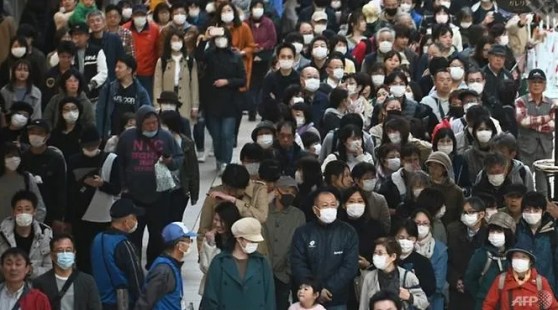 Tens of thousands queued at Sendai station to see the Olympic flame
March 22, 2020
SENDAI: Tens of thousands of people flocked to a cauldron with the Olympic flame in northeastern Japan over the weekend despite concerns about the COVID-19 pandemic.
The flame arrived in Japan to a scaled-down welcoming ceremony on Friday as doubts grew over whether the 2020 Tokyo Olympics will go ahead on schedule as the deadly virus causes chaos around the world.
The pandemic has already shredded the global sports calendar, with top sports leagues suspended and major tournaments postponed.
More than 50,000 people on Saturday (Mar 21) queued to watch the flame displayed at Sendai station in Miyagi, chosen as part of the “Recovery Olympics” to showcase the region’s revival after the 2011 earthquake, tsunami and nuclear meltdown.
Some had to stay in a 500m queue for several hours, local media said.
Many of them wore masks as they took pictures with the cherry blossom-shaped cauldron.
“I queued for three hours but watching the Olympic flame was greatly encouraging,” a 70-year-old woman told public broadcaster NHK.
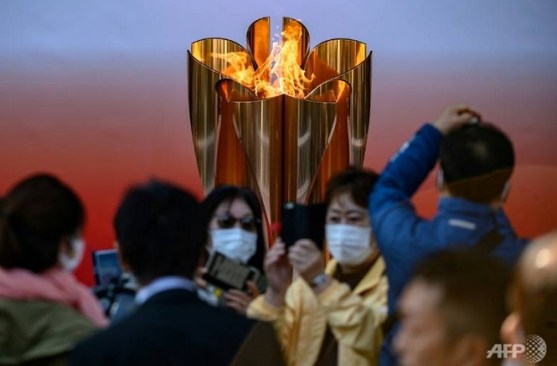 Organisers are under pressure to postpone the Tokyo 2020 Games because of the coronavirus pandemic.
But organisers, concerned about the bigger-than-expected gathering, have warned the viewing event could be suspended if a crowd becomes “extremely dense”, local media reported.
The nationwide torch relay begins on Mar 26, starting from the J-Village sports complex in Fukushima that was used as a base for workers during the 2011 nuclear disaster.
But organisers have been forced to scale back the relay, closing daily ceremonies to the public and urging spectators to “avoid forming crowds” along the route.
IOC must face coronavirus reality and postpone 2020 Olympics
 New York Post back page
March 22, 2020
We are all, all of us, going through various stages of denial where sports are concerned. We are entering Week 3 of our games-free world and we are all here to report that the sun still comes up every morning, it still sets every evening, and every single time they replay the Duke-Kentucky game from 1992, Rick Pitino still doesn’t guard the inbounds pass.
(Perhaps he was distracted by the Iona job 28 years in his future.)
There is a part of us, all of us, that has to beat down the delusional optimist lurking inside. Logically, we know that it’ll be awhile before we see a live sporting event, but even as we start to dream of ordering $12 Heinekens at a ballpark, we turn on the television and there is Gov. Cuomo, saying plainly of COVID-19: “It’s going to work its way through society. But it’s going to be four months, six months, nine months. We’re in that range. Nobody has a crystal ball, no one can tell you.”
Four months. Six months. Nine months.
It’s hard for that potential reality to sink in.
It’s exponentially more fun to see Bill James, the godfather of modern baseball analysis, post on Twitter as he did this weekend: “Pick the day on which you think the major-league baseball season will begin. My pick: May 15.”
(Unless he meant May 15, 2021. That seems more reasonable.)
Of course James, like the rest of us, is a fan. We are allowed our spasms of optimism, even when that bleeds into delusion. There is, after all, nothing rational about living and dying with a hockey team; why should there be anything rational about wanting to SEE a hockey game?
It’s different when you’re talking about the people who run things. We saw a lot of that two weeks ago, when the folks who run sports leagues and basketball tournaments and other such operations came to slow, deliberate and ultimately regret-filled (but proper) decisions to shut things down. The absurdity of that St. John’s-Creighton game going on for a half is something the Big East, specifically commissioner Val Ackerman, will have to answer to in time, when we hold public and private inquests on how all of this went down.
And now there is the International Olympic Committee, which should already have reached the sad conclusion that the upcoming Tokyo Games should be, at least, postponed a year. The U.S. swimming and track and field committees have already called for that. So has a growing number of nations.
Forget the dubious possibility that the world will feel properly scrubbed and sanitized by July 24, when the parade of nations and 11,000 athletes are scheduled to march into Olympic Stadium for the Opening Ceremonies. Let’s say the optimists among us prevail, and we start seeing live sports again sometime in late June or early July.
Even that makes the notion of an on-time start silly. Only 4,000 of those 11,000 athletes have properly qualified for the Games. The trials that would determine the competitors have largely been postponed already, or are certain to be. Travel restrictions are fluid, at best. The Olympics, in optimal times, are a logistical quagmire; amid a global pandemic they would be catastrophic.
Yet the IOC reiterated Sunday that it will wait as long as four weeks before deciding what to do about the Games, with postponement until 2021 the likeliest alternative. And even that concession was only reached after the mounting pressures of local Olympic committees begging the IOC to do the right thing — but before the Canadian and Australian Olympic and Paralympic committees declared they simply won’t send contingents to Tokyo this year, in the strongest show of force — and common sense — yet.
Sometimes, the right thing is simply obvious. It is here. The Olympics, after all, have mostly known their place in world affairs. The 1916 Summer Games were canceled because of World War I, and both the summer and winter games of 1940 and ’44 were canceled due to World War II. The IOC should probably have halted the ’72 Games after terrorists bloodied the Munich Olympiad, but it has had to answer harsh questions about that for 48 years, and rightly so.
Now?
Look, this falls in line with everything else. Everything about our world stinks right now, from our daily small sacrifices (staying home, staying away from friends, honoring quarantines and social distance) to our greater concerns, the workers losing their jobs, the victims felled by this insipid virus, the heroic doctors and nurses and EMTs fighting it on the front lines.
We grapple with these things every day. We bargain in our brains how to cope. It stinks to go through that every day. But we do, all of us, every day. The IOC must do the same, and be quick about it, and smart about it.
Delusion in these times is neither a good strategy nor a good look.
Nine years after the Fukushima nuclear disaster: back to normal towards a bright future?
Translated by Hervé Courtois

Episode 1: radioactivity, return to the abnormal
March 9, 2020
A look back at the ninth anniversary of the Fukushima nuclear disaster – following the earthquake and tsunami of March 11, 2011. Today in Fukushima, the authorities are encouraging the return of refugees, without much success.
 The restaurant “Atom Sushi” in Tomioka, one year after the reopening of the village, has still not reopened.
The decontamination works will last more than 40 years but around the power plant, the exclusion zone is “only” 341 km², and the roads and villages formerly condemned are reopened one after the other by the authorities – anxious to a return to normal.
 Everywhere in the town of Fukushima, 80km from the power plant, they try to make people forget bad memories and make tourists coming back.
Except that villages like Iitate about fifty kilometers from the Fukushima Daiichi nuclear plant are still hopelessly empty.
 In the countryside near IItate, monitors are present everywhere in the landscape measuring radioactivity in microsieverts per hour.
How do we live there? The sociologist Cécile Asanuma-Brice, a researcher at the CNRS has been returning to the area every month for nine years. Ito-san travels the region with a Geiger counter and a shoulder strap dosimeter. Because as soon as we move away from the main axes, the future suddenly looks less bright.
 Nobuyoshi Ito returned to live in the previously evacuated area and collects data on environmental contamination
Episode 2: living with radioactivity
 Mr. Ito is always equipped with his dosimeter, to record the radioactivity accumulated in the reopened area.
Authorities are talking about a return to normal, and residents must get used to living with radioactivity. There are only two villages left in the 340 km² that are still too radioactive. Stations will be reopened in decontaminated pockets within these areas, but they will be fully automated to avoid irradiation of employees.
 Throughout the city of Fukushima, signs display the countdown of the days before the opening of the Olympic Games
And the Olympic flame will leave at the end of the month from the J village, about twenty kilometers from the power plant, and will even pass right by it – but according to a timed route to avoid too much exposure.
Everywhere they want to send the message that the page has been turned: “Forget the radiation, and think about the bright future of the Olympic Games”.

Except that to the rare refugees (no more than 20%) who returned to live in the reopened areas, it is something else that is been asked: to learn to live with radiation, on a daily basis.
 In the region, everywhere, radioactivity detectors are omnipresent, to reassure the population.
To get used to be living with a radioactivity detector. This is why the company Tepco, responsible for the Fukushima Daiichi nuclear plant, now speaks of “revitalizing” the area rather than about a return: it is because it had to be admitted that the original inhabitants would not return there.
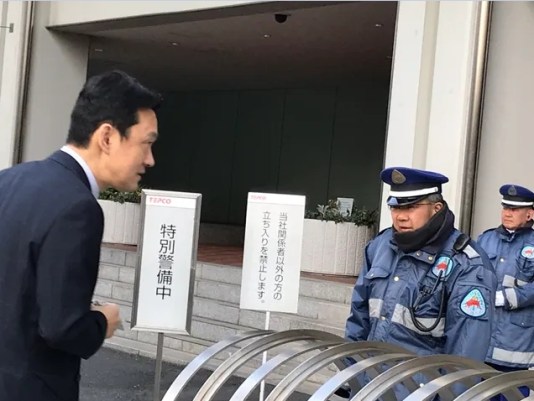 At Tepco’s headquarters in Tokyo, the company was nationalized after the disaster and announces 30 to 40 years of decontamination work.
Episode 3: Fukushima nine years later, it is impossible to turn the page
 On the Johoban highway that crosses the Fukushima area, an unbroken line of trucks transports radioactive waste to a disposal center. The soil measured at less than 8,000 becquerels per kilogram will be scattered everywhere.
March 11, 2020, 9 years to the day of the Fukushima disaster. And if the country has recovered from the magnitude 9.1 earthquake and tsunami that caused nearly 20,000 deaths, the area around the nuclear power plant is a wound that is far from being closed.
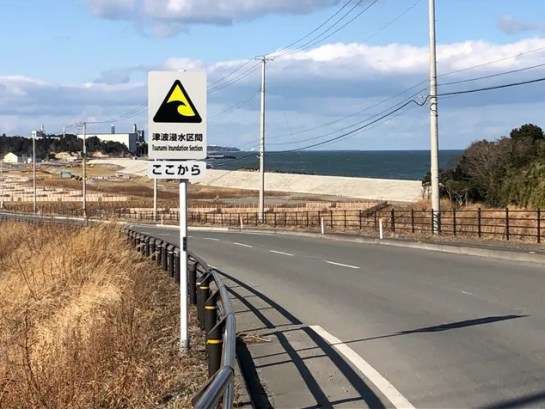 Along the Tohoku coast, a tsunami-proof wall blocks the horizon
The radioactivity is still there and the evacuated residents still do not return. More than 44,000 refugees are still missing even though. Despite the radiation that will be there to last, the authorities want at all costs to use the Olympics this summer as an opportunity to turn the page on this regrettable incident. And that’s kind of the message that Tepco wants to give, when it opened a few months ago in Tomioka, a brand new information center, an interactive museum located 10km from the nuclear plant, to tell its version of the story. And necessarily, their version of the story is a little biased.
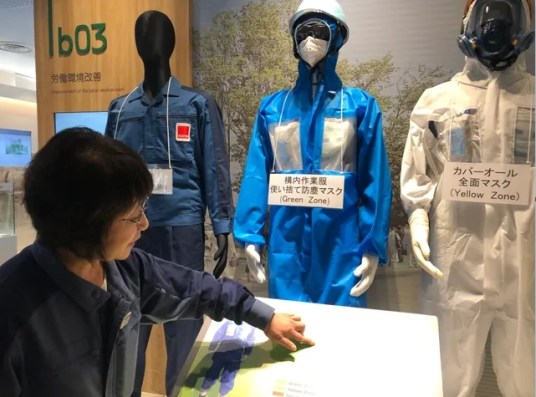 In Tomioka, Tepco has just opened a museum to tell its side of the story and highlight all its efforts to revitalize the area.
No more than 20% of the evacuees returned to live near the plant, and almost exclusively elderly people like Ms. Kimiko. 9 years later, we are still far from the revitalization of Fukushima.
 Mrs. Kimiko returned to live in Tomioka 10km from the nuclear plant three years ago, she no longer recognizes her environment.
Episode 4: mothers of Fukushima
Nine years after the earthquake, the nuclear disaster is not over. Many are not content with orders to return to normal, given the abnormality of daily life around Fukushima – punctuated by radioactivity measures and prohibited areas. And even outside this perimeter, many associations mainly led by women and mothers, act daily for more transparency.
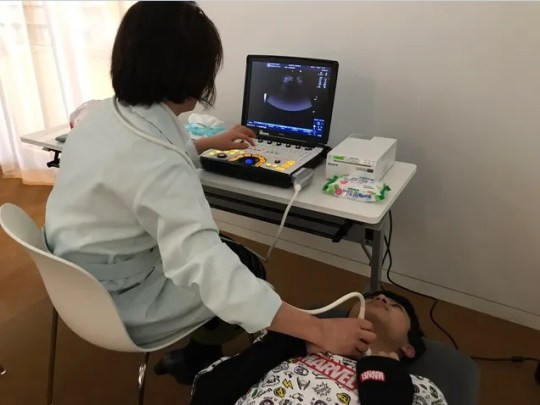 Kaoru Konta is a medical doctor, she detects thyroid cancer.
For example, the MamaBecq, with a “Becq” like Becquerel, who inspect schoolyards with their Geiger counters. Or the Happy Island association, which organizes free screening for thyroid cancer in children. Happy Island is a funny name for such association, but you know how to say “happy island” in Japanese? “Fukushima”.
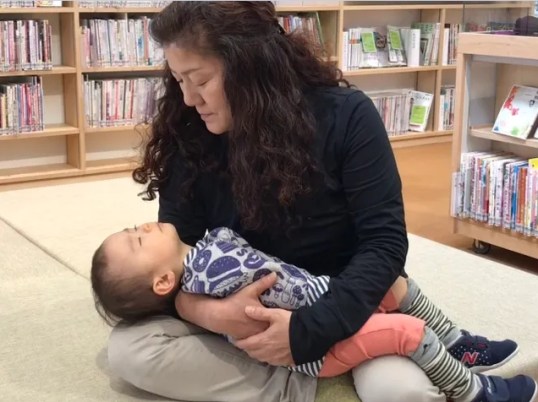 Marie Suzuki is president of the association “Happy Island”
Radioactivity on the move 2020: Recontamination and weather-related effects in Fukushima
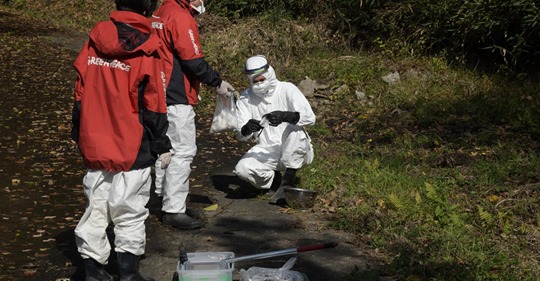
9 March 2020
Tokyo, Japan – Greenpeace Japan’s latest extensive radiation survey
has found evidence of recontamination caused by 2019’s Typhoon 19 (Hagibis) and Typhoon 21 (Bualoi), which released radioactive caesium from the forested mountains of Fukushima Prefecture.
The survey, which was conducted over three weeks in October and November of 2019, observed concentrated radiation levels throughout Fukushima Prefecture. These localised areas were where radioactivity was observed at higher levels than in previous years, as well as a reduction in levels in some areas, and recontamination elsewhere.
The survey identified high-level hotspots throughout Fukushima Prefecture, including in Fukushima City. This ongoing and complex radiological emergency in parts of Fukushima Prefecture runs directly counter to the narrative of the Japanese government which continues to push its propaganda of normalization in Fukushima and the effectiveness of its massive decontamination program.
Typhoons no. 19 & 21 deposited large volumes of rain across Japan, including in Fukushima Prefecture. In recent years, scientists have been reporting the effect of heavy rainfall leading to increased migration of radioactivity from mountainous forests through the river systems.
“The results of our 2019 radiation survey demonstrate the complex and persistent nature of radionuclide mobilization and recontamination in areas of Fukushima Prefecture. The mountainous forest regions of Fukushima prefecture, which have never been decontaminated, will continue to be long-term sources of recontamination. The findings from our recent radiation survey definitively disprove the myth of a ‘return to normal’ in parts of Fukushima.” said Kazue Suzuki, Energy Campaigner of Greenpeace Japan.
The main findings of the Greenpeace Japan investigation include:
- Hotspots measured in all areas surveyed; including Okuma, Naraha (J-Village), as well in Fukushima City.
- Significant variations in radiation levels from previous years in certain zones that cannot be explained by radioactive decay.
- Likely remobilization of radioactivity in the soil and weather-related effects resulting from heavy rainfall was also identified in the reopened area of Iitate, with significant changes in radiation levels comparing across the five year period for which we have data.
- Along the Takase river in the newly reopened area of Namie, and where the government claims it is safe to live, 99% of radiation levels averaged 0.8 μSv/h with a maximum of 1.7 μSv/h, with 99% exceeded the government’s long-term decontamination target of 0.23 μSv/h measured at 1 meter and were twenty (20) times higher than pre-2011 levels.
- In a period of four hours, the survey team identified forty-six (46) hot spots in the around Fukushima City central station, eleven of which equaled or exceeded the Japanese government decontamination long term target of 0.23 μSv/h measured at 1 meter; including observed levels of radiation that 137 times higher than the background radiation levels measured in the Fukushima environment prior to the 2011 nuclear disaster.
- In an area close to a former school and kindergarten in the reopened area of Namie, annual dose rates would be between 10-20 mSv based on the Japanese government methodology and between 17-33 mSv based on sustained exposure over a full year; which are between 10 and 33 times above the international recommended maximum exposure for the public.
- Near the new town hall in the newly reopened area of Okuma, and within a few hundred meters of the planned Olympic torch route, radiation hotspots were measured to be of 1.5 µSv/h at 1 meter and 2.5 µSv/h at 10cm (62 times above the background levels of 0.04 µSv/h before the nuclear accident in March 2011).
- The evidence from earlier typhoons and resulting data strongly suggest that there was a substantial increase in downstream contamination from October 2019. Greenpeace intends to return later this year to further investigate and substantiate the hypothesis of major weathering effects in Fukushima.
“The radiation hotspots we found in public areas along the pavements and streets of central Fukushima City, including tens of meters from the entrance to the Shinkansen train line to Tokyo, highlight the ongoing scale of the nuclear disaster in 2011. The hotspots we found are at a level that they would require a special license to be transported and in the category of Dangerous Goods. The government is using the Olympics as a platform to communicate the myth that everything has returned to normal in Fukushima. They falsely claim that radiation has either been decontaminated or is under control. Our radiation survey clearly shows that the government propaganda is not true.” said Shaun Burnie, Senior Nuclear Specialist of Greenpeace Germany.
Mizue Kanno, a resident of Namie who cooperated on the Greenpeace radiation survey said, “I hope the world knows the real situation in Fukushima. Radioactivity is washing down from the mountains due to heavy rain and flowing into the decontaminated areas. The radiation levels found around my house are higher than ever before. Once a nuclear accident happens, it looks like this, and soon we are going to have the Olympics and pretend that everything is okay. It’s not. ”
ENDS
Notes:
Full report in English, here
Photos and videos, here
https://www.greenpeace.org/international/press-release/29250/radioactivity-on-the-move-2020/
The price of staying
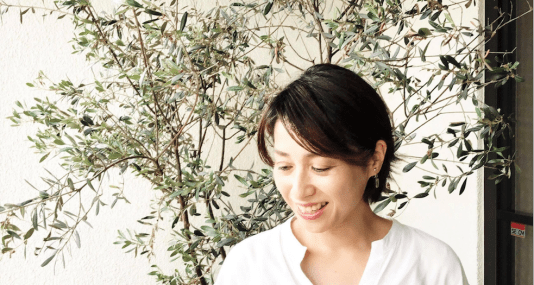
Evacuation was not mandatory for these now suffering Fukushima victims
By Akemi Shima
This is a statement of opinion that I, a resident of the city of Date, Fukushima Prefecture, presented to the Tokyo Regional Court as part of an on-going lawsuit.
“We had the desire to raise our children in an environment close to nature and enriching. That’s why we moved from Fukushima City to buy land in the town of Date, where we currently live, to build a house. Loan repayments were heavy but, we lived simply and we were happy.
“Eight years after the construction of our house, on March 11, 2011 the accident of the power plant occurred, and our family life was turned upside down. My husband and I were 42 years old, my son was in elementary school 4th grade (12 years old) and my daughter was in elementary school 3rd grade (10 years old).
“At that time, I had no knowledge about nuclear or radioactive substances. If I had had some knowledge in this area, by running away from it we probably could have avoided being irradiated. I am burdened by this regret. Without any financial leeway, with my sick children and my parents who are here, I could not resolve myself to get away from Date.
“From the 11th of March all life lines were cut and I had to go to the water stations where I took the children. To find food we had to walk outside sometimes soaked in the rain. After several days as we still had no water, we had to go to the town hall to use the toilet, where the water was not cut. It was then that I saw a group of people dressed in white protective suits entering the town hall. We thought that they were probably coming to help the victims of the tsunami. But now, I understand that the radioactive pollution was such that protections were necessary and we, without suspecting anything, were exposed.
“It was the time for the graduation ceremonies at the elementary school and we went there on foot. I think the information we were given was false and because of that we were irradiated. At the time I was convinced that if we were really in any danger, the state would warn us. I later learned that the doses of radioactivity in the air after the accident were 27 to 32 μSv (micro sieverts) per hour. There was no instruction about any restriction to go outdoors. And that is extremely serious.
“In June 2011, I went to the funeral of my husband’s grandmother. I took my children with me. On the way we noticed that the radiation level was very high and that inside the car the dosimeter showed in some places 1.5 micro-sievert per hour. The officials of that area had asked the nearby residents to not cause problems even if the radioactivity was high. From what I heard, the reconstruction vehicles had to be able to continue to use that road. Likewise, the Shinkansen bullet train and the Tohoku highway were not to be closed for these reasons. Despite a level that exceeded the allowable dose limits, instead of being alerted to the dangers, we were assured that we were safe.
“The risk of this exposure was not communicated to us. In June 2011 my son had so many heavy nosebleeds that his sheets were all red. The children with the same symptoms were so numerous that we received a notice containing recommendations through the school’s “health letter”. During a medical examination at the school, my son was found to have a heart abnormality and had to be monitored by a holter. My son, who was 12 at the time of the accident, was also suffering from atopic dermatitis. During the school spring break he had to be hospitalized after his symptoms worsened. Today we still cannot identify the symptoms that cause him to suffer.
“One year after the accident, my daughter complained of pain in her right leg. In the hospital, an extra-osseous osteoma was diagnosed and she had to undergo bone excision the following year. In her first year of junior high school in the winter term, she could not get up in the morning. She had orthostatic dysfunction. In agreement with her we decided that she would go to school three times a week in a system with flexible hours.
“My husband’s favorite hobby was fishing, but since the nuclear accident, it’s now out of question to go to the sea or to the river.
“Before the accident, we were growing flowers in our garden and we also had a vegetable garden. In the summer, we had family barbecues and we would put up a tent so the kids could sleep outside. Now it’s absolutely impossible.
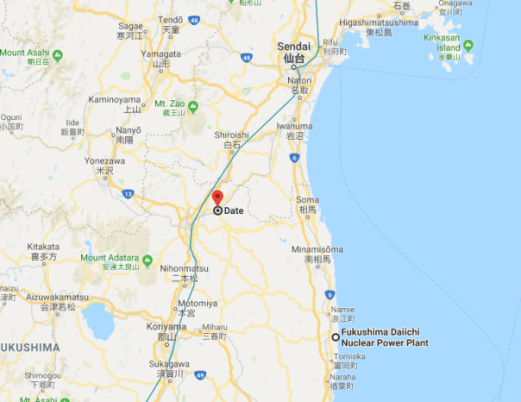 Date is about 60 kilometers from the ruined Fukushima Daiichi nuclear reactors.
“In this highly contaminated environment today, cell DNA would be severely damaged. In addition, the effects of exposure we have already experienced are indelible even if we move now. Whenever I think that children are particularly vulnerable to radiation, my heart is torn apart. As a parent, as an adult, it is heartbreaking and unbearable.
“I am also concerned about the current situation of the Fukushima Daiichi nuclear power plant. My daily routine is to watch out for natural disasters such as earthquakes and to check the condition of the Fukushima Daiichi nuclear power plant. Because today I will not hesitate to evacuate. I changed my job so I could get to my kids quickly if necessary. I had to give up a full time job and it is financially difficult, but the priority is to be able to leave quickly at any time. After verifying all sorts of information, I realized that the government’s announcements were different from reality.
“Living in a radioactive environment requires you to be vigilant tirelessly, whether for shopping, eating, or drinking water, and evaluate the situation yourself to make choices. We had to make up our minds to accept an abnormal lifestyle so that we could continue to live on a daily basis.
“Whatever I do, all pleasure has disappeared from my life. I discovered that there were some hotspots of more than 10 μSv per hour near my home on the way to my children’s school. I reported it to the town hall, but they did not do anything. The reason given is that there is no temporary storage to store it. I had to remove the contaminated soil myself and I stored it in my garden. The city of Date decided on its own decontamination policy and also introduced a standard of 5mSv per year at the end of 2011.
“In my case I wanted to reduce the radioactive pollution as soon as possible and I decontaminated my garden myself. The city encouraged people to decontaminate on their own. I did it too. And that represented 144 bags. The following year I did again. The radioactive debris bags resulting from the decontamination until March 2014 remained in my garden for two years, and were then taken to the temporary storage area.
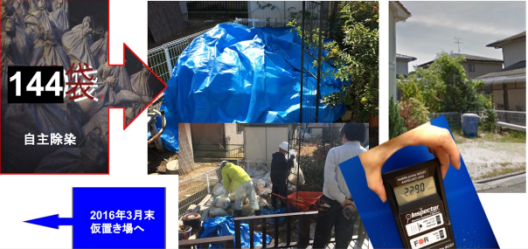 Akemi Shima had to decontaminate her own radioactive garden.
“But since then, the other decontamination bags have not been accepted and are still in my garden. So we do not want to go there anymore. The contamination of our carport amounted to 520 000 Bq (becquerels) 5 years ago, with 5 μSv / h, but it did not fit the criteria required for cleaning. Decontamination only includes the ground around the home, but the roof and the gutters are not supported. As a result, we can not leave our Velux windows open.
“Claiming to be concerned about the health of the inhabitants, the town of Date provided all residents with dosimeters. We were then invited to undergo examinations, during which our data was collected. Without the authorization of the residents, this data has been entrusted to external researchers who have written reports. These reports have been prepared on the basis of personal information obtained illegally, and furthermore falsification of the data is suspected.
“Based on inaccurate data the report concluded that even at doses of 0.6 to 1 μSv / h per hour in the air, the individual dose received would be less than 1 mSv (millisievert) per year and therefore it was not necessary to decontaminate. This is an underestimation of exposure, and clearly a violation of human rights against the population. This case is still ongoing.
“In this same region, leukaemias and rare cancers of the bile ducts are appearing. I cannot help thinking that before the accident it did not exist.
“Even today, while the state of nuclear emergency is still official, this abnormal situation has become our daily life. I fear that the “reconstruction” advocated by the state, violates the fundamental rights of residents and that this unacceptable life is now considered normal. Our lives are at a standstill.
“This suffering will continue. My deepest wish is that through this lawsuit, the responsibility of the State and Tepco that caused the accident be recognized.”
Wild Animals Prefer Nuclear Exclusion Zones to Humans
January 10
The Nuclear Disaster of Fukushima in 2011 was a devastating event, combined with the severe earthquakes and terrifying tsunamis, resulting in the deaths of over 2,000 people in Japan. However, there are now new signs of life within the area, as wild animals are beginning to obtain the land and are reported to be thriving significantly.
The Fukushima Nuclear accident naturally resulted in an exclusion zone being enforced due to the extremely high levels of radiation in the area. This event shares large similarities with the Chernobyl Nuclear Disaster in 1986, with the immediate and extended areas being entirely excluded to humans.
A further surprising link between the two accidents is the revival of natural wildlife to both surrounding areas of the nuclear accidents. In recent years, there have been numerous reports concerning land, within Chernobyl and Pripyat, of wild animals returning to settle down in the nuclear infested areas.
The University of Georgia have been able to conduct research, where they have collected an estimate of 260,000 images of wildlife living successfully inside the exclusion zone. Their studies conclude that more than 20 different species have been identified.
“Our results represent the first evidence that numerous species of wildlife are now abundant throughout the Fukushima Evacuation Zone, despite the presence of radiological contamination” said James Beasley, an associate professor at the Savannah River Ecology Laboratory and the Warnell School of Forestry and Natural Resources at the University.
In addition, with the current suffering and loss of wild animals currently taking place on the other side of the globe in the Australian fires, where estimates suggest that one billion animals have lost their lives. It raises the question as to whether wild animals would prefer to be left to their own devices and enabled to thrive, without human interference. In this instance, the human contribution towards climate change is the leading culprit for the events in Australia.
Bee swarm affected by Fukushima radiation

蜂は2,470bq/Kg
巣(ハニカム部分)16,145bq/Kg
巣(外殻部分)15,342bq/Kg
Radiation levels in one Fukushima reactor high enough to kill a human in two minutes
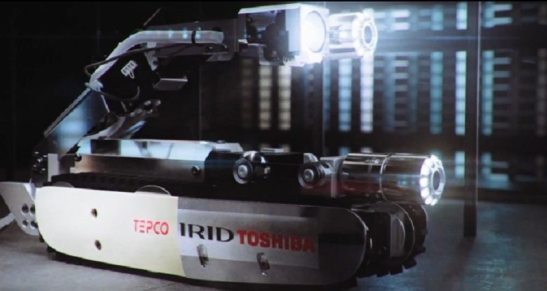
The radiation levels in ‘s unit two reactor are so high they could kill a human in two minutes, according to data collected by a robot.
Tokyo Electric Power, the company which operates the nuclear plant in Fukushima, carried out a robotic survey of the area around the core that melted six years ago, following the earthquake and tsunami that triggered the .
But the scorpion robot Sasori got stuck inside the reactor after its crawling functions failed while climbing over highly radioactive debris and had to be abandoned inside the reactor.
It recorded radiation measures in the area of 210 sieverts per hour, which are lethal enough to kill a human within two minutes.
This is not the first time a robot has become inoperable after entering the reactor.
During a previous survey, another robot designed to clean the debris for Sasori’s passage had to return halfway through when two of its cameras failed after being exposed for two hours to radiation and reaching its maximum tolerance of 1,000 sievert. Such an exposure to can kill a human within seconds.
Despite the dangerously high levels of radiation, company officials said it was not leaking outside the reactor.
The high radiation and inadequate cleaning of the reactors could also limit the scope of future investigations and the company may have to develop more radiation-resistant cameras and equipment.
The probe was specially developed for surveying the interior of the crippled reactor and collect data that will assist in removing the melted fuel.
But the level of radiation and the presence of debris seem to have brought the decommissioning project to a standstill.
British shops to sell radioactive BABY FOOD and other produce from Fukushima under EU plan


Tokyo 2020 Olympics: will Fukushima rice and fruits be on the menu?


Chefs to join Team South Korea in Tokyo Olympics
 President of Korean Sports and Olympic Committee Lee Kee-heung
November 5, 2019
Chefs and food ingredients will accompany the South Korean team and delegation traveling to the 2020 Tokyo Olympics next year. The chefs will prepare food for the South Koreans using homegrown ingredients for the duration of the Games.
Korean Sports and Olympic Committee (KSOC) President Lee Kee-heung, also a member of the International Olympic Committee, unveiled the measures to allay fears over food safety which were raised after Japan announced it would use food products from Fukushima, a region hit hard by a 2011 tsunami and an ensuing meltdown at the nuclear power plant there.
“The KSOC is planning to expand the meal station for Korean athletes during the games to address the food safety issue,” he wrote in a recent written interview with The Korea Times. “Korean food has superb nutritional value and we believe it will help the athletes perform at their best. We will also deliver lunch boxes to the stadiums so our athletes can focus on getting medals,” Lee said.
Earlier, the Japanese Olympic Committee said it would serve athletes food made using ingredients from Fukushima, a region in which water and soil are feared to remain contaminated with radioactivity following the meltdown. South Korea banned rice and vegetable imports from the region immediately after the incident.
The Tokyo Olympics is not the first international sports event where the KSOC has dispatched chefs to prepare meals for athletes. During the 2012 London Olympics, the KSOC sent chefs and nutritionists from the national training center to cook for Korean athletes and staff who craved food from home.
Food safety is among other touchy issues at the Olympics.
The “Rising Sun” flag, a symbol for many in Asia of Japanese colonialism, is another pre-Olympics issue that some South Koreans find concerning. The issue has been raised by Seoul since September after relations with Japan deteriorated following it imposing trade restrictions on certain exports to Korea. In response, Japan said use of the flag does not violate the Japanese Constitution.
Lee said the KSOC has been working to make an Asian alliance to push Japan to not fly it.
“During the 24th Association of the National Olympic Committee (ANOC) General Assembly in Qatar earlier this year, I met with other Asian state representatives and discussed ways to address the issue together. On this issue, our effort to change Japan’s policy will continue and with the support of the government,” he said. ANOC has an annual meeting, and this year’s congress took place in Doha.
Joint Korea team
Lee said he was cautiously optimistic about fielding a joint team between the two Koreas for the Tokyo Olympics, saying the KSOC has continued to talk with the North.
However, another high-level official, who didn’t want to disclose his name because of the sensitivity of the issue, said a joint team may be a distant dream. “Considering what’s going on in inter-Korean relations, it’s difficult to move on a joint team,” he said. He had taken part in negotiations with the North in the past.
A joint team for the 2020 Olympics was agreed in November 2018 at inter-Korean talks held in Gaesong in the North. That year, President Moon Jae-in and North Korean leader Kim Jong-un held three summits.
The governments of the two Koreas agreed to form unified teams in female basketball, female hockey, judo and rowing. “The IOC approved this under one condition ― that is the unified teams would start from qualifying matches,” the anonymous official said.
For all sports but basketball, qualifying matches are already underway. “Basketball qualifying matches will begin at the end of the year. Yet, if things go the way it goes now, unifying a basketball team will be out of the question,” he said. But, he added hopes remain in judo. “In judo, individual athletes compete for qualification. We can consider making a joint team with qualified athletes.”
However, the political situation will hold full sway over the joint team and the current circumstances are not very promising.
Last week, North Korean leader Kim Jong-un ordered the removal of all South Korean-built facilities at Mount Geumgang, including a hotel. North Korea’s aggressive treatment of South Korean football players during their World Cup qualifying game also cast a shadow on the prospects for a joint team.
Despite this, there is still hope for a possible peace gesture during the Olympics.
The official said a joint march at the opening ceremony could still happen. “This has been done several times now, so we could continue to do it.”
North and South Korean athletes have marched together at international sports events 11 times so far. The most recent being the 2018 PyeongChang Winter Olympics in South Korea ― the Koreas also fielded a joint women’s ice hockey team.
In addition to creating the joint team, the two Koreas also agreed to submit a joint bid to co-host the 2032 Summer Olympics, and President Lee said they have a very good chance.
“The Korean Peninsula can be a symbol of peace which will be something we can take advantage of in our campaign for the Olympics,” Lee said, noting that South Korea will host the next ANOC General Assembly. “This will be also a good opportunity to show the sports community that the Koreas are qualified to host the Olympics.”
As an IOC member representing Korea, Lee is at the center of sports diplomacy.
“Now, Korea has two IOC representatives, which has elevated its standing in global sports.” Korea’s sports diplomacy had its heyday in the 2000s when it had three IOC representatives, but in 2017, the number went down to one, raising concern that its standing had weakened.”
Lee viewed the PyeongChang Winter Olympics as demonstrating Korea’s success in sports diplomacy. “This helped Korea get two IOC representatives.”
100th National Sports Festival
With regard to the centennial of the National Sports Festival, Lee said he was saddened by the decreasing public interest. “It will be my job to revamp the festival so that it will recover its lost popularity with bigger public interest and participation.”
The festival started out as an act of resistance to colonial Japan in 1920. In the first year, only baseball was played but other sports were added over the century. This year saw 47 sports including trials of two new ones.
Over the century, the festival served as an incubator for world-class athletes. Figure-skater Kim Yu-na competed in the festival as did Swimmer Park Tae-hwan. The festival has also contributed to developing the infrastructure for Korean sports.
Born in 1955, Lee’s background has been in business, not sports. His first step into the world of sports was with the Federation of the Modern Pentathlon where he served as vice president in 2000. Between 2004 and 2009, he was the president of the Korea Canoe Federation, followed by the Korea Swimming Federation between 2010 and 2016..
He headed the athlete’s team in the 2010 Asian Games in Guangzhou in China and 2012 London Summer Olympics.
At Least 14 levees broke in Fukushima Prefecture

1 This Month


18 March Webinar @ 1 PM EST: An Assessment of SMR Projects: The Case of Canada
register for the zoom:
https://us02web.zoom.us/webinar/register/WN_o8BIIOUvQ2ONJR1nta65DQ#/registration


of the week – STOP SMALL MODULAR REACTORS IN CANADA
To see nuclear-related stories in greater depth and intensity – go to https://nuclearinformation.wordpress.com
-
Archives
- March 2026 (139)
- February 2026 (268)
- January 2026 (308)
- December 2025 (358)
- November 2025 (359)
- October 2025 (376)
- September 2025 (258)
- August 2025 (319)
- July 2025 (230)
- June 2025 (348)
- May 2025 (261)
- April 2025 (305)
-
Categories
- 1
- 1 NUCLEAR ISSUES
- business and costs
- climate change
- culture and arts
- ENERGY
- environment
- health
- history
- indigenous issues
- Legal
- marketing of nuclear
- media
- opposition to nuclear
- PERSONAL STORIES
- politics
- politics international
- Religion and ethics
- safety
- secrets,lies and civil liberties
- spinbuster
- technology
- Uranium
- wastes
- weapons and war
- Women
- 2 WORLD
- ACTION
- AFRICA
- Atrocities
- AUSTRALIA
- Christina's notes
- Christina's themes
- culture and arts
- Events
- Fuk 2022
- Fuk 2023
- Fukushima 2017
- Fukushima 2018
- fukushima 2019
- Fukushima 2020
- Fukushima 2021
- general
- global warming
- Humour (God we need it)
- Nuclear
- RARE EARTHS
- Reference
- resources – print
- Resources -audiovicual
- Weekly Newsletter
- World
- World Nuclear
- YouTube
-
RSS
Entries RSS
Comments RSS
 nuclear-news