For the first time Japan court rules Government negligence to blame for Fukushima

Japanese government held liable for first time for negligence in Fukushima
Court rules government should have used regulatory powers to force nuclear plant’s operator to take preventive measures
A court in Japan has ruled that negligence by the state contributed to the triple meltdown of the Fukushima Daiichi nuclear power plant in March 2011 and awarded significant damages to evacuees.
Although courts have awarded damages arising from the disaster in other cases, Friday’s ruling is the first time the government has been held liable.
The Maebashi district court near Tokyo awarded ¥38.55m (£270,000) to 137 people who were forced to evacuate their homes in the days after three of Fukushima Daiichi’s six reactors suffered a catastrophic meltdown, the worst nuclear disaster since Chernobyl in 1986.
Despite official claims that the size and destructive power of the quake and tsunami were impossible to foresee, the court said the nuclear meltdown could have been prevented.
The ruling said the government should have used its regulatory powers to force the plant’s operator, Tokyo Electric Power (Tepco), who were also held liable, to take adequate preventive measures.
The plaintiffs – comprising forced and “voluntary” evacuees – claimed the government and Tepco could have predicted a tsunami more than 10 metres in height would one day hit the plant.
They based their claim on a 2002 report in which government experts estimated there was a one in five chance of a magnitude-8 earthquake occurring and triggering a powerful tsunami within the next 30 years.
At the time of the disaster, Japan’s nuclear regulator was severely criticised for its collusive ties with the nuclear industry, resulting in the formation of a new watchdog that has imposed stricter criteria for the restart of nuclear reactors that were shut down in the wake of the Fukushima disaster.
Tepco, which faces a ¥21.5tn bill for decommissioning the plant and compensating evacuees, said it would respond after studying the ruling.
The 137 plaintiffs, who are now living in several regions outside of Fukushima, were seeking a total of ¥1.5bn as compensation for emotional distress.
They said the meltdown and resulting evacuation had ruined their livelihoods and caused disruption to their families’ lives, adding that state compensation they had already received was insufficient.
Friday’s ruling is the first of 30 lawsuits to be brought by Fukushima evacuees. Six years after the disaster, tens of thousands of people are still living in nuclear limbo, and many say they will never be able to return home. A small number have moved back to communities where the government has lifted evacuation orders.
The ruling echoed the conclusion reached by an independent parliamentary investigation, which described the Fukushima Daiichi meltdown as a “man-made” disaster caused by poor regulation and collusion between the government, Tepco and the industry’s then watchdog, the nuclear and industrial safety agency.
The report, published in 2012, accused Tepco and the agency of failing to take adequate safety measures, despite evidence that the north-east coast of Japan was susceptible to powerful earthquakes and tsunamis.
“The Fukushima nuclear power plant accident was the result of collusion between the government, the regulators and Tepco, and the lack of governance by said parties,” the report said.
“They effectively betrayed the nation’s right to be safe from nuclear accidents. Therefore, we conclude that the accident was clearly ‘man-made’.”

Japan Court Rules Government to Blame for Fukushima
A court in Japan Friday ruled that Tokyo Electric Power (TEPCO) and the government are liable for negligence in a case involving compensation for the Fukushima nuclear disaster, the first time the judiciary has ruled the state has liability, Japanese media reported.
The district court in Maebashi, north of Tokyo, ruled in favor of 137 evacuees seeking damages for the emotional distress of fleeing their homes as radiation spread from the meltdowns at TEPCO’s Fukushima Daiichi plant after an earthquake and tsunami six years ago, The Mainichi newspaper and other media reported.
While courts have ruled in favor of plaintiffs and awarded damages arising from the disaster, it was the first time a court has recognized that the government was liable, the Mainichi said.
TEPCO has long been criticized for ignoring the threat posed by natural disasters to the Fukushima plant and both the company and government were lambasted for their handling of the crisis.
TEPCO said in a statement it would review the contents of the ruling before making a response.
In December, the government nearly doubled its projections for costs related to the disaster to 21.5 trillion yen ($187.7 billion), increasing pressure on TEPCO to step up reform and improve its performance.
In the world’s worst nuclear calamity since Chernobyl in 1986, three reactors at TEPCO’s Fukushima plant suffered meltdowns after a magnitude 9 earthquake in March 2011 triggered a tsunami that devastated a swathe of Japan’s northeastern coastline and killed more than 15,000 people.
http://www.newsweek.com/japan-court-rules-government-blame-fukushima-569533
Six Years Of Fukushima: Six Lessons
It has been six years since the term Fukushima has become synonymous with the multiple meltdowns of reactors at the Fukushima Daiichi nuclear power plant in Japan. Here are six lessons that may be learnt from what happened then and since then.

The first lesson is that severe accidents at nuclear plants and other facilities are not one-time events and dealing with just the damaged structures, let alone the radioactive contamination of the environment, from such accidents can take decades. Fukushima, as Arjun Makhijani of the Institute for Energy and Environmental Research phrased it, is, “possibly the longest running, continuous industrial disaster in history”. The recent discovery of high levels of radiation within Unit 2—so high that even robotic cameras cannot operate in that environment for long —serve as a reminder of the complexity of the ongoing effort to deal with the meltdowns in the reactors. Indeed, as Safecast, an organization that has pioneered citizens’ monitoring of radiation levels in the aftermath of the accidents, pointed out “The process of removing melted fuel debris from the damaged reactors at Fukushima Daiichi is expected to take decades, and these recent findings remind us once again that TEPCO has little grounds for optimism about the challenges of this massive and technically unprecedented project”. The early expectation offered by Tokyo Electric Power Company (TEPCO) that it would start removing the melted fuel from these reactors by 2021 is almost certainly not going to materialize.
The second, and related, lesson is that the impacts on the people who lived near a nuclear accident site are also long lived. There are still tens of thousands of people who were evacuated from the areas near Fukushima who are yet to return to their homes. The Japanese government, of course, would like to reduce this number as soon as possible, both for financial reasons, and to affect how people view the situation in Japan, especially as the 2020 Olympics are coming up. It is lifting the restrictions for people to move back to areas that were contaminated, but with the proviso that it would stop housing subsidies for the evacuees. As a result, people are forced to move back to areas with relatively high radiation levels.
A third lesson is that human beings are not the only ones affected by the accident. When the inhabitants of the areas around Fukushima were evacuated, they were not told that the move was for a long period, and they were not allowed to take their pets. As a result, dogs and cats and cows and so on were all left behind. Many of these starved to death but some animals are still alive, trapped in the exclusion zone. There are, fortunately, some volunteers who have saved hundreds of animals from the area. Studies have revealed deleterious effects on a range of birds as well, barn swallows for example. The forested regions around Fukushima have also been badly affected, as was the case in Chernobyl, and forest fires have become an additional source of risk for radioactive releases.
A fourth lesson is that the accident could have easily been worse and only luck prevented much greater levels of land contamination and human population impacts. Because of the direction of the wind during the worst phase of the accident, most of the radioactive materials released went over the Pacific Ocean. Another fortuitous occurrence was at the water filled pool that contained the irradiated spent fuel from Unit 4 of the Fukushima Daiichi. Because this Unit had been shut down, all of its fuel was inside the pool and generated the most heat, leading to the pool’s water to start boiling. The U.S. National Academy of Sciences has modeled what happened there and found that the water levels had come close to below the top of the fuel rods. But “accidental” water leakage from the reactor fortuitously prevented pool water levels from dropping so low. Had the tops of the fuel rods been exposed to air, there could have been a fire leading to the release of large quantities of radionuclides. On 25 March 2011, Shunsuke Kondo, the chairman of Japan’s Atomic Energy Commission, told Prime Minister Naoto Kan that a fire in pool 4 could require compulsory relocations out to 110−170 kilometres from the reactor site and voluntary relocations out to 200–250 kilometres. In other words, even the population of Tokyo might have been forced to relocate—a logistical and human nightmare.
A fifth lesson is that institutions that profit from nuclear energy continue to seek to build and operate reactors, even if there are obvious risks from doing so. This is the case in Japan, where companies like the Kansai Electric Power Company and the Kyushu Electric Power Company have applied and received permission to restart reactors that were shut down after the meltdowns in Fukushima. In turn, this is because nuclear establishments have underestimated, and continue to underestimate, the likelihood and severity of possible accidents. The reactor restarts in Japan were rationalized using various arguments that do not hold up to scrutiny, including assumptions that the reactors to be restarted were safe and the chances of an initiating event, such as an earthquake, were too small to be considered seriously. Concerns of the local communities were dismissed as inconsequential. As multiple polls have shown, a majority of the Japanese public are opposed to such restarts. a testimony to the undemocratic nature of decision making when it comes to nuclear matters.
A sixth lesson is that although the country has been generating only a tiny fraction of the nuclear electricity it used to generate, the lights still continue to shine in Japan. In 2016, nuclear power provided only about 2 percent of all the electricity in the country in comparison to 29.2 percent in 2010, the year before the accident started. Not only that, starting with the fiscal year 2015 (Japan’s fiscal year is from April 1 to March 31), Japan’s total greenhouse gas (GHG) emissions have fallen below the levels in FY 2011. After an initial spike, emissions have been declining since FY2013, mainly because of “decreased electricity consumption and the improvement of carbon intensity in power generation”. The latter, in turn, is because of an increasing fraction of renewable energy in electricity generation.
Although proponents of nuclear power may not admit it, the technology comes with an inherent risk of severe accidents. Such accidents can impact people, animals, birds, and plants living in wide swaths of areas around nuclear facilities. These impacts can also last for decades. Finally, it is by no means inevitable that carbon dioxide emissions must increase when reactors are shut down.
M V Ramana is Simons Chair in Disarmament, Global and Human Security at the Liu Institute for Global Issues, University of British Columbia.
Only 6% of Fukushima Nuclear Disaster Compensation Paid by TEPCO

The operator of the crippled nuclear complex in Fukushima Prefecture has only paid 6 percent of the compensation sought by municipalities in connection with the 2011 nuclear crisis, according to a recent prefectural tally.
The delay in payments to the 12 municipalities, designated by the government as evacuation zones, highlights the continuing challenge to their reconstruction efforts six years after the nuclear disaster, triggered by the massive earthquake and tsunami in northeastern Japan on March 11, 2011.
The tally found that Tokyo Electric Power Company Holdings Inc. had by the end of 2016 paid around 2.6 billion yen ($22.5 million) of the 43.3 billion yen demanded by the 12 local governments.
The illusion of normality at Fukushima
Six years after it suffered a nuclear meltdown, Fukushima appears to have returned to a semblance of normalcy. But there is still a long way to go in terms of cleaning up the site. Martin Fritz reports.

A filter mask covering the mouth and nose, a headscarf, a helmet, gloves and two layers of socks – they constitute the protective gear that must be worn by any ordinary visitor to the Fukushima nuclear power station.
Only a few workers now have to wear face masks and hazmat suits, since most of the ground at the site has been sealed with concrete.
“The radiation is now as low as in the Tokyo’s Ginza shopping district,” Tokyo Electric Power Co. (TEPCO) manager Yuichi Okamura assured a group of journalists during their recent visit to the plant.
But the illusion of normality evaporates as soon as the visitors get off their bus and stand within sight of the reactors, with dosimeters indicating radiation levels of around 160 to 170 microsieverts per hour – nearly 2,000 times above what is considered safe.
“We cannot stay here for long,” warns Okamura.
On the surface, it appears that much has changed in Fukushima since the disaster struck six years ago. The clean-up work has evidently made progress.
But the sight of skeletal steel frames, torn walls and broken pipes immediately reminds one of the 17-meter-high tsunami which flooded the facility six years ago and brought its reactors to a complete standstill.
It’s expected to take 30 to 40 years to completely clean up the Fukushima Daiichi plant, which was hit by the world’s worst nuclear disaster since Chernobyl following a magnitude-9 earthquake and the subsequent tsunami. The operation is likely to carry a hefty price tag, with Japanese officials recently estimating it to cost around $189 billion in total.
Today, with 6,000 workers employed, the nuclear power plant is Japan’s largest and most expensive construction site – and it will remain so for decades. “We’re struggling with four problems,” says TEPCO manager Okamura: “Reducing the radiation at the site, stopping the influx of groundwater, retrieving the spent fuel rods and removing the molten nuclear fuel.”
Black lumps in the reactor containment
Progress in these areas, however, is slow. For instance, workers are erecting scaffolding around the collapsed roof of reactor No 1, but it will likely take four more years for the debris there to be cleared away. Only then can the almost 400 old fuel rods be retrieved from the reactor’s holding basin.
In the adjacent reactor No 2, the blue exterior still remains intact. Workers in hazmat suits can be seen walking on a new metal platform halfway up the reactor building. But behind the wall lies a nuclear nightmare. A robot sent into the reactor in January found highly dangerous black lumps of leaked fuel on a platform in the outer reactor containment.
“There is now fatally high radiation in that part,” says Okamura.
The engineer quickly turns to reactor No 3, where the progress is more obvious. A hydrogen explosion had turned the reactor’s roof into a tangle of bent metal. It took years of work to dismantle this steel scrap and remove the rubble. “Now we’re building a new roof with an integrated hoisting crane,” says Okamura proudly.
“From next year, we would finally be able to close in on the nearly 600 burnt fuel rods,” he noted. But unlike in reactor No 4, the clean-up must be undertaken remotely as the radiation is so strong that people can only stay there for a few minutes. As a result, the construction of the lifting device has already been delayed by several years.
Unclear conditions
The situation at the reactors raises doubts about the optimism shared by Japanese officials with regard to the orderly decommissioning of the plant. At the next stop, Okamura shows the control center of the underground ice wall that was built to prevent groundwater from leaking into the reactor basements and mixing with radioactive coolant water.
Since its construction, it has managed to reduce the amount of groundwater flowing into the reactor basements. But five sections of the wall have had to be kept open to prevent water inside the reactor basements from rising and flowing out too rapidly.
Despite all these adversities, the Japanese government and TEPCO are planning to decide as early as this summer how to remove the molten nuclear fuel from the reactors.
Even Shunji Uchida, the Fukushima Daiichi plant manager, couldn’t hide his skepticism from the visiting journalists. “Robots and cameras have already provided us with valuable pictures,” says Uchida, adding: “But it is still unclear what is really going on inside.”
http://www.dw.com/en/the-illusion-of-normality-at-fukushima/a-37885120
Six years after Fukushima, much of Japan has lost faith in nuclear power

Anti-nuclear demonstration in front of the Japanese Diet, June 22, 2012
Six years have passed since the Fukushima nuclear disaster on March 11, 2011, but Japan is still dealing with its impacts. Decommissioning the damaged Fukushima Daiichi nuclear plant poses unprecedented technical challenges. More than 100,000 people were evacuated but only about 13 percent have returned home, although the government has announced that it is safe to return to some evacuation zones.
In late 2016 the government estimated total costs from the nuclear accident at about 22 trillion yen, or about US$188 billion – approximately twice as high as its previous estimate. The government is developing a plan under which consumers and citizens will bear some of those costs through higher electric rates, taxes or both.
The Japanese public has lost faith in nuclear safety regulation, and a majority favors phasing out nuclear power. However, Japan’s current energy policy assumes nuclear power will play a role. To move forward, Japan needs to find a new way of making decisions about its energy future.
Uncertainty over nuclear power
When the earthquake and tsunami struck in 2011, Japan had 54 operating nuclear reactors which produced about one-third of its electricity supply. After the meltdowns at Fukushima, Japanese utilities shut down their 50 intact reactors one by one. In 2012 then-Prime Minister Yoshihiko Noda’s government announced that it would try to phase out all nuclear power by 2040, after existing plants reached the end of their 40-year licensed operating lives.
Now, however, Prime Minister Shinzo Abe, who took office at the end of 2012, says that Japan “cannot do without” nuclear power. Three reactors have started back up under new standards issued by Japan’s Nuclear Regulation Authority, which was created in 2012 to regulate nuclear safety. One was shut down again due to legal challenges by citizens groups. Another 21 restart applications are under review.

U.S. Energy Information Administration
In April 2014 the government released its first post-Fukushima strategic energy plan, which called for keeping some nuclear plants as baseload power sources – stations that run consistently around the clock. The plan did not rule out building new nuclear plants. The Ministry of Economy, Trade and Industry (METI), which is responsible for national energy policy, published a long-term plan in 2015 which suggested that nuclear power should produce 20 to 22 percent of Japan’s electricity by 2030.
Meanwhile, thanks mainly to strong energy conservation efforts and increased energy efficiency, total electricity demand has been falling since 2011. There has been no power shortage even without nuclear power plants. The price of electricity rose by more than 20 percent in 2012 and 2013, but then stabilized and even declined slightly as consumers reduced fossil fuel use.

U.S. Energy Information Administration
Japan’s Basic Energy Law requires the government to release a strategic energy plan every three years, so debate over the new plan is expected to start sometime this year.
Public mistrust
The most serious challenge that policymakers and the nuclear industry face in Japan is a loss of public trust, which remains low six years after the meltdowns. In a 2015 poll by the pro-nuclear Japan Atomic Energy Relations Organization, 47.9 percent of respondents said that nuclear energy should be abolished gradually and 14.8 percent said that it should be abolished immediately. Only 10.1 percent said that the use of nuclear energy should be maintained, and a mere 1.7 percent said that it should be increased.
Another survey by the newspaper Asahi Shimbun in 2016 was even more negative. Fifty-seven percent of the public opposed restarting existing nuclear power plants even if they satisfied new regulatory standards, and 73 percent supported a phaseout of nuclear power, with 14 percent advocating an immediate shutdown of all nuclear plants.
Who should pay to clean up Fukushima?
METI’s 22 trillion yen estimate for total damages from the Fukushima meltdowns is equivalent to about one-fifth of Japan’s annual general accounting budget. About 40 percent of this sum will cover decommissioning the crippled nuclear reactors. Compensation expenses account for another 40 percent, and the remainder will pay for decontaminating affected areas for residents.

International Atomic Energy Agency experts review plans for decommissioning the Fukushima Daiichi nuclear power plant, April 17, 2013.
Under a special financing scheme enacted after the Fukushima disaster, Tepco, the utility responsible for the accident, is expected to pay cleanup costs, aided by favorable government-backed financing. However, with cost estimates rising, the government has proposed to have Tepco bear roughly 70 percent of the cost, with other electricity companies contributing about 20 percent and the government – that is, taxpayers – paying about 10 percent.
This decision has generated criticism both from experts and consumers. In a December 2016 poll by the business newspaper Nihon Keizai Shimbun, one-third of respondents (the largest group) said that Tepco should bear all costs and no additional charges should be added to electricity rates. Without greater transparency and accountability, the government will have trouble convincing the public to share in cleanup costs.
Other nuclear burdens: Spent fuel and separated plutonium
Japanese nuclear operators and governments also must find safe and secure ways to manage growing stockpiles of irradiated nuclear fuel and weapon-usable separated plutonium.
At the end of 2016 Japan had 14,000 tons of spent nuclear fuel stored at nuclear power plants, filling about 70 percent of its onsite storage capacity. Government policy calls for reprocessing spent fuel to recover its plutonium and uranium content. But the fuel storage pool at Rokkasho, Japan’s only commercial reprocessing plant, is nearly full, and a planned interim storage facility at Mutsu has not started up yet.
The best option would be to move spent fuel to dry cask storage, which withstood the earthquake and tsunami at the Fukushima Daiichi nuclear plant. Dry cask storage is widely used in many countries, but Japan currently has it at only a few nuclear sites. In my view, increasing this capacity and finding a candidate site for final disposal of spent fuel are urgent priorities.
Japan also has nearly 48 tons of separated plutonium, of which 10.8 tons are stored in Japan and 37.1 tons are in France and the United Kingdom. Just one ton of separated plutonium is enough material to make more than 1,200 crude nuclear weapons.
Many countries have expressed concerns about Japan’s plans to store plutonium and use it in nuclear fuel. Some, such as China, worry that Japan could use the material to quickly produce nuclear weapons.
Now, when Japan has only two reactors operating and its future nuclear capacity is uncertain, there is less rationale than ever to continue separating plutonium. Maintaining this policy could increase security concerns and regional tensions, and might spur a “plutonium race” in the region.
As a close observer of Japanese nuclear policy decisions from both inside and outside of the government, I know that change in this sector does not happen quickly. But in my view, the Abe government should consider fundamental shifts in nuclear energy policy to recover public trust. Staying on the current path may undermine Japan’s economic and political security. The top priority should be to initiate a national debate and a comprehensive assessment of Japan’s nuclear policy.
Dying robots and failing hope: Fukushima clean-up falters six years after tsunami

Exploration work inside the nuclear plant’s failed reactors has barely begun, with the scale of the task described as ‘almost beyond comprehension’
Barely a fifth of the way into their mission, the engineers monitoring the Scorpion’s progress conceded defeat. With a remote-controlled snip of its cable, the latest robot sent into the bowels of one of Fukushima Daiichi’s damaged reactors was cut loose, its progress stalled by lumps of fuel that overheated when the nuclear plant suffered a triple meltdown six years ago this week.
As the 60cm-long Toshiba robot, equipped with a pair of cameras and sensors to gauge radiation levels was left to its fate last month, the plant’s operator, Tokyo Electric Power (Tepco), attempted to play down the failure of yet another reconnaissance mission to determine the exact location and condition of the melted fuel.
Even though its mission had been aborted, the utility said, “valuable information was obtained which will help us determine the methods to eventually remove fuel debris”.
The Scorpion mishap, two hours into an exploration that was supposed to last 10 hours, underlined the scale and difficulty of decommissioning Fukushima Daiichi – an unprecedented undertaking one expert has described as “almost beyond comprehension”.
Cleaning up the plant, scene of the world’s worst nuclear disaster since Chernobyl after it was struck by a magnitude-9 earthquake and tsunami on the afternoon of 11 March 2011, is expected to take 30 to 40 years, at a cost Japan’s trade and industry ministry recently estimated at 21.5tr yen ($189bn).
The figure, which includes compensating tens of thousands of evacuees, is nearly double an estimate released three years ago.
The tsunami killed almost 19,000 people, most of them in areas north of Fukushima, and forced 160,000 people living near the plant to flee their homes. Six years on, only a small number have returned to areas deemed safe by the authorities.
Developing robots capable of penetrating the most dangerous parts of Fukushima Daiichi’s reactors – and spending enough time there to obtain crucial data – is proving a near-impossible challenge for Tepco. The Scorpion – so called because of its camera-mounted folding tail – “died” after stalling along a rail beneath the reactor pressure vessel, its path blocked by lumps of fuel and other debris.
The device, along with other robots, may also have been damaged by an unseen enemy: radiation. Before it was abandoned, its dosimeter indicated that radiation levels inside the No 2 containment vessel were at 250 sieverts an hour. In an earlier probe using a remote-controlled camera, radiation at about the same spot was as high as 650 sieverts an hour – enough to kill a human within a minute.
Shunji Uchida, the Fukushima Daiichi plant manager, concedes that Tepco acquired “limited” knowledge about the state of the melted fuel. “So far we’ve only managed to take a peek, as the last experiment with the robot didn’t go well,” he tells the Guardian and other media on a recent visit to the plant. “But we’re not thinking of another approach at this moment.”
Robotic mishaps aside, exploration work in the two other reactors, where radiation levels are even higher than in reactor No 2, has barely begun. There are plans to send a tiny waterproof robot into reactor No 1 in the next few weeks, but no date has been set for the more seriously damaged reactor No 3.
Naohiro Masuda, the president of Fukushima Daiichi’s decommissioning arm, says he wants another probe sent in before deciding on how to remove the melted fuel.
Despite the setbacks, Tepco insists it will begin extracting the melted fuel in 2021 – a decade after the disaster – after consulting government officials this summer.
But Shaun Burnie, a senior nuclear specialist at Greenpeace Germany who is based in Japan, describes the challenge confronting the utility as “unprecedented and almost beyond comprehension”, adding that the decommissioning schedule was “never realistic or credible”.
The latest aborted exploration of reactor No 2 “only reinforces that reality”, Burnie says. “Without a technical solution for dealing with unit one or three, unit two was seen as less challenging. So much of what is communicated to the public and media is speculation and wishful thinking on the part of industry and government.
“The current schedule for the removal of hundreds of tons of molten nuclear fuel, the location and condition of which they still have no real understanding, was based on the timetable of prime minister [Shinzo] Abe in Tokyo and the nuclear industry – not the reality on the ground and based on sound engineering and science.”
Even Shunichi Tanaka, the chairman of Japan’s nuclear regulation authority, does not appear to share Tepco’s optimism that it will stick to its decommissioning roadmap. “It is still early to talk in such an optimistic way,” he says. “At the moment, we are still feeling around in the dark.”
‘The situation is not under control’
On the surface, much has changed since the Guardian’s first visit to Fukushima Daiichi five years ago.
Then, the site was still strewn with tsunami wreckage. Hoses, pipes and building materials covered the ground, as thousands of workers braved high radiation levels to bring a semblance of order to the scene of a nuclear disaster.
Six years later, damaged reactor buildings have been reinforced, and more than 1,300 spent fuel assemblies have been safely removed from a storage pool in reactor No 4. The ground has been covered with a special coating to prevent rainwater from adding to Tepco’s water-management woes.
Workers who once had to change into protective gear before they approached Fukushima Daiichi now wear light clothing and simple surgical masks in most areas of the plant. The 6,000 workers, including thousands of contract staff, can now eat hot meals and take breaks at a “rest house” that opened in 2015.
But further up the hill from the coastline, row upon row of steel tanks are a reminder of the decommissioning effort’s other great nemesis: contaminated water. The tanks now hold about 900,000 tons of water, with the quantity soon expected to reach 1m tons.
Tepco’s once-vaunted underground ice wall, built at a cost of 24.5bn yen, has so far failed to completely prevent groundwater from leaking into the reactor basements and mixing with radioactive coolant water.
The structure, which freezes the soil to a depth of 30 metres, is still allowing 150 tonnes of groundwater to seep into the reactor basements every day, said Yuichi Okamura, a Tepco spokesman. Five sections have been kept open deliberately to prevent water inside the reactor basements from rising and flowing out more rapidly. “We have to close the wall gradually,” Okamura said. “By April we want to keep the influx of groundwater to about 100 tonnes a day, and to eliminate all contaminated water on the site by 2020.”
Critics of the clean-up note that 2020 is the year Tokyo is due to host the Olympics, having been awarded the Games after Abe assured the International Olympic Committee that Fukushima was “under control”.
Mitsuhiko Tanaka, a former Babcock-Hitachi nuclear engineer, accuses Abe and other government officials of playing down the severity of the decommissioning challenge in an attempt to win public support for the restart of nuclear reactors across the country.
“Abe said Fukushima was under control when he went overseas to promote the Tokyo Olympics, but he never said anything like that in Japan,” says Tanaka. “Anyone here could see that the situation was not under control.
“If people of Abe’s stature repeat something often enough, it becomes accepted as the truth.”
The Fukushima disaster will never go away
Surendra’s chilling update on the continuous radiation poisoning of the entire globe.
In approaching the sixth anniversary of the March 11, 2011 Fukushima catastrophe, February saw a bevy of updates appearing on the internet. As well as including a few general, timeless messages in this article, I have tried to highlight the implications of the latest news.
The flow of false information, from the Tokyo Electric Power Company (TEPCO) and Japanese central and prefectural governments, about the Fukushima Dai-ichi nuclear power complex, continues unabated. It aptly matches the flow of local groundwater as it gathers radioactive contamination on its journey from the mountains, via the Dai-ichi reactors, to the Pacific Ocean. Yes, the Pacific is still being contaminated on a daily basis while the prefectural government has surprisingly managed to kick-start the local fishing industry. Yet we should not fix our gaze on Japan as the only culprit in the cover-up.
The whole world is participating in the downplay of this disaster and the dangers of nuclear power in general. The multinational conglomerates involved in the nuclear industry are desperate to survive and world banks are already heavily invested in them. Inseparable from the financial situation is the rapid expansion of nuclear weapons production. Fuelled by the infantile ambitions of politicians for military power, this is a deadly version of the toddler’s, ‘I want to be bigger than you’, syndrome. We have to remember that without nuclear reactors there can be no nuclear weapons.

Storage tanks for contaminated cooling water, Fukushima Dai-ichi.
The problem with identifying damage caused by nuclear pollution is that it is odorless and colourless. Low doses take time, two to ninety years, to wreak havoc on living organisms and leave no obvious trace of their source. Doctors and scientists are now prohibited in Japan from linking sickness to radiation. In the few official studies being conducted, data is already being distorted to minimise the impact. Contaminated construction materials and produce from Fukushima are being distributed as widely as possible throughout the Japanese archipelago. Given these facts, it is difficult to assess the impact of the Fukushima Dai-ichi meltdowns on the health of the Japanese population. We can just be certain that there is a negative one and it is ongoing.
Instead, we do have some other facts and hypotheses to consider. Organised largely by the Japanese mafia, or yakusa, roughly 6,000 workers are employed every day in maintaining safety and rudimentary clean-up at Fukushima Dai-ichi. Half of these personnel are either involved in spraying cooling water over the damaged plants to prevent them from over-heating, or collecting as much of the contaminated run-off as possible. In addition to pollution from groundwater, some of this cooling water inevitably ends up in the Pacific. The cooling water that does get collected continues to be stored in a burgeoning mass of huge, makeshift tanks that leak from time to time.
Little mention has been given of another hazard – the spent fuel rods removed from the reactors before the disaster. Apparently, some of these are still lying in open pools without much radiological protection and present additional dangers. Costly and treacherous, this has been the state of affairs for more than five years, in the face of false assurances from officials that everything is under control. Very recent data, however, is mind-blowing.
There are four defunct reactors at the Fukushima Dai-ichi site. So far, the highly dangerous nuclear fuel has been removed from Reactor 4. As for Reactors 1, 2 and 3, nobody knows where their fuel is because their cores melted. It is assumed that the incendiary radioactive fuel burrowed through the bases of the concrete containment vessels into the soil below. Here it comes into contact with the groundwater and contaminates the local water table delivering radiation into surrounding rivers and the Pacific.

Irid Toshiba robot.
Japan is a world leader in robotics. Small robots, about the length of one or two school rulers, fitted with cameras and Geiger counters have been sent towards the heart of the damaged reactors to search for information on the whereabouts of the melted cores. They have all dropped dead before completing their missions as the levels of radiation were too intense even for machines. The last attempt in February did, however, retrieve information leading to an estimated radiation level of 650 sieverts per hour as it got closer to the centre of Reactor 2. It could be as much as 1,000 sieverts per hour at the centre itself. These levels would kill a human being, with or without protective clothing, within minutes.
The purpose of these robotic surveys was to help plan for decommissioning. While TEPCO prepares for its next foray, the true consequence of these astronomical figures has not been clearly broadcast. The fact is that unless unimaginable technical advances are made in protection from radiation, decommissioning can never happen in the foreseeable future. Neither humans nor machines will be able to get anywhere near the lethal centres of Reactors 1, 2 and 3 to even begin the process. Even if it were feasible, the estimated cost of decommissioning continues to grow and is currently half a trillion dollars. That is a lot of zeros: $500,000,000,000.
As Dr Helen Caldicott puts it in The Fukushima meltdown continues unabated, Independent Australia, February 13, 2017: “Bottom line, these reactors will never be cleaned up nor decommissioned because such a task is not humanly possible. Hence, they will continue to pour water into the Pacific for the rest of time and threaten Japan and the northern hemisphere with massive releases of radiation should there be another large earthquake.”
So, we are left with the likes of three undetonated atomic bombs sitting, or continuing to burrow, somewhere under the Fukushima Dai-ichi site, 300 kilometres from central Tokyo. Another earthquake in the vicinity could cause underground explosions and spew fresh plumes of radiation high into the atmosphere, as occurred in March 2011. It would also cause a fresh wave of additional contamination to the local area. In spite of this possibility, former evacuees are now being coerced into returning to their homes by the likely termination of displacement subsidies, of around $10,000 per year per person, by 2018. Although officials proclaim it is now safe for former residents to return to most areas, only ten per cent have volunteered to do so. In some designated ‘safe’ areas radiation levels are said to be the equivalent of having one chest x-ray every week for the rest of their lives.
In the danger zone, about fifteen centimetres of contaminated topsoil has been removed but only from around homes and the roadsides. The collected, contaminated soil sits in local fields in collections of large, black, plastic bags which are neither safe nor sightly and are yet to be disposed of. The rest of the land, including fields and forests, remains untouched. According to Greenpeace, in these untreated areas, radiation levels match those within the still uninhabited Chernobyl exclusion zone. Were former residents to return, not only would their movement be restricted to narrow strips, weathering is leeching contamination from the uncleaned parts back onto clean ground.

Contaminated topsoil gathers in plastic bags at many sites in Fukushima prefecture.
Even the original evacuation programme has been called fraudulent by some. Most of the paperwork detailing the process has mysteriously disappeared but it is known that there were serious mistakes. For instance, some evacuees were moved to rest centres more dangerous than their own homes because organisers had failed to pay attention to the direction of prevailing winds. This, in spite of warnings from international teams monitoring the situation from outside Japan.
TEPCO is already reneging on approved compensation payments to disrupted local businesses and the government refuses to intervene. Instead, the central and local governments are busy ‘normalising’ the effects of the disaster. Local officials have even been accused of exposing children to health risks for propaganda purposes by encouraging sporting events for them in polluted areas. Getting Fukushima food production and prices back to their former glory with national and international acceptance of contaminated produce is also a major priority. The Tokyo Olympics is coming soon, in 2020. Athletes will be offered training facilities in Fukushima and its produce will be fed to crowds of participants and visitors to the games.
More than fifty nuclear plants remain shut down in Japan. On average, one power station employs 700 people. None of these employees have been suspended. Wages are still being paid in full and probably cost around a billion dollars per year in total with nothing to show for it, as no power is being generated. The banks funding these payouts with loans are eager to see returns on their investments. This is another source of pressure on the government, in addition to the utility companies themselves, led by TEPCO, to see the closed power stations up and running again. Public suspicions still run high and the normalisation of the Fukushima disaster is hoped to allay their persistent fears.
From Hanford to Sellafield and beyond, the nuclear industry has never bothered to clean up its own mess. The recent, costly containment of the crumbling sarcophagus at Chernobyl was paid for by contributions from many nations and organisations, not by the, now non-existent, original power utility. Sellafield nuclear waste disposal site in Cumbria, UK, since the nineteen fifties, has been home to several ageing, ‘temporary’, cooling ponds whose contents are not entirely known, even to the managers at the site. France generates around three quarters of its electricity from nuclear power but despite decades of activity it is no nearer a solution for the accumulating waste.
The horrendous waste produced by all nuclear plants has yet to be stored safely anywhere in the world. Deep underground storage is proposed for hundreds of thousands of years but no country has ever built it yet. When the cost of producing electricity from nuclear power is compared with generation by renewables, the figures are usually made to come out slightly in favour of nuclear production but this is misleading. If we factor in waste disposal, let alone accident damage, then nuclear power is financially inconceivable. (See: Mark Brierly, The cost of decommissioning a nuclear power station. Conveniently ignored. New Statesman, 9 September 2013)

Cooling pond at Sellafield
Finally, the United Nations is beginning a debate this March on making all nuclear weapons illegal. Although long overdue, as these weapons have been around for more than seventy years, the start of discussions could be a nod in the right direction. Apparently, as has been the case with landmines, even banks can get jittery about investing in ventures once they are designated illegal.
As of this year, more than three hundred new nuclear reactors have been proposed and over sixty are currently under construction in fifteen different countries. However, costs continue to soar as the prices of materials and technology inflate and increasingly stringent safety standards add to the bills. In June 2016 Toshiba, having merged with the American giant, Westinghouse, announced its goal to win orders for forty-five, or more, nuclear reactors overseas by 2030. Earlier this year, just seven months later, the company declared it would not take any new construction orders for nuclear reactors. It would focus instead on maintenance and decommissioning operations. Toshiba incurred severe losses through its takeover of Westinghouse. To compensate, it has already had to sell its medical equipment leasing unit to Canon and put its lucrative memory chip business up for bids. Although the Fukushima disaster will never go away, in the end, the death of the nuclear industry might be all about money and lack of investment.
“The sooner the government and industry realize there is no future for nuclear power either domestically or in exports, the sooner they can concentrate on the energy technology of the future — renewables.”
Shaun Burnie, Greenpeace, quoted by Eric Johnston, Toshiba’s woes weigh heavily on government’s ambition to sell Japan’s nuclear technology. The Japan Times, February 15, 2017
http://www.oshonews.com/2017/03/09/the-fukushima-disaster-will-never-go-away/
Fukushima: The Earthquake Question

The general view is the Fukushima reactor meltdowns in japan in 2011 were caused by the tsunami that knocked out backup power to the atomic plant. Nuclear engineers say it is not the full story.
Six years after the nuclear disaster in Fukushima, engineers remain vexed by a key question: What damage did the massive earthquake cause at the atomic plant before it was hit by the subsequent tsunami?
The answer matters because of the potential implications for the earthquake safety standards of other nuclear reactors in Japan, which sits on the seismically unstable Ring of Fire around the Pacific. The area accounts for about 90% of the planet’s earthquakes, with Japan being shaken by 10% of them, according to the US Geological Survey.
Just three out of Japan’s 42 usable reactors are running at present, as operators seek to clear regulatory, safety and legal hurdles and overcome community opposition following the Fukushima calamity. Despite the obstacles, Japan still aims to derive between 20% and 22% of its power from nuclear sources by 2030.
Investigations into the Fukushima accident generally accept that the tsunami knocked out backup power to the Tokyo Electric Power Co. Daiichi plant, causing a failure of cooling equipment and then reactor meltdowns.
However, as much of the site is a radioactive no-go zone, it’s not been possible to investigate effects on the plant from the earthquake itself off Japan’s Pacific Ocean coastline in the afternoon of March 11, 2011. The quake registered a magnitude 9, the largest ever recorded in the country.

A bus driver wearing radiation protective gear rests on the bus during a media tour at TEPCO’s tsunami-crippled Fukushima Daiichi nuclear power plant in Fukushima prefecture, November 12, 2014.
The impact of the quake is “still actually a question mark,” Mitsuhiko Tanaka, a former nuclear equipment engineer for Hitachi Ltd., said at a press conference in Tokyo.
Tokyo Electric Power (Tepco) has said that the quake at 2.46 p.m. cut off power supply, but operators used emergency diesel generators to keep cooling the reactors. These generators in reactor building basements were subsequently disabled by the tsunami.
No earthquake-related damage to key safety facilities “has been confirmed,” Tepco said in its accounts of the accident. It pointed to the tsunami of “unprecedented scale” that hit the coast 50 minutes later to explain the loss of backup power, which thwarted cooling efforts and ultimately led to explosions and the meltdown of three reactors.
The Fukushima disaster is ranked alongside Chernobyl as the world’s worst civilian nuclear accident, according to the International Nuclear and Radiological Event Scale.
This video shows seismic activity around Japan before, during and after the major earthquake on March 11, 2011. Watch the counter at the top left for the magnitude 9 quake at 2:46 p.m.
Earthquake safety ‘inadequate’
In a briefing at the Foreign Correspondents’ Club of Japan a few days ahead of the disaster’s sixth anniversary this year, Tanaka contended that the cause of the station blackout at unit 1 of the Fukushima plant remained unclear.
He also suggested that the piping system that took in seawater for cooling purposes might have been corroded, adding that such pipes were “generally vulnerable to earthquakes.”

Mitsuhiko Tanaka, a former Hitachi nuclear engineer.
“I’m not saying that the earthquake alone caused damage in lieu of the tsunami – the tsunami no doubt had a significant role,” Tanaka said.
“But I’m also saying that the anti-seismic design of the power stations was inadequate and I’m also saying that without the tsunami the same accident possibly would have occurred. So even excluding the tsunami, just the earthquake alone could possibly cause a major rupture. I’m stressing that one should not neglect or ignore the issue of the earthquake.”

A worker wearing a protective suit and mask works on the roof of the No.4 reactor building of Tepco’s crippled Fukushima Daiichi nuclear power plant in Fukushima prefecture February 20, 2012.
While such comments might appear speculative, Tanaka is in a position to understand a nuclear power station’s vulnerabilities.
He designed reactor pressure vessels for Hitachi, the company that supplied one of the units at the Fukushima Daiichi plant. He conducted stress analysis of the station’s unit 4 reactor pressure vessel and served on the Fukushima accident independent investigation commission set up by the Japanese parliament.
More time
That commission, which had the power to subpoena evidence, differed from other studies by placing a greater emphasis on the potential quake damage. Indeed, its 2012 report said Tepco “was too quick to cite the tsunami as the cause of the nuclear accident and deny that the earthquake caused any damage.”
Naiic Report by Yee Kai Poo on Scribd
https://fr.scribd.com/document/341166435/Naiic-Report#from_embed
The panel, which was also scathing about the lax approach of the then regulators, raised the possibility that the quake damaged equipment necessary for ensuring safety and that a small-scale accident involving a loss of coolant occurred in unit 1.
Looking back at the six-month inquiry, Tanaka said: “It is really quite unfortunate that the investigation committee disbanded without really exposing or explaining much after the accident. Much remains unresolved.”
His view was supported by Masashi Goto, a former designer of reactor containment vessels for Toshiba Corp., who told the same press briefing: “There are many uncertainties still.”
One of the obstacles to finding the truth, investigators cautioned in 2012, was that a lot of the equipment relevant to the accident remained “beyond the reach of inspection or verification”.
That remains a challenge today, as thousands of workers make slow progress on the decommissioning of the plant – a process that is expected to take decades and cost 8 trillion yen ($US70 billion). In addition, 7.9 trillion yen will be spent on compensation from radiation fallout and 5.6 trillion yen on treating and storing contaminated soil, according to latest government estimates.
Push to restart reactors
Meantime the atomic power industry is making slow progress on restarting other reactors in Japan, a situation that calls into question the government’s 2030 target for nuclear power generation.
Takeo Kikkawa, a Tokyo University of Science professor who was a member of the government’s energy mix advisory committee, said achieving the 20% to 22% target would involve “a lot of difficulty.”

Map of Japan’s nuclear plants.
In a recent speech to the Foreign Press Center Japan, he noted many of the country’s aging nuclear reactors would need to be decommissioned by 2030 if the government stuck with the rule that such closures occur after 40 years of operation.
Tepco, mindful of the huge costs it is incurring at the devastated Fukushima Daiichi plant, wants to restart two reactors at its Kashiwazaki-Kariwa nuclear power plant, which was the world’s largest such facility but suffered damage from a previous earthquake in 2007.
But in a blow to the plans, voters in Niigata prefecture last year elected a governor who, like his predecessor, opposed a restart at Kashiwazaki due to safety concerns.
Just last month, Tepco was ordered to re-submit documents after revealing that its previous assurances about safety measures at Kashiwazaki-Kariwa had been wrong.
Tepco discovered in 2014 that a key building at the site may not be able to withstand even half of the assumed strongest seismic shaking, but this information was not passed on to the regulator, the Asahi newspaper reported.
Tepco’s managing executive officer, Takafumi Anegawa, apologized for the omission, which was blamed on “insufficient” communication within the company rather than a cover-up. A Nuclear Regulation Authority official was quoted as saying the lessons of Fukushima were “not utilized”.
‘Catastrophic’ implications
Shaun Burnie, a nuclear specialist with Greenpeace Germany, called for a fundamental overhaul of the way the regulator reviews earthquake risks. He praised the engineers who had “spoken out” about the potential pre-tsunami damage at Fukushima Daiichi, saying they were right to demand further investigation.
“That is something the nuclear industry is determined to avoid as the ramifications, if proven, would be catastrophic for the future operation of reactors in Japan – but also have major implications worldwide,” he said in an interview.

A writing inside Ukedo elementary school, damaged by the March 11, 2011 tsunami.
Burnie said the International Atomic Energy Agency and regulators worldwide had based their reviews of the Fukushima accident on the basis that without the tsunami, there would have been no multiple reactor meltdowns.
“While this may be the conclusion the nuclear industry want to hear, it may not be correct. It could be many years before this issue is resolved one way or the other. Meanwhile, Japan continues to apply a flawed seismic model for assessing risks at nuclear plants.”
Watch the full press conference here:
Source: http://www.atimes.com/article/unanswered-questions-fukushima-nuclear-disaster//
No to the Pro-Nuke Lies and No to the Sensationalism B.S.

Some pages and websites choose to publish sensationalism about Fukushima, as a mean to draw big numbers of visitors, like flies on the sh@t, hooking the adrenaline kick hungry crowd to get there their daily junk dose of B.S.
On my Fukushima 311 Watchdogs Facebook page https://www.facebook.com/fukushima311watchdog/,
On The Rainbow Warriors Facebook group https://www.facebook.com/groups/277245265712386/,
And on the Nuclear News blog https://nuclear-news.net/,
And on the Fukushima 311 Watchdogs blog https://dunrenard.wordpress.com/,
I choose to stick to facts, to dig for facts.
Fukushima is a serious catastrophe, after almost 6 years it’s only at its beginning and will not be resolved after 100 years, the technology needed to clean-up 3 reactors’ meltdowns has not yet been invented.
The mainstream media are minimizing the scale of that still ongoing catastrophe, gagged by governments having their own economic and political priorities.
Those reactors are opened belly up and still spitting nonstop radioactive nanoparticles into our skies and environment, contaminating the food chain with many consequences not yet well known, being not properly studied, identified and quantified.
The nuclear lobby and their accomplices, are muzzling in many ways the scientific community, and there is no funding to be found for those studies to be made.
We have only few dedicated straight scientists, such as Tim Mousseau, Chris Busby and a few others who still believe science as being more important than their personal career and moneyed interests, who are not selling out to pressure and personal rewards. They do work hard to bring us the real facts, the hard facts, and with very little means. As an example the biologist Tim Mousseau has been the scientist making the highest number of field trips to Chernobyl and Fukushima to research the effects of radiation on the wild life there, always on a shoe string budget.
We also have many Japanese citizen-scientists on location in Fukushima, who betrayed by their government and the Japanese scientific community, are organizing themselves to measure radiation in their environment and in their food so as to protect themselves and their families.
Those are the people we must look up to, the people who dig for the facts and fight for the real facts to be known.
I refuse to deal in sensationalism, we will stick to facts, time passing by only facts can and will prevail.
Government inquiry into nuclear accident: some testimonies will remain secret

The commission of inquiry set up by the government after the nuclear disaster at the Fukusima dai-ichi plant has recorded some 770 testimonies. 240 have been made public since, with the agreement of the interviewees, including that of the former director of the plant, Masao Yoshida, now deceased.
TEPCO shareholders filed a lawsuit for the publication of the testimonies from 11 executives of TEPCO and 3 executives of NISA, which was the regulator at the time. They have just been dismissed.
Justice considered that if these documents were disclosed, it would be difficult to obtain the cooperation of the concerned persons in the future. The same applies to the secret portions of partially published testimonies.
Court denies disclosure of Tepco officials’ testimony about Fukushima disaster

The Tokyo District Court has dismissed an appeal by Tepco shareholders calling for disclosure of a government panel’s records of questioning of executives over the March 2011 crisis at the Fukushima No. 1 nuclear power plant.
“The decision accepted all of what the government claimed and therefore is regrettable,” the shareholders said in a statement following the ruling Tuesday. They said they would file an immediate appeal.
The Fukushima Nuclear Accident Independent Investigation Commission was formed in 2011 to investigate the causes of the nuclear disaster by questioning executives of the utility, now called Tokyo Electric Power Company Holdings Inc., including Tsunehisa Katsumata, former chairman of the utility, and others.
The questioning was conducted on condition that it would not be used to assign blame.
Only the records of the interviews of those who agreed that their answers would be made public have been disclosed, including Masao Yoshida, the late former chief of Fukushima No. 1.
The shareholders are seeking disclosure of the records on 11 Tepco officials and three officials of the now-defunct Nuclear and Industrial Safety Agency.
“If the records are disclosed, it would be extremely difficult to gain cooperation from related parties in future investigations,” presiding Judge Akihiko Otake said, deciding that the disclosure could disrupt the execution of official duties.
The court also concluded that the undisclosed portion of the records that was not revealed in previous disclosures should be kept confidential.
Initially, the records of questioning of some 770 Tepco and government officials in 2011 and 2012 were all kept under wraps. But following media reports on the Yoshida interview, the government decided to change its policy and disclose them with interviewees’ consent.
Since September 2014, the government has disclosed the records of some 240 interviewees.
Fukushima’s ¥8 trillion cleanup leaves foreign firms in the cold
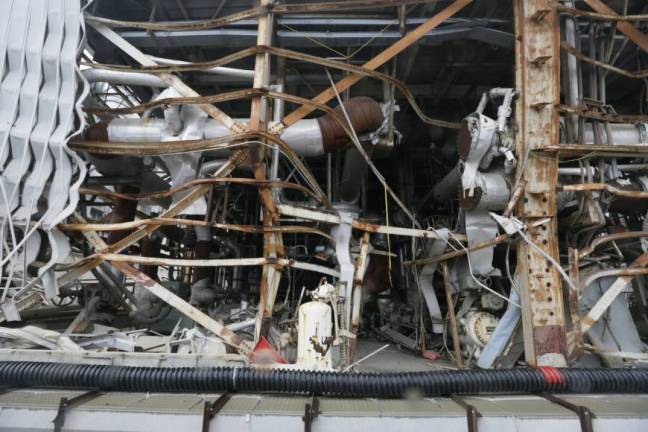
Damaged building housing the No. 4 reactor
Cleaning up the Fukushima nuclear plant — a task predicted to cost 86 times the amount earmarked for decommissioning Japan’s first commercial reactor — is the mother of all salvage jobs. Still, foreign firms with decades of experience are seeing little of the spoils.
Safely dismantling the Japanese power plant, wrecked by the 2011 earthquake and tsunami, will cost about ¥8 trillion ($70 billion), the Ministry of Economy, Trade and Industry said on Dec. 9, quadrupling the previous estimate. While a contract to help clean up the facility would be a windfall for any firm with specialized technology, the lion’s share of the work has gone to local companies that designed and built most of Japan’s atomic infrastructure.
The bidding process for Fukushima contracts should be more open to foreigners, as Japan has never finished decommissioning a commercial nuclear plant, let alone one that experienced a triple meltdown, according to Lake Barrett, an independent adviser at Japan’s International Research Institute for Nuclear Decommissioning. While the Fukushima cleanup is unlike any nuclear disaster in history, foreign firms that have experience decommissioning regular facilities could provide much-needed support, according to Barrett, and even the plant’s operator, Tokyo Electric Power Co. Holdings Inc.
‘Cultural Resistance’
“Internationally, there is a lot more decontamination and decommissioning knowledge than you have in Japan,” Barrett, a former official at the U.S. Nuclear Regulatory Commission, said in an interview in Tokyo. “I hope the Japanese contracting system improves to get this job done safely. There is this cultural resistance — it is almost like there is an isolated nuclear village still.”
An opaque bidding process plays to the heart of criticisms put forward by independent investigators, who said in a 2012 report that collusion between the government, regulators and the plant’s operator contributed to the scale of the disaster.
Of 44 subsidized projects publicly awarded by the trade and economy ministry since 2014, about 80 percent went to the International Research Institute for Nuclear Decommissioning. The group, known as IRID, was established in the wake of the Fukushima disaster and is comprised entirely of Japanese corporations, according to the ministry’s website.
Japan’s trade and industry ministry awarded funds directly to only two foreign firms during the same period. Many of the contracts had only one or two bidders.
Of about 70 contracts awarded since the March 2011 disaster, nine have gone to foreign companies, according to an official in the ministry’s Agency of Natural Resources and Energy who asked not be named, citing internal policy.
To provide opportunities for foreign companies, the ministry has created an English website for bids and also provides English information sessions to explain the contracts, the official said.
Toshiba, Hitachi
IRID’s contracts are given to its members, including Toshiba Corp., Hitachi Ltd. and Mitsubishi Heavy Industries Ltd., which have partnerships and joint ventures with foreign firms, spokesman Yoshio Haruyama said by phone. While it doesn’t directly contract work to companies overseas, IRID taps foreign experts as advisers and participates in international collaborative projects, he said.
Mitsubishi Heavy has about five or six contracts through IRID, but can’t share how many partnerships it has with foreign firms, spokesman Shimon Ikeya said by phone. Hitachi has sub-contracts with foreign suppliers related to the Fukushima cleanup, but can’t provide details about these agreements because they aren’t public, a spokesperson said by email.
As of March, IRID had about ¥30 billion worth of ongoing contracts primarily related to research and development of fuel removal and waste treatment. IRID, which aims to “gather knowledge and ideas from around the world” for the purpose of nuclear decommissioning, doesn’t disclose how much of their money ultimately goes to foreign businesses, according to its spokesman. Barrett, its adviser, said he thinks it’s “very low,” but should ideally be 5 percent to 10 percent.
‘Nuclear Village’
Japan’s biggest nuclear disaster isn’t void of foreign technology. Toshiba, which owns Pennsylvania-based Westinghouse Electric Co., and Hitachi, which has a joint venture with General Electric Co., are tapping American expertise. A giant crane and pulley system supplied by Toshiba to remove spent fuel from the wrecked reactors employs technology developed by Westinghouse.
“We bring in knowledge from foreign companies, organizations and specialists in order to safely decommission the reactors,” Tatsuhiro Yamagishi, spokesman for Tepco, said by email. While the company can’t say the exact number of foreign firms involved in the Fukushima cleanup, companies including Paris-based Areva SA, California-based Kurion Inc. and Massachusetts-based Endeavor Robotics are engaged in work at the site, according to Yamagishi.
For foreign firms, however, independently securing contracts is still a tall order.
“When it comes to Japan’s nuclear industry, the bidding system is completely unclear,” Hiroaki Koide, a former assistant professor at Kyoto University Research Reactor Institute, said in an email. “The system is designed to strengthen the profits of Japan’s nuclear village,” he added, referring to the alliance of pro-nuclear politicians, bureaucrats and power companies that promote reactors.
Tepco’s annual cost to decommission its Fukushima plant may blow out to several hundred billion yen a year, up from the current estimate of ¥80 billion, the trade and industry ministry said in October. As of June, almost ¥1 trillion has been allocated for decommissioning and treating water at Fukushima, according to Tepco’s Yamagishi.
‘Ripe for Corruption’
With that much money at stake, Japan has become ground zero for a plethora of companies looking to benefit from the cleanup work. The structure of Japan’s nuclear industry and the closed procurement preferred by the utilities that operate atomic plants means that the most lucrative opportunities for foreign companies are in the area of subcontracting, according to a report by the EU-Japan Centre for Industrial Cooperation released in March.
“Foreign firms have long argued that the Japanese bidding process is one that is ripe for corruption due to a lack of openness and transparency,” Daniel Aldrich, professor and director of the security and resilience studies program at Northeastern University in Boston, said in an email. For nuclear decommissioning “there is even less clarity and transparency due to security and proliferation concerns,” he said.
Rigging Bids
The Japan Fair Trade Commission raided the offices of five companies last year in relation to rigged bids for maintenance contracts from Tepco, according to Jiji Press. Eleven road-paving companies were fined in September on projects to repair roads following the March 2011 earthquake and tsunami, Jiji reported.
Andrew DeWit, a political economy professor at Rikkyo University in Tokyo, agrees that the contract-awarding process isn’t transparent. A lot of foreign companies seek Japanese partners to better their chances, he said.
Purolite Corp., a closely held water purifying company, spent millions of dollars developing and testing a system that could be used to treat radioactive water at Fukushima. Pennsylvania-based Purolite partnered with Hitachi to help win a contract to use its technology at the wrecked facility.
Those plans didn’t pan out. Purolite is suing Hitachi in New York and Tokyo, alleging that Hitachi is using its technology at Fukushima in breach of agreements made in 2011, shutting it out of more than $1 billion in contracts, according to court documents filed in September.
Hitachi doesn’t comment on ongoing legal matters, a spokesperson said by email.
“With a smaller pool of competitors, firms can expand their profit margins,” said Northeastern University’s Aldrich. “There are French and Russian firms that have the technical expertise to participate in nuclear decommissioning processes, but it is unclear if they will be able to compete on a level playing field with Japanese firms, which have far more experience with Japanese regulations and expectations.”
Government to help fund Fukushima decontamination, easing Tepco’s burden
Easing Tepco fuck-ups with taxpayers money!

The Cabinet decided Tuesday that the central government will help pay to decontaminate areas worst hit by the 2011 Fukushima reactor meltdowns, marking a shift from earlier rules requiring Tepco to foot the bill.
Prime Minister Shinzo Abe’s team endorsed a plan to set up a reconstruction hub in the most contaminated, off-limits areas in Fukushima Prefecture and secure about ¥30 billion for decontamination work in the fiscal 2017 budget.
The cost of the work could total around ¥300 billion in the next five years and grow further depending on how it progresses.
The plan is in line with proposals made in August by the ruling coalition, but no government panel review or Diet deliberations have been held on it, raising the prospect that it could be criticized as a bailout for Tokyo Electric Power Company Holdings Inc.
The government decided to add the decontamination work, including soil and tree removal, to infrastructure projects for making the affected land habitable again, but the special law on decontamination states that Tepco should shoulder the expenses.
The government will have to revise the special law on rebuilding Fukushima to accommodate the shift.
The move to help pay for the decontamination came after the expected price tag surged to ¥4 trillion from the previous estimate of ¥2.5 trillion, which did not include the cost of cleaning the areas with the highest levels of radiation.
If the government-funded cleaning area expands, the use of taxpayer money is likely to balloon to several trillion yen.
Meanwhile, in an effort to turn Tepco’s business fortunes around, the government proposed that the battered utility work together with other companies in operating nuclear power plants and distributing power.
A panel of the Ministry of Economy, Trade and Industry urged the company to launch talks with other power companies next year and set up a joint venture in the early 2020s to eventually consolidate their businesses.
“Tepco reform will be the basis of reconstruction in Fukushima and could lead to a new, stronger utilities industry,” said industry minister Hiroshige Seko.
“We will profoundly accept the proposal and drastically carry out reform,” said Tepco President Naomi Hirose.
Taro Yamamoto Defends Fukushima Victims’ Rights
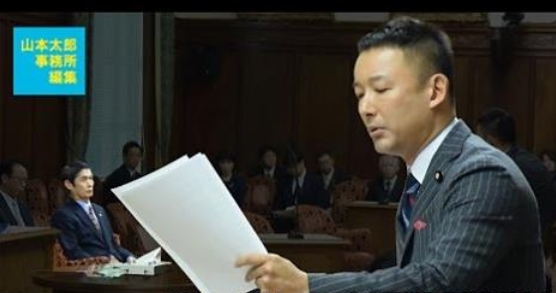
Taro Yamamoto of the Liberal Party is a member of the Chamber of Deputies. He is one of the few parliamentary members defending the rights of victims of the TEPCO Fukushima Daiichi nuclear power plant disaster.
The Association Nos Voisins Lointains 3-11 translated the questions of Taro Yamamoto to the Chamber of Deputies’ Special Commission on Reconstruction on 18 November 2016*. The content of his questions reveals the inhuman situation faced by the victims in the framework of the Japanese government’s return policy .
Taro Yamamoto’s questions (video in Japanese)
● Taro Yamamoto
Thank you. I am Taro Yamamoto from the Liberal Party. I would like to ask questions as the representative of a parliamentary group.
Declared on 11 March 2011, the state of nuclear emergency has not yet been lifted to date, 5 years and 8 months after the accident at the TEPCO Fukushima Daiichi nuclear power plant. Today, I will address a subject that is well known by the members here present.
I will start with the subject of the radioactivity controlled area. This is a demarcated area frequented by workers with professional knowledge who are exposed to the risks associated with ionizing radiation, such as an X-ray room, a research laboratory, a nuclear power plant and so on.
Here is my question. There are rules that apply to controlled areas of radioactivity, are not they? Can we eat and drink in such a controlled area?
● Government expert (Seiji Tanaka)
Here is the answer. According to the Ordinance on the Prevention of Risks from Ionizing Radiation**, eating and drinking are prohibited in workplaces where there is a risk of ingesting radioactive substances orally.
● Taro Yamamoto
Of course, it is forbidden to drink or eat there. So it’s obvious that it’s not possible to spend the night there, is it? Even adults cannot stay for more than 10 hours.
You are well aware of the existence of this Ordinance. This is a rule that must be respected in order to protect workers exposed to risks related to ionizing radiation in establishments such as hospitals, research laboratories and nuclear power plants, isn’t it?
It contains the definition of a radioactivity controlled area. This is Article 3 of the Ordinance in File No. 1. It states that if the situation corresponds to the definition described in Article 3/1 or to that specified in Article 3/2, the zone shall be considered as a controlled area and a sign shall be posted there. I will read parts 1 and 2 of this article.
1: The area in which the total effective dose due to external radiation and that due to radioactive substances in the air is likely to exceed 1.3mSv per quarter – over a period of three months! When the dose reaches 1.3mSv over a period of three months, a zone is called “controlled radioactivity zone”.
Part 3/2 refers to the surface density in the attached table.
Here is File No. 2. What will it be if we do the conversion of the density of the surface per m2?
● Government expert (Seiji Tanaka)
The conversion gives 40,000Bq/m2
● Taro Yamamoto
Thus, with 40 000Bq / m2, the zone is classified as a “controlled zone of radioactivity”. It is therefore necessary to monitor not only radioactivity in the air but also the surface contamination, ie the ground dose of radioactive substances, ie other elements in the environment, and to manage the area in order to protect workers from radiation-related risks, isn’t it?
A radioactivity controlled area is defined both by the dose rate of the ambient radioactivity and by the surface density of the radioactive substances. The point is that the risk in a situation where the radioactive substances are dispersed is quite different from that in the situation where the radiation sources are well identified and managed.
At present, the evacuation order applied to the evacuation zones following the nuclear power plant accident is lifted when the ambient radioactivity dose rate becomes less than 20mSv / year.
Here is my question. Concerning contamination, apart from the dose rate of ambient radioactivity, are there any conditions to take into account in order to lift the evacuation order? Please answer yes or no.
● Government expert (Takeo Hoshino)
Here is the answer.
Concerning the conditions necessary for the lifting of the evacuation order, as far as the radioactivity measurements are concerned, it is only the certainty that the annual cumulative dose rate of ambient radioactivity is less than 20 mSv.
● Taro Yamamoto
You did not understand. I asked you to answer yes or no. Are there any other conditions other than the dose rate of ambient radioactivity? To lift the order of evacuation below 20mSv / year, what are the conditions regarding the contamination?
The fact is that regarding contamination, there are no other conditions than the dose rate of the radioactivity in the air. This is abnormal. You, who belong to this Commission, certainly understand to what extent this situation is abnormal.
In the definition of a radioactivity controlled zone, apart from the dose rate of radioactivity in the air, account is taken of the substances dispersed and then deposited, that is to say contamination in the soil etc., which means a criterion of 40 000Bq / m2 is established for surface contamination.
However, in the return policy to return populations to territories where the annual cumulative dose rate is less than 20mSv / year, the condition of soil contamination is not considered necessary.
The latter is not an evaluation criterion, the only criterion used is the dose rate of the ambient radioactivity. Politicians and officials who consider this to be a regular situation do not deserve to receive wages paid from tax revenues.
Our job is to protect the life and property of the people. Now, you lighten those conditions. You create, at your discretion, a rule that is less stringent than that applied to workers with a professional knowledge of radioactivity. What are you doing !
Following the Chernobyl accident, laws have been established in Russia, Belarus and Ukraine, measuring both the dose rate of radioactivity in the air and the contamination of the soil. Why ?
That goes without saying. This is because it is difficult to grasp the amount of irradiation suffered by the population only with measurements of ambient radioactivity. In Ukraine, with 5mSv / yr, a measure corresponding to that of the controlled radioactivity zone, the population is evacuated, and even with 1mSv / year which corresponds to the limit of the average dose rate for the public, ‘they have the right to move out. This law known as the Chernobyl law is still in force.
On the other hand, what is the situation in Japan? According to the Cabinet decision of June 2015, the evacuation order is lifted if the dose rate in the air is less than 20mSv / year. There is no problem ! For example, if you stay 24 hours in a controlled area of radioactivity, you are exposed to a dose of 5.2mSv / year.
However, the criterion for the lifting of the order and the return of the population is 20mSv / year or less. The zoning is determined by a dose 4 times that of a controlled zone of radioactivity.
Go back, live there, continue your life, rebuild, what is this! I can find no other expression than “completely twisted”.
Can we still call it the State? I think it’s better to call it the mafia. It’s so inhuman!
The government appears to have adopted dose limits of 20 to 100mSv as recommended by the ICRP*** on radiation exposure limits after an accident. However, when considering the health effects on the population, the most reasonable would be to adopt 1mSv, the lowest dose measurement for radiation limit for public health, according to the global consensus.
The right to evacuate must be granted to the population until the dose rate falls below 1mSv / year. The right to decide when to return belongs to the victims. Why do you determine zoning as you wish? The State must make every effort to reduce the dose as close as possible to 1mSv / year, maximum dose in a normal situation. Then the State, the administration should warn the people, and let them make their own decisions. That would be the fairest way. The State should behave like this.
Who is responsible for this accident? It is TEPCO. Who supported it? It is the State. It is clear who the perpetrators of the crime are. And yet, only the charges of the criminals are being relieved. If it is permissible to develop zoning and associated rights to the convenience of the criminals, this world is a hell then.
In the town of Minamisoma in the coastal region of Fukushima Prefecture, three types of evacuation zone were established after the earthquake. In July 2016, the evacuation order was lifted in the “evacuation order lifting preparation area” and in the “restriction of housing” area. There is only one home with two people remaining in the “area where the return is difficult”.
According to the State, 90% of the territories of Minamisoma are safe.
There is a group called “The Measurement of Environmental Radioactivity Around the Fukushima Daiichi Nuclear Power Plant”**** composed mainly of residents of Minamisoma. Since 2012, its members are taking measurements of soil contamination in the vicinity of the neighborhoods of the members and in residential areas. They provided the information. Please look at File No. 3. You see a colored map ( Note from the translator: see the map here, https://dunrenard.wordpress.com/2016/11/12/the-minamisoma-whistleblowers-fukushima/ )
This is the map of soil measurements collected and measured in the territories where the decontamination works have been completed. The colors show the levels of contamination. The blue colored area indicates where the contamination measurements are below 40 000Bq / m2, ie below than the level of a radioactivity controlled zone. There is only one, at the right bottom. Apart from this one, at all other places, the colors show corresponding measurements above the measurements of a controlled zone of radioactivity. There is even a colored place in gray where the measurements exceed 1 000 000Bq / m2. There are people living there!
Compared to the extraordinary ambient radioactivity dose rate observed immediately after the accident, the dose rate of radioactivity in the air decreased considerably. It is not the same order of magnitude. However, according to the inhabitants, even with 0.1μSv / hr of ambient radioactivity dose rate, soil measurements may still be equivalent to those of a radioactivity-controlled zone.
It is senseless that only the dose rate of ambient radioactivity should be taken into account as a condition for lifting the evacuation order. It is so irresponsible and neglectful. It is exactly the opposite of protecting the life and property of the people. People do not live floating in the air at 1 meter above the ground*****. They sit down, lie on the ground, they stop to chat, standing or sitting. Children do not play on asphalted roads only. They can venture into the bushes. Children play freely. There are some who put soil in their mouth. Remember how you were when you were still a child. Gutters where contamination is concentrated provide one of the favorite playgrounds for children.
Mr. Masuchika Kono, a member of the above-mentioned project group, who was with the Engineering Department of Kyoto University, a specialist in nuclear engineering, a graduate of radiation manipulation, collected soil at the Minamisoma Michi-no-eki roadside (service and parking area), and passed it through a sieve of about 100 microns.
The measurements showed 11 410Bq / kg of Cs. These dust rises with the winds and the passages of the vehicles. In daily life, dust is inhaled by the people. You do not take internal radiation into account, do you? You calculate the amount of internal radiation by applying just a coefficient, but do not include internal radiation in real life.
Some people self-evacuated from areas outside the evacuation areas under evacuation order, as they consider that the State policies do not protect the children, their lives. To these persons, within the framework of the Disaster Relief and Disaster Relief Act******, dwellings – “temporary accommodation”******* – were made available.
However, in March 2017, next year, the free housing provision will be suspended. You are telling them that there is no more problem; Why then stay evacuated? That’s it, isn’t it? Those displaced from areas outside evacuation areas under evacuation order fled because their home and living environment are contaminated as a result of the TEPCO nuclear accident.
However, since their homes are located at some distance from the nuclear power plant, they were not included in the evacuation zones that the state established unilaterally. As a result, these displaced persons receive no public support except the provision of free housing. And even this aid will stop in March 2017.
It’s incredible to stop helping them. Moreover, what does it mean to stop the provision of free housing in March? It is the season when mobility is at its highest in the year. You expel them, force them to relocate at the time of the year when rents and costs become more expensive! You have no compassion. You are ruthless!
“I am afraid of the investigators of the Tokyo Metropolitan Prefecture visiting door to door. I hide under the cover for fear of hearing the ringing at the door. When I opened the door, the investigator stuck his foot into the door so that I could not close it. With a loud voice so that all the neighbors could hear, he shouted at me “you know very well that you can only live here until March”. I know, but I cannot move. “
The next person. “The Tokyo Metropolitan Prefecture demands that we move out in a fierce and haughty manner. We had to leave our home because of the accident at the nuclear power plant. I do not understand why they are expelling us again. I gave in to the pressure, and I filled up the Tokyo Metropolitan Prefecture housing application, but it was against my will. Psychologically, I can not accept the fact, and it causes me pain. They are forcing me to move into a prefecture owned housing where no one from Fukushima lives close by. It’s like abandoning the elderly in a mountain. “
The following testimony. It is a home where just a mother and her young children live. The other members of the family remained in Fukushima. They lead a double life. “If there is no more free housing provided, there is no resource to pay the rent. The only dream left to my child is his piano lesson. Do not take away that dream. “
The next person. “The deadline has not arrived …”
(Note from the translator : Taro Yamamoto can no longer hold his tears) Who does something like that? I beg your pardon. Who orders such a thing? It may be admitted that the State would ask local governments to carry out polite negotiations with the displaced. No, it is nothing but expulsion. Does not the State intend to stop such a situation? I do not allow you to say that you did not know. You see the problem before you now!
“Constant phone calls, visits without notice, and they shout at me asking what my intention is. They send documents to file, and leave passing notices in the mailbox. I am completely exhausted, physically and psychologically. “ This is understandable. They continue to live like that since the explosions of the nuclear power plant, and 5 years and 8 months later they are tracked down in a similar situation. To what extent do you want to tear the hearts of the victims? It is enough for the State to take a decision. This person says that the metropolitan prefecture of Tokyo has asked him to leave the housing, because the prefecture must return that housing for civil servants in March. It is monstrous that the State asks the Tokyo Metropolitan Prefecture to evict the evacuees and restore the house in proper condition.
These were testimonies of displaced people.
According to my research, to date there are 9327 vacancies among the housings for civil servants in the region of Kanto, including the Tokyo Metropolitan Prefecture and 6 other prefectures. It is enough for the State to take a decision, it can solve the problem, at least partially. Why should the inhabitants be expelled? Is it because, if there are tenants, those buildings could not sold during the financial bubble of the Olympic Games? It’s too cruel.
On April 4 last year, according to the newspaper Mainichi shinbun, the state does not request reimbursement from TEPCO for the rents of dwellings “considered as temporary housings”. Commission member Iwabuchi mentioned earlier that the government will oblige TEPCO to pay for the costs of the decontamination work. Why don’t you ask TEPCO to pay the rents? These people are the victims!
Finally, I would like to ask to the Minister. I would like you to answer two questions.
1st: You said that this is what the Fukushima prefecture wants. However, you are in a position to make suggestions to the Fukushima Prefecture. Please talk it over again. This situation is really irregular.
2nd: Please listen to the voices of the displaced. I think you have almost no opportunity to hear the voices of self-evacuees coming from locations outside the evacuation areas. Until then, you were too busy. Perhaps the people around you got acquainted with their testimonies. Please listen to them yourself. Today, too, they are here. There’s a break after this session. Could you give them 5 minutes? If you give us just 5 minutes today during the break, you can talk with the self-evacuees.
I would ask you to answer these two questions.
Secretary of State (Masahiro Imamura)
As I have already said, I am willing to consult with the prefecture of Fukushima, and I would like to ensure that the people concerned are not hurt. I will see to its smooth progress.
You said that self-evacuated people are here. I also have a plenary session after and I do not have time, but I will listen to them.
President (Mitsuru Sakurai)
Mr. Yamamoto, you have exhausted your time.
Taro Yamamoto
Thank you.
Please keep your promise. Thank you very much.
Credits to Kurumi Sugita from the Nos Voisins Lointains 3.11 Association for the japanese to french translation (http://nosvoisins311.wixsite.com/voisins311-france)
French to english translation by Hervé Courtois (Dun renard) from the Fukushima 311 Watchdogs (https://dunrenard.wordpress.com/)
* Source : Site web de Taro Yamamoto
** Ordinance on Prevention of Ionizing Radiation Hazards, Ministry of Labour Ordinance No. 41 of September 30, 1972, Latest Amendments: Ministry of Health, Labour and Welfare Ordinance No. 172 of July 16, 2001
*** International Commission on Radiological Protection
**** Fukuichi shûhen kankyôhôshasen monitoring project
***** The measurements of ambiant radioactivity are taken at 1 meter above the ground.
****** Saigai kyûjohô, Law of assistance in case of disaster , laws N°118 of octobre 18, 1947
******* Minashi kasetsu jyûtaku. Rental housing managed by private agencies inhabited by evacuees whose rent is borne by the central government or local governments.
Fukushima Nuclear Disaster Bill to Double to $188 Billion
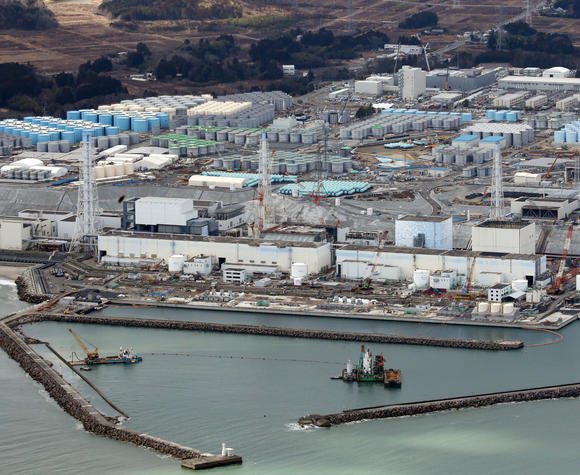
1 This Month

of the week – Shut Down Drone Warfare!


Tell the Ukrainian Government to Drop Prosecution of Peace Activist Yurii Sheliazhenko

Petition to revoke the licensing of the Near Surface Nuclear Disposal Facility (NSDF) at Chalk River. https://www.ourcommons.ca/petitions/en/Petition/Details?Petition=e-7247
To see nuclear-related stories in greater depth and intensity – go to https://nuclearinformation.wordpress.com
-
Archives
- April 2026 (103)
- March 2026 (251)
- February 2026 (268)
- January 2026 (308)
- December 2025 (358)
- November 2025 (359)
- October 2025 (376)
- September 2025 (257)
- August 2025 (319)
- July 2025 (230)
- June 2025 (348)
- May 2025 (261)
-
Categories
- 1
- 1 NUCLEAR ISSUES
- business and costs
- climate change
- culture and arts
- ENERGY
- environment
- health
- history
- indigenous issues
- Legal
- marketing of nuclear
- media
- opposition to nuclear
- PERSONAL STORIES
- politics
- politics international
- Religion and ethics
- safety
- secrets,lies and civil liberties
- spinbuster
- technology
- Uranium
- wastes
- weapons and war
- Women
- 2 WORLD
- ACTION
- AFRICA
- Atrocities
- AUSTRALIA
- Christina's notes
- Christina's themes
- culture and arts
- Events
- Fuk 2022
- Fuk 2023
- Fukushima 2017
- Fukushima 2018
- fukushima 2019
- Fukushima 2020
- Fukushima 2021
- general
- global warming
- Humour (God we need it)
- Nuclear
- RARE EARTHS
- Reference
- resources – print
- Resources -audiovicual
- Weekly Newsletter
- World
- World Nuclear
- YouTube
-
RSS
Entries RSS
Comments RSS
 nuclear-news