There is no safe dose of radiation and any governmental propaganda saying otherwise is just criminal.
Especially when it comes to internal radiation from contaminated foods, much more harmful than external radiation. Internal radiation’s harm is much greater many times depending which organ or cellular tissue is affected.
Japanese government once more continues to sacrifice the health of its citizens to economic expediency.
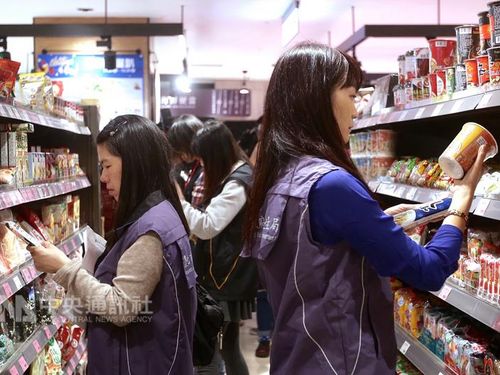
To fight harmful rumors about Fukushima farm produce and to revive sales, the prefectural government plans to set up permanent sales spaces for susceptible products in major supermarkets in the Tokyo metropolitan area this summer.
The prefectural government has been trying to improve sales by emphasizing the results of radiation tests proving the products are safe. But supermarkets are still reluctant to sell Fukushima produce even six years after the triple core meltdown at the Fukushima No. 1 nuclear plant.
The prefectural government will now focus on establishing sales channels and making sure Fukushima-made produce is treated the same way as produce from other prefectures. It will provide funds to hire sales staff to promote the products and to offer perks to those who buy them.
To recover the sales channels lost after the 2011 meltdowns, prefectural officials have judged it necessary to directly support distribution in addition to publicizing the radiation tests to prove Fukushima produce is safe.
“We will take drastic measures to boost distribution of prefecture-made food products to recover and explore sales channels,” said Fukushima Gov. Masao Uchibori at his first news conference of the year on Jan. 4.
The prefecture plans to start the project in about 10 supermarkets in the Tokyo area before expanding to other stores after gauging public response. Fruit, vegetables, rice and meat produced in Fukushima will be sold at those locations and promoted by staff offering free samples. Prefectural officials may also try to generate interest by offering Fukushima products for free via lotteries.
The prefectural government plans to reach out to supermarket chains for proposals on how they would set up these dedicated promotional spaces. It believes retailers can benefit from the project because they can expect an increase in customers and sales by selling the produce with incentives attached.
Fukushima plans to invest part of the ¥4.7 billion in rumor-squelching funds allocated in the central government’s fiscal 2017 draft budget on projects aimed at improving its image.
“We will ask for the acceptance and cooperation of supermarkets so that sales sections and channels for Fukushima-made products lost after the Great East Japan Earthquake can be regained,” said an official of the Farm Produce Distribution Division.
The Fukushima Daiichi Nuclear Power Plant in 2002, before the 2011 explosion. The EPA is poised to issue new radiation limits for a nuclear emergency set thousands of times higher than allowed by federal law.
The Environmental Protection Agency (EPA) is poised to issue guidelines that would set radiation limits for drinking water during the “intermediate period” after the releases from a radioactive emergency, such as an accident at a nuclear power plant, have been brought under control. The emergency limits would allow the public to be exposed to radiation levels hundreds and even thousands of times higher than typically allowed by federal law.
Opponents say that under the proposed guidelines, concentration limits for several types of radionuclides would allow a lifetime permissible dose in a week or a month, or the equivalent of 250 chest x-rays a year, according to Public Employees for Environmental Responsibility, a watchdog group that represents government employees.
The EPA has stressed that the proposal is aimed at guiding state and local leaders during a crisis and would not change existing federal radiation limits for the water we drink every day, which are much more stringent, and assume there may be decades of regular consumption. Critics of the new proposal say the emergency guidelines are a public relations ploy to play down the dangers of radiation and provide cover for an agency that fumbled during the Fukushima disaster in 2011.
The emergency limits are even higher than those proposed by the EPA during the final days of the Bush administration, which withdrew the proposal after facing public scrutiny and left the Obama administration with the job of finalizing the guidelines.
Now, in the twilight of the Obama administration, the EPA’s “Protective Action Guidelines” for drinking water are once again drawing fire from nuclear watchdogs and public officials.
“The message here is that the American public should learn to love radiation, and that much higher levels than what are set by the statutory limits are OK,” said Jeff Ruch, executive director of Public Employees for Environmental Responsibility (PEER), a watchdog group that represents government employees.
PEER says that internal documents released under the Freedom of Information Act show the EPA’s radiation division hid proposed limits for dozens of radionuclides from the public — and even from other divisions within the agency that were critical of the plan — in order to “avoid confusion” until the final guidelines were released.
“It’s not like this has been done with a lot of openness,” Ruch said. “We had to sue them to find out what levels they would allow.”
EPA Caught With Its “Pants Down” During Fukushima
In 2011, the Fukushima Daiichi Nuclear Power Plant in Japan suffered a meltdown after a deadly earthquake and tsunami and released massive amounts of dangerous radioactive contaminants into the ocean and atmosphere. Ruch said the EPA was caught with its “pants down” as this radiation was detected in air, rainwater and even milk in the United States. The EPA had been working since the early 1990s to develop guidelines on how the government should respond to such a disaster, but specific limits for radiation in drinking water are only now being set.
As Truthout reported at the time, the EPA told the public that radiation from the disaster would not reach the US at levels high enough to pose a public health concern, even as the agency’s own data showed concentrations of radionuclides in rain water far exceeding federal drinking water standards. As Japan struggled with a major nuclear crisis and the media debated the relative danger of radioactive plumes blowing about the world’s atmosphere, the EPA quietly stopped running extra tests for radiation less than two months after the disaster began.
By then, samples of cow’s milk, rain and drinking water from across the country tested positive for radiation from the Fukushima plant, and nuclear critics warned that it was difficult to tell whether there could be impacts on human health in the absence of enhanced radiation monitoring.
The EPA’s radiation division is now on the verge of approving a long-awaited update to its Protective Action Guidelines for responding to such a “large-scale emergency.” Ruch said employees from other divisions of the EPA were cut out of the decision-making process, and internal EPA documents indicate that the concentration limits were set higher than those detected during Fukushima to cover for the EPA’s embarrassing performance.
Ruch points to notes from a 2014 briefing at the EPA’s radiation division, which state that the agency “experienced major difficulty conveying its message to the public” that concentrations of radioactive material in rain water, although higher than federal Maximum Containment Levels (MCLs), “were not of immediate concern to public health” during the Fukushima crisis.
No Safe Dose of Radiation
The EPA’s new proposed guidelines are ostensibly meant to help public officials decide when to take protective actions to reduce exposure to radiation, such as asking the public to switch from tap water to bottled water. Most of the manual has already been finalized, except for the section on drinking water, which has been mired in controversy since the Bush administration.
In June, the EPA put the proposal up for public comment, but only made limits for four types of radionuclides publicly available. Critics say the agency still received 60,000 comments opposing the guidelines, including statements from 65 environmental groups. PEER sued the agency under the Freedom of Information Act in October, and the EPA released the proposed limits for dozens of other radionuclides just days before the Christmas holiday.
Dan Hirsch, president of the Committee to Bridge the Gap, a nuclear watchdog group, attended a briefing with EPA officials on Thursday and told Truthout that the agency intends to finalize the guidelines despite ongoing protests.
“It’s really hard to believe,” Hirsch said.
Underlying the debate are MCLs for radioactive material in drinking water set by the Safe Drinking Water Act of 1974. Hirsch said that the nuclear industry has tried to “get out from under” these limits for years, but federal law prohibits them from being lowered. So, the industry and its allies at the EPA focused on the Protective Action Guidelines instead.
The MCLs are based on the idea that adults should not be exposed to more than 4 millirem (mrem) of radiation in drinking water each year for a 70-year period, for a total of 280 mrem in an average lifetime. Since the “intermediate phase” following a nuclear emergency is expected to be temporary, the emergency radionuclide limits are capped at amounts that would expose adults to a maximum 500 mrem dose of radiation over the course of a year.
Hirsch said that such as dose of radiation is equivalent to receiving a chest x-ray about five days a week for a year. The EPA arrived at these figures by “playing” with the numbers used to calculate radiation absorbed by human organs, which in turn increased the amount of certain radionuclides that can be present in drinking water by hundreds, thousands and even tens of thousands of times.
Hirsch said guidelines reflect the nuclear industry’s longstanding argument that MCLs are far too low, and the public should accept higher doses of radiation as permissible in an emergency.
The EPA claims there have been “advancements in scientific understanding of radiation dose and risk” since it began drawing up the Protective Action Guidelines back in 1992, and its emergency dose guidelines are based on the “latest science.” The guidelines are also designed to provide flexibility for decision-makers responding to a crisis.
Nuclear critics, however, argue that no dose of radiation is safe. Even small doses can cause cancer in small portions of a large population.
“The science has actually worked in the opposite direction over the years,” Hirsch said. “Science has concluded that radiation is much more dangerous than what was assumed in the ’70s.”
The guidelines are based on expected exposure over the course of one year, but both Ruch and Hirsch point out that radiation from nuclear calamity could persist for far longer — just look at the fallout from Fukushima, which Japan has struggled with for years. Radiation from the disaster is still being detected in fish on North America’s western coast. They argue that the public needs better protections in the event of an emergency, and the nuclear industry should not be let off the hook based on inflated safety limits.
“The whole thing appears to be [an attempt to] achieve a post-incident reaction of ‘don’t worry be happy,'” Ruch said.
When even small doses of radiation are understood to pose a health risk, however small, setting radiation limits for a nuclear emergency is bound to be controversial.
Unfortunately, this is the radioactive reality of living in the modern nuclear world.
(EnviroNews DC News Bureau) — “It is not a question any more: radiation produces cancer, and the evidence is good all the way down to the lowest doses,” says the late Dr. John Gofman, Professor Emeritus at the University of California, Berkley, in his book Nuclear Witnesses: Insiders Speak Out.
On December 12, 2016, EnviroNews USA‘s own Editor-in-Chief Emerson Urry touched off a firestorm with his news article titled, “It’s Finally Here: Radioactive Plume From Fukushima Makes Landfall on America’s West Coast,” which claimed “medical science and epidemiological studies have demonstrated time and again that there is no safe amount of radiation for a living organism to be subjected to — period.”
In his piece, Urry also exposed other news agencies like NBC, the New York Post, USA Today and The Inquisitr, catching them with their pants down, in the act of repeating the false assertions of the U.S. and Canadian researchers, telling people not to worry about the recently detected low amounts of cesium 134 found in salmon, and that the levels were within “safe” or “accepted” thresholds for human health. [EDITOR’S NOTE: Emerson Urry recused himself from all editorial duties on this news story.]
Thom Hartmann picked up the article by Urry and read it on his show. Then Hartmann offered up his own journalistic explanation on how radiation works, and addressed the problem with the proclamation that there is a “safe” level of radiation to consume or be exposed to.
“As the element is decaying it is throwing off radiation, and the radiation, if it hits the DNA in the nucleolus and the nucleus of a cell, can alter that DNA in ways that can produce things like cancer,” Hartmann said. “Now it can also cause simply the cell to die or it can mutate the cell in all kinds of other weird ways, and so it’s kind of a numbers game. If you irradiate a million cells… you might get two or three that become cancerous. That’s all it takes, right? You’ve got cancer,” Hartmann continued in his video report. “The cesium could cause no cancer, or it could cause cancer in the first cell it irradiates. To say that there is a safe level of radiation is frankly wrong. It’s just wrong.”
Urry said later in a statement, “It’s one thing for the media to regurgitate trivial facts on trivial matters, but to blindly repeat that consuming low levels of radiation is ‘safe,’ is irresponsible reporting and borders on dangerous. News editors should take care to do their due diligence on a matter as serious as leading readers to believe consuming any amount of radiation is ‘safe’ when medical science and epidemiology, dating back 50 years to the present, have demonstrated repeatedly that that’s just not true. Even the smallest exposures increase the risk of cancer to the subject.”
According to the Agency for Toxic Substances and Disease Registry’s (ATSDR) report titled, “Public Health Statement for Cesium” from 2004, “stable and radioactive cesium can enter your body from the food you eat or the water you drink, from the air you breathe, or from contact with your skin. When you eat, drink, breathe, or touch things containing cesium compounds that can easily be dissolved in water, cesium enters your blood and is carried to all parts of your body… No known taste or odor is associated with cesium compounds.”
Cesium is similar enough to potassium that it can fool the body. This results in its bioaccumulation. When cesium enters the biological system of a fish, which is then eaten by a larger fish, the larger fish becomes contaminated. As the larger fish eats more, it becomes more contaminated. The cesium accumulates in its body. When a person eats that fish, he or she also ingests the cesium that hasn’t decayed or been excreted. The more seafood that person eats, the more radioactive material he or she will be exposed to.
The researchers who discovered the cesium recently also made the mistake of equating the dangers of consuming seaborne isotopes to that of receiving an x-ray, missing the point entirely that ingested or inhaled “internal particle emitters” are known to be especially hazardous.
“Consuming food containing radionuclides is particularly dangerous. If an individual ingests or inhales a radioactive particle, it continues to irradiate the body as long as it remains radioactive and stays in the body,” said Dr. Alan Lockwood, MD in an article on Fox News Health.
“Children are much more susceptible to the effects of radiation and stand a much greater chance of developing cancer than adults,” said Andrew Kanter, MD, President of the Board for Physicians for Social Responsibility (PSR) in that same Fox News Health article. “So it is particularly dangerous when they consume radioactive food or water.”
Those who might expect the government to protect them from contamination by radiation have only to look at the downwinder situation in Utah or the consequences of Gofman’s research in the late 1960s. According to Gofman’s obituary in the L.A. Times, “Gofman and his colleague at Lawrence Livermore National Laboratory, Arthur R. Tamplin, developed data in 1969 showing that the risk from low doses of radiation was 20 times higher than stated by the government. Their publication of the data, despite strong efforts to censor it, led them to lose virtually all of their research funding and, eventually, their positions at the government laboratory.” Their conclusions were for the most part, later validated.
“There is no safe level of radionuclide exposure, whether from food, water or other sources, period,” said Jeff Patterson, DO, immediate past President of PSR, in late March of 2011 in the immediate aftermath of the meltdowns. “Exposure to radionuclides, such as iodine 131 and cesium 137, increases the incidence of cancer. For this reason, every effort must be taken to minimize the radionuclide content in food and water.”
“There is no safe dose of radiation,” says Prof. Edward P. Radford, Physician and Epidemiologist as quoted by GreenMedInfo.
In an email to EnviroNews, nuclear expert Arnie Gundersen said Japan had raised the maximum allowable exposure by 20 times the previous number for civilians to be able to return to their homes. The U.S. and the EPA have considered such plans in the case of a nuclear accident. In food, the U.S. has an allowable dosage of radiation that is 12 times what Japan allows.
“Corporations get the benefit, civilians take the risk,” Gundersen wrote.
While Urry and Hartmann have sounded the alarm, there remain unanswered questions that desperately need to be resolved. Who will clean up the contamination in the food chain? How much radiation exposure will governments continue to say is safe in spite of the medical research? How can people trust what’s on their plate and in their corporate owned media?
Taiwan recalls 37 food products from Japan’s radiation-affected area
Taipei, Dec. 16 (CNA) A total of 37 Japanese food products have been pulled from store shelves in Taiwan, after they were found to have come from Japan’s radiation-affected areas, Taiwanese authorities said Friday.
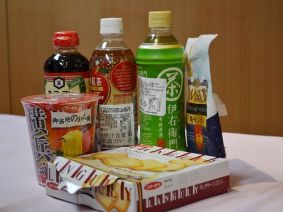
As of Thursday, 50,316 pieces of these products have been recalled, with many of them being soy sauce and wasabi packets that came with Japanese natto, or fermented soybeans, according to the Food and Drug Administration (FDA).
The FDA launched an inspection of food products from Japan on Dec. 12, after two brands of Japanese natto were found to contain packets of soy sauce from Ibaraki Prefecture, one of the five prefectures from which food imports have been banned.
Taiwan banned food imports from Fukushima, Ibaraki, Tochigi, Gunma and Chiba prefectures after the meltdown of the Fukushima Daiichi Nuclear Power Plant in March 2011.
Of the 37 products, 22 have tested negative for radiation contamination, while 15 are still being screened, according to the FDA.
Under Taiwan’s ban, even food products that test negative for radiation are restricted from being sold here, as long as they came from one of the five Japanese prefectures.
Among the recalled products is a brand of natto called “Hiruzen Nattou,” which was imported by Deep Cypress Co. (柏泓企業). The soy sauce and wasabi packets that were served with the product were found to have been made in Chiba Prefecture, said Wei Jen-ting (魏任廷), an official with the FDA.
The product was sold in supermarkets in department stores such as SOGO and Shinkong Mitsukoshi, Wei said.
Meanwhile, many of the 37 products were imported by Yumaowu Enterprise Co. (裕毛屋企業), according to the FDA.
Chiu Hsiu-yi (邱秀儀), director of the FDA’s Northern Center for Regional Administration, said the FDA will step up inspection of food imported from Japan and will ask importers and distributors to list the place of origin, including the prefecture, on the product label in Chinese.
If companies refuse to abide by the rules, the FDA said it will reveal their names to the public.
Failure to provide Chinese labeling could also result in a fine of between NT$30,000 (US$937) and NT$3 million, the FDA said, adding that the public can call the hotline 1919 to report such cases.
The recall of Japanese products comes amidst strong opposition to the Taiwanese government’s hopes of lifting the ban on food exports from at least some of the five affected areas if they are found to be free of radiation.
Taipei, Dec. 16 (CNA) Two kinds of snacks sold at a shopping mart chain in Taoyuan were found to have come from unidentified source in Japan and have been ordered removed from shelves, health officials from Taoyuan City Government said Friday.
The officials said they launched an inspection of labels of origin on food imported from Japan on Dec. 9, checking a total of 707 food products in 273 shops.
On Thursday the Chinese labels of two snacks sold in Poya LivingMart identified them as having come Gifu prefecture, but the original labeling said they were from Tochigi prefecture, one of the radiation-affected areas from which food imports are banned in Taiwan.
After checking the manufacturer’s official website, the product was found to have been manufactured in Tochigi and Iwate, not Gifu.
Health officials have instructed the shop to stop selling the products immediately.
Poya Living Mart’s 11 outlets in Taoyuan have removed a further 214 packages of related food.
The incident came at a time of growing public concern over the safety of food products from five radiation-affected prefectures in Japan.
Taiwan banned food imports from Fukushima, Ibaraki, Tochigi, Gunma and Chiba prefectures in the wake of the Fukushima Daiichi nuclear power plant meltdown following a massive earthquake and tsunami in Japan on March 11, 2011.
Following reports that the government is planning to lift the ban on food imports from four of the radiation-affected prefectures, though not Fukushima, several brands of Japanese natto containing packets of soy sauce from Chiba and Ibaraki were recently found in local retail outlets. They were also ordered removed.
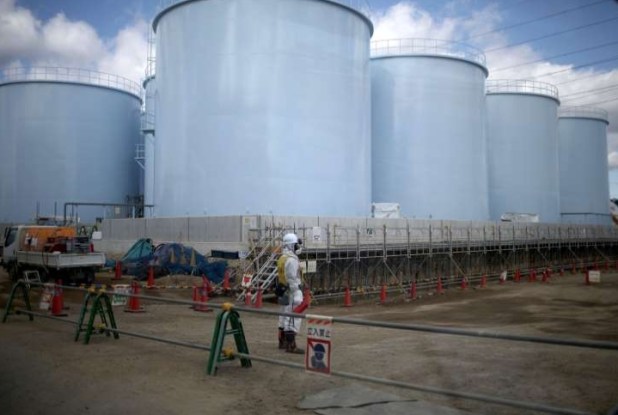
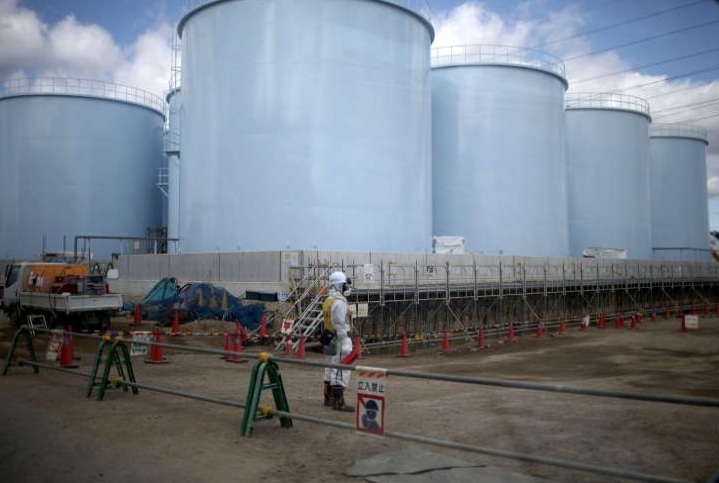
Tanks holding radiation contaminated water at the Tokyo Electric Power Co.’s embattled Fukushima Daiichi nuclear power plant on February 25, 2016 in Okuma, Japan.
Its official. Woods Hole Oceanographic Institute has samples of Fukushima-sourced cesium-134 in salmon off the Pacific Coast of Oregon. Given cesium-134 has such a short half-life the source is linked to the on-going leaks from Japan’s 2011 nuclear disaster. While the amount is still very, very low, it remains a concern given the Fukushima disaster is still not contained after more than five years.
Cesium-134, the so-called fingerprint of Fukushima, was measured in seawater samples taken from Tillamook Bay and Gold Beach in Oregon, according to researchers from the Woods Hole Oceanographic Institution.
Because of its short half-life, cesium-134 can only have come from Fukushima.
For the first time, cesium-134 has also been detected in a Canadian salmon, according to the Fukushima InFORM project, led by University of Victoria chemical oceanographer Jay Cullen.
Should we be worried? In both cases, levels are extremely low, the researchers said, and don’t pose a danger to humans or the environment.
Massive amounts of contaminated water were released from the crippled nuclear plant following a 9.0 magnitude earthquake and tsunami in March 2011. More radiation was released to the air, then fell to the sea.
The Oregon samples, marking the first time cesium-134 has been detected on U.S. shores, were taken in January and February of 2016 and later analyzed. They each measured 0.3 becquerels per cubic meter of cesium-134.
Buesseler’s team previously had found the isotope in a sample of seawater taken from a dock on Vancouver Island, B.C., marking its landfall in North America.
In Canada, Cullen leads the InFORM project to assess radiological risks to that country’s oceans following the nuclear disaster. It is a partnership of a dozen academic, government and non-profit organizations.
Last month, the group reported that a single sockeye salmon, sampled from Okanagan Lake in the summer of 2015, had tested positive for cesium-134.
The level was more than 1,000 times lower than the action level set by Health Canada, and is no significant risk to consumers, Cullen said.
Buesseler’s most recent samples off the West Coast also are showing higher-than background levels of cesium-137, another Fukushima isotope that already is present in the world’s oceans because of nuclear testing in the 1950s and 1960s.
Those results will become more important in tracking the radiation plume, Buesseler said, because the short half-life of cesium-134 makes it harder to detect as time goes on.
Cesium-134 has a half-life of two years, meaning it’s down to a fraction of what it was five years ago, he said. Cesium-137 has a 30-year half-life.
A recent InFORM analysis of Buesseler’s data concluded that concentrations of cesium-137 have increased considerably in the central northeast Pacific, although they still are at levels that pose no concern.
“It appears that the plume has spread throughout this vast area from Alaska to California,” the scientists wrote.
They estimated that the plume is moving toward the coast at roughly twice the speed of a garden snail. Radiation levels have not yet peaked.
“As the contamination plume progresses towards our coast we expect levels closer to shore to increase over the coming year,” Cullen said.
Even that peak won’t be a health concern, Buesseler said. But the models will help scientists model ocean currents in the future.
That could prove important if there is another disaster or accident at the Fukushima plant, which houses more than a thousand huge steel tanks of contaminated water and where hundreds of tons of molten fuel remain inside the reactors.
In a worst-case scenario, the fuel would melt through steel-reinforced concrete containment vessels into the ground, uncontrollably spreading radiation into the surrounding soil and groundwater and eventually into the sea.
“That’s the type of thing where people are still concerned, as am I, about what could happen,” Buesseler said.
Scientists now know it would take four to five years for any further contamination from the plant to reach the West Coast.
Tracking the plume
Scientists are beginning to use an increase in cesium-137 instead of the presence of cesium-134 to track the plume of radioactive contamination from Japan’s Fukushima nuclear disaster. These figures show the increase in cesium-137 near the West Coast between 2014 and 2015.
Graphic courtesy Dr. Jonathan Kellogg of InFORM, with data from Dr. John Smith, Department of Fisheries and Oceans Canada, and Dr. Ken Buesseler, Woods Hole Oceanographic Institute.
That Fukushima’s radiation was detected on Oregon shores by Woods Hole chemical oceanographer Ken Buesseler thru its crowdfunded, citizen-science seawater sampling project and officially admitted is one thing, however a lot is still left unsaid or unknown regarding its possible biological effects on the marine ecosystem, as for lack of fundings or political will too few studies are being made.
SALEM, OREGON – Researchers say seaborne radiation from the Fukushima nuclear disaster has been detected on Oregon’s shores.
Seawater samples from Tillamook Bay and Gold Beach indicate radiation from the nuclear disaster, but at extremely low levels not harmful to humans or the environment.
Massive amounts of contaminated water were released and continue to be released from the crippled Fukushima No. 1 nuclear plant following a 9.0 magnitude earthquake and tsunami in March 2011 that triggered a triple core meltdown.
Woods Hole chemical oceanographer Ken Buesseler runs a crowdfunded, citizen-science seawater sampling project that has tracked the radiation plume as it makes its way across the Pacific Ocean.
Food products from Japanese areas are not on sale: agency
The Food and Drug Administration yesterday rejected as rumors claims that food products produced in Japanese prefectures surrounding the Fukushima Dai-ichi nuclear power plant can be purchased in Taiwan, urging the public not to buy food products without Chinese-language labels.
The Council of Agriculture and the Ministry of Health and Welfare last month presented a two-stage plan to ease a ban on food imports, which was imposed in March 2011, from five Japanese prefectures near the site of the Fukushima nuclear disaster.
Taichung City Councilor Tuan Wei-yu (段緯宇) last week said that wine and snacks from the five prefectures could be purchased at department stores.
However, the Taichung Department of Health said that alcoholic products from the five prefectures can be imported if they have passed batch-by-batch radiation examinations, while the snacks Tuan used as examples were made in other prefectures.
One rumor that has recently spread across social networks claims that Japanese food products labeled as being made in Tokyo that have a “K” appended to the expiration date on their packaging are actually from Fukushima Prefecture.
The administration issued a statement clarifying that letters appended to expiration dates are in fact codes representing different areas for different food companies.
Consumers can check Japanese companies’ official Web sites to verify where products were made, the agency said, adding that, for example, an “A” appended to the expiration date on the packaging of products by Nissin Foods means they were made in Toride, Ibaraki Prefecture.
The administration urged people to only buy food products with Chinese-language labels, not believe everything they read online — especially information without reliable sources of scientific evidence — and avoid spreading false information.
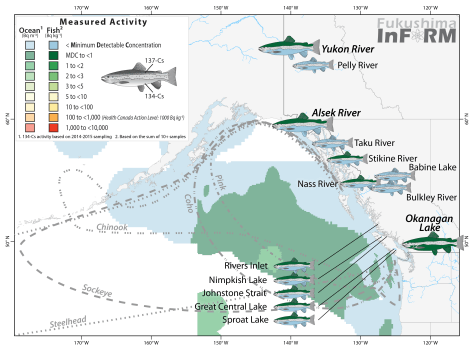
Complete results from 2015 biotic monitoring. New results are larger icons with bold/italic labels.
For the first time, the Fukushima fingerprint isotope, cesium-134 (134Cs; half-life ~ 2 years), has been detected at an extremely low level in a Canadian salmon by the InFORM project. The single sockeye salmon that tested positive was sampled from Okanagan Lake in the summer of 2015, according to scientists from the Radiation Protection Bureau at Health Canada, in cooperation with Fisheries and Oceans Canada and local First Nations. The sample was one of a few (7 out of 156 total) individual fish that had trace levels of the longer lived cesium-137 (137Cs) (30 yr half-life) that we reported on last winter. To determine if this trace 137Cs was from Fukushima or remnant from atmospheric weapons testing, InFORM reexamined these individual fish samples to see if extremely low levels of 134Cs may be present. The results of this extended analysis show that trace (0.07 Bq kg-1) levels of 134Cs were detected in one sample from Okanagan/Columbia River population. No 134Cs was detectable in the other samples. The observed levels remain well below the action level (1000 Bq kg-1) set by Health Canada guidelines.
As we reported in the winter 2016 update, 7 individual fish (out of the 156 measured) from 2015 tested positive for low levels (<1 Bq kg-1) of cesium-137 (137Cs). With its ~30 year half-life, 137Cs is still present in the environment from 20th century atmospheric weapons testing and Chernobyl in addition to the Fukushima accident. In contrast, no individual fish from the 2014 monitoring effort were found to contain detectable levels of 137Cs. This difference led the team at the Radiation Protection Bureau to conduct a more detailed investigation of some of those few positive samples to determine if 134Cs, the Fukushima fingerprint isotope, was present. Results from 5 of those 7 are now available and discussed below. The remaining two samples are still in processing.
A cattle-breeding corporation in Ishinomaki, Miyagi Prefecture, which was devastated by the 2011 Great East Japan Earthquake, will begin raising about 5,000 beef cattle in Vietnam by the end of this year at the earliest, in collaboration with a state-owned company there.
The Vietnamese company will prepare a ranch and young cattle, and Japanese farmers will provide their expertise in livestock farming.
The Japanese side will be able to receive $3 million (about ¥300 million) annually in consultation fees. It will be a particularly large operation for a move overseas by farmers in a disaster-hit area (see below).
“It can be not only post-disaster reconstruction but also a new growth strategy for Japan’s agriculture,” a farming expert said in expectation.
The agricultural corporation that will begin the project in Vietnam is Ushichan Farm Co., one of the largest beef cattle breeders in the Tohoku region. The company now raises about 4,000 beef cattle in Miyagi and Iwate prefectures. It ships out beef rich in fat — called shimofuri — and red meat with less fat.
Tsunami following the tremors washed away cattle barns and about 50 cattle. Due to damage from rumors in the wake of the accident at Tokyo Electric Power Company Holdings Inc.’s Fukushima No. 1 nuclear power plant, sales in the year after the disaster fell by about ¥500 million. However, workers at the company have improved the quality of beef through such steps as utilizing tablet computers in breeding management.
Its Vietnamese partner is Saigon Agriculture Incorporation (SAGRI), a state-owned firm based in Ho Chi Minh City.
In Vietnam, volumes of beef consumption have been rising along with its economic growth. SAGRI paid attention to the high-level production skills of Japanese beef-producing farmers to improve the country’s production volumes and qualities of beef.
Red-meat-type beef is popular in Japan, so SAGRI asked Ushichan Farm to collaborate and the two sides signed a business partnership contract in August this year.
SAGRI will prepare a 500-hectare ranch, cattle barns and about 5,000 young cattle in Ho Chi Minh City. Ushichan Farm will provide such techniques as breeding management that uses individual identification numbers and how to mix feeds.
After conducting administrative procedures in the country, the Japanese company will begin raising the cattle by the end of this year at the earliest. Beef from the Vietnamese ranch will be sold in local supermarkets and other stores starting around 2018. Sales will be evenly shared by the two corporations.
Eyeing the Trans-Pacific Partnership free trade pact, the Japanese side plans to import red meat from the cattle to be raised in Vietnam in the future. Ushichan Farm also aims to prepare for international competition with products from the United States and Australia.
“We want to make [the project] an opportunity to send out information about Japan’s livestock industry,” said Kazutaka Sato, 39, senior managing director of Ushichan Farm.
According to an official of the Japan External Trade Organization: “Such a large-scale investment in agriculture in Vietnam is rare. It indicates how high the Vietnamese side’s expectations are.”
Kazunuki Oizumi, a professor emeritus of Miyagi University who is an expert on agricultural economics, said, “Exporting skills and techniques can result in new growth not only in the disaster-hit areas but also in Japan’s agriculture overall.”
■ Moves overseas by farmers in disaster-hit areas
In coastal areas in Miyagi Prefecture devastated by tsunami, farmers have begun businesses overseas. For example, an agricultural production corporation in the town of Yamamoto has grown strawberries in India since autumn 2012, and farmers in the city of Iwanuma have grown rice in Vietnam since summer 2014. This is partly because exporting products from the prefecture has become difficult, as other countries’ restrictions on imports of farming products from the disaster-hit areas were made stricter in the wake of the accident at TEPCO’s Fukushima No. 1 nuclear power plant.
Whether in Tokyo, Fukushima, or even in front of the destroyed nuclear reactor buildings, we are exposed to radiation that we are unaware of. It is too small to see, it cannot be heard and it is odorless. Therefore, despite living in a region contaminated with radioactive particles, to this day, we are not consciously aware of the radiation. NaI (TI) scintillation detectors and germanium semiconductor detectors are used to measure the amount of radioactive contamination in soil, food, and water in units called Becquerels (Bq). Radioactivity is further measured in Sieverts (Sv), which is an index of the effects of radioactive levels in the air, doses of exposure, and so on.
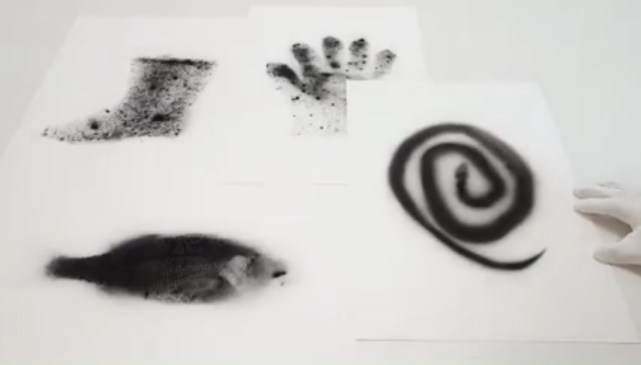
Nevertheless, from such values, it is impossible to know how the radioactive particles are distributed or where they are concentrating in our cities, lakes, forests, and in living creatures. These values do not enable us to “see” the radioactivity. Thus, radioactive contamination has to be perceived visibly, something that can be done with the cooperation of Satoshi Mori, Professor emeritus at Tokyo University. Professor Mori is using autoradiography to make radioactive contamination visible.
Today, dozens of radiographic images of plants created by Professor emeritus Mori since 2011 are on display together with radiographic images of everyday items and animals.
This collection of radiographic images (autoradiographs) is the first in history to be created for objects exposed to radiation resulting from a nuclear accident. It is with hope that visitors will come away with a sense of the extent of contamination in all regions subject to the fallout — not just those in and around Fukushima.
At the same time, It is hoped that this exhibition will remind visitors of the large region extending from the Fukushima Nuclear Plant to Namie Town, Iitate Village and the dense forests of the Abukuma Mountain Area that, to this day, remain restricted areas. The radiation affects animals that continue to live in these areas and be exposed to heavy radiation, as well as the 140,000 people that had to evacuate and who lost personal assets (homes, property, work, interpersonal relationships). These people are in addition to the victims who directly breathed in the radioactive materials, subjecting them to internal exposure — victims that include anyone from the residents near the plant to people in Tokyo and the Kanto Region.
Although what can be done is limited, new progress has made it possible to record the otherwise invisible radioactivity and make it visible. The history of needless nuclear accidents occurring in the United States, the Soviet Union (Russia) and Japan over the last several decades may still potentially be repeated elsewhere in the world, but hopefully future generations will see the cycle be broken. Through exhibitions and other means of disseminating knowledge about radioactivity, future generations may learn to leave behind dependence on nuclear power and be free from the dangers of nuclear accidents and nuclear waste.
The measures quoted in this article are from the Japan Nuclear Regulatory Agency.
As every measure given by the Japanese government agencies and Tepco during the past 5 and half years, we have the right to question their exactitude and therefore the true numbers could be actually higher than the ones published.
still the fact remains that they do recognize a certain contamination of the tap water in many prefectures of Eastern Japan.
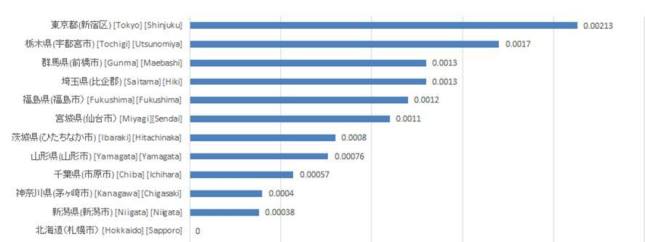
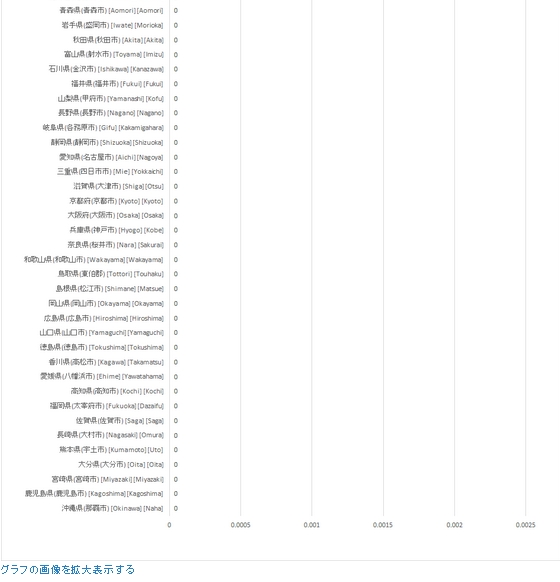
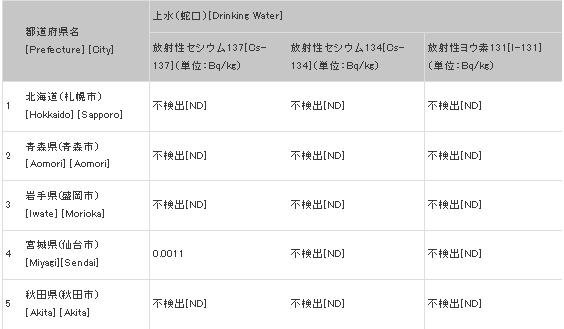
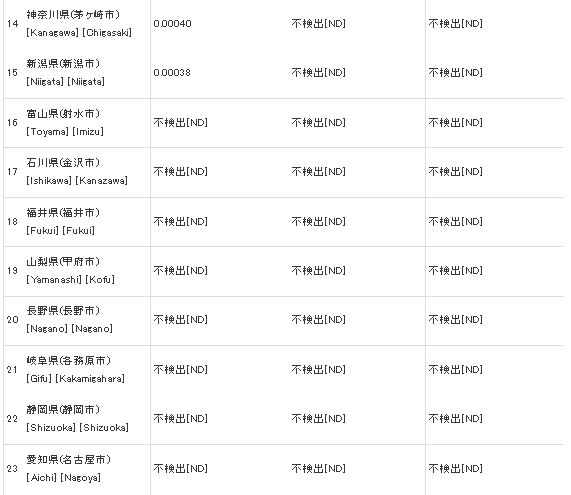
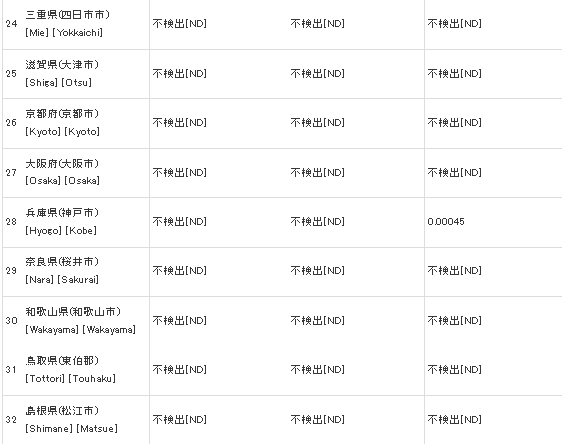
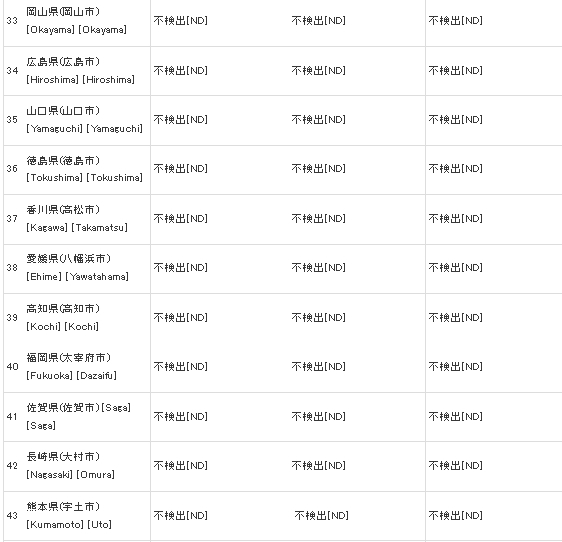
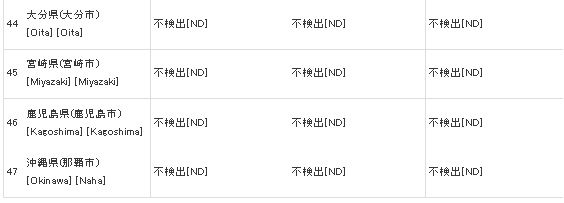
Radioactivity testing of tap water in June 2016
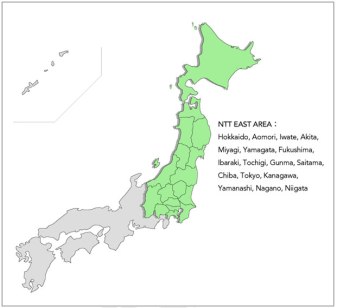
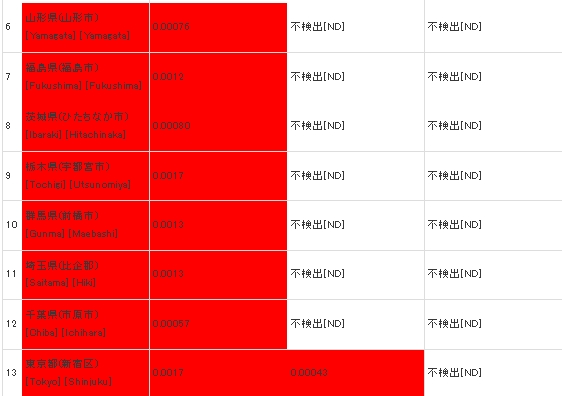
According to the radioactivity test of tap water, the Nuclear Regulatory Agency announced in June 2016 that there is some radioactivity contamination from Fukushima nuclear power plant accident in the tap water of Miyagi Prefecture, Yamagata Prefecture, Fukushima Prefecture, Ibaraki Prefecture, Tochigi Prefecture, Gunma Prefecture, Saitama Prefecture, Chiba Prefecture, Tokyo, Kanagawa Prefecture, Niigata Prefecture, where radioactive cesium has been slightly detected.
(The detection limit value of White Food: 0.5 Bq / kg).
For Tokyo traces of both Cesium 134 and Cesium 137 were detected, proving with certainty that they are from the Fukushima nuclear power plant accident.
As a result, we make sure it is not detected by the detection limit value of 0.0001 Bq / kg. So we have to check the non-detection in strontium inspection that is only carried out in the mineral water industry.
We believe that the one of the products that you sould really worry is the water that you drink every day.
Readings of radioactivity level in drinking water by prefecture (January-March, 2016)
1.本データは、1Bq/LをBq/kgとみなす [1.These figures are estimated as 1Bq/liter = 1Bq/kg]
2.原子力規制委員会が各都道府県等からの報告に基づき作成 [2.The table was made by Nuclear Regulation Authority, based on the reports from prefectures.]
3.検出下限値は、 I-131、Cs-134、Cs-137すべて0.001Bq/kg未満 [3.The detection limits of I-131, Cs-134 and Cs-137 are less than 0.001Bq/kg]
(参考)水道水中の放射性物質に係る指標の見直しについて(厚生労働省)における水道水中の新たな目標値 放射性セシウム(セシウム134及び137の合計) :10Bq/kg[(Ref.)[Document created by Ministry of Health, Labour and Welfare] [Radioactive cesium (The sum of cesium134 and 137) :10Bq/kg]
NAMIE, Japan — In an abandoned Japanese village, cows grazing in lush green plains begin to gather when they hear the familiar rumble of the ranch owner’s mini-pickup. This isn’t feeding time, though.
Instead, the animals are about to be measured for how they’re affected by living in radiation — radioactivity that is 15 times the safe benchmark. For these cows’ pasture sits near Fukushima, a name now synonymous with nuclear disaster.
The area was once a haven for agriculture with more than 3,500 cattle and other livestock. Ranchers who refused a government order to kill their cows continue to feed and tend about 200 of them. The herds won’t be used as food; now science is their mission.
Researchers visit every three months to test livestock living within a 20-kilometer (12-mile) radius of the Fukushima plant, where three reactors had core meltdowns after the facility was swamped by a tsunami in 2011. It is the first-ever study of the impact on large mammals of extended exposure to low-level radiation.
The ranchers are breeders, as opposed to those raising cattle to sell for beef, and tend to be attached to their animals. They treat them almost as if they were children, even giving them names. The research gives them a reason to keep their beloved cows alive, and to hope that someday ranching might safely return here.
Under a drizzling rain, doctors and volunteers wearing blue Tyvek protective suits draw the cows into a handmade pen of aluminum pipes. Five to six cows line up in the cage and are tied with a rope around their head and through their nose ring for solid support, so they won’t be hurt when the needle draws blood from their neck.
The gentle beasts moo from discomfort. The doctors work swiftly, drawing blood, collecting urine and checking for lumps or swollen lymph nodes. The check-up takes five minutes or less per cow.
Namie, 11 kilometers (7 miles) northwest of the plant, is a ghost town with no prospect of being habitable for years. But 57-year-old Fumikazu Watanabe comes every day to a ranch to feed 30 to 40 cows owned by seven farmers.
“What is the meaning of slaughtering the cows?” Watanabe said at a worn-out barn where healthy cows used to spend the night tending to their calves. The bones of animals that have died litter the ground outside.
“Keeping the cows alive for research purposes means that we can pass on the study to our next generation instead of simply leaving a negative legacy,” he said.
The research team, made up of veterinary and radiation experts from Iwate University, Tokai University and Kitasato University, was established a year after the meltdowns. They formed a nonprofit group called Society for Animal Refugee & Environment post Nuclear Disaster. Members volunteer to take the blood and urine samples and test them.
In 2012, the Japanese government ordered all livestock in the restricted area killed for fear that the breeding cows would continue to reproduce, and that cows exposed to radiation would have no sale value.
Keiji Okada, associate professor of veterinary medicine and agriculture at Iwate University, said the government considered it pointless to study the animals, since it couldn’t determine how much radiation they were exposed to immediately after the disaster.
Okada disagrees. He said the data will help researchers learn whether farmers can eventually work in affected zones.
“There are no precedent studies of animals being exposed to low-dose radiation, and we have no idea what results we are going to get,” he said. “That is exactly why it needs to be monitored.”
So far, the animals’ internal organs and reproductive functions have shown no significant abnormality particularly linked to radiation exposure, Okada said, but it’s too early to draw conclusions about thyroid cancer and leukemia.
Radiation could cause leukemia, but so could mosquitoes, which have infected cattle around the world with bovine leukemia virus.
“Even if we detect leukemia in the cows, we don’t know whether it’s caused by radiation or if it’s a bovine leukemia from a virus,” Okada said. “It is this year’s objective to be able to differentiate the two.”
Many cows have died during the study period, but food shortages have played a role, making it all the more difficult the doctors to determine causes. The dead cows are dissected and the radiation dosage in their organs is measured.
Is radiation killing the cows, or making them sick? Okada said the research team is working toward reaching a conclusion by March. The team worries that the study results could spark overly broad fears that the region will no longer be habitable or fit for agriculture.
Ultimately, Okada said, the team believes that further monitoring of the animals will show under what conditions it is safe to raise livestock exposed to low-level radiation, and how best to deal with such a leak should it happen again.
Yukio Yamamoto, owner of the large Yamamoto Ranch surrounded by a mountain, a river and a vast plain, travels three hours roundtrip from his temporary home to feed his remaining cows.
Yamamoto initially followed government orders to kill his cattle. He watched a mother cow being killed while a calf was still suckling on its milk, and then the calf following that.
“The cows are my family. How do I dare kill them?” Yamamoto said. “If there is a God, I’m sure some day we would be rewarded for the sacrifice we are making.”
He hopes one day to see his barn come to life again, filled with a hundred cows and calves cared for by his children and grandchildren.
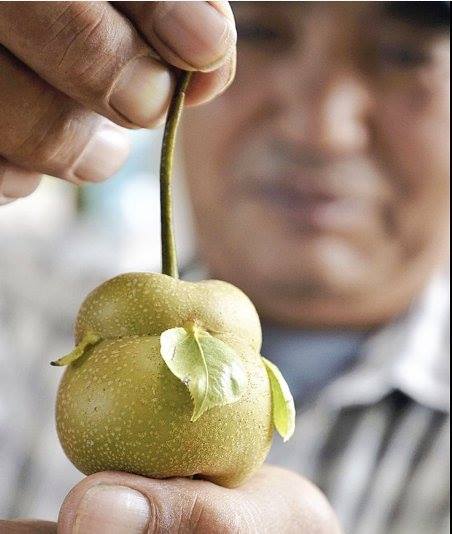
Farmers are surprised to find this snow man shaped pear.
It’s about 3 cm diameter, and leaves are growing from the hollow.
“It’s not possible to have leaves on a fruit. I wonder why…” said Mr. Sato who found this pear.
The degree of contamination with radioactive cesium (134Cs and 137Cs) in the human placenta after the accident at Fukushima nuclear power plant (FNP), which occurred on 11 March 2011, has not been assessed.
Material and Methods
134Cs and 137Cs contents were determined in 10 placentas from 10 women who gave birth to term singleton infants during the period between October 2011 and August 2012 using high-purity germanium detectors for gamma ray spectrometry. Five women resided within 50 km of FNP (neighbor group) and gave birth by the end of February 2012, while the other five women resided within 210–290 km of FNP (distant group) and gave birth in July and August 2012.
Results
All except one of the 10 placentas contained detectable levels of 134Cs and 137Cs, ranging 0.042–0.742 Bq/kg for 134Cs and 0.078–0.922 Bq/kg for 137Cs. One placenta from a woman living in Tokyo contained 0.109 Bq/kg 137Cs and no detectable level of 134Cs (<0.054 Bq/kg). 137Cs content was more than 0.2 Bq/kg in four and one placentas in the neighbor and distant groups, respectively.
Conclusion
Degree of contamination of the placenta with radioactive Cs was lower even in women who resided within 50 km of FNP compared to Japanese and Canadian placentas in the mid-1960s after repeated nuclear tests and in northern Italian placentas from 1986–1987 after the Chernobyl power plant accident.
Introduction
After the accident at Fukushima nuclear power plant (FNP), triggered by the Great East Japan Earthquake on 11 March 2011, radioactive fallout was deposited over a wide area of Japan.[1, 2] Although the short-lived radionuclides, such as 131I (half-life, 8 days), decayed within a few days to months eventually reaching negligible concentrations, long-lived radioactive cesium (physical half-life, 2 years for 134Cs and 30 years for 137Cs) remained in detectable concentrations in the environment. These radionuclides reach pregnant women mainly through direct consumption of contaminated vegetables, crops, as well as animal and fish products. Contamination of breast milk with 131I was indeed documented in lactating women residing near FNP in April 2011.[1] The occurrence of milk powder contamination with 134Cs and 137Cs (22–31 Bq/kg) was announced by Meiji Holdings on 6 December 2011 (cited on 6 August 2012; available from http://www.meiji.co.jp/notice/2011/detail/20111206.html). This contamination was concluded to be derived from atmospheric air during the process of drying of milk powder, and not from water or dairy ingredients. Thus, environmental pollution with radioactive materials occurred and reached pregnant women after the FNP accident.
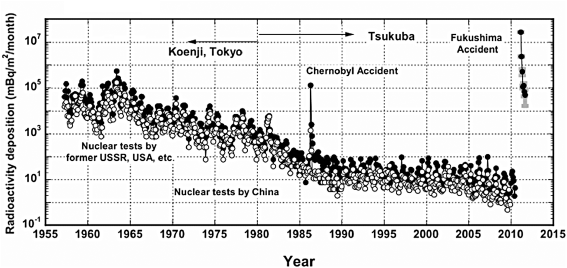
The placentas of women living in Hiroshima, Osaka, Tokyo and Canada in the 1960s contained detectable levels of 137Cs[3-5] due to environmental pollution with 137Cs after the repeated nuclear tests conducted by several countries, such as the USA and the former USSR. As the estimate of 137Cs deposition at the Meteorological Research Institute, Tsukuba, after the FNP accident far exceeded that in the 1960s in Japan (Fig. 1),[6] the placentas of women living near FNP may contain higher levels of 134Cs and 137Cs than those in the 1960s in Japan. However, the degree of placental contamination with radioactive Cs has not been studied. Therefore, the present study was performed to investigate the 134Cs and 137Cs contents in the placentas of women living within 300 km of FNP.
Figure 1.
Estimates of 137Cs deposition at the Meteorological Research Institute, Tsukuba, are presented for several months after the accident in March 2011. The estimate was computed based on the value obtained by measuring aliquots of the sample water (wet + dry depositions). As cesium is distributed between the liquid and the solid phases, the accurate value is not obtained unless the concentration of the whole sample by evaporation is achieved. Probably, current values are underestimates. Moreover, as 134Cs was deposited in comparable amounts, the total radioactive cesium had mostly doubled. , 137Cs; , 90Sr. (Adopted from [6]).
Materials and Methods
This study was conducted with the approval of the institutional review boards of Kameda General Hospital and Japan National Institute of Public Health.
Women who provided placentas
Placentas were obtained from 10 women: five (cases 1–5) living within 50 km (neighbor group) and five (cases 6–10) living within 210–290 km (distant group) of FNP until delivery after the FNP accident (Table 1). All 10 women gave birth to a healthy term singleton infant during the period between October 2011 and August 2012. The five women in the neighbor group gave birth earlier by the end of February 2012, while the five women in the distant group gave birth later in or after July 2012.
Measurement of radionuclides
Each whole placenta with a wet weight varying 0.418–0.672 kg was ashed to 4.13–7.40 g (Table 1) by muffle furnace at 450°C for 24 h after lyophilizing according to the preparation method recommended in the USA (http://www.epa.gov/rpdweb00/docs/marlap/402-b-04-001b-12-final.pdf). These ashed samples were placed individually into cylindrical plastic containers (100-mL capacity). To determine the gamma-emitting nuclides in the samples, gamma ray spectrometry was performed for more than 80 000 s with high-purity germanium detectors (GEM40-76; Ortec, Oak Ridge, TN, USA) connected to a multichannel analyzer and analytical software, and the activity concentrations of the radionuclides were corrected to the delivery dates. Each measured radioactivity was multiplied by 2(N/T): N and T were intervals until the measurement after delivery of the placenta (year) and half-life of each radionuclide (year), respectively. The energy and efficiency calibrations were performed using the nine nuclides mixed activity standard volume sources (MX033U8; Japan Radioisotope Association, Tokyo, Japan) composed of 109Cd, 57Co, 139Ce, 51Cr, 85Sr, 137Cs, 54Mn, 88Y and 60Co. These sources, contained in the same containers as the samples, had five different heights (0.5, 1, 2, 3 and 5 cm, respectively) to determine the detection efficiency of the detector as a function of sample height.
Results
As expected, 134Cs and 137Cs were detected in nine and 10 of the 10 placentas with varying activities ranging 0.042–0.742 Bq/kg for 134Cs and 0.078–0.922 Bq/kg for 137Cs, respectively (Table 1), while relatively constant levels of 40K were detected, ranging 46.5–59.3 Bq/kg, regardless of the differences in cities where they were living after the FNP accident. If we assumed that 134Cs content was 0.050 Bq/kg for case 8, median 134Cs content, 0.373 Bq/kg (range, 0.090–0.742) in the five placentas of the neighbor group was relatively higher than that of 0.061Bq/kg (range, 0.042–0.462) in the five placentas of the distant group, but difference did not reach a significant level (P = 0.05556, Mann–Whitney U-test). Median 137Cs content was 0.563 Bq/kg (range, 0.207–0.922) for the neighbor group and 0.109 Bq/kg (range, 0.078–0.694) for the distant group (P = 0.09524).
Discussion
The present study demonstrated that placentas of women living within 290 km of FNP contained detectable levels of 134Cs and 137Cs. The difference in degree of contamination of placentas with radioactive Cs may have reflected dietary habits, the degree of environmental pollution and the interval until delivery after the FNP accident. The shortened biological half-life of radioactive Cs from approximately 100 days for non-pregnant adults to approximately 60 days in pregnant women[7] may have also contributed to the lesser contamination of the placenta in women who gave birth in and after July 2012. Although environmental pollution with radioactive Cs has been decreasing, daily 137Cs activities of fallout exceeded 10 MBq/km2 in 15 days in March 2012 in Fukushima City (Preliminary results of monitoring the environmental radioactivity level of fallout [File number 93], cited on 10 August 2012; available from http://radioactivity.mext.go.jp/old/ja/1285/2012/03/1285_033018.pdf). Surface soils contained more than 1000 Bq/kg of radioactive Cs in wide areas of Fukushima Prefecture where the five women of the neighbor group were living (cited on 10 August 2012; available from http://www.s.affrc.go.jp/docs/map/pdf/02_2_04bunpu_fukushima.pdf).
As shown in Figure 1, environmental pollution with radionuclides occurred after the repeated nuclear tests in the mid-20th century and after the Chernobyl accident in 1986. According to a study that examined 137Cs content in the placenta and urine of inpatients at Hiroshima University Hospital and in daily foods served for these inpatients over a 5-year period from 1966–1970,[5] 137Cs content in the placentas was approximately 35 pCi (1.3 Bq)/kg, 137Cs daily dietary intake was approximately 30 pCi (1.1 Bq) and 137Cs daily excretion in the urine was approximately 25 pCi (0.9 Bq) in 1966. Japanese and Canadian groups investigated 137Cs content in the human placentas collected in the Tokyo and Osaka areas in Japan and in the Montreal area in Canada in the mid-1960s.[3, 4] The average content of 137Cs was similar in Japanese and Canadian placentas, regardless of the differences in dietary habits (averages of 25.2 pCi [0.93 Bq]/kg and 24.8 pCi [0.92 Bq]/kg for Japanese and Canadian placentas, respectively).[3] Thus, placentas of Japanese and Canadian women in the mid-1960s contained an average of 0.9–1.3 Bq/kg 137Cs. Placentas contained less than 0.8 Bq/kg 134Cs and less than 1.0 Bq/kg 137Cs in this study. Although there may be a problem of direct data comparison between studies in which different assay methods were used, these results suggested that placentas of Japanese and Canadian women in the mid-1960s were more heavily contaminated with 137Cs than the placentas examined in this study.
The Chernobyl accident occurred on 26 April 1986. According to the Japanese Ministry of Education, Culture, Sports, Science and Technology (released on 13 March 2012; cited on 6 August 2012; available from http://radioactivity.mext.go.jp/ja/list/338/list-1.html), total amounts of dispersed 131I and 137Cs into the environment after the FNP accident were 1.3–1.6 × 10¹⁷ Bq and 1.1–1.5 × 10¹⁶ Bq, respectively, while corresponding values after the Chernobyl accident were 1.8 × 10¹⁸ Bq and 8.5 × 10¹⁶ Bq, respectively. Thus, the degree of environmental pollution is estimated to be 11–14-fold higher for 131I and 6–8-fold higher for 137Cs after the Chernobyl accident than after the FNP accident. An Italian group examined 134Cs and 137Cs contents in the placentas of women who gave birth at the University of Bologna over a 13-month period from June 1986 to September 1987 after the Chernobyl accident.[8] Mean placental 137Cs content increased from 4.2 Bq/kg in June 1986, showing a peak of 11.5 Bq/kg in March 1987, and then decreased to 6.6 Bq/kg in September 1987.[8] The Italian group also estimated dietary 137Cs intake on the basis of the average diet in the region where study subjects lived;[8] daily 137Cs intake was estimated to be 15 Bq in the summer of 1986,[8] which is approximately 14-fold higher than that of 1.1 Bq in the Hiroshima area, Japan, in 1966.[5] An investigation conducted 4 months after the FNP accident in early July 2011 revealed that median values of daily dietary intake of 134Cs and 137Cs were 0.6 Bq and 0.9 Bq in Soma (neighboring city to the north of Minami-soma), and 0.4 Bq and 0.7 Bq in Iwaki, respectively.[9] Thus, 137Cs content per kg of the placenta well reflected daily 137Cs intake and appeared to be 50–120% of the daily 137Cs intake. Another Italian group reported daily urinary excretion of 13.5 Bq 137Cs in people living in the Pordenone area of Italy in the latter half of 1987,[10] which is more than 10-fold higher than that of 0.9 Bq in women living in the Hiroshima area in 1966.[5] Thus, levels of exposure to radioactive Cs in Japanese pregnant women in the mid-1960s and after the FNP accident were much lower than those in women living in certain areas of Europe after the Chernobyl accident. In another report from Germany,[11] the radioactive Cs load in the placenta was shown to have increased by 10-fold compared with studies before the Chernobyl accident in western Germany.
The ratio of radioactive Cs to total K (stable and radioactive) is conventionally taken as a measure of radioactive Cs contamination, independent of body size and sex.[12] Soft tissue 137Cs content corrected for potassium did not differ between mother and fetus,[13] suggesting that the placenta is not a barrier for radioactive Cs. Mean activities of placental 40K were reported to be 770 pCi per placenta (57 Bq/kg) and 45 Bq/kg in Japanese[4] and Italian[8] studies, respectively, consistent with the values ranging 46.5–59.3 Bq/kg in this study. The heaviest contaminated placenta contained 0.922 Bq/kg 137Cs and 46.5 Bq/kg 40K. This 40K activity was equivalent to a placental K level of 38.4 mmol/kg. Thus, this placenta exhibited a 137Cs to K ratio of 0.024 Bq/mmol. According to a study in Glasgow by Watson,[12] whole-body 137Cs to total body K was 0.109 Bq/mmol after the Chernobyl accident; this figure is several-fold higher than that of 0.037 Bq/mmol determined in mainland Scotland in 1978–1979,[14] and that of 0.024 Bq/mmol in the placenta of case 1 in this study. The mean whole-body activity of naturally occurring 40K was 2859 Bq for females (52 Bq/kg, if we assume that bodyweight was 55 kg),[12] falling between two figures (45 Bq/kg[8] and 57 Bq/kg[4]) of placental 40K activity. Thus, placental 40K activity concentration appeared to be similar to whole-body 40K activity concentration.
A study of the whole-body radioactive Cs[15] showed another aspect of exposure to 134Cs and 137Cs in Minami-soma residents after the FNP accident. Although only one Minami-soma resident was included in our study population, this woman showed less placental contamination than those reported in the published work.[3-5, 8] However, relatively heavy exposure to radioactive Cs occurred in residents in Minami-soma. According to a study that examined whole-body radioactive Cs (134Cs and 137Cs) in 9498 residents in Minami-soma during the period between 26 September 2011 and 31 March 2012,[15] radioactive Cs (≥210 Bq for 134Cs and ≥250 Bq for 137Cs) was detected in 38% (3051/8066) of adults and 16% (235/1432) of children (6–15 years old), ranging 210–12 771 Bq (median, 744 Bq), with a concentration of 2.3–196.5 Bq/kg (median, 11.4) for adults and 210–2953 Bq (median, 590), with a concentration of 2.8–57.9 Bq/kg (median, 11.9) for children. Based on these data, we speculated that the pregnant Minami-soma woman in this study may have managed to avoid contaminated food materials. Available data on whole-body 134Cs and 137Cs activities are as follows: whole-body 134Cs and 137Cs activities were 172 Bq and 363 Bq, respectively, in non-pregnant adults living in the Glasgow area in June and July 1986 after the Chernobyl accident;[12] and that for 137Cs activity was estimated to be 3 nCi (111 Bq) in 1966, with a gradual decline to less than 1 nCi (37 Bq) in 1969 in pregnant Japanese women living in the Hiroshima area.[5]
In conclusion, placentas from women living within 290 km of FNP contained detectable levels of 134Cs and 37Cs. However, the degree of contamination was lower than those in Japanese and Canadian women in the mid-1960s and in northern Italian women in 1986–1987 after the Chernobyl accident. It has not been elucidated how placental contamination with radioactive Cs occurring in the past affected fetuses adversely. Such adverse effects, if present, may be disclosed in follow-up studies that are being conducted in Fukushima Prefecture in future.





 , 137Cs;
  , 90Sr. (Adopted from [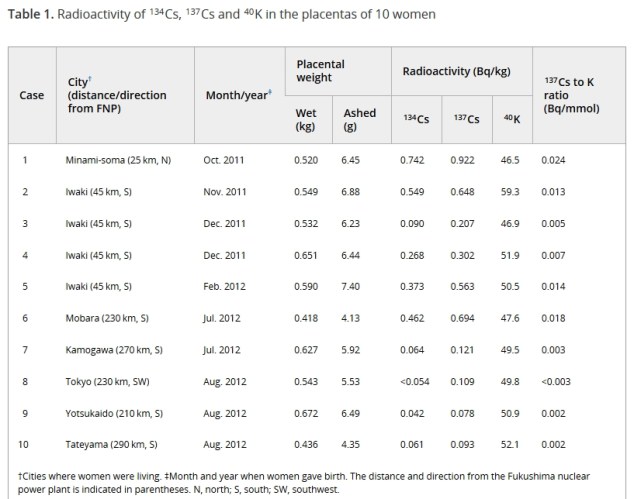




 nuclear-news