Japan Lifts Shipment Restrictions on All Fish Species off Fukushima
 People in the fishing industry, including fishermen and brokers, work briskly on Feb. 7, 2019, at the Matsukawaura fishing port in Soma, Fukushima Prefecture.
Japan Lifts Shipment Restrictions on All Fish Species off Fukushima
February 25, 2020
Fukushima, Feb. 25 (Jiji Press)–The Japanese government has lifted shipment restrictions on all of its designated fish species caught off Fukushima Prefecture that were introduced due to the 2011 nuclear disaster, a panel said Tuesday.
The government’s Nuclear Emergency Response Headquarters announced the lifting after fish of the one last remaining species of the 43 satisfied safety standards.
The restrictions had covered the 43 fish species caught off Fukushima, which hosts the disaster-crippled Tokyo Electric Power Company Holdings Inc.’s <9501> Fukushima No. 1 nuclear power plant. The last one is a species of skate.
In August 2016, the shipment restrictions on the fish were lifted. But in January 2019, the restrictions were reinstated after above-limit cesium was detected from skates caught off Fukushima.
Currently, members of the Fukushima Prefectural Federation of Fisheries Cooperative Associations voluntarily refrain from fishing in waters within 10 kilometers of the TEPCO plant, which underwent a triple meltdown after the March 2011 earthquake and tsunami.
Fishermen in Fukushima now free to ship all catches of fish
February 26, 2020
The last restrictions on fish taken off Fukushima Prefecture were lifted on Feb. 25, freeing fishermen here to ship any species caught in the area.
A ban was imposed on ocellate skate after one caught in the area was found to have levels of radioactive cesium exceeding the government standard of 100 becquerels per kilogram in January 2019.
The government task force on the Fukushima nuclear disaster removed restrictions on the bottom-feeding species related to rays after the prefecture measured levels in about 1,000 fish, and found none exceeded the standard.
The maximum amount found in the fish was 17 becquerels.
The prefecture has since asked the government to lift the restrictions.
Restrictions were placed on 43 species of fish caught off the coast of the prefecture following the 2011 accident at the Fukushima No. 1 nuclear power plant.
The restrictions were lifted in stages after the safety of the fish was confirmed, with some fishing allowed on a trial basis.
In 2019, with trial fishing on limited days and in specified areas, the annual catch from the area stood at 3,584 tons, only about 14 percent of that in 2010, a year before the nuclear disaster.
Discussions will now start to resume full operation.
Releasing radioactive water would further damage Fukushima’s reputation
 Fukushima’s fishing industry was one of the prefecture’s hardest-hit sectors following the March 2011 nuclear disaster.
Feb 25, 2020
Releasing the treated radioactive water stored at the Fukushima No.1 nuclear power plant risks further damage to the disaster-hit prefecture’s reputation and negates the nine-year effort to dispel negative perceptions about local agricultural produce, fisheries and tourism.
Although the government is considering dumping the water into the ocean, it should find a different solution and listen to the concerns of the people of Fukushima and local industries.
As the governor of Fukushima Prefecture between 2006 and 2014, I had my work cut out for me after the earthquake, tsunami and nuclear accident in March 2011.
Some of my main challenges after the disaster were securing the safety of the residents, ensuring they had access to evacuation shelters, managing the whereabouts of 160,000 evacuees scattered in and out of the prefecture and deciding on the site for interim storage of the soil and waste generated by the decontamination effort.
Determining the site was very difficult, but in the end the towns of Okuma and Futaba, which co-host the crippled nuclear power plant, honorably made the agonizing decision to accommodate it on condition that the tainted waste would be moved to a final disposal site outside of Fukushima within 30 years after the storage began.
During my term, I visited South Korea and China in 2012 to explain to local media using scientific facts that Fukushima produce is safe. I also helped arrange for several national and international conferences to be held in Fukushima Prefecture, based on the belief that coming to the prefecture and trying the local food was the best way to reassure guests that the area was safe and secure.
In December 2012, I lured an International Atomic Energy Agency meeting to the prefecture. Hundreds of nuclear specialists, ministers and other dignitaries from around the world gathered to share the lessons from the nuclear disaster and discuss the need to reinforce nuclear safety.
Today, nearly a decade after the disaster, Fukushima’s reputation is recovering — but only to a limited extent.
Although the government has prioritized ensuring security based on scientific facts, the public sense of security has yet to be restored.
Notwithstanding the central and prefectural government’s message about safety from radiation, local produce still carries cheaper price tags than those from other prefectures and the number of school trips to Fukushima has not bounced back to pre-disaster levels.
The fishing industry along the eastern coast, which the nuclear power plant faces, has taken one of the biggest hits from the negative perception of Fukushima. The prices of fish caught off the prefecture are extremely low when they are brought to Tokyo.
Fukushima is one of the major rice producers in Japan. After the disaster, officials began to check all of the prefecture’s annual output of around 10 million bags of rice for radioactive materials. The blanket testing takes a lot of effort. Even though the inspection confirms the products’ safety, they are cheaper just because they come from Fukushima.
I heard that farmers in the western region of Aizu — one of the main rice producers in the prefecture — asked the agricultural cooperative to use Aizu labels, rather than those of Fukushima, to avoid stigma. The neighborhood is located more than 100 kilometers from the area that hosts the power plant.
According to the Consumer Affairs Agency, the share of people in Tokyo and other metropolitan areas who said they hesitate to buy food products from Fukushima due to radiation contamination fears was 12.5 percent in February 2019.
The stigma from the nuclear disaster has beleaguered tourism in Aizu, which is finally showing signs of recovery. Because the name of the Fukushima nuclear power plant contains Fukushima, it gives the inevitable impression that the entire prefecture is contaminated with radiation.
Discharging water containing radioactive tritium — which cannot be removed by the current filtering technology — into the environment would only exacerbate these problems. Even though the government insists that releasing the water into the ocean is safe, some in Japan and abroad have yet to change their perceptions of Fukushima.
Gaining the understanding of local residents about the release method would be difficult. Rice farmers, for example, have suffered ever since the disaster. Their prime Koshihikari brand of rice, which was the nation’s second-most popular after Niigata’s before the disaster, used to sell out quickly.
Fukushima is a few more steps away from convincing consumers that its agriculture, forestry and fisheries products are safe and secure, so I want the government and plant operator Tokyo Electric Power Company Holdings Inc. to prioritize the opinions of people in these key industries when discussing the issue of releasing the water.
When I was governor, the government and Tepco started to curb the amount of water being tainted with radioactive particles because the storage tanks, which could hold 1,000 tons of water each, filled up in just two days.
Doing so required preventing groundwater from flowing into the reactor buildings. We set up an impermeable wall of frozen soil around the reactor buildings to stem the flow of groundwater into the area, but this method did not work well at first.
So we used other approaches to divert groundwater away from the reactors. The combination of the methods reduced water flowing into the buildings from 450 tons to 130 tons a day.
But now the tanks are nearing their capacity, with Tepco estimating that they will reach that point by around the summer of 2022.
I understand that we cannot keep building storage tanks for the water. There is a limit to their capacity.
However, this dilemma calls for pooling scientific and other expertise from around the world to explore potential solutions, while building trust with local residents.
Tepco, which created the problem, and the government should take on the bulk of that task.
Fukushima ‘safe’ to host Olympic torch relay: governor
 Fukushima Gov. Masao Uchibori speaks to foreign media on Feb. 18, 2020, in Tokyo
February 19, 2020
TOKYO (Kyodo) — Fukushima Gov. Masao Uchibori said Tuesday the northeastern Japan prefecture, devastated by the 2011 earthquake, tsunami, and nuclear disaster, is safe to host its leg of the Olympic torch relay.
With the Japanese government designating the upcoming Tokyo Games as “Reconstruction Olympics,” the torch relay in the country will kick off on March 26 at J-Village, a football training center in the prefecture that was once an operational base for dealing with the nuclear crisis. Opening matches for Olympic baseball and softball will be played in Fukushima city as well.
“Through this ‘Reconstruction Olympics,’ we would like to show how Fukushima’s reconstruction has progressed in the past nine years as the result of efforts in cooperation with the Japanese government,” the governor told a press briefing in Tokyo.
Holding the Olympic events “doesn’t mean the reconstruction has finished,” he said, adding the prefecture also suffered damage from Typhoon Hagibis, which left a trail of destruction across wide areas of Japan last fall.
The quake and tsunami disasters in northeastern Japan left more than 15,000 people dead and triggered the world’s worst nuclear disaster since the 1986 Chernobyl crisis. Typhoon Hagibis in October caused massive floods in Fukushima.
The safety of the torch relay route has been confirmed through constant radiation monitoring, among other measures, Uchibori said.
Late last year, Greenpeace Japan informed the Japanese government and Olympic bodies that radiation hot spots were discovered around J-Village, prompting Tokyo Electric Power Company Holdings Inc., the operator of the crisis-hit Fukushima Daiichi nuclear power plant, to remove the soil in the affected areas.
In the town of Naraha, one of the municipalities hosting J-Village, only about half of the residents have returned after the evacuation, according to Uchibori.
https://mainichi.jp/english/articles/20200219/p2g/00m/0na/024000c
Fogwater deposition of radiocesium in the forested mountains of East Japan during the Fukushima Daiichi Nuclear Power Plant accident: A key process in regional radioactive contamination

Fukushima and the 2020 Olympics
by Shaun Burnie – 5 February 2020As 2020 is the year the Olympics and Paralympics come to Japan, this is an exciting time for sports and for the people of Japan. Amidst all the excitement however, there is the ongoing nuclear crisis in Fukushima prefecture. Labeled as the ‘Reconstruction Olympics’, Prime Minister Abe in 2013 declared that the situation at Fukushima Daiichi was under control. Seven years later there still remains a nuclear emergency at the nuclear plant and surrounding areas. In addition to the enormous challenges of how to safely manage over 1 million tonnes of contaminated water at the site and as much as 880 tonnes of molten nuclear fuel for which there is no credible solution, there remain wider issues regarding radioactive contamination of the environment, its effect on workers and Fukushima citizens, including evacuees and their human rights.
 Greenpeace radiation survey team in Fukushima, Japan
These issues were the subject of a 28 January 2020 documentary
broadcast by the U.S. network HBO as an investigative report by the program ‘Real Sports with Bryant Gumbel ’, the U.S.’s most-honored sports journalism series (with 33 Sports Emmy Awards, including 19 for Outstanding Sports Journalism) during the opening episode of its 26th season.
What does it mean to host the Olympics and Paralympics in the context of an ongoing nuclear disaster, the effects of which are still being felt by tens of thousands of Japanese citizens? What does it tell about the Japanese government and its commitment to respecting the values of transparency and the human rights of its citizens? These are some of the important questions raised by HBO and they warrant careful consideration in the months leading up to this year’s summer games.
 Greenpeace radiation survey team in Fukushima, Japan
Greenpeace Japan applauds Olympic values and spirit, while recognizing that the International Olympic Committee (IOC) has the responsibility to ensure the Olympic Games have a minimum impact on the environment and leave a positive legacy for those hosting the Games. The IOC has an opportunity to do this in a way that fulfills the ideals of the environment as the third pillar of Olympism – sustainability – by making the Games a showcase for environmental solutions. Simultaneously, we recognize that hosting the Olympics and Paralympics requires the Japanese Government to ensure absolute safety for athletes, international visitors, and the Japanese public alike.
The decision to host two sporting events in Fukushima city raises genuine and important questions over radiation risks. The route of the Olympic Torch relay in all the municipalities of Fukushima prefecture includes the districts of Iitate, Namie, and Okuma where Greenpeace Japan’s Nuclear Monitoring & Radiation Protection Team has discovered radioactive hotspots, both in the open areas as well as in the remaining radiation exclusion zones, that remain too high even by revised governmental standards. What does all this mean for the hosting of Olympic events, including for athletes and visitors?
 Greenpeace radiation survey team in Fukushima, Japan
By conducting extensive radiation investigations, Greenpeace Japan attempts to explain the complex radiological environment, where nothing is straightforward, and where judging precise risks to health at the individual level is near impossible. In an effort to better understand and explain the radiological situation in parts of Fukushima, as well as the ongoing issues of human rights for both Fukushima citizens and decontamination workers, Greenpeace Japan will be publishing its latest radiation survey results in early March 2020.
Shaun Burnie is Senior Nuclear Specialist at Greenpeace Germany.
https://www.greenpeace.org/international/story/28509/fukushima-and-the-2020-olympics/
Olympics: Tokyo torch relay to add another Fukushima reactor town
Dentsu Corporation, the hired PR company to calm the fears of the Japanese public, is using every gimmick in the book to deny the existing radiation risks to promote the 2020 Tokyo Olympics
 Japanese actress Satomi Ishihara, center, attends a promotional event for the 2020 Tokyo Olympic and Paralympic torch relays at an elementary school in Tokyo, on Jan. 16, 2020.
January 18, 2020
TOKYO (Kyodo) — The 2020 Tokyo Olympic Games torch relay is likely to pass through the town of Futaba, which hosts the disabled Fukushima Daiichi nuclear plant in northeastern Japan, as the government plans to lift the mandatory evacuation order for the town on March 4, sources familiar with the matter said Friday.
The town of Okuma, a co-host of the nuclear plant, was already included in the first day of the torch relay. Fukushima Prefecture aims to highlight on the global stage its reconstruction from the world’s worst nuclear accident since Chernobyl in 1986.
Organizers announced in July 2018 that Fukushima would be the starting point for the torch relay in the country. Last March, Yoshiro Mori, the organizing committee’s president, revealed that the relay would begin some 20 kilometers from the Fukushima plant at the J-Village national soccer training center, which was used as an operational base for handling the nuclear crisis.
The Olympic torch will arrive in Japan on March 20 and the flame will be taken to Ishinomaki Minamihama Tsunami Recovery Memorial Park in Ishinomaki, Miyagi Prefecture.
It will then travel by train through Miyagi and Iwate prefectures before making its way to Fukushima. The three prefectures were hit hardest by the powerful earthquake and tsunami on March 11, 2011.
The Japan leg of the relay will begin on March 26, 2020, two weeks after the flame lighting ceremony in Greece, and will carry the torch across all 47 prefectures in the country over a period of 121 days.
The Tokyo Olympics are scheduled to be held between July 24 and Aug. 9, followed by the Paralympics from Aug. 25 to Sept. 6.
https://mainichi.jp/english/articles/20200118/p2g/00m/0sp/034000c
Wild Animals Prefer Nuclear Exclusion Zones to Humans
January 10
The Nuclear Disaster of Fukushima in 2011 was a devastating event, combined with the severe earthquakes and terrifying tsunamis, resulting in the deaths of over 2,000 people in Japan. However, there are now new signs of life within the area, as wild animals are beginning to obtain the land and are reported to be thriving significantly.
The Fukushima Nuclear accident naturally resulted in an exclusion zone being enforced due to the extremely high levels of radiation in the area. This event shares large similarities with the Chernobyl Nuclear Disaster in 1986, with the immediate and extended areas being entirely excluded to humans.
A further surprising link between the two accidents is the revival of natural wildlife to both surrounding areas of the nuclear accidents. In recent years, there have been numerous reports concerning land, within Chernobyl and Pripyat, of wild animals returning to settle down in the nuclear infested areas.
The University of Georgia have been able to conduct research, where they have collected an estimate of 260,000 images of wildlife living successfully inside the exclusion zone. Their studies conclude that more than 20 different species have been identified.
“Our results represent the first evidence that numerous species of wildlife are now abundant throughout the Fukushima Evacuation Zone, despite the presence of radiological contamination” said James Beasley, an associate professor at the Savannah River Ecology Laboratory and the Warnell School of Forestry and Natural Resources at the University.
In addition, with the current suffering and loss of wild animals currently taking place on the other side of the globe in the Australian fires, where estimates suggest that one billion animals have lost their lives. It raises the question as to whether wild animals would prefer to be left to their own devices and enabled to thrive, without human interference. In this instance, the human contribution towards climate change is the leading culprit for the events in Australia.
Failing to protect Philippines people’s health, corrupt Philippines government lifts restrictions on importing Fukushima food
Having lived many years in the Philippines and experienced how badly corrupt the Philippines government is at every level and in every department, to me this decision comes as no surprise. The only question is how much? How much was paid as a bribe, beside the agreement for Japan to provide a low-interest loan of up to 4.4 billion yen ($40 million) to reinforce major bridges in Manila?

Philippines lifts restrictions on importing Fukushima food
January 09 2020
MANILA – Philippine Foreign Secretary Teodoro Locsin said Thursday his country has lifted restrictions on Japanese food imports imposed following the 2011 Fukushima nuclear disaster due to lower risks of radioactive contamination.
Locsin said during a meeting with his Japanese counterpart Toshimitsu Motegi in Manila that the Philippines had eliminated the need for radiation test results for shipments of some types of seafood and agricultural products from Fukushima and its surrounding areas on Wednesday.
“I look forward to safe Japanese food reaching many of the people of the Philippines,” Motegi told a joint press briefing after the meeting.
The Southeast Asian country had required the test for beef and vegetables from Fukushima and Ibaraki, as well as seafood from the two prefectures along with Tochigi and Gunma following the March 2011 triple meltdowns at the Fukushima Daiichi nuclear power plant, triggered by a powerful earthquake and tsunami.
A total of 54 countries and regions took such measures following the crisis. With the announcement by the Philippines, that number falls to 20, with the United States, China and South Korea among countries maintaining restrictions of some kind, according to the farm ministry.
Motegi and Locsin also agreed to step up security cooperation, with an eye to countering China’s militarization of artificial islands in disputed parts of the South China Sea, as well as on boosting economic cooperation including on infrastructure development.
Following the meeting, the two signed an agreement for Japan to provide a low-interest loan of up to 4.4 billion yen ($40 million) to reinforce major bridges in Manila.
https://news.abs-cbn.com/business/01/09/20/philippines-lift-restrictions-on-importing-fukushima-food
DA removes post-Fukushima requirements on Japanese produce
January 9, 2020
THE Department of Agriculture (DA) said it removed the radiation analysis requirement on selected Japanese commodities for import to the Philippines.
In memorandum order no. 1, series of 2020, Agriculture Secretary William D. Dar said that the “certificate of radiation analysis and certificate of origin for the importation of Japanese commodities are no longer required.”
The Bureau of Agriculture and Fisheries Standards (BAFS) had been ordered to conduct a food safety risk assessment of radionuclide in commodities which include fish, beef, apples, and pears from Japan.
“The food safety risk assessment concludes that there is no significant food safety threat on fish, apple, pear, and beef imported from Japan,” it said.
In 2011, Japan was hit by a magnitude-9 earthquake and a tsunami, which destroyed the cooling systems at Tokyo Electric Power Co.’s Fukushima Daiichi nuclear plant. This caused reactors to melt down and emit radiation into the air, soil, and sea.
The DA issued memorandum order no. 12, series of 2011, which requires plants, planting materials, and plant products originating from the Fukushima area to have certificate of radiation analysis. It also required certificates of origin for other imports from other prefectures.
Memorandum order no. 14, series of 2011 requires dairy products and animal feed imports not from Fukushima and Ibaraki to have a certificate of origin and a certificate of declaration. — Vincent Mariel P. Galang
https://www.bworldonline.com/da-removes-post-fukushima-requirements-on-japanese-produce/
Fukushima unveils plans to become renewable energy hub
Japan aims to power region, scene of 2011 meltdown, with 100% renewable energy by 2040
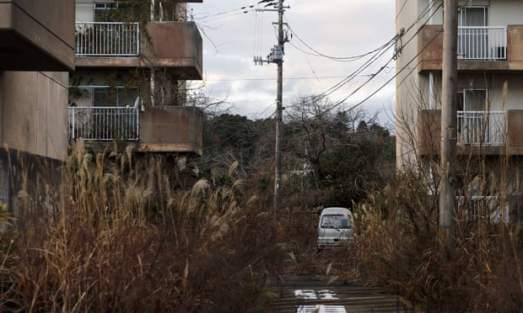 Weeds grow in an abandoned apartment complex in Futaba, Fukushima prefecture.
Jan 5, 2020
Fukushima is planning to transform itself into a renewable energy hub, almost nine years after it became the scene of the world’s worst nuclear accident for a quarter of a century.
The prefecture in north-east Japan will forever be associated with the triple meltdown at the Fukushima Daiichi nuclear power plant on 11 March 2011, but in an ambitious project the local government has vowed to power the region with 100% renewable energy by 2040, compared with 40% today.
The 2011 accident, triggered by a powerful earthquake and tsunami, sent large quantities of radiation into the atmosphere and forced the evacuation of more than 150,000 residents.
The 300bn yen ($2.75bn) project, whose sponsors include the government-owned Development Bank of Japan and Mizuho Bank, will involve the construction of 11 solar and 10 wind farms on abandoned farmland and in mountainous areas by the end of March 2024, according to the Nikkei Asian Review.
A 80km grid will connect Fukushima’s power generation with the Tokyo metropolitan area, once heavily dependent on nuclear energy produced at the prefecture’s two atomic plants. When completed, the project will generate up to 600 megawatts of electricity, roughly two-thirds the output of an average nuclear power plant.
Despite the Fukushima disaster, the world’s worst nuclear accident since Chernobyl in 1986, Japan’s conservative government is pushing to restart idle reactors.
It wants nuclear power, which generated almost a third of the country’s power before Fukushima, to make up between 20% and 22% of its overall energy mix by 2030, drawing criticism from campaigners who say nuclear plants pose a danger given the country’s vulnerability to earthquakes and tsunami.
All of Japan’s 54 reactors were shut down after the Fukushima meltdown. Nine reactors are in operation today, having passed stringent safety checks introduced after the disaster.
Renewables accounted for 17.4% of Japan’s energy mix in 2018, according to the Institute for Sustainable Energy Policies, well below countries in Europe. The government iaims to increase this to between 22% and 24% by 2030 a target the prime minister, Shinzo Abe, has described as ambitious but which climate campaigners criticise as insufficient.
Abe insists nuclear energy will help Japan achieve its carbon dioxide emissions targets and reduce its dependence on imported gas and oil, but his recently appointed environment minister, Shinjiro Koizumi, has called for the country’s nuclear reactors to be scrapped to prevent a repeat of the Fukushima disaster.
“We will be doomed if we allow another nuclear accident to occur. We never know when we’ll have an earthquake,” Koizumi said when he joined Abe’s cabinet in September.
The government is unlikely to meet its target of 30 reactor restarts by 2030 given strong local opposition and legal challenges.
Japan faces mounting international criticism over its dependence on imported coal and natural gas. It received the “fossil of the day” award from the Climate Action Network at last month’s UN climate change conference in Madrid after its industry minister announced plans to continue using coal-fired power.
Japan is the third-biggest importer of coal after India and China, according to the US Energy Information Administration. Its megabanks have been urged to end their financing of coal-fired plants in Vietnam and other developing countries in Asia.
Fukushima Radioactive Water: Towards Environmental Release
Translated from french by Hervé Courtois (D’un Renard)
 A massive amount of radioactive water is stored on the grounds of the Fukushima Daiichi nuclear plant site ravaged by the tsunami of March 2011.
December 24, 2019
The decision is not expected to be announced before the Tokyo Olympics next summer, given the diplomatic risk. Japan is expected to face strong opposition.
Releasing the radioactive water from the Fukushima Daiichi nuclear power plant to the environment (in the sea or in the air) is the only option left since experts have ruled out long-term storage, Japanese officials say.
“The option of simple long-term storage is no longer being considered,” said a state official who wished to remain anonymous. And to clarify that the government’s ambition is to make room for Fukushima Daiichi: once the reactors are demolished and the site cleaned, there should be nothing left, including no water tanks still containing at least tritium.
A massive amount of radioactive water is stored within the confines of this site devastated by the tsunami of March 2011. It comes from rain, groundwater or injections necessary to cool the hearts of reactors that have melted. Filtered several times, it ‘should’ ultimately be rid of a large amount of radionuclides, except tritium, ‘considered’ less dangerous for the environment and living beings.
A water still heavily loaded
Long-term storage, which was recommended by environmental organizations like Greenpeace, being no longer validated, three options remain considered the most feasible, from a technical and economic point of view: dilution at sea, evaporation in the air or a combination of the two.
Experts, including those from the International Atomic Energy Agency (IAEA), have been pushing for dilution at sea for years. But this is not feasible at the moment because, as recognized by the company Tokyo Electric Power (Tepco), a large part of this water is still heavily loaded with radioactive elements dangerous for the food chain.
Tepco estimates, however, that the tanks will be full in 2022.
A final decision should not be made before the Tokyo Olympics in the summer of 2020, given the diplomatic risk. A government subcommittee responsible for the file is thus studying not only the technical implications, but also the potential damage to the country’s image abroad.
Japan is set to face strong opposition, already expressed, from fishermen and farmers in the region, as well as from environmental groups and neighboring countries, starting with South Korea. Seoul did not digest a previous decision to dump radioactive water packages into the sea immediately after the Fukushima accident, without asking its advice.
Bee swarm affected by Fukushima radiation

蜂は2,470bq/Kg
巣(ハニカム部分)16,145bq/Kg
巣(外殻部分)15,342bq/Kg
Fukushima to relax blanket radiation testing for beef cattle

Stations Near Fukushima N-Plant to Be Out of Evacuation Zone
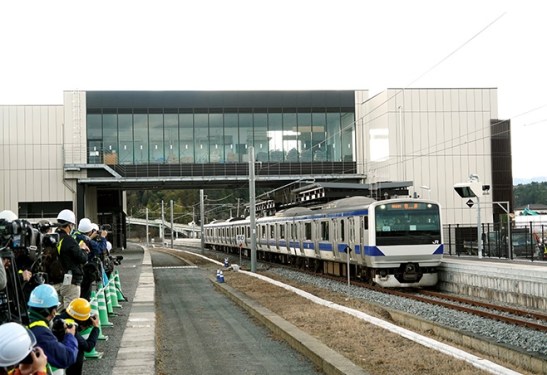
Severed section of JR Joban Line in Fukushima to reopen in March
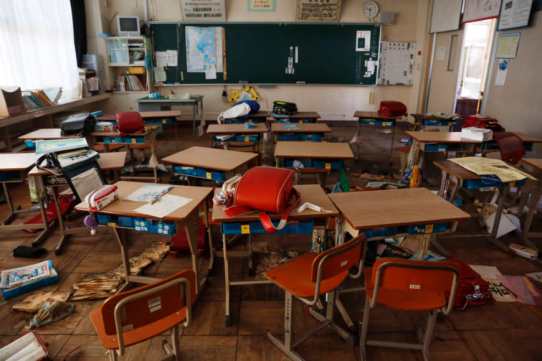
Tokyo ‘Recovery Olympics’ offer scant solace to displaced victims of Fukushima nuclear disaster
1 This Month

of the week – Shut Down Drone Warfare!


Tell the Ukrainian Government to Drop Prosecution of Peace Activist Yurii Sheliazhenko

Petition to revoke the licensing of the Near Surface Nuclear Disposal Facility (NSDF) at Chalk River. https://www.ourcommons.ca/petitions/en/Petition/Details?Petition=e-7247
To see nuclear-related stories in greater depth and intensity – go to https://nuclearinformation.wordpress.com
-
Archives
- March 2026 (244)
- February 2026 (268)
- January 2026 (308)
- December 2025 (358)
- November 2025 (359)
- October 2025 (376)
- September 2025 (257)
- August 2025 (319)
- July 2025 (230)
- June 2025 (348)
- May 2025 (261)
- April 2025 (305)
-
Categories
- 1
- 1 NUCLEAR ISSUES
- business and costs
- climate change
- culture and arts
- ENERGY
- environment
- health
- history
- indigenous issues
- Legal
- marketing of nuclear
- media
- opposition to nuclear
- PERSONAL STORIES
- politics
- politics international
- Religion and ethics
- safety
- secrets,lies and civil liberties
- spinbuster
- technology
- Uranium
- wastes
- weapons and war
- Women
- 2 WORLD
- ACTION
- AFRICA
- Atrocities
- AUSTRALIA
- Christina's notes
- Christina's themes
- culture and arts
- Events
- Fuk 2022
- Fuk 2023
- Fukushima 2017
- Fukushima 2018
- fukushima 2019
- Fukushima 2020
- Fukushima 2021
- general
- global warming
- Humour (God we need it)
- Nuclear
- RARE EARTHS
- Reference
- resources – print
- Resources -audiovicual
- Weekly Newsletter
- World
- World Nuclear
- YouTube
-
RSS
Entries RSS
Comments RSS
 nuclear-news