Kenichi Hasegawa, former dairy farmer who continued to tell the truth about the nuclear accident in Fukushima, passes away.

Immediately after the accident, I pressed the village mayor to disclose information.
He also shared the voice of a dairy farmer friend who committed suicide.
Mr. Kenichi Hasegawa, a former dairy farmer who continued to appeal about the current situation in Iitate Village contaminated by radiation after the Fukushima Daiichi Nuclear Power Plant accident in 2011, died of thyroid cancer on October 22, 2011 at the age of 68. He was 68 years old. He was the co-chairman of Hidanren, a group of victims of the nuclear power plant accident, and the head of the group of Iitate villagers who filed for alternative dispute resolution (ADR). Since 2005, he has been focusing on growing buckwheat noodles in the village, while criticizing what the government and administration call “reconstruction projects” and “reconstruction Olympics. In February and March of this year, he was diagnosed with cancer and fell ill. Many people are saddened by the death of Mr. Hasegawa, who continued to communicate the issues of the nuclear accident both inside and outside Japan.

On January 13, 2012, prior to the Global Conference for a Nuclear Power Free World held in Yokohama, NGO officials and journalists from overseas visited Fukushima and Mr. Hasegawa conveyed the current situation of the Iitate villagers. He said, “I wish there were no nuclear power plants. He said, “I wish we didn’t have nuclear power plants, and I hope the remaining dairy farmers will do their best not to be defeated by nuclear power plants. He left a message that said, ‘I have lost the will to work.
Our government has been promoting nuclear power plants as a national policy, so I thought they would take proper measures when an accident occurred. But the government did not take any action. I may return to my village, but I can’t bring my grandchildren back. If we go back and end our lives, that will be the end of the village.
Paul Saoke, a Kenyan public health specialist and then secretary general of the Kenya chapter of the International Council for the Prevention of Nuclear War, recorded Hasegawa’s lecture on his iPad. Mr. Saoke said, “In Kenya, the Fukushima nuclear accident is almost unknown. When I return to Japan, I would like to have the media watch the video of my lecture and let them know what kind of damage is being done by the residents. Mr. Hasegawa’s appeal was posted on the Internet and quickly spread around the world.
In 2012, he gave a speech at the European Parliament.
The film “My Legacy: If Only There Were No Nuclear Power Plants
In 2012, Mr. Hasegawa gave a lecture at the European Parliament in Belgium on the one-year anniversary of the Fukushima nuclear accident. Mr. Hasegawa visited Europe with his wife Hanako, and together with Eisaku Sato, former Governor of Fukushima Prefecture, conveyed the current situation in Fukushima.

Our Iitate village was a beautiful village,” said Mr. Hasegawa. “Our Iitate village was a beautiful village,” Mr. Hasegawa began. While explaining how the government experts who came to the village kept saying that the village was safe, he said, “The villagers were exposed to radiation while the mayor and the people in the village administration clung to the village. We dairy farmers were told not to raise cows in the planned evacuation zone, and with no follow-up from the government, prefecture, or village, we made the decision to quit dairy farming on our own. Finally, I conveyed the regret of my friend who committed suicide, leaving behind a note saying, “If only there were no nuclear power plants.

Photo: Hideaki Takamatsu
In 2002, Naomi Toyoda’s film “The Last Will and Testament: If Only There Were No Nuclear Power Plants” was completed, and Mr. Hasegawa’s words and the events of his friend who committed suicide were further disseminated to society. Yasuhiro Abe, manager of the Forum Fukushima movie theater, said, “At the time, various debates were boiling in the local community, and despite the length of the film, it was fully booked for three days. Mr. Hasegawa’s words about Iitate were very human, and he had a different level of strength that no one else had.
Through his activities in Japan and abroad, Mr. Hasegawa has connected and interacted with a wide range of people.
Mr. Toshiyuki Takeuchi, the president of Fukushima Global Citizen’s Information Center (FUKUDEN), who has been informing people in Japan and abroad about Mr. Hasegawa’s activities, said, “Mr. Hasegawa is a person who has been affected by pollution. Mr. Hasegawa has been active as an anti-nuclear and anti-radiation activist, criticizing the government, the administration (village authorities), and TEPCO for failing to take appropriate measures that put the health of the residents of the contaminated area first. At the same time, he has a strong attachment to the Maeda area and his life there, and has returned to the area to start making soba noodles and rebuild his life. The complexity of his feelings (“irrationality”) was sometimes difficult to convey to people overseas.
As I listened to Mr. Hasegawa’s story, there were many moments when I felt that “everything was there in Iitate Village and Maeda area before the earthquake, and it was the center of the world and life. “Complex irrationality” is probably a cross-section of the tragedy of everything being taken away on its own.
Solidarity with the Nuclear Weapons Abolition Movement
Bringing together people from all walks of life
In 2007, after the International Campaign to Abolish Nuclear Weapons (ICAN) was awarded the Nobel Peace Prize, ICAN Co-Chairman Tilman Ruff (Australia) and ICAN International Steering Committee member and Peace Boat Co-Chairman Satoshi Kawasaki visited Mr. Hasegawa’s house in Iitate Village with medals.

Mr. Ruff said. He refused to be cowed or silenced, and continued to speak the truth about the nuclear disaster in Fukushima, stressing the need for rights, dignity, health, and recognition of the people and land that the government and TEPCO unreasonably put in harm’s way. I am honored to have known Kenichi and to have been able to work for a common cause.”
Mr. Kawasaki also mourns his death. Mr. Kawasaki also mourned his passing. “We were together on many occasions, including the European Parliament in Belgium in 2012, the round trip to Australia in 2013, and the Peace Boat trip. I remember the way he spoke straight from the bottom of his heart about the damage he had suffered as a dairy farmer and the anger and frustration of the people of Fukushima, strongly conveying his message to people even though they spoke different languages. I believe that Ms. Hanako, who has always accompanied us and talked about the damage caused by nuclear power plants from her own perspective, will continue to play a role as a sender.
Ms. Riko Mutoh (Funehiki), who is also a co-chair of Hidanren, said, “Ms. Hasegawa was a big presence. His words were powerful and persuasive. After returning to Iitate Village, she was busy with local activities. He was a person who brought people together, both inside and outside of the village, within and outside of the prefecture, those who had evacuated and those who were living there.
(Text and photo by Hiroko Aihara)
PCB waste treatment plan in Fukushima: “Insufficient explanation” and opposition from many people

Feb. 07, 2022
A meeting was held to check the government’s plan to dispose of highly concentrated PCB waste generated in Fukushima Prefecture after the nuclear power plant accident in Muroran City.
The Ministry of the Environment presented a plan to treat waste containing polychlorinated biphenyls (PCBs), a toxic substance, from the “contaminated waste management area” in Fukushima Prefecture at a facility in Muroran City, and the city and province approved the plan last December.
On the 7th, a meeting was held in Muroran City to check the government’s project, with representatives of citizens’ groups and academic experts attending.
At the meeting, a representative from the Ministry of the Environment explained that the decision was made based on the opinions of experts who had investigated the safety of the treatment at the site.
In response to this, a number of committee members expressed their opposition to the disposal of PCBs, arguing that the Ministry of the Environment’s explanation was too sketchy and that they had not received a reply to their questionnaire.
One of the committee members, Akiaki Kono, representative of the Association for the Safety of PCB Disposal, said, “Information on the field survey has not been properly disclosed. I felt that the administrative procedures were incomplete. The situation is not such that safety can be confirmed,” he said.
The Ministry of the Environment said, “We have not decided when we will start processing. The Ministry of the Environment says, “We have not decided when we will start the treatment, but we will answer the opinions and questions raised this time.
https://www3.nhk.or.jp/sapporo-news/20220207/7000043152.html?fbclid=IwAR3fXeQ4VwN56XNR5S05uFjTGHYCiRcQ9nk85uC9NbSG5V3FvDDQ4nFDEpY
Japan halts shipment of black rockfish caught off Fukushima over radiation

February 8, 2022
TOKYO, Feb 8 (Reuters) – Japan’s health ministry said on Tuesday it had ordered the suspension of shipments of black rockfish caught off Fukushima prefecture after radiation exceeding an upper limit was detected in a catch late last month.
The development comes on the heels of an announcement by Taiwan that it would relax a ban on food imports from Japan put in place after the 2011 Fukushima nuclear disaster.
The suspension means the targetted fish would not be shipped, regardless of the destination, a ministry official said.
11 Years after the Nuclear Accident, Tomioka Town, Fukushima: A “Reconstruction Base” in a Place Where No One Can Live
February 7, 2022
On January 26, restrictions on entry were lifted in a part of the difficult-to-return area designated in Tomioka Town, Fukushima Prefecture, following the accident at TEPCO’s Fukushima Daiichi Nuclear Power Plant. The town and the government aim to lift the evacuation order for the reconstruction center in the spring of 2023.

The town and the government are aiming to lift the evacuation order in the spring of 2023. This spring, for the first time in 11 years since the nuclear accident, people will be able to walk under cherry blossoms in full bloom in Tomioka Town, Fukushima Prefecture, on January 26, 2022.
On January 26, I walked around the area with a dosimeter in hand to assess the situation of radioactive contamination. The air radiation levels shown in the photo were measured at a height of one meter from the ground. The government’s long-term target for decontamination is 0.23 microsieverts per hour. The average natural radiation level in Japan is estimated to be 0.05 microsieverts per hour.

Houses being dismantled by heavy machinery. The same kind of work was going on here and there in the reconstruction center (The figure is the hourly radiation level near the location where the photo was taken. The unit is microsieverts.)

(3) Along the rows of cherry blossom trees, there were many empty lots after the demolition of houses. (The figure is the radiation level per hour near the location where the photo was taken; the unit is microsievert.)

(4) The remains of a TEPCO employee dormitory. 4) The site of a TEPCO employee dormitory, where bags containing garbage from decontamination were lined up (The figure shows the hourly radiation level near the location where the photo was taken. Unit: microsievert)
The area that is now off-limits is about 390 hectares, mainly in the Yonomori district east of Yonomori Station on the Joban Line. The area used to be a residential area with a famous cherry blossom viewing spot, but now it has become nothing but vacant lots and is in a state of disrepair. Close to the station and surrounding a large park, there were many apartments as well as single-family houses, and there was also a dormitory for TEPCO employees.

There was also a dormitory for TEPCO employees. 5) A light passenger car with a flat tire was abandoned at the site of a former supermarket. (The figures are the hourly radiation levels near the location of the photo shoot, in microsieverts.)

(6) At the Night Forest Tsutsumi Park, the pond had dried up and weeds were growing thickly. Unit: microsievert)

(7) Bicycles and trash from decontamination were placed in front of a house with broken windows (The figure shows the hourly radiation level near the shooting location. Unit: microsievert)

(⑧) At a car dealership along Route 6, the glass was broken and the ceiling had fallen in (The figure shows the hourly radiation level near the location where the photo was taken. Unit: microsievert)
The number of registered residents as of January 1 was 2,729. The town will start a “preparatory lodging” program during the major holidays this spring, allowing residents to sleep in their homes in the reconstruction center. (Kenta Onozawa)


(9) At the temporary storage site for decontaminated garbage, the dismantling of the sandbags that covered the perimeter of the garbage to shield it from radiation was in progress. Unit: microsievert)

10) The boundary between the reconstruction center and the difficult-to-return area. The area at the back of the photo has not yet been decontaminated and there is no prospect of lifting the evacuation order (The figure shows the hourly radiation level near the location where the photo was taken. Unit: microsievert)
The area was designated by the government after the accident at TEPCO’s Fukushima Daiichi Nuclear Power Plant as a “difficult-to-return area” with high radiation levels, and is being developed so that residents can live there after priority decontamination.
https://www.tokyo-np.co.jp/article/158755?fbclid=IwAR24oLt_xTtnf9fAkfsVdDbNU132uvlGYswOXuiSTyXa4I01HNl38W4Qq5I
Five successive prime ministers saying that “many children suffer from thyroid cancer”

February 4, 2022
Environment Minister Tsuyoshi Yamaguchi has complained about five successive prime ministers saying that “many children suffer from thyroid cancer.” However, pediatric thyroid cancer is a rare disease that only occurs in one million people, but after the Fukushima nuclear power plant accident, 266 people (10 years) have been diagnosed out of 38,000 people. Why don’t you say a lot of this?” (Attorney Takayuki Fujioka)
We received a letter of protest from Mr. Yamaguchi, Minister of the Environment, regarding the joint statement by five former prime ministers compiled and released by JAERI. In response to this, JAERI has released a rebuttal and questions. In this video, Hiroyuki Kawai, the secretary general of JAERI, talks about the issues involved. Click here for the full text of the rebuttal and questions
Entry restrictions eased in Tomioka despite high radiation
February 7, 2022
Via Takuya Saito
While entry restrictions were eased, residents were sent home with parents and children. There was a kid running around the house looking happy for the first time in a while, so I tried to measure the scale around it, but there was 8.5( μSv/h) pollution in the high area near the ground. Sad but yet again this is reality.
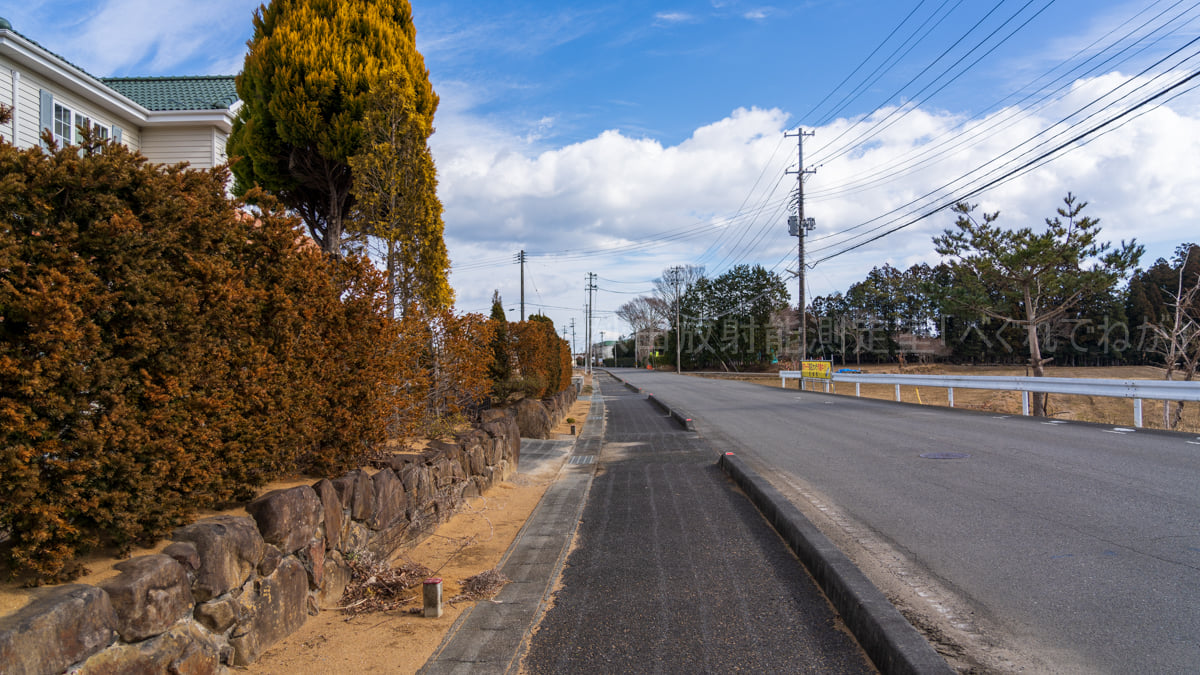


Fukushima governor refutes ex-PMs’ anti-nuclear letter to EU

February 3, 2022
The governor of Fukushima has sent a written protest to five former Japanese prime ministers for saying that many children in the prefecture are suffering from thyroid cancer as a result of the 2011 nuclear accident.
Governor Uchibori Masao has taken issue with a letter the ex-leaders sent to the European Union last month calling on the bloc to pursue a nuclear-free society.
He wrote to the leaders on Wednesday, saying they should present objective information based on scientific evidence.
The letter dated January 27 and signed by Koizumi Junichiro, Hosokawa Morihiro, Kan Naoto, Hatoyama Yukio and Murayama Tomiichi, was a reaction to the EU’s plan to label some nuclear power plants as green investments.
Koizumi is an advisor to a private organization that promotes zero nuclear power and renewable energy.
The letter refers to the accident at the Fukushima Daiichi Nuclear Power Plant that was triggered by the 2011 quake and tsunami. The leaders say, “What we have witnessed in Fukushima over the last decade is an indescribable tragedy and contamination on an unprecedented scale.” They add, “many children are suffering from thyroid cancer.”
In Fukushima Prefecture, a survey has found 266 cases of confirmed or suspected thyroid cancer in people aged 18 years or younger at the time of the nuclear accident.
But a panel of experts commissioned by the prefecture says that no links have been established so far between the thyroid cancer cases and radiation exposure.
In his complaint to the ex-leaders, Governor Uchibori says providing accurate information based on scientific knowledge is crucial for the rebuilding of Fukushima.
He urged that when they refer to the current state of the prefecture, they should use objective information that is based on the prefecture’s views and reports by international scientific organizations.
Speaking at a Diet committee on Wednesday, Japanese Prime Minister Kishida Fumio called the letter by his predecessors inappropriate. Kishida said the letter spreads incorrect information that children in Fukushima are suffering health damage from radiation. He said it also raises concerns of promoting unreasonable discrimination and prejudice.
Last month, six people who were 6 to 16 years old and living in Fukushima at the time of the nuclear accident filed a lawsuit demanding that the plant operator pay damages for their thyroid cancer.
Their lawyers say this is the first time a group of residents has filed a lawsuit against Tokyo Electric Power Company over health problems they claim were caused by radiation from the nuclear accident.
The lawyers say the plaintiffs have had all or parts of their thyroid glands removed and some need lifetime hormonal treatment.
Homesick,
(Sub in Eng, French & Spanish)
Two years after the Fukushima nuclear disaster, Murai braves danger and wanders through the no-go zone in order to spend time with Jun, his eight-year-old son.
Behind the scene : vimeo.com/670872326
Written and directed by Koya KAMURA (insta : @koyakamura)
Production : OFFSHORE
Produced by Rafael ANDREA SOATTO
Co-production : TOBOGGAN
Co-produced by Hiroto OGI, Kaz SHINAGAWA
* César 2021 – Official selection *
58 official selections / 40 Awards
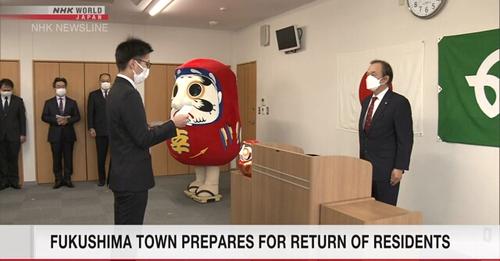
Fukushima town prepares for return of residents
Jan. 4, 2022
Tuesday marked the first business day of 2022 in Japan. Officials in Fukushima Prefecture’s Futaba Town are planning to welcome residents back later this year.
The town’s residents have not returned since an accident at Fukushima Daiichi nuclear power plant forced them to evacuate. Part of the plant is located in the town. The accident occurred in March 2011. Futaba is the only municipality that evacuees have not returned to. The town had a population of about 7,000 before the disaster.
After years of decontamination efforts, the residents are expected to be allowed to return to some areas, starting in June.
Futaba Town officials held a ceremony on Tuesday to mark the first day of the year. The event took place at a town office in Iwaki City. Iwaki is located about 60 kilometers south of the center of Futaba Town.
Futaba Town Mayor Izawa Shiro told about 40 officials that this is going to be a very busy year, as the residents are expected to return.
Izawa said he will be on the frontlines of the town’s reconstruction efforts. He also asked the officials to join him.
Beginning on January 20, residents will be permitted to stay overnight in the town, in order to start preparing for their return. The evacuation order is expected to be lifted in June.
Interim storage facility completed by March, no prospects for final disposal

January 3, 2022
At the interim storage facility for the waste from the decontamination of Fukushima Prefecture, about 90% of the planned amount of waste has been delivered, and the Ministry of the Environment has said that it will be mostly completed by March of this year.
On the other hand, there is no prospect for the final disposal of the waste, which is required by law to be done outside Fukushima Prefecture by 2045.
At the interim storage facility being built around the TEPCO’s Fukushima Daiichi Nuclear Power Plant, about 14 million cubic meters of waste, including soil, plants and trees from decontamination in Fukushima Prefecture, is planned to be brought in.
According to the Ministry of the Environment, 12.45 million cubic meters, or 89% of the planned amount, had been brought in by December 23, and the ministry plans to complete the delivery of the remaining 1.55 million cubic meters by March of this year.
On the other hand, these wastes are required by law to be disposed of outside of Fukushima Prefecture by March 2045, and the Ministry of the Environment has said that it will present options for the structure and area of the final disposal site by fiscal 2024, but there is no prospect for the location or method.
In addition, in order to reduce the amount of final disposal, a demonstration project is underway to recycle soil from the decontamination process for use in public works nationwide, but there has been no significant movement outside of Fukushima Prefecture.
Their unheard voices: The fishermen of Fukushima
Mitsuhisa Kawase 20 December 2021
In April 2021, the Japanese government decided to discharge radioactive water stored inside the TEPCO Fukushima Daiichi Nuclear Power Station into the Pacific Ocean. TEPCO’s plan is to build a pipeline along the ocean bed and release diluted processed radioactive water 1 km off the coast of Fukushima. In November, Greenpeace conducted its 33rd Fukushima radiation survey since the nuclear disaster, during which we had the opportunity to interview local fisherman Mr. Haruo Ono. Mr. Ono opens up about the pain he feels, saying that discharging radioactive water into the ocean will throw Fukushima’s fishing industry back down into the abyss.

It has taken us 10 years to get to where we are
“How can such a thing be allowed to happen,” sighed Mr. Ono with a thick Fukushima accent. As he scanned the newspaper in his home, his eyes came to rest on an article and comments about the plan, announced by TEPCO the previous day, to discharge radioactive water from the Fukushima Daiichi Nuclear Power Station into the ocean. “The ocean’s alive, too, you know!” The hand that gripped the newspaper turned white.
Mr. Haruo Ono from Shinchi Town, Fukushima was born into a family of three generations of fishermen, and has helped out with the family business from as early as he can remember. Then in March 2011, everything fell apart. His town was badly hit by the tsunami that followed the Great East Japan Earthquake and then, to make matters even worse, vast amounts of radiation were released from the stricken Fukushima Daiichi Nuclear Power Station. The fish they landed were found to contain radioactive substances, and fishermen were left with no choice but to voluntarily cease all fishing off the coast of Fukushima for approximately one year.
In June 2012, just over a year after the disaster, fishing trials were restarted and the sale of certain seafood, such as octopus and some shellfish was subsequently permitted. In February 2020, the ban was finally lifted for all seafood, and now Mr. Ono is permitted to go out to sea to fish up to ten times in a month. However, in April 2021, a month after the ten year anniversary of the disaster, the Japanese government made a cabinet decision to discharge radioactive water into the ocean.

“Fish are finally starting to return after ten years, but if they now pour tritium into the water, no matter how much they dilute it, who’s going to buy those fish? Who wants to eat poisoned fish? ”
For a decade since the nuclear disaster, Mr. Ono has endured the frustration of not being able to fish freely, and the unfairness of having his catch overlooked simply because it’s from Fukushima. “So then why didn’t they discharge it into the sea ten years ago? That’s because it would have been wrong, right?” Unable to hold back any longer, his frustration poured out.
Voices going unheard
After the decision was made to discharge the polluted water into the ocean, the government held a number of information sessions for the residents of Shinchi Town, which Mr. Ono attended. However, he says he still hasn’t received an answer as to why they are going to discharge the water into the ocean.
“The person in charge arrives at 3:30, and the session is over at 5. There’s 30 minutes for questions. Out of the blue, they hand us a huge stack of documents, and they expect us to understand,” said Mr. Ono. “We have a right to ask questions, we have a right to know. If there is no option but to discharge the water into the ocean, then we want an acceptable answer about this decision.”
TEPCO’s “Radiological Impact Assessment Regarding the Discharge of ALPS Treated Water into the Sea”1 that was released in November 2021, reflected exactly the same stance. “TEPCO is skilled at spinning the story. They make it seem as if we have accepted the decision. They are very good at manipulating the language, and on top of that, how many people are even going to actually read such a huge document”.

Behind the enduring mistrust is a decade of repeated dishonesty by the government and TEPCO towards the local fishermen. Firstly, in 2015 TEPCO made a promise to the Fukushima Prefectural Federation of Fisheries Co-operative Associations that it “would neither treat nor dispose of” the contaminated water stored inside the buildings, “in any way, without the understanding of those concerned”2. Furthermore, with reports that the Advanced Liquid Processing System (ALPS) treated water actually contained levels of radiation other than tritium, such as carbon-14, that exceeded permitted levels, they have repeatedly betrayed the trust of local residents and those involved in the local fisheries.
“Why do they have to put TEPCO first so much? Shouldn’t it be the victims, the local residents, who need protecting?” Mr. Ono protested. “Nobody has agreed to this. And then they go and make such a thoughtless decision regardless. The ocean is our place of work. Can you imagine what it feels like for that to be intentionally polluted?”
Responsibility to the future up in the air
As of 8 December 2021, there’s a total of approximately 1.285 million tonnes of radiation contaminated water stored in the tanks inside the Fukushima Daiichi Nuclear Power Station3. During 2020, with groundwater flowing into the nuclear reactor buildings, and the cooling of fuel debris, the amount of water increased at a pace of approximately 140 tonnes a day4.
According to TEPCO, the tanks will be full by spring 2023, hence their decision to discharge the polluted water into the ocean. However, a subcommittee of the Ministry of Economy, Trade and Industry, set up in 2019, suggested that there is room to build more tanks within the plant5. “If we can continue to store the polluted water, then there’s no need to rush to a decision. Why are they rushing to make a decision, when we might find a better way to process the water in the future?”
TEPCO plans to eliminate radionuclides, other than tritium, to levels below regulatory standards, and dilute the tritium to 1/40 of permitted levels before discharging the water into the ocean. TEPCO says that the level of tritium discharged annually will not exceed 22 trillion becquerels per year – the maximum annual limit that was in place prior to the nuclear disaster – and that it will conduct regular reviews.

However, whether you dilute the polluted water or employ new techniques to discharge it, the total amount of radiation released into the environment does not change. While the half-life of tritium might be 12 years, the half life of carbon-14 is 5730 years. As long as water is being discharged, radioactive material will continue to accumulate in the ocean.
“It’ll be 30 or 40 years before we see the effects. The causal relationship will have become unclear and it’ll be impossible to prove anything. What’s going to happen to the future of our children, our grandchildren? It’s not even clear who will take responsibility.”
The ocean is alive too
“It feels like – it’s our ocean, but it’s not our ocean”. This is something that Mr. Ono often said and seems to reflect the persistent sensation that things are moving forward without the people who have lived alongside the ocean for so long, the fishermen.
The fishermen of Fukushima face a harsh reality. They are only allowed to go out fishing up to 10 times a month, and their monthly income comes to about 120,000 Yen (~940 Euro). The future is unclear, and their troubles just keep increasing. “Who would want to continue fishing in such an environment, who would want their children to become fishermen? If it goes on like this, there won’t be another generation of fishermen. Discharging the water into the ocean is the last straw.”
In response to the ocean discharge plan, the government and TEPCO have promised compensation and measures to counteract reputation damage, to local forestry and fishery businesses. However, this is beyond the point. “They’re focusing solely on things like mitigating damage to the reputation of local produce, or promises to buy our fish, but that’s not what’s important. We’re not catching fish so that they can be thrown away. We want to catch them so that people can eat and enjoy them,” he says with a sigh.

“Firstly, why is it not okay to release radiation on land, but okay to put it in the ocean? You’ve got the mountains and the water from the rivers flowing into the sea, plankton grows, small fish eat the plankton and bigger fish eat the smaller fish. That’s the cycle. Polluting it is easy, but once you’ve polluted you can’t go back to how it was. The ocean is alive too, you know.”
The ocean that Mr. Ono is trying to protect is the same ocean that took away his brother’s life ten years ago, in the tsunami. “The ocean can kill, but it can also give life. If we don’t protect it, who will? The fish don’t have a voice.”
“The ocean is alive too. And we’re citizens of this country, too, you know. I’m begging, somebody, please listen to us.”
Currently, at the Fukushima Daiichi Nuclear Station, preparations are underway to discharge the polluted water into the ocean in spring 2023. This is going to destroy the livelihoods and dignity of Fukushima’s fishermen, and their heartbreaking pleas have yet reached the government or TEPCO, who are focused only on maintaining the superficial appearance of “recovery”.
2TEPCO https://www.tepco.co.jp/news/2015/images/150825a.pdf (Japanese only)
3TEPCO Treated Water Portal Site
4TEPCO How much contaminated water is being generated
5METI The Subcommittee on Handling ALPS Treated Water
Mitsuhisa Kawase is Senior Communication Officer at Greenpeace Japan.
A lonely evening at home for Fukushima man retracing past
Unsurprisingly, concerns about radiation levels are still on the minds of many former residents. His wife, Mikiko, 64, refused to accompany him for that reason. Ikeda was the only individual in his neighborhood who took up the offer to return home.

December 11, 2021
OKUMA, Fukushima Prefecture–Settling in for the night, Mitsuhide Ikeda poured sake into a glass and raised a toast to framed photos of his deceased parents: “I finally made it back home. Let’s drink together.”
The last time the 60-year-old cattle farmer spent a night at home was 10 years and nine months ago.
Large parts of this town that co-hosts the Fukushima No. 1 nuclear power plant were declared “difficult-to-return” zones after the triple meltdown triggered by the 2011 earthquake and tsunami disaster.
Ikeda’s parents died after the nuclear accident.
The Shimonogami district where the Ikeda’s home is located lies about five kilometers southwest of the Fukushima nuclear facility.
As part of efforts to rebuild the areas around the plant, the government recently began letting residents return home for an overnight stay as a means of preparing for the day when they can do so permanently.
Unsurprisingly, concerns about radiation levels are still on the minds of many former residents. His wife, Mikiko, 64, refused to accompany him for that reason. Ikeda was the only individual in his neighborhood who took up the offer to return home.
Dangerously high radiation levels registered immediately after the disaster that made it impossible for anybody to live in the area have gradually fallen. The government spent vast sums on the time-consuming process of decontaminating topsoil as a way of reducing radiation levels.
It intends to lift the evacuation order for some parts of Okuma in spring. That would be the first step for setting the stage for residents to return home.
The temporary overnight stay program began in Katsurao on Nov. 30 and is gradually being expanded to five other municipalities, including Okuma.
A check for radiation in November on the Ikeda plot found one spot with a reading of 3.8 microsieverts per hour, above the level deemed safe enough for the government to lift the evacuation order.
Even though the Environment Ministry is planning additional decontamination work, Mikiko was unsettled by the reading and concluded it would be impossible to pick up the threads of their past life in Okuma.
Other changes in the close to 11 years since the nuclear disaster make a return to Okuma unrealistic.
While a large supermarket, hospital and bank branch remain standing in the town, there is no indication when those facilities might resume operations.
In the interim, the Ikedas plan to commute to Okuma from the community they moved to as evacuees.
The overnight stay program is restricted to an area close to what was once the bustling center of the town. About 7,600 residents lived there before the nuclear disaster.
The town government envisions that as many as 2,600 people will reside in the town within five years of the evacuation order being finally lifted if plans proceed to rebuild social infrastructure.
But the writing is on the wall for many people.
According to the Environment Ministry, about 1,150 homes in the district had been torn down as of the end of September.
And as of Dec. 8, only 31 residents in 15 households applied for the overnight stays.
Even Ikeda admits that Okuma will likely never return to the community he knew before 2011.
“Too much time has passed,” he said.
Fukushima village preparing for lifting of evacuation order

Nov 22, 2021
Katsurao, Fukushima Pref. – The village of Katsurao in Fukushima Prefecture is set to bolster preparations for the lifting of government evacuation orders related to the 2011 nuclear accident.
Starting Nov. 30, the village will allow residents to come back and stay in a special reconstruction promotion area set up in the village in preparation for their permanent return, the office of the village announced Sunday.
The village plans to lift the evacuation order for the 95-hectare special area around spring 2022.
Katsurao and five other municipalities in the prefecture have set up special reconstruction promotion areas. Katsurao will be the first among them to carry out preparatory stays by residents in these specialized zones.
Fukushima is home to Tokyo Electric Power Company Holdings Inc.’s Fukushima No. 1 nuclear power station, which was heavily damaged in the Great East Japan Earthquake and subsequent tsunami of 2011.
The village held a meeting Sunday on the planned preparatory stays. After village officials asked 18 residents who joined the meeting about the plan, the municipal and central governments decided the date to begin the preparatory stays.
Eighty-three people from 30 households had lived in the area designated for reconstruction before the nuclear accident.
The preparatory stays come as decontamination work and the construction of necessary infrastructure in the area were conducted as scheduled.
At the meeting, participants voiced concerns over radioactive contamination in the area.
In response, Katsurao Mayor Hiroshi Shinoki told reporters: “Safety and security are major issues. We aim to work for the lifting of the evacuation order while trying to obtain understanding from residents.”
https://www.japantimes.co.jp/news/2021/11/22/national/fukushima-evacuation-lifting/
Nearest fishing port to Fukushima nuclear plant reopens
Political decisions made irrespective of the danger to people health, mainly for financial reasons in total denial of the hard facts.
Nov. 20, 2021
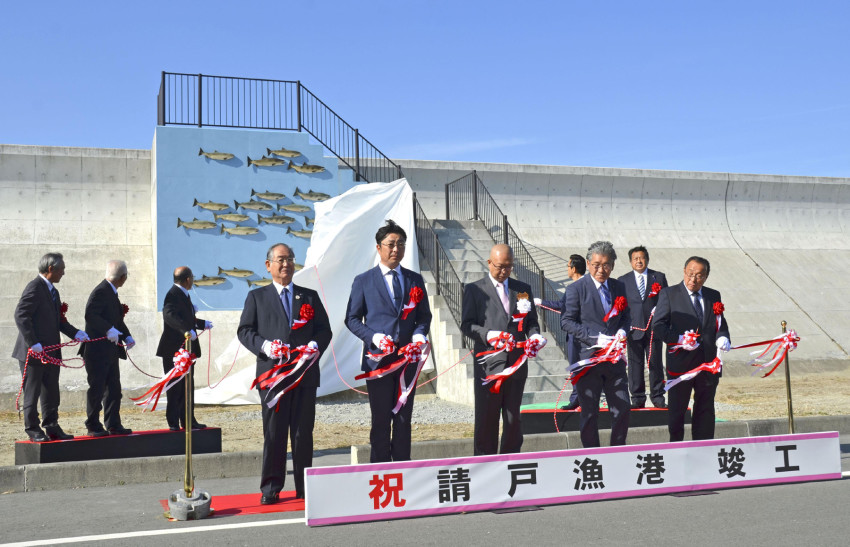
FUKUSHIMA – A ceremony was held Saturday to mark the resumption of operations at the fishing port nearest to the Fukushima Daiichi nuclear plant stricken by the 2011 quake and tsunami disaster in northeastern Japan.
With the completion of reconstruction of Ukedo Port situated around 7 kilometers north of the nuclear plant, all 10 ports in Fukushima Prefecture that suffered damage in the quake disaster have been restored.
“It is a big step forward for the town” of Namie where the port is located, Mayor Kazuhiro Yoshida said at the ceremony, which was postponed from earlier in the year due to the coronavirus pandemic.
The seawalls and quays of the port were severely damaged in the disaster, but as the area was in the no-entry zone where radiation levels remained high following the nuclear plant meltdowns no reconstruction work took place until October 2013.
Reconstruction was completed in March and the port is already in operation.
After the disaster, fishermen in Fukushima conducted trial operations off the prefecture’s coast before starting preparations earlier this year for full-fledged fishing.
Among the disaster-hit prefectures in the northeast, reconstruction of all 31 fishing ports run by Iwate Prefecture was finished in August 2019, while 18 out of 27 ports operated by Miyagi Prefecture were rebuilt by March.
New evacuation ‘border’ baffles, splits community in Fukushima
November 5, 2021
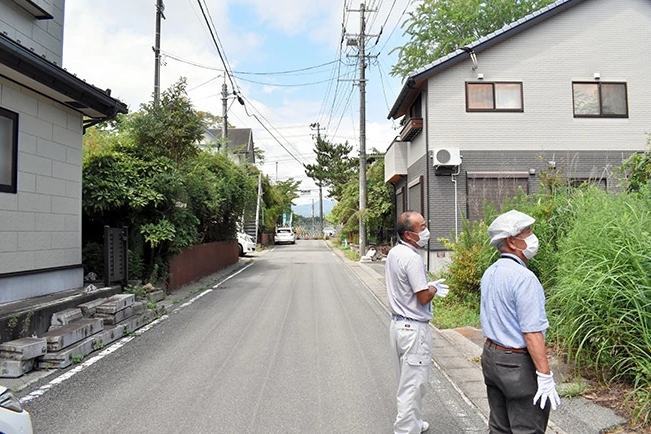
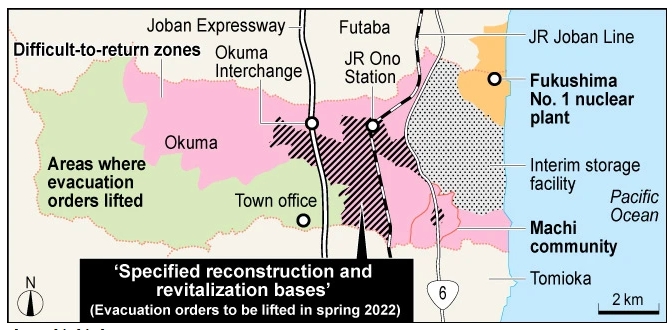
OKUMA, Fukushima Prefecture—Evacuees eager to finally return to their homes near the hobbled Fukushima No. 1 nuclear plant have been thrown into confusion over the way evacuation orders will be lifted.
The orders will end in parts of the “difficult-to-return zones” in less than six months but not all of them as the town of Okuma had hoped.
In a compromise with the central government, the town accepted a boundary that cuts across the Machi neighborhood of Okuma, creating a livable “enclave” surrounded on all sides by “no-entry” areas.
Residents from the enclave will be able to return to their homes, but their neighbors, even on the other side of a street, could be prohibited from returning until the end of the decade.
‘RECONSTRUCTION BASE’ DESIGNATION
Okuma co-hosts the nuclear plant, which suffered a triple meltdown after being hammered by the tsunami triggered by the Great East Japan Earthquake in 2011.
Machi is located along National Route 6 around 3 kilometers southeast of JR Ono Station, which stands in what used to be Okuma’s downtown.
The road is busy with trucks for post-disaster rebuilding work and passenger cars. But streets behind the barricades along the road are still lined with empty houses.
The around 90 households in the community were all forced to flee after the disaster. Machi was later designated a difficult-to-return zone, the most severe level for evacuation orders.
In 2017, about 20 of the 140 or so hectares of the community’s landmass were collectively designated by the central government as a “specified reconstruction and revitalization base,” entitling the area to preferential decontamination work.
The evacuation order covering those 20 hectares is expected to be lifted next spring.
However, Shoichi Sasaki, head of the Machi community, is not excited by the prospect.
“Our community has been divided, although radiation levels are more or less the same on the inside and outside of the ‘reconstruction base’ area,” Sasaki, 72, said.
Most of the 860 or so hectares in Okuma that have been designated as reconstruction bases are concentrated around Ono Station. The Machi community is detached from those areas.
The reconstruction base in Machi includes only about half of all households in the community. Returning residents may be denied free access to areas outside the reconstruction base that will remain as difficult-to-return zones.
‘PRODUCT OF COMPROMISE’
A behind-the-scenes struggle between Okuma and the central government led to the curious demarcation, according to former senior town officials and assembly members.
Okuma town representatives called for a lifting of all difficult-to-return zone designations, but the central government did not like the idea, which would have required huge cleanup costs.
The “specified reconstruction and revitalization base” zoning system was a “product of compromise” to promote decontamination work for the lifting of evacuation orders only in limited parts of the difficult-to-return zones.
Sources said the central government made the proposal to designate part of the Machi community as a reconstruction base even though it was isolated from other bases around Ono Station.
Central government officials said the proposal took account of the fact that Machi was the seat of the Kumamachi village office before the village merged into Okuma during the Showa Era (1926-1989). Machi was home to a certain concentration of residences.
Okuma town representatives, concerned about a division of the Machi community, called on Tokyo to clean up and lift evacuation orders across all areas of the town, a former senior town official said.
The pleas were in vain.
Okuma ended up accepting Tokyo’s proposal, hoping it would “at least broaden areas where evacuation orders have been lifted,” the former senior town official said.
In Sasaki’s survey in May of all households from the Machi community, 11 said they wanted to return to their homes.
One of those who want to go home is Sasaki. However, his house lies just outside of the reconstruction base zone across a road.
“I have no idea when I will be allowed to go back home,” Sasaki said. “I hope as many residents as possible will be able to return and help each other to rebuild their lives there.”
LATER THIS DECADE
The central government in August released a plan for cleaning up and lifting evacuation orders in areas outside the reconstruction bases, including those in Machi. Residents who had to evacuate from those areas may be allowed to return home by the end of the 2020s.
The specific dates and areas will be determined after talks with local communities, officials said.
Around 33,700 hectares of difficult-to-return zones exist in seven municipalities in Fukushima Prefecture.
Tokyo plans to lift evacuation orders for 1,510 hectares in Okuma, Futaba and Katsurao from next spring, followed by 1,237 hectares in three surrounding municipalities in spring 2023.
Cleanup of radioactive contaminants and development of infrastructure, including water supply and sewerage, are under way in those areas.
However, high residual radiation levels following the cleanup and delays in the restoration work have emerged.
Radiation levels failed to dip below 3.8 microsieverts per hour, the safety standard for lifting evacuation orders, at 1,269, or 2.7 percent, of measurement sites in areas of Okuma where the Environment Ministry conducted cleanup work between June 2013 and May this year.
The Okuma town government initially planned to start “preparatory overnight stays,” or temporary home returns for evacuees, in October.
The starting date has been put off to “by the end of this year.”
Radiation levels also failed to fall below the safety standard at 563, or 1.0 percent, of the measurement sites in the neighboring town of Futaba, the other co-host of the nuclear plant.
Evacuation orders in Futaba were initially scheduled to be lifted next spring. But delays in the infrastructure development will likely push back that schedule to around June at the earliest.
“It is essential to prepare an environment that allows residents to live without anxiety,” said Kencho Kawatsu, a guest professor of environmental policy and radiation science with Fukushima University.
Kawatsu heads an Okuma town committee reviewing the effects of cleanup work and other matters.
The Environment Ministry is conducting supplementary decontamination work in Okuma and Futaba. Kawatsu said the effects of those efforts should be reviewed carefully.
(This article was written by Shinichi Sekine, Toru Furusho and Nobuyuki Takiguchi.)
1 This Month

of the week – Shut Down Drone Warfare!


Tell the Ukrainian Government to Drop Prosecution of Peace Activist Yurii Sheliazhenko

Petition to revoke the licensing of the Near Surface Nuclear Disposal Facility (NSDF) at Chalk River. https://www.ourcommons.ca/petitions/en/Petition/Details?Petition=e-7247
To see nuclear-related stories in greater depth and intensity – go to https://nuclearinformation.wordpress.com
-
Archives
- March 2026 (244)
- February 2026 (268)
- January 2026 (308)
- December 2025 (358)
- November 2025 (359)
- October 2025 (376)
- September 2025 (257)
- August 2025 (319)
- July 2025 (230)
- June 2025 (348)
- May 2025 (261)
- April 2025 (305)
-
Categories
- 1
- 1 NUCLEAR ISSUES
- business and costs
- climate change
- culture and arts
- ENERGY
- environment
- health
- history
- indigenous issues
- Legal
- marketing of nuclear
- media
- opposition to nuclear
- PERSONAL STORIES
- politics
- politics international
- Religion and ethics
- safety
- secrets,lies and civil liberties
- spinbuster
- technology
- Uranium
- wastes
- weapons and war
- Women
- 2 WORLD
- ACTION
- AFRICA
- Atrocities
- AUSTRALIA
- Christina's notes
- Christina's themes
- culture and arts
- Events
- Fuk 2022
- Fuk 2023
- Fukushima 2017
- Fukushima 2018
- fukushima 2019
- Fukushima 2020
- Fukushima 2021
- general
- global warming
- Humour (God we need it)
- Nuclear
- RARE EARTHS
- Reference
- resources – print
- Resources -audiovicual
- Weekly Newsletter
- World
- World Nuclear
- YouTube
-
RSS
Entries RSS
Comments RSS
 nuclear-news