“TEPCO reveals only handful knew meltdown manual existed”
Too Late…
Although a manual existed that outlined the criteria for a meltdown, Tokyo Electric Power Co. admitted that only five or so employees at its main office knew of it at the onset of the 2011 nuclear crisis.
Those employees belonged to a section that manages the manual at the company’s Tokyo headquarters, TEPCO said at a news conference on May 30.
The utility has been under fire for the delay in acknowledging in May 2011 that triple meltdowns took place at the Fukushima No. 1 nuclear power plant, two months after they actually occurred following the Great East Japan Earthquake and tsunami.
TEPCO had maintained that the reactors at the plant suffered “core damage,” rather than more serious meltdowns.
Explaining the delay, the company initially cited a lack of guidelines for determining a meltdown.
But TEPCO admitted in February this year that the company manual did contain entries defining a meltdown, although the company said it was unaware of the descriptions for the past five years. The criteria requires the company to declare a meltdown when damage to a reactor core passes 5 percent.
Takafumi Anegawa, chief nuclear officer with TEPCO, told the news conference that a third-party panel will investigate why it took the company five years to disclose the existence of the manual.
In April, a TEPCO senior official admitted that he knew of the criteria when the crisis was unfolding at the plant.
http://www.asahi.com/ajw/articles/AJ201605310068.html
‘I Do Not Want Any Children to Develop Cancer Like Me’, a Fukushima Resident Says
Independent filmmaker Ian Thomas Ash has uploaded to YouTube a four-part interview with a young woman from Fukushima Prefecture who has been diagnosed with thyroid cancer. Now 20, the interviewee was 15 years old when, following the March 2011 earthquake and tsunami, the Fukushima Daiichi nuclear power complex lost power and the ability to cool fuel in the reactors. The lack of cooling caused a series of hydrogen explosions that severely damaged four of the six reactors at the Daiichi complex.
As a result of the explosions and subsequent fires, nuclear contamination was spread over a large part of Japan’s northeast. The young woman interviewed in the documentary, who wishes to remain unidentified, is one of 166 Fukushima residents who were 18 or younger at the time of the nuclear disaster who have been diagnosed with or suspected of having thyroid cancer (as of February 2016).
While some attribute the rise in cases of thyroid cancer to more rigorous screening, Ash notes that 74.5% of young people aged 18-21 as of April 1, 2014 who were living in Fukushima at the time of the nuclear accident have not yet taken part in the official thyroid ultrasound examination.
“This young woman’s reason for speaking out is to motivate the families of children who have not yet received the thyroid ultrasound examination to have their children tested,” Ash says in his introduction to the interview.
The interview has been uploaded to YouTube in four parts: part 1, part 2, part 3, part 4
The woman says according to her doctors, her cancer was caught at the right moment. Had she waited any longer, they told her, the cancer could have spread. As a result of the illness, she had part of her thyroid removed.
She will begin working in a nursery school this year, and is pained to think of any other children going through what she has endured:
I would hate if any children I taught developed cancer. To tell the truth, I do not want any children to develop cancer like me.
Ash, based in Tokyo, makes short documentaries about life in Japan after the March 11, 2011 earthquake, tsunami and nuclear disaster.

In Fukushima, even robots can’t survive nuclear mayhem
The company that runs the Fukushima plant sent 5 robots to ground zero and not a single one survived. Incredibly high radiations in the block causes heat levels to rise and this melts the robots’ wiring.
A tsunami, triggered by an earthquake on March 11, 2011, initiated the Fukushima Daaiichi nuclear disaster in Japan which led to the evacuation of over 200,000 people.
Even after 5 years, there is still a tremendous amount of cleanup work left at ground zero. The Tokyo Electric Power Co. (TEPCO) which runs the plant has managed to clean up one building but is still struggling to do the same with other buildings which has burnt fuel rods. These fuel rods are nothing but chunks of radioactive waste weighing hundreds of metric tonnes.
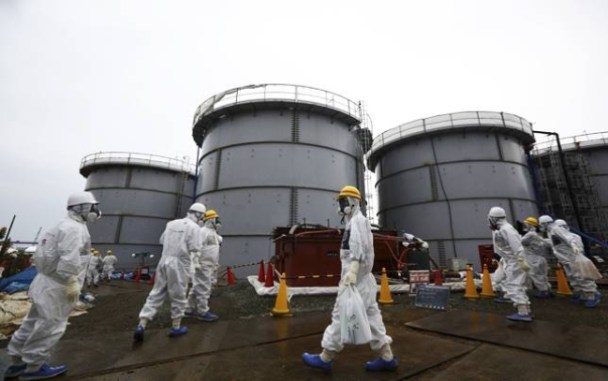
It took 2 years for TEPCO to design the robots for the job of extracting melted fuel rods and according to TEPCO’s head of decommissioning, Naohiro Masuda, the heat levels due to radiation are so extreme that it simply melts the robot’s wiring.
Japan had been trying out various methods to stop the radiations from damaging the area further. One such method was building “ice walls” to keep groundwater from reaching the reactors. A refrigerant chemical that forms an ice wall to block Fukushima’s fallout water and stop the ground water intrusion into the plant.

A million metric tonnes of irradiated water is being stored on the site and is pumped in to cool down the reactors. Disposing the radioactive water is still a challenge for TEPCO as storage tanks have already leaked some of the material into the ocean.
After TEPCO’s robots not surviving the heat levels of the radiations, it’s a place for no man or machine. Toshiba has developed new robots for picking up the fuel rods and to clean up the scene which previous robots failed to.
The entire cleanup process is expected to take around 30 to 40 years, but TEPCO is being blamed for its lukewarm response to the incident and is facing flak from the Japanese government and the people alike.
10% of TEPCO’s frozen soil wall at Fukushima site not working

The solid frozen soil wall that Tokyo Electric Power Co. is trying to create at its stricken Fukushima No. 1 nuclear power plant is falling short of expectations.
TEPCO said May 25 its attempt to freeze the soil around the crippled reactors to decrease contaminated groundwater has hit an unexpected glitch.
The utility said it has been unable to freeze the soil at about 10 percent of points it surveyed even though more than one-and-a-half months have passed since the program started.
This is due to the fact that soil temperatures have failed to drop sufficiently. In places where the temperature remains especially high, there is a possibility the soil will never freeze.
TEPCO reported the situation to the Nuclear Regulation Authority, the nation’s nuclear watchdog, saying it plans to implement additional work, such as injecting cement or other materials into the soil.
The project involved the construction of a 1,500-meter-long circular frozen soil wall around the No. 1 to No. 4 reactor buildings. The utility inserted 1,568 pipes to a depth of 30 meters and 1 meter apart. The idea was that each pipe would then freeze the soil around it once liquid of minus 30 degrees circulated inside the cylinders.
The project is aimed to stop flow of groundwater into reactor buildings, where melted nuclear fuel has accumulated in the basements, and, as a result, reduce the volume of highly contaminated water.
To date, around 34.5 billion yen ($315 million) has been spent on the project.
TEPCO started to freeze the soil in late March, with the goal of first creating an 820-meter-long portion, mainly along the side of the plant facing the sea.
According to TEPCO, the temperature of soil around pipes was lower than zero in only 88 percent of 5,800 or so sites it surveyed as of May 17. In the remaining 12 percent, temperatures were as high as 10 degrees in places.
In spots where temperatures fell short, the soil wall was riddled with holes. TEPCO plans to fill them in by injecting cement or other agents.
On the site of the plant facing a mountain, the utility has been freezing the soil in phases. Although it had planned to double the number of frozen soil sites as early as mid-May, that has not materialized.
“If the effects of the frozen soil wall fall short of what we have expected, we will hold talks with TECPO about additional steps,” said an NRA official in charge of the issue.
Fukushima victims still suffer five years on
TOKYO, May 25 (Xinhua) — Iidate Village, about 40 kilometers from Japan‘s Fukushima Daiichi nuclear power plant, is now almost a ghost town.
Few human traces can be spotted, weeds are spreading, dirty water flows everywhere, and no living sounds can be heard except for a few raven’s croaks.
Japanese photographer Hida Shinsyuu has visited the nuclear contaminated zone more than 30 times. Looking through his camera, he often cannot hold back his tears.
Even more so, when he sees “nuclear refugees” suffering from diseases such as thyroid cancer yet having no one to turn to, he feels a lot of anger.
“In Fukushima, families who have thyroid cancer sufferers are experiencing loneliness and pain, as they are unwilling to reveal the “scars” to their relatives or friends, nor do they want to tell their children about the nuclear radiation,” said Shinsyuu.
In June 2015, Shinsyuu met a girl in Fukushima who had thyroid cancer. When the Fukushima nuclear accident broke out, the girl was at her junior high graduation ceremony.
The following year, she was diagnosed as thyroid cancer, and had surgery to remove the right part of her thyroid. In her third year of senior high part of her lymph nodes were removed.
However, the thyroid cancer returned after she entered college, and she had to quit school to remove her whole thyroid.
The girl told Shinsyuu that she had a dream of becoming a designer one day. Quitting school has made that dream distant.
Her parents are angry. No one has claimed responsibility for their child’s suffering. They were told her sickness had nothing to do with Fukushima.
The girl is just one of 166 teenagers who has been diagnosed with or suspected of having thyroid cancer, among whom 116 have undergone surgeries.
Five years following the nuclear crisis, the parents of children diagnosed with thyroid cancer in Fukushima have formed a group demanding the government provide convincing evidence that their children’s suffering is not related to the nuclear accident.
Sato Satiko, a mother living in Fukushima, complained about a governmental press conference to Spanish newspaper El Mundo in February.”Fukushima mothers were not allowed to ask even one question, all questioners were asked by pro-government press. The Japanese government and media are neglecting and humiliating us on purpose.”
Toshihide Tsuda, a professor of environmental epidemiology at Japan’s Okayama University, found that the incidence of thyroid cancer among children in Fukushima Prefecture was 20 to 50 times higher than the national average in 2014, three years after the disaster hit.
His findings, however, have fallen on deaf ears. The Fukushima prefectural government insists that the incidents of cancer and nuclear radiation are not related.
“The Japanese government hasn’t given any countermeasures against the children’s health problems in Fukushima,” said Tsuda. He says the government should learn from Chelnobyl and deal with the aftermath of the nuclear disaster seriously.
Nursing facilities to help reduce residual nuclear radiation are also lacking, according to Korobe Shinichi, a pediatrician and consultant for the Chernobyl Children’s Foundation.
“After getting treatment at the nursing facility for only four weeks, 30 percent of residual radioactive cesium in human bodies will be reduced,” said Shinichi.
However, such sanitariums set up after the accident are far less than those established after Chernobyl.
Based on the Japanese government’s approach, the long-term harm will probably be more serious than Chernobyl, Shinichi said.
He also pointed out that some families affected by the accident have become broken. Single mothers are suffering great mental stress and in urgent need of help.
Kanna Mitsuta, director of Japanese environmental protection organization “the Friend of the Earth Japan,” feels distressed about the Japanese government’s new policy of expediting the return of displaced Fukushima nuclear refugees.
The move actually means abandoning nuclear refugees in the name of reconstruction. Furthermore, the cause of the nuclear disaster has not been clarified and radioactive risks remain high in the refugees’ hometown, said Mitsuta.
A joint opinion poll conducted by national daily The Asahi Shimbun and the Fukushima local press in 2015 showed that over 70 percent of Fukushima residents were unsatisfied with the government’s countermeasures in the aftermath of the nuclear disaster. But for a government bent on putting the issue to rest, public opinion matters little.
http://news.xinhuanet.com/english/2016-05/25/c_135387620.htm
TEPCO to Halt Most Work at Fukushima N-Plant for G-7 Summit
Tokyo, May 24 (Jiji Press)–Tokyo Electric Power Company Holdings Inc. will suspend most work at its stricken Fukushima No. 1 nuclear power plant for three days from Wednesday as Japan will host the Group of Seven summit this week.
During the three days, TEPCO will continue minimum necessary work, including operations for cooling the No. 1 to No. 3 reactors, which suffered meltdowns, and running a system to process radioactive water at the plant, which was damaged in the March 2011 earthquake and tsunami, according to the company.
But the company will halt the construction of tanks for storing radioactive water and preparations for removing nuclear fuel from the No. 3 reactor pool, along with other work.
TEPCO has been carrying out those operations as part of the decommissioning processes.
A TEPCO official said the company will suspend the work at the plant out of a sense of caution, while noting that the company is always ready to detect any problem at the plant quickly.
Interview: Japan should learn lessons from Chernobyl — Russian expert
MOSCOW, May 24 (Xinhua) — The improper handling of the Fukushima aftermath by the Japanese government has had grave consequences and that’s partly attributed to the fact that Japan didn’t learn lessons from the Chernobyl tragedy, a Russian radiation expert has said.
For starters, Japan followed the suit of the former Soviet Union in playing down the disastrous consequences, said Valery Stepanenko, a leading specialist in medical and environmental dosimetry and radiation safety, said in a recent interview with Xinhua.
In stead of timely reporting complete information to the public, the Japanese government attempted to hide the truth in the beginning, wasting precious time for evacuation of more people from the polluted area, the expert said.
After the disaster, lies and contradictive information emerged, making it impossible to decide the level of exposure to radioactive iodine of pregnant women and children using tap water.
“There have been many reports about the necessity to develop international standards for providing timely information during such accidents, but there has been no progress so far, probably, due to the complexity of elaboration of such standards,” said Stepanenko.
He also called for immediate data of radiation levels after the accident, especially the internal exposure of residents who drunk polluted water in the affected area, because such exposure poses threat to the thyroid gland.
At the first stage of the Fukushima accident, “a very limited number of practical estimates of radiation levels in the population was made,” said Stepanenko.
“Subsequently, Japan started carrying out very detailed checks of children and adolescents who had radiation exposure, but data of internal exposure were still left out,” he said.
“Radiation suffered by children at that time remain unknown, but they are very important for proper follow-up treatment,” the Russian expert said.
The consequence is dire. Till now, more than 160 teenagers in Fukushima Prefecture have been diagnosed with thyroid cancer, including suspect cases, according to a report by the local healthy authority.
However, the Fukushima government rebutted the link between the disease and the nuclear accident in March, 2011. Some Japanese experts claimed that no evidence can prove the relationship between thyroid cancer and radiation.
Stepanenko said he has tried to pursue why there was no retrospective analysis of the radiation levels received by the population, but he has come empty handed after all these years.
The Fukushima crisis suggested that, according to Stepanenko, nuclear plants should not be built in areas of high seismic activity and those built in such areas should be shut down.
A number of nuclear plants in Japan are built on the coast, where an earthquake and tsunami, or a combination of both, is expected at any moment.
“Indeed, you can build a wall to resist a tsunami. The Fukushima had a six-meter wall to protect the nuclear plant, but the waves reaching a height of 12-13 meters destroyed the plant after all,” said Stepanenko.
After Fukushima accident, the Japanese started to realize their mistakes and started to revive their nuclear power network, taking into account the new, post-Fukushima safety requirements, the expert said.
But perhaps Japan should be the last region to build any nuclear plants under the current technological basis given its location in risky earthquake zone, he added.
The leaking radiation is still polluting the underground water of Fukushima which flows to the Pacific in uncountable amounts. Consumers in Japan’s neighboring countries are widely cautious about consuming the imported food from near Fukushima.
Three decades ago, the radiation dust threatened a considerable area of Europe after the Chernobyl accident. Likewise, the affected population of the Fukushima crisis is not only the Japanese people.
Given the fact that the United Stated registered elevated levels of radiation on the Pacific coast, Japan’s neighbors should be thankful to the wind blowing eastwards following the Fukushima disaster, said Stepanenko.
“Who knows how the wind will blow next time when another nuclear accident happens in such a country with high earthquake risks?” asked Stepanenko.
http://news.xinhuanet.com/english/2016-05/24/c_135383778.htm
Japan Radiation Map

This map show ca 4,500 up-to-date radiation measurements, collected from various official sources. On roll-over information is provided for that particular location – radiation levels are visualized by the colored square’s size. Locations marked with the + sign reveal more locations on zoom-in. Logging since march 2011, the accumulated data contains now 100,000,000+ records, available for research. Click here for more details

Fukushima clean-up chief still hunting for 600 tonnes of melted radioactive fuel
The operator of the stricken Fukushima nuclear plant has revealed that 600 tonnes of reactor fuel melted during the disaster, and that the exact location of the highly radioactive blobs remains a mystery.
In an exclusive interview with Foreign Correspondent, the Tokyo Electric Power Company’s chief of decommissioning at Fukushima, Naohiro Masuda, said the company hoped to pinpoint the position of the fuel and begin removing it from 2021.
But he admitted the technology needed to remove the fuel has to be invented.
“Once we can find out the condition of the melted fuel and identify its location, I believe we can develop the necessary tools to retrieve it,” Mr Masuda said.
“So it’s important to find it as soon as possible.”
Clean-up to take decades, cost tens of billions of dollars
Reactors 1, 2 and 3 at the Fukushima Dai-ichi nuclear plant suffered catastrophic meltdowns in the hours and days after a giant tsunami swamped the facility on 11 March, 2011.
Thousands of workers are braving elevated radiation levels to stabilise and decommission the plant.
TEPCO says the process will take 30 to 40 years and tens of billions of dollars.
“In Reactor 1, all of the fuel has melted down from inside the pressure vessel,” Mr Masuda said.
“In reactors 2 and 3, about 30 per cent to 50 per cent remains in the pressure vessel and the rest has melted down. But unfortunately, we don’t know exactly where [the fuel] is.”
The head of the United States Nuclear Regulatory Commission (NRC) at the time of the meltdowns at Fukushima doubts the fuel can be retrieved, saying such an operation has never been done before.
“Nobody really knows where the fuel is at this point and this fuel is still very radioactive and will be for a long time,” said Gregory Jaczko in an interview with Foreign Correspondent in Washington.
“It may be possible that we’re never able to remove the fuel. You may just have to wind up leaving it there and somehow entomb it as it is.”
Radiation killing search robots inside reactor
For the first time, TEPCO has revealed just how much of the mostly uranium fuel melted down after the tsunami swamped the plant.
“It’s estimated that approximately 200 tonnes of debris lies within each unit,” said TEPCO’s Naohiro Masuda.
“So in total, about 600 tonnes of melted debris fuel and a mixture of concrete and other metals are likely to be there.”
TEPCO has attempted to use custom-built robots to access high-dose radiation parts of the reactor buildings where humans cannot go.
“All the robots have been disabled, the instrumentation, the camera … have been disabled because of the high radiation fields,” former NRC boss Gregory Jaczko said.
Appointed to head the US nuclear watchdog by President Barack Obama in 2009, Dr Jaczko resigned a year after the Fukushima disaster.
A particle physicist, he now questions the safety of nuclear power.
“You have to now accept that in all nuclear power plants, wherever they are in the world … that you can have this kind of a very catastrophic accident and you can release a significant amount of radiation and have a decade long clean-up effort on your hands,” he said.
10 million bags of contaminated soil in gigantic waste dumps
Another supporter turned opponent of nuclear power is Naoto Kan, who was the Japanese prime minister at the time of the Fukushima meltdowns.
He says those who argue that nuclear power is a safe, cheap source of energy are misguided.
“So far, the government is paying $70 billion to support TEPCO,” Mr Kan said.
“But that is not enough. It will probably cost more than $240 billion. I think 40 years [to decommission the plant] is an optimistic view.”
More than 100,000 Japanese are still unable to return home because their communities lie in elevated radiation zones.
Some people have returned to their towns and villages since the completion of decontamination work, which often involves the removal of up to 15 centimetres of topsoil from fields and from around homes.
More than 10 million large bags of contaminated soil and waste have so far been collected. The bags are now stored in thousands of sites around Fukushima, with some of the piles several storeys high.
“In order for people to come back, we need to show that the Fukushima plant is in a stable condition,” Naohiro Masuda said.
“We need to make that the situation … we’re working on something [for] which there is no textbook.”
Opinion: Tokyo’s handling of Fukushima aftermath lacks responsibility
BEIJING, May 23 (Xinhua) — In the story of one famous Chinese idiom, a man plugs his ears while trying to steal a bell, foolishly believing that by doing so others won’t hear the sound of the bell when it is moved away.
Of course they do, and he gets caught.
The cautionary tale of burying one’s head in the sand aptly applies to the handling of the Fukushima incident by the Japanese government, which has chosen to turn a deaf ear to the aftermath of the worst nuclear accident in decades triggered by quake-related Tsunami five years ago.
Tokyo’s irresponsible attitudes and acts such as speeding up the return of displaced residents to some nuclear disaster-affected areas of Fukushima Prefecture and reluctance to share relevant information, have sparked doubt and anger domestically and internationally.
A joint opinion poll conducted by The Asahi Shimbun, a national daily, and the Fukushima local press in 2015 showed that over 70 percent of the Fukushima residents were unsatisfied with the government’s response.
In an editorial published on the fifth anniversary of the Fukushima nuclear accident, French newspaper “Le Monde” said the government of Prime Minister Shinzo Abe is “eager to turn over the page of Fukushima” and has shown a “willingness to forget.”
On March 11, 2011, a 9.0-magnitude earthquake struck Japan’s eastern coast and triggered a 15-meter tsunami that crippled the Fukushima Daiichi nuclear power plant and sent its nuclear reactors into meltdown. The nuclear disaster was the worst since the Chernobyl incident in 1986.
As a result, up to 120,000 Japanese were relocated as “nuclear refugees” from the region.
A 2015 research found that children living near the Fukushima nuclear facilities are significantly up to 50 times more likely to develop thyroid cancer compared to those children living elsewhere in Japan.
Data on radiation levels collected by Japanese volunteers near the Daiichi nuclear power plant is 8 to 10 times higher than the official number.
At least 300 tons of radiation-contaminated underground water kept pouring into the ocean each day in 2013, but Abe, then vying for Tokyo’s right to host the Olympics, claimed that nuclear contamination was “totally under control.”
Questions over the Fukushima aftermath have never ceased to pop up.
The International Society for Environmental Epidemiology, a global organization, sent a message to the Japanese government this January expressing worry over the high incidence of thyroid cancer among children in the Fukushima region and offering as a professional organization to support the investigation on this matter.
The Japanese government, however, gracefully declined the offer.
The lack of transparency and independent investigation has led to limited access to information about the accident, one of the only two level-seven nuclear disasters according to the international nuclear watchdog.
Tokyo’s approach shows a weak sense of responsibility and the intention to avoid political pressure ahead of the G7 summit later this week and the 2020 Olympic Games.
Japan is concerned with its national image, food security, tourism, nuclear policy, medical compensation and possibility of public lawsuits. But not single one of them should be the country’s excuse for preventing the post-disaster situation from being known to the public.
Given the scale and impact of the Fukushima nuclear disaster, there is no ground for Tokyo to stay secretive and evasive over the handling of the issue.
The international community should urge the Japanese government, if it sticks to the passive attitude, to make public relevant information and its post-disaster management.
The selective amnesia over a disaster out of political or any other purposes is even more terrifying than the disaster itself. Tokyo owes an explanation to the world.
http://news.xinhuanet.com/english/2016-05/23/c_135381193.htm
Spotlight: Five years on, Fukushima remains shrouded in untold stories
BEIJING, May 23 (Xinhua) — In front of the local government of Iidate Village in Japan‘s Fukushima Prefecture stands a big radiation measuring device. On its spotless dashboard flashes a red number: 0.38 microsieverts/hour.
The spot is about 40 kilometers from the Fukushima Daiichi nuclear power plant, which was crippled by the monstrous earthquake-triggered tsunami in March 2011.
Looking at the display, Yoichi Tao, a volunteer with a physics background, smiled in mockery. “The figure is too low,” he said, pointing to a humble measuring device not far away. “This is a measuring equipment we set up ourselves,” he said. “The figure of radiation is eight to 10 times of the official one.”
Tao’s feeling presents a stark contrast to the Japanese government’s official statements, which claimed that the crisis was “totally under control” and that “any negative impact of radioactive water on the environment is completely blocked.”
Tao was suspicious and angry, and the like-minded are many. Some of them suffer from radioactive-related diseases, and some are seeking help but having nobody to turn to.
This year marks the fifth anniversary of the Fukushima nuclear accident, as well as the 30th anniversary of the Chernobyl nuclear disaster. On the latter, various investigations and commemorations have never ceased over the past three decades. Yet on the Fukushima nuclear disaster, probes have always been wrapped in an ominous cloak for the past five years.
How many years are needed to handle the aftermath of the Fukushima nuclear accident? What are the exact ecological impacts on the environment? How much progress has been made in the decontamination process? How should the nuclear waste be disposed of?
As regards those questions, many experts around the world give a similar answer:” It’s hard to tell, as we don’t have enough information.”
RADIATION EXPOSURE: HIGH
Why are the radiation measuring figures 10 times different? “This shining measuring device was set up by the government later than us,” explained Tao. “It dispatched the military to wipe out the nearby nuclear radiation on the ground in advance, so the official figure looks very low. That’s how the government did it.”
However, concealing the truth will not lead people’s memory to oblivion, but arouse anger.
A joint opinion poll conducted by The Asahi Shimbun, a national daily, and the Fukushima local press in 2015 showed that over 70 percent of the Fukushima residents were unsatisfied with the government’s response. One focal point is the local children’s poor health, especially thyroid cancer, possibly triggered by nuclear radiation.
Toshihide Tsuda, a professor of environmental epidemiology at Japan’s Okayama University, found that the incidence of thyroid cancer among children in Fukushima Prefecture was 20 to 50 times higher than the national average as of 2014, three years after the Fukushima nuclear disaster.
His finding, however, fell on deaf ears of the central and local authorities. The Fukushima prefectural government attributed the phenomenon to a surge of “over-diagnosis.” The local government insisted that the cancer incidents and nuclear radiation were not related.
The International Society for Environmental Epidemiology, a global organization, sent a message to the Japanese government this January expressing worry over the high incidence of thyroid cancer among children in the Fukushima region and offering as a professional organization to support the investigation on this matter. However, its offer has been gracefully declined by the Japanese government.
At the fifth anniversary of the Fukushima nuclear crisis, the parents of the children who were diagnosed with thyroid cancer in Fukushima formed a mutual help group to demand that the government provide convincing evidence that their children’s sufferings were not related to the nuclear accident.
WILLINGNESS TO FORGET
In an editorial published on the fifth anniversary of the Fukushima nuclear accident, French newspaper “Le Monde” said the government of Prime Minister Shinzo Abe is “eager to turn over the page of Fukushima” and has shown a “willingness to forget.”
The Japanese government admitted in August 2013 that at least 300 tons of highly-contaminated water flowed freely into the Pacific Ocean every day and the problem might linger for ages.
However, in September the same year, when Japan was bidding for the 2020 Olympic Games, Abe told the international community that the crisis was “totally under control.”
It has also been revealed this February that Tokyo Electric Power Company (TEPCO), the operator of the Fukishima nuclear power plant, had knowledge of multiple meltdowns at the plant’s reactors following the tsunami, but intentionally withheld that information until months later.
Yuko Yoshida, secretary-general of Japan Women’s Network for Chernobyl Health Survey and Health-Care Support for the Victims, noticed the different attitudes of the Japanese media reporting the Chernobyl and Fukushima nuclear accidents.
She pointed out that during the past three decades, mainstream Japanese media have been constantly fixing their eyes on Chernobyl. Yet after Fukushima, they have basically refrained from in-depth investigation and reporting on the health hazards caused by the Fukushima nuclear disaster.
Similar attitudes existed in the research community. Professor Valery Stepanenko, a leading Russian specialist in medical and environmental dosimetry and radiation safety, told Xinhua that he asked his Japanese counterparts why Japan had not performed a retrospective analysis of the radiation doses received by the population, but the Japanese scholars were either silent or vague about it.
“As a result, doses of iodine tablets received by children at that time remain unknown, but they are very important for proper follow-up treatment,” Stepanenko said.
FEAR OF IMAGE DAMAGE
According to Ken Buesseler, a senior researcher at Woods Hole Oceanographic Institution, a U.S. private non-profit organization, the Japanese government has not been doing a good job communicating with the public.
Information disclosure needs to be improved, so that the general public would know more about the level of nuclear contamination and its influence on health, he suggested.
The expert, who has been studying the Fukushima nuclear accident’s impact on maritime environment since 2011, told Xinhua that the impact was unprecedented, as 80 percent of the leaked radioactive substance has flown to the sea.
However, the Japanese government has kept claiming that everything is “completely under control” and that any negative impact on the environment “is completely blocked.”
Observers from around the world have pointed out that the Japanese side has deliberately toned down the nuclear accident’s long-term impact on health, food safety and the environment. Adding to Tokyo’s worry are concerns that the image of Japan would be stained and the safety of the 2020 Tokyo Olympics be questioned.
However, underestimating the long-term impact of the accident could lead to slack supervision on affected food, and might also produce unrealistic optimism in the Japanese government that could result in careless handling of the aftermath, experts warned.
According to Chen Xiaoqiu, deputy chief engineer with the Radioactive Safety Center of the Chinese Ministry of Environmental Protection, remedial efforts include restoring the environment, cleaning up nuclear contamination and processing nuclear waste and studying the biological survival environment and the radiation impact on human bodies.
Given Japan’s handling of the incident, an independent investigation initiated by international experts is necessary to reveal the truth of the disaster whose aftermath spills well beyond the Japanese border, said Buesseler.
http://news.xinhuanet.com/english/2016-05/23/c_135381065.htm
Fukushima could have been even worst than it is already
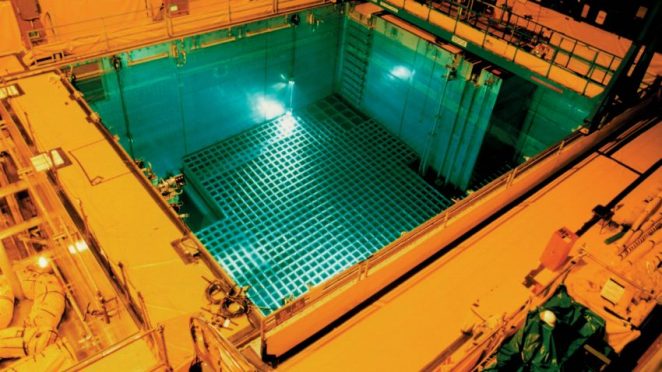
A spent fuel pool at the San Onofre Nuclear Generating Station near San Clemente, California.
Near miss at Fukushima is a warning for U.S., panel says
By Richard Stone May. 20, 2016
Japan’s chief cabinet secretary called it “the devil’s scenario.” Two weeks after the 11 March 2011 earthquake and tsunami devastated the Fukushima Daiichi Nuclear Power Plant, causing three nuclear reactors to melt down and release radioactive plumes, officials were bracing for even worse. They feared that spent fuel stored in the reactor halls would catch fire and send radioactive smoke across a much wider swath of eastern Japan, including Tokyo.
Thanks to a lucky break detailed in a report released today by the U.S. National Academies, Japan dodged that bullet. The near calamity “should serve as a wake-up call for the industry,” says Joseph Shepherd, a mechanical engineer at the California Institute of Technology in Pasadena who chaired the academy committee that produced the report. Spent fuel accumulating at U.S. nuclear reactor plants is also vulnerable, the report warns. A major spent fuel fire at a U.S. nuclear plant “could dwarf the horrific consequences of the Fukushima accident,” says Edwin Lyman, a physicist at the Union of Concerned Scientists, a nonprofit in Washington, D.C., who was not on the panel.
After spent fuel is removed from a reactor core, the fission products continue to decay radioactively, generating heat. Many nuclear plants, like Fukushima, store the fuel onsite at the bottom of deep pools for at least 5 years while it slowly cools. It is seriously vulnerable there, as the Fukushima accident demonstrated, and so the academy panel recommends that the U.S. Nuclear Regulatory Commission (NRC) and nuclear plant operators beef up systems for monitoring the pools and topping up water levels in case a facility is damaged. It also calls for more robust security measures after a disaster. “Disruptions create opportunities for malevolent acts,” Shepherd says.
At Fukushima, the earthquake and tsunami cut power to pumps that circulated coolant through the reactor cores and cooled water in the spent fuel pools. The pump failure led to the core meltdowns. In the pools, found in all six of Fukushima’s reactor halls, radioactive decay gradually heated the water. Of preeminent concern were the pools in reactor Units 1 through 4: Those buildings had sustained heavy damage on 11 March and in subsequent days, when explosions occurred in Units 1, 3, and 4.
The “devil’s scenario” nearly played out in Unit 4, where the reactor was shut down for maintenance. The entire reactor core—all 548 assemblies—was in the spent fuel pool, and was hotter than fuel in the other pools. When an explosion blew off Unit 4’s roof on 15 March, plant operators assumed the cause was hydrogen—and they feared it had come from fuel in the pool that had been exposed to air. They could not confirm that, because the blast had destroyed instrumentation for monitoring the pool. (Tokyo Electric Power Company, the plant operator, later suggested that the hydrogen that had exploded had come not from exposed spent fuel but from the melted reactor core in the adjacent Unit 3.) But the possibility that the fuel had been exposed was plausible and alarming enough for then-NRC Chairman Gregory Jaczko on 16 March to urge more extensive evacuations than the Japanese government had advised—beyond a 20-kilometer radius from the plant.
Later that day, however, concerns abated after a helicopter overflight captured video of sunlight glinting off water in the spent fuel pool. In fact, the crisis was worsening: The pool’s water was boiling away because of the hot fuel. As the level fell perilously close to the top of the fuel assemblies, something “fortuitous” happened, Shepherd says. As part of routine maintenance, workers had flooded Unit 4’s reactor well, where the core normally sits. Separating the well and the spent fuel pool is a gate through which fuel assemblies are transferred. The gate allowed water from the reactor well to leak into the spent fuel pool, partially refilling it. Without that leakage, the academy panel’s own modeling predicted that the tops of the fuel assemblies would have been exposed by early April; as the water continued to evaporate, the odds of the assemblies’ zirconium cladding catching fire would have skyrocketed. Only good fortune and makeshift measures to pump or spray water into all the spent fuel pools averted that disaster, the academy panel notes.
At U.S. nuclear plants, spent fuel is equally vulnerable. It is for the most part densely packed in pools, heightening the fire risk if cooling systems were to fail. NRC has estimated that a major fire in a U.S. spent fuel pool would displace, on average, 3.4 million people from an area larger than New Jersey. “We’re talking about trillion-dollar consequences,” says panelist Frank von Hippel, a nuclear security expert at Princeton University.
Besides developing better systems for monitoring the pools, the panel recommends that NRC take another look at the benefits of moving spent fuel to other storage as quickly as possible. Spent fuel can be shifted to concrete containers called dry casks as soon as it cools sufficiently, and the academy panel recommends that NRC “assess the risks and potential benefits of expedited transfer.” A wholesale transfer to dry casks at U.S. plants would cost roughly $4 billion.
http://www.sciencemag.org/news/2016/05/burning-reactor-fuel-could-have-worsened-fukushima-disaster
Young woman from Fukushima speaks out
For each of the last four days, I have published a part of an interview I filmed with a brave, young woman from Fukushima about her diagnosis of thyroid cancer. Following are some details about the interview as well as some data for reference.
Below is a summary of the main points of the young woman’s story:
1) She often gets tired easily after undergoing surgery for thyroid cancer.
2) She sometimes feels emotionally unstable after the surgery.
3) She has no medical doctor with whom she can talk comfortably.
4) She does not want other Fukushima children/ adolescents to develop thyroid cancer.
5) She wants young residents in Fukushima to undergo regular thyroid checkups, so that thyroid cancer cases may be detected early.
6) She is anxious about the possible health implications on her future children.
Points 1) and 2): Fukushima Medical University insists that thyroid cancer is not a disease that is deadly, and therefore residents in Fukushima do not have to worry even if they are diagnosed with thyroid cancer. However, this young woman’s story clearly demonstrates that the postoperative conditions of patients are not that simple. Post-operative patients are likely to experience various physical and emotional difficulties even after they have survived thyroid cancer.
Points 3): Doctors at Fukushima Medical University are not forming a comfortable relationship with the patients on whom they operate, which is a significant problem in terms of doctor-to-patient relationships. It is even more problematic when it is taken into account that most of the patients are young and therefore require intensive medical and emotional follow-up care.
Points 5): She is sending a strong message to young Fukushima residents that they should continue receiving regular thyroid checkups.
Peace,
Ian Thomas Ash
http://ianthomasash.blogspot.fr/2016/05/young-woman-from-fukushima-speaks-out-15.html
Truths deliberately covered about Fukushima surface over five years

People shout slogans and hold placards to protest against Tokyo Electric Power Company (TEPCO), owner and operator of the crisis-hit Fukushima Daiichi nuclear power plant, in front of the Prime Minister’s official residence in Tokyo, Japan, March 11, 2015.
TOKYO, May 23 (Xinhua) — Facts about the Fukushima nuclear disaster triggered by a powerful earthquake kept emerging over the past five years after the mishap took place, revealing the real face of the disaster.
In front of the local government of Iidate Village in Japan’s Fukushima Prefecture, there stands a sharp radiation measuring device. On its spotless dashboard jumps a red number: 0.38 microsieverts/hour.
The spot is about 40 kilometers from the Fukushima Daiichi nuclear power plant which was crippled by the monstrous quake-triggered tsunami in March 2011.
However, volunteer Yoichi Tao who majored in physics said the figure of radiation on their own device is 8 to 10 times of the official one.
According to Tao, the government dispatched the military to wipe out the nearby nuclear radiation on the ground in advance, so the official figure looks very low. “That’s how the government did it,” he said.
Toshihide Tsuda, professor of environmental epidemiology at Okayama University, found out that the rate of children suffering from thyroid cancer in Fukushima Prefecture was as much as 20 to 50 times higher than the national average as of 2014, three years after the Fukushima nuclear disaster.
His finding, however, did not arouse concern from the Japanese and local governments. On the contrary, it was rejected by the Fukushima prefectural government, attributing the phenomenon to a surge of “over diagnosis.” The local government insisted the cancer incidents and nuclear radiation were not related.
The Japanese government admitted in August 2013 that at least 300 tons of highly-contaminated water flew freely into the Pacific Ocean everyday, and the problem might linger for ages. However, in September the same year, Japanese Prime Minister Shinzo Abe told the international community when Japan was bidding for the 2020 Olympic Games that the crisis was “totally under control.”
It has also been revealed that TEPCO, or Tokyo Electric Power Company, had knowledge of multiple meltdowns at the plant’s reactors following the tsunami, but intentionally refrained from informing the public of the fact until recently.
Underestimating the long-term impact of the accident could lead to a slack supervision on affected foods. It may also produce an unrealistic optimism in the Japanese government, thus the official handling of the aftermath would be careless, experts warned.
http://news.xinhuanet.com/english/2016-05/23/c_135380988.htm
Fukushima: A Nuclear Story’ stands out among 3/11 documentaries
The Fukushima nuclear plant disaster has been examined in hundreds of documentaries to date, counting all media, nationalities and languages. But “Fukushima: A Nuclear Story” stands out for one simple, powerful reason: Its central figure, Italian journalist Pio d’Emilia, was among the first foreign reporters allowed on the scene after the earthquake and tsunami crippled the plant.
With his camcorder, he captured the devastation and confusion of the disaster’s immediate aftermath, as he evaded still-spotty security to travel to the plant gates. The documentary, narrated by American actor Willem Dafoe, has been distilled from nearly 300 hours of footage. This includes an in-depth interview with Naoto Kan — prime minister at the time of the disaster — who says he was seriously considering an evacuation of Tokyo when the meltdowns at the plant seemed to be spiraling out of control.
Kan was also on hand for a gala preview screening of “Fukushima: A Nuclear Story” at the MAXXI museum of contemporary art in Rome on Monday. The film has also been sold for broadcast in Canada, the United States, Germany, Norway and Mexico — but not yet Japan.
“Fukushima has already joined the many forgotten nuclear disasters,” says d’Emila; “forgetting means lying. Tepco and the Japanese government began lying from the very first hours — by hiding the already occurring multiple meltdowns — and are still lying by pretending the situation is now under control. As everybody knows, it isn’t.”
PC with Documentary, “Fukushima; A Nuclear Story”: Pio d’Emilia
-
Archives
- October 2026 (112)
- September 2026 (339)
- August 2026 (330)
- July 2026 (355)
- June 2026 (287)
- May 2026 (306)
- April 2026 (356)
- March 2026 (251)
- February 2026 (267)
- January 2026 (308)
- December 2025 (358)
- November 2025 (359)
-
Categories
- 1
- 1 NUCLEAR ISSUES
- business and costs
- climate change
- culture and arts
- ENERGY
- environment
- health
- history
- indigenous issues
- Legal
- marketing of nuclear
- media
- opposition to nuclear
- PERSONAL STORIES
- politics
- politics international
- Religion and ethics
- safety
- secrets,lies and civil liberties
- spinbuster
- technology
- Uranium
- wastes
- weapons and war
- Women
- 2 WORLD
- ACTION
- AFRICA
- Atrocities
- AUSTRALIA
- Christina's notes
- Christina's themes
- culture and arts
- Events
- Fuk 2022
- Fuk 2023
- Fukushima 2017
- Fukushima 2018
- fukushima 2019
- Fukushima 2020
- Fukushima 2021
- general
- global warming
- Humour (God we need it)
- Nuclear
- RARE EARTHS
- Reference
- resources – print
- Resources -audiovicual
- Weekly Newsletter
- World
- World Nuclear
- YouTube
-
RSS
Entries RSS
Comments RSS

