Japan’s plan to discharge more than 1,000 tanks of nuclear wastewater into the Pacific has incensed island nations.
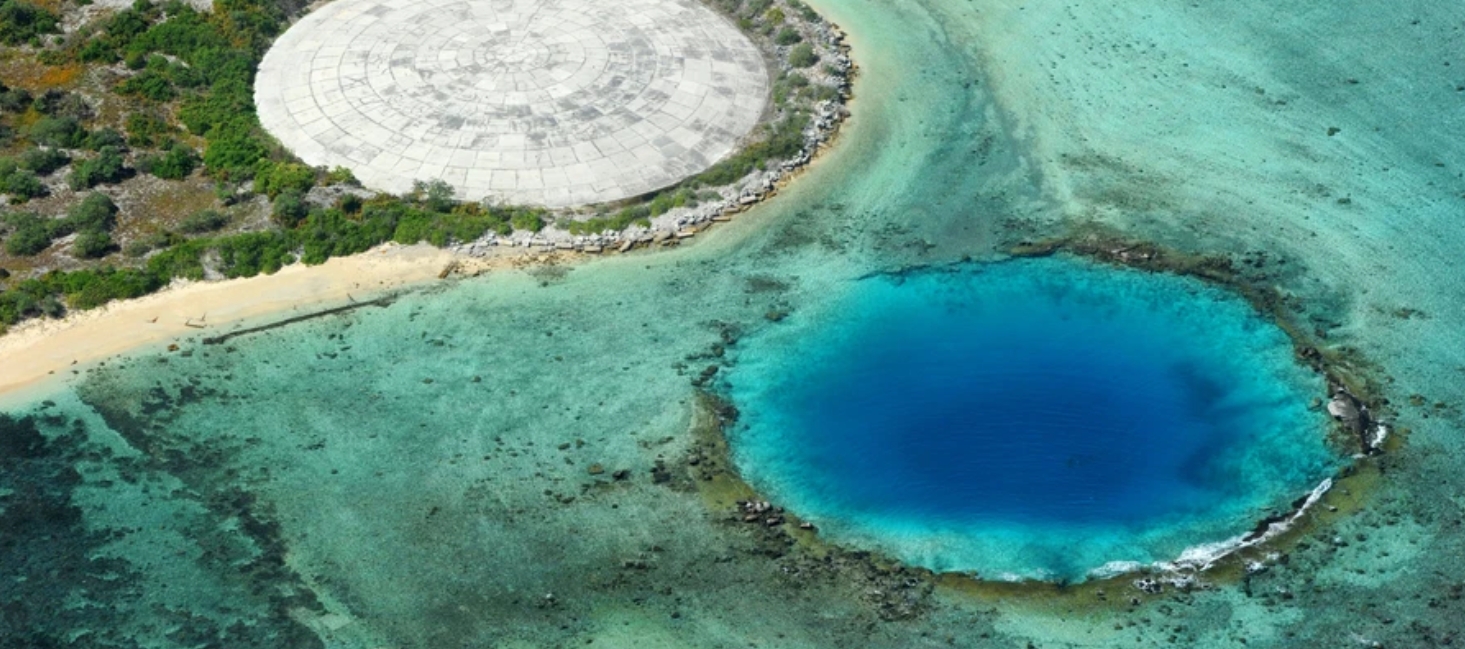
The Runit Dome, a concrete dome located in the Marshall Islands that houses tons of radioactive waste from nuclear testing in the 40’s and 50’s.
February 17, 2023
TOKYO — In the middle of the Pacific Ocean, a group of tropical islands has never seen winter. But one morning 70 years ago, a loud bang followed by a flash of light made it “snow” for the first time.
Fluttery and white, the powdery material sank into the Marshall Islands’ deep blue lagoons. It lightly covered the palm trees that lined Rongelap Atoll, astounding those who came out of their thatched homes to watch it settle on roofs. Children played with it, scooping the dust into their mouths.
But within hours, the atoll’s residents mysteriously began falling ill. Hair fell out in clumps. Skin burned. People vomited. They were evacuated two days later, but the damage was already done. Years later, the Rongelapese would suffer heightened cases of cancer, miscarriages, and birth deformities.
This was the fallout of Castle Bravo, the U.S.’ largest-ever thermonuclear bomb test that sprinkled radioactive debris on that warm March day. Now, residents of the island nations that include Fiji, the Marshall Islands, and French Polynesia invoke the nuclear accident and its subsequent contamination to oppose Japan’s plan to release its nuclear wastewater into the Pacific.
“We have a legacy of being the dumping ground when it comes to the issue of nuclear waste,” James Bhagwan, a Fijian anti-nuclear activist and secretary-general of the Pacific Conference of Churches, told VICE World News.
“Pacific Islanders have a spiritual bond with both land and ocean. So this again speaks to the issue of poisoning a part of us, our family,” he said.
The comparison Bhagwan drew between the controlled release of treated wastewater and an atmospheric nuclear test gone wrong may sound like a stretch. But it speaks to how much Pacific Island nations fear Japan’s planned discharge in the coming months of more than 1.3 million metric tons of contaminated water into the world’s largest ocean.
The nuclear waste sits in over 1,000 water tanks in Japan’s northeastern prefecture of Fukushima, the product of the meltdown of the Daiichi nuclear reactors there in 2011.
That year, a tsunami triggered by a 9.0-magnitude earthquake inundated the power plant and knocked out its cooling systems. Since then, officials have been trying to cool the destroyed reactors by pumping over a hundred tons of water through them every day.
But now Japan is running out of space to store this contaminated water, and is looking to release the treated liquid into the ocean this spring or summer.
Like Bhagwan, Pacific Island leaders have protested Japan’s plan.
If it is safe, dump it in Tokyo, test it in Paris, and store it in Washington, but keep our Pacific nuclear-free.
“We must prevent actions that will lead or mislead us towards another major nuclear contamination disaster at the hands of others,” said Henry Puna at a public seminar last month. He’s the former prime minister of the Cook Islands and current secretary-general of the Pacific Islands Forum—a regional bloc of 17 island nations.
In objecting to the release, Motarilavoa Hilda Lini, a Vanuatu stateswoman, has cited the slogan of the Nuclear Free and Independent Pacific movement: “If it is safe, dump it in Tokyo, test it in Paris, and store it in Washington, but keep our Pacific nuclear-free.”
Scientists disagree over the extent to which the release of Fukushima’s treated wastewater could affect the Pacific Islands. Some claim that nuclear waste could enter human food chains and contaminate fish eaten by communities outside Japan. Other experts argue that the distance between Japan and the Pacific Islands, ocean current patterns, and marine behavior will make the risk of nuclear contamination for the Pacific Islands highly unlikely. The water will get released into the Pacific through an undersea tunnel, built one kilometer off the coast near the Daiichi plant.
Japan has insisted that the wastewater is safe to release following treatment by a system called ALPS, Advanced Liquid Processing System. The process is designed to remove all radioactive material found in the water with two exceptions: The radioactive isotopes of hydrogen and carbon, tritium and carbon-14, are almost impossible to filter out and will instead be released after the liquid is diluted to one-hundredth of its concentration with seawater.
Tokyo Electric Power (TEPCO)—which ran the collapsed Daiichi plant—said it would test the waste before, during, and after the wastewater’s release into the Pacific through an undersea tunnel over the span of 30 years.
Scientists who spoke with VICE World News and who are referenced in this article said that the amount of tritium Japan plans to release won’t be harmful to humans or the environment because of the small doses. And though ALPS can’t remove carbon-14, TEPCO told VICE World News that the radioactive isotope’s concentrations are well below the regulatory limit.
But despite the general consensus that low doses of tritium, which is found also in rain and seawater, have negligible effects on health, some scientists questioned whether the wastewater to be released truly meets the level of safety promised by Japan.
Ken Buesseler, a marine radiochemist and one of five experts on the Pacific Islands Forum’s panel of independent scientists, questioned TEPCO’s ability to sufficiently remove radioactive material from the liquid. He cited how, in 2020, the company had to retreat about 70 percent of the stored wastewater because it was found to contain amounts of radioactive substances exceeding standards.
“That doesn’t give me a lot of confidence,” he told VICE World News. Monitoring the wastewater after it was released into the ocean would be too late, Buesseler added, as once it’s in the ocean, TEPCO can’t get it back.
He also faulted the company for analyzing only about a quarter of the 1,061 tanks and providing testing results on just seven radioactive substances out of the dozens TEPCO said it would monitor. This, he said, ignored the possibility that there would be variation among the tanks, potentially overlooking harmful levels of more radioactive substances such as cesium-137 and strontium-90.
In a written statement to VICE World News, TEPCO said potential variations among the tanks have been accounted for and that each tank will eventually be tested before they’re discharged. Not all tanks have been tested yet because 70 percent of them currently do not meet TEPCO’s standard for discharge and will be retreated. TEPCO also said it would sample the water for 69 different radionuclides before it is released and that the test results would be audited by third-party agencies it appointed and Japan’s nuclear regulator.
Despite these measures, critics say that TEPCO has had a spotty record when it comes to communicating with the public. In 2018, Kyodo News reported that the treated water still contained radioactive substances above the legal limit after it had gone through ALPS. And it wasn’t until 2020 that the power company first acknowledged that the water contained carbon-14, which can’t be removed using ALPS.
“I saw this as an opportunity for Japan to build up trust, to take care of their waste, clean it up and demonstrate independently to the world that they’ve done that,” Buesseler said. “It’s a lot of trust, is what it really boils down to. And we’re saying, show us.”
Brent Heuser, a nuclear engineering professor at the University of Illinois in the U.S., told VICE World News he’s confident that, even if the tanks storing wastewater in Fukushima have higher levels of radioactive substances than is reported, dilution of the liquid is enough to ensure their safety. He noted that the company will discharge the water gradually over 30 years to sufficiently thin out the wastewater.
Paul Dickman, a radiochemist who has visited Fukushima multiple times over the past decade to advise Japanese regulators on nuclear waste cleanup, supports the safe release of the treated water, although he acknowledged that the debate also hinges on trust.
“Let’s face it. I think the central government lost trust and trust is very hard to rebuild,” Dickman, a former senior official of the U.S. Nuclear Regulatory Commission and current chairman of the American Nuclear Society’s external affairs committee, told VICE World News.
The International Atomic Energy Agency, an intergovernmental organization within the UN system that advocates for the peaceful use of nuclear energy, has tested the wastewater and found the plan to release it in line with global practices.
But scientists who support the discharge say worrying about the treated wastewater was ignoring the more pressing concern: what TEPCO will do with the fuel debris in the reactor vessels.
When the 2011 tsunami hit Fukushima’s three reactors, power sources and equipment used to cool the fuel inside shut down. This allowed the fuel to overheat, melting the core and other parts of the reactor. Once it cooled and solidified, it became highly radioactive material known as “fuel debris.” At the moment, it sits at the bottom of the three reactor vessels and needs to be cleaned out before the plant can be decommissioned—making it a far greater issue than what’s in the tanks, Dickman said.
“It’s like, if you’re worrying about the air freshener in your car and you’re not worrying about the tires, then you’re not paying attention,” Dickman said.
Though the deadline for Japan’s release of the treated wastewater is fast approaching, the country is yet to fully convince Pacific Island nations that its plan won’t be harmful. The tanks fill up day by day, swelling to their 1.3 million ton limit.
Now, the Pacific Islands are running out of time to defend their oceans, the environmentalist Bhagwan said, warning Japan of the consequences that could lay ahead.
“The culture of shame will be laid upon the Japanese government and the people of Japan in years to come. Do they want that to be part of their legacy?” he said.
The new Japanese series is expected to land on June 1st, 2023.
Netflix has released its first teaser for its upcoming drama series on the Fukushima disaster called The Days. We’re hearing the series is set to be released globally in June 2023.
First announced back in September 2022. The series is comparable to HBO and Sky’s groundbreaking limited series Chernobyl which has quickly become one of the most celebrated limited series of all time. If The Days is half as good as Chernobyl then Netflix subscribers will be in for a treat.
Warner Bros Film and Lyonesse are behind the production for Netflix, with Nakata Hideo and Nishiura Masaki sharing directing duties.
A teaser was released by Netflix (exclusively on Netflix Japan’s YouTube channel) on February 16th, 2023. The teaser is sadly only available in Japanese on YouTube, although you can find a subtitled teaser embedded within the Netflix page for the show (you can also set a reminder there).
When is The Days Netflix release date?
Through Netflix’s official channels, it has only been confirmed that The Days will be released sometime in 2023. However, we’re hearing the project is currently set for a June 1st, 2023 global release date.Until confirmed officially by Netflix all release dates are subject to change.
What is the plot of The Days?
The synopsis for The Days is the following:
Depicts the Fukushima Daiichi Nuclear Power Plant accident that occurred in 2011 over a period of 7 days. From the three perspectives of the government, corporate organizations, and those who put their lives on the line. It will approach what really happened on that day and in that place.
What is The Fukushima Nuclear Disaster?
The Fukushima Nuclear Disaster was a nuclear accident that took place in Ōkuma, Fukushima, Japan on March 11th, 2011. The event was caused by the Tōhoku earthquake and its resulting tsunami.On the afternoon of March 11th, 2011, a 9.0 magnitude earthquake rocked Japan, with the epicenter only 45 miles east off the coast of the Tōhoku region. The earthquake triggered an extremely powerful tsunami, with waves recorded as high as 14 meters hitting the Japanese coastline.
These 14-meter waves rolled over the man-made defenses in place to protect the power plant, causing a devasting amount of damage in the process. The flooding of units 1-4 in the lower parts of the reactor buildings caused not only a loss in power, but the emergency generators also failed. Thanks to the loss of power, the pumps used to cool down the reactor cores stopped working.
With the reactors unable to be cooled, three nuclear meltdowns took place, with three hydrogen explosions and shockingly large amounts of radioactive contamination released into three of the four units.
The radiation that was released into the atmosphere forced the Japanese government to increase the evacuation area to a 12-mile radius. Not to mention there was an unapparelled amount of radioactive isotopes that were released into the Pacific Ocean, which in the long term will have a massive and devasting impact upon the world’s largest ocean.
Could the disaster have been prevented?
Had the correct measures taken place, then there was definitely a chance that the damage from the disaster would have been reduced.
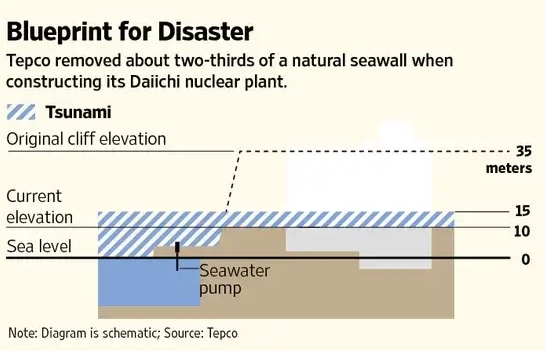
Key factors such as the power plants’ height to sea level played a huge role in the disaster. At only 10 meters above sea level, the 14-meter Tsunami waves rolled over the defenses easily, however, in 1967 when it was first being built, the original plan would have seen the plant sit 30 meters above sea level. The reduction in height was a result of TEPCO leveling the sea coast in order to make it easier to bring in the equipment to build the plant.
Over the years the concern over earthquakes was raised several times, in particular after the backup generator of Reactor 1 was flooded in 1991, and tsunamis of 2000 and 2008.
We can’t definitively say for certain that the disaster will have been averted but had concerns been taken more seriously, and stronger measures implemented, at the very least the damage caused by the tsunamis may have been reduced.
Who are the cast members of The Days?
None of the following cast members have been given named roles, however, we can confirm their involvement in the series.
Yakusho Koji has been cast in the main role. He has yet to star in a leading role for Netflix but is most famous for his work on the Japanese NHK drama Tokugawa Ieyasu in the role of Oda Nobunaga.
Takenouchi Yutaka has been cast in a supporting role. He has yet to star in a Netflix Original, but some may recognize him for his role as Akasaka Hideki in Shin Godzilla.
Kohinata Fumiyo has also been confirmed for a supporting role, but like his fellow co-star has yet to star in a Netflix original movie or drama.
Kobayashi Kaoru, Musaka Naomasa, and Satoi Kenta have also been cast in supporting roles.
The strong Kuroshio Current is expected to lead the water to the West Coast of the US and then continue to spread throughout the northern parts of the Pacific Ocean, according to the simulation
Feb.17,2023
A simulation by South Korean government research institutes has found that if Japan dumps contaminated water from the Fukushima nuclear reactor into the ocean, a radioactive isotope of hydrogen in the contaminated water will begin entering the waters off Jeju Island within four or five years. The same analysis also found that a low concentration of radiation (less than one-millionth of the current background concentration in Korean waters) could temporarily be brought into the area by ocean currents two years after the contaminated water is released.
On Thursday, a joint research team including researchers from the Korea Institute of Ocean Science and Technology (KIOST) and the Korea Atomic Energy Research Institute (KAERI) presented their results of a simulation studying the effects of the diffusion of tritium, a radioactive isotope of hydrogen present in the Fukushima wastewater.
The results of the simulation were presented at an academic conference held by the Korean Society of Hazard Mitigation in Jeju.
The reason for concern is that tritium can decay to helium-3 and affect DNA, which could result in adverse effects on the human body including cell death or deterioration in reproductive function.
This is the first time that the results of a joint simulation conducted by national research institutes on the domestic impact of the release of Fukushima wastewater have been released.
Ever since Japan announced its decision in April 2021 to release the contaminated water, both the previous Moon Jae-in government and the current Yoon Suk-yeol administration have recognized the need to conduct studies, saying that domestic institutes would further advance analysis models and then conduct related studies.
The results of this study were obtained using an analysis model that had been upgraded by late last year.
According to the research results, the tritium present in the wastewater poised to be discharged off the coast of Fukushima, which is located in eastern Japan, would move in an eastward direction due to the strong Kuroshio Current. This would lead the water to the West Coast of the US and then continue to spread throughout the northern parts of the Pacific Ocean.
On the other hand, the inflow of this water to the Korean Peninsula would be slower given the weak ocean currents.
A diagram showing the simulated tritium concentrations in the ocean two years following release. (Source: KAERI-KIOST simulation)
The analysis predicts that around four to five years will pass after the release of the wastewater before tritium begins flowing in Jeju waters.
Even though the Korean Peninsula is situated geographically close to Japan, it is expected to be affected by the wastewater at a later time than, for example, the Pacific Coast of the US, because the seawater flows eastward from Japan due to the influence of ocean currents.
Since the Korean Peninsula is located to the west of Japan, the water will first spread to the Pacific Ocean and then begin making its way to Korean waters.
The research team predicted that the concentration of tritium flowing into Jeju waters would reach around 0.001 becquerels (Bq) per cubic meter of water 10 years after the release of the Fukushima wastewater. A becquerel is a unit of radioactivity.
This concentration is one-100,000th of the average tritium concentration (background concentration) of the 172 Bq/m3 in domestic seawater analyzed by the Korea Institute of Nuclear Safety.
“This concentration is a concentration [level] that is difficult to detect with an analysis device,” the research team explained.
However, the study also found that the timing of wastewater inflow into Korean waters could change every year depending on specific characteristics of the ocean currents.
In fact, the joint simulation showed a temporary inflow of wastewater into Korean waters due to the influence of sea currents just two years after its release, albeit at a low concentration of 0.0001 Bq/m3.
“Ocean currents do not flow steadily, but change from season to season,” says Kim Kyeong-ok, a senior researcher at KIOST who helped carry out this simulation.
“The reason for the temporary influx of tritium two years after the [wastewater] release is because the ocean current is strong at this time,” Kim explained.
The simulation results from Korean researchers are not very different from what previous studies conducted in China concluded.
In 2021, a simulation conducted by an international research team led by researchers from the First Institute of Oceanography of China’s Ministry of Natural Resources found that tritium reached South Korean waters at a concentration of about 0.001 Bq/m3 five years after the initial release of the wastewater.
Last year, another simulation conducted by a research team at Tsinghua University in China predicted that tritium would reach Korean waters after 10 years at a concentration level of one-hundredth the levels present in the Pacific Ocean east of Japan.
“Tritium released off the coast of Fukushima was found to spread throughout the entire northern part of the Pacific Ocean 10 years later. These are similar results to China’s simulation study on the spread of the wastewater,” the KOIST and KAERI joint research team said.
This simulation was based on the assumption that Japan would release 22 trillion Bq of tritium annually for 10 years from next month into the ocean located about 1 kilometer from the Fukushima nuclear power plant.
The figure of 22 trillion Bq is the maximum amount Japan plans to release annually.
However, this simulation was only focused on the diffusion of tritium, meaning that the spread of other radioactive nuclides throughout the food chain or the effects of their accumulation in water was not taken into consideration.
Therefore, this analysis does not represent the full environmental impact that the discharge of the wastewater would actually have. In reality, besides tritium, the wastewater Japan plans to release into the ocean contains many more radioactive materials as well.
A diagram showing the simulated tritium concentrations in the ocean two years following release. (Source: KAERI-KIOST simulation)
While Japan’s Tokyo Electric Power Company (TEPCO) announced plans to begin the release of the wastewater this spring, this schedule could be delayed if reviews related to wastewater monitoring plans currently underway by the Japan Atomic Energy Commission and the International Atomic Energy Agency are prolonged.
Regarding the results of this simulation, both environmental groups and opposition parties in Korea remain unconvinced, arguing that it is too hasty to conclude that the impact on Korea from the Fukushima wastewater will be negligible based solely on this simulation.
The reasoning behind this stance is the argument that the Japanese data used to conduct this study is unreliable and that the concentration levels of other radioactive materials were not considered.
“Many experts, including the US National Association of Marine Laboratories, which is affiliated with more than 100 marine research institutes, don’t trust the Japanese government’s data and plans based on the lack of important data regarding the amount of radionuclides in each tank where contaminated water is stored and the lack of efficiency of the ALPS (Advanced Liquid Processing System),” the Korea Federation for Environmental Movements said in a statement.
“The safety of discharging the wastewater into the ocean should not be evaluated solely by [measuring] the concentration levels of radioactive materials in seawater,” KFEM added.
In addition, the Democratic Party’s response team aimed at stopping the discharge of the Fukushima wastewater also spoke out after the simulation results were published, saying, “The priority should be verifying Japan’s false data.”
“It is difficult to expect reliability because these results are based on Japan’s false data and claims,” the team said in a statement.
“What we need to do now is to request verifiable and transparent data regarding the Fukushima wastewater from the Japanese government and to prepare for international legal responses, such as provisional measures, to stop the release of the Fukushima wastewater,” the team argued.
A new study estimated that the density of tritium in South Korean waters will rise by around one-100-thousandth the previous level in the event Japan releases contaminated water from its crippled Fukushima nuclear power plant for ten years starting from March.
Researchers at the Korea Institute of Ocean Science and Technology and Korea Atomic Energy Research Institute published the assessment on Thursday as part of the the results of their simulation of the planned discharge during a conference of the Korean Society of Hazard Mitigation in Jeju.
The researchers conducted the latest study on the premise that Japan will, for ten years, release the treated contaminated water from the failed Fukushima plant that includes up to 22 terabecquerel.
The researchers assessed that the concentration of tritium, which is the radioactive isotope of hydrogen, in South Korean waters will reach around zero-point-001 becquerel per cubic meter in ten years, or one-100-thousandth of the average of 172 becquerels per cubic meter of tritium currently found in Korean waters.
According to the researchers, the amount of tritium is difficult to detect with current analysis systems.
The decision coincides with construction setbacks that would have postponed any discharge into the Pacific Ocean until spring or summer at the earliest.
February 16, 2023
Japan’s decision to postpone the release of treated nuclear wastewater into the ocean is giving Pacific nations and territories more time to push for other options.
But the company hired to dispose of the material is still moving ahead with preparations for the work, and told Civil Beat it expects to get the go-ahead in the coming months.
The company continues to work under the premise it will begin releasing water in the coming months, a representative confirmed to Civil Beat.
After visiting Japan an independent panel assembled by PIF said there was insufficient evidence that the release would be safe.
The water has been treated to remove radioactive materials, though significant gaps in data remain and all alternative disposal options have not been fully considered, said PIF scientific panel member Robert Richmond, who was part of the delegation that visited last week.
Richmond, director of the University of Hawaii Kewalo Marine Laboratory, has previously raised concerns about the potential interplay between lingering radioactive compounds and marine life in the Pacific, which could eventually make its way into the food system and fundamentally change the ecosystem.
Robert Richmond holds experiments on music CD at the Kewalo UH facility.
Richmond says he was not entirely satisfied with the level of research and data Japan could provide to the panel, despite TEPCO experimenting with flounder to assess whether there had been a change in the fish.
“When people try to trivialize the seriousness of that, that becomes very concerning for us,” Richmond said in an interview.
Company Moves Forward With Plan
Under the direction of the Japanese government, five methods of disposal were considered.
The final options were steam release, and discharging the treated water over time to dilute its contents. Releasing treated water into the ocean was selected and supported by the International Atomic Energy Agency.
The scientific panel though has continually raised questions over the apparent rush to dispose of the wastewater, given fears over contamination.
Tritium, the key radioactive compound in the liquid, has a half-life of 12.3 years, so encasing the treated water in concrete would deal with the issue without risking potential fallout in the Pacific.
“I felt a sense of relief. That was very fleeting.” – Former CNMI Rep. Sheila Babauta
Richmond says science is developing faster than international standards and regulations, which means current standards may not reflect the best possible solution.
“If they can guarantee and swear that the water will be totally safe by all standards, then why are they still averse to keeping it on site, binding it up in concrete so that it can’t get into people and can’t get into oceanic organisms, rather than making it the transboundary issue it is?” Richmond said.
TEPCO reiterated that it was following the basic policy set by the Japanese government in April 2021, and that it would “move forward with the construction of discharge facilities with the aim of commencing ocean discharge within approximately two years.”
The power company said construction delays mean the release may not happen until spring or summer, the Associated Press reported.
Does Delay Still Mean Inevitable?
Japan has faced pushback from China and South Korea, as well as U.S. territorial governments in the Pacific, despite the U.S. Department of State’s statement that Japan had “been transparent about its decision,” in 2021.
The House of Representatives in the Commonwealth of the Northern Mariana Islands introduced a resolution six months later, opposing nuclear testing and waste storage or disposal in the Pacific. The U.S. Territory has its own history with Japan, which planned to dump 10,000 drums of nuclear waste near its waters in the 1970s.
Former CNMI House Rep. Sheila Babauta, who introduced the resolution, says that cooperation and engagement with large international institutions such as the U.S. military, at least within Micronesia, have historically been opaque.
“I felt a sense of relief. That was very fleeting,” Babauta said in an interview. “We’ve engaged very much with the world around us and have been burned many times. And so it does come with trauma.”
The delay buys Pacific nations time to rally, organize and educate the region on the risks associated with the wastewater release, Babauta says.
But just how long they have is uncertain.
The decision to delay has curried some favor however from the Federated States of Micronesia, who had voiced opposition to the Japanese plan in September.
Richard Clark, special advisor to the FSM President David Panuelo, said in an email statement that the country was buoyed by Japan’s decision to delay until other Pacific nations “attain the same level of trust in Japan’s intentions and capabilities.”
The Pacific Action Network on Globalisation, a Fiji-based regional watchdog, was concerned that Pacific nations would be in a difficult predicament because Japan is a major regional donor.
But Joey Tau, deputy coordinator of PANG, says that conundrum pales in comparison to the environmental effects of releasing the wastewater into the Pacific, as forecast by the PIF scientific panel.
“If Japan decides to go ahead, we will see it as a fundamental breach of human rights,” Tau said in an interview. “We really hope that all other options are exhausted.”
A recent survey conducted by Japan’s Yomiuri Shimbun has revealed differing opinions over how safe it is to eat food produced in the Fukushima region. In an internet poll of 3-thousand people released on Tuesday, 93-percent of Koreans asked felt it would be “dangerous” to eat food produced in the Fukushima area. On the other hand, 36-percent of Japanese residents felt it would be unsafe to do so. People from other parts of the world also took part in the survey, with 87 percent of Chinese respondents expressing concerns over food from Fukushima. Japan is set to release contaminated water into the sea from the Fukushima Daiichi Nuclear Power Plant in the coming months.
Neighbouring countries and local fishers express concern as 12th anniversary of nuclear disaster looms
Workers in hazmat suits remove radioactive materials from contaminated water at the Fukushima Daiichi nuclear power plant.
Wed 15 Feb 2023
Almost 12 years have passed since the strongest earthquake in Japan’s recorded history resulted in a tsunami that killed more than 18,000 people along its north-east coast.
As the country prepares to mark the 11 March anniversary, one of the disaster’s most troubling legacies is about to come into full view with the release of more than 1m tonnes of “treated” water from the destroyed Fukushima Daiichi nuclear power plant.
The tsunami knocked out the plant’s backup electricity supply, leading to meltdowns in three of its reactors, in the world’s worst nuclear accident since Chornobyl 25 years earlier.
Much has changed since the Guardian’s first visit to the plant in 2012, when the cleanup had barely begun and visitors were required to wear protective clothing and full-face masks. Atmospheric radiation levels have dropped, damaged reactor buildings have been reinforced and robots have identified melted fuel in the basements.
But as the Guardian learned on a recent visit, progress on decommissioning – a process that could take four decades – is being held up by the accumulation of huge quantities of water that is used to cool the damaged reactor cores.
Now, 1.3m tonnes of water – enough to fill about 500 Olympic-sized swimming pools – is being stored in 1,000 tanks that cover huge swathes of the complex. And space is running out.
Two steel pillars protruding from the sea a kilometre from the shore mark the spot where, later this year, the plant’s operator, Tokyo Electric Power [Tepco], plans to begin releasing the water into the Pacific Ocean, in the most controversial step in the Fukushima Daiichi cleanup to date.
The decision comes more than two years after Japan’s government approved the release of the water, which is treated using on-site technology to remove most radioactive materials. But the water still contains tritium, a naturally occurring radioactive form of hydrogen that is technically difficult to separate from water.
The discharge, which is due to begin in the spring or summer, will take place in defiance of local fishing communities, who say it will destroy more than a decade of work to rebuild their industry. Neighbouring countries have also voiced opposition.
The government and Tepco claim the environmental and health impacts will be negligible because the treated water will be released gradually after it has been diluted by large amounts of seawater. The International Atomic Energy Agency says nuclear plants around the world use a similar process to dispose of wastewater containing low-level concentrations of tritium and other radionuclides.
Tepco and government officials who guided a small group of journalists around Fukushima Daiichi this month insisted the science supports their plans to pump the “treated” water – they object to media reports describing it as contaminated – into the ocean.
The water will be treated and, if necessary, treated again until tritium levels have fallen below government limits, said Hikaru Kuroda, a Tepco official overseeing the decontamination and decommissioning of Fukushima Daiichi. “By the time the liquid is diluted with seawater, tritium levels will be at less than 1,500 becquerels per litre, or 1/40th of the government standard for discharging water into the environment,” he said.
“We will have contaminated water on the site for as long as we have to cool the reactor basements. And we will release the water very slowly to begin with, so we could be looking at something like 20 to 30 years to complete the process.”
The fiercest opposition has come from Fukushima’s fishers, who say releasing the water risks destroying their livelihoods because consumers will shun their catch and send prices plummeting.
“Even though it is safe, it could still harm sales of Fukushima seafood and lower prices, which is what happened 12 years ago,” conceded Junichi Matsumoto, Tepco’s chief officer for the management of treated water. “We know fishing communities are worried … that’s why we and the government are working on addressing the potential reputational damage.”
The Fukushima prefectural government says that, post-disaster, its food safety standards are among the strictest in the world. The government-set upper limit for radioactive caesium in ordinary foodstuffs such as meat and vegetables is 100 becquerels a kilogram, compared with 1,250Bq/kg in the EU and 1,200Bq/kg in the US.
While officials attempt to reassure the public and other countries that Fukushima produce is safe for consumers, Tepco and the government have embarked on a PR offensive, holding regular briefings on the water discharge for Tokyo-based diplomats and journalists, and running ads on TV, in newspapers and online.
“We take other countries’ concerns seriously, which is why we are using every possible opportunity to explain the discharge plan to them,” said Ayako Ogino, a foreign ministry official. “We have made a commitment to discharge the water without harming the environment or human health. To describe the water as contaminated is erroneous, as it implies that it will harm the environment.”
The campaign has had mixed results. South Korea and China have voiced opposition to the discharge, while the Pacific Islands Forum (PIF) said recently it had “grave concerns”.
Environmental groups have challenged the Japanese government’s claims that the water will not affect marine life or human health, while the US National Association of Marine Laboratories has pointed to a lack of adequate and accurate scientific data to support its reassurances on safety.
The water release plan received a boost this month, however, when Micronesia, a member of the PIF, dropped its opposition to the water discharge. Its president, David Panuelo, said in Tokyo that his country was “no longer fearful or concerned about this issue now as we trust in Japan’s intention and technological capabilities in not harming our shared oceanic interests”.
Japanese officials have ruled out other options, including long-term storage underground or evaporation, and insist nothing will stand in the way of the discharge plans. “The biggest obstacle to decommissioning Fukushima Daiichi is the debris [inside the reactors],” said Atsushi Wakui, a nuclear accident official at the economy, trade and industry ministry.
“Securing the site so we can begin removing the melted fuel is absolutely essential, and that means urgently addressing the water problem. There are more than 1,000 tanks of water here, and they need to go.”
Designated waste by prefecture (as of September 30, 2011, Ministry of the Environment data)
February 11, 2023 Designated wastes” were generated as a result of the accident at TEPCO’s Fukushima Daiichi Nuclear Power Plant in March 2011, which caused radioactive materials to spread over a wide area in eastern Japan. Progress has been slow in disposing of the 20,000 tons or so that continue to be stored outside of Fukushima Prefecture. Local governments are opposed to the national government’s policy of consolidating the waste in each prefecture and storing it for the long term. The waste continues to be dispersed and stored at farmers’ properties and municipal facilities. Some point out the risk of leakage in the event of a disaster.
Radioactive materials released into the atmosphere during the nuclear power plant accident were spread by the wind. Designated wastes include incinerator ash and rice straw contaminated with radioactive materials and whose radioactivity level exceeds 8,000 becquerels per kilogram. After the nuclear power plant accident, the Ministry of the Environment set the standard value of 8,000 becquerels as “a value that can ensure the safety of workers during normal landfill disposal. The government decided that the disposal of designated waste is the responsibility of the government, and its basic policy is to construct a long-term management facility (final disposal site) at the expense of the government and dispose of the waste within the metropolitan prefecture where it was generated.
According to the ministry, as of the end of September 2010, there was a total of 407,000 tons of designated waste in 10 prefectures, mainly in the Tohoku and Kanto regions. About 25,000 tons of this was stored in nine prefectures other than Fukushima Prefecture, with Miyagi, Ibaraki, Tochigi, Gunma, and Chiba prefectures accounting for about 22,000 tons. https://www.asahi.com/articles/ASR2C64JKR21UTIL023.html?iref=pc_photo_gallery_bottom
What about the other 33 radioactive substances, they are conveniently ignored and presumed to be harmless to marine life and to our food chain?
February 10, 2023
The Tokyo Electric Power Company(TEPCO) has notified South Korea that it is pushing to reduce the number of radioactive substances tested for in the Fukushima nuclear power plant’s wastewater before it is released in the spring.
According to documents obtained by Democratic Party lawmaker Lee Jae-jung from Seoul’s foreign ministry and the Nuclear Safety and Security Commission, the Japanese entity plans to measure the levels of 31 radioactive substances contained in the contaminated water instead of the original 64.
The ministry said the adjustment, which was shared by Tokyo during director-level talks in late December, was requested by a task force at the International Atomic Energy Agency, which is verifying the safety of Japan’s water release plan.
Japan’s Nuclear Regulation Authority has been reviewing the revised plan submitted by the TEPCO for three months but has yet to issue a decision.
The foreign ministry said it will continue to prioritize the safety of the South Korean public as it deals with the issue, maintaining the stance that the wastewater should be handled in a scientific manner in accordance with international law.
An aerial view shows the storage tanks for treated water at the tsunami-crippled Fukushima Daiichi nuclear power plant in the town of Okuma, Fukushima Prefecture, Japan, Feb. 13, 2021.
February 10, 2023
By Ko Dong-hwan
Korean researchers will release next Thursday the result of a simulation they have been working on to demonstrate how radioactive water discharged from Japan’s Fukushima nuclear power plant, which was devastated by a tsunami 12 years ago, will flow and affect the world’s oceans.
Researchers from the Korea Institute of Ocean Science and Technology (KIOST) and the Korea Atomic Energy Research Institute (KAERI) said the simulation was designed to track tritium, a radioactive isotope of hydrogen with a half-life of about 12 years. Emitted from nuclear facilities across the world, tritium is believed unfilterable even by ALPS, the advanced liquid processing system that is supposed to treat radioactive water now stored at the Fukushima plant before releasing it into the Pacific Ocean this spring.
The researchers said the simulation will likely show how tritium will spread through sea water. Tritium is one of the 64 radioactive nuclides believed to be contained in the radioactive water stored in more than 1,000 tanks with a total liquid volume of about 1.37 million cubic meters.
The presentation, jointly conducted by KIOST and KAERI, is part of the Korean Society of Hazard Mitigation’s academic forum to be held on Jeju Island from Feb. 15 to 17.
There has been a lot of speculation about why the results of the simulation are being first released at an academic conference instead of through a government briefing, raising concerns over the possibility that the Korean government may be reluctant to announce the findings for fear of damaging its diplomatic relations with its neighbor.
The researchers have stated that the presentation is “based on scientific findings and does not involve any political decisions.”
Following the destruction of the Fukushima Daiichi nuclear power plants in Okuma which were struck by a tsunami in 2011, the Japanese government and the International Atomic Energy Agency now plan to release some 1.3 million tons of radioactive water into the oceans over a period of 30 years starting this year. They have argued that the water will be treated by ALPS and poses no harm to the environment. But those critical of the decision say the data shared by the Japanese government with the world declaring the water’s safety is highly suspicious and lacks credibility.
The radioactive water, once discharged, is expected to flow with ocean currents around the Pacific Ocean in a clockwise direction arriving in Korean waters after about a year.
Radioactive water, even in tiny amounts, is harmful to humans after decades of exposure. The most common intake route is believed to be through food, especially seafood imported from Japan.
The new graphic novel relates how Naoto Matsumura risked his life to save abandoned animals in the aftermath of the 2011 Fukushima nuclear disaster
February 9, 2023
The French duo of Fabien Grolleau (Audubon, On the Wings of the World) and Ewen Blain have collaborated on a new graphic novel that explores one resident’s experience in the aftermath of the 2011 earthquake and tsunami in Japan and the ensuing nuclear disaster at Fukushima. Guardian of Fukushima is the second book in TOKYOPOP’s Comics That Matter initiative (the first was Victory for Ukraine). The initiative seeks to raise awareness of import issues using the graphic novel medium. Guardian of Fukushima will be released ahead of its March 11th anniversary.
Guardian of Fukushima is told from the point of view of Naoto Matsumura. The Fukushima Daiichi nuclear power plant suffered a meltdown after the tsunami and spread radiation throughout the region. The Japanese government evacuated residents from the area as a preventative measure, but Matsumura the farmer risked his life to return home and care for the abandoned animals.
Grolleau and Blein blend European art style with Japanese aesthetics. Soft expressive art complements the impactful story and characters. This original French graphic novel alludes to timeless Japanese legends as an ode to Mother Nature and human resilience.
Grolleau recalls what brought him to the project:
“When I discovered Matsumura-san’s life in the forbidden zone of Fukushima, I immediately was in awe of this man’s courage, modesty, and nobility. His story is full of hope and resonated with themes I was keen to explore as an author, such as ecology and nature, and with the vision I had of Japanese myths that I wanted to share through comics.”
Tokyo-based writer and scholar Roland Kelts provides the forward to the book. The TOKYOPOP edition also includes bonus materials by Fukushima-resident and acclaimed photographer Ko Sasaki, who provides photographs of the disaster and its aftermath. TOKYOPOP founder Stu Levy contributes photography and background information about the tragedy.
Levy speaks about his passion in bringing the book to publication:
“I will never forget my experiences in Tohoku immediately after the tsunami, especially the resilience and determination of the local people. Naoto Matsumura exemplifies this spirit – and this will to not only survive but also to ensure the survival of the creatures he loves. I am proud we can bring readers Fabien and Ewen’s extraordinary work as part of our Comics That Matter initiative, and I invite readers of all ages to discover his mission and become inspired to find ways to make a difference in their own communities.”
Guardian of Fukushima (MSRP $19.99, ISBN 9781427871367) goes on sale in bookstores on February 28, 2023 and in comics shops on March 1, 2023.
And now, here are the first 10 pages of Guardian of Fukushima. Enjoy!
Storage tanks for contaminated water at the Fukushima Daiichi nuclear power plant in Japan, Jan. 20, 2023.
February 6, 2023
Pacific Island nations have for decades been grappling with the environmental and health consequences of Cold War-era nuclear testing in the region by the likes of the U.S. and France. Now, they worry about another kind of nuclear danger from neighbors much closer to home.
As concerns over energy security and the desire to transition away from fossil fuels pushes several Asian nations to reconsider once-scrapped nuclear power programs, there is increasing anxiety over how the waste from those facilities—depending on the methods of disposal—might impact the lives of Pacific Islanders.
Notably, in the region, Philippines President Ferdinand “Bongbong” Marcos said in his first address to Congress in mid-2022 that he was open to adding nuclear energy to the country’s energy mix, the Indonesian government said in December it plans to build a nuclear power plant by 2039, and weeks later Japan announced that it plans to ramp up the use of nuclear energy.
Nuclear plants have long been touted as a reliable source of carbon-free energy, though many plants across the world had been shuttered in past decades over worries about the safety of nuclear waste disposal. In this new era of nuclear revival, similar uncertainties abound.
In Japan, one plant that isn’t even operational has become the frontline for the fight between activists seeking safety assurances for waste disposal and operators who are running out of space in on-site tanks to store the wastewater accumulating from keeping damaged reactors cool. Currently, Japan plans to release wastewater from the Fukushima Daiichi nuclear power plant into the Pacific Ocean later this year.
“It’s just horrendous to think what it might mean,” says Henry Puna, the secretary general of the Pacific Islands Forum (PIF), a regional intergovernmental organization that has more than a dozen member countries, including, for example, the Cook Islands, Fiji, Tonga, and Vanuatu. “The people of the Pacific are people of the ocean. The ocean is very much central to our lives, to our culture, to our livelihoods. Anything that prejudices the health of the ocean is a matter of serious concern.”
When a magnitude 9.1 earthquake and tsunami hit off the coast of Japan in 2011, it caused a meltdown at the Fukushima nuclear power plant. Since then, water is being used to cool the damaged reactors and prevent further catastrophe. Now, more than 1.3 million metric tons of radionuclide-contaminated water has been collected on site, and it continues to accumulate, as rain and groundwater seep in. Tokyo Electric Power Company (TEPCO), the operator of the plant, says that the storage tanks take up too much space and hinder decommissioning the plant. Japan initially said that it would begin releasing the water into the ocean in the spring of 2023. Chief Cabinet Secretary Hirokazu Matsuno told the media in January that the release target date is now around spring or summer, which appears to be a postponement, according to the Associated Press, due to construction delays on a pipeline and the apparent need to gain greater public support.
The plan has faced widespread opposition. Japanese fishermen, international environmentalists, and other governments in the region, including China, South Korea, and Taiwan, have all expressed concern. Some of the strongest pushback has come from Pacific Island countries, including from lawmakers, former leaders, regional fisheries management groups, and other organizations. Among those voices is the PIF, which is advocating for more time to deal with questions and concerns. Earlier this year, the PIF appointed a panel of independent global nuclear experts to help inform its members in their consultations with Japan and TEPCO. The experts have stressed that more data are needed to determine the safety of the water for disposal.
South Korean environmental activists protest in Seoul against Japan’s plan to discharge Fukushima radioactive water into the sea, as they mark World Oceans Day on June 8, 2022.
“We think that there is not enough scientific evidence to prove that the release is safe, environmentally, healthwise, and also for our economy in the Pacific,” says Puna, who is also the former Prime Minister of the Cook Islands. Until more information is shared and evaluated, he asks that Japan “please defer the discharge of the water.”
Doubts and divisions over the data
TEPCO says the water will be purified so that the concentration of radioactive substances—with the exception of a hydrogen isotope called tritium, which it says has “little impact on the human body”—falls below regulatory standards. The tritium will be diluted with a large volume of seawater. The government of Japan told TIME in an emailed statement that the measures it is taking are fully in line with international law and the safety standards of the International Atomic Energy Agency (IAEA). An IAEA task force, set up to review the safety of Japan’s plan, says that it completed a second review in Japan in January, and that it will release a report on its findings in about three months, as well as a comprehensive report before the discharge.
But there appears to be a major disconnect between TEPCO and others, including the PIF panel of experts—who say that they’re concerned with the adequacy, accuracy, and reliability of the data backing up the decision to release the water. Robert H. Richmond, a research professor and the director of the Kewalo Marine Laboratory at the University of Hawaii at Manoa, who is one of the panel experts, tells TIME that “the critical, foundational data upon which a sound decision could be made was either absent or, when we started getting more data,” he says, “extremely concerning.” He also casts doubt on if the IAEA is in the best position to assess the risks. “They’re an agency that has a mandate to promote the use of nuclear energy,” says Richmond, “and our mandate is to look after the people, the ocean, and the people who depend on the ocean. And our unanimous conclusion … is that this is a bad idea that is not defended properly at this point, and that there are alternatives that Japan should really be looking at.”
“One of the biggest surprises to me was the fact that the data was so sparse,” says Ferenc Dalnoki-Veress, scientist-in-residence and adjunct professor at the James Martin Center for Nonproliferation Studies at the Middlebury Institute of International Studies at Monterey, who is also on the PIF panel of experts. “There were prolonged gaps in data collection, which suggests that the matter may not have been given the level of attention and importance it deserved.” He adds that only a fraction of the tanks had been sampled, and only a handful of some 60 isotopes were typically measured in the samples—fewer than he would expect for this kind of assessment. (TEPCO says that the analysis done on a sample of tanks so far is just to assess the water’s condition in storage but that, after the purification process, further measurements will be taken on all the treated water before discharge to ensure that only that which meets sufficient standards of safety is released into the ocean).
Some still fear the safety of the treated water, and the far-reaching implications if it’s dumped into the ocean. Puna points out, for example, that the waters of the Western and Central Pacific Ocean produce much of the world’s tuna. If the tuna were to be impacted, it would cause major problems for Pacific nations, for which fisheries are a significant source of income, as well as for consumers globally.
In December, the U.S.-based National Association of Marine Laboratories also announced its opposition to TEPCO’s plans, publishing a position paper that says “there is a lack of adequate and accurate scientific data supporting Japan’s assertion of safety” while “there is an abundance of data demonstrating serious concerns about releasing radioactively contaminated water.”
Japan’s government told TIME in an emailed statement that it has provided detailed explanations, answered questions in a sincere manner, and that it stands ready to receive further questions. Puna says that the PIF panel of experts has been invited to Japan this year, but unless more data are offered, such a meeting would be “meaningless.” Richmond, similarly, says that requests for more data have not produced sufficient responses and that the panel of experts hasn’t been able to get the information they wanted via Zoom calls or emails, so he isn’t confident that a trip would produce enough information to make the panel of experts comfortable with the plan. “We asked ABC, and you answered with DEF,” he says.
When asked by TIME if it would indefinitely delay the discharge owing to the concerns of Pacific nations, TEPCO said in an emailed statement that it would “make every effort to foster understanding prior to the commencement of discharge.” The government of Japan also said that it “attaches great importance” to its relationship with the Pacific Island nations and that it “takes the PIF’s concerns sincerely,” but it stopped short of saying it wouldn’t go ahead with the discharge plan.
That approach may damage relations with the Pacific region. “We’ve been friends for a long time,” says Puna. “In the Pacific, we believe that if you are friends that you are always open to sharing information.”
A scarring past and a new path forward
Other nuclear plants across the globe have released treated wastewater containing tritium. Rafael Mariano Grossi, the IAEA’s director general, said in 2021 that Japan’s plan is “in line with practice globally, even though the large amount of water at the Fukushima plant makes it a unique and complex case.”
But Pacific Island nations have particular reason to be anxious. There is a noxious legacy of nuclear testing in the region, and other countries have historically treated the Pacific as a dumping ground for their waste. The U.S. conducted 67 nuclear tests in the Marshall Islands between 1946 and 1957—and disposed of atomic waste in Runit Dome, where it’s still stored. That testing led not only to forced relocations, but also to increased rates of cancers. Today there is concern that the dome is leaking and that rising sea levels might impact its structural integrity. France also conducted 193 nuclear tests from 1966 to 1996 at Moruroa and Fangataufa atolls in French Polynesia.
The BAKER explosion during Operation Crossroads, a series of two tests conducted by the U.S. to investigate the effect of nuclear weapons on naval warships, at Bikini Atoll, July 25, 1946.
“To have this on top of that creates a feeling of fear and apprehension in the hearts and minds of our leaders and our people in the Pacific,” says Puna.
In the wake of Russia’s invasion of Ukraine and the ensuing energy crisis, many countries seem to be embracing nuclear power anew. Japan, for example, wound-down the use of nuclear energy in the wake of the Fukushima disaster. But in December it announced a major reversal of that policy and said that it plans to use more nuclear energy by restarting as many reactors as possible and prolonging the operating life of older reactors. (By late 2022, 10 of 50 nuclear reactors that were shut after the disaster had been restarted, according to the Economist Intelligence Unit.)
Rather than let dumping wastewater into the ocean become the norm, at this juncture for nuclear energy, some say it’s an opportunity to explore different ways of doing things. The panel of PIF experts has proposed several alternative solutions, including treating the water and storing it in more secure tanks to allow the tritium time to decay, or using the treated water to make concrete for use in projects that won’t have high contact with humans.
“This is not the first nuclear disaster and by no means is it going to be the last,” says Richmond. “This is an opportunity for Japan,” he says, “to do the right thing and to invest time, effort, and money into determining and coming up with new ways of handling radioactive waste and setting a new trajectory.”
Member states of the United Nations have urged Japan to resolve issues surrounding the wartime sexual slavery and forced labor issues as well as its planned release of radioactive water from the crippled Fukushima nuclear plant into the ocean.
Such calls were made during the UN Human Rights Council’s Universal Periodic Review of Japan in Geneva on Tuesday, with countries from Europe and other regions urging the Japanese delegation to immediately suspend and abolish the death penalty and ban discrimination against sexual minorities.
Recommending that improvements be made in universal human rights issues, the member nations cast light on Japan’s wartime atrocities, with Beijing urging Tokyo to responsibly reflect on its wrongdoings against the sexual slavery victims and to offer compensation.
Yoon Seong-mee, the deputy chief of the South Korean mission in Geneva, advised Tokyo to closely cooperate with Seoul to restore the victims’ honor and dignity and pay attention to helping heal their psychological wounds.
The member states also raised concerns over Tokyo’s planned Fukushima water release starting this year, with Pacific Island Countries calling for a comprehensive investigation into its impact and the disclosure of the findings.
Japan, in response, maintained its position that the sexual slavery issue was resolved in a 2015 agreement between Seoul and Tokyo. As for the water release, it said the radioactive level is far below the upper threshold of international safety standards and that the International Atomic Energy Agency(IAEA) is monitoring the purification process.
Mind you this article is from Japan News Yomiuri the mouthing the official lines of the Japanese government, which is of course for dumping the Fukukushima accumulated radioactive water in the Pacific ocean and which would want us to believe that it is filtered “absolutely pure”….
TEPCO plans to gradually reduce the treated water over the next several decades during the decommissioning period.
K4 tank group for discharging treated water
February 2, 2023
TOKYO – The Fukushima No. 1 nuclear power plant will soon mark the 12th anniversary of the unprecedented meltdown that resulted from the Great East Japan Earthquake and tsunami of March 11, 2011. The most pressing issue at present is the discharge of treated water into the ocean, as the on-site storage capacity is approaching its limit.
The government, during a ministerial meeting held on Jan. 13, projected that the discharge would begin in the spring or summer this year. However, local fishermen concerned about reputational damage and Pacific island nations are opposed to the ocean discharge.
Treated water, according to Tokyo Electric Power Co. Holdings, is that which has been purified “until the concentration of radioactive materials, with the exception of tritium, falls well below regulatory standards for safety.”
To find out more, I visited TEPCO’s Fukushima No. 1 nuclear power plant, where decommissioning work is expected to take 30 to 40 years.
My visit on Jan. 26 was my first to the site in about 10 years. Compared to the last time, when it was stuffy being in protective clothing with a full face shield, I was surprised to find that I could move around most of the area with a helmet and disposable mask.
Subcontracted workers were busy here and there, and in the parking lot, vehicles that had been used to move within the premises after the accident were still parked there. The vehicles are no longer in use more than a decade after the accident, but because they are radioactive and cannot be disposed of normally, they remain on the site, having served their purpose.
The four tips of a structure jut out of the sea. The water outlet is right beneath this point.
“It’s right over there,” said a TEPCO Holdings official, pointing offshore from the quay in front of reactors No. 5 and No. 6, which were spared from the accident.
Under a clear sky, I could see the four tips of a tower that jutted out of the sea. The tower is located 1 km offshore. The treated water will be discharged into the ocean through a water discharge outlet located on the seafloor approximately 12 meters undersea where the four tips are seen.
The installation of the water discharge outlet caisson has already been completed. Currently, work is underway to backfill the excavated seafloor around the outlet with concrete and mortar, and it is expected to be completed by the end of June.
“The days when the work can be done are limited due to severe sea conditions, such as waves and wind,” explained the official in charge at the site.
The shielded tunnel boring machine stopped excavating about 830 meters along the 1-km-long undersea tunnel to the water discharge outlet and is waiting for the connection from it.
The water intake tank almost in its final stage
Work is also progressing on the shore near the quay wall. Water tanks connecting to the tunnel were under construction. There are two tanks: the upstream tank, which is wide, and the adjacent downstream tank, which is about 16 meters deep. The upstream tank, divided by concrete walls that create channels, appeared to be almost complete, revealing its full extent. The system has been created so that treated water, diluted with seawater, enters the upstream tank, flows through the channels, then overflows into the downstream tank.
Once the discharge begins, TEPCO will directly confirm that the tritium concentration in the treated water has been diluted to below the target level through the mixing with seawater at this location, which can be considered the final point before the water is discharged.
Safety Considerations
K4 tanks are used for receiving, measuring/confirming, and discharging treated water on a rotating basis.
The Pacific Islands Forum, an organization of nearly 20 countries and regions including Australia and New Zealand, has called for a postponement of the ocean discharge. The PIF is of the opinion that the discharge into the ocean would have a significant negative impact on the fishing industry, given the lingering effects of past atomic bomb tests and other factors. China and South Korea have also expressed concern.
Local fishing cooperatives and other groups in Japan are also opposed. The government plans to seek their understanding by using funds totaling ¥80 billion set up to support the local fishing industry and to counter reputational damage.
Contaminated water is being generated at the Fukushima No. 1 nuclear plant because water is used to cool nuclear fuel that melted and solidified in reactor cores that were involved in the meltdown. This water is purified of 62 nuclides, including cesium and strontium, using an advanced liquid processing system (ALPS) and other equipment. However, since tritium cannot be removed by ALPS, it must be diluted with a large amount of seawater to a concentration of 1,500 becquerels per liter or less before being discharged into the ocean. Tritium is a radioactive isotope of hydrogen with three particles rather than the usual one.
Tritium produced from reactor operations is being released by nuclear power plants around the world. It does not arise only from plants that have experienced accidents.
Japan’s regulatory concentration limit for tritium in water is 60,000 becquerels per liter, and the World Health Organization’s drinking water standard guideline is 10,000 becquerels per liter. TEPCO’s aim for 1,500 becquerels per liter is 40 times more stringent than the national standard.
Treated water processed by ALPS is clear and colorles
Moving to higher ground, 33.5 meters above sea level, I found a group of huge white tanks called K4. There are 35 such tanks with a capacity of 1,000 metric tons each. Thirty of these tanks, or 30,000 metric tons, are used to release treated water. From here, the treated water flows through transfer pipes toward the sea, being diluted with seawater along the way. The transfer pipes have two shutoff valves that stop the flow in the event of an earthquake, tsunami, or other emergency.
“Thirty tanks are divided into three groups of 10 tanks,” explained the TEPCO official. “Each group has a role of receiving, measuring/confirming, and discharging, and these roles are rotated.
“The treated water is stirred in the tanks to make it homogeneous, then the concentration of radioactive substances is measured,” the official added. “If it meets the government’s regulatory standards, it is discharged.”
From there, through further dilution with seawater, the treated water will have tritium concentrations at TEPCO’s stricter standard.
Measurements of the treated water are conducted by TEPCO and an outside inspection agency. TEPCO will disclose all such figures to the public and seek their understanding of the safety of the water.
Race Against Time
Storage tanks for treated water fill the southern part of the Fukushima No.1 nuclear power plant site.
Looking around the site from a window on the seventh floor of a large rest area, I saw a row of tanks lining the south side of the premises. These tanks store treated water. There are approximately 1,000 tanks, currently storing approximately 1.32 million cubic meters. The total capacity of the tank complex is 1.37 million cubic meters, which means that 96% of the tanks are already filled. Based on the calculation that 140 cubic meters of treated water is generated per day, the tanks will be full around this summer or autumn.
Why does this treated water continue to be generated in the first place? Inside the meltdown-affected reactors, fuel that melted and solidified is called fuel debris, which needs to be cooled by circulating water. Water that comes in contact with fuel debris becomes contaminated with radioactive substances. If this cooling water continues to be circulated without any increase in volume, there is no problem with using it in the reactor. The problem is that rainwater and groundwater continue to enter the damaged reactor buildings, causing a surplus of contaminated water. This excess contaminated water is processed by ALPS, generating treated water.
In the ALPS facility, the HIC, a special container that stores the slurry waste removed from the pre-processing step, is being exchanged for a new one.
Initially, about 540 cubic meters of treated water was generated per day, meaning one tank was filled in two days. Later, the amount was reduced to 130 cubic meters per day in fiscal 2021 through the use of facings to prevent rainwater from seeping into the ground and by building an ice wall underground to surround the building to reduce the amount of groundwater flowing in. Last year, when only June and October had much rain, the amount was below 100 cubic meters per day.
The discharge of treated water into the ocean, however, would have to be greater than the amount generated in a single day to decrease the overall amount. So how much is planned to be released per day? According to calculations based on the performance of the seawater pumps, 500 cubic meters per day could be released.
The TEPCO official denied this, saying, “That will never happen.”
He explained: “It will take time to measure radioactive substances before the discharge. We have received comments from various parties that it would be better to take our time and release the water in a way that would have as little impact or cause as little change as possible.”
TEPCO plans to gradually reduce the treated water over the next several decades during the decommissioning period.
Ensuring safety, making public disclosures, and gaining domestic and international understanding of the oceanic release: The decommissioning of the Fukushima No. 1 nuclear power plant is approaching one of its climaxes this year, with a great many difficult challenges ahead.
The operator of the crippled Fukushima Daiichi nuclear power plant says it has retrieved samples from inside the No. 1 reactor containment vessel. It says the samples are likely to contain fuel debris.
The plant suffered a triple meltdown in the March 2011 earthquake and tsunami.
Its operator, Tokyo Electric Power Company, or TEPCO, said on Wednesday that underwater robots successfully sucked water out from two locations inside the vessel.
The company has been examining the inside of the No.1 reactor containment vessel. It says the accumulated matter at the bottom is thought to contain fuel debris.
The project to collect samples initially began early last month, but was suspended due to technical errors. It was resumed on Tuesday.
Experts hope that a close analysis of the samples will help lead to successful removal of fuel debris — one of the greatest challenges in the plant’s decommissioning process.
TEPCO said it will try taking samples from two other locations inside the vessel. It also said it will spend about a year identifying the types and amounts of chemical elements contained in the samples.
The company also plans to send robotic cameras inside the pedestal, a structure that props up the reactor.









 nuclear-news