FUKUSHIMA, JAPAN – Having settled into a new life with his family outside Fukushima prefecture, Mr Hiroshi Ueno has no intention of returning home.
The 51-year-old, who was a florist in Minamisoma city – around 30km north of the Fukushima No. 1 nuclear plant – now handles data management at a support centre for other evacuees.
His son was 18 and about to start his first job when disaster struck on March 11, 2011. The extended family of 10, including Mr Ueno’s elderly parents and his sister’s family, decided to evacuate the very next day.
At that time, there was no official word from the Japanese government for mass evacuation but many residents feared the worst – a meltdown from the nuclear plant.
“Most of us left our houses without even tidying up our homes which were damaged by the earthquake,” Mr Ueno told The Straits Times.
“No one knew what would happen next.”
They packed only the bare essentials into their car and began their journey as evacuees. Over the next five days, they drove from one place to another before finally arriving at Yonezawa city where they now live. Their former home in Minamisoma had become a no-go zone.
It was only a year later that Mr Ueno and his wife were allowed a brief visit back to retrieve their important documents and other belongings.
“Wearing protective suits, we got on a bus with others who were from the same area,” he said. They were allowed to stay for only two hours and had to wear dosimeters to keep track of radiation levels.
Five years on, he would rather not return home.
“There are many issues like housing, compensation and security that have yet to be fully resolved.”
Damaged and worn out, the house will soon be demolished for redevelopment. But Mr Ueno will not be returning.
“Even looking at it is painful,” he added. “But for my parents, the house is full of memories… it is something that they couldn’t bear to let go of.”
FUKUSHIMA, JAPAN – It was about 2pm on a chilly Tuesday but there were no customers in Ms Miyuki Satou’s makeshift shop next to the Naraha town hall office, where she serves up piping hot bowls of ramen and udon.
The town was evacuated in the aftermath of the triple Tohoku disaster in 2011.
Although Naraha was the first town located entirely within a 20km radius of the crippled Fukushima No. 1 power plant to have its evacuation order lifted in September last year, people have been slow to return. Only 976 of its population of 7,700 have come home – mostly the elderly.
One key reason for this is that families have already rebuilt their lives and bought new homes elsewhere, including Ms Satou’s.
The 51-year-old was a former resident of the coastal town bordering the Pacific Ocean, but now lives with her two daughters who have full-time jobs in the neighbouring Iwaki city.
But her ties with Naraha have led her back to run a food business – one of only two eateries there. Both close at 3pm.
Every day she has about 70 customers – mostly workers tasked with rebuilding the town where black bags of contaminated soil still remain a common sight, or former residents who have come back to visit.
She estimates only 10 per cent of her customers are residents who have moved back home.
“There is really no demand and so there is no point opening late,” she said. “Naraha used to be a much livelier town before the disaster, but now it just feels very lonely.”
It makes no sense for young families to return, when it is more convenient to live near their new workplaces or schools, she added.
But despite the nuclear disaster having changed her life, she offered a moderate take on the use of nuclear power.
Prime Minister Shinzo Abe’s administration has said that Japan “cannot do without nuclear power” and has set a target to have nuclear power make up as much as 22 per cent of the country’s energy needs. Recent attempts to restart reactors elsewhere in the country – halted over public safety concerns following the 2011 disaster – have become entangled in a web of lawsuits.
The use of nuclear energy has split popular opinion in Japan. Ms Satou acknowledged it was a difficult question.
“It is an industry that can create a lot of jobs,” she said. “It will of course be better to use other forms of energy but I don’t think we have found one yet.”
FUKUSHIMA, JAPAN – Retiree Mitsue Masukura, 63, who used to live in the coastal town of Namie, knows she will not be returning home anytime soon.
The Japanese government’s target is to declare all areas around the crippled Fukushima No. 1 power plant livable by March next year (2017), except for three towns. Namie is one of the three. Certain parts of the town remain off limits because decontamination works have been suspended given the high radiation dosages.
Residents like Ms Masukura, a former fishmonger, are already allowed to return for only short periods during the day. They are not allowed to stay overnight.
Not that she has any plans to return.
She said: “Even if we move home, there will hardly be any amenities because many of the former merchants have moved out and started new businesses elsewhere.
“Besides, people still do not really feel safe about returning to a town so badly affected by the nuclear fallout.”
Despite official assurances of the contrary, her unwillingness to trust the authorities stems from a case of ‘once bitten, twice shy’.
In the immediate aftermath of the March 11, 2011, disaster, there was poor communication of the situation, and conflicting instructions, which led to a lot of speculation, she said.
“We didn’t know who said what or where we should go,” she said.
As a result, her family of five moved five times from town to town, ryokan (a traditional Japanese inn) to ryokan, before settling in their current temporary living quarters in Fukushima city. Each unit is smaller than the size of a one-room flat in Singapore. Her family used to live together under one roof, but now stay next door to one another across three units.
She looks forward to the family buying a house and moving to Minamisoma next year, after her grand-daughter graduates from senior high school.
When asked how she felt about not being able to return home to Namie, she said: “It’s been already five years since we left. There are all these memories of the past, which will continue to live on in the mind.”
FUKUSHIMA, JAPAN – For 72-year-old Mr Nobuyoshi Ito, home is an isolated village with only 40 other residents. Once considered among the most beautiful villages in Japan, Iitate is today a shell of its former self before a nuclear disaster five years ago.
Most of the homes, left behind by around 6,000 residents, are empty. Farmers have been replaced with masked workers tasked with filling up black bags of contaminated soil. Only parts of the village, about an hour’s drive inland from the crippled Fukushima No 1 power plant, have been deemed safe for visitors, and they cannot stay overnight.
But that has not stopped Mr Ito, a former IT engineer-turned-farmer, from returning and staying in open defiance to study the effects of the radioactive plume that hit after the nuclear plant on the east coast of the main island Honshu was destroyed by a tsunami.
“When the government asked us to evacuate … I asked if there would be criminal charges if I continued to live here,” he said. “They said no.”
“I am a test subject, making use of the environment,” added Mr Ito, now a lobbyist opposing nuclear energy. He carries a hand-held meter to record the radiation he is exposed to daily, at his own expense.
Readings in Iitate now can range between 1.1 and 1.9 microsieverts per hour, according to government monitoring posts, which is more than 10 times those in places such as Tokyo, 250km south, where readings are around the globally accepted norm of 0.1 microsieverts per hour. This translates to a benchmark for safe radiation absorption of 1 millisievert (1,000 microsieverts) per year, although the International Atomic Energy Agency and others say anything up to 20 millisieverts per year poses no immediate danger to human health.
Mr Ito spends most of his time in the village but once a month drives three hours to Niigata prefecture on the west coast where some of his grandchildren live.
But many others from Iitate have had to evacuate to cramped temporary housing – smaller than a one-room flat in Singapore.
It is a bitter pill to swallow, said Mr Ito. “For older people like me, a slight exposure to radiation is all right, compared to the stress of living in temporary housing,” he said.
On the wall in his office is a 2011 calendar, which he has not taken down because “the female model is cute”. But it is a sombre reminder of the lives that were lost or upended at 2.46pm local time on March 11 when a 9.0-magnitude earthquake triggered a 10m wall of water that ravaged the northeastern coast of Japan and caused meltdowns in three reactors at the Fukushima plant. It was the world’s worst nuclear accident since the Chernobyl disaster in 1986.
Some 16,000 people died, most by drowning, 2,500 are still missing, and another 100,000 evacuees have not returned home. About 60 per cent of them still live within Fukushima prefecture. After the disaster, residents within a 20km radius of the No. 1 nuclear plant were evacuated, and some areas 30km away such as Iitate were cleared because of high radiation levels.
The health consequences of the leaking radiation are still unclear but more than 300,000 people aged below 18 have been screened for thyroid cancer. About 150 have tested positive, although some attribute this to more rigorous testing rather than the direct impact of radiation.
Last October, Japan confirmed the first case of radiation-linked cancer for a former Fukushima nuclear plant worker. Among evacuees, factors like stress, poor diet and a lack of exercise have also taken a toll.
Japan is halfway through a 10-year reconstruction master plan. Some 26.3 trillion yen (S$319 billion) has been budgeted since 2011 and another 6.5 trillion yen was approved this month to speed up the construction of public housing for evacuees, and for other projects such as medical care and infrastructure.
Decontamination process
Japan Ministry of Environment official Hitoshi Aoki said the government expects to lift evacuation orders by March next year in all but three areas – Namie, Futaba and Ookuma – where decontamination efforts have been suspended because of high air dose radiation. It has not yet been decided when these areas, which are closer to the plant, will be cleaned up.
The cleanup process involves removing topsoil, since cesium – a radioactive byproduct of the Fukushima meltdown – falls to the ground when it rains or snows, said Mr Aoki.
The disaster forced all of Japan’s dozens of reactors offline in the face of public worries over safety but Prime Minister Shinzo Abe said this month that Japan “cannot do without nuclear power”.
This has split public opinion and most of the country’s reactors remain shut down.
Population drain
Iitate village is expected to be one of the areas to reopen next March.
But contamination, and a general mistrust of the Government for not being upfront or transparent about the extent of the nuclear disaster in the immediate aftermath, are among reasons former Iitate residents like Mr Hideji Suzuki, 78, are reluctant to return home.
Once a farmer, he now lives with his wife in temporary housing quarters an hour by car from their old house.
“We can’t go back to Iitate anymore, even if we want to,” he said.
Residents like him will not be able to return to their former lifestyles and jobs in the mountains – which cannot be decontaminated easily – even if they moved back.
The disaster has accelerated a demographic shift away from affected cities within Fukushima prefecture.
Minamisoma city, 30km north of the plant where lower radiation levels have allowed evacuated residents to return, has seen “rapid aging”, said city official Mr Tokio Hayama. Offices have reopened but the working population – over the age of 15 and below 65 – has yet to recover.
“We need to dispel the fear of radiation, which has become a major factor that prevents their return,” said Mr Hayama.
The disaster has also split families, like Mr Yasuhiro Abe’s. The 52-year-old moved his wife and 14-year-old daughter to Kyoto, concerned about their health in the wake of the nuclear fallout.
But he stayed behind in Fukushima City – 90km from the power plant and unaffected by the exclusion order – to continue running a movie theatre he has worked at for almost 30 years.
“As far as possible, we want to raise our child in a place with lower radiation levels,” he said. “When she comes of age, she can choose whether to come back.”
Former residents have been slow to return to the seaside town of Naraha also, which was the first within the exclusion zone to have the evacuation order lifted in September last year. Many families have already rebuilt their lives elsewhere and in the six months since, only 976 of the town’s 7,700 original inhabitants have come home – mostly the elderly.
Former residents like Ms Shinoda Tomoko, 78, have chosen to move out – and move on with their lives. She now lives 60km south of the Fukushima plant in Iwaki city with her children and grandchildren who have new jobs and are attending new schools.
But retiree Tomiko Igari, 69, intends to buck the trend. On one of her regular trips back to Naraha, she said she will return in October this year, after the lease on the flat where she now lives runs out.
Her home is just across the road from a vast field that is still full of black bags with contaminated soil.
“My only hope is that when I come home, all of that will be gone,” she said. “It’s really an ugly reminder of the accident.”
FUKUSHIMA, JAPAN – For Mr Yasuhiro Abe, 52, seeing his wife and daughter means an eight- to nine-hour drive south from Fukushima to Kyoto.
The mother and daughter have been living as evacuees for the past five years, since a massive earthquake and tsunami triggered a nuclear disaster in their hometown in Fukushima prefecture.
But unlike many others who were issued evacuation orders, they decided to uproot voluntarily because they are worried that harmful radioactive material could spread west with rain or snow.
His daughter was nine when the meltdowns at the Fukushima No. 1 nuclear plant happened, Mr Abe
The family first moved to the neighbouring prefecture of Yamagata before heading further away and finally settling down in the ancient city of Kyoto.
His wife and daughter now rent a home in Kyoto while Mr Abe has returned to his job as the general manager of a theatre where he has worked for almost 30 years. Now, he visits them twice every three months.
“Fukushima city and Koriyama city – inland areas within the prefecture – were never made evacuation zones despite heightened radiation levels right after the disaster,” said Mr Abe, who thinks that a factor could have been the higher population density in cities, compared to coastal towns.
He is skeptical that the heightened levels were still deemed safe.
“As far as possible, we want to raise our child in a place with lower radiation levels,” he said. “When she comes of age, she can choose whether or not to come back.” “As for myself, I’ll always be here.”
Five years on, he finds himself at a crossroads.
“In March next year (2017), the Government will be stopping housing assistance for voluntary evacuees and if we want to continue living elsewhere, it will cost more money,” he said.
While the cost of living will become an issue, he is more concerned about ensuring that his daughter completes high school without disruption. She will begin high school, likely in Kyoto, next year.
“Parents like ourselves have to consider the impact on our children’s lives before deciding if we should relocate,” said Mr Abe.
“Of course, a part of me wants them to come back – for us to live together again.”
Almost 70 percent of 3/11 evacuees that answered an Asahi Shimbun questionnaire said their health had worsened since the triple disasters struck five years ago.
Comparing their current health to before the Great East Japan Earthquake, tsunami and Fukushima nuclear disasters, 23 percent of respondents said it had worsened greatly, while 46 percent said it had worsened somewhat.
One 67-year-old man living in temporary housing in Otsuchi, Iwate Prefecture, wrote: “I cannot use a chair because the temporary housing unit is so cramped. The condition of my knees has worsened because I have to sit on the floor for a long time.”
Questionnaires were sent out to 944 evacuees from the three hardest-hit prefectures of Iwate, Miyagi and Fukushima in February and responses were received from 619. While all respondents in 2012 were evacuees living in temporary housing, some have since moved back home.
Respondents also showed signs of psychological stresses in their responses to a question with the option to give multiple responses.
Forty-eight percent said they had experienced an increase in the concerns they felt, 37 percent said they felt down or lonely, 28 percent said they were more irritated and 25 percent said they had difficulty sleeping.
Only 22 percent said they were in a calmful state unchanged from before the disasters.
A 55-year-old woman who runs her own business and lives in an apartment in Yamada, Iwate Prefecture, said: “Whenever I see tsunami footage, I remember relatives who died and I become lonelier. I am also worried because I have no idea when I will be able to rebuild my home.”
A 77-year-old woman who was evacuated from Naraha, Fukushima Prefecture, to Aizu-Misato, also in the prefecture, said: “My life changed completely because of the nuclear accident, and I tend to feel more down. I also feel psychological uncertainty because I still do not have a settled residence.”
The respondents were also asked to list up to three policies they wanted the central and local governments to prioritize.
The most popular response for the second consecutive year was “subsidies for medical expenses” at 43 percent.
Other frequent responses were “improving elderly care services and rebuilding or expanding social welfare facilities” at 30 percent and “subsidies for monthly living expenses” at 28 percent.
The second most popular response last year was “financial support to rebuild own home.” This year that response came in fourth with 24 percent of respondents choosing it.
Tokiko Onoda speaks about her house in Fukushima from her apartment
in Tokyo on Feb. 9.
They feel like refugees, although they live in one of the world’s richest and most peaceful nations.
Five years ago, these people fled their homes, grabbing what they could, as a nearby nuclear plant melted down after being hit by tsunami, spewing radiation. All told, the disaster in Fukushima displaced 150,000 by the government’s count.
About 100,000 are still scattered around the nation, some in barrack-like temporary housing units and others in government-allocated apartment buildings hundreds of kilometers away.
Although authorities have started to open up areas near the damaged reactors that were previously off limits, only a fraction of residents have returned. For example, in the town of Naraha, where evacuation orders were lifted in September, 459 people, or 6 percent of the pre-disaster population, have gone back.
Most say they don’t want to return for fear of lingering radiation. Some don’t want the upheaval of moving again after trying to start their lives over elsewhere.
With government housing aid set to end next year, many feel pressured to move back.
Tokiko Onoda, 80, lives with her husband in a cramped, cluttered apartment on the 21st floor of a high-rise in the edge of Tokyo where about 1,000 people displaced by the disaster live in rent-free housing.
Several Fukushima towns that were deserted are now urging residents to return, saying it is safe to live in certain areas. An ambitious effort to decontaminate vast swaths of land by removing topsoil and razing shrubbery has turned farmland and coastlines into stretches of dirt with rows upon rows of black garbage bags filled with grass, soil and debris.
When housing aid ends in April 2017, people in apartments under the government program will have to start paying rent or move out. Those whose homes in Fukushima that are in areas still off-limits for living will continue to receive the aid.
Onoda fears hers will be cut off because her home is in Namie, where evacuation orders are gradually being lifted in parts of the town.
She doesn’t believe it’s safe to go back. She feels duped because she had believed that nuclear power was safe.
Onoda angrily talks about how authorities are treating people like her. Why didn’t the government give her land elsewhere to build a new home?
When she lived in Fukushima, she had a big house with a garden where she grew vegetables and peonies. She picked mushrooms and ferns in the hills.
“We worked so hard to build that house,” she said, often stopping to wipe away tears. “We had no worries in the world except to plan vacation trips to the hot springs.”
That home is now in shambles. Although it survived the magnitude-9.0 quake on March 11, 2011, burglars have ransacked it and rats have chewed the walls. The last time she visited, the dosimeter ticked at 4 microsieverts an hour, more than 100 times the average monitored in-air radiation in Tokyo. That’s not immediately life-threatening but it makes Onoda feel uncomfortable because of worries that cancer or other sicknesses may surface years later.
Before the disaster, the government had set the safe annual radiation dosage level at 1 millisievert. Afterward, it has adopted the 20 millisievert recommendation of the International Commission on Radiation Protection set for emergencies, and 1 millisievert became a long-term goal.
Onoda says she has done her best to cope. She has made friends. She keeps busy with tea parties, art classes and a sewing circle.
And now they want her to go back, after all she has gone through?
“Only someone who has gone through this evacuation can understand,” she said.
Ryuichi Kino, a journalist who wrote, edited and compiled the 2015 book, “The White Paper on Nuclear Evacuees,” believes people like Onoda have been treated like kimin, which means “people who have been discarded” because they have been forgotten or abandoned by society.
“We don’t even know their real numbers,” he said, noting the government lacks a clear definition for “evacuees,” and bases its figures on tallies of those receiving aid. A recent count in Fukushima and a neighboring prefecture found the total number may be as high as 200,000, Kino said.
“Evacuation is a term that assumes the situation is temporary, and there is a place to go back,” said Kino.
The government is spending about ¥40 billion ($400 million) a year on housing aid for those displaced by the disaster. It’s also financially backing Tokyo Electric Power Co., operator of the damaged Fukushima No. 1 nuclear plant, to make monthly compensation payments, now at a cumulative ¥5.9 trillion ($59 billion) and rising.
Tests with volunteers who wore dosimeters for two weeks in the town of Naraha found average radiation exposure to be at a rate of 1.12 millsieverts a year.
Government official Yuji Ishizaki, who is overseeing the lifting of evacuation orders, says he is merely following policy.
“There is no clear boundary for what is safe or not safe for radiation,” he said. “Even 1 millisievert might not be absolutely safe.”
Fukushima Medical University, the main academic body studying the health effects of the nuclear disaster, says no sickness linked to radiation has been detected so far, although sickness from lack of exercise, poor diet and mental stress has been observed.
The more than 100 cases of thyroid cancer found among the 370,000 people 18 years old and younger at the time of the disaster the university calls “a screening effect,” or a result of more rigorous testing.
Some scientists say that is unusually high, given that thyroid cancer among children is rare at 2 or 3 in 1 million. Thyroid cancers among the young surged in the Ukraine and Belarus after the 1986 Chernobyl catastrophe.
Seiichi Nakate is relatively content in his new life with his wife and two children, 13 and 11, in Sapporo, 600 km from Fukushima. There, some 1,500 people from Fukushima have formed a support network, often getting together for drinks and helping each other find jobs.
Nakate recently bought a house and started a company that refers professional helpers to disabled people, and has hired former Fukushima residents. He vows to never return to Fukushima because of the radiation danger.
He believes that from the beginning, authorities underplayed those risks. He doesn’t trust them.
After the disaster, he immediately sent his wife and children to a relatives’ home in southern Japan. The family started living together in Sapporo a year later.
The end of government housing support makes people feel pressure to return, he says.
“The government abandoned the people of Fukushima, even the children. Now the policy is to push us to go back,” he said. “It’s a policy that forces radiation upon people.”
Megumi Okada, a mother of four, is fighting hard to keep her housing aid in Tokyo, getting people to sign petitions and meeting with government officials.
She scoffs at how officials keep saying that people are living “as normal” in much of Fukushima. She doesn’t want her children eating the food or breathing the air. They get periodic blood tests to make sure they are healthy.
Her husband has found a job as a construction worker in Tokyo. Their apartment is just two rooms and a kitchen, but the rent is covered. Okada wants to work, but publicly funded child care is scarce in Japan, and private ones are costly.
“Nothing has progressed in five years,” she said. “We have the right to stay evacuated.”
Okada says she wants to apply for U.N. refugee status and move to Europe with her family, if she could.
“I know Japanese can’t become refugees now. But I wish we could,” she said. “It is about our staying alive.”
Five years after the Fukushima nuclear disaster began to unfold, the searing psychological effects are still being felt among the 160,000 refugees who fled the fallout, writes Linda Pentz Gunter. But now there’s growing pressure to return to contaminated areas declared ‘safe’ in efforts to whitewash the disaster’s impacts. Why the rush? To clear the way for the 2020 Tokyo Summer Olympics, complete with events in Fukushima City.
“Moving under normal circumstances is a personal decision. Evacuees have no choice. They are forced to flee.”
Yoshiko Aoki knows exactly what this feels like. A petite, older woman, Aoki, like almost 160,000 of her fellow Japanese citizens, was one of those forced from her hometown when the Fukushima-Daiichi nuclear disaster of 11th March 2011 began to unfold.
She still lives in exile.
Aoki has been traveling the world to speak out for Fukushima refugees, as she did at a London event in January hosted by Nuclear Free Local Authorities, Green Cross and the Nuclear Consulting Group.
Aoki is from Tomioka, situated 10km from the Fukushima plant and one of the ghost towns that may be reopened by governmental decree in March 2017 and declared ‘safe.’ She now runs a community center for Fukushima evacuees in Koriyama.
When you flee like that, Aoki says, with the threat of radiation literally hanging over you, “you leave your home, your land, you lose your job, you are separated from family members, and your animals are abandoned or killed before you leave.”
The cries of abandoned animals gave voice to the Fukushima tragedy
It was those animals left abandoned who first gave voice to the tragedy. Harrowing videos of starving, dying cows in the Fukushima ‘zone’ emerged in the first weeks following the disaster, a searing lament of unbearable agony. Many of these videos are so painful to watch that they come with a warning of the horrors ahead.
For some, the suffering of the animals was too much. In Alone in the Zone, a 2013 video report from Vice, Naoto Matsumura, then 53 and also from Tomioka, describes how he eventually left his family to return home and look after the animals there who still survived.
“We ran for it when reactor unit 4 exploded”, he recalls in the video, while hugging an ostrich. “I grabbed my family and we escaped.”
But Matsumura and his family were turned away by a relative to whom they fled for refuge. “She wouldn’t even let us in. She said we were contaminated by radiation”, he related.
Fukushima evacuees are the new Hibakusha
Such misconceptions were widespread. Fukushima evacuees had become the new Hibakusha, the name given to survivors of the Hiroshima and Nagasaki bomb blasts, many of whom were stigmatized and treated as outcasts.
After finding no room at shelters either, Matsumura took the decision to return to Tomioka alone. When he saw the starving animals he said he had no choice but to stay on.
Matsumura’s story is less uncommon than one would expect. A 2013 ITN news feature profiled Kago Sakamoto, then 58, who refused to abandon his animal sanctuary situated less than 12 miles from the Fukushima nuclear plant.
Although he lives there illegally, Sakamoto survives on charitable in-kind donations from supporters. The older men are gambling that any radiation-borne disease will outlive them anyway, given the long latency period for illnesses like leukemia that can take a couple of decades or more to manifest.
The elderly want to die where they were born
Indeed, statistics indicate that it is the retired and the elderly who have been willing to return from exile so far. Even though studies show that reliable decontamination is unlikely and will not be long-lasting, the elderly, as Aoki explained it, “want to die where they were born and not die in an unfamiliar place.”
Dr. Ian Fairlie, writing in The Ecologist last August, estimates that as many as 2,000 people have already died due to the stress of evacuation itself.
“The uprooting to unfamiliar areas, cutting of family ties, loss of social support networks, disruption, exhaustion, poor physical conditions and disorientation can and do result in many people, in particular older people, dying”, Fairlie wrote.
Some who decline to return are ostracized by others, Aoki said. “They are accused of abandoning their homeland.” Some government officials have even tried to position the return to previous exclusion zones as some kind of patriotic duty.
That patriotic duty will be center stage in the lead-up to the 2020 Summer Olympic Games to be hosted in Tokyo. Between now and then, a comprehensive public relations effort must sweep aside all doubts about radiation risks.
Fukushima will bid for an Olympic event
In a blatant example of the depth of denial about the true extent of the disaster, Fukushima City hopes to be an Olympic venue. As Fukushima City official Hiroaki Kuwajima told AFP:
“If baseball and softball return to the Olympics, and preliminary games are played outside Tokyo, then we hope to be able to stage games. We are still in the process of recovery from the disaster and it would be a dream to have world-class athletes play here.”
Kuwajima and other officials are positioning the pariah status of Fukushima Prefecture as “harmful rumors” that can be dispelled by moving refugees back, encouraging Olympic events and luring young people into the workforce, essential to re-boot the region’s crushed economy.
“The Governor of Fukushima spoke about a safe Fukushima”, Aoki said. “We want it to become safe. But our thoughts and reality are not one and the same.”
Not everyone is cooperating. Before the Fukushima disaster, there was a cultural lockstep when it came to trust in government. But with unprecedented anti-nuclear demonstrations and the revelations of government and industry collusion, the traditional culture of group obedience has eroded to some degree. But it has not entirely vanished.
Voices of opposition dismissed as ‘extremists’
“There persists an anti-scientific stance and group mentality”, said Dr. Tetsunari Iida, executive director of the Institute for Sustainable Energy Policies in Japan, speaking at the same London conference as Aoki. “People are told they shouldn’t be expressing fearfulness. People who speak up are dismissed as extremists.”
Minamisoma city, located 14-38 km north of the Fukushima nuclear site, was one of the communities worst hit by radiation fallout. About 42% of all Fukushima Prefecture evacuees were former residents of the city. But while the Japanese Nuclear Emergency Response Headquarters has declared the city safe for residents to return, only a little over half of the former population has gone back, about 50% of whom are senior citizens.
Those who remain away – still around 110,000 people according to Aoki – lost many tangibles in their lives, but also, she says, something more fundamental: “People must not lose their dignity. How can we possibly construct something that will annihilate dignity?”
That decimation of spirit along with land and livelihood, prompted Aoki to repeat the warning she gave when she visited the Wylfa nuclear site in Wales, where two reactors are shut down but a new one is proposed. Like a Cassandra of the East, she intones:
“Please learn from Fukushima. Please learn from our mistake. You don’t want to apologize to your own children, to your grandchildren, for making the choice before they were even born.”
That choice was the blunder of nuclear power, one for which Japan is paying a terrible and still incalculable price.
Linda Pentz Gunter is the international specialist at Beyond Nuclear, a Takoma Park, MD, USA environmental advocacy group.
Five years after a powerful earthquake and tsunami sent the Fukushima Dai-ichi nuclear power plant in Japan into multiple meltdowns, cleaning up the mess both onsite and in surrounding towns remains a work in progress. Here’s a look, by the numbers, at the widespread effects of radiation from the March 11, 2011, disaster:
164,865: Fukushima residents who fled their homes after the disaster.
97,320: Number who still haven’t returned.
49: Municipalities in Fukushima that have completed decontamination work.
45: Number that have not.
30: Percent of electricity generated by nuclear power before the disaster.
1.7: Percent of electricity generated by nuclear power after the disaster.
3: Reactors currently online, out of 43 now workable.
54: Reactors with safety permits before the disaster.
53: Percent of the 1,017 Japanese in a March 5-6 Mainichi Shimbun newspaper survey who opposed restarting nuclear power plants.
30: Percent who supported restarts. The remaining 17 percent were undecided.
760,000: Metric tons of contaminated water currently stored at the Fukushima nuclear plant.
1,000: Tanks at the plant storing radioactive water after treatment.
10.7 million: Number of 1-ton container bags containing radioactive debris and other waste collected in decontamination outside the plant.
7,000: Workers decommissioning the Fukushima plant.
26,000: Laborers on decontamination work offsite.
200: Becquerels of radioactive cesium per cubic meter (264 gallons) in seawater immediately off the plant in 2015.
50 million: Becquerels of cesium per cubic meter in the same water in 2011.
7,400: Maximum number of becquerels of cesium per cubic meter allowed in drinking water by the U.S. Environmental Protection Agency.
Sources: Fukushima prefectural government, Japan Ministry of Internal Affairs, the Tokyo Electric Power Co., the Nuclear Regulation Authority, the Federation of Electric Power Companies and the Woods Hole Oceanographic Institution.—AP
Social workers visit temporary housing in Motomiya, Fukushima Prefecture, to interview disaster victims in December.
More than one in three evacuees from the Fukushima nuclear disaster despair of ever returning home, a finding that points to a growing sense of hopelessness five years after the crisis unfolded.
This stark reality emerged in a survey carried out by The Asahi Shimbun and a research team headed by Akira Imai, a professor of local government policy at Fukushima University.
“There are so many people (outside Fukushima) today who are not aware that many people are still forced to live as evacuees,” a 34-year-old woman responded in the survey questionnaire. “No matter how we try to explain our plight, they seem unable to understand, and we feel saddened to realize that people tend to think we live outside our hometowns out of our own choice.”
Many respondents also wrote they were troubled by a perceived envy from other residents in their new communities over the compensation they receive from Tokyo Electric Power Co., the operator of the crippled Fukushima No. 1 nuclear power plant.
In the survey, of those who remain evacuated, 22 percent said they think they can return to their old homes within five years, 17 percent believe they can return home within 10 years and 9 percent said it might take up to 20 years.
Fourteen percent said it will take 21 years or longer to return home, while the remaining 38 percent said they believed they would never be able to return permanently.
As of March 9, the number of Fukushima residents living as evacuees within Fukushima Prefecture stood at 54,175. On Feb. 12, prefectural authorities reported that 43,149 evacuees were living outside the prefecture.
It was the fifth such survey by The Asahi Shimbun and Imai’s research team and was undertaken to mark the fifth anniversary of the nuclear accident, triggered by the Great East Japan Earthquake and tsunami, on March 11.
Questionnaires were sent to 398 evacuees who had responded to previous polls. Of the 225 respondents in Tokyo and 20 prefectures, 36, or 16 percent, said they had returned to their old homes.
Among those who remain evacuated, 65 people currently live in temporary housing for disaster victims, followed by 52 who have settled in homes they newly purchased.
Forty-one percent of those who remain evacuated said they want to eventually return to their old homes when their hometowns become safe, while 25 percent said they no longer want to return because it is unlikely the areas will ever be safe again.
The survey showed that evacuees are increasingly losing the will to hold on in their current plight, with only 32 percent of respondents saying they are determined to hold on, down from 55 percent in the previous survey in 2013.
Eighteen percent said they are losing the will to hold on. The same percentage said they are tormented by simmering anger. Both figures were up from the previous survey.
In this Tuesday, Feb. 9, 2016 photo, Tokiko Onoda, 80, who fled her home near the tsunami-crippled Fukushima Dai-ichi nuclear power plant, speaks at her cramped, cluttered apartment where she lives with her husband on the 21st floor of a high-rise in the edge of metropolitan Tokyo where about 1,000 people displaced by the disaster live in rent-free housing. Onoda angrily talks about how authorities are treating people like her. Why didn’t the government give her land elsewhere to build a new home? When she lived in Fukushima, she had a big house with a garden where she grew vegetables and peonies. She picked mushrooms and ferns in the hills. “We worked so hard to build that house,” she said, often stopping to wipe away tears. “We had no worries in the world except to plan vacation trips to the hot springs.” (AP Photo/Yuri Kageyama)
TOKYO (AP) — They feel like refugees, although they live in one of the world’s richest and most peaceful nations.
Five years ago, these people fled their homes, grabbing what they could, as a nearby nuclear plant melted down after being hit by a tsunami, spewing radiation. All told, the disaster in Fukushima displaced 150,000 by the government’s count.
About 100,000 are still scattered around the nation, some in barrack-like temporary housing units and others in government-allocated apartment buildings hundreds of kilometers (miles) away.
Although authorities have started to open up areas near the damaged reactors that were previously off limits, only a fraction of residents have returned. For example, in the town of Naraha, where evacuation orders were lifted in September, 459 people, or 6 percent of the pre-disaster population, have gone back.
Most say they don’t want to return for fear of lingering radiation. Some don’t want the upheaval of moving again after trying to start their lives over elsewhere.
With government housing aid set to end next year, many feel pressured to move back.
___
Tokiko Onoda, 80, lives with her husband in a cramped, cluttered apartment on the 21st floor of a high-rise in the edge of Tokyo where about 1,000 people displaced by the disaster live in rent-free housing.
Several Fukushima towns that were deserted now are urging residents to return, saying it is safe to live in certain areas. An ambitious effort to decontaminate vast swaths of land by removing topsoil and razing shrubbery has turned farmland and coastlines into stretches of dirt with rows upon rows of black garbage bags filled with grass, soil and debris.
When housing aid ends in April 2017, people in apartments under the government program will have to start paying rent or move out. Those whose homes in Fukushima that are in areas still off-limits for living will continue to receive the aid.
Onoda fears hers will be cut off because her home is in Namie, where evacuation orders are gradually being lifted in parts of the town.
She doesn’t believe it’s safe to go back. She feels duped because she had believed that nuclear power was safe.
Onoda angrily talks about how authorities are treating people like her. Why didn’t the government give her land elsewhere to build a new home?
When she lived in Fukushima, she had a big house with a garden where she grew vegetables and peonies. She picked mushrooms and ferns in the hills.
“We worked so hard to build that house,” she said, often stopping to wipe away tears. “We had no worries in the world except to plan vacation trips to the hot springs.”
That home is now in shambles. Although it survived the 9.0 magnitude quake on March 11, 2011, burglars have ransacked it and rats have chewed the walls. The last time she visited, the dosimeter ticked at 4 microsieverts an hour, more than 100 times the average monitored in-air radiation in Tokyo. That’s not immediately life-threatening but it makes Onoda feel uncomfortable because of worries that cancer or other sicknesses may surface years later.
Before the disaster, the government had set the safe annual radiation dosage level at 1 millisievert. Afterward, it has adopted the 20 millisievert recommendation of the International Commission on Radiation Protection set for emergencies, and 1 millisievert became a long-term goal.
Onoda says she has done her best to cope. She has made friends. She keeps busy with tea parties, art classes and a sewing circle.
And now they want her to go back, after all she has gone through?
“Only someone who has gone through this evacuation can understand,” she said.
___
Ryuichi Kino, a journalist who wrote, edited and compiled the 2015 book, “The White Paper on Nuclear Evacuees,” believes people like Onoda have been treated like “kimin,” which means “people who have been discarded” because they have been forgotten or abandoned by society.
“We don’t even know their real numbers,” he said, noting the government lacks a clear definition for “evacuees,” and bases its figures on tallies of those receiving aid. A recent count in Fukushima and a neighboring prefecture found the total number may be as high as 200,000, Kino said.
“Evacuation is a term that assumes the situation is temporary, and there is a place to go back,” said Kino.
The government is spending about 40 billion yen ($400 million) a year on housing aid for those displaced by the disaster. It’s also financially backing Tokyo Electric Power Co., operator of the damaged Fukushima Dai-ichi nuclear plant, to make monthly compensation payments, now at a cumulative 5.9 trillion yen ($59 billion) and rising.
Tests with volunteers who wore dosimeters for two weeks in the town of Naraha found average radiation exposure to be at a rate of 1.12 millsieverts a year.
Government official Yuji Ishizaki, who is overseeing the lifting of evacuation orders, says he is merely following policy.
“There is no clear boundary for what is safe or not safe for radiation,” he said. “Even 1 millisievert might not be absolutely safe.”
Fukushima Medical University, the main academic body studying the health effects of the nuclear disaster, says no sickness linked to radiation has been detected so far, although sickness from lack of exercise, poor diet and mental stress has been observed.
The more than 100 cases of thyroid cancer found among the 370,000 people 18 years old and younger at the time of the disaster the university calls “a screening effect,” or a result of more rigorous testing.
Some scientists say that is unusually high, given that thyroid cancer among children is rare at two or three in a million. Thyroid cancers among the young surged in the Ukraine and Belarus after the 1986 Chernobyl catastrophe.
___
Seiichi Nakate is relatively content in his new life with his wife and two children, 13 and 11, in the northern city of Sapporo, 600 kilometers (370 miles) from Fukushima. There, some 1,500 people from Fukushima have formed a support network, often getting together for drinks and helping each other find jobs.
Nakate recently bought a house and started a company that refers professional helpers to disabled people, and has hired former Fukushima residents. He vows to never return to Fukushima because of the radiation danger.
He believes that from the beginning, authorities underplayed those risks. He doesn’t trust them.
After the disaster, he immediately sent his wife and children to a relatives’ home in southern Japan. The family started living together in Sapporo a year later.
The end of government housing support makes people feel pressure to return, he says.
“The government abandoned the people of Fukushima, even the children. Now the policy is to push us to go back,” he said. “It’s a policy that forces radiation upon people.”
Megumi Okada, a mother of four, is fighting hard to keep her housing aid in Tokyo, getting people to sign petitions and meeting with government officials.
She scoffs at how officials keep saying that people are living “as normal” in much of Fukushima. She doesn’t want her children eating the food or breathing the air. They get periodic blood tests to make sure they are healthy.
Her husband has found a job as a construction worker in Tokyo. Their apartment is just two rooms and a kitchen, but the rent is covered. Okada wants to work, but publicly funded child-care is scarce in Japan, and private ones are costly.
“Nothing has progressed in five years,” she said. “We have the right to stay evacuated.”
Okada says she wants to apply for U.N. refugee status and move to Europe with her family, if she could.
“I know Japanese can’t become refugees now. But I wish we could,” she said. “It is about our staying alive.”
The atmosphere in the packed meeting room is tense. It is a Wednesday night in November, and perhaps a hundred people have gathered at a community center in the city of Minamisoma, which begins about six miles north of the decimated Fukushima Daiichi nuclear power plant. At the front of the room sits a phalanx of government officials in dark suits. Facing them are men and women who were forced from their homes in Minamisoma’s Odaka district by nuclear fallout, and who are now being told they might be allowed back by spring. The question on the table is whether that move is premature. Twenty minutes into the discussion, the deep divide between the officials and the residents is clear.
An older man raises his hand. “There’s a tombstone behind my house where the radiation measures 10.5 microsieverts per hour. 10.5!” he says.
Multiplied over a year, the figure is 4.6 times the standard Japan’s government has set for mandatory evacuation, and 92 times the limit the International Commission on Radiological Protection recommends for the general population under normal circumstances. It is also far higher than most measurements taken recently in Odaka, where a massive government-sponsored cleanup – together with natural decay – is steadily lowering radiation levels.
“It’s probably a hotspot,” an environment ministry official says. “We can take care of it for you.”
“I asked the government for data about that spot in August, but I haven’t gotten anything. Why not?” the resident demands.
A woman in the audience shouts out: “Because they’re liars!”
“We think you’re afraid to give us the real data,” the man says.
Another resident speaks up: “The forest surrounding my house has not been decontaminated. Would you live in a place like that? I beg of you, please delay the resettlement!” Applause breaks out in the audience.
I kneel at the back of the crowd, surprised by the depth of the anger and skepticism coursing through the room. The normal tone of public space in Japan is deferential courtesy. That ordinary residents of a provincial town are willing to challenge officials so openly reflects a profound shift brought about by the nuclear disaster.
Simply put, far fewer people trust the government today than they did five years ago. The immediate cause of the disaster was an earthquake and tsunami on March 11, 2011 that deprived the coastal Fukushima plant of its power supply, and hence of its ability to keep reactors and spent fuel cool. A series of explosions and meltdowns followed, which led to the eventual evacuation of 164,000 people. Subsequent investigations soon revealed, however, that poor oversight and cozy ties between government, industry, and academia (the so-called “nuclear village”) laid the groundwork for the disaster. The public also learned that the government bungled the evacuation, causing thousands of people to suffer more radiation exposure than they otherwise would have.
Since then, resistance has extended deep roots. The clearest evidence of that is here in Fukushima, where residents like the ones in this room are fighting to make sure their rights are respected. But far beyond these borders as well, communities are embracing renewable energy and citizens are protesting government abuses of power more loudly than they have in decades. The question that remains after I slip out into the cool night air is how much that resistance is changing policy and politics in Japan.
At times, the answer seems to be: very little. The same political party that enabled the Fukushima disaster through half a century of pro-nuclear policy is back in power, three nuclear reactors are running again despite safety concerns, one more is about to restart, and 20 more are awaiting approval. Meanwhile, Japan played only a minor role at the Paris climate talks in November, and is pouring money into coal plants to compensate for its idled nuclear fleet. In Fukushima, the government remains intent on repopulating the 310-square-mile exclusion zone as quickly as possible.
I have come to Japan on the eve of the disaster’s fifth anniversary to try to make sense of these changes – to weigh hope against cynicism, transformation against retrenchment. What happens here matters globally. Japan is the world’s fifth largest carbon dioxide emitter, is the number-one importer of liquefied natural gas and number-two importer of coal, and a leading exporter of nuclear and “clean coal” technologies. Its domestic energy choices clearly affect the world’s efforts to tackle climate change. But my motivation is also personal. I was living in Japan when the disaster occurred. I witnessed firsthand both its devastating aftermath and the sense of hope for a more sustainable and democratic future that sprang up in its wake. I want to know the fate of that hope.
My host in Minamisoma is a retired postman and lifelong activist from Odaka named Tomio Kokubun. He began protesting nuclear power when he was 20 years old and a new plant – Fukushima Daiichi – was proposed south of his home. Back then, his anti-nuclear activism placed him on the fringe of a community eager to benefit from the jobs the plant brought to the region. Today, he tells me with just a hint of vindication, his neighbors concede he was right to worry.
Long-time anti-nuclear activist and Fukushima native Tomio Kokubun stands next to a sign he wrote and posted near his abandoned house. It reads: “Abe administration, don’t ignore the voice of the people and restart the nuclear reactors.”
I first met Kokubun in 2013 in the snowy mountains west of Fukushima City, where he and his family had been living since they fled the coast after the first explosion at the plant. It was clear that two years of displacement had taken their toll. Kokubun’s ailing mother-in-law and sister-in-law died after a series of evacuation-related moves, and his wife Mieko told me she felt isolated and unhappy in her new surroundings. His grown son, too, talked about how much he wanted his old life back.
Kokubun alone seemed galvanized by the chain of events. He had founded a sprawling association of evacuees and supporters, and was traveling regularly to speak against nuclear power. He was also deeply involved in a class-action lawsuit to gain more compensation from Tepco, the plant operator, for damages caused by the accident. (By 2015, over 10,000 evacuees and nearby residents had filed similar claims.) The stricter safety rules for nuclear plants that the government implemented later that year – including more rigorous backup power requirements – did not placate him. To the contrary, the disaster and its aftermath proved what he had always suspected – that any man-made system contains the potential for failure, and in the case of nuclear power, failure is catastrophic.
Now, two years later, Kokubun was back in Minamisoma, and I had arranged to meet him there the morning of the community meeting. As I looked around the clean, quiet bus stop, I caught sight of him grinning and waving at me from across the street. He was dressed in jeans and a plaid shirt, his snow-white hair poking out from under a tweed hat.
“We’re doing well,” he told me as I climbed into his car. He and Mieko had finally pulled together enough money to start building a new house farther north. In the meantime, they are living in a house in a part of their hometown that was only briefly evacuated. One reason for this move was Mieko’s worsening depression, which Kokubun told me had eased now that she was on familiar ground. The other reason was political.
“I felt strongly that I needed to expand my activism, and I thought if I came back here more people would sympathize with my message,” he said. In July of last year he launched a local organization focused on radiation safety, which so far has attracted around 100 members.
We headed into Odaka where Kokubun’s abandoned house is located. The cleanup was in full swing. Industrious men in masks power-washed sidewalks, dump trucks crowded the streets, and orange placards marked houses for demolition. Everywhere we went we saw squat black bags stuffed with tainted dirt and debris. (Almost 10 million of these bags litter Fukushima, awaiting transportation to a mid-term storage site near Fukushima Daiichi.)
At the community meeting later that night, the mayor of Odaka insisted that all this work was meant only to ensure displaced residents could return if they wanted to – not to force them back.
The dilemma, of course, is that contamination cannot be completely removed from the environment. It will linger in forests and ponds and backyard corners for decades to come, exposing anyone who returns to low but persistent levels of radiation. Science provides no clear answers regarding the potential health risks of that exposure. Above 100 millisieverts (mSv) cancer rates clearly rise; below that level, they may also rise slightly, but the increase is extremely hard to detect in population-level studies.
Following the Fukushima disaster, Japan’s government used the lack of scientific consensus on low-level radiation impacts to justify raising the acceptable level of exposure for the general population from 1 mSv to 20 mSv per year above background levels. (The International Commission on Radiological Protection’s recommended maximum exposure for the general population is 1 mSv under normal circumstances and between 1 mSv and 20 mSv after a nuclear accident.) The decision was, in effect, a pragmatic one. If the government had stuck with the 1 mSv limit, it would have had to evacuate far more people and establish a large, long-term exclusion zone similar to the one around Chernobyl. With the higher limit, bringing nuclear refugees back home became a possibility.
But why the fixation on return? Is it merely that Japan is small, land is precious, and people’s attachment to place fierce? As we drove through the strange landscape of black bags and masked men, Kokubun told me he believes otherwise. “The government is doing this to regain support for nuclear power,” he said. The logic is that if even Fukushima can be “fixed,” people will stop fearing the reopening and operation of other plants.
Kokubun’s response has been to do whatever he can to prevent the illusion of normalcy from seeping in – from dragging Tepco through court to lecturing nationwide about the situation on the ground to hosting visitors who want to see the exclusion zone for themselves. That he is 70 and has been fighting the same fight for 50 years appears not to bother him.
“Right now, the old have to protect the young,” he told me. “We’re the ones who accepted the nuclear plants, who allowed them to be built. The real responsibility lies with us.”
“Do you ever feel like giving up?” I asked.
“I will never give up,” he replied, almost cheerfully. “I will never accept nuclear power.”
A majority of Japanese now share Kokubun’s opinion. Over 70 percent of respondents in recent polls say they want to phase out nuclear power, and 8.5 million have signed a petition calling for renewable energy to replace reactors. Anti-nuclear protests in Tokyo drew hundreds of thousands of ordinary citizens at their peak in 2012. When the Democratic Party of Japan (DPJ) – which briefly held power before and after the disaster – asked for public input on its energy and environment policy in 2012, a record-breaking 89,000 people sent in comments, close to 90 percent of them opposing nuclear power.
Bags stuffed with tainted dirt and debris stored near the sea. About 10 million of these bags litter Fukushima, awaiting transportation to a mid-term storage site.
The relationship between this surge in anti-nuclear sentiment and Japan’s broader energy policy is complex. The Fukushima disaster occurred just as global concern over climate change was accelerating. In 2009, then-Prime Minister Yukio Hatoyama had committed Japan to lowering carbon emissions a quarter below 1990 levels by 2020 – largely through a plan to increase nuclear power to half of the country’s electricity mix. The meltdowns changed everything.
“With the 3-11 disaster, everyone’s attention turned toward nuclear power. Since then, climate change has fallen more and more off the public’s radar as an important issue,” Takako Momoi told me when I stopped by the Tokyo office of Kiko Network, Japan’s biggest homegrown climate-change NGO, where she works as a manager. A minority of activists even began to spread the message that climate change was a ruse to gain support for nuclear power. In 2013, when the new government traded Hatoyama’s ambitious emissions goal for a 3 percent increase over 1990 levels by 2020, few people protested.
Coal has already seen a major resurgence. Construction of coal-fired power plants had stalled around 2009 due to climate change concerns, but now 48 new plants are planned or under construction, says Momoi. Even with much-touted new “clean coal” technology, she adds, these plants will emit as much carbon dioxide as those that burn oil.
Then there is the fact that even if the public prefers renewables to coal or nuclear, most people still prioritize the economy over the environment in elections. In 2012, voters ousted the DPJ in favor of the pro-nuclear Liberal Democratic Party (LDP), which has monopolized power for most of Japan’s post-war period. The LDP quickly set about formulating its own energy vision. It tossed out the public comments the DPJ had collected, kicked anti-nuclear advisors like those from Momoi’s organization off policy committees, and last summer finalized a long-term energy vision that calls for electricity to come from roughly equal parts nuclear, liquid natural gas, coal, and renewable sources by 2030.
At the local level, however, a more ambitious vision has started to emerge. Many communities are formulating their own renewable energy plans – Minamisoma among them. This March, the city of 63,000 released a “Non-Nuclear Power Declaration” reaffirming an earlier pledge to generate 65 percent of its electricity from renewable sources by 2020, and 100 percent by 2030 (compared to around 10 percent today). Construction is slated to begin this year on a solar farm large enough to power almost all of the city’s households, and four windmills are planned as well. A generous national feed-in tariff program introduced in 2012, which guarantees high prices to individuals and companies selling renewable energy to the grid, has lured corporate investors to these projects.
Cleanup workers power-wash a parking lot in the Odaka district of Minamisoma.
That, together with some smaller subsidy programs, should get the city to its 2020 goal, says Shunichi Shiga, who heads Minamisoma’s newly-established renewable energy division. Reaching 100 percent could be tougher. Power distributors say they’ve already reached the limit of how much renewable energy they can incorporate without major improvements to the grid, and now that the feed-in-tariffs are being ratcheted down, investing in renewable energy is looking riskier. Overcoming these obstacles, Shiga says, will require action at the national level. Momoi concurs. “The [local] movement to increase renewable energy is great, but within the current policy context, it will hit a ceiling,” she says. “There’s a need to think more about the big picture.”
Many people are, in fact, starting to think about what it will take to achieve true change at the national level. One of the most interesting developments set off by the disaster has been the emergence of a strong student movement protesting the government’s disregard for democratic processes. Although its focus is on military policy rather than energy issues, the underlying concern is the same.
Called Students Emergency Action for Liberal Democracy, or SEALDs, this small but vocal group of high school and university students coalesced in mid-2015 against a set of security bills that the LDP ultimately pushed through the Diet (Japanese parliament) in September. Using social media and protests outside the Diet building featuring fierce, smart speeches, the students quickly engaged a broader slice of society than old-school protesters had been able to. It was the most significant student movement since the 1960s.
Koichi Nakano, a political science professor at Tokyo’s Sophia University says SEALDs is a “direct descendant” of the civil-society awakening that followed the nuclear disaster. “They were high school students at the time [of the meltdowns], and for many of them the first experience of protest was those anti-nuclear rallies,” he tells me. “The disaster exposed the myth that was more credible in earlier times about the trustworthiness of ruling elites in Japan.”
Nakano is himself active in an organization opposing the security bills, and has collaborated closely with SEALDs over the past year. He too sees the roots of the nuclear and military issues as intimately linked. “There’s a sense that the 1 percent increasingly control our fate and the 99 percent of us are left out in the dark, uninformed and practically disenfranchised,” he says. “In the case of the security bills, it’s about the ruling elites of Japan in collusion with the American elites changing the interpretation of the constitution to allow Japan to take part in America’s wars even without Japan being attacked. The nuclear power issue is very similar because nuclear power is something that those big powers need to continue on for lucrative reasons. They wouldn’t want to see Japan dropping out from the nuclear power club.”
In spite of this, Nakano believes citizen activists have changed the government’s course, at least on energy. “There was a long period in which even [Prime Minister] Abe couldn’t restart the nuclear reactors. That has only to do with the strength of the opposition,” he tells me. “We are talking about ordinary citizens, without resources, stopping the reactors for many, many months.”
As important as these popular movements may be, the people who will determine Japan’s longer-term energy path are not in the crowds outside the Diet, or even inside its halls. They are in elementary and middle school classrooms across the country. Japan’s education system played a key role in creating the so-called “myth of nuclear safety” – the widespread belief that Japan’s reactors were indestructible – that led towards poor oversight and, ultimately, disaster. Likewise, the lessons children learn now about the Fukushima disaster will shape their views on energy and the environment throughout their lives. So, on my last day in Japan, I take the train back to Fukushima to talk with a professor who has spent the past five years trying to improve radiation education.
The contamination will linger in forests and ponds and backyard corners
for decades to come.
Shinobu Goto is a tall, serious man in his forties who teaches environmental education at Fukushima University. We meet on a Saturday evening in a cluttered university office, where we are joined by two members of the Fukushima teachers’ union, Toshiki Kokubun (no relation to Tomio) and Hiroshi Sato, whose name has been changed to protect his identity. All three were deeply impacted by the disaster.
Goto in particular says the unexpected catastrophe thrust him into a period of intense reflection and regret. He had not previously focused on nuclear education, but now he began to scour official teaching materials on the topic for evidence of bias. He found plenty: elementary-level readers titled Exciting Nuclear Power Land, illustrations of frowning coal plants juxtaposed with friendly nuclear reactors, claims that Japan’s reactors could withstand large earthquakes and tsunamis. Goto was not alone in his critique. The minister of education himself admitted that the pre-disaster texts contained information “contrary to reality,” and soon had them replaced.
Yet the new radiation readers that the ministry published in late 2011 were hardly an improvement. They included just 8 lines about the Fukushima disaster, and instead emphasized how useful and ubiquitous radiation is in daily life. In this, Goto saw the makings of a new myth – not that reactors are infallible, but that the radiation they emit when they do fail is nothing to worry about.
“The concept that the level of radiation we have in Fukushima is safe is being steadily created through education and PR,” he tells me as we sip tea in the quiet research building. He was particularly worried that kids weren’t getting the information they needed to protect their own rights to physical, mental, and social wellbeing. “If you don’t know the exposure limit is 1 or 5 mSv per year in other places, you don’t realize the situation in Fukushima is abnormal,” he says. “Education is empowerment in the sense that it allows you to make those critiques.”
Teachers needed a better option, so in early 2012 he assembled a group of 16 Fukushima University professors, and together they wrote an alternative reader from a human-rights perspective. He also began holding workshops to teach critical thinking skills to public school students, so they could assess government and media claims on their own. At this point, top-level administrators began pressuring him to tone down his activism. The school is the only national university in the prefecture; from the start, its administrators had echoed the government’s emphasis on recovery over risk.
A sign in Fatuba, directly north of the Fukushima Daiichi power plant, reading “Nuclear power, energy for a bright future.” The town is closed off now.
“They told me I had to put a sticker on the reader saying it wasn’t an official publication of the university. I said that’s discriminatory; you don’t do that for other publications,” Goto says. (University representatives tell me they are unable to confirm or deny Goto’s claims, citing personnel changes and a lack of relevant meeting minutes.)
He refused to back down. Ultimately, the reader was published without the sticker, helping to turn national attention on the official curriculum. That attention reverberated to the ministry of education; when the official readers were revised again in 2014, they included more information on the Fukushima disaster, and an acknowledgement that scientists hold “various views” on the impacts of low-level radiation. Still, a startling array of terms were missing: “meltdown,” “Nuclear Accident Child Victim’s Law,” “hotspot,” “thyroid cancer,” and “radioactive waste” among them.
Kokubun and Sato say most teachers in Fukushima don’t venture beyond the official curriculum, which allots just two hours a year for radiation education, partly because they are too busy, and partly because they’re pressured not to.
Sato, an elementary school teacher in Fukushima City, has experienced this pressure directly. “Some high-level board-of-education staff observed one of my classes [on radiation in 2013], and afterwards they said to me, Don’t you think today’s class might worry the children?” The content was purely science based: Sato had shown the kids a graph of the relationship between radiation and cancer, and pointed out that high levels of exposure can be deadly. (In lessons, he also explains that the current degree of contamination in Fukushima City carries a relatively low risk of cancer.)
Fukushima’s Board of Education tells me later that teachers are permitted to share science-based radiation material as long as it is widely accepted. “Our goal,” a staff member writes in an email, “is to teach children to make appropriate decisions based on correct knowledge and understanding of radiation.” However, Sato says he’s been told to avoid the topic by his principal, vice-principal, and other teachers.
Like Goto, he has not bowed to this pressure. Yet both he and Kokubun seem worn down by their lonely struggle. The government defends its interests tenaciously, and the public – with the exception of a determined minority – is all too eager to assist by turning away from the painful past. “People need to be angrier,” Kokubun says. “I’m sad that more people haven’t spoken out with us.”
Outside Goto’s office, the sky is growing dark. Kokubun and Sato need to head home. After they leave, I ask Goto how much hope he has that things will change. He says he feels like he is gasping for breath. The pace of progress is slow, and public interest in the disaster’s ongoing impact is dwindling. Still, he says, he is determined to continue his work.
Later, after he drops me off at the train station, I leaf through some papers he has given me, among them an essay he wrote for his hometown newspaper concluding with the following lines: “They say that history is written by the victors. I will be watching and acting to make sure the lessons of the Fukushima nuclear accident are not written to suit the interests of the perpetrators of this unprecedented man-made disaster.”
In that, and in the commitment of many others to do the same, there lies a glimmer of hope.
Given the option of leaving their hometowns or risking radiation poisoning five years ago, families living near the Fukushima radiation disaster are falling apart, facing divorce, suicide, and cancer. The breakdown of Fukushima families comes as Japan faces a dwindling population it continues to struggle to replenish.
Mothers desperate to save their children from cancer or other side effects of radiation poisoning have been forced to choose between their husbands and their children, an in-depth report in Japan’s Asahi Shimbun notes. Many men stayed in the radiation-affected areas, unable to find jobs elsewhere. The mothers who moved as far from the Fukushima Daiichi nuclear plant as they could afford say they made the decision to save their children from radiation, but have lost their husbands and families.
One woman tells the Asahi Shimbun that her husband mailed her divorce papers in 2014 after she fled the area in 2011. “I cannot send money to my family whom I cannot see,” he said in a letter. She has not told her two children their parents are divorced. She made the choice to risk her marriage, she said, because she “could not trust the data released by the central government.” She laments, “My family has collapsed.”
Residents of Fukushima were forced to evacuate the area after a March 2011 earthquake and subsequent tsunami caused a meltdown at the Fukushima Daiichi plant. The plant’s operators expect it to take up to 40 years for the site to be fully safe and usable again.
The new Asahi profile of Fukushima mothers reflects similar fears the Japan Times found in speaking to others who had fled and refuse to trust the government’s assurances that their hometowns are safe. In September 2015, the newspaper spoke to mothers who said on the condition of anonymity that their families – especially their husbands’ families – were pressuring them to risk exposing their children to radiation to keep families together. “Consciously or subconsciously, women are aware of the role we are expected to play in a family. After the earthquake and nuclear disaster, however, everything changed. … I can’t live up to those expectations any more, and society judges me,” a woman identified with the pseudonym Yukiko said. “Some were accused of abandoning or running away from their families, particularly those they married into. Relatives labeled the wives disloyal and overly sensitive,” The Japan Times noted of others who fled. Those judged harshest are the ones fleeing areas for which the government issued only a voluntary evacuation order.
Those who stayed face the opposite fear. “Sometimes when I’m alone in the house, I start to cry, imagining the future of my children,” a woman identified as Hiroko said. “I fear my children may become sick, and the ones who I love most will hold a grudge against me for failing to protect them. That is my biggest fear.”
Those who fled to neighboring towns fear radiation so much they refuse to allow their children to eat food they know has been produced in any part of Fukushima prefecture. The Asahi report highlights one mother who sends her 11-year-old to school with a specially made bento box, refusing to allow the school to feed her Fukushima-produced rice and vegetables. The girl has been bullied as a result, her mother mocked for being “neurotic.” A school official noted that other mothers make their children “wear surgical masks when they participate in footraces during outdoor school athletic meets.”
Asahi estimates that 70,000 people remain prohibited from returning home due to the Fukushima disaster, and another 18,000 have voluntarily chosen not to return.
Those who stay must live with the fear of radiation and the absence of those who do not return. Officials have marked a surge in suicides directly tied to the Fukushima disaster. Asahi reported in December 2015 that police confirmed 19 suicides in 2015 related to the disaster, up from 15 in 2014. A total of 154 people are believed to have resorted to suicide as a result of the aftermath of the Fukushima disaster.
Masaharu Maeda, a professor of disaster psychiatry at Fukushima Medical University, says torn families can account for many of these suicides and a significant rise in depression and other psychological problems in these communities. “The elderly may return to their homes, but the generation who are still raising children do not return, meaning families are torn apart,” he noted.
In one of the most prominent suicide cases related to Fukushima, a 102-year-old man hung himself after being told he would have to evacuate his home in 2011. The family sued the Tokyo Electric Power Co (TEPCO), which runs the plant, for 60 million yen ($485,000).
Mothers who fear radiation poisoning have been vindicated by a number of tragedies following the 2011 meltdown at the Fukushima Daiichi nuclear reactor. Doctors in the region have found that children living in the area are 20 to 50 times more likely to develop thyroid cancer. The government confirmed the first cancer case related to the plant’s collapse in October 2015, a former nuclear plant worker who was diagnosed with leukemia.
The combination of family collapse and surging cancer cases is threatening an already dwindling Japanese population. Japanese officials have estimated that the population will diminish from 100 million to 80 million by 2065, leaving the nation without a reliable workforce. While some legislators have suggested making immigration to Japan easier, most appear reluctant to take that avenue. Raising the native birth rate would require significant cultural changes, many speculate, because of a Japanese work culture that pushes women to forego family life if they intend to keep their careers. Twenty percent of young mothers report experiencing harassment in the workplace, and many who wish to be mothers are encouraged to avoid pregnancy or abort.
Residents who were evacuated from Okuma and three other towns in Fukushima Prefecture attend an event at a public housing facility in Iwaki to help them assimilate into the community on Feb. 19.
Three-and-a-half years after fleeing to central Japan, a mother received a package from her husband who had opted to remain at their home in Fukushima Prefecture despite the nuclear disaster.
From Tamura, about 35 kilometers west of the stricken Fukushima No. 1 nuclear plant, the father sent snacks for the couple’s two children. The cardboard box also contained divorce papers.
“I cannot send money to my family whom I cannot see,” the husband told his wife.
She still refused to return home.
Thanks to decontamination work, radiation levels have fallen around the nuclear plant since the triple meltdown caused by the Great East Japan Earthquake and tsunami in March 2011. And families are returning to their hometowns, trying to resume normal lives.
But many mothers, distrustful of the government’s safety assurances, still harbor fears that radiation will affect the health of their children. As a result of these concerns, families are being torn apart, friendships have ended, and a social divide remains wide in Fukushima communities.
Around 70,000 people are still not allowed to return to their homes located in evacuation zones designated by the central government. And an estimated 18,000 people from Fukushima Prefecture whose homes were outside those zones remain living in evacuation.
The government is pushing for Fukushima residents to return home and trying to counter false rumors about the nuclear disaster.
More families in Fukushima Prefecture are willing to buy food produced in the prefecture–but not all.
A 40-year-old mother who once lived on the coast of Fukushima Prefecture and moved farther inland to Koriyama said she still fears for the health of her 11-year-old daughter.
Her classmates started serving “kyushoku” school lunches containing Fukushima rice and vegetables that passed the screening for radioactive materials. But the fifth-grader has instead eaten from a bento lunch box prepared by her mother.
The daughter says that eating her own lunch led to teasing from her classmates. She heard one of them say behind her back: “You aren’t eating kyushoku. Are you neurotic?”
She does not talk to that classmate anymore, although they used to be friends.
“I now feel a bit more at ease even when I am different from other students,” the daughter said.
Her mother expressed concerns about her daughter’s social life, but protecting her child’s health takes precedence.
“My daughter may fall ill sometime,” the mother said. “I feel almost overwhelmed by such a fear.”
An official of the Fukushima prefectural board of education said a certain number of students act differently from other students because of health concerns over radiation.
“Although the number is limited, some students bring bento to their schools,” the official said. “Some students wear surgical masks when they participate in footraces during outdoor school athletic meets.
“The feelings toward radiation vary from person to person, so we cannot force them (to behave in the same way as other students).”
Sung Woncheol, a professor of sociology at Chukyo University, and others have conducted surveys on mothers whose children were 1 to 2 years old when the nuclear disaster started. The mothers live in Fukushima city and eight other municipalities in Fukushima Prefecture.
Of the 1,200 mothers who responded to the survey in 2015, 50 percent said they had concerns about child-rearing in Fukushima Prefecture.
Nearly 30 percent said they avoid or try to avoid using food products from Fukushima Prefecture, compared with more than 80 percent six months after the disaster.
But for some mothers, the passage of nearly five years since the disaster unfolded has not erased their fears of radiation.
The 36-year-old mother who received the divorce papers from her husband in autumn 2014 continues to live with her children in the central Japan city to which she had no previous connection.
A month after the nuclear disaster, she fled with her then 1-year-old son and her daughter, 10, from their home, even though it was not located in an evacuation zone.
She said she left Fukushima Prefecture because she “could not trust the data released by the central government.”
The mother still has not told her children that their parents are divorced.
“I believe I could protect the health of my children,” the woman said. “But my family has collapsed.” http://ajw.asahi.com/article/0311disaster/fukushima/AJ201602230068
Fukushima, Voices of Evacuees
By Toshinori Shishido
原発事故被害者支援策の、論理的根拠と正当性の欠如(日本語)
In July 2015, the Fukushima prefectural government announced its plan to terminate housing assistance for nuclear evacuees who fled areas outside of the restricted zone at the end of March 2017. It has absolutely no intention to change this policy as of this moment in February 2016.
In addition, by March 2017, the Fukushima Prefectural Office will lift evacuation orders for the entire prefecture, except for the immediate vicinity of the power plant designated the “difficult-to-return zone,” that has “equal to or greater than the external exposure dose of 50mSv/year.” (Insert: “translator’s note: the internationally recognized standard dose limit per year is 1mSv/year.) For residents who may eventually move back to these areas, the Prefectural Office has determined that it will only pay one year’s worth of compensation (1.2 million yen or US$ 10,500) per person and will terminate other special protective measures and financial incentives.
For residents of regions that have been designated as “difficult-to-return areas”, the Office has reportedly finished the payments of reparations in bulk, and is not going to make additional payments.
And for residents outside of Fukushima Prefecture, there has been almost no official support for damages from the nuclear power plant accident in the first place.
While the government has provided extremely limited housing support for very few residents from prefectures adjacent to Fukushima and for evacuees from these prefectures, it has gradually decreased the target population over time and plans to end all financial assistance for them by March 2018.
Although there is room to compensate local industries for damages, even in cases where the “Nuclear Damages Dispute Resolution Center” (or Alternative Dispute Resolution Center, ADR for short), established to bring speedy resolutions, has sought payment from Tokyo Electric Power Company, there are an increasing number of cases in which TEPCO has refused to pay. In addition, even though the ADR Center has repeatedly demanded that the Japanese government instruct TEPCO to comply with the settlements and make payments quickly, the Japanese government has not directed TEPCO to do so.
For sources related to above, please refer to:
Website of Education, Culture, Sports, Science and Technology “About compensation for nuclear damage caused by the Tokyo Electric Power Company Fukushima nuclear power plant accident” (in Japanese)
“About the guidance on the determination regarding damages caused by Tokyo Electric Power Company’s Fukushima Daiichi and Daini nuclear accident (PDF: 169KB, in Japanese)”
Website of Ministry of Education, Culture, Sports, Science and Technology, Nuclear Damages Dispute Resolution Center (in Japanese)
It is clear to us that Japanese officials have neglected to work on compensation, reparation, fact-finding, clarification of causes, and information disclosure from the nuclear accident until now. Not only that, but Japanese government agencies have destroyed some official documents from immediately after the nuclear accident without even notifying the public, on the grounds that there is a “legal obligation to preserve these documents for three years”.
Thanks to the destruction of documents from early stages, it has become extremely difficult to obtain proof that there have been measures that should have been implemented immediately after the nuclear accident, and it has become difficult to investigate and prove government blunders.
On matters besides those related to the nuclear accident, both the Japanese government and the Fukushima prefectural government are promoting and activating economic activities, including capital improvement projects fueled with tax money.
As for the motorways, all of Route 6, the main national highway, has been re-opened, and all of the Joban Expressway opened in 2015, ahead of the original construction schedule, which had been planned prior to the nuclear accident.
As for the railway, Japan Railway East Japan is aiming to reopen its entire Joban Line in the summer of 2020, prior to the Tokyo Olympics.
“Recovery” can be realized on roads and railroads through ample budgeting, gathering materials, and investing labor. The same is also true for most infrastructure, such as local government offices and electricity. The exception, however, is the water supply – there is no guarantee that radioactive isotopes that have accumulated at the bottom of the lake upstream of the intake will not be mixed into the water supply.
Including the issue of water supply, the fundamental causes of the troubles related to the current “revitalization” programs come from the government and Prefecture’s attitude that ignores the wishes of the residents who are victims. If I may borrow the phrase that has been used over time, there has been no “revitalization of humans.”
In other words, why doesn’t the “revitalization” from the nuclear accident that is promoted by the Japanese national government and the Fukushima prefectural government become the “revitalization” of people? Let us return to the starting point to consider this.
The reasons I propose are two-fold.
First, both the Japanese government and the Fukushima prefectural government continue to avert their eyes from the fact that this is a nuclear disaster. They never told residents about the extremely long timeline and difficulty of managing the aftermath of a nuclear disaster. Most of the media are constantly releasing words straight from the government and Fukushima prefecture without even investigating the contents. Hence, the majority of victims have been unable to face the complexity of the issues.
While it will soon be five years since March 11, 2011, it is hard to say that authorities have correctly communicated to the public how dangerous the situation had become, not only at the Fukushima Daiichi and Daini power plants under declaration of a Nuclear Emergency Situation, but also at the nearby Tokai 2 and Onagawa power plants.
Even Diet members and nuclear “scientists” have spoken unabashedly in the Diet and on television that “no problems occurred at [these] state-of-the-art nuclear power plants”, without being prompted to correct themselves. To say nothing of what happened to the ten reactors in Fukushima Prefecture and what is happening to them today, which is not even known.
On December 16, 2012, then-Prime Minister Noda used what had until then been only a scientific term, “cold shutdown,” to declare a “state of cold shutdown” in circumstances where this could not be [scientifically] declared. In other words, it was so necessary for the Japanese government to domestically fabricate the impression that “the nuclear crisis is over” that it used the term in a way not internationally recognized as a scientific concept.
And in regard to Reactors 1 to 4 at Daiichi, the government didn’t even bother making potentially realizable countermeasures an object of debate. They called issues inside the power plant “on-site” issues, implying there was little room for off-site intervention, and no projects after the “cold shutdown” declaration were deemed urgent. Naturally, we are left with no option to even ask beyond what options are available; how long these options will take to be effective or how long they will last.
Assuming this unstable situation at the power plant, it is impossible to discuss how
people’s daily existence around the accident plant [Daiichi] is possible to what distance, in what way.
The problem is not limited to within the facility. As long as we are unable to see distinctly what types of radioactive isotopes and how much they are present, at least within the vicinity of several miles off the plant, the “revitalization” planning would draw direct link from the clean up of the plant.
However, even in the areas within 10km (6.2 miles) radius of the plant where the airborne radioactive levels are relatively lower than its surroundings, the government has already decided to lift evacuation order by March of 2017.
Therefore, to those who will be living in the close proximity to the plant, the fate of the nuclear crisis is a matter of life and death. The government however insist that on-site (within plant facility) and off-site issues are two separate issues, refusing to incorporate clean-up plans into the “revitalization” roadmap.
Even if I give it extra compromise as to say the situation inside fences of the power plant is not related to “revitalization” activities, I must stress that both the government and Fukushima prefecture continue to defend an absurd stance on any potential radiological effects in the future, stating “any potential impact would be would be small enough to be unrecognizable.”
The state-led plans to proceed with human recovery as if the “disaster wasn’t a nuclear disaster” is extremely reckless, considering cases of Chernobyl nuclear accident and nuclear testings at Marshall Islands.However, the Japanese government and the Fukushima prefectural government continue to be reckless, ignoring “the people.”
My second point is that the Japanese government, the Fukushima prefecture as well as many local municipal offices have been deceiving us without a directly facing the human beings as victims and by neglecting the whereabouts of them.Essentially, when disasters and accidents bring damage, state bodies would have to desperately gather information from the first day in order to clarify the extent of the damage.
On the flip side, in regards to the victims and damages caused by the earthquake and tsunami that occurred on March 11, there have been evidences across the country that municipalities and governments put extensive efforts to grasp and understand the extent of damages as much as possible.even in municipalities where almost all of residences and even offices were damaged by the tsunami, there were attempts to understand the scale and circumstances of the damage.In places where the damages was too great for local municipalities to maintain their functions, prefectural governments cooperated trying to figure out actual damage.
However, with respect to the current nuclear accident, the government did not try to figure out scale of the damage or the actual situations of the victims.There is no way to find out the reason why they chose not to, unless you have access to confidential information by the government.
I suppose that the Japanese government and prefectural offices would have been liable for investigating the nuclear accident and not the local municipalities which didn’t have necessary human, organizational and technical resources. Yet there is no evidence of the government or prefectural offices having actively looked into the actual damages and status of evacuations caused by the nuclear contamination.
Rather, even when evacuees themselves demanded for official investigation, the authorities refused to act on their behalf and at times delayed publications of data they obtained.
I am yet to see a single governmental document on how nuclear evacuations took place. Perhaps such documents never even existed.
To my knowledge, in Japan, there has not been any official agencies or staff positions for creating and maintaining historical records of national events. Due to this, there is a serious lack of documentation that could be used as future reference. Nor the involvement of the responsible parties is ever questioned.
In fact, after writing the above paragraph I attempted to summarize evacuation processes as much as I could within my knowledge, only to find such efforts would require vast amount of writings and I would not know when I could finish such a project. Thus for the time being I would like to conclude my thesis here.
In conclusion, I will verify my points in summary.
The so-called “nuclear disaster victim assistance program” orchestrated by the Japanese government and Fukushima prefecture has been fraudulent since its inception. For the goal of their program has never been to protect the livelihood and safety of the victims and it lacked logical foundation.
By ending the inherently fraudulent assistance program, the government and Fukushima prefecture are crying out loud to the world that Fukushima has been recovered. The Fukushima prefectural government continues to actively send delegations overseas solely for the publicity purpose.
I repeat.
Fukushima Prefecture sends the delegations in order to round down the nuclear disaster victims and to disguise to the world the fact that the “reconstruction” they are proposing is ignoring the voices of victims.
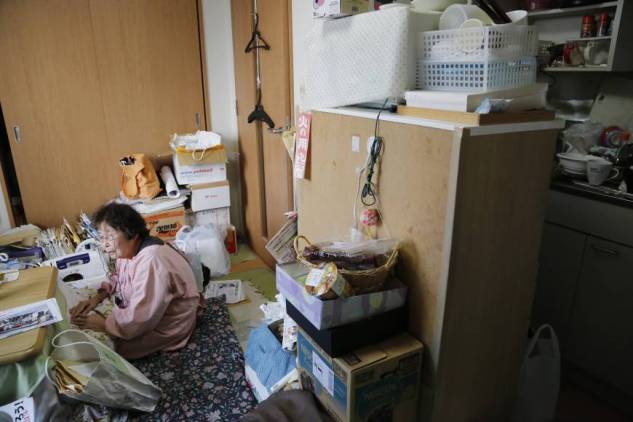

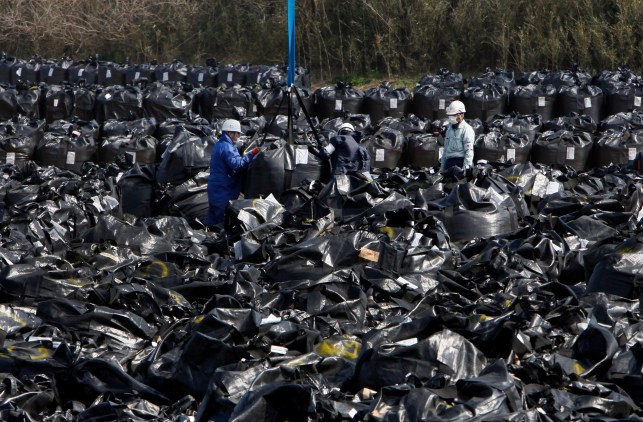
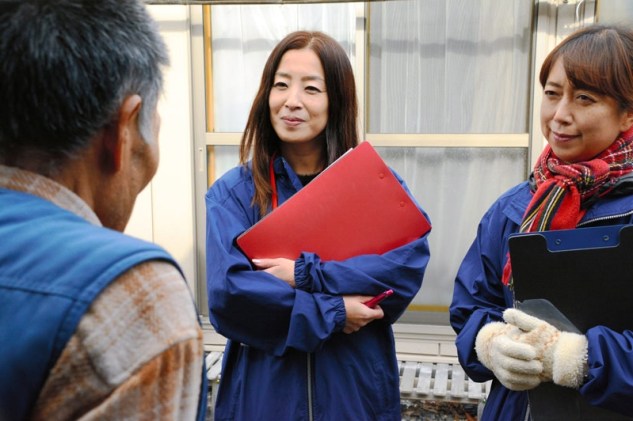
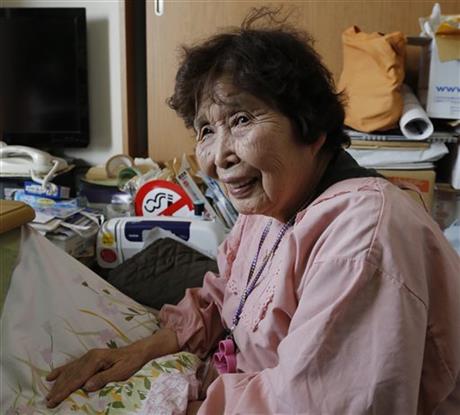


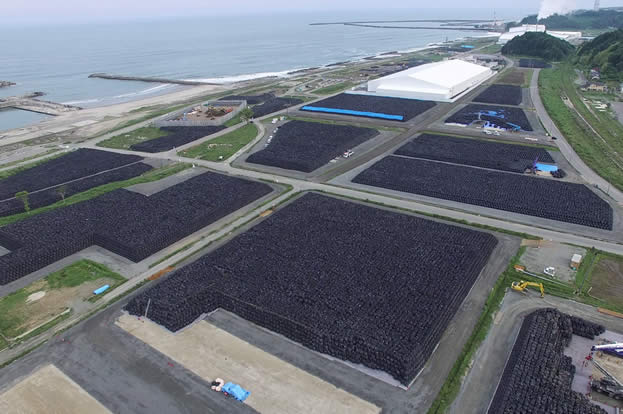







 nuclear-news