YOKOHAMA — Education authorities failed to react to financial and emotional damage incurred by a boy who was bullied at his school here after evacuating from the Fukushima nuclear disaster, it has been learned.
The boy, who is now 13, was bullied at an elementary school in Yokohama after he transferred there from Fukushima Prefecture. Although the school and the Yokohama Municipal Board of Education were aware that the boy was forced to pay about 1.5 million yen to his classmates, they failed to respond proactively to the case. His parents had conveyed the amount to the school and education board after being informed of it by Kanagawa Prefectural Police.
According to attorneys for the student and other sources, the parents consulted with prefectural police in July 2014 about their son’s classmates demanding money from him. After checking the footage of security cameras at a video arcade, prefectural police found that at least one of the bullies had squandered hundreds of thousands of yen of boy’s money each time.
The money that the victim was forced to pay was spent on travel, dining and entertainment. The student was initially demanded to pay around 50,000 yen at a time, but the sum eventually snowballed.
The bully extorted the victim, saying, “You’ve got compensation money (for the nuclear disaster), don’t you?” The victim could not confide the incidents to his parents and secretly paid the bullies using his family’s money budgeted for living expenses.
The victim stopped attending school for a second time in June 2014, and his parents reported the prefectural police’s investigation results to his school and the city education board. However, the school didn’t deem the case a “serious situation” under the law to promote measure to prevent bullying, and shelved it.
At a Nov. 15 press conference, the city education board admitted that there was money trouble between the students. Superintendent of schools Yuko Okada said, “We should have recognized the case as serious as more than one month had passed since the student stopped attending school and the money and goods issues surfaced.”
A third-party panel to the city education board criticized the school and the education board, saying, “There are no traces of their having given sufficient instructions to the parties who ‘paid’ and ‘were paid for,’ though (the education authorities) were aware of the exchange of monies in the tens of thousands of yen.”
YOKOHAMA–A junior high school student evacuated from Fukushima Prefecture after the 2011 nuclear disaster is refusing to attend classes due to years of bullying.
At an elementary school, the boy was given a cruel nickname with “germ” added to his name. His tormentors demanded he pay them money from government compensation for disaster victims.
His elementary school failed to take action in the case, which was “tantamount to abandoning the duty of education,” according to a damning report Nov. 9 by an investigative committee of the city’s board of education.
“It’s really disappointing,” said Yokohama Mayor Fumiko Hayashi at a news conference the same day. “Not everybody fully understands what people in the disaster-hit areas went through. It is our job to keep educating them by all means possible.”
The boy entered a public elementary school here, south of Tokyo, in August 2011, five months after the accident at the Fukushima No. 1 nuclear power plant. The disaster prompted his parents to flee Fukushima Prefecture.
The boy was a second-grader at the time and the bullying started soon after his arrival at the school.
When he was a fifth grader, a group of 10 or so bullies forced him to pay 50,000 yen ($480) to 100,000 yen on around 10 occasions. They apparently spent the money in game arcades and for other purposes.
“You are receiving compensation (for the nuclear accident),” one bully was quoted as saying, referring to financial efforts to alleviate the plight of evacuees from Fukushima Prefecture. The boy stole the cash from his parents to meet their demands.
He began refusing to go to the school on occasion, and now, as a student in a public junior high school, has stopped going to school ever.
In May 2014, his parents complained to the elementary school that the bullying was escalating.
The school held two meetings of an investigative committee into school bullying but concluded the situation was not sufficiently “serious” in terms of the antibullying law.
The school said the investigation was abandoned, citing a “lack of communication with the boy’s guardians.”
The parents asked the city’s board of education in December 2015 to do its own investigation.
The school then finally admitted a “serious situation” existed and the board’s third-party investigative committee started its own probe.
This photo can be a symbol of hope and resilience in the face of adversity: it’s a Morning Glory, growing along the base of prefab house in a temporary evacuation centre in Miharu, Fukushima.
Fueled by strong winds, fire engulfs temporary housing at the Yoshima industrial park in Iwaki, Fukushima Prefecture, on Oct. 6, 2016.
IWAKI, Fukushima — A fire on Oct. 6 destroyed temporary housing for residents of Okuma, Fukushima Prefecture, who evacuated here due to the Fukushima No. 1 Nuclear Power Plant disaster, police said.
The fire broke out at around 4:25 p.m. and destroyed 19 homes in four single-story, prefabricated wooden buildings at the Yoshima industrial park in Iwaki. According to prefectural police, a 16-year-old boy was treated for smoke inhalation. The Okuma Municipal Government will supply the five households that lost their residences with housing elsewhere.
There were 72 households living in 86 of the 31-building complex’s 122 residences. Some 90 percent of Okuma residents’ original homes are within a nuclear disaster no-go zone around the Fukushima plant, and it is unknown when those living in the Yoshima industrial park might be able to return to the town.
Sho Tsukamoto, 29, an employee of a construction company who lost his residence and his possessions in the fire, said, “I even lost the picture of my dead father and other photos of my family that I brought from Okuma.”
Yamagata and Niigata prefectural governors strongly request that FUKUSHIMA prefecture should extend the housing support for Nuclear disaster voluntary evacuees.But Fukushima governor, Uchibori Masao did not answer anything to their request. Why?
YamagataPrefecture governor Mieko Yoshimura has requested an extension of the house supportprovided asking for the “special consideration“.
NiigataPrefecture governor Hirohiko Izumida alsopointed out that“further burden in theproblemsofhousingis increasing“, which the Fukushima Governor Uchibori Masao should well consider.
The Fukushima Prefecture governor to enforce central government order to terminate free housing support for evacuees by March 2017.
IfYoshimura and Izumida were Fukushima Prefecture governor, their treatment of “voluntary evacuees“might have beenquite different.
I decided to translate this particular article because this article for a change talks about the Fukushima disaster victims and in details how their everyday lives have been affected. In most of the Fukushima related articles from websites and mainstream media, the writers usually focus on the Fukushima Daiichi nuclear power plant and its technical failures, about its continuous leaking into the Pacific ocean etc. but somehow they almost always forget to talk about the plight of the victims, the victims who are at the forefront of this tragedy.
August 12, 2016
Article written by Evelyne Genoulaz, from a lecture given by Kurumi Sugita,
March 11, 2016, Kurumi Sugita, social anthropologist researcher and founding president of the association “Our Far Neighbors 3.11”, gave a lecture entitled “Fukushima disaster’s lives” in the Nature and Environment House (MNEI) in Grenoble, Isere, an inaugural lecture for the commemoration of the “Chernobyl, Fukushima disasters”.
The speaker outlined the concrete and current situation of the victims of the Fukushima disaster, particularly on health issues. Attached to Japan, committed, Kurumi monitored the situation of 60 affected people, for several years, visiting each once a year to collect field data for her associative actions. It is the project “DILEM”, “Displaced and Undecided Left to Themselves”, from the nuclear accident in Japan – the life course and geographical trajectory of the victims outside of the official evacuation zone.
I offer a written return of this conference, courtesy of Kurumi who also was kind enough to add data to date on her return from Japan in June 2016.
Evelyne Genoulaz
I. The contaminated territories
After the disaster the authorities declared a state of emergency and to this day Japan is still “under that declaration of a nuclear emergency state (genshiryoku kinkyu Jitai sengen).” But over time, the zoning of the contaminated territories has been increasingly reduced by the authorities, as shows the chronological overview on these maps (METI).
II. The return policy
Starting this month of March 2016, in fact, many areas were “open”. The return to TOMIOKA is programmed by authorities after April 2017; OKUMA partially in 2018. Only FUTABA is labeled “no projection”. Do note that zoning maps were delineated at the beginning of the disaster zoning by concentric circles, while the radioactivity is deposited in “leopard spots” and today, programmed to be returned to areas are gradually getting geographically closer to the Fukushima Daiichi nuclear plant even though these areas are dangerous!
The government is preparing to lift the evacuation order at 20 mSv / year, and areas from 20 to 50 mSv / year will enter the opening schedule after spring 2017 establishing strategic points for reconstruction ( fukkô Kyoten).
To speak only of Iitate, which was the most beautiful village in Japan, its mayor is in favor of return, but today the situation there is poignant: it was decontaminated up to 20 meters of the houses, but as it is surrounded by mountains and forests, the radioactivity will remain dangerous …
Measures delegated to individuals
The control measurement of environmental radioactivity will now be based on the individual rather than on space.Thus, everyone is invited to measure himself or herself, to measure what is consumed, so that if the individual is contaminated it will only be blamed upon his or her own negligence!
The absurd and arbitrary at work in the calculation of dose rates
Official figures on the geographical contamination, dose rates displayed, are using a biased calculation.
Usually to measure in the field a dose rate, we get a figure in mSv / h then multiply it by 24 (hours) x 365 (days) to obtain the annual rate. But this is not the calculation undertaken by the authorities.
The authorities makes first a difference between the level of contamination on one hand inside the housing, and on the other hand on the outside. They decided to consider that an individual spends only 8 hours outside. It is also estimated (official rules) that “the radiation inside a building is reduced to 40% of the radiation reading outside.”
Yet, in Minamisoma for example, studies have shown that the contamination inside was at best 10% lower than the outside, sometimes even worse inside!
That is to say that the authorities uses a biased calculation that ultimately determines if we take an example, a dose rate of 20 mSv / year whereas the actually measured dose rate is 33 mSv / year!
Residents who did not evacuate are distressed because they now know fear, for example those of Naraha who no longer recognize their city because it has changed since the disaster:vandalism, insecurity soon as night falls, since it is now black in the streets, some girls were abused …
Furthermore, Naraha is a coastal town with a seaside road and all night – especially at night – they hear the noise of the incessant and disturbing road traffic of the trucks loaded with radioactive waste, without knowing precisely what is carried …
What motivates the return policy? According to Kurumi Sugita, in view of the Olympic Games coming to Japan in 2020, the government pursues a staistics dependent objective: it comes to lowering the numbers! If the evacuees or the self-evacuees leave the “assisted housing”, they are no longer counted as “evacuees”….
III. Works and Waste
The whole territory of Fukushima Prefecture today is littered with waste bags. Everywhere, at the turn of any road you’ll encounters mountains of waste bags, sometimes piled up so high! It is a sorry sight for the residents. And space lacks where to store them, so much that the authorities have even created dumps that they call “temporary intermediary storage areas! “
A “temporary intermediary storage area” in Iitate
A row of uncontaminated sandbags is added around the perimeter of the “square” of the most contaminated bags, so as to reduce the number of the dose rate!
As of March 2016, there were no less than 10 million bags and 128,000 temporary dumpsites in Fukushima Prefecture. Waste bags are omnipresent, despite the residents’ distress; near schools, and even in people’s gardens.
Contaminated waste bags at someone’s house
Short of sufficient storage space, the authorities are forcing residents to an intolerable alternative: if the resident does not want to store the waste on his property, it is his right. But in this case it will not be decontaminated! The resident requesting “decontamination intervention” must keep the waste on his property! This is why we see here and there, everywhere in fact, bags near buildings or in private homes.
Waste incineration
According to the “Nuclear Reactor Regulation Law” (Genshiro tô kiseihô), the recycling threshold of “nuclear waste” is 100 Bq / kg. However, on June 30, 2016, the Ministry of Environment has officially decided to “reuse” waste below 8000 Bq / kg (1).
In practical terms, this waste will be used in public works, covered by cement and land in order to lower the ambient radioactivity.
In order to “reduce the volume” of waste, “temporary incinerators” were built to incinerate nuclear waste and to “vaporize” cesium.
Map of Fukushima prefecture showing the nuclear waste processing establishments locations (shizai-ka center) – Legend: the icons differentiate the various incinerators; red = in operation – blue = under construction – gray / yellow = planned – gray = operation completed
Everywhere on village outskirts there are incinerators of which people know nothing! They often operate at night for two to three months and then everything stops. People wonder what is being burned… Not to mention a rumor about a secret experimentation center where much more contaminated waste would be burned…
Even more frightening, waste processing plants …
At the “Environmental Design Centre”, a poster about the revolving furnace” which decontaminates waste, debris, soil, etc, transforming them into cement”.
For example, the Warabidaira waste processing plant located in the village of Iitate or the Environment Creation Center (Kankyô Sôzô Center) opened in July 2016 in the town of Miharu,treat contaminated waste (ashes above 100 000 Bq/kg) and contaminated soil coming from land decontamination work.
Now these last two categories are not covered by the Waste Management Law (1)so they have no constraints associated with their treatment… To reduce their volume and to make them … “recyclable”!
In addition, these establishments are registered as “research institutes” and, as such, they are exempt from the building permit application commonly mandated in the framework of the waste management law!
We see inconsistencies and even contradictions between laws. We have already seen the contradiction between the limit of 100 Bq / kg set by the Nuclear Reactor Regulation Law and the 8000 Bq / kg recently adopted by the Ministry of Environment.
IV. Residents, displaced and returned
Citizen radiation measuring. Mothers, and also dads, explore the everyday environment to identify hot spots so as to modify if necessary the route recommended for children, for example “the way to school” (as in Japan all children walk single file).
For that purpose associations use “hot spot finders”. Well aware of the health risk to which children are exposed, they attach sensors connected to GPS on their strollers to walk routes and the way to school or to explore parks.
That system is well thought out: it is a vertical rod 1 meter long that leaves the ground and consists of a measuring device at 10 cm from the ground, another one at 50 cm, and a third at 1 meter to take into account the different sizes of children. If a hot spot is located, others are warned of its location and the children are required to change their route, and authorities are asked to decontaminate. For parents, this work is endless …
Hot spot finders
People organize citizen actions thru Internet. These independent citizen online databases are many,
and one of them is even translated into English since November 2014. It is the “Minna no Data”: ambient radioactivity measures, soil measurements, food analyzes (2).
The trial against the three former TEPCO executives which began in spring 2016 is the first criminal trial to take place; it could last ten years …
However, in Fukushima Prefecture, there are many other trials at different levels also taking place. For example, in March 2016, a lawsuit was initiated by 200 parents brought against the Fukushima Prefecture, to “get children out of contaminated areas.” People protest to have the “thresholds” lowered. In their opinion the issue of “thresholds” go beyond the strict framework of Japan. They fear that the thresholds of Japan will end up being generalized overseas, which is highlighted in some of the maps captions eg “against the generalization and the externalization of the 20 mSv / year threshold”. Some victims require, as after Hiroshima, “an irradiation book” (personal records) to be used for their access to treatment.
Radiation free health holiday
To send children on a health holiday is now more and more difficult, because people tend to believe that the disaster is already over therefore requests for help have become complicated.
In the city of Fukushima, for example, referring to the nuclear disaster is now taboo …
VI. Social and family catastrophe
It causes “conflicts” among neighbors (one example, one person’s place is decontaminated while its adjoining neighbor’s place is not), between beneficiaries and others, between the displaced and the residents of the hosting location (there are misunderstandings on the issue of compensations; the self-evacuated are not receiving any compensation, but the hosting city locals think they are).
So today many prefer to return their evacuated Fukushima resident cardand acquire the resident card of their hosting town (in Japon you are résident of the village from which you keep the residence card) so as to “turn the page” because they can no longer bear to be called “evacuees”.They want to integrate into the community where they moved.Only older people remain unswervingly committed to their original residence; it is mostly the elderly who intend to return.
In many families of the Fukushima Prefecture men stayed by necessity to keep their jobs to provide for their families,while mothers with children evacuated to put them out of danger;but as time has passed, more than five years already, many families have disintegrated… The father visiting the family rarely,often for lack of resources, the marriage falling apart, resulting in many divorces and suicides.
Women are showing remarkable energy,they are on all fronts,openly, and even heavily involved in actions and trials, so that even the articles of the so-called “feminine” press today are often dealing with topics related to the nuclear disaster. Young women in particular are very active in the protests and rallies. This is a significant change in Japanese society.
(1) Waste Management and Public Cleansing Law, Haikibutsu no shori oyobi seisô ni kansuru hôritsu, law N°137 from 1970, last amendment in 2001 https://www.env.go.jp/en/laws/recycle/01.pdf
Nuclear Reactor Regulation Law (Genshiro tô kiseihô).
“Act on the Regulation of Nuclear Source Material, Nuclear Fuel Material and Reactors” (kakugenryô busshitsu,kakunenryô busshitsu oyobi genshiro no kisei ni kansuru hôritsu)
law N°166 from 1957(2) –
English translation of Nuclear Reactor Regulation Law.
After his lecture, I asked a simple question to Kurumi Sugita:
Why has she founded the association « Nos Voisins Lointains 3.11 » (“Our Distant Neighbors 3.11”)? …
In France, where lives Kurumi,several Japanese associations exchange about the disaster.
But Kurumi Sugita founded on January 8, 2013 in Lyon, the association « Nos voisins lointains 3-11 » also to inform the French and francophones who do not read Japanese.
The website of the association publishes valuable and moving testimonies, translated into French.
Thanks to donations, the association helps concretely, as much as possible, some affected families in Japan.
The central government lifted an evacuation order for the southern part of Minami-Soma, Fukushima Prefecture, on July 12 for the first time since the massive earthquake and tsunami triggered a devastating accident at the Fukushima No. 1 nuclear power plant in March 2011.
It marks the sixth time that evacuation orders have been lifted for locales in Fukushima Prefecture, following such municipalities as Naraha and Katsurao. The number of local residents affected by the latest move is more than 10,000, higher than in any previous instance.
Residents of such municipalities in the prefecture as Iitate, Tomioka and Namie have yet to be allowed to return to their homes. But the central government plans to lift evacuation orders on all areas of the prefecture excluding “difficult-to-return zones,” where levels of radiation remain dangerously high, by March 2017.
The longer people in disaster-affected areas live as evacuees, the more difficult it becomes for them to rebuild their lives.
The lifting of an evacuation order based on the progress that has been made in decontaminating polluted areas and restoring damaged infrastructure will give local residents an opportunity for a fresh start. In Minami-Soma, residents who have been hoping to restart their former lives have already returned to their homes. Various organizations are expanding their activities in the city to help rebuild the local communities.
In previous cases, however, only 10 to 20 percent of the residents said they would immediately return to where they lived before the catastrophic accident occurred.
In addition to residents who have decided to move to other parts of the nation, there are also many people who find it difficult to return home for the time being due to reasons related to employment, education, nursing care and other factors. Some people want to wait a while longer to see how their communities will be revived.
Sooner or later, all evacuees will face the choice of returning or migrating.
For both groups, measures to support their efforts to rebuild their livelihoods should be worked out. But support should also be provided to people who cannot make up their minds yet.
A situation where evacuees are under strong pressure to make their decisions quickly should be avoided.
Take the issue of compensation paid to local residents in affected areas, for example. Tokyo Electric Power Co., the operator of the crippled Fukushima nuclear plant, is paying 100,000 yen ($945) of compensation per month to each of the people affected. But the utility’s cash payments are scheduled to be terminated in March 2018.
A time limit has also been set for the company’s compensation to people who have seen their incomes fall or disappear in the aftermath of the disaster.
Excessive dependence on compensation could hamper the efforts of evacuees to restart their lives.
But there are people who have no prospects of returning to their lives before the accident and therefore have no choice but to depend entirely on a monthly payment from the utility.
A way should be found to keep compensating those who really need the money for a certain period after evacuation orders are lifted, according to the circumstances of individual evacuees.
One idea worth serious consideration is the establishment by lawyers and other experts of a neutral organization to assess the circumstances of evacuees for this purpose. This is an approach modeled on the standard procedures for out-of-court dispute settlements.
The concept of “residents” should also be reconsidered. There are many evacuees who have decided to move to other areas but still wish to maintain their hometown ties. These people say they want to return home someday or to get involved in rebuilding their communities in some way.
Scholars have offered ideas to respect their wishes. One would allow them to have a dual certificate of residence for both their previous and current addresses. Another would permit them to become involved in the efforts to rebuild their hometowns while living in other areas.
These ideas can be useful not just for the reconstruction of disaster-stricken areas but also for the revitalization of depopulated rural areas around the nation.
Reviving communities that have been ravaged by the nuclear disaster will inevitably be an unprecedented and long-term process, which requires flexible thinking.
For the first time in five years, a train begins service on the 9.4-kilometer stretch between Odaka and Haranomachi stations in Minami-Soma, Fukushima Prefecture, on East Japan Railway Co.’s Joban Line at 7:33 a.m. on July 12.
Evacuation order lifted in Minami-Soma after 5 years
MINAMI-SOMA, Fukushima Prefecture–In good news for residents, an evacuation order for the southern part of the city here was lifted on July 12 for the first time since the massive earthquake and tsunami crippled the Fukushima No. 1 nuclear power plant five years ago.
However, due to lingering fears of radiation contamination, less than 20 percent of the populace are set to return to their homes.
The central government allowed residents back into the southern region of the city after midnight on July 11. It marks the sixth time that evacuation orders have been lifted for locales in Fukushima Prefecture, following such municipalities as Naraha and Katsurao.
The latest lifting in Minami-Soma affects a total of 10,807 residents in 3,487 households in all parts of the Odaka district and parts of the Haramachi district, making it the largest number of people to be let back into their homes since evacuation zones were established following the 2011 nuclear disaster.
Two residents living in a household in an area designated a “difficult-to-return” zone in the southern part of the city are still not allowed back home.
However, only about 2,000 residents signed up to stay overnight at their homes in the area ahead of the lifting of the evacuation order.
That is likely because many still fear the effects of radiation from the destroyed power plant, which straddles the towns of Futaba and Okuma to the south of Minami-Soma. In addition, five years was more than enough time for residents who evacuated elsewhere to settle down.
With at least some of the residents returning home, East Japan Railway Co. resumed service on the 9.4-kilometer stretch between Odaka and Haranomachi stations on the Joban Line for the first time in more than five years on the morning of July 12. The first train of the morning entered Odaka Station carrying 170 or so people on two cars as traditional flags used in the Soma Nomaoi (Soma wild horse chase) festival on the platform greeted passengers.
The central government is pushing to lift evacuation orders on all areas of the prefecture excluding difficult-to-return zones by March 2017.
Japan lifts evacuation orders in Fukushima affecting 10,000 people
FUKUSHIMA, Japan (Kyodo) — The government on Tuesday further scaled down areas in Fukushima Prefecture subject to evacuation orders since the March 2011 nuclear disaster at the Fukushima Daiichi complex, enabling the return of more than 10,000 residents to the city of Minamisoma.
Following the move, the city will become mostly habitable except for one area containing one house. But many residents seem uneager to return, having begun new lives elsewhere.
The government is in the process of gradually lifting evacuation orders issued to areas within a 20-kilometer radius of the plant of Tokyo Electric Power Company Holdings Inc. and in certain areas beyond the zone amid ongoing radiation cleanup efforts.
Eight municipalities in Fukushima Prefecture have areas defined as evacuation zones, which are divided into three categories based on their radiation levels. The most seriously contaminated area is called a zone “where it is expected that the residents have difficulties in returning for a long time.”
In Minamisoma, the government lifted evacuation orders for areas except for the difficult-to-return zone. As of July 1, the areas had a registered population of 10,807, or 3,487 households.
To encourage evacuees to return, the central government and the city reopened hospital facilities, built makeshift commercial facilities and prepared other infrastructure.
Radiation cleanup activities have finished in residential areas, but will continue for roads and farmland until next March.
The government hopes to lift the remaining evacuation orders affecting areas other than the difficult-to-return zones by next March, officials said.
Makiko Sekine tends flowers at a public housing unit for disaster survivors in Kawauchi, Fukushima Prefecture, with her husband, Hiroshi, on June 14. That day, the evacuation order was lifted for parts of the village, including the couple’s home district of Kainosaka.
KAWAUCHI, Fukushima Prefecture–In a rush of sorts, evacuation orders are being lifted from municipalities of this northeastern prefecture that were affected by the 2011 nuclear disaster.
The order was lifted for part of the village of Katsurao on June 12, followed by an area of Kawauchi village on June 14. It will be lifted for a section of Minami-Soma city on July 12.
The central government has decided to have all evacuation orders lifted by March next year, except for in “difficult-to-return” zones where radiation levels remain elevated.
Prime Minister Shinzo Abe, having toured Katsurao and Kawauchi on June 3, said, “I want to make sure that the livelihood of the communities, as well as family and community ties, is revived as soon as possible.”
Having covered news in Fukushima Prefecture for four years, I cannot believe that everything is so rosy simply because evacuation orders are being lifted.
It is certainly good news that disaster-affected areas are becoming freely accessible again, but I know that some residents are being left behind in the process.
Hiroshi Sekine, 88, and his wife, Makiko, 81, a couple I have known for three years, are from the Kainosaka district of Kawauchi, where the evacuation order has been lifted.
They moved there from the neighboring city of Iwaki in 1959, five years before the first Tokyo Summer Olympic Games.
Deep within the mountains far from the center of the village, the couple reclaimed wasteland and turned it into farmland. They raised four children.
The Sekines, who now live in a public housing unit for disaster survivors elsewhere in Kawauchi, said they are not returning home.
Before the nuclear disaster, Kainosaka, home to 13 households, functioned as a small “community” where people helped out each other.
After five years spent in evacuation, the couple no longer have the energy to restart life in their inconveniently situated home district.
Even if they returned, they would be unable to sustain their life because nobody else is going back to Kainosaka.
“The lifting of the evacuation order is about deregulation,” a central government official told the Sekines. “It is up to you to decide whether you are going back or not.”
Once the evacuation order is lifted, however, the couple’s status switches from “those being forced by the central government into evacuation” to “those choosing to remain in evacuation despite having the option of returning.”
This new status will oblige them to feel apologetic, wary of what others may think of them.
The lifting of evacuation orders scheduled through next spring will allow around 46,000 people to return to their homes.
But many communities, like the Kainosaka district, will never be like what they were before.
How can we prevent people like the Sekines from being made to feel small because the evacuation order has been lifted? That is a complicated question about moral dignity, which cannot be solved with cash.
The Law on Special Measures for the Reconstruction and Revitalization of Fukushima was enacted a year after the onset of the nuclear disaster.
The law designates only “people who have been evacuated from zones under evacuation orders” and “people who have moved back to zones where evacuation orders have been lifted” as those entitled to coverage under the central government’s measures for “ensuring stability.”
When the law was enacted, nobody expected the cleanup of radioactive substances to take so long that it would delay the lifting of the evacuation orders, and that so many residents would choose not to return home after the orders are lifted, a central government official said.
The Sekines will be obliged to continue to live a life different from the one they had before the disaster.
I think people like the Sekines should be given the clearly defined status of “evacuees” by, for example, legally guaranteeing them the right to remain in evacuation.
ABOVE: Radioactive waste from the evacuation zone is stored at massive dump sites. In Naraha, thousands of decontamination workers dug up and disposed of a two-inch layer of soil around every building in town.
Hisao Yanai, a one-armed, chain-smoking, retired yakuza boss, stands alone behind the bar at Ippei, the restaurant he owns in the Japanese town of Naraha. There are no customers today. The streets outside the restaurant are deserted. Five years ago, on March 11, 2011, a powerful earthquake and tsunami triggered a triple meltdown at the Fukushima Daiichi nuclear power plant, located ten miles north of Naraha, forcing the evacuation of roughly 160,000 people. Half of them still cannot go home. Last fall, Naraha became the first town in Fukushima’s mandatory evacuation zone to reopen fully, allowing all 7,400 residents to return. Nothing like it had ever been attempted before. Could a town despoiled by radiation be summoned back to life?
When I visit Naraha in the fall of 2015, not long after it reopens, only 150 residents have returned. (The number has since risen to 500.) Most are elderly. The town seems abandoned, like a seaside resort in the off-season. With no functioning banks, schools, or even a post office, Naraha has reverted to the rural backwater that Yanai escaped 50 years ago as a high school dropout. At 15, he ran off to Tokyo and learned to drive a dump truck during the construction boom leading up to the 1964 Olympics. At 16, he lost his left arm to a conveyor belt at a quarry. Eventually, he returned to Naraha and went to work at Fukushima Daiichi, which was flooding the area with high-paying jobs and government subsidies. Naraha, once known in Japan as “the Tibet of Fukushima,” had suddenly been thrust into the nuclear age.
“The nuclear plant changed the history of this town,” Yanai says. “They told us it was 100 percent safe.”
Naraha still has the outward appearance of a sleepy farming community, with tidy neighborhoods separated by rice paddies, fruit orchards, and two rivers tumbling to the sea from the nearby Abukuma Mountains. Since decontamination began about 18 months after the disaster, thousands of workers equipped with little more than garden tools have cut down trees, power-washed streets, and peeled off a two-inch layer of radioactive soil in a 65-foot perimeter around every structure in town. Vast fields and mountainsides have been left largely untouched, save for large burial mounds of black plastic bags filled with low-level radioactive waste that metastasized across the landscape as the work progressed.
There’s no blueprint for remediating a radioactive town and then moving people back into it. After the 1986 nuclear disaster in Chernobyl, the Soviet Union simply abandoned scores of towns. But in a country as densely populated as Japan, abandoning an area the size of Connecticut wasn’t an option. In a concerted push to resettle all but the most severely contaminated areas, the government has spent $31 billion on the cleanup effort, and a staggering $58 billion in compensation payments to evacuees.
The government maintains that it is safe for residents to return to Naraha. Radiation levels in the central part of town average less than 1 millisievert per year—the maximum allowable exposure for ordinary citizens under guidelines set by the International Commission on Radiological Protection. An annual dose of 1 millisievert would increase a resident’s risk for cancer by .005 percent. For a smoker like Yanai, cigarettes pose a far greater threat than radioactive fallout.
Hisao Yanai, a retired yakuza boss, returned to Naraha without his wife and daughter.
Like many residents, however, Yanai distrusts the government. Surveys indicate that half of all evacuees don’t plan to return home. The cleanup effort is widely viewed as political theater, designed to whitewash Fukushima in time for the 2020 Olympics. Encouraging evacuees to return home now would also put an early stop to some compensation payments, which aren’t set to expire until 2018. The government, in short, has a financial incentive to strong-arm mayors into reopening towns before they’re ready, or even properly decontaminated.
“The central government pressured us to lift the evacuation order,” Yanai says. “Nobody in town wanted it, because nothing is prepared.” His restaurant remains the only place in Naraha where you can get a beer. In the two weeks I spent in town, I saw only two people dining at Ippei. Behind the bar, the hands on the clock are frozen at 2:47, the moment when the earthquake hit. Yanai has vowed not to reset it until life in Naraha returns to normal.
One day, Yanai invites me to his home, to see the results of the government’s decontamination program. His house sits on a hilltop, ringed by a concrete wall. When I arrive, Yanai is sitting at a picnic table, smoking. Thick weeds mark the border of the decontaminated buffer zone around his house. Before it was decontaminated, radiation levels in Yanai’s yard measured 10 microsieverts per hour—nearly 50 times higher than the government’s allowable limit.
“There are still places in town that measure 10 micro-sieverts,” Yanai says. He walks over to the corner of his garage, which houses a dusty Mercedes resting on flat tires, and points to a patch of gravel beneath a downspout. This particular spot, he says, was decontaminated three times, because rain kept washing radioactive particles off the garage roof. Government contractors excavated the hot spot each time, but only after Yanai filed a request through the town office.
“If you don’t ask,” Yanai shrugs, “they won’t do it.”
The government has strict decontamination guidelines, but in the field practices are often improvised. At Yanai’s house, contractors dumped wheelbarrow-loads of contaminated dirt in a corner of his garden.
“Look, I’m a nice guy,” says Yanai, grinning. He crushes a cigarette butt into the gravel with his heel. “I said, ‘Fine, if you want to dump it there, I’m not going to say anything. But if you do the same thing in the neighbor’s yard, they might shoot you.’ ”
Yanai is keen to show me his menagerie. His prized specimen is Boo, a boar named for the sound, in Japanese, that a pig makes. After the Fukushima disaster, wild boars came down from the mountains and roamed the evacuation zone, tearing up gardens and ransacking houses. They can still be seen in Naraha, trotting along the road at night. Boo is the size of a small, snaggle-toothed dog. He snorts and gnaws at Yanai’s shin. “They’re not very friendly to people,” says Yanai, shooing the pig away with his foot. “But I’m determined to make him my pet.”
Of the 500 villagers who have returned to Naraha, most are elderly. It is a town without children.
Although Yanai professes to be retired from the Japanese Mafia, his years as a yakuza boss have left him with wealth, influence, and a fearsome reputation. It was rumored that he’d served time in prison for assault. After the nuclear disaster, he used his mojo to force the big construction companies in charge of the cleanup to hire local firms as subcontractors. “In a way,” he says, “the disaster was a good thing.”
Stepping onto the patio in back of his house, Yanai reaches into a galvanized steel tub full of water and pulls out a goldfish as big as a grapefruit. There is a technique to feeding them, he observes. “Do it too quick and they die.”
It’s obvious that Yanai misses being a yakuza boss. He is still bending creatures to his will, only now it’s a quirky hobby. He has a wife and daughter, but they live in Tokyo.
“It must get lonely here,” I venture.
“That’s true,” says Yanai, releasing the goldfish back into the tub. He watches the fish rejoin its companions. “When I get home they’re waiting for me. They don’t complain if they’re hungry, but they’ll die if I don’t take care of them.”
At the ceremony to mark Naraha’s reopening, Mayor Yukiei Matsumoto performed the banal civic rituals required of mayors everywhere. He planted a tree using a gold shovel, celebrated with a group of children, and projected confidence while posing next to a brightly colored illustration of Naraha’s future. “The clock that was stopped,” he declared, “has now begun to tick.”
A few weeks later, I meet Matsumoto at the town hall. Scattered among the office’s sober furnishings are stuffed toys portraying Naraha’s mascot, an anthropomorphic yellow citrus fruit named Yuzutaro. Between sips of green tea, Matsumoto speaks in a soft monotone. To hear him tell it, running a radioactive ghost town for more than three years was marginally more eventful than a meeting of the zoning commission. He attended countless meetings with government officials and oversaw infrastructure repairs. When he speaks of the town, the word “radiation” rarely crosses his lips. Instead, he prefers vague euphemisms like “environment.”
I ask him to describe what evacuees are most concerned about. At first, he says, they were “quite angry” about “the environmental conditions of the town.”
“And now?” I ask.
“Now there are no problems,” he says, “and people have become tranquil.”
Later, as I talk to more residents, it becomes clear that this characterization is a vast overstatement. It’s obvious to even the most casual observer that only old people are returning to Naraha. If young people are afraid to raise children here, I ask Matsumoto, what kind of future is there for Naraha?
“Naturally we want everybody to come back,” he says. “Elderly people are coming back first.” He places his teacup on the table. “But if the children do not come back here, the town cannot exist.”
For a moment, Matsumoto seems surprised by his own candor. Then he hastens to obfuscate it. Leaning forward in his chair, he redefines Naraha’s existential dilemma as a simple misunderstanding. Naraha is completely safe, he asserts. Parents with young children just need a little more convincing to return. One thing his office could do, he suggests, is to “make the environment around the schools better. Also we need to do something to make the parents understand.”
“Understand … what?”
“Regarding the issue of—radiation,” says Matsumoto, searching for a more diplomatic word. “People have their own ideas about what’s safe. But actually, in Naraha, it’s lower than 1 millisievert per year, which is what the government set for exposure to the public. That’s the reality I want people to understand.”
I ask him if he is happy with the government’s decontamination efforts. Matsumoto chuckles. “Let me say I’m not 100 percent satisfied,” he says. For further details, he refers me to Hiroyuki Igari, the town’s director of radiation measurement.
A week later I speak to Igari, a churlish man with a dosimeter badge—a device that measures a person’s cumulative radiation exposure—hanging on a lanyard around his neck. If anything, he insists, the government is actually overstating the amount of radiation that residents are being exposed to. “I live in Naraha,” he says. “I commute to work. Sometimes I stop by the store. Then I go home. That’s my routine.” He yanks on the dosimeter. “After two weeks, it’s obvious from this dosimeter that my exposure won’t exceed 1 millisievert per year.”
While Igari doesn’t put any stock in the notion that the government is pressuring towns like Naraha to reopen prematurely, he acknowledges that the cleanup is imperfect. In his view, the government has done a poor job of educating people about radiation, and its standards for mopping up recurring hot spots like the one in Yanai’s yard are nonexistent. But he believes that radiation isn’t a determining factor in whether people choose to return.
“People who were stressed in the temporary houses, they just want to come home. They don’t care about dose rates,” Igari says. “People who don’t return are used to their new lives. They’re used to living under one roof. But now they’re split up, and they don’t want to leave their families again.”
But dosimeter readings and official reassurances have done nothing to alter a more fundamental reality: In post-Fukushima Japan, nuclear safety is a bankrupt concept. Officials like Mayor Matsumoto who use the word “safe” in an absolute sense echo the corporate propaganda of companies like Tokyo Electric Power Company, the disgraced utility that owns Fukushima Daiichi. As the son of a TEPCO salaryman, Matsumoto has spent his career working the levers of a political machine that is oiled with money from the nuclear industry. Yet in the aftermath of one of the world’s worst nuclear disasters, he still believes himself to be a credible authority on the relative safety of low-dose radiation.
The truth is that there’s no such thing as a “safe” dose of radiation, only gradations of risk. Epidemiological studies show that cancer risk increases in tandem with radiation dose, but we know very little about the risks associated with doses below 100 millisieverts per year. Denying that risk contradicts most people’s inherent understanding of safety as a cost-benefit equation. A patient who agrees to a CAT scan of their head, for example, knows that the diagnostic benefit outweighs any increased risk for brain cancer.
Matsumoto prefers to focus on the benefit side of the equation, which doesn’t require him to invent new euphemisms for “radiation.” He points to the brand new secondary school that will open next year, as well as a $50 million retrofit of J-Village, a national soccer training facility presently serving as a staging ground for 7,000 nuclear workers, which will open in time for the 2020 Tokyo Olympics.
“It’s going to be big news,” says Matsumoto.
There are also plans for a new hotel, office building, and a “compact town” that will house a supermarket, pharmacy, home center, and medical clinic. A robotics research facility is due to open this summer. And thanks to government subsidies, ten companies, including a battery-maker, a pharmaceutical firm, and a steel manufacturer, are thinking of moving to Naraha.
For its investment in Naraha, Tokyo got a showpiece to justify the trillions of yen it’s pouring into Fukushima. Since the disaster, only two of Japan’s 42 operable nuclear reactors have reopened over public protests, and the nuclear industry is desperate for a public relations coup. As we part, Matsumoto repeats the promise he made personally to Prime Minister Shinzo Abe. “I told the prime minister that we’re not going to simply reconstruct the town—we’re going to be a model town of the reconstruction,” Matsumoto says, beaming with conviction. “We’re going to do that, and you’re going to see it.”
Convoys of construction vehicles rumble continuously down Route 6, the coastal highway that runs through Naraha and connects the boomtown of Iwaki to the ghost towns of the restricted zone clustered around the nuclear plant. Built for the 1964 Olympics, Route 6 was instrumental in nudging the region out of rural isolation and onto the planning maps of authorities in charge of Japan’s nascent nuclear energy program. Within a decade, Naraha and its neighbors became charter members of Japan’s “nuclear village,” a network of company towns that received government subsidies in return for hosting nuclear power plants.
Tokuo Hayakawa was a young man in 1967 when TEPCO began building Fukushima Daiichi. He is the chief monk at Naraha’s 600-year-old Hyokoji temple, and an ardent antinuclear activist. I visit Hayakawa on two occasions, and each time he wears a white NO NUCLEAR PLANT button pinned to his lapel.
“Since TEPCO started operating here, nobody believed what they were saying about safety,” Hayakawa says. And yet the utility was able to build not just one, but two nuclear plants in Fukushima prefecture: Daiichi and Daini. (Daini was also damaged by the tsunami, narrowly averting a meltdown.) How could TEPCO accomplish this, I ask, if nobody thought the plants were safe?
“As a foreigner, it’s really difficult for you to understand,” Hayakawa says after a long pause. “There’s an atmosphere that keeps people from raising their voices. If something is dangerous, they can’t say it’s dangerous. If something isn’t right, they can’t say it’s not right.”
Tokuo Hayakawa, chief monk at Naraha’s 600-year-old temple, believes the town can’t be revived: “Naraha isn’t a place to live anymore.”
Social unity is a bedrock feature of Japanese culture, especially in rural areas. The inbred politics of the nuclear village exploited this tendency, fusing the emphasis on communal harmony with corporate interests. Questioning the safety of the nuclear plant was akin to disavowing one’s family, friends, and neighbors. For decades, skeptics bit their tongues, government regulators promoted the absolute safety of nuclear power, and TEPCO executives operated with little or no oversight. This conspiracy of complacency led to dangerous practices, such as locating diesel generators at Fukushima Daiichi in areas that were vulnerable to flooding—a factor that contributed directly to the disaster. Last February, three former TEPCO executives were charged with criminal negligence for their role in the nuclear meltdown.
Hayakawa didn’t want to return to Naraha, but he had no choice. “I cannot abandon the temple,” he says. “There are family tombs here.” Besides, he feels too old to start a new life. He had his hopes set on his grandson taking over for him. But the disaster eliminated that possibility. “I am definitely the last one,” he says. “It’s clear that Naraha isn’t a place to live anymore.”
“The monk was opposed to the nuclear plant from the beginning,” says Toshimitsu Wakizawa, a gregarious 67-year-old newspaper deliveryman who seems to know everybody in Naraha. “And everything he said came true.”
When I approach him, Wakizawa is gathering sticks in his front yard. Japanese people don’t generally engage in conversations with strangers, to say nothing of American journalists who walk up to them unannounced. But Wakizawa chats with me as if we’ve been neighbors for years. He points to houses that are going to be demolished because their owners aren’t coming back.
“I thought 30 percent might return,” he says, “But now I think it’ll be 20 percent, or even less.”
Wakizawa doesn’t blame his neighbors for preferring the conveniences of city life in Iwaki, where 80 percent of Naraha’s evacuees went during the disaster, to the preternatural quiet of their hometown. “It’s even worse here than before the nuclear plants were built 40 years ago,” he says. “When I drive up Route 6, I don’t see any life, not even insects. Around 8 o’clock it’s scary, because nobody’s here.”
Wakizawa is preparing to move back to Naraha in a few days to restart his newspaper delivery business. “People want to read the obituaries,” he says. “That’s why they want the local newspapers—to see who died and what the radiation levels are.”
In May, residents planted one of the town’s first rice crops since the disaster. Many believe Naraha’s water is still too contaminated to drink.
Today there are only 50 houses on Wakizawa’s delivery route, down from 250 before the disaster. “The town is disappearing,” he says. He’s troubled by the sense of alienation he feels in Naraha’s desolate neighborhoods. People live alone, outside the traditional support networks of neighbors and extended families. Somebody could die at home and nobody would even know. When I tell him that such deaths aren’t an unusual occurrence in the United States, he looks aghast. “That never happens here! We always talk to our neighbors!” He shakes his head, as if attempting to dislodge the thought of a world where neighbors are strangers and people die alone.
“It’s all mixed up,” he says. “Everything is so confused.”
I leave Wakizawa and drive to the ocean, hoping to find some trace of the houses swept away by the tsunami. Instead I find a vast radioactive waste dump, half-hidden behind flimsy white panels decorated with pictures of birds and trees. I stand with my back to the sea, looking west over the dump toward the dark-shouldered mountains. The river plain is a ragged checkerboard of fallow rice paddies dotted with mounds of black decontamination bags. It is a sobering sight in a country where every inch of arable land is intensively cultivated. The Japanese expression for it is mottainai, a feeling of sorrow for something wasted.
Naraha’s “business district” consists of a single prefab metal shed tucked in a corner of the town hall parking lot. It contains a diner named Takechan, owned and operated by Miyuki Sato and her husband, who commute an hour to and from Iwaki each day. The original Takechan, now overrun with vermin and mold, was a neighborhood fixture in Naraha for 40 years. The reincarnated version has all the charm of a hospital cafeteria, with white laminate walls and glaring fluorescent lights. It is packed with decontamination workers in gray uniforms bent over steaming bowls of ramen.
After the lunch rush one day, I sit down with Miyuki. A television reporter from Sweden had interviewed her earlier in the week. “What do you think about the radiation?” Miyuki intones in mock seriousness. Then she claps her hand over her mouth to stifle a giggle. “So we finished the interview very quickly.”
The Satos haven’t yet found a place in Naraha to relocate. They are eager to leave Iwaki, though, partly because of the long commute, and partly because the evacuee community there isn’t as tranquil as the mayor has suggested. Residents are bitterly divided over his decision to reopen Naraha, Miyuki explains. She is reluctant to say more, except that she has been criticized for cooking with the town’s contaminated tap water. She shows me a certificate from the water authority taped to the wall, guaranteeing that Takechan’s water meets health standards.
“We just wanted to open Takechan, that’s it,” she sighs. “But some people don’t take it that way.”
The director of the local water authority, Haruo Otsuka, shows me a machine that tests the county’s drinking water every hour for cesium-137, the primary isotope in Fukushima’s fallout. The results are always undetectable. I tell Otsuka about evacuees who have criticized the Satos. “Those people are just looking for a reason not to come back,” he scoffs. “At first they said radiation levels in the rice paddies were too high. Then it was the roads. Now they’re blaming the water.”
Tensions among evacuees, however, continue to run high. Hiroko Yuki’s family runs the Shell gas station around the corner from Takechan. Although the Yukis were the first to reopen after the disaster, they have recently bought a house in Iwaki. They aren’t moving back to Naraha.
“We say it’s a house provided by the government,” Yuki says.
“Why is that?”
“People are jealous,” she shrugs. “We work all day, morning to night, and profit margins are slim in this business. We’re not making big money, but people don’t believe it.”
Hiroko Yuki runs the Shell gas station in Naraha. His family has decided not to move back to the village.
Such petty resentments seem unrelated to the serious disagreements among evacuees about resettling Naraha that Miyuki Sato had alluded to. I didn’t understand why anyone would begrudge their neighbors the choice to return—or not. The whole dynamic felt very—Japanese.
“Yes, that’s right, it is very Japanese,” replies Yuki, unfazed. She stands with her hands clasped behind her back, chin tilted in the air, looking a bit like a soldier with her buzzed hair and black Shell uniform. “Japanese people—we always care about how we’re perceived by others. That’s even more true here in the countryside.”
In Japanese society, self-interest is inextricably tied to family, work, and community. But the Fukushima disaster has sliced through those ties like an axe coming down on a bundle of rope. Virtually overnight, tens of thousands of people were set adrift. What looks on the surface like frivolous squabbles are expressions of the profound anxiety many people feel about their place in post-Fukushima Japan. The question of returning home has become a kind of loyalty test that nobody can pass, because home no longer exists.
Nobody understands this better than Kiyoshi Watanabe, president of Naraha’s commerce and industry association and a stolid member of the generation that had a duty, as he puts it, “to keep the house and the family tombs.” Watanabe has returned to Naraha to help “create more opportunities over the next three to five years for younger people to come back and find work.” It won’t be easy. Paradoxically, the disaster has liberated young people from traditional obligations that kept families bound to the same area, even the same house, for generations. Naraha has to reinvent itself to attract new blood.
“In the past, even if the first son lives in some other place, he has to come back to take care of his parents if they ask,” Watanabe explains. “But now he has a good excuse not to: radiation. The parents can’t say anything.”
Glimmers of Naraha’s future can be seen in the recent sale of seven residential lots near the Kido River. A few of the lots, which sold out immediately, went to buyers from Tomioka, a town bordering Naraha that is next to be reopened.
“Naraha won’t take the same form in the future,” Watanabe says. “New people will be moving in, and we have to think about making a new community for them.”
The half-life of cesium-137 is 30.17 years. What’s the half-life of a broken social bond?
“After five years, it’ll be hard to repair,” says Fumiko Yokota. “People just get used to things, good or bad.”
A stout septuagenarian with a mischievous cackle, Yokota lives alone in the hills above Route 6. On my last full day in Naraha, we talk in her kitchen as a warm breeze lifts the sheer curtains over a window offering a distant view of the ocean. Yokota is glad to be back in Naraha. Life in Iwaki “was quite depressing,” she says. But she recognizes that the younger generation has grown accustomed to “living the evacuee life,” and for them there is no looking back.
I ask her what’s so great about life in Iwaki.
“There’s more beautiful people in Iwaki, that’s the biggest difference,” says Yokota, laughing herself into a fit of coughing. “Now maybe this is the twisted idea of an old lady, but I think for some young people the disaster was a stroke of luck.”
Naraha was the kind of place young people forsook for the big city if given the chance, just as Hisao Yanai did 50 years ago. The Fukushima disaster was that chance. Yokota pushes herself up from her chair and goes to the window. Just across Route 6, an elderly couple from Tomioka has built a new house. Yokota met the woman in passing and got a good feeling from her. “I’m thinking we could be friends,” she muses. “It’s not going to happen fast, but gradually this is how we’re going to rebuild Naraha. I can only do what I can do, and that’s not always easy at my age.”
“Bring her a pie,” I joke.
Yokota chuckles. “We’re not like Americans. We’re really shy. I’m not sure they’re looking for friends. But everybody needs to talk to their neighbors.”
Squinting against the sunlight, she clears her throat, her voice a hoarse whisper, and says, “I hope we can be friends.”
Very few evacuees want to return to live in contaminated villages, those villages therefore have to offer many incentives to people if they want to repopulate, and not remain just the ghost towns that they became.
KAWAUCHI, Fukushima — The municipal government here, where an evacuation order, issued following the 2011 outbreak of the Fukushima nuclear crisis, was lifted on June 14, is encouraging single-parent families in urban areas to move to the village in a bid to put the brakes on its population decline and aging.
To that end, the Kawauchi Municipal Government plans to provide up to 800,000 yen in subsidies to each single-parent family that moves to the village.
“It’s possible to live more comfortably in the village than in Tokyo and other urban areas,” says an official of the municipal government in charge of the program.
A total of 51 people in 19 households in the Ogi and Kainosaka districts in eastern Kawauchi were affected by the evacuation order that was lifted on June 14. Most of these people have no plans to return home.
Evacuation orders had been lifted in all areas in the village apart from Ogi and Kainosaka by October 2014. Nevertheless, only about 1,800 of some 3,000 residents who had lived in the village before the disaster had returned by April 1 this year.
Approximately 40 percent of those who have returned are elderly people aged 65 or over.
As countermeasures against population decline and aging, the Kawauchi Municipal Government has decided to offer financial incentives to encourage single-parent households outside the village, including those in urban areas, to move in.
Specifically, the municipal government will provide 600,000 yen to each single-parent household that will live in the village to help them buy a car and move into their new home, and 50,000 yen per person (for up to four people) to cover miscellaneous expenses.
The maximum amount of the subsidies is 800,000 yen for a family comprising a parent and three children. The municipal government will introduce full-time jobs at companies operating in the village to those who move there, and provide a subsidy to cover half of the rent of privately owned apartments (up to 20,000 yen).
The municipal government will organize a two-day tour for those who are interested in the program July 29-30, and will begin to accept applicants for the tour as early as this week.
The village will use grants from the national government, which are part of measures to revitalize local economies, to finance the program. Under the program, the municipal government is considering accepting five to 10 new residents a year through fiscal 2017, and about 15 residents per year beyond that.
Moreover, a consultative council encouraging single-parent families to move into the village will be set up with the participation of a local women’s association. Elderly women living in the village will support new residents’ childrearing. Day care services are provided for free in the village.
A TV commercial about the Kashiwazaki-Kariwa nuclear power plant (Provided by Tokyo Electric Power Co.)
The narration over uplifting music boasts of repeated safety drills and enhanced capabilities to judge and act in nuclear plant emergencies.
Workers in blue uniforms and hard hats appear, declaring: “We will devote our entire energy to drills so that we can deal with any circumstance.”
This TV commercial in Niigata Prefecture never fails to draw a look of disgust from a 41-year-old woman.
The woman and her two children, then aged 1 and 3, were forced to flee their home in Fukushima Prefecture to Niigata Prefecture after the 2011 triple meltdown at the Fukushima No. 1 nuclear power plant.
The crippled plant is operated by Tokyo Electric Power Co., the producer of that commercial.
“The mess caused by the nuclear accident has yet to be cleaned up,” she said. “There are still evacuees facing hardships because they have no prospects for the future. If TEPCO has money to use for commercials, it should use it to support the evacuees.”
TEPCO, in fact, created six different commercials for an advertising campaign that started in June last year. The commercials have been aired a total of 320 times a month on four private broadcasting stations based in Niigata Prefecture, according to the utility.
By promoting the safety of nuclear power through the commercials, TEPCO hopes to gain support for its plan to resume operations at some of the seven reactors of its now-idle Kashiwazaki-Kariwa nuclear power plant in the prefecture.
The commercials have drawn the opposite reaction from many of about 3,000 evacuees from Fukushima Prefecture who currently live in Niigata Prefecture.
In April this year, residents and evacuees in Niigata Prefecture visited TEPCO’s head office in Tokyo and submitted a letter of protest along with about 1,900 signatures. They demanded the company suspend the commercials and disclose the costs for the campaign.
Complaints have also been directed at Chubu Electric Power Co.’s TV commercials for nuclear power generation in Shizuoka Prefecture.
The company’s first post-3/11 commercial started airing on four private broadcasting stations in 2012, mainly explaining the company’s safety measures.
In July 2015, the utility began to air an eight-part series of commercials, in which employees working at a nuclear power plant appear with the lovely voice of a female vocalist in the background.
“In order to protect this place even at midnight,” and “We will engage in a drill again today” are among the captions shown in one part titled, “Nighttime training.”
After the Fukushima nuclear disaster unfolded, Nagoya-based Chubu Electric Power suspended all reactors at its Hamaoka nuclear power plant in Omaezaki, Shizuoka Prefecture, under the request of the then Democratic Party of Japan-led government headed by Prime Minister Naoto Kan.
The utility is preparing to resume operations at some of the Hamaoka reactors, despite anxieties about the safety of the nuclear plant. The plant has been described as the most dangerous in Japan, given its proximity to a long-expected huge earthquake off the prefecture.
In 2012, a civic group made a request to Shizuoka Governor Heita Kawakatsu to hold a referendum on whether the Hamaoka plant should be restarted.
The group also presented about 165,000 signatures.
“The commercials on nuclear power plants are a unilateral strategy to improve image they project,” Shigeki Nishihara, mayor of Makinohara, located next to Omaezaki, said. “It is necessary for Chubu Electric Power to repeatedly hold dialogue and discussions with the people who have anxieties and doubts about nuclear power plants in order to educate itself.”
This is an English subtitled video recording of the sixth performance of Choices Evacuee Moms Made by Gekidan Q performed in Osaka in August, 2014. The play depicts the lives of some of the evacuees after the Fukushima nuclear disaster in 2011. The plot is a fictionalized account of the actual speeches made by evacuees. Be sure to watch to the end (Part 4) where Akiko Morimatsu speaks after the performance. We hope you will share this video with your friends.
Masaharu Fujishima, who is proposing to build a share house for temporary housing residents, explains his plan to residents in a meeting in April in Minamisoma, Fukushima Prefecture.
FUKUSHIMA – As the government looks to lift the evacuation zone for part of Minamisoma, Fukushima Prefecture, elderly people currently living in temporary dwellings are considering a share house so they can stay together.
If the no-go zone is lifted, residents at temporary housing units are likely to be asked to leave. One option is to return to their hometown of Minamisoma’s Odaka district — a choice few are likely to make. Another option is to move in to city-provided public housing where they would have to start again in unfamiliar surrounds.
In Odaka, residents will be allowed to stay inside the evacuation zone to prepare for their permanent return after the designation is lifted. But of the area’s 11,700 residents, only 1,870 have registered to go back, suggesting few plan to return permanently.
It’s for this reason that Masaharu Fujishima, 70, a resident at Minamisoma’s temporary housing complex, is pitching a plan to create a share house with individual rooms and common space that will allow temporary housing residents who have bonded since the March 2011 Fukushima nuclear disaster to live together.
Fujishima evacuated from Odaka to temporary housing in the city center. Serving as head of the community association until January, he was able to talk with many residents about the troubles they faced as they attempted to rebuild their lives.
Many were worried about leaving a community of friends they bonded with over the past five years for a new one they would need to create from scratch.
“After the nuclear disaster, many people had to move around before they finally settled in the temporary housing,” said Fujishima. “I’m worried that if they leave here, they would have to go through all the trouble again of searching for a new place to live.”
So far, Fujishima has held three meetings for temporary housing residents to explain his proposal. While some feedback has been positive, with residents saying it will prevent them from becoming senile, others have voiced concern about what will happen when one of the dwellers becomes ill or dies.
To put the plan in motion, Fujishima submitted about 16,000 signatures to the Minamisoma Municipal Assembly.
The city is expected to consider the proposal, though a city official in charge of housing construction was not sure if the idea is feasible.
“It is difficult because public houses are not designed for many people to live together like a share house,” the official said.
Bags of contaminated material seen near the town of Odaka on the edge of the Fukushima Exclusion Zone.
Dr Liz Maly, Assistant Professor in the International Research institute of Disaster Science (IRIDeS), Tohoku University
On March 11, 2011, the 9.0 magnitude Great East Japan Earthquake (GEJE) unleashed a massive tsunami devastating over 500 square kilometers of Japan’s northeast Tohoku coast. This region has experienced tsunamis every 30-40 years, but the size and impact of the waves of the 3.11 tsunami vastly exceeded any in recent memory or predictions. The tsunami swallowed buildings and places thought to be safe, killing more than 18,000 people and reducing entire communities to rubble. Damage to the Tokyo Electric Power Company (TEPCO) Fukushima Daiichi Nuclear Power Plant on the coastline of Fukushima Prefecture caused the most serious nuclear accident since Chernobyl—a nuclear meltdown which TEPCO and government officials did not publicly admit until almost 5 years later.
Over 1,000,000 house were destroyed or damaged. In the days that followed, 470,000 people evacuated to school gymnasiums or other facilities, as aftershocks and blackouts continued and cleanup efforts began. In the following months, disaster survivors moved into various temporary housing provided by government support. Five years later, 174,000 people are still displaced, living interim housing, including 99,000 from Fukushima.
For those fleeing nuclear radiation, evacuation and displacement is more complicated. In the days after 3.11, the evacuation zone around the NPP was increased to a 20km radius; people within 30km were ordered to stay inside and prepare to evacuate if necessary. However, the radioactive plume was carried further northwest by wind and rain on March 15th. Although information about the direction of the fallout was available from SPEEDI (the System for Prediction of Environment Emergency Dose Information), it was not made public until March 23, too late for people unaware they were in or evacuating directlyinto the path of the highest amounts of radiation.
People from areas near the NPP struggled with evacuation decisions amidst a lack of information. Some towns ordered evacuation following government directives; others outside designated areas ordered evacuation independently. Still areas were not evacuated until weeks later. Some towns’ residents evacuated collectively; others scattered to various locations inside and outside Fukushima Prefecture. Most moved multiple times. So-called “voluntary evacuees” made their own decisions to evacuate from areas officially deemed “safe.” Elderly people, especially those in nursing/care facilities, suffered severely; more people from Fukushima died as a result of physical and emotional stress related to evacuation and displacement than directly from earthquake or tsunami impact.
More people from Fukushima died as a result of physical and emotional stress related to evacuation and displacement than directly from earthquake or tsunami impact.
Restricted areas were later categorized into three zones based on contamination and possibility of residents’ return. Entry is forbidden to the most severely contaminated, euphemistically named “difficult to return” zone 1. In “residence restricted” zone 2, daytime visits are allowed. In zone 3, optimistically designated “preparing to lift evacuation orders,” daytime entry and business activities are allowed. Contamination levels are based on air samples from point sources; some municipalities include multiple zones, which have been revised several times.
Decontamination, the government’s primary measure for reducing the amount of radioactive material, involves cleaning house roofs, etc., and removing natural materials and a layer of topsoil, which is collected in black plastic bags, continuously piling up in growing storage areas.
For example, there is no way to decontaminate forested mountains; every rainfall carries material to nearby communities, in effect re-contaminating them. Government plans rely on the underlying logic of a one-track plan for the future of contaminated towns: decontamination leads to lifting evacuation orders, then residents will move back. Based on level of contamination and speed of decontamination, the progress on this timeline towards its singular goal is shortened or extended.
Lifted restrictions mean people are allowed to move back, not that they will. In September 2015 restrictions were lifted for Naraha Town; 4 months later, only 6% of former residents moved back. Long term impacts of radiation exposure in Fukushima will not be known for years. But regardless of decontamination efforts and assurances of “safety,” many people will chose not to return, especially parents unwilling to risk children’s health. Conclusions about what areas are actually safe, made on a household or individual basis, also cause rifts within families such as “atomic divorce.” However, some people desperately want to move back, primarily elderly residents less concerned about long term health effects. As Japan is already facing a national demographic crises of an aging, shrinking population, the long-term future of these towns is uncertain at best.
Japanese disaster recovery policies strongly support a one-track ‘hometown recovery’ approach. Local governments have the main responsibility for post-disaster recovery planning (and other disaster management activities). With national funding, Tohoku’s local municipalities have created and are implementing recovery plans. Varying by town, common goals include bringing residents back and helping rebuild homes and lives. Temporary housing, also government-supported, is intended as an interim support until people can go back to new houses in old hometowns; the timeline to move out of temporary housing for those in Fukushima is longer, and their future is unclear. For permanent housing reconstruction, support options include provision of access to lots for private housing reconstruction, and public housing for those unable to rebuild on their own. Fukushima Prefecture is building public housing within the prefecture for residents from contaminated area. However, the main projects supporting residential relocation for rebuilding private houses on individual lots away from coastal areas, happening throughout the tsunami-affected area at a scale never before seen in Japan, limit relocation within single municipalities.
For towns affected by the nuclear accident, the recovery planning process has a vast internal contradiction: recovery plans and policies focus exclusively on rebuilding hometowns, but some towns will not be inhabitable for many years, and in others the majority of residents don’t want to return. Existing recovery policies don’t have a way to deal with relocating partial or entire towns. Several contaminated municipalities have established temporary town halls within other towns. But it is difficult for towns to consider a recovery plan that dissolves the town itself.
How can you put a price on the loss of a house, livelihood, and community?
While displaced, “official” evacuees (those from designated evacuation areas) receive compensation payments from TEPCO (actually the Japanese government, since TEPCO was nationalized). Although these are large sums of money, the real question is not if the amount is enough, but how can you put a price on the loss of a house, livelihood, and community? Compensation payments to nuclear evacuees can’t bring back what was lost.
Japan has well-established disaster recovery policies based on social welfare support for survivors. Yet even with a sizable national disaster recovery budget and governance experience, current policies can not adequately address the actual challenges for recovering the lives of nuclear evacuees and their contaminated hometowns. Beyond the disruptions of lives and communities, the cleanup and full decommissioning of the NPP will take decades, and leave a site that will be contaminated for a very long time.
Even with highly developed disaster preparations, such as the case in Japan, it is impossible to reduce all risk from natural disasters. Yet even if a nuclear accident is caused because of a natural hazard, it is in fact a man-made disaster. Everything possible should be done to prevent another nuclear accident, including decommissioning reactors; in Japan many are located near earthquake faults or coastal areas.
Japan is the only county whose people have been victims of both an atomic bombing and a massive nuclear accident. Beyond horrendous experiences of bomb survivors in Hiroshima and Nagasaki, their children and grandchildren suffered stigma and discrimination (sadly, evacuees from Fukushima have also faced discrimination). The experience of having been attacked by atomic bombs did not stop development and promotion of nuclear power in Japan, strongly supported by government. After the Fukushima Daichi accident, there was a massive swell of popular anti-nuclear opposition, and operation of all 44 active nuclear reactors in Japan was stopped. However, in August 2015, despite residents’ strong opposition, the first nuclear reactor restarted operation at the Sendai Nuclear Power Plant in Japan’s southernmost island, Kyushu.
On April 14, 2016, a large earthquake struck Kumamoto City, in Kyushu, followed by a larger M7.3 quake in the early hours of April 16th; strong aftershocks continuing for a week.
As of April 20, 48 people had been confirmed dead, included several people who died during evacuation, and more than 100,000 people had evacuated from damaged homes or those in danger due to aftershocks. Heavy rains caused landslides, sections of highways were destroyed and operation of bullet trains were suspended, making it difficult to get supplies to evacuees, and any potential evacuation from a nuclear accident impossible. Despite predictions that large quakes will continue, potentially triggering more landslides, and vocal calls from inside and outside Japan, the Japanese Nuclear Authority refuses to stop the reactors, which continue to operate nearby. It seems not enough has changed since 3.11; not only do problems of Fukushima’s nuclear evacuees from remain unsolved, they are in real danger of being recreated.
Dr Liz Maly’s work centers on disaster recovery, housing reconstruction and community-based recovery planning. She has previously researched post-Katrina and post-Sandy housing recovery and land use policy in the USA, as well as the Central Java Earthquake in Indonesia. Dr Maly continues to work on long-term community recovery for groups impacted by the 2011 Great East Japan Earthquake. Her website ‘Recovering Tohoku’ is highly recommended, and you can follow her on twitter here.
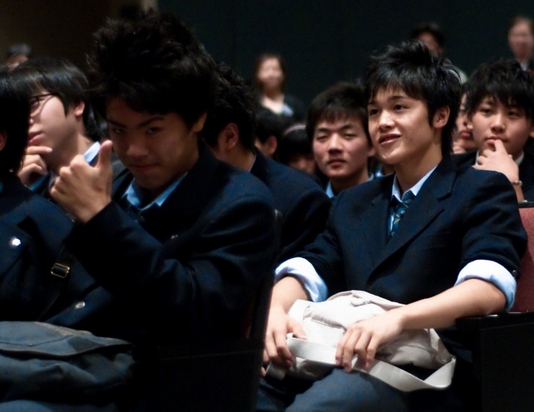
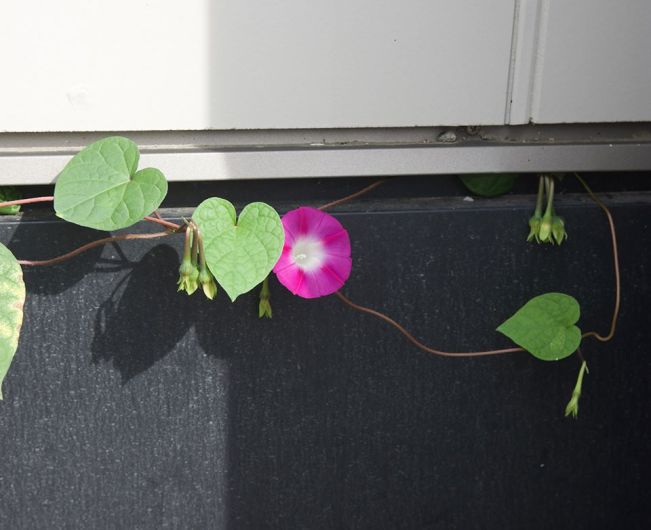
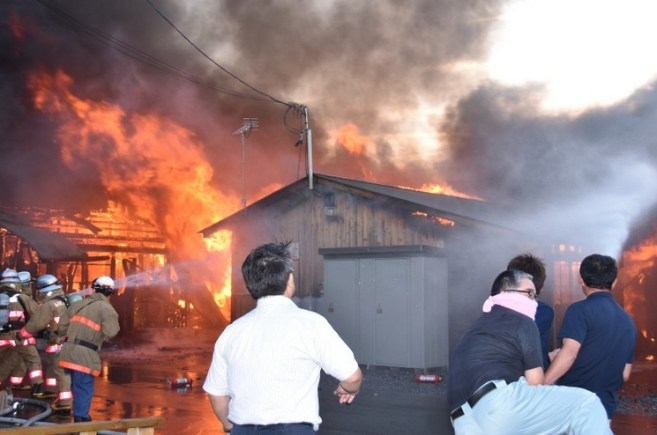
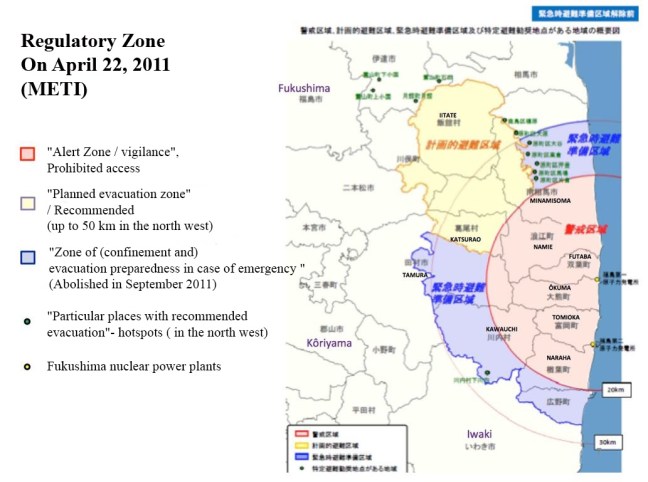
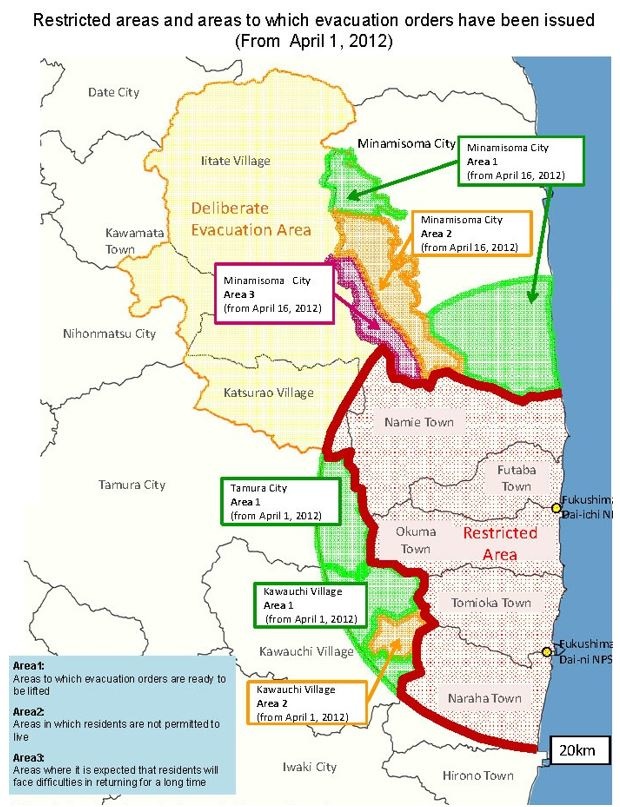
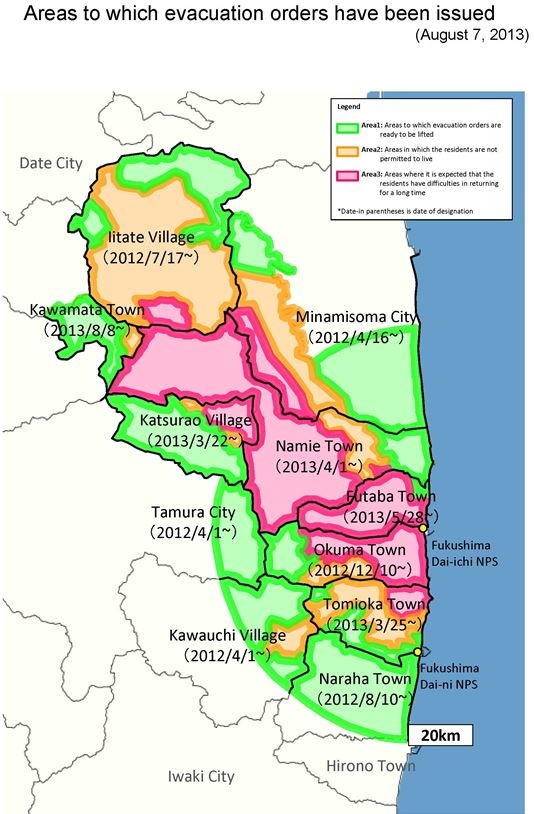
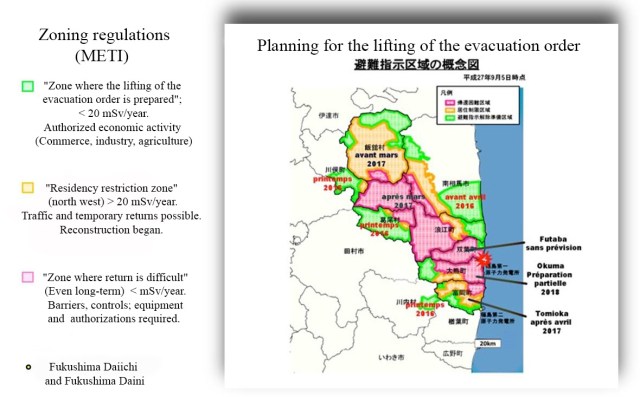
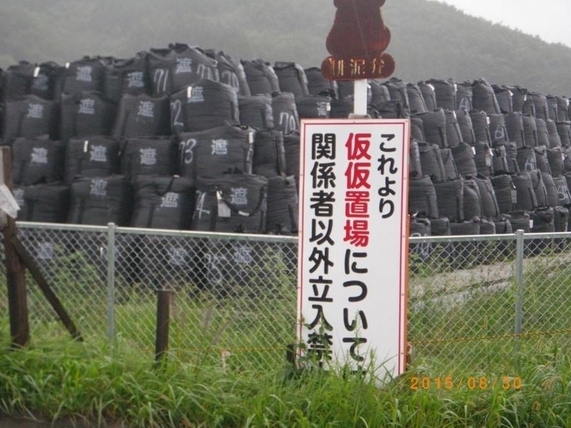
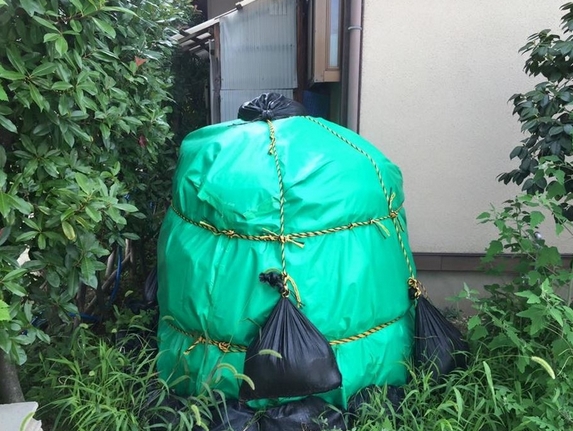
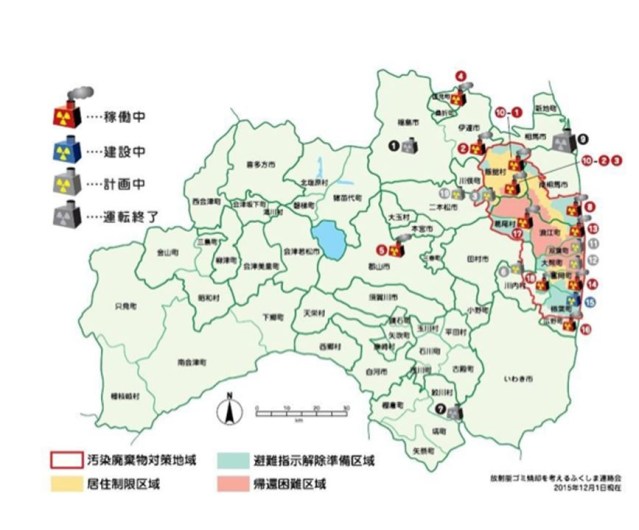
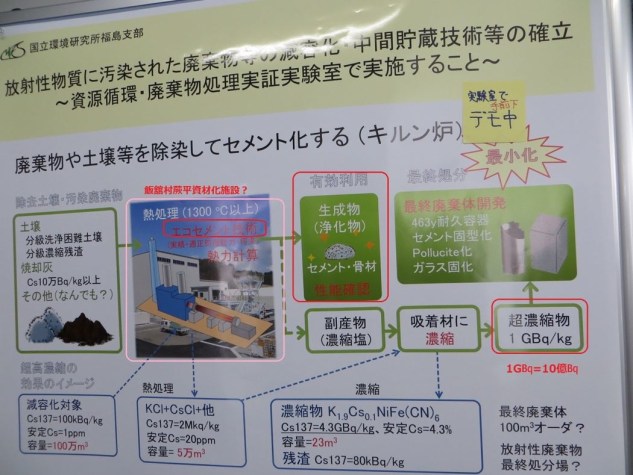
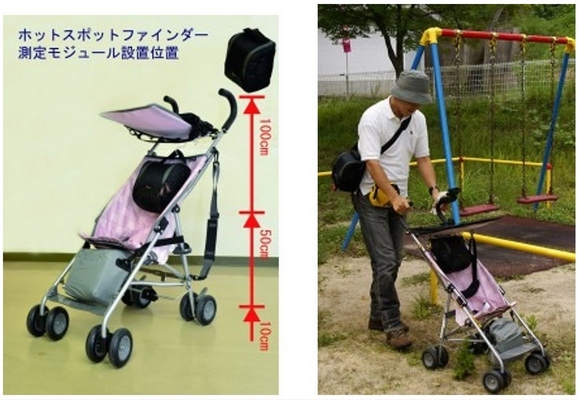
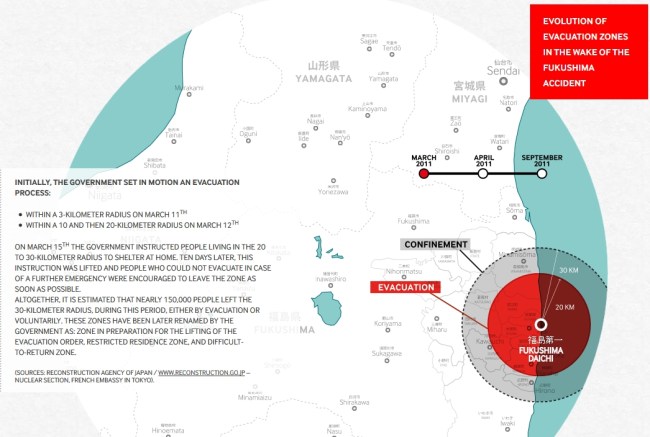
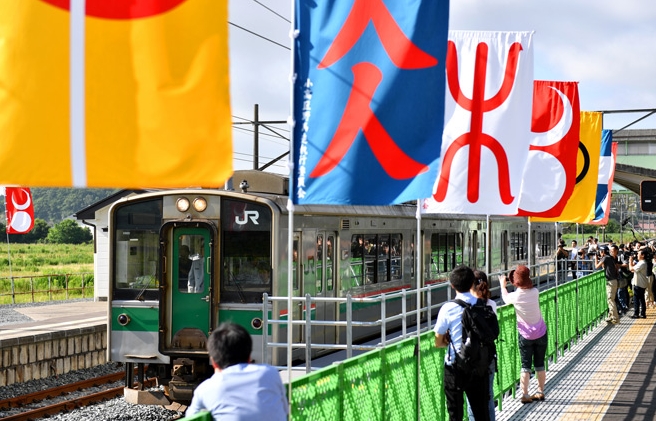

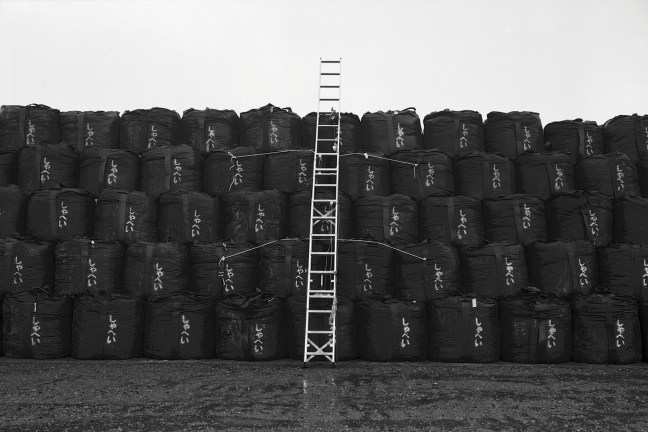
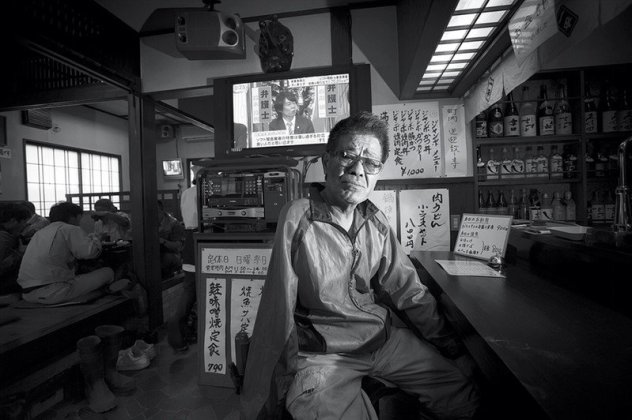
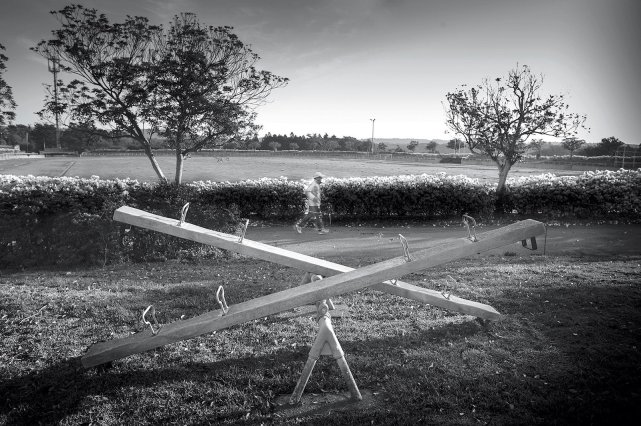

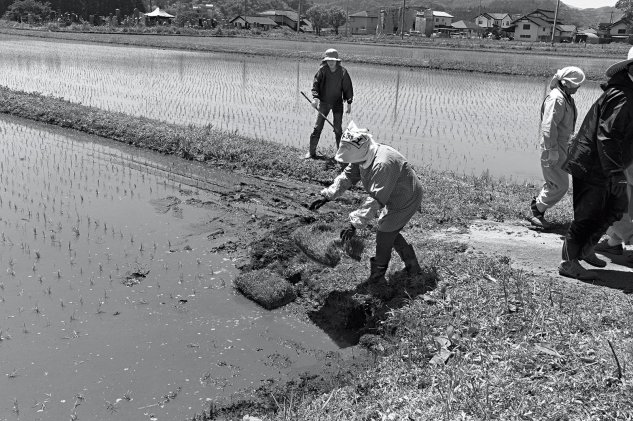
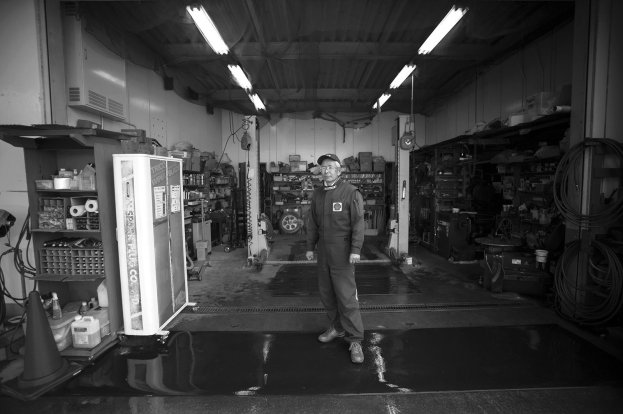

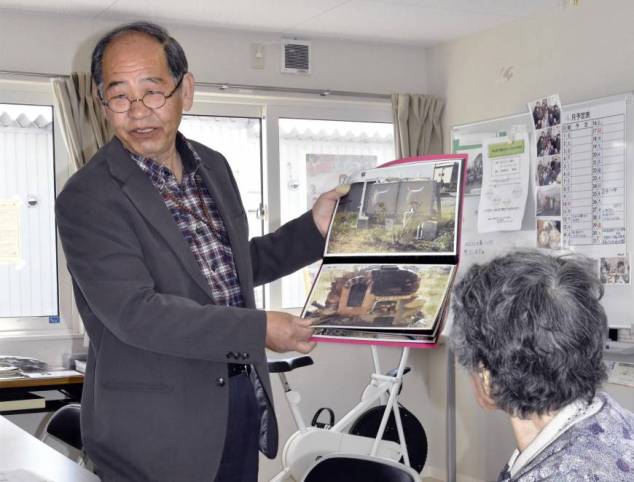
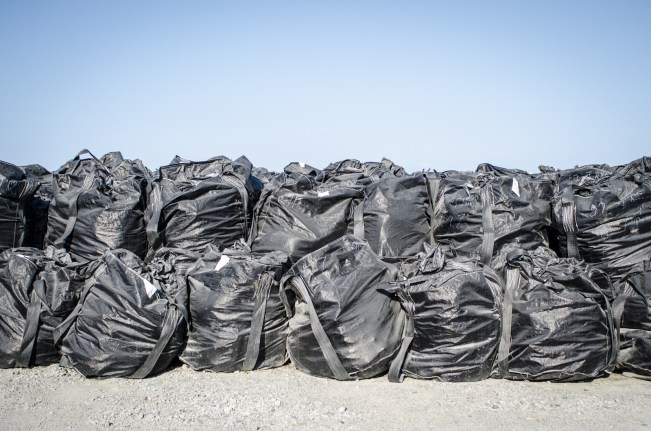




 nuclear-news