TODAY. Nuclear power -costs, wastes, etc, but what about the children?
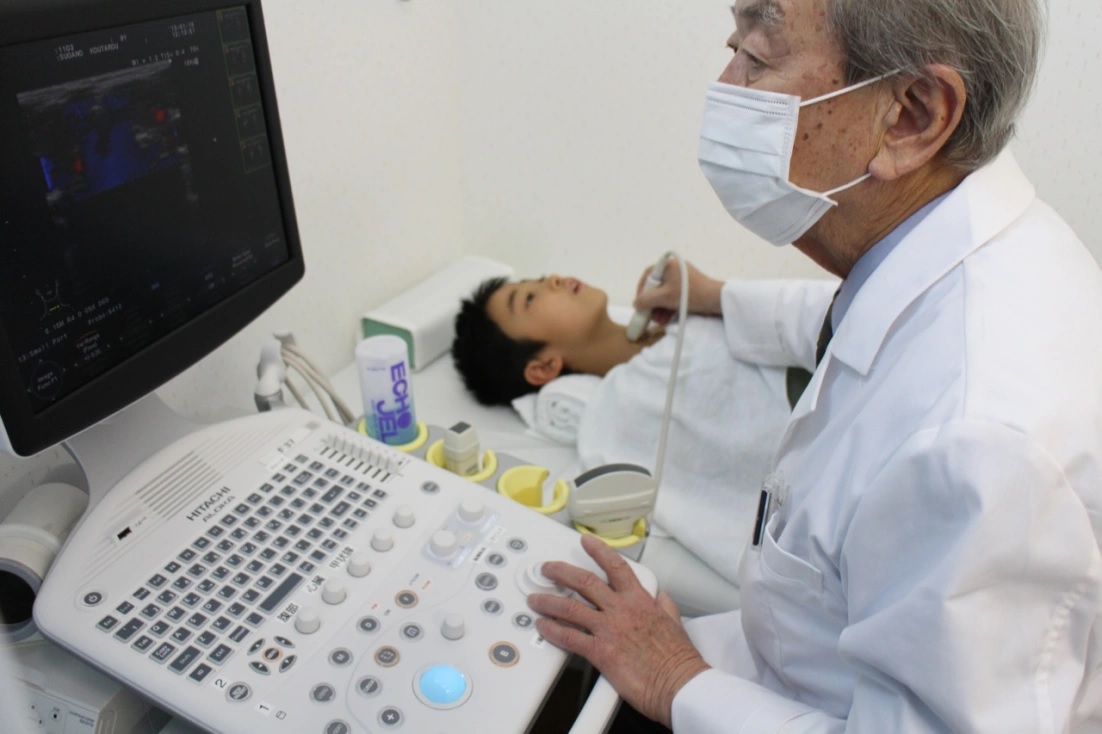
Reading the Australian media, there’s miles of stuff about nuclear power. Apparently the important factor is cost. Isn’t that dandy? So, if nuclear were were cheap, Australians would be rushing to get it? Oh wait, people worry about storing nuclear wastes – and that’s costly, too.
Because, you see, money’s the only thing that matters in the fucked up prevailing culture of profit and growth.
There was a time when people talked about safety risks, terrorism, weapons proliferation – heck, – even about the environment. Even health was discussed, – after all, ionising radiation from nuclear activities is the most well-established cause of cancer.
But now – if there’s ever a mention of ionising radiation and health – it is about the use of radiation in medicine – couched in language about how good it is, but not to over-use it (- a small acknowledgment of its danger)
The truth is, nuclear radiation has been shown in study after study to be a cause of cancer, and other illnesses. And that’s not just high doses oof radiation. It is low level radiation, affecting workers in the uranium-nuclear industries, and communities close to nuclear facilities.
And who are the most vulnerable people? Women, – and more vulnerable – are children, with girls the most vulnerable of all.
Sadly – the “regular” media is becoming ever more irrelevant. Even the threat of nuclear war gets barely a mention, as the media obsesses over narcissistic political personalities, rather than the big issues that matter to people worldwide.
The danger to human health from nuclear radiation now just doesn’t seem to matter any more. It is the awful truth that our children are the most at risk. But children’s health is a low priority,
Just as a matter of interest here – the most often-read articles on this website are those about radiation, and the next most often-read are those about children. So – people do care.
Bill before Australian Parliament would allow UK and USA to dump decades of high-level nuclear waste in Australia.

Dave Sweeney, 6 May 24
Minister Marles has a Bill before Parliament to establish a dedicated regulator for military radioactive waste arising from AUKUS – it is deeply flawed legislation but a particular concern is that it would permit Australia hosting UK and US naval nuclear waste – including waste from six decades of their nuclear submarine programs.
Media attention to this has been limited apart from https://www.theguardian.com/world/2024/apr/02/poison-portal-us-and-uk-could-send-nuclear-waste-to-australia-under-aukus-inquiry-told and a story from today’s Australian.
ACF has put in a submission and a supplementary and presented to a current inquiry by the Senates Foreign Affairs, Defence and Trade Committee.
This Committee – https://www.aph.gov.au/Parliamentary_Business/Committees/Senate/Foreign_Affairs_Defence_and_Trade/ANNPSBills23 – is due to report on May 13 and is likely to be supportive of the plan and there are concerns that Marles may look to do a deal with Dutton and steam this legislation through under the cover of the Budget week.
Marles states that the government ‘has no intention’ to do this but we have clear confirmation that the legislation would allow for the import and hosting of AUKUS partners military waste.
On 13 March 2024, the Chair of the Senate Committee investigating the bill asked Government officials: “could you also clarify whether there is scope in the legislation for Australia to take high-level waste from the US and UK submarines? Mr Kim Moy from the Department of Defence confirmed that this was the case. In a subsequent hearing on April 22, Senator David Shoebridge sought to establish whether other stakeholders were aware of this fact. Mr Peter Quinlivian, Senior Legal Counsel for weapons manufacturer BAE Systems Australia, admitted that “the legislation, as drafted, is in language that would accommodate that scenario”.
This loophole must be closed
New research identifies Fukushima reactor material in the environment
Through the analysis of specific fallout particles in the environment, a joint UK-Japan team of scientists has uncovered new insights into the sequence of events that led to the Fukushima nuclear accident in March 2011.
 Left: A 3D image that allowed the researchers to discover the distribution of elements within the sample Right: An X-Ray Tomography scan showing the interior structure of the particle Credit: University of Bristol/Diamond Light Source
June 26, 2019
Air-fall material got from the Fukushima Daiichi Nuclear Power Plant (FDNPP) mishap has formerly been isolated and examined from regions across Japan, expanding many kilometers from the facility.
Like the Chernobyl accident of April 1986, the incident at the Fukushima Daiichi Nuclear Power Plant (FDNPP) has been grouped by the International Atomic Energy Agency (IAEA) at Level 7 (the most serious) of the International Nuclear Event Scale (INES) as a result of the enormous amount of radioactivity released into nature.
Indeed, even now, eight years after the accident, significant areas encompassing the plant remain evacuated because of the high levels of radioactivity that still exist. It is anticipated that a few people may be unable to come back to their homes as an outcome of the accident.
Following the isolation of the sub-mm particulate from environmental samples obtained from localities close to the FDNPP, a new study has uncovered new insights into the sequence of events that led to the Fukushima nuclear accident.
The multi-organisation research, led by Dr. Peter Martin and Professor Tom Scott from the University of Bristol’s South West Nuclear Hub in collaboration with scientists from Diamond Light Source, the UK’s national synchrotron facility, and the Japan Atomic Energy Agency (JAEA).
Following the isolation of the sub-mm particulate from natural samples acquired from regions near the FDNPP, scientists used the high-resolution combined x-ray tomography and x-ray fluorescence mapping capacities of the Coherence Imaging (I13) beamline at the Diamond Light Source.
From these outcomes, it was conceivable to decide the location of the various constituents distributed throughout the highly- porous fallout molecule, including the precise places of micron-scale inclusions of uranium around the exterior of the particle.
Scientists then analyzed the specific physical and chemical nature of the uranium utilizing the Microfocus Spectroscopy (I18) beamline at Diamond.
By focusing on the profoundly focused X-ray beam onto the regions of enthusiasm inside the sample and analyzing the particular outflow sign produced, it was conceivable to confirm that the uranium was of nuclear origin and had not been sourced from the environment.
Final affirmation of the FDNPP origin of the uranium was performed on the particulate utilizing mass-spectrometry strategies at the University of Bristol, where the particular uranium mark of the considerations was coordinated to reactor Unit 1.
Just as crediting the material to a particular source on the FDNPP site the outcomes have also given scientists pivotal data to summon a component through which to clarify the occasions that happened at reactor Unit 1.
Dr Peter Martin (University of Bristol) and Dr Yukihiko Satou (Japan Atomic Energy Agency) at the Diamond Light Source facilities.
University of Bristol/Diamond Light Source
Dr. Peter Martin, senior author of the study said, “I am very pleased that this research has been recognized in Nature Communications. It is a tribute to the excellent collaboration of our partners at JAEA and Diamond Light Source. We have learned an invaluable amount about the long-term environmental effects of the Fukushima accident from this single particle as well as develop unique analytical techniques to further research into nuclear decommissioning.”
The study is published in Nature Communications: https://www.nature.com/articles/s41467-019-10937-z
Ringhals NPP -Seawater leak shuts down Swedish nuclear reactor
“Recent studies found that Swedes have become more negative towards nuclear energy, particularly since the Fukushima Daiichi nuclear disaster in Japan. According to a survey carried out by the SOM Institute at Gothenburg University, 44 percent of Swedes favor phasing out nuclear power, either immediately or at the end of the lifespan of the current plants. Only 35 percent were in favor of expanding the use of nuclear energy.”
Published: 21 December, 2012
RT

Swedish authorities have ordered the shutdown of a reactor at its largest nuclear power plant near Gothenburg following a seawater leak. The leak is the latest in a string of similar incidents that have plagued the Swedish nuclear industry.
“There is no safety problem” at Reactor 4 of the Ringhals plant, nuclear authority inspector Jan Gällsjo told the national TT news agency. However, the presence of saltwater in the pressurized water system is an irregularity that needs to be repaired, Gällsjo added.
The Ringhals power station is located on Sweden’s southwest coast near Gothenburg, the country’s second largest city.
Earlier this month, the Radiation Safety Authority ordered the shutdown of reactor O2 at the Oskarshamn plant due to safety concerns, the Local reported. Several days later, an investigation found cracks in two of the 10 pools in which nuclear waste is stored. Nuclear waste management contractor SKB was ordered to review security and safety requirements before the reactor can be brought back online.
A report published in October by environmental organization Greenpeace heavily criticized safety conditions at Sweden’s nuclear plants.
“We are killing off the myth that Swedish nuclear power is safe. Swedish power plants are old, have great security risks, there is a lack of both personnel and skills and a large number of incidents are occurring,” said Rolf Lindahl, one of the authors of the report.
The plants, which were built in the 1970s and 1980s, are being pushed to create more energy, which is putting a strain on the facilities. Rather than taking steps to guarantee the safety of the aging stations, plant operators seem to be motivated by “financial gains,” Lindahl said.
The Ringhal station had been slammed earlier for not having sufficient protection against earthquakes and floods, according to the report. It now seems that the Forsmark and Oskarshamn plants face the same threats from natural disasters.
1 This Month


18 March Webinar @ 1 PM EST: An Assessment of SMR Projects: The Case of Canada
register for the zoom:
https://us02web.zoom.us/webinar/register/WN_o8BIIOUvQ2ONJR1nta65DQ#/registration


of the week – STOP SMALL MODULAR REACTORS IN CANADA
To see nuclear-related stories in greater depth and intensity – go to https://nuclearinformation.wordpress.com
-
Archives
- March 2026 (138)
- February 2026 (268)
- January 2026 (308)
- December 2025 (358)
- November 2025 (359)
- October 2025 (376)
- September 2025 (258)
- August 2025 (319)
- July 2025 (230)
- June 2025 (348)
- May 2025 (261)
- April 2025 (305)
-
Categories
- 1
- 1 NUCLEAR ISSUES
- business and costs
- climate change
- culture and arts
- ENERGY
- environment
- health
- history
- indigenous issues
- Legal
- marketing of nuclear
- media
- opposition to nuclear
- PERSONAL STORIES
- politics
- politics international
- Religion and ethics
- safety
- secrets,lies and civil liberties
- spinbuster
- technology
- Uranium
- wastes
- weapons and war
- Women
- 2 WORLD
- ACTION
- AFRICA
- Atrocities
- AUSTRALIA
- Christina's notes
- Christina's themes
- culture and arts
- Events
- Fuk 2022
- Fuk 2023
- Fukushima 2017
- Fukushima 2018
- fukushima 2019
- Fukushima 2020
- Fukushima 2021
- general
- global warming
- Humour (God we need it)
- Nuclear
- RARE EARTHS
- Reference
- resources – print
- Resources -audiovicual
- Weekly Newsletter
- World
- World Nuclear
- YouTube
-
RSS
Entries RSS
Comments RSS
 nuclear-news