KEPCO, Yagi, Mori, and 3 others “appropriate for prosecution” by the Public Prosecutor’s Examination Board

Aug. 1, 2022
On August 1, the Osaka Second Public Prosecutors’ Office (Prosecutor’s Office) announced its decision to “consider indicting” former KEPCO Chairman Makoto Yagi (72), former Chairman Shosuke Mori (81), and former President Shigeki Iwane (69), all of whom had been accused of special breach of trust under the Companies Act, but were not charged by the Special Investigation Department of the Osaka District Public Prosecutors Office. The Special Investigation Department reopened the case.
The Special Investigation Department will reopen the investigation and, in principle, make a new decision within three months as to whether or not they are criminally responsible. Even if the indictment is not filed again, if the Public Prosecutor’s Office issues a second “appropriate for prosecution” resolution, the lawyer designated to act as prosecutor will be forced to prosecute the case.
In January, a citizens’ group, “Association to Prosecute KEPCO’s Illegal Refund of Nuclear Power Plant Money,” filed a review with the Public Prosecutor’s Office, appealing against the action taken by the Special Investigation Department.
A tax investigation by KEPCO led to the discovery that since 2019, 83 successive executives of KEPCO had received a total of approximately 370 million yen worth of money and goods from a former assistant director of Takahama Town in Fukui Prefecture, where the Takahama nuclear power plant is located (he died in 2007). It was also discovered that Yagi and Mori took the initiative to compensate 18 former executives with a total of approximately 260 million yen in the form of commissioned remuneration for a portion of the executives’ remuneration that had been reduced due to deteriorating business performance after the Great East Japan Earthquake.
The citizens’ group filed criminal charges against Yagi, Mori, and nine others, but in November 2009, the Special Investigation Department dropped all nine charges, finding no evidence of willful intent to cause damage to KEPCO. The prosecutors’ committee voted to “drop the indictment” against six of the nine except for Yagi and Mori. Ryo Numata and Yukina Furukawa
https://mainichi.jp/articles/20220801/k00/00m/040/062000c?fbclid=IwAR31eI65WQN2p6QhS-aNRYiZM7MookQGcsuQI6FrojStiS_3pINB4ep0_jE
The current state of my hometown…” Residents of the Tsushima area measured radiation levels by themselves as evidence in court (Fukushima Prefecture)

May 10, 2022
Residents of the Tsushima area in the hard-to-return zone in the town of Namie, Fukushima Prefecture, have begun measuring radiation levels throughout the area in connection with a lawsuit against the government and Tokyo Electric Power Company.
On the first day of the trial, at 10:00 a.m. on October 10, approximately 10 residents gathered in the Tsushima area, which is in the difficult-to-return zone, to confirm the method and location of the measurements.
Measurements will be taken by dividing the entire Tsushima area into 28 sections of 2 km square, and installing dosimeters in each section. The dosimeters will be placed mainly in areas that have not been decontaminated, and many of these areas are covered with trees and grass.
According to the plaintiffs, this is believed to be the first time such measurements have been made in a class action lawsuit involving a nuclear accident.
Hidenori Konno, leader of the plaintiffs, said, “What we are appealing to the court of appeals is to ‘give back our hometown. In order to do so, we have to come up with concrete evidence of the situation in the Tsushima area…”
Hidenori Konno, the leader of the plaintiffs’ group, said at the meeting on April 4 that he intends to submit the results of the measurements as evidence in the trial.
Although a portion of the Tsushima area has been designated as a restoration site and is being decontaminated, the outlook for more than 90% of the other areas has yet to be determined.
Mr. Konno said, “At the very least, decontamination will restore the environment to near normalcy. In fact, the radiation dose has decreased so much after 12 years. We would like to use the data to prove that we can do it, especially in areas close to our homes.”
The installation work is scheduled to continue until the 15th, and the samples will be collected and analyzed three weeks later.
Japan’s top court orders damages for Fukushima victims in landmark decision -NHK

TOKYO, March 4 (Reuters) – Japan’s Supreme Court upheld an order for utility Tokyo Electric Power (Tepco) to pay damages of 1.4 billion yen ($12 million) to about 3,700 people whose lives were devastated by the Fukushima nuclear disaster, the first decision of its kind.
Public broadcaster NHK said the average payout of about 380,000 yen ($3,290) for each plaintiff covered three class-action lawsuits, among more than 30 against the utility, which are the first to be finalised.
A massive tsunami unleashed by an earthquake of magnitude 9.0 off Japan’s northeastern coast, struck Tepco’s Fukushima Daiichi power plant in March 2011, to cause the worst nuclear disaster since Chernobyl.
About 470,000 people were forced to evacuate in the first few days, and tens of thousands have not yet been able to return.
Friday’s decision came as the court rejected an appeal by Tepco and ruled it negligent in taking preventive measures against a tsunami of that size, the broadcaster said.
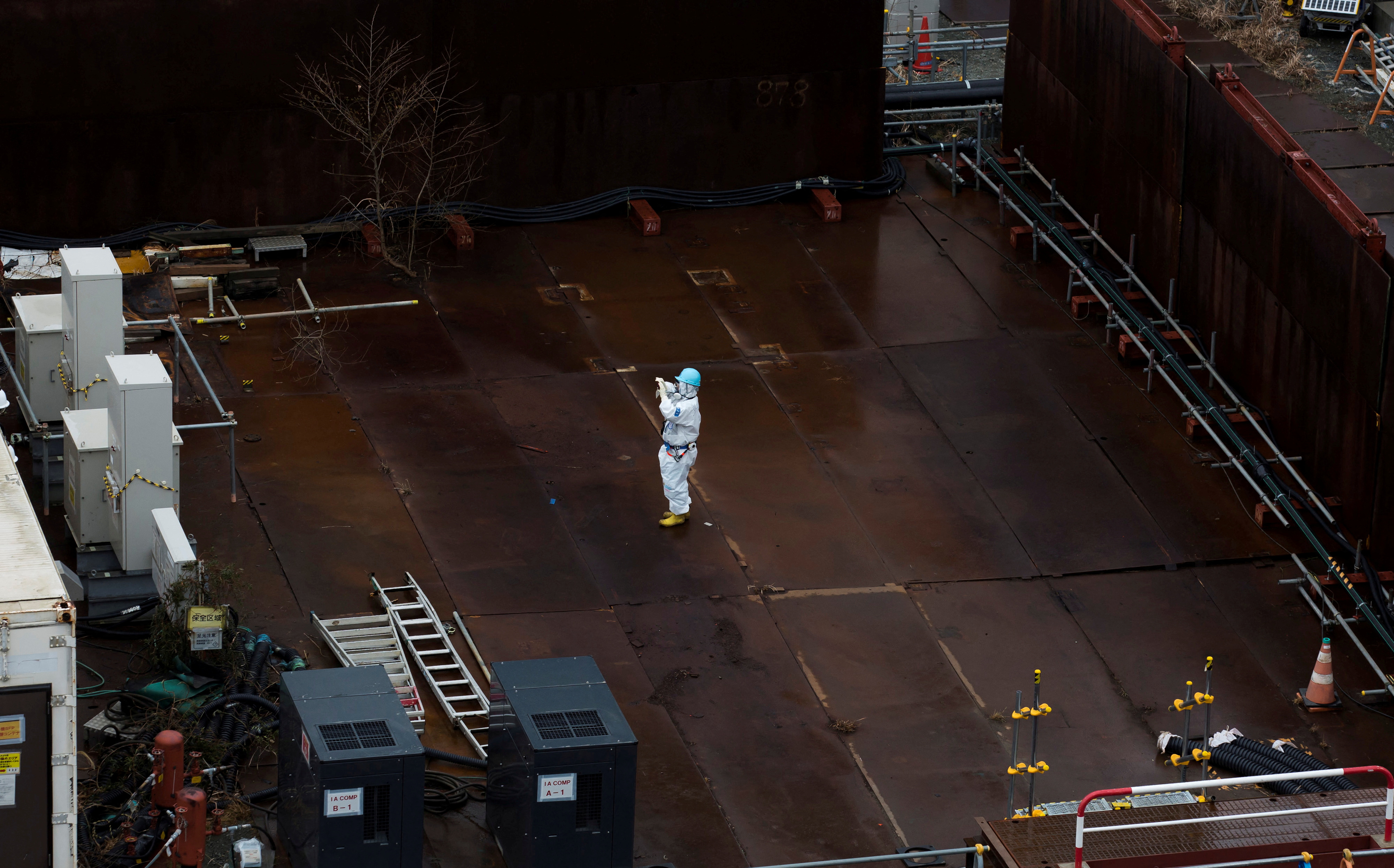
TOKYO, March 4 (Reuters) – Japan’s Supreme Court upheld an order for utility Tokyo Electric Power (Tepco) to pay damages of 1.4 billion yen ($12 million) to about 3,700 people whose lives were devastated by the Fukushima nuclear disaster, the first decision of its kind.
Public broadcaster NHK said the average payout of about 380,000 yen ($3,290) for each plaintiff covered three class-action lawsuits, among more than 30 against the utility, which are the first to be finalised.
A massive tsunami unleashed by an earthquake of magnitude 9.0 off Japan’s northeastern coast, struck Tepco’s Fukushima Daiichi power plant in March 2011, to cause the worst nuclear disaster since Chernobyl.
About 470,000 people were forced to evacuate in the first few days, and tens of thousands have not yet been able to return.
Friday’s decision came as the court rejected an appeal by Tepco and ruled it negligent in taking preventive measures against a tsunami of that size, the broadcaster said.
The court withheld a verdict on the role of the government, which is also a defendant in the lawsuits, and will hold a hearing next month to rule on its culpability, NHK added.
Lower courts have split over the extent of the government’s responsibility in foreseeing the disaster and ordering steps by Tepco to prevent it.
1 This Month

of the week – Shut Down Drone Warfare!


Tell the Ukrainian Government to Drop Prosecution of Peace Activist Yurii Sheliazhenko

Petition to revoke the licensing of the Near Surface Nuclear Disposal Facility (NSDF) at Chalk River. https://www.ourcommons.ca/petitions/en/Petition/Details?Petition=e-7247
To see nuclear-related stories in greater depth and intensity – go to https://nuclearinformation.wordpress.com
-
Archives
- April 2026 (19)
- March 2026 (251)
- February 2026 (268)
- January 2026 (308)
- December 2025 (358)
- November 2025 (359)
- October 2025 (376)
- September 2025 (257)
- August 2025 (319)
- July 2025 (230)
- June 2025 (348)
- May 2025 (261)
-
Categories
- 1
- 1 NUCLEAR ISSUES
- business and costs
- climate change
- culture and arts
- ENERGY
- environment
- health
- history
- indigenous issues
- Legal
- marketing of nuclear
- media
- opposition to nuclear
- PERSONAL STORIES
- politics
- politics international
- Religion and ethics
- safety
- secrets,lies and civil liberties
- spinbuster
- technology
- Uranium
- wastes
- weapons and war
- Women
- 2 WORLD
- ACTION
- AFRICA
- Atrocities
- AUSTRALIA
- Christina's notes
- Christina's themes
- culture and arts
- Events
- Fuk 2022
- Fuk 2023
- Fukushima 2017
- Fukushima 2018
- fukushima 2019
- Fukushima 2020
- Fukushima 2021
- general
- global warming
- Humour (God we need it)
- Nuclear
- RARE EARTHS
- Reference
- resources – print
- Resources -audiovicual
- Weekly Newsletter
- World
- World Nuclear
- YouTube
-
RSS
Entries RSS
Comments RSS
 nuclear-news